More Human: How the Power of AI Can Transform the Way You Lead

More Human by Rasmus Hougaard & Jacqueline Carter posits that AI represents a critical inflection point for leadership. The central thesis is that AI, if approached with foresight, can catalyze a renaissance in leadership, making leaders paradoxically more human. This is achieved by delegating tactical tasks to AI, thereby freeing up time and cognitive space for leaders to focus on innately human skills. The future of leadership is not a choice between human or machine, but a “both/and” approach of augmentation, where leaders who leverage AI will replace those who do not.

The framework for this new paradigm rests on three core human qualities that leaders must cultivate to effectively partner with AI:

  1. Awareness: The ability to provide uniquely human context to the vast content generated by AI.
  2. Wisdom: The capacity to ask insightful human questions to guide and critically evaluate the answers provided by AI.
  3. Compassion: The skill of combining the human heart with the analytical power of AI algorithms to do hard things in a human way.

Cultivating these qualities begins with understanding and managing one’s own mind, which is the foundation of effective leadership. The document outlines actionable mindsets and practices to develop these core qualities. Research data consistently shows that leaders who embody high levels of awareness, wisdom, and compassion create significantly better work experiences, fostering greater trust, commitment, psychological safety, and job satisfaction while reducing burnout and turnover. The imperative for leaders is a dual commitment: to double down on inner development and to proactively integrate AI into every facet of their work to unleash this new, more human potential.

——————————————————————————–

I. The Dawn of Augmented Leadership

The introduction of generative AI has brought leadership to a crucial crossroads. The choice is between creating an era of impersonal, mechanical efficiency or catalyzing a golden age of human-centered leadership. The research presented argues that by strategically delegating tasks and augmenting skills with AI, leaders can enhance organizational performance while unlocking a more fulfilling human experience at work.

The Three Promises of AI for Leadership

The analysis identifies three primary ways AI can transform leadership:

  1. Save Time for Human Connection: AI can automate and simplify tactical and administrative leadership activities. As Ellyn Shook of Accenture notes, an AI tool that summarizes performance data reduced her prep time from 45 minutes to 5, allowing her to spend the saved time preparing “how to make the performance conversation a positive experience for the team member.” The key is to reinvest this saved time not in more tasks, but in elevating the human experience for employees.
  2. Enable Ultra-Personalized Leadership: AI’s processing power allows leaders to gain unprecedented insight into employees’ unique needs, preferences, and well-being. Francine Katsoudas of Cisco states, “with AI, leaders have the potential to gain better insight into the key elements of an employee’s well-being and better support their individual needs.” This enables a shift from generalized management to a highly tailored approach that respects individual complexity.
  3. Elevate the Best of Our Humanness: AI can act as an “exoskeleton for the mind and heart,” strengthening a leader’s cognitive, emotional, and social capacities. It can enhance decision-making, deepen understanding of team dynamics, and help leaders be more consistent with their values. However, this potential is only unlocked when paired with a commitment to human development; relying on the tool without improving the driver is ineffective.

II. The “Both/And” Paradigm: The Art of the Toggle

The core principle for effective leadership in the AI era is augmentation—adopting a “both/and” mindset that leverages the complementary strengths of humans and machines. This requires mastering the “art of the toggle,” a dynamic process of moving between human and AI capabilities.

Human StrengthsHuman LimitationsAI StrengthsAI Limitations
Context, Intuition, Care, VisionEmotions, Biases, InconsistencyData, Analysis, Speed, ScaleMechanical, Biased, No Ethics
Asking “Why,” Critical JudgmentLimited Processing CapacityGenerating Content, Finding PatternsLacks “Common Sense,” Context
Empathy, Connection, MoralitySubjectivity, FatiguePersonalization, Unemotional Logic“Black Box” Problem, No Heart

Employee Preference for the “Imperfect Human”

Despite AI’s capabilities, research reveals a strong employee preference for human leaders, especially in emotionally resonant areas.

  • Trust: 57% of employees do not trust AI to understand human behavior better than a human leader.
  • Emotional Analysis: 60% are concerned about AI analyzing and leveraging employee emotions for decisions.
  • Hiring & Promotions: 69% have concerns about AI making decisions about hiring, promotions, and work assignments.
  • Negative Feedback: Only 25% would be comfortable receiving negative performance feedback from AI, while 55% would be uncomfortable.

This indicates that the most crucial leadership moments require an authentic human touch that AI cannot replicate. The value proposition for human leaders lies in the messy, emotional, and relational aspects of work.

III. The Foundation: Leadership Starts with the Mind

The ability to cultivate awareness, wisdom, and compassion begins with the leader’s own mind. In an age of increasing information overload and distraction, managing one’s inner state is no longer a soft skill but a critical capacity. The “Human Leader Compass” is a model where leadership starts with the mind, which then enables the development of the three core qualities, each supported by five actionable mindsets.

Techniques for Mind Management
More Human posits that Artificial Intelligence (AI) represents a critical inflection point for leadership. The central thesis is that AI, if approached with foresight, can catalyze a renaissance in leadership, making leaders paradoxically more human. This is achieved by delegating tactical tasks to AI, thereby freeing up time and cognitive space for leaders to focus on innately human skills. The future of leadership is not a choice between human or machine, but a "both/and" approach of augmentation, where leaders who leverage AI will replace those who do not.

To counter the “tsunami of information,” leaders must proactively cultivate a clear and spacious mind. Three primary practices are recommended:

  1. Working with the Mind (Meditation): The practice of familiarizing oneself with the mind to observe thoughts and emotions without being controlled by them. This rewires the brain to operate more from the prefrontal cortex (System 2 thinking), enhancing executive function, emotional regulation, and clarity.
  2. Working with the Breath (Breath Work): Ancient techniques like pranayama that modulate the autonomic nervous system, shifting it from a “fight-or-flight” state to a “rest-and-digest” state, thereby promoting calm and balance.
  3. Working with the Body (Mind-Body Practices): Practices like yoga that integrate the mind and body, enhancing mental clarity, emotional stability, and inner calm.

IV. The Three Core Qualities of the AI-Augmented Leader

A. Awareness: Context + Content

Awareness is the perceptual capacity to observe internal and external experiences to cultivate clarity and presence. The AI-augmented leader uses this quality to provide essential human context to the vast content generated by AI.

  • How AI Enhances Awareness:
    • Self-Awareness: Creating an “AI proxy” of oneself to uncover personal biases and blind spots.
    • Relational Awareness: Using AI to analyze team dynamics, communication patterns, and non-verbal cues in meetings to “see the unseen.”
    • Situational Awareness: Leveraging AI to analyze big data on employee retention, market trends, and other environmental factors.
  • Key Mindsets for Awareness:
    • Equanimity: Maintaining mental balance and composure, avoiding attachment or aversion.
    • Self-Mastery: Monitoring and regulating emotions and thoughts to align actions with values.
    • Presence: Being fully attentive to the present moment, task, and people.
    • Clarity: Eliminating mental clutter to maintain a clear, focused mind.
    • Adaptability: Adjusting to the diverse needs of people and evolving circumstances.

B. Wisdom: Questions + Answers

Wisdom is the discerning capacity to form sound judgment by understanding reality as it is, free from the limitations of the ego. It involves seeing interdependence and impermanence. The AI-augmented leader’s role is not to have all the answers, but to ask the right questions and apply critical judgment to AI’s outputs.

  • How AI Enhances Wisdom:
    • Data-Driven Insights: Utilizing people analytics for more objective talent management decisions.
    • Enhancing Creativity: Using AI as a brainstorming partner to generate novel ideas and explore “what if” scenarios.
    • Challenging Thinking: Employing AI as an objective partner to challenge assumptions and simulate outcomes from diverse perspectives, free from organizational politics.
  • Key Mindsets for Wisdom:
    • Integrity: Demonstrating strong moral principles and ethical behavior.
    • Beginner’s Mind: Approaching situations with curiosity and openness, free from preconceptions.
    • Critical Thinking: Evaluating information objectively, questioning assumptions and biases.
    • Humility: Recognizing one’s limitations and being open to learning from others.
    • Selflessness: Prioritizing the needs of the team and organization over personal gain.

C. Compassion: Heart + Algorithm

Compassion is the responsive capacity to provide genuine care with the intention of benefiting others. It is about doing hard things in a human way. The AI-augmented leader combines the authentic human heart with insights from AI algorithms to lead with care and strength.

  • How AI Enhances Compassion:
    • Tailoring Leadership: Using AI insights from personality assessments (e.g., Enneagram) to personalize communication and motivation for each team member.
    • Boosting Communication: Employing sentiment analysis to understand employee concerns and craft more empathetic and effective messages.
    • Personalized Coaching: Leveraging AI as a “coach in your pocket” to provide real-time feedback and development support.
  • Key Mindsets for Compassion:
    • Courage: The inner strength to overcome fear and take necessary, often difficult, action.
    • Presilience: Proactively preparing to face challenges without getting knocked off balance.
    • Emotional Intelligence: Recognizing, understanding, and managing one’s own emotions and those of others.
    • Purpose: Aligning work with core values in the pursuit of a greater good.
    • Trust: Creating a psychologically safe environment where people feel valued and secure.

V. Key Research Findings

The book’s recommendations are supported by quantitative research from four studies involving over 2,500 leaders and employees. The data reveals a powerful correlation between the core human qualities and both leadership effectiveness and readiness for an AI-augmented future.

Impact of Leaders High in Awareness, Wisdom, and Compassion (vs. Low)% Improvement
Employee Trust in Leadership+97%
Employee Commitment to the Organization+65%
Psychological Safety+61%
Job Satisfaction+49%
Likelihood to Quit (Reduction)-37%
Job Burnout (Reduction)-31%

Furthermore, leaders rated high in these human qualities are perceived as far more capable of leveraging AI effectively:

Observer Perception of Leaders High in Awareness, Wisdom, & Compassion% Agreement
Excels at providing context88%
Adept at identifying relevant content87%
Asks thought-provoking questions78%
Demonstrates leading with their heart82%
Good at interpreting AI-generated answers49%
Effectively leverages AI algorithms39%

VI. Conclusion: The Imperative to Become More Human

The age of AI will not make human leadership obsolete; it will make it more essential than ever. Leaders who fail to embrace AI will be left behind, not by AI itself, but by AI-augmented leaders who can operate on a higher level of human engagement. As Dimitra Manis of S&P Global stated, AI will change expectations: “There will be no such thing as ‘I don’t have time to lead my people.’”

The path forward requires a dual commitment:

  1. Double Down on Inner Development: Proactively invest time in understanding and managing the mind to build the foundational capacity for awareness, wisdom, and compassion.
  2. Integrate and Embrace AI: Actively explore and apply AI tools in all leadership activities—not as a replacement, but as a partner to augment and elevate human capabilities.

The future belongs to leaders who can master this synergy, leveraging technology not to become more like machines, but to become profoundly and effectively more human.

Contact Factoring Specialist, Chris Lehnes

More Human posits that Artificial Intelligence (AI) represents a critical inflection point for leadership. The central thesis is that AI, if approached with foresight, can catalyze a renaissance in leadership, making leaders paradoxically more human. This is achieved by delegating tactical tasks to AI, thereby freeing up time and cognitive space for leaders to focus on innately human skills. The future of leadership is not a choice between human or machine, but a "both/and" approach of augmentation, where leaders who leverage AI will replace those who do not.

Study Guide for More Human

Quiz: Short-Answer Questions

Answer the following questions in 2-3 sentences each, based on the provided source context.

  1. What is the central paradox the authors discovered about the potential impact of Artificial Intelligence on leadership?
  2. The text introduces the “age of augmentation.” What does this term mean, and what is the key mindset leaders must adopt to thrive in it?
  3. What are the three core human qualities of AI-augmented leadership, and what fundamental neurological processes do they correspond to?
  4. Explain the concept of “toggling” as it applies to the AI-augmented leader. Provide a brief example of how it works in practice.
  5. According to the authors, why must leadership start with the mind, and why is this focus particularly critical in the age of AI?
  6. Describe the “human leader compass” model. What are its primary components and its purpose?
  7. How can a leader create and use an “AI proxy” to enhance their self-awareness?
  8. In the context of wisdom, what is the critical role of a human leader when interacting with AI systems that can provide vast amounts of answers instantly?
  9. What is the neurological difference between empathy and compassion, and why is this distinction important for effective leadership?
  10. According to the text, will AI replace human leaders? Explain the authors’ conclusion on this matter.

——————————————————————————–

Answer Key

  1. The central paradox is that, contrary to fears of a robotic work reality, AI can actually make leaders more human. By delegating tactical tasks to AI and using it to augment their skills, leaders can save time and redirect their focus toward creating positive human experiences, thereby mining and maximizing the best of human potential.
  2. The “age of augmentation” is an era where tools like AI actively interact with us, changing how we perceive and engage with the world. To thrive, leaders must adopt a “both/and mindset,” which means leveraging both the analytical power of AI and their most authentic human qualities in a synergistic relationship.
  3. The three core human qualities are awareness, wisdom, and compassion. These leadership qualities correspond to the fundamental neurological processes of perception (observing experiences), discernment (forming sound judgment), and response (acting with intention).
  4. “Toggling” is the practice of fluidly moving between human strengths (like intuition and context-setting) and AI’s capabilities (like data analysis and content generation). A leader preparing for a difficult conversation might first use human intuition to set the context, then use AI to analyze the situation and role-play, before finally applying human critical thought to the AI’s suggestions.
  5. Leadership starts with the mind because a leader’s mind creates their thoughts, which in turn create their actions and shape the reality of their employees. This focus is critical in the age of AI because the human mind is not naturally equipped to handle the relentless onslaught of information from technology, which risks making leaders overwhelmed, overworked, and mentally exhausted.
  6. The human leader compass is a model showing that leadership starts with the mind. By understanding and managing the mind, a leader can cultivate the three core qualities of awareness, wisdom, and compassion. The model further shows that each of these qualities is accelerated by adopting five specific, scientifically validated mindsets.
  7. A leader can create an AI proxy by providing a secure AI tool with extensive personal information, such as their personality type, writing samples, and opinions. This enhances self-awareness by acting as an objective mirror, helping the leader uncover personal biases and blind spots by analyzing how they might respond in challenging situations.
  8. While AI excels at providing answers based on enormous amounts of data, it lacks wisdom and cannot discern right from wrong. The critical role of the human leader is to ask good questions, apply critical thinking, and wisely deliberate on the answers provided by AI, ensuring that decisions are not just smart but also ethical and aligned with human values.
  9. Neurologically, empathy originates from the emotional centers of the brain, allowing us to feel what others feel. Compassion, however, is an intention activated in the executive functioning areas of the brain that drives us to take appropriate action for the greater good. The distinction is crucial because leaders must connect with empathy but lead with compassion to do hard things in a human way.
  10. The authors conclude that AI will not replace human leaders. Instead, leaders who fail to leverage AI to augment their leadership will be replaced by those who do. This is because AI lacks authentic emotional engagement, wisdom, and the ability to provide context—uniquely human qualities that employees prefer and which are essential for the most important elements of leadership.

——————————————————————————–

Essay Questions

The following questions are designed for longer, essay-style responses to encourage deeper reflection on the book’s central themes. Answers are not provided.

  1. The authors argue that AI presents a “major inflection point” for leadership. Discuss the two potential paths leaders can take—a “renaissance” of human leadership versus an era of “mechanical, impersonal efficiency.” Analyze the key choices, practices, and mindsets that will determine which path an organization follows.
  2. Analyze the concept of the “AI-Augmented Leader” by explaining the complementary relationship between human qualities (context, questions, heart) and AI capabilities (content, answers, algorithm). Use examples from the text to illustrate how this synergy works in practice for each of the three core qualities: awareness, wisdom, and compassion.
  3. The text outlines numerous risks and benefits of AI for the “mind of the leader,” including the dualities of supercharged intelligence versus cognitive laziness and data-driven insights versus inherent bias. Evaluate these risks and explain how the practices of mind-training and “thinking slowly” can help leaders mitigate them while maximizing the benefits.
  4. The “human leader compass” is presented as a roadmap for leadership, starting with the mind. Explain the relationship between managing the mind and cultivating the three core qualities. Choose one of the core qualities (awareness, wisdom, or compassion) and discuss in detail how its five associated mindsets help a leader operationalize that quality in their daily work.
  5. The book’s central argument is that to succeed in the age of AI, leaders must become “more human.” Discuss this apparent paradox. How does leveraging a machine enhance a leader’s humanity, and why is this enhancement a critical new standard for leadership in the future?

——————————————————————————–

Glossary of Key Terms

TermDefinition
AI-Augmented LeaderA leader who develops the three core human qualities of awareness, wisdom, and compassion and embraces the best of both human and AI capabilities. This leader skillfully provides context to AI-generated content, uses wisdom to ask thoughtful questions about AI-provided answers, and leverages algorithmic power to provide an authentic, heartfelt, human experience.
Age of AugmentationThe current era of work where tools, specifically AI, are actively interacting with humans in ways that change how they perceive and engage with the world. It is a shift from the Information Age, where tools were passive, to an age where they actively listen, analyze, learn, and predict.
AwarenessThe perceptual capacity of the mind to observe both internal and external experiences with the intention of cultivating mental clarity, agility, and executive presence. It encompasses self-awareness, relational awareness, and situational awareness.
Beginner’s MindThe ability to see people and situations with fresh eyes, as if for the first time, without letting preexisting beliefs or past experiences color one’s approach. It combines expertise with openness and a lack of assumptions.
BodhichittaA concept from Buddhist tradition that can be understood in secular terms as a profound dedication to benefit others. In leadership, it is an authentic commitment to genuinely improve the world through one’s actions and decisions, where the success of the business is intertwined with the welfare of all it touches.
Both/And MindsetThe key principle of augmentation where a leader must leverage both the power of AI and their most human qualities simultaneously. It rejects an “either-or” approach in favor of a synergistic relationship between human and machine.
CompassionThe responsive capacity of the mind to provide genuine care, with the intention of benefiting others and contributing to the greater good. It is the ability to do hard things in a human way, requiring courage and strength rather than being a “soft” or weak skill.
Critical ThinkingThe ability to thoroughly evaluate situations and make informed decisions by considering biases, questioning assumptions, analyzing information objectively, and synthesizing insights. It is an essential skill to counter the risk of cognitive laziness when AI provides instant answers.
Emotional IntelligenceThe ability to recognize, understand, and manage one’s own emotions as well as those of others. It enables leaders to surface and address underlying emotions and respond with compassion.
EmpathyA neurological process originating from the emotional centers of the brain that allows one to see and feel what others see and feel. It is distinct from compassion, which is an intention activated in the executive functioning areas of the brain.
EquanimityThe ability to balance thoughts and emotions to avoid being swept away by extreme impulses like craving or aversion. It is a mental calmness, composure, and evenness of temper in the face of both positive and negative events.
Human Leader CompassA model depicting that leadership starts with the mind. By managing the mind, a leader can cultivate the three core qualities of awareness, wisdom, and compassion, which are in turn accelerated by adopting fifteen specific, validated mindsets (five for each quality).
HumilityThe awareness of one’s limitations and a genuine openness to learning new things, without ego or pretense. It is not about self-deprecation but about having a realistic view of one’s role and recognizing the inherent value in others.
IntegrityConsistently demonstrating ethical behavior and strong moral principles. It involves being honest, transparent, authentic, and accountable, laying the foundation for trust and credibility.
MindsetsAttitudes or ideas based on underlying beliefs that shape how we see and experience the world. They act as neurological lenses that determine how one perceives situations and approaches obstacles.
PresenceThe ability to be fully attentive to oneself, the people one is with, the task at hand, and the surrounding environment. It is the ability to “be here now” and avoid autopilot reactions.
PresilienceA blend of foresight and resilience; the ability to proactively prepare oneself to face challenges without getting knocked off balance. It involves anticipating and better responding to stressors when they arise, rather than just reacting to them.
Prompt EngineeringThe art of crafting clear, contextual, and objective queries (prompts) that effectively communicate with AI systems to elicit valuable and relevant insights or actions.
Psychological SafetyA sense of safety that leads to greater employee engagement, better performance, and is a key enabler of team effectiveness. Research shows leaders high in awareness, wisdom, and compassion create significantly more psychological safety.
PurposeThe ability to align one’s work with core values in the pursuit of the greater good. It provides a clear sense of direction and meaning that transcends daily tasks.
Self-AwarenessA form of awareness involving introspection and the ability to assess one’s own capabilities, biases, strengths, limitations, and emotional state.
Self-MasteryThe ability to monitor and regulate one’s emotions, thoughts, and experiences, combined with the discipline to make choices in line with one’s values. It is an ongoing journey of continuous learning and personal improvement.
SelflessnessThe ability to overcome the limitations of ego and focus on the greater good. It involves prioritizing the needs and well-being of the team and organization over personal gain.
Situational AwarenessA leader’s ability to “read the room,” understand the undercurrents within the organization, and anticipate the implications of external events.
TogglingThe practice of mastering the dance between human and AI qualities, creating a synergy where technology amplifies human potential. It involves fluidly moving between leaning into human strengths (like context-setting) and leveraging AI capabilities (like data analysis).
TrustAn environment where people feel safe, valued, and free to share contrary views without fear of being penalized or judged. It is the currency of high-performing teams.
WisdomThe discerning capacity of the mind to form sound judgment by understanding reality as it is, free of the limitations of the ego. It involves applying insight, experience, critical thinking, and social and emotional intelligence to ask good questions and make decisions that balance short-term gains with long-term ethical considerations.

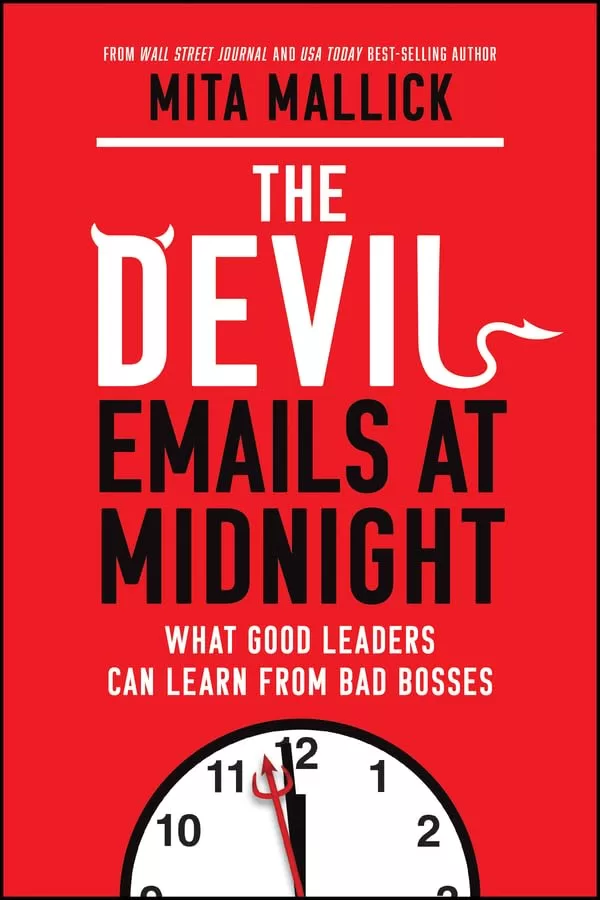
The Devil Emails at Midnight by: Mita Mallick – Summary and Analysis

The Devil Emails at Midnight: What Good Leaders Can Learn from Bad Bosses by Mita Mallick details numerous negative experiences with different types of poor management—referred to as “bad bosses”—such as the “Devil” (unavailable boss), the “Sheriff” (bully), the “Napper” (disengaged leader), the “Chopper” (micromanager), and others. Mallick contrasts these toxic behaviors with principles of good leadership, including the importance of time management, addressing microaggressions, fostering inclusion, and avoiding pitfalls like toxic positivity and taking credit for others’ work. The work is framed as a self-reflective journey for leaders to prevent themselves from adopting these harmful habits, emphasizing that accountability and empathy are crucial for building positive and inclusive workplaces.

Briefing Document: Leadership Lessons from “The Devil Emails at Midnight”

The Devil Emails at Midnight Executive Summary

This document synthesizes the core themes and actionable insights from Mita Mallick’s The Devil Emails at Midnight: What Good Leaders Can Learn from Bad Bosses. The central premise is that effective leadership can be learned by analyzing the failures of ineffective managers. The book argues that “bad bosses aren’t born bad; they are made,” often as a product of circumstances such as a lack of training, personal trauma, deep-seated insecurity, or perpetuating a cycle of poor leadership they themselves experienced.

The author identifies and deconstructs 13 distinct “bad boss” archetypes through personal anecdotes from her career in Corporate America. These archetypes exhibit behaviors ranging from disengagement and micromanagement to bullying and bias. The cumulative impact of such behaviors is severe: they systematically break inclusion, erode trust, destroy productivity, kill creativity, and ultimately crush employee morale and well-being. A boss, the text asserts, has the single most significant impact on an employee’s mental health—more than a spouse, partner, or parent.

For each archetype, the book provides a corresponding framework for good leadership. These solutions emphasize self-awareness, clear communication, accountability, and a commitment to fostering an inclusive environment. Key recommendations include intentionally making time for team members, actively stopping microaggressions, coaching through mistakes rather than redoing work, protecting teams from a culture of false urgency, and creating systems of genuine recognition. Ultimately, the text serves as a resource guide for leaders at all levels to recognize their potential for negative behavior and choose instead to build healthy, positive workplaces where employees are valued and can thrive.

Introduction: The Devil Emails at Midnight : The Nature and Impact of Bad Bosses

The foundational argument of the text is that dysfunctional leadership is a product of environment and circumstance rather than innate character. Bad bosses are not a monolithic group of villains but individuals whose detrimental behaviors often stem from specific, identifiable causes.

  • Lack of Training: Many are promoted for being excellent individual contributors but are never taught how to manage people or lead teams.
  • Personal Wounds: The principle that “hurt people hurt people” is applied to the workplace, where wounded individuals lash out to gain a sense of power or temporary relief.
  • Modeling Bad Behavior: Some leaders simply replicate the poor management styles they have been subjected to throughout their careers.
  • Incompetence: Individuals who have “failed up” may lack the expertise for their role, leading to insecurity and poor direction.
  • Micromanagement: This often arises from a lack of trust, a need for control stemming from personal insecurity, or not knowing what their own job responsibilities should be.
  • Temporary Circumstances: Personal struggles, such as being passed over for a promotion, dealing with a difficult boss, or grieving a loss, can temporarily turn a good manager into a bad one.
The Devil Emails at Midnight: What Good Leaders Can Learn from Bad Bosses by Mita Mallick details numerous negative experiences with different types of poor management—referred to as "bad bosses"—such as the "Devil" (unavailable boss), the "Sheriff" (bully), the "Napper" (disengaged leader), the "Chopper" (micromanager), and others. Mallick contrasts these toxic behaviors with principles of good leadership, including the importance of time management, addressing microaggressions, fostering inclusion, and avoiding pitfalls like toxic positivity and taking credit for others' work. The work is framed as a self-reflective journey for leaders to prevent themselves from adopting these harmful habits, emphasizing that accountability and empathy are crucial for building positive and inclusive workplaces.

The boss holds enormous power over an employee’s experience at work. The author posits that a boss has the most significant impact on an individual’s mental health. The core failure common to most bad bosses is that they make employees feel unseen, unheard, and unvalued. This invalidation can break an individual’s spirit and has a tangible, negative impact on the organization by destroying inclusion, trust, productivity, creativity, and morale.

Analysis of Bad Boss Archetypes and Leadership Solutions

The book is structured around 13 archetypes of bad bosses, each illustrating a specific leadership failure. Each failure is paired with a constructive framework for building a better leadership style.

Archetype 1: The Unavailable Boss – “The Devil”

  • Core Behaviors: Is perpetually “too busy” for their team during work hours. Communicates primarily through late-night or early-morning emails (“the devil emails at midnight”), which are often transactional and demanding. Fails to provide guidance, feedback, or basic human connection.
  • Impact on Team: Employees feel neglected, ignored, disgruntled, and unimportant. This leads to anxiety, unhappiness, and high turnover as team members seek environments where they feel valued.
  • Leadership Solution: Leaders must intentionally create and protect time for their teams.
  • Free Up Time: Proactively declutter calendars by removing non-essential meetings (e.g., those with no agenda, those where work can be done asynchronously).
  • Focus on How to Connect: Use freed-up time for high-value interactions like one-on-ones, skip-level meetings, team off-sites, and spontaneous check-ins. Be present and minimize distractions during these interactions.
  • Fend Off and Stay Firm: Protect the time dedicated to the team. Avoid canceling these meetings and reschedule promptly with an explanation if unavoidable.

Archetype 2: The Bullying Boss – “The Sheriff”

  • Core Behaviors: Engages in bullying, often through microaggressions. In the author’s case, this manifested as the boss refusing to learn her name (Madhumita) and instead renaming her “Mohammed” in public and private. This type of boss uses their power to isolate and demean individuals.
  • Impact on Team: Microaggressions deplete energy, chip away at confidence, and make employees question their sense of belonging. This leads to burnout, decreased job satisfaction, and high turnover, which costs U.S. businesses nearly $1 trillion annually.
  • Leadership Solution: Leaders must actively work to recognize and stop microaggressions.
  • Be Open to Learning: Research terms and behaviors to understand their impact. Listen to and believe employees who share their experiences.
  • Determine When to Intervene: Intervene in the moment to set a cultural tone or correct personal missteps. Intervene afterward for one-on-one coaching or to address more complex situations.
  • Hold Individuals Accountable: A culture is defined by the worst behavior a leader tolerates. Repeat harmful behavior cannot be excused.
The Devil Emails at Midnight: What Good Leaders Can Learn from Bad Bosses by Mita Mallick details numerous negative experiences with different types of poor management—referred to as "bad bosses"—such as the "Devil" (unavailable boss), the "Sheriff" (bully), the "Napper" (disengaged leader), the "Chopper" (micromanager), and others. Mallick contrasts these toxic behaviors with principles of good leadership, including the importance of time management, addressing microaggressions, fostering inclusion, and avoiding pitfalls like toxic positivity and taking credit for others' work. The work is framed as a self-reflective journey for leaders to prevent themselves from adopting these harmful habits, emphasizing that accountability and empathy are crucial for building positive and inclusive workplaces.

A key tool for intervention is the 5Ds of Bystander Intervention developed by the nonprofit Right to Be:

Tactic Description
Distract A subtle and creative way to interrupt harassment.
Delegate Asking a third party for help in intervening.
Document Recording or taking notes on an instance of harassment.
Delay Checking in on the target after the incident.
Direct Responding directly to the person causing harm and naming the behavior.

Archetype 3: The Actively Disengaged Boss – “The Napper”

  • Core Behaviors: Is physically present but mentally absent. This boss dozes off in meetings, shows up late and leaves early, and displays a profound lack of interest in their work and team.
  • Impact on Team: Disengagement is contagious. It erodes trust, decreases team engagement, and negatively affects productivity. Research shows that HR policies designed to boost morale (recognition programs, promotions, bonuses) are neutralized when an employee reports to a disengaged leader. Actively disengaged employees cost the world an estimated $8.8 trillion in lost productivity.
  • Leadership Solution: Leaders must intervene to re-engage team members rather than ignoring the behavior.
  • Be a Mirror: Objectively describe the observed behaviors to the individual.
  • Allow Space: Create an opportunity for the person to share what is going on, whether personal or professional.
  • Ask What Has to Change: Prompt self-reflection by asking what would make them excited about work again.
  • Spark Their Interest in Learning: Help them find opportunities to learn new skills.
  • Create a Plan and Stick to It: If they recommit, create a clear plan with measurable behaviors and a timeline. If they are unwilling to change, help them transition out of the organization.

Archetype 4: The Micromanaging Boss – “The Chopper”

  • Core Behaviors: Hovers over the team like a helicopter. Demands to be copied on all emails, requires approval for minor tasks, constantly requests updates, and frequently redoes the team’s work without explanation.
  • Impact on Team: Micromanagement kills creativity, initiative, and morale. Team members become demotivated, stop making decisions, and feel untrusted. It is a major reason for employee turnover, with 46% of employees citing it as a reason to quit.
  • Leadership Solution: Understand the root cause of the behavior (fear, lack of trust, incompetence) and shift from controlling to coaching.
  • For First-Time Managers: Recognize the common pitfall of failing to transition from “doing” to “directing.”
  • Focus on the Output: Align on the objective and the desired end result, but allow the team autonomy in how they get there.
  • Coach Through Mistakes: Instead of fixing errors yourself, guide the team to understand and correct them. This builds capability and trust.
  • Don’t Be a Helicopter Manager: Give the team space to own their work, try new things, and even fail. Provide air cover and support rather than constant oversight.

Archetype 5: The “Everything is Urgent” Boss – “The White Rabbit”

  • Core Behaviors: Creates a culture of false urgency where everything is a “fire drill.” This boss cries wolf, manufactures crises, and operates in a constant state of reactive chaos.
  • Impact on Team: The team lives in a chronic state of being overwhelmed. They cannot distinguish between what is important and what is not, leading to rushed, poor-quality work, missed deadlines, and burnout. Eventually, the team stops responding to real crises.
  • Leadership Solution: Instill a culture of proactive planning and clear prioritization.
  • Define What Is Urgent: Establish a clear, shared understanding of what constitutes a true emergency that requires immediate action.
  • Help Your Team Prioritize: Regularly review individual and team initiatives. Use a long-term view to determine what should be started, paused, or stopped completely.
  • Protect Your Team from Fake Fire Drills: Act as a filter for external requests. Push back, ask for context, and negotiate deadlines to protect the team’s focus on high-impact work.

Archetype 6: The Fear-Based Boss – “Medusa”

  • Core Behaviors: Rules through fear, intimidation, screaming, public humiliation, and threats. Creates a toxic environment where employees are afraid to speak up or make mistakes.
  • Impact on Team: Fear-based leadership destroys psychological safety. It kills communication, decreases productivity, stifles innovation, and is a direct path to employee burnout. It costs the U.S. economy an estimated $36 billion annually in lost productivity.
  • Leadership Solution: Create a culture of respect and hold fear-based leaders accountable.
  • Stop Labeling Victims as “Detractors”: When an employee speaks up about toxic behavior, believe them. Labeling them as troublemakers blames the victim and protects the perpetrator.
  • Spot Signs of Burnout: Be vigilant for signs of burnout, which include energy depletion, mental distance from the job, and reduced efficacy.
  • Hold Yourself Accountable: A leader is accountable for the culture on their team. Tolerating a fear-based manager makes the leader complicit. Making hard choices about who stays and who goes is essential.

Archetype 7: The Biased Boss – “The Great Pretender”

  • Core Behaviors: Penalizes employees for being pregnant or mothers, often under the guise of “helping.” This boss sidelines pregnant employees, removes them from key projects, questions their ambition, and passes them over for promotions.
  • Impact on Team: This behavior perpetuates systemic biases that harm women’s careers and contributes directly to the gender pay gap. It can cause lasting economic and professional damage.
  • Leadership Solution: Actively identify and interrupt biases against pregnant women and mothers.

Term Description
Pregnancy Penalty Bias against pregnant women, who are judged as less committed, dependable, and authoritative.
Motherhood Penalty The price mothers pay, being less likely to be hired or promoted and earning lower salaries. This accounts for 80% of the gender pay gap.
Fatherhood Premium The bonus fathers receive, as they are perceived as more committed and stable, leading to higher starting salaries.

  • Interrupt Your Own Bias: Engage in self-reflection to understand and challenge personal and societal biases about mothers in the workplace.
  • Ask How You Can Support Them: Instead of making assumptions, ask pregnant women and mothers what they need to succeed.
  • Interrupt Bias to Educate Team Members: Use open-ended questions to challenge biased assumptions when they arise in team discussions (e.g., “Has she indicated she’s not coming back from leave? Why isn’t she being considered for this promotion?”).

Archetype 8: The Kind but Incompetent Boss – “The Grinner”

  • Core Behaviors: Is genuinely likable, kind, and supportive but lacks the fundamental skills and expertise to do their job. This forces the team to do their work for them.
  • Impact on Team: While kindness may mask the issue, incompetence drains the team’s energy and resources. It creates frustration and resentment as team members are forced to “prop up” their boss, ultimately affecting morale and productivity. 46% of employees say their boss is incompetent.
  • Leadership Solution: Look beyond likability and assess true fitness for a leadership role.
  • Challenge Biases of Who “Looks Like a Leader”: Be aware of the tendency to favor leaders who fit a traditional mold (e.g., attractive, white, male) over those with proven competence.
  • Set Leaders Up for Success: Ensure all leaders, especially new ones, have a proper onboarding plan, training, and support system.
  • Assess if They Are Fit for the Job: Stop promoting high-performing individual contributors into management roles without assessing their potential to lead people. Consider creating parallel career tracks for individual contributors.

Archetype 9: The Toxic Positivity Boss – “The Cheerleader”

  • Core Behaviors: Enforces a relentless, unrealistic optimism. Surrounds themselves with “yes people,” dismisses or invalidates any negative feelings or legitimate concerns, and uses excessive praise as a tool of manipulation.
  • Impact on Team: Toxic positivity prevents the team from addressing real problems. It creates an environment where people feel they cannot be authentic, leading to emotional exhaustion and burnout. Poor business decisions are made because reality is ignored in favor of “positive vibes.”
  • Leadership Solution: Balance optimism with realism and validate the team’s full range of experiences.
  • Challenge “Yes People” Culture: Encourage constructive dissent and create space for people to say “no” or raise concerns without fear.
  • Avoid Manipulative Praise: Give specific, genuine feedback. Don’t use flattery to pressure employees into taking on impossible tasks.
  • Allow for Negative Emotions: Acknowledge that it’s okay for people not to be happy all the time, especially during challenging circumstances. Offer support instead of platitudes.

Archetype 10: The Gossiping Boss – “Gossip Girl”

  • Core Behaviors: Uses gossip and confidential information as a currency to gain power, build alliances, and sabotage others. Creates a culture of rumors and mistrust.
  • Impact on Team: A gossiping boss destroys trust among team members, increases anxiety, and reduces productivity. It can cause significant, lasting damage to individuals’ careers and well-being.
  • Leadership Solution: Foster a culture of direct, transparent communication.
  • Stop and Pause Before Gossiping: Reflect on the intent and potential harm before sharing information about someone who isn’t present.
  • Don’t Engage in Gossip: If a leader or colleague tries to engage in harmful gossip, refuse to participate and redirect the conversation.
  • Set a Culture of Transparent Communication: Be as open as possible about challenges and decisions. When people have access to information, there is less room for gossip to thrive.

Archetype 11: The Credit-Stealing Boss – “Spotlight”

  • Core Behaviors: Takes credit for all of the team’s work and ideas. Is obsessed with being in the limelight and rarely, if ever, allows team members to present their own work or receive public recognition.
  • Impact on Team: Employees feel invisible, unappreciated, and demotivated. When their contributions are not acknowledged, they lose their sense of purpose and engagement. A Korn Ferry survey found nearly 50% of respondents said their boss has taken credit for their work.
  • Leadership Solution: Build a culture where recognition is actively and fairly distributed.
  • Know What Every Team Member Is Working On: Use skip-level meetings and informal check-ins to bypass credit-hoarding managers and understand individual contributions.
  • Give Team Members Opportunities to Step into the Spotlight: Actively create opportunities for team members to present their work to senior leaders and at team meetings.
  • Create a Culture of Recognition: Model the behavior of giving credit where it is due. Publicly acknowledge the contributions of specific individuals to show that sharing the spotlight is the team standard.

Archetype 12: The Loyalty-Demanding Boss – “Tony”

  • Core Behaviors: Believes loyalty is owed to them. Hoards talented employees, preventing them from seeking new opportunities. Feels betrayed when a team member wants to advance their career elsewhere and may actively sabotage their efforts.
  • Impact on Team: This mindset traps employees and stifles their growth. It creates a “family” dynamic where leaving is seen as a betrayal, leading to a toxic and controlling environment. Eventually, high-performers will leave the company entirely to escape.
  • Leadership Solution: Understand that loyalty must be earned, not demanded, and that a leader’s job is to support career growth.
  • Stop Hoarding Talent: See it as a success when a team member is ready for a new challenge. A leader’s primary job is to develop more leaders.
  • Be Honest About Career Opportunities: Have transparent conversations about timelines, promotions, and development. Don’t make promises that can’t be kept.
  • When You Care, Let Them Go: When an employee resigns, show support and grace. How a person offboards is critical, especially with the rise of “boomerang employees” who may return later.

Archetype 13: The Grieving Boss

  • Core Behaviors: Based on the author’s own experience after the sudden death of her father, this boss exhibits a combination of other bad boss traits as a result of trauma. Behaviors included disengagement, micromanagement, emotional outbursts, and late-night emailing.
  • Impact on Team: The team is left without consistent leadership. They may feel confused, unsupported, or become the target of uncharacteristic behavior, leading to a breakdown in team dynamics and performance.
  • Leadership Solution: Organizations and leaders must create space for grief.
  • Give More Time Off: Standard bereavement leave (3-5 days) is insufficient.
  • Expand the Definition of Family: Policies should be flexible and cover the loss of any loved one, including loss from miscarriage.
  • Don’t Ask for Proof of Death: Trust employees during their time of need.
  • Offer Grief Counseling: Provide access to mental health resources like Employee Assistance Programs (EAPs).
  • Take the Individual’s Lead: Allow the grieving person to determine their pace upon returning to work. Don’t make decisions for them.

Conclusion

The overarching message of The Devil Emails at Midnight is that leadership is a profound responsibility, not an inherent right. The 13 archetypes serve as cautionary tales, reminding leaders that anyone, under the right pressures, can fall into dysfunctional behavior. The path to effective leadership is not about surviving bad bosses but about committing to not becoming one.

The text concludes with a call to action for leaders to look in the mirror and take ownership of their behavior. The goal should be to create a world of work where good leaders vastly outnumber the bad, making toxic environments extinct. This requires moving beyond simply being a “good” leader who avoids these pitfalls and aspiring to be a “great” one who actively builds inclusive, healthy, and thriving workplaces.

Contact Factoring Specialist, Chris Lehnes

Study Guide: The Devil Emails at Midnight

Part I: Short-Answer Quiz

Instructions: Please answer the following questions in 2-3 sentences each, based on the provided source context.

  1. Describe the “Devil” archetype of a bad boss and outline the three-part framework the author proposes for leaders to make more time for their teams.
  2. What is a microaggression, as defined in the text, and what are some of its cumulative effects on an individual and an organization?
  3. According to the source, what is the estimated global cost of employee disengagement, and how do disengaged leaders “neutralize” positive HR policies like recognition programs and bonuses?
  4. The text contrasts micromanaging with coaching. Explain the core difference between these two approaches and identify two key pieces of advice for first-time managers to avoid becoming a “helicopter manager.”
  5. What motivates a “White Rabbit” boss to create a culture of constant fire drills, and what are the negative consequences for their team’s productivity and morale?
  6. The source identifies five detrimental impacts of fear-based leadership, as exemplified by the “Medusa” boss. List at least four of these consequences.
  7. Define the “motherhood penalty” and the “fatherhood premium,” and cite one statistic from the text that illustrates the economic impact on mothers.
  8. What is “toxic positivity,” and what are two behaviors a “Cheerleader” boss might exhibit that are characteristic of this trait?
  9. How has the concept of employee loyalty evolved from the “corporate social contract” of the past, and what does a boss like “Tony Soprano” fail to understand about earning loyalty today?
  10. Based on the author’s personal experience with grief, explain how personal trauma can temporarily turn a good leader into a “bad boss,” referencing two specific bad-boss behaviors she exhibited.

——————————————————————————–

Part II: Quiz Answer Key

  1. The “Devil” archetype is a boss who never has time for their team except for sending flurries of emails late at night, making employees feel neglected and undervalued. The proposed framework for making time is: Free Up Time by decluttering calendars of low-value meetings, Focus on How to Connect through meaningful one-on-ones and check-ins, and Fend Off and Stay Firm by protecting the time dedicated to the team.
  2. A microaggression is defined as an “everyday insult, indignity, and demeaning message” sent to individuals, often from historically marginalized communities. These actions deplete energy, chip away at confidence, and can lead to decreased job satisfaction, burnout, and a huge drop in organizational productivity as talent may choose to resign.
  3. Employee disengagement costs the world an estimated $8.8 trillion in lost productivity, equivalent to 9% of global GDP. Disengaged leaders neutralize HR policies because employees working for them show no increase in engagement even after receiving formal recognition, a promotion, or a full bonus.
  4. Micromanaging involves telling teams exactly how to do their work and controlling every detail, whereas coaching involves explaining expectations, teaching skills, and empowering them to own their work. To avoid becoming a helicopter manager, first-time leaders should Focus on the Output by aligning on objectives rather than dictating methods, and Coach Through Mistakes by helping team members learn from errors instead of just fixing the mistakes for them.
  5. A “White Rabbit” boss is often motivated by the belief that being perpetually busy and in “fire drill mode” is a status symbol that demonstrates their value and importance to leadership. This creates a false sense of urgency that overwhelms the team, causes them to miss real deadlines, deliver poorer quality work, and ultimately leads to stress, anxiety, and burnout.
  6. The five detrimental impacts of fear-based leadership are that it kills communication, leads to decreased productivity, isolates team members, kills creativity and innovation, and leads to burnout.
  7. The “motherhood penalty” is the price working women pay for becoming mothers, resulting in being less likely to be hired or promoted and earning lower salaries. The “fatherhood premium” is the belief that fathers are more committed and stable, which leads to them being offered higher starting salaries. The text notes that mothers working full-time earn 71 cents for every dollar paid to fathers, a gap that is even worse for mothers of color.
  8. Toxic positivity is the belief that maintaining a positive mindset will change the outcome of any situation, which leads to denying or invalidating negative experiences. A “Cheerleader” boss might exhibit this by surrounding themselves with “yes people” who never challenge them, or by providing excessive, manipulative praise to get an employee to take on an impossible task.
  9. The old “corporate social contract” involved companies providing job security in exchange for unwavering employee loyalty. Today, job security is not guaranteed, and loyalty must be earned. A “Tony Soprano” boss wrongly believes loyalty is owed to them simply because they issue a paycheck and feels betrayed when an employee seeks career growth elsewhere.
  10. The author’s grief caused her to become a bad boss by making her disengaged, inconsistent, and overly sensitive to feedback, which manifested in specific behaviors. For example, like “The Devil,” she began emailing her team at all hours of the night because she couldn’t sleep, and like “The Chopper,” she would micromanage and redo her team’s work right before a presentation.

——————————————————————————–

Part III: Essay Questions

Instructions: The following questions are designed for longer, more analytical responses. No answers are provided.

  1. The author categorizes “bad bosses” based on distinct behaviors, such as neglect (The Devil, The Napper), over-involvement (The Chopper), and psychological manipulation (The Sheriff, Medusa, Tony Soprano). Compare and contrast the damage caused by a disengaged/neglectful boss with the damage caused by a hyper-involved/controlling boss. Which style do you believe causes more long-term harm to an organization’s culture and why?
  2. Throughout the text, the author links bad boss behaviors to significant financial costs, citing statistics on lost productivity from disengagement, fear-based leadership, and employee turnover. Synthesize these arguments to build a comprehensive business case for investing in leadership training. How do the actions of archetypes like “The Napper,” “Medusa,” and “The White Rabbit” directly impact a company’s bottom line?
  3. Analyze the role of systemic bias in the narratives of “The Sheriff,” “The Great Pretender,” and “The Grinner.” How do biases related to race, gender, pregnancy, and traditional perceptions of leadership enable these bosses to thrive or have their incompetence overlooked?
  4. Mita Mallick includes a deeply personal chapter about her own period of being a “bad boss” while grieving. Discuss the effectiveness of this narrative strategy. How does this confession impact her authority as an author and the overall message of the book?
  5. Imagine you are a newly promoted manager who has just read this book. Synthesize the key frameworks and “tips for leaders” from at least five different chapters to create a personal leadership charter. Your charter should outline your commitments to your team regarding time management, communication, feedback, recognition, and career development.

——————————————————————————–

Part IV: Glossary of Key Terms

TermDefinition
5Ds of Bystander InterventionA framework from the nonprofit Right to Be for intervening in harassment: Distract (interrupting the situation), Delegate (getting help), Document (recording the incident), Delay (checking in afterward), and Direct (confronting the behavior).
Boomerang EmployeesIndividuals who leave a company and then return to that same company within a year or two.
BurnoutA syndrome defined by the World Health Organization as resulting from chronic, unmanaged workplace stress. It is characterized by feelings of exhaustion, increased mental distance or cynicism about one’s job, and reduced professional efficacy.
CoachingA leadership approach focused on explaining expectations, teaching skills, guiding team members through mistakes, and empowering them to make an impact. This is contrasted with micromanagement.
Employee DisengagementA state where employees are not engaged or are actively disengaged, costing trillions in lost productivity. Disengaged leaders can neutralize the effectiveness of positive HR policies like promotions or bonuses.
False Sense of UrgencyA state created by a bad boss where everything is treated as a critical, time-sensitive “fire drill.” This culture leads to missed deadlines, poor quality work, stress, and burnout.
Fatherhood PremiumThe workplace benefit that occurs because of the belief that fathers are more committed, stable, and deserving, often leading to them being offered higher starting salaries than childless men or mothers.
Fear-Based LeadershipA management style that uses fear, intimidation, and threats to drive results. This approach kills communication, creativity, and productivity, and ultimately leads to team burnout.
InclusionThe state where an employee feels their work is valued, their voice and contributions matter, and they are recognized and seen. The boss has the single biggest impact on whether an employee feels included.
MicroaggressionsEveryday insults, indignities, and demeaning messages sent to people, often from marginalized communities, by well-intentioned people who are unaware of the hidden messages being sent.
MicromanagementA pattern of behavior that includes the excessive need to control aspects of how teams work, the inability to delegate decisions, and an obsession with gathering information and redoing the team’s work.
Motherhood PenaltyThe systemic disadvantage and price women in the workplace pay for becoming mothers, making them less likely to be hired or promoted and causing them to earn lower salaries. This penalty accounts for 80% of the gender pay gap.
Net Promoter Score (NPS)A marketing metric used to measure customer loyalty. The text applies this concept to employees, where “detractors” are those labeled as unhappy or critical, often after speaking up about a toxic boss.
Pregnancy PenaltyThe bias, inflexibility, and professional sidelining that women face in the workplace once they become visibly pregnant. It is based on the perception that they are less committed, less dependable, and more emotional.
Toxic PositivityThe belief that no matter how difficult or stressful a situation is, people should maintain a positive mindset. In the workplace, this leads to denying, minimizing, and invalidating the genuine negative experiences of team members.

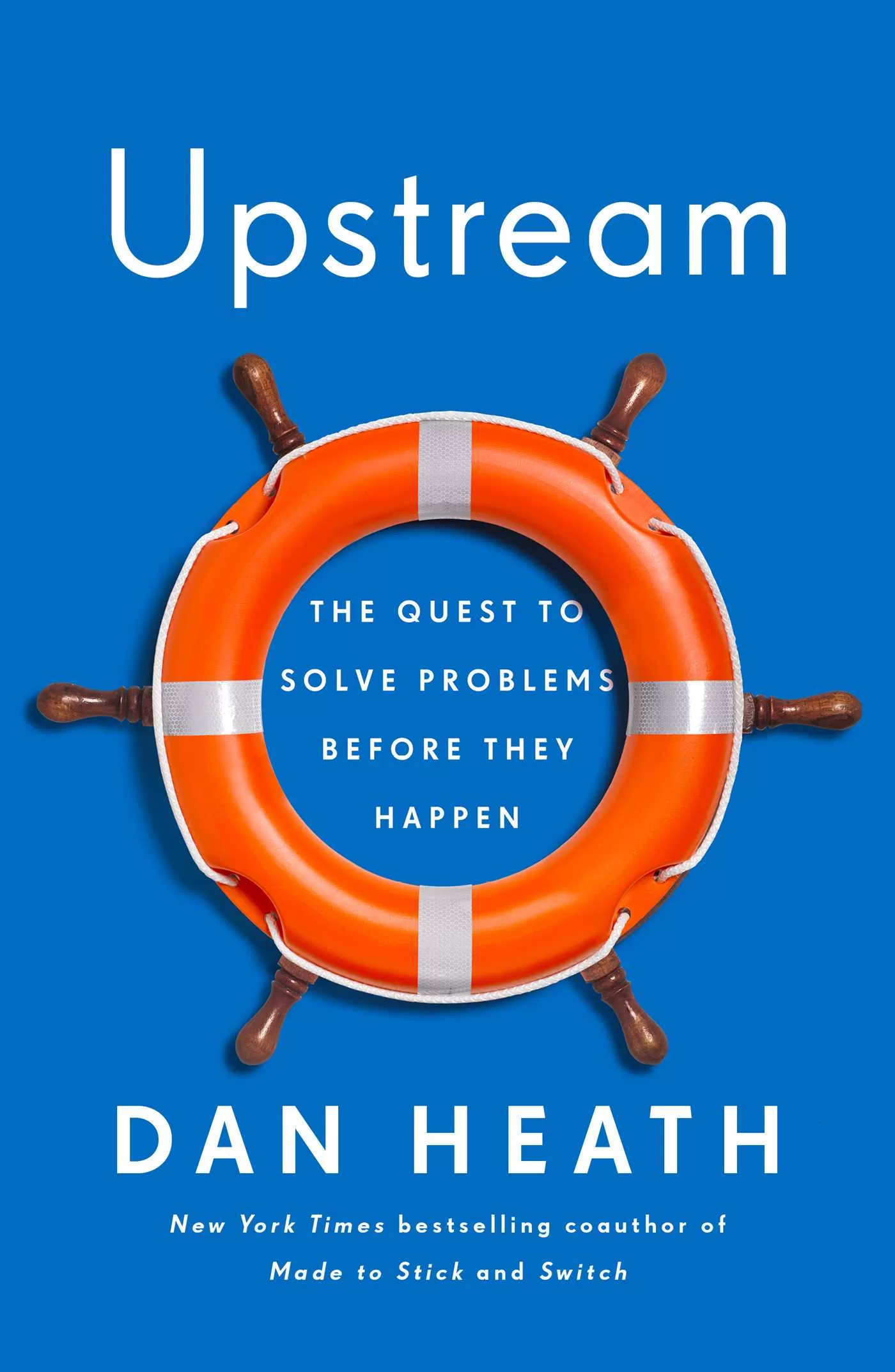
Upstream by Dan Heath: Dangers of Problem Blindness

Core Principles and Applications of Upstream Thinking

 the core principles of "upstream thinking," a framework for preventing problems rather than reacting to them. The central thesis is that society is disproportionately focused on downstream responses—addressing crises, emergencies, and failures after they occur. An upstream approach, conversely, involves proactively identifying and dismantling the systems that cause these problems in the first place. This shift is impeded by three primary barriers

This book synthesizes the core principles of “upstream thinking,” a framework for preventing problems rather than reacting to them. The central thesis is that society is disproportionately focused on downstream responses—addressing crises, emergencies, and failures after they occur. An upstream approach, conversely, involves proactively identifying and dismantling the systems that cause these problems in the first place. This shift is impeded by three primary barriers: Problem Blindness, the failure to see a problem or the belief that it is inevitable; Lack of Ownership, a mindset where those capable of fixing a problem believe it is not their responsibility; and Tunneling, a state of scarcity (of time, money, or bandwidth) that forces short-term, reactive thinking and precludes long-term planning. Successful upstream interventions require leaders to unite diverse teams, identify high-leverage points within complex systems, establish early warning signals, and secure funding for outcomes that are often invisible—the absence of problems. The analysis reveals that effective upstream work is not about finding a single “magic pill” solution but about creating data-rich “scoreboards” that enable continuous learning and systems-level change.

——————————————————————————–

1. The Upstream Philosophy: Prevention Over Reaction

The core concept of upstream thinking is captured in a public health parable: two friends rescuing an endless stream of drowning children from a river, until one goes upstream “to tackle the guy who’s throwing all these kids in the water.” This metaphor distinguishes between downstream actions, which react to problems, and upstream efforts, which aim to prevent them.

Defining Upstream vs. Downstream Action

  • Downstream Action: Reactive, tangible, and focused on restoration. Examples include a call center representative resolving a customer complaint, a doctor performing bypass surgery, or a police officer making an arrest after a crime. These actions are often demanded by circumstance.
  • Upstream Action: Proactive, preventative, and focused on systems change. It involves “systems thinking” to systematically reduce the harm caused by problems. Examples include redesigning a website so customers don’t need to call for help, promoting policies that support healthy lifestyles to prevent heart disease, or creating community opportunities that deter crime. These efforts are chosen, not demanded.

The further one moves upstream, the more complex, ambiguous, and slower the solutions become, but the potential for massive and long-lasting good increases significantly. An intervention can exist at many points along a spectrum; for example, swim lessons are further upstream than life preservers in preventing drowning.

The Case of Expedia: A Model for Upstream Intervention

The travel website Expedia provides a clear illustration of a successful upstream intervention.

  • The Downstream Problem: In 2012, 58 out of every 100 Expedia customers placed a support call after booking. The top reason, accounting for 20 million calls annually at a cost of roughly $100 million, was to request a copy of their itinerary.
  • The Downstream Mindset: The call center was managed for efficiency—minimizing call time—rather than questioning why the calls were necessary.
  • The Upstream Shift: A “war room” was created with a mandate to “Save customers from needing to call us.” They analyzed the root causes of the calls.
  • Upstream Solutions: For the itinerary issue, they implemented simple fixes: adding an automated voice-response option, changing email protocols to avoid spam filters, and creating an online self-service tool.
  • The Result: The 20 million itinerary-related calls were virtually eliminated. The overall percentage of customers needing to call for support dropped from 58% to approximately 15%. This success was achieved by integrating the work of different teams (product, tech, support) to solve a problem that no single group “owned.”

The Asymmetry of Attention: Why Society Favors Reaction

Despite the clear benefits of prevention, societal efforts are overwhelmingly skewed toward reaction.

  • Tangibility and Measurement: Downstream work is more tangible and easier to measure. A police officer who writes a stack of tickets has a visible output, while an officer whose presence on a dangerous corner prevents accidents has invisible victims and victories written only in declining data.
  • Funding and Resources: We spend billions to recover from disasters like hurricanes and earthquakes, while disaster preparedness is “perpetually starved for resources.” The U.S. healthcare system, a $3.5 trillion industry, is designed almost exclusively for reaction, functioning like a giant “Undo button” for ailments rather than a system for creating health.
  • Heroism: Society celebrates the rescue, the recovery, and the response. Upstream work creates a quieter breed of hero, one “actively fighting for a world in which rescues are no longer required.”

Case Study: Healthcare Spending in the U.S. vs. Norway

The contrast between U.S. and Norwegian healthcare spending illustrates the consequences of a downstream focus. While both nations spend a similar percentage of GDP on total health (combining formal healthcare with “social care” like housing, food, and childcare), their allocation is radically different.

Spending MetricUnited StatesNorway
Spending Ratio (Upstream:Downstream)For every 1** spent downstream, the U.S. spends roughly **1 upstream.For every 1** spent downstream, Norway spends roughly **2.50 upstream.
FocusWorld leader in downstream, high-tech treatments (e.g., knee replacements, cancer treatment).Focus on upstream support systems (e.g., free prenatal/delivery care, 49 weeks of paid parental leave, guaranteed high-quality daycare, free college).
Health Outcomes34th in infant mortality, 29th in life expectancy, 21st in stress levels.5th in infant mortality, 5th in life expectancy, 1st in stress levels.

The data suggests the U.S. is not necessarily spending “too much” on health, but that its allocation is radically different from its peers, prioritizing expensive cures over cost-effective prevention.

2. The Three Barriers to Upstream Thinking

Despite the logic of prevention, several powerful forces consistently push individuals and organizations downstream.

A. Problem Blindness: The Invisibility of Solvable Problems

Problem blindness is the belief that negative outcomes are natural, inevitable, or out of one’s control. It is treating a solvable problem like the weather.

  • Mechanism: It arises from inattentional blindness (intense focus on one task causing one to miss other information, like radiologists missing a gorilla in a CT scan) and habituation (growing accustomed to consistent stimuli until they become normal).
  • Example: Chicago Public Schools (CPS): In 1998, the 52.4% graduation rate was seen by many as an intractable problem caused by poverty and other societal ills—”that’s just how it is.” The problem was accepted as a regrettable but inevitable condition.
  • Example: Sexual Harassment: Before the term was coined in 1975 by Lin Farley, the behavior was so normalized that women were often encouraged to tolerate it. Giving the problem a name—”sexual harassment”—was an act of “problematizing the normal,” helping society awaken from problem blindness.
  • Example: C-Sections in Brazil: An 84% C-section rate in Brazil’s private health system was seen as normal by many doctors, driven by convenience and financial incentives. An activist movement led by mothers who felt pressured into the procedure successfully challenged this norm, reframing it as a public health problem.

B. Lack of Ownership: “Not My Problem to Fix”

This barrier exists when the people or groups best positioned to solve a problem declare, “That’s not mine to fix.” This can result from fragmented responsibilities, self-interest, or a perceived lack of legitimacy.

  • Fragmented Responsibility: At Expedia, no single team was measured on reducing customer calls, so no one “owned” the problem.
  • Lack of Psychological Standing: People may feel they lack the legitimacy to act on a problem that doesn’t affect them personally. Research shows that explicitly extending standing (e.g., naming a group “Men and Women Opposed to Proposition 174”) can dramatically increase participation from those without a direct vested interest.
  • Taking Ownership: Dr. Bob Sanders & Car Seats: Spurred by a 1975 article in Pediatrics that extended psychological standing to pediatricians on auto safety, Dr. Sanders took ownership of the issue. He successfully lobbied for Tennessee to become the first state to mandate child car seats in 1978. This micro-level action catalyzed a macro-level change, with all 50 states passing similar laws by 1985, saving an estimated 11,274 young lives by 2016.
  • Taking Ownership: Ray Anderson & Interface: The founder of carpet-tile firm Interface took ownership of his company’s environmental impact after reading Paul Hawken’s The Ecology of Commerce. He launched “Mission Zero,” a quest to eliminate the company’s negative environmental footprint by 2020. This was an optional, self-imposed burden that transformed the company’s culture and processes.

C. Tunneling: The Tyranny of Short-Term Crises

When experiencing scarcity of time, money, or mental bandwidth, people adopt “tunnel vision.” They stop long-term planning and focus solely on managing the immediate crisis, which prevents upstream thinking.

  • The Scarcity Trap: The experience of poverty reduces cognitive capacity more than a full night without sleep. It forces short-sighted decisions (like taking a payday loan) not because people are undisciplined, but because the tunnel of scarcity leaves no room for long-term considerations.
  • Organizational Tunneling: A study of nurses found they were constantly engaged in creative workarounds for recurring problems (e.g., missing equipment, lack of towels) but never engaged in fixing the underlying processes. Their scarce time and attention kept them in a reactive mode.
  • Escaping the Tunnel: Escaping requires creating slack—a reserve of time or resources dedicated to problem-solving. This can be structured, as with the “safety huddles” in hospitals or the “Freshman Success Teams” at CPS, which provide a guaranteed forum for emerging from the tunnel to address systems-level issues.
  • Co-opting the Tunnel: The Ozone Layer: To address the long-term threat of ozone depletion, advocates had to make an upstream problem feel downstream. They co-opted the power of tunneling by creating urgency through public advocacy, the memorable metaphor of an “ozone hole,” and negotiating international agreements like the Montreal Protocol that removed threats for opponents (like DuPont), thus reducing their need to fight the solution.

3. Key Strategies for Upstream Leaders

Successfully navigating the barriers requires addressing a series of fundamental questions.

A. How Will You Unite the Right People?

Upstream work is fundamentally collaborative, requiring leaders to “surround the problem” with all the necessary stakeholders.

  • Key Insight: Give every stakeholder a role. Progress hinges on voluntary effort, so maintaining a “big tent” is crucial.
  • Case Study: Iceland’s War on Teen Substance Abuse: In the 1990s, 42% of Icelandic teens reported being drunk in the past month. A coalition of researchers, policymakers, schools, parents, and community groups united to change the culture around teens.
    • Strategy: They focused on boosting “protective factors” (e.g., participation in formal sports, time spent with parents, “natural highs”) and reducing “risk factors” (unstructured, unsupervised time).
    • Tactics: They reinforced curfews, gave families “gift cards” for recreational activities, and professionalized coaching in sports clubs.
    • Result: Over 20 years, the percentage of teens getting drunk in the past 30 days fell from 42% to 5%. Daily smoking dropped from 23% to 3%.
  • Case Study: Domestic Violence in Newburyport, MA: After a woman was murdered by her estranged husband, the Jeanne Geiger Crisis Center united police, advocates, parole officers, and prosecutors to form a Domestic Violence High Risk Team.
    • Data-Driven Collaboration: The team meets monthly to review cases of women identified by the “Danger Assessment” tool as being at extreme risk of homicide. They use a by-name list to coordinate actions like police drive-bys and creating emergency plans.
    • Result: In the 14 years since the team’s formation, not one woman in the communities they serve has been killed in a domestic violence–related homicide, compared to 8 in the 10 years prior.
  • The Role of Data: In many successful upstream efforts, data is not used for top-down “inspection” but for frontline “learning.” Real-time, granular data (like a by-name list) becomes the centerpiece that unites diverse teams around a concrete and shared goal: “What are we going to do about Michael next week?”

B. How Will You Change the System?

Lasting upstream work must culminate in systems change, altering the “water” we swim in so that better outcomes happen by default.

  • Systems Determine Probabilities: A well-designed system makes success highly probable (e.g., fluoridated water preventing cavities). A flawed system rigs the game against certain people. As Dr. Anthony Iton discovered, disparities in life expectancy of up to 20 years between nearby ZIP codes are not caused by a few factors, but by entire systems (housing, education, crime, food access) that create “incubators of chronic stress.”
  • The California Endowment’s BHC Initiative: This $1 billion, 10-year program aims to fix these broken systems not by directly providing health services, but by empowering residents of 14 challenged communities to gain political power and win policy victories that reshape their environments.
  • The Danger of Enabling Bad Systems: Some well-intentioned downstream efforts can inadvertently prop up the flawed systems that create need. For example, while DonorsChoose provides vital classroom supplies, its success could excuse school districts from their funding obligations. The goal should be to push for a world where such crutches are no longer needed.

C. Where Can You Find a Point of Leverage?

In complex systems, the challenge is finding the right lever. This requires getting “proximate” to the problem.

  • Case Study: The UChicago Crime Lab & “Becoming a Man” (BAM): To understand youth violence, researchers read 200 consecutive homicide reports. They discovered that many deaths resulted not from strategic gang wars but from impulsive reactions to trivial disputes. This pointed to impulsivity as a leverage point.
    • The Intervention: They funded and studied “Becoming a Man” (BAM), a program that used small-group sessions and cognitive behavioral therapy (CBT) to help at-risk young men learn to manage anger and slow down their thinking in fraught situations.
    • The Result: A randomized controlled trial found that BAM participants had 45% fewer violent-crime arrests.
  • The Power of Proximity: Architects designing for the elderly donned an “age simulation suit” to experience navigation challenges firsthand. This direct experience revealed leverage points like the need for more benches, handrails, and three-step escalators.

D. How Will You Get Early Warning of the Problem?

Early warning signals provide the time and maneuvering room to prevent a problem or blunt its impact.

  • Predictive Analytics:
    • LinkedIn: Discovered that a customer’s product usage in the first 30 days could predict their likelihood of churning a year later. They shifted resources to intensive onboarding to ensure early engagement.
    • Northwell Health EMS: Uses historical data on 911 calls to predict where emergencies will occur (e.g., near nursing homes at mealtimes) and forward-deploys ambulances to reduce response times.
  • Human Sensors:
    • Sandy Hook Promise: After the 2012 school shooting, the organization realized that in most mass shootings, the perpetrator tells someone their plans in advance. They created the “Know the Signs” program to train students to spot warning signs and the “Say Something” anonymous tip line to report them. This system has averted multiple credible school shooting threats and led to hundreds of suicide interventions.
  • The Danger of False Positives: Early warning systems can backfire. An “epidemic” of thyroid cancer in South Korea was revealed to be an epidemic of overdiagnosis. Mass screening found huge numbers of slow-growing, nonlethal cancers (“turtles”), leading to unnecessary and harmful treatments for a problem that didn’t exist.

E. How Will You Measure Success and Avoid “Ghost Victories”?

Success in upstream work is often the absence of a negative event, making it hard to measure. This reliance on proxy measures can lead to “ghost victories”—superficial successes that cloak underlying failure.

  1. Mistaking Macro Trends for Success: In the 1990s, police chiefs across the U.S. claimed credit for falling crime rates, when in fact they were mostly benefiting from a nationwide trend.
  2. Misalignment of Measures and Mission: The City of Boston’s Public Works department measured its sidewalk repair success by spending per zone and 311 cases closed. This led them to fix sidewalks in wealthy neighborhoods (whose residents called 311) while neglecting crumbling sidewalks in poor neighborhoods, undermining their mission of equity and walkability.
  3. Measures Becoming the Mission: This is the most destructive form, where people “game” the metrics. The NYPD’s CompStat system, which held precinct leaders accountable for crime statistics, led to the widespread downgrading of crimes. In a chilling example, a reported rape of a prostitute was nearly reclassified as a “theft of service” to keep the numbers down.

To avoid ghost victories, leaders should use paired measures (balancing quantity with quality, as CPS did with graduation rates and ACT scores) and “pre-game” how measures could be misused.

F. How Will You Avoid Doing Harm?

Upstream interventions tinker with complex systems and can create unintended negative consequences, known as the “cobra effect.”

  • Case Study: Macquarie Island: A decades-long effort to eradicate invasive species on a subantarctic island created a cascade of problems. Killing rabbits (to stop erosion) led cats to eat rare birds. Killing the cats led to a rabbit population explosion. Killing all pests led to invasive weeds running rampant.
  • Anticipating Second-Order Effects: Wise interventions require seeing the whole system. The “cobra effect” is when an attempted solution makes the problem worse. Examples include an open-office plan meant to increase face-to-face collaboration actually causing it to plunge by 70%, or a ban on thin plastic bags leading retailers to offer thicker plastic bags.
  • The Need for Feedback Loops: Because not all consequences can be foreseen, upstream work requires experimentation and fast, reliable feedback loops. A business that creates a feedback loop for its staff meetings (rating each meeting on a 1-5 scale) can continuously improve them, whereas most meetings never get better because there is no mechanism for learning.

G. Who Will Pay for What Does Not Happen?

Funding prevention is notoriously difficult because success is invisible and payment models are designed for reaction.

  • The “Wrong Pocket Problem”: This occurs when the entity that pays for an intervention is not the one that reaps the financial benefits.
  • Case Study: The Nurse-Family Partnership (NFP): This program, which provides nurse home visits to first-time, low-income mothers, has been proven by multiple RCTs to produce significant long-term social benefits (e.g., reduced child abuse, preterm births, crime, and welfare payments), yielding a return of over $6 for every $1 invested. However, it struggles to get funding because the benefits are scattered across many “pockets” (Medicaid, criminal justice, social services), while a single entity is asked to bear the upfront cost.
  • Innovative Funding Models:
    • Pay for Success: A model being used in South Carolina to fund NFP, where private investors and foundations provide upfront capital. If the program meets pre-agreed success metrics, the government repays the investors. This shifts the financial risk away from the government.
    • Accountable Care Organizations (ACOs): A model where Medicare shares savings with groups of doctors who succeed in keeping their patients healthier and out of the hospital, creating a direct financial incentive for prevention.

4. Addressing Distant and Improbable Threats (“Far Upstream”)

Upstream thinking can also be applied to one-off, improbable, or unpreventable threats.

  • The Prophet’s Dilemma: This is a prediction that prevents what it predicts from happening. The massive global effort to fix the Y2K bug is a prime example. When disaster didn’t strike, many claimed it was a hoax, but it is likely the frantic preparations were what prevented the catastrophe.
  • The Power of Rehearsal: The “Hurricane Pam” simulation, conducted 13 months before Hurricane Katrina, convened 300 stakeholders to game-plan a response to a catastrophic New Orleans hurricane. While the eventual Katrina response was a national failure in many respects, the planning from Pam led to a drastically improved “contraflow” evacuation plan, which is credited with reducing the death toll from a projected 60,000 to approximately 1,700. The lesson is that preparing for disaster requires practice, but organizations in a state of “tunneling” often fail to invest in it.
  • Existential Risk & The “Black Ball” Hypothesis: Philosopher Nick Bostrom posits that technological invention is like pulling balls from an urn. So far we have pulled white (beneficial) and gray (mixed-blessing) balls. But what if there is a black ball—a technology that is easily accessible and allows a small group to cause mass destruction, thereby destroying civilization? The response to the remote threat of “Moon germs” in the 1960s, which led to the creation of NASA’s Planetary Protection Officer and strict quarantine protocols, provides an early model for how humanity can collectively address improbable but high-stakes risks.

5. Conclusion: You, Upstream

The principles of upstream thinking can be applied by individuals to solve personal and organizational problems.

  • Personal Application: Identify recurring problems in life—from finding parking to marital friction—and devise systems to prevent them. The creation of “Daddy Dolls” by a military spouse to ease her children’s pain during deployment is a powerful example of an individual creating an upstream solution.
  • Engaging in Societal Problems: When seeking to contribute to larger issues, one should:
    1. Be impatient for action but patient for outcomes: Upstream work is a long game of chipping away at a problem.
    2. Recognize that macro starts with micro: You cannot help a thousand people until you understand how to help one. Deep, proximate understanding is key.
    3. Favor “Scoreboards” over “Pills”: Prioritize initiatives that use real-time data for continuous learning and adaptation (a scoreboard) over those that seek a single, perfect, scalable solution that cannot be changed (a pill).
  • The Power of One Person: A single, retiring actuary at the Centers for Medicare & Medicaid Services wrote a “cry of the heart” letter to his boss, successfully arguing that the agency should not count “longer lives” as a cost when evaluating preventive programs. This quiet act of defiance changed a federal rule, unlocking funding for life-saving programs and demonstrating that even within vast bureaucracies, one person can achieve a profound upstream victory.
Upstream by Dan Heath. The core principles of "upstream thinking," a framework for preventing problems rather than reacting to them. The central thesis is that society is disproportionately focused on downstream responses—addressing crises, emergencies, and failures after they occur. An upstream approach, conversely, involves proactively identifying and dismantling the systems that cause these problems in the first place. This shift is impeded by three primary barriers

Upstream Thinking Study Guide

Quiz: Short-Answer Questions

Instructions: Answer the following questions in two to three sentences, drawing exclusively from the information provided in the source context.

  1. Describe the public health parable that opens the text. What is the core lesson it is meant to illustrate?
  2. Explain the problem Ryan O’Neill discovered at Expedia in 2012. What was the upstream solution the company implemented?
  3. What is “problem blindness”? How did this barrier manifest within the Chicago Public Schools (CPS) system regarding its low graduation rate?
  4. Define the barrier of “lack of ownership” and the related concept of “psychological standing.” How did the advocates for child car seat laws in the 1970s overcome this barrier?
  5. What is “tunneling”? How does this phenomenon, as described by Eldar Shafir and Sendhil Mullainathan, act as a barrier to upstream thinking?
  6. Summarize the core philosophy of the “Drug-free Iceland” campaign. What were the “risk factors” and “protective factors” it aimed to influence?
  7. What is a “ghost victory”? Using the example of Boston’s sidewalk repairs, explain how an organization can succeed on its metrics while failing its mission.
  8. How did the University of Chicago Crime Lab identify “impulsivity” as a key leverage point for reducing youth violence? Describe the “Becoming a Man” (BAM) program that addressed this.
  9. Explain the “cobra effect,” using the example of the British administrator’s attempt to reduce the cobra population in Delhi.
  10. What is the “wrong pocket problem”? How does the case of the Nurse-Family Partnership (NFP) illustrate this challenge in funding preventive programs?

Essay Questions

Instructions: The following questions are designed to provoke deeper thought and synthesis of the concepts presented in the text. Formulate a detailed response for each, citing specific examples and arguments from the source material.

  1. The text identifies three primary barriers to upstream thinking: Problem Blindness, Lack of Ownership, and Tunneling. Analyze how these three barriers were present in the Expedia case study and how the company’s leaders ultimately overcame them to implement a successful upstream intervention.
  2. Discuss the role of data in enabling upstream work, contrasting “data for the purpose of learning” with “data for the purpose of inspection.” Use the examples of the Chicago Public Schools’ Freshman On-Track metric, the Newburyport Domestic Violence High Risk Team’s Danger Assessment, and the Rockford homelessness team’s “by-name list” to illustrate your points.
  3. Compare and contrast the challenges of upstream interventions in the public sector versus the private sector, using the stories of Ray Anderson at Interface and Dr. Bob Sanders’s campaign for child car seats in Tennessee. What unique advantages and disadvantages did each leader face in trying to solve a problem they chose to own?
  4. Upstream interventions often create unintended consequences. Using the case studies of the Macquarie Island pest eradication program and the attempts to ban single-use plastic bags, discuss the importance of systems thinking, experimentation, and feedback loops in avoiding harm.
  5. The author argues that our society’s attention is “grossly asymmetrical” and skewed toward downstream reaction rather than upstream prevention. Using the detailed comparison between the United States and Norwegian healthcare systems, analyze the author’s argument. What are the demonstrated benefits and disadvantages of each country’s approach to “buying health”?

Quiz Answer Key

  1. The parable describes two friends rescuing drowning children from a river. While one continues the downstream work of pulling kids from the water, the other goes upstream to “tackle the guy who’s throwing all these kids in the water.” The lesson illustrates the difference between reacting to problems (downstream) and preventing them at their source (upstream).
  2. Ryan O’Neill found that for every 100 Expedia customers, 58 placed a call for help, with the number one reason being a request for their itinerary. The upstream solution was to prevent these calls by adding an automated voice-response option, improving email delivery to avoid spam filters, and creating an online tool for customers to retrieve their own itineraries.
  3. “Problem blindness” is the belief that negative outcomes are natural, inevitable, or out of one’s control. Within CPS, many staff members had come to accept the 50% dropout rate as “just how it is,” believing it was caused by intractable root causes like poverty or lack of student effort, which reinforced a sense of helplessness.
  4. “Lack of ownership” means that the parties capable of addressing a problem believe “that’s not mine to fix.” “Psychological standing” is the sense of legitimacy one feels in protesting or acting on an issue. Annemarie Shelness and Seymour Charles overcame this by publishing an article in Pediatrics, extending psychological standing to pediatricians and framing auto safety as a form of preventive medicine for them to own.
  5. “Tunneling” is a state of mind caused by scarcity of time, money, or bandwidth, where people adopt a narrow, short-term focus on immediate problems. It is a barrier to upstream thinking because it confines people to reactive problem-solving and prevents them from engaging in the long-term planning and systems thinking required to prevent future problems.
  6. The core philosophy was to change the community and cultural environment surrounding teenagers to make substance use feel abnormal. The campaign worked to reduce risk factors, such as unstructured time and friends who drink, while boosting protective factors, like participation in formal sports and spending more time with parents.
  7. A “ghost victory” is a superficial success that cloaks an underlying failure, often occurring when short-term measures do not align with the long-term mission. Boston’s Public Works department succeeded on its measures of closing 311 cases and spending its budget, but this system disproportionately repaired sidewalks in wealthy neighborhoods, failing the ultimate mission of equity and walkability for all citizens.
  8. By studying 200 homicide reports, the Crime Lab found that many deaths resulted not from strategic gang activity but from impulsive reactions to trivial disputes, like arguments over a bike or a basketball game. The “Becoming a Man” (BAM) program used cognitive behavioral therapy (CBT) and group mentoring to teach young men to slow down their thinking and manage anger in fraught situations.
  9. The “cobra effect” occurs when an attempted solution makes the problem worse. In colonial Delhi, a British administrator offered a bounty for dead cobras to reduce their population. In response, citizens began farming cobras to collect the bounty, and when the program was canceled, they released their now-worthless snakes, resulting in more cobras than before.
  10. The “wrong pocket problem” occurs when the entity that pays for a preventive intervention does not receive the primary financial benefit from its success. The Nurse-Family Partnership has been proven to save society money by reducing crime, preterm births, and welfare payments, but it struggles to get funding because these savings are scattered across many different government “pockets” (criminal justice, Medicaid, etc.), none of which want to bear the full upfront cost.

Glossary of Key Terms

TermDefinition
Accountable Care Organization (ACO)A model where a group of primary care doctors are incentivized by Medicare to keep their patient population healthy and out of the hospital, sharing in the savings generated from prevented hospital visits.
Backward ContaminationThe contamination of Earth by a returning spaceship, potentially carrying destructive alien life.
Becoming a Man (BAM)A program for at-risk youth in Chicago that uses group mentoring and cognitive behavioral therapy (CBT) to help young men learn to manage anger and impulsivity.
By-Name ListA real-time, regularly updated census of a specific population (e.g., all homeless veterans in a city), used by collaborative teams to coordinate services and track progress on an individual basis.
CapitationA healthcare payment model where providers are paid a flat, risk-adjusted fee per person to take care of all their health needs, incentivizing prevention and cost-effectiveness.
Cobra EffectAn unintended consequence where an attempted solution to a problem makes the problem worse.
Coordinated EntryA system where a single point of entry is established for people seeking a service (like housing for the homeless), allowing for thoughtful prioritization based on vulnerability rather than a “first-come, first-served” basis.
Data for the Purpose of LearningA model where real-time data is provided to frontline workers (e.g., teachers, nurses) to help them learn, adapt, and improve their own work, as opposed to “data for the purpose of inspection.”
Data for the Purpose of InspectionA model where data is used by superiors to hold subordinates accountable for hitting targets, which can create pressure to “game” the metrics.
Downstream ActionsEfforts that react to problems once they have already occurred, such as rescuing a drowning child, answering a customer complaint, or performing emergency surgery.
Forward ContaminationThe contamination of another planet with organisms from Earth during space exploration.
Freshman On-Track (FOT)A metric developed for Chicago Public Schools that predicts a student’s likelihood of graduation based on two factors: completing five full-year course credits and not failing more than one semester of a core course during freshman year.
Functional ZeroA state achieved when the number of people experiencing a problem (e.g., homelessness) is lower than the system’s proven monthly capacity to solve that problem for new cases.
Ghost VictoryA superficial success that cloaks an underlying failure. This can happen when short-term measures are misaligned with the long-term mission, when success is mistakenly attributed to one’s own efforts, or when the measures themselves become the mission in a way that undermines the work.
Housing FirstA strategy for addressing homelessness that prioritizes getting people into housing as the first step, providing a stable foundation from which they can then address other issues like substance abuse or unemployment.
Inattentional BlindnessA phenomenon where careful attention to one task leads people to miss important information that is unrelated to that task, such as radiologists missing a gorilla in a CT scan.
Lack of OwnershipA barrier to upstream thinking where the parties who are capable of addressing a problem declare, “That’s not mine to fix.”
Paired MeasuresA management principle of balancing a quantity-based metric with a quality-based metric to avoid a situation where improving one undermines the other (e.g., pairing “square feet cleaned” with “quality spot-checks”).
Problem BlindnessA barrier to upstream thinking characterized by the belief that negative outcomes are natural, inevitable, or out of one’s control.
Psychological StandingThe sense of legitimacy people feel they have to protest or take action on a problem, which is often tied to whether they feel personally affected by the issue.
Social CareA term for upstream spending on health, covering areas that keep people healthy such as housing, pensions, and childcare support.
TunnelingA third barrier to upstream thinking, caused by scarcity (of time, money, or bandwidth), where people adopt tunnel vision and focus only on short-term, reactive problem-solving, abandoning long-term planning.
Upstream EffortsEfforts intended to prevent problems before they happen or, alternatively, to systematically reduce the harm caused by those problems. Upstream work is characterized by systems thinking.
Wrong Pocket ProblemA situation that hinders funding for prevention, where the entity that bears the cost of an intervention does not receive the primary financial benefit, which is instead scattered across many other “pockets.”

Contact Factoring Specialist, Chris Lehnes

The Psychology of Money by Morgan Housel: Behavior Over Intelligence

Executive Summary

The Psychology of Money synthesizes the core themes from an analysis of personal finance, arguing that financial success is less about what you know and more about how you behave. It is a soft skill, rooted in psychology, rather than a hard science like physics. The central premise is that an individual’s relationship with money is complex, often counterintuitive, and heavily influenced by unique personal experiences, emotions, and the stories they believe.

Key Takeaways:

  • Behavior Over Intelligence: Financial outcomes are more dependent on behavioral skills than on traditional measures of intelligence or education. A person with average financial knowledge but strong behavioral discipline can outperform a financial genius who lacks emotional control.
  • The Power of Personal Experience: Individual financial perspectives are shaped by personal history—generation, upbringing, and economic experiences. What seems rational to one person can appear “crazy” to another, but every decision makes sense to the individual at the time, based on their unique mental model of the world.
  • Luck and Risk are Siblings: Every outcome in life is guided by forces other than individual effort. Luck and risk are pervasive and powerful, yet often overlooked. Success is never as good as it seems, and failure is never as bad, making it crucial to focus on broad patterns rather than extreme individual case studies.
  • The Goal is “Enough”: The hardest financial skill is getting the goalpost to stop moving. An insatiable appetite for “more”—more wealth, power, and prestige—is a path to ruin, as it pushes individuals to take risks with things they have and need for things they don’t. True success lies in defining and achieving “enough.”
  • Survival and Compounding: Getting wealthy and staying wealthy are two different skills. Staying wealthy requires survival—avoiding ruin at all costs. The power of compounding is only unleashed through time and endurance. Therefore, a survival mindset that prioritizes being financially unbreakable over chasing the highest possible returns is paramount.
  • Tails Drive Everything: Most outcomes in finance are driven by a small number of extreme events, or “tails.” An investor can be wrong most of the time and still succeed if their few correct decisions generate massive returns. This means it is normal for most ventures to fail or produce mediocre results.
  • Wealth’s True Value is Freedom: The highest dividend money pays is control over one’s time. The ability to do what you want, when you want, with whom you want, for as long as you want, is the ultimate form of wealth.
  • The Importance of a Margin of Safety: The future is unpredictable, and “things that have never happened before happen all the time.” The most effective way to navigate this uncertainty is with a “room for error” or “margin of safety,” which renders precise forecasts unnecessary by allowing for a range of outcomes.

Core Themes and Analysis

I. The Behavioral Nature of Money

The foundational argument is that finance is better understood through the lens of psychology and history than through traditional financial models. While finance is taught like a math-based field with formulas and rules, real-world financial decisions are made at the dinner table, not on a spreadsheet. They are governed by emotions, ego, personal history, and the unique narratives people tell themselves.

No One’s Crazy: The Primacy of Personal Experience

People’s financial behaviors are anchored to their unique life experiences. An individual’s worldview is dominated by what they’ve personally lived through, which represents a minuscule fraction of what has happened in the world but constitutes the majority of how they think the world works.

  • Contrasting Case Studies:
    • Ronald Read: A janitor and gas station attendant who amassed an $8 million fortune through patient saving and investing in blue-chip stocks over decades. His success was entirely behavioral.
    • Richard Fuscone: A Harvard-educated Merrill Lynch executive who went bankrupt after taking on excessive debt, driven by greed. His failure was entirely behavioral.
    • The Tech Executive: A genius inventor who went broke due to childish and insecure behavior, such as throwing gold coins into the ocean for fun.
  • Generational and Economic Divides: Different generations experience profoundly different economic realities that shape their risk tolerance and financial outlook.
    • Inflation: Someone who grew up during the high inflation of the 1960s will have a fundamentally different view on bonds and cash than someone born in the low-inflation 1990s.
    • Stock Market: An individual born in 1970 saw the S&P 500 increase 10-fold in their teens and 20s, while someone born in 1950 saw it go nowhere during the same life stage.
  • Subjective Rationality: Every financial decision a person makes seems rational to them in the moment. The decision to buy lottery tickets, for instance, seems irrational to a high-income individual but can be seen by a low-income person as “paying for a dream,” the only tangible hope of attaining the lifestyle others take for granted.
  • Modern Finance is New: Concepts like widespread retirement savings (the 401(k) was created in 1978), index funds, and consumer credit are relatively new. Humans have had little time to adapt to the modern financial system, which helps explain why many people are “bad” at it. We are not crazy; we are all newbies.

II. The Duality of Unseen Forces: Luck and Risk

Luck and risk are two sides of the same coin: the reality that outcomes are not 100% determined by individual effort. The world is too complex for one’s actions to fully dictate results.

  • The Case of Bill Gates and Kent Evans:
    • Luck: Bill Gates had a one-in-a-million head start by attending Lakeside School, one of the only high schools in the world with a computer in 1968. He himself stated, “If there had been no Lakeside, there would have been no Microsoft.”
    • Risk: Gates’s classmate, Kent Evans, was equally skilled and ambitious and would have been a founding partner of Microsoft. He died in a one-in-a-million mountaineering accident before graduating high school.
  • The Danger of Studying Extreme Examples: When we study extreme successes (billionaires) or failures, we risk emulating traits that were heavily influenced by luck or risk, which are not repeatable. It is more effective to study broad patterns of success and failure.
  • Attribution Bias: We tend to attribute others’ failures to bad decisions, while attributing our own failures to bad luck (the dark side of risk).
  • The Thin Line: The line between “inspiringly bold” and “foolishly reckless” is often a millimeter thick and only visible in hindsight. Cornelius Vanderbilt’s success involved flagrantly breaking laws, which is praised as visionary; a different outcome could have branded him a failed criminal.

III. The Pursuit of Wealth: Strategy and Mindset

A critical distinction is made between the act of getting wealthy and the separate, more challenging skill of staying wealthy. This requires understanding the mechanics of compounding and the psychological discipline to define “enough.”

The Danger of “Never Enough”

An insatiable appetite for more will eventually lead to regret. This is driven by social comparison, which is a battle that can never be won as the ceiling is always higher.

  • Cautionary Tales:
    • Rajat Gupta: A former McKinsey CEO worth $100 million, he threw it all away chasing billionaire status through insider trading.
    • Bernie Madoff: He ran a wildly successful and legitimate market-making firm that made him wealthy, yet he risked it all to become even wealthier through his infamous Ponzi scheme.
  • The Hardest Skill: The most difficult financial skill is getting the goalpost to stop moving. If expectations rise with results, there is no end to the cycle, forcing one to take ever-greater risks. As Warren Buffett said of the traders at Long-Term Capital Management, “To make money they didn’t have and didn’t need, they risked what they did have and did need. And that’s foolish.”

Compounding and the Power of Time

Extraordinary results do not require extraordinary force; they require average force sustained over an extraordinarily long time.

  • Buffett’s Secret: Warren Buffett’s $84.5 billion fortune is not just due to his skill as an investor, but to the fact that he has been investing since he was a child. His secret is time. If he had started in his 30s and retired in his 60s, his net worth would be an estimated $11.9 million—99.9% less than his actual wealth.
  • Skill vs. Time: Hedge fund manager Jim Simons has compounded money at 66% annually, far outperforming Buffett’s 22%. Yet Simons is 75% less wealthy because he only started in his 50s and has had less time for his money to compound.
  • The Intuition Gap: Linear thinking is more intuitive than exponential thinking. We underestimate how quickly small changes can lead to extraordinary results, causing us to overlook the power of compounding.
The Psychology of Money by Morgan Housel: Behavior Over Intelligence the core themes from an analysis of personal finance, arguing that financial success is less about what you know and more about how you behave. It is a soft skill, rooted in psychology, rather than a hard science like physics. The central premise is that an individual's relationship with money is complex, often counterintuitive, and heavily influenced by unique personal experiences, emotions, and the stories they believe

Getting Wealthy vs. Staying Wealthy

These are two distinct skills. Getting money often requires optimism and risk-taking. Keeping it requires humility, fear, and a recognition that past success may have been aided by luck and is not guaranteed to repeat.

  • The Core Skill is Survival: The ability to stick around for a long time, without wiping out or being forced to give up, is what makes the biggest difference. Compounding only works if you can give an asset years to grow.
  • Key Survival Tactics:
    1. Aim to be Financially Unbreakable: More than big returns, the goal should be to survive market downturns. Holding cash prevents being a forced seller of stocks at the worst possible time.
    2. Plan for the Plan to Fail: A good plan embraces uncertainty and incorporates a margin of safety. Room for error is more important than any specific element of the plan.
    3. Adopt a “Barbelled” Personality: Be optimistic about the long-term future but paranoid about the short-term threats that will prevent you from reaching it. The U.S. economy has grown 20-fold over 170 years despite constant setbacks, including wars, recessions, and pandemics.

IV. Dynamics of Markets and Investor Psychology

Understanding how markets truly work—driven by tails, played by participants with different goals, and subject to powerful narratives—is crucial for navigating them successfully.

Tails Drive Everything

A small number of events account for the majority of outcomes. This is true for venture capital, public stock markets, and individual investment careers.

  • Venture Capital: The majority of returns come from a tiny fraction of investments (0.5% of companies earn 50x or more), while 65% lose money.
  • Public Markets: Effectively all of the Russell 3000 Index’s returns since 1980 came from just 7% of its component companies. Forty percent of the companies lost most of their value and never recovered.
  • Investor Behavior: An investor’s lifetime returns will be determined not by their day-to-day decisions, but by how they behave during a few key moments of terror when everyone else is panicking.

The Appeal of Stories and Pessimism

Humans are story-driven creatures who use narratives to fill in the gaps of an incomplete worldview. This makes them susceptible to both appealing fictions and the seductive nature of pessimism.

  • Appealing Fictions: The more you want something to be true, the more likely you are to believe a story that overestimates its odds. The high stakes of investing make people particularly vulnerable to believing in forecasts and strategies with a low probability of success.
  • The Seduction of Pessimism: Pessimism sounds smarter, more plausible, and receives more attention than optimism. This is because:
    • Losses loom larger than gains (evolutionary).
    • Financial problems are systemic and capture everyone’s attention.
    • Pessimists often extrapolate current trends without accounting for how markets adapt.
    • Progress happens slowly, while setbacks happen quickly.

You & Me: Playing Different Games

Bubbles form when long-term investors begin taking cues from short-term traders playing a different game. Prices that are rational for a day trader (who only cares about momentum) are irrational for a long-term investor (who cares about discounted cash flows). The collision of these different time horizons and goals causes havoc.

V. A Framework for Personal Financial Strategy

Based on these psychological realities, a practical framework for managing money emerges, emphasizing reasonableness, flexibility, and a deep respect for uncertainty.

True Wealth: Control Over Time

  • Freedom is the Goal: Money’s greatest value is its ability to grant control over one’s time—the ability to say “I can do whatever I want today.” This is a more dependable predictor of happiness than salary, house size, or job prestige.
  • Wealth is What You Don’t See: Richness is current income, often displayed through lavish spending. Wealth, however, is hidden; it is income that has been saved, not spent. It represents financial assets that have not yet been converted into visible things, providing options and flexibility.

Contact Factoring Specialist, Chris Lehnes

The Cornerstones of Strategy

PrincipleDescription
Save MoneyA high savings rate is the most reliable and controllable way to build wealth, more so than high income or high returns. Savings should not be for a specific goal but for the inevitable surprises life throws at you.
Reasonable > RationalAim to be “pretty reasonable” rather than “coldly rational.” The mathematically optimal strategy is often psychologically unbearable. The best strategy is the one you can stick with.
Embrace Room for ErrorThe future is a domain of odds, not certainties. A margin of safety renders precise forecasts unnecessary by creating a buffer between what you think will happen and what could happen.
Avoid Ruinous RiskYou must take risks to get ahead, but no risk that can wipe you out is ever worth taking. Leverage is the primary driver of routine risks becoming ruinous ones.
Accept That You’ll ChangeThe “End of History Illusion” shows we consistently underestimate how much our goals and desires will change. This makes extreme financial plans dangerous and highlights the need for balance and the courage to abandon sunk costs.
Recognize the PriceThe price of investing success is not paid in dollars but in volatility, fear, uncertainty, and regret. This price must be viewed as a “fee” for admission to higher returns, not a “fine” for doing something wrong.
The Psychology of Money by Morgan Housel: Behavior Over Intelligence  the core themes from an analysis of personal finance, arguing that financial success is less about what you know and more about how you behave. It is a soft skill, rooted in psychology, rather than a hard science like physics. The central premise is that an individual's relationship with money is complex, often counterintuitive, and heavily influenced by unique personal experiences, emotions, and the stories they believe.