

Higher gas prices aren’t just a headache at the pump anymore. They are quietly but surely making their way into your local grocery store, specifically hitting the produce aisle.
While it might seem like a stretch to connect the cost of filling up your sedan to the price of a head of lettuce, the two are more intertwined than most realize. Here’s a breakdown of why your salads are getting more expensive and what it means for your weekly grocery bill.
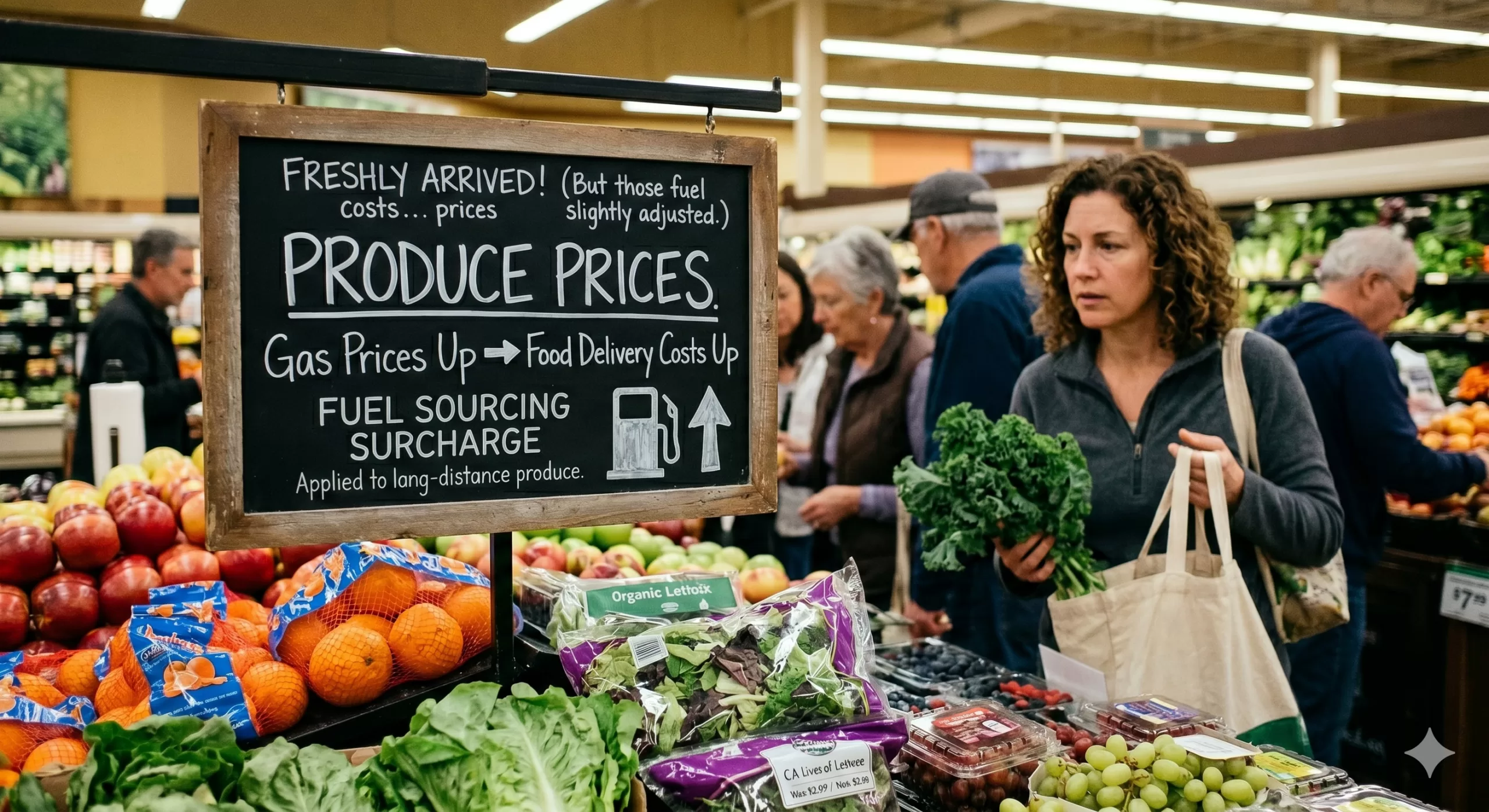
1. The Logistics of Freshness
The most direct link between fuel and food is transportation. Unlike canned goods or grains, which have a long shelf life and can be moved via slower, more fuel-efficient methods like rail, fresh produce is a race against the clock.
- Trucking Dependence: Most of our fruits and vegetables are transported by refrigerated trucks. When diesel and gasoline prices spike, freight surcharges follow suit.
- The Distance Factor: In the U.S., the average piece of produce travels roughly 1,500 miles from farm to plate. Every mile costs more when fuel is at a premium.
2. On the Farm: More Than Just Tractors
Farmers feel the pinch long before the food is loaded onto a truck. Modern agriculture is incredibly energy-intensive.
- Equipment Fuel: Tractors, harvesters, and irrigation pumps almost all run on diesel or electricity derived from fossil fuels.
- Fertilizer Costs: This is the “hidden” fuel cost. Many synthetic fertilizers are nitrogen-based, produced using natural gas as a primary feedstock. When energy prices rise globally, the cost of nourishing the soil skyrockets.
3. The “Seeping” Effect: Why Now?
You might notice that gas prices jump overnight, but produce prices take a few weeks to catch up. This is known as “price lag.” Retailers often try to absorb small fluctuations to keep customers happy, but when high fuel costs persist, those margins disappear.
According to recent 2026 consumer surveys, nearly 60% of shoppers are now noticing that their essential spending—like dairy and produce—is being squeezed by the energy market.
4. How to Protect Your Budget
If you’re tired of seeing your grocery total climb, here are a few ways to mitigate the “gas-to-produce” pipeline:
- Shop Seasonally: Out-of-season fruit often has to be flown in or shipped from the southern hemisphere, drastically increasing the fuel cost per item.
- Support Local Farmers Markets: Reducing the miles your food travels is the most effective way to cut out the transportation middleman.
- Frozen vs. Fresh: Flash-frozen vegetables are often processed near the farm and shipped in bulk, which can be more cost-effective during fuel spikes without sacrificing nutrition.
The Bottom Line: As long as our food system relies on long-distance logistics and energy-heavy farming, the “check engine” light on your car will continue to be a warning sign for the price of your groceries.