
What you should know in selecting a factoring Partner
Choosing a factoring company is like choosing a long-term business partner. The right one will act as your back-office credit department; the wrong one can be an expensive administrative nightmare. Use this checklist to vet potential partners:
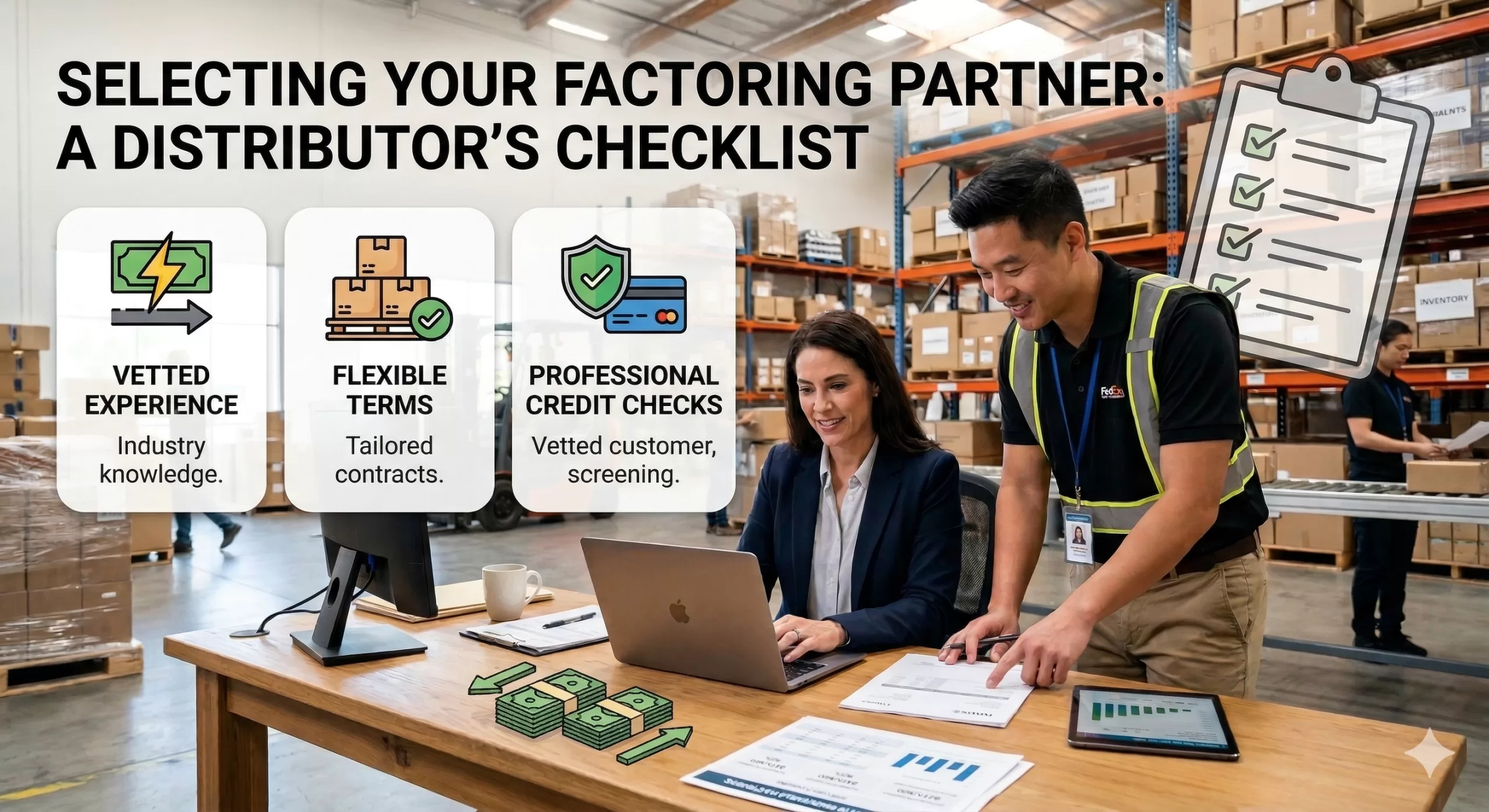
1. The Core Logistics
- [ ] Industry Expertise: Do they have experience with the specific nuances of distribution (e.g., handling chargebacks, bill-backs, or progressive shipping)?
- [ ] Advance Rate: Will they advance at least 80–90% of the invoice value?
- [ ] Funding Speed: Can they provide “Same Day” or “Next Day” funding once an invoice is verified?
- [ ] Funding Source: Are they a Direct Lender (bank-backed) or an independent factor? (Direct lenders often have lower rates and more stability).
2. Transparency & Fees
- [ ] The “All-In” Rate: Ask for a breakdown of all fees. Look out for hidden “junk fees” like application fees, wire fees, or credit check fees.
- [ ] Recourse vs. Non-Recourse: * Recourse: You must buy back the invoice if your customer doesn’t pay. (Lower fees).
- Non-Recourse: The factor takes the credit risk if the customer goes bankrupt. (Higher fees).
- [ ] Volume Requirements: Are there “Monthly Minimums”? If you don’t hit a certain volume, will you be penalized?
3. The “Relationship” Factor
- [ ] Dedicated Account Manager: Will you have a single point of contact who knows your business, or a generic 1-800 help desk?
- [ ] Customer Interaction Style: How do they contact your customers for verification? You want a partner who is professional and polite, as they represent your brand.
- [ ] Technology Integration: Do they sync with your accounting software (QuickBooks, NetSuite, etc.) for easy invoice uploading?
4. Contract Flexibility
- [ ] Contract Length: Avoid multi-year lock-ins. Look for month-to-month or one-year terms with clear exit clauses.
- [ ] Termination Notice: How much notice is required to leave? (Usually 30–90 days).
- [ ] Personal Guarantee: Is a personal guarantee required? (Standard for many small business factors, but worth clarifying).