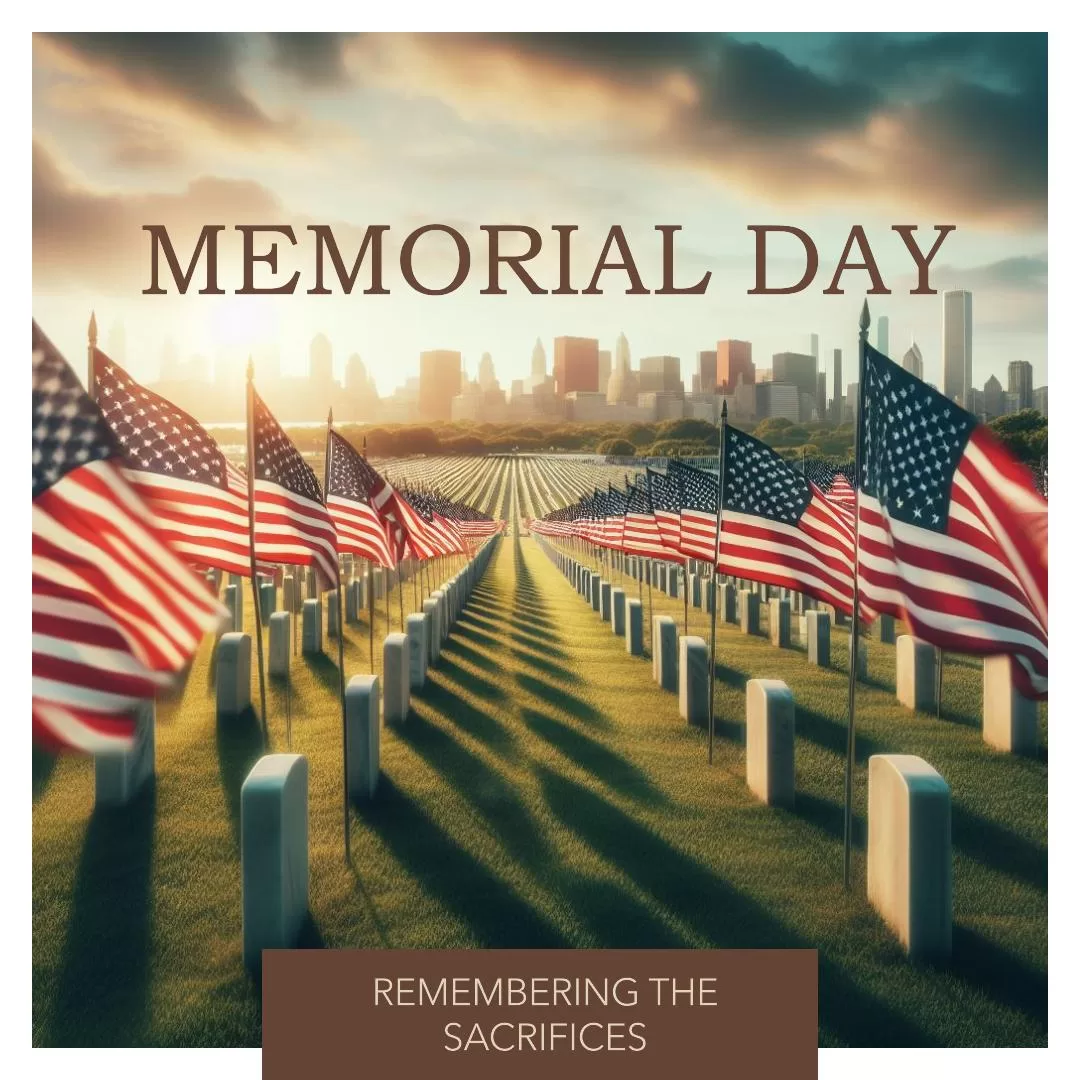
Memorial Day – History and Origins – Why we celebrate

From Decoration Day to a National Holiday: The True History of Memorial Day

For many Americans, Memorial Day marks the unofficial start of summer—a three-day weekend filled with barbecues, pool openings, and mattress sales. But beneath the modern commercialism lies a profound and somber history rooted in the aftermath of the deadliest conflict in U.S. history.

https://www.chrislehnes.com/wp-content/uploads/2026/05/Memorial-day-1.mp4

Originally established to honor the approximately 620,000 soldiers who died during the Civil War, Memorial Day began as a grassroots movement of communal grief. Here is the story of how local tributes to fallen soldiers evolved into a national day of remembrance.

The Earliest Observances

Before there was an official national holiday, there were local communities grappling with unprecedented loss. The Civil War claimed roughly 2% of the U.S. population at the time. With the sheer volume of casualties, communities on both sides of the conflict began holding springtime tributes to honor the dead, decorating their graves with flowers.

Several towns claim the title of the “birthplace” of Memorial Day, including Boalsburg, Pennsylvania, and Columbus, Mississippi. In 1966, the federal government officially recognized Waterloo, New York, as the birthplace because the town hosted a formal, annual, community-wide event starting on May 5, 1866, where businesses closed so residents could decorate soldiers’ graves.

However, historical records point to an even earlier, poignant observance. On May 1, 1865, in Charleston, South Carolina, a group of formerly enslaved African Americans organized a massive tribute. They gathered at a former racetrack that had been used as a Confederate prison camp to properly rebury and honor 257 Union soldiers who had died there. A procession of 10,000 people, led by 3,000 Black schoolchildren carrying roses and singing patriotic songs, marched to the site to decorate the graves—one of the earliest documented Memorial Day observances.

General Logan and “Decoration Day”

The push for a unified, national day of remembrance came in 1868. On May 5 of that year, Major General John A. Logan, the head of the Grand Army of the Republic (an organization of Union veterans), issued General Order No. 11.

He designated May 30, 1868, as a day for “strewing with flowers, or otherwise decorating the graves of comrades who died in defense of their country.” Logan chose May 30 specifically because it was not the anniversary of any particular battle, and flowers would be in full bloom across the country.

The day became widely known as Decoration Day. On that first official observance, General James Garfield gave a speech at Arlington National Cemetery, and 5,000 participants helped decorate the graves of 20,000 Union and Confederate soldiers buried there.

By 1890, every Northern state had made Decoration Day an official state holiday. Many Southern states, however, chose to honor their dead on separate dates until after World War I.

The Shift to Memorial Day

For decades, Decoration Day strictly honored those lost in the Civil War. That changed in the aftermath of World War I. The staggering casualties of the Great War led to the holiday’s expansion to commemorate American military personnel who died in all wars.

As the scope of the holiday expanded, the name gradually shifted. Though people began using the term “Memorial Day” in the 1880s, it wasn’t until after World War II that the new name became more common than Decoration Day.

https://www.chrislehnes.com/wp-content/uploads/2026/05/Memorial-day.mp4

The holiday’s modern schedule was established in 1968. Congress passed the Uniform Monday Holiday Act, which moved Memorial Day from its traditional May 30 date to the last Monday in May to create a three-day weekend for federal employees. The law went into effect, and Memorial Day officially became a federal holiday in 1971.

Honoring the Day Now

Today, the core traditions of Memorial Day remain alive at national cemeteries across the country, where soldiers and volunteers place small American flags at each gravestone.

To ensure the true meaning of the day isn’t lost in the shuffle of long-weekend celebrations, Congress passed the National Moment of Remembrance Act in 2000. It asks all Americans to pause for a moment of silence at 3:00 PM local time on Memorial Day to reflect on the men and women who made the ultimate sacrifice for their country.

Contact Factoring Specialist Chris Lehnes

The Economic Impact of Memorial Day Weekend

Memorial Day significantly impacts the U.S. economy through increased spending in various sectors, notably travel, retail, automotive, and local events.

The Economic Impact of Memorial Day Weekend

Travel and Tourism: Memorial Day marks the beginning of the summer travel season, with many Americans planning trips. In 2024, travel spending for the Memorial Day weekend is expected to be robust, driven by pent-up demand post-pandemic. Popular destinations and events, such as the NCAA Championships in Philadelphia, are projected to generate substantial economic activity. The championships alone are expected to bring in $24 million, benefiting local hotels, restaurants, and other businesses​ (DiscoverPHL)​.

Retail and Automotive Sales: Retail sales see a significant boost during Memorial Day due to promotional events and discounts. Major retail categories include clothing, home goods, and electronics. The automotive sector also experiences a surge, with many dealerships offering substantial discounts to clear out old inventory. This year, brands like Ford, Ram, and Nissan are expected to offer particularly attractive deals to manage excess inventory​ (CarEdge)​.

Beer and Beverage Industry: The beer industry sees a notable increase in sales during Memorial Day, as it is a popular time for social gatherings and barbecues. According to a recent report, the U.S. beer industry contributes over $409 billion to the economy, supporting nearly 2.4 million jobs. Memorial Day weekend is a key period for this sector, helping to drive sales and economic output​ (Beer Institute)​.

Overall, Memorial Day weekend provides a significant economic stimulus, reflecting increased consumer spending and benefiting various sectors across the country.

The Origins of Memorial Day

The Origins and History of Memorial Day in the US

Memorial Day, a significant American holiday, honors the men and women who have died in military service to the United States. Its origins trace back to the aftermath of the Civil War, a conflict that left a deep and lasting impact on the nation. The Origins and History of Memorial Day in the US

The Origins and History of Memorial Day in the US

Early Beginnings

The exact origins of Memorial Day are debated, but several towns and cities across America claim to have been the first to observe the holiday in the late 1860s. One of the earliest known observances was in Charleston, South Carolina, in 1865, where freed slaves and Union soldiers gathered to honor fallen Union soldiers. This event is sometimes cited as the first Memorial Day celebration.

However, the most commonly recognized inception of Memorial Day is linked to General John A. Logan, leader of an organization for Northern Civil War veterans, who called for a nationwide day of remembrance on May 30, 1868. Logan chose the date specifically because it was not the anniversary of any particular battle, thereby making it a neutral day to honor all soldiers who died in the Civil War. On the first official Decoration Day, as it was originally called, General James Garfield gave a speech at Arlington National Cemetery, and 5,000 participants decorated the graves of 20,000 Union and Confederate soldiers buried there.

Transition to Memorial Day

Initially, Memorial Day was known as Decoration Day due to the tradition of decorating soldiers’ graves with flowers and flags. The focus was predominantly on honoring those who had died in the Civil War. However, as the United States became involved in subsequent conflicts, including World War I and World War II, the holiday evolved to commemorate American military personnel who died in all wars.

By the early 20th century, the term “Memorial Day” began to be more commonly used, and after World War II, it became the more prevalent name for the holiday. In 1967, the name Memorial Day was officially recognized by federal law.

Federal Recognition and the Uniform Monday Holiday Act

The Uniform Monday Holiday Act, passed by Congress in 1968, established the holiday as the last Monday in May to create a three-day weekend for federal employees. This act, which took effect in 1971, aimed to provide a convenient and standardized way to observe national holidays, including Memorial Day.

Modern Observances

Today, Memorial Day is observed with a variety of traditions that honor fallen soldiers. Many Americans visit cemeteries and memorials to pay their respects. Volunteers often place American flags on graves of military personnel. A national moment of remembrance takes place at 3:00 PM local time, providing an opportunity for reflection.

Parades are a common feature of Holiday celebrations, with many towns and cities hosting parades that include military personnel, veterans, and patriotic floats. Additionally, the holiday marks the unofficial start of summer, often celebrated with family gatherings, barbecues, and outdoor activities.

Memorial Day serves as a poignant reminder of the sacrifices made by military personnel throughout American history. Its evolution from a Civil War remembrance day to a national holiday honoring all fallen soldiers underscores its significance in the collective memory of the United States. By continuing to observe Memorial Day, Americans ensure that the bravery and dedication of their military heroes are never forgotten.

Contact Factoring Specialist, Chris Lehnes