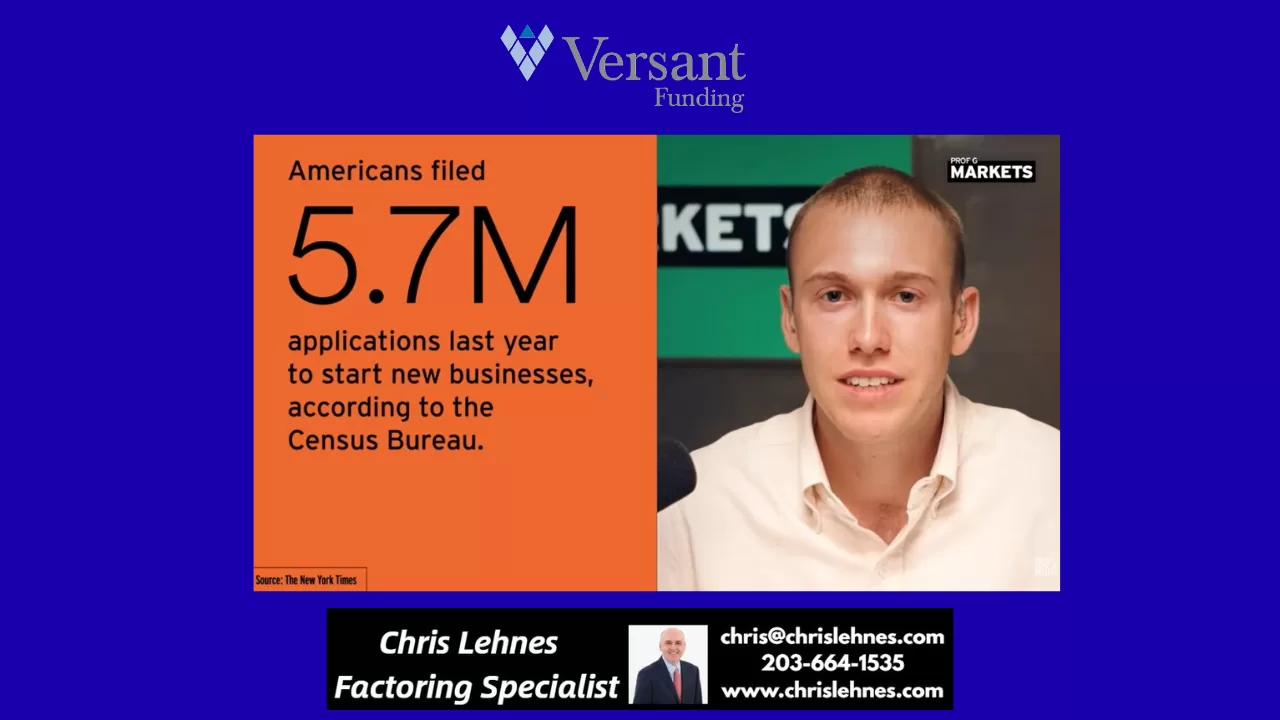
- A “Side Hustle” Economy Not a Small Business Boom While 2025 saw a record 6 million new business applications, 70% were identified by the Census Bureau as “likely non-employers.” Only 1.7 million actually intend to hire paid employees [53:18].
- The Founder Obsession: Scott argues this isn’t an entrepreneurial boom, but rather young people disillusioned by corporate jobs starting side gigs. This trend is highlighted by a 69% surge in users adding the title “Founder” to their LinkedIn profiles [01:07:03].
- Career Advice: Scott strongly advises young professionals against romanticizing entrepreneurship, noting that the fastest and safest path to wealth is often joining an established, fast-growing corporation as an early employee (e.g., employee 10 to 1,000) rather than taking on the brutal emotional and financial toll of starting a company from scratch [01:01:09].
According to the Census Bureau, Americans filed nearly 6 million applications to start new businesses last year. While that is the most on record, the data doesn’t tell the whole story. Only 1.7 million of those applications were identified as high-propensity businesses, meaning they actually intend to hire paid employees. The vast majority of the applications were for entrepreneurs with no plans to hire anyone.
This really grabbed my attention because I’ve been seeing arguments that we are in the midst of a small business boom. I was ready to run with it—it’s a reason to be optimistic. The number of new business applications has exploded, up 10% year-over-year to hit record highs, and this trend has continued into the first half of this year. However, most of these businesses are categorized as “likely non-employer businesses,” meaning they have a very low likelihood of producing actual payrolls.
The Census Bureau uses a methodology that looks at indicators like, Have you indicated that you’re hiring?, Have you provided a first wages-paid date?, and Are you in an industry with strong employment demand? It turns out that more than 70% of these new businesses we were supposed to be celebrating are likely non-employers. This seems like a bit of a fake boom.
This blew me away. In terms of how the sausage gets made here, we do editorial calls where analysts pitch stories, and I comment on them, and our producer decides what we’ll cover. This story just blew my mind because I have this whole “AI optimist” pitch, and one of my favorite stats is that new business formation is at a record high. This data completely punctured that argument because, once again, numbers can be misleading. Six million new business applications sounds like a renaissance of the American entrepreneurial spirit. But, as you pointed out, only 1.7 million (about 30%) were high-propensity.
The other 4 million-plus applications represent one person, a laptop, and an LLC. When you try to start a restaurant, you’re going to hire 10, 20, or 30 people. When you’re starting a food blog as a side hustle, that’s not exactly great for the employment market. What the data actually shows is that this isn’t a small business boom; it’s a side-hustle economy dressed up in Census Bureau language.
In some ways, it probably reflects something unhealthy about the economy. One in three adults says they are planning a business or side hustle in 2026, which is up 94% year-over-year. There’s something very good about that, but the question is: is it entrepreneurial confidence, or economic anxiety wearing a founder’s hoodie? People aren’t starting these companies because times are good; they’re hedging because they can’t afford to pay their rent with their main job. This is one of those times I realized I don’t know what I don’t know, and this supposed new business boom isn’t really a boom at all.
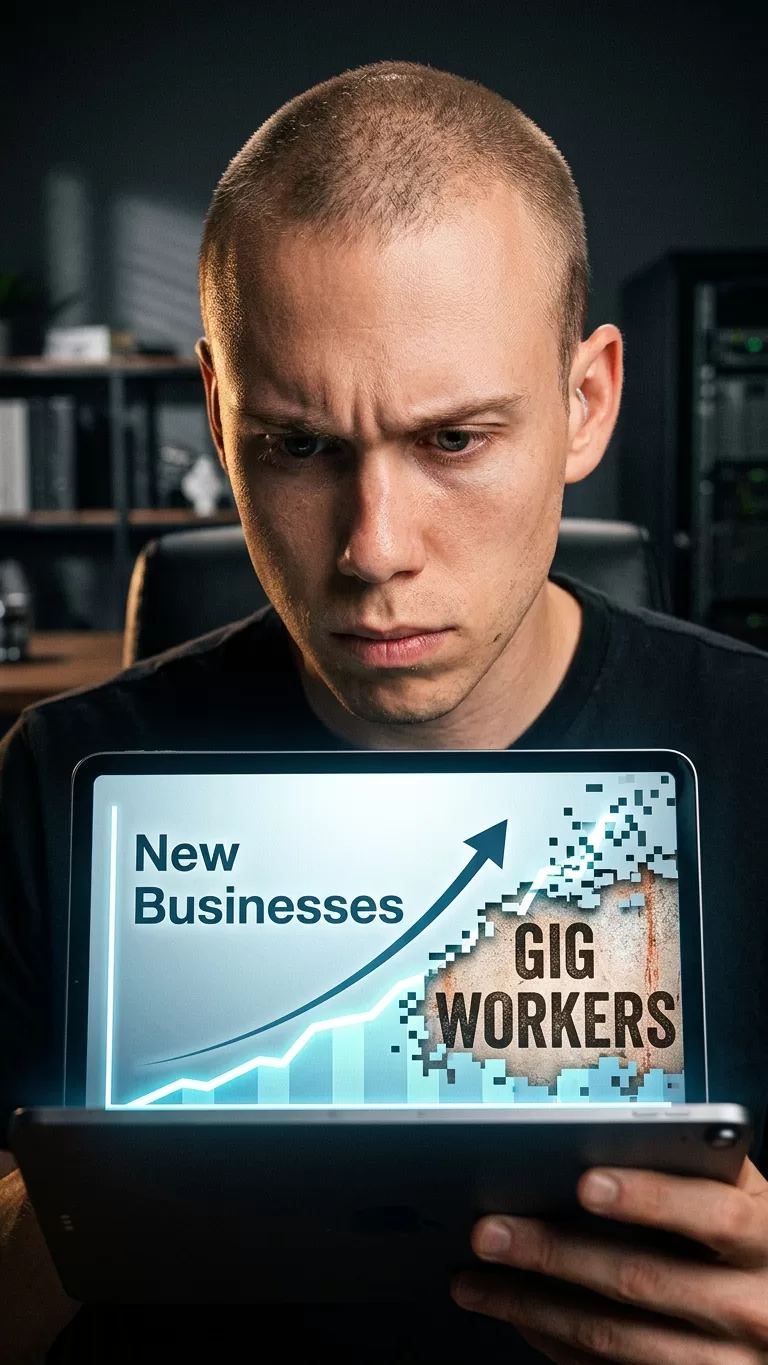
I think this is an important data point, and I want to clarify it for everyone: 70% of these new businesses are likely non-employers according to the census. If you compare this to the mid-2000s, the share of likely non-employer businesses has doubled. So yes, we are seeing new businesses, but most of them are not actually contributing to the broader economy.
Why is this happening? One theory is the rise of the AI-enabled solopreneur—that AI allows you to form your own business easily. That might be part of it, but this trend began way before AI. It exploded during COVID, where suddenly, all of these non-employer businesses skyrocketed. Another theory is that more people are self-employed now—they quit their jobs and are running solo companies. But if you look at the self-employment rate, the number of self-employed Americans is actually down significantly over the past few years.
This leads me to one logical conclusion: these are mostly side gigs. It’s someone who is bored at work. They are still employed and working remotely, but they want to start a lifestyle brand, make an Instagram account, or write a Substack. If they get really excited, they might create an LLC. But to be clear, that’s not a business that is contributing to the economy. It’s essentially a hobby and a legitimized vehicle to express yourself out of the boredom you feel at your actual job.
This is becoming a real trend, especially among young people, because they are so disillusioned by the notion of traditional work—being an employee and receiving a wage. It reflects that philosophy of ‘don’t be a wage slave, start your own business, be an entrepreneur, be a hustler.’ The entrepreneurship mindset has become such a hot topic in our digital, social media-driven world that we are all fantasizing about it. People create these little side hustles so they can say, ‘I’m an entrepreneur now.’ But in reality, you aren’t, because you still work for a company and you aren’t generating a livable income off the side business that supposedly makes you a founder.”
Versant funding
Food processing companies can fund their growth using the cash provided by accounts receivable factoring. Contact Chris at Versant Funding to learn if your client is a fit for factoring. Factoring can also meet the cash needs of staffing companies looking to expand. Contact Factoring Specialist Chris Lehnes to learn if your staffing client is a factoring fit.