
In “Stolen Focus”, author Johann Hari investigates the modern erosion of human attention through personal anecdotes and scientific research. He argues that our inability to focus is not a personal failure of willpower but a result of systemic environmental factors, including the rise of surveillance capitalism and addictive technology. The text highlights how digital platforms use algorithms to maximize screen time, which disrupts our flow states and capacity for deep thought. Hari describes his own digital detox in Provincetown to illustrate that individual isolation is an insufficient long-term solution to a global crisis. Ultimately, the book calls for an “Attention Rebellion” to reclaim our minds from corporate and structural forces that prioritize speed over depth. Through interviews with experts, he explores how better sleep, nutrition, and play are essential to restoring our collective focus.
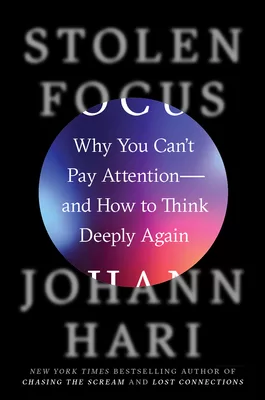
Briefing Document: The Crisis of Stolen Focus
Executive Summary
This document synthesizes key findings on the contemporary crisis of attention, arguing that the pervasive decline in our ability to focus is not an individual failing but a systemic problem driven by powerful technological, social, and economic forces. Decades of research and expert testimony indicate that our environment is being systematically engineered to degrade focus for profit and productivity, a reality that necessitates a collective, structural response rather than isolated individual efforts.
Key Takeaways:
- Systemic, Not Personal, Failure: The collapsing ability to pay attention is not primarily due to personal laziness or a lack of willpower. It is a societal issue caused by powerful forces—from Big Tech to broader economic pressures—that are actively “pouring acid on your attention every day.”
- The Architecture of Distraction: The dominant business model of major technology platforms, “surveillance capitalism,” is fundamentally designed to capture and sell human attention. This model incentivizes the creation of features like infinite scroll and outrage-fueling algorithms that maximize screen time by hijacking psychological vulnerabilities, leading to a state of constant distraction and heightened societal anger.
- Erosion of Deep Thinking: The crisis extends beyond simple distraction. Foundational states for deep thought are being systematically crippled. These include “flow states” (deep, effortless immersion), the cognitive patience fostered by deep reading, and the creative consolidation that occurs during mind-wandering—all of which are suppressed by an environment of constant switching and stimulation.
- The Fallacy of “Cruel Optimism”: Solutions that focus exclusively on individual willpower—such as digital detoxes or self-help techniques—are a form of “cruel optimism.” They offer inadequate, small-scale answers to vast, systemic problems, effectively blaming the victim. This is analogous to responding to the obesity crisis with diet books alone while ignoring the toxic food environment that drives it.
- A Call for an “Attention Rebellion”: Addressing the crisis requires a collective social and political movement. The path forward involves systemic changes, including the regulation of technology companies to ban surveillance capitalism, a widespread shift to a four-day work week to combat exhaustion, and a fundamental rethinking of a culture predicated on ever-increasing speed and growth.
I. The Nature of the Attention Crisis
The degradation of focus is a tangible, measurable phenomenon impacting individuals and societies. It manifests in the struggle to be present in one’s own life, as illustrated by a trip to Graceland where visitors, including the author’s godson, experienced the iconic location primarily through the mediated reality of iPads and smartphones rather than direct observation. This personal experience is a microcosm of a larger, scientifically documented trend.
A. Scientific Evidence of Shrinking Attention
- A landmark study led by scientist Sune Lehmann at the Technical University of Denmark analyzed data from the 1880s to the present, including Google Books, Twitter, and movie ticket sales.
- Key Finding: The research provides the first major scientific proof that collective attention spans have been shrinking for over 130 years. Topics now rise to peak popularity and fade from public discussion at an ever-accelerating rate.
- Primary Cause: While the internet has dramatically accelerated this trend, the root cause is a continuous increase in the volume and speed of information. As Lehmann’s model demonstrates, “The more information you pump in, the less time people can focus on any individual piece of it.”
- Consequence: The sacrifice for this speed is depth. As Sune Lehmann states, “Depth takes time. And depth takes reflection… All of these things that require depth are suffering. It’s pulling us more and more up onto the surface.”
B. A Systemic Problem, Not an Individual Failing
The prevailing narrative of self-blame—attributing distraction to laziness or lack of discipline—is a profound misunderstanding of the issue. The source context argues that this is a systemic problem being actively perpetrated.
- An “Attentional Pathogenic Culture”: Experts believe society is creating an environment where sustained focus is exceptionally difficult, forcing individuals to “swim upstream to achieve it.”
- An expert, when asked how one might design a society to ruin people’s attention, replied, “Probably about what our society is doing.”
- The Core Argument: The document posits that there are twelve deep forces damaging attention, driven by powerful entities including, but not limited to, Big Tech. The central thesis is that “you are living in a system that is pouring acid on your attention every day, and then you are being told to blame yourself and to fiddle with your own habits while the world’s attention burns.”
II. Key Drivers of Attention Degradation
The crisis is multifaceted, stemming from a confluence of technological, physiological, and environmental factors that have fundamentally altered how we live, work, and think.
A. The Architecture of Distraction: Technology’s Business Model
The design of modern digital technology is a primary cause of attention degradation, driven by a business model known as surveillance capitalism. Former Silicon Valley insiders like Tristan Harris (ex-Google) and Aza Raskin (inventor of infinite scroll) provide a detailed critique.
- The Business Model: Social media companies profit not just from showing advertisements, but from collecting vast amounts of user data to create predictive models. These models are then sold to advertisers who wish to influence behavior. This economic model has a single imperative: maximize user screen time to gather more data.
- Designed for Addiction: To achieve maximum screen time, platforms are built using principles from B.F. Skinner’s behavioral psychology, creating “a craving” in users. Techniques include:
- Infinite Scroll: Designed by Aza Raskin, this feature removes natural stopping points, encouraging continuous, mindless consumption. Raskin estimates it makes users spend 50% more time on sites.
- Variable Reinforcements: The unpredictable delivery of “likes” and notifications operates like a slot machine, creating a compulsive need to check for rewards.
- Task Switching: Notifications are designed to constantly pull users away from other tasks, incurring a “switch cost effect” that slows thinking, increases errors, reduces creativity, and impairs memory.
- Algorithms of Outrage: To keep users engaged, algorithms on platforms like YouTube and Facebook have learned that shocking, anger-inducing, and extreme content is most effective.
- The YouTube Effect: Former YouTube engineer Guillaume Chaslot revealed that the algorithm systematically recommends increasingly extreme content. Watching a factual video about the Holocaust could lead to Holocaust-denial content within five videos.
- Political Consequences: This dynamic has profound real-world impacts, contributing to political polarization and radicalization. In Brazil, Jair Bolsonaro’s rise was fueled by social media algorithms promoting his outrageous content, leading his supporters to chant “Facebook! Facebook!” upon his victory.

B. The Erosion of Foundational States for Focus
Beyond active distraction, the modern environment systematically undermines the mental states essential for deep thinking and well-being.
- Flow States: Researched by psychologist Mihaly Csikszentmihalyi, “flow” is the deepest form of human focus, achieved when one is fully absorbed in a single, meaningful task at the edge of one’s abilities. Multitasking and constant interruption are antithetical to flow. Starved of flow, we become “stumps of ourselves, sensing somewhere what we might have been.”
- Deep Reading: The decline in sustained reading of physical books represents a major loss of a common flow state.
- Comprehension: Studies show that reading on screens leads to lower comprehension compared to reading on paper. The gap for elementary school children is equivalent to two-thirds of a year’s growth.
- Empathy: Research by Professor Raymond Mar shows that reading fiction functions as an “empathy gym.” By simulating the inner lives of others, it measurably improves a reader’s ability to understand real-world emotions. This effect is not found with non-fiction or the fragmented narratives of social media.
- Mind-Wandering: Far from being a waste of time, mind-wandering is an essential brain state (the “default mode network”) critical for consolidating memories, making new connections, and long-term planning. Constant digital stimulation suppresses this state, degrading the quality of our thinking.
C. Physiological and Environmental Assaults on Attention
Our ability to focus is also under direct physiological attack from changes in our lifestyles and physical environment.
| Factor | Description of Impact |
| Sleep Deprivation | Chronic sleep loss has severe cognitive effects. Staying awake for 18 hours impairs reaction time to a level equivalent to 0.05% blood alcohol. The prefrontal cortex, crucial for judgment, is particularly sensitive. This is exacerbated by evening exposure to blue light from screens, which disrupts sleep-regulating hormones. |
| Stress & Hypervigilance | As demonstrated by Dr. Nadine Burke Harris, Surgeon General of California, stress and trauma (especially in childhood) trigger a state of hypervigilance. The brain becomes wired to constantly scan for threats, making deep, calm focus impossible. This is often misdiagnosed as ADHD. |
| Overwork & Exhaustion | Working hours have steadily increased, leading to widespread exhaustion. An experiment at Perpetual Guardian in New Zealand, led by CEO Andrew Barnes, proved that a four-day work week (for the same pay) led to a 35% decrease in off-task social media use, a 15% drop in stress, and an overall increase in productivity. |
| Diet & Pollution | A growing body of evidence suggests that modern diets high in processed foods and exposure to environmental pollutants (such as lead, BPA, and other industrial chemicals) directly harm brain function and focus. Professor Barbara Demeneix states, “there is no way we can have a normal brain today” due to this constant chemical exposure. |
D. The Transformation of Childhood and the Rise of ADHD
Children’s attention problems are escalating dramatically, a trend that cannot be explained by biology alone. The very nature of childhood has been radically altered in ways that undermine the development of focus.
- The Collapse of Free Play: Unsupervised, unstructured play has been nearly eliminated from children’s lives, replaced by homework (up 145% between 1981-1997), screens, and adult-supervised activities.
- The Importance of Play: Free play is “the primary technology for learning.” It is where children learn negotiation, problem-solving, emotional regulation, and how to pursue their own intrinsic motivations—the internal drive to do things for their own sake, which is the foundation of sustained attention.
- An Environmental Mismatch: Drawing an analogy from veterinary science, the text suggests children are like zoo animals. When a horse is confined to a stall, it develops compulsive behaviors because its “frustrated biological objectives” (the need to run and graze) are denied. Similarly, children are being raised in environments that thwart their innate needs for play and autonomy, leading to behaviors labeled as ADHD.
III. The Fallacy of Individual Solutions and “Cruel Optimism”
The dominant cultural response to the attention crisis is to advocate for individual self-discipline. This approach, while well-intentioned, is fundamentally flawed and represents a form of “cruel optimism.”
- The Provincetown Experiment: The author’s three-month digital detox in Provincetown demonstrated the profound benefits of disconnecting—a recovery of flow, deep reading, and calm. However, it also highlighted the limitations of this approach: it is a privilege few can afford, and the return to the normal environment quickly eroded the gains.
- The “Indistractible” Argument: This viewpoint, championed by tech designer Nir Eyal (author of Hooked), posits that distraction is caused by “internal triggers” and can be managed through personal life-hacks.
- The Obesity Analogy: This individual-centric view is compared to the failed response to the obesity crisis. For decades, the culture blamed individuals for being overweight and sold them diet books. This failed because the root problem was a systemic change in the food environment. Similarly, digital diet books will not solve the attention crisis.
- Authentic Optimism: The alternative is to collectively address the underlying causes of the problem. Instead of shaming individuals, the focus must shift to changing the toxic environment that is degrading everyone’s attention.
IV. A Path Forward: Systemic Change and the “Attention Rebellion”
Reclaiming focus requires a collective fight to change the systems that are stealing it. This involves a multi-pronged strategy aimed at reforming technology, work culture, and ultimately, our societal values.
A. Reforming Technology
The business model of surveillance capitalism must be dismantled.
- Ban the Current Model: Regulation is needed to make the current “track and manipulate” business model illegal.
- Shift to New Models: Alternatives include subscription-based services (where the user is the customer, not the product) or treating major platforms as public utilities.
- Redesign for Human Values: Once financial incentives are realigned, technology can be redesigned to serve human intentions, not to capture attention. Simple changes could include:
- Batching notifications into a single daily update.
- Designing platforms to facilitate real-world meetups.
B. Reclaiming Time and Rest
Structural changes are necessary to combat the culture of exhaustion.
- The Four-Day Work Week: Widespread adoption of a shorter work week has been proven to increase focus, reduce stress, and maintain or even boost productivity.
- The Fight for Time: Historically, gains like the weekend were not given freely by employers; they were won through decades of organized labor campaigns. A similar fight will be required to reclaim more time for rest and reflection.
C. Building a Movement: The Attention Rebellion
Individual action is insufficient; a broad-based social movement is required to force systemic change.
- Historical Precedent: The women’s rights movement and the successful campaign to ban leaded gasoline demonstrate that organized citizens can defeat powerful interests.
- “Site Battles”: Activist Ben Stewart suggests the movement can gain momentum through “site battles”—dramatic, nonviolent confrontations at symbolic locations (e.g., Facebook HQ) to raise public consciousness about the crisis.
- The Goal: The movement’s aim is “personal liberation—liberating ourselves from people who are controlling our minds without our consent.”
- The Ultimate Challenge: In the long term, a sustainable solution will require challenging the core logic of an economy built on perpetual growth, which fuels the relentless demand for more speed, more consumption, and ultimately, less attention. As Dr. Charles Czeisler notes, “our economic system has become dependent on sleep-depriving people. The attentional failures are just roadkill. That’s just the cost of doing business.”