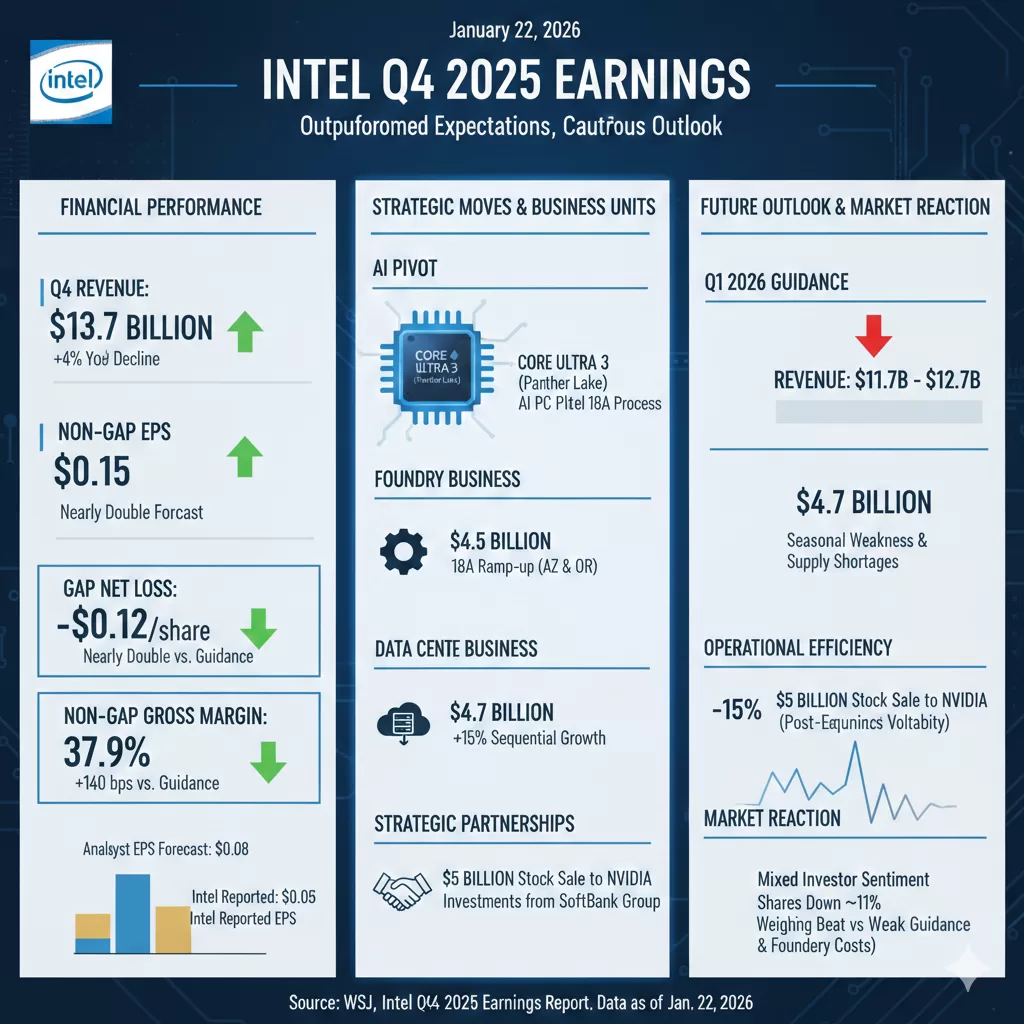
Intel fourth-quarter and full-year 2025 earnings report, as detailed in the Wall Street Journal and other financial outlets, highlights a company in the midst of a massive structural turnaround while grappling with a challenging semiconductor market.
According to the report released on January 22, 2026, Intel outperformed its own guidance and analyst expectations for the quarter, though it remains in a delicate financial position.
Financial Performance (Q4 2025)
Revenue: Intel reported $13.7 billion in Q4 revenue, a 4% decline year-over-year but higher than the forecasted $13.4 billion.
Earnings Per Share (EPS): The company posted a non-GAAP EPS of $0.15, nearly double the $0.08 analysts expected. However, on a GAAP basis, it recorded a net loss of $0.12 per share ($591 million total).
Gross Margin: Non-GAAP gross margin reached 37.9%, exceeding guidance by 140 basis points, driven by higher-than-expected revenue and disciplined spending.
Key Strategic Moves & Business Units
AI Pivot: CEO Lip-Bu Tan emphasized the “essential role of CPUs in the AI era.” Intel launched its Core Ultra Series 3 (Panther Lake), the first AI PC platform built on the advanced Intel 18A process.
Foundry Business: Intel Foundry reported $4.5 billion in revenue. The company is aggressively ramping up its 18A process in Arizona and Oregon to regain manufacturing leadership.
Data Center and AI (DCAI): This segment saw its fastest sequential growth of the decade, rising 15% to $4.7 billion, signaling a potential recovery in server demand.
Strategic Partnerships: The balance sheet was bolstered by a significant $5 billion stock sale to NVIDIA and new investments from SoftBank Group.
Future Outlook
Q1 2026 Guidance: Intel provided a cautious outlook for the coming quarter, projecting revenue between $11.7 billion and $12.7 billion. This lower forecast is attributed to “seasonal weakness” and industry-wide supply shortages, which the company expects to hit a low point in Q1 before improving.
Operational Efficiency: Intel reduced its full-year operating expenses by 15% (down to $16.5 billion) through organizational streamlining.
Market Reaction
Despite the earnings “beat,” investor sentiment remained mixed. Shares experienced volatility—trading down as much as 11% in some sessions following the report—as the market weighed the positive surprise against the weak Q1 2026 guidance and the heavy capital costs associated with the foundry transition.
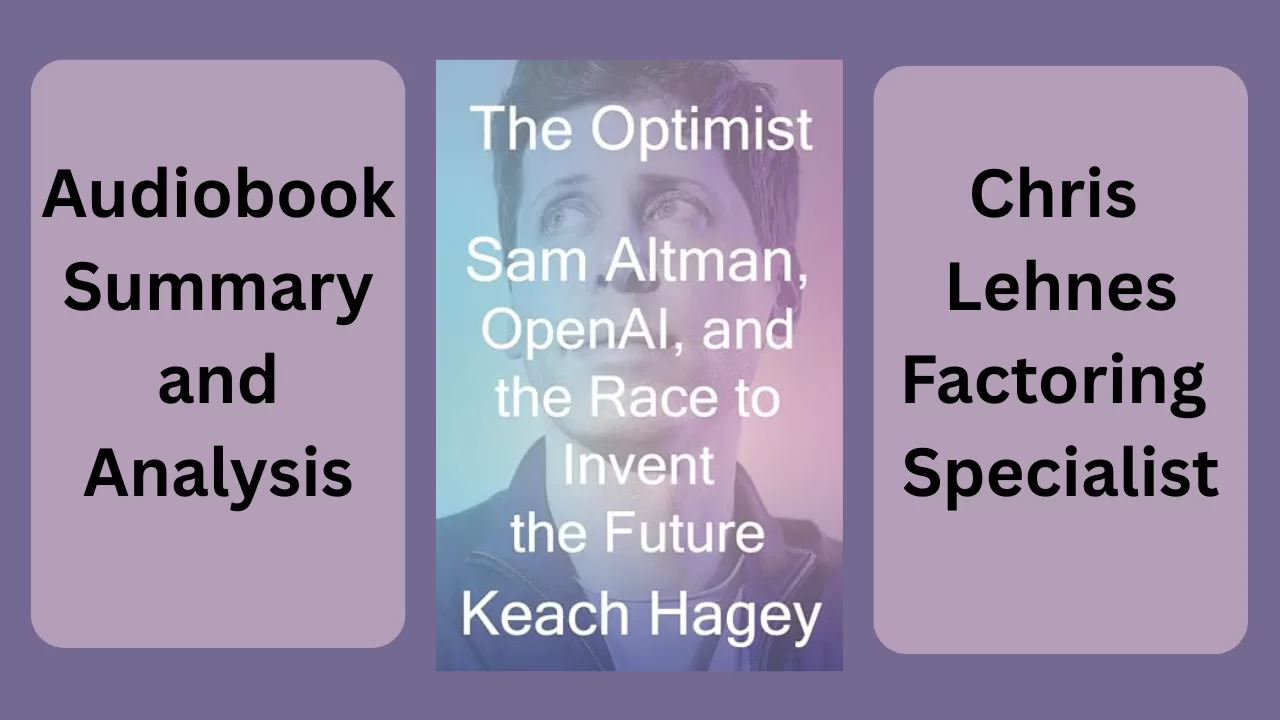
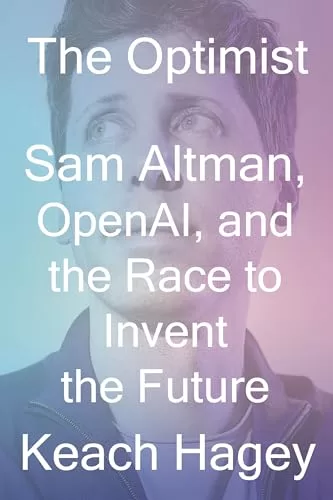
This document synthesizes key insights from Keach Hagey’s biography, The Optimist, which chronicles the life and career of Sam Altman, the CEO of OpenAI. The analysis reveals Altman as a brilliant dealmaker and a central figure in Silicon Valley, driven by an almost religious conviction in technological progress. His career is marked by a pattern of immense ambition, a talent for securing capital and influence, and a recurring tendency to move too fast for those around him, leading to internal conflicts at both his first startup, Loopt, and most consequentially, at OpenAI.
The founding of OpenAI is presented as an effort to safely develop Artificial General Intelligence (AGI) for the benefit of humanity, a mission deeply influenced by the philosophies of Effective Altruism and fears of existential risk articulated by thinkers like Nick Bostrom and Eliezer Yudkowsky. However, the immense computational costs required to pursue AGI forced a pivotal shift from a pure nonprofit to a “capped-profit” model, leading to a foundational partnership with Microsoft and the departure of co-founder Elon Musk after a power struggle.
The narrative culminates in the November 2023 leadership crisis, or “the blip,” where the OpenAI board fired Altman. Contrary to public speculation, the ouster was not driven by fears of an imminent AGI breakthrough but by a loss of trust in Altman’s candor and what the board perceived as manipulative behavior. His swift return, orchestrated by overwhelming employee and investor support, solidified his position as the undisputed leader of the AI revolution but also intensified scrutiny of his character and ambitions. Altman’s vision extends far beyond OpenAI, encompassing a portfolio of “moonshot” investments in nuclear fusion (Helion), universal basic income (Worldcoin), and life extension (Retro Biosciences), all aimed at, in the words of his mentor Paul Graham, “making the whole future.”
——————————————————————————–
I. Profile of a Founder: Sam Altman
A. Formative Years and Family Background
Samuel Harris Altman, born April 22, 1985, demonstrated unusual precocity from a young age. His mother, dermatologist Connie Gibstine, noted he was “kind of born an adult,” grasping complex concepts like area codes at age three and fixing teachers’ computer problems in elementary school. His family history is rooted in St. Louis, with both sides involved in real estate. His father, Jerry Altman, was a real estate consultant specializing in low-income housing, driven by a desire to “do good in the world,” a value system that influenced Sam.
A pivotal experience was navigating his identity in the early 2000s. He knew he was gay by age twelve and later told The New Yorker that “finding AOL chat rooms was transformative” for a “gay [kid] in the Midwest.” This early reliance on technology for connection and self-discovery shaped his worldview. In high school, he was a standout student, bonding with his computer science teacher over AI and impressing the head of school, who noted, “It just seemed like he had read everything and had an interesting take on it.”
B. Core Philosophy and Personality
Altman embodies the Silicon Valley ethos of exponential growth, a mindset he attributes to his primary mentor, Y Combinator co-founder Paul Graham.
Sam Altman’s “Add a Zero” Philosophy: “It’s useful to focus on adding another zero to whatever you define as your success metric— money, status, impact on the world, whatever.”
This ambition is coupled with a distinct set of personality traits observed throughout his career:
Brilliant Dealmaker: He possesses an uncanny ability to raise capital and forge critical partnerships, from securing early carrier deals for Loopt to orchestrating OpenAI’s multi-billion dollar relationship with Microsoft.
Aversion to Confrontation: This trait has been cited as a source of conflict, as he sometimes operates independently or places his own wishes in the mouths of others to avoid direct disagreement.
Persuasive Power: Characterized by an intense, direct gaze, Altman is described as radiating confidence and making others feel like they are the most important person in the world. As Paul Graham noted, “Sam is extremely good at becoming powerful.”
Belief in Technological Progress: He views technology, particularly AI and cheap energy, as the primary engines for human advancement and the solution to societal ills, from poverty to mortality.
Interest in Unconventional Ideas: Peter Thiel, another key mentor, notes Altman’s sympathy for the simulation hypothesis—the idea that our reality is a computer simulation created by a higher intelligence. Altman brushes this off as “freshman dorm” talk but acknowledges, “you can’t be certain of anything other than your own awareness.”
II. Career Trajectory Before OpenAI
A. Loopt: A Preview of Things to Come (2005–2012)
While an undergraduate at Stanford, Altman co-founded Loopt, a location-based social network for the flip-phone era. The company’s journey served as a microcosm of his future endeavors:
Y Combinator’s First Star: Loopt (then Viendo) was the first startup funded by Paul Graham’s Y Combinator. Graham recalled thinking upon meeting the 19-year-old Altman, “Ah, so this is what Bill Gates must have been like.”
Fundraising Success: Altman secured investment from top-tier venture capital firms Sequoia Capital and NEA, despite his youth.
Staff Mutinies: As at OpenAI later, Altman faced internal dissent. At Loopt, senior engineers grew concerned about his “shiny object syndrome,” lack of focus on profitability, and tendency to “start operating independently” on new projects without bringing others along.
Eventual Exit: After being eclipsed by rivals like Foursquare and turning down a reported $150 million acquisition offer from Facebook, Loopt was sold for parts to Green Dot in 2012 for $43.4 million. The experience solidified his relationship with Sequoia Capital, whose partner Michael Moritz praised Altman’s decision to pass on an early sale, noting he had passed Sequoia’s most important test.
B. Y Combinator Leadership: The Center of Silicon Valley (2014–2019)
In 2014, Paul Graham chose Altman as his successor to lead Y Combinator. In a blog post titled “Sam Altman for President,” Graham wrote, “Sam is one of the smartest people I know, and understands startups better than perhaps anyone I know, including myself.” Under Altman’s leadership, YC underwent a dramatic expansion:
Scaling Ambition: He grew YC from incubating dozens to hundreds of startups per year.
Push into “Hard Tech”: He expanded YC’s focus beyond software to include biotech, robotics, nuclear energy, and other “moonshots,” reflecting his belief that technological progress had stagnated.
YC Research: He created a nonprofit research arm to fund ambitious, long-term projects, including a study on universal basic income and, most significantly, a lab that would become OpenAI.
III. The OpenAI Saga
A. Genesis and Ideological Roots (2015)
OpenAI was founded in 2015 as a nonprofit research lab with a stated goal “to advance digital intelligence in a way that is most likely to benefit humanity as a whole, unconstrained by the need to generate financial return.”
Core Motivation: The founding was driven by fear, primarily articulated by Elon Musk and Sam Altman, that a competitive race to AGI could be catastrophic. Musk famously referred to the effort as “summoning the demon.”
Founding Team: The lab was co-founded by Altman, Musk, Greg Brockman (former CTO of Stripe), Ilya Sutskever (a protégé of AI pioneer Geoffrey Hinton), and others, backed by $1 billion in pledges.
Intellectual Influences: The organization’s charter was shaped by the AI safety movement and the Effective Altruism (EA) community. Key influences included:
Nick Bostrom’s Superintelligence: This book articulated the potential existential risks of a machine intelligence that vastly exceeds human capabilities.
Eliezer Yudkowsky’s LessWrong: This influential blog placed fear of existential risk at the heart of the rationalist and EA movements.
OpenAI Charter (2018): Declared a commitment to “stop competing with and start assisting” any “value-aligned” project that reaches AGI first, reflecting these safety concerns.
B. The Power Struggle and Pivot to Profit (2018–2019)
The nonprofit model quickly proved untenable due to the astronomical cost of computing power required for large-scale AI research.
Musk’s Departure: A power struggle ensued between Altman and Musk. Musk sought total control, but Altman, allied with Brockman and other researchers, resisted. In February 2018, Musk left OpenAI, citing a conflict of interest with Tesla’s AI development, and became a vocal critic and competitor.
The “Capped-Profit” Model: In 2019, Altman restructured OpenAI, creating a for-profit subsidiary controlled by the original nonprofit board. This unique structure allowed OpenAI to raise venture capital while capping investor returns, with any excess profit designated for the nonprofit’s mission.
The Microsoft Partnership: The new structure paved the way for a $1 billion investment from Microsoft in 2019, which provided crucial access to its Azure cloud computing platform. This partnership would deepen significantly over the following years.
C. Technical Milestones and Commercialization
Under Chief Scientist Ilya Sutskever’s research leadership, OpenAI shifted from reinforcement learning projects like Dota 2 to large language models (LLMs), a direction championed by researcher Alec Radford. This pivot, supercharged by Google’s 2017 “Transformer” paper, led to a series of groundbreaking models.
Model
Year
Key Features and Impact
GPT-2
2019
Generated such coherent text that OpenAI initially withheld the full model, fearing misuse. The move was widely mocked at the time.
GPT-3
2020
With 175 billion parameters, it demonstrated remarkable “few-shot” learning, able to perform tasks with minimal examples.
OpenAI API
2020
The company’s first commercial product, allowing developers to build applications on top of GPT-3.
DALL-E 2
2022
A powerful diffusion model that could generate photorealistic images from text prompts.
ChatGPT
2022
A fine-tuned version of a GPT model with a simple chat interface. Its accessibility led to viral adoption, setting a record for the fastest-growing user base and forcing competitors like Google to accelerate their own AI products.
D. The November 2023 “Blip”: Firing and Reinstatement
On November 17, 2023, the OpenAI board fired Sam Altman, citing that he “was not consistently candid in his communications.” The move shocked the tech world and triggered a five-day crisis.
Root Cause: The board’s decision was not about AI safety but a collapse of trust. Key board members Helen Toner and Tasha McCauley, along with Chief Scientist Ilya Sutskever, had grown concerned about a pattern of behavior they viewed as dishonest and manipulative.
Specific Incidents:
Deployment Safety Board (DSB): Altman allegedly misrepresented to the board that new GPT-4 enhancements had received DSB approval when they had not.
Manipulating Board Members: Altman allegedly told Sutskever that McCauley believed Toner should be removed from the board, a claim McCauley knew was false. This crystallized the board’s view of his methods.
The Aftermath:
Employee Revolt: Over 95% of OpenAI’s 700+ employees signed a letter threatening to quit and join a new Microsoft-led subsidiary unless the board resigned and reinstated Altman.
Microsoft’s Role: CEO Satya Nadella played a key role, offering to hire Altman and all departing employees while applying pressure on the board.
Altman’s Return: Altman was reinstated as CEO with a new initial board. The crisis solidified his control over the company and its trajectory.
IV. The Altman Doctrine: A Techno-Utopian Future
Altman’s work at OpenAI is one component of a broader, interconnected vision for civilizational transformation, funded by his personal investments. As his mentor Paul Graham stated, “I think his goal is to make the whole future.”
Key Investment Pillars:
Company
Area of Focus
Altman’s Role & Investment
Stated Goal
Helion
Nuclear Fusion
Co-founder, invested at least $375M
Provide cheap, clean, abundant energy to power the future, including AI data centers.
Oklo
Nuclear Fission
Backer, Chairman
Develop microreactors for clean energy.
Worldcoin
Cryptocurrency & UBI
Co-founder
Create a global currency distributed via iris scans, potentially as a mechanism for Universal Basic Income (UBI).
Retro Biosciences
Life Extension
Investor ($180M)
Add a decade to the human lifespan by targeting the underlying causes of aging.
This portfolio reflects his core belief that “energy and intelligence are the two most important things” needed to unlock a future of health, abundance, and radical economic growth.
V. Politics, Scrutiny, and Personal Controversies
As his public profile has soared, Altman has become a political figure and the subject of intense scrutiny.
Political Ambitions: In 2016 and 2017, he explored running for President and Governor of California, drafting a national platform and seeking advice from political veterans. After ChatGPT’s launch, he embarked on a global tour, meeting with world leaders like Emmanuel Macron and Narendra Modi.
Regulatory Battles: Altman has publicly called for AI regulation, testifying before the U.S. Senate. However, a battle is emerging in Washington between OpenAI’s lobbying efforts and a well-funded network of EA-aligned organizations advocating for stricter safety measures, dubbed the “AI Doomer Industrial Complex.”
Family Conflict: His sister, Annie Altman, has publicly accused him and his brother Jack of “sexual, physical, emotional, verbal, financial and technological abuse.” She alleges he engaged in nonconsensual behavior when she was a child. The Altman family has stated the allegations are untrue and that Annie faces “mental health challenges.” The issue represents a significant and unresolved part of his personal story.
Introduction: Why We’re All Missing the Point About AI
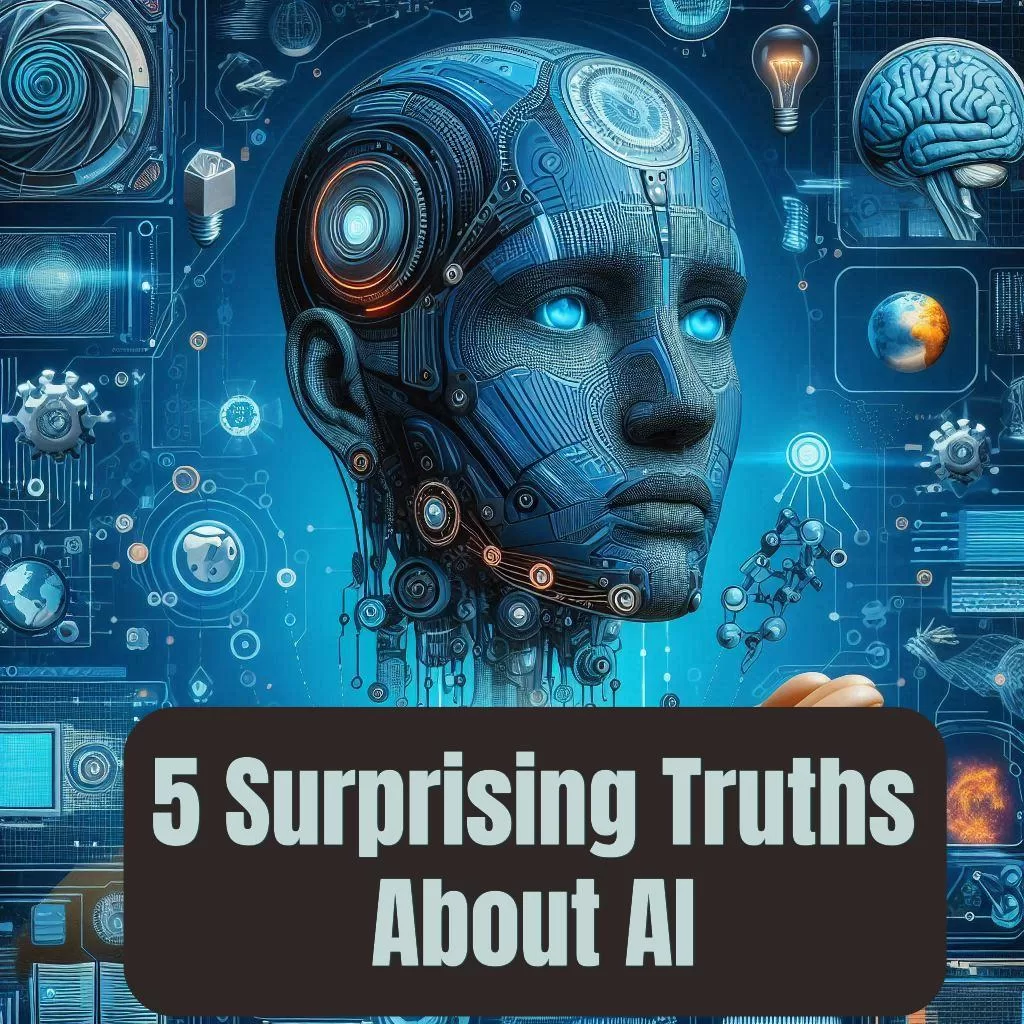
The conversation around AI is dominated by extremes. On one side, there are anxieties of mass job loss and uncontrollable superintelligence. On the other, there are utopian dreams of automated abundance. But this focus on AI’s “intelligence” is a distraction from its real, more profound impact. We are so busy asking if the machine is smart enough to replace us that we’re failing to see how it’s already changing the entire system we operate in.
This article distills five counter-intuitive truths from Sangeet Paul Choudary’s book, Reshuffle, to offer a new framework for understanding AI’s true power. These insights will shift your perspective from the tool to the system, revealing where the real opportunities and threats lie.
——————————————————————————–
1. It’s Not About Intelligence, It’s About the System
We mistakenly judge AI by how human-like it seems, a phenomenon Choudary calls the “intelligence distraction.” We debate its creativity or consciousness while overlooking the one thing that truly matters: its effect on the systems it enters.
Consider the parable of Singapore’s second COVID-19 wave in 2021. The nation was a global model of pandemic response, armed with precise tools like virus-tight borders and obsessive contact tracing. Yet, it was defeated not by a technological failure, but by systemic blind spots. An outbreak was traced to hostesses—colloquially known as “butterflies”—working illegally in discreet KTV lounges after entering the country on a “Familial Ties Lane” visa. With contact tracing ignored in the venues and a clientele of well-heeled men unwilling to risk their reputations by coming forward, the nation’s high-tech system was rendered useless. Singapore’s precise tools were no match for the hidden logic of the system.
This illustrates a crucial lesson: the real story of AI is not in the technology itself, but in the system within which it is deployed. Our focus should not be on the machine’s capabilities in isolation.
Instead of asking How smart is the machine?, we should shift our frame to ask What do our systems look like once they adopt this new logic of the machine?
——————————————————————————–
2. AI’s Real Superpower is Coordination, Not Automation
We often mistake AI’s impact for simple automation—making individual parts of a process faster. But its most transformative power lies in coordination: making all the parts work together in new and more reliable ways.
The shipping container provides a powerful analogy. Its revolution wasn’t just faster loading at ports (automation). Its true impact came from imposing a new, reliable logic of coordination across global trade. Innovations by entrepreneurs like Malcolm McLean, such as the single bill of lading that unified contracts across trucks, trains, and ships, and the push for standardization during the Vietnam War, were deliberate efforts to overcome systemic inertia. By standardizing how goods were moved, the container restructured entire industries, enabled just-in-time manufacturing, and redrew the map of economic power.
AI is the shipping container for knowledge work. Its most profound impact comes from its ability to coordinate complex activities and align fragmented players in ways previously impossible—what the book calls “coordination without consensus.” It can create a shared understanding from unstructured data, allowing teams, organizations, and even entire ecosystems to move in sync without rigid, top-down control.
This reveals a self-reinforcing flywheel of economic growth: better coordination drives deeper specialization, as companies can rely on external partners. This specialization leads to further fragmentation of industries, which in turn demands even more powerful forms of coordination to manage the complexity. AI is the engine of this modern flywheel.
The real leverage in connected systems doesn’t come from optimizing individual components, but from coordinating them.
This new power of system-level coordination is precisely why the old, task-focused view of job security is no longer sufficient.
——————————————————————————–
3. The “Someone Using AI Will Take Your Job” Trope is a Trap
The popular refrain, “AI won’t take your job, but someone using AI will,” is a dangerously outdated framework. It encourages a narrow, task-centric view of work that misses the bigger picture.
The book uses the Maginot Line as an analogy. In the 1930s, France built a chain of impenetrable fortresses to defend against a German invasion, perfecting its defense for the trench warfare of World War I. But Germany had changed the entire system of combat. The Blitzkrieg integrated mechanized infantry, tank divisions, and dive bombers, all of which were coordinated through two-way radio communication, to simply bypass the useless fortifications. The key wasn’t better weapons; it was a new coordination technology that changed the system of warfare itself.
Focusing on using AI to get better at your current tasks is like reinforcing the Maginot Line. The real threat isn’t that someone will perform your tasks better; it’s that AI is unbundling and rebundling the entire system of work. When the system changes, the economic logic that holds a job together can collapse, rendering the role obsolete even if the individual tasks remain.
When the system itself changes due to the effects of AI, the logic of the job can collapse, even if the underlying tasks remain intact.
——————————————————————————–
4. Stop Chasing Skills. Start Hunting for Constraints.
In a world where AI makes knowledge and technical execution abundant, simply “reskilling” is a losing game. It puts you in a constant race to learn the next task that AI can’t yet perform. A more strategic approach is to hunt for the new constraints that emerge in the system.
Take the surprising example of the sommelier. When information about wine became widely available online, the sommelier’s role as an information provider should have disappeared. Instead, their value increased. Why? Because they shifted from providing information to resolving new constraints for diners. With endless choice came new problems: the risk of making a bad selection and the desire for a curated, confident experience. The sommelier’s value migrated to managing risk. Furthermore, as one form of scarcity disappeared (information), they helped manufacture a new one: certified taste, created through elite credentialing bodies like the Court of Master Sommeliers.
The core lesson is that value flows to whoever can solve the new problems that appear when old ones are eliminated by technology. The key to staying relevant is not to accumulate more skills, but to identify and rebundle your work around solving the system’s new constraints, such as managing risk, navigating ambiguity, and coordinating complexity.
The assumption baked into most reskilling narratives is that skills are a scarce resource. But in reality, skills are only valuable in relation to the constraint they resolve.
——————————————————————————–
5. Using AI as a “Tool” Is a Path to Irrelevance
There is a crucial distinction between using AI as a “tool” versus using it as an “engine.” Using AI as a tool simply optimizes existing processes. It makes you faster or more efficient at playing the same old game, leading to short-term gains but no lasting advantage.
The book contrasts the rise of TikTok with early social networks to illustrate this. Platforms like Facebook and Instagram used AI as a tool to enhance their existing social-graph model, improving feed ranking and photo tagging. Their competitive logic remained centered on who you knew. TikTok, however, used AI as its core engine. It built an entirely new model based on a behavior graph—what you watch determines what you see. This was enabled by a brilliant positive constraint: the initial 60-second video limit forced a massive volume of rapid-fire user interactions, generating the precise data needed to train its behavior-graph engine at a speed competitors couldn’t match. This new logic made the old rules of competition irrelevant.
Companies that fall into the “tool integration trap” by becoming dependent on third-party AI to optimize tasks risk outsourcing their competitive advantage. The strategic choice is to move beyond simply applying AI and instead rebuild your core operating model around it.
A company that utilizes AI as a tool may improve efficiency, but it still competes on the same basis. A company that treats AI as an engine unlocks entirely new levels of performance and changes the basis of how it competes.
——————————————————————————–
Conclusion: Reshuffle or Be Reshuffled
To truly understand AI, we must shift our focus from its intelligence to its systemic impact. The five truths reveal a clear pattern: AI’s power isn’t in automating tasks but in reconfiguring the systems of work, competition, and value creation. It’s a force for coordination, a reshaper of constraints, and an engine for new business models.
True advantage comes not from reacting to AI with better skills or faster tools, but from actively using it to reshape the systems around us. It requires moving from a task-level view to a systems-level perspective.
The question is no longer “How will AI change my job?” but “What new systems can I help build with it?” What will your answer be?
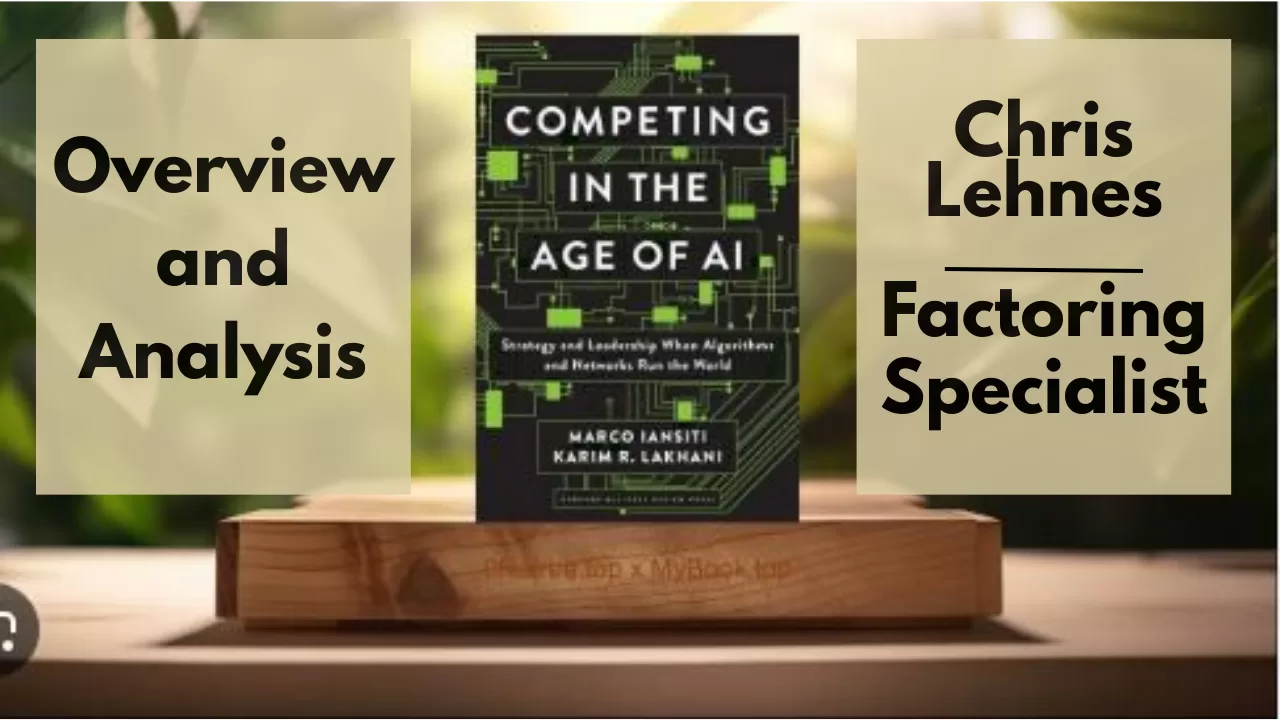
The book argues that Artificial Intelligence (AI) is fundamentally transforming how businesses operate and compete, leading to the emergence of new digital giants and requiring traditional firms to rethink their strategies, operating models, and leadership. It emphasizes the shift towards AI-centric organizations powered by data, algorithms, and networks, and explores the strategic collisions between digital and traditional firms, along with the ethical and societal implications of this transformation.
Key Ideas and Facts:
1. The Transformative Power of AI and the Rise of Digital Firms:
Artificial Intelligence is reshaping competitive landscapes and impacting businesses across all sectors. The book introduces the “Age of AI” as a period of profound transformation.
Digital companies differ significantly from conventional firms, leveraging AI to create entirely new business models.
These firms build value through “digital operating models” that are inherently scalable, multisided, and capable of continuous improvement.
Examples like Ant Financial (Alipay), Amazon, Netflix, Ocado, and Peloton illustrate how digitizing operating processes with algorithms and networks leads to transformative market impact.
Ant Financial’s MYbank utilizes vast amounts of data and AI algorithms to assess creditworthiness and offer small loans efficiently: “Ant uses that data to compare good borrowers (those who repay on time) with bad ones (those who do not) to isolate traits common in both groups. Those traits are then used to calculate credit scores. All lending institutions do this in some fashion, of course, but at Ant the analysis is done automatically on all borrowers and on all their behavioral data in real time.”
Netflix leverages streaming data to personalize user experience and predict customer loyalty: “We receive several million stream plays each day, which include context such as duration, time of day and device type.”
2. Rethinking the Firm: Business and Operating Models in the Digital Age:
The book differentiates between a firm’s business model (how it creates and captures value) and its operating model (how it delivers that value).
Digital firms excel at business model innovation, often separating value creation and capture and leveraging diverse stakeholders.
“A company’s business model is therefore defined by how it creates and captures value from its customers.”
The operating model is the “actual enabler of firm value and its ultimate constraint.” Digital operating models are characterized by software, networks, and AI.
Digitization leads to processes that are “infinitely scalable” and “intrinsically multisided,” allowing firms to expand their scope and create multiplicative value.
3. The Artificial IntelligenceFactory: Data, Algorithms, and Continuous Improvement:
Advanced digital firms operate like an “AI Factory,” with a core system of data, decision algorithms, and machine learning driving continuous improvement and innovation.
Data is the foundation, requiring industrialized gathering, preparation, and governance.
Algorithms are the tools that use data to make decisions and predictions. Various types of algorithms (supervised, unsupervised, reinforcement learning) are employed.
Experimentation platforms are crucial for testing and refining algorithms and service offerings.
“After the data is gathered and prepared, the tool that makes the data useful is the algorithm—the set of rules a machine follows to use data to make a decision, generate a prediction, or solve a particular problem.”
4. Rearchitecting the Firm: Transitioning to an AI-Powered Organization:
Traditional firms need to “rearchitect” their operations and architecture to integrate AI capabilities and achieve agility.
This involves moving away from siloed, functionally organized structures towards more modular and interconnected systems.
The historical evolution of operating models, from craft production to mass production, provides context for the current digital transformation.
Breaking down “organizational silos” and embracing modular design are key to enabling AI integration.
5. Becoming an AI Company: Key Steps for Transformation:
The book outlines steps for traditional businesses to transform into Artificial Intelligence -powered organizations, focusing on building foundational capabilities in data, algorithms, and infrastructure.
This often involves overcoming resistance to change and fostering a new mindset across the organization.
Examples like Microsoft’s internal transformation highlight the challenges and opportunities in this process.
6. Strategy for a New Age: Navigating the Digital Landscape:
Strategic frameworks and tools need to adapt to the digitally-driven, AI-powered world.
Network effects (where the value of a product or service increases with the number of users) are a critical competitive advantage for digital firms.
“Generally speaking, the more network connections, the greater the value; that’s the basic mechanism generating the network effect.”
Understanding the dynamics of network value creation and capture, including factors like multihoming and network bridging, is essential for strategic decision-making.
Analyzing the potential of a firm’s strategic networks and identifying opportunities for synergy and expansion is crucial.
7. Strategic Collisions: Competition Between Digital and Traditional Firms:
The book explores the competitive dynamics between AI-driven/digital and traditional/analog firms, leading to market disruptions.
Digital entrants can often outperform incumbents by leveraging AI for superior efficiency, personalization, and scale.
The example of a financial services entrant using AI for creditworthiness demonstrates this: “Consider a financial services entrant that uses AI to evaluate creditworthiness by analyzing hundreds of variables, outperforming legacy methods. This approach enables the company to approve significantly more borrowers while automating most loan processes.”
Established businesses face a “blank-sheet opportunity” to reimagine their operating models with AI agents, potentially diminishing the competitive advantage of scale held by larger incumbents.
8. The Ethics of Digital Scale, Scope, and Learning:
The ethical implications of AI scaling, data use, and its impact on society are examined.
This includes concerns about algorithmic bias, privacy erosion, the spread of misinformation, and the potential for increased inequality.
The book acknowledges that “Human bias Is a Huge Problem for AI.”
The need for new responsibilities and frameworks to address these ethical challenges is highlighted.
9. The New Meta: Transforming Industries and Ecosystems:
AI is transforming industries and ecosystems, creating “mega digital networks” with “hub firms” that control essential connections.
These hub firms, like Amazon and Tencent, exert significant influence and face increasing scrutiny from regulators.
The boundaries between industries are blurring as AI enables firms to recombine capabilities and offer novel services.
10. A Leadership Mandate: Skills and Mindsets for the AI Era:
The book concludes by exploring the key leadership challenges, skills, and mindsets needed to exploit the strategic opportunity and thrive in the AI era.
Leaders must foster a culture of experimentation, embrace data-driven decision-making, and navigate the ethical complexities of Artificial Intelligence.
The importance of collective wisdom, community engagement, and a sense of responsibility for the broader societal impact of Artificial Intelligenceis emphasized.
Quotes Highlighting Key Themes:
“Artificial intelligence is transforming the way firms function and is restructuring the economy.” (Chapter 1 Summary)
“Strategy, without a consistent operating model, is where the rubber meets the air.” (Chapter on Operating Models)
“The core of the new firm is a scalable decision factory, powered by software, data, and algorithms.” (Chapter 3 Summary)
“The value of a firm is shaped by two concepts. The first is the firm’s business model, defined as the way the firm promises to create and capture value. The second is the firm’s operating model, defined as the way the firm delivers the value to its customers.” (Chapter on Business Models)
Overall Significance:
“Competing in the Age of AI” provides a comprehensive framework for understanding the profound impact of Artificial Intelligenceon business and competition. It offers valuable insights for both traditional organizations seeking to adapt and new digital ventures aiming to disrupt markets. The book stresses the critical interplay between technology, strategy, operations, and ethics in navigating the evolving digital landscape and emphasizes the imperative for forward-thinking leadership in the age of AI
According to Competing in the Age of AI, what is the transformative impact of AI on businesses, and how is it changing competitive landscapes? Provide two specific examples mentioned in the book summary.
How do digital companies, enabled by AI, fundamentally differ in their business models compared to conventional firms? Explain one way AI facilitates these new business models.
Describe the “AI Factory” concept. What are the key components that drive continuous improvement and innovation in advanced digital firms?
Why is it crucial for companies to rearchitect their operations to integrate AI capabilities? Mention one specific benefit of this rearchitecting process.
Outline two key steps a traditional business should undertake to transform into an AI-powered organization.
What are “strategic collisions” as described in the book? Explain the nature of the competition between AI-driven and traditional firms.
Discuss one significant ethical implication arising from the scaling of AI, the use of large datasets, or the societal impact of AI technologies.
How is AI transforming industries and ecosystems, leading to the emergence of a “new meta”? Briefly explain the role of “hub firms” in this context.
What are the two primary components that define a firm’s value, according to the excerpts? Briefly describe each component.
Explain the concept of “network effects” and provide a concise example of how it amplifies value for users in a digital platform.
Quiz Answer Key
AI is transforming businesses by fundamentally altering how they function and compete, leading to reshaped competitive landscapes. Examples include a financial services entrant using AI for superior creditworthiness evaluation and established businesses using AI agents to reimagine operating models.
Digital companies with AI have business models where value creation and capture can be separated and often involve different stakeholders, unlike the typically direct customer-based model of conventional firms. AI enables this by facilitating new ways to collect and leverage data for value creation (e.g., free services subsidized by advertisers).
The “Artificial Intelligence Factory” is a system used by advanced digital firms comprising data, decision algorithms, and machine learning. This system continuously analyzes data, refines algorithms, and improves decision-making processes, driving ongoing innovation.
Companies need to restructure their operations to integrate AI capabilities to enhance agility, improve efficiency, and leverage the power of data-driven insights for better decision-making. One benefit is the ability to automate processes and augment human intelligence.
Two key steps include developing an AI strategy aligned with business goals and building the necessary data infrastructure and talent to support AI-driven processes and tools.
“Strategic collisions” refer to the competitive clashes between established traditional (“analog”) firms and emerging AI-driven (“digital”) firms. These collisions often result in market disruptions as digital firms leverage AI for new efficiencies and business models.
One significant ethical implication is algorithmic bias, where AI systems trained on biased data can perpetuate or even amplify societal inequalities in areas like lending, hiring, or even criminal justice.
The “new meta” describes how AI fosters the creation of mega digital networks and transforms industries by connecting previously disparate sectors. “Hub firms” are central players in these networks, controlling key connections and shaping competitive dynamics across multiple industries.
The two primary components are the firm’s business model, which is how the firm promises to create and capture value, and the firm’s operating model, which is how the firm delivers that promised value to its customers.
Network effects occur when the value of a product or service increases for each user as more users join the network. For example, the value of a social media platform increases for each user as more of their friends and contacts join and become active.
Essay Format Questions
Analyze the key differences between the operating models of traditional firms and AI-native digital firms as described in Competing in the Age of AI. Discuss how these differences impact their ability to innovate and compete in the current economic landscape.
Evaluate the concept of the “AI Factory” as presented by Iansiti and Lakhani. Discuss the critical elements necessary for a company to successfully implement and leverage such a system for sustained competitive advantage.
Discuss the strategic implications of “strategic collisions” for both traditional and AI-driven businesses. What strategies can each type of firm employ to navigate and potentially thrive amidst these disruptive competitive dynamics?
Explore the ethical challenges posed by the increasing prevalence of AI in business and society, as highlighted in Competing in the Age of AI. What responsibilities do business leaders and policymakers have in addressing these challenges?
Based on the insights from Competing in the Age of AI, outline the key leadership skills and mindsets required for executives to successfully guide their organizations through the ongoing transformation driven by artificial intelligence.
Glossary of Key Terms
AI Factory: A system of data, decision algorithms, and machine learning used by advanced digital firms to drive continuous improvement and innovation through data-driven insights and automated processes.
Business Model: The way a firm promises to create and capture value for its customers, encompassing its value proposition and revenue generation mechanisms.
Operating Model: The way a firm delivers the value promised in its business model to its customers, encompassing its organizational structure, processes, and technologies.
Strategic Collisions: The competitive dynamics and market disruptions that occur when AI-driven digital firms with new business and operating models compete against traditional analog firms.
Network Effects: The phenomenon where the value of a product or service increases for each user as more users join the network, creating positive feedback loops and potential for rapid growth.
Digital Amplification: The ways in which digital technologies, particularly AI, can magnify the scale, scope, and learning capabilities of firms, leading to significant market impact.
Rearchitecting the Firm: The process of restructuring a company’s operations and technological infrastructure to effectively integrate Artificial Intelligence capabilities and achieve greater agility.
Hub Firms: Companies that become central orchestrators in digital ecosystems, controlling key connections and data flows across multiple industries.
Multihoming: The practice of users or participants engaging with multiple competing platforms within the same market (e.g., a driver working for both Uber and Lyft).
Disintermediation: The removal of intermediaries or middlemen from a value chain, often facilitated by digital platforms and AI, leading to more direct interactions between producers and consumers.
In the dynamic realm of Wall Street, the buzz surrounding Artificial Intelligence (A.I.) has reached a crescendo, eclipsing apprehensions about interest rates. However, the soaring trajectory of stocks presents a conundrum for the Federal Reserve, potentially complicating future rate adjustments. Wall Street Enthusiasm for A.I. Overrides Rate Concerns
The advent of A.I. technology has ignited a fervor among investors, as its application across various sectors promises unparalleled efficiency, productivity, and profitability. From predictive analytics to algorithmic trading, A.I. is reshaping the landscape of finance, empowering market participants with unprecedented insights and decision-making capabilities. Consequently, Wall Street’s appetite for A.I. innovations has soared, propelling stocks of tech companies and firms harnessing A.I. solutions to unprecedented heights.
Despite the Federal Reserve’s historically dominant influence on market sentiment through interest rate adjustments, the allure of A.I. has diverted attention away from traditional economic indicators. While interest rates typically dictate borrowing costs, investment decisions, and inflation expectations, the allure of A.I.’s transformative potential has overshadowed concerns about monetary policy. Investors are increasingly prioritizing technological advancements and their implications for future growth over short-term rate fluctuations.
However, the Federal Reserve faces a quandary as it navigates this landscape of exuberance and uncertainty. The relentless surge in stock prices, fueled in part by optimism surrounding A.I., could constrain the Fed’s ability to implement rate cuts if economic conditions necessitate such action. Elevated stock valuations, driven by bullish sentiment rather than fundamental economic strength, could amplify the repercussions of any rate adjustments, potentially exacerbating market volatility and liquidity concerns.
Furthermore, the divergence between Wall Street’s enthusiasm for A.I. and the Federal Reserve’s mandate to ensure economic stability poses a delicate balancing act. While A.I. innovation fuels optimism and growth prospects, the Fed must remain vigilant to mitigate the risks associated with speculative bubbles and market exuberance. Striking the right balance between fostering technological innovation and safeguarding financial stability will be imperative for policymakers in the coming years.
In conclusion, the prevailing excitement surrounding A.I. on Wall Street has eclipsed traditional concerns about interest rates, signaling a paradigm shift in investor sentiment and market dynamics. However, the meteoric rise of stocks presents a formidable challenge for the Federal Reserve, potentially limiting its maneuverability in adjusting rates to address economic fluctuations. As A.I. continues to redefine the financial landscape, policymakers must navigate this evolving terrain with prudence and foresight to sustain long-term prosperity and stability.
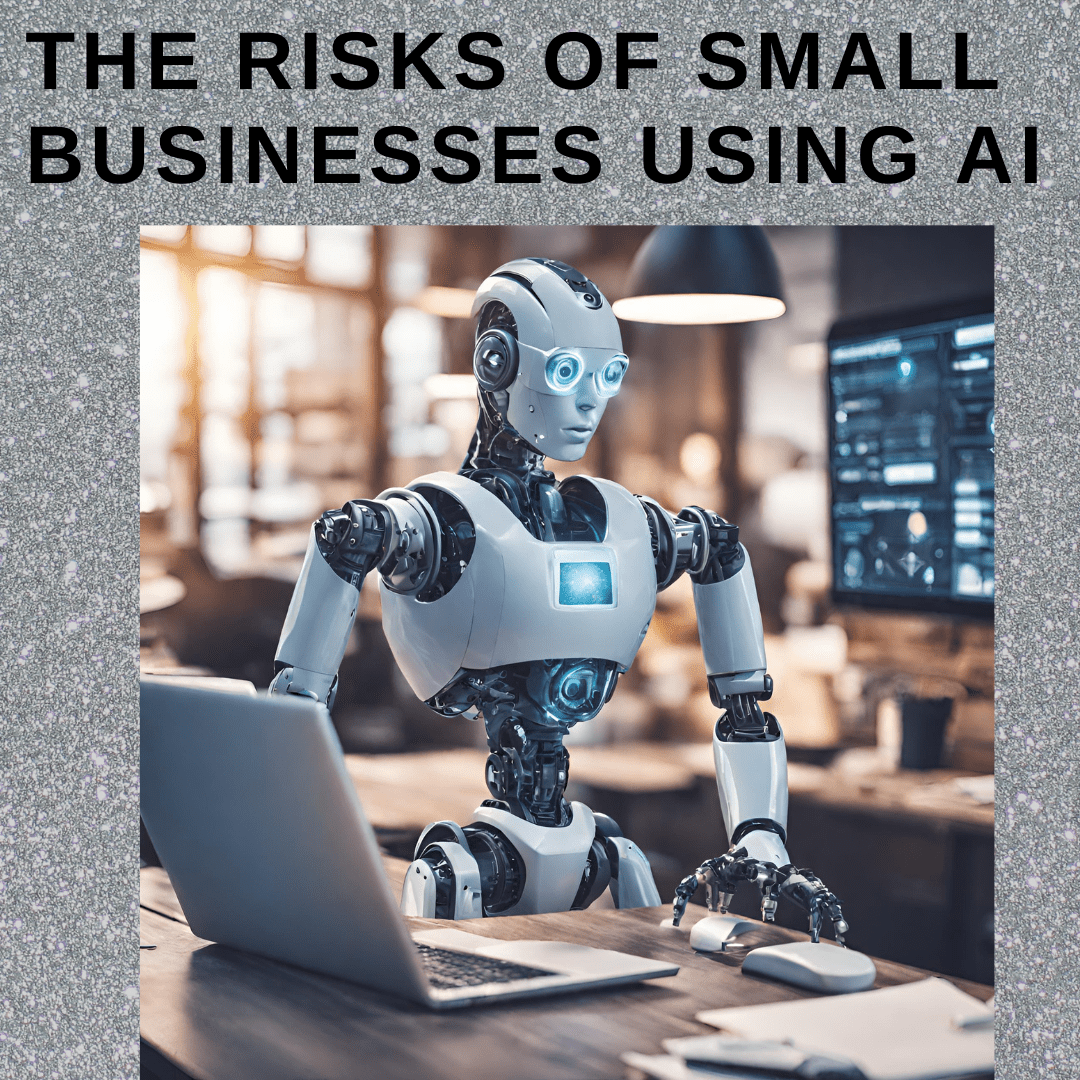
In recent years, artificial intelligence (AI) has emerged as a transformative force across various industries, promising efficiency, innovation, and growth. However, for small businesses, the integration of AI comes with its own set of risks and challenges. While the potential benefits are undeniable, it’s crucial for small enterprises to approach AI implementation with caution and awareness of potential pitfalls. The Risks of Small Businesses Using Artificial Intelligence.
Here are some key risks that small businesses should consider when adopting AI technology:
The risks of small businesses using AI
Cost: One of the primary concerns for small businesses is the cost associated with implementing AI solutions. While large corporations may have the financial resources to invest in cutting-edge AI technologies, small businesses often operate on tighter budgets. The initial investment required for AI infrastructure, software development, and staff training can be significant, making it essential for small businesses to carefully assess the potential return on investment (ROI) before proceeding.
Data Security and Privacy: AI systems rely heavily on data to make predictions, analyze patterns, and automate processes. For small businesses, safeguarding sensitive data from cyber threats and unauthorized access is paramount. Inadequate data security measures can expose businesses to data breaches, financial losses, and damage to their reputation. Moreover, with increasing regulations such as GDPR and CCPA, businesses must ensure compliance with data protection laws to avoid legal ramifications.
Bias and Fairness: AI algorithms are only as unbiased as the data they are trained on. Without careful attention to data selection and algorithm design, AI systems can inadvertently perpetuate existing biases and discrimination. For small businesses, this presents a significant ethical and reputational risk. Biased AI decisions can lead to unfair treatment of customers, employees, and stakeholders, resulting in backlash and loss of trust. To mitigate this risk, small businesses must prioritize diversity and inclusivity in their data collection and algorithm development processes.
Technical Challenges: Implementing AI solutions requires specialized technical expertise, which may be lacking in small businesses with limited IT resources. From selecting the right AI algorithms to integrating them into existing systems, small businesses may encounter technical hurdles that hinder the successful deployment of AI technology. Additionally, AI systems require continuous monitoring, maintenance, and updates to remain effective, further straining small businesses’ IT capabilities.
Dependency on Third-Party Providers: Many small businesses rely on third-party AI vendors for off-the-shelf solutions or cloud-based AI services. While outsourcing AI capabilities can offer cost savings and flexibility, it also introduces dependencies and risks. Small businesses may face vendor lock-in, interoperability issues, and service disruptions if their AI providers experience downtime or go out of business. Therefore, small businesses must carefully evaluate the reliability, scalability, and long-term viability of their AI vendors.
In conclusion, while AI holds immense potential for small businesses to enhance productivity, improve decision-making, and gain a competitive edge, it is not without its risks. Small businesses must approach AI adoption with careful planning, risk assessment, and mitigation strategies. By addressing the challenges of cost, data security, bias, technical expertise, and vendor dependency, small businesses can harness the transformative power of AI while minimizing potential pitfalls.
Contains information related to marketing campaigns of the user. These are shared with Google AdWords / Google Ads when the Google Ads and Google Analytics accounts are linked together.
90 days
__utma
ID used to identify users and sessions
2 years after last activity
__utmt
Used to monitor number of Google Analytics server requests
10 minutes
__utmb
Used to distinguish new sessions and visits. This cookie is set when the GA.js javascript library is loaded and there is no existing __utmb cookie. The cookie is updated every time data is sent to the Google Analytics server.
30 minutes after last activity
__utmc
Used only with old Urchin versions of Google Analytics and not with GA.js. Was used to distinguish between new sessions and visits at the end of a session.
End of session (browser)
__utmz
Contains information about the traffic source or campaign that directed user to the website. The cookie is set when the GA.js javascript is loaded and updated when data is sent to the Google Anaytics server
6 months after last activity
__utmv
Contains custom information set by the web developer via the _setCustomVar method in Google Analytics. This cookie is updated every time new data is sent to the Google Analytics server.
2 years after last activity
__utmx
Used to determine whether a user is included in an A / B or Multivariate test.
18 months
_ga
ID used to identify users
2 years
_gali
Used by Google Analytics to determine which links on a page are being clicked
30 seconds
_ga_
ID used to identify users
2 years
_gid
ID used to identify users for 24 hours after last activity
24 hours
_gat
Used to monitor number of Google Analytics server requests when using Google Tag Manager