Gross Domestic Product (GDP) growth rate
Let’s explore the potential trends in its Gross Domestic Product (GDP) growth rate throughout 2025. While no one has a crystal ball, we can analyze current trajectories, expert projections, and potential influencing factors to paint a picture of what lies ahead.
The Current Economic Pulse (Briefly looking back at late 2024)
To understand 2025, it’s crucial to acknowledge the economic momentum (or lack thereof) leading into it. We’re likely seeing a continued moderation from the robust growth experienced in the immediate post-pandemic recovery. Inflation, while hopefully tamer, will still be a key variable, influencing consumer spending and investment. Interest rates, dictated by the Federal Reserve, will also play a significant role. Let’s imagine a snapshot of the US economy as we enter 2025.
Q1 2025: A Cautious Start?
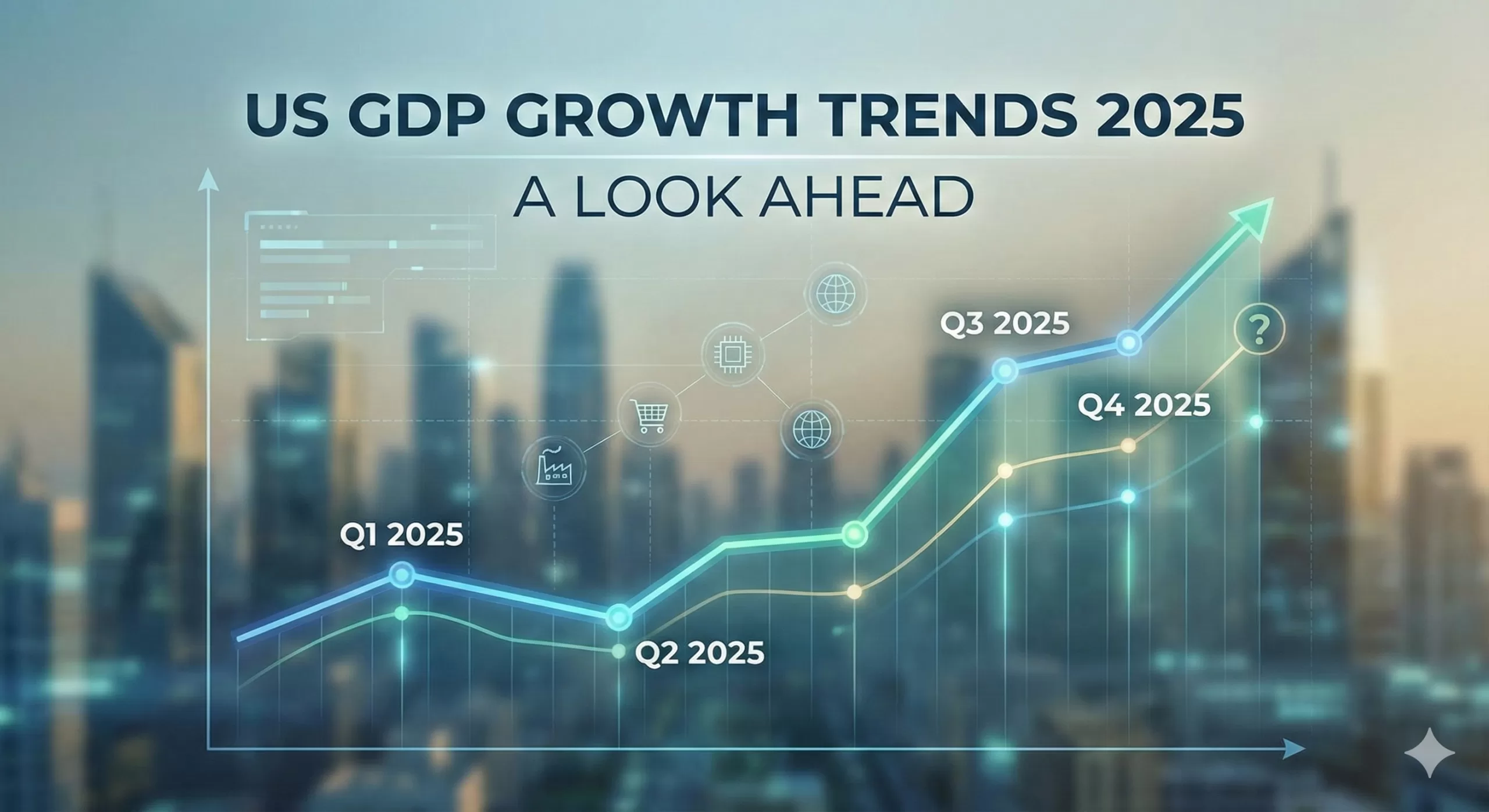
As 2025 kicks off, many economists anticipate a period of continued cautious growth. Businesses may still be adjusting to lingering supply chain complexities and a potentially tighter labor market. Consumer spending, the bedrock of the US economy, might see moderate gains, influenced by real wage growth (or lack thereof) and household savings levels. Investment in new projects could be selective, driven by a desire for efficiency and technological advancement. We might see the GDP growth rate hover in the lower to mid-2% range during this initial quarter.
Q2 2025: Finding its Rhythm
Moving into the second quarter, we could witness the economy starting to find a more stable rhythm. Factors such as potentially easing inflationary pressures and a clearer outlook on monetary policy could provide more certainty for businesses and consumers. We might see a slight uptick in manufacturing activity and continued strength in the services sector. Technological innovation, particularly in areas like AI and green energy, could begin to show more tangible contributions to productivity.
Q3 2025: Potential for Acceleration
The third quarter often provides a good indicator of annual performance, and 2025 could see some positive momentum building. If global economic conditions stabilize and major geopolitical tensions remain subdued, US exports could see a boost. Domestically, renewed consumer confidence, perhaps fueled by a strong job market and stable prices, could lead to increased discretionary spending. Business investment might also pick up as companies look to capitalize on growth opportunities. This could be a quarter where GDP growth nudges closer to the mid-2% to even 3% range. Imagine the vibrancy of a thriving economy in full swing.
Q4 2025: A Strong Finish or Continued Moderation?
The final quarter of 2025 will be crucial in determining the overall annual growth rate. Much will depend on the preceding quarters’ performance and any new unforeseen global or domestic events. A strong holiday shopping season, robust corporate earnings, and continued investment in key sectors could lead to a solid finish. However, potential headwinds like persistent inflation or unexpected global economic slowdowns could temper growth. The Federal Reserve’s stance on interest rates will also be keenly watched. The year could conclude with growth stabilizing, setting the stage for 2026.
Key Influencing Factors for 2025:
- Inflation and Interest Rates: The Fed’s ability to manage inflation without stifling growth will be paramount.
- Consumer Spending: The health of the consumer, driven by wages, employment, and savings, is always a critical determinant.
- Business Investment: Companies’ willingness to invest in expansion, R&D, and technology will fuel future growth.
- Global Economic Health: International trade and geopolitical stability will have a ripple effect on the US economy.
- Technological Advancement: Innovations in AI, automation, and green technologies could boost productivity.
In conclusion, 2025 is shaping up to be a year of continued adaptation and potential growth for the US economy. While we can anticipate some fluctuations, a path of cautious yet steady expansion seems to be the prevailing view among many analysts. The resilience and dynamism of the American economy will undoubtedly be tested, but its capacity for innovation and recovery remains a powerful force.