Gross domestic product – GDP – grew at a slower rate in the second quarter and persistent price pressures are unsettling financial markets.
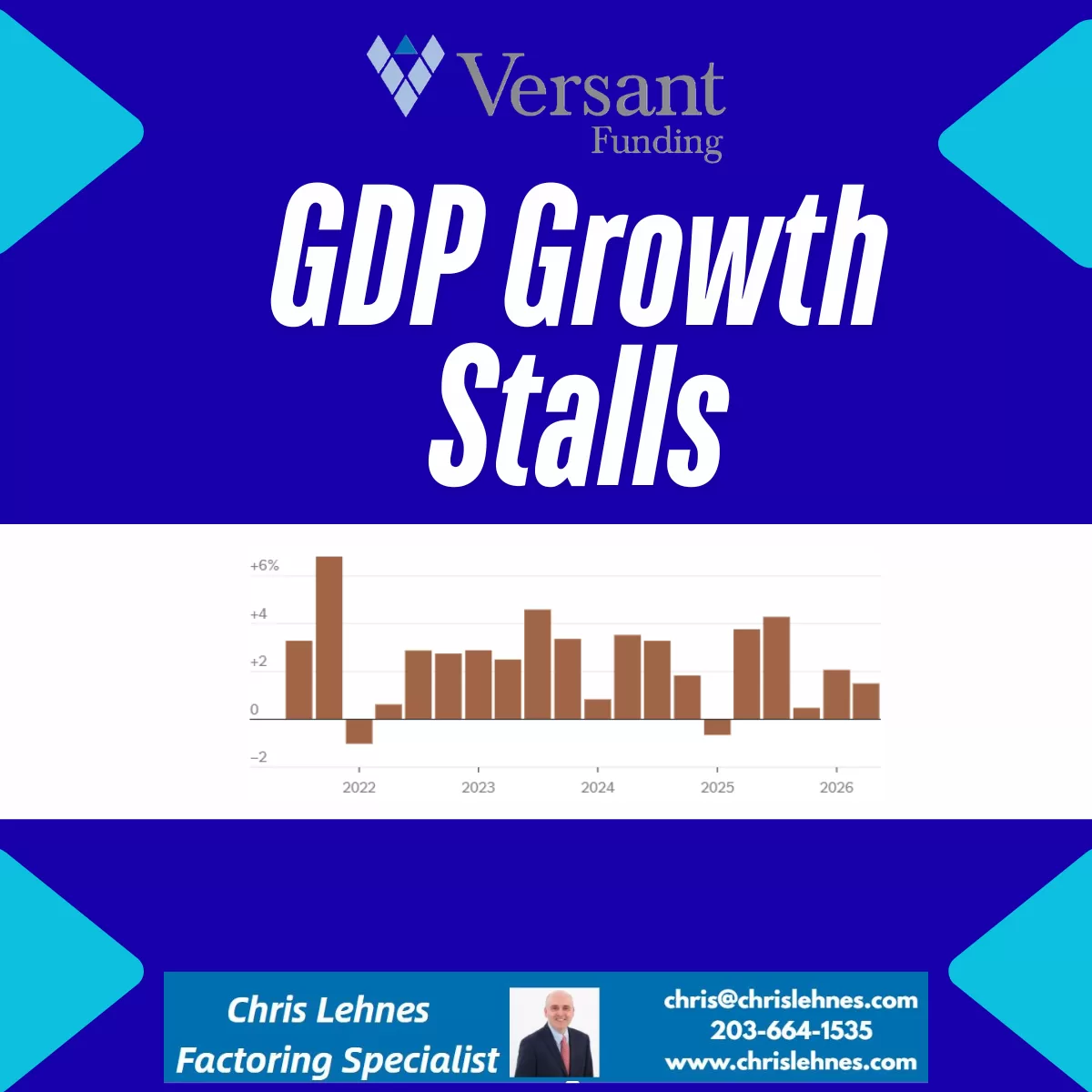

Gross domestic product – GDP – grew at a slower rate in the second quarter and persistent price pressures are unsettling financial markets.
Impact of Iran War Ripple through the Economy Due to Gas Prices
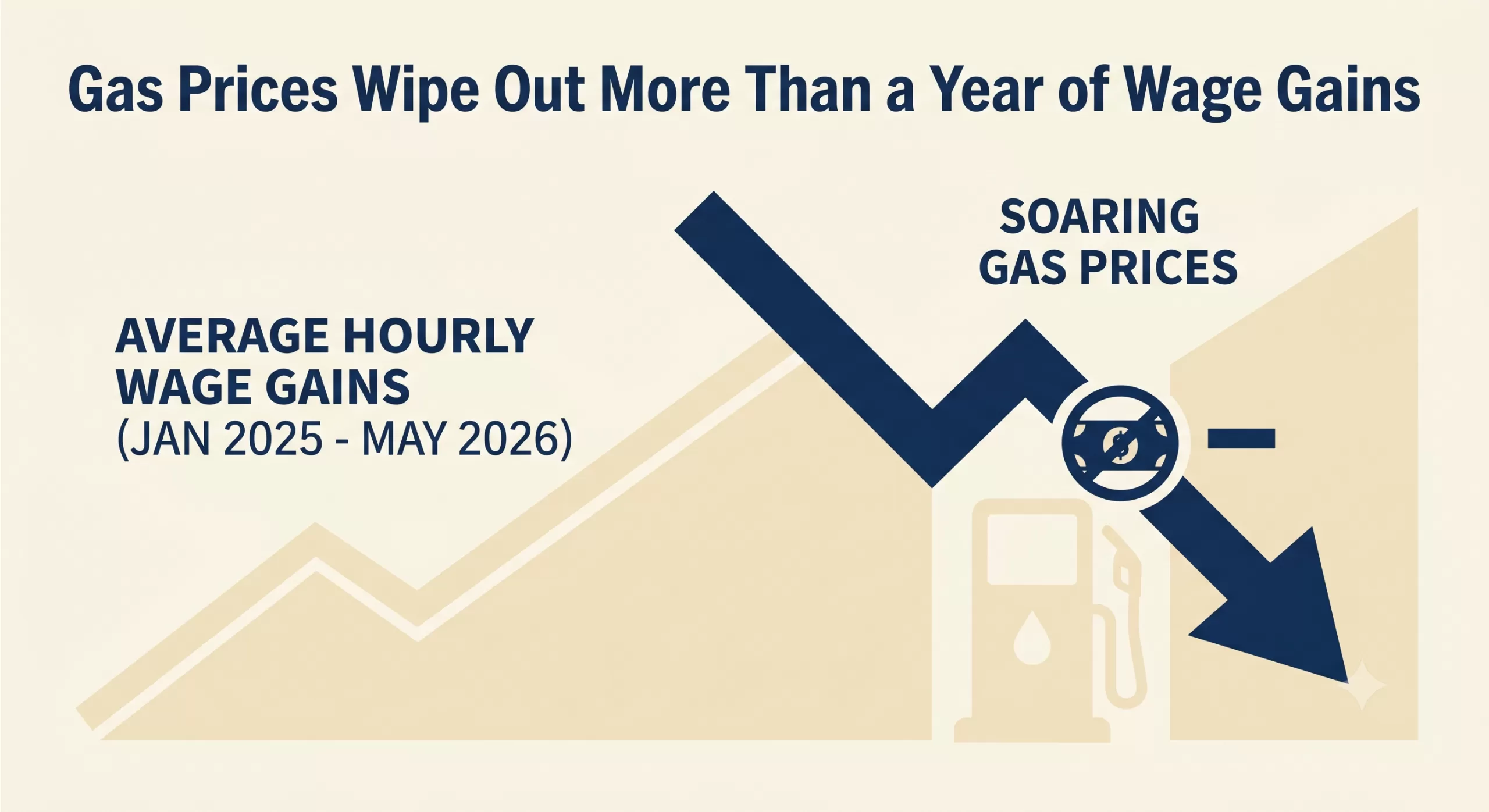
The latest macroeconomic indicators including gas prices paint a challenging picture for both consumers and businesses. Following the Labor Department‘s recent reports, it is clear that soaring energy costs have effectively neutralized recent progress in worker compensation. With top-line inflation advancing to 4.2% in May—the highest level in three years—and gasoline prices surging, real average hourly earnings have been pushed all the way back to January 2025 levels.

For the second consecutive month, inflation has outpaced wage growth. The reality is that gas prices have wiped out more than a year of wage gains.
The ripple effects of this inflationary spike are significant. The Federal Reserve now faces a complex policy dilemma as they weigh interest rate decisions against a backdrop of stubborn inflation and squeezed household budgets. When wages lag behind inflation, consumer spending inevitably cools, particularly among middle- and lower-income brackets who are forced to allocate a larger share of their take-home pay to essentials like fuel and groceries.
While the headlines focus on the consumer at the pump, small and mid-sized businesses are absorbing these shocks on multiple fronts:
During periods of high inflation and uncertain interest rates, liquidity becomes a paramount concern. Industries heavily reliant on steady cash flow—such as manufacturing, staffing, healthcare, and distribution—can find their working capital severely constrained when expenses rise faster than revenues can be collected.
Waiting 30, 60, or 90 days for clients to pay outstanding invoices is a luxury many companies cannot afford when the cost of doing business is escalating weekly. Accounts receivable factoring offers a strategic mechanism to bridge this gap. By converting outstanding B2B invoices into immediate working capital, business owners can cover rising operational costs, meet payroll obligations, and navigate economic volatility without taking on new debt or waiting on unpredictable macroeconomic shifts.
As we continue to monitor the inflation data and the Fed’s next moves, maintaining robust working capital will be the defining factor for businesses looking to weather this storm.
Today marks a significant turning point in European monetary policy: the European Central Bank (ECB) has officially reversed course, raising its key interest rates for the first time in nearly three years.

After an extended period of cuts and holds, the era of steadily declining borrowing costs in the Eurozone has temporarily hit a wall. Let’s break down the data, the underlying causes, and what this means for the broader economy.
In a move widely anticipated by financial markets and economists, the ECB’s Governing Council elected to raise its key interest rates by 0.25 percentage points (25 basis points).
Here is a quick breakdown of where the central bank’s key rates stand effective immediately:
| ECB Facility | Previous Rate | New Rate (June 2026) |
| Deposit Facility | 2.00% | 2.25% |
| Main Refinancing Operations | 2.15% | 2.40% |
| Marginal Lending Facility | 2.40% | 2.65% |
This decision officially ends a cycle that began back in September 2023, representing a decisive reaction to shifting economic realities on the ground.
The ECB has a single, primary mandate: to maintain price stability by targeting an inflation rate of 2.0%. The decision to hike rates is a direct response to recent data showing that inflation is moving in the wrong direction.
When the ECB pulls the interest rate lever, the effects ripple through the entire financial system. Here is what to expect:
The prevailing question for markets is whether this is a isolated adjustment or the beginning of a new tightening cycle.
Current market consensus suggests this won’t be a one-off event. Many analysts are pricing in at least one or two more quarter-point increases before the end of the year, which could bring the deposit rate up to 2.50% or 2.75%. However, ECB leadership has emphasized that future decisions will remain strictly “data-dependent.” The Governing Council will evaluate the ongoing impact of energy prices, geopolitical stability, and wage growth on a meeting-by-meeting basis.
The takeaway is clear: the ECB’s latest pivot highlights how rapidly external shocks can upend economic stability, forcing central banks to prioritize fighting inflation over stimulating growth.
Contact Factoring Specialist, Chris Lehnes
If the global economy feels like a high-wire act lately, you aren’t alone. We are currently navigating a “polycrisis“—a fancy term for when multiple major headaches (inflation, geopolitical tension, and shifting labor markets) all hit the fan at the same time.
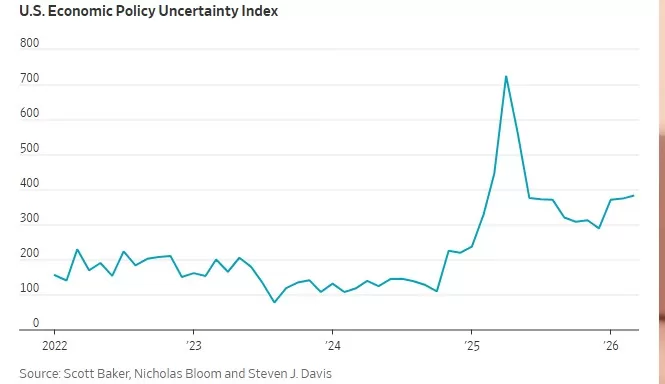
We are standing on a narrow ledge. One side leads to a hard landing; the other leads to a stabilized “new normal.” Here is a look at the forces threatening to push us off, and the safety nets that might just pull us back.
It doesn’t take a wrecking ball to cause a recession; sometimes, it just takes a few well-placed dominos. Here are the primary risks:
It’s not all doom and gloom. There are several structural “muscles” keeping the economy upright:
The economy isn’t necessarily “broken,” but it is transitioning. We are moving away from an era of “free money” and into an era where efficiency and strategic investment matter again.
| Scenario | Key Driver | Likely Outcome |
| The Hard Landing | Persistent inflation + high rates | Brief but sharp recession; rising unemployment. |
| The Soft Landing | Controlled cooling + tech growth | Flat growth for a year, followed by a steady recovery. |
| The No Landing | Continued high spending | Economy stays hot, but rates stay high indefinitely. |
The Takeaway: While the ledge is narrow, the path across is still visible. Navigating the next twelve months will require agility from policymakers and patience from investors. We may be on the edge, but we aren’t over it yet..
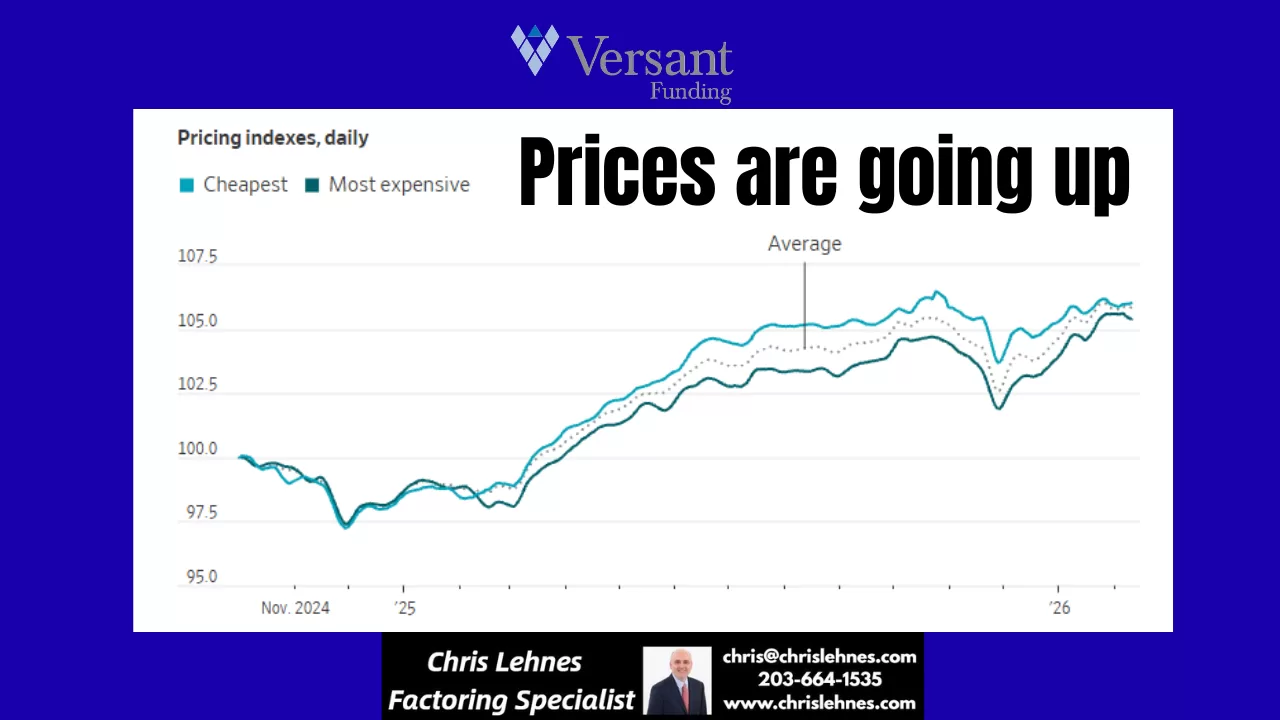
Remember that brief sigh of relief? The one where it felt like maybe, just maybe, the relentless march of price increases was slowing down? Well, if you’ve been to the grocery store, filled up your gas tank, or even just browsed online recently, you’ve probably noticed it: the break is over. Companies are jacking up prices again, and consumers are once again feeling the pinch.
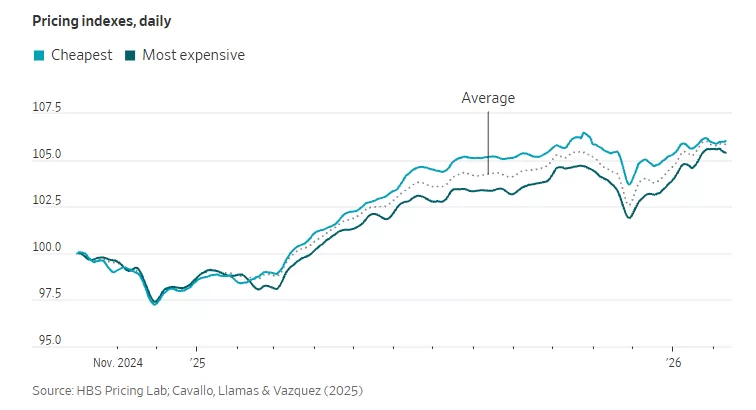
For a while, many economists and analysts pointed to easing supply chain issues, stabilizing energy costs, and even a slight dip in consumer demand as potential signals that inflation was cooling. Some businesses even held the line on prices, perhaps hoping to retain market share or out of a genuine desire to give their customers a break.
But those days seem to be largely behind us. We’re seeing a resurgence in price hikes across a wide array of sectors. From everyday necessities to discretionary items, the numbers on the tags are climbing.
What’s Driving This Latest Surge?
Several factors are likely contributing to this renewed upward trend:
What Does This Mean for You?
For the average household, this renewed wave of price increases means a continued squeeze on budgets. Discretionary spending may need to be curtailed further, and even essential purchases will require more careful planning. Savings might deplete faster, and the goal of financial stability could feel increasingly distant.
How Can Consumers Cope?
While we can’t control the broader economic forces at play, there are strategies consumers can employ to mitigate the impact:
The “break” from rising prices was indeed short-lived. As companies continue to adjust their pricing strategies, it’s more important than ever for consumers to be vigilant, adapt their spending habits, and advocate for their financial well-being.
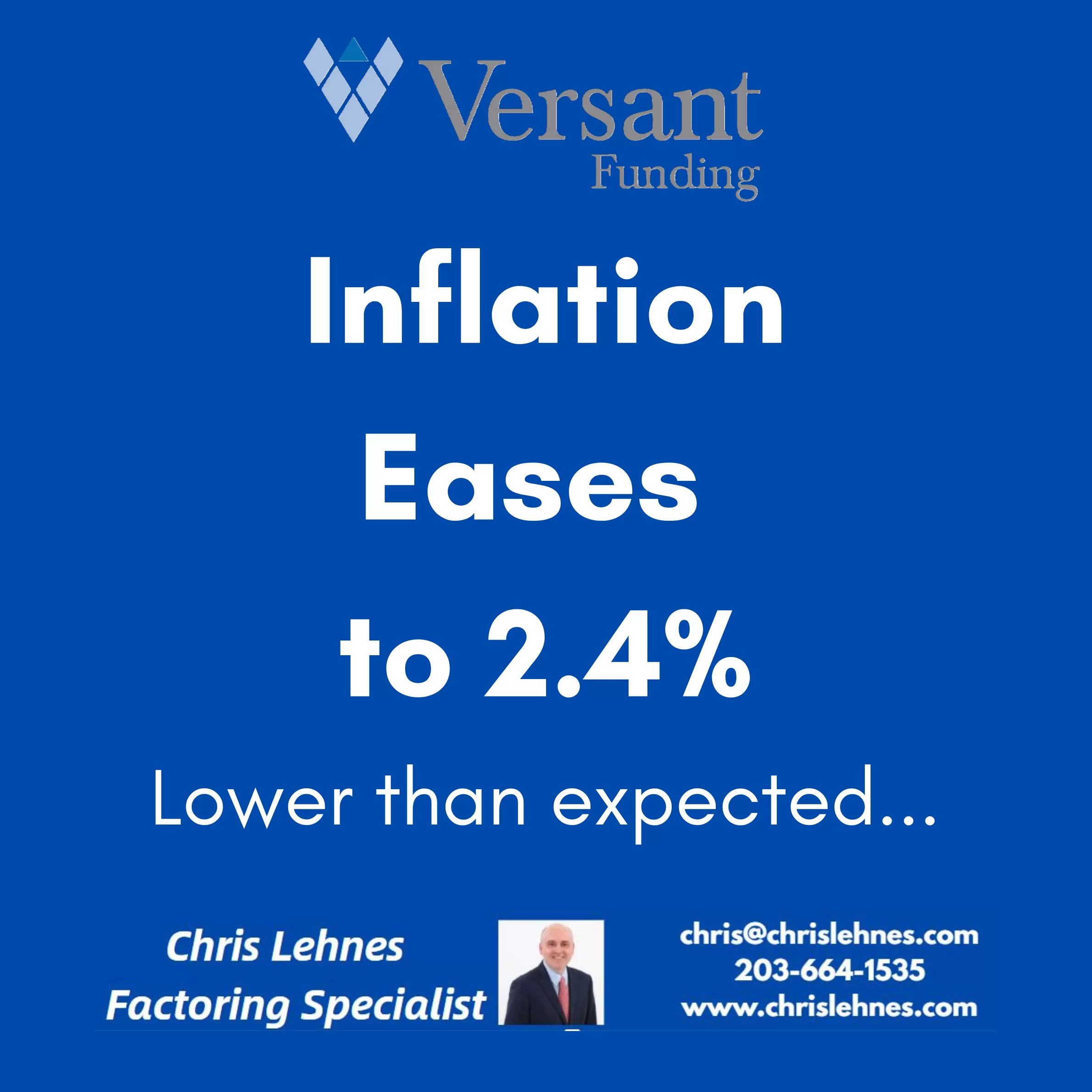
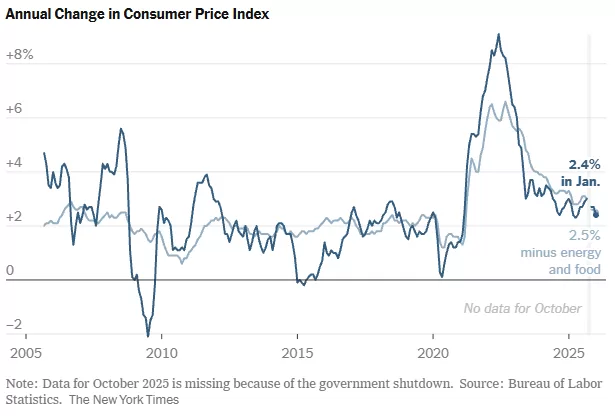
The latest economic data brings a sigh of relief for consumers and policymakers alike, as U.S. inflation has shown a more significant easing than anticipated at the beginning of the year. This positive development suggests that efforts to tame rising prices may be gaining traction, offering a glimmer of hope for greater economic stability in the months to come.
For much of the past year, inflation has been a persistent headwind, impacting everything from grocery bills to housing costs. The robust labor market, while a sign of economic strength, also contributed to upward price pressures. However, recent reports indicate a potential shift in this trend.
Several factors appear to be contributing to this welcome slowdown. Supply chain disruptions, which were a major catalyst for price increases, have largely improved. This has allowed for a more consistent flow of goods, reducing bottlenecks and associated costs. Additionally, the Federal Reserve’s aggressive monetary policy, including multiple interest rate hikes, seems to be having its intended effect of cooling demand and reining in inflationary expectations.
While the easing of inflation is certainly good news, it’s important to maintain a balanced perspective. The economy is a complex system, and various forces are constantly at play. Energy prices, geopolitical events, and shifts in consumer spending habits can all influence the trajectory of inflation. Therefore, continuous monitoring and adaptive policymaking will remain crucial.
What does this mean for the average American? For starters, it could translate into less pressure on household budgets over time. If the trend continues, we might see more stable prices for everyday goods and services, allowing purchasing power to stretch further. It also provides the Federal Reserve with more flexibility in its future policy decisions, potentially reducing the need for further aggressive rate hikes.
The journey to sustained price stability is an ongoing one, but the early signs from this year are undoubtedly encouraging. It’s a testament to the resilience of the U.S. economy and the effectiveness of concerted efforts to address inflationary pressures. As we move further into the year, economists and consumers alike will be watching closely to see if this promising trend continues, paving the way for a more predictable and stable economic environment.
Inflation Stable. The latest data is in, and it paints a picture of an economy caught between cooling pressures and political friction. In December, consumer prices rose 2.7% from a year earlier—holding steady from November and landing exactly where economists predicted.
While the “headline” number suggests stability, the story beneath the surface is much more complex. Here are the key takeaways from the final inflation report of 2025.
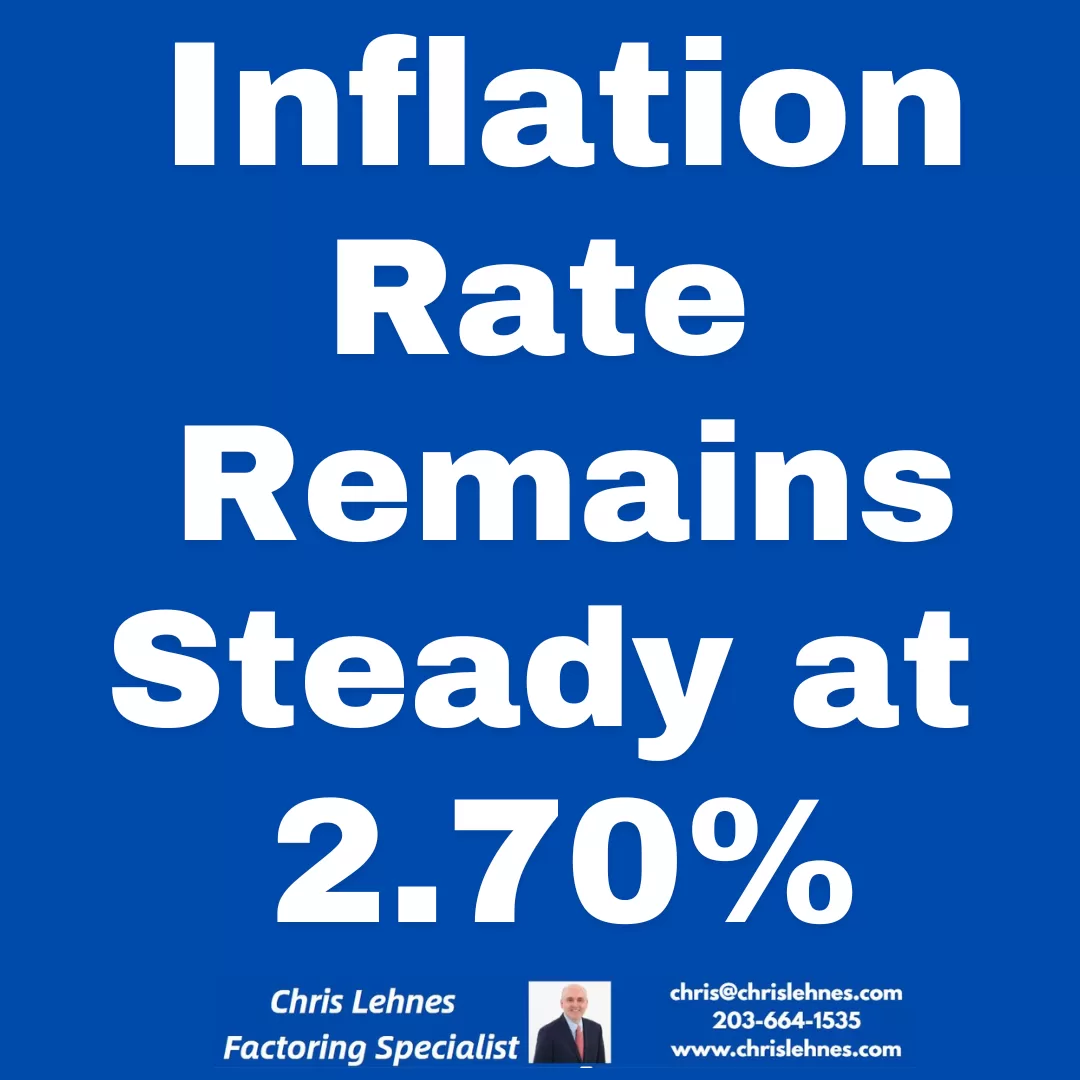
For the second month in a row, inflation has leveled off at 2.7%. Meanwhile, “Core CPI” (which strips out volatile food and energy costs) rose 2.6%.
Interestingly, these numbers came in slightly better than the 2.8% core increase some experts feared. This suggests that despite the introduction of steep tariffs earlier in 2025, businesses haven’t yet passed the full weight of those costs onto consumers. However, the “last mile” of the journey back to the Fed’s 2% target remains stubbornly out of reach.
This report is the first “clean” look at inflation we’ve had in months. Following a government shutdown last fall, the Labor Department had to rely on technical workarounds to fill data gaps.
The Federal Reserve is currently navigating a “split screen” economy. On one hand, growth remains solid; on the other, the labor market has cooled significantly. In fact, 2025 saw the lowest pace of job growth since 2003 (excluding major recessions).
The Fed cut rates three times at the end of 2025 to support the job market, but officials are now divided. With inflation still above 2%, some are hesitant to keep cutting—especially as they watch for the inflationary impact of the One Big Beautiful Bill Act and ongoing investments in AI.
Perhaps the most unusual backdrop to this report is the unprecedented political pressure on independent agencies.
As we head into 2026, all eyes are on January and February. This is traditionally when businesses reset their pricing for the year. Whether they will hike prices to account for tariffs and tax-cut-driven demand remains the big question.
For now, the “meandering path” toward lower inflation continues, but with a cooling job market and political volatility, the road ahead looks anything but smooth.
| Measure | Actual | Expected | Status |
| Headline CPI (Year-over-Year) | $2.7\%$ | $2.7\%$ | In Line |
| Core CPI (Year-over-Year) | $2.6\%$ | $2.8\%$ | Lower than Expected |
| Headline CPI (Month-over-Month) | $0.3\%$ | $0.3\%$ | In Line |
| Core CPI (Month-over-Month) | $0.2\%$ | $0.3\%$ | Lower than Expected |
Title: How the China Trade Deal Announced Today Will Impact Small Businesses
Introduction to impact of China Trade Deal
Today, the U.S. and China reached a tentative trade agreement that marks a significant, albeit partial, development in their ongoing economic standoff. This new arrangement preserves existing tariffs—55% on Chinese imports and 10% on U.S. exports—while introducing limited concessions on rare-earth minerals and export controls. The agreement provides minimal relief for most small businesses, which have borne the brunt of the past several years of tariff-induced uncertainty. This article will explore in detail the contents of the deal, assess its implications for various sectors of the small business community, and offer strategic recommendations for adaptation.
Part 1: Understanding the New U.S. – China Trade Deal
The June 11, 2025 deal between the United States and China was framed more as a temporary stabilization than a comprehensive resolution. Here are the key elements:
While headlines emphasized “agreement,” the reality is that the deal provides only narrow, conditional relief and does little to roll back the broader tariff architecture hurting American small enterprises.

Part 2: Current Landscape for Small Businesses & China
Before assessing the implications of the deal, it is important to understand the pressures already being experienced by small businesses:
Part 3: Sector-by-Sector Analysis – China
Let’s examine how this deal will impact different segments of the small business ecosystem.
Impact: Moderate Relief.
For small manufacturers reliant on rare-earth materials, the six-month export licenses offer temporary breathing room. Sectors like electronics, defense subcontracting, and advanced manufacturing may see modest improvements in supply chain consistency.
Risks: The time-bound nature of the licenses makes long-term planning difficult. Any lapse in licensing will reintroduce chaos.
Impact: Minimal to Negative.
Online sellers, particularly those importing fashion, gadgets, or toys, were previously protected by the de minimis exemption. With this gone and no rollback in tariffs, they are squeezed between rising costs and customer expectations for low prices.
Risks: Many sellers may exit the market or shift operations overseas.
Impact: Negative.
Stores relying on imported goods—from housewares to ethnic food supplies—will see no cost reduction. Without major economies of scale, small shops must raise prices or reduce product offerings.
Risks: Reduced foot traffic, lower profit margins, and possible closures.
Impact: Negligible.
Most food exports to China still face tariffs. While larger producers may negotiate their way through, small-scale farms and specialty producers face pricing disadvantages.
Risks: Loss of export competitiveness, oversupply in domestic markets.
Impact: Potentially Positive.
The easing of visa and academic restrictions may stimulate demand for consulting, education services, and cross-border partnerships.
Risks: Benefits are slow-moving and depend on broader geopolitical stabilization.
Part 4: What the Deal Does Not Address
Despite media attention, the deal sidesteps many of the deeper structural issues affecting small businesses:
Part 5: Strategic Recommendations for Small Businesses and China
In light of these dynamics, small businesses must adopt proactive strategies:
Identify suppliers in countries not subject to high tariffs. Consider nearshoring options such as Mexico, Canada, or domestic production where feasible.
Evaluate which products are most impacted by tariffs. Shift focus to less import-dependent or higher-margin offerings.
Engage in scenario planning. Consider factoring, SBA loans, or trade finance to stabilize cash flow in periods of uncertainty.
Join trade associations or local chambers of commerce to advocate for small business interests in ongoing trade negotiations.
Be transparent about price increases or product changes. Position your business as responsive and honest rather than reactive.
Invest in e-commerce platforms, CRM tools, and logistics software to increase operational efficiency and customer engagement.
Part 6: The Broader Economic Picture
Small businesses are not isolated from macroeconomic trends. The deal may create the following broader conditions:
However, these benefits are conditional and unevenly distributed. Without deeper structural reforms, the new agreement is unlikely to generate a large-scale recovery for the small business sector.
The June 11, 2025 U.S.-China trade agreement is a temporary truce rather than a resolution. While it introduces some modest benefits—particularly for manufacturing reliant on rare-earth minerals—it does little to ease the pain felt by the majority of small businesses still grappling with high tariffs, uncertain supply chains, and squeezed profit margins. Strategic adaptation, political advocacy, and operational resilience will be the keys to survival in this persistently volatile landscape. Until a more comprehensive agreement is reached, small businesses must continue to plan for instability and seize whatever limited advantages the current deal affords.
Contact Factoring Specialist, Chris Lehnes
Date: June 11, 2025 Source: Excerpts from “How the China Trade Deal Will Impact Small Businesses” by Chris Lehnes, Factoring Specialist
This briefing document summarizes the key themes, ideas, and facts presented in Chris Lehnes’ article “How the China Trade Deal Announced Today Will Impact Small Businesses,” published on June 11, 2025. The article assesses the implications of the new U.S.-China trade agreement for various small business sectors and offers strategic recommendations for adaptation.
The recently announced U.S.-China trade agreement on June 11, 2025, is primarily described as a “temporary stabilization” rather than a significant breakthrough or “comprehensive resolution.” The deal maintains the “status quo” of existing high tariffs (55% on Chinese imports to the U.S. and 10% on U.S. exports to China), offering “minimal relief for most small businesses.” While it introduces limited concessions regarding rare-earth minerals and a relaxation of some non-tariff measures, it largely fails to address the deeper structural issues that have burdened small enterprises.
The article highlights the following specific components of the June 11, 2025 agreement:
Lehnes emphasizes that despite headlines, the deal offers “only narrow, conditional relief and does little to roll back the broader tariff architecture hurting American small enterprises.”
Before the deal, small businesses were already facing significant challenges due to the ongoing trade tensions:
The deal’s impact varies significantly across different small business sectors:
The article identifies several critical omissions in the new agreement:
Given the persistent volatility, Lehnes advises small businesses to adopt proactive strategies:
While the deal may lead to “improved investor confidence” and potentially assist with “inflation management” (currently at 2.4%), these benefits are “conditional and unevenly distributed.” The article concludes that “without deeper structural reforms, the new agreement is unlikely to generate a large-scale recovery for the small business sector.”
In essence, the June 11, 2025 U.S.-China trade agreement is a “temporary truce rather than a resolution.” Small businesses must continue to “plan for instability and seize whatever limited advantages the current deal affords.”
Instructions: Answer each question in 2-3 sentences.
Latest OECD report states Trump Tariffs Will Drag Down Global Economy
The global economy stands at a critical juncture, and few forces have been as disruptive to recent economic stability as the imposition of sweeping tariffs by the Trump administration. As trade tensions escalate and markets adjust to the uncertainty, the Organization for Economic Cooperation and Development (OECD) has provided a sobering assessment of the economic outlook. Its most recent forecasts paint a picture of slowing growth, rising inflation, and waning consumer and business confidence. These effects are particularly acute in the United States and its closest trading partners, but the reverberations are felt globally.
This article examines the OECD’s latest outlook, exploring in detail how the Trump tariffs are affecting not only U.S. economic performance but also the broader global landscape. In doing so, it considers multiple dimensions of economic health, including GDP growth, inflation, employment, investment flows, and international trade dynamics.
The Trump administration’s trade strategy marked a clear departure from decades of globalization and liberalized trade. Tariffs were framed as a means to protect American manufacturing, reduce trade deficits, and punish trading partners perceived to be engaging in unfair practices. The scope of these tariffs widened progressively, affecting steel, aluminum, electronics, textiles, autos, and more. In time, nearly all major U.S. trading partners were impacted, including China, the European Union, Canada, and Mexico.
What began as targeted tariffs quickly evolved into a broader trade confrontation, particularly with China. This escalation created significant distortions in global trade flows, forcing companies to reorganize supply chains and re-evaluate cross-border investments. These adjustments did not occur without cost.
The most visible consequence of this new trade regime has been a sharp deceleration in global economic growth. Prior to the tariffs, global GDP was growing at a healthy pace, buoyed by rising demand, low interest rates, and expanding trade. However, in the aftermath of the tariffs, momentum has faltered. The OECD has lowered its growth forecasts for major economies across the board.
Many advanced economies are now projected to expand at a pace well below their long-term averages. Emerging markets, typically drivers of global growth, are also feeling the pinch, as they are highly sensitive to changes in global demand and commodity prices. The uncertainty generated by protectionist policies has caused companies to delay investments, curb hiring, and reduce output.
Ironically, the country that initiated the trade confrontation— the United States— is now among the hardest hit. The immediate impact of tariffs has been felt in consumer prices and business costs. With import duties increasing the price of foreign goods, businesses have faced higher input costs, particularly those reliant on complex global supply chains.
Manufacturers, especially in sectors like automotive, electronics, and machinery, have had to either absorb these higher costs or pass them on to consumers. This has triggered an uptick in inflation, even as wage growth and productivity gains remain modest. Consumer spending, a major driver of U.S. GDP, has started to show signs of fatigue.
Moreover, the uncertainty surrounding trade policy has led to a noticeable decline in private investment. Companies are reluctant to commit capital when future market access is uncertain or when tariffs could suddenly reshape competitive dynamics. This erosion of business confidence is directly undermining one of the traditional engines of U.S. economic growth.
As tariffs raise the prices of imported goods, inflationary pressures are intensifying. While inflation can sometimes be a sign of economic strength, in this context it is more indicative of cost-push rather than demand-pull dynamics. Prices are rising not because of booming demand, but because of higher costs embedded in the supply chain.
The burden of these price increases falls disproportionately on consumers and small businesses. Lower-income households, which spend a larger share of their income on goods subject to tariffs, are particularly vulnerable. Similarly, small and medium-sized enterprises, which lack the pricing power and supply chain flexibility of larger firms, are experiencing severe financial strain.
Rising inflation also complicates monetary policy. Central banks, already constrained by low interest rates, face a dilemma: tightening policy to rein in inflation could further stifle growth, while maintaining loose conditions might entrench inflation expectations.
Uncertainty is the enemy of investment, and trade policy under the Trump administration has become a textbook example of unpredictability. The back-and-forth nature of trade negotiations, combined with the abrupt announcement of new tariffs, has left many firms hesitant to make long-term commitments.
Foreign direct investment into the U.S. has slowed, and American firms are increasingly looking to offshore operations in more stable regulatory environments. The ripple effects are evident in capital expenditure reports and survey-based measures of business sentiment, both of which show a marked decline.
In particular, industries that rely on complex global value chains are under pressure. These include high-tech manufacturing, aerospace, and consumer electronics. As costs rise and policy uncertainty persists, many of these firms are deferring or canceling expansion plans.
The labor market has also begun to show signs of stress. While overall unemployment remains low by historical standards, job growth has moderated significantly. Sectors exposed to international trade, such as manufacturing and agriculture, have seen layoffs and reduced hours.
Farmers have been among the most vocal critics of the tariffs. Retaliatory measures by other countries have targeted U.S. agricultural exports, including soybeans, pork, and dairy products. This has led to a glut in domestic supply, falling prices, and rising financial distress in rural communities.
Moreover, the expected resurgence in domestic manufacturing employment has not materialized. While some firms have expanded operations, these gains have been modest and insufficient to offset losses in other areas. Many manufacturing jobs today require advanced skills and capital-intensive facilities, limiting the potential for large-scale employment gains.
Modern manufacturing is built on intricate supply chains that span multiple countries. Tariffs disrupt these networks by raising costs, increasing delays, and complicating logistics. In response, many companies are reconfiguring their sourcing strategies.
Some are seeking alternative suppliers in countries not affected by tariffs, while others are investing in new facilities closer to end markets. However, such adjustments are time-consuming and expensive. The short-term effect is reduced efficiency and higher costs, which are eventually passed on to consumers.
These disruptions are particularly problematic for industries that depend on just-in-time delivery and highly coordinated production processes. Automakers, for example, often rely on components manufactured in multiple countries. Tariffs on any part of the chain can compromise the entire system.
The economic fallout from U.S. tariffs is not confined to American shores. Countries closely tied to the U.S. economy are experiencing significant secondary effects. Canada and Mexico, for example, are contending with both direct tariffs and the broader uncertainty created by fluctuating trade policy.
Export-oriented economies in Asia and Europe have also been affected. Lower demand from the U.S., combined with rising input costs, has slowed industrial output and exports. In some cases, retaliatory tariffs have further eroded market access for these countries’ producers.
Emerging markets face a dual challenge. On one hand, they suffer from reduced export opportunities; on the other, they face capital outflows as investors seek the relative safety of advanced economies. This has led to currency depreciation, inflation, and tighter monetary conditions in many developing countries.
Tariffs may be abstract policy tools for policymakers, but their effects are very real for consumers. As prices rise and news of trade disputes dominates headlines, consumer sentiment has declined. Surveys indicate growing pessimism about future economic conditions, job security, and the affordability of essential goods.
This erosion in consumer confidence is worrisome, as it can feed into a self-reinforcing cycle. When consumers cut back on spending in anticipation of tougher times, demand weakens further, leading to slower growth and potentially higher unemployment.
Retailers are already reporting slower foot traffic and reduced sales in certain categories, especially those heavily dependent on imported goods. Discount chains and e-commerce platforms are faring better, but the overall retail environment has become more challenging.
Beyond the immediate effects of tariffs, the broader issue of policy uncertainty is exerting a powerful drag on economic performance. Businesses operate best when rules are clear and stable. The abrupt shifts in trade policy, often announced via social media or in press conferences without prior consultation, have created a volatile environment.
This volatility not only affects investment and hiring decisions but also undermines global confidence in the reliability of the U.S. as a trading partner. Some countries are responding by pursuing trade agreements that exclude the United States, thereby reducing its influence in setting global economic rules.
Moreover, the politicization of trade policy has made it more difficult to reach bipartisan consensus on future directions. This increases the risk that trade tensions will persist, even as administrations change.
While some of the effects of tariffs are short-term and cyclical, others have longer-lasting implications. The erosion of multilateral trade institutions, the reorientation of supply chains, and the shift in global investment patterns all represent structural changes.
These shifts could lead to a more fragmented global economy, characterized by regional trading blocs and reduced efficiency. For the United States, this may mean diminished leadership in global economic governance and reduced access to emerging markets.
Domestically, the shift away from open markets may entrench inefficiencies and reduce the incentive for innovation. While some industries may benefit from temporary protection, the lack of competitive pressure can lead to complacency and stagnation.
The OECD’s latest outlook makes it clear that the economic costs of protectionism are mounting. The promise of reviving domestic manufacturing and reducing trade deficits has, so far, not materialized in a meaningful or sustainable way. Instead, the data shows slower growth, higher inflation, weaker investment, and declining consumer and business confidence.
To reverse these trends, policymakers will need to rethink their approach to trade. This means re-engaging with international partners, restoring faith in multilateral institutions, and crafting policies that support both competitiveness and inclusivity. Trade policy should be informed by data, guided by long-term strategy, and executed with transparency.
For businesses, the lesson is clear: agility and adaptability are more important than ever. Firms that can navigate complexity, diversify their markets, and invest in innovation will be best positioned to thrive in an uncertain world.
Ultimately, the path forward will require cooperation, not confrontation. In a deeply interconnected global economy, prosperity is best achieved not by building walls, but by building bridges.
Contact Factoring Specialist, Chris Lehnes
Key Ideas and Facts:
1. A Shift Towards Protectionism and Its Broad Scope:
2. Global Economic Slowdown:
3. Negative Impact on the U.S. Economy:
4. Stalled Investment and Employment Concerns:
5. Disruption of Global Supply Chains:
6. Spillover Effects on Trading Partners:
7. Weakening Consumer Confidence:
8. Policy Uncertainty as a Drag on Growth:
9. Long-Term Structural Implications:
10. Conclusion and Path Forward:
This study guide is designed to help you review and deepen your understanding of the provided article, “Trump Tariffs Will Drag Down Global Economy” by Chris Lehnes.
The article argues that the Trump administration’s tariffs have had a significant negative impact on the global economy, contrary to their stated goals of protecting American manufacturing and reducing trade deficits. The Organization for Economic Cooperation and Development (OECD) forecasts indicate slowing global growth, rising inflation, and declining consumer and business confidence. These effects are felt globally, with the U.S. and its trading partners being particularly affected. The article details how these tariffs have disrupted global supply chains, stifled investment, impacted employment, and weakened consumer confidence, ultimately leading to a more fragmented global economy and diminished U.S. economic leadership.
Answer the following questions to test your comprehension of the source material.
The Far-Reaching Economic Consequences of a U.S. Credit Rating Downgrade by Moody’s
When a credit rating agency like Moody’s downgrades the United States’ credit rating, it sends ripples not just through financial markets, but through every corner of the global economy. While the immediate headlines often focus on political dysfunction or fiscal sustainability, the longer-term ramifications of such a downgrade are far more complex, systemic, and potentially destabilizing. A Moody’s downgrade of U.S. sovereign debt signals a fundamental reassessment of America’s creditworthiness and forces investors, policymakers, and institutions to recalibrate their expectations about the world’s most important economy.
This article explores the deeper consequences such a downgrade can trigger—ranging from higher borrowing costs and currency volatility to systemic global shifts in capital allocation and long-term economic growth.
Moody’s, along with Standard & Poor’s and Fitch Ratings, is one of the “Big Three” credit rating agencies that assess the ability of borrowers—from corporations to countries—to repay their debt. A downgrade of the U.S. credit rating means that Moody’s has lost some confidence in the federal government’s ability or willingness to meet its financial obligations.
Historically, U.S. debt has been viewed as the safest investment on the planet—a benchmark for global finance. A downgrade disrupts that perception and introduces doubt about America’s fiscal and political stability. This isn’t just symbolic. It has concrete consequences that ripple through every layer of the economy.
Perhaps the most immediate impact of a credit downgrade is a rise in borrowing costs. U.S. Treasury yields serve as the benchmark interest rates for a vast array of financial products—from corporate loans and mortgages to municipal bonds and student loans. When Moody’s downgrades U.S. debt, it effectively tells the world that lending to the U.S. is riskier than before. Investors demand higher yields to compensate for that risk.
This increase in yields is not confined to the federal government. As Treasury rates rise, so do rates on other types of credit. The private sector finds it more expensive to borrow money for investment, expansion, or hiring. Consumers face higher mortgage rates, credit card interest, and auto loan costs.
Over time, these higher costs dampen economic activity, slow housing markets, reduce business investment, and weaken consumer spending—key drivers of GDP growth.
The U.S. government already spends a significant portion of its annual budget servicing its debt. As interest rates rise due to a downgrade, the cost of servicing the national debt increases, further straining the federal budget. This leaves less room for essential spending on infrastructure, education, social programs, or national defense.
Moreover, larger interest payments make it harder to reduce budget deficits, potentially triggering a vicious cycle: higher deficits lead to lower credit ratings, which in turn lead to higher interest payments, and so on.
This dynamic threatens long-term fiscal sustainability and places added pressure on lawmakers to make politically difficult choices—cut spending, raise taxes, or both.
One of the most profound long-term risks of a downgrade is its potential impact on the U.S. dollar’s status as the world’s primary reserve currency. This status gives the United States enormous advantages: it can borrow cheaply, influence global trade terms, and maintain geopolitical leverage.
However, a downgrade chips away at global confidence in the stability and reliability of U.S. financial governance. While there is currently no obvious alternative to the dollar, the downgrade may accelerate efforts by countries like China and Russia to promote alternative reserve currencies or diversify their foreign exchange reserves.
A diminished role for the dollar would reduce demand for U.S. assets, further raise borrowing costs, and weaken America’s global economic influence.
Financial markets thrive on confidence and predictability—two qualities that a downgrade undermines. Investors, particularly institutional ones such as pension funds, sovereign wealth funds, and insurance companies, may be forced to reassess their U.S. holdings in light of new risk profiles.
Many of these institutions have mandates that require them to hold only top-rated assets. A downgrade from Moody’s could trigger automatic selling of U.S. Treasury securities, contributing to market volatility and raising yields further.
Stock markets also typically react negatively to such downgrades, as they signal macroeconomic instability. Drops in equity valuations can erode household wealth and consumer confidence, especially in a country where a significant portion of retirement savings is tied to the stock market.
Credit rating agencies often cite political gridlock and dysfunctional governance as key reasons for a downgrade. For instance, prolonged battles over raising the debt ceiling or passing a federal budget suggest an inability or unwillingness to govern effectively.
Such perceptions damage the U.S.’s reputation not just as a borrower but as a global leader. Allies may question America’s reliability, while adversaries exploit the narrative of decline.
Domestically, a downgrade can become a political flashpoint, further deepening partisan divides and making it even harder to implement the structural reforms needed to restore fiscal balance.
Because the U.S. economy is so deeply integrated into the global financial system, a downgrade does not stay contained within U.S. borders.
International investors, central banks, and governments hold trillions of dollars in U.S. debt. A downgrade can unsettle these holdings, reduce global confidence in U.S. monetary policy, and spark volatility in emerging markets, which often peg their currencies or base their financial models on the stability of the dollar.
Higher U.S. interest rates can lead to capital flight from developing countries, triggering currency crises, inflation, or debt defaults in those regions. This can contribute to global financial instability and economic slowdowns far from American shores.
In response to a downgrade, the U.S. government and Federal Reserve may adopt countermeasures to stabilize the economy. The Fed could delay interest rate hikes or resume quantitative easing to keep borrowing costs manageable. The Treasury could restructure its debt issuance strategy.
However, these tools have limitations and risks. Loose monetary policy could stoke inflation, while fiscal tightening could slow the recovery or deepen a recession.
Long-term, the downgrade should serve as a wake-up call for more serious structural reforms. These include revisiting entitlement spending, tax reform, and implementing automatic stabilizers to reduce the frequency of political standoffs over the budget.
A downgrade of the U.S. credit rating by Moody’s is far more than a symbolic black mark on the nation’s fiscal record. It is a powerful signal to markets, institutions, and policymakers that the foundations of America’s economic dominance are no longer unshakable. The downgrade has the potential to trigger a chain reaction—raising borrowing costs, reducing investment, and sowing doubt about the future of the global financial system anchored by the U.S. dollar.
The real danger lies not just in the immediate market reaction, but in the structural challenges it exposes and exacerbates. If left unaddressed, the consequences of a downgrade could reshape the global economic landscape for years to come.
Contact Factoring Specialist, Chris Lehnes
Source: Excerpts from “The Economic Consequences of Moody’s Credit Rating Downgrade” by Chris Lehnes
Date: May 19, 2025
Prepared For: [Intended Audience – e.g., Policymakers, Financial Professionals, General Public]
Subject: Analysis of the potential economic ramifications of a downgrade to the United States’ credit rating by Moody’s.
Executive Summary:
A downgrade of the U.S. credit rating by Moody’s is not merely a symbolic event but a significant signal with far-reaching economic consequences. It signifies a loss of confidence in the U.S. government’s ability or willingness to meet its financial obligations, disrupting the perception of U.S. debt as the safest investment globally. The primary impacts include higher borrowing costs across the board, increased fiscal constraints on the government, potential erosion of the U.S. dollar’s preeminence, diminished investor confidence and market volatility, damage to U.S. political credibility, and significant global economic repercussions. Addressing the structural issues leading to a downgrade is crucial for long-term economic stability.
Key Themes and Most Important Ideas/Facts:
Conclusion:
A U.S. credit rating downgrade by Moody’s is a serious event with cascading economic consequences. It highlights underlying structural challenges and has the potential to fundamentally alter global financial dynamics. The “real danger lies not just in the immediate market reaction, but in the structural challenges it exposes and exacerbates.” Addressing these challenges through serious reform is critical to mitigating the long-term impact of a downgrade and maintaining U.S. economic stability and global influence