A Surprising Spring: March Jobs Report Shatters Expectations
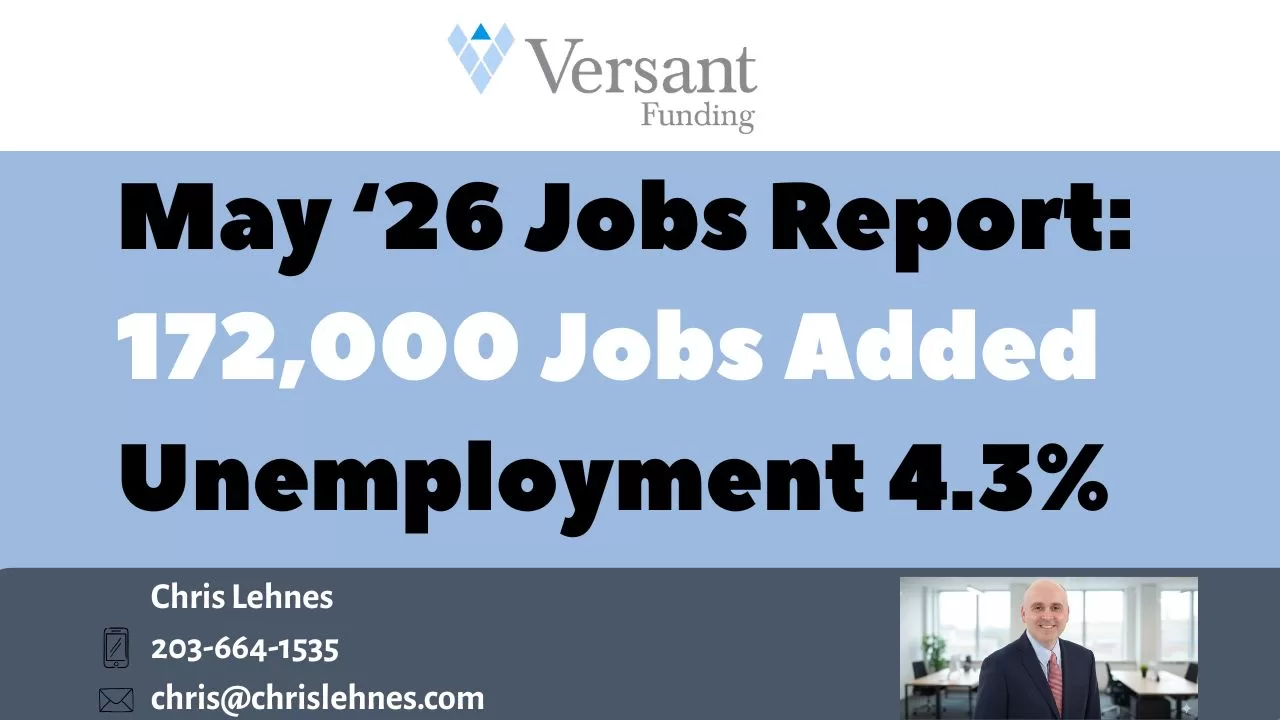
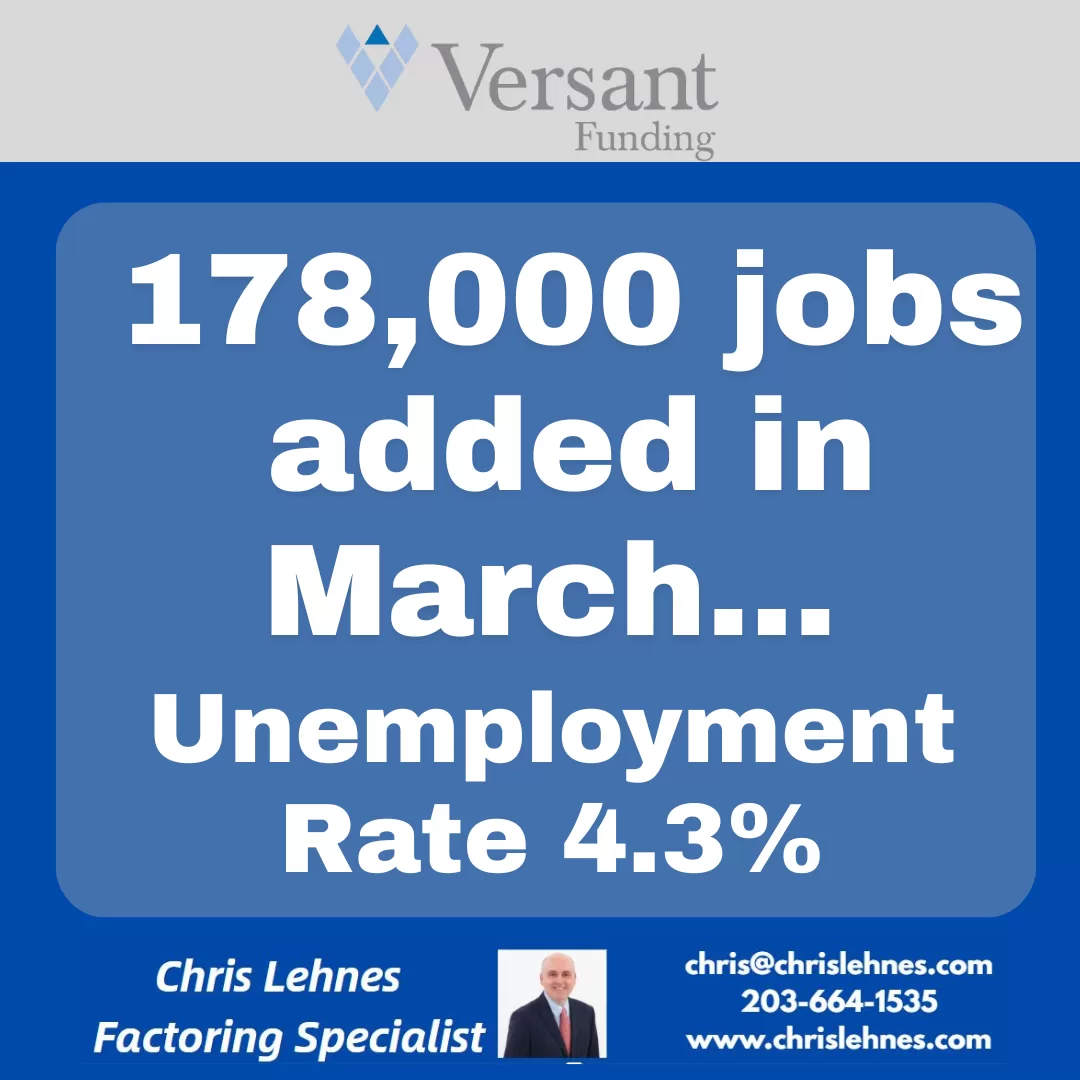
The U.S. labor market just delivered a spring surprise that few saw coming. According to the latest data released today by the Bureau of Labor Statistics (BLS), the U.S. economy added 178,000 jobs in March, vastly outperforming economist forecasts which had hovered around a modest 60,000 to 70,000.
After a dismal February that saw a revised loss of 133,000 jobs, this rebound signals a resilient—if complex—economic landscape.
The Numbers at a Glance
The March report offers a refreshing change of pace for a labor market that has felt “frozen” for much of the past year.
Nonfarm Payrolls: +178,000 (Expected: ~70,000)
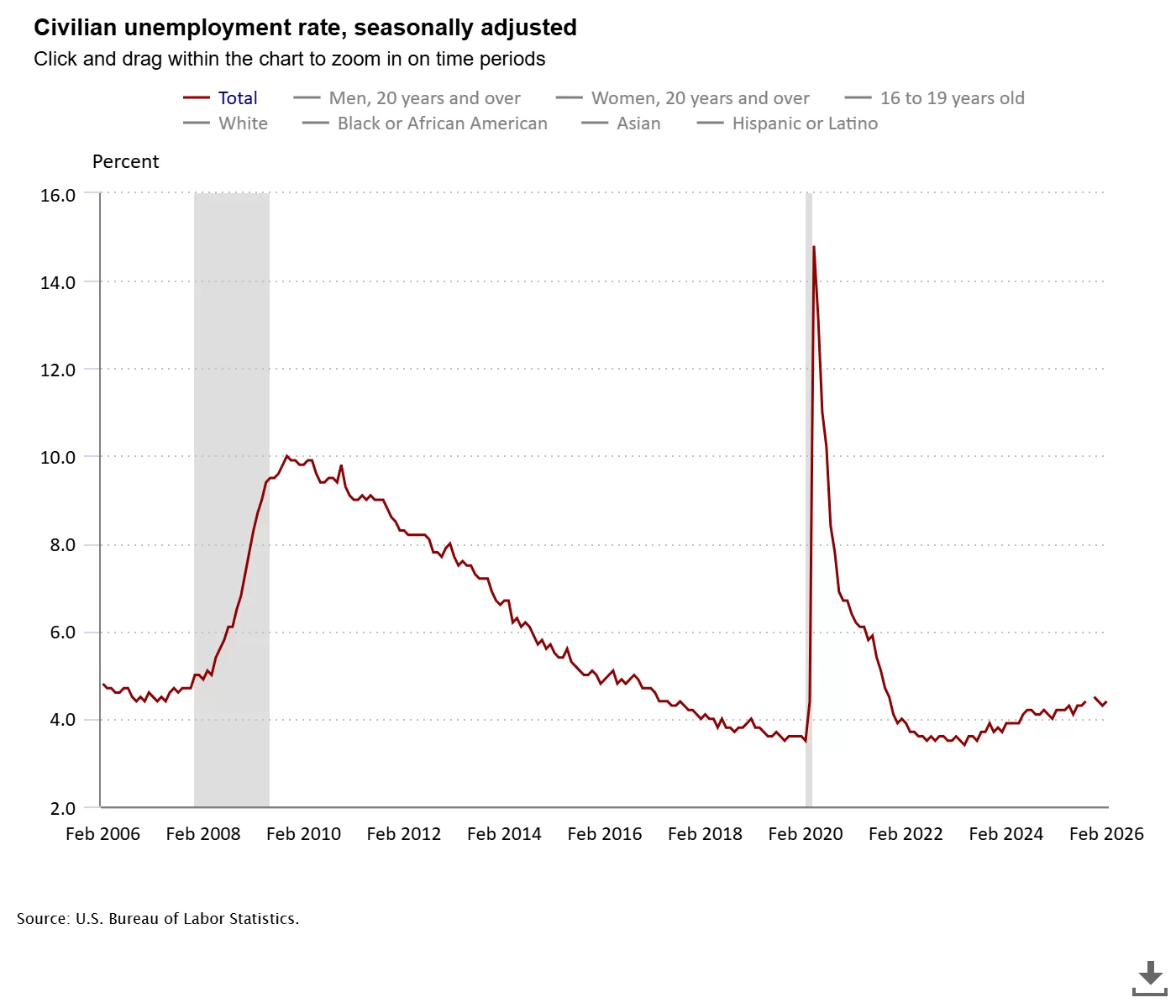
Unemployment Rate: 4.3% (Down from 4.4% in February)
Revisions: January’s figures were revised upward to 160,000, though the two-month net revision slightly dampened the overall trend.
What’s Driving the Growth?
The recovery wasn’t uniform across the board. While the headline number is strong, the “engine” of the U.S. economy remains highly concentrated:
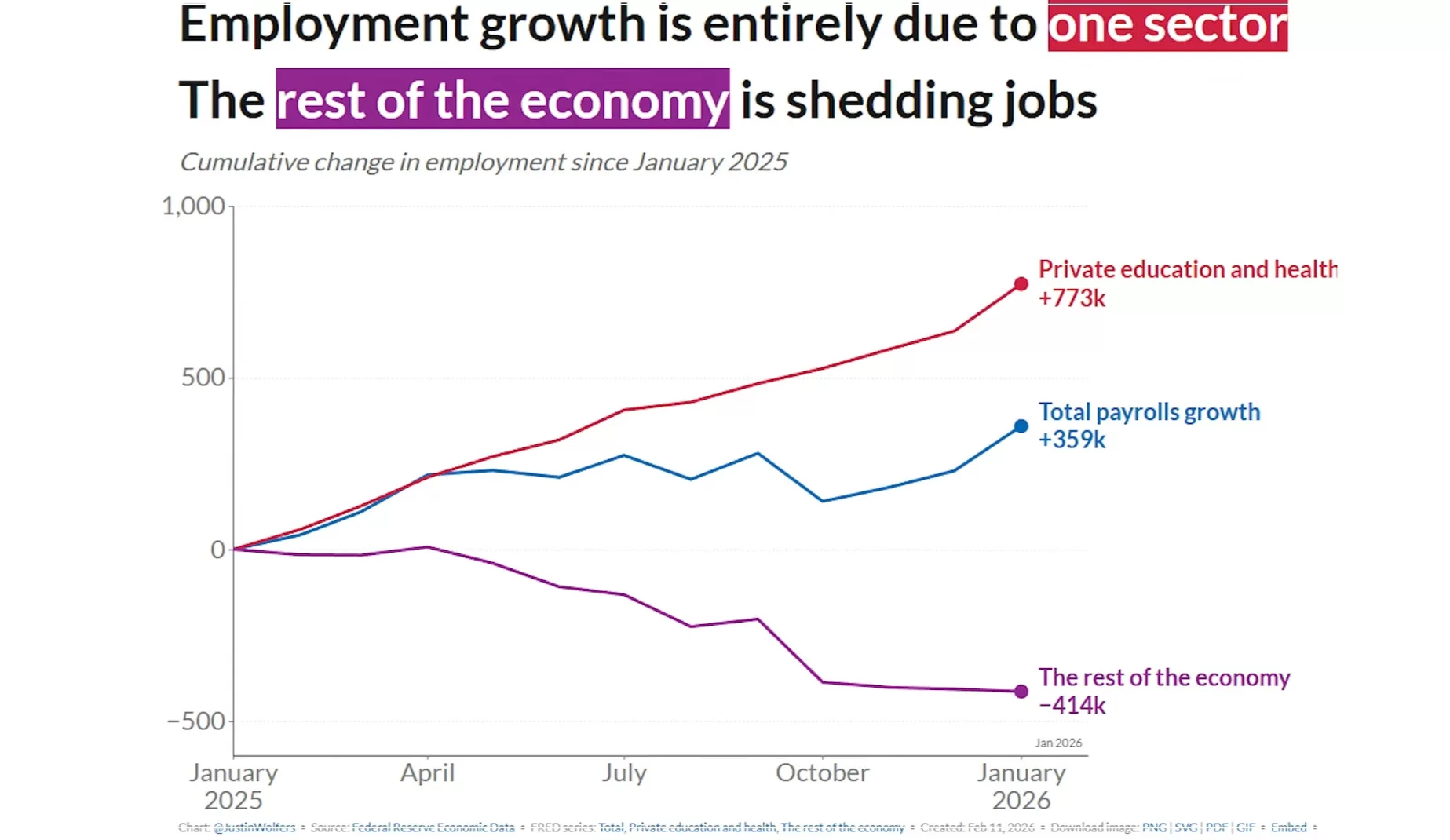
The Healthcare Titan: Once again, the health care and social assistance sector did the heavy lifting, adding 76,000 jobs last month. This sector has essentially been the primary life support for the labor market over the last year.
The “Bounce Back” Factor: Part of the March surge is attributed to the return of approximately 31,000 Kaiser Permanente employees who were on strike in February, along with more favorable weather conditions across the country.
The Gender Shift: Interestingly, recent trends show that women now hold more jobs than men in the nonfarm economy—a structural shift driven by the strength of female-dominated sectors like education and health, while male-concentrated sectors like manufacturing continue to cool.
The Shadows on the Horizon: Geopolitics and Oil
Despite the optimistic numbers, experts are urging caution. The report arrives amidst significant geopolitical tension, specifically the ongoing conflict in Iran.
“We’ve got a much more difficult spring job market than we had hoped given the higher prices at the pump and the supply chain disruptions that are going to come from the war,” says Diane Swonk, chief economist at KPMG.
With gas prices spiking above $4 a gallon for the first time since 2022, many fear that the March gains may be a “last hurrah” before the economic impact of the war and energy costs fully settle into corporate hiring plans.
The Bottom Line
The U.S. economy has shown it still has plenty of fight left. A 4.3% unemployment rate remains historically healthy, and the “low-hire, low-fire” stalemate of 2025 appears to be thawing.
However, for job seekers and businesses alike, the road ahead remains fogged by uncertainty. Between the rapid integration of Artificial Intelligence, fluctuating inflation (which dipped to 2.3% before ticking back up), and global instability, “cautious optimism” remains the phrase of the day.
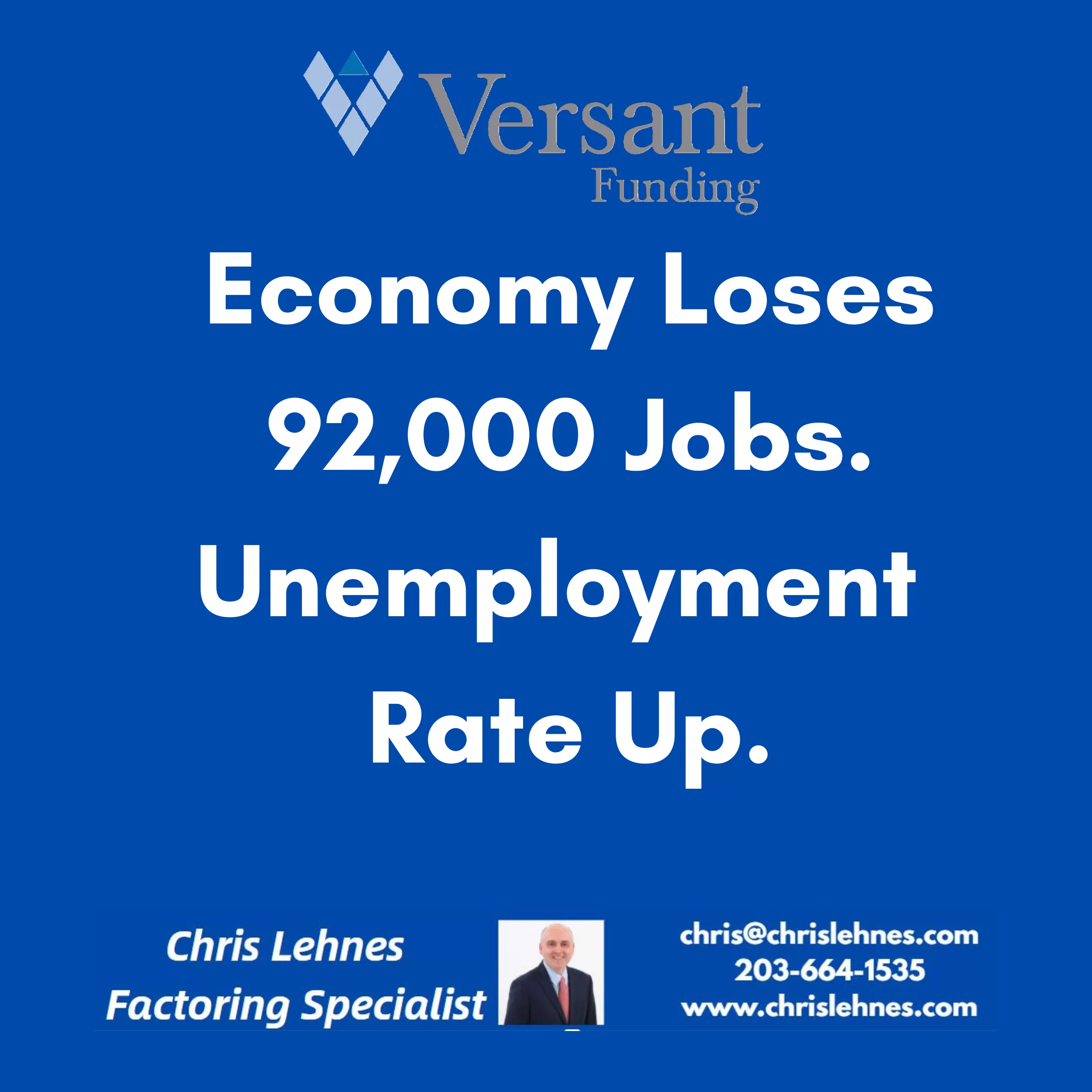
Economy Sheds 92,000 Jobs. The American labor market hit a significant speed bump last month, as the Bureau of Labor Statistics (BLS) reported a loss of 92,000 jobs for February 2026. This unexpected contraction caught economists off guard, as many had projected a modest gain of roughly 60,000 positions.
Coupled with the job losses, the national unemployment rate ticked up to 4.4%, rising from 4.3% in January. While the figure remains low by historical standards, the sudden reversal in momentum has reignited concerns about the underlying health of the economy amidst ongoing geopolitical tensions and domestic labor disputes.
The Numbers at a Glance
The February report was a stark contrast to the start of the year, which initially saw a healthy gain in January. However, even those numbers were revised downward, painting a picture of a job market that is struggling to maintain its footing.
Metric
February 2026 Data
Comparison
Nonfarm Payrolls
-92,000
Down from +126,000 (revised) in Jan
Unemployment Rate
4.4%
Up from 4.3%
December Revision
-17,000
Revised down from +48,000
Labor Force Participation
62.0%
Lowest level since December 2021
Key Drivers of the Decline
Several factors converged to create the “perfect storm” that led to February’s disappointing figures:
Labor Disputes: The healthcare sector, usually a reliable engine of growth, shed 28,000 jobs. Much of this was attributed to a major strike involving over 30,000 workers at Kaiser Permanente in California and Hawaii.
Harsh Winter Weather: Severe storms across the country likely hampered hiring in the construction sector, which saw a decline of 11,000 jobs.
Sector-Specific Weakness: The Information and Transportation/Warehousing sectors both lost 11,000 jobs, while the Federal Government continued its downward trend, losing 10,000 positions.
Geopolitical Uncertainty: The escalation of the conflict in the Middle East has driven up crude oil prices, injecting a new layer of caution into business spending and hiring plans.
“Just when it looked like the labor market was stabilizing, this report delivers a knock-down blow to that view. It’s bad news whichever way you look at it.”
— Olu Sonola, Head of U.S. Economics at Fitch Ratings.
Silver Linings and the Path Forward
Despite the gloomy headline, there were a few areas of resilience. Average hourly earnings rose by 0.4% for the month, representing a 3.8% increase year-over-year. This suggests that while hiring has slowed, those currently employed are still seeing wage growth that is largely keeping pace with inflation.
The Federal Reserve now faces a delicate balancing act. While the job losses might typically signal a need for interest rate cuts to stimulate the economy, the surge in energy prices due to the war in Iran keeps the threat of inflation high.
Economists will be looking toward the March report (scheduled for release on April 3rd) to determine if February was a temporary blip caused by weather and strikes, or the start of a more concerning long-term trend.
The U.S. labor market began 2026 with a surprising burst of energy, shaking off a sluggish 2025. According to the latest data from the Bureau of Labor Statistics (BLS) released on February 11, 2026, employers added 130,000 jobs in January—easily doubling December’s figures and blowing past economist expectations of roughly 70,000.
While the report was delayed by a week due to a brief federal government shutdown, the results suggest that the “hiring fatigue” seen late last year might be beginning to thaw.
The Numbers at a Glance
The January report offers a mix of resilience and necessary context for the year ahead:
Total Jobs Added: 130,000 (up from a revised 50,000 in December).
Unemployment Rate: Ticked down to 4.3% (from 4.4%).
Average Hourly Earnings: Rose by 0.4% in January, bringing the year-over-year increase to 3.7%.
Labor Force Participation: Remained steady at 62.5%.
Sector Winners and Losers
The growth wasn’t uniform across the board. In fact, a few key sectors carried the heavy lifting for the entire economy:
Healthcare & Social Assistance: This sector remains the titan of the U.S. job market, adding 124,000 jobs (82k in healthcare and 42k in social assistance).
Construction: Added a solid 33,000 jobs, largely driven by nonresidential specialty trade contractors.
The Tech & White-Collar Slump: Conversely, professional and business services and manufacturing continued to struggle, reflecting ongoing shifts in AI implementation and trade policy impacts.
Government: Federal employment saw a decline, partly a ripple effect of recent policy shifts and the temporary shutdown.
Why This Matters
After a tumultuous 2025—which was recently revised to show only 181,000 total jobs added for the entire year—this January figure is a massive sigh of relief. It suggests that while the economy isn’t sprinting, it’s found its footing.
“The January gains are a sign that the labor market is stabilizing,” says one economist. “However, the high concentration of growth in healthcare suggests a ‘one-legged stool’ economy that we need to watch closely.”
Looking Ahead
While 130,000 jobs is a “stronger footing,” the market remains complex. Layoffs in high-profile sectors like tech and transportation (notably Amazon and UPS) dominated January headlines, yet the aggregate data shows that other sectors are more than absorbing that displaced talent.
For job seekers, the message is clear: the opportunities are there, but they have shifted. Strategic hiring is the theme of 2026, with a high premium on specialized skills in healthcare, infrastructure, and adaptive technologies.
The January jobs report has effectively shifted the narrative for the Federal Reserve. While the 130,000 jobs added might seem modest by historical standards, it was a significant “beat” compared to expectations, and it has given the Fed a reason to tap the brakes on further interest rate cuts.
Here is how the latest data is influencing the Fed’s next move:
1. From “Easing” to “Holding”
Following three consecutive rate cuts in late 2025, the Federal Reserve held rates steady at its January 28, 2026 meeting, maintaining the federal funds rate at 3.5% to 3.75%. This jobs report reinforces that “pause.”
The Consensus: With the unemployment rate ticking down to 4.3% and job growth doubling December’s numbers, there is no longer an “emergency” need to stimulate the economy.
Market Sentiment: Before this report, some traders were betting on a March cut. Now, CME FedWatch tools show those odds have plummeted, with the consensus moving toward a “higher for longer” stance through at least the first half of the year.
2. Emerging Internal Division
The Fed is no longer acting in total unison. The January meeting saw a rare 10-2 vote, with two dissenting members actually pushing for another 25-basis-point cut due to lingering concerns about long-term hiring weakness.
The Hawks: Officials like Cleveland Fed President Beth Hammack and Dallas Fed President Lorie Logan have signaled that the Fed should “err on the side of patience,” arguing that current rates are “neutral”—neither helping nor hurting the economy.
The Doves: Those worried about the “one-legged stool” (growth coming only from healthcare) fear that without more cuts, sectors like tech and manufacturing will continue to bleed jobs.
3. The “Neutral Rate” Debate
Chair Jerome Powell recently noted that the economy is on a “firm footing” entering 2026. Analysts now believe the Fed is searching for the neutral rate—the sweet spot where inflation stays at 2% without triggering a recession.
Because average hourly earnings rose 0.4% in January (3.7% annually), the Fed is wary that cutting rates too soon could reignite inflation, especially with potential new trade tariffs on the horizon.
Key Dates to Watch
Event
Date
Significance
January CPI Report
Feb 13, 2026
Will confirm if the wage growth in the jobs report is driving up prices.
Fed “Beige Book”
Mar 4, 2026
Regional reports on how small businesses are actually feeling.
Next FOMC Meeting
Mar 17-18, 2026
The next formal window for a rate change decision.
For a small business owner, the January jobs report isn’t just about hiring statistics—it’s a leading indicator for the cost of your next loan or line of credit.
Following the stronger-than-expected labor data, the Federal Reserve has hit “pause” on interest rate cuts. For businesses at Versant Funding and across the U.S., this means a period of “stabilized high” borrowing costs. Here is what your business needs to know to navigate the financial landscape of early 2026.
2026 Borrowing Outlook: The “Data-Driven” Pause
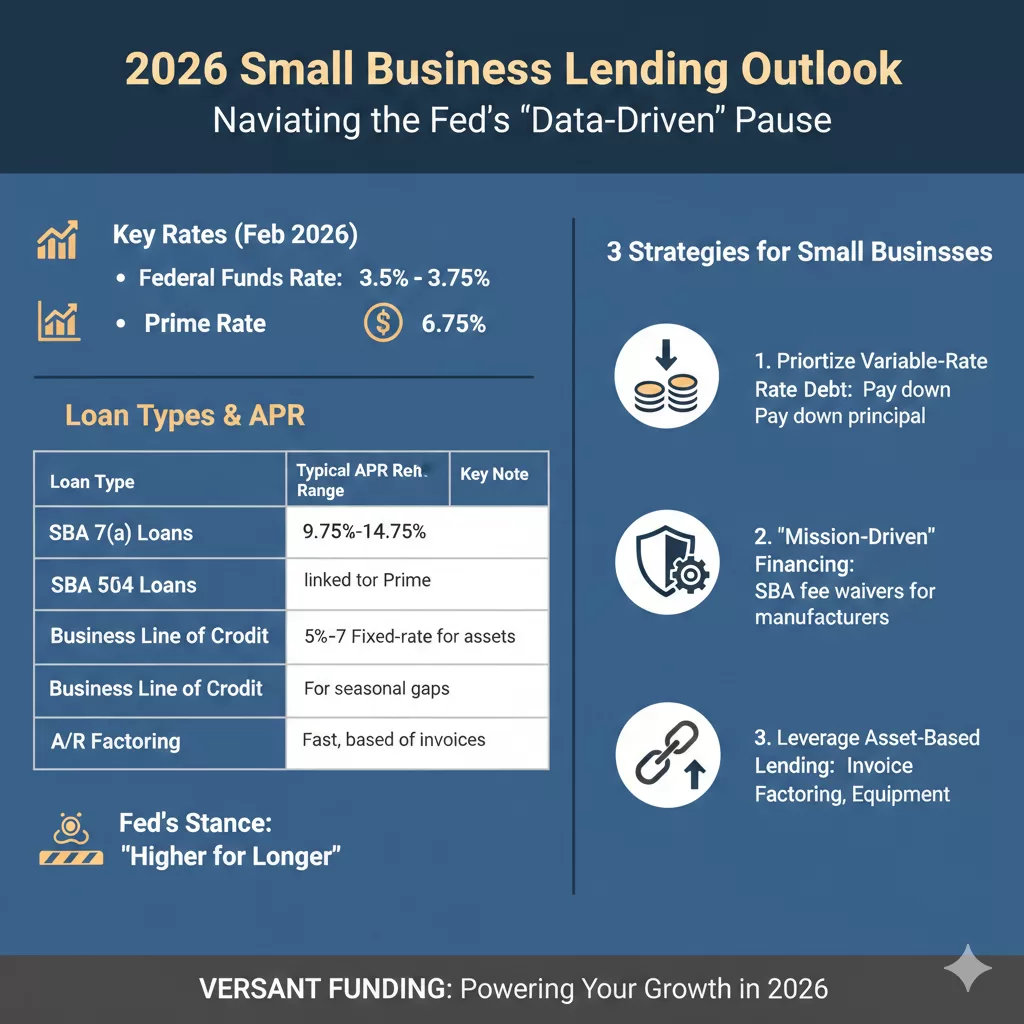
The Fed began 2026 by holding the federal funds rate steady at 3.5% to 3.75%. While the market had hoped for more aggressive easing, the surge of 130,000 new jobs in January has signaled to policymakers that the economy is not yet in need of more “cheap money.”
Current Lending Rates (As of February 2026)
Loan Type
Typical APR Range
Key Note
SBA 7(a) Loans
9.75% – 14.75%
Variable rates fluctuate with the Prime Rate (currently 6.75%).
SBA 504 Loans
5% – 7%
Fixed-rate; best for long-term real estate or equipment.
Business Lines of Credit
10% – 28%
Vital for seasonal inventory and payroll gaps.
Accounts Receivable Factoring
24% – 36%
High speed; based on invoice value rather than credit score.
Three Strategies for Small Businesses
With rates unlikely to drop significantly before the summer, owners should shift from “waiting for better rates” to “optimizing current cash flow.”
Prioritize Variable-Rate Debt: If you are carrying an SBA 7(a) loan or a variable line of credit, your payments will remain flat for now. Use this stability to pay down principal where possible, as the “higher for longer” stance means interest costs won’t be melting away anytime soon.
Look for “Mission-Driven” Financing: In 2026, the SBA is waiving guarantee fees for certain small manufacturers (NAICS 31-33). If your business fits this category, you could save thousands in upfront costs regardless of the interest rate.
Leverage Asset-Based Lending: If traditional bank term loans are too restrictive, consider Invoice Factoring or Equipment Financing. These options often focus more on the value of your assets (your unpaid invoices or machinery) than on the Fed’s baseline rates, providing more predictable access to capital during economic volatility.
The Bottom Line
The “stronger footing” of the U.S. labor market is a double-edged sword: it proves consumer demand is resilient, but it keeps the cost of capital elevated. For 2026, the most successful businesses will be those that prioritize liquidity and debt structure over simply chasing the lowest rate.
For decades, the path to employment followed a predictable script: graduate high school, earn a four-year degree, and step into a stable career. But for the Class of 2026 and other recent grads, that script has been heavily revised.
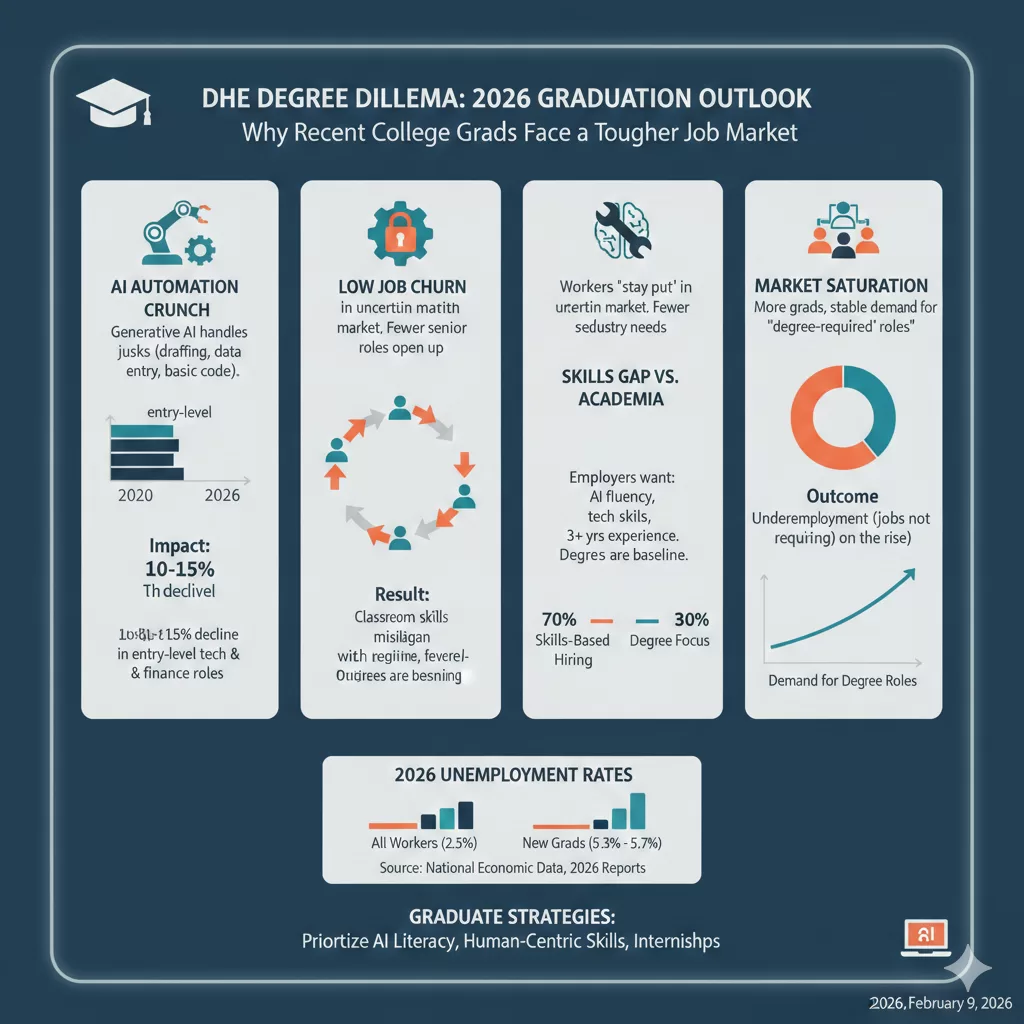
While the national unemployment rate remains relatively stable, a closer look reveals a “white-collar friction” that is hitting young graduates particularly hard. Recent data suggests that unemployment for workers aged 22–27 is significantly higher than for the general population, with some reports showing rates as high as 5.3% to 5.7% for new degree holders compared to just 2.5% for their more experienced counterparts.
Why is the “college advantage” seemingly cooling off? Here are the primary factors reshaping the entry-level landscape.
1. The “Bottom Rung” is Being Automated
Perhaps the most significant shift in 2026 is the impact of Generative AI. Historically, junior roles involved “intellectually mundane” tasks: drafting reports, organizing data, or basic coding. These were the “training wheels” of a career.
Today, AI agents handle these tasks with 90% accuracy in seconds.
The Result: Companies are becoming more “top-heavy.” They still need experienced managers to oversee AI, but they need fewer junior employees to do the legwork.
The Crunch: Entry-level hiring has seen double-digit declines in sectors like tech and finance, as firms use AI to boost productivity without expanding their headcount.
2. The Great “Stay Put” (Low Churn)
In a healthy economy, people switch jobs, creating “openings” at the bottom for new talent. In 2026, we are seeing a collapse in voluntary job switching.
“Workers are holding onto their roles because the market feels risky; as a result, the natural ‘churn’ that usually pulls recent grads into the workforce has stalled.”
When mid-level employees don’t move up or out, the entry-level pipeline remains clogged.
3. The Rising “Skills Gap” vs. Academic Focus
There is a growing disconnect between what is taught in the classroom and what is required in a modern office.
The Degree is the Baseline, Not the Finish Line: Employers are shifting toward skills-based hiring. According to NACE, 70% of employers now prioritize specific technical skills and AI fluency over the prestige of the degree itself.
Experience Over Everything: Job postings that once asked for 0–2 years of experience are increasingly demanding 3+ years or specific internships. For a recent grad, this creates the classic paradox: You can’t get the job without experience, but you can’t get experience without the job.
4. Market Saturation
We are currently seeing the result of “education-neutral” growth. The supply of college graduates has increased steadily, but demand for roles that specifically require a degree has leveled off. This has led to a rise in underemployment, where graduates find themselves in roles that don’t actually require their hard-earned credentials.
What Can Grads Do?
The market is tougher, but it isn’t closed. To stand out in the current environment, graduates must:
Prioritize AI Literacy: It’s no longer a “plus”; it’s a requirement. Show how you use AI to work faster and smarter.
Focus on “Human-Centric” Skills: Emphasize critical thinking, complex problem solving, and emotional intelligence—things AI still struggles to replicate.
Treat Internships as Essential: In 2026, an internship is often the only way to bypass the “3 years of experience” requirement.
The Sluggish Job Growth of the U.S. labor market is currently sending mixed signals that lean toward the “rough” side. After months of subtle hiring freezes and quiet cutbacks, the dam has seemingly broken, leading to a wave of high-profile layoff announcements that have left both job seekers and investors on edge.
From “Quiet Quitting” to “Quiet Hiring”… to Just “Quiet”
Last year, the narrative was dominated by “labor hoarding”—companies holding onto staff despite economic uncertainty. That trend has officially cooled. What we are seeing now is a three-phase retraction:
The Big Freeze: Before the layoffs began, many firms implemented unannounced hiring freezes. If you noticed your applications disappearing into a “black hole” in Q4, you weren’t imagining it.
The Strategic Cut: We’ve moved past the “growth at all costs” mindset of the early 2020s. Companies are now optimizing for efficiency, which often means trimming middle management and non-core departments.
Market Rattling: These moves aren’t just affecting workers; they’re making Wall Street twitchy. While layoffs sometimes boost stock prices in the short term by promising better margins, a systemic pullback in hiring signals a lack of confidence in broader consumer spending.
Why is this happening now?
It’s a perfect storm of economic factors. Interest rates remain a point of contention, and the “higher for longer” reality has finally forced CFOs to tighten the belt. Additionally, the rapid integration of AI and automation is no longer a futuristic concept—it’s actively reshaping how companies budget for human capital.
Key Takeaway: The power dynamic has shifted. We are no longer in the “Great Resignation” era where candidates held all the cards. We are in an “Employer’s Market” characterized by high competition and rigorous vetting.
Survival Tips for the 2026 Job Seeker
If you’re currently in the trenches or worried about your role, “rough” doesn’t have to mean “impossible.” Here is how to adapt:
Focus on ‘Recession-Proof’ Skills: Lean into roles that directly impact revenue or operational efficiency.
Networking is the New Resume: With hiring portals frozen or flooded, a warm introduction is often the only way to bypass the digital gatekeepers.
Audit Your Tech Literacy: Companies are hiring for roles that can leverage new tools to do more with less. Show that you are that person.
The January chill in the job market is a sobering reminder that economic cycles are inevitable. While the headlines look daunting, history shows that these periods of contraction often lead to leaner, more resilient industries. The goal for now? Stay agile, stay informed, and keep your pulse on the shifting landscape.
Every year, we’re told that January is the season for “new beginnings.” But for many of my colleagues and friends, 2026 started with a calendar invite that no one wants to see.
With over 100,000 layoffs announced just last month, it’s easy to feel like the ground is shifting beneath us. It’s frustrating to see companies freeze hiring right when talented people are looking for their next chapter.
What I’ve learned during market shifts like this:
Your job is what you do, not who you are. Resilience starts with separating your self-worth from a corporate headcount.
The “Hidden Market” is real. When the portals freeze, the human network thaws. Most of the hiring right now is happening through referrals and back-channel conversations.
Skill-stacking is the best defense. The folks I see landing roles right now are the ones who didn’t just wait—they spent the “freeze” learning how to leverage AI to make themselves a “team of one.”
If you were part of the January cuts, take a breath. The market is rough, but you are capable.
If I can help you with a referral, a resume check, or just a word of encouragement, please reach out. Let’s help each other get through the “January Chill.” ☕️👇
January just delivered a wake-up call to the U.S. workforce. Here’s the “lowdown” on the slowdown:
108k+: Layoffs announced in the last 31 days (the highest since ’09).
Record Lows: Hiring plans have hit a historic slump for Q1.
The Shift: Efficiency and AI-proficiency are officially the new “must-haves.”
The bottom line? The “Great Resignation” is a memory. We are now in the “Great Recalibration.”
If you’re hiring, post your roles in the comments. If you’re looking, tell us one “efficiency win” you’ve had recently. Let’s turn this feed into a resource.
Upward Revision of Q2 GDP: The US economy saw a stronger rebound in the second quarter than initially estimated. The Bureau of Economic Analysis revised its Gross Domestic Product (GDP) figure for April through June to an annual rate of 3.3%, up from the previous estimate of 3.0%. The growth was primarily driven by a sharp drop in imports and an increase in consumer spending. This follows a 0.5% contraction in the first quarter of the year.
Consumer Confidence Falls:The Conference Board’s Consumer Confidence Index dropped slightly in August, marking a 1.3-point decrease from July. Consumers’ assessments of both current business and labor market conditions, as well as their short-term outlook, worsened. Concerns about higher prices and inflation, with tariffs being a notable contributing factor, were cited by consumers in their responses.
Tariffs and Trade Policy: The ongoing US trade policy and the imposition of tariffs continue to be a dominant theme in economic news. The recent 50% tariff on Indian goods, in particular, has created uncertainty and is weighing on market sentiment. The unpredictability of these policies has left businesses unsettled and cautious about investments and hiring.
News for Business Owners (Big and Small)
Small Business Lending: The Kansas City Federal Reserve reported an increase in demand for small business loans for the first time since the first quarter of 2022. However, the report also noted that fewer loan applications were approved, indicating tightening credit standards.
SBA Reforms: The Small Business Administration (SBA) has reinstated fees for its 7(a) loan program, which were previously waived. The SBA administrator also announced the relocation of several regional offices to new locations aimed at better serving the small business community.
Corporate Transparency Act: Enforcement of the Corporate Transparency Act’s beneficial ownership reporting requirement has been suspended, with the US Treasury Department making an announcement to that effect. This provides a reprieve for many US citizens and domestic reporting companies.
AI Adoption by Small Businesses: A recent survey by Goldman Sachs found that 68% of small businesses are now using artificial intelligence (AI), a significant jump from the previous year. The survey indicates that business owners are using AI to enhance their workforce rather than replace jobs.
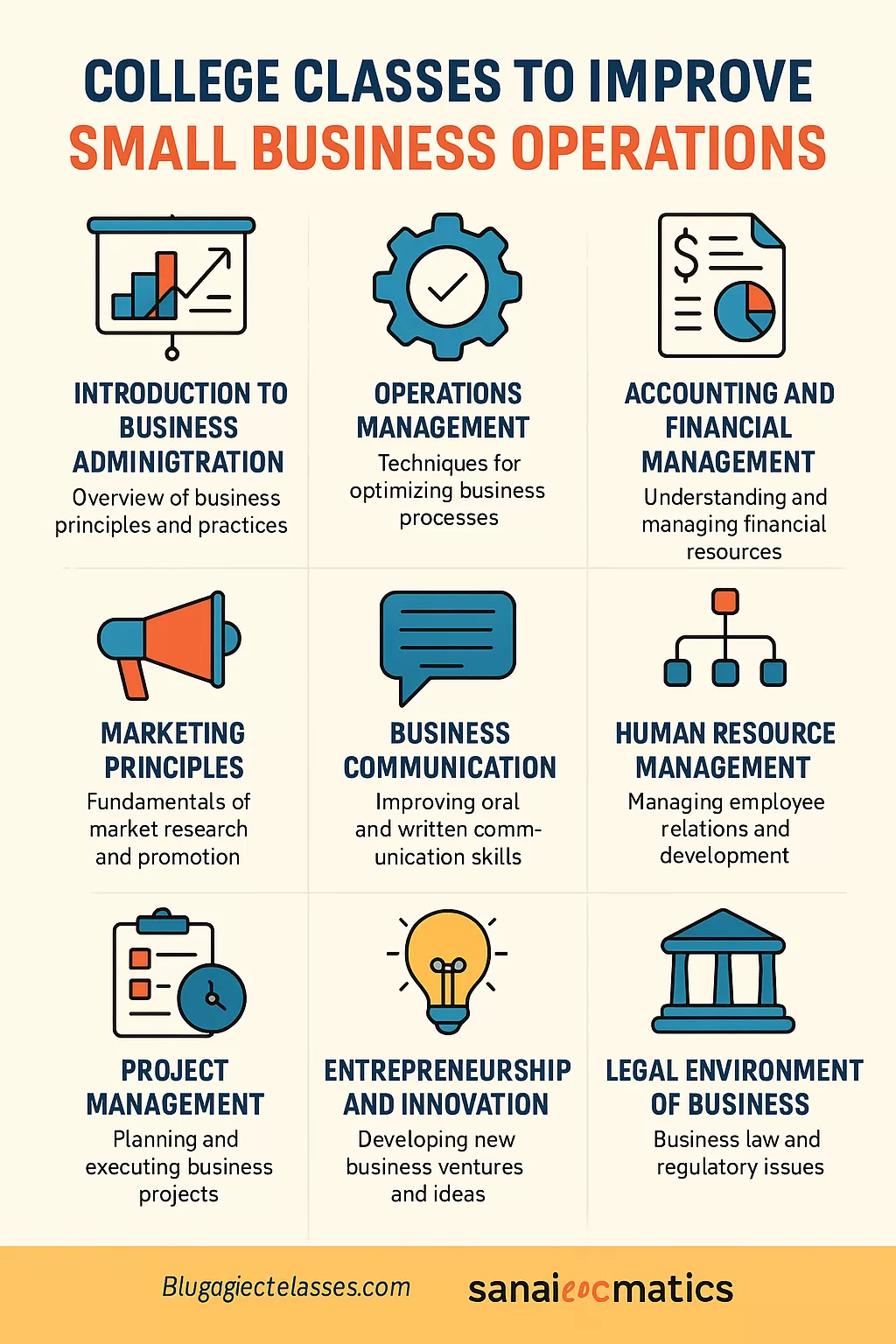
Which College Classes Should Small Business Owners Take to Improve Operations?
College Classes
Small business owners often wear many hats—CEO, bookkeeper, HR manager, marketer, and operations supervisor all rolled into one. While entrepreneurial passion is the lifeblood of a startup or small venture, managing and scaling a business requires a solid foundation of practical knowledge. College-level classes can be a strategic tool to sharpen your decision-making skills, streamline operations, and enhance your business’s profitability.
But which classes are worth the time and investment?
In this article, we’ll explore college courses that small business owners should consider to improve the efficiency, productivity, and long-term sustainability of their operations. These courses are typically found in business, technology, and liberal arts departments and can often be taken through community colleges, online platforms, or university extension programs.
1. Introduction to Business Administration – College Classes
Why It Matters:
This foundational course offers a broad overview of business principles including management, marketing, finance, and human resources. For new business owners or those without formal business training, this class serves as an essential primer.
Key Topics:
Organizational structure
Operational workflow
Business ethics
Financial statements
Strategic planning
Operational Benefits:
By understanding how different business components interconnect, small business owners can better align their departments and allocate resources more effectively.
2. Operations Management
Why It Matters:
Operations Management focuses on the internal processes that turn inputs into finished goods or services. It teaches how to make business operations more efficient, cost-effective, and customer-focused.
Key Topics:
Supply chain logistics
Inventory control
Quality assurance
Workflow optimization
Lean principles and Six Sigma
Operational Benefits:
You’ll learn how to reduce waste, manage time and resources more efficiently, and improve product quality—leading to higher customer satisfaction and reduced operational costs.
3. Accounting and Financial Management
Why It Matters:
Financial literacy is critical to sustaining and growing a business. This course teaches you how to read and interpret financial statements, manage cash flow, and make data-driven decisions.
Key Topics:
Balance sheets and income statements
Budgeting
Cash flow forecasting
Cost-benefit analysis
Tax planning basics
Operational Benefits:
Understanding your business’s financial health enables you to optimize spending, identify underperforming areas, and invest strategically in growth opportunities.
4. Marketing Principles
Why It Matters:
No matter how efficient your operations, your business can’t succeed without customers. Marketing courses teach you how to understand your target audience, position your brand, and drive sales through effective messaging.
Key Topics:
Market research
Consumer behavior
Branding
Digital marketing basics
Advertising strategy
Operational Benefits:
Better marketing means more consistent customer acquisition and retention, which leads to steadier cash flow and more predictable operational planning.
5. Business Communication
Why It Matters:
Effective communication is the backbone of good management. Whether you’re emailing clients, pitching investors, or instructing employees, how you communicate determines how your business is perceived.
Key Topics:
Verbal and nonverbal communication
Email etiquette
Writing proposals and reports
Public speaking and presentations
Operational Benefits:
Improved communication reduces misunderstandings, boosts team morale, and enhances client relationships, all of which contribute to smoother operations.
6. Human Resource Management
Why It Matters:
People are your most valuable resource. This course teaches how to recruit, manage, and retain talent while staying compliant with labor laws.
Key Topics:
Hiring and onboarding
Performance management
Employment law
Compensation and benefits
Conflict resolution
Operational Benefits:
A strong HR strategy minimizes turnover, boosts employee satisfaction, and ensures compliance with labor regulations—all crucial to maintaining smooth daily operations.
7. Project Management
Why It Matters:
Every initiative in your business—whether it’s launching a new product or revamping your website—is a project. This course offers tools and frameworks to ensure projects are completed on time and within budget.
Key Topics:
Project planning and execution
Resource allocation
Risk management
Agile and Waterfall methodologies
Gantt charts and timelines
Operational Benefits:
Strong project management skills improve your ability to execute ideas efficiently, avoid costly delays, and allocate time and personnel more effectively.
8. Entrepreneurship and Innovation
Why It Matters:
Entrepreneurship classes focus on business development, problem-solving, and innovative thinking. This class is ideal for owners looking to expand, pivot, or revitalize their business model.
Key Topics:
Opportunity identification
Business model innovation
Startup financing
Pitching to investors
Scalability
Operational Benefits:
You’ll gain the strategic insight to adapt quickly to market changes, test new ideas, and evaluate risk intelligently.
9. Information Systems and Technology for Business
Why It Matters:
Digital tools are central to running an efficient business. This course introduces systems like ERP, CRM, and POS, and discusses how to use data analytics to inform business decisions.
Key Topics:
Cloud computing
Cybersecurity basics
Data analytics
Workflow automation
Software selection and integration
Operational Benefits:
Integrating the right tech stack can streamline communication, track customer behavior, and automate repetitive tasks, freeing up time for strategic thinking.
10. Legal Environment of Business
Why It Matters:
Understanding the legal landscape helps you avoid costly lawsuits and regulatory headaches. This course offers insights into contracts, liabilities, and regulatory compliance.
Key Topics:
Business structures (LLC, S-corp, etc.)
Contracts and negotiations
Intellectual property
Employment law
Government regulations
Operational Benefits:
By navigating legal pitfalls early, you protect your business and ensure that your operational practices are both ethical and legally sound.
11. Supply Chain and Logistics Management
Why It Matters:
For businesses that manufacture or distribute goods, mastering the supply chain is crucial. This course teaches how to optimize every step from procurement to delivery.
Key Topics:
Sourcing and procurement
Vendor negotiation
Inventory strategy
Shipping and warehousing
Risk mitigation
Operational Benefits:
A well-managed supply chain can significantly reduce costs, improve delivery times, and enhance customer satisfaction.
Customer loyalty drives recurring revenue. This course explains how to structure and optimize your customer interactions using CRM platforms.
Key Topics:
Customer lifecycle
CRM software implementation
Personalized marketing
Loyalty programs
Feedback and retention strategy
Operational Benefits:
Improved customer insights allow you to tailor services, resolve issues more quickly, and boost repeat business—making your operations more predictable and scalable.
13. E-commerce and Digital Retailing
Why It Matters:
With the explosion of online sales, even brick-and-mortar businesses can benefit from selling products online. This class covers the platforms, logistics, and marketing tactics required for success.
Key Topics:
Online store setup (Shopify, WooCommerce)
Digital payment systems
Online customer service
Fulfillment and shipping
SEO and digital ads
Operational Benefits:
Running an e-commerce channel diversifies revenue and creates operational efficiencies through automated order processing and broader market reach.
14. Business Analytics and Data-Driven Decision Making
Why It Matters:
Data is a powerful tool when used effectively. This class teaches how to analyze data sets to improve efficiency, productivity, and profitability.
Key Topics:
Descriptive and predictive analytics
KPIs and performance dashboards
Data visualization tools
A/B testing
Forecasting models
Operational Benefits:
With data-driven insights, you can make informed decisions about everything from pricing to staffing, maximizing output while minimizing waste.
15. Time and Productivity Management
Why It Matters:
As a business owner, your time is your most valuable resource. This elective course helps you master personal productivity and effective delegation.
Increased personal productivity allows you to focus on high-leverage tasks while empowering your team to take ownership of daily responsibilities.
Choosing the Right Educational Path
Degree vs. Certificate vs. Non-Degree Courses
Degree Programs (Associate’s, Bachelor’s, MBA): Offer comprehensive training but require significant time and money.
Certificate Programs: Targeted and faster, they focus on specific skill sets like project management, accounting, or digital marketing.
Individual Courses: Perfect for filling knowledge gaps without long-term commitment.
Learning Platforms to Explore
Community Colleges: Affordable and flexible scheduling
University Extension Programs: Offer evening and online classes for working professionals
Online Platforms: Sites like Coursera, edX, and LinkedIn Learning offer college-level instruction from top institutions.
Conclusion
Small business owners who invest in continuing education dramatically increase their chances of operational success. From financial management to supply chain logistics and digital marketing, each course you take builds a more capable, scalable, and resilient enterprise.
The business landscape is constantly evolving—technology changes, markets shift, and consumer expectations rise. Staying ahead of the curve requires more than just instinct and experience; it demands continuous learning. The right college classes don’t just teach you how to run a business; they teach you how to run it better.
Whether you’re bootstrapping a startup or managing a growing family business, consider building your own educational curriculum tailored to your business’s unique operational needs. The time and money invested today could yield enormous dividends tomorrow.
Who is Kelly Loeffler? Trump’s New Pick to Run the Small Business Administration
Kelly Loeffler, a businesswoman and former U.S. senator, has been nominated by President-elect Donald Trump to head the Small Business Administration (SBA). Known for her conservative political stance, Loeffler’s nomination has sparked interest and debate over her potential impact on small businesses nationwide.
Background and Business Career
Born on November 27, 1970, in Bloomington, Illinois, Loeffler grew up in a farming family before pursuing higher education. She earned a Bachelor of Science degree from the University of Illinois Urbana-Champaign and later obtained an MBA from DePaul University.
Loeffler built a successful career in the financial sector, culminating in her role as CEO of Bakkt, a subsidiary of Intercontinental Exchange (ICE). ICE, led by her husband Jeffrey Sprecher, is a major operator of global exchanges, including the New York Stock Exchange. At Bakkt, Loeffler oversaw the development of a cryptocurrency trading platform, gaining valuable experience in managing innovative business models. However, her tenure faced challenges, including reports of operational hurdles and unmet market expectations.
Political Career
Loeffler entered politics in December 2019 when Georgia Governor Brian Kemp appointed her to the U.S. Senate to fill the vacancy left by retiring Senator Johnny Isakson. She served from January 2020 to January 2021, aligning closely with President Trump during her time in office. Loeffler positioned herself as a staunch conservative, emphasizing her “100 percent Trump voting record” during her campaign.
In the 2020 special election, Loeffler faced a high-profile battle against Democrat Raphael Warnock, ultimately losing the seat. Following her Senate term, she founded Greater Georgia, an organization dedicated to registering conservative voters and advocating for voting law reforms.
Nomination to the Small Business Administration
Loeffler’s nomination to lead the SBA comes at a pivotal time for small businesses recovering from economic disruptions. The SBA plays a critical role in providing loans, grants, and support to entrepreneurs across the country. With her background in business and experience in navigating complex financial systems, Loeffler’s supporters argue she is well-equipped to streamline the agency’s operations and bolster its programs.
However, critics have raised questions about her qualifications, pointing to her performance at Bakkt and her limited track record in directly supporting small businesses. As she awaits Senate confirmation, Loeffler is expected to outline her vision for reducing regulatory burdens and fostering innovation among small enterprises.
Looking Ahead at Kelly Loeffler
If confirmed, Loeffler will likely prioritize policies aimed at empowering entrepreneurs and creating jobs. Her leadership style and decisions will be closely watched, especially as the SBA continues its mission to support the backbone of the American economy—small businesses.
As the global economy continues its recovery from the impacts of the COVID-19 pandemic, small businesses are demonstrating remarkable resilience. Despite facing a significant labor shortage, many small businesses are not only surviving but thriving, showcasing their ability to adapt and innovate in challenging times. Small Businesses Grow Despite Labor Shortage
Small Businesses Continue to Grow Despite Labor Shortage
The Labor Shortage Challenge
The labor shortage, which began in the wake of the pandemic, has been a pressing issue across industries. Many workers left their jobs during the pandemic, some for health reasons, others to seek better work-life balance or to retire early. As the economy reopened, businesses found it increasingly difficult to fill open positions, leading to increased competition for talent. Small Businesses Grow Despite Labor Shortage.
For small businesses, this challenge has been particularly acute. With fewer resources than larger corporations, small businesses often struggle to offer the same level of wages, benefits, and job security. Yet, many are finding creative solutions to attract and retain employees.
Innovative Solutions and Adaptation
One of the key strategies small businesses have employed is flexibility. Offering flexible work hours, remote work options, and part-time positions has allowed them to attract a broader pool of candidates. This flexibility has become a significant selling point, particularly for workers who prioritize work-life balance.
Additionally, small businesses are increasingly investing in employee development. By offering training programs, mentoring, and opportunities for advancement, they not only improve their workforce’s skills but also foster loyalty among employees. This focus on personal and professional growth is helping small businesses retain talent in a competitive job market.
Moreover, some small businesses are turning to automation and technology to bridge the labor gap. From automating routine tasks to using digital tools for customer service, these businesses are finding ways to maintain high levels of productivity with fewer employees. This shift not only helps to mitigate the effects of the labor shortage but also positions these businesses for future growth in an increasingly digital economy. Small Businesses Grow Despite Labor Shortage.
Economic Growth Despite Challenges
Despite the challenges posed by the labor shortage, small businesses continue to play a vital role in economic growth. According to recent data, small businesses have been responsible for a significant portion of job creation in the past year. Their growth is fueled by strong consumer demand, which has remained robust even in the face of rising inflation and economic uncertainty.
This growth is also supported by community support and local spending. Many consumers are increasingly conscious of the importance of supporting local businesses, which has translated into strong sales for many small enterprises. Additionally, government programs and financial assistance have provided a lifeline to businesses struggling with labor costs and other challenges.
Looking Ahead
While the labor shortage is expected to persist in the near term, small businesses are proving that they can adapt and thrive in the face of adversity. By embracing flexibility, investing in their workforce, and leveraging technology, they are not only overcoming current challenges but also laying the groundwork for future success.
As small businesses continue to grow, they will remain a cornerstone of the economy, driving innovation, job creation, and community development. Their resilience and adaptability are a testament to the vital role they play in both local and global economies.
In today’s rapidly evolving digital landscape, small businesses face both unprecedented opportunities and challenges. As technology continues to advance, one tool stands out as a game-changer: artificial intelligence (AI). While AI might seem like a tool only accessible to large corporations with hefty budgets, small businesses can also harness its power to drive growth, enhance efficiency, and stay competitive in their respective industries. Here are some ways small businesses can use AI to their advantage:
How Small Businesses can use AI to their Advantage
Automating Repetitive Tasks: Small business owners often find themselves wearing multiple hats and juggling numerous tasks simultaneously. AI-powered automation tools can streamline operations by handling repetitive tasks such as data entry, email responses, appointment scheduling, and inventory management. By automating these routine activities, business owners can free up time to focus on strategic decision-making and business development.
Personalizing Customer Experiences: Understanding customer preferences and delivering personalized experiences is crucial for small businesses looking to build strong relationships and foster customer loyalty. AI algorithms can analyze vast amounts of customer data, including purchase history, browsing behavior, and social media interactions, to create personalized recommendations, tailor marketing messages, and anticipate customer needs. By providing personalized experiences, small businesses can enhance customer satisfaction and increase retention rates. Small Businesses can use AI.
Improving Decision-Making with Data Analytics: Data-driven decision-making is essential for small businesses aiming to identify trends, optimize processes, and capitalize on opportunities. AI-powered analytics tools can sift through large datasets, extract valuable insights, and generate actionable recommendations in real-time. Whether it’s predicting market trends, optimizing pricing strategies, or identifying cost-saving opportunities, AI-driven analytics empower small business owners to make informed decisions that drive business growth.
Enhancing Customer Service with Chatbots: Providing excellent customer service is paramount for small businesses striving to differentiate themselves in a crowded marketplace. AI-powered chatbots offer a cost-effective solution for delivering round-the-clock support, answering frequently asked questions, and resolving customer inquiries promptly. By implementing chatbots on their websites or social media platforms, small businesses can improve responsiveness, enhance customer satisfaction, and reduce the burden on customer support teams.
Streamlining Marketing Efforts: Effective marketing is essential for small businesses to attract new customers and increase brand awareness. AI-powered marketing platforms utilize machine learning algorithms to optimize advertising campaigns, target the right audience segments, and deliver personalized content across various channels. Whether it’s through predictive analytics, dynamic pricing models, or sentiment analysis, AI enables small businesses to refine their marketing strategies, maximize ROI, and achieve better results with limited resources. Small Businesses can use AI.
Predicting Business Trends and Opportunities: Anticipating market trends and staying ahead of the competition is critical for small businesses to adapt and thrive in a dynamic business environment. AI-driven predictive modeling techniques can analyze historical data, market trends, and external factors to forecast future demand, identify emerging opportunities, and mitigate potential risks. By leveraging predictive analytics, small business owners can make proactive decisions, capitalize on emerging trends, and maintain a competitive edge in their industry.
In conclusion, AI presents small businesses with unprecedented opportunities to innovate, streamline operations, and deliver exceptional experiences to customers. By embracing AI technologies and integrating them into their business strategies, small businesses can level the playing field, drive growth, and achieve sustainable success in today’s digital economy. While adopting AI may require initial investment and learning curve, the long-term benefits far outweigh the challenges, making it a worthwhile investment for small businesses looking to thrive in the 21st century.
Contains information related to marketing campaigns of the user. These are shared with Google AdWords / Google Ads when the Google Ads and Google Analytics accounts are linked together.
90 days
__utma
ID used to identify users and sessions
2 years after last activity
__utmt
Used to monitor number of Google Analytics server requests
10 minutes
__utmb
Used to distinguish new sessions and visits. This cookie is set when the GA.js javascript library is loaded and there is no existing __utmb cookie. The cookie is updated every time data is sent to the Google Analytics server.
30 minutes after last activity
__utmc
Used only with old Urchin versions of Google Analytics and not with GA.js. Was used to distinguish between new sessions and visits at the end of a session.
End of session (browser)
__utmz
Contains information about the traffic source or campaign that directed user to the website. The cookie is set when the GA.js javascript is loaded and updated when data is sent to the Google Anaytics server
6 months after last activity
__utmv
Contains custom information set by the web developer via the _setCustomVar method in Google Analytics. This cookie is updated every time new data is sent to the Google Analytics server.
2 years after last activity
__utmx
Used to determine whether a user is included in an A / B or Multivariate test.
18 months
_ga
ID used to identify users
2 years
_gali
Used by Google Analytics to determine which links on a page are being clicked
30 seconds
_ga_
ID used to identify users
2 years
_gid
ID used to identify users for 24 hours after last activity
24 hours
_gat
Used to monitor number of Google Analytics server requests when using Google Tag Manager