Business World Review – What You Need to Know – 8/2/2025

Business World Review – The health of the U.S. economy is currently a mixed bag, with recent data showing both surprising strength and underlying weaknesses.

Business World Review - What You Need to Know

Here is a summary of the most relevant stories and key economic indicators:

The U.S. economy grew at a 3.0% annualized rate in the second quarter of 2025, a significant reversal from the 0.5% contraction in the first quarter.

A major factor in the Q2 growth was a sharp drop in imports, the largest since the COVID-19 pandemic. This decrease was largely a result of companies stockpiling goods in Q1 to get ahead of proposed tariff hikes. This has led some economists to caution that the headline GDP number is masking a slowing in underlying economic performance. A more stable measure of core growth, which excludes volatile items, slowed to 1.2% in Q2 from 1.9% in Q1.

Inflationary pressures have continued to moderate. The core Personal Consumption Expenditures (PCE) index, a key inflation gauge for the Federal Reserve, rose 2.5% in Q2, down from 3.5% in Q1. This has led to expectations that the Fed may consider cutting interest rates.

Job Growth Slowing: Recent reports indicate a softening labor market. The economy added just 73,000 jobs in July, with significant downward revisions to the May and June figures, suggesting a much weaker job market than previously thought.

Despite the slowdown in job creation, the overall unemployment rate remains low at 4.2% as of July. However, this masks disparities, with recent college graduates and younger workers facing a tougher job market. The labor force participation rate for prime-age workers (25-54) has been solid, but the rate for workers 55 or older has declined to an eighteen-year low, reflecting broader demographic trends.

The labor market is showing a unique pattern of gradual softening rather than a sharp downturn. Companies are pulling back on new hires but are not yet engaging in widespread layoffs. The voluntary resignation rate, a measure of worker confidence, has also dropped below pre-pandemic levels.

President Donald Trump’s trade policies, including newly reinstated import tariffs, are a central source of uncertainty. Economists are divided on the impact, with some arguing they will damage the economy by raising costs and others acknowledging they are meant to protect American jobs. The anticipation and implementation of these tariffs have caused significant volatility in trade and investment.

The Federal Reserve is under pressure to cut interest rates, but it has so far held off, citing low unemployment and elevated inflation. However, the recent weak jobs report has increased the likelihood of a rate cut in September.

Consumer spending has shown lackluster growth, and private investment has plunged. This suggests that households and businesses are becoming more cautious amid policy uncertainty.

The International Monetary Fund (IMF) has raised its global and U.S. growth forecasts for 2025, citing a weaker-than-expected impact from tariffs. However, the IMF warns that risks are still tilted to the downside if trade tensions escalate. The Federal Reserve Bank of Atlanta’s “GDPNow” model is currently forecasting a 2.1% growth rate for the third quarter of 2025.

Accounts Receivable Factoring can quickly provide cash to businesses which do not qualify for traditional bank financing.

Contact Factoring Specialist, Chris Lehnes

What You Need to Know: Business World Summary for August 1, 2025

Key Business World news published in the last 12 hours:

  • Tariffs and Inflation: The most significant and recurring theme in Business World News includes recent economic reporting is the impact of new tariffs. Reports from various sources, including The Guardian, CBS News, and Investopedia, highlight that the Trump administration has imposed sweeping new tariffs on dozens of countries. These tariffs are already showing signs of pushing up inflation, with the Personal Consumption Expenditures (PCE) report, the Federal Reserve’s preferred inflation gauge, showing a rise. Merchants are also warning that these tariffs could lead to higher prices for imported goods, such as wines and spirits
Business World News: The most significant and recurring theme in recent economic reporting is the impact of new tariffs. Reports from various sources, including The Guardian, CBS News, and Investopedia, highlight that the Trump administration has imposed sweeping new tariffs on dozens of countries. These tariffs are already showing signs of pushing up inflation, with the Personal Consumption Expenditures (PCE) report, the Federal Reserve's preferred inflation gauge, showing a rise. Merchants are also warning that these tariffs could lead to higher prices for imported goods, such as wines and spirits
  • Federal Reserve and Interest Rates: The Federal Reserve recently decided to keep interest rates steady. This decision came despite pressure from President Trump and dissents from some members of the Fed’s rate-setting committee. The Fed’s concern over the inflationary effects of the new tariffs is a key factor in its decision to hold rates rather than cut them.
  • Economic Growth: The U.S. economy saw a rebound in the second quarter, with a 3.0% annual growth rate for GDP, according to the U.S. Bureau of Economic Analysis. This follows a 0.5% decrease in the first quarter. However, some economists, like Nationwide’s Kathy Bostjancic, suggest that these “headline numbers are hiding the economy’s true performance,” which they believe is slowing down as the tariffs begin to have a greater impact.

Tariffs and Trade

  • The Trump administration’s August 1 deadline for new reciprocal tariffs on certain countries has gone into effect. This has led to the imposition of a 25% tariff on a wide range of Indian imports.
  • The electronics sector in India, however, has been granted a two-week reprieve from these tariffs as bilateral trade talks continue.
  • In a separate development, the U.S. has announced it is raising tariffs on Canadian goods not covered by the USMCA trade agreement, from 25% to 35%.

U.S. Jobs and Economic Indicators

  • The July jobs report showed a significantly weaker performance than anticipated, with only 73,000 jobs added. This is a sharp drop from expectations and includes a stunning downward revision of 258,000 jobs for May and June.
  • This weak jobs data has led to increased speculation that the Federal Reserve may be forced to cut interest rates at its September meeting. Prior to the report, a rate cut was seen as less likely.
  • The yield on the 10-year Treasury note has fallen to 4.24% from 4.39% following the jobs report, reflecting the shift in market expectations for a rate cut.
  • The U.S. economy’s growth in the second quarter of 2025 was 3.0% on an annualized basis, according to an advance estimate from the Bureau of Economic Analysis. This follows a 0.5% decrease in the first quarter.

Stock Market Performance

  • U.S. stock markets are down following the weak jobs report and the new tariffs. The S&P 500 is down 1.5%, the Dow Jones Industrial Average is down 1.4%, and the Nasdaq composite has fallen 2%.
  • Some companies, however, are seeing gains. Microsoft and Meta are performing well after reporting strong quarterly earnings and highlighting their investments in artificial intelligence. Microsoft’s market capitalization has now surpassed $4 trillion

In short, the Business World headlines are dominated by the ripple effects of new tariffs, which are contributing to inflation and creating a cautious environment for the Federal Reserve’s interest rate policy, even as the overall GDP number shows a rebound.

Contact Factoring Specialist, Chris Lehnes


Sources

Indiatimes

timesofindia.indiatimes.com

Trump tariffs hit dozens of countries: Which are the most and least affected? Check if India makes it to either list

Rank, 1, 2, 3, 4, Country, Syria, Laos, Myanmar (Burma), Switzerland, Tariff Rate, 41%, 40%, 40%, 39%, …

AP News Business World

apnews.com

A key US inflation gauge rose last month as Trump’s tariffs lifted goods prices

By CHRISTOPHER RUGABER. AP Economics Writer. The Associated PressWASHINGTON.

YouTube

www.youtube.com

Why did the Fed keep interest rates steady for 5th straight time? – YouTube

The Federal Reserve on Wednesday left interest rates unchanged for the fifth time in a row. CBS News’ Kelly O’Grady and Olivia Rinaldi have the latest. CBS …

OPB Business World

www.opb.org

The Fed holds interest rates steady despite intense pressure from Trump – OPB

Fed holds interest rates steady, signals rate cuts of 0.5% later this year.

Investopedia

www.investopedia.com

Federal Reserve Holds Key Interest Rate Steady as Central Bankers Weigh Tariff Effects

Federal Reserve Holds Key Interest Rate Steady as Central Bankers Weigh Tariff Effects. โ€‹ Live. News.

U.S. Bureau of Economic Analysis (BEA) (.gov)

www.bea.gov

Gross Domestic Product, 2nd Quarter 2025 (Advance Estimate) | U.S. Bureau of Economic Analysis (BEA)

Real gross domestic product (GDP) increased at an annual rate of 3.0 percent in the second quarter of 2025 (April, May, and June), according to the advance …

Indiatimes

timesofindia.indiatimes.com

US GDP: Economy rebounds with 3% growth in Q2; trade swings, tariffs raise caution

According to AP, nationwide chief economist Kathy Bostjancic said, โ€œHeadline numbers are hiding the economy’s true performance, which is slowing as tariffs …

Indiatimes

economictimes.indiatimes.com

Fed stays cautious, but tariff impact could spike inflation: Peter Cardillo

But as you mentioned, we’ve now seen declines in U.S. markets, likely because the market has started to price in trade-related negatives. Wasn’t this kind of …

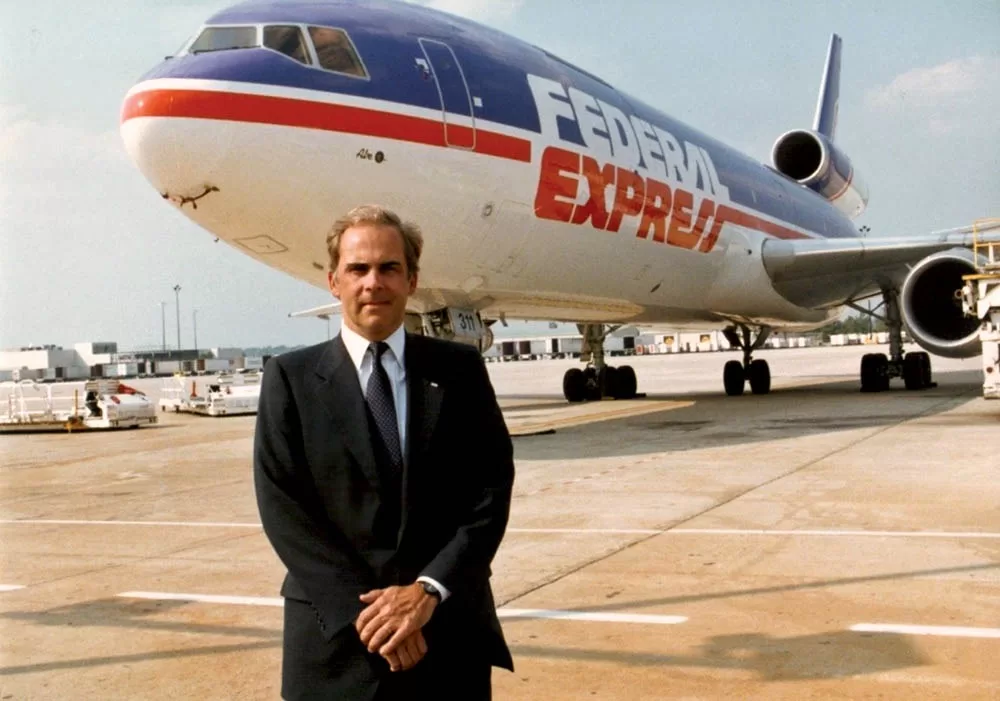
Obituary: FedEx Founder Fred Smith: Architect of Overnight Delivery

I. Prologue: The Architect of Overnight โ€“ A World Transformed

The passing of Frederick W. Smith on June 21, 2025, at the age of 80, marked the close of an extraordinary chapter in global commerce and logistics. As the visionary founder of FedEx Corporation, Smith did not merely build a company; he pioneered and fundamentally reshaped an entire industry through an innovative vision and an unwavering commitment to excellence. His departure resonated deeply across various sectors, prompting widespread tributes that underscored the monumental scope of his contributions. Former President George W. Bush lauded him as “one of the finest Americans of our generation,” while U.S. Representative Steve Cohen of Tennessee hailed him as Memphis’ “most important citizen,” recognizing FedEx as the very “engine of our economy”. ย 

Obituary: FedEx Founder Fred Smith: Architect of Overnight Delivery

The sentiments shared by his successor, FedEx CEO and President Raj Subramaniam, encapsulate the profound impact Smith had on both his enterprise and the individuals within it. Subramaniam articulated that “Fred was more than just the pioneer of an industry and the founder of our great company. He was the heart and soul of FedEx โ€“ its PSP culture, values, integrity, and spirit. He was a mentor to many and a source of inspiration to all. He was also a proud father, grandfather, husband, Marine, and friend; please keep the entire Smith family in your thoughts and prayers during this difficult time”. These reflections highlight that Smith’s public achievements were deeply intertwined with his personal character and the values he championed, suggesting that the enduring culture and identity of FedEx were, in many ways, an extension of his individual ethos.  

Smith’s true genius lay in his remarkable foresight. He anticipated, long before it became apparent to most, the critical need for rapid and reliable delivery services in an increasingly automated and interconnected world. His vision was not a reactive response to an existing market demand but a proactive identification of a fundamental, unmet logistical requirement that would become indispensable to the burgeoning information age. By conceiving and establishing an integrated air-ground network, anchored by the revolutionary hub-and-spoke model, Smith effectively created a new logistical ecosystem. This system transformed supply chains from opaque, unpredictable processes into transparent, precise pipelines, fundamentally altering how goods move globally and enabling the very growth of high-tech and high-value-added sectors. His pioneering efforts thus served as a powerful catalyst for broader economic evolution, driving the world towards a more digitized and interconnected future.  

II. Formative Years: Roots of a Visionary

Frederick W. Smith’s journey began in Marks, Mississippi, where he was born in 1944. His early life was marked by significant challenges that would, in retrospect, appear to have forged the resilience and determination that defined his later career. His father passed away when Smith was just four years old, leaving him to navigate his formative years with few male role models. This early loss, however, was somewhat mitigated by his mother’s remarriage when he was around 15, to an Air Force general who would introduce him to the world of aviation and teach him to fly. Smith’s family life was substantial; he was the father of ten children. His first marriage to Linda Black Grisham, from 1969 to 1977, produced two children, Windland Smith Rice and Richard W. Smith. He is survived by his wife, Dianne Avis, with whom he had eight children. Among his notable children are film producer Molly Smith, former Atlanta Falcons head coach Arthur Smith, Richard W. Smith, who currently serves as President and CEO of FedEx Express, and Cannon Smith, a film actor, producer, and former football player. Tragically, his daughter Windland Smith Rice, a professional photographer, passed away in 2005 at the age of 35 due to an illness.  

A profound early struggle that shaped Smith’s character was a crippling bone disease he contracted at a young age, from which he miraculously regained his health by the age of ten. This triumph over physical adversity at such a tender age likely instilled in him an extraordinary sense of inner drive and an unyielding spirit of persistence. This formative experience, coupled with the lessons he learned during his schooling in Memphis, laid a crucial foundation for his future endeavors. He attended Presbyterian Day School for elementary education and later Memphis University School for high school.  

At Memphis University School, Smith distinguished himself both academically and athletically, particularly on the football field. It was during these years that he developed strong relationships with his coaches, whom he credited significantly for his later success. One coach, in particular, left an indelible mark, as Smith recalled, โ€œHe absolutely proved to me that persistence was a very big part of making it in life. I never forgot that lessonโ€. This explicit lesson in tenacity, combined with his personal experiences of overcoming early hardships, cultivated a relentless drive that would prove indispensable in the face of the immense challenges he would encounter as an entrepreneur. His entrepreneurial spirit, therefore, was not merely an intellectual pursuit but a disposition forged in the crucible of personal adversity and disciplined effort.  

His early interest in aviation, nurtured by his stepfather, manifested in his becoming an amateur pilot as a teenager. This passion for flying was more than a mere hobby; it provided him with a unique, practical understanding of air transport and logistics. This hands-on experience in the cockpit, combined with his later observations of the nascent high-tech industry’s logistical needs while moonlighting as a charter pilot flying computer parts , directly informed the genesis of his groundbreaking idea for FedEx. This direct causal link between his personal interest, practical exposure to the inefficiencies of existing systems, and the eventual innovative solution underscores how deeply rooted his revolutionary business concept was in his own lived experiences and aptitudes.  

III. Crucible of Character: Yale and the Marine Corps

Frederick W. Smithโ€™s intellectual journey led him to Yale College, where he matriculated in 1962 and earned his degree in 1966. During his time at Yale, Smith was an active participant in campus life, becoming a member and eventually the president of the Delta Kappa Epsilon (DKE) fraternity, and also joining the Skull and Bones secret society. His collegiate years also saw him forge friendships with future prominent figures such as U.S. President George W. Bush, a fellow DKE fraternity brother, and U.S. Senator and Secretary of State John Kerry, with whom he shared a mutual enthusiasm for aviation and often flew as partners.  

It was during his undergraduate studies in 1965 that Smith famously submitted a paper for an economics class, outlining a revolutionary concept: a service that would guarantee overnight delivery. This paper, which would later be recognized as the “germ of Federal Express” , proposed an idea so far ahead of its time that it was met with skepticism. Smith received a “C” for the assignment. With characteristic self-effacing humor, he later commented that “to a ne’er do well student like myself, the grade was acceptable”. The professor’s critique was famously pointed: “The concept is interesting and well-formed, but in order to earn better than a ‘C’, the idea must be feasible”. This seemingly low grade, in retrospect, serves not as a mark of academic deficiency but as a testament to the disruptive nature of his vision, illustrating how truly transformative ideas often defy conventional wisdom and initial academic assessment. It underscores the revolutionary quality of his proposal, which was simply too audacious for its contemporary understanding of logistical possibilities.  

The inspiration for this groundbreaking paper stemmed from Smithโ€™s practical experiences. While moonlighting as a charter pilot, flying computer parts, he observed firsthand the nascent stages of automation in society and the critical need for rapid, reliable delivery of essential components for this emerging computer-based world. He described this realization as an “a-ha moment,” recognizing that “your computer goes down, you have to have the part to fix it or you’re out of business”. This observation was pivotal, connecting his passion for aviation with a profound understanding of an impending logistical imperative.  

Following his graduation from Yale, Smith embarked on a four-year period of military service in the U.S. Marine Corps, including two tours of duty in Vietnam. This period proved to be a crucible, profoundly shaping his character and leadership philosophy. He served as a highly decorated Marine Corps infantry officer and forward air controller (FAC) in the jungles of Southeast Asia, where he learned critical leadership lessons and had life-changing experiences. For his valor and service, Smith was awarded the Silver Star and Bronze Star, and also received two Purple Hearts, indicating he was wounded twice in combat. The citation for his Silver Star on May 27, 1968, vividly describes his conspicuous gallantry, intrepidity, and aggressive leadership under intense hostile fire, where he fearlessly removed casualties, directed fire, adjusted artillery and air strikes, and led an enveloping attack that routed enemy forces, inspiring all who observed him.  

Smith consistently credited his Marine Corps experience as the “bedrock on which FedEx was formed,” stating it was “more important than my formal education” in teaching him how to manage an organization and achieve goals and results. He emphasized that a leader’s job is to elicit discretionary effort from people, a lesson directly transferable from the military, where individuals might risk their lives for the mission. The core tenets of leadership and management taught in the Marine Corps were directly incorporated into FedEx’s philosophy. He even wrote the original versions of the FedEx Manager’s Guide and Operating Manual, both reflecting the doctrine and basic tenets of leadership learned in the Marine Corps.  

The company’s foundational philosophy, “People Service Profit” (PSP), directly stemmed from the Marine Corps’ teaching to “take care of the troops”. Smith believed that if employees were well cared for, they would, in turn, take care of the customers or the mission, ultimately leading to success. Key leadership traits such as keeping personnel informed, making the mission clear, and looking after troops became fundamental principles taught at FedEx’s Leadership Institute. FedEx’s practice of promoting from within, allowing employees to advance based on their abilities, mirrors military norms. Furthermore, Smith continued to use the Marine Corps method of laying out strategic issues for the strategic management committee: Situation, Mission, Execution, Administration, Coordination, and Communication (SMEAC), which he learned in The Basic School. This profound and direct influence of his military career on his entrepreneurial success demonstrates that his combat experiences and Marine Corps training were not merely a chapter in his life but the very foundation upon which he built a global enterprise.  

IV. The Genesis of an Empire: Founding Federal Express

Upon returning from his transformative military service in Vietnam in 1969, Fred Smith was more determined than ever to pursue his entrepreneurial dream, which had been conceived during his Yale undergraduate days. He had observed the burgeoning automation of society and the critical logistical void it presented. His “a-ha moment” came from recognizing that in a world increasingly reliant on computers and high-tech equipment, businesses would be rendered inoperable if they couldn’t quickly obtain replacement parts. “Your computer goes down, you have to have the part to fix it or you’re out of business,” he articulated, capturing the essence of the problem he sought to solve. This realization was not just about identifying a market gap; it was about conceptualizing an entirely new industry to fill it, showcasing his capacity for systemic thinking and market creation.  

Smith’s original concept for Federal Express was an air-ground network designed to provide guaranteed overnight delivery. The name “Federal Express” itself stemmed from his initial hope to transport checks for the Federal Reserve System, a contract that ultimately did not materialize but left a lasting mark on the company’s identity. He conducted three separate marketing studies, a testament to his belief in thorough reconnaissance, a lesson he carried from his Marine Corps days. His vision for a centralized hub-and-spoke distribution system, where all packages would flow through a central sorting facility before being dispatched to their final destinations, was a direct application of his observations from the Federal Reserve’s check-clearing process, which he recognized as an “extraordinarily efficient” mathematical topology for connecting disparate points. This innovative model, combining ground pickup and delivery with air transport, was unprecedented at the time.  

The journey to launch was fraught with significant financial hurdles. Smith initially used a family trust distribution of $750,000 to acquire Arkansas Aviation Sales, an aircraft maintenance company, which he successfully grew to $9 million in revenue in its first two years. However, his frustration with the late delivery of spare parts for this business only solidified his resolve to create an overnight delivery service. To launch Federal Express, he raised an additional $80 million, securing funds from investors and his siblings.  

Operations officially began on April 17, 1973, with a fleet of 14 Dassault Falcon 20 aircraft. On that inaugural night, Federal Express handled a modest 189 packages, all of which were successfully delivered overnight. Smith humorously recalled, “It was pretty, pretty easy when there are only 189!”. The company’s original headquarters were in Little Rock, Arkansas, but Smith strategically relocated to Memphis, Tennessee, in 1973. Memphis was chosen for its central U.S. location, favorable operational weather, and the Memphis International Airport’s willingness to support the fledgling business.  

The early years were financially precarious. In its first three years, Federal Express incurred losses totaling $29 million, with some sources citing $27 million in the first two years, pushing the company to the brink of bankruptcy. At one point, the companyโ€™s bank account dwindled to a mere $5,000. In a moment that has become legendary, after a failed attempt to secure additional funding from General Dynamics in California, Smith made an impulsive detour to Las Vegas. There, he gambled the company’s last $5,000 at the blackjack tables and won $27,000, which he immediately wired back to FedEx. While he acknowledged the win wasn’t “decisive,” he considered it an “omen that things would get better”. This audacious act, though not a recommended business strategy, became a powerful symbol of the extreme risks and unconventional measures Smith was willing to undertake to keep his vision alive. It illustrates the sheer determination and willingness to defy conventional business wisdom that characterized his entrepreneurial journey. He successfully renegotiated bank loans and raised an additional $11 million, famously stating his commitment to his employees: “if we were going to go down, we were going to go down with a fight”. Despite these initial struggles, the hub-and-spoke system quickly proved its viability, leading to a tenfold increase in packages delivered within months. By 1975, Federal Express generated its first operating profit, and by 1976, it concluded the year with $3.6 million in the black.  

V. Innovation and Expansion: Redefining Global Logistics

Fred Smithโ€™s foundational vision for Federal Express was not merely about moving packages; it was about revolutionizing the flow of information and enabling a new era of commerce. A cornerstone of this revolution was the pioneering of real-time package tracking. Smith famously declared in 1978, “The information about the package is just as important as the package itself”. This statement encapsulated a profound philosophical shift, recognizing that transparency and visibility were as crucial to logistics as physical delivery. In the 1970s, FedEx introduced the SuperTracker, a handheld barcode scanning device that allowed package information to be transmitted back to FedEx’s computer system upon pickup or delivery. This innovation transformed supply chains from opaque “black boxes” into transparent pipelines, allowing businesses and consumers to track their packages, thereby changing expectations across every industry. This demonstrated that providing information  

about the package became as critical as the package itself, fundamentally altering supply chain management and setting new industry standards for transparency and control.

FedEx continued to lead in technological innovation. Long before the widespread adoption of the internet, FedEx was at the forefront of leveraging digital tools. In the 1990s, the company installed computer terminals in the offices of 100,000 customers and provided proprietary software to more than 500,000 others, enabling them to track shipments directly. The launch of fedex.com in 1994, making the company one of the first to offer online package tracking, was a cutting-edge innovation for its time and a philosophical shift, emphasizing customer access to information. More recently, under Smith’s guidance, FedEx leaned heavily into emerging technologies such as artificial intelligence, IoT, robotics, and automation. Tools like FedEx Dataworks and SenseAware were developed not just as upgrades but as a continuation of Smith’s original idea: making logistics proactive, not reactive. His legacy is evident in every sensor, scan, and synchronized route, from vaccine shipments to high-value freight.  

Under Smith’s leadership, FedEx embarked on a strategic path of aggressive growth and global expansion, often through significant acquisitions. The company expanded to Europe and Asia in 1984, the same year it made its first acquisition: Gelco Express International, a transportation and logistics company. In 1989, FedEx acquired Flying Tiger Line, one of its major competitors, creating the largest full-service cargo airline in the world. Other notable acquisitions included Evergreen International Airlines in 1995, and in 1998, transportation holding company Caliber System and its subsidiaries, which integrated into FedEx Ground. The year 2000 saw a major rebranding, with FDX Corporation becoming FedEx Corporation, and its core shipping service renamed FedEx Express, while Caliber System companies were integrated into FedEx Ground. A significant retail acquisition occurred in 2004 with Kinko’s, which was rebranded as FedEx Kinko’s and later FedEx Office in 2008. International purchases continued, including UK-based ANC Holdings (2006), a 50% stake in Chinese express shipping business Tianjin Datian W. Group (2007), Hungary-based Flying Cargo (2007), India-based Prakash Air Freight and Unifreight (2011), Mexican MultiPack (2012), Polish Opek (2012), French TATEX (2012), Brazil-based Rapidรฃo Cometa (2012), and African Supaswift (2014). The acquisition of TNT Express in 2016 further strengthened its footprint, particularly across Europe. This strategic acumen in growth and adaptation demonstrates a sophisticated understanding of scale, market dynamics, and the necessity of continuous evolution to maintain competitive advantage and global reach.  

FedEx’s journey was not without its challenges, particularly in navigating economic downturns and market shifts. The company experienced early losses, partly due to the OPEC Oil Embargo in 1973, which nearly ended the company before it started. However, Smith’s confidence in the “latent demand” for their network service allowed them to persevere. The company benefited from events like Operation Desert Shield and Desert Storm in 1990, which increased charter activity, and a threatened labor strike at a major competitor. Smith’s ability to pivot, such as ending contracts and repositioning FedEx when Amazon shifted from partner to competitor, highlights his unwavering commitment to innovation and adaptability. He consistently warned against short-termism, stating in 2019, “Yesterday, we got hammered on an analyst call because we’re not making as much money as we planned, but we just put our goals out there and run the business”. His ability to steer FedEx through various macroeconomic headwinds, including the 2008 financial crisis, by focusing on long-term strategy rather than quarterly pressures, was a hallmark of his leadership.  

The following table summarizes key milestones in Fred Smith’s life and FedEx’s journey, illustrating the chronological development of his vision and its impact:

Table 1: Key Milestones in Fred Smith’s Life and FedEx’s Journey

YearEventDescription
1944BirthBorn in Marks, Mississippi.
1948Father’s PassingFather dies when Fred is four years old.
1954Health RecoveryRecovers from crippling bone disease by age 10.
1965Yale PaperSubmits economics paper on overnight delivery, receives a “C”.
1966Yale GraduationEarns degree from Yale College.
1966-1970Marine Corps ServiceServes four years, two tours in Vietnam, decorated with Silver Star, Bronze Star, two Purple Hearts.
1971Federal Express FoundedIncorporates Federal Express in Little Rock, Arkansas.
1973Operations Begin & Move to MemphisFederal Express launches operations with 189 packages; headquarters moves to Memphis, TN.
1975First ProfitFederal Express generates its first operating profit.
1975First Drop BoxesInstalls first drop boxes.
1978Airline DeregulationDomestic Air Cargo Deregulation Statute passed, lobbied by FedEx.
1978Famous SloganLaunches “When it absolutely, positively has to be there overnight.”
1979Goes PublicFederal Express stock listed on NYSE as FDX.
1981Overnight LetterIntroduces the overnight letter, competing with USPS.
1983$1 Billion RevenueAchieves $1 billion in annual revenue.
1984Intercontinental OperationsExpands to Europe and Asia; first acquisition (Gelco Express International).
1989Flying Tigers AcquisitionAcquires major competitor Flying Tiger Line.
1990Malcolm Baldrige AwardFedEx Express becomes first service company to win the Malcolm Baldrige National Quality Award.
1994Rebranding to FedEx & Online TrackingFederal Express shortens name to FedEx; launches fedex.com with online package tracking.
1998Caliber System AcquisitionAcquires Caliber System Inc., integrating into FedEx Ground.
2000FDX to FedEx CorporationFDX Corporation rebrands to FedEx Corporation; subsidiaries renamed.
2004Kinko’s AcquisitionAcquires Kinko’s, rebranded as FedEx Kinko’s (later FedEx Office).
2005Daughter’s PassingDaughter Windland Smith Rice dies at age 35.
2007National Aviation Hall of FameEnshrined into the National Aviation Hall of Fame.
2016TNT Express AcquisitionAcquires TNT Express, strengthening European footprint.
2021Yale Carbon Capture CenterEstablishes Yale Center for Natural Carbon Capture with FedEx gift.
2022Steps Down as CEOSteps down as CEO, becomes Executive Chairman; Raj Subramaniam named successor.
2022Marine Corps Scholarship DonationDonates $65 million to Marine Corps Scholarship Foundation for STEM scholarships.
2025PassingDies on June 21, 2025, at age 80.

Export to Sheets

VI. The Leadership Blueprint: People, Service, Profit

Fred Smith’s leadership was characterized by a transformational style, deeply rooted in his military experience and a profound belief in the value of his workforce. He was known for focusing on employee motivation, commitment, and fostering a culture of accountability, elements that were instrumental in establishing FedEx’s industry reputation and sustained success. His philosophy consistently emphasized the core values of people, innovation, integrity, and continuous improvement, which underpinned the company’s operational strategies and ethical framework.  

At the heart of Smith’s leadership was the “People-Service-Profit” (PSP) philosophy. This was not merely a corporate slogan but a deeply embedded cultural framework that prioritized employees as the primary engine of value. Smith firmly believed that if leaders genuinely cared for their employees, those employees would, in turn, deliver exceptional service to customers, and consequently, profits would naturally follow. This human-centric approach translated directly into operational excellence and sustained success, demonstrating that a strong, values-driven culture can indeed be a powerful strategic asset. He often stated that the “most important element in the FedEx system are the people that are out there, the front line folks”. This commitment extended to tangible benefits, such as good pay and medical benefits, and the innovative “Learning inspired by FedEx (LiFE)” program, which offered tuition assistance and flexible schedules, enabling employees to earn college degrees. This practice of promoting from within, allowing employees to advance based on their abilities, mirrored military norms and fostered deep loyalty and commitment.  

Smith’s operational instincts, honed during his time as a decorated Marine Corps officer, remained sharp throughout his career. He famously obsessed over logistics, routing, and metrics, routinely walking FedEx hubs at night to stay close to the front lines and maintain an operator’s mindset even as CEO. He understood that leadership was most critical at the “small-unit level,” where the customer experience is directly delivered. He articulated, “You have to deal with the customers. You have to have well-motivated and well-trained and committed employees, particularly in a service business but in manufacturing too, who deliver on the customer expectations”. This consistent engagement and cultivation of commitment at every level ensured that if frontline workers were happy and productive, the entire organization would thrive.  

A hallmark of Smith’s leadership was his relentless pursuit of innovation and adaptability. From pioneering digital tracking to reshaping the business model around e-commerce, he never allowed FedEx to stand still. He understood that “commoditization always leads to sustenance earnings at best, so you have to innovate and find those blue ocean opportunities”. When faced with the challenge of Amazon shifting from partner to competitor, he responded swiftly, ending contracts and repositioning FedEx, demonstrating a willingness to pivot decisively when necessary. This continuous evolution and change management were central to FedEx’s ability to integrate its air express and ground systems, driven by data, and adapt to new technologies “relatively seamlessly” from an external perspective.  

Smith also championed a model of distributed leadership within his top team. He designed leadership autonomy into the structure, granting proven executives CEO-level authority over divisions and sharing upside with them. This blend of trust, purpose, and shared rewards fostered an environment where top talent not only stayed but thrived. He emphasized building for the long game, often warning against short-termism and the corrosive impact of quarterly pressures on long-term strategy. When he stepped down as CEO in 2022, transitioning to Executive Chairman, he did so with intention, timing the move to FedEx’s 50th anniversary and preparing Raj Subramaniam as his successor. This example of graceful succession, with Smith remaining involved in board governance and global issues , underscores his commitment to the company’s enduring future beyond his direct operational tenure. His approach to empowering division leaders and his focus on long-term strategy demonstrated a sophisticated understanding of organizational complexity and the importance of succession planning for sustainable growth and adaptability.  

VII. A Citizen of the World: Philanthropy and Public Policy

Beyond his monumental achievements in business, Fred Smith was a dedicated public servant and philanthropist, driven by a deep sense of responsibility to his country and community. His contributions extended far beyond the confines of FedEx, reflecting a belief that corporate success carries a moral imperative for broader societal well-being.

Smith was a passionate supporter of Yale University, his alma mater, and a champion of groundbreaking research. He was instrumental in establishing the Yale Center for Natural Carbon Capture (YCNCC), launched in 2021 with a transformative gift from FedEx. This center aims to mitigate climate change by leveraging natural processes to remove excess carbon from the atmosphere, offering meaningful social and ecological co-benefits. Smith’s enthusiasm for the YCNCC was infectious, driven by his understanding of the aviation industry’s CO2 production and the need for a multi-pronged approach to offset harmful effects. This initiative built upon his passion for scientific research and his vision for collaboration between researchers and the aviation industry. In addition to his advocacy for climate solutions, Smith directed his personal philanthropy to the Yale School of Management and other areas of the university, supporting students, faculty, and research initiatives.  

His philanthropic efforts also had deep military ties, reflecting his profound appreciation for his service in the Marine Corps. Smith served as co-chairman for both the U.S. World War II Memorial project alongside Senator Bob Dole, and subsequently for the campaign for the National Museum of the Marine Corps. In these roles, he actively helped raise money and public support for these significant national monuments. The World War II Memorial project held particular personal meaning for him, as six of his family members had served in that war, making it a cause he “just felt like I couldnโ€™t say no” to. In 2022, Smith made a substantial donation of $65 million to the Marine Corps Scholarship Foundation, endowing a new scholarship fund specifically for the children of Navy service members pursuing studies in STEM fields. He expressed deep appreciation for this mission, stating, โ€œProviding education for the children of Marines and Navy personnel who served with Marines, that just put an exclamation point on my appreciation for what the Marine Corps taught meโ€. He often joked that he “got an extra degree from U-S-m-C,” reflecting how defining his time in the Marine Corps was to his entire life and inspiring his desire to give back.  

Smith was also a formidable advocate in public policy, particularly concerning energy security, transportation deregulation, and critical minerals. He was instrumental in the launch of SAFE (Securing America’s Future Energy) two decades prior, with his participation significantly boosting the organization’s profile and contributing to the nation’s energy security. His unique perspective as both a CEO and a Marine provided significant gravitas to policy discussions. Having experienced the severe impact of the 1973 OPEC Oil Embargo on FedEx in its nascent years, which nearly led to the company’s demise, he had firsthand knowledge of the consequences of oil dependence. This experience fueled his powerful advocacy for fuel economy standards, electrification, and domestic production, and he was behind many consequential energy and transportation legislations. He remained highly involved with SAFE for two decades, serving as a supporter, advisor, cheerleader, and Chair Emeritus of their Energy Security Leadership Council. His engagement with government officials was consistent, as evidenced by his presence at meetings with leading CEOs and presidents. This demonstrates a sophisticated understanding of how business leaders can influence policy to foster broader economic and national security objectives, creating a more efficient and secure operating environment for the entire industry.  

Smith’s views on public contribution were clear and resolute. He once told The Associated Press, โ€œAmerica is the most generous country in the world…. I think if youโ€™ve done well in this country, itโ€™s pretty churlish for you not to at least be willing to give a pretty good portion of that back to the public interestโ€. This statement encapsulates his belief that those who achieve success in the United States bear a responsibility to contribute significantly to the public good, extending his leadership ethos beyond corporate confines into the realm of civic duty.  

His extensive contributions were recognized through numerous prestigious awards and honors throughout his career, spanning military, academic, and business accolades.

Table 2: Fred Smith’s Notable Awards and Honors

CategoryAward/HonorYear (if available)Source
MilitarySilver StarMay 27, 1968  
Bronze Star  
Two Purple Hearts  
Military Times’ Veteran of the Year2024  
Business & LeadershipCEO of the Year (Chief Executive magazine)2004  
100 Greatest Living Business Minds (Forbes)  
Top CEO (Barron’s magazine)  
Person of the Year (French-American Chamber of Commerce)2006  
Global Leadership Award (U.S.-India Business Council)  
Distinguished Business Leadership Award (Atlantic Council)  
Circle of Honor Award (Congressional Medal of Honor Foundation)  
Inductee, Business Hall of Fame  
AviationWright Brothers Memorial Trophy  
Inductee, National Aviation Hall of Fame2007  
Civic & AcademicGeorge C. Marshall Foundation Award  
Distinguished Citizen Award (Memphis Bowl)2004  
Several Honorary Degrees  
OrganizationalTrustee, Center for Strategic and International Studies (CSIS)  
Chairman, US-China Business Council  
Cochair, French-American Business Council  
Former Chairman, Board of Governors, International Air Transport Association (IATA)  
Chaired Executive Committee, U.S. Air Transport Association  
Co-chairman, U.S. World War II Memorial project  
Co-chairman, campaign for the National Museum of the Marine Corps  
Member, Business Council and Business Roundtable  
Board Member: Malone & Hyde (AutoZone), First Tennessee (First Horizon), Holiday Inn, E.W. Scripps, General Mills, St. Jude Children’s Research Hospital, Mayo Foundation  

VIII. Challenges and Complexities: A Balanced Perspective

While Fred Smith’s narrative is largely one of visionary success and transformative impact, his journey was not without its significant challenges, personal adversities, and points of controversy. A comprehensive understanding of his life necessitates acknowledging these complexities, which offer a more complete and human portrayal of a figure who operated at the highest echelons of business and public life.

The early financial difficulties of FedEx were particularly acute, pushing the company to the brink of collapse multiple times. As detailed earlier, the company lost nearly $30 million in its first 26 months of operation, and at one point, its bank account dwindled to just $5,000. Smith’s desperate gamble in Las Vegas, while legendary, underscores the extreme precarity of those initial years. Investors briefly considered removing him from the helm, a testament to the immense pressure he faced. This period of near-bankruptcy was compounded by external factors, such as the 1973 OPEC Oil Embargo, which severely impacted fuel-dependent businesses like FedEx. The sheer scale of these early financial struggles, and Smith’s audacious methods of survival, highlight the immense personal and professional risk he undertook, a testament to his unyielding determination.  

Beyond the business realm, Smith faced personal legal challenges that drew public scrutiny. On January 31, 1975, he was indicted for forgery by a federal grand jury. This lawsuit, filed by his two half-sisters, alleged that Smith had forged documents to obtain a $2 million bank loan and that he and executives of his family’s trust fund had sold stock from the fund at a loss of $14 million. A warrant for his arrest was issued, for which he posted bond. Smith was later found not guilty on the forgery charge.  

The same evening of his forgery indictment, Smith was involved in a fatal hit-and-run incident, killing a 54-year-old handyman named George C. Sturghill. He was arrested and charged with leaving the scene of a crash and driving with an expired license, for which he was released on a $250 bond. All charges related to this incident were later dismissed. This was not Smith’s first involvement in a fatal car crash. During his first summer break from Yale, he lost control of a car he was driving with friends in Memphis, causing the vehicle to flip and killing the passenger in the front seat. The cause of that crash was never determined. These incidents, particularly the vehicular manslaughter charges that “magically went away” as noted in some public discussions , cast a shadow over aspects of his public image, raising questions about accountability and privilege. This acknowledges that even monumental success can be accompanied by significant personal and public difficulties, offering a more complete and human portrayal of a complex figure.  

Another area of complexity surrounds Fred Smith’s stance on labor relations. FedEx has been described as “staunchly anti-union”. While Smith’s “People-Service-Profit” philosophy emphasized employee care and benefits, including good pay, medical benefits, and tuition assistance , the company actively resisted unionization efforts. This approach contrasts with that of competitors like UPS, whose founder, Jim Casey, reportedly “insisted they needed a union”. Critics have pointed to this anti-union stance as a potential source of “poverty laden miserable workplace” and accused Smith of prioritizing “stockholders” over employees, despite the PSP philosophy. This highlights a contrasting philosophy regarding labor management within the industry and provides a more nuanced view of his overall leadership, acknowledging the tension between corporate profitability and employee advocacy.  

Public discourse following his passing also touched upon the perception of his early funding. While Smith did use a family trust distribution to start his initial venture and raised significant venture capital for FedEx , some commentators have characterized the “rich kid who took daddy’s money to Vegas and eluded the consequences”. This perspective suggests that his early struggles and the blackjack anecdote were “spun as some hero tale” rather than a reflection of a privileged individual whose risks did not carry the same consequences as for others. While these critiques do not diminish his entrepreneurial genius or the scale of FedEx’s achievements, they add layers to the public understanding of his journey, acknowledging the different interpretations of his origins and early challenges.  

IX. Enduring Legacy: The Indelible Mark

Frederick W. Smith’s passing marked the end of an era, but his indelible mark on global commerce, logistics, and supply chain management continues to shape the modern world. His vision, once dismissed as unfeasible, blossomed into a global enterprise that fundamentally redefined how goods and information move across continents.

FedEx’s lasting impact on global commerce is undeniable. The company, which began with 14 aircraft delivering 189 packages to 25 U.S. cities in 1973, has grown into an $87.7 billion global corporation, serving more than 220 countries and territories. It moves an astonishing 15 million packages a day aboard a fleet of 700 airplanes and utilizes 200,000 vehicles across 5,000 global facilities. This operational scale and market penetration have made FedEx an economic bellwether, providing a “kaleidoscope of what’s going on in the economy” at a granular level. The company’s ability to consistently execute at scale, even through labor strikes, weather events, and pandemics, owes much to Smith’s “People, Service, Profit” framework. This perpetual motion machine, as FedEx’s operations can be described, underscores the enduring power and adaptability of Smith’s foundational vision in a constantly evolving global marketplace.  

The company’s growth and financial performance over the decades illustrate the tangible impact of Smith’s vision:

Table 3: FedEx Global Growth and Scale (Selected Financial & Operational Metrics)

YearRevenue (million US$)Net Income (million US$)Total Assets (million US$)Employees
200529,3631,44920,404138,100
201034,7341,18424,902141,000
201547,4531,05036,531166,000
202069,2171,28673,537245,000
202293,5123,82685,994249,000
202390,1553,97287,143529,000
202487,6934,33187,007430,000
Source:  

Smith’s place among the most influential business leaders of the 20th and 21st centuries is cemented by his role as an architect of modern logistics. He didn’t just adapt to the information age; he built the infrastructure that enabled its rapid expansion. His pioneering of real-time package tracking and early embrace of the internet for customer visibility transformed industry expectations and set new standards for supply chain transparency. His belief that “information about the package is just as important as the package itself” fundamentally altered how businesses managed their inventory and operations, leading to more efficient, demand-pull systems.  

The future trajectory of FedEx, now under the leadership of Raj Subramaniam, continues to be shaped by Smith’s core principles. While Subramaniam has engineered a pivot toward profitability through initiatives like DRIVE, aiming for $3 billion in annual savings by 2026, the company’s foundation remains Smith’s legacy. FedEx continues to invest in automation, AI-powered sorting robots, and autonomous vehicles, expanding its cold chain solutions, and pushing towards a fully electric fleet by 2040, demonstrating a commitment to sustainability that Smith championed in his later years. The company’s goal of carbon-neutral operations by 2040 and its focus on eco-friendly packaging are direct extensions of his vision for corporate responsibility.  

Smith’s journey, from a “C” grade on a college paper to building a multi-billion-dollar global empire, serves as a powerful case study for aspiring entrepreneurs and a blueprint for disruption. His willingness to challenge conventional wisdom, embrace extreme risks (as exemplified by the Las Vegas anecdote), and prioritize a long-term vision over immediate pressures offers timeless lessons in disruptive innovation and industry creation. He emphasized that companies “constantly, constantly evolve” and that “if you don’t like change, you’re going to hate extinction,” a philosophy that continues to guide FedEx’s adaptability. His legacy is not just in the packages delivered, but in the enduring framework he provided for how businesses can connect the world.  

X. Epilogue: A Life Delivered, A World Connected

Frederick W. Smith’s life was a testament to the transformative power of an audacious vision, unyielding resilience, and meticulous execution. From his early struggles with illness and loss, through the crucible of combat in Vietnam, to the precarious early days of his entrepreneurial venture, Smith demonstrated an extraordinary capacity to overcome adversity and translate lessons learned into a blueprint for unprecedented success. His Marine Corps experience, more than any formal education, became the bedrock of his leadership philosophy, instilling in him the principles of “People, Service, Profit” and an unwavering commitment to his team.

He did not merely observe the needs of an automating society; he actively engineered the logistical solutions that enabled its flourishing. The hub-and-spoke system, real-time tracking, and a relentless drive for technological advancement were not just innovations; they were foundational shifts that turned logistics into a transparent, efficient, and indispensable component of global commerce. His willingness to bet everything, even on a blackjack table, symbolized the daring spirit required to forge a new industry from scratch.

Beyond the corporate realm, Smith’s life was marked by a deep sense of civic duty and philanthropy. His advocacy for energy security, his support for military families and memorials, and his commitment to environmental sustainability at Yale underscored a belief that success carried a responsibility to contribute to the greater good. He was a citizen of the world, shaping policy and fostering dialogue on issues of global importance.

The legacy of Fred Smith is not simply the vast network of planes, vehicles, and facilities that comprise FedEx, nor is it solely the billions in revenue it generates. His most profound delivery was a transformed worldโ€”a world where distance is no longer a barrier to urgent needs, where information flows as freely as goods, and where the promise of overnight delivery became a fundamental expectation. His life’s work connected continents, empowered businesses, and, in doing so, created countless opportunities for individuals across the globe. Frederick W. Smith’s determination, character, and the profound, lasting influence of his life’s work will continue to inspire generations to come, a true titan whose vision delivered the future.

Contact Factoring Specialist, Chris Lehnes

How a War with Iran Could Impact the Energy Industry

Introduction: The Strategic Importance of U.S.-Iran Relations in Global Energy

The United States and Iran have long shared a strained relationship, punctuated by moments of intense hostility and uneasy diplomacy. With Iran situated in the heart of the Middle Eastโ€”a region home to the worldโ€™s most abundant oil and gas reservesโ€”the threat of a full-scale U.S. war with Iran sends immediate shockwaves through global energy markets. For the American oil and gas industry, the repercussions would be multifaceted, affecting prices, supply chains, infrastructure, investment, geopolitics, and the transition to cleaner energy sources.

This article explores in depth how such a conflict would impact the U.S. oil and gas sectorโ€”from upstream operations to consumer pricesโ€”through both immediate disruptions and long-term structural shifts.

Chapter 1: The Strategic Oil Chokepoint โ€” Strait of Hormuz

The Strait of Hormuz is a 21-mile-wide passage that handles approximately 20% of the worldโ€™s petroleum, including exports from Saudi Arabia, Iraq, Kuwait, UAE, and Iran. In the event of war, Iran has repeatedly threatened to close or disrupt this chokepoint. Even though the U.S. has become less reliant on Middle Eastern oil due to its shale revolution, the global oil price is still influenced by international supply-demand dynamics. Any disruption in the Strait of Hormuz could cause a sharp increase in oil prices worldwide.

While American oil production is mostly domestic, its downstream processes such as refining and petrochemical production, and even pricing, are globally integrated. A war scenario would cause massive volatility in Brent and WTI prices. It would also result in a spike in insurance rates for oil tankers, trigger panic-driven speculative trading, and affect the availability of heavy crudes used by Gulf Coast refiners.

Chapter 2: Immediate Impacts on U.S. Oil Prices and Gasoline Costs

Wars create uncertainty, and markets detest uncertainty. The last significant military tension with Iran, such as the killing of General Qassem Soleimani in 2020, caused oil prices to rise sharply overnight. A full-blown war would likely push crude oil prices well above $100 to $150 per barrel in the short term. Gasoline prices could exceed $6 to $7 per gallon depending on the duration and intensity of the conflict. The situation could also lead to fuel rationing or the implementation of emergency energy measures at the state level.

A sustained spike in oil prices would ripple through the broader economy. Higher transportation and shipping costs would lead to increased prices for goods and services. This inflationary pressure could influence the Federal Reserve’s interest rate policy, complicating economic recovery efforts.

Chapter 3: U.S. Energy Independence โ€“ Myth vs. Reality

Although America has become a net exporter of petroleum in recent years, it still imports specific grades of oil and relies on global benchmarks like Brent for pricing. The narrative of U.S. energy independence is more nuanced than it appears. American refiners still import heavy crude that domestic sources do not provide in sufficient quantities. Gasoline is priced globally, and global turmoil affects domestic sentiment and market behavior.

The Strategic Petroleum Reserve (SPR) holds around 350 to 400 million barrels of oil. In a prolonged conflict, the government may draw from it to stabilize prices. However, SPR withdrawals are temporary measures, and the physical logistics of release versus consumption are complex. Global traders may interpret SPR use as a desperation move, potentially worsening market volatility.

Chapter 4: Supply Chain and Infrastructure Vulnerabilities

Iran has demonstrated cyber capabilities that have previously targeted U.S. infrastructure. In a war scenario, the oil and gas industry would likely become a prime target for such cyberattacks. Pipeline control systems, such as those seen in the Colonial Pipeline incident, refineries, LNG terminals, and data centers connected to the grid interface could all be at risk.

Iran could also physically attack American oil infrastructure abroad, particularly in countries like Iraq or the UAE. Such actions could include drone or missile attacks on production sites, disruption of joint ventures with global oil majors, and targeting of U.S.-flagged tankers. These disruptions would further compound market instability.

Chapter 5: Domestic Oil Production Challenges and Opportunities

Higher oil prices typically benefit U.S. producers, especially shale companies. A war would likely trigger increased drilling and production activity, a spike in share prices of oil and gas firms, and a rise in job creation in oil-producing states such as Texas, North Dakota, and New Mexico.

The United States and Iran have long shared a strained relationship, punctuated by moments of intense hostility and uneasy diplomacy. With Iran situated in the heart of the Middle Eastโ€”a region home to the worldโ€™s most abundant oil and gas reservesโ€”the threat of a full-scale U.S. war with Iran sends immediate shockwaves through global energy markets. For the American oil and gas industry, the repercussions would be multifaceted, affecting prices, supply chains, infrastructure, investment, geopolitics, and the transition to cleaner energy sources.

However, expanding production is not seamless. The industry would likely face equipment shortages, including rigs, pipes, and sand, along with labor constraints. Permitting delays and environmental opposition could also impede growth.

Too much price fluctuation can negatively impact the planning cycles of oil companies, particularly for smaller producers with narrow margins, firms with high debt levels, and midstream companies that rely on steady throughput to maintain profitability.

Chapter 6: The LNG Market and Global Natural Gas Implications

The United States is the worldโ€™s top exporter of LNG. A war would likely increase global demand for LNG as Europe seeks alternatives to pipeline gas and shifts toward seaborne supply. This could create infrastructure bottlenecks at U.S. Gulf Coast terminals and drive up domestic natural gas prices, especially during the winter months.

Iran, which holds the worldโ€™s second-largest gas reserves, currently plays a minimal role in global gas markets due to sanctions. A war would likely delay Iran’s potential reintegration into global energy markets for decades, further tightening global supply.

Chapter 7: Environmental and Regulatory Ramifications

In a war-induced energy emergency, the U.S. may temporarily ease environmental restrictions on drilling and refining. This could also lead to delays in clean energy and emissions regulations and a possible expansion of offshore and federal land leases for hydrocarbon extraction.

The Biden administrationโ€™s clean energy targets could face political backlash if a war-driven oil crisis forces a renewed reliance on fossil fuels. This might result in the reopening of dormant coal and oil power plants, a slowdown in electric vehicle adoption due to higher battery costs, and a general reprioritization of energy security over climate objectives.

Chapter 8: Impact on Energy Investment and Financial Markets

A war would significantly alter investor behavior. Investors might shift toward safer assets such as gold, bonds, and oil, leading to increased valuation of oil majors and defense contractors. At the same time, renewable energy stocks could decline as national budgets are reprioritized.

Sovereign wealth funds, pension funds, and hedge funds would likely reallocate capital toward fossil fuel-related assets. They might invest more in energy infrastructure security, including both cyber and physical protections, and reduce their exposure to emerging markets located near the conflict zone.

Chapter 9: Strategic Realignment of U.S. Energy Policy

Following a conflict, the United States would likely prioritize rebuilding its strategic reserves, incentivizing domestic energy storage and refining capacity, and securing strategic minerals and battery components essential for energy security.

New federal policies could include tax breaks for domestic producers, fast-tracked permitting processes under national security exceptions, and increased Department of Energy funding for fossil fuel research and development.

Chapter 10: The Geopolitical Domino Effect on OPEC, Russia, and China

Iran is a key member of OPEC. A war could destabilize OPEC cohesion, empower countries like Saudi Arabia and the UAE diplomatically, and cause internal friction among oil-producing nations regarding production quotas.

Russia might benefit from the situation, as increased oil and gas demand from Europe and Asia could help it offset the impact of existing sanctions. Russia would also gain the ability to exert more pressure on energy-poor European countries.

China would likely pursue energy diversification strategies, seeking alternative suppliers in Africa, Venezuela, and Russia. At the same time, China might accelerate its investments in green energy and electric vehicles while engaging in diplomacy with Gulf states to protect its energy imports.

Chapter 11: Long-Term Shifts in Global Energy Landscape

The conflict would likely lead to the development of new pipelines, LNG terminals, and strategic corridors designed to bypass Iran. Projects connecting Africa to Europe, U.S. energy partnerships with India, and Central Asian oil routes could gain prominence.

Paradoxically, the war could also accelerate the global energy transition. Governments might increase support for renewable energy sources such as solar, wind, and hydrogen. Decentralized microgrids could become more popular to reduce geopolitical risks, and innovations in battery storage and energy efficiency could receive greater funding and attention.

Chapter 12: Preparedness and Risk Mitigation for U.S. Energy Firms

Energy firms must develop detailed war-contingency plans that include building supply chain redundancies, enhancing cybersecurity firewalls, and acquiring insurance hedges against operational shutdowns.

Companies offering a diversified energy portfolio that includes oil, gas, and renewables are likely to manage volatility more effectively. These firms may also attract long-term investors focused on environmental, social, and governance (ESG) factors and position themselves as future-ready enterprises.

Conclusion: A War of Energy Consequences

A U.S. war with Iran would be catastrophic not just for the region but for the delicate balance of the global energy economy. For the American oil and gas industry, the impacts would include price surges, cybersecurity threats, infrastructural challenges, and dramatic shifts in policy. In the short term, the industry might benefit from higher prices and increased domestic investment. However, long-term uncertainty, inflation, and global market disruption could severely impact both producers and consumers.

As the world edges closer to energy interdependence, conflicts like this underline the need for strategic planning, geopolitical awareness, and resilient infrastructure in America’s oil and gas industry.

Contact Factoring Specialist, Chris Lehnes

How a US – Iran War Will Impact Small Businesses

War with Iran: The Implications

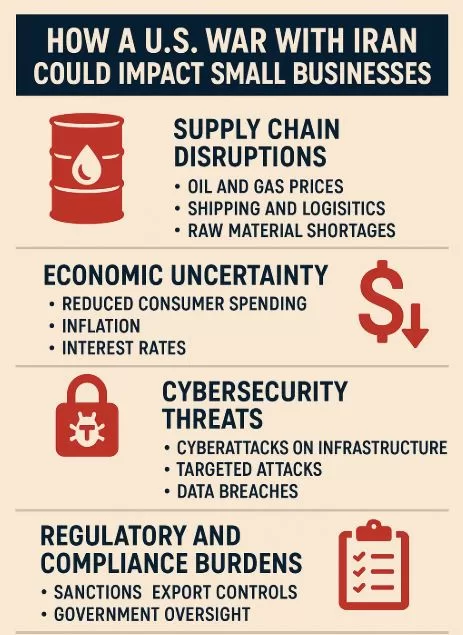
A potential armed conflict between the United States and Iran would have global implicationsโ€”but few discussions consider how such a war would reverberate through Americaโ€™s economic backbone: its small businesses. While multinational corporations might weather geopolitical storms through diversified assets and global reserves, small businesses, which account for 99.9% of all U.S. businesses and employ over 61 million Americans, are uniquely vulnerable. This article explores the multifaceted ways a U.S.-Iran war could affect small businesses, drawing on historical precedents, economic principles, and sector-specific analyses.


1. Historical and Political Context

To understand the potential impact, we must first explore the complex relationship between the U.S. and Iran. Tensions date back to the 1979 Iranian Revolution and the subsequent hostage crisis. In the decades since, the U.S. has imposed economic sanctions, engaged in cyber warfare, and supported regional rivals like Saudi Arabia and Israel. Iran, meanwhile, has expanded its influence in the Middle East via proxy groups and oil diplomacy.

Key flashpoints include:

  • The U.S. withdrawal from the Iran nuclear deal (JCPOA) in 2018.
  • The killing of Iranian General Qassem Soleimani in 2020.
  • Iranian attacks on commercial tankers and U.S. interests in the region.

These confrontations illustrate how quickly tensions can escalate. While no full-scale war has occurred, the threat of one is ever-present, especially with increasing Israeli-Iranian hostilities and growing regional instability.

 Armed conflict between the United States and Iran would have global implicationsโ€”but few discussions consider how such a war would reverberate through Americaโ€™s economic backbone: its small businesses.

2. Supply Chain Disruptions

a. Oil and Gas Prices

Iran sits on the Strait of Hormuz, through which about 20% of the world’s oil passes. A war could close or restrict this vital chokepoint, sending oil prices skyrocketing.

Impact on Small Businesses:

  • Transportation-dependent sectors (e.g., trucking, delivery, construction) would see cost spikes.
  • Retailers would face increased prices for shipped goods.
  • Restaurant owners and grocers could be affected by the rise in food distribution costs.

b. Shipping and Logistics

Beyond oil, global shipping routes could be affected. Insurance premiums on Middle Eastern shipping lanes would spike, driving up the cost of imported goods.

Affected Businesses:

  • Import/export companies.
  • E-commerce retailers dependent on foreign goods.
  • Wholesalers and manufacturers relying on overseas parts.

c. Raw Material Shortages

Iran is a major producer of petroleum-based products, metals, and agricultural goods. Even businesses not directly linked to Iran could face higher prices as global competition intensifies.


3. Economic Uncertainty and Consumer Confidence

War introduces a climate of fear and hesitation. Stock markets become volatile, inflation surges, and consumers begin tightening their belts.

a. Reduced Consumer Spending

Consumers may:

  • Delay large purchases.
  • Cut discretionary spending.
  • Focus on essentials only.

Impacted Businesses:

  • Restaurants and cafes.
  • Entertainment venues.
  • Non-essential retailers (boutiques, luxury shops, etc.).

b. Inflation and Interest Rates

With rising oil prices and strained supply chains, inflation could rise sharply. The Federal Reserve may raise interest rates to counter inflation, making credit more expensive.

Consequences for Small Businesses:

  • Increased cost of capital.
  • More expensive business loans and lines of credit.
  • Delayed expansion plans and hiring freezes.
 potential armed conflict between the United States and Iran would have global implicationsโ€”but few discussions consider how such a war would reverberate through Americaโ€™s economic backbone: its small businesses.

4. Labor Market Volatility

A military conflict may require mobilization or extended military presence overseas, directly affecting the labor pool.

a. Deployment of Reservists and Guardsmen

Thousands of reservistsโ€”many of whom are small business owners or employeesโ€”could be called to duty.

Business Impact:

  • Staffing shortages.
  • Disruption of operations in family-run or closely held companies.

b. Decreased Workforce Productivity

Stress, uncertainty, and rising costs can affect employee morale and productivity. Employees with family in the military may take leave or need additional support.


5. Cybersecurity Threats

Iran has invested heavily in cyber capabilities and has previously launched cyberattacks against U.S. banks, infrastructure, and private firms.

a. Cyberattacks on Infrastructure

Attacks on utilities or internet providers can disable core business functions. Power outages, data loss, and communication breakdowns could paralyze operations.

b. Targeted Attacks on Small Businesses

Smaller enterprises, often lacking sophisticated cybersecurity, are easier targets.

Common Threats:

  • Ransomware.
  • Phishing scams.
  • Data breaches.

Necessary Precautions:

  • Cyber insurance.
  • Multi-factor authentication.
  • Routine cybersecurity audits.

6. Regulatory and Compliance Burdens

a. Sanctions and Export Controls

War with Iran would result in a dramatic escalation of economic sanctions. Small businesses engaged in international trade must navigate new compliance rules.

Affected Sectors:

  • Aerospace suppliers.
  • Tech firms using dual-use components.
  • Financial services managing cross-border payments.

b. Government Oversight

In wartime, industries may see increased federal oversight or even temporary commandeering of supplies (e.g., defense-related manufacturing).

Examples:

  • Defense Production Act applications.
  • Mandatory reporting of inventory or raw materials.

7. Regional and Domestic Instability

a. Civil Unrest

Wartime conditions often lead to social and political unrest, particularly in urban areas. Protests, counter-protests, and acts of domestic terrorism may arise.

Business Concerns:

  • Property damage from riots.
  • Increased insurance costs.
  • Reduced foot traffic due to fear or curfews.

b. Anti-Muslim Sentiment and Discrimination

A conflict with Iran, a Muslim-majority nation, could lead to a rise in Islamophobia. Businesses owned by Muslim Americans may face discrimination or violence.

Actions to Consider:

  • Community outreach.
  • PR strategies promoting inclusivity.
  • Coordination with local law enforcement.

8. Industry-Specific Impacts

a. Energy Sector

Winners:

  • Domestic oil and gas producers.
  • Renewable energy companies as alternatives.

Losers:

  • Gas stations, transport companies, and any energy-intensive industries.

b. Manufacturing

Manufacturers dependent on petrochemicals or global supply chains may face surging costs and delays.

c. Agriculture

Increased fuel and fertilizer costs could hurt farmers, which trickles down to grocery stores and food distributors.

d. Retail and Hospitality

Retail sales and travel often decline during wartime, especially if consumer sentiment drops or terrorism fears rise.

Examples:

  • Drop in international tourism.
  • Delays in new store openings or renovations.
  • Losses due to canceled events and bookings.

9. Insurance and Legal Considerations

a. Business Interruption Insurance

Most standard policies do not cover war-related losses. Small business owners must review coverage details closely.

b. Legal Risks

If the government issues emergency orders (e.g., mandatory rationing, requisitions), businesses may be forced into difficult legal terrain.

Risk Mitigation:

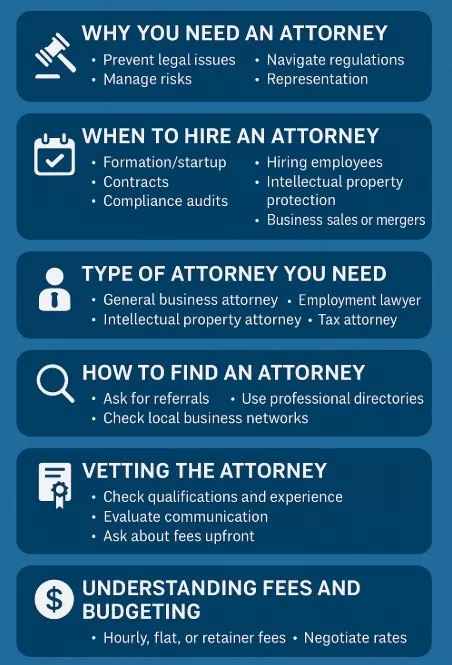
  • Legal counsel reviews of contracts and policies.
  • Clauses related to force majeure.

10. Government Relief and Response

a. Potential Relief Programs

If war leads to a recession or mass disruptions, federal aid could mirror COVID-era programs like:

  • Paycheck Protection Program (PPP).
  • Economic Injury Disaster Loans (EIDL).

But challenges include:

  • Delayed rollout.
  • Eligibility confusion.
  • Competitive application processes.

b. Procurement Opportunities

Defense spending rises during war. Small businesses in construction, logistics, security, and tech may win government contracts.

Tips:

  • Register with SAM.gov.
  • Understand FAR (Federal Acquisition Regulations).
  • Develop relationships with prime contractors.

11. Strategic Responses for Small Businesses

a. Financial Readiness

  • Build cash reserves.
  • Lock in fixed-rate loans now.
  • Diversify revenue streams.

b. Supply Chain Resilience

  • Source domestically when possible.
  • Build backup supplier relationships.
  • Use supply chain monitoring tools.

c. Cyber Preparedness

  • Implement cybersecurity best practices.
  • Train employees on phishing awareness.
  • Partner with managed IT providers.

d. Scenario Planning

  • Conduct risk assessments.
  • Develop contingency plans.
  • Review insurance and legal protections.

Iran War Conclusions

A U.S. war with Iran would usher in economic turbulence, energy shocks, regulatory upheaval, and societal uneaseโ€”each with direct and indirect consequences for small businesses. From logistics and fuel costs to consumer psychology and cybersecurity, the effects would be widespread and unpredictable.

While small businesses can’t control geopolitical events, they can control their preparedness. By staying informed, adapting quickly, and building resilient business models, small enterprises can navigate even the stormiest geopolitical waters.

Contact Factoring Specialist, Chris Lehnes

How Countries Go Broke – Ray Dalio – Summary and Analysis

Author: Ray Dalio, Author of Go Broke global macro investor with over 50 years of experience navigating debt cycles.

Purpose: To share a detailed study of “Big Debt Cycles” over the last 100-500 years, highlighting concerns about current economic trends and their potential implications.

I. Core Concepts of the Big Debt Cycle – How Countries Go Broke

Dalioโ€™s perspective on the economy is rooted in his experience as a global macro investor, not an economist. He sees markets and economies as aggregates of transactions, where “the price equals the amount of money/credit the buyer gives divided by the quantity of whatever the seller gives in that transaction.”

A. Money vs. Credit: How Countries Go Broke

  • Money: Defined as a medium of exchange and a “storehold of wealth that is widely accepted around the world.” Early-stage money is “hard,” meaning its supply cannot be easily increased (e.g., gold, silver, Bitcoin).
  • Credit: “Leaves a lingering obligation to pay, and it can be created by mutual agreement of any willing parties.” It produces buying power without necessarily creating money, allowing borrowers to spend more than they earn in the short term, but requiring them to spend less later for repayment.
  • The fundamental risk to money as a storehold of wealth is the ability to create a lot of it. “Imagine having the ability to create money; who wouldnโ€™t be tempted to do a lot of that? Those who can always are. That creates the Big Debt Cycle.”
How Countries Go Broke - Ray Dalio - Summary and Analysis

B. The Big Debt Cycle Explained: How Countries Go Broke

  • A “Ponzi scheme or musical chairs” where “investors holding an increasing amount of debt assets in the belief that they can convert them into money that will have buying power to get real things.”
  • It involves the buildup of “paper money” and debt assets/liabilities relative to “hard money” and real assets, and relative to the income required to service the debt.
  • Key difference between short-term and long-term debt cycles: The central bank’s ability to reverse them. Short-term cycles can be reversed with money and credit if there’s capacity for non-inflationary growth. Long-term cycles are more complex due to accumulated debt.
  • “Debt is currency and currency is debt.” If one dislikes the currency, they must also dislike the debt assets (e.g., bonds), considering their relative yields.

C. Five Major Players Driving Cycles: How Countries Go Broke

  1. Borrower-debtors: Private or government entities that borrow.
  2. Lender-creditors: Private or government entities that lend.
  3. Banks: Intermediaries that make profits by borrowing at lower costs and lending at higher returns, which “creates the debt/credit/money cycles, most importantly the unsustainable bubbles and big debt crises.” Crises occur when loans aren’t repaid or banks’ creditors demand more money than banks possess.
  4. Central Governments: Can take on more debt when the private sector cannot, as lender-creditors often view government debt as low-risk due to the central bank’s ability to print money.
  5. Government-controlled Central Banks: Can create money and credit in the country’s currency and influence its cost. “If debts are denominated in a countryโ€™s own currency, its central bank can and will ‘print’ the money to alleviate the debt crisis.” This reduces the value of the money.

II. Stages and Mechanisms of Debt Cycles – How Countries Go Broke

A. Early Stage: How Countries Go Broke

  • Money is “hard” or convertible into hard money at a fixed price.
  • Low outstanding “paper money” and debt.
  • Private and government debt and debt service ratios are low relative to incomes or liquid assets.

B. Progression and Crisis Points:

  • Debt/credit expansions require willingness from both borrower-debtors and lender-creditors, even though “what is good for one is quite often bad for the other.”
  • Central banks, through their creation of money and credit, determine total spending on goods, services, and investment assets. “As a result, goods, services, and financial assets tend to rise and decline together with the ebb and flow of money and credit.”
  • “Doom loop”: Upward pressure on interest rates weakens the economy, increases government borrowing needs, and creates a supply-and-demand mismatch in the bond market. This forces central banks to “print money” and buy debt (Quantitative Easing – QE).

C. Monetary Policy Phase 2 (MP2) – Fiat System with Debt Monetization:

  • Implemented when interest rates cannot be lowered further and private market demand for debt assets is insufficient.
  • Central banks create money/credit to buy investment assets (bonds, mortgages, equities).
  • “Good for financial asset prices, so it tends to disproportionately benefit those who have financial assets.”
  • Ineffective at delivering money to financially stressed individuals and not very targeted.
  • The US was in this phase from 2008-2020. This era saw “the amount of debt creation and the amount of debt monetization… greater than the one before it.”

D. Fiscal Adjustments and Their Outcomes: How Countries Go Broke

  • Painless cases: Often involved fiscal changes into strong domestic/global economies or coincided with easier financial conditions. Debt was typically not in significant hard currency. These cases showed “Growth vs Potential” largely positive.
  • Painful cases: Often involved significant hard currency debts and did not occur in strong economic environments. They resulted in lower growth, higher unemployment, and often rising bond yields.

III. Devaluation and Deleveraging

A. Gradual Devaluation in Fiat Systems: How Countries Go Broke

  • Unlike hard currency systems where devaluations are abrupt when governments break convertibility promises, in fiat systems, they “happen more gradually.”
  • Example: Bank of Japan’s aggressive debt monetization and low-interest rates led to the yen’s devaluation. Since 2013, Japanese government bond holders lost significantly against gold, USD debt, and domestic purchasing power.

B. Central Bank Interventions and Reserve Sales:

  • Central banks use interest rates, debt monetization, and money tightness to incentivize lending and holding debt assets.
  • In crises, central governments take on more debt because they are perceived as not defaulting due to the central bank’s ability to print money. The risk shifts to inflation and devalued money for lender-creditors.
  • Central bank balance sheets expand as money is printed to finance the government or roll over distressed debts.
  • The sale of reserves to defend the currency leads to a shift from hard assets (gold, FX reserves) to soft assets (claims on government/financials). This “contributes to the run on the currency… as investors see the central bankโ€™s resources to defend the currency rapidly decreasing.”
  • “The monetization of debts combined with the sale of reserves causes the ratio of the central bankโ€™s hard assets (reserves) to its liabilities (money) to decline, weakening the central bankโ€™s ability to defend the currency.” This is more pronounced in fixed-rate currency regimes.

C. Asset Performance During Devaluations:

  • “Government debts devalue relative to real assets like gold, stocks, and commodities.” Digital currencies like Bitcoin may also benefit.
  • On average, gold outperforms holding the local currency by roughly 60% from the start of devaluation until the currency bottoms.
  • Across various historical cases of currency devaluations and debt write-downs:
  • Gold (in Local FX): Average excess return of 81%. (e.g., Japan WWII: 282%, Weimar Germany: 245%)
  • Commodity Index (in Local FX): Average excess return of 55%.
  • Equities (in Local FX): Average excess return of 34%. (e.g., Weimar Germany: 754%)
  • Nominal Bonds: Average excess return of -5%.
  • Gold vs. Bonds (vol-matched) averaged 94% excess return. Equities, Gold, and Commodities vs. Bonds (vol-matched) averaged 71% excess return.

D. Deleveraging Process:

  • Often involves “inflationary depressions” where debt is devalued.
  • Governments raise reserves through asset sales.
  • Transition to a stable currency achieved by linking it to a hard currency/asset (e.g., gold) with “very tight money and a very high real interest rate,” penalizing borrower-debtors and rewarding lender-creditors, which stabilizes the debt/currency.

IV. Historical Context and Current State

A. Dalio’s Long-Term Perspective:

  • “There has always been, and I expect that there will always be, short-term cycles that over time add up to Big Debt Cycles.”
  • Average short-term cycle: ~6 years.
  • Average long-term Big Debt Cycle: ~80 years (plus or minus 25 years).
  • These cycles are influenced by and influence “the four other big forces” (not detailed in these excerpts, but likely refer to wealth gaps, internal conflict, external conflict/war, and a changing world order).

B. Lessons from Japan (Post-1990):

  • Japan built up huge debt funding a bubble that burst in 1989-90.
  • Despite a more than doubling of total government debt from 2001 to today (99% to 215% of GDP), “debt held by public is only up ~30%” because the Central Bank (BoJ) monetized enough debt.
  • Average interest rates on government debt fell significantly (2.3% in 2001 to 0.6% today), and interest paid by the government to the public is down over 50%.
  • Vulnerability: A 3% rise in real interest rates for Japan would lead to:
  • BoJ mark-to-market loss of ~30% of GDP on bond holdings, with serious negative cash flow (~-2.5% of GDP).
  • Government deficit widening from ~4% to ~8% of GDP over 10 years.
  • Government debt surpassing post-WWII peak, rising from 220% to 300% in 20 years.
  • Combined cash flow need of 5-6% of GDP per year, requiring debt issuance, money printing, or deficit reduction, “which would be the equivalent of another round of QE in terms of expansion of the money stock.” This would lead to “even greater write-downs in debt and devaluations of the currencyโ€”with the Japanese people becoming relatively poorer in the process.”

C. Current Big Debt Cycle (Focus on US):

  • The current global money/debt market has been a US dollar debt market since 1945.
  • Dalio believes we are “near the end of these orders and our current Big Cycle.”
  • “The real bond yield has averaged about 2% over the last 100 years.” Periods deviating from this norm lead to “excessively cheap or excessively expensive credit/debt” contributing to big swings.
  • In the “new MP2 era (2008-20),” there were two short-term cycles, each with “greater” debt creation and monetization.
  • US Trajectory Today: With US government debt at 100% of GDP and a 6% deficit, Dalio’s models show debt-to-income rising significantly over 10 years if interest rates exceed income growth. For example, with a constant primary deficit of 12% (CBO Projection), starting debt-to-income of 500% could reach 676% in 10 years with a 1% Nominal Interest Rate – Nominal Growth.

V. Indicators and Risks

A. Assessing Long-Term Debt Risks:

  • Key indicators include:
  • Government Assets vs. Debt (% Ctry GDP)
  • Government Debt (% Ctry GDP) and 10-year forward projection
  • Debt held by Central Bank, other domestic players, and abroad
  • Whether a significant share of debt is in hard currency
  • Government Interest (% Govt Revenue)
  • FX Reserves (% Ctry GDP)
  • Total Debt (% Ctry GDP)
  • Current Account 3Yr MA (% Ctry GDP)
  • Reserve Currency Status (World Trade, Debt, Equity, Central Bank Reserves in Ctry FX). Being a reserve currency is a “great risk mitigator.”

B. Dalio’s Risk Gauges for US:

  • Central Bank Long-Term Risk: Currently at -1.0z (lower is better, suggesting less vulnerable).
  • Central Bank Profitability: Current profitability at -0.2% of GDP, but if rates rise, projected at -0.4%.
  • Central Bank Balance Sheet: “Unbacked Money (% GDP)” is 71%, and “Reserves/Money” is -1.5z.
  • Currency as Storehold of Wealth Gauge: -2.0z.
  • Reserve FX/Financial Center: -3.3z.
  • History of Losses for Savers: 1.1z.
  • Long-Term Real Cash Return (Ann): -1.4%.
  • Long-Term Gold Return (Ann): 9.8%.

C. Policy Recommendation:

  • Dalio believes the Fed should be less extreme and volatile.
  • Goal: “Keep the long-term real interest rate relatively stable at a rate that balances the needs of both borrower-debtors and lender-creditors and doesnโ€™t contribute to the making of debt bubbles and busts.”
  • Target: Real Treasury bond yield around 2% (varying by ~1%), with a yield curve slope where short-term rate is ~1% below long-term rate, and short-term rate divided by long-term rate is ~70%.

Key Takeaways:

  • Debt cycles are inevitable and driven by the interplay of money, credit, and the actions of key players, particularly central banks and governments.
  • The ability to print fiat money allows governments to avoid outright default but leads to gradual currency devaluation and inflation.
  • Real assets like gold, commodities, and equities tend to outperform nominal bonds and local currency during periods of debt write-downs and currency devaluations.
  • Current global trends, particularly in major economies like the US and Japan, suggest the world is approaching the later stages of a Big Debt Cycle, characterized by increasing debt monetization and the potential for significant economic shifts.
  • Dalio emphasizes the importance of monitoring debt and financial indicators, while also acknowledging the influence of broader geopolitical and social forces.

Dalio’s How Countries Go Broke : The Big Cycle” – Study Guide

Quiz

Instructions: Answer each question in 2-3 sentences.

  1. Distinction between Short-Term and Long-Term Debt Cycles: What is the primary difference Ray Dalio identifies between short-term and long-term debt cycles concerning the central bank’s ability to manage them?
  2. “Hard” vs. “Paper” Money: Explain the concept of “hard” money in the early stages of a Big Debt Cycle and how it differs from “paper money.” Provide examples of hard money.
  3. Debt as a Ponzi Scheme/Musical Chairs: How does Dalio describe the progression of the Big Debt Cycle in terms of a “Ponzi scheme” or “musical chairs” for investors holding debt assets?
  4. Monetary Policy 2 (MP2): Describe Monetary Policy 2 (MP2) and its typical effects on financial asset prices and the distribution of money within an economy. When is it typically implemented?
  5. Credit vs. Money: How does Dalio differentiate credit from money in terms of their creation and their impact on buying power and future spending?
  6. Debt and Currency Equivalence: Explain Dalio’s perspective on why debt and currency are “essentially the same thing,” especially when considering their relative yields.
  7. Role of Banks in Debt Cycles: According to Dalio, how do private sector banks contribute to the creation of “unsustainable bubbles and big debt crises”?
  8. Central Bank’s Power with Own Currency Debt: What critical power does a central bank possess when a country’s debts are denominated in its own currency, and what is the inevitable consequence of exercising this power to alleviate a debt crisis?
  9. Impact of Interest Rates vs. Income Growth on Debt: Explain how the relationship between nominal interest rates and nominal income growth rates affects a country’s debt-to-income ratio.
  10. Hard vs. Floating Currency Devaluations: How do devaluations differ in “hard currency” regimes compared to “fiat monetary systems” (floating currencies) according to Dalio?

Answer Key – How Countries Go Broke

  1. Distinction between Short-Term and Long-Term Debt Cycles: The main difference lies in the central bank’s ability to reverse their contraction phases. Short-term cycles can be reversed with a significant injection of money and credit because the economy still has the capacity for non-inflationary growth. Long-term cycles, however, reach a point where this is no longer effective or sustainable.
  2. “Hard” vs. “Paper” Money: “Hard money” is a medium of exchange and a storehold of wealth that cannot be easily increased in supply, such as gold, silver, or more recently, Bitcoin. In contrast, “paper money” (fiat currency) is convertible into hard money at a fixed price in the early stages of a Big Debt Cycle, but its supply can be easily increased by those in power, leading to the cycle.
  3. Debt as a Ponzi Scheme/Musical Chairs: Dalio explains that the Big Debt Cycle works like a Ponzi scheme or musical chairs because investors accumulate an increasing amount of debt assets based on the belief they can convert them into money with real buying power. This becomes impossible as debt assets grow disproportionately large relative to real things, eventually leading to a scramble to sell debt for hard money or real assets.
  4. Monetary Policy 2 (MP2): MP2 is a type of monetary policy implemented by central banks where they use their ability to create money and credit to buy investment assets. It is employed when interest rates cannot be lowered further and private market demand for debt assets is insufficient. This policy tends to benefit financial asset prices and those who hold them, but it is not effective in directly delivering money to financially stressed individuals and is not very targeted.
  5. Credit vs. Money: Money is both a medium of exchange and a storehold of wealth, while credit is a promise to pay money that creates buying power without necessarily creating money itself. Credit allows borrowers to spend more than they earn in the short term, but creates a future obligation to spend less than they earn to repay debts, contributing to the cyclical nature of the system.
  6. Debt and Currency Equivalence: Dalio states that debt and currency are “essentially the same thing” because a debt asset is a promise to receive a specified amount of currency at a future date. Therefore, an investor’s dislike for one (e.g., a currency due to devaluation risk) should logically extend to the other (e.g., bonds denominated in that currency), especially when considering their relative yields and expected price changes.
  7. Role of Banks in Debt Cycles: Private sector banks contribute to unsustainable bubbles and big debt crises by lending out significantly more money than they possess, aiming to profit from the spread between borrowing and lending rates. Crises occur when loans are not repaid adequately, or when banks’ creditors demand more money back than the banks actually hold.
  8. Central Bank’s Power with Own Currency Debt: If a country’s debts are denominated in its own currency, its central bank can “print” money to alleviate a debt crisis. While this allows for better management of the crisis compared to situations where they cannot print money, the inevitable consequence is a reduction in the value of the money, leading to devaluation and inflation.
  9. Impact of Interest Rates vs. Income Growth on Debt: When nominal interest rates are higher than nominal income growth rates, existing debt grows relative to incomes because the debt compounds faster than incomes grow. This dynamic exacerbates the debt burden, making it harder for governments and individuals to service their debts.
  10. Hard vs. Floating Currency Devaluations: In hard currency regimes, devaluations tend to happen abruptly and all at once when a government breaks its promise to convert paper money into a hard money storehold of wealth (e.g., gold). In contrast, in fiat monetary systems (floating currencies), devaluations occur more gradually as central banks print money to manage debt, progressively reducing the currency’s value.

Essay Format Questions – How Countries Go Broke

  1. Dalio argues that the “Big Debt Cycle” functions like a “Ponzi scheme or musical chairs.” Elaborate on this analogy, explaining how the cycle builds up debt assets and liabilities, and what triggers the eventual realization that the system is unsustainable for investors.
  2. Analyze the role of central banks in managing both short-term and long-term debt cycles. Discuss the tools they employ (e.g., MP2, interest rates, debt monetization) and the inherent trade-offs, particularly concerning the value of the currency and the distribution of wealth.
  3. Compare and contrast the outcomes and dynamics of currency devaluations and debt write-downs in fixed exchange rate systems versus floating fiat currency systems, using examples or principles from the provided text to support your points.
  4. Discuss the interplay between “the five major types of players that drive money and debt cycles” as identified by Dalio. How do their differing motivations (e.g., borrower-debtors vs. lender-creditors) influence the expansion and contraction of credit, and what role do intermediaries like banks play in this process?
  5. Based on Dalio’s assessment, what are the key indicators and factors that contribute to a country’s long-term and short-term debt risks? Explain how being a reserve currency country might mitigate some of these risks, and what specific data points or “gauges” he considers important for evaluating central bank health.

Glossary of Key Terms

  • Big Debt Cycle: A long-term economic cycle, typically lasting about 80 years, give or take 25, characterized by the build-up of “paper money” and debt assets/liabilities relative to “hard money,” real assets, and income. It culminates in debt restructuring or monetization.
  • Central Bank: A government-controlled institution that can create money and credit in a country’s currency and influence the cost of money and credit. A key player in money and debt cycles.
  • Credit: A promise to pay money in the future. It produces buying power that didn’t exist before and creates a lingering obligation to repay, influencing future spending and prices.
  • Currency Forward: The exchange rate at which a currency can be bought or sold for delivery at a future date. Influenced by the difference in sovereign interest rates between two countries.
  • Debt Monetization (Quantitative Easing – QE): A monetary policy implemented by a central bank where it creates money and credit to buy investment assets, typically government bonds, to alleviate debt crises and stimulate the economy. Often referred to as MP2.
  • Devaluation: The official lowering of the value of a country’s currency relative to other currencies or a hard asset. In fiat systems, it tends to happen gradually through money printing; in hard currency systems, it can be abrupt.
  • Fiat Monetary System: A monetary system in which the currency is not backed by a physical commodity (like gold) but is declared legal tender by government decree. Central banks primarily use interest rates and debt monetization to manage it.
  • Fixed Exchange Rate (Pegged Currency): A currency regime where a country’s currency value is tied to the value of another single currency, a basket of currencies, or a commodity (like gold). These systems tend to experience more pronounced currency defenses and sharper devaluations when they break.
  • Floating Exchange Rate: A currency regime where a country’s currency value is determined by market forces (supply and demand) and is not pegged to another currency or commodity. Devaluations in these systems tend to be more gradual.
  • Hard Money: A medium of exchange and a storehold of wealth that cannot easily be increased in supply, such as gold, silver, or cryptocurrencies like Bitcoin.
  • Inflation-Indexed Bond Market (e.g., TIPS): A market for bonds whose principal or interest payments are adjusted for inflation. Dalio considers them important indicators and storeholds of wealth.
  • Interest Rate: The cost of borrowing money or the return on lending money. Central banks influence this to affect the economy.
  • Long-Term Debt Cycle: See Big Debt Cycle.
  • Monetary Policy 2 (MP2): See Debt Monetization (Quantitative Easing – QE).
  • Money: A medium of exchange and a storehold of wealth that is widely accepted.
  • Nominal Interest Rate: The stated interest rate without adjustment for inflation.
  • Nominal Income Growth Rate: The rate at which a country’s income grows without adjustment for inflation.
  • Ponzi Scheme/Musical Chairs: Analogies used by Dalio to describe the unsustainable nature of the Big Debt Cycle, where an increasing amount of debt assets are held based on faith in their convertibility to real buying power, which eventually proves impossible.
  • Quantitative Easing (QE): See Debt Monetization.
  • Real Interest Rate: The nominal interest rate adjusted for inflation, representing the true cost of borrowing or return on lending in terms of purchasing power. Dalio suggests a target of around 2%.
  • Reserve Currency: A currency widely accepted around the world as both a medium of exchange and a storehold of wealth. Being a reserve currency country offers a significant risk mitigator during debt cycles.
  • Short-Term Debt Cycle: A shorter economic cycle, typically around six years, give or take three, where central banks can effectively reverse contractions through monetary and credit injections. These cycles aggregate to form the Big Debt Cycle.
  • Storehold of Wealth: An asset that maintains its value over time, despite inflation or economic fluctuations. Gold, silver, and Bitcoin are cited as examples of “hard” storeholds of wealth.
  • Transaction: The most basic building block of markets and economies, where a buyer gives money (or credit) to a seller in exchange for a good, service, or financial asset. Prices are determined by the aggregate of these transactions.
  • Yield Curve: A line that plots the interest rates of bonds having equal credit quality but differing maturity dates. Dalio notes it is typically upward-sloping.

Contact Factoring Specialist, Chris Lehnes

How to Select an Attorney for Your Small Business

Selecting an Attorney

Starting and growing a small business involves wearing many hatsโ€”from marketer and sales manager to bookkeeper and HR director. But one role you should never try to fill yourself without the right expertise is that of legal counsel. The legal landscape for small businesses is complex, and mistakes can be costly. Whether you are forming a new business, drafting contracts, navigating labor laws, or facing litigation, having the right attorney can make or break your venture.

This comprehensive guide will walk you through everything you need to know about choosing a small business attorney, including when you need one, what kind of lawyer to look for, how to vet candidates, and how to build a long-term, cost-effective relationship that benefits your business at every stage.


Chapter 1: Why Every Small Business Needs an Attorney

1.1 Preventing Problems Before They Start

Most legal issues that cripple small businesses could have been prevented with timely advice from a competent attorney. From selecting the right business structure to crafting strong contracts and protecting intellectual property, proactive legal planning saves time and money.

1.2 Navigating Compliance and Regulation

Every industry has its own web of regulationsโ€”some federal, some state, and others local. An attorney helps you stay compliant with employment laws, environmental regulations, tax codes, and industry-specific rules.

1.3 Managing Risk

An experienced business attorney doesn’t just solve problemsโ€”they help you anticipate and reduce the legal risks that come with growth, hiring, expansion, and partnerships.

1.4 Representation in Disputes

If you’re ever suedโ€”or if you need to enforce your own rightsโ€”a lawyer ensures your interests are protected. Litigation is costly, and having a trusted attorney from the outset can significantly improve outcomes.


How to Select an Attorney for Your Small Business: A Comprehensive Guide

Chapter 2: When to Hire an Attorney

2.1 Formation and Startup Phase

When launching your business, youโ€™ll need legal help deciding whether to form a sole proprietorship, LLC, S-Corp, or C-Corp. Each has different implications for liability, taxation, and operational flexibility.

2.2 Drafting or Reviewing Contracts

Every vendor agreement, lease, partnership agreement, and employment contract your business enters into has legal implications. An attorney can draft, review, and negotiate these documents to your advantage.

2.3 Hiring Employees

Employment law is one of the trickiest areas for small businesses. A lawyer ensures your hiring practices, employee handbooks, and termination procedures comply with local and federal laws.

2.4 Intellectual Property Protection

If your business has a unique product, brand, or technology, legal protection through patents, trademarks, and copyrights is crucial.

2.5 Compliance Audits

As you grow, routine legal checkups ensure you’re not inadvertently breaking lawsโ€”especially in areas like taxes, zoning, data privacy, and ADA compliance.

2.6 Business Sales, Mergers, or Acquisitions

If youโ€™re buying another company, selling yours, or taking on investors, legal guidance is essential in structuring the deal, conducting due diligence, and drafting legal documents.

How to Select an Attorney for Your Small Business: A Comprehensive Guide

Chapter 3: What Type of Attorney Do You Need?

3.1 General Business Attorney

For most small businesses, a general business attorney is sufficient. They can advise on structure, contracts, compliance, and routine disputes.

3.2 Specialized Attorneys

Depending on your industry or situation, you may also need:

  • Employment lawyers โ€“ for HR issues
  • Intellectual property attorneys โ€“ for patents and trademarks
  • Tax attorneys โ€“ for complex tax strategies
  • Litigation attorneys โ€“ for lawsuits
  • Real estate attorneys โ€“ for lease or property issues
  • Franchise lawyers โ€“ if youโ€™re buying into or selling a franchise

3.3 Law Firms vs. Solo Practitioners

Larger law firms often offer a one-stop shop for various legal needs, but they may come with higher rates. Solo attorneys or small firms often provide more personalized service and flexibility for growing businesses.


Chapter 4: How to Find a Business Attorney

4.1 Start With Referrals

Ask other business owners, especially in your industry, who they use and recommend. Word-of-mouth remains one of the most reliable ways to find trustworthy professionals.

4.2 Use Professional Directories

Sites like Martindale-Hubbell, Avvo, and the American Bar Associationโ€™s directory allow you to search by specialty, location, and ratings.

4.3 Local Business Networks

Your Chamber of Commerce, local Small Business Development Center (SBDC), or networking groups often maintain lists of business-friendly attorneys.

4.4 Legal Incubator Programs

If you’re on a tight budget, check out local law school incubators or nonprofit programs that offer affordable legal help to startups and small businesses.


Chapter 5: How to Vet an Attorney

5.1 Check Qualifications and Experience

Ensure your candidate is licensed in your state and has significant experience working with businesses similar to yours. Ask:

  • How long have you been practicing business law?
  • Do you specialize in working with small businesses?
  • Have you handled issues like mine before?

5.2 Understand Their Approach

A good attorney explains the law in plain language and works collaboratively to solve problems. Avoid lawyers who talk down to you or seem focused only on billable hours.

5.3 Evaluate Communication

Timely communication is essential. Ask how the attorney typically communicates with clients, how quickly they respond, and whether theyโ€™ll be your main point of contact.

5.4 Ask About Fees Up Front

Transparent pricing is critical. Understand:

  • Hourly vs. flat fees
  • Retainer agreements
  • Billing increments (e.g., 6 minutes vs. 15 minutes)
  • What services are included (and excluded)

Chapter 6: Interviewing a Prospective Attorney

6.1 Prepare a List of Questions

During your first consultation, ask:

  • Have you worked with clients in my industry?
  • What legal issues do you foresee for my business?
  • How do you prefer to work with small business clients?
  • How do you structure your fees?

6.2 Red Flags to Watch For

Be cautious of attorneys who:

  • Guarantee specific outcomes
  • Rush you into agreements
  • Canโ€™t explain things clearly
  • Avoid questions about pricing or experience

6.3 Ask for References

Speak with other clients to get a sense of the attorneyโ€™s working style, reliability, and problem-solving skills.


Chapter 7: Understanding Legal Fees and Budgeting

7.1 Types of Billing Structures

  • Hourly Billing โ€“ Traditional model; costs can vary widely depending on complexity.
  • Flat Fees โ€“ Common for routine work like business formation or drafting contracts.
  • Retainers โ€“ An upfront payment that gives you ongoing access to legal services.
  • Contingency Fees โ€“ Rare in business law; typically used in litigation cases.

7.2 Negotiating Rates

Donโ€™t be afraid to ask about discounts for startups or small businesses, especially for ongoing work or bundled services.

7.3 Budgeting for Legal Services

Make legal fees a line item in your budget. Think of it as an insurance policy against future issues. Skimping on legal costs today can cost much more later.


Chapter 8: Building a Long-Term Relationship

8.1 Treat Your Attorney Like a Partner

Keep your attorney informed about major business decisions. The earlier theyโ€™re involved, the more they can help you avoid problems.

8.2 Maintain Clear Communication

Establish expectations around communication frequency, updates, and billing. Schedule regular check-ins, especially as your business grows.

8.3 Review and Update Legal Documents

Set an annual review schedule for contracts, policies, and compliance documents to ensure everything stays current with laws and regulations.


Chapter 9: Alternatives and Online Legal Services

9.1 When Online Platforms Make Sense

Services like LegalZoom or Rocket Lawyer can be useful for basic tasks like:

  • LLC formation
  • Basic contracts
  • Trademark filings

But they donโ€™t replace personalized legal advice for complex issues or disputes.

9.2 Knowing When to Upgrade

Once you hit certain growth milestonesโ€”employees, IP concerns, out-of-state businessโ€”youโ€™ll benefit from tailored legal guidance.


Chapter 10: Case Studies and Lessons Learned

10.1 Case Study: The Bakery That Didnโ€™t Trademark Its Brand

A local bakery opened to much fanfare but didnโ€™t file a trademark for its name. Two years later, a larger company expanded into their market with the same name and a registered trademark. The bakery had to rebrand, losing goodwill and incurring major costs.

Lesson: A small investment in legal help early on could have protected their identity.

10.2 Case Study: The Contractor Who Used Generic Contracts

A general contractor downloaded a free online contract template. It didnโ€™t include specific payment terms or state-specific clauses. A dispute with a client over payment escalated into a lawsuit he lost due to a weak contract.

Lesson: Contracts should be customized to your business, your jurisdiction, and your industry.

10.3 Case Study: The Retailer Who Delayed Hiring a Lawyer

A small e-commerce retailer hired employees but didnโ€™t set up proper employment policies. After a wrongful termination suit, they spent thousands settling a case that could have been prevented with the right legal foundation.

Lesson: Consult a lawyer before you expand or hire.


Conclusion

Choosing an attorney for your small business is not a one-size-fits-all decision. It requires careful thought, research, and a willingness to treat your legal counsel as an ongoing strategic partner rather than a last resort. With the right attorney, you not only protect yourself from costly mistakesโ€”you also empower your business to grow more confidently and sustainably.

Think of a good business lawyer not as an expense but as a vital investment in the long-term success of your venture.


Quick Checklist: How to Choose a Small Business Attorney

  • โœ… Determine your specific legal needs
  • โœ… Ask for referrals from other business owners
  • โœ… Research attorneys using online directories and reviews
  • โœ… Verify credentials and relevant experience
  • โœ… Interview several candidates
  • โœ… Ask clear questions about pricing
  • โœ… Start with a small project to test compatibility
  • โœ… Build a long-term working relationship
  • โœ… Schedule annual legal reviews

Contact Factoring Specialist, Chris Lehnes

When Will the Federal Reserve Raise Interest Rates?

When Will the Federal Reserve Raise Interest Rates?

An In-Depth Analysis of the Timing, Triggers, and Consequences of the Next Rate Hike


Introduction

The Federal Reserve stands at a critical crossroads in its long history of managing the U.S. economy. After a period of rapid interest rate hikes between 2022 and 2023 aimed at curbing inflation, the Fed has shifted to a more cautious and observant stance. Interest rates are at their highest levels in over two decades, and with inflation cooling and economic indicators giving mixed signals, the burning question among investors, economists, and policymakers alike is: When will the Federal Reserve raise interest rates againโ€”if at all?

This article aims to offer a comprehensive and speculative exploration of the likely timeline and conditions under which the Federal Reserve could initiate its next rate hike. We’ll analyze historical patterns, dissect macroeconomic indicators, evaluate the central bank’s public communications, and simulate various economic scenarios that could trigger a shift in policy.


The Current Monetary Policy Landscape

As of mid-2025, the federal funds target rate sits in a range of 5.25% to 5.50%, where it has remained since the Fedโ€™s last hike in 2023. This level, historically high by post-2008 standards, reflects the Fedโ€™s aggressive response to the inflation surge that followed the COVID-19 pandemic and related fiscal stimulus measures.

Since the pause in hikes, inflation has receded significantly, but it has not returned fully to the Fedโ€™s 2% target. The economy has shown signs of resilience, yet some indicatorsโ€”like slowing job growth and weakening manufacturingโ€”suggest fragility. Meanwhile, consumer spending remains surprisingly robust, adding to the complexity of the Fedโ€™s decision-making calculus.

To speculate credibly on the next rate hike, we must first understand the Fedโ€™s mandate, the tools at its disposal, and the historical context that informs its behavior.


The Fedโ€™s Dual Mandate and Policy Tools

The Federal Reserve has a dual mandate: to promote maximum employment and price stability. Balancing these two goals often involves trade-offs. When inflation is too high, the Fed raises interest rates to cool demand. When unemployment rises or economic growth falters, the Fed cuts rates to stimulate activity.

Interest rate decisions are made by the Federal Open Market Committee (FOMC), which meets eight times a year to assess economic conditions. The key instrument is the federal funds rateโ€”the interest rate at which banks lend reserves to each other overnight. By adjusting this rate, the Fed influences borrowing costs throughout the economy, affecting everything from mortgage rates to business investment decisions.

The Federal Reserve stands at a critical crossroads in its long history of managing the U.S. economy. After a period of rapid interest rate hikes between 2022 and 2023 aimed at curbing inflation, the Fed has shifted to a more cautious and observant stance. Interest rates are at their highest levels in over two decades, and with inflation cooling and economic indicators giving mixed signals, the burning question among investors, economists, and policymakers alike is: When will the Federal Reserve raise interest rates againโ€”if at all?

Historical Precedents: How the Fed Has Acted in Similar Environments

History is a valuable guide. In past cycles, the Fed has typically paused for 6 to 18 months after ending a hiking cycle before reversing course. For example:

  • 1980s Volcker Era: After taming double-digit inflation, the Fed paused, then resumed hikes when inflation showed signs of reacceleration.
  • 2006โ€“2008: The Fed paused in 2006 after raising rates from 1% to 5.25%, then began cutting in 2007 as the housing market collapsed.
  • 2015โ€“2018 Cycle: Rates were hiked gradually and paused in 2019 before being cut again in response to trade tensions and a slowing global economy.

These cases show that the Fed prefers to pause for an extended period before changing courseโ€”unless dramatic data forces its hand.


Speculative Scenario 1: A Surprise Inflation Resurgence

One possible trigger for a rate hike is a renewed surge in inflation. While inflation has cooled from its peak, it remains above the Fedโ€™s 2% target. Core inflation, particularly in services and housing, has proven sticky. Wage growth continues to outpace productivity, suggesting embedded price pressures.

If inflation, as measured by the Personal Consumption Expenditures (PCE) index, rises from the current 2.7% range back above 3% and remains elevated for multiple quarters, the Fed may be forced to act. In such a scenario, markets would likely price in another rate hike by late 2025 or early 2026.

Indicators to watch:

  • Monthly CPI and PCE reports
  • Wage growth (especially in services)
  • Commodity prices, particularly oil and food
  • Consumer inflation expectations

If these metrics rise and stay elevated, particularly in the absence of strong GDP growth, the Fed would likely consider at least one additional hike to maintain credibility.

Speculated Timing: Q1 2026
Likelihood: Moderate
Market reaction: Short-term bond yields rise, equity markets sell off, dollar strengthens.


Speculative Scenario 2: Global Economic Shocks

The Fedโ€™s policy is not shaped solely by domestic data. Global eventsโ€”like a commodity shock, geopolitical crisis, or surge in foreign inflationโ€”could impact U.S. inflation indirectly.

For example, if conflict in the Middle East disrupts oil supply, driving crude prices back above $120 per barrel, energy inflation could spread through the economy. Similarly, if China reopens more aggressively and global demand surges, prices for industrial commodities and goods may rise.

In such a scenario, even if U.S. growth remains moderate, the Fed may view inflationary pressure as externally driven but persistent enough to warrant another hike.

Speculated Timing: Q2 2026
Likelihood: Low to moderate
Market reaction: Volatile; inflation-linked assets outperform, defensive stocks gain favor.


Speculative Scenario 3: A Hawkish Turn in Fed Leadership

Monetary policy is shaped not just by data, but by people. A change in Fed leadership or FOMC composition could lead to a more hawkish bias.

If President Biden (or a potential Republican successor in 2025) appoints a more inflation-wary Fed Chair or if regional bank presidents rotate into voting roles with more hawkish views, the center of gravity at the Fed could shift. This internal politics aspect is often overlooked but can significantly influence rate path projections.

Statements by Fed officials in 2025 have shown a growing divide between doves who favor rate cuts and hawks who want to maintain a restrictive stance. A shift in balance could accelerate discussions of further tightening.

Speculated Timing: Dependent on leadership change, likely Q3 2025
Likelihood: Low
Market reaction: Surprise-driven; interest rate futures reprice dramatically.


Speculative Scenario 4: Reacceleration of the Economy

A fourth plausible scenario involves a reacceleration in GDP growth, driven by AI-led productivity gains, rising consumer demand, and robust corporate investment.

If unemployment falls below 3.5%, GDP prints exceed 3% annually, and corporate earnings outpace expectations, the Fed may begin to worry about overheating. Even in the absence of headline inflation, the Fed could hike to preemptively cool the economy.

This is akin to the late 1990s, when the Fed raised rates despite low inflation, out of concern for asset bubbles and financial stability.

Speculated Timing: Q4 2025
Likelihood: Moderate
Market reaction: Initially bullish (due to growth), then cautious as rates rise.


Counterbalancing Forces: Why the Fed Might Not Hike

While multiple scenarios justify a hike, there are also compelling reasons the Fed may avoid further tightening:

  1. Lag effects of past hikes: Monetary policy operates with lags of 12โ€“24 months. The current restrictive stance may still be filtering through the economy, and a premature hike could tip the U.S. into recession.
  2. Financial stability concerns: Higher rates strain bank balance sheets and raise risks in commercial real estate. The Fed may want to avoid destabilizing the financial system further.
  3. Global divergence: If other central banks, particularly the ECB or Bank of Japan, keep rates low or cut, the dollar could strengthen too much, hurting exports and tightening financial conditions without further hikes.
  4. Political pressure: In an election year (2026 midterms or a fresh presidential term), the Fed may avoid action that appears to favor or undermine political actors. While the Fed is independent, it is not immune to political realities.

Market Indicators and Fed Communication

Markets play a vital role in determining the Fedโ€™s path. Fed funds futures, 2-year Treasury yields, and inflation breakevens all reflect collective expectations of future policy.

As of June 2025, futures markets largely price in no hikes through 2025, with potential cuts starting mid-2026. However, these expectations are highly sensitive to data.

Fed communicationโ€”especially the Summary of Economic Projections (SEP) and the Chairโ€™s press conferencesโ€”will offer critical clues. If dot plots begin to show an upward drift in median rate forecasts, it could foreshadow renewed tightening.


Regional Disparities and Their Impact on Fed Thinking

Another layer in the analysis involves regional economic conditions. Inflation and labor market strength vary widely across the U.S. In some metro areas, housing inflation remains elevated; in others, joblessness is creeping up.

The Fedโ€™s regional presidents (from banks like the Dallas Fed, Atlanta Fed, etc.) incorporate local economic data into their policy stances. If more hawkish regions see inflation persistence, they could push the national conversation toward renewed hikes.


The Role of Forward Guidance

One hallmark of recent Fed policy is forward guidanceโ€”the effort to shape market expectations through careful messaging. Even if the Fed doesnโ€™t hike immediately, it may signal a willingness to do so, thereby achieving some tightening via higher long-term yields.

This โ€œjawboningโ€ technique allows the Fed to manage financial conditions without actually pulling the trigger on rates. If markets become too complacent, the Fed may talk tough to reintroduce discipline.


Fed Balance Sheet Policy: An Alternative Tool

If the Fed wants to tighten without raising rates, it could accelerate quantitative tightening (QT) by reducing its balance sheet more aggressively. Shrinking the Fedโ€™s holdings of Treasuries and mortgage-backed securities tightens liquidity and can raise long-term interest rates indirectly.

This could act as a substituteโ€”or precursorโ€”to rate hikes. Watching the Fedโ€™s QT pace can offer signals about its broader tightening intentions.


Summary of Speculative Timing Scenarios

ScenarioConditionsLikely TimingProbability
Inflation ResurgencePCE > 3%, sticky coreQ1 2026Moderate
Global ShockEnergy/commodity spikeQ2 2026Low to Moderate
Hawkish LeadershipFed Chair/FOMC shiftQ3 2025Low
Growth OverheatingGDP > 3%, UE < 3.5%Q4 2025Moderate
No HikeWeak data, fragilityNo hike in 2025โ€“2026High

Conclusion: A Delicate Balancing Act

In conclusion, while the Fed has paused its hiking cycle for now, the story is far from over. Economic surprises, global developments, political shifts, and changes in Fed personnel could all reintroduce rate hikes as a viable policy response.

The most plausible path forward involves continued vigilance, with the Fed maintaining its current stance through at least early 2026. However, should inflation persist or growth reaccelerate, one or two additional hikes cannot be ruled out.

Ultimately, the Federal Reserveโ€™s next move will hinge not on a single data point or event, but on the interplay of inflation dynamics, labor market strength, global risks, and political pressures. In an increasingly complex and interdependent world, monetary policy must remain both flexible and disciplined.

As we look ahead, the best guidance for market participants, business leaders, and households alike is to stay data-aware, anticipate uncertainty, and prepare for multiple outcomes. The Fed may have pausedโ€”but the era of monetary vigilance is far from over.

Contact Factoring Specialist, Chris Lehnes

Our Dollar, Your Problem – Kenneth Rogoff

Title: Our Dollar, Your Problem: A Deep Dive into Kenneth Rogoffโ€™s Insight on the Dollarโ€™s Dominance and Future

Introduction

In his sweeping narrative “Our Dollar, Your Problem: An Insider’s View of Seven Turbulent Decades of Global Finance, and the Road Ahead,” Kenneth Rogoff delivers a rare blend of historical context, insider perspective, and forward-looking analysis. His experience as a former chief economist of the International Monetary Fund and a Harvard economist grants him unique credibility to speak on the global role of the U.S. dollar, its ascent to dominance, its profound influence on the world economy, and the precarious road it now treads. This analysis aims to summarize the core themes of Rogoff’s book, dissect the economic principles that underpin his assertions, and evaluate the implications of his forecast for global finance.

Part I: The Historical Ascent of the Dollar

The story of the U.S. dollar is intrinsically tied to the evolution of the global financial system. Rogoff traces this arc beginning with the end of World War II, where the United States emerged not only militarily dominant but economically unscathed compared to its war-torn European and Asian allies. This set the stage for the Bretton Woods Agreement, a monetary framework wherein the dollar was pegged to gold, and other currencies were pegged to the dollar.

Through the Bretton Woods system, the U.S. dollar became the worldโ€™s de facto reserve currency. The system cemented the dollarโ€™s role as a stable intermediary, enabling trade and rebuilding efforts globally. Even when the gold standard was abandoned in the early 1970s, the dollar’s dominance persisted due to the relative strength and openness of U.S. financial markets, deep liquidity, and the unparalleled geopolitical influence of the United States.

Rogoff illustrates how this privilege, often termed the “exorbitant privilege,” allowed the United States to borrow in its own currency, maintain current account deficits for decades, and serve as a safe haven during times of crisis. Nations worldwide accumulated vast reserves of dollars, buying U.S. Treasury bonds and enabling low-cost borrowing for the U.S. government.

Our Dollar, Your Problem: A Deep Dive into Kenneth Rogoffโ€™s Insight on the Dollarโ€™s Dominance and Future

Part II: Characteristics of the Dollar System

Rogoff unpacks the mechanics that sustain the dollar’s supremacy. Central to this is the network effect: once a currency becomes the standard, it remains so because others use it. The dollar is used in international trade, global debt issuance, and central bank reserves. Even commodities like oil are priced predominantly in dollars.

This self-reinforcing loop benefits the United States by ensuring consistent demand for its currency. It also bestows indirect control over global finance, as U.S. policies reverberate through interconnected economies. However, Rogoff warns that this system creates dependencies. Emerging markets, for instance, must monitor U.S. interest rate decisions closely, as rate hikes can trigger capital flight and currency depreciation in dollar-indebted economies.

The dollar’s role has also made U.S. financial markets a magnet for foreign capital. The transparency, rule of law, and institutional stability of the United States make it a preferred destination for global investors. However, this attraction is not immutable, and Rogoff suggests that these pillars are increasingly under strain.

Part III: Contemporary Threats to Dollar Dominance

Rogoff highlights several emerging threats that, if unaddressed, could erode the dollar’s primacy. Chief among these is the deterioration of U.S. fiscal discipline. With federal debt levels now exceeding the size of the economy, questions loom about the long-term sustainability of U.S. government spending. High debt levels may lead to inflationary pressures, devaluation fears, and ultimately, a loss of faith in the dollar.

The increasing politicization of institutions like the Federal Reserve further threatens monetary policy credibility. When market participants perceive central banks as extensions of political will rather than independent arbiters of price stability, confidence in the currency they manage can wane.

Rogoff also critiques protectionist policies, trade wars, and the weaponization of financial instruments such as sanctions. While these tools may serve short-term strategic interests, they can drive other nations to seek alternatives to the dollar to avoid vulnerability to U.S. economic coercion.

Technology, too, poses a challenge. The emergence of digital currencies, central bank digital currencies (CBDCs), and decentralized finance (DeFi) platforms represent a paradigm shift. While none yet rival the dollar in scale or trust, Rogoff notes their rapid advancement and the willingness of major powers like China and the European Union to explore digital alternatives. If these efforts bear fruit, they could chip away at the dollar’s dominance over time.

Part IV: The Global Implications of a Declining Dollar

Rogoff dedicates considerable attention to the global consequences of a retreating dollar. The dollarโ€™s decline, he argues, wouldnโ€™t be an isolated U.S. issue but a systemic transformation with worldwide ripple effects.

Emerging markets, which often denominate debt in dollars, would face increased risk if dollar liquidity dried up or became more expensive. These economies could face balance-of-payment crises, stunted growth, and fiscal instability.

More broadly, a multipolar currency world could lead to fragmentation and inefficiencies in the global financial system. With no clear successor to the dollar, a vacuum could emerge, leading to heightened volatility, reduced cross-border investment, and impaired trade. Rogoff suggests this scenario could mirror the interwar periodโ€”a time of great currency instability that preceded World War II.

In this environment, global institutions like the International Monetary Fund and the World Bank would struggle to maintain order. Without a single anchor currency, coordinating policy responses to crises would be far more difficult. Additionally, capital markets might fracture, with regional blocs forming around dominant currencies like the euro, yuan, or a future digital currency.

Part V: The Case for Reform and Renewal

While Rogoff paints a sobering picture of the challenges facing the dollar, he also outlines a path forward. He argues that the dollarโ€™s dominance can be preserved if the United States acts with foresight and discipline.

Foremost is the need for fiscal responsibility. Reducing budget deficits and stabilizing the national debt would restore confidence in the sustainability of U.S. economic policy. This entails politically difficult choicesโ€”tax increases, entitlement reform, and curbing discretionary spendingโ€”but Rogoff insists the alternative is far worse.

Equally important is maintaining the independence and credibility of the Federal Reserve. A politically compromised central bank cannot provide the monetary stability required to underpin a global reserve currency. Rogoff emphasizes the importance of insulating the Fed from partisan pressures and reaffirming its commitment to low inflation and full employment.

Rogoff also urges the United States to embrace financial innovation. Rather than resisting digital currencies, the U.S. should lead in developing a dollar-based CBDC. This would ensure that the dollar remains relevant in a digitized global economy and preempt efforts by rival states to dominate new financial architectures.

Finally, Rogoff calls for renewed global cooperation. The dollar-centered system has thrived not solely due to U.S. actions but through multilateralism. Agreements on capital flows, trade rules, and financial regulation have helped sustain global stability. Reviving international institutions and engaging constructively with allies would strengthen the legitimacy of the dollar’s role.

Part VI: Forecasting the Road Ahead

In the final portion of his book, Rogoff provides several scenarios for the future of the dollar. The best-case scenario involves gradual reform, where the U.S. regains fiscal discipline, embraces innovation, and renews its international commitments. In this case, the dollar remains dominant, albeit in a more competitive landscape.

A more troubling scenario involves fiscal drift, political instability, and technological stagnation. In such a world, the dollar slowly loses ground to rivals. Global investors diversify away from dollar-denominated assets, and the dollar’s share of reserves declines incrementally. This outcome would not be catastrophic, but it would diminish U.S. influence and raise borrowing costs.

The worst-case scenario is a sudden loss of confidence in the dollar. Triggered perhaps by a debt crisis or geopolitical shock, global markets could flee the dollar en masse, leading to financial turmoil. Rogoff considers this unlikely but not impossible, particularly if policymakers ignore warning signs.

Conclusion: A Call to Action

“Our Dollar, Your Problem” is both a history lesson and a policy manifesto. Rogoff argues persuasively that while the dollar has enjoyed a unique status in global finance, this position is not a birthright. It has been earned through decades of sound policy, institutional credibility, and geopolitical leadership.

However, maintaining this status requires vigilance. The threats Rogoff outlinesโ€”fiscal recklessness, political interference, protectionism, and technological complacencyโ€”are real and growing. The consequences of inaction could be severe, not just for the United States but for the entire global economy.

Rogoffโ€™s vision is ultimately one of cautious optimism. With the right mix of discipline, innovation, and diplomacy, the dollar can continue to serve as the bedrock of global finance. But the clock is ticking, and the window for action is narrowing. Policymakers, economists, and citizens alike must engage with the questions Rogoff raises, for the future of the dollar is not just Americaโ€™s concernโ€”it is, indeed, the world’s problem.

Kenneth Rogoff’s book,ย “Our Dollar, Your Problem: An Insider’s View of Seven Turbulent Decades of Global Finance, and the Road Ahead.”ย The book, published in 2025,ย explores the historical rise and current challenges facing the U.S. dollar’s global dominance. Rogoff, a Harvard economics professor and former IMF chief economist,ย argues that the dollar’s pre-eminence was not inevitable and its future stability is uncertain. Heย examines threats from cryptocurrencies, the Chinese yuan, and political instability, suggesting that America’s “exorbitant privilege” can lead to financial instability both domestically and internationally. The text highlights that theย “Pax Dollar” era may not last indefinitely, partly due to global frustration with the current system.

I. Executive Summary – Our Dollar, Your Problem

“Our Dollar, Your Problem: An Insider’s View of Seven Turbulent Decades of Global Finance, and the Road Ahead” by Kenneth Rogoff, a leading economist and former IMF chief economist, offers a timely and critical examination of the U.S. dollar’s global pre-eminence. The book challenges the assumption that the dollar’s dominance was inevitable or is guaranteed to last indefinitely. Rogoff argues that while the dollar’s rise was remarkable and involved significant “good luck,” it now faces substantial threats from emerging currencies (crypto, Chinese yuan), changing economic landscapes (end of low inflation/interest rates), and geopolitical shifts (political instability, fracturing dollar bloc). The central theme is that the “Pax Dollar era” is not eternal, warning against American overconfidence and the potential for self-inflicted errors that could lead to financial instability both domestically and abroad.

II. Key Themes and Important Ideas

A. The Contingent Nature of Dollar Dominance

  • Not Guaranteed: A core argument is that “the greenback’s pre-eminence was never guaranteed and might plausibly be overturned.” This directly counters a common perception of the dollar’s unassailable position.
  • Role of “Good Luck”: Rogoff suggests that the dollar’s rise to its “lofty pinnacle” was not solely due to inherent American strength but also benefited from “a certain amount of good luck.” This perspective highlights the fragility of its current status.
  • Historical Victories: The book details how the dollar “beat out the Japanese yen, the Soviet ruble, and the euro,” showcasing its successful navigation through past challenges, but also implying that new contenders will emerge.

B. Emerging Threats to Dollar Hegemony

  • New Currency Challengers: Rogoff identifies “crypto and the Chinese yuan” as significant threats to the dollar’s supremacy. This points to a shift from traditional national currencies as the sole competitors.
  • Changing Economic Fundamentals: The book signals “the end of reliably low inflation and interest rates” as a critical challenge. This suggests that the economic environment that facilitated dollar dominance is evolving, potentially eroding its advantages.
  • Geopolitical Instability: “Political instability, and the fracturing of the dollar bloc” are cited as factors challenging the dollar’s future. This highlights how geopolitical shifts and dissatisfaction with the current system can undermine its foundation.

C. The Risks of Overconfidence and “Exorbitant Privilege”

  • Pax Dollar Not Indefinite: A crucial warning is that “Americans cannot take for granted that the Pax Dollar era will last indefinitely.” This directly challenges the complacent view that the dollar’s status is immutable.
  • Global Frustration: Rogoff notes that “many countries are deeply frustrated with the system.” This external discontent suggests a growing appetite for alternatives or a desire to move away from dollar dependence.
  • Unforced Errors: The book warns that “overconfidence and arrogance can lead to unforced errors.” This implies that America’s own actions, driven by a belief in its unchallenged power, could hasten the dollar’s decline.
  • Domestic and International Instability: Rogoff argues that America’s “outsized power and exorbitant privilege can spur financial instability–not just abroad but also at home.” This links the dollar’s international dominance to potential domestic economic vulnerabilities.

III. Author’s Background and Credibility

  • Kenneth Rogoff: Maurits C. Boas Professor of Economics at Harvard University.
  • Former International Monetary Fund (IMF) Chief Economist: This experience provides an “insider’s view” and lends significant credibility to his analysis of global finance and policy.
  • Author of “This Time Is Different”: Co-author of a New York Times bestseller, demonstrating his track record in influential economic literature.
  • Recognized Authority: Described as “one of the world’s foremost observers on the global economy.”

IV. Significance and Timeliness

  • “Could hardly be more timely”: The Economist highlights the immediate relevance of the book’s central argument regarding the potential overturning of the dollar’s pre-eminence.
  • Recommended by Financial Times: Listed as “What to Read in 2025,” indicating its anticipated importance in economic discourse.
  • Addresses Current Concerns: The book tackles contemporary issues like the rise of crypto and the yuan, global inflation, and geopolitical fragmentation, making its insights highly pertinent to current policy discussions.

Understanding “Our Dollar, Your Problem”

Study Guide

This study guide is designed to help you review and deepen your understanding of Kenneth Rogoff’s “Our Dollar, Your Problem: An Insider’s View of Seven Turbulent Decades of Global Finance, and the Road Ahead.”

Key Themes and Arguments:Our Dollar, Your Problemย 

  • The Dollar’s Pre-eminence is Not Guaranteed: The central argument is that the U.S. dollar’s current dominant position was not inevitable and its future stability is uncertain.
  • Historical Context and “Good Luck”: Rogoff emphasizes that the dollar’s rise was partly due to favorable circumstances and its ability to outperform rival currencies like the Japanese yen, Soviet ruble, and the euro.
  • Current Challenges to Dollar Dominance: The book identifies several contemporary threats, including cryptocurrencies, the Chinese yuan, the end of reliably low inflation and interest rates, political instability, and the fracturing of the “dollar bloc.”
  • “Pax Dollar” and its Fragility: The concept of the “Pax Dollar” era (a period of relative global financial stability under U.S. dollar dominance) is explored, with Rogoff arguing that it may not last indefinitely.
  • Consequences of Overconfidence and “Exorbitant Privilege”: The book highlights how American overconfidence and the “outsized power” and “exorbitant privilege” associated with the dollar’s status can lead to financial instability both domestically and globally.
  • Insider’s Perspective: Rogoff draws on his own experiences, including interactions with policymakers and world leaders, to provide an “insider’s view” of global finance.

Author’s Background and Expertise:

  • Kenneth Rogoff: Maurits C. Boas Professor of Economics at Harvard University and former International Monetary Fund (IMF) chief economist.
  • Renowned Economist: Recognized as one of the world’s foremost observers on the global economy.
  • Co-author of “This Time Is Different”: A New York Times bestselling book, indicating his established credibility in economic literature.

Significance and Reception:

  • Timely Argument: The Economist praises the book’s central argument as “timely,” given current global financial dynamics.
  • Recommended Reading: Recommended by Financial Times as “What to Read in 2025,” suggesting its anticipated importance and influence.
  • National Bestseller: Indicates broad appeal and recognition of its insights.

Quiz for Our Dollar, Your Problemย 

Instructions: Answer each question in 2-3 sentences.

  1. What is the central argument of Kenneth Rogoff’s book, “Our Dollar, Your Problem”?
  2. According to Rogoff, what role did “good luck” play in the U.S. dollar’s ascent to its current prominent position?
  3. Name two major rival currencies that the U.S. dollar “beat out” on its path to global pre-eminence.
  4. Identify two contemporary challenges that Rogoff suggests could threaten the dollar’s future stability.
  5. What does Rogoff imply by the term “Pax Dollar” and why does he suggest it might not last?
  6. How does Rogoff’s past experience contribute to the unique perspective offered in his book?
  7. What is the potential downside of America’s “outsized power and exorbitant privilege” as described by Rogoff?
  8. How have respected publications like The Economist and Financial Times received “Our Dollar, Your Problem”?
  9. Beyond external threats, what internal factors does Rogoff suggest could lead to the dollar’s decline?
  10. What is Kenneth Rogoff’s current academic affiliation and his prior role in a major international financial institution?

Answer Key for Our Dollar, Your Problemย 

  1. The central argument of “Our Dollar, Your Problem” is that the U.S. dollar’s pre-eminence was never guaranteed, and its future stability is far from assured, suggesting it could plausibly be overturned.
  2. Rogoff argues that the dollar might not have reached its current lofty position without a certain amount of “good luck,” implying favorable circumstances contributed to its historical rise.
  3. The U.S. dollar “beat out” the Japanese yen and the Soviet ruble (also the euro) on its path to global pre-eminence.
  4. Two contemporary challenges threatening the dollar’s stability are the rise of cryptocurrencies and the Chinese yuan, as well as the end of reliably low inflation and interest rates.
  5. “Pax Dollar” refers to an era of global financial stability largely underpinned by the U.S. dollar’s dominance. Rogoff suggests it might not last due to frustration from other countries and potential American overconfidence.
  6. Rogoff’s past experiences, including interactions with policymakers and world leaders, provide an “insider’s view” that animates his exploration of global finance and offers unique insights.
  7. America’s “outsized power and exorbitant privilege” can spur financial instability not only abroad but also within the United States, as excessive confidence can lead to errors.
  8. The Economist found the book’s central argument “timely,” and Financial Times recommended it as “What to Read in 2025,” indicating strong positive reception.
  9. Rogoff suggests that American overconfidence and arrogance can lead to “unforced errors,” contributing to financial instability and potentially undermining the dollar’s position.
  10. Kenneth Rogoff is currently the Maurits C. Boas Professor of Economics at Harvard University, and he previously served as the International Monetary Fund chief economist.

Essay Format Questions for Our Dollar, Your Problemย 

  1. Analyze the various factors, both historical and contemporary, that Rogoff attributes to the U.S. dollar’s rise to pre-eminence and the current challenges it faces. Discuss whether he places more emphasis on external competition or internal vulnerabilities.
  2. Examine the concept of “Pax Dollar” as presented by Rogoff. What are its defining characteristics, and why does Rogoff argue that this era may not last indefinitely?
  3. Discuss how Kenneth Rogoff’s background and experiences as an economist and former IMF chief economist contribute to the unique perspective and credibility of “Our Dollar, Your Problem.”
  4. Rogoff suggests that America’s “outsized power and exorbitant privilege” can lead to financial instability. Elaborate on this argument, explaining how such power might create problems both abroad and at home.
  5. Compare and contrast Rogoff’s view on the U.S. dollar’s future stability with a hypothetical optimistic view. What are the key arguments for and against the dollar retaining its dominant position, based on Rogoff’s insights?

Glossary of Key Terms in Our Dollar, Your Problemย 

  • Dollar Bloc: Refers to a group of countries or economies that are heavily influenced by or peg their currencies to the U.S. dollar, often relying on it for trade and financial stability.
  • Exorbitant Privilege: A term used to describe the unique economic and financial advantages the United States enjoys due to the U.S. dollar’s status as the world’s primary reserve currency.
  • Global Finance: The worldwide system of financial markets, institutions, and transactions, encompassing international trade, investment, and currency exchange.
  • Greenback: A common informal term for the U.S. dollar, originating from the color of its banknotes.
  • International Monetary Fund (IMF): An international organization of 190 countries, working to foster global monetary cooperation, secure financial stability, facilitate international trade, promote high employment and sustainable economic growth, and reduce poverty around the world.
  • Pax Dollar: A term analogous to “Pax Romana” or “Pax Britannica,” referring to an era of relative global financial stability and order under the dominance of the U.S. dollar.
  • Pre-eminence (of the Dollar): The superior or leading position of the U.S. dollar as the most widely used and accepted currency for international trade, finance, and as a reserve currency.
  • Reserve Currency: A large quantity of foreign currency held by central banks or monetary authorities as a store of value, often used to settle international debts or influence exchange rates. The U.S. dollar is the primary global reserve currency.

Contact Factoring Specialist, Chris Lehnes

Trump Tariffs Will Drag Down Global Economy

Latest OECD report states Trump Tariffs Will Drag Down Global Economy

The global economy stands at a critical juncture, and few forces have been as disruptive to recent economic stability as the imposition of sweeping tariffs by the Trump administration. As trade tensions escalate and markets adjust to the uncertainty, the Organization for Economic Cooperation and Development (OECD) has provided a sobering assessment of the economic outlook. Its most recent forecasts paint a picture of slowing growth, rising inflation, and waning consumer and business confidence. These effects are particularly acute in the United States and its closest trading partners, but the reverberations are felt globally.

This article examines the OECD’s latest outlook, exploring in detail how the Trump tariffs are affecting not only U.S. economic performance but also the broader global landscape. In doing so, it considers multiple dimensions of economic health, including GDP growth, inflation, employment, investment flows, and international trade dynamics.

A Shift Toward Protectionism with Tariffs

The Trump administration’s trade strategy marked a clear departure from decades of globalization and liberalized trade. Tariffs were framed as a means to protect American manufacturing, reduce trade deficits, and punish trading partners perceived to be engaging in unfair practices. The scope of these tariffs widened progressively, affecting steel, aluminum, electronics, textiles, autos, and more. In time, nearly all major U.S. trading partners were impacted, including China, the European Union, Canada, and Mexico.

What began as targeted tariffs quickly evolved into a broader trade confrontation, particularly with China. This escalation created significant distortions in global trade flows, forcing companies to reorganize supply chains and re-evaluate cross-border investments. These adjustments did not occur without cost.

Trump Tariffs Will Drag Down Global Economy

Global Growth Slows due to tariffs

The most visible consequence of this new trade regime has been a sharp deceleration in global economic growth. Prior to the tariffs, global GDP was growing at a healthy pace, buoyed by rising demand, low interest rates, and expanding trade. However, in the aftermath of the tariffs, momentum has faltered. The OECD has lowered its growth forecasts for major economies across the board.

Many advanced economies are now projected to expand at a pace well below their long-term averages. Emerging markets, typically drivers of global growth, are also feeling the pinch, as they are highly sensitive to changes in global demand and commodity prices. The uncertainty generated by protectionist policies has caused companies to delay investments, curb hiring, and reduce output.

The U.S. Economy: Growth Dampened by Its Own Policies on tariffs

Ironically, the country that initiated the trade confrontationโ€” the United Statesโ€” is now among the hardest hit. The immediate impact of tariffs has been felt in consumer prices and business costs. With import duties increasing the price of foreign goods, businesses have faced higher input costs, particularly those reliant on complex global supply chains.

Manufacturers, especially in sectors like automotive, electronics, and machinery, have had to either absorb these higher costs or pass them on to consumers. This has triggered an uptick in inflation, even as wage growth and productivity gains remain modest. Consumer spending, a major driver of U.S. GDP, has started to show signs of fatigue.

Moreover, the uncertainty surrounding trade policy has led to a noticeable decline in private investment. Companies are reluctant to commit capital when future market access is uncertain or when tariffs could suddenly reshape competitive dynamics. This erosion of business confidence is directly undermining one of the traditional engines of U.S. economic growth.

Inflation Pressures Build due to tariffs

As tariffs raise the prices of imported goods, inflationary pressures are intensifying. While inflation can sometimes be a sign of economic strength, in this context it is more indicative of cost-push rather than demand-pull dynamics. Prices are rising not because of booming demand, but because of higher costs embedded in the supply chain.

The burden of these price increases falls disproportionately on consumers and small businesses. Lower-income households, which spend a larger share of their income on goods subject to tariffs, are particularly vulnerable. Similarly, small and medium-sized enterprises, which lack the pricing power and supply chain flexibility of larger firms, are experiencing severe financial strain.

Rising inflation also complicates monetary policy. Central banks, already constrained by low interest rates, face a dilemma: tightening policy to rein in inflation could further stifle growth, while maintaining loose conditions might entrench inflation expectations.

Investment Stalls

Uncertainty is the enemy of investment, and trade policy under the Trump administration has become a textbook example of unpredictability. The back-and-forth nature of trade negotiations, combined with the abrupt announcement of new tariffs, has left many firms hesitant to make long-term commitments.

Foreign direct investment into the U.S. has slowed, and American firms are increasingly looking to offshore operations in more stable regulatory environments. The ripple effects are evident in capital expenditure reports and survey-based measures of business sentiment, both of which show a marked decline.

In particular, industries that rely on complex global value chains are under pressure. These include high-tech manufacturing, aerospace, and consumer electronics. As costs rise and policy uncertainty persists, many of these firms are deferring or canceling expansion plans.

Impact on Employment from tariffs

The labor market has also begun to show signs of stress. While overall unemployment remains low by historical standards, job growth has moderated significantly. Sectors exposed to international trade, such as manufacturing and agriculture, have seen layoffs and reduced hours.

Farmers have been among the most vocal critics of the tariffs. Retaliatory measures by other countries have targeted U.S. agricultural exports, including soybeans, pork, and dairy products. This has led to a glut in domestic supply, falling prices, and rising financial distress in rural communities.

Moreover, the expected resurgence in domestic manufacturing employment has not materialized. While some firms have expanded operations, these gains have been modest and insufficient to offset losses in other areas. Many manufacturing jobs today require advanced skills and capital-intensive facilities, limiting the potential for large-scale employment gains.

Global Supply Chains Disrupted

Modern manufacturing is built on intricate supply chains that span multiple countries. Tariffs disrupt these networks by raising costs, increasing delays, and complicating logistics. In response, many companies are reconfiguring their sourcing strategies.

Some are seeking alternative suppliers in countries not affected by tariffs, while others are investing in new facilities closer to end markets. However, such adjustments are time-consuming and expensive. The short-term effect is reduced efficiency and higher costs, which are eventually passed on to consumers.

These disruptions are particularly problematic for industries that depend on just-in-time delivery and highly coordinated production processes. Automakers, for example, often rely on components manufactured in multiple countries. Tariffs on any part of the chain can compromise the entire system.

Spillover Effects on Trading Partners

The economic fallout from U.S. tariffs is not confined to American shores. Countries closely tied to the U.S. economy are experiencing significant secondary effects. Canada and Mexico, for example, are contending with both direct tariffs and the broader uncertainty created by fluctuating trade policy.

Export-oriented economies in Asia and Europe have also been affected. Lower demand from the U.S., combined with rising input costs, has slowed industrial output and exports. In some cases, retaliatory tariffs have further eroded market access for these countries’ producers.

Emerging markets face a dual challenge. On one hand, they suffer from reduced export opportunities; on the other, they face capital outflows as investors seek the relative safety of advanced economies. This has led to currency depreciation, inflation, and tighter monetary conditions in many developing countries.

Consumer Confidence Weakens

Tariffs may be abstract policy tools for policymakers, but their effects are very real for consumers. As prices rise and news of trade disputes dominates headlines, consumer sentiment has declined. Surveys indicate growing pessimism about future economic conditions, job security, and the affordability of essential goods.

This erosion in consumer confidence is worrisome, as it can feed into a self-reinforcing cycle. When consumers cut back on spending in anticipation of tougher times, demand weakens further, leading to slower growth and potentially higher unemployment.

Retailers are already reporting slower foot traffic and reduced sales in certain categories, especially those heavily dependent on imported goods. Discount chains and e-commerce platforms are faring better, but the overall retail environment has become more challenging.

Policy Uncertainty as a Drag on Growth

Beyond the immediate effects of tariffs, the broader issue of policy uncertainty is exerting a powerful drag on economic performance. Businesses operate best when rules are clear and stable. The abrupt shifts in trade policy, often announced via social media or in press conferences without prior consultation, have created a volatile environment.

This volatility not only affects investment and hiring decisions but also undermines global confidence in the reliability of the U.S. as a trading partner. Some countries are responding by pursuing trade agreements that exclude the United States, thereby reducing its influence in setting global economic rules.

Moreover, the politicization of trade policy has made it more difficult to reach bipartisan consensus on future directions. This increases the risk that trade tensions will persist, even as administrations change.

Long-Term Structural Implications

While some of the effects of tariffs are short-term and cyclical, others have longer-lasting implications. The erosion of multilateral trade institutions, the reorientation of supply chains, and the shift in global investment patterns all represent structural changes.

These shifts could lead to a more fragmented global economy, characterized by regional trading blocs and reduced efficiency. For the United States, this may mean diminished leadership in global economic governance and reduced access to emerging markets.

Domestically, the shift away from open markets may entrench inefficiencies and reduce the incentive for innovation. While some industries may benefit from temporary protection, the lack of competitive pressure can lead to complacency and stagnation.

Conclusion: Charting a Path Forward

The OECD’s latest outlook makes it clear that the economic costs of protectionism are mounting. The promise of reviving domestic manufacturing and reducing trade deficits has, so far, not materialized in a meaningful or sustainable way. Instead, the data shows slower growth, higher inflation, weaker investment, and declining consumer and business confidence.

To reverse these trends, policymakers will need to rethink their approach to trade. This means re-engaging with international partners, restoring faith in multilateral institutions, and crafting policies that support both competitiveness and inclusivity. Trade policy should be informed by data, guided by long-term strategy, and executed with transparency.

For businesses, the lesson is clear: agility and adaptability are more important than ever. Firms that can navigate complexity, diversify their markets, and invest in innovation will be best positioned to thrive in an uncertain world.

Ultimately, the path forward will require cooperation, not confrontation. In a deeply interconnected global economy, prosperity is best achieved not by building walls, but by building bridges.

Contact Factoring Specialist, Chris Lehnes


Key Ideas and Facts:

1. A Shift Towards Protectionism and Its Broad Scope:

  • The Trump administration’s trade strategy marked a significant departure from decades of globalized and liberalized trade.
  • Tariffs were implemented with the stated goals of protecting American manufacturing, reducing trade deficits, and punishing perceived unfair trading practices.
  • The scope of these tariffs widened progressively, impacting “steel, aluminum, electronics, textiles, autos, and more,” eventually affecting “nearly all major U.S. trading partners, including China, the European Union, Canada, and Mexico.”
  • This escalation led to “significant distortions in global trade flows, forcing companies to reorganize supply chains and re-evaluate cross-border investments.”

2. Global Economic Slowdown:

  • The most visible consequence of the new trade regime has been a “sharp deceleration in global economic growth.”
  • The OECD (Organization for Economic Cooperation and Development) has “lowered its growth forecasts for major economies across the board.”
  • Advanced economies are projected to grow “well below their long-term averages,” and emerging markets are also “feeling the pinch.”
  • “The uncertainty generated by protectionist policies has caused companies to delay investments, curb hiring, and reduce output.”

3. Negative Impact on the U.S. Economy:

  • Ironically, the U.S. is “among the hardest hit” by its own policies.
  • Increased Costs and Inflation: Tariffs have led to “higher input costs” for businesses, especially those reliant on global supply chains. Manufacturers “have had to either absorb these higher costs or pass them on to consumers,” triggering an “uptick in inflation.”
  • Weakened Consumer Spending: “Consumer spending, a major driver of U.S. GDP, has started to show signs of fatigue.”
  • Decline in Private Investment: “The uncertainty surrounding trade policy has led to a noticeable decline in private investment.” Companies are “reluctant to commit capital when future market access is uncertain or when tariffs could suddenly reshape competitive dynamics.”
  • Cost-Push Inflation: Inflation is described as “cost-push rather than demand-pull dynamics,” meaning “prices are rising not because of booming demand, but because of higher costs embedded in the supply chain.” This disproportionately affects “consumers and small businesses,” particularly “lower-income households.”
  • Monetary Policy Dilemma: Rising inflation “complicates monetary policy,” as central banks face the dilemma of tightening policy to rein in inflation (which could stifle growth) or maintaining loose conditions (which might entrench inflation expectations).

4. Stalled Investment and Employment Concerns:

  • Uncertainty as an Investment Barrier: “Uncertainty is the enemy of investment, and trade policy under the Trump administration has become a textbook example of unpredictability.”
  • Reduced FDI: “Foreign direct investment into the U.S. has slowed, and American firms are increasingly looking to offshore operations in more stable regulatory environments.”
  • Stress on the Labor Market: While overall unemployment remains low, “job growth has moderated significantly.”
  • Impact on Specific Sectors: “Sectors exposed to international trade, such as manufacturing and agriculture, have seen layoffs and reduced hours.” Farmers have been particularly affected by “retaliatory measures by other countries” targeting U.S. agricultural exports.
  • Limited Manufacturing Gains: The “expected resurgence in domestic manufacturing employment has not materialized,” with gains being “modest and insufficient to offset losses in other areas.”

5. Disruption of Global Supply Chains:

  • Tariffs “disrupt these networks by raising costs, increasing delays, and complicating logistics.”
  • Companies are reconfiguring sourcing strategies, “seeking alternative suppliers” or “investing in new facilities closer to end markets.” These adjustments are “time-consuming and expensive,” leading to “reduced efficiency and higher costs.”
  • This is particularly problematic for industries relying on “just-in-time delivery and highly coordinated production processes,” such as automakers.

6. Spillover Effects on Trading Partners:

  • The economic fallout is not confined to the U.S. “Countries closely tied to the U.S. economy are experiencing significant secondary effects.”
  • Canada and Mexico face “direct tariffs and the broader uncertainty.”
  • Export-oriented economies in Asia and Europe have seen “slower industrial output and exports.”
  • Emerging markets face “reduced export opportunities” and “capital outflows,” leading to “currency depreciation, inflation, and tighter monetary conditions.”

7. Weakening Consumer Confidence:

  • Consumer sentiment has “declined” due to rising prices and trade disputes, leading to “growing pessimism about future economic conditions, job security, and the affordability of essential goods.”
  • This erosion in confidence can create a “self-reinforcing cycle” where reduced spending further weakens demand.

8. Policy Uncertainty as a Drag on Growth:

  • Beyond immediate tariff effects, “the broader issue of policy uncertainty is exerting a powerful drag on economic performance.”
  • “Abrupt shifts in trade policy, often announced via social media or in press conferences without prior consultation, have created a volatile environment.”
  • This volatility “undermines global confidence in the reliability of the U.S. as a trading partner,” leading some countries to “pursue trade agreements that exclude the United States.”

9. Long-Term Structural Implications:

  • The tariffs have “longer-lasting implications,” including the “erosion of multilateral trade institutions, the reorientation of supply chains, and the shift in global investment patterns.”
  • These shifts “could lead to a more fragmented global economy, characterized by regional trading blocs and reduced efficiency.”
  • Domestically, a shift away from open markets “may entrench inefficiencies and reduce the incentive for innovation.”

10. Conclusion and Path Forward:

  • The OECD’s outlook indicates that “the economic costs of protectionism are mounting.”
  • The promise of reviving domestic manufacturing and reducing trade deficits “has, so far, not materialized in a meaningful or sustainable way.”
  • To reverse these trends, policymakers need to “rethink their approach to trade,” including “re-engaging with international partners, restoring faith in multilateral institutions, and crafting policies that support both competitiveness and inclusivity.”
  • The article concludes that “prosperity is best achieved not by building walls, but by building bridges.”

The Economic Impact of Trump Tariffs: A Study Guide

This study guide is designed to help you review and deepen your understanding of the provided article, “Trump Tariffs Will Drag Down Global Economy” by Chris Lehnes.

I. Summary of Key Arguments

The article argues that the Trump administration’s tariffs have had a significant negative impact on the global economy, contrary to their stated goals of protecting American manufacturing and reducing trade deficits. The Organization for Economic Cooperation and Development (OECD) forecasts indicate slowing global growth, rising inflation, and declining consumer and business confidence. These effects are felt globally, with the U.S. and its trading partners being particularly affected. The article details how these tariffs have disrupted global supply chains, stifled investment, impacted employment, and weakened consumer confidence, ultimately leading to a more fragmented global economy and diminished U.S. economic leadership.

II. Study Questions

Answer the following questions to test your comprehension of the source material.

Short-Answer Questions:

  1. What was the stated purpose of the Trump administration’s tariffs, and how did they differ from previous trade strategies? The Trump administration framed tariffs as a means to protect American manufacturing, reduce trade deficits, and punish perceived unfair trading practices. This marked a clear departure from decades of globalization and liberalized trade, as tariffs were broadened to affect nearly all major U.S. trading partners.
  2. According to the OECD, what are the primary economic consequences of these tariffs? The OECD’s latest forecasts indicate a picture of slowing global growth, rising inflation, and waning consumer and business confidence. These negative effects are acutely felt in the United States and its closest trading partners, but their reverberations extend globally.
  3. How have the tariffs ironically impacted the U.S. economy, the country that initiated them? The U.S. economy has been among the hardest hit, experiencing increased consumer prices and business costs due to import duties. This has led to higher input costs for businesses, particularly those with complex global supply chains, and a noticeable decline in private investment due to policy uncertainty.
  4. Explain the nature of the inflation triggered by the tariffs. Is it demand-pull or cost-push? The inflation triggered by the tariffs is primarily cost-push, meaning prices are rising due to higher costs embedded in the supply chain rather than booming demand. This occurs as import duties increase the price of foreign goods and businesses pass these higher input costs on to consumers.
  5. Why has investment stalled, both foreign and domestic, in the wake of the tariffs? Investment has stalled because policy uncertainty under the Trump administration created an unpredictable environment. The back-and-forth nature of trade negotiations and abrupt tariff announcements made firms hesitant to make long-term commitments, leading to reduced foreign direct investment and deferred domestic expansion plans.
  6. Which sectors of the U.S. labor market have been particularly affected by the tariffs, and why? Sectors exposed to international trade, such as manufacturing and agriculture, have seen layoffs and reduced hours. Farmers, in particular, have been hit hard by retaliatory measures targeting U.S. agricultural exports, leading to domestic supply gluts and financial distress.
  7. How have global supply chains been disrupted, and what are companies doing in response? Tariffs disrupt global supply chains by raising costs, increasing delays, and complicating logistics. In response, many companies are reconfiguring sourcing strategies, seeking alternative suppliers, or investing in new facilities closer to end markets, though these adjustments are time-consuming and expensive.
  8. Describe the “spillover effects” on U.S. trading partners. Provide examples. U.S. trading partners, like Canada, Mexico, and export-oriented economies in Asia and Europe, have experienced significant secondary effects. These include lower demand from the U.S., rising input costs, slowed industrial output, and in some cases, retaliatory tariffs further eroding their market access.
  9. How has consumer confidence been impacted, and what are the potential consequences of this decline? Consumer sentiment has declined due to rising prices and news of trade disputes, leading to growing pessimism about future economic conditions. This erosion is worrisome as it can create a self-reinforcing cycle where consumers cut back on spending, further weakening demand and leading to slower growth.
  10. What are the long-term structural implications of the Trump administration’s trade policies mentioned in the article? Long-term implications include the erosion of multilateral trade institutions, reorientation of supply chains, and shifts in global investment patterns, potentially leading to a more fragmented global economy. For the U.S., this may mean diminished leadership and reduced access to emerging markets, while domestically, it could entrench inefficiencies.

Essay Format Questions:

  1. Analyze the paradox presented in the article: how did the Trump administration’s tariffs, intended to benefit the U.S. economy, ultimately dampen its growth? Discuss the specific mechanisms (e.g., inflation, investment, employment) through which this occurred.
  2. Evaluate the article’s claim that policy uncertainty has been a significant drag on economic performance. How does this uncertainty manifest, and what are its broad economic consequences for both businesses and global trade relations?
  3. Discuss the concept of “cost-push inflation” as explained in the article. How do tariffs contribute to this type of inflation, and what are the disproportionate burdens it places on different economic actors?
  4. Examine the ripple effects of the Trump tariffs on the global economy beyond the United States. How have emerging markets, advanced economies, and global supply chains been affected, and what does this suggest about the interconnectedness of the modern global economy?
  5. Based on the article’s conclusion, what policy recommendations are suggested to reverse the negative economic trends caused by protectionism? Discuss the shift in approach called for and its potential benefits for global economic stability.

III. Glossary of Key Terms

  • Tariffs: Taxes or duties to be paid on a particular class of imports or exports. In the context of the article, these are import taxes imposed by the Trump administration.
  • OECD (Organization for Economic Cooperation and Development): An intergovernmental economic organization with 38 member countries, founded in 1961 to stimulate economic progress and world trade. The article refers to its economic forecasts.
  • Globalization: The process by which businesses or other organizations develop international influence or start operating on an international scale. The article states Trump’s strategy departed from decades of globalization.
  • Liberalized Trade: The process of reducing trade barriers such as tariffs and quotas between countries to promote free trade.
  • Trade Deficits: The amount by which the cost of a country’s imports exceeds the value of its exports. A stated goal of the Trump tariffs was to reduce these.
  • GDP (Gross Domestic Product): The total monetary or market value of all the finished goods and services produced within a country’s borders in a specific time period. A key measure of economic health.
  • Inflation: A general increase in prices and fall in the purchasing value of money. The article discusses cost-push inflation resulting from tariffs.
  • Consumer Confidence: An economic indicator that measures the degree of optimism consumers feel about the overall state of the economy and their personal financial situation. It influences consumer spending.
  • Business Confidence: An indicator that measures the level of optimism or pessimism among businesses about the future performance of the economy. It affects investment and hiring decisions.
  • Protectionism: The theory or practice of shielding a country’s domestic industries from foreign competition by taxing imports.
  • Supply Chains: The sequence of processes involved in the production and distribution of a commodity. Tariffs have caused significant disruptions to these global networks.
  • Private Investment: Spending by businesses on capital goods (e.g., machinery, buildings) and inventory. The article notes a decline in this due to uncertainty.
  • Cost-Push Inflation: Inflation caused by an increase in prices of inputs (e.g., raw materials, labor) which then pushes up the costs of production for firms.
  • Demand-Pull Inflation: Inflation caused by an excess of total demand over total supply in an economy.
  • Monetary Policy: The actions undertaken by a central bank to influence the availability and cost of money and credit to help promote national economic goals.
  • Foreign Direct Investment (FDI): An investment made by a company or individual in one country into business interests located in another country.
  • Capital Expenditure (CapEx): Funds used by a company to acquire, upgrade, and maintain physical assets such as property, plants, buildings, technology, or equipment.
  • Retaliatory Measures/Tariffs: Tariffs imposed by one country in response to tariffs imposed by another country, often targeting specific export goods.
  • Multilateral Trade Institutions: Organizations like the WTO (World Trade Organization) that facilitate trade agreements and resolve disputes among multiple countries. The article suggests their erosion.
  • Global Value Chains: The full range of activities that firms and workers perform to bring a product from its conception to end use, which are spread across multiple countries.