
Commodity Prices:
If you’ve been watching the housing market lately, you’re probably feeling a mix of exhaustion and sticker shock. It’s completely understandable to feel frustrated when home prices seem disconnected from reality. But while we often blame interest rates, zoning laws, or real estate investors for the high cost of housing, there is a hidden, grounded reality driving these numbers: the cost of raw materials. A house is essentially a massive assembly of global commodities. When the prices of the raw materials needed to build and transport a home spike, those costs are passed directly onto the buyer, limiting new inventory and driving up the prices of existing homes. https://www.hud.gov
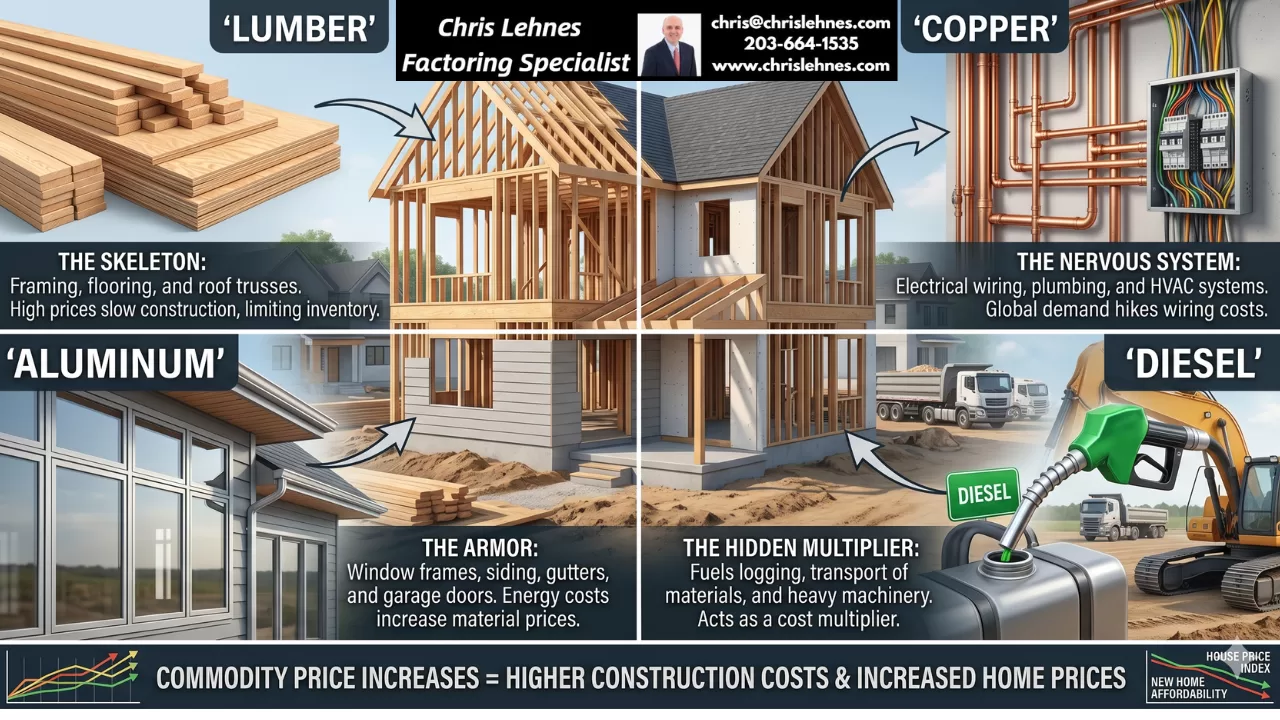
Let’s pull back the drywall and look at how four foundational commodities—copper, lumber, aluminum, and diesel—dictate the reality of the housing market.
1. Lumber: The Skeleton of the Home
When you think of home construction, lumber is usually the first thing that comes to mind. It forms the literal skeleton of most single-family houses.
- Where it’s used: Framing, flooring, roof trusses, cabinetry, and doors.
- The Market Impact: The average single-family home requires roughly 16,000 board feet of lumber. When lumber prices skyrocket (as we saw during pandemic-era supply chain crunches), it can add tens of thousands of dollars to the base cost of a newly built home.
- The Ripple Effect: When building a new home becomes too expensive, builders slow down construction. This chokes off new housing inventory, forcing buyers into the existing home market and bidding up prices across the board.
2. Copper: The Nervous System
You rarely see it once the house is finished, but copper is what brings a home to life. It is the gold standard for conductivity and durability.
- Where it’s used: Electrical wiring, plumbing pipes, and HVAC systems. A typical single-family home contains about 400 pounds of copper.
- The Market Impact: Copper is heavily dependent on global macroeconomic trends. Because it is crucial for electric vehicles and renewable energy infrastructure, the global demand for copper is surging. As builders compete with the tech and auto industries for the same metal, the cost to wire and plumb a new home steadily climbs.
3. Aluminum: The Armor
Lightweight, strong, and resistant to corrosion, aluminum protects the home from the elements while keeping it energy-efficient.
- Where it’s used: Window frames, exterior siding, gutters, roofing, and garage doors.
- The Market Impact: Producing aluminum is an incredibly energy-intensive process. When global energy prices rise, the cost to smelt aluminum rises with them. If aluminum becomes too expensive, builders are forced to use cheaper, less durable alternatives, or pass the premium directly to the buyer, raising the baseline cost of weatherproofing and finishing a home.
4. Diesel: The Hidden Multiplier
Diesel doesn’t end up inside the house, but the house cannot exist without it. It is the lifeblood of the construction and logistics industries.
- Where it’s used: Fueling the logging trucks that carry the timber, the cargo ships that transport the copper, the 18-wheelers that deliver the aluminum, and the bulldozers, excavators, and cranes that actually build the neighborhood.
- The Market Impact: Diesel acts as a cost multiplier. If the price of diesel jumps, the cost of every single other material increases because it costs more to get those materials to the job site. High diesel prices also squeeze contractors’ profit margins, meaning they have to charge more for their labor and equipment time.
The Bottom Line
The housing market doesn’t exist in a vacuum. It is deeply tied to the physical world and the global supply chain.
When you see headlines about overseas mining strikes, lumber tariffs, or fluctuations in oil markets, you are actually looking at leading indicators for tomorrow’s housing market. A spike in these four commodities makes new homes more expensive to build, which slows down development, restricts housing supply, and ultimately makes it harder for the average person to afford a home. Understanding these hidden drivers doesn’t instantly make buying a house easier, but it does demystify why the numbers on the final price tag are what they are.
Contact Factoring Specialist, Chris Lehnes