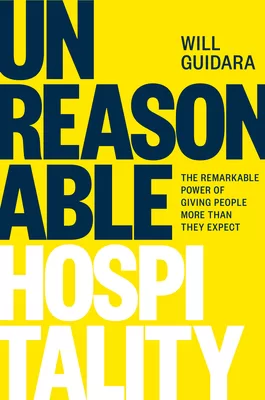
Unreasonable Hospitality – Will Guidara
I. The Core Philosophy: Unreasonable Hospitality
At the heart of Guidara’s work is the concept of “Unreasonable Hospitality,” which he defines as “the remarkable power of giving people more than they expect.” This goes beyond mere “service,” which Guidara describes as “black and white”—competent and efficient. Hospitality, in contrast, is “color”—making people feel great about the service they receive and creating an authentic connection.
- Service vs. Hospitality: “Service is black and white; hospitality is color.” Service is doing your job with competence and efficiency; hospitality is genuinely engaging to make an authentic connection.
- Challenging the Status Quo: The term “unreasonable” was initially used to shut down Guidara’s ambitious ideas but became a “call to arms.” He argues that “no one who ever changed the game did so by being reasonable.”
- Beyond Restaurants: Guidara believes this philosophy is applicable across all service industries, from retail and finance to healthcare and education. He posits that America has transitioned into a “service economy,” where intentional and creative hospitality offers “an incredible opportunity.”
- The Power of Feeling Good: While the financial impact of making someone feel good may be hard to quantify, Guidara asserts, “it matters more.” He describes hospitality as a “selfish pleasure” because “it feels great to make other people feel good.”
- Can Hospitality Be Taught? Guidara firmly believes it can, contrary to some leaders. He co-founded the Welcome Conference to evolve the craft of dining room professionals, noting that attendees quickly expanded beyond the restaurant industry, demonstrating a broader recognition of the value of a hospitality-first culture.
II. Building a Foundation for Greatness: Early Lessons and Principles
Guidara’s upbringing and early career experiences profoundly shaped his approach to leadership and hospitality.
- The Magic of Experience: His twelfth birthday dinner at the Four Seasons, where a server “expertly carved my duck on a gleaming cart” and replaced a dropped napkin, left an indelible mark. This experience taught him that a restaurant “could create magic.” This aligns with Maya Angelou’s (attributed) quote: “People will forget what you do; they’ll forget what you said. But they’ll never forget how you made them feel.”
- The Power of Intentionality: His father, Frank Guidara, instilled in him the importance of “intentionality”—making every decision thoughtfully, with “clear purpose and an eye on the desired result.” His father’s selflessness in caring for his ailing mother also taught Guidara “what it’s like to feel truly welcomed.”
- The Nobility of Service: A profoundly moving experience at Daniel with his father after his mother’s death revealed “how important, how noble, working in service can be.” Chef Daniel Boulud’s “ray of light” provided “an oasis of comfort and restoration, an island of delight and care in the sea of our grief.”
- Enlightened Hospitality (Danny Meyer’s Influence): Working for Danny Meyer’s Union Square Hospitality Group (USHG) introduced Guidara to “Enlightened Hospitality,” which prioritized employees, believing that “if he wanted his frontline teams to obsess about how they made their customers feel, he had to obsess about how he made his employees feel.” Key tenets included:
- Go Above and Beyond: Exemplified by a sommelier rescuing a guest’s champagne from a freezer and leaving caviar and a card. This evolved into “grace notes” like feeding parking meters, showing that small, seemingly non-essential acts of hospitality could “blow people’s minds.”
- Enthusiasm is Contagious: Randy Garutti, Guidara’s general manager at Tabla, demonstrated unwavering positivity and instilled a “sense of ownership” by entrusting young managers with responsibility.
- Language Creates Culture: Danny Meyer’s brilliance in coining phrases like “constant, gentle pressure,” “athletic hospitality,” and “be the swan” helped build a strong, shared culture. Guidara’s favorite was “Make the charitable assumption,” a reminder to “assume the best of people, even when (or perhaps especially when) they weren’t behaving particularly well.”
- “Cult” is Short for “Culture”: Guidara embraced the “cult” label given by outsiders, recognizing it as a sign of a deeply invested and positive company culture.
III. Navigating Business Acumen and Creative Freedom
Guidara’s journey involved understanding the balance between strict business controls and creative hospitality.
- Restaurant-Smart vs. Corporate-Smart: His father introduced him to this distinction: restaurant-smart companies offer autonomy and human connection but may lack corporate support, while corporate-smart companies have strong back-end systems but can stifle creativity. Guidara’s goal was to build a company that was “corporate-smart and restaurant-smart.”
- Control Doesn’t Have to Stifle Creativity: His time at Restaurant Associates (RA) as an assistant purchaser and controller, tracking the financial impact of daily decisions, taught him the power of systems. He realized that corporate controls could “return [chefs] to their creativity” by freeing them from financial worries.
- Trust the Process: His mentor at RA, Hani Ichkhan, meticulously guided him through financial reporting, withholding the “big picture” P&L until Guidara had a strong foundational understanding. This taught Guidara to “trust the process” and the importance of a “solid base.”
- When Control Stifles Creativity: However, he also experienced the negative side of excessive corporate control when he was reprimanded for moving a vase at Nick + Stef’s Steakhouse and when HR rehired a disruptive employee (Felix) he had fired. This taught him that “corporate-smart could be restaurant-dumb” and the importance of trusting “the people on the ground.” As former navy captain David Marquet says, “the people at the top have all the authority and none of the information, while the people on the front line have all the information and none of the authority.”
- The Rule of 95/5: Guidara’s time at MoMA, managing the museum’s cafés, led to the development of this principle: “Manage 95 percent of your business down to the penny; spend the last 5 percent ‘foolishly.'” This “foolish” 5% has an “outsize impact on the guest experience” and can create unforgettable moments, such as the custom tiny blue gelato spoons or a rare, expensive glass of wine in a pairing.
IV. The Eleven Madison Park Transformation: Pursuing a Vision
Guidara’s leadership at EMP was defined by a relentless pursuit of a unique vision.
- A True Partnership: Guidara’s condition for taking the GM role at EMP was a true partnership with Chef Daniel Humm, where “what happens in the dining room doesn’t matter as much as what happens in the kitchen.” This led to the foundational decision that EMP would be “a restaurant run by both sides of the wall.”
- Setting Expectations: Upon arriving at EMP, Guidara found a “bad bad” situation with internal factions and disorganization. His strategy involved:
- Inviting the Team Along: Bridging the gap between the “old guard” and the “fine-dining squad” by improving communication and establishing clear systems.
- Leaders Listen: Spending weeks “sitting down with every single member of the team and hearing them out” to understand the restaurant’s true state.
- Finding the Hidden Treasures: Identifying and leveraging individual strengths, as he did with Eliazar Cervantes, transforming him from a struggling food runner to a brilliant expeditor.
- Keep Emotions Out of Criticism: Emphasizing constructive feedback (“Criticize the behavior, not the person. Praise in public; criticize in private. Praise with emotion, criticize without emotion.”) and implementing initiatives like the “Made Nice Award.”
- Thirty Minutes a Day Can Transform a Culture: Implementing mandatory, structured daily pre-meal meetings to “fill the gas tank” of employees, communicate standards, and “speak to the spirit of the restaurant.”
- Set Them Up to Succeed: Cutting back on overwhelming demands (like extensive wine knowledge) to allow staff to build a solid foundation, embracing the mantra “slow down to speed up.”
- Breaking Rules and Building a Team: Guidara’s “four-star inexperience” allowed him to critically examine fine-dining rules, questioning those that didn’t serve the guest. This led to abandoning norms like not touching the table, serving soufflés “wrong,” and having cooks kneel when describing dishes. They also changed their goodbye gift from elaborate canelés to a jar of granola, focusing on “what our guests might actually want to eat.”
- Hire the Person, Not the Résumé: Guidara prioritized attitude and a “philosophy of hospitality” over fine-dining experience. New hires started as kitchen servers, immersing them in the culture and Daniel’s food before interacting with guests.
- Every Hire Sends a Message: Emphasizing that hiring is a “sobering responsibility” because new hires impact the entire team. He advocated for “hire slow” to ensure cultural fit and to reward “A players” by surrounding them with other “A players.”
- Build a Cultural Bonfire: To combat negativity and foster enthusiasm, he started hiring groups of new employees simultaneously, creating a “bonfire no one could put out.”
- Make It Cool to Care: Drawing inspiration from a college friend, Brian Canlis, Guidara fostered an environment where genuine passion and effort were celebrated, transforming EMP into a place where “it had become cool to care.”
- Working with Purpose, On Purpose:Don’t Try to Be All Things to All People: While open to criticism, Guidara believed in having a clear “point of view” and not changing everything based on a few negative opinions.
- Articulate Your Intentions: Inspired by Miles Davis’s “endless reinvention” and collaborative spirit, Guidara and Humm developed a list of eleven words (Cool, Endless Reinvention, Inspired, Forward Moving, Fresh, Collaborative, Spontaneous, Vibrant, Adventurous, Light, Innovative) to guide their vision.
- Strategy is for Everyone: Breaking the industry norm, they involved all staff, “from the assistant general manager and the chef de cuisine all the way to the dishwashers, prep cooks, and assistant servers,” in strategic planning to identify core values (Education, Passion, Excellence, Hospitality).
- Choose Conflicting Goals: Embracing “integrative thinking” by choosing seemingly contradictory goals like “hospitality and excellence” forced innovation and ensured a balanced approach.
- Know Why Your Work is Important: Guidara aimed to instill a sense of “nobility” in service, encouraging employees to understand that they “make a difference in someone’s life” and “make the world a better place.”
V. Continuous Improvement and Crisis Navigation
EMP’s journey to the top involved constant adaptation and strategic responses to challenges.
- Leveraging Affirmation: Guidara actively sought and amplified external praise to boost team morale. He ensured credit went to those responsible, even if it meant risking them being “poached.” He believed “Persistence and determination alone are omnipotent” (Calvin Coolidge).
- Restoring Balance (The Nuclear Reactor was Melting Down): The relentless pursuit of perfection led to staff burnout, highlighted by a cook showing up ten hours early due to stress. Guidara recognized the need to “slow down to speed up” and encouraged staff to find their “oxygen” for self-restoration.
- The Deep Breathing Club (DBC): Inspired by a friend’s work with agitated youth, Guidara introduced “DBC” as a code word for overwhelmed staff to signal they needed to pause and receive support, de-stigmatizing asking for help.
- Touch the Lapel: A staff-generated sign language gesture meaning “I need help,” which streamlined support during busy services and further destigmatized asking for assistance.
- The Best Offense is Offense (Navigating the 2008 Recession):Adversity is a Terrible Thing to Waste: Facing financial desperation, Guidara and Humm decided to “play offense” rather than just cut costs.
- Raindrops Make Oceans: They meticulously cut “invisible” expenses (e.g., dishwashing detergent, paper toques) but protected the guest experience. Guidara’s father encouraged him to journal these cuts to remember “the best of them” for future profitability.
- Building the Top Line: Introduced a $29 two-course lunch to fill seats and attract new demographics. They also introduced a dessert trolley, increasing dessert sales by 300%.
- Keep the Team Engaged: They hosted an elaborate Kentucky Derby party, which, while breaking even, “invigorated the team” and “broadened” EMP’s community.
- It Doesn’t Have to Be Real to Work: To prepare for Frank Bruni’s anticipated four-star review during a long and stressful waiting period, they designated a “Critic of the Night” table, where every detail of service was flawlessly executed. This “ruse” allowed the team to practice and perfect their performance without the pressure of a real critic, making them ready for the actual review.
VI. Scaling, Evolution, and the Ultimate Achievement
Guidara’s principles extended beyond EMP to new ventures and ultimately led to global recognition.
- Earning Informality: After earning four New York Times stars, EMP faced new expectations for formality. Guidara emphasized “earning informality” by initially amping up formality, then gradually building trust to offer a more casual, connected experience. This involved being “present” and focusing on relationships.
- Learning to Be Unreasonable: After being ranked 50th on the World’s 50 Best Restaurants list, Guidara used his father’s quote, “What would you attempt to do if you knew you could not fail?” to inspire the team to aim for number one. This involved “radical” changes to hospitality, removing transactional elements (e.g., podiums, coat check tags) to create a more personal “welcome.”
- Hospitality is a Dialogue, Not a Monologue: Inspired by Rao’s, Guidara sought to make the dining experience a true “dialogue.” They introduced a menu listing only the main ingredient (beef, duck, lobster), allowing guests choice while still enjoying an element of surprise. They also started asking guests about disliked ingredients, fostering vulnerability by first sharing his own dislike of sea urchin.
- Treat Everyone Like a VIP: Unreasonable Hospitality meant extending “thoughtful, high-touch gestures for every one of our guests.” This included kitchen tours for all, not just VIPs, and the “hospitality solution” of leaving a bottle of cognac with the check at the end of the meal, eliminating the “rushed out” feeling.
- Improvisational Hospitality: Guidara championed “one-off hospitality,” like serving a street hot dog to guests who mentioned they hadn’t had one. This led to the creation of the “Dreamweaver” role, a dedicated staff member to execute these spontaneous, personalized “Legends” (e.g., a watercolor of a new home, a Nerf gun game for a chef). The true gift of a Legend was “the story that made a Legend a legend.”Creating a Tool Kit: To scale these moments, they developed a “tool kit” of readily deployable gestures for recurring situations (e.g., “Plus One” cards with local recommendations, engagement flutes from Tiffany, hangover kits). He noted, “the value of a gift isn’t about what went into giving it, but how the person receiving it feels.”
- Scaling a Culture (The NoMad): When opening the NoMad, Guidara aimed to “rejuvenate a New York neighborhood” and demonstrate that their hospitality culture could be scaled. They brought EMP staff to “seed the new spot with our culture” and made a rare external hire for GM, Jeff Tascarella, for his volume experience and “coolness.” Training was given an “outrageous” budget to ensure cultural transfer, resulting in a “Field Manual” of core values.
- Leaders Say Sorry: Guidara admitted to one of his biggest mistakes: trying to manage both EMP and the NoMad simultaneously, leading to a decline in morale at EMP. He publicly apologized to his team and promoted Kirk Kelewae to GM, demonstrating the “power of vulnerability” and reinforcing that “Sometimes the best time to promote people is before they are ready.”
- No Guest Left Behind: The NoMad allowed EMP to evolve its elaborate tasting menu without abandoning loyal regulars, offering a more casual yet still exceptional option nearby.
- Back to Basics: After a drop on the 50 Best list and a realization that their meals had become “too much,” Guidara and Humm returned to first principles. They cut the menu from fifteen to seven courses, doubled down on Dreamweavers, and eliminated the script-like menu presentations, returning to a menu-less “conversation” about preferences. Their new mission: “To be the most delicious and gracious restaurant in the world.”
- The Ultimate Achievement: In 2017, after “seven years of hard work, creativity, a maniacal attention to detail, and a truly unreasonable dedication to hospitality,” Eleven Madison Park was named the best restaurant in the world. Guidara noted it was the “pursuit of excellence that brought us to the table, but it was our pursuit of Unreasonable Hospitality that took us to the top.”
VII. Post-EMP and Future Vision
Guidara’s journey continued beyond EMP, reinforcing his core beliefs.
- Doing What’s “Right”: His split with Daniel Humm was guided by his father’s advice to “ask yourself what ‘right’ looks like, then do that,” even if it meant personal sacrifice.
- Continuing the Mission: Despite leaving EMP, Guidara remains dedicated to the industry, co-founding the Independent Restaurant Coalition and continuing to advocate for hospitality in various fields. He concludes by inviting leaders across industries to join “the hospitality economy.”
Contact Factoring Specialist, Chris Lehnes

Unreasonable Hospitality: A Comprehensive Study Guide
I. Quiz
Instructions: Answer each question in 2-3 sentences, drawing upon the provided source material.
- What was the initial “crazy idea” Will Guidara had for transforming Eleven Madison Park into the best restaurant in the world, and how did it differ from the typical approach to fine dining?
- Explain the distinction between “service” and “hospitality” as described in the text, using the “black and white” and “color” analogy.
- Describe the “Rule of 95/5” and provide an example of how Eleven Madison Park applied this principle in its operations.
- Why did Will Guidara initially decide against accepting the General Manager position at Eleven Madison Park, and what persuaded him to take the role?
- What was the significance of Daniel Humm and Will Guidara’s decision to run Eleven Madison Park as a “restaurant run by both sides of the wall”?
- How did Will Guidara address the issue of inconsistent service standards and communication among staff in the early days at Eleven Madison Park?
- Explain the concept of “making the charitable assumption” as taught by Danny Meyer and how it was applied to both employees and guests.
- What were the four core values that emerged from Eleven Madison Park’s first strategic planning meeting, and which two were considered to be in “inherent conflict”?
- Describe how the “Deep Breathing Club (DBC)” and the “touch the lapel” sign helped the team at Eleven Madison Park manage high-pressure situations and foster a culture of support.
- How did Will Guidara leverage external affirmation for his team at Eleven Madison Park, and what was his philosophy regarding staff members receiving media attention?
Answer Key
- Will Guidara’s “crazy idea” was to approach hospitality with the same passion, attention to detail, and rigor as the food. This differed from the typical approach which primarily focused on culinary innovation, aiming instead to prioritize connection and graciousness for both staff and guests.
- “Service is black and white; hospitality is color.” Service refers to doing a job with competence and efficiency, like delivering the right plate. Hospitality, however, means genuinely engaging with the person being served to make them feel great and establish an authentic connection.
- The “Rule of 95/5” means managing 95% of the business down to the penny, and spending the last 5% “foolishly” on details that have an outsized impact on the guest experience. An example at EMP was splurging on a rare and expensive glass of wine for one course in a pairing, or sending a family on a sledding trip after their meal.
- Will Guidara initially hesitated because he didn’t want to work for a chef who didn’t respect the dining room, insisting on a true partnership. He was persuaded when Danny Meyer allowed him to propose a one-year commitment, after which he could transition to Shake Shack, and Daniel Humm committed to a partnership between kitchen and dining room.
- The decision to run EMP as a “restaurant run by both sides of the wall” meant that both the chef and the restaurateur would make decisions together. This ensured that choices prioritized the restaurant’s overall best interest, rather than solely focusing on food (chef-driven) or service (restaurateur-driven), creating a more balanced and collaborative environment.
- Guidara addressed inconsistent service by reinstituting printed line-up notes with clear standards and information for servers, holding daily mandatory 30-minute pre-meal meetings to communicate expectations and inspire the team, and implementing food and wine tests. He also actively listened to staff feedback to understand underlying issues.
- “Making the charitable assumption” meant assuming the best of people, even when they were behaving poorly. For employees, it meant asking if everything was okay when they were late, rather than immediately reprimanding. For guests, it meant considering they might be having a difficult personal experience, and therefore needed more love and hospitality, even if dismissive.
- The four core values were Education, Passion, Excellence, and Hospitality. The two considered in “inherent conflict” were Excellence and Hospitality, as achieving both simultaneously required constant innovation and attention to balancing meticulous standards with genuine warmth and connection.
- The “Deep Breathing Club (DBC)” encouraged overwhelmed colleagues to take deep breaths during crises, implicitly communicating support. The “touch the lapel” sign provided a discreet and efficient way for staff to signal to a manager or colleague that they needed help, removing the stigma from asking for assistance in a fast-paced environment.
- Will Guidara leveraged external affirmation by sharing good press, gushing emails from guests, and compliments from other restaurateurs directly with his staff. His philosophy was to turn the spotlight on those who deserved it, giving credit to staff members like Kirk Kelewae for the beer program, even if it meant risking them being “poached,” as it inspired the team and attracted new talent.
II. Essay Questions (No Answers Supplied)
- Analyze the role of intentionality in shaping the culture and success of Eleven Madison Park, drawing examples from both Will Guidara’s personal life and the restaurant’s operational decisions.
- Compare and contrast the “restaurant-smart” and “corporate-smart” approaches to business, as described by Will Guidara’s father. Discuss how Guidara aimed to integrate both philosophies at MoMA and later at Eleven Madison Park, and the challenges he faced in doing so.
- Discuss the significance of “unreasonable hospitality” as a guiding principle for Eleven Madison Park. How did Guidara and his team operationalize this concept, and what impact did it have on both the guest experience and the internal culture of the restaurant?
- Examine the evolution of Eleven Madison Park’s mission and menu over time, including the introduction of the “New York theme” tasting menu and its eventual reevaluation. What lessons did Guidara learn about balancing creativity, tradition, and guest preferences in the pursuit of greatness?
- Reflect on the various leadership strategies employed by Will Guidara throughout his career, particularly during moments of adversity or significant change (e.g., the 2008 recession, the Michelin snub, or the separation from Daniel Humm). How did his approach to communication, feedback, and team empowerment contribute to the resilience and growth of his organizations?
III. Glossary of Key Terms
- 95/5 Rule: A principle of business management where 95% of a budget or operation is managed meticulously down to the penny, while the remaining 5% is spent “foolishly” on details that have a disproportionately large impact on customer experience or employee morale.
- “Anchor”: An employee positioned discreetly behind the podium at the entrance of Eleven Madison Park, in communication with the dining room, to signal to the maître d’ whether a guest’s table is ready.
- “Athletic Hospitality”: A concept within Enlightened Hospitality referring to actively seeking opportunities to improve the guest experience (“playing offense”) or effectively resolving issues (“playing defense”).
- “Being Present”: A state of deep engagement where one focuses entirely on the current interaction or task, putting aside thoughts of future responsibilities. In hospitality, it means being fully with the guest.
- “Black and White” (Service): Refers to the competent and efficient execution of job duties, the technical aspects of service.
- “Charitable Assumption”: The practice of assuming the best intentions or circumstances for another person’s behavior, especially when they are being difficult or late, rather than immediately judging or criticizing.
- “CGS” (China, Glass, and Silver): An abbreviation referring to the department or responsibility for managing and maintaining all tableware.
- “Color” (Hospitality): Refers to the emotional and connective aspects of service that make people feel great, going beyond mere competence.
- “Conflicting Goals”: The strategic decision to pursue two seemingly opposing objectives simultaneously, such as hospitality and excellence, forcing innovation and deeper understanding to achieve both.
- “Constant, Gentle Pressure”: Danny Meyer’s version of kaizen, emphasizing continuous, incremental improvement by everyone in the organization.
- “Corporate-Smart”: A business approach characterized by strong back-end systems, controls, and profitability, often with centralized decision-making and less autonomy for frontline staff.
- “Critic of the Night”: An internal practice at Eleven Madison Park where one random table each night was treated with the same meticulous attention and heightened service as if a real New York Times food critic were dining there.
- “Cult is Short for Culture”: A phrase used to describe companies with strong, immersive cultures, suggesting that outsiders might perceive their shared language and dedication as cult-like due to their unconventional commitment to shared values.
- “DBC” (Deep Breathing Club): A cultural initiative at Eleven Madison Park (inspired by a juvenile psychiatric hospital) where taking a few deep breaths was used as a rescue remedy for overwhelmed staff in high-pressure situations, fostering a sense of mutual support.
- “Dreamweavers”: A dedicated team at Eleven Madison Park (and later Make It Nice) responsible for executing “improvisational hospitality” and creating bespoke, memorable “Legends” for guests based on overheard conversations or prior knowledge.
- “Earning Informality”: The strategy of starting with a more formal approach to service to gain a guest’s respect and trust, gradually transitioning to a more relaxed and personal interaction as the meal progresses, rather than imposing informality from the start.
- Eleven Madison Park (EMP): The New York City restaurant co-owned by Will Guidara and Daniel Humm, which transformed from a two-star brasserie to the number one restaurant in the world through a focus on “Unreasonable Hospitality.”
- “Endless Reinvention”: One of the core values inspired by Miles Davis, emphasizing continuous and radical evolution in the restaurant’s offerings and approach to stay authentic and at the forefront of the industry.
- Enlightened Hospitality: Danny Meyer’s philosophy that prioritizes employees first, believing that if employees are well-treated, they will then take excellent care of customers, leading to investor satisfaction.
- Expeditor: A crucial kitchen role responsible for coordinating the timing of dishes, ensuring each plate reaches the correct table in a timely manner, and communicating between the kitchen and dining room.
- “Fire Fast”: A management principle advocating for quickly dismissing employees who are a negative influence or poor fit, to prevent damage to team morale and culture.
- First Principles: Fundamental truths or beliefs upon which an organization’s mission and operations are built; a return to these principles helps clarify decisions and refocus efforts.
- “Four-Star Restaurant for the Next Generation”: The initial mission statement of Eleven Madison Park, aiming to combine the excellence and luxury of classic fine dining with contemporary fun and informality.
- Grace Note: A sweet but nonessential addition or gesture that enhances an experience, often unexpected and delightful.
- Happy Hour: Weekly meetings at Eleven Madison Park, led by staff members, dedicated to learning about wine, beer, cocktails, and other topics relevant to the restaurant and broader culture, fostering a culture of teaching and shared knowledge.
- “Hire Slow”: A management principle advocating for a thorough and unhurried hiring process to ensure the right cultural fit and talent are brought into the organization.
- Hospitality Economy: A term suggesting a shift in the broader economy where all businesses, not just traditional hospitality sectors, can differentiate themselves by intentionally focusing on making people feel seen, valued, and welcome.
- “Important to Me” Card: A verbal or implied signal used in discussions between Will Guidara and Daniel Humm, indicating that a particular issue was of higher personal importance to one partner, leading the other to concede for the sake of partnership.
- Improvisational Hospitality: The art of creating spontaneous, personalized, and unexpected gestures of care and delight for guests, often based on overheard conversations or prior knowledge.
- Kaizen: A Japanese philosophy of continuous improvement, involving everyone in an organization making small, incremental changes. (Referenced as “constant, gentle pressure.”)
- “Keep Your Eyes Peeled”: Frank Guidara’s advice to his son, emphasizing the importance of staying observant, listening, noticing, and learning in all situations.
- “Legends”: A term coined at Eleven Madison Park for extraordinary, personalized acts of improvisational hospitality that create memorable stories for guests.
- Make It Nice: The name of the company founded by Will Guidara and Daniel Humm, reflecting Daniel’s signature phrase for meticulous execution and embodying both excellence (“make”) and hospitality (“nice”).
- “Making Magic”: The ability of a restaurant or service experience to create an enchanting, immersive atmosphere that makes everything else fade away, leaving a lasting positive impression.
- Maître d’: The head of the dining room staff in a restaurant, responsible for welcoming guests, managing reservations, and overseeing service.
- Molecular Gastronomy: A style of cooking that explores the physical and chemical transformations of ingredients, often using scientific techniques to create new textures and flavors.
- NoMad Hotel: A luxury hotel opened by Will Guidara and Daniel Humm (under their company Make It Nice), aiming to reintegrate high-quality dining and hospitality as a central part of the hotel experience.
- “Nobility in Service”: The belief that serving other human beings, through genuine hospitality, is an inherently important and dignified profession.
- One-Inch Rule: A metaphor for maintaining focus and precision through the very last step of any task, emphasizing that a lapse in the final “inch” can compromise all preceding efforts.
- Optimism Press: An imprint of Penguin Random House LLC, publishing “Unreasonable Hospitality.”
- “Perception is Our Reality”: A mantra at Eleven Madison Park meaning that a guest’s subjective experience or belief, even if technically inaccurate, is the restaurant’s reality and must be addressed with hospitality.
- “Plus One Cards”: Index cards at Eleven Madison Park containing answers to frequently asked guest questions (e.g., about purveyors, floral arrangements), used to provide “a little extra” information effortlessly.
- Podium: A stand or desk typically used by a maître d’ at the entrance of a restaurant. Eleven Madison Park sought to eliminate the “transactional” feeling associated with it.
- Pre-meal Meeting (Line-up): A daily meeting held before service in restaurants to review menu changes, wine pairings, and service standards, and to inspire and align the team.
- Prix Fixe Menu: A menu offering a complete meal at a fixed price, with limited choices for each course.
- Rao’s: An iconic, exclusive Italian American restaurant in Harlem, known for its lack of menus and personalized, conversational ordering.
- Reconnaissance: The act of gathering information or intelligence, particularly before starting a new role or project, to understand the current situation and challenges.
- Relais & Châteaux: A prestigious international association of independent luxury hotels and restaurants, known for its stringent acceptance guidelines.
- “Restaurant-Smart”: A business approach where decision-making and creative latitude are largely held by staff working directly in the restaurants, prioritizing human connection over rigid corporate systems.
- Rising Star Chef of the Year Award: A James Beard Award recognizing chefs under the age of thirty.
- Roulade: A dish made by rolling a filling inside a piece of meat or pastry.
- Rubin Museum: A New York City museum focusing on the art and cultures of the Himalayas, India, and neighboring regions.
- Rule of 95/5: See 95/5 Rule.
- Sabat’s (Sabrett’s): A brand of hot dogs commonly sold by street vendors in New York City.
- Scaling a Culture: The process of successfully expanding an organization while preserving and transmitting its core values and unique way of operating to new locations or teams.
- Seder: A Jewish ceremonial dinner, typically held on the first or second night of Passover, characterized by a specific order of prayers, rituals, and readings.
- Service Bubble: A metaphorical concept referring to the immersive, undistracted atmosphere created around a dining table when all elements of service (timing, lighting, music) are perfectly executed.
- Side Work: Behind-the-scenes maintenance tasks required to keep a restaurant running smoothly, such as polishing glassware, folding napkins, or restocking.
- Siphon System (Vacuum Pot): A method of brewing coffee that uses vacuum and vapor pressure to draw water through grounds.
- Sky Chefs: American Airlines’ catering arm, where Will Guidara’s parents met.
- Skybox: A luxurious, glass-enclosed private dining room overlooking the kitchen at Daniel.
- “Slow Down to Speed Up”: A mantra emphasizing that taking the time to solidify foundations, train thoroughly, or restore balance will ultimately lead to more efficient and sustainable progress.
- Sous Vide: A cooking method where food is vacuum-sealed in a bag and then cooked in a precisely temperature-controlled water bath.
- Spago: Wolfgang Puck’s famous restaurant, known for popularizing California cuisine.
- Speakeasy: An illicit establishment that sells alcoholic beverages, especially during Prohibition. Also used to describe bars with hidden entrances or exclusive atmospheres.
- Spiel: To give a detailed, often enthusiastic, description or explanation, typically of a dish or wine.
- Spidey Sense: An intuitive or instinctive awareness, akin to Spider-Man’s ability to sense danger.
- Stained-Glass Yuengling Lamps: Decorative lamps, often found in casual bars, featuring the logo of Yuengling beer.
- Stalemate: A situation in which further action or progress by opposing parties seems impossible.
- Stages (Stagiare): Unpaid or low-paid internships in a kitchen or dining room, common in the culinary world, where individuals gain experience and learn skills.
- Strategic Planning Sessions: Long-form meetings where groups from across an organization brainstorm and define goals for future growth and development.
- “Superstition” (song): A hit song by Stevie Wonder, referenced as a song Will Guidara played in his band.
- Tasting Menu: A series of small, artfully presented courses, often chosen by the chef, designed to showcase a range of flavors and techniques.
- “Their Perception Is Our Reality”: A mantra at Eleven Madison Park emphasizing that the guest’s subjective experience of a dish or service, even if technically “incorrect,” is the truth that the restaurant must address.
- “Touch the Lapel”: A non-verbal signal used by staff at Eleven Madison Park to discreetly indicate to a colleague or manager that they needed help during a busy service.
- “Transactional Feeling”: An impersonal, business-like exchange that lacks genuine human connection, often associated with routine customer service.
- Tribeca Grill: A New York City restaurant owned by Drew Nieporent, where Will Guidara worked as a server.
- Unreasonable Hospitality: The core philosophy of Will Guidara’s approach to service, defined as giving people more than they expect, going above and beyond what is reasonable or customary to create profound human connections and memorable experiences.
- Union Square Hospitality Group (USHG): Danny Meyer’s restaurant company, known for its Enlightened Hospitality philosophy and for owning several celebrated New York City restaurants, including Eleven Madison Park and Gramercy Tavern.
- Wasting Adversity: The idea that challenging times or setbacks should not be passively endured but actively leveraged as opportunities for creativity, growth, and innovation.
- Welcome Conference: An annual symposium co-founded by Will Guidara and Anthony Rudolf, designed to foster community, trade ideas, and evolve the craft of dining room professionals and, later, leaders across various industries.
- “What would you attempt to do if you knew you could not fail?”: A quote that served as a significant inspiration for Will Guidara and his team, encouraging ambitious goal-setting and overcoming fear of failure.
- Win/Win/Win: A situation where all parties involved (e.g., employees, customers, the business itself) benefit from a particular decision or initiative.
- World’s 50 Best Restaurants: A prestigious international award and ranking system for restaurants, influencing global culinary trends and industry recognition.
- Zagat: A popular restaurant guide known for its survey-based ratings and reviews.