Intel fourth-quarter and full-year 2025 earnings report, as detailed in the Wall Street Journal and other financial outlets, highlights a company in the midst of a massive structural turnaround while grappling with a challenging semiconductor market.
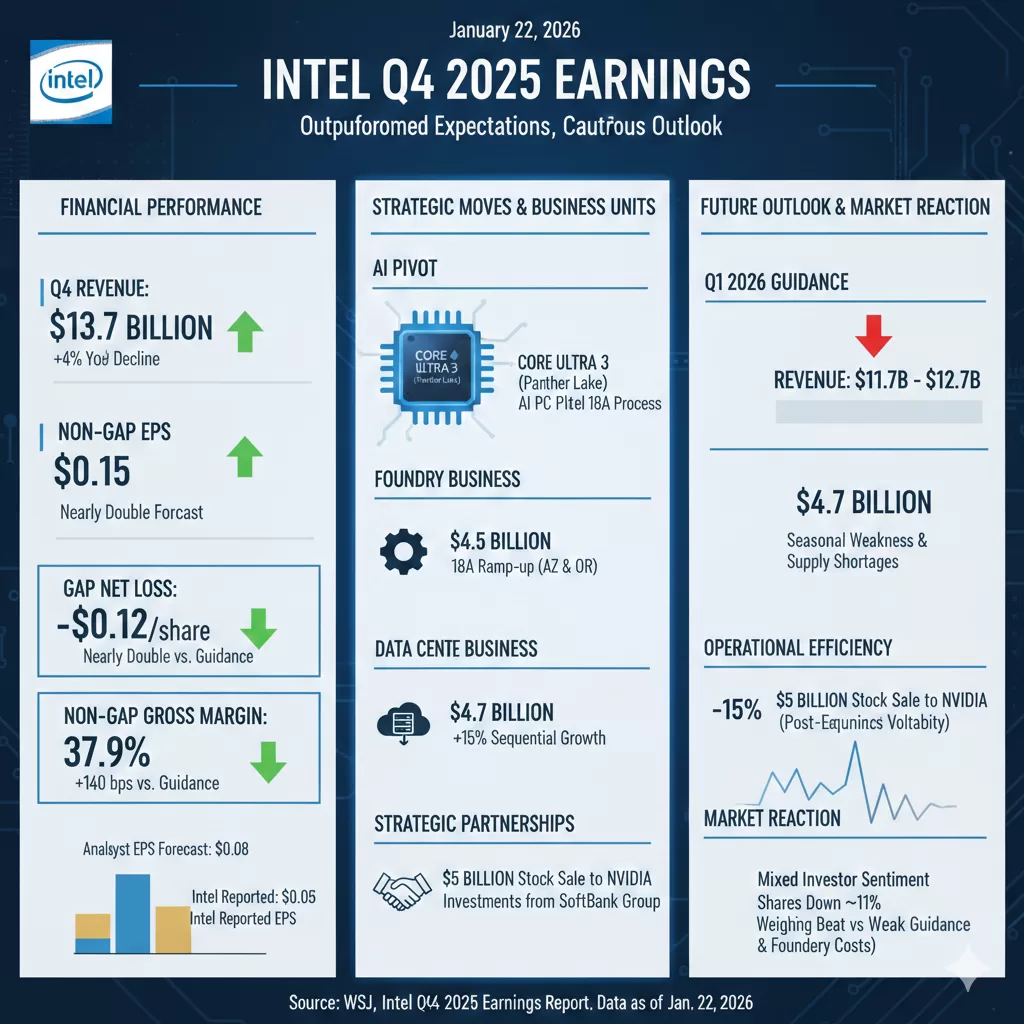
According to the report released on January 22, 2026, Intel outperformed its own guidance and analyst expectations for the quarter, though it remains in a delicate financial position.
Financial Performance (Q4 2025)
Revenue: Intel reported $13.7 billion in Q4 revenue, a 4% decline year-over-year but higher than the forecasted $13.4 billion.
Earnings Per Share (EPS): The company posted a non-GAAP EPS of $0.15, nearly double the $0.08 analysts expected. However, on a GAAP basis, it recorded a net loss of $0.12 per share ($591 million total).
Gross Margin: Non-GAAP gross margin reached 37.9%, exceeding guidance by 140 basis points, driven by higher-than-expected revenue and disciplined spending.
Key Strategic Moves & Business Units
AI Pivot: CEO Lip-Bu Tan emphasized the “essential role of CPUs in the AI era.” Intel launched its Core Ultra Series 3 (Panther Lake), the first AI PC platform built on the advanced Intel 18A process.
Foundry Business: Intel Foundry reported $4.5 billion in revenue. The company is aggressively ramping up its 18A process in Arizona and Oregon to regain manufacturing leadership.
Data Center and AI (DCAI): This segment saw its fastest sequential growth of the decade, rising 15% to $4.7 billion, signaling a potential recovery in server demand.
Strategic Partnerships: The balance sheet was bolstered by a significant $5 billion stock sale to NVIDIA and new investments from SoftBank Group.
Future Outlook
Q1 2026 Guidance: Intel provided a cautious outlook for the coming quarter, projecting revenue between $11.7 billion and $12.7 billion. This lower forecast is attributed to “seasonal weakness” and industry-wide supply shortages, which the company expects to hit a low point in Q1 before improving.
Operational Efficiency: Intel reduced its full-year operating expenses by 15% (down to $16.5 billion) through organizational streamlining.
Market Reaction
Despite the earnings “beat,” investor sentiment remained mixed. Shares experienced volatility—trading down as much as 11% in some sessions following the report—as the market weighed the positive surprise against the weak Q1 2026 guidance and the heavy capital costs associated with the foundry transition.
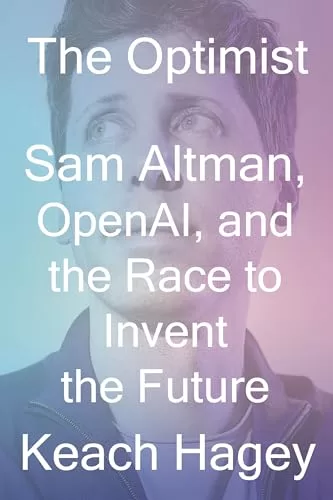
This document synthesizes key insights from Keach Hagey’s biography, The Optimist, which chronicles the life and career of Sam Altman, the CEO of OpenAI. The analysis reveals Altman as a brilliant dealmaker and a central figure in Silicon Valley, driven by an almost religious conviction in technological progress. His career is marked by a pattern of immense ambition, a talent for securing capital and influence, and a recurring tendency to move too fast for those around him, leading to internal conflicts at both his first startup, Loopt, and most consequentially, at OpenAI.
The founding of OpenAI is presented as an effort to safely develop Artificial General Intelligence (AGI) for the benefit of humanity, a mission deeply influenced by the philosophies of Effective Altruism and fears of existential risk articulated by thinkers like Nick Bostrom and Eliezer Yudkowsky. However, the immense computational costs required to pursue AGI forced a pivotal shift from a pure nonprofit to a “capped-profit” model, leading to a foundational partnership with Microsoft and the departure of co-founder Elon Musk after a power struggle.
The narrative culminates in the November 2023 leadership crisis, or “the blip,” where the OpenAI board fired Altman. Contrary to public speculation, the ouster was not driven by fears of an imminent AGI breakthrough but by a loss of trust in Altman’s candor and what the board perceived as manipulative behavior. His swift return, orchestrated by overwhelming employee and investor support, solidified his position as the undisputed leader of the AI revolution but also intensified scrutiny of his character and ambitions. Altman’s vision extends far beyond OpenAI, encompassing a portfolio of “moonshot” investments in nuclear fusion (Helion), universal basic income (Worldcoin), and life extension (Retro Biosciences), all aimed at, in the words of his mentor Paul Graham, “making the whole future.”
——————————————————————————–
I. Profile of a Founder: Sam Altman
A. Formative Years and Family Background
Samuel Harris Altman, born April 22, 1985, demonstrated unusual precocity from a young age. His mother, dermatologist Connie Gibstine, noted he was “kind of born an adult,” grasping complex concepts like area codes at age three and fixing teachers’ computer problems in elementary school. His family history is rooted in St. Louis, with both sides involved in real estate. His father, Jerry Altman, was a real estate consultant specializing in low-income housing, driven by a desire to “do good in the world,” a value system that influenced Sam.
A pivotal experience was navigating his identity in the early 2000s. He knew he was gay by age twelve and later told The New Yorker that “finding AOL chat rooms was transformative” for a “gay [kid] in the Midwest.” This early reliance on technology for connection and self-discovery shaped his worldview. In high school, he was a standout student, bonding with his computer science teacher over AI and impressing the head of school, who noted, “It just seemed like he had read everything and had an interesting take on it.”
B. Core Philosophy and Personality
Altman embodies the Silicon Valley ethos of exponential growth, a mindset he attributes to his primary mentor, Y Combinator co-founder Paul Graham.
Sam Altman’s “Add a Zero” Philosophy: “It’s useful to focus on adding another zero to whatever you define as your success metric— money, status, impact on the world, whatever.”
This ambition is coupled with a distinct set of personality traits observed throughout his career:
Brilliant Dealmaker: He possesses an uncanny ability to raise capital and forge critical partnerships, from securing early carrier deals for Loopt to orchestrating OpenAI’s multi-billion dollar relationship with Microsoft.
Aversion to Confrontation: This trait has been cited as a source of conflict, as he sometimes operates independently or places his own wishes in the mouths of others to avoid direct disagreement.
Persuasive Power: Characterized by an intense, direct gaze, Altman is described as radiating confidence and making others feel like they are the most important person in the world. As Paul Graham noted, “Sam is extremely good at becoming powerful.”
Belief in Technological Progress: He views technology, particularly AI and cheap energy, as the primary engines for human advancement and the solution to societal ills, from poverty to mortality.
Interest in Unconventional Ideas: Peter Thiel, another key mentor, notes Altman’s sympathy for the simulation hypothesis—the idea that our reality is a computer simulation created by a higher intelligence. Altman brushes this off as “freshman dorm” talk but acknowledges, “you can’t be certain of anything other than your own awareness.”
II. Career Trajectory Before OpenAI
A. Loopt: A Preview of Things to Come (2005–2012)
While an undergraduate at Stanford, Altman co-founded Loopt, a location-based social network for the flip-phone era. The company’s journey served as a microcosm of his future endeavors:
Y Combinator’s First Star: Loopt (then Viendo) was the first startup funded by Paul Graham’s Y Combinator. Graham recalled thinking upon meeting the 19-year-old Altman, “Ah, so this is what Bill Gates must have been like.”
Fundraising Success: Altman secured investment from top-tier venture capital firms Sequoia Capital and NEA, despite his youth.
Staff Mutinies: As at OpenAI later, Altman faced internal dissent. At Loopt, senior engineers grew concerned about his “shiny object syndrome,” lack of focus on profitability, and tendency to “start operating independently” on new projects without bringing others along.
Eventual Exit: After being eclipsed by rivals like Foursquare and turning down a reported $150 million acquisition offer from Facebook, Loopt was sold for parts to Green Dot in 2012 for $43.4 million. The experience solidified his relationship with Sequoia Capital, whose partner Michael Moritz praised Altman’s decision to pass on an early sale, noting he had passed Sequoia’s most important test.
B. Y Combinator Leadership: The Center of Silicon Valley (2014–2019)
In 2014, Paul Graham chose Altman as his successor to lead Y Combinator. In a blog post titled “Sam Altman for President,” Graham wrote, “Sam is one of the smartest people I know, and understands startups better than perhaps anyone I know, including myself.” Under Altman’s leadership, YC underwent a dramatic expansion:
Scaling Ambition: He grew YC from incubating dozens to hundreds of startups per year.
Push into “Hard Tech”: He expanded YC’s focus beyond software to include biotech, robotics, nuclear energy, and other “moonshots,” reflecting his belief that technological progress had stagnated.
YC Research: He created a nonprofit research arm to fund ambitious, long-term projects, including a study on universal basic income and, most significantly, a lab that would become OpenAI.
III. The OpenAI Saga
A. Genesis and Ideological Roots (2015)
OpenAI was founded in 2015 as a nonprofit research lab with a stated goal “to advance digital intelligence in a way that is most likely to benefit humanity as a whole, unconstrained by the need to generate financial return.”
Core Motivation: The founding was driven by fear, primarily articulated by Elon Musk and Sam Altman, that a competitive race to AGI could be catastrophic. Musk famously referred to the effort as “summoning the demon.”
Founding Team: The lab was co-founded by Altman, Musk, Greg Brockman (former CTO of Stripe), Ilya Sutskever (a protégé of AI pioneer Geoffrey Hinton), and others, backed by $1 billion in pledges.
Intellectual Influences: The organization’s charter was shaped by the AI safety movement and the Effective Altruism (EA) community. Key influences included:
Nick Bostrom’s Superintelligence: This book articulated the potential existential risks of a machine intelligence that vastly exceeds human capabilities.
Eliezer Yudkowsky’s LessWrong: This influential blog placed fear of existential risk at the heart of the rationalist and EA movements.
OpenAI Charter (2018): Declared a commitment to “stop competing with and start assisting” any “value-aligned” project that reaches AGI first, reflecting these safety concerns.
B. The Power Struggle and Pivot to Profit (2018–2019)
The nonprofit model quickly proved untenable due to the astronomical cost of computing power required for large-scale AI research.
Musk’s Departure: A power struggle ensued between Altman and Musk. Musk sought total control, but Altman, allied with Brockman and other researchers, resisted. In February 2018, Musk left OpenAI, citing a conflict of interest with Tesla’s AI development, and became a vocal critic and competitor.
The “Capped-Profit” Model: In 2019, Altman restructured OpenAI, creating a for-profit subsidiary controlled by the original nonprofit board. This unique structure allowed OpenAI to raise venture capital while capping investor returns, with any excess profit designated for the nonprofit’s mission.
The Microsoft Partnership: The new structure paved the way for a $1 billion investment from Microsoft in 2019, which provided crucial access to its Azure cloud computing platform. This partnership would deepen significantly over the following years.
C. Technical Milestones and Commercialization
Under Chief Scientist Ilya Sutskever’s research leadership, OpenAI shifted from reinforcement learning projects like Dota 2 to large language models (LLMs), a direction championed by researcher Alec Radford. This pivot, supercharged by Google’s 2017 “Transformer” paper, led to a series of groundbreaking models.
Model
Year
Key Features and Impact
GPT-2
2019
Generated such coherent text that OpenAI initially withheld the full model, fearing misuse. The move was widely mocked at the time.
GPT-3
2020
With 175 billion parameters, it demonstrated remarkable “few-shot” learning, able to perform tasks with minimal examples.
OpenAI API
2020
The company’s first commercial product, allowing developers to build applications on top of GPT-3.
DALL-E 2
2022
A powerful diffusion model that could generate photorealistic images from text prompts.
ChatGPT
2022
A fine-tuned version of a GPT model with a simple chat interface. Its accessibility led to viral adoption, setting a record for the fastest-growing user base and forcing competitors like Google to accelerate their own AI products.
D. The November 2023 “Blip”: Firing and Reinstatement
On November 17, 2023, the OpenAI board fired Sam Altman, citing that he “was not consistently candid in his communications.” The move shocked the tech world and triggered a five-day crisis.
Root Cause: The board’s decision was not about AI safety but a collapse of trust. Key board members Helen Toner and Tasha McCauley, along with Chief Scientist Ilya Sutskever, had grown concerned about a pattern of behavior they viewed as dishonest and manipulative.
Specific Incidents:
Deployment Safety Board (DSB): Altman allegedly misrepresented to the board that new GPT-4 enhancements had received DSB approval when they had not.
Manipulating Board Members: Altman allegedly told Sutskever that McCauley believed Toner should be removed from the board, a claim McCauley knew was false. This crystallized the board’s view of his methods.
The Aftermath:
Employee Revolt: Over 95% of OpenAI’s 700+ employees signed a letter threatening to quit and join a new Microsoft-led subsidiary unless the board resigned and reinstated Altman.
Microsoft’s Role: CEO Satya Nadella played a key role, offering to hire Altman and all departing employees while applying pressure on the board.
Altman’s Return: Altman was reinstated as CEO with a new initial board. The crisis solidified his control over the company and its trajectory.
IV. The Altman Doctrine: A Techno-Utopian Future
Altman’s work at OpenAI is one component of a broader, interconnected vision for civilizational transformation, funded by his personal investments. As his mentor Paul Graham stated, “I think his goal is to make the whole future.”
Key Investment Pillars:
Company
Area of Focus
Altman’s Role & Investment
Stated Goal
Helion
Nuclear Fusion
Co-founder, invested at least $375M
Provide cheap, clean, abundant energy to power the future, including AI data centers.
Oklo
Nuclear Fission
Backer, Chairman
Develop microreactors for clean energy.
Worldcoin
Cryptocurrency & UBI
Co-founder
Create a global currency distributed via iris scans, potentially as a mechanism for Universal Basic Income (UBI).
Retro Biosciences
Life Extension
Investor ($180M)
Add a decade to the human lifespan by targeting the underlying causes of aging.
This portfolio reflects his core belief that “energy and intelligence are the two most important things” needed to unlock a future of health, abundance, and radical economic growth.
V. Politics, Scrutiny, and Personal Controversies
As his public profile has soared, Altman has become a political figure and the subject of intense scrutiny.
Political Ambitions: In 2016 and 2017, he explored running for President and Governor of California, drafting a national platform and seeking advice from political veterans. After ChatGPT’s launch, he embarked on a global tour, meeting with world leaders like Emmanuel Macron and Narendra Modi.
Regulatory Battles: Altman has publicly called for AI regulation, testifying before the U.S. Senate. However, a battle is emerging in Washington between OpenAI’s lobbying efforts and a well-funded network of EA-aligned organizations advocating for stricter safety measures, dubbed the “AI Doomer Industrial Complex.”
Family Conflict: His sister, Annie Altman, has publicly accused him and his brother Jack of “sexual, physical, emotional, verbal, financial and technological abuse.” She alleges he engaged in nonconsensual behavior when she was a child. The Altman family has stated the allegations are untrue and that Annie faces “mental health challenges.” The issue represents a significant and unresolved part of his personal story.
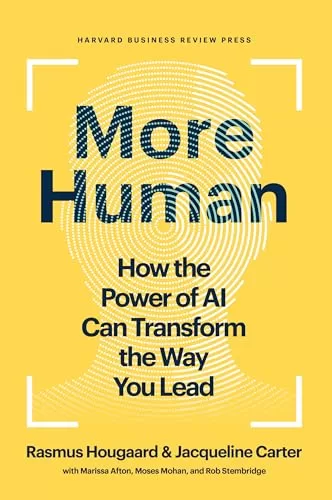
More Humanby Rasmus Hougaard & Jacqueline Carter posits that AI represents a critical inflection point for leadership. The central thesis is that AI, if approached with foresight, can catalyze a renaissance in leadership, making leaders paradoxically more human. This is achieved by delegating tactical tasks to AI, thereby freeing up time and cognitive space for leaders to focus on innately human skills. The future of leadership is not a choice between human or machine, but a “both/and” approach of augmentation, where leaders who leverage AI will replace those who do not.
The framework for this new paradigm rests on three core human qualities that leaders must cultivate to effectively partner with AI:
Awareness: The ability to provide uniquely human context to the vast content generated by AI.
Wisdom: The capacity to ask insightful human questions to guide and critically evaluate the answers provided by AI.
Compassion: The skill of combining the human heart with the analytical power of AI algorithms to do hard things in a human way.
Cultivating these qualities begins with understanding and managing one’s own mind, which is the foundation of effective leadership. The document outlines actionable mindsets and practices to develop these core qualities. Research data consistently shows that leaders who embody high levels of awareness, wisdom, and compassion create significantly better work experiences, fostering greater trust, commitment, psychological safety, and job satisfaction while reducing burnout and turnover. The imperative for leaders is a dual commitment: to double down on inner development and to proactively integrate AI into every facet of their work to unleash this new, more human potential.
——————————————————————————–
I. The Dawn of Augmented Leadership
The introduction of generative AI has brought leadership to a crucial crossroads. The choice is between creating an era of impersonal, mechanical efficiency or catalyzing a golden age of human-centered leadership. The research presented argues that by strategically delegating tasks and augmenting skills with AI, leaders can enhance organizational performance while unlocking a more fulfilling human experience at work.
The Three Promises of AI for Leadership
The analysis identifies three primary ways AI can transform leadership:
Save Time for Human Connection: AI can automate and simplify tactical and administrative leadership activities. As Ellyn Shook of Accenture notes, an AI tool that summarizes performance data reduced her prep time from 45 minutes to 5, allowing her to spend the saved time preparing “how to make the performance conversation a positive experience for the team member.” The key is to reinvest this saved time not in more tasks, but in elevating the human experience for employees.
Enable Ultra-Personalized Leadership: AI’s processing power allows leaders to gain unprecedented insight into employees’ unique needs, preferences, and well-being. Francine Katsoudas of Cisco states, “with AI, leaders have the potential to gain better insight into the key elements of an employee’s well-being and better support their individual needs.” This enables a shift from generalized management to a highly tailored approach that respects individual complexity.
Elevate the Best of Our Humanness: AI can act as an “exoskeleton for the mind and heart,” strengthening a leader’s cognitive, emotional, and social capacities. It can enhance decision-making, deepen understanding of team dynamics, and help leaders be more consistent with their values. However, this potential is only unlocked when paired with a commitment to human development; relying on the tool without improving the driver is ineffective.
II. The “Both/And” Paradigm: The Art of the Toggle
The core principle for effective leadership in the AI era is augmentation—adopting a “both/and” mindset that leverages the complementary strengths of humans and machines. This requires mastering the “art of the toggle,” a dynamic process of moving between human and AI capabilities.
Human Strengths
Human Limitations
AI Strengths
AI Limitations
Context, Intuition, Care, Vision
Emotions, Biases, Inconsistency
Data, Analysis, Speed, Scale
Mechanical, Biased, No Ethics
Asking “Why,” Critical Judgment
Limited Processing Capacity
Generating Content, Finding Patterns
Lacks “Common Sense,” Context
Empathy, Connection, Morality
Subjectivity, Fatigue
Personalization, Unemotional Logic
“Black Box” Problem, No Heart
Employee Preference for the “Imperfect Human”
Despite AI’s capabilities, research reveals a strong employee preference for human leaders, especially in emotionally resonant areas.
Trust: 57% of employees do not trust AI to understand human behavior better than a human leader.
Emotional Analysis: 60% are concerned about AI analyzing and leveraging employee emotions for decisions.
Hiring & Promotions: 69% have concerns about AI making decisions about hiring, promotions, and work assignments.
Negative Feedback: Only 25% would be comfortable receiving negative performance feedback from AI, while 55% would be uncomfortable.
This indicates that the most crucial leadership moments require an authentic human touch that AI cannot replicate. The value proposition for human leaders lies in the messy, emotional, and relational aspects of work.
III. The Foundation: Leadership Starts with the Mind
The ability to cultivate awareness, wisdom, and compassion begins with the leader’s own mind. In an age of increasing information overload and distraction, managing one’s inner state is no longer a soft skill but a critical capacity. The “Human Leader Compass” is a model where leadership starts with the mind, which then enables the development of the three core qualities, each supported by five actionable mindsets.
Techniques for Mind Management
To counter the “tsunami of information,” leaders must proactively cultivate a clear and spacious mind. Three primary practices are recommended:
Working with the Mind (Meditation): The practice of familiarizing oneself with the mind to observe thoughts and emotions without being controlled by them. This rewires the brain to operate more from the prefrontal cortex (System 2 thinking), enhancing executive function, emotional regulation, and clarity.
Working with the Breath (Breath Work): Ancient techniques like pranayama that modulate the autonomic nervous system, shifting it from a “fight-or-flight” state to a “rest-and-digest” state, thereby promoting calm and balance.
Working with the Body (Mind-Body Practices): Practices like yoga that integrate the mind and body, enhancing mental clarity, emotional stability, and inner calm.
IV. The Three Core Qualities of the AI-Augmented Leader
A. Awareness: Context + Content
Awareness is the perceptual capacity to observe internal and external experiences to cultivate clarity and presence. The AI-augmented leader uses this quality to provide essential human context to the vast content generated by AI.
How AI Enhances Awareness:
Self-Awareness: Creating an “AI proxy” of oneself to uncover personal biases and blind spots.
Relational Awareness: Using AI to analyze team dynamics, communication patterns, and non-verbal cues in meetings to “see the unseen.”
Situational Awareness: Leveraging AI to analyze big data on employee retention, market trends, and other environmental factors.
Key Mindsets for Awareness:
Equanimity: Maintaining mental balance and composure, avoiding attachment or aversion.
Self-Mastery: Monitoring and regulating emotions and thoughts to align actions with values.
Presence: Being fully attentive to the present moment, task, and people.
Clarity: Eliminating mental clutter to maintain a clear, focused mind.
Adaptability: Adjusting to the diverse needs of people and evolving circumstances.
B. Wisdom: Questions + Answers
Wisdom is the discerning capacity to form sound judgment by understanding reality as it is, free from the limitations of the ego. It involves seeing interdependence and impermanence. The AI-augmented leader’s role is not to have all the answers, but to ask the right questions and apply critical judgment to AI’s outputs.
How AI Enhances Wisdom:
Data-Driven Insights: Utilizing people analytics for more objective talent management decisions.
Enhancing Creativity: Using AI as a brainstorming partner to generate novel ideas and explore “what if” scenarios.
Challenging Thinking: Employing AI as an objective partner to challenge assumptions and simulate outcomes from diverse perspectives, free from organizational politics.
Key Mindsets for Wisdom:
Integrity: Demonstrating strong moral principles and ethical behavior.
Beginner’s Mind: Approaching situations with curiosity and openness, free from preconceptions.
Critical Thinking: Evaluating information objectively, questioning assumptions and biases.
Humility: Recognizing one’s limitations and being open to learning from others.
Selflessness: Prioritizing the needs of the team and organization over personal gain.
C. Compassion: Heart + Algorithm
Compassion is the responsive capacity to provide genuine care with the intention of benefiting others. It is about doing hard things in a human way. The AI-augmented leader combines the authentic human heart with insights from AI algorithms to lead with care and strength.
How AI Enhances Compassion:
Tailoring Leadership: Using AI insights from personality assessments (e.g., Enneagram) to personalize communication and motivation for each team member.
Boosting Communication: Employing sentiment analysis to understand employee concerns and craft more empathetic and effective messages.
Personalized Coaching: Leveraging AI as a “coach in your pocket” to provide real-time feedback and development support.
Key Mindsets for Compassion:
Courage: The inner strength to overcome fear and take necessary, often difficult, action.
Presilience: Proactively preparing to face challenges without getting knocked off balance.
Emotional Intelligence: Recognizing, understanding, and managing one’s own emotions and those of others.
Purpose: Aligning work with core values in the pursuit of a greater good.
Trust: Creating a psychologically safe environment where people feel valued and secure.
V. Key Research Findings
The book’s recommendations are supported by quantitative research from four studies involving over 2,500 leaders and employees. The data reveals a powerful correlation between the core human qualities and both leadership effectiveness and readiness for an AI-augmented future.
Impact of Leaders High in Awareness, Wisdom, and Compassion (vs. Low)
% Improvement
Employee Trust in Leadership
+97%
Employee Commitment to the Organization
+65%
Psychological Safety
+61%
Job Satisfaction
+49%
Likelihood to Quit (Reduction)
-37%
Job Burnout (Reduction)
-31%
Furthermore, leaders rated high in these human qualities are perceived as far more capable of leveraging AI effectively:
Observer Perception of Leaders High in Awareness, Wisdom, & Compassion
% Agreement
Excels at providing context
88%
Adept at identifying relevant content
87%
Asks thought-provoking questions
78%
Demonstrates leading with their heart
82%
Good at interpreting AI-generated answers
49%
Effectively leverages AI algorithms
39%
VI. Conclusion: The Imperative to Become More Human
The age of AI will not make human leadership obsolete; it will make it more essential than ever. Leaders who fail to embrace AI will be left behind, not by AI itself, but by AI-augmented leaders who can operate on a higher level of human engagement. As Dimitra Manis of S&P Global stated, AI will change expectations: “There will be no such thing as ‘I don’t have time to lead my people.’”
The path forward requires a dual commitment:
Double Down on Inner Development: Proactively invest time in understanding and managing the mind to build the foundational capacity for awareness, wisdom, and compassion.
Integrate and Embrace AI: Actively explore and apply AI tools in all leadership activities—not as a replacement, but as a partner to augment and elevate human capabilities.
The future belongs to leaders who can master this synergy, leveraging technology not to become more like machines, but to become profoundly and effectively more human.
Answer the following questions in 2-3 sentences each, based on the provided source context.
What is the central paradox the authors discovered about the potential impact of Artificial Intelligence on leadership?
The text introduces the “age of augmentation.” What does this term mean, and what is the key mindset leaders must adopt to thrive in it?
What are the three core human qualities of AI-augmented leadership, and what fundamental neurological processes do they correspond to?
Explain the concept of “toggling” as it applies to the AI-augmented leader. Provide a brief example of how it works in practice.
According to the authors, why must leadership start with the mind, and why is this focus particularly critical in the age of AI?
Describe the “human leader compass” model. What are its primary components and its purpose?
How can a leader create and use an “AI proxy” to enhance their self-awareness?
In the context of wisdom, what is the critical role of a human leader when interacting with AI systems that can provide vast amounts of answers instantly?
What is the neurological difference between empathy and compassion, and why is this distinction important for effective leadership?
According to the text, will AI replace human leaders? Explain the authors’ conclusion on this matter.
——————————————————————————–
Answer Key
The central paradox is that, contrary to fears of a robotic work reality, AI can actually make leaders more human. By delegating tactical tasks to AI and using it to augment their skills, leaders can save time and redirect their focus toward creating positive human experiences, thereby mining and maximizing the best of human potential.
The “age of augmentation” is an era where tools like AI actively interact with us, changing how we perceive and engage with the world. To thrive, leaders must adopt a “both/and mindset,” which means leveraging both the analytical power of AI and their most authentic human qualities in a synergistic relationship.
The three core human qualities are awareness, wisdom, and compassion. These leadership qualities correspond to the fundamental neurological processes of perception (observing experiences), discernment (forming sound judgment), and response (acting with intention).
“Toggling” is the practice of fluidly moving between human strengths (like intuition and context-setting) and AI’s capabilities (like data analysis and content generation). A leader preparing for a difficult conversation might first use human intuition to set the context, then use AI to analyze the situation and role-play, before finally applying human critical thought to the AI’s suggestions.
Leadership starts with the mind because a leader’s mind creates their thoughts, which in turn create their actions and shape the reality of their employees. This focus is critical in the age of AI because the human mind is not naturally equipped to handle the relentless onslaught of information from technology, which risks making leaders overwhelmed, overworked, and mentally exhausted.
The human leader compass is a model showing that leadership starts with the mind. By understanding and managing the mind, a leader can cultivate the three core qualities of awareness, wisdom, and compassion. The model further shows that each of these qualities is accelerated by adopting five specific, scientifically validated mindsets.
A leader can create an AI proxy by providing a secure AI tool with extensive personal information, such as their personality type, writing samples, and opinions. This enhances self-awareness by acting as an objective mirror, helping the leader uncover personal biases and blind spots by analyzing how they might respond in challenging situations.
While AI excels at providing answers based on enormous amounts of data, it lacks wisdom and cannot discern right from wrong. The critical role of the human leader is to ask good questions, apply critical thinking, and wisely deliberate on the answers provided by AI, ensuring that decisions are not just smart but also ethical and aligned with human values.
Neurologically, empathy originates from the emotional centers of the brain, allowing us to feel what others feel. Compassion, however, is an intention activated in the executive functioning areas of the brain that drives us to take appropriate action for the greater good. The distinction is crucial because leaders must connect with empathy but lead with compassion to do hard things in a human way.
The authors conclude that AI will not replace human leaders. Instead, leaders who fail to leverage AI to augment their leadership will be replaced by those who do. This is because AI lacks authentic emotional engagement, wisdom, and the ability to provide context—uniquely human qualities that employees prefer and which are essential for the most important elements of leadership.
——————————————————————————–
Essay Questions
The following questions are designed for longer, essay-style responses to encourage deeper reflection on the book’s central themes. Answers are not provided.
The authors argue that AI presents a “major inflection point” for leadership. Discuss the two potential paths leaders can take—a “renaissance” of human leadership versus an era of “mechanical, impersonal efficiency.” Analyze the key choices, practices, and mindsets that will determine which path an organization follows.
Analyze the concept of the “AI-Augmented Leader” by explaining the complementary relationship between human qualities (context, questions, heart) and AI capabilities (content, answers, algorithm). Use examples from the text to illustrate how this synergy works in practice for each of the three core qualities: awareness, wisdom, and compassion.
The text outlines numerous risks and benefits of AI for the “mind of the leader,” including the dualities of supercharged intelligence versus cognitive laziness and data-driven insights versus inherent bias. Evaluate these risks and explain how the practices of mind-training and “thinking slowly” can help leaders mitigate them while maximizing the benefits.
The “human leader compass” is presented as a roadmap for leadership, starting with the mind. Explain the relationship between managing the mind and cultivating the three core qualities. Choose one of the core qualities (awareness, wisdom, or compassion) and discuss in detail how its five associated mindsets help a leader operationalize that quality in their daily work.
The book’s central argument is that to succeed in the age of AI, leaders must become “more human.” Discuss this apparent paradox. How does leveraging a machine enhance a leader’s humanity, and why is this enhancement a critical new standard for leadership in the future?
——————————————————————————–
Glossary of Key Terms
Term
Definition
AI-Augmented Leader
A leader who develops the three core human qualities of awareness, wisdom, and compassion and embraces the best of both human and AI capabilities. This leader skillfully provides context to AI-generated content, uses wisdom to ask thoughtful questions about AI-provided answers, and leverages algorithmic power to provide an authentic, heartfelt, human experience.
Age of Augmentation
The current era of work where tools, specifically AI, are actively interacting with humans in ways that change how they perceive and engage with the world. It is a shift from the Information Age, where tools were passive, to an age where they actively listen, analyze, learn, and predict.
Awareness
The perceptual capacity of the mind to observe both internal and external experiences with the intention of cultivating mental clarity, agility, and executive presence. It encompasses self-awareness, relational awareness, and situational awareness.
Beginner’s Mind
The ability to see people and situations with fresh eyes, as if for the first time, without letting preexisting beliefs or past experiences color one’s approach. It combines expertise with openness and a lack of assumptions.
Bodhichitta
A concept from Buddhist tradition that can be understood in secular terms as a profound dedication to benefit others. In leadership, it is an authentic commitment to genuinely improve the world through one’s actions and decisions, where the success of the business is intertwined with the welfare of all it touches.
Both/And Mindset
The key principle of augmentation where a leader must leverage both the power of AI and their most human qualities simultaneously. It rejects an “either-or” approach in favor of a synergistic relationship between human and machine.
Compassion
The responsive capacity of the mind to provide genuine care, with the intention of benefiting others and contributing to the greater good. It is the ability to do hard things in a human way, requiring courage and strength rather than being a “soft” or weak skill.
Critical Thinking
The ability to thoroughly evaluate situations and make informed decisions by considering biases, questioning assumptions, analyzing information objectively, and synthesizing insights. It is an essential skill to counter the risk of cognitive laziness when AI provides instant answers.
Emotional Intelligence
The ability to recognize, understand, and manage one’s own emotions as well as those of others. It enables leaders to surface and address underlying emotions and respond with compassion.
Empathy
A neurological process originating from the emotional centers of the brain that allows one to see and feel what others see and feel. It is distinct from compassion, which is an intention activated in the executive functioning areas of the brain.
Equanimity
The ability to balance thoughts and emotions to avoid being swept away by extreme impulses like craving or aversion. It is a mental calmness, composure, and evenness of temper in the face of both positive and negative events.
Human Leader Compass
A model depicting that leadership starts with the mind. By managing the mind, a leader can cultivate the three core qualities of awareness, wisdom, and compassion, which are in turn accelerated by adopting fifteen specific, validated mindsets (five for each quality).
Humility
The awareness of one’s limitations and a genuine openness to learning new things, without ego or pretense. It is not about self-deprecation but about having a realistic view of one’s role and recognizing the inherent value in others.
Integrity
Consistently demonstrating ethical behavior and strong moral principles. It involves being honest, transparent, authentic, and accountable, laying the foundation for trust and credibility.
Mindsets
Attitudes or ideas based on underlying beliefs that shape how we see and experience the world. They act as neurological lenses that determine how one perceives situations and approaches obstacles.
Presence
The ability to be fully attentive to oneself, the people one is with, the task at hand, and the surrounding environment. It is the ability to “be here now” and avoid autopilot reactions.
Presilience
A blend of foresight and resilience; the ability to proactively prepare oneself to face challenges without getting knocked off balance. It involves anticipating and better responding to stressors when they arise, rather than just reacting to them.
Prompt Engineering
The art of crafting clear, contextual, and objective queries (prompts) that effectively communicate with AI systems to elicit valuable and relevant insights or actions.
Psychological Safety
A sense of safety that leads to greater employee engagement, better performance, and is a key enabler of team effectiveness. Research shows leaders high in awareness, wisdom, and compassion create significantly more psychological safety.
Purpose
The ability to align one’s work with core values in the pursuit of the greater good. It provides a clear sense of direction and meaning that transcends daily tasks.
Self-Awareness
A form of awareness involving introspection and the ability to assess one’s own capabilities, biases, strengths, limitations, and emotional state.
Self-Mastery
The ability to monitor and regulate one’s emotions, thoughts, and experiences, combined with the discipline to make choices in line with one’s values. It is an ongoing journey of continuous learning and personal improvement.
Selflessness
The ability to overcome the limitations of ego and focus on the greater good. It involves prioritizing the needs and well-being of the team and organization over personal gain.
Situational Awareness
A leader’s ability to “read the room,” understand the undercurrents within the organization, and anticipate the implications of external events.
Toggling
The practice of mastering the dance between human and AI qualities, creating a synergy where technology amplifies human potential. It involves fluidly moving between leaning into human strengths (like context-setting) and leveraging AI capabilities (like data analysis).
Trust
An environment where people feel safe, valued, and free to share contrary views without fear of being penalized or judged. It is the currency of high-performing teams.
Wisdom
The discerning capacity of the mind to form sound judgment by understanding reality as it is, free of the limitations of the ego. It involves applying insight, experience, critical thinking, and social and emotional intelligence to ask good questions and make decisions that balance short-term gains with long-term ethical considerations.
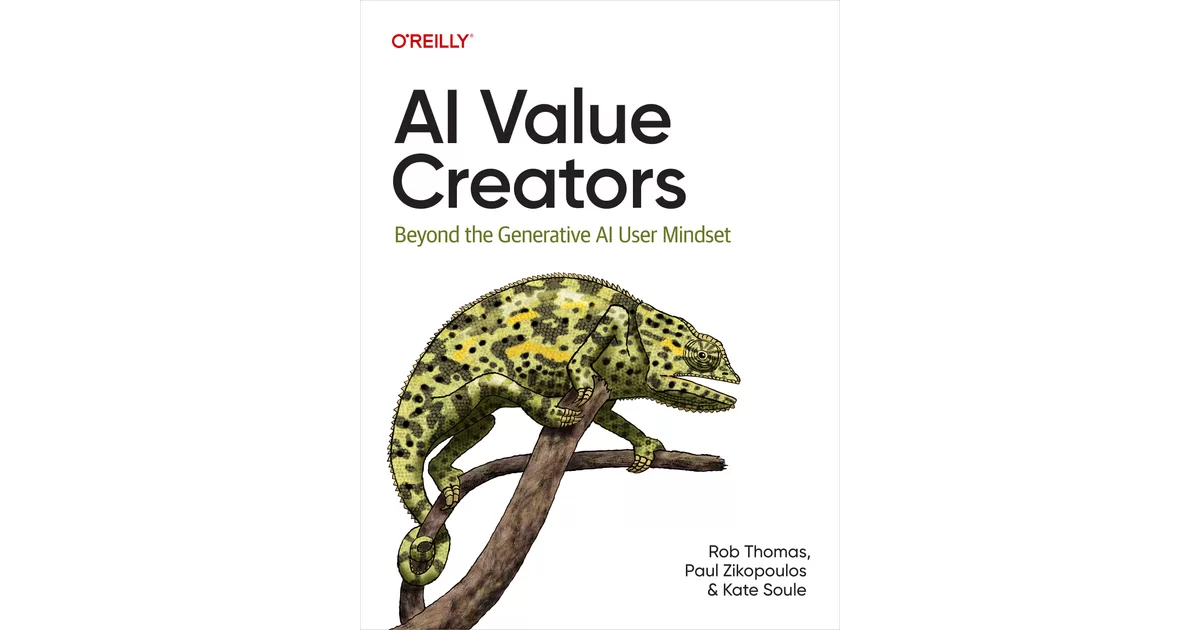
Briefing Document: Key Insights from “AI Value Creators”
Executive Summary
“AI Value Creators” presents a compelling argument that the current generative AI era represents a pivotal “Netscape moment”—a point of technological democratization that is not merely an opportunity but an economic imperative for businesses and governments alike. The central thesis is that sustained growth in a world of declining populations and expensive capital can only be achieved through massive productivity gains, for which AI is the primary catalyst.
The document advocates for a fundamental strategic shift from a +AI mindset (adding AI to existing processes) to an AI+ approach (reimagining business with an AI-first strategy). The ultimate goal is to become an AI Value Creator, an organization that leverages an AI platform to tune foundation models with its unique, proprietary data. This is identified as the only sustainable competitive advantage in a future where generic models will commoditize.
Success in this new era is defined by a core formula: AI Success = Foundation Models + Data + Governance + Use Cases. Navigating the inherent tension between progress and risk requires balancing the paradox that responsibility and disruption must coexist. This balance is achieved through a combination of Leadership, widespread Skills development, and a commitment to Openness (in platforms, data, and community). Organizations are urged to act with urgency, view AI as a value generator rather than a cost center, and begin their journey with safe, internal automation projects to build experience and confidence.
——————————————————————————–
1. The “Netscape Moment” of Generative AI
The emergence of generative AI is framed as a “Netscape moment,” an analogy to the 1994 debut of the first web browser which made the internet tangible, personal, and accessible to the masses.
Democratization of Technology: Generative AI, primarily through the natural language prompt, has taken AI “out of the hands of just the privileged few and democratized [it] for the many.” This accessibility is poised to unleash a wave of innovation and fundamentally change how data is stored, communication happens, and business is conducted.
A World-Changing, Not World-Ending, Technology: While acknowledging concerns about AI, the authors assert, “we don’t think a technology has to be world ending to be world changing.” It is positioned as a tool that will become an integral, “ambient” part of business operations, providing assistance in the background.
The Inevitable Divide: Just as the original Netscape moment created a divide, this new wave of AI will separate adopters from laggards. Those who embrace and integrate AI will reshape the future, while those who do not will face “hefty societal or business consequences.”
AI is Not Magic: Despite its seemingly magical capabilities, AI is fundamentally based on math and science. The document demystifies the technology, explaining that AI connects data points by guessing numerical sequences (vectors). An LLM is more accurately described as a “large number guessing model,” which operates on numerical representations of language, images, and sound.
2. The Strategic Imperative: From +AI to AI+
A core argument is the necessity of a profound mental model shift for organizations to thrive. This involves moving beyond simply incorporating AI into current operations and instead rebuilding processes around AI’s capabilities.
The +AI Mentality (The Past): This is the common approach of adding AI to existing business processes. While AI adoption has doubled in the last five years, most organizations remain in this mode, which limits potential gains.
The AI+ Mentality (The Future): This is an “AI first” strategy. It involves reimagining and creating entirely new workflows that leverage AI from the ground up. The document asserts that “the companies that adopt an AI+ mentality today… will be the winners of today’s Netscape moment.”
The Rebooted AI Ladder: This framework guides the transition from +AI to AI+.
Foundation: A robust, AI-infused Information Architecture (IA) to collect, organize, protect, and govern data.
Rung 1: Add AI to applications.
Rung 2: Automate workflows.
Rung 3: Reimagine and replace existing workflows with new AI and agentic workflows.
Top Rung: Let AI do the (rote) work, achieving a true AI+ state.
3. Becoming an AI Value Creator vs. an AI User
The document outlines three primary modes of AI consumption, drawing a critical distinction between passively using AI and actively creating unique value with it. The latter is presented as the only path to long-term differentiation.
Consumption Model
Description
Status
Key Considerations
Baked into Software
AI is embedded in off-the-shelf products (e.g., Grammarly, Adobe Photoshop).
AI User
Sets a new, higher baseline for productivity but offers no competitive differentiation, as it is available to everyone.
API Call to a Model
An application calls an external, third-party generative AI service (e.g., ChatGPT).
AI User
A viable approach, but entails significant risks: the model is an opaque black box; data privacy is a concern; the organization has no control over training data or governance; and value is disproportionately extracted by the service provider.
AI Platform Approach
An organization uses a platform with tools to access, customize, and deploy various models (open source and proprietary) using its own data.
AI Value Creator
The most comprehensive and recommended model. It allows the business to create and accrue unique value, maintain control over data and governance, and build defensible, proprietary AI assets.
“The only sustainable competitive advantage will come from your data… the only AI that is differentiated in value from any other model for your business will be the AI that is further trained, steered, or tuned to your data on your business problems.”
4. A Framework for Execution and Investment
To ensure AI projects deliver tangible business value, a pragmatic two-dimensional framework for classification and strategy is proposed.
Dimension 1: Budget Intent
Spend Money to Save Money (Renovation): Using AI to improve efficiency and reduce costs. This includes projects focused on automation and optimization.
Spend Money to Make Money (Innovation): Using AI to generate new revenue streams, enter new markets, or transform the business model. This includes projects focused on prediction and transformation.
The Acumen Curve: A visual tool to plot AI initiatives along an x-axis of business impact (from cost reduction to transformation) and a y-axis of value. This helps organizations visualize their investment portfolio and focus on business outcomes, not just technology projects.
The “Shift Left, Shift Right” Strategy:
Shift Left: A concept borrowed from software development, redefined to mean using AI to address problems earlier in a process to reduce costs, defects, or negative outcomes (e.g., using AI for preventative maintenance, early disease detection, or streamlining internal HR processes). This is a “spend money to save money” activity.
Shift Right: Using the savings, experience, and confidence gained from “shifting left” to fund innovative, transformational projects that create new business models. This is a “spend money to make money” activity. Kodak’s failure to shift from film to digital photography is cited as a cautionary tale.
5. The Emergence of Agentic AI
Agentic AI is highlighted as a major breakthrough and the next frontier in enterprise productivity. Unlike task-oriented AI, agents are goal-oriented and autonomous.
Definition: An agent is a program where the flow logic is defined and controlled by the AI (an LLM) itself. Users provide a goal or desired outcome, and the agent independently plans and executes the necessary tasks to achieve it.
Examples of Agentic AI:
A team of agents (researcher, writer, social media poster) collaborating to create and distribute a blog post.
An agent tasked with improving a company’s Net Promoter Score (NPS) by 10 points, which would research, analyze, and propose an action plan.
AI shopping agents that navigate websites to find products and complete purchases autonomously.
Potential: Agents have the potential to unlock the next wave of productivity gains by automating complex, multi-step workflows.
6. The Economic Imperative and Persuasion Equations
Chapter 3 argues that AI adoption is not a choice but a necessity for economic survival and growth, based on current macroeconomic trends.
Equation 1: GDP Growth = ↑ Population + ↑ Productivity + ↑ Debt
With global populations declining and debt becoming more expensive, productivity is the only remaining lever for sustained economic growth. This creates an urgent, unavoidable imperative for AI.
The Core Paradox: Responsibility and disruption must coexist.
Organizations cannot afford to wait on the sidelines due to perceived risks. The economic need for productivity forces them to embrace the disruption of AI while simultaneously implementing it responsibly.
Equation 2: AI Success = Foundation Models + Data + Governance + Use Cases
This formula outlines the essential pillars for a successful AI strategy. Data is emphasized as the key long-term differentiator, while governance is critical for operating with confidence.
Equation 3: Finding the Balance = Leadership + Skills + Open
This formula provides the means to navigate the core paradox. Success requires:
Leadership: To guide the organization responsibly through disruption.
Skills: A massive, company-wide upskilling effort to create a workforce capable of leveraging AI.
Open: A commitment to open platforms that allow for model choice, transparency in data and training, and collaboration within the open-source community (e.g., Hugging Face, AI Alliance).
7. Key Principles and Recommendations
The document concludes with a set of actionable principles for organizations embarking on their generative AI journey.
Act with Urgency: This is a transformative technological moment that demands bold, decisive action, guided by a smart and rehearsed plan.
Bet on Community: One Model Will Not Rule Them All: The future is multi-model and will be driven by innovation from open-source communities. Businesses should build on open platforms that can accommodate a variety of open and proprietary models. Hugging Face is cited as a central hub for this community, with over a million models available.
Prioritize Trust and Responsibility: Governance, fairness, and explainability must be foundational, not afterthoughts. Trust is described as the “ultimate license to operate.”
Start with “Singles,” Not “Home Runs”: For organizations new to generative AI, the safest and most effective starting point is an internal automation use case that aims to “spend money to save money.” This approach allows the team to gain skills and confidence in a low-risk environment.
View AI as a Value Generator, Not a Cost Center: A cultural shift is required to see technology investment not as a cost to be managed, but as a fundamental driver of business transformation and value creation.
This study guide is designed to review and reinforce the core concepts presented in the initial chapters of AI Value Creators. It includes a short-answer quiz to test comprehension, suggested essay questions for deeper analysis, and a glossary of essential terms.
Short-Answer Quiz
Instructions: Answer the following questions in 2-3 sentences, drawing exclusively from the provided source material.
What do the authors mean by a “Netscape moment” in the context of generative AI?
How does the text define and differentiate agentic AI from task-oriented AI?
Why do the authors assert that AI is not magic, and what do they claim is its fundamental operation?
Explain the difference between a “+AI” and an “AI+” business mentality.
According to the text, what are the two primary dimensions for classifying a generative AI project’s budget?
Describe the concept of “shifting left” and how generative AI enables it.
What are the three legs of the “AI stool” that are identified as crucial for generative AI?
How does self-supervised learning differ from supervised learning, and why is this distinction significant for foundation models?
Summarize the key differences between being an “AI User” and an “AI Value Creator.”
What is the central economic paradox presented in Chapter 3, and what is its implication for businesses?
——————————————————————————–
Answer Key
A “Netscape moment” refers to a point in time when a technology becomes tangible, personal, and democratized for everyone, leading to significant innovation and societal change. The authors equate the current state of generative AI to the 1994 debut of the Netscape browser, which made the internet accessible to the many and reshaped the world.
Agentic AI is goal-oriented, where an AI program’s flow logic is defined and controlled by the LLM itself to achieve a desired outcome without explicit guidance at each step. This contrasts with most current AI use, which is task-oriented and requires a user to prompt the AI for each specific action, like summarizing a document.
The authors claim AI is not magic because its operations are based on math and science, not sorcery. Fundamentally, AI connects data points by guessing a number (a vector) using clues from previous numbers (vector sequences), effectively making it a “large number guessing model.”
A “+AI” mentality involves adding AI to existing business processes as an afterthought, which is how most organizations currently operate. An “AI+” mentality means adopting an “AI first” strategy, where AI is foundational to how people are trained and how technology is put into production, with the goal of reimagining workflows.
The first dimension is classifying the spend as either “spend money to save money” (renovation) or “spend money to make money” (innovation). The second dimension is categorizing how the AI helps the business, which falls into one of three categories: automation, optimization, or prediction.
“Shifting left” is the concept of capturing defects or problems earlier in a cycle to make them less costly. The authors expand this definition to include using AI to reduce expenses, bugs, injuries, and illness, thereby compacting work, getting it done faster, and increasing productivity.
The three legs of the AI stool are identified as model architecture, compute power, and data. The text emphasizes that you cannot discuss generative AI without considering all three components, especially data, which is called “maybe the most important ingredient.”
Supervised learning is a traditional AI method that is expensive and time-consuming because it requires humans to manually label large datasets. Self-supervised learning, which powers foundation models, is a frictionless approach where an AI trains on vast amounts of unlabeled data by masking parts of the text and learning to fill in the blanks.
An AI User consumes AI by using it embedded in software or by making an API call to someone else’s model, which provides a baseline of productivity but little differentiation. An AI Value Creator uses a platform approach to build their own tailored AI solutions, fine-tuning foundation models with their proprietary data to create unique, sustainable competitive advantages.
The central paradox is that “Responsibility and disruption must coexist.” With global populations declining and debt becoming more expensive, productivity is the only path to economic growth, making AI adoption an imperative. Therefore, businesses and governments cannot afford to wait due to risks but must instead accept the disruption AI brings while simultaneously implementing it in a responsible and trustworthy manner.
——————————————————————————–
Essay Questions
Instructions: The following questions are designed for longer-form, analytical responses. Use the source material to construct a comprehensive argument for each prompt.
Analyze the evolution of the “AI Ladder” from its original pre-generative AI form to the “rebooted” version. What do the changes in the ladder’s rungs signify about the strategic shift from a data-centric approach to an “AI+” methodology?
The authors argue that “one model will not rule them all.” Construct an argument to support this claim, using evidence from the text regarding the open-source community (e.g., Hugging Face), the importance of proprietary data, and the platform approach of the AI Value Creator.
Explain the framework of the “AI and Data Acumen Curve.” How does this tool help a business visualize and plan its AI strategy, moving from renovation projects (like cost reduction) to innovation projects (like business transformation)?
Using the economic equations and macrodynamic trends presented in Chapter 3 (GDP Growth, population, debt, productivity), explain why the authors conclude that AI adoption is no longer a matter of choice for most businesses and countries.
Define the difference between an “AI User” and an “AI Value Creator” as described in the text. Discuss the long-term strategic risks an organization faces by remaining solely an AI User, considering factors like data control, value accrual, competitive differentiation, and dependency on external models.
——————————————————————————–
Glossary of Key Terms
Term
Definition
+AI
The world of adding AI to existing business processes, as opposed to an AI-first approach.
Acumen
As used in “Data Acumen,” it refers to “skills related to putting data to work to help your business become data driven.”
Adaptable (AI)
The ability of an AI to not only perform multiple tasks but also handle different use cases it wasn’t originally trained for.
Agentic AI / AI Agents
A program in which the flow logic is defined and controlled by the AI (an LLM) itself. Agents are goal-oriented, capable of planning and executing future actions without explicit guidance to achieve a desired outcome.
AI+
An “AI first” mentality where companies train their people and put technology into production with AI as the foundation, reimagining new workflows.
AI Ladder (Rebooted)
A reframed guiding strategy for the generative AI era that is built with AI in mind from the first rung, not as the destination. It guides organizations from data operations toward automating and replacing workflows with AI and agentic workflows.
AI Value Creator
An entity that uses an AI platform to build its own AI solutions by fine-tuning foundation models with proprietary data, thereby creating and accruing unique business value.
AI User
An entity that consumes AI when it is “baked into” off-the-shelf software or by prompting someone else’s model via an API call.
Foundation Model (FM)
Large-scale, deep neural networks trained on broad data that can be easily adapted to perform various downstream tasks for which they were not originally designed. LLMs are a type of FM.
Generalizable (AI)
The ability of an AI to perform well across a wide range of tasks and domains, often with little to no task-specific tuning.
High-dimensional space
A state where data has so many dimensions (features or attributes) that it is hard for humans to visualize.
Information Architecture (IA)
A platform that allows an organization to collect, organize, protect, govern, and store data, as well as build and govern generative AI models. The authors state, “You can’t have AI without an IA.”
Large Language Model (LLM)
A type of foundation model that powers many generative AI programs. It is described as a “large number guessing model” that uses math to connect data points and predict sequences.
Netscape Moment
A transformative moment when a technology is democratized and becomes tangible and personable for everyone, leading to widespread innovation and permanent changes in society.
Parameters
In the context of an LLM, parameters represent the overall knowledge of the model. A higher number of parameters generally means the model can perform more tasks.
Prompt
The input, typically in natural language, given to an LLM to elicit a response or “completion.”
Self-supervised learning
A type of frictionless learning where a model is trained on large amounts of unlabeled data by masking sections of the input and learning to predict the missing parts.
Shifting Left
A concept, originating from software development, of capturing defects or problems earlier in a cycle to make them less costly. The authors broaden it to mean using AI to reduce expenses, injuries, illness, and rote tasks.
Shifting Right
The ideation of new business models or a pivotal strategic move to transform an industry, often in response to technological change.
Supervised Learning
A traditional AI training method that requires humans to manually annotate large datasets, a process described as expensive, error-prone, and time-consuming.
Transfer Learning
The ability of an AI model to apply information and skills it has learned about in one situation to another, different situation.
Introduction: Why We’re All Missing the Point About AI
The conversation around AI is dominated by extremes. On one side, there are anxieties of mass job loss and uncontrollable superintelligence. On the other, there are utopian dreams of automated abundance. But this focus on AI’s “intelligence” is a distraction from its real, more profound impact. We are so busy asking if the machine is smart enough to replace us that we’re failing to see how it’s already changing the entire system we operate in.
This article distills five counter-intuitive truths from Sangeet Paul Choudary’s book, Reshuffle, to offer a new framework for understanding AI’s true power. These insights will shift your perspective from the tool to the system, revealing where the real opportunities and threats lie.
——————————————————————————–
1. It’s Not About Intelligence, It’s About the System
We mistakenly judge AI by how human-like it seems, a phenomenon Choudary calls the “intelligence distraction.” We debate its creativity or consciousness while overlooking the one thing that truly matters: its effect on the systems it enters.
Consider the parable of Singapore’s second COVID-19 wave in 2021. The nation was a global model of pandemic response, armed with precise tools like virus-tight borders and obsessive contact tracing. Yet, it was defeated not by a technological failure, but by systemic blind spots. An outbreak was traced to hostesses—colloquially known as “butterflies”—working illegally in discreet KTV lounges after entering the country on a “Familial Ties Lane” visa. With contact tracing ignored in the venues and a clientele of well-heeled men unwilling to risk their reputations by coming forward, the nation’s high-tech system was rendered useless. Singapore’s precise tools were no match for the hidden logic of the system.
This illustrates a crucial lesson: the real story of AI is not in the technology itself, but in the system within which it is deployed. Our focus should not be on the machine’s capabilities in isolation.
Instead of asking How smart is the machine?, we should shift our frame to ask What do our systems look like once they adopt this new logic of the machine?
——————————————————————————–
2. AI’s Real Superpower is Coordination, Not Automation
We often mistake AI’s impact for simple automation—making individual parts of a process faster. But its most transformative power lies in coordination: making all the parts work together in new and more reliable ways.
The shipping container provides a powerful analogy. Its revolution wasn’t just faster loading at ports (automation). Its true impact came from imposing a new, reliable logic of coordination across global trade. Innovations by entrepreneurs like Malcolm McLean, such as the single bill of lading that unified contracts across trucks, trains, and ships, and the push for standardization during the Vietnam War, were deliberate efforts to overcome systemic inertia. By standardizing how goods were moved, the container restructured entire industries, enabled just-in-time manufacturing, and redrew the map of economic power.
AI is the shipping container for knowledge work. Its most profound impact comes from its ability to coordinate complex activities and align fragmented players in ways previously impossible—what the book calls “coordination without consensus.” It can create a shared understanding from unstructured data, allowing teams, organizations, and even entire ecosystems to move in sync without rigid, top-down control.
This reveals a self-reinforcing flywheel of economic growth: better coordination drives deeper specialization, as companies can rely on external partners. This specialization leads to further fragmentation of industries, which in turn demands even more powerful forms of coordination to manage the complexity. AI is the engine of this modern flywheel.
The real leverage in connected systems doesn’t come from optimizing individual components, but from coordinating them.
This new power of system-level coordination is precisely why the old, task-focused view of job security is no longer sufficient.
——————————————————————————–
3. The “Someone Using AI Will Take Your Job” Trope is a Trap
The popular refrain, “AI won’t take your job, but someone using AI will,” is a dangerously outdated framework. It encourages a narrow, task-centric view of work that misses the bigger picture.
The book uses the Maginot Line as an analogy. In the 1930s, France built a chain of impenetrable fortresses to defend against a German invasion, perfecting its defense for the trench warfare of World War I. But Germany had changed the entire system of combat. The Blitzkrieg integrated mechanized infantry, tank divisions, and dive bombers, all of which were coordinated through two-way radio communication, to simply bypass the useless fortifications. The key wasn’t better weapons; it was a new coordination technology that changed the system of warfare itself.
Focusing on using AI to get better at your current tasks is like reinforcing the Maginot Line. The real threat isn’t that someone will perform your tasks better; it’s that AI is unbundling and rebundling the entire system of work. When the system changes, the economic logic that holds a job together can collapse, rendering the role obsolete even if the individual tasks remain.
When the system itself changes due to the effects of AI, the logic of the job can collapse, even if the underlying tasks remain intact.
——————————————————————————–
4. Stop Chasing Skills. Start Hunting for Constraints.
In a world where AI makes knowledge and technical execution abundant, simply “reskilling” is a losing game. It puts you in a constant race to learn the next task that AI can’t yet perform. A more strategic approach is to hunt for the new constraints that emerge in the system.
Take the surprising example of the sommelier. When information about wine became widely available online, the sommelier’s role as an information provider should have disappeared. Instead, their value increased. Why? Because they shifted from providing information to resolving new constraints for diners. With endless choice came new problems: the risk of making a bad selection and the desire for a curated, confident experience. The sommelier’s value migrated to managing risk. Furthermore, as one form of scarcity disappeared (information), they helped manufacture a new one: certified taste, created through elite credentialing bodies like the Court of Master Sommeliers.
The core lesson is that value flows to whoever can solve the new problems that appear when old ones are eliminated by technology. The key to staying relevant is not to accumulate more skills, but to identify and rebundle your work around solving the system’s new constraints, such as managing risk, navigating ambiguity, and coordinating complexity.
The assumption baked into most reskilling narratives is that skills are a scarce resource. But in reality, skills are only valuable in relation to the constraint they resolve.
——————————————————————————–
5. Using AI as a “Tool” Is a Path to Irrelevance
There is a crucial distinction between using AI as a “tool” versus using it as an “engine.” Using AI as a tool simply optimizes existing processes. It makes you faster or more efficient at playing the same old game, leading to short-term gains but no lasting advantage.
The book contrasts the rise of TikTok with early social networks to illustrate this. Platforms like Facebook and Instagram used AI as a tool to enhance their existing social-graph model, improving feed ranking and photo tagging. Their competitive logic remained centered on who you knew. TikTok, however, used AI as its core engine. It built an entirely new model based on a behavior graph—what you watch determines what you see. This was enabled by a brilliant positive constraint: the initial 60-second video limit forced a massive volume of rapid-fire user interactions, generating the precise data needed to train its behavior-graph engine at a speed competitors couldn’t match. This new logic made the old rules of competition irrelevant.
Companies that fall into the “tool integration trap” by becoming dependent on third-party AI to optimize tasks risk outsourcing their competitive advantage. The strategic choice is to move beyond simply applying AI and instead rebuild your core operating model around it.
A company that utilizes AI as a tool may improve efficiency, but it still competes on the same basis. A company that treats AI as an engine unlocks entirely new levels of performance and changes the basis of how it competes.
——————————————————————————–
Conclusion: Reshuffle or Be Reshuffled
To truly understand AI, we must shift our focus from its intelligence to its systemic impact. The five truths reveal a clear pattern: AI’s power isn’t in automating tasks but in reconfiguring the systems of work, competition, and value creation. It’s a force for coordination, a reshaper of constraints, and an engine for new business models.
True advantage comes not from reacting to AI with better skills or faster tools, but from actively using it to reshape the systems around us. It requires moving from a task-level view to a systems-level perspective.
The question is no longer “How will AI change my job?” but “What new systems can I help build with it?” What will your answer be?
Superagency: What Could Possibly Go Right with Our AI Future written by Reid Hoffman
Hoffman argues that humanity is in the early stages of an “existential reckoning” with AI, akin to the Industrial Revolution. While new technologies have historically sparked fears of dehumanization and societal collapse, the author maintains a “techno-humanist compass” is essential to navigate this era. This compass prioritizes human agency – our ability to make choices and exert influence – and aims to broadly augment and amplify individual and collective agency through AI.
Key Themes & Ideas:
Historical Parallelism: New technologies throughout history (printing press, automobile, internet) have faced skepticism and opposition before becoming mainstays. Similarly, current fears surrounding AI, including job displacement and extinction-level threats, echo past anxieties.
The Inevitability of Progress: “If a technology can be created, humans will create it.” Attempts to halt or prohibit technological advancement are ultimately futile and counterproductive.
Techno-Humanism: Technology and humanism are “integrative forces,” not oppositional. Every new invention redefines and expands what it means to be human.
Human Agency as the Core Concern: Most concerns about AI, from job displacement to privacy, are fundamentally questions about human agency. The goal of AI development should be to broadly augment and amplify individual and collective agency.
Iterative Deployment: A key strategy, pioneered by OpenAI, for developing and deploying AI is “iterative deployment.” This involves incremental releases, gathering user feedback, and adapting as new evidence emerges. It prioritizes flexibility over a grand master plan.
Beyond Doom and Gloom: The author categorizes perspectives on AI into “Doomers” (extinction threat), “Gloomers” (near-term risks, top-down regulation), “Zoomers” (unfettered innovation, skepticism of regulation), and “Bloomers” (optimistic, mass engagement, iterative deployment). Hoffman aligns with the “Bloomer” perspective.
Important Facts:
Unemployment rates are lower today than in 1961, despite widespread automation in the 1950s.
ChatGPT, launched with “zero marketing dollars,” attracted “one million users in five days” and “100 million users in just two months.”
Some AI models, even “state-of-the-art” ones, “hallucinate”—generating false information or misleading outcomes. This occurs because LLMs “never know a fact or understand a concept in the way that we do,” but rather “make a prediction about what tokens are most likely to follow” in a contextually relevant way.
US public opinion on AI is generally cautious: “only 15 percent of U.S. adults said they were ‘more excited than concerned’” in a 2023 Pew Research Center survey.
II. Big Knowledge, Private Commons, and Networked Autonomy
The book elaborates on how AI can convert “Big Data into Big Knowledge,” transforming various aspects of society, from mental health to governance, and fostering a “private commons” that expands individual and collective agency.
Key Themes & Ideas:
The “Light Ages” of Data: In contrast to George Orwell’s dystopian vision in “1984,” where technology enables “God-level techno-surveillance,” Hoffman argues that big knowledge, enabled by computers and AI, leads to a “Light Ages of data-driven clarity and growth.”
Beyond “Extraction Operations”: The author refutes the notion that Big Tech’s use of data is primarily “extractive.” Instead, he views it as “data agriculture” or “digital alchemy,” where repurposing and synthesizing data creates tremendous value for users and society, a “mutualistic ecosystem.”
The Triumph of the Private Commons: Platforms like Google Maps, YouTube, and LinkedIn, though privately owned, function as “private commons,” offering free or near-free “life-management resources that effectively function as privatized social services and utilities.”
Consumer Surplus: The value users derive from these private commons often far exceeds the explicit costs, creating significant “consumer surplus.”
Informational GPS: LLMs act as “informational GPS,” helping individuals navigate complex and expanding informational environments, enhancing “situational fluency” and enabling better-informed decisions.
Upskilling and Democratization: AI, particularly LLMs, can rapidly upskill beginners and democratize access to high-value services (education, healthcare, legal advice) for underserved communities.
Networked Autonomy and Liberating Limits: The historical evolution of automobiles demonstrates how regulation, when thoughtfully applied and coupled with innovation, can expand individual freedom and agency by creating safer, more predictable, and scalable systems. Similarly, new regulations and norms for AI will emerge to manage its power while ultimately expanding autonomy.
Important Facts:
In 1963, the IRS collected $700,000 in unpaid taxes after announcing it would use an IBM 7074 to process returns.
Vance Packard’s 1964 bestseller, “The Naked Society,” expressed fears of “giant memory machines” recalling “every pertinent action” of citizens.
The median compensation Facebook users were willing to accept to give up the service for one month was $48, while Meta’s average annual revenue per user (ARPU) in 2023 was $44.60, suggesting a significant “consumer surplus.”
The amount of data produced globally in 2024 is “roughly 402 billion gigabytes per day,” enough to fill “2.3 billion books per second.”
Studies in 2023 showed that professionals using ChatGPT completed tasks “37 percent faster,” with “the quality boost bigger for participants who received a low score on their first task.” Less experienced customer service reps saw productivity increases of “14 percent.”
The US federal government passed the Infrastructure Investment and Jobs Act in 2021, which includes a provision for mandatory “Driver Alcohol Detection System for Safety (DADSS)” in new cars, potentially by 2026.
The US Interstate Highway System (IHS), initially authorized for 41,000 miles in 1956, now encompasses over 48,000 miles and creates “annual economic value” of “$742 billion.”
III. Innovation, Safety, and the Social Contract
Hoffman posits that innovation itself is a form of safety, and that successful AI integration will require a renewed social contract and active citizen participation in shaping its development and governance.
Key Themes & Ideas:
Innovation as Safety: Rapid, adaptive development with short product cycles and frequent updates leads to safer products. “Innovation is safety” in contrast to the “precautionary principle” (“guilty until proven innocent”) favored by some critics.
Competition as Regulation: Benchmarks and public leaderboards (like Chatbot Arena) serve as “dynamic mechanisms for driving progress” and promote transparency and accountability in AI development, effectively “regulation, gamified.”
Law Is Code: Lawrence Lessig’s thesis that “code is law” is more relevant than ever as AI-enabled “perfect control” becomes possible in physical spaces (e.g., smart cars, instrumented public venues).
The Social Contract and Consent of the Governed: The successful integration of AI, especially agentic systems, requires a robust “social contract” and the “consent of the governed.” Voluntary compliance and public acceptance are crucial for legitimacy and stability.
Rational Discussion at Scale: AI can be used to enhance civic participation and collective decision-making, moving beyond traditional surveillance models to enable “rational discussion at scale” and build consensus.
Sovereign AI: Nations will increasingly seek to “own the production of their own intelligence” to protect national security, economic competitiveness, and cultural values.
Important Facts:
The Future of Life Institute’s letter called for a pause on AI development until systems were “safe beyond a reasonable doubt,” reversing the standard of criminal law.
Chatbot Arena, an “open-source platform,” allows users to “vote for the one they like best” between two unidentified LLMs, creating a public leaderboard.
MSG Entertainment uses facial recognition to deny entry to attorneys from firms litigating against it.
South Korea’s Covid-19 response relied on extensive data collection (mobile GPS, credit card transactions, travel records) and transparent sharing, demonstrating how “public outrage has been nearly nonexistent” due to “a radically transparent version of people-tracking.”
Jensen Huang (Nvidia CEO) stated that models are likely to grow “1,000 to 10,000 times more powerful over the next decade,” leading to “highly skilled virtual programmers, engineers, scientists.”
Conclusion: A Path to Superagency
Hoffman concludes by reiterating the core principles: designing for human agency, leveraging shared data as a catalyst for empowerment, and embracing iterative deployment for safe and inclusive AI. The ultimate goal is “superagency,” where individuals and institutions are empowered by AI, leading to compounding benefits across society, from mental health to scientific discovery and economic opportunity. This future requires an “exploratory, adaptive, forward-looking mindset” and a collective commitment to shaping AI with a “techno-humanist compass” that prioritizes human flourishing.
This study guide is designed to help you review and deepen your understanding of the provided text, “Superagency: Our AI Future” by Reid Hoffman and Greg Beato. It covers key concepts, arguments, historical examples, and debates surrounding the development and adoption of Artificial Intelligence.
I. Detailed Study Guide
A. Introduction: Humanity Has Entered the Chat (pages xi-24)
The Nature of Technological Fear: Understand the historical pattern of new technologies (printing press, power loom, telephone, automobile, automation) sparking fears of dehumanization and societal collapse.
AI’s Unique Concerns: Identify why current fears about AI are perceived as different and more profound (simulating human intelligence, potential for autonomy, extinction-level threats, job displacement, human obsolescence, techno-elite cabals).
The “Future is Hard to Foresee” Argument: Grasp the authors’ skepticism about accurate predictions, both pessimistic and optimistic, and their argument against stopping progress.
Coordination Problem and Global Competition: Understand why banning or containing new technology is difficult due to inherent human competition and diverse global interests.
Techno-Humanist Compass: Define this guiding principle, emphasizing the integration of humanism and technology to broaden and amplify human agency.
Iterative Deployment: Explain this approach (OpenAI’s method) for developing and deploying AI, focusing on equitable access, collective learning, and continuous feedback.
Authors’ Background and Perspective: Recognize Reid Hoffman’s experience as a founder/investor in tech companies (PayPal, LinkedIn, Microsoft, OpenAI, Inflection AI) and how it shapes his optimistic, “Bloomer” perspective. Understand the counter-argument that his involvement might bias his views.
The Printing Press Analogy: Analyze the comparison between the printing press’s initial skepticism and its ultimate role in democratizing knowledge and expanding agency, serving as an homage to transformative technologies.
Key AI Debates and Constituencies: Differentiate between the four main schools of thought regarding AI development and risk:
Doomers: Believe in extinction-level threats from superintelligent AIs.
Gloomers: Critical of AI and Doomers; focus on near-term risks (job loss, disinformation, bias, undermining agency); advocate for prohibitive, top-down regulation.
Zoomers: Optimistic about AI’s productivity gains; skeptical of precautionary regulation; desire complete autonomy to innovate.
Bloomers (Authors’ Stance): Optimistic, believe AI can accelerate human progress but requires mass engagement and active participation; favor iterative deployment.
Individual vs. National Agency: Understand the argument that individual agency is increasingly tied to national agency in the 21st century, making democratic leadership in AI crucial.
B. Chapter 1: Humanity Has Entered the Chat (continued)
The “Swipe-Left” Month for Tech (November 2022): Understand the context of layoffs and cryptocurrency bankruptcies preceding ChatGPT’s launch, challenging the “Big Tech’s complete control” narrative.
ChatGPT’s Immediate Impact: Describe its capabilities (knowledge, versatility, human-like responses, “hallucinations”) and rapid adoption rate.
Industry Response to ChatGPT: Note the “code-red alerts” and new generative AI groups formed by tech giants.
The Pause Letter: Explain the call for a 6-month pause on AI training (Future of Life Institute) and the shift in sentiment from “too slow” to “too fast.”
Understanding LLM Mechanics:Neural Network Architecture: How layers of nodes and mathematical operations process language.
Parameters: Their role as “tuning knobs” determining connection strength.
Pretraining: How LLMs learn associations and correlations from vast text amounts.
Statistical Prediction vs. Human Understanding: Crucial distinction: LLMs predict next tokens, they don’t “know facts” or “understand concepts” like humans.
LLM Limitations and Challenges:Hallucinations: Define and provide examples (incorrect facts, fabricated information, contextual irrelevance, logical inconsistencies).
Bias: How training data (scraped from the internet) can lead to sexist or racist outputs.
Black Box Phenomenon: The opacity of complex neural networks, making it hard to explain decisions.
Lack of Commonsense Reasoning/Lived Experience: LLMs’ fundamental inability to apply knowledge across domains like humans.
Slowing Performance Gains: Critics’ argument that bigger models don’t necessarily lead to Artificial General Intelligence (AGI).
AI Hype Cycle: Recognize the shift from “Public Enemy No. 1” to “dud” in public perception of LLMs.
Hoffman’s Long-Term Optimism: His belief that AI is still in early stages and will overcome limitations through new architectures (multimodal, neurosymbolic AI) and continued breakthroughs.
Public Concerns about AI: Highlighting survey data on American skepticism, linking fears to the question of human agency.
C. Chapter 2: Big Knowledge (pages 25-46)
Orwell’s 1984 and Techno-Surveillance: Understand the influence of Orwell’s dystopian vision (Big Brother, telescreens, Thought Police) on fears about technology.
Mainframe Computers of the 1960s: Describe their impact and the initial “doomcasting” they inspired (e.g., IRS use, “giant memory machines”).
The National Data Center Proposal: Explain its purpose (consolidating government data for research and policy) and the strong backlash it received from Congress and the public, driven by privacy fears (Vance Packard, Myron Brenton, Cornelius Gallagher).
Griswold v. Connecticut: Connect this Supreme Court ruling to the emergence of a constitutional “right to privacy” and its impact on the data center debate.
Packard’s Predictions and Historical Reality: Contrast Packard’s fears of “humanity in chains” with the eventual outcome of increased freedoms and individual agency, particularly for marginalized groups.
The Rise of the Personal Computer: Emphasize its role in promoting individualism and self-actualization, challenging the mainframe’s image of totalitarianism.
Big Business vs. Big Brother: Argue that commercial enterprises used data to “make you feel seen” through personalization, leading to a more diverse and inclusive world.
Privacy vs. Public Identity: Discuss the evolving balance between the right to privacy (“right to be left alone”) and the benefits of public identity (discoverability, trustworthiness, influence, social/financial capital) in a networked world.
LinkedIn as a Trust Machine: Explain how LinkedIn used networks and public professional identity to scale trust and facilitate new connections and opportunities.
The “Update Problem”: How LinkedIn solved the issue of manually updating contact information.
Early Resistance to LinkedIn: Understand why individuals and employers were initially wary of sharing professional information publicly.
Collective Value of Shared Information: How platforms like LinkedIn, by making formerly siloed information accessible, empower users and companies.
The Information Deluge: Explain Hal Varian’s and Ithiel de Sola Pool’s observations about “words supplied” vs. “words consumed,” and how AI is crucial for converting “Big Data into Big Knowledge.”
D. Chapter 3: What Could Possibly Go Right? (pages 47-69)
Solutionism vs. Problemism: Define these opposing viewpoints on technology’s role in addressing societal challenges.
Solutionism: Belief that complex challenges have simplistic technological fixes (authors acknowledge this criticism).
Problemism: Default mode of Gloomers, viewing technology as inherently suspect, anti-human, and capitalist; emphasizes critique over action.
The “Existential Threat of the Status Quo”: Introduce the idea that inaction on long-standing problems (like mental health) is itself a significant risk.
AI in Mental Health Care: Explore the potential of LLMs to:
Address the shortage of mental health professionals and expand access.
Bring “Big Knowledge” to psychotherapy’s “black box” by analyzing millions of interactions to identify effective evidence-based practices (EBPs).
Enhance agency for both care providers and recipients.
The Koko Controversy:Describe Rob Morris’s experiment with GPT-3-driven responses in Koko’s peer-based mental health messaging service.
Explain the public backlash due to misinterpretations and perceived unethical behavior (lack of transparency).
Clarify Koko’s actual transparency (disclaimers) and the “copilot” approach.
Highlight this as a “classic case of problemism” where hypothetical risks overshadowed actual attempts to innovate.
Mental Health Crisis Statistics: Provide context on rising rates of depression, anxiety, and suicide, and the chronic shortage of mental health professionals.
Existing Tech in Mental Health: Briefly mention crisis hotlines, teletherapy, apps, and their limitations (low engagement, attrition rates).
Limitations of Specialized Chatbots (Woebot, Wysa): Explain their reliance on “frames” and predefined structures, making them less nuanced and adaptable than advanced LLMs; contrast with human empathy.
AI’s Transformative Potential in Mental Health: How LLMs can go beyond replicating human skills to reimagine care, making it abundant and affordable.
Clinician, Know Thyself:Discuss the challenges of data collection and assessment in traditional psychotherapy.
How digital technologies (smartphones, wearables) and AI can provide objective, continuous data.
The Lyssn.io/Talkspace study: AI-driven analysis of therapy transcripts to identify effective therapist behaviors (e.g., complex reflections, affirmations) and less effective ones (e.g., “giving information”).
Stages of AI Integration in Mental Health (Stade et al.):Stage 1: Simple assistive uses (drafting notes, administrative tasks).
Stage 3: Fully autonomous care (clinical LLMs performing all therapeutic interventions).
The “Therapy Mix” Vision: Envision a future of affordable, accessible, personalized, and data-informed mental health care, with virtual and human therapists, diverse approaches, and user reviews.
Addressing Problemist Tropes:The concern that accessible care trivializes psychotherapy (authors argue against this).
The worry about overreliance on therapeutic LLMs leading to reduced individual agency (authors compare to eyeglasses, pacemakers, seat belts, and propose a proactive wellness model).
Superhumane: Explore the idea of forming bonds with nonhuman intelligences, drawing parallels to relationships with deities, pets, and imaginary friends.
AI’s Empathy and Kindness:Initial discourse claimed LLMs lacked emotional intelligence.
The AskDocs/ChatGPT study demonstrating AI’s ability to provide more empathetic and higher-rated responses than human physicians.
The “always on tap” availability of kindness and support from AI, potentially increasing human capacity for kindness.
The “superhumane” world where AI interactions make us nicer and more patient.
E. Chapter 4: The Triumph of the Private Commons (pages 71-98)
Big Tech Critique: Understand the arguments that Big Tech innovations disproportionately benefit the wealthy and lead to job displacement (MIT Technology Review, Ted Chiang).
The Age of Surveillance Capitalism (Shoshana Zuboff):Big Other: Zuboff’s term for the “sensate, networked, computational infrastructure” that replaces Big Brother.
Total Certainty: Technology weaponizing the market to predict and manipulate behavior.
Behavioral Value Reinvestment Cycle: Google’s initial virtuous use of data to improve services.
Original Sin of Surveillance Capitalism: Applying behavioral data to make ads more relevant, leading to “behavioral surplus” and “behavior prediction markets.”
“Abandoned Carcass” Metaphor: Zuboff’s view that users are exploited, not product.
Authors’ Counter-Arguments to Zuboff:Value Flows Two Ways: Billions of users for Google/Apple products indicate mutual value exchange.
“Extraction” Misconception: Data is non-depletable and ever-multiplying, not like natural resources.
Data Agriculture/Digital Alchemy: Authors’ preferred metaphor for repurposing dormant data to create new value.
AI Dataset Creation and Copyright Concerns:How LLMs are trained on massive public repositories (Common Crawl, The Pile, C4) without explicit copyright holder consent.
The ongoing lawsuits by copyright holders (New York Times, Getty Images, authors/artists).
The need for novel solutions for licensing at scale if courts rule against fair use.
The Private Commons Defined:Resources characterized by shared open access and communal stewardship.
Shift from natural resources to public parks, libraries, and creative works.
Elinor Ostrom’s narrower definition of “common-pool resources” with defined communities and governance.
Authors’ concept of “private commons” for commercial platforms (Google Maps, Yelp, Wikipedia, social media) that enlist users as producers/stewards and offer free/near-free life-management resources.
Consumer Surplus:The difference between what people pay and what they value.
Erik Brynjolfsson and Avinash Collis’s research on consumer surplus in the digital economy (e.g., Facebook, search engines, Wikipedia).
Argument that digital products can be “better products” (more articles, easier access) while being free.
Digital Free-for-All:Hal Varian’s photography example: shift from 80 billion photos costing 50 cents each to 1.6 trillion costing zero, enabling new uses (note-taking).
YouTube as a “visually driven, applied-knowledge Wikipedia,” transforming from “fluff” to a comprehensive storehouse of human knowledge.
Algorithmic Springboarding: The positive counterpart to algorithmic radicalization, where recommendation algorithms lead to education, self-improvement, and career advancement (e.g., learning Python).
The synergistic contributions of private commons elements (YouTube, GitHub, freeCodeCamp, LinkedIn) to skill development and professional growth.
“Tragedy of the Commons” in the Digital World:Garrett Hardin’s original concept: overuse of shared resources leads to depletion.
Authors’ argument that data is nonrivalrous and ever-multiplying, so limiting its creation/sharing is the real tragedy in the digital world.
Example of Waze: more users increase value, not deplete it.
Fairness and Value Distribution:The argument that users want their “cut” of Big Tech’s profits.
Meta’s ARPU vs. users’ willingness to pay (Brynjolfsson and Collis’s research) suggests mutual value.
Distinction between passive data generation and active content creation.
Data as a “quasi-public good” that, when shared, benefits users more than platform operators capture.
Universal Networked Intelligence:AI’s capacity to analyze and synthesize data dramatically increases the value of the private commons.
Multimodal LLMs (GPT-4o): Define their native capabilities (input/output of text, audio, images, video) and the impact on interaction speed and expressiveness.
Smartphones as the ideal portal for multimodal AI, extending benefits of the private commons.
Future driving apps, “Stairway to Heaven” guitar tutorials, AI travel assistants, and their personalized value.
F. Chapter 5: Testing, Testing 1, 2, ∞ (pages 99-120)
“AI Arms Race” Critique: Challenge the common media narrative, arguing it misrepresents AI development as reckless.
Temporal Component of AI Development: Acknowledge rapid progression similar to the Space Race (Sputnik to Apollo 11).
AI Development Culture: Emphasize the prevalence of “extreme data nerds” and “eye-glazingly comprehensive testing.”
Turing Test: Introduce its historical significance as an early method for evaluating machine intelligence.
Competition as Regulation:Benchmarks: Define as standardized tests created by third parties to measure system performance (e.g., IBM Deep Blue, Watson).
SuperGLUE: Example of a benchmark testing language understanding (reading comprehension, word sense disambiguation, coreference resolution).
Public Leaderboards: How they promote transparency, accountability, and continuous improvement, functioning as a “communal Olympics.”
Benchmarks vs. Regulations: Benchmarks are dynamic, incentivize improvement, and are “regulation, gamified,” unlike static, compliance-focused laws.
How benchmarks track progress (e.g., InstructGPT vs. GPT-3 vs. GPT-4 on toxicity).
Benchmark Obsolescence: How successful benchmarks can inspire so much improvement that models “saturate” them.
“Cheating” and Data Contamination:Skeptics’ argument that large models “see the answers” due to exposure to test data during training.
Developers’ efforts to prevent data contamination and ensure genuine progress.
Persistent Errors vs. True Understanding:Gloomers’ argument that errors (hallucinations, logic problems, “brittleness”) indicate a lack of true generalizable understanding (e.g., toaster-zebra example).
Authors’ counter: humans also make errors; focus should be on acceptable error rates and continuous improvement, not perfection.
Interpretability and Explainability:Define these concepts (predicting model results, explaining decision-making).
Authors’ argument: while important, absolute interpretability/explainability is unrealistic and less important than what a model does, especially its scale.
Societal Utility over Technical Capabilities: Joseph Weizenbaum’s argument that “ordinary people” ask “is it good?” and “do we need these things?” emphasizing usefulness.
Chatbot Arena:An open-source platform for public evaluation of LLMs through blind, head-to-head comparisons.
How it drives improvement through “general customer satisfaction” and a public leaderboard.
“Regulation, the Internet Way”: Nick Grossman’s concept of shifting from “permission” to “accountability” through transparent reputation scores.
Its resistance to gaming, and potential for granular assessment and data aggregation (factual inaccuracies, toxicity, emotional intelligence).
Its role in democratizing AI governance and building trust through transparency.
G. Chapter 6: Innovation Is Safety (pages 121-141)
Innovation vs. Prudence: The dilemma of balancing rapid development with safety.
Innovation as Safety: The argument that rapid, adaptive development (shorter cycles, frequent updates) leads to safer products, especially in software.
Global Context of AI: Maintaining America’s “innovation power” is a key safety priority, infusing democratic values into AI.
Precautionary Principle vs. Permissionless Innovation:Precautionary Principle: “Guilty until proven innocent” for new technologies; shifts burden of proof to innovators; conservative, “better safe than sorry” approach (e.g., GMOs, GDPR, San Francisco robot ban, Portland facial recognition ban, NYC autonomous vehicle rule, Virginia facial recognition ban).
Permissionless Innovation: Ample breathing room for experimentation, adaptation, especially when harms are unproven or covered by existing regulations.
Government’s Role in Permissionless Innovation:The intentional policy choices in the 1990s that fostered the internet’s growth (National Science Foundation relaxing commercial use restrictions, Section 230, “Framework for Global Economic Commerce”).
The economic and job growth that followed.
Public Sentiment Shift: How initial excitement for tech eventually led to scrutiny and calls for precautionary measures (e.g., #DeleteFacebook, Cambridge Analytica scandal).
Critique of “Beyond a Reasonable Doubt” for AI: The Future of Life Institute’s call for a pause until AI is “safe beyond a reasonable doubt” is an “illogical extreme,” flipping legal standards and inhibiting progress.
Iterative Deployment and Learning: Reinforce that iterative deployment is a mechanism for rapid learning, progress, and safety, by engaging millions of users in real-world scenarios.
Automobility as a Historical Analogy:Cars as “personal mobility machines” and “Ferraris of the mind.”
Early harms (fatalities) but also solutions (electric starters, road design, traffic signals, driver’s licenses) driven by innovation and iterative regulation.
The role of “unfettered experimentation” (speed tests, races) in driving safety improvements.
The Problem Cars Solved: Horse manure, accidents, limited travel.
Early Opposition: “Devil wagons,” “death cars,” opposition from farmers and in Europe.
Network Effects of Automobility: How increased adoption led to infrastructure development, economic growth, and expanded choices.
Fatality Rate Reduction: Dramatic improvement in driving safety over the century.
AI and Automobility Parallel: The argument that AI, like cars, will introduce risks but ultimately amplify individual agency and life choices, making a higher tolerance for error and risk reasonable.
H. Chapter 7: Informational GPS (pages 143-165)
Evolution of Maps and GPS:Paper Maps: Unwieldy, hard to update, dangerous.
GPS Origin: Department of Defense project, made available for civilian use by Ronald Reagan (Korean passenger jet incident).
Selective Availability: Deliberate scrambling of civilian GPS signals for national security, later lifted by Bill Clinton to boost private-sector innovation.
FCC Requirement: Mandating GPS in cell phones for 911 calls, accelerating adoption.
“Map Every Meter” Prediction (James Spohrer): Initial fears of over-legibility vs. actual benefits (environmental protection, planned travel, discovering new places).
Economic Benefits of GPS: Trillions in economic benefits.
Informational GPS Analogy for LLMs:Leveraging Big Data for Big Knowledge: How GPS turns spatial/temporal data into context-aware guidance.
Enhancing Individual Agency: LLMs as tools to navigate complex informational environments and make better-informed decisions.
Decentralized Development: Contrast GPS’s military-controlled development with LLMs’ global, diverse origins (open-source, proprietary, APIs).
“Informational Planet” Concept: Each LLM effectively creates a unique, human-constructed “informational planet” and map, which can change.
LLMs for Navigating Informational Environments:Upskilling: How LLMs offer “accelerated fluency” in various domains, acting as a democratizing force.
Productivity Gains: Studies showing LLMs increase speed and quality, especially for less-experienced workers (e.g., MIT study on writing tasks, customer service study).
Democratizing Effect of Machine Intelligence: Bridging access gaps for those lacking traditional human intelligence clusters (e.g., college applications, legal aid, non-native speakers, dyslexia, vision/hearing impairments).
Screenshots (Google Pixel 9): AI making photographic memory universal.
Challenging “Band-Aid Fixes” Narrative: Countering the idea that automated services for underserved communities are low-quality or misguided.
LLMs as Accessible, Patient, Grudgeless Tutors/Advisors: Their unique qualities for busy executives and under-resourced individuals.
Agentic AI Systems:Beyond Question-Answering: LLMs that can autonomously plan, write, run, and debug code (Code Interpreter, AutoGPT).
Multiply Human Productivity: The ability of agentic AIs to work on multiple complex tasks simultaneously.
Multi-Turn Dialogue Remains Key: Emphasize that better agentic AIs will also improve listening and interaction in one-to-one conversations, leading to more precise control.
User Intervention and Feedback: How users can mitigate weaknesses (hallucinations, bias) by challenging/correcting outputs, distinguishing LLMs from earlier AIs.
Custom Instructions: Priming LLMs with values and desired responses.
“Steering Toward the Result You Desire”: Users’ unprecedented ability to redirect content and mitigate bias.
“Latent Expertise”: How experts, through specific prompts, unlock deeper knowledge within LLMs.
Providing “Coordinates”: The importance of specific instructions (what, why, who, role, learning style) for better LLM responses.
GPS vs. LLM Risks: While GPS has risks, its overall story is massively beneficial. The argument for broadly distributed, hands-on AI to achieve similar value.
Accelerating Adoption: Clinton’s decision to accelerate GPS access as a model for AI.
I. Chapter 8: Law Is Code (pages 167-184)
Google’s Mission Statement: “To organize the world’s information and make it universally accessible and useful.”
“The Net Interprets Censorship as Damage”: John Gilmore’s view of the internet’s early resistance to control.
Code, and Other Laws of Cyberspace (Lawrence Lessig):Central Thesis: Code is Law: How software developers, through architecture, determined the rules of engagement in early internet.
Four Constraints on Behavior: Laws, norms, markets, and architecture.
Commercialization as Trojan Horse: How online commerce, requiring identity and data (credit card numbers, mailing addresses, user IDs, tracking cookies), led to centralization and “architectures of control.”
Lessig’s Perspective: Not opposed to regulation, but highlighting trade-offs and political nature of internet development.
Cyberspace vs. “Real World”: How the internet has become ubiquitous, making “code as law” apply to physical devices (phones, cars, appliances).
DADSS (Driver Alcohol Detection System for Safety) Scenario (2027 Chevy Equinox EV):Illustrates “code as law” in a physical context, where a car (NaviTar, LLM-enabled) prevents drunk driving.
Debate: dystopian vs. utopian, individual autonomy vs. public safety.
Congressional mandate for DADSS.
Other Scenarios of Machine Agency and “Perfect Control”:AI in workplace (focus mode, HR notification).
Home insurance (smart sensors, decommissioning furnace).
Lessig’s concept of “perfect control”: architecture displacing liberty by making compliance unavoidable.
“Laws are Dependent on Voluntary Compliance”: Contrast with automated enforcement (sensorized parking meter).
“Architectures emerge that displace a liberty that had been sustained simply by the inefficiency of doing anything different.”
Shoshana Zuboff’s “Uncontracts”:Self-executing agreements where automated procedures replace promises, dialogue, and trust.
Critique: renders human capacities (judgment, negotiation, empathy) superfluous.
Authors’ Counter to “Uncontracts”:Consensual automated contracts (smart contracts on blockchain) can be beneficial, ensuring fairness and transparency, reducing power imbalances.
Blockchain Technology: Distributed digital ledgers for tamper-resistant transactions (blocks, nodes, consensus mechanisms).
Machine Learning in Smart Contracts:Challenges: determinism required for blockchain consensus.
Potential: ML algorithms can make code-based rules dynamic and adaptive, replicating human legal flexibility.
Example: AI-powered crop insurance dynamically adjusting payouts based on real-time data.
New challenges: ambiguity, interpretability (black box), auditability, discrimination.
Drafting a New Social Contract:Customers vs. Members (Lessig): Arguing for citizens as “members” with control over architectures shaping their lives.
Physical Architecture and Perfect Control: MSG Entertainment’s facial recognition policy to ban litigating attorneys, illustrating AI-enabled physical regulation.
Voluntary Compliance and Social Contract Theory (Locke, Rousseau, Jefferson):“Consent of the governed” as an eternal, earned validation.
Expressed through civic engagement and embrace/resistance of new technologies.
Internet amplifies this process.
Pluralism and Dissent: Acknowledging that 100% consensus on AI is neither likely nor desirable in a democracy.
Legitimizing AI: Citizen participation (permissionless innovation, iterative deployment) as crucial for building public awareness and consent.
J. Chapter 9: Networked Autonomy (pages 185-204)
Future of Autonomous Vehicles: VW Buzz as a vision of fully autonomous (and possibly constrained) travel.
Automobility as Collective Action and Liberation through Regulation:Network Effects: Rapid scaling of car ownership leading to consensus and infrastructure.
Balancing Act of Freedom: Desiring freedom to act and freedom from harm/risk.
Regulation Enabling Autonomy: Driver’s licenses, standardized road design, traffic lights making driving safer and more scalable.
The Liberating Limits of Freedom:Freedom is Relational: Not immutable, correlated with technology.
2025 Road Trip vs. Donner Party (1846):Contrast modern constraints (laws, surveillance) with the “freedoms” but extreme risks/hardship of historical travel.
Argument that modern regulations and infrastructure enable extraordinary freedom and safety.
Printing Press and Freedom of Speech Analogy:Early book production controlled by Church/universities.
Printing press led to censorship laws, but also the concept of free speech and laws protecting it (First Amendment).
More laws prohibiting speech now, but greater freedom of expression overall.
AI and New Forms of Regulation:AI’s parallel processing power can free us from “sluggish neural architecture.”
“Democratizing Risk” (Mustafa Suleyman): Growing availability of dual-use devices (drones, robots) gives bad actors asymmetric power, necessitating new surveillance/regulation.
Biden’s EO on AI: Mandates for cloud providers to report foreign entities training large AI models.
Potential New Security Measures: AI licenses, cryptographic IDs, biometric data, facial recognition.
The “Absurd Bargain”: Citizens asked to accept new identity/security measures for machines they view as a threat.
“What’s in It for Us?”:Importance of AI benefiting society as a whole, not just individuals.
South Korea’s Covid-19 Response: A model of rapid testing, contact tracing, and broad data sharing (GPS, credit card data) over individual privacy, enabled by AI.
“Radically Transparent Version of People-Tracking”: Government’s willingness to share data reinforced civic trust and participation.
Intelligent Epidemic Early Warning Systems: Vision for future AI-powered public health infrastructure, requiring national consensus.
U.S. Advantage: Strong tech companies, academic institutions, government research, large economy.
U.S. Challenge: Political and cultural polarization hindering such projects.
Networked Autonomy (John Stuart Mill):Individual freedom contributes to societal well-being.
Thriving individuals lead to thriving communities, and vice versa.
The Interstate Highway System (IHS): A “pre-moonshot moonshot” unifying the nation, enabling economic growth, and directly empowering individual drivers, despite initial opposition (“freeway revolts”).
A powerful example of large-scale, coordinated public works shaping a nation’s trajectory.
K. Chapter 10: The United States of A(I)merica (pages 205-217)
Donner Party as Avatars of American Dream: Epitomizing exploration, adaptation, self-improvement, and the pursuit of a brighter future.
The Luddites (Early 1800s England):Context: Mechanization of textile industry, economic hardship, war with France, wage cuts.
Resistance: Destruction of machines, burning factories, targetting exploitative factory system, perceived loss of liberty.
Government Response: Frame Breaking Act (death penalty for machine destruction), military deployment.
“Loomers FTW!” (Alternate History):Hypothetical scenario where Luddites successfully gained broad support and passed the “Jobs, Safety, and Human Dignity Act (JSHDA),” implementing a strong precautionary mandate for technology.
Initial “positive reversal” (factories closed, traditional crafts revived).
Long-Term Consequences: England falling behind technologically and economically, brain drain, diminished military power, social stagnation compared to industrialized nations.
Authors’ Conclusion from Alternate History: Technologies depicted as dehumanizing often turn out to be humanizing and liberating; lagging in AI adoption has significant negative national and individual impacts (health care, food, talent drain).
“Sovereign Scramble”:Eric Schmidt’s Prediction: AI models growing 1,000-10,000 times more powerful, leading to productivity doubling for nations.
Non-Zero-Sum Competition: AI benefits are widely available, but relative winners/losers based on adoption speed/boldness.
Beyond US vs. China: Democratization of computing power leading to a wider global AI race.
Jensen Huang (Nvidia CEO) on “Sovereign AI”: Every country needs to “own the production of their own intelligence” because data codifies culture, society’s intelligence, history.
Pragmatic Value of Sovereign AI: Compliance with laws, avoiding sanctions/supply chain disruptions, national security.
CHIPS and Science Act: U.S. investment in semiconductor manufacturing for computational sovereignty.
AI for Cultural Preservation: Singapore, France using AI to reflect local cultures, values, and norms, and avoid “biases inherited from the Anglo-Saxons.”
“Imagined Orders” (Yuval Noah Harari): How national identity is an informational construct, and AI can encompass these.
U.S. National AI Strategy:Existing “national champions” (OpenAI, Microsoft, Alphabet, etc.)
Risk of turning champions into “also-rans” through antitrust actions and anti-tech sentiments.
Need for a “techno-humanist compass” in government, with more tech/engineering expertise.
Government for the People:David Burnham’s Concerns (1983): Surveillance poisoning the soul of a nation.
Big Other vs. Big Brother: Tech companies taking on the role of technological bogeyman, diverting attention from government surveillance.
Harvard CAPS/Harris Poll (2023): Amazon and Google rated highly for favorability, outranking government institutions, due to personal, rewarding experiences.
“IRS Prime,” “FastPass”: Vision for convenient, trusted, and efficient government services leveraging AI.
South Korea’s Public Services Modernization: Consolidating services and using AI to notify citizens of benefits.
Opportunity for Civic Participation: Using AI to connect citizens to legislative processes.
Rational Discussion at Scale:Orwell’s Telescreens: Two-way devices, but citizens didn’t speak back; authors argue screens can be communication devices if government commits to listening.
“Government 2.0” (Tim O’Reilly): Government as platform/facilitator of civic action.
Remesh (UN tool): Using AI for rapid assessment of needs/opinions in conflict zones, enabling granular and actionable feedback.
Polis (Computational Democracy Project): Open-source tool for large-scale conversations, designed to find consensus (e.g., Uber in Taiwan).
AI for Policymaking: Leading to bills reflecting public will, increasing trust, reducing polarization, allowing citizens to propose legislation.
Social Media vs. Deliberation Platforms: Social media rewards provocation; Polis/Remesh emphasize compromise and consensus.
Ambitious Vision: Challenges lawmakers to be responsive, citizens to engage in good faith, and politics to be pragmatic.
The Future Vision: AI as an “extension of individual human wills” and a force for collective benefit (mental health, education, legal advice, scientific discovery, entrepreneurship), leading to “superagency.”
L. Chapter 11: You Can Get There from Here (pages 229-232)
Four Fundamental Principles:Designing for human agency for broadly beneficial outcomes.
Shared data and knowledge as catalysts for empowerment.
Innovation and safety are synergistic, achieved through iterative deployment.
Superagency: compounding effects of individual and institutional AI use.
Uncharted Frontiers: Acknowledge current uncertainty about the future due to machine learning advances.
Technology as Key to Human Flourishing: Contrast a world without technology (smaller numbers, shorter lives, less agency) with one empowered by it.
“What Could Possibly Go Right” Mindset Revisited:Historical examples (automobiles, smartphones) demonstrate that focusing on potential benefits, despite risks, leads to profound improvements.
Iterative deployment, market economies, and democratic oversight steer technologies towards human agency.
AI as a Strategic Asset for Existential Threats:AI can reduce risks and mitigate impacts of pandemics, climate change, asteroid strikes, supervolcanoes.
Encourage an “exploratory, adaptive, forward-looking mindset” to leverage AI’s upsides.
Techno-Humanist Compass and Consent of the Governed: Reiterate these guiding principles for a future of greater human manifestation.
II. Quiz: Short Answer Questions
Answer each question in 2-3 sentences.
What is the “techno-humanist compass” and why do the authors believe it’s crucial for navigating the AI future?
Explain the concept of “iterative deployment” as it relates to OpenAI and AI development.
How do the authors differentiate between “Doomers,” “Gloomers,” “Zoomers,” and “Bloomers” in their views on AI?
What is a key limitation of Large Language Models (LLMs) regarding their understanding of facts and concepts?
Describe the “black box phenomenon” in LLMs and why it presents a challenge for human overseers.
How do the authors use the historical example of the personal computer to counter Vance Packard’s dystopian predictions about data collection?
Define “consumer surplus” in the context of the digital economy and how it helps explain the value derived from “private commons.”
Why do the authors argue that “innovation is safety,” challenging the precautionary principle in AI development?
Provide two examples of how Informational GPS (LLMs) can democratize access to high-value services for underserved communities.
How does Lessig’s concept of “code is law” become increasingly relevant as the physical and virtual worlds merge with AI?
III. Answer Key (for Quiz)
The techno-humanist compass is a dynamic guiding principle that aims to orient technology development towards broadly augmenting and amplifying individual and collective human agency. It’s crucial because it ensures that technological innovations, like AI, actively enhance what it means to be human, rather than being presented as oppositional forces.
Iterative deployment is OpenAI’s method of introducing new AI products incrementally, without advance notice or excessive hype, and then using continuous public feedback to inform ongoing development efforts. This approach allows society to adapt to changes, builds trust through exposure, and gathers diverse user input for improvement.
Doomers fear extinction-level threats from superintelligent AI, while Gloomers focus on near-term risks like job loss and advocate for prohibitive regulation. Zoomers are optimistic about AI’s benefits and want innovation without government intervention, whereas Bloomers (the authors’ stance) are optimistic but believe mass engagement and continuous feedback are essential for safe, equitable, and useful AI.
LLMs do not “know a fact” or “understand a concept” in the human sense. Instead, they make statistically probable predictions about what tokens (words or fragments) are most likely to follow others in a given context, based on patterns learned from their training data.
The “black box phenomenon” refers to the opaque way complex neural networks operate, identifying patterns that human overseers struggle to discern, making it hard or impossible to explain a model’s outputs or trace its decision-making process. This presents a challenge for building trust and ensuring accountability.
Packard feared that mainframe computers would lead to “humanity in chains” due to data collection, but the authors argue the personal computer actually liberated individuals by enabling self-expression and diverse lifestyles. Big Business used data to personalize services, making people feel “seen” rather than oppressed, which led to a more diverse and inclusive world.
Consumer surplus is the difference between what people pay for a product or service and how much they value it. In the digital economy, free “private commons” services (like Wikipedia or Google Maps) generate massive consumer surplus because users place a high value on them despite paying nothing.
The authors argue that “innovation is safety” because rapid, adaptive development, with shorter product cycles and frequent updates, allows for quicker identification and correction of issues, leading to safer products more effectively than static, precautionary regulations. This approach is exemplified by how the internet fosters continuous improvement through feedback loops.
Informational GPS (LLMs) can democratize access by providing: 1) context and guidance for college applications to low-income students who lack access to expensive human tutors, and 2) immediate explanations of complex legal documents (like “rent arrearage”) in a non-native speaker’s own language, potentially even suggesting next steps or legal aid.
As the physical and virtual worlds merge, code as law means that physical devices (like cars with alcohol-detection systems or instrumented national parks) are increasingly embedded with software that dictates behavior and enforces rules automatically. This level of “perfect control” extends beyond cyberspace, directly impacting real-world choices and obligations in granular ways.
IV. Essay Format Questions (Do not supply answers)
The authors present a significant debate between the “precautionary principle” and “permissionless innovation.” Discuss the core tenets of each, providing historical and contemporary examples from the text. Argue which approach you believe is more suitable for managing the development of advanced AI, supporting your stance with evidence from the reading.
“Human agency” is a central theme throughout the text. Analyze how different technological advancements, from the printing press to AI, have been perceived as both threats and amplifiers of human agency. Discuss the authors’ “techno-humanist compass” and evaluate how effectively they argue that AI can ultimately enhance individual and collective agency.
The concept of the “private commons” is introduced as a new way to understand value creation in the digital age. Explain what the authors mean by this term, using examples like LinkedIn, Google Maps, and YouTube. Contrast this perspective with Shoshana Zuboff’s “surveillance capitalism” and the “extraction operation” metaphor, assessing the strengths and weaknesses of each argument based on the text.
The text uses several historical analogies (the printing press, the automobile, GPS) to frame the challenges and opportunities of AI. Choose two of these analogies and discuss how effectively they illuminate specific aspects of AI development, adoption, and regulation. What are the strengths of these comparisons, and where do they fall short in fully capturing the unique nature of AI?
“Law is code” and the notion of “perfect control” are explored through scenarios like Driver Alcohol Detection Systems and smart contracts. Discuss the implications of AI-enabled “perfect control” on traditional concepts of freedom, voluntary compliance, and the “social contract.” How do the authors balance the potential benefits (e.g., safety, fairness) with the risks (e.g., loss of discretion, human judgment) in a society increasingly governed by code?
V. Glossary of Key Terms
AGI (Artificial General Intelligence): A hypothetical type of AI capable of understanding, learning, and applying intelligence across a wide range of tasks and domains at a human-like level or beyond, rather than being limited to a specific task.
Algorithmic Radicalization: A phenomenon where recommendation algorithms inadvertently or intentionally lead users down spiraling paths of increasingly extreme and destructive viewpoints, often associated with social media.
Algorithmic Springboarding: The positive counterpart to algorithmic radicalization, where recommendation algorithms guide users towards educational, self-improvement, and career advancement content.
“Arms Race” (AI): A common, but critiqued, metaphor in media to describe the rapid, competitive development of AI, often implying recklessness and danger. The authors argue against this characterization.
Benchmarks: Standardized tests developed by a third party (often academic institutions or industry consortia) to objectively measure and compare the performance of AI systems on specific tasks, promoting transparency and driving improvement.
“Behavioral Surplus”: A term used by Shoshana Zuboff to describe the excess data collected from user behavior beyond what is needed to improve a service, which she argues is then used by surveillance capitalism for prediction and manipulation.
“Behavioral Value Reinvestment Cycle”: Zuboff’s term for the initial virtuous use of user data to improve a service, which she claims was abandoned by Google for ad monetization.
“Big Other”: Shoshana Zuboff’s term for the “sensate, networked, computational infrastructure” of surveillance capitalism, which she views as replacing Orwell’s “Big Brother.”
Bloomers: One of the four key constituencies in the AI debate; fundamentally optimistic, believing AI can accelerate human progress but requires mass engagement and active participation, favoring iterative deployment.
“Black Box” Phenomenon: The opacity of complex AI systems, particularly neural networks, where even experts have difficulty understanding or explaining how decisions are made or outputs are generated.
Blockchain: A decentralized, distributed digital ledger that records transactions across many computers (nodes) in a secure, transparent, and tamper-resistant way, grouping transactions into “blocks.”
“Code is Law”: Lawrence Lessig’s central thesis that the architecture (code) of cyberspace sets the terms for online experience, regulating behavior by determining what is possible or permissible. The authors extend this to physical devices enabled by AI.
“Commons”: Resources characterized by shared open access and communal stewardship for individual and community benefit. Traditionally referred to natural resources but expanded to digital ones.
“Consent of the Governed”: An Enlightenment-era concept, elaborated by Thomas Jefferson, referring to the implicit agreement citizens make to trade some potential freedoms for the order and security a state can provide, constantly earned and validated through civic engagement.
Consumer Surplus: The economic benefit derived when the value a consumer places on a good or service is greater than the price they pay for it. Especially relevant in the digital economy where many services are free.
“Data Agriculture” / “Digital Alchemy”: Authors’ metaphors for the process of repurposing, synthesizing, and transforming dormant, underutilized, or narrowly relevant data in novel and compounding ways, arguing it is resourceful and regenerative rather than extractive.
Data Contamination (Data Leaking): The phenomenon where an AI model is inadvertently exposed to its test data during training, leading to artificially inflated performance metrics and an inaccurate assessment of its true capabilities.
Democratizing Risk: Mustafa Suleyman’s concept that making highly capable AI widely accessible also means distributing its potential risks more broadly, especially with dual-use technologies.
Doomers: One of the four key constituencies in the AI debate; believe in worst-case scenarios where superintelligent, autonomous AIs may destroy humanity.
Dual-Use Devices: Technologies (like drones or advanced AI models) that can be used for both beneficial and malicious purposes.
Evidence-Based Practices (EBPs): Approaches or interventions that have been proven effective through rigorously designed clinical trials and data analysis.
“Extraction Operations”: A pejorative term used by critics like Shoshana Zuboff to describe how Big Tech companies allegedly “extract” value from users’ data, implying depletion and exploitation.
Explainability (AI): The ability to explain, in understandable terms, how an AI system arrived at a particular decision or output, often after the fact, aiming to demystify its “black box” nature.
“Frames”: Predefined structures or scripts used by traditional chatbots (like early mental health chatbots) that give them a somewhat rigid and predictable quality, limiting their nuanced responses.
“Freeway Revolts”: Protests that occurred in U.S. cities, primarily in the mid-20th century, against the construction of urban freeways that bisected established neighborhoods, leading to significant alterations or cancellations of proposed routes.
Generative AI: Artificial intelligence that can produce various types of content, including text, images, audio, and more, in response to prompts.
Gloomers: One of the four key constituencies in the AI debate; highly critical of AI and Doomers, focusing on near-term risks (job loss, disinformation, bias); advocating for prohibitive, top-down regulation.
GPUs (Graphic-Processing Units): Specialized electronic circuits designed to rapidly manipulate and alter memory to accelerate the creation of images in a frame buffer for output to a display device; crucial for training and running large AI models.
Hallucinations (AI): When AI models generate false information or misleading outcomes that do not accurately reflect the facts, patterns, or associations grounded in their training data. (The text notes “confabulation” as an alternative term.)
Human Agency: The capacity of individuals to make their own choices, act independently, and exert influence over their lives, endowing life with purpose and meaning.
Informational GPS: An analogy used by the authors to describe how LLMs function as infinitely applicable and extensible maps that help users navigate complex and ever-expanding informational environments with greater certainty and efficiency.
Innovation Power: A nation’s capacity to develop and deploy new technologies effectively, which the authors argue is a key safety priority for maintaining democratic values and global influence.
Interpretability (AI): The degree to which a human can consistently predict an AI model’s results, focusing on the transparency of its structures and inputs.
Iterative Deployment: An approach to AI development (championed by OpenAI) where products are released incrementally, with continuous user feedback informing ongoing refinements, allowing society to adapt and trust to build over time.
“Latent Expertise”: Knowledge absorbed implicitly by LLMs through their training that is not immediately apparent, but can be unlocked through specific and expert user prompts.
Large Language Models (LLMs): A specific kind of machine learning construct designed for language-processing tasks, using neural network architecture and massive datasets to predict and generate human-like text.
“Law is Code”: Lawrence Lessig’s concept that the underlying code or architecture of digital systems (and increasingly physical systems embedded with AI) effectively functions as a regulatory mechanism, setting the rules of engagement and influencing behavior.
Multimodal Learning: An AI capability that allows models to process and generate information using multiple forms of media simultaneously, such as text, audio, images, and video.
National Data Center: A proposal in the 1960s to consolidate various government datasets into a single, accessible repository for research and policymaking, which faced strong public and congressional opposition due to privacy concerns.
Network Effects: The phenomenon where a product or service becomes more valuable as more people use it, exemplified by the automobile and the internet.
Networked Autonomy: John Stuart Mill’s philosophical concept that individual freedom, when fostered, contributes to the overall well-being of society, leading to thriving communities that, in turn, strengthen individuals.
Neurosymbolic AI: Hybrid AI systems that integrate neural networks (for pattern recognition) with symbolic reasoning (based on explicit, human-defined rules and logic) to overcome limitations of purely connectionist models.
Parameters (AI): In a neural network, these function like “tuning knobs” that determine the strength of connections between nodes, adjusted during training to reinforce or reduce associations in data.
“Perfect Control”: A concept describing a state where technology, through its architecture and automated enforcement, can compel compliance with rules and laws with uncompromising precision, potentially eliminating human leeway or discretion.
Permissionless Innovation: An approach to technology development that advocates for ample breathing space for experimentation and adaptation, without requiring prior approval from official regulators, especially when tangible harms don’t yet exist.
Precautionary Principle: A regulatory approach that holds new technologies “guilty until proven innocent,” shifting the burden of proof to innovators to demonstrate safety before widespread deployment, especially when potential harms are uncertain.
Pretraining (LLMs): The initial phase of LLM training where the model scans a vast amount of text data to learn associations and correlations between “tokens” (words or word fragments).
“Private Commons”: The authors’ term for privately owned or administrated digital platforms that enlist users as producers and stewards, offering free or near-free life-management resources that function as privatized social services and utilities.
Problemism: The default mode of “Gloomers,” viewing technology as a suspect, anti-human force, emphasizing critique, precaution, and prohibition over innovation and action.
Selective Availability: A U.S. Air Force policy (active from 1990-2000) that deliberately scrambled the signal of GPS available for civilian use, making it ten times less accurate than the military version, due to national security concerns.
Smart Contract: A self-executing program stored on a blockchain, containing the terms of an agreement as code. It automatically enforces, manages, and verifies the negotiation or performance of a contract.
Solutionism: The belief that even society’s most vexing challenges, including those involving deep political, economic, and cultural inequities, have a simplistic technological fix.
“Sovereign AI”: The idea that every country needs to develop and control its own AI infrastructure and models, to safeguard national data, codify its unique culture, and maintain economic competitiveness and national security.
Superagency: A new state achieved when a critical mass of individuals, personally empowered by AI, begin to operate at levels that compound through society, leading to broad societal abundance and growth.
Superhumane: A future vision where constant interactions with emotionally attuned AI models help humans become nicer, more patient, and more emotionally generous versions of themselves.
Surveillance Capitalism: Shoshana Zuboff’s term for an economic system where companies (like Google and Facebook) profit from the pervasive monitoring of users’ behavior and data to predict and modify their actions, particularly for advertising.
“Techno-Humanist Compass”: A dynamic guiding principle suggesting that technological innovation and humanism are integrative forces, and that technology should be steered towards broadly augmenting and amplifying individual and collective human agency.
Telescreens: Fictional two-way audiovisual devices in George Orwell’s 1984 that broadcast state propaganda while simultaneously surveilling citizens, serving as a powerful symbol of dystopian technological control.
“The Tragedy of the Commons”: Garrett Hardin’s concept that individuals, acting in their own self-interest, will deplete a shared, open-access resource through overuse. The authors argue this doesn’t apply to nonrivalrous digital data.
Tokens: Words or fragments of words that LLMs process and generate, representing the basic units of language in their models.
Turing Test: A test of a machine’s ability to exhibit intelligent behavior equivalent to, or indistinguishable from, that of a human.
“Uncontracts”: Shoshana Zuboff’s term for self-executing agreements mediated by code that manufacture certainty by replacing human elements like promises, dialogue, shared meaning, and trust with automated procedures.
Zoomers: One of the four key constituencies in the AI debate; argue that AI’s productivity gains and innovation will far exceed negative impacts, generally skeptical of precautionary regulation, desiring complete autonomy to innovate.
Melanie Mitchell’s Artificial Intelligence: A Guided Tour offers a comprehensive and critical examination of the current state of AI, highlighting its impressive advancements in narrow domains while robustly arguing that true human-level general intelligence remains a distant goal. The author, a long-time AI researcher, frames her exploration through the lens of a pivotal 2014 Google meeting with AI legend Douglas Hofstadter, whose “terror” at the shallow nature of modern AI’s achievements sparked Mitchell’s deeper investigation.
The book traces the history of AI from its symbolic roots to the current dominance of deep learning and machine learning. It delves into key AI applications such as computer vision, game-playing, and natural language processing, showcasing successes but consistently emphasizing their limitations. A central theme is the “barrier of meaning” – the profound difference between human understanding, grounded in common sense, abstraction, and analogy, and the pattern-matching capabilities of even the most sophisticated AI systems. Mitchell expresses concern about overestimating AI’s current abilities, its brittleness, susceptibility to bias and adversarial attacks, and the ethical implications of deploying such systems without full awareness of their limitations. Ultimately, she posits that general human-level AI is “really, really far away” and will likely require a fundamental shift in approach, potentially involving embodiment and more human-like cognitive mechanisms.
Main Themes and Key Ideas/Facts
1. The Enduring Optimism and Recurring “AI Winters”
Early Optimism and Overpromising: From its inception at the 1956 Dartmouth workshop, AI has been characterized by immense optimism and bold predictions of imminent human-level intelligence. Pioneers like Herbert Simon predicted machines would “within twenty years, be capable of doing any work that a man can do” (Chapter 1).
The Cycle of Hype and Disappointment: AI’s history is marked by a “repeating cycle of bubbles and crashes.” New ideas generate optimism, funding pours in, but “the promised breakthroughs don’t occur, or are much less impressive than promised,” leading to “AI winter” (Chapter 1).
Current “AI Spring”: The last decade has seen a resurgence, dubbed “AI spring,” driven by deep learning’s successes, with tech giants investing billions and experts once again predicting near-term human-level AI (Chapter 3).
2. The Distinction Between Narrow/Weak AI and General/Strong AI
Narrow AI’s Successes: Current AI, even in its most impressive forms like AlphaGo or Google Translate, is “narrow” or “weak” AI, meaning it “can perform only one narrowly defined task (or a small set of related tasks)” (Chapter 3). Examples include:
IBM’s Deep Blue defeating Garry Kasparov in chess (1997), and later its Watson program winning Jeopardy! (2011).
DeepMind’s AlphaGo mastering Go (2016).
Advances in speech recognition, Google Translate, and automated image captioning (Chapter 3, 11, 12).
Lack of General Intelligence: “A pile of narrow intelligences will never add up to a general intelligence. General intelligence isn’t about the number of abilities, but about the integration between those abilities” (Chapter 3). These systems cannot “transfer” what they’ve learned from one task to a different, even related, task (Chapter 10).
The “Easy Things Are Hard” Paradox: Tasks easy for young children (e.g., natural language conversation, describing what they see) have proven “harder for AI to achieve than diagnosing complex diseases, beating human champions at chess and Go, and solving complex algebraic problems” (Chapter 1). “In general, we’re least aware of what our minds do best” (Chapter 1).
3. Deep Learning: Its Power and Limitations
Dominant Paradigm: Since the 2010s, deep learning (deep neural networks) has become the “dominant AI paradigm” and is often inaccurately equated with AI itself (Chapter 1).
How Deep Learning Works (Simplified): Inspired by the brain’s visual system, Convolutional Neural Networks (ConvNets) use layers of “units” to detect increasingly complex features in data (e.g., edges, then shapes, then objects in images). Recurrent Neural Networks (RNNs) process sequences like sentences, “remembering” context through recurrent connections (Chapter 4, 11).
Supervised Learning and Big Data: Deep learning’s success heavily relies on “supervised learning,” where systems are trained on massive datasets of human-labeled examples (e.g., ImageNet for computer vision, sentence pairs for translation). This requires “a huge amount of human effort… to collect, curate, and label the data, as well as to design the many aspects of the ConvNet’s architecture” (Chapter 6).
The “Alchemy” of Hyperparameter Tuning: Optimizing deep learning systems is not a science but “a kind of alchemy,” requiring specialized “network whispering” skills to tune “hyperparameters” (e.g., number of layers, learning rate) (Chapter 6).
Lack of Human-like Learning: Unlike children who learn from few examples, deep learning requires millions of examples and passive training. It doesn’t learn “on its own” in a human-like sense or infer abstractions and connections between concepts (Chapter 6).
Brittleness and Vulnerability: Even successful AI systems are “brittle” and prone to errors when inputs deviate slightly from training data.
Overfitting: ConvNets “overfitting to their training data and learning something different from what we are trying to teach them,” leading to poor performance on novel, slightly different images (Chapter 6).
Long-tail Problem: Real-world scenarios have a “long tail” of unlikely but possible situations not present in training data, making systems vulnerable (e.g., self-driving cars encountering unusual road conditions) (Chapter 6).
Adversarial Examples: Deep neural networks are “easily fooled” by “adversarial examples” – minuscule, human-imperceptible changes to inputs that cause confident misclassification (e.g., school bus as ostrich, modified audio transcribing to malicious commands) (Chapter 6, 13).
4. The “Barrier of Meaning”: What AI Lacks
Absence of Understanding: A core argument is that no AI system “yet possesses such understanding” that humans bring to situations. This lack is revealed by “un-humanlike errors,” “difficulties with abstracting and transferring,” “lack of commonsense knowledge,” and “vulnerability to adversarial attacks” (Chapter 14).
Common Sense (Intuitive Knowledge): Humans possess innate and early-learned “core knowledge” or “common sense” in intuitive physics, biology, and psychology. This allows understanding of object behavior, living things, and other people’s intentions (Chapter 14). This is “missing in even the best of today’s AI systems” (Chapter 7).
Efforts like Douglas Lenat’s Cyc project to manually encode common sense have been “heroic” but ultimately “not led to an AI system being able to master even a simple understanding of the world” (Chapter 15).
Abstraction and Analogy: These are “two fundamental human capabilities” crucial for forming concepts and understanding new situations. Abstraction involves recognizing specific instances as part of a general category, while analogy is “the perception of a common essence between two things” (Chapter 14). Current AI systems, including ConvNets, “do not have what it takes” for human-like abstraction and analogy-making, even in idealized problems like Bongard puzzles (Chapter 15).
The author’s own work, like the Copycat program, aimed to model these abilities but “only scratched the surface” (Chapter 15).
The Role of Embodiment: The “embodiment hypothesis” suggests that human-level intelligence requires a body that interacts with the world. Without physical experience, a machine may “never be able to learn all that’s needed” for robust understanding (Chapter 3, 15).
5. Ethical Considerations and Societal Impact
The Great AI Trade-Off: Society faces a dilemma: embrace AI’s benefits (e.g., health care, efficiency) or be cautious due to its “unpredictable errors, susceptibility to bias, vulnerability to hacking, and lack of transparency” (Chapter 7).
Bias in AI: AI systems reflect and can magnify biases present in their training data (e.g., face recognition systems being less accurate on non-white or female faces; word vectors associating “computer programmer” with “man” and “homemaker” with “woman”) (Chapter 6, 11).
Explainable AI: The “impenetrability” of deep neural networks, making it difficult to understand how they arrive at decisions, is “the dark secret at the heart of AI.” This lack of transparency hinders trust and makes predicting/fixing errors difficult (Chapter 6).
Moral AI: Programming machines with a human-like sense of morality for autonomous decision-making (e.g., self-driving car “trolley problem” scenarios) is incredibly challenging, requiring the very common sense that AI lacks (Chapter 7).
Regulation: There’s a growing call for AI regulation, but challenges include defining “meaningful information” for explanations and who should regulate (Chapter 7).
Job Displacement: While AI has historically automated undesirable jobs, the potential for massive unemployment, especially in fields like driving, remains a significant, though uncertain, concern (Chapter 7, 16).
“Machine Stupidity” vs. Superintelligence: The author argues that the immediate worry is “machine stupidity” – machines making critical decisions without sufficient intelligence – rather than an imminent “superintelligence” that “will take over the world” (Chapter 16).
6. The Turing Test and the Singularity
Turing Test Controversy: Alan Turing’s “imitation game” proposes that if a machine can be indistinguishable from a human in conversation, it should be considered to “think.” However, experts largely dismiss recent “wins” (like Eugene Goostman) as “publicity stunts” based on superficial trickery and human anthropomorphism (Chapter 3).
Ray Kurzweil’s Singularity: Kurzweil, a prominent futurist and Google engineer, predicts an “AI Singularity” by 2045, where AI “exceeds human intelligence” due to “exponential progress” in technology (Chapter 3).
Skepticism of the Singularity: Mitchell, like many AI researchers, is “dismissively skeptical” of Kurzweil’s predictions, arguing that software progress hasn’t matched hardware, and he vastly underestimates the complexity of human intelligence (Chapter 3). Hofstadter also expressed “terror” that this vision trivializes human depth (Prologue).
“Prediction is hard, especially about the future”: The timeline for general AI is highly uncertain, with estimates ranging from decades to “never” among experts (Chapter 16).
Conclusion
Melanie Mitchell’s book serves as a vital call for realism in the discourse surrounding AI. While acknowledging the remarkable utility and commercial success of deep learning in specific domains, she persistently underscores that these achievements do not equate to human-level understanding or general intelligence. The “barrier of meaning,” rooted in AI’s lack of common sense, abstraction, and analogy-making abilities, remains a formidable obstacle. The book urges a cautious and critical approach to AI deployment, emphasizing the need for robust, transparent, and ethically considered systems, and reminds readers that the true complexity and subtleties of human intelligence are often underestimated.
The Landscape of Artificial Intelligence: A Study Guide
I. Detailed Study Guide
This study guide is designed to help you review and deepen your understanding of the provided text on Artificial Intelligence by Melanie Mitchell.
Part 1: Foundations and Early Development of AI
The Genesis of AI
Dartmouth Workshop (1956): Understand its purpose, key figures (McCarthy, Minsky, Shannon, Rochester, Newell, Simon), the origin of the term “Artificial Intelligence,” and the initial optimism surrounding the field.
Early Predictions: Recall the bold forecasts made by pioneers like Herbert Simon and Marvin Minsky about the timeline for achieving human-level AI.
The “Suitcase Word” Problem: Grasp why “intelligence” is a “suitcase word” in AI and how this ambiguity has influenced the field’s growth.
The Divide: Symbolic vs. Subsymbolic AI:Symbolic AI: Define its core principles (human-understandable symbols, explicit rules), recall examples like the General Problem Solver (GPS) and MYCIN, and understand its strengths (interpretable reasoning) and weaknesses (brittleness, difficulty with subconscious knowledge).
Subsymbolic AI: Define its core principles (brain-inspired, numerical operations, learning from data), recall early examples like the perceptron, and understand its strengths (perceptual tasks) and weaknesses (hard to interpret, limited problem-solving initially).
The Perceptron and Early Neural Networks
Inspiration from Neuroscience: Understand how the neuron’s structure and function (inputs, weights, threshold, firing) inspired the perceptron.
Perceptron Mechanism: Describe how a perceptron processes numerical inputs with weights to produce a binary output (1 or 0).
Supervised Learning and Perceptrons: Explain supervised learning in the context of perceptrons (training examples, labels, supervision signal, adjustment of weights and threshold). Differentiate between training and test sets.
The Perceptron-Learning Algorithm: Summarize its process (random initialization, iterative adjustment based on error, gradual learning).
Limitations and the “AI Winter”:Minsky & Papert’s Critique: Understand their mathematical proof of perceptron limitations and their skepticism about multilayer neural networks.
Impact on Research and Funding: Explain how Minsky and Papert’s work, combined with overpromising, led to a decrease in neural network research and contributed to the “AI Winter.”
Recurring Cycles: Recognize the “AI spring” and “AI winter” pattern in AI history, driven by optimism, hype, and unfulfilled promises.
The “Easy Things Are Hard” Paradox:
Minsky’s Observation: Understand this paradox in AI, where tasks easy for humans (e.g., natural language, common sense) are difficult for machines, and vice versa (e.g., complex calculations).
Implications: Reflect on how this paradox highlights the complexity and subtlety of human intelligence.
Part 2: The Deep Learning Revolution and Its Implications
Rise of Deep Learning:
Multilayer Neural Networks: Define them and differentiate between shallow and deep networks (number of hidden layers). Understand the role of “hidden units” and “activations.”
Back-Propagation: Explain its role as a general learning algorithm for multilayer neural networks (propagating error backward to adjust weights).
Connectionism: Understand its core idea (knowledge in weighted connections) and its contrast with symbolic AI (expert systems’ brittleness due to lack of subconscious knowledge).
The “Deep Learning” Gold Rush:Key Catalysts: Identify the factors that led to the resurgence of deep learning (big data, increased computing power/GPUs, improved training methods).
Pervasive AI: Recall examples of how deep learning has become integrated into everyday technologies and services (Google Translate, self-driving cars, virtual assistants, facial recognition).
Acqui-Hiring: Understand the trend of tech companies acquiring AI startups for their talent.
Computer Vision and ImageNet:
Challenges of Object Recognition: Detail the difficulties computers face in recognizing objects (pixel variations, lighting, occlusion, diverse appearances).
Convolutional Neural Networks (ConvNets):Biological Inspiration: Understand how Hubel and Wiesel’s discoveries about the visual cortex (hierarchical organization, edge detectors, receptive fields) inspired ConvNets (e.g., neocognitron).
Mechanism: Describe how ConvNets use layers of units and “activation maps” to detect increasingly complex features through “convolutions.”
Training: Explain how ConvNets learn features and weights through back-propagation and the necessity of large labeled datasets.
ImageNet and Its Impact:Creation: Understand the role of WordNet and Amazon Mechanical Turk in building ImageNet, a massive labeled image dataset.
Competitions: Describe the ImageNet Large Scale Visual Recognition Challenge and AlexNet’s breakthrough win in 2012, which signaled the dominance of ConvNets.
“Surpassing Human Performance”: Critically analyze claims of machines surpassing human performance in object recognition, considering caveats like top-5 accuracy, limited human baselines, and correlation vs. understanding.
Limitations and Trustworthiness of Deep Learning:
“Learning on One’s Own” – A Misconception: Understand the significant human effort (data collection, labeling, hyperparameter tuning, “network whispering”) required for ConvNet training, challenging the idea of autonomous learning.
The Long-Tail Problem: Explain this phenomenon in real-world AI applications (e.g., self-driving cars), where rare but possible “edge cases” are difficult to train for with supervised learning, leading to fragility.
Overfitting and Brittleness: Understand how ConvNets can overfit to training data, leading to poor performance on slightly varied or “out-of-distribution” images (e.g., robot photos vs. web photos, slight image perturbations).
Bias in AI: Discuss how biases in training data (e.g., face recognition datasets skewed by race/gender) can lead to discriminatory outcomes in AI systems.
Lack of Explainability (“Show Your Work”):”Dark Secret”: Understand why deep neural networks are often “black boxes” and why their decisions are hard for humans to interpret.
Trust and Prediction: Explain why this lack of transparency makes it difficult to trust AI systems or predict their failures.
Explainable AI: Recognize this as a growing research area aiming to make AI decisions more understandable.
Adversarial Examples: Define and illustrate how subtle, human-imperceptible changes to input data can drastically alter a deep neural network’s output, highlighting the systems’ superficiality and vulnerability to attack (e.g., school bus to ostrich, patterned eyeglasses, traffic sign stickers).
Part 3: Learning Through Reinforcement and Natural Language Processing
Reinforcement Learning:
Operant Conditioning Inspiration: Understand how this psychological concept (rewarding desired behavior) is foundational to reinforcement learning.
Contrast with Supervised Learning: Differentiate reinforcement learning (intermittent rewards, no labeled data, exploration) from supervised learning (labeled data, direct error signal).
Key Concepts:Agent: The learning program.
Environment: The simulated world where the agent acts.
Rewards: Feedback from the environment.
State: The agent’s perception of its current situation.
Actions: Choices the agent can make.
Q-Table / Q-Learning: A table storing the “value” of performing actions in different states, updated through trial and error.
Exploration vs. Exploitation: The balance between trying new actions and sticking with known good ones.
Deep Q-Learning:Integration with Deep Neural Networks: Explain how a ConvNet replaces the Q-table to estimate action values in complex, infinite state spaces (e.g., Atari games).
Temporal Difference Learning: Understand how “learning a guess from a better guess” works to update network weights without explicit labels.
Game-Playing Successes:Atari Games (DeepMind): Describe how deep Q-learning achieved superhuman performance on many Atari games, discovering clever strategies (e.g., Breakout tunneling).
Go (AlphaGo):Grand Challenge: Understand why Go was harder for AI than chess (larger game tree, lack of good evaluation function, reliance on human intuition).
AlphaGo’s Approach: Explain the combination of deep Q-learning and Monte Carlo Tree Search, and its self-play learning mechanism.
“Kami no itte”: Recall AlphaGo’s “divine moves” and their impact.
Transfer Limitations: Emphasize that AlphaGo’s skills are not generalizable to other games without retraining (“idiot savant”).
Natural Language Processing (NLP):
Challenges of Human Language: Highlight the inherent ambiguity, context dependence, and reliance on vast background knowledge in human language.
Early Approaches: Recall the limitations of rule-based NLP.
Statistical and Deep Learning Approaches: Understand the shift to data-driven methods and the current focus on deep learning.
Speech Recognition:Deep Learning’s Impact: Recognize its significant improvement since 2012, achieving near-human accuracy in quiet environments.
Lack of Understanding: Emphasize that this achievement occurs without actual comprehension of meaning.
“Last 10 Percent”: Discuss the remaining challenges (noise, accents, unknown words, ambiguity, context) and the potential need for true understanding.
Sentiment Classification: Explain its purpose (determining positive/negative sentiment) and commercial applications, noting the challenge of gleaning sentiment from context.
Recurrent Neural Networks (RNNs):Sequential Processing: Understand how RNNs process variable-length sequences (words in a sentence) over time, using recurrent connections to maintain context.
Encoder Networks: Describe how they encode an entire sentence into a fixed-length vector representation.
Long Short-Term Memory (LSTM) Units: Understand their role in preventing information loss over long sentences.
Word Vectors (Word Embeddings):Limitations of One-Hot Encoding: Explain why arbitrary numerical assignments fail to capture semantic relationships.
Distributional Semantics (“You shall know a word by the company it keeps”): Understand this core linguistic idea.
Semantic Space: Conceptualize words as points in a multi-dimensional space, where proximity indicates semantic similarity.
Word2Vec: Describe this method for automatically learning word vectors from large text corpora, and how it captures relationships (e.g., country-capital analogies).
Bias in Word Vectors: Discuss how societal biases in language data are reflected and amplified in word vectors, leading to biased NLP outputs.
Machine Translation and Image Captioning:
Early Approaches: Recall the rule-based and statistical methods for machine translation.
Neural Machine Translation (NMT):Encoder-Decoder Architecture: Explain how an encoder RNN creates a sentence representation, which is then used by a decoder RNN to generate a translation.
“Human Parity” Claims: Critically evaluate these claims, considering limitations like averaging ratings, focus on isolated sentences, and use of carefully written text.
“Lost in Translation”: Illustrate with examples (e.g., “Restaurant” story) how NMT struggles with ambiguous words, idioms, and context, due to lack of real-world understanding.
Automated Image Captioning: Describe how an encoder-decoder system can “translate” images into descriptive sentences, and its limitations (lack of understanding, focus on superficial features).
Question Answering and the Barrier of Meaning:
IBM Watson on Jeopardy!:Achievement: Describe Watson’s success in interpreting pun-laden clues and winning against human champions.
Mechanism: Briefly outline its use of diverse AI methods, rapid search through databases, and confidence scoring.
Limitations and Anthropomorphism: Discuss how Watson’s un-humanlike errors and carefully designed persona masked a lack of true understanding and generality.
“Watson” as a Brand: Understand how the name “Watson” evolved to represent a suite of AI services rather than a single coherent intelligent system.
Reading Comprehension (SQuAD):SQuAD Dataset: Describe this benchmark for machine reading comprehension, noting its design for “answer extraction” rather than true understanding.
“Surpassing Human Performance”: Again, critically evaluate claims, highlighting the limited scope of the task (answer present in text, Wikipedia articles) and the lack of “reading between the lines.”
Winograd Schemas:Purpose: Understand these as tests requiring commonsense knowledge to resolve pronoun ambiguity.
Machine Performance: Note the limited success of AI systems, which often rely on statistical co-occurrence rather than understanding.
Adversarial Attacks on NLP Systems: Extend the concept of adversarial examples to text (e.g., image captions, speech recognition, sentiment analysis, question answering), showing how subtle changes can fool systems.
The “Barrier of Meaning”: Summarize the overarching idea that current AI systems lack a deep understanding of situations, leading to errors, poor generalization, and vulnerability.
Part 4: The Quest for Understanding, Abstraction, and Analogy
Core Knowledge and Intuitive Thinking:
Human Core Knowledge: Detail innate or early-learned common sense (object permanence, cause-and-effect, intuitive physics, biology, psychology).
Mental Models and Simulation: Understand how humans use these models to predict and imagine future scenarios, supporting the “understanding as simulation” hypothesis.
Metaphors We Live By: Explain Lakoff and Johnson’s theory that abstract concepts are understood via metaphors grounded in physical experiences, and how this supports the simulation hypothesis.
The Cyc Project:Goal: Describe Lenat’s ambitious attempt to manually encode all human commonsense knowledge.
Approach: Understand its symbolic nature (logic-based assertions and inference rules).
Limitations: Discuss why it has had limited impact and why encoding subconscious knowledge is inherently difficult.
Abstraction and Analogy Making:
Central to Human Cognition: Recognize these as fundamental human capabilities underlying concept formation, perception, and generalization.
Bongard Problems:Purpose: Understand these visual puzzles as idealized tests for abstraction and analogy making.
Challenges for AI: Explain why ConvNets and other current AI systems struggle with them (limited examples, need to perceive “subtlety of sameness,” irrelevant attributes, novel concepts).
Letter-String Microworld (Copycat):Idealized Domain: Understand how this simple domain (e.g., changing ‘abc’ to ‘abd’) reveals principles of human analogy.
Conceptual Slippage: Explain this core idea in analogy making, where concepts are flexibly remapped between situations.
Copycat Program: Recognize it as an AI system designed to emulate human analogy making, integrating symbolic and subsymbolic aspects.
Metacognition: Define this human ability to reflect on one’s own thinking and note its absence in current AI systems (e.g., Copycat’s inability to recognize unproductive thought patterns).
The Embodiment Hypothesis:
Descartes’s Influence: Recall the traditional AI assumption of disembodied intelligence.
The Argument: Explain the hypothesis that human-level intelligence requires a physical body interacting with the world to develop concepts and understanding.
Implications: Consider how this challenges current AI paradigms and the “mind-boggling” complexity of human visual understanding (e.g., Karpathy’s Obama photo example).
Part 5: Future Directions and Ethical Considerations
Self-Driving Cars Revisited:
Levels of Autonomy: Understand the six levels defined by the U.S. National Highway Traffic Safety Administration.
Obstacles to Full Autonomy (Level 5): Reiterate the long-tail problem, need for intuitive knowledge (physics, biology, psychology of other drivers/pedestrians), and vulnerability to malicious attacks and human pranks.
Geofencing and Partial Autonomy: Understand this intermediate solution and its limitations.
AI and Employment:
Uncertainty: Acknowledge the debate and lack of clear predictions about AI’s impact on jobs.
“Easy Things Are Hard” Revisited: Apply this maxim to human jobs, suggesting many may be harder for AI to automate than expected.
Historical Context: Consider how past technologies created new jobs as they displaced others.
AI and Creativity:
Defining Creativity: Discuss the common perception of creativity as non-mechanical.
Computer-Generated Art/Music: Recognize that computers can produce aesthetically pleasing works (e.g., Karl Sims’s genetic art, EMI’s music).
Human Collaboration and Understanding: Argue that true creativity, involving judgment and understanding of what is created, still requires human involvement.
The Path to General Human-Level AI:
Current State: Reiterate the consensus that general AI is “really, really far away.”
Missing Links: Emphasize the continued need for commonsense knowledge, abstraction, and analogy.
Superintelligence Debate:”Intelligence Explosion”: Describe I. J. Good’s theory.
Critique: Argue that human limitations (bodies, emotions, “irrationality”) are integral to general intelligence, not just shortcomings.
Hofstadter’s View: Recall his idea that intelligent programs might be “slothful in their adding” due to “extra baggage” of concepts.
AI: How Terrified Should We Be?
Misconceptions: Challenge the science fiction portrayal of AI as conscious and malevolent.
Real Worries (Near-Term): Focus on massive job losses, misuse, unreliability, and vulnerability to attack.
Hofstadter’s Terror: Recall his specific fear that human creativity and cognition would be trivialized by superficial AI.
The True Danger: “Machine Stupidity”: Emphasize the “tail risk” of brittle AI systems making spectacular failures in “edge cases” they weren’t trained for, and the danger of overestimating their trustworthiness.
Ethical AI: Reinforce the need for robust ethical frameworks, regulation, and a diverse range of voices in discussions about AI’s impact.
Part 6: Unsolved Problems and Future Outlook
AI’s Enduring Challenges: Reiterate that most fundamental questions in AI remain unsolved, echoing the original Dartmouth proposal.
Scientific Motivation: Emphasize that AI is driven by both practical applications and deep scientific questions about the nature of intelligence itself.
Human Intelligence as a Benchmark: Conclude that understanding human intelligence is key to further AI progress.
II. Quiz
Instructions: Answer each question in 2-3 sentences.
What was the primary goal of the 1956 Dartmouth workshop, and what lasting contribution did it make to the field of AI?
Explain the “suitcase word” problem as it applies to the concept of “intelligence” in AI, and how this ambiguity has influenced the field.
Describe the fundamental difference between “symbolic AI” and “subsymbolic AI,” providing a brief example of an early system for each.
What was the main criticism Minsky and Papert’s book Perceptrons leveled against early neural networks, and how did it contribute to an “AI Winter”?
Summarize the “easy things are hard” paradox in AI, offering examples of tasks that illustrate this principle.
How did the creation of the ImageNet dataset, facilitated by Amazon Mechanical Turk, contribute to the “deep learning revolution” in computer vision?
Explain why claims of AI “surpassing human-level performance” in object recognition on ImageNet should be viewed with skepticism, according to the text.
Define “adversarial examples” in the context of deep neural networks, and provide one real-world implication of this vulnerability.
What is the core distinction between “supervised learning” and “reinforcement learning,” particularly regarding the feedback mechanism?
Beyond simply playing Go, what fundamental limitation does AlphaGo exhibit that prevents it from being considered truly “intelligent” in a human-like way?
III. Answer Key (for Quiz)
The primary goal of the 1956 Dartmouth workshop was to explore the possibility of creating thinking machines, based on the conjecture that intelligence could be precisely described and simulated. Its lasting contribution was coining the term “artificial intelligence” and outlining the field’s initial research agenda.
“Intelligence” is a “suitcase word” because it’s packed with various, often ambiguous meanings (emotional, logical, artistic, etc.), making it hard to define precisely. This lack of a universally accepted definition has paradoxically allowed AI to grow rapidly by focusing on practical task performance rather than philosophical agreement.
Symbolic AI programs use human-understandable words or phrases and explicit rules to process them, like the General Problem Solver (GPS) for logic puzzles. Subsymbolic AI, inspired by neuroscience, uses numerical operations and learns from data, with the perceptron for digit recognition as an early example.
Minsky and Papert mathematically proved that simple perceptrons had very limited problem-solving capabilities and speculated that multilayer networks would be “sterile.” This criticism, alongside overpromising by AI proponents, led to funding cuts and a slowdown in neural network research, known as an “AI Winter.”
The “easy things are hard” paradox means that tasks effortlessly performed by young children (e.g., natural language understanding, common sense) are extremely difficult for AI, while tasks difficult for humans (e.g., complex calculations, chess mastery) are easy for computers. This highlights the hidden complexity of human cognition.
ImageNet provided a massive, human-labeled dataset of images for object recognition, which was crucial for training deep convolutional neural networks. Amazon Mechanical Turk enabled the efficient and cost-effective labeling of millions of images, overcoming a major bottleneck in data collection.
Claims of AI surpassing humans on ImageNet are often based on “top-5 accuracy,” meaning the correct object is just one of five guesses, rather than the single top guess. Additionally, the human error rate benchmark was derived from a single researcher’s performance, not a representative human group, and machines may rely on superficial correlations rather than true understanding.
Adversarial examples are subtly modified input data (e.g., altered pixels in an image, a few changed words in text) that are imperceptible to humans but cause a deep neural network to misclassify with high confidence. A real-world implication is the potential for malicious attacks on self-driving car vision systems by placing inconspicuous stickers on traffic signs.
Supervised learning requires large datasets where each input is explicitly paired with a correct output label, allowing the system to learn by minimizing error. Reinforcement learning, in contrast, involves an agent performing actions in an environment and receiving only intermittent rewards, learning which actions lead to long-term rewards through trial and error without explicit labels.
AlphaGo is considered an “idiot savant” because its superhuman Go-playing abilities are extremely narrow; it cannot transfer any of its learned skills to even slightly different games or tasks. It lacks the general ability to think, reason, or plan beyond the specific domain of Go, which is fundamental to human intelligence.
IV. Essay Format Questions (No Answers Provided)
Discuss the cyclical nature of optimism and skepticism in the history of AI, specifically referencing the “AI Spring” and “AI Winter” phenomena. How have deep learning’s recent successes both mirrored and potentially diverged from previous cycles?
Critically analyze the claims of AI systems achieving “human-level performance” in domains like object recognition (ImageNet) and machine translation. What caveats and limitations does Melanie Mitchell identify in these claims, and what do they reveal about the difference between statistical correlation and genuine understanding?
Compare and contrast symbolic AI and subsymbolic AI as fundamental approaches to achieving artificial intelligence. Discuss their respective strengths, weaknesses, and the impact of Minsky and Papert’s Perceptrons on the trajectory of subsymbolic research.
Melanie Mitchell dedicates a significant portion of the text to the “barrier of meaning.” Explain what she means by this phrase and how various limitations of current AI systems (e.g., adversarial examples, long-tail problem, lack of explainability, struggles with Winograd Schemas) illustrate AI’s inability to overcome this barrier.
Douglas Hofstadter and other “Singularity skeptics” express terror or concern about AI, but for reasons distinct from those often portrayed in science fiction. Describe Hofstadter’s specific anxieties about AI progress and contrast them with what Melanie Mitchell identifies as the “real problem” in the near-term future of AI.
V. Glossary of Key Terms
Abstraction: The ability to recognize specific concepts and situations as instances of a more general category, forming the basis of human concepts and learning.
Activation Maps: Grids of units in a convolutional neural network (ConvNet), inspired by the brain’s visual system, that detect specific visual features in different parts of an input image.
Activations: The numerical output values of units (simulated neurons) in a neural network, often between 0 and 1, indicating the unit’s “firing strength.”
Active Symbols: Douglas Hofstadter’s conception of mental representations in human cognition that are dynamic, context-dependent, and play a crucial role in analogy making.
Adversarial Examples: Inputs that are intentionally perturbed with subtle, often human-imperceptible changes, designed to cause a machine learning model to make incorrect predictions with high confidence.
AI Winter: A period in the history of AI characterized by reduced funding, diminished public interest, and slowed research due to unfulfilled promises and overhyped expectations.
AlexNet: A pioneering convolutional neural network that achieved a breakthrough in the 2012 ImageNet competition, demonstrating the power of deep learning for computer vision.
Algorithm: A step-by-step “recipe” or set of instructions that a computer can follow to solve a particular problem.
AlphaGo: A Google DeepMind program that used deep Q-learning and Monte Carlo tree search to achieve superhuman performance in the game of Go, notably defeating world champion Lee Sedol.
Amazon Mechanical Turk: An online marketplace for “crowdsourcing” tasks that require human intelligence, such as image labeling for AI training datasets.
Analogy Making: The perception of a common essence or relational structure between two different things or situations, fundamental to human cognition and concept formation.
Anthropomorphize: To attribute human characteristics, emotions, or behaviors to animals or inanimate objects, including AI systems.
Artificial General Intelligence (AGI): Also known as general human-level AI or strong AI; a hypothetical form of AI that can perform most intellectual tasks that a human being can.
Back-propagation: A learning algorithm used in neural networks to adjust the weights of connections between units by propagating the error from the output layer backward through the network.
Barrier of Meaning: Melanie Mitchell’s concept describing the fundamental gap between human understanding (which involves rich meaning, common sense, and abstraction) and the capabilities of current AI systems (which often rely on statistical patterns without true comprehension).
Bias (in AI): Systematic errors or unfair preferences in AI system outputs, often resulting from biases present in the training data (e.g., racial or gender imbalances).
Big Data: Extremely large datasets that can be analyzed computationally to reveal patterns, trends, and associations, especially relating to human behavior and interactions. Essential for deep learning.
Bongard Problems: A set of visual puzzles designed to challenge AI systems’ abilities in abstraction and analogy making, requiring the perception of subtle conceptual distinctions between two sets of images.
Brittleness (of AI systems): The tendency of AI systems, especially deep learning models, to fail unexpectedly or perform poorly when presented with inputs that deviate even slightly from their training data.
Chatbot: A computer program designed to simulate human conversation, often used in Turing tests.
Cognitron/Neocognitron: Early deep neural networks developed by Kunihiko Fukushima, inspired by the hierarchical organization of the brain’s visual system, which influenced later ConvNets.
Common Sense: Basic, often subconscious, knowledge and beliefs about the world, including intuitive physics, biology, and psychology, that humans use effortlessly in daily life.
Conceptual Slippage: A key idea in analogy making, where concepts from one situation are flexibly reinterpreted or replaced by related concepts in a different, analogous situation.
Connectionism/Connectionist Networks: An approach to AI, synonymous with neural networks in the 1980s, based on the idea that knowledge resides in weighted connections between simple processing units.
Convolution: A mathematical operation, central to convolutional neural networks, where a “filter” (array of weights) slides over an input (e.g., an image patch), multiplying corresponding values and summing them to detect features.
Convolutional Neural Networks (ConvNets): A type of deep neural network particularly effective for processing visual data, inspired by the hierarchical structure of the brain’s visual cortex.
Core Knowledge: Fundamental, often innate or very early-learned, common sense about objects, agents, and their interactions, forming the bedrock of human understanding.
Cyc Project: Douglas Lenat’s ambitious, decades-long symbolic AI project aimed at manually encoding a vast database of human commonsense knowledge and logical rules.
Deep Learning: A subfield of machine learning that uses deep neural networks (networks with many hidden layers) to learn complex patterns from large amounts of data.
Deep Q-Learning (DQN): A combination of reinforcement learning (specifically Q-learning) with deep neural networks, used by DeepMind to enable AI systems to learn to play complex games from scratch.
Deep Neural Networks: Neural networks with more than one hidden layer, allowing them to learn hierarchical representations of data.
Distributional Semantics: A linguistic theory stating that the meaning of a word can be understood (or represented) by the words it tends to occur with (“you shall know a word by the company it keeps”).
Edge Cases: Rare, unusual, or unexpected situations (the “long tail” of a probability distribution) that are difficult for AI systems to handle because they are not sufficiently represented in training data.
Embodiment Hypothesis: The philosophical premise that a machine cannot attain human-level general intelligence without having a physical body that interacts with the real world.
EMI (Experiments in Musical Intelligence): A computer program that generated music in the style of classical composers, capable of fooling human experts.
Encoder-Decoder System: An architecture of recurrent neural networks used in natural language processing (e.g., machine translation, image captioning) where one network (encoder) processes input into a fixed-length representation, and another (decoder) generates output from that representation.
Episode: In reinforcement learning, a complete sequence of actions and states, from an initial state until a goal is reached or the learning process terminates.
Epoch: In machine learning, one complete pass through the entire training dataset during the learning process.
Exploration versus Exploitation: The fundamental trade-off in reinforcement learning between trying new, potentially higher-reward actions (exploration) and choosing known, reliable high-value actions (exploitation).
Expert Systems: Early symbolic AI programs that relied on human-programmed rules reflecting expert knowledge in specific domains (e.g., MYCIN for medical diagnosis).
Explainable AI (XAI): A research area focused on developing AI systems, particularly deep neural networks, that can explain their decisions and reasoning in a way understandable to humans.
Exponential Growth/Progress: A pattern of growth where a quantity increases at a rate proportional to its current value, leading to rapid acceleration over time (e.g., Moore’s Law for computer power).
Face Recognition: The task of identifying or verifying a person’s identity from a digital image or video of their face, often powered by deep learning.
Game Tree: A conceptual tree structure representing all possible sequences of moves and resulting board positions in a game, used for planning and search in AI game-playing programs.
General Problem Solver (GPS): An early symbolic AI program designed to solve a wide range of logic problems by mimicking human thought processes.
Geofencing: A virtual geographic boundary defined by GPS or RFID technology, used to restrict autonomous vehicle operation to specific mapped areas.
GOFAI (Good Old-Fashioned AI): A disparaging term used by machine learning researchers to refer to traditional symbolic AI methods that rely on explicit rules and human-encoded knowledge.
Graphical Processing Units (GPUs): Specialized electronic circuits designed to rapidly manipulate and alter memory to accelerate the creation of images, crucial for training deep neural networks due to their parallel processing capabilities.
Hidden Units/Layers: Non-input, non-output processing units or layers within a neural network, where complex feature detection and representation learning occur.
Human-Level AI: See Artificial General Intelligence.
Hyperparameters: Parameters in a machine learning model that are set manually by humans before the training process begins (e.g., number of layers, learning rate), rather than being learned from data.
IBM Watson: A question-answering AI system that famously won Jeopardy! in 2011; later evolved into a suite of AI services offered by IBM.
ImageNet: A massive, human-labeled dataset of over a million images categorized into a thousand object classes, used as a benchmark for computer vision challenges.
Imitation Game: See Turing Test.
Intuitive Biology: Humans’ basic, often subconscious, knowledge and beliefs about living things, how they differ from inanimate objects, and their behaviors.
Intuitive Physics: Humans’ basic, often subconscious, knowledge and beliefs about physical objects and how they behave in the world (e.g., gravity, collision).
Intuitive Psychology: Humans’ basic, often subconscious, ability to sense and predict the feelings, beliefs, goals, and likely actions of other people.
Long Short-Term Memory (LSTM) Units: A type of specialized recurrent neural network unit designed to address the “forgetting” problem in traditional RNNs, allowing the network to retain information over long sequences.
Long Tail Problem: In real-world AI applications, the phenomenon where a vast number of rare but possible “edge cases” are difficult to train for because they appear infrequently, if at all, in training data.
Machine Learning: A subfield of AI that enables computers to “learn” from data or experience without being explicitly programmed for every task.
Machine Translation (MT): The task of automatically translating text or speech from one natural language to another.
Mechanical Turk: See Amazon Mechanical Turk.
Metacognition: The human ability to perceive and reflect on one’s own thinking processes, including recognizing patterns of thought or self-correction.
Metaphors We Live By: A book by George Lakoff and Mark Johnson arguing that human understanding of abstract concepts is largely structured by metaphors based on concrete physical experiences.
Monte Carlo Tree Search (MCTS): A search algorithm used in AI game-playing programs that uses a degree of randomness (simulated “roll-outs”) to evaluate possible moves from a given board position.
Moore’s Law: The observation that the number of components (and thus processing power) on a computer chip doubles approximately every one to two years.
Multilayer Neural Network: A neural network with one or more hidden layers between the input and output layers, allowing for more complex function approximation.
MYCIN: An early symbolic AI expert system designed to help physicians diagnose and treat blood diseases using a set of explicit rules.
Narrow AI (Weak AI): AI systems designed to perform only one specific, narrowly defined task (e.g., AlphaGo for Go, speech recognition).
Natural Language Processing (NLP): A subfield of AI concerned with enabling computers to understand, interpret, and generate human (natural) language.
Neural Machine Translation (NMT): A machine translation approach that uses deep neural networks (typically encoder-decoder RNNs) to translate between languages, representing a significant advance over statistical methods.
Neural Network: A computational model inspired by the structure and function of biological neural networks (brains), consisting of interconnected “units” that process information.
Object Recognition: The task of identifying and categorizing objects within an image or video.
One-Hot Encoding: A simple method for representing categorical data (e.g., words) as numerical inputs to a neural network, where each category (word) has a unique binary vector with a single “hot” (1) value.
Operant Conditioning: A learning process in psychology where behavior is strengthened or weakened by the rewards or punishments that follow it.
Overfitting: A phenomenon in machine learning where a model learns the training data too well, including its noise and idiosyncrasies, leading to poor performance on new, unseen data.
Perceptron: An early, simple model of an artificial neuron, inspired by biological neurons, that takes multiple numerical inputs, applies weights, sums them, and produces a binary output based on a threshold.
Perceptron-Learning Algorithm: An algorithm used to train perceptrons by iteratively adjusting their weights and threshold based on whether their output for training examples is correct.
Q-Learning: A specific algorithm for reinforcement learning that teaches an agent to find the optimal action to take in any given state by learning the “Q-value” (expected future reward) of actions.
Q-Table: In Q-learning, a table that stores the learned “Q-values” for all possible actions in all possible states.
Reading Comprehension (for machines): The task of an AI system to process a text and answer questions about its content; often evaluated by datasets like SQuAD.
Recurrent Neural Networks (RNNs): A type of neural network designed to process sequential data (like words in a sentence) by having connections that feed information from previous time steps back into the current time step, allowing for “memory” of context.
Reinforcement Learning (RL): A machine learning paradigm where an “agent” learns to make decisions by performing actions in an “environment” and receiving intermittent “rewards,” aiming to maximize cumulative reward.
Semantic Space: A multi-dimensional geometric space where words or concepts are represented as points (vectors), and the distance between points reflects their semantic similarity or relatedness.
Sentiment Classification (Sentiment Analysis): The task of an AI system to determine the emotional tone or overall sentiment (e.g., positive, negative, neutral) expressed in a piece of text.
Singularity: A hypothetical future point in time when technological growth becomes uncontrollable and irreversible, resulting in unfathomable changes to human civilization, often associated with AI exceeding human intelligence.
SQuAD (Stanford Question Answering Dataset): A large dataset used to benchmark machine reading comprehension, where questions about Wikipedia paragraphs are designed such that the answer is a direct span of text within the paragraph.
Strong AI: See Artificial General Intelligence. (Note: John Searle’s definition differs, referring to AI that literally has a mind.)
Subsymbolic AI: An approach to AI that takes inspiration from biology and psychology, using numerical, brain-like processing (e.g., neural networks) rather than explicit, human-understandable symbols and rules.
Suitcase Word: A term coined by Marvin Minsky for words like “intelligence,” “thinking,” or “consciousness” that are “packed” with multiple, often ambiguous meanings, making them difficult to define precisely.
Superhuman Intelligence (Superintelligence): An intellect that is much smarter than the best human brains in virtually every field, including scientific creativity, general wisdom, and social skills.
Supervised Learning: A machine learning paradigm where an algorithm learns from a “training set” of labeled data (input-output pairs), with a “supervision signal” indicating the correct output for each input.
Symbolic AI: An approach to AI that attempts to represent knowledge using human-understandable symbols and manipulate these symbols using explicit, logic-based rules.
Temporal Difference Learning: A method used in reinforcement learning (especially deep Q-learning) where the learning system adjusts its predictions based on the difference between successive estimates of the future reward, essentially “learning a guess from a better guess.”
Test Set: A portion of a dataset used to evaluate the performance of a machine learning model after it has been trained, to assess its ability to generalize to new, unseen data.
Theory of Mind: The human ability to attribute mental states (beliefs, intentions, desires, knowledge) to oneself and others, and to understand that these states can differ from one’s own.
Thought Vectors: Vector representations of entire sentences or paragraphs, analogous to word vectors, intended to capture their semantic meaning.
Training Set: A portion of a dataset used to train a machine learning model, allowing it to learn patterns and relationships.
Transfer Learning: The ability of an AI system to transfer knowledge or skills learned from one task to help it perform a different, related task. A key challenge for current AI.
Turing Test (Imitation Game): A test proposed by Alan Turing to determine if a machine can exhibit intelligent behavior indistinguishable from that of a human.
Unsupervised Learning: A machine learning paradigm where an algorithm learns patterns or structures from unlabeled data without explicit guidance, often through clustering or anomaly detection.
Weak AI: See Narrow AI. (Note: John Searle’s definition differs, referring to AI that simulates a mind without literally having one.)
Weights: Numerical values assigned to the connections between units in a neural network, which determine the strength of influence one unit has on another. These are learned during training.
Winograd Schemas: Pairs of sentences that differ by only one or two words but require commonsense reasoning to resolve pronoun ambiguity, serving as a challenging test for natural-language understanding in AI.
Word Embeddings: See Word Vectors.
Word Vectors (Word2Vec): Numerical vector representations of words in a multi-dimensional semantic space, where words with similar meanings are located closer together, learned automatically from text data.
WordNet: A large lexical database of English nouns, verbs, adjectives, and adverbs, grouped into sets of cognitive synonyms (synsets) and organized in a hierarchical structure, used extensively in NLP and for building ImageNet.
Accounts receivable factoring is a financial strategy that allows businesses to convert their outstanding invoices into immediate cash. This comprehensive summary explores the significant benefits that accounts receivable factoring offers, particularly for small and medium-sized enterprises (SMEs) and businesses experiencing rapid growth or facing cash flow challenges.
At its core, accounts receivable factoring involves a business (the seller) selling its invoices to a third-party financial institution (the factor) at a discount. In return, the business receives a substantial portion of the invoice value upfront, typically between 70% and 95%. The remaining balance, minus the factor’s fee, is paid to the business once the customer settles the invoice with the factor. This mechanism effectively transforms a future payment into current working capital, bridging the gap between providing goods or services and receiving payment.
One of the most compelling benefits of accounts receivable factoring is its ability to improve cash flow instantly. Many businesses, especially those operating on credit terms (e.g., Net 30, Net 60), often face periods of tight cash flow due to delayed payments from customers. Factoring eliminates this waiting period, providing immediate access to funds that can be used to cover operational expenses, purchase inventory, meet payroll, or seize new opportunities. This rapid liquidity is a game-changer for businesses that cannot afford to wait weeks or months for their invoices to be paid.
Beyond immediate cash, factoring offers enhanced working capital. Unlike traditional loans, factoring is not a debt. It’s the sale of an asset (your invoices). This means it doesn’t add liabilities to your balance sheet, making your financial position appear stronger to potential lenders or investors. The funds obtained through factoring can be continuously reinvested into the business, supporting ongoing growth and stability without incurring new debt.
Another significant advantage is access to funding regardless of credit history. Traditional bank loans often require a strong credit score, substantial collateral, and a lengthy application process. Accounts receivable factoring, however, primarily focuses on the creditworthiness of your customers. If your customers have a good payment history, your business is likely to qualify for factoring, even if your own credit history is less than perfect or if you’re a new business with limited financial history. This makes it an accessible funding option for a wider range of businesses.
Factoring also provides protection against slow-paying customers, particularly with “non-recourse” factoring. In non-recourse factoring, the factor assumes the credit risk associated with the invoice. If the customer fails to pay due to bankruptcy or insolvency, the factor bears the loss, not your business. This offers a valuable layer of financial security, allowing businesses to extend credit terms with greater confidence. While non-recourse factoring typically comes with a slightly higher fee, the peace of mind it offers can be invaluable. Even in “recourse” factoring, where your business remains responsible for unpaid invoices, the immediate cash flow benefit is still substantial.
Furthermore, factoring can reduce administrative burden and collection costs. When you factor your invoices, the factor often takes over the responsibility of credit checking customers and collecting payments. This frees up your internal resources, allowing your team to focus on core business activities like sales, production, and customer service, rather than spending time on collections. For businesses without dedicated collections departments, this can be a significant cost and time saver.
For businesses experiencing rapid growth, accounts receivable factoring provides the necessary capital to scale operations. As sales increase, so does the need for working capital to fund production, acquire raw materials, and manage increased overheads. Factoring ensures that cash flow keeps pace with growth, preventing a cash crunch that could otherwise hinder expansion. It provides a flexible funding solution that grows with your sales volume – the more invoices you generate, the more funding you can access.
Lastly, factoring can offer improved financial predictability. By converting fluctuating customer payment cycles into a consistent influx of cash, businesses can better forecast their finances and plan for future expenditures. This stability allows for more strategic decision-making and reduces the stress associated with unpredictable cash flow.
While accounts receivable factoring offers numerous benefits, businesses should also consider the costs (the factoring fee), the relationship with the factor, and how the process might impact customer relations (as customers will be dealing with the factor for payments). However, for many businesses seeking immediate liquidity, flexible funding, and reduced financial risk, accounts receivable factoring stands out as a powerful and effective financial tool. It empowers businesses to unlock the value of their outstanding invoices, turning potential cash flow challenges into opportunities for growth and stability.
Accounts Receivable Factoring $100,000 to $30 Million Quick AR Advances No Long-Term Commitment Non-recourse Funding in about a week
We are a great match for businesses with traits such as: Less than 2 years old Negative Net Worth Losses Customer Concentrations Weak Credit Character Issues
Chris Lehnes | Factoring Specialist | 203-664-1535 | chris@chrislehnes.com
This book argues that in the era of artificial intelligence, effective leadership requires embracing AI as a strategic “Thought Partner” to make faster, smarter decisions, overcome biases, and drive significant growth. It provides a framework for how leaders can integrate AI into their strategic thinking, decision-making processes, and execution.
Key Ideas and Facts:
1. The Imperative for Strategic Decision-Making in the Face of Rapid Change:
The book opens with the cautionary tale of Blockbuster’s failure to adapt to Netflix’s disruptive innovation, highlighting that “decisions you make determine your company’s fate and define its future.”
The core question the book aims to answer is, “how do you make faster, smarter decisions so you don’t become the next Blockbuster?”
2. AI as an Invaluable “Thought Partner” for Leaders:
AI is presented as a tool to “filter out the noise, mute your biases, and pinpoint what’s relevant.”
It can challenge assumptions, identify new growth strategies, drive diverse decision-making, and improve overall strategy.
The author introduces the concept of an “AI Thought Partner™” and provides a sample prompt for challenging a strategic plan.
3. The Author’s Journey and Credibility:
Geoff Woods shares his experiences at The ONE Thing, where he coached executives and played a key role in the company’s growth.
He details his transition to Jindal Steel & Power as Global Chief Growth Officer, where he witnessed significant market cap growth.
His personal discovery of AI in India marked a “next career evolution,” leading him to champion its adoption within the Jindal Group.
He emphasizes a proactive approach, shifting his daily question from “How might I do this?” to “How might Artificial Intelligence help me do this?”
4. Understanding How AI Works (Specifically LLMs):
The book provides a simplified explanation of Artificial Intelligence process: Input → Processing → Output → Learning.
It clarifies the concept of “tokens” as a unit for measuring data.
It focuses on Large Language Models (LLMs) like ChatGPT as the primary AI tools for strategic thinking and decision-making, emphasizing their ability to generate human-like text and understand context.
“For the purposes of this book, when I reference how you can use ‘AI’, I am referring to using LLMs like ChatGPT, Claude, Gemini, Perplexity, and the Artificial IntelligenceThought Partner™ on my website…”
5. Practical Applications of AI for Leaders:
Challenging Biases and Assumptions: Using Artificial Intelligence to act as a “Challenger” or “Devil’s Advocate” to identify weaknesses in plans.
Example prompt: “Attached is our strategic plan. I want you to act as my AI Thought Partner™ by asking me one question at a time to challenge my biases and the assumptions we have made.”
Generating Ideas and Insights: Brainstorming, identifying non-obvious patterns in data (e.g., P&L analysis).
Example: “I want you to analyze our P&L to identify non-obvious patterns that might represent opportunities to drive more profit.”
Scenario Planning and Simulations: Visualizing potential impacts of decisions and anticipating customer reactions.
Example prompt: “I want you to act as our ideal customer, (describe your customer), in reviewing the attached proposal. Simulate how they might respond…”
Understanding Stakeholders: Identifying decision-makers, influencers, champions, and early adopters.
Example prompt: “Acting as my Thought Partner, I want you to interview me by asking one question at a time to help me answer the following questions: 1. Who are the decision-makers…? 2. Who are the influencers…? 3. Who are early adopters…?”
Role-Playing and Feedback: Simulating conversations with stakeholders to practice communication and anticipate resistance.
Example prompt: “Role-play with me as if you are the decision maker. I’ll present a recommendation for your approval…”
Creating Content and Communications: Drafting messages and presentations based on specific guidance.
Woods recounts an experience where ChatGPT “immediately generate[d] the message based on his guidance. It was incredible and was the first time I saw AI turn a relatable moment into a remarkable experience.”
6. The AI-Driven Leader as a “Composer”:
This analogy emphasizes the leader’s role in envisioning the future and crafting strategy (the musical score), while also clarifying short-term actions for the team to execute in harmony.
7. The Importance of Context and Persona When Using AI:
To effectively leverage Artificial Intelligence, leaders need to provide sufficient context and assign a persona to the AI to focus its expertise.
“Simply say, ‘I want you to act as (then assign the persona).’ It will harness data relevant to that expertise and focus it on your task. This is a powerful ingredient.”
8. A Strategic Decision-Making Framework (Seven Steps):
Clarify the Objective
Map Stakeholders
Gather and Analyze Information (where AI is particularly helpful)
Identify Solutions and Alternatives
Evaluate Risks (using Artificial Intelligenceto see “second-order consequences”)
Example prompt: “I want you to act as an expert in identifying risk by asking me one question at a time to help me see the second-order consequences of these solutions.”
Decide and Plan Implementation
Deliver Results
9. Overcoming Common Leadership Challenges with AI:
Not Thinking Big Enough: AI can challenge assumptions and encourage leaders to set bolder goals by focusing on “who you can become.”
“The true purpose of a goal is to act as a compass, guiding you toward who you can become. Don’t base your goals on what you think you can do. Instead, think big and launch yourself onto a completely new trajectory.”
Failing to Collapse Time from Data to Decisions: AI provides rapid access to and analysis of data, enabling faster insights.
Frank Iannella of Heineken USA: “It was like having a smart assistant with comprehensive knowledge on any subject… It’s a total game changer!”
Ineffective Execution: AI can assist in turning strategic plans into actionable thirty-day milestones and restructuring calendars to prioritize key activities.
10. The Critical First 30 Days Post-Strategy Review: – Emphasizes the importance of focused execution and breaking down plans into “bite-sized milestones.” – Advocates for blocking time in the calendar for prioritized actions. – Highlights the need for a common language around prioritization and delegation.
11. Developing “Thinking Leverage” in Your Team: – Encourages leaders to ask questions rather than provide all the answers to foster critical thinking in their teams. – Recounts a coach who required people to present three potential solutions before seeking his input. – Emphasizes the importance of explaining the “why” behind answers when providing them.
12. Prioritizing Strategic Thinking: – Argues that lack of time is often a prioritization issue, not a time management issue. – Suggests scheduling recurring strategic thinking time.
13. The Importance of Identity as a Leader: – Stresses that while the tasks and ways of working may change with Artificial Intelligence, the core identity of the leader (“who you are”) remains constant. – Encourages self-reflection on “who you can become.”
14. Practical AI Prompts and Use Cases: – The book is filled with actionable prompts that leaders can use with LLMs for various strategic and decision-making tasks, organized by function (Strategic Planning, Winning With People, Enhancing Execution, etc.).
“The difference between growing your business or going out of business lies in your ability to think strategically.”
“Simply asking Artificial Intelligence to challenge your biases or identify new growth strategies can yield fresh perspectives, drive diverse decision-making, and improve overall strategy.”
“How might AI help me do this?” (The pivotal question for the AI-driven leader)
“It is tough to read the label when you are inside the box.” (Highlighting the need for external perspectives, including AI)
“The true purpose of a goal is to act as a compass, guiding you toward who you can become. Don’t base your goals on what you think you can do. Instead, think big and launch yourself onto a completely new trajectory.”
“Every leader is interested in achieving their goals, but not all are truly committed. Want to know how I tell the difference? I ask to see their calendar.”
“Standards without consequences are merely suggestions.”
“Your biggest problem is that you’re going to want to make me your product… Geoff, do you know what the best part about your job is? That it’s your job. And if you try to give me pieces of your job, you will no longer have one.” (Gary Keller’s advice on the importance of the leader’s role in thinking)
“The questions you ask yourself determine your future; they guide your focus, which guides your actions and ultimately your results.”
Conclusion:
“The AI-Driven Leader” presents a compelling case for integrating AI, particularly LLMs, into the core functions of leadership. It moves beyond surface-level applications of AI and positions it as a strategic partner for enhancing thinking, accelerating decision-making, and achieving ambitious goals. The book’s value lies in its practical framework, actionable prompts, and the author’s experience-based insights, making it a valuable resource for leaders seeking to navigate and thrive in the AI era. The emphasis on asking great questions, challenging assumptions, and maintaining a focus on long-term vision, augmented by the power of AI, provides a roadmap for avoiding the pitfalls of the past and building sustainable success.
The AI-Driven Leader: A Study Guide
Quiz
Describe the strategic error Blockbuster made in the early 2000s.
According to the author, what is the critical difference between a business thriving and failing? How does Artificial Intelligence play a role in this?
Explain the Artificial Intelligence process of Input → Processing → Output → Learning in the context of decision-making.
What are Large Language Models (LLMs), and why are they significant for AI as a “Thought Partner”? Provide an example of how an LLM understands context.
Describe the importance of providing “context” and assigning a “persona” when using AI for strategic thinking.
Summarize the author’s “lightbulb moment” involving ChatGPT and explain why it was significant for his understanding of AI.
Outline the seven key steps in the Strategic Decision-Making Framework presented in the book.
Explain the significance of identifying stakeholders (Decision-Makers, Influencers, Champions, Early Adopters) in the decision-making process.
According to the author, what is the true purpose of a goal beyond just achieving a specific result?
Describe the “20% rule” as it relates to individual and team performance, and how it aligns with strategic goals.
Quiz Answer Key
Blockbuster made a significant strategic error by declining to purchase Netflix for a modest $50 million, representing only 0.6% of their annual revenue. This decision overlooked the disruptive potential of Netflix’s DVD-by-mail model and ultimately led to Blockbuster’s decline as Netflix rose to dominance.
The critical difference lies in a leader’s ability to think strategically and make faster, smarter decisions. AI becomes invaluable in this process by filtering out noise, challenging biases, and identifying new growth strategies, ultimately improving overall strategic thinking and decision-making quality.
In decision-making, data (input) such as market trends or internal reports enters the AI system. The Artificial Intelligence model (processing) analyzes this data using its algorithms. The AI then provides insights or recommendations (output). Finally, the Artificial Intelligence learns from the feedback on its outputs to refine its future analysis and suggestions (learning).
Large Language Models (LLMs) are a type of generative AI that can generate human-like text and understand context by predicting the next word in a sentence. They are crucial as a “Thought Partner” because they can process and understand complex information, allowing leaders to have sophisticated conversations and receive relevant insights. For example, an LLM understands the different meanings of “bank” based on the surrounding words.
Providing context is crucial because Artificial Intelligence , while powerful, lacks human understanding and background. Context allows Artificial Intelligence to “put itself in your shoes” and provide more relevant and insightful analysis. Assigning a persona (like a board member or marketing expert) directs AI to harness data relevant to that expertise, offering a focused and diverse perspective on the task at hand.
The author’s “lightbulb moment” occurred when he witnessed ChatGPT instantly draft a communication for a colleague based on high-level bullets, desired tone, and psychological impact. This was significant because it demonstrated AI’s ability to turn a relatable moment into a remarkable experience, highlighting its potential as a valuable skill to master.
The seven key steps in the Strategic Decision-Making Framework are: Clarify the Objective, Map Stakeholders, Gather and Analyze Information, Identify Solutions and Alternatives, Evaluate Risks, Decide and Plan Implementation, and Deliver Results. Each step builds upon the previous one to ensure a well-thought-out and effective decision-making process.
Identifying stakeholders is vital because it ensures that all individuals who can affect or are affected by the decision are considered. By understanding their perspectives, needs, and potential influence, leaders can gain valuable insights, build support for the decision, mitigate resistance, and ultimately increase the likelihood of successful implementation.
Beyond achieving a specific result, the true purpose of a goal is to act as a compass, guiding individuals and organizations toward who they can become. It’s about challenging current limitations, expanding potential, and driving growth through the journey of pursuing ambitious targets, rather than being constrained by what is currently believed to be achievable.
The “20% rule” focuses on identifying the critical few activities (20%) that drive the majority of results (80%) in alignment with strategic goals. By focusing on these high-impact priorities at both individual and company levels, teams can improve efficiency, maximize their contributions, and ensure their efforts directly support the overarching strategic plan.
Essay Format Questions
Analyze the importance of adopting an “AI-Driven Leader” mindset in today’s rapidly evolving business landscape, using examples from the text to support your arguments.
Discuss the Strategic Decision-Making Framework presented in the book, evaluating its strengths and potential weaknesses in the context of real-world business challenges.
Explore the concept of “thinking strategically” as described by the author, and explain how the intentional use of Artificial Intelligence can enhance a leader’s ability to ask great questions and drive organizational growth.
Evaluate the significance of the “Critical First 30 Days” following a strategic review, and discuss the practical steps leaders can take to ensure focused execution and drive meaningful results.
Discuss the challenges leaders face in empowering their teams and fostering a culture of strategic thinking, and analyze how the principles and AI tools presented in the book can help overcome these obstacles.
Glossary of Key Terms
AI Thought Partner™: A concept emphasized throughout the book, referring to the use of artificial intelligence, specifically Large Language Models, as a collaborator to enhance strategic thinking, challenge biases, and improve decision-making.
Generative AI: A type of artificial intelligence that can generate new content, such as text, images, or code, based on the data it has been trained on.
Large Language Models (LLMs): A subset of generative Artificial Intelligence models that are trained on vast amounts of text data, enabling them to understand context and generate human-like text. Examples include ChatGPT, Claude, and Gemini.
Strategic Thinking: The process of formulating a long-term vision for an organization and making decisions about resource allocation and actions to achieve a sustainable competitive advantage.
Decision-Making Framework: A structured approach to making choices, often involving steps like clarifying objectives, gathering information, identifying alternatives, and evaluating risks. The book outlines a seven-step framework.
Stakeholders: Individuals or groups who have an interest in or can be affected by an organization’s decisions and actions. These can include decision-makers, influencers, champions, and early adopters.
Lightbulb Moment: A sudden realization or insight that leads to a significant shift in thinking or understanding, often acting as a catalyst for change.
20% Rule (Pareto Principle): The principle that roughly 80% of effects come from 20% of causes. In a business context, this often refers to identifying the 20% of activities or priorities that will drive 80% of the desired results.
Strategic Plan: A document that outlines an organization’s long-term goals and the strategies it will use to achieve them. It serves as a roadmap for future actions and resource allocation.
Execution: The process of putting strategies and plans into action to achieve desired outcomes. The book emphasizes the importance of focused and consistent execution, particularly in the initial 30 days after strategic planning.
The book argues that Artificial Intelligence (AI) is fundamentally transforming how businesses operate and compete, leading to the emergence of new digital giants and requiring traditional firms to rethink their strategies, operating models, and leadership. It emphasizes the shift towards AI-centric organizations powered by data, algorithms, and networks, and explores the strategic collisions between digital and traditional firms, along with the ethical and societal implications of this transformation.
Key Ideas and Facts:
1. The Transformative Power of AI and the Rise of Digital Firms:
Artificial Intelligence is reshaping competitive landscapes and impacting businesses across all sectors. The book introduces the “Age of AI” as a period of profound transformation.
Digital companies differ significantly from conventional firms, leveraging AI to create entirely new business models.
These firms build value through “digital operating models” that are inherently scalable, multisided, and capable of continuous improvement.
Examples like Ant Financial (Alipay), Amazon, Netflix, Ocado, and Peloton illustrate how digitizing operating processes with algorithms and networks leads to transformative market impact.
Ant Financial’s MYbank utilizes vast amounts of data and AI algorithms to assess creditworthiness and offer small loans efficiently: “Ant uses that data to compare good borrowers (those who repay on time) with bad ones (those who do not) to isolate traits common in both groups. Those traits are then used to calculate credit scores. All lending institutions do this in some fashion, of course, but at Ant the analysis is done automatically on all borrowers and on all their behavioral data in real time.”
Netflix leverages streaming data to personalize user experience and predict customer loyalty: “We receive several million stream plays each day, which include context such as duration, time of day and device type.”
2. Rethinking the Firm: Business and Operating Models in the Digital Age:
The book differentiates between a firm’s business model (how it creates and captures value) and its operating model (how it delivers that value).
Digital firms excel at business model innovation, often separating value creation and capture and leveraging diverse stakeholders.
“A company’s business model is therefore defined by how it creates and captures value from its customers.”
The operating model is the “actual enabler of firm value and its ultimate constraint.” Digital operating models are characterized by software, networks, and AI.
Digitization leads to processes that are “infinitely scalable” and “intrinsically multisided,” allowing firms to expand their scope and create multiplicative value.
3. The Artificial IntelligenceFactory: Data, Algorithms, and Continuous Improvement:
Advanced digital firms operate like an “AI Factory,” with a core system of data, decision algorithms, and machine learning driving continuous improvement and innovation.
Data is the foundation, requiring industrialized gathering, preparation, and governance.
Algorithms are the tools that use data to make decisions and predictions. Various types of algorithms (supervised, unsupervised, reinforcement learning) are employed.
Experimentation platforms are crucial for testing and refining algorithms and service offerings.
“After the data is gathered and prepared, the tool that makes the data useful is the algorithm—the set of rules a machine follows to use data to make a decision, generate a prediction, or solve a particular problem.”
4. Rearchitecting the Firm: Transitioning to an AI-Powered Organization:
Traditional firms need to “rearchitect” their operations and architecture to integrate AI capabilities and achieve agility.
This involves moving away from siloed, functionally organized structures towards more modular and interconnected systems.
The historical evolution of operating models, from craft production to mass production, provides context for the current digital transformation.
Breaking down “organizational silos” and embracing modular design are key to enabling AI integration.
5. Becoming an AI Company: Key Steps for Transformation:
The book outlines steps for traditional businesses to transform into Artificial Intelligence -powered organizations, focusing on building foundational capabilities in data, algorithms, and infrastructure.
This often involves overcoming resistance to change and fostering a new mindset across the organization.
Examples like Microsoft’s internal transformation highlight the challenges and opportunities in this process.
6. Strategy for a New Age: Navigating the Digital Landscape:
Strategic frameworks and tools need to adapt to the digitally-driven, AI-powered world.
Network effects (where the value of a product or service increases with the number of users) are a critical competitive advantage for digital firms.
“Generally speaking, the more network connections, the greater the value; that’s the basic mechanism generating the network effect.”
Understanding the dynamics of network value creation and capture, including factors like multihoming and network bridging, is essential for strategic decision-making.
Analyzing the potential of a firm’s strategic networks and identifying opportunities for synergy and expansion is crucial.
7. Strategic Collisions: Competition Between Digital and Traditional Firms:
The book explores the competitive dynamics between AI-driven/digital and traditional/analog firms, leading to market disruptions.
Digital entrants can often outperform incumbents by leveraging AI for superior efficiency, personalization, and scale.
The example of a financial services entrant using AI for creditworthiness demonstrates this: “Consider a financial services entrant that uses AI to evaluate creditworthiness by analyzing hundreds of variables, outperforming legacy methods. This approach enables the company to approve significantly more borrowers while automating most loan processes.”
Established businesses face a “blank-sheet opportunity” to reimagine their operating models with AI agents, potentially diminishing the competitive advantage of scale held by larger incumbents.
8. The Ethics of Digital Scale, Scope, and Learning:
The ethical implications of AI scaling, data use, and its impact on society are examined.
This includes concerns about algorithmic bias, privacy erosion, the spread of misinformation, and the potential for increased inequality.
The book acknowledges that “Human bias Is a Huge Problem for AI.”
The need for new responsibilities and frameworks to address these ethical challenges is highlighted.
9. The New Meta: Transforming Industries and Ecosystems:
AI is transforming industries and ecosystems, creating “mega digital networks” with “hub firms” that control essential connections.
These hub firms, like Amazon and Tencent, exert significant influence and face increasing scrutiny from regulators.
The boundaries between industries are blurring as AI enables firms to recombine capabilities and offer novel services.
10. A Leadership Mandate: Skills and Mindsets for the AI Era:
The book concludes by exploring the key leadership challenges, skills, and mindsets needed to exploit the strategic opportunity and thrive in the AI era.
Leaders must foster a culture of experimentation, embrace data-driven decision-making, and navigate the ethical complexities of Artificial Intelligence.
The importance of collective wisdom, community engagement, and a sense of responsibility for the broader societal impact of Artificial Intelligenceis emphasized.
Quotes Highlighting Key Themes:
“Artificial intelligence is transforming the way firms function and is restructuring the economy.” (Chapter 1 Summary)
“Strategy, without a consistent operating model, is where the rubber meets the air.” (Chapter on Operating Models)
“The core of the new firm is a scalable decision factory, powered by software, data, and algorithms.” (Chapter 3 Summary)
“The value of a firm is shaped by two concepts. The first is the firm’s business model, defined as the way the firm promises to create and capture value. The second is the firm’s operating model, defined as the way the firm delivers the value to its customers.” (Chapter on Business Models)
Overall Significance:
“Competing in the Age of AI” provides a comprehensive framework for understanding the profound impact of Artificial Intelligenceon business and competition. It offers valuable insights for both traditional organizations seeking to adapt and new digital ventures aiming to disrupt markets. The book stresses the critical interplay between technology, strategy, operations, and ethics in navigating the evolving digital landscape and emphasizes the imperative for forward-thinking leadership in the age of AI
According to Competing in the Age of AI, what is the transformative impact of AI on businesses, and how is it changing competitive landscapes? Provide two specific examples mentioned in the book summary.
How do digital companies, enabled by AI, fundamentally differ in their business models compared to conventional firms? Explain one way AI facilitates these new business models.
Describe the “AI Factory” concept. What are the key components that drive continuous improvement and innovation in advanced digital firms?
Why is it crucial for companies to rearchitect their operations to integrate AI capabilities? Mention one specific benefit of this rearchitecting process.
Outline two key steps a traditional business should undertake to transform into an AI-powered organization.
What are “strategic collisions” as described in the book? Explain the nature of the competition between AI-driven and traditional firms.
Discuss one significant ethical implication arising from the scaling of AI, the use of large datasets, or the societal impact of AI technologies.
How is AI transforming industries and ecosystems, leading to the emergence of a “new meta”? Briefly explain the role of “hub firms” in this context.
What are the two primary components that define a firm’s value, according to the excerpts? Briefly describe each component.
Explain the concept of “network effects” and provide a concise example of how it amplifies value for users in a digital platform.
Quiz Answer Key
AI is transforming businesses by fundamentally altering how they function and compete, leading to reshaped competitive landscapes. Examples include a financial services entrant using AI for superior creditworthiness evaluation and established businesses using AI agents to reimagine operating models.
Digital companies with AI have business models where value creation and capture can be separated and often involve different stakeholders, unlike the typically direct customer-based model of conventional firms. AI enables this by facilitating new ways to collect and leverage data for value creation (e.g., free services subsidized by advertisers).
The “Artificial Intelligence Factory” is a system used by advanced digital firms comprising data, decision algorithms, and machine learning. This system continuously analyzes data, refines algorithms, and improves decision-making processes, driving ongoing innovation.
Companies need to restructure their operations to integrate AI capabilities to enhance agility, improve efficiency, and leverage the power of data-driven insights for better decision-making. One benefit is the ability to automate processes and augment human intelligence.
Two key steps include developing an AI strategy aligned with business goals and building the necessary data infrastructure and talent to support AI-driven processes and tools.
“Strategic collisions” refer to the competitive clashes between established traditional (“analog”) firms and emerging AI-driven (“digital”) firms. These collisions often result in market disruptions as digital firms leverage AI for new efficiencies and business models.
One significant ethical implication is algorithmic bias, where AI systems trained on biased data can perpetuate or even amplify societal inequalities in areas like lending, hiring, or even criminal justice.
The “new meta” describes how AI fosters the creation of mega digital networks and transforms industries by connecting previously disparate sectors. “Hub firms” are central players in these networks, controlling key connections and shaping competitive dynamics across multiple industries.
The two primary components are the firm’s business model, which is how the firm promises to create and capture value, and the firm’s operating model, which is how the firm delivers that promised value to its customers.
Network effects occur when the value of a product or service increases for each user as more users join the network. For example, the value of a social media platform increases for each user as more of their friends and contacts join and become active.
Essay Format Questions
Analyze the key differences between the operating models of traditional firms and AI-native digital firms as described in Competing in the Age of AI. Discuss how these differences impact their ability to innovate and compete in the current economic landscape.
Evaluate the concept of the “AI Factory” as presented by Iansiti and Lakhani. Discuss the critical elements necessary for a company to successfully implement and leverage such a system for sustained competitive advantage.
Discuss the strategic implications of “strategic collisions” for both traditional and AI-driven businesses. What strategies can each type of firm employ to navigate and potentially thrive amidst these disruptive competitive dynamics?
Explore the ethical challenges posed by the increasing prevalence of AI in business and society, as highlighted in Competing in the Age of AI. What responsibilities do business leaders and policymakers have in addressing these challenges?
Based on the insights from Competing in the Age of AI, outline the key leadership skills and mindsets required for executives to successfully guide their organizations through the ongoing transformation driven by artificial intelligence.
Glossary of Key Terms
AI Factory: A system of data, decision algorithms, and machine learning used by advanced digital firms to drive continuous improvement and innovation through data-driven insights and automated processes.
Business Model: The way a firm promises to create and capture value for its customers, encompassing its value proposition and revenue generation mechanisms.
Operating Model: The way a firm delivers the value promised in its business model to its customers, encompassing its organizational structure, processes, and technologies.
Strategic Collisions: The competitive dynamics and market disruptions that occur when AI-driven digital firms with new business and operating models compete against traditional analog firms.
Network Effects: The phenomenon where the value of a product or service increases for each user as more users join the network, creating positive feedback loops and potential for rapid growth.
Digital Amplification: The ways in which digital technologies, particularly AI, can magnify the scale, scope, and learning capabilities of firms, leading to significant market impact.
Rearchitecting the Firm: The process of restructuring a company’s operations and technological infrastructure to effectively integrate Artificial Intelligence capabilities and achieve greater agility.
Hub Firms: Companies that become central orchestrators in digital ecosystems, controlling key connections and data flows across multiple industries.
Multihoming: The practice of users or participants engaging with multiple competing platforms within the same market (e.g., a driver working for both Uber and Lyft).
Disintermediation: The removal of intermediaries or middlemen from a value chain, often facilitated by digital platforms and AI, leading to more direct interactions between producers and consumers.
Cookie Consent
We use cookies to improve your experience on our site. By using our site, you consent to cookies.
Contains information related to marketing campaigns of the user. These are shared with Google AdWords / Google Ads when the Google Ads and Google Analytics accounts are linked together.
90 days
__utma
ID used to identify users and sessions
2 years after last activity
__utmt
Used to monitor number of Google Analytics server requests
10 minutes
__utmb
Used to distinguish new sessions and visits. This cookie is set when the GA.js javascript library is loaded and there is no existing __utmb cookie. The cookie is updated every time data is sent to the Google Analytics server.
30 minutes after last activity
__utmc
Used only with old Urchin versions of Google Analytics and not with GA.js. Was used to distinguish between new sessions and visits at the end of a session.
End of session (browser)
__utmz
Contains information about the traffic source or campaign that directed user to the website. The cookie is set when the GA.js javascript is loaded and updated when data is sent to the Google Anaytics server
6 months after last activity
__utmv
Contains custom information set by the web developer via the _setCustomVar method in Google Analytics. This cookie is updated every time new data is sent to the Google Analytics server.
2 years after last activity
__utmx
Used to determine whether a user is included in an A / B or Multivariate test.
18 months
_ga
ID used to identify users
2 years
_gali
Used by Google Analytics to determine which links on a page are being clicked
30 seconds
_ga_
ID used to identify users
2 years
_gid
ID used to identify users for 24 hours after last activity
24 hours
_gat
Used to monitor number of Google Analytics server requests when using Google Tag Manager