Factoring Proposal Issued: $600,000 Candy Importer | Non-Recourse

Factoring Proposal: With only a single major distributor as customer, this business was unable to find a lender willing to fund them. Our underwriting focuses solely on the quality of our client’s customer so time in business and customer concentration are irrelevant.
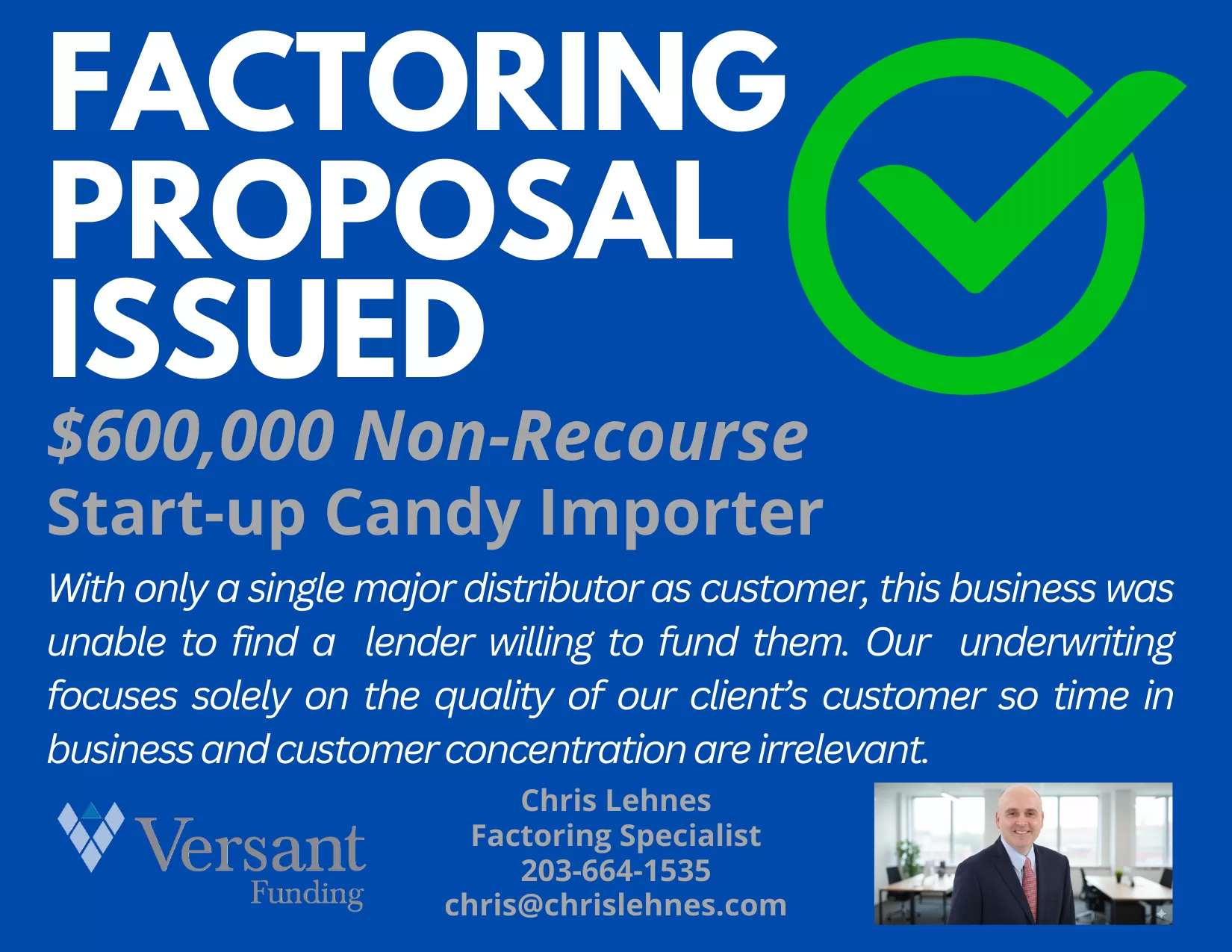
Factoring Proposal: With only a single major distributor as customer, this business was unable to find a lender willing to fund them. Our underwriting focuses solely on the quality of our client’s customer so time in business and customer concentration are irrelevant.

In the world of candy importing, timing is everything. You have to navigate seasonal peaks (think Halloween and Valentine’s Day), manage international shipping lead times, and juggle the demands of large retailers.

However, there is often a massive gap between the moment your colorful shipments clear customs and the moment your retail partners actually pay their invoices. If your capital is trapped in Accounts Receivable (AR), you might find yourself unable to jump on the next big inventory opportunity.

This is where Accounts Receivable Factoring—also known as invoice factoring—becomes a game-changer.


What Exactly is Factoring?

Factoring isn’t a loan; it’s the sale of your assets. You sell your outstanding invoices to a “factor” (a specialized financial company) at a slight discount. In return, you get immediate access to the cash that was previously tied up for 30, 60, or even 90 days.

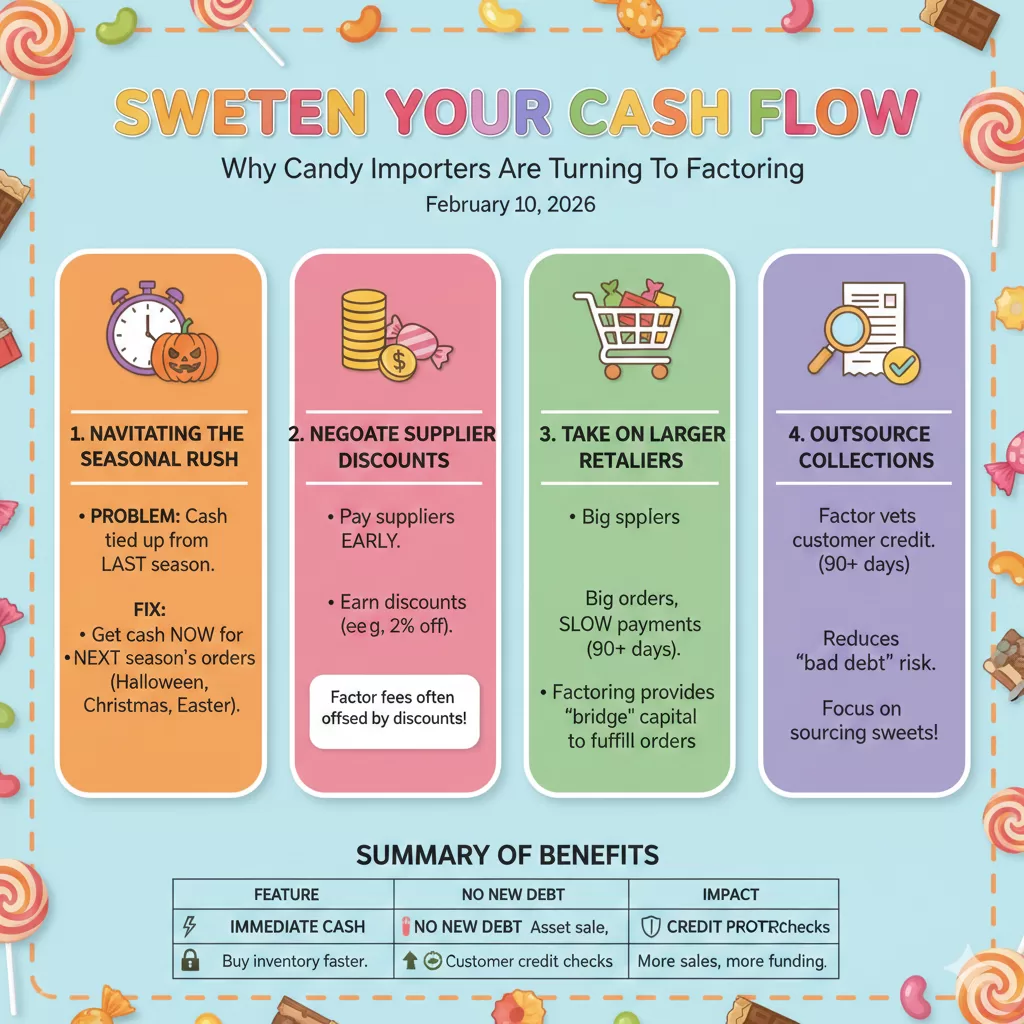
1. Navigating the Seasonal Rush

Candy is a highly seasonal business. To prepare for the “Big Three”—Halloween, Christmas, and Easter—importers must place massive orders months in advance.

  • The Problem: Your cash is tied up in invoices from the previous season while you need to pay suppliers for the next one.
  • The Factoring Fix: By factoring current invoices, you get an immediate cash injection to cover manufacturing and shipping costs for upcoming peak periods, ensuring you never miss a shelf-stocking deadline.

2. Negotiating Supplier Discounts

When you have “cash in hand” thanks to factoring, you move to the front of the line with global suppliers. Many international manufacturers offer early payment discounts (e.g., a 2% discount if paid within 10 days).

  • The small fee you pay for factoring is often completely offset by the discounts you earn from your suppliers by paying them early.

3. Taking on Larger Retailers

Big-box retailers are great for volume, but they are notorious for long payment terms. If a major chain wants to place a massive order but won’t pay for 90 days, a small-to-medium importer might have to say “no” simply because they can’t afford to wait that long for the payout.

  • Factoring provides the “bridge” capital. You can fulfill the order, factor the invoice the day the candy ships, and have the funds to keep the rest of your business running smoothly.

4. Outsourcing the “Headache” of Collections

Many factoring companies handle the back-end credit checking and collections process. For a lean importing team, this is a massive relief.

  • The factor vets the creditworthiness of your customers before you even ship, reducing your risk of “bad debt” and allowing you to focus on sourcing the best sweets rather than chasing down checks.

Summary of Benefits

FeatureImpact on Your Candy Business
Immediate CashBuy inventory for the next holiday season without waiting.
No New DebtFactoring is an asset sale, not a bank loan with monthly interest.
Credit ProtectionMany factors provide credit snapshots of your retail partners.
ScalabilityThe more you sell, the more funding becomes available.

Is Factoring Right for You?

If your candy importing business is growing faster than your bank account can keep up with, factoring provides the liquidity to keep your momentum. It turns your “sold” inventory back into “buying” power instantly.

Contact Factoring Specialist, Chris Lehnes
With only a single major distributor as customer, this business was unable to find a lender willing to fund them. Our underwriting focuses solely on the quality of our client’s customer so time in business and customer concentration are irrelevant.

The “Degree Dilemma”: Why the Class of 2026 is Facing a Tougher Employment Landscape

For decades, the path to employment followed a predictable script: graduate high school, earn a four-year degree, and step into a stable career. But for the Class of 2026 and other recent grads, that script has been heavily revised.

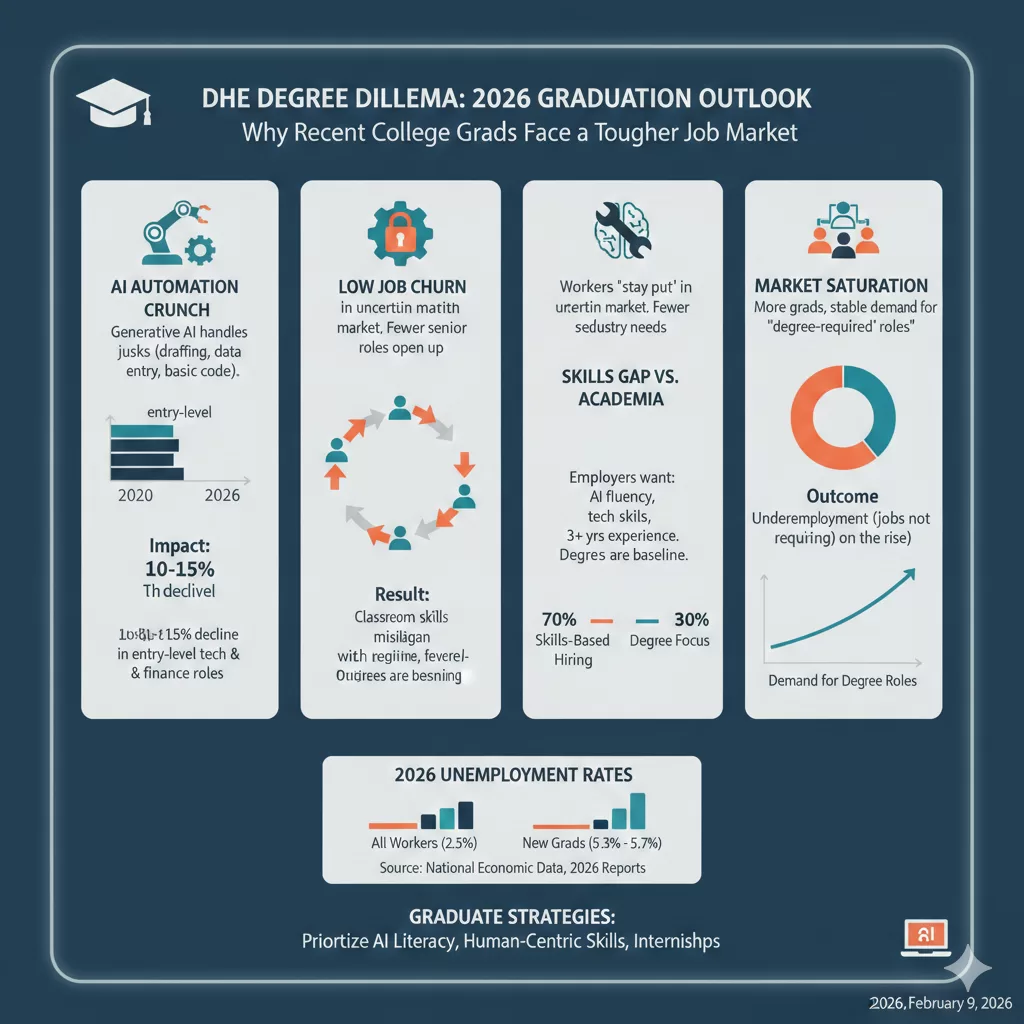
While the national unemployment rate remains relatively stable, a closer look reveals a “white-collar friction” that is hitting young graduates particularly hard. Recent data suggests that unemployment for workers aged 22–27 is significantly higher than for the general population, with some reports showing rates as high as 5.3% to 5.7% for new degree holders compared to just 2.5% for their more experienced counterparts.

Why is the “college advantage” seemingly cooling off? Here are the primary factors reshaping the entry-level landscape.

Why the Class of 2026 is Facing a Tougher Employment Landscape. For decades, the path to adulthood followed a predictable script: High School diploma to college

1. The “Bottom Rung” is Being Automated

Perhaps the most significant shift in 2026 is the impact of Generative AI. Historically, junior roles involved “intellectually mundane” tasks: drafting reports, organizing data, or basic coding. These were the “training wheels” of a career.

Today, AI agents handle these tasks with 90% accuracy in seconds.

  • The Result: Companies are becoming more “top-heavy.” They still need experienced managers to oversee AI, but they need fewer junior employees to do the legwork.
  • The Crunch: Entry-level hiring has seen double-digit declines in sectors like tech and finance, as firms use AI to boost productivity without expanding their headcount.

2. The Great “Stay Put” (Low Churn)

In a healthy economy, people switch jobs, creating “openings” at the bottom for new talent. In 2026, we are seeing a collapse in voluntary job switching.

“Workers are holding onto their roles because the market feels risky; as a result, the natural ‘churn’ that usually pulls recent grads into the workforce has stalled.”

When mid-level employees don’t move up or out, the entry-level pipeline remains clogged.

3. The Rising “Skills Gap” vs. Academic Focus

There is a growing disconnect between what is taught in the classroom and what is required in a modern office.

  • The Degree is the Baseline, Not the Finish Line: Employers are shifting toward skills-based hiring. According to NACE, 70% of employers now prioritize specific technical skills and AI fluency over the prestige of the degree itself.
  • Experience Over Everything: Job postings that once asked for 0–2 years of experience are increasingly demanding 3+ years or specific internships. For a recent grad, this creates the classic paradox: You can’t get the job without experience, but you can’t get experience without the job.

4. Market Saturation

We are currently seeing the result of “education-neutral” growth. The supply of college graduates has increased steadily, but demand for roles that specifically require a degree has leveled off. This has led to a rise in underemployment, where graduates find themselves in roles that don’t actually require their hard-earned credentials.


What Can Grads Do?

The market is tougher, but it isn’t closed. To stand out in the current environment, graduates must:

  1. Prioritize AI Literacy: It’s no longer a “plus”; it’s a requirement. Show how you use AI to work faster and smarter.
  2. Focus on “Human-Centric” Skills: Emphasize critical thinking, complex problem solving, and emotional intelligence—things AI still struggles to replicate.
  3. Treat Internships as Essential: In 2026, an internship is often the only way to bypass the “3 years of experience” requirement.

Contact Factoring Specialist, Chris Lehnes
Sluggish Job Growth to Kick Off 2026

The Sluggish Job Growth of the U.S. labor market is currently sending mixed signals that lean toward the “rough” side. After months of subtle hiring freezes and quiet cutbacks, the dam has seemingly broken, leading to a wave of high-profile layoff announcements that have left both job seekers and investors on edge.

Sluggish Job Growth to Kick Off 2026

From “Quiet Quitting” to “Quiet Hiring”… to Just “Quiet”

Last year, the narrative was dominated by “labor hoarding”—companies holding onto staff despite economic uncertainty. That trend has officially cooled. What we are seeing now is a three-phase retraction:

  1. The Big Freeze: Before the layoffs began, many firms implemented unannounced hiring freezes. If you noticed your applications disappearing into a “black hole” in Q4, you weren’t imagining it.
  2. The Strategic Cut: We’ve moved past the “growth at all costs” mindset of the early 2020s. Companies are now optimizing for efficiency, which often means trimming middle management and non-core departments.
  3. Market Rattling: These moves aren’t just affecting workers; they’re making Wall Street twitchy. While layoffs sometimes boost stock prices in the short term by promising better margins, a systemic pullback in hiring signals a lack of confidence in broader consumer spending.

Why is this happening now?

It’s a perfect storm of economic factors. Interest rates remain a point of contention, and the “higher for longer” reality has finally forced CFOs to tighten the belt. Additionally, the rapid integration of AI and automation is no longer a futuristic concept—it’s actively reshaping how companies budget for human capital.

Key Takeaway: The power dynamic has shifted. We are no longer in the “Great Resignation” era where candidates held all the cards. We are in an “Employer’s Market” characterized by high competition and rigorous vetting.


Survival Tips for the 2026 Job Seeker

If you’re currently in the trenches or worried about your role, “rough” doesn’t have to mean “impossible.” Here is how to adapt:

  • Focus on ‘Recession-Proof’ Skills: Lean into roles that directly impact revenue or operational efficiency.
  • Networking is the New Resume: With hiring portals frozen or flooded, a warm introduction is often the only way to bypass the digital gatekeepers.
  • Audit Your Tech Literacy: Companies are hiring for roles that can leverage new tools to do more with less. Show that you are that person.

The January chill in the job market is a sobering reminder that economic cycles are inevitable. While the headlines look daunting, history shows that these periods of contraction often lead to leaner, more resilient industries. The goal for now? Stay agile, stay informed, and keep your pulse on the shifting landscape.

Contact Factoring Specialist, Chris Lehnes
Every year, we’re told that January is the season for “new beginnings.” But for many of my colleagues and friends, 2026 started with a calendar invite that no one wants to see.

With over 100,000 layoffs announced just last month, it’s easy to feel like the ground is shifting beneath us. It’s frustrating to see companies freeze hiring right when talented people are looking for their next chapter.

What I’ve learned during market shifts like this:

  • Your job is what you do, not who you are. Resilience starts with separating your self-worth from a corporate headcount.
  • The “Hidden Market” is real. When the portals freeze, the human network thaws. Most of the hiring right now is happening through referrals and back-channel conversations.
  • Skill-stacking is the best defense. The folks I see landing roles right now are the ones who didn’t just wait—they spent the “freeze” learning how to leverage AI to make themselves a “team of one.”

If you were part of the January cuts, take a breath. The market is rough, but you are capable.

If I can help you with a referral, a resume check, or just a word of encouragement, please reach out. Let’s help each other get through the “January Chill.” ☕️👇

#CareerResilience #Leadership #JobSearch #CommunitySupport


January just delivered a wake-up call to the U.S. workforce. Here’s the “lowdown” on the slowdown:

  • 108k+: Layoffs announced in the last 31 days (the highest since ’09).
  • Record Lows: Hiring plans have hit a historic slump for Q1.
  • The Shift: Efficiency and AI-proficiency are officially the new “must-haves.”

The bottom line? The “Great Resignation” is a memory. We are now in the “Great Recalibration.”

If you’re hiring, post your roles in the comments. If you’re looking, tell us one “efficiency win” you’ve had recently. Let’s turn this feed into a resource.

#MarketUpdate #Recruiting #Hiring2026 #BusinessTrends

American Manufacturing Is In Decline; Trump’s Actions Are Making It Worse

U.S. Manufacturing Is in Retreat; Trump’s Tariffs Aren’t Helping

When Trump declared April 2, 2025, as “Liberation Day,” it was supposed to mark the beginning of a manufacturing renaissance. The promise was simple: by slapping aggressive tariffs on foreign goods, the administration would force production back to American soil, revitalize the Rust Belt, and end the “obliteration” of industrial towns.

However, as we move through early 2026, the data tells a different story. Far from a “roaring” comeback, the sector is in a documented retreat. While a recent January uptick in the ISM Manufacturing PMI https://tradingeconomics.com/united-states/business-confidence(52.6) offers a flicker of hope, the broader picture since the 2025 tariff rollout has been one of contraction and “stagflation-lite.”


1. The Numbers Don’t Lie: A Sector in Contraction

Despite the rhetoric, the U.S. manufacturing sector has struggled to keep its head above water over the last year.

  • Job Losses: Since the tariffs were announced, the sector has shed roughly 72,000 jobs. ADP data from January 2026 shows a further loss of 8,000 manufacturing positions, marking a persistent downward trend.
  • The PMI Slump: Before the unexpected January bounce, the sector experienced ten consecutive months of contraction. A reading below 50 indicates the industry is shrinking, and for most of 2025, it stayed firmly in the red.
  • Small Business Strain: For firms with 20 to 49 employees, employment levels have plummeted to their lowest point since 2022. These smaller shops often lack the capital to absorb tariff costs that larger corporations can sometimes weather.

2. The “Tax on Production” Problem

The fundamental issue with broad-based tariffs is that they don’t just tax finished goods; they tax the inputs that American factories need to build things.

“U.S. manufacturing is deeply integrated into global supply chains. When you tax steel, aluminum, and intermediate components, you aren’t just protecting a few domestic mills—you’re raising the cost of every car, appliance, and machine built in America.”

For example, Ford reported incurring nearly $2 billion in annual tariff costs in 2025. When domestic manufacturers face higher costs for their raw materials than their overseas competitors, they become less competitive on the global stage. Instead of hiring, they are forced to raise prices or implement hiring freezes to protect their margins.

3. Uncertainty is the Real Killer

Beyond the direct costs, the volatility of trade policy has created a “permanent risk mode” for supply chains.

  • Constant Shifts: In just the last few weeks, the administration increased tariffs on South Korea to 25% and threatened a 100% tariff on Canada.
  • Investment Freeze: Businesses hate uncertainty. Many firms have shifted their budgets away from efficiency-improving capital investments (like new machinery) toward “tariff mitigation” strategies.
  • The Supreme Court Factor: Markets are currently holding their breath for a SCOTUS ruling on the legality of using the International Emergency Economic Powers Act (IEEPA) to bypass Congress for these trade penalties.

The Bottom Line

The “manufacturing boom” is currently going in reverse. While the administration points to isolated gains in domestic metal production, the downstream effects—higher prices for consumers and job losses in tech-heavy and automotive sectors—are outweighing the benefits.

American factories are resilient, but they are currently caught between the hammer of high interest rates and the anvil of rising input costs. Until trade policy finds a steady, predictable rhythm, the “Golden Age” remains more of a slogan than a reality.

Contact Factoring Specialist, Chris Lehnes
Factoring: Funding the Energy Industry

Our Accounts Receivable Factoring program can quickly meet the working capital needs of businesses in the energy industry.

Our Accounts Receivable Factoring program can quickly meet the working capital needs of businesses in the energy industry.

Versant’s underwriting focus is solely on the quality of a company’s accounts receivable, which enables us to rapidly fund businesses which do not qualify for traditional lending.

Factoring Program Overview

  • $100,000 to $30 Million
  • Non-recourse
  • Flexible Term
  • Ideal for B2B or B2G

We fund challenging deals:

  • Start-ups
  • Losses
  • Highly Leveraged
  • Customer Concentrations
  • Weak Personal Credit
  • Character Issues

In about a week, we can advance against accounts receivable to qualified manufacturers, distributors or service providers in the energy sector.

Contact me today to learn if your client could benefit.

Factoring Proposal Issued | $3 Million Non-Recourse | Digital Marketing

Factoring Proposal Issued | $3 Million Non-Recourse | Digital Marketing

$3 Million Non-Recourse Factoring Facility to Digital Marketing Firm

Company has very large companies as clients which pay their invoices slowly. Our factoring facility will advance cash when invoices are issued allowing company to cover overhead .

Contact Factoring Specialist, Chris Lehnes

Unlock Your Agency’s Growth: The Power of Accounts Receivable Factoring for Digital Marketing Firms

In the world of digital marketing, agility and access to capital are paramount. You land a big client, launch a successful campaign, and the invoices stack up. The problem? Those invoices might not get paid for 30, 60, or even 90 days. This lag, known as the “cash flow gap,” can stifle your growth, prevent you from taking on new projects, and even impact your ability to pay your team.

This is where Accounts Receivable (AR) Factoring comes in—a powerful financial tool that many digital marketing agencies are overlooking.


What is Accounts Receivable Factoring?

Simply put, AR factoring allows your agency to sell its outstanding invoices to a third-party financial company (the “factor”) at a slight discount. In return, you receive an immediate cash advance, typically 70-90% of the invoice value. The factor then collects the full payment from your client when it’s due, and you receive the remaining balance (minus the factoring fee) once the invoice is paid.


How AR Factoring Benefits Digital Marketing Agencies

Here’s why factoring can be a game-changer for your digital marketing business:

1. Immediate Cash Flow Injection

The Problem: You’ve delivered fantastic results, but your client’s payment terms are extended. You need cash now to cover payroll, invest in new software, or launch another campaign.

The Solution: Factoring turns those 30- or 60-day invoices into same-day cash. This immediate liquidity allows you to:

  • Pay employees and contractors on time.
  • Invest in new talent or technology.
  • Cover operational expenses without stress.
  • Take on larger projects without financial strain.
Factoring Proposal Issued | $3 Million Non-Recourse | Digital Marketing

2. Fueling Growth and Expansion

The Problem: A potential big client comes along, but their project requires a significant upfront investment in ad spend, software licenses, or specialized talent that you don’t currently have liquid cash for.

The Solution: Factoring provides the working capital to pursue ambitious growth opportunities. You can:

  • Bid on bigger contracts with confidence.
  • Scale your ad campaigns rapidly.
  • Expand your service offerings.
  • Invest in business development to acquire new clients.

3. Reduced Financial Risk and Stress

The Problem: Chasing late payments is time-consuming, awkward, and can strain client relationships. Plus, the risk of non-payment always looms.

The Solution: With factoring, the responsibility of collections often shifts to the factor (depending on the agreement). This means:

  • Your team can focus on marketing, not collections.
  • Reduced administrative burden and operational costs.
  • Mitigated risk of bad debt (especially with “non-recourse factoring”).
  • Predictable cash flow eliminates financial anxiety.

4. Access to Capital Without Debt

The Problem: Traditional bank loans can be hard to secure for young or rapidly growing agencies, often requiring extensive collateral or a lengthy application process.

The Solution: Factoring is not a loan. You’re selling an asset (your invoice), not taking on debt. This makes it an attractive option because:

  • It doesn’t appear as debt on your balance sheet.
  • Approval is often based on your clients’ creditworthiness, not just yours.
  • It’s typically easier and faster to qualify for compared to traditional loans.
  • It preserves your existing credit lines for other needs.

5. Capitalizing on Seasonal Peaks and Valleys

The Problem: Digital marketing often has seasonal fluctuations. You might have huge projects during peak seasons, followed by leaner periods.

The Solution: Factoring offers flexible funding that scales with your business. You can factor invoices only when you need to, providing an agile solution to manage inconsistent cash flow throughout the year.


Is Factoring Right for Your Agency?

If your digital marketing agency deals with:

  • Slow-paying clients (even if they’re reliable payers).
  • Rapid growth that outpaces your cash reserves.
  • The need for immediate working capital without taking on debt.
  • A desire to streamline your collections process and reduce administrative overhead.

Then accounts receivable factoring deserves a serious look. It’s a strategic financial tool that can provide the stability and liquidity your agency needs to not just survive, but to truly thrive in the competitive digital landscape.

Contact Factoring Specialist, Chris Lehnes
Factoring Press Release: Versant Funds $5 Million Non-Recourse Factoring

Factoring Press Release : Versant Funds $5 Million Non-Recourse Factoring Facility to Manufacturer

(January 27, 2026) Versant Funding LLC is pleased to announce that it has funded a $5 Million non-recourse factoring facility to a company that manufactures products for a large customer base which includes one of America’s largest municipalities.

PRESS RELEASE : Versant Funds $5 Million Non-Recourse Factoring Facility to Manufacturer

After a transition to Private Equity ownership and management restructuring, our newest client required an infusion of working capital to meet an urgent cash need. While the company has hundreds of customers with AR outstanding, the most efficient way to fund was to factor only the AR of their largest customer, but most factoring companies would not permit 100% customer concentration.

“Versant focuses solely on the credit quality of our clients’ customers,” according to Chris Lehnes, Business Development Officer for Versant Funding, and originator of this financing opportunity. “Since the company’s largest account is a large US city, we were willing to allow 100% customer concentration and meet the client’s short-term funding need.”

About Versant Funding

Versant Funding’s custom Non-Recourse Factoring Facilities have been designed to fill a void in the market by focusing exclusively on the credit quality of a company’s accounts receivable. Versant Funding offers non-recourse factoring solutions to companies with B2B or B2G sales from $100,000 to $30 Million per month. All we care about is the credit quality of the A/R. To learn more contact: Chris Lehnes | 203-664-1535 | chis@chrislehnes.com

PRESS RELEASE : Versant Funds $5 Million Non-Recourse Factoring Facility to Manufacturer

Key Benefits of this Non-Recourse Factoring Deal:

  • Immediate Cash Flow: The manufacturer gains immediate access to working capital by selling its invoices to Versant Funding, significantly improving liquidity.
  • Mitigation of Customer Concentration Risk: By utilizing non-recourse factoring, Versant Funding assumes the credit risk associated with the manufacturer’s customer, protecting the manufacturer from potential bad debt.
  • Support for Growth: The increased cash flow will enable the manufacturer to invest in new equipment, expand production, take on larger orders, and capitalize on new market opportunities.
  • Operational Efficiency: The manufacturer can focus on its core business operations and production, knowing its cash flow is stable and predictable.
  • Flexible and Scalable: The factoring facility is designed to grow with the manufacturer’s sales, providing ongoing access to capital as their business expands.

Podcast: What Every Small Business Should Know – Listen Now

Podcast - Small Businesses face numerous challenges, among them is the ability to have access to sufficient working capital to meet the ongoing cash obligations of the business.

Podcast – Small Businesses face numerous challenges, among them is the ability to have access to sufficient working capital to meet the ongoing cash obligations of the business.

While this need can be met by a traditional line of credit for businesses which meet all traditional bank lending criteria, many businesses do not meet those standards and require an alternative.

One such option is accounts receivable factoring. With factoring, a B2B or B2G business can quickly convert their accounts receivable into cash.

Many factoring companies focus exclusively on the credit quality of the customer base and ignore the financial condition of the business and the personal financial condition of the owners.

This works well for businesses with traits such as:

Losses

Rapidly Growing

Highly Leveraged

Customer Concentrations

Out-of-favor Industries

Weak Personal Credit

Character Issues

Listen to this podcast to gain a greater understanding of the types of businesses which can benefit from this form of financing.

To learn if you are a fit contact me today

Intel Earnings: Quarterly Loss Widens as Chip Costs Surge

Intel fourth-quarter and full-year 2025 earnings report, as detailed in the Wall Street Journal and other financial outlets, highlights a company in the midst of a massive structural turnaround while grappling with a challenging semiconductor market.

Intel fourth-quarter and full-year 2025 earnings report, as detailed in the Wall Street Journal and other financial outlets, highlights a company in the midst of a massive structural turnaround while grappling with a challenging semiconductor market.

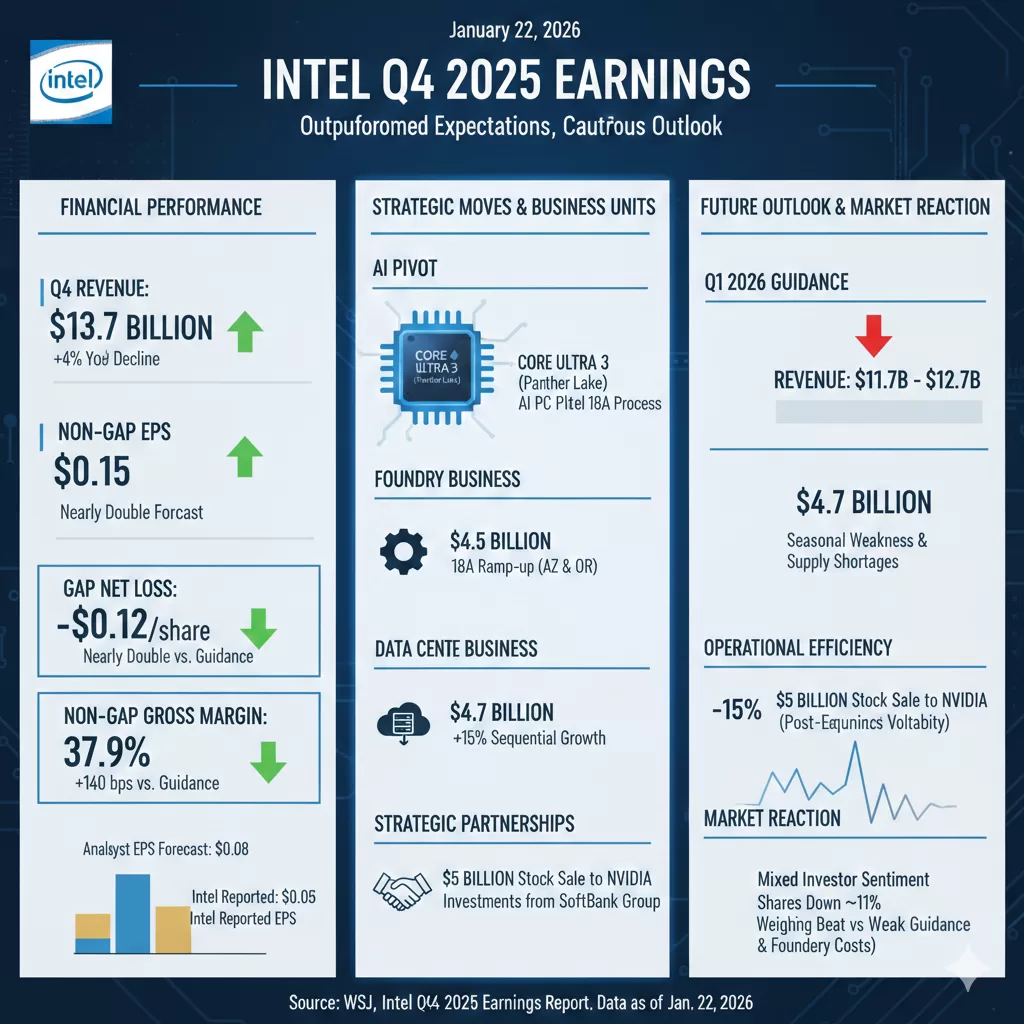
According to the report released on January 22, 2026, Intel outperformed its own guidance and analyst expectations for the quarter, though it remains in a delicate financial position.

Financial Performance (Q4 2025)

  • Revenue: Intel reported $13.7 billion in Q4 revenue, a 4% decline year-over-year but higher than the forecasted $13.4 billion.
  • Earnings Per Share (EPS): The company posted a non-GAAP EPS of $0.15, nearly double the $0.08 analysts expected. However, on a GAAP basis, it recorded a net loss of $0.12 per share ($591 million total).
  • Gross Margin: Non-GAAP gross margin reached 37.9%, exceeding guidance by 140 basis points, driven by higher-than-expected revenue and disciplined spending.
Intel’s fourth-quarter and full-year 2025 earnings report, as detailed in the Wall Street Journal and other financial outlets, highlights a company in the midst of a massive structural turnaround while grappling with a challenging semiconductor market.

Key Strategic Moves & Business Units

  • AI Pivot: CEO Lip-Bu Tan emphasized the “essential role of CPUs in the AI era.” Intel launched its Core Ultra Series 3 (Panther Lake), the first AI PC platform built on the advanced Intel 18A process.
  • Foundry Business: Intel Foundry reported $4.5 billion in revenue. The company is aggressively ramping up its 18A process in Arizona and Oregon to regain manufacturing leadership.
  • Data Center and AI (DCAI): This segment saw its fastest sequential growth of the decade, rising 15% to $4.7 billion, signaling a potential recovery in server demand.
  • Strategic Partnerships: The balance sheet was bolstered by a significant $5 billion stock sale to NVIDIA and new investments from SoftBank Group.

Future Outlook

  • Q1 2026 Guidance: Intel provided a cautious outlook for the coming quarter, projecting revenue between $11.7 billion and $12.7 billion. This lower forecast is attributed to “seasonal weakness” and industry-wide supply shortages, which the company expects to hit a low point in Q1 before improving.
  • Operational Efficiency: Intel reduced its full-year operating expenses by 15% (down to $16.5 billion) through organizational streamlining.

Market Reaction

Despite the earnings “beat,” investor sentiment remained mixed. Shares experienced volatility—trading down as much as 11% in some sessions following the report—as the market weighed the positive surprise against the weak Q1 2026 guidance and the heavy capital costs associated with the foundry transition.

Contact Factoring Specialist Chris Lehnes

The High Cost of “Playing Around”: Fed Independence Matters

The Fed’s Delicate Balance

Few voices carry as much weight as Jamie Dimon’s. So, when the JPMorgan Chase CEO uses words regarding Fed independence like “absolutely critical” and warns of “adverse consequences,” the markets—and the public—should probably lean in.

Fed Independence. The High Cost of "Playing Around": Why Fed Independence Matters to Your Wallet

His recent comments regarding political interference with the Federal Reserve aren’t just about high-level banking theory; they are a direct warning about the stability of the American economy and the cost of living for every citizen.

The “Referee” of the Economy

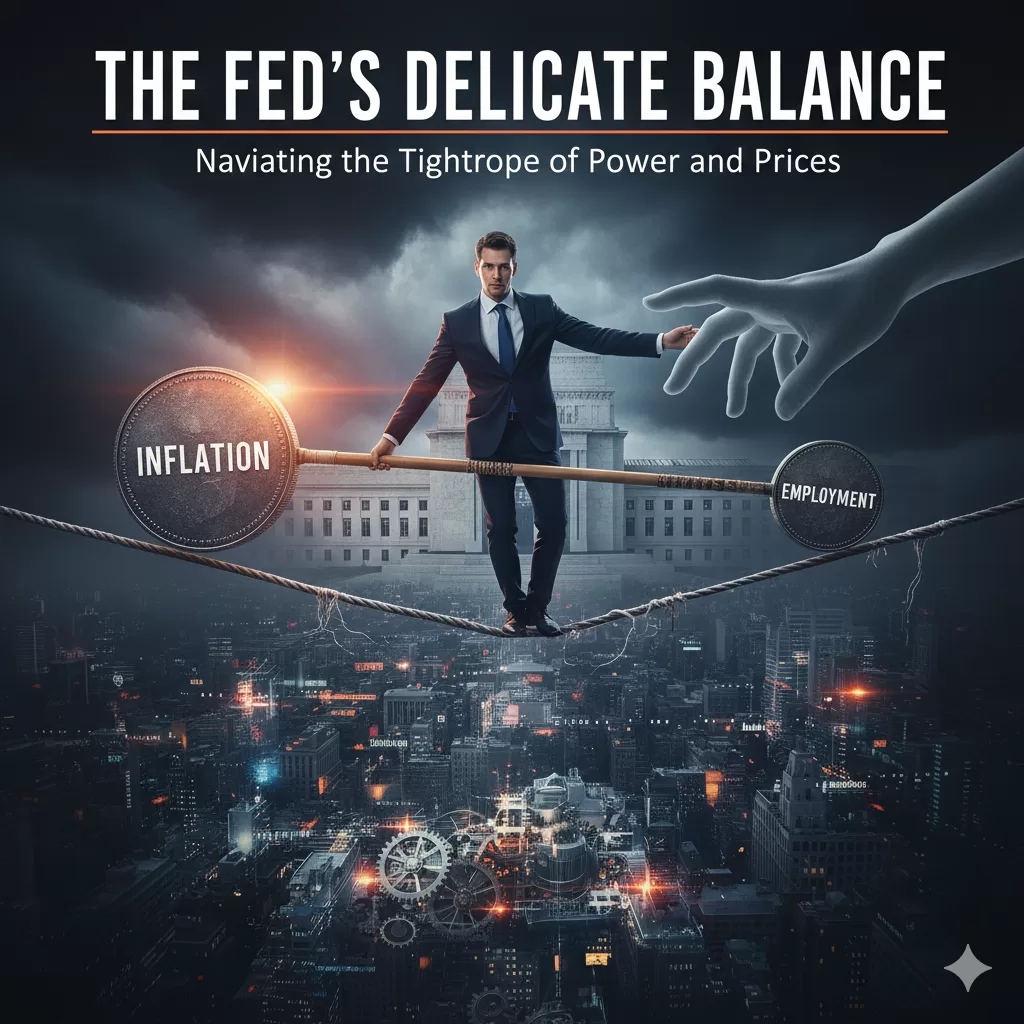
To understand Dimon’s concern, you have to look at the Federal Reserve’s role. Think of the Fed as the “referee” of the economy. Their job is to manage inflation and employment by adjusting interest rates. For this to work, they have to be able to make tough, often unpopular decisions—like raising rates to cool down inflation—without worrying about whether those moves will cost a politician an election.

As Dimon pointed out during a recent earnings call, “The independence of the Fed is absolutely critical.” Why? Because the moment the public or investors believe the Fed is taking orders from the White House, trust in the U.S. dollar and the stability of our markets begins to crumble.

The Irony of Political Pressure

The current tension stems from persistent political pressure on Fed Chair Jerome Powell to lower interest rates. The logic from the political side is simple: lower rates usually mean more borrowing, more spending, and a short-term boost to the economy.

However, Dimon warns that this pressure can backfire spectacularly. He noted that “playing around with the Fed could have adverse consequences, the absolute opposite of what you might be hoping for.”

Here is the paradox: If the Fed lowers rates because a politician told them to, rather than because the data supports it, investors will fear that inflation is going to spiral out of control. To protect themselves, those same investors will demand higher returns on government bonds. This drives “long-term” interest rates up—the very rates that determine what you pay for a mortgage, a car loan, or a credit card balance.

By trying to force rates down for a political win, leaders could inadvertently push rates higher for the average consumer.

Fed independence. The High Cost of "Playing Around": Why Fed Independence Matters to Your Wallet

Why This Matters Now

Dimon’s warning comes at a delicate time. Between the potential for new tariffs (which can drive up prices) and a growing federal deficit, the U.S. economy is walking a tightrope.

If the Fed loses its autonomy, the “soft landing” we’ve all been hoping for—where inflation cools without a major recession—becomes much harder to achieve. As Dimon noted, asset prices are currently priced for perfection, and the margin for error is slim.

The Bottom Line

Jamie Dimon isn’t just defending a colleague in Jerome Powell; he is defending the institutional credibility that keeps the global financial system running.

In a world of hyper-partisan politics, some things need to remain “above the fray.” The Federal Reserve is one of them. If the independence of the central bank is compromised, we won’t just see it in the headlines—we’ll feel it in our monthly bills.

*** What do you think? Is political oversight of the Fed necessary for accountability, or is Jamie Dimon right that independence is the only way to keep the economy stable? Let’s discuss in the comments.

Contact Factoring Specialist, Chris Lehnes