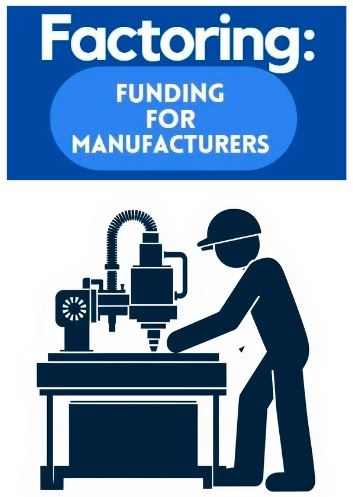
Factoring: The Quick Cash Solution Manufacturers Need Now


Factoring: The Quick Cash Solution Manufacturers Need Now

In today’s dynamic market, manufacturers face a unique set of challenges. From managing inventory and production schedules to navigating supply chain disruptions and fluctuating demand, the need for reliable, accessible capital is constant. That’s where factoring comes in, offering a powerful and often overlooked solution for quick cash.

At Versant Funding, we understand the specific financial pressures manufacturers endure. That’s why we specialize in providing tailored factoring services designed to get you the capital you need, when you need it. Our latest video, which you can watch above, highlights how factoring can be a game-changer for your business.

What is Factoring, and Why is it Perfect for Manufacturers?

Simply put, factoring allows you to sell your accounts receivable (invoices) to a third party (the factor) at a small discount in exchange for immediate cash. Instead of waiting 30, 60, or even 90 days for your customers to pay, you get the funds right away.

For manufacturers, this means:

  • Quick Cash Flow: No more cash flow gaps hindering your production or growth initiatives. Get funds in as quick as a week!
  • Significant Funding: We offer funding from $100,000 to $30 Million, providing substantial support whether you’re a growing mid-sized company or a large enterprise.
  • Non-Recourse Factoring: This is a crucial benefit for manufacturers. With non-recourse factoring, if your customer fails to pay due to bankruptcy or insolvency, you’re typically not responsible for repaying the advance. This transfers the credit risk away from your balance sheet.
  • Flexible Terms: We work with you to create terms that fit your unique business model and cash flow requirements.
  • Ideal for “Tough-to-Finance” Businesses: Traditional bank loans can be hard to secure, especially for newer companies, those with limited collateral, or those experiencing rapid growth. Factoring focuses on the quality of your accounts receivable, making it an accessible option when other avenues are closed.

How Manufacturers Benefit from Factoring:

Imagine being able to:

  • Purchase Raw Materials: Take advantage of bulk discounts or secure critical components without delay.
  • Meet Payroll: Ensure your skilled workforce is paid on time, every time.
  • Invest in New Equipment: Upgrade machinery or expand your production lines to increase efficiency and capacity.
  • Handle Large Orders: Don’t turn away big opportunities because of insufficient working capital.
  • Improve Credit Standing: Use the immediate cash to pay suppliers promptly, potentially earning early payment discounts and strengthening your vendor relationships.

Why?

We pride ourselves on being more than just a capital provider. We are your partner in growth. I am dedicated to understanding the intricacies of the manufacturing sector and crafting financial solutions that truly work.

Ready to unlock the potential of your accounts receivable?

To see how factoring can transform your manufacturing business reach out to Chris Lehnes today for a no-obligation consultation.

Chris Lehnes Factoring Specialist 203-664-1535 chris@chrislehnes.com

Don’t let slow-paying invoices slow down your progress. Get the quick cash you need with Versant Funding!

Factoring: Quick Cash to Kick Off the Year

The 2026 Growth Gap: How Accounts Receivable Factoring Fuels Small Business Success

Factoring: Quick Cash to Kick Off the Year: As we move through 2026, the economic landscape for small businesses is defined by a paradox: opportunity is everywhere, but cash is moving slower than ever. While sectors like high-tech manufacturing and professional services are seeing a resurgence, many entrepreneurs find themselves “asset rich but cash poor.”

You’ve landed the big contract, your team is working overtime, and your sales are climbing. Yet, your bank account doesn’t reflect that success because your capital is trapped in Accounts Receivable (AR). If you’re waiting 30, 60, or even 90 days for clients to pay their invoices, you aren’t just waiting for money—you’re waiting to grow.

This is where Accounts Receivable Factoring becomes a strategic engine for your business.


What is AR Factoring in 2026?

Accounts receivable factoring (or invoice factoring) is not a loan. It is the sale of your outstanding invoices to a third party (a “factor”) at a slight discount in exchange for immediate liquidity.

In 2026, the process has been revolutionized by fintech integrations. Most modern factoring platforms now sync directly with your accounting software (like QuickBooks or Xero), allowing for “one-click” funding that can land in your account within 24 hours.

Factoring: Quick Cash to Kick Off the Year

Why Factoring is the “Secret Weapon” for 2026

While traditional bank loans focus on your credit score and years of profitability, factoring focuses on the creditworthiness of your customers. This makes it an ideal solution for:

  • Rapidly Growing Startups: When sales outpace your cash reserves.
  • Seasonal Businesses: Managing the “lumpy” cash flow of peak seasons.
  • Service Providers: Staffing agencies or consultants who must pay employees weekly but get paid by clients monthly.

3 Ways Factoring Helps You Thrive This Year

1. Turn “Net-90” into “Right Now”

The most significant barrier to growth in 2026 is the “Cash Gap.” If you have $100,000 in open invoices, that’s $100,000 you can’t use to buy inventory, hire talent, or pay for digital marketing. Factoring unlocks up to 90-95% of that value immediately, giving you the agility to say “yes” to new opportunities without checking your balance first.

2. Fuel Expansion Without Adding Debt

In an era of “snagflation”—where mild inflation persists alongside a shifting labor market—loading your balance sheet with high-interest debt can be risky. Because factoring is a purchase of assets, it doesn’t show up as a loan. You are simply accelerating the arrival of money you’ve already earned.

3. Outsourced Credit & Collections

Modern factoring companies do more than just provide cash. They often act as your back-office credit department. In 2026, where business bankruptcies are slightly on the rise, having a partner who vets the credit risk of your potential clients is a massive competitive advantage. They handle the collections, freeing you up to focus on your product.


Is it Right for You?

To help you decide, here is a quick comparison of how factoring stacks up against traditional financing in today’s market:

FeatureAR FactoringTraditional Bank Loan
Speed24–48 Hours3–6 Weeks
Approval BasisCustomer’s CreditYour Credit & Collateral
DebtNone (Asset Sale)Increases Liabilities
FlexibilityScales with SalesFixed Credit Limit
Cost1%–5% Service FeeInterest Rate + Fees

Final Thoughts: Don’t Let Your Invoices Hold You Back

In 2026, the winners won’t necessarily be the companies with the biggest ideas, but those with the highest liquidity. AR factoring provides a bridge over the cash flow gaps that sink 82% of small businesses. It turns your hard work into immediate fuel.

Contact Factoring Specialist, Chris Lehnes

Stolen Focus by Johann Hari – Summary and Analysis

In “Stolen Focus”, author Johann Hari investigates the modern erosion of human attention through personal anecdotes and scientific research. He argues that our inability to focus is not a personal failure of willpower but a result of systemic environmental factors, including the rise of surveillance capitalism and addictive technology. The text highlights how digital platforms use algorithms to maximize screen time, which disrupts our flow states and capacity for deep thought. Hari describes his own digital detox in Provincetown to illustrate that individual isolation is an insufficient long-term solution to a global crisis. Ultimately, the book calls for an “Attention Rebellion” to reclaim our minds from corporate and structural forces that prioritize speed over depth. Through interviews with experts, he explores how better sleep, nutrition, and play are essential to restoring our collective focus.

In Stolen Focus Johann Hari investigates the modern erosion of human attention through personal anecdotes and scientific research. He argues that our inability to focus is not a personal failure of willpower but a result of systemic environmental factors, including the rise of surveillance capitalism and addictive technology. The text highlights how digital platforms use algorithms to maximize screen time, which disrupts our flow states and capacity for deep thought. Hari describes his own digital detox in Provincetown to illustrate that individual isolation is an insufficient long-term solution to a global crisis. Ultimately, the book calls for an "Attention Rebellion" to reclaim our minds from corporate and structural forces that prioritize speed over depth. Through interviews with experts, he explores how better sleep, nutrition, and play are essential to restoring our collective focus.

Briefing Document: The Crisis of Stolen Focus

Executive Summary

This document synthesizes key findings on the contemporary crisis of attention, arguing that the pervasive decline in our ability to focus is not an individual failing but a systemic problem driven by powerful technological, social, and economic forces. Decades of research and expert testimony indicate that our environment is being systematically engineered to degrade focus for profit and productivity, a reality that necessitates a collective, structural response rather than isolated individual efforts.

Key Takeaways:

  • Systemic, Not Personal, Failure: The collapsing ability to pay attention is not primarily due to personal laziness or a lack of willpower. It is a societal issue caused by powerful forces—from Big Tech to broader economic pressures—that are actively “pouring acid on your attention every day.”
  • The Architecture of Distraction: The dominant business model of major technology platforms, “surveillance capitalism,” is fundamentally designed to capture and sell human attention. This model incentivizes the creation of features like infinite scroll and outrage-fueling algorithms that maximize screen time by hijacking psychological vulnerabilities, leading to a state of constant distraction and heightened societal anger.
  • Erosion of Deep Thinking: The crisis extends beyond simple distraction. Foundational states for deep thought are being systematically crippled. These include “flow states” (deep, effortless immersion), the cognitive patience fostered by deep reading, and the creative consolidation that occurs during mind-wandering—all of which are suppressed by an environment of constant switching and stimulation.
  • The Fallacy of “Cruel Optimism”: Solutions that focus exclusively on individual willpower—such as digital detoxes or self-help techniques—are a form of “cruel optimism.” They offer inadequate, small-scale answers to vast, systemic problems, effectively blaming the victim. This is analogous to responding to the obesity crisis with diet books alone while ignoring the toxic food environment that drives it.
  • A Call for an “Attention Rebellion”: Addressing the crisis requires a collective social and political movement. The path forward involves systemic changes, including the regulation of technology companies to ban surveillance capitalism, a widespread shift to a four-day work week to combat exhaustion, and a fundamental rethinking of a culture predicated on ever-increasing speed and growth.

I. The Nature of the Attention Crisis

The degradation of focus is a tangible, measurable phenomenon impacting individuals and societies. It manifests in the struggle to be present in one’s own life, as illustrated by a trip to Graceland where visitors, including the author’s godson, experienced the iconic location primarily through the mediated reality of iPads and smartphones rather than direct observation. This personal experience is a microcosm of a larger, scientifically documented trend.

A. Scientific Evidence of Shrinking Attention

  • A landmark study led by scientist Sune Lehmann at the Technical University of Denmark analyzed data from the 1880s to the present, including Google Books, Twitter, and movie ticket sales.
  • Key Finding: The research provides the first major scientific proof that collective attention spans have been shrinking for over 130 years. Topics now rise to peak popularity and fade from public discussion at an ever-accelerating rate.
  • Primary Cause: While the internet has dramatically accelerated this trend, the root cause is a continuous increase in the volume and speed of information. As Lehmann’s model demonstrates, “The more information you pump in, the less time people can focus on any individual piece of it.”
  • Consequence: The sacrifice for this speed is depth. As Sune Lehmann states, “Depth takes time. And depth takes reflection… All of these things that require depth are suffering. It’s pulling us more and more up onto the surface.”

B. A Systemic Problem, Not an Individual Failing

The prevailing narrative of self-blame—attributing distraction to laziness or lack of discipline—is a profound misunderstanding of the issue. The source context argues that this is a systemic problem being actively perpetrated.

  • An “Attentional Pathogenic Culture”: Experts believe society is creating an environment where sustained focus is exceptionally difficult, forcing individuals to “swim upstream to achieve it.”
  • An expert, when asked how one might design a society to ruin people’s attention, replied, “Probably about what our society is doing.”
  • The Core Argument: The document posits that there are twelve deep forces damaging attention, driven by powerful entities including, but not limited to, Big Tech. The central thesis is that “you are living in a system that is pouring acid on your attention every day, and then you are being told to blame yourself and to fiddle with your own habits while the world’s attention burns.”

II. Key Drivers of Attention Degradation

The crisis is multifaceted, stemming from a confluence of technological, physiological, and environmental factors that have fundamentally altered how we live, work, and think.

A. The Architecture of Distraction: Technology’s Business Model

The design of modern digital technology is a primary cause of attention degradation, driven by a business model known as surveillance capitalism. Former Silicon Valley insiders like Tristan Harris (ex-Google) and Aza Raskin (inventor of infinite scroll) provide a detailed critique.

  • The Business Model: Social media companies profit not just from showing advertisements, but from collecting vast amounts of user data to create predictive models. These models are then sold to advertisers who wish to influence behavior. This economic model has a single imperative: maximize user screen time to gather more data.
  • Designed for Addiction: To achieve maximum screen time, platforms are built using principles from B.F. Skinner’s behavioral psychology, creating “a craving” in users. Techniques include:
    • Infinite Scroll: Designed by Aza Raskin, this feature removes natural stopping points, encouraging continuous, mindless consumption. Raskin estimates it makes users spend 50% more time on sites.
    • Variable Reinforcements: The unpredictable delivery of “likes” and notifications operates like a slot machine, creating a compulsive need to check for rewards.
    • Task Switching: Notifications are designed to constantly pull users away from other tasks, incurring a “switch cost effect” that slows thinking, increases errors, reduces creativity, and impairs memory.
  • Algorithms of Outrage: To keep users engaged, algorithms on platforms like YouTube and Facebook have learned that shocking, anger-inducing, and extreme content is most effective.
    • The YouTube Effect: Former YouTube engineer Guillaume Chaslot revealed that the algorithm systematically recommends increasingly extreme content. Watching a factual video about the Holocaust could lead to Holocaust-denial content within five videos.
    • Political Consequences: This dynamic has profound real-world impacts, contributing to political polarization and radicalization. In Brazil, Jair Bolsonaro’s rise was fueled by social media algorithms promoting his outrageous content, leading his supporters to chant “Facebook! Facebook!” upon his victory.
In Stolen Focus author Johann Hari investigates the modern erosion of human attention through personal anecdotes and scientific research. He argues that our inability to focus is not a personal failure of willpower but a result of systemic environmental factors, including the rise of surveillance capitalism and addictive technology. The text highlights how digital platforms use algorithms to maximize screen time, which disrupts our flow states and capacity for deep thought. Hari describes his own digital detox in Provincetown to illustrate that individual isolation is an insufficient long-term solution to a global crisis. Ultimately, the book calls for an "Attention Rebellion" to reclaim our minds from corporate and structural forces that prioritize speed over depth. Through interviews with experts, he explores how better sleep, nutrition, and play are essential to restoring our collective focus.

B. The Erosion of Foundational States for Focus

Beyond active distraction, the modern environment systematically undermines the mental states essential for deep thinking and well-being.

  • Flow States: Researched by psychologist Mihaly Csikszentmihalyi, “flow” is the deepest form of human focus, achieved when one is fully absorbed in a single, meaningful task at the edge of one’s abilities. Multitasking and constant interruption are antithetical to flow. Starved of flow, we become “stumps of ourselves, sensing somewhere what we might have been.”
  • Deep Reading: The decline in sustained reading of physical books represents a major loss of a common flow state.
    • Comprehension: Studies show that reading on screens leads to lower comprehension compared to reading on paper. The gap for elementary school children is equivalent to two-thirds of a year’s growth.
    • Empathy: Research by Professor Raymond Mar shows that reading fiction functions as an “empathy gym.” By simulating the inner lives of others, it measurably improves a reader’s ability to understand real-world emotions. This effect is not found with non-fiction or the fragmented narratives of social media.
  • Mind-Wandering: Far from being a waste of time, mind-wandering is an essential brain state (the “default mode network”) critical for consolidating memories, making new connections, and long-term planning. Constant digital stimulation suppresses this state, degrading the quality of our thinking.

C. Physiological and Environmental Assaults on Attention

Our ability to focus is also under direct physiological attack from changes in our lifestyles and physical environment.

FactorDescription of Impact
Sleep DeprivationChronic sleep loss has severe cognitive effects. Staying awake for 18 hours impairs reaction time to a level equivalent to 0.05% blood alcohol. The prefrontal cortex, crucial for judgment, is particularly sensitive. This is exacerbated by evening exposure to blue light from screens, which disrupts sleep-regulating hormones.
Stress & HypervigilanceAs demonstrated by Dr. Nadine Burke Harris, Surgeon General of California, stress and trauma (especially in childhood) trigger a state of hypervigilance. The brain becomes wired to constantly scan for threats, making deep, calm focus impossible. This is often misdiagnosed as ADHD.
Overwork & ExhaustionWorking hours have steadily increased, leading to widespread exhaustion. An experiment at Perpetual Guardian in New Zealand, led by CEO Andrew Barnes, proved that a four-day work week (for the same pay) led to a 35% decrease in off-task social media use, a 15% drop in stress, and an overall increase in productivity.
Diet & PollutionA growing body of evidence suggests that modern diets high in processed foods and exposure to environmental pollutants (such as lead, BPA, and other industrial chemicals) directly harm brain function and focus. Professor Barbara Demeneix states, “there is no way we can have a normal brain today” due to this constant chemical exposure.

D. The Transformation of Childhood and the Rise of ADHD

Children’s attention problems are escalating dramatically, a trend that cannot be explained by biology alone. The very nature of childhood has been radically altered in ways that undermine the development of focus.

  • The Collapse of Free Play: Unsupervised, unstructured play has been nearly eliminated from children’s lives, replaced by homework (up 145% between 1981-1997), screens, and adult-supervised activities.
  • The Importance of Play: Free play is “the primary technology for learning.” It is where children learn negotiation, problem-solving, emotional regulation, and how to pursue their own intrinsic motivations—the internal drive to do things for their own sake, which is the foundation of sustained attention.
  • An Environmental Mismatch: Drawing an analogy from veterinary science, the text suggests children are like zoo animals. When a horse is confined to a stall, it develops compulsive behaviors because its “frustrated biological objectives” (the need to run and graze) are denied. Similarly, children are being raised in environments that thwart their innate needs for play and autonomy, leading to behaviors labeled as ADHD.

III. The Fallacy of Individual Solutions and “Cruel Optimism”

The dominant cultural response to the attention crisis is to advocate for individual self-discipline. This approach, while well-intentioned, is fundamentally flawed and represents a form of “cruel optimism.”

  • The Provincetown Experiment: The author’s three-month digital detox in Provincetown demonstrated the profound benefits of disconnecting—a recovery of flow, deep reading, and calm. However, it also highlighted the limitations of this approach: it is a privilege few can afford, and the return to the normal environment quickly eroded the gains.
  • The “Indistractible” Argument: This viewpoint, championed by tech designer Nir Eyal (author of Hooked), posits that distraction is caused by “internal triggers” and can be managed through personal life-hacks.
  • The Obesity Analogy: This individual-centric view is compared to the failed response to the obesity crisis. For decades, the culture blamed individuals for being overweight and sold them diet books. This failed because the root problem was a systemic change in the food environment. Similarly, digital diet books will not solve the attention crisis.
  • Authentic Optimism: The alternative is to collectively address the underlying causes of the problem. Instead of shaming individuals, the focus must shift to changing the toxic environment that is degrading everyone’s attention.

IV. A Path Forward: Systemic Change and the “Attention Rebellion”

Reclaiming focus requires a collective fight to change the systems that are stealing it. This involves a multi-pronged strategy aimed at reforming technology, work culture, and ultimately, our societal values.

A. Reforming Technology

The business model of surveillance capitalism must be dismantled.

  • Ban the Current Model: Regulation is needed to make the current “track and manipulate” business model illegal.
  • Shift to New Models: Alternatives include subscription-based services (where the user is the customer, not the product) or treating major platforms as public utilities.
  • Redesign for Human Values: Once financial incentives are realigned, technology can be redesigned to serve human intentions, not to capture attention. Simple changes could include:
    • Batching notifications into a single daily update.
    • Designing platforms to facilitate real-world meetups.

B. Reclaiming Time and Rest

Structural changes are necessary to combat the culture of exhaustion.

  • The Four-Day Work Week: Widespread adoption of a shorter work week has been proven to increase focus, reduce stress, and maintain or even boost productivity.
  • The Fight for Time: Historically, gains like the weekend were not given freely by employers; they were won through decades of organized labor campaigns. A similar fight will be required to reclaim more time for rest and reflection.

C. Building a Movement: The Attention Rebellion

Individual action is insufficient; a broad-based social movement is required to force systemic change.

  • Historical Precedent: The women’s rights movement and the successful campaign to ban leaded gasoline demonstrate that organized citizens can defeat powerful interests.
  • “Site Battles”: Activist Ben Stewart suggests the movement can gain momentum through “site battles”—dramatic, nonviolent confrontations at symbolic locations (e.g., Facebook HQ) to raise public consciousness about the crisis.
  • The Goal: The movement’s aim is “personal liberation—liberating ourselves from people who are controlling our minds without our consent.”
  • The Ultimate Challenge: In the long term, a sustainable solution will require challenging the core logic of an economy built on perpetual growth, which fuels the relentless demand for more speed, more consumption, and ultimately, less attention. As Dr. Charles Czeisler notes, “our economic system has become dependent on sleep-depriving people. The attentional failures are just roadkill. That’s just the cost of doing business.”

Contact Factoring Specialist, Chris Lehnes

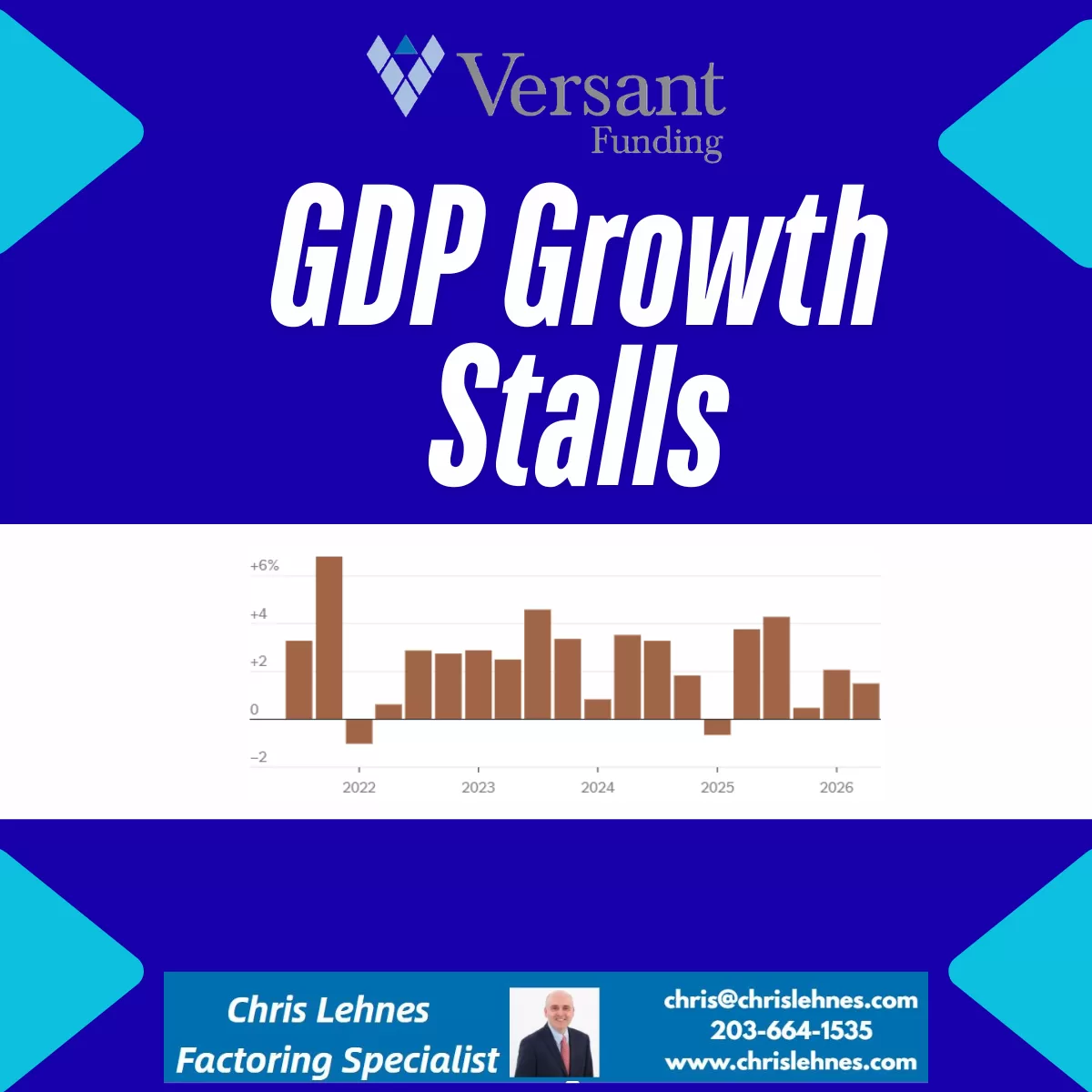
US GDP Growth: A Look Ahead to 2025

Gross Domestic Product (GDP) growth rate

Let’s explore the potential trends in its Gross Domestic Product (GDP) growth rate throughout 2025. While no one has a crystal ball, we can analyze current trajectories, expert projections, and potential influencing factors to paint a picture of what lies ahead.

Gross Domestic Product (GDP) growth rate

The Current Economic Pulse (Briefly looking back at late 2024)

To understand 2025, it’s crucial to acknowledge the economic momentum (or lack thereof) leading into it. We’re likely seeing a continued moderation from the robust growth experienced in the immediate post-pandemic recovery. Inflation, while hopefully tamer, will still be a key variable, influencing consumer spending and investment. Interest rates, dictated by the Federal Reserve, will also play a significant role. Let’s imagine a snapshot of the US economy as we enter 2025.

Q1 2025: A Cautious Start?

As 2025 kicks off, many economists anticipate a period of continued cautious growth. Businesses may still be adjusting to lingering supply chain complexities and a potentially tighter labor market. Consumer spending, the bedrock of the US economy, might see moderate gains, influenced by real wage growth (or lack thereof) and household savings levels. Investment in new projects could be selective, driven by a desire for efficiency and technological advancement. We might see the GDP growth rate hover in the lower to mid-2% range during this initial quarter.

Q2 2025: Finding its Rhythm

Moving into the second quarter, we could witness the economy starting to find a more stable rhythm. Factors such as potentially easing inflationary pressures and a clearer outlook on monetary policy could provide more certainty for businesses and consumers. We might see a slight uptick in manufacturing activity and continued strength in the services sector. Technological innovation, particularly in areas like AI and green energy, could begin to show more tangible contributions to productivity.

Q3 2025: Potential for Acceleration

The third quarter often provides a good indicator of annual performance, and 2025 could see some positive momentum building. If global economic conditions stabilize and major geopolitical tensions remain subdued, US exports could see a boost. Domestically, renewed consumer confidence, perhaps fueled by a strong job market and stable prices, could lead to increased discretionary spending. Business investment might also pick up as companies look to capitalize on growth opportunities. This could be a quarter where GDP growth nudges closer to the mid-2% to even 3% range. Imagine the vibrancy of a thriving economy in full swing.

Q4 2025: A Strong Finish or Continued Moderation?

The final quarter of 2025 will be crucial in determining the overall annual growth rate. Much will depend on the preceding quarters’ performance and any new unforeseen global or domestic events. A strong holiday shopping season, robust corporate earnings, and continued investment in key sectors could lead to a solid finish. However, potential headwinds like persistent inflation or unexpected global economic slowdowns could temper growth. The Federal Reserve’s stance on interest rates will also be keenly watched. The year could conclude with growth stabilizing, setting the stage for 2026.

Key Influencing Factors for 2025:

  • Inflation and Interest Rates: The Fed’s ability to manage inflation without stifling growth will be paramount.
  • Consumer Spending: The health of the consumer, driven by wages, employment, and savings, is always a critical determinant.
  • Business Investment: Companies’ willingness to invest in expansion, R&D, and technology will fuel future growth.
  • Global Economic Health: International trade and geopolitical stability will have a ripple effect on the US economy.
  • Technological Advancement: Innovations in AI, automation, and green technologies could boost productivity.
Gross Domestic Product (GDP) growth rate

In conclusion, 2025 is shaping up to be a year of continued adaptation and potential growth for the US economy. While we can anticipate some fluctuations, a path of cautious yet steady expansion seems to be the prevailing view among many analysts. The resilience and dynamism of the American economy will undoubtedly be tested, but its capacity for innovation and recovery remains a powerful force.

Contact Factoring Specialist, Chris Lehnes

Quick Cash for B2B Businesses – Factoring Accounts Receivable

B2B Businesses can obtain funds in as quick as a week backed by their accounts receivable.

Contact Factoring Specialist, Chris Lehnes

For B2B businesses, accounts receivable (AR) factoring is essentially a tool to accelerate cash flow. It allows you to trade the “waiting game” of Net-30 or Net-60 terms for immediate liquidity.

Instead of waiting for a client to pay an invoice, you sell that invoice to a third party (a “factor”) who advances you the majority of the funds immediately. This converts a stagnant asset (an unpaid invoice) into active working capital you can use to fund operations, payroll, or growth.

The following guide details how B2B businesses can utilize this strategy to meet working capital needs.

1. The Core Mechanism: How it Works

Factoring is technically an asset sale, not a loan. You are selling the right to collect on the invoice.

  • Step 1: Invoicing. You deliver your goods/services and send an invoice to your B2B customer as usual.
  • Step 2: Sale. You submit a copy of that invoice to the factoring company.
  • Step 3: The Advance. The factor verifies the invoice and wires you an advance—typically 80% to 90% of the invoice value—within 24 to 48 hours.
  • Step 4: Collection. The factor waits for your customer to pay them directly according to the invoice terms (e.g., 30 or 60 days).
  • Step 5: The Rebate. Once the customer pays the full amount, the factor releases the remaining 10–20% to you, minus their fee (usually 1–5%).

2. Strategic Uses for Working Capital

You can use the immediate infusion of cash to solve specific operational friction points common in B2B models:

  • Bridging the “Gap”: If your expenses (payroll, rent, utilities) are due weekly or bi-weekly, but your customers pay monthly, you have a cash flow gap. Factoring aligns your revenue intake with your expense outflow.
  • Fulfilling Large Orders: B2B growth often hurts cash flow before helping it. If you land a massive contract, you need cash now to buy raw materials and hire labor to fulfill it. Factoring existing invoices gives you the capital to fund these new orders without taking on debt.
  • Negotiating Supplier Discounts: With cash on hand, you can pay your own suppliers early. often unlocking “2/10 Net 30” discounts (a 2% discount if paid within 10 days). This discount can sometimes offset the cost of the factoring fee itself.
  • Smoothing Seasonality: For businesses with peak seasons (e.g., manufacturing for holiday retail), factoring during the busy season ensures you have the liquidity to maximize production when it matters most.

3. Critical Decisions: Configuring Your Factoring

To use this effectively, you must choose the right “type” of factoring for your risk profile.

Recourse vs. Non-Recourse

This determines who is liable if your client never pays (e.g., they go bankrupt).

  • Recourse Factoring: You are liable. If the client doesn’t pay, you must buy the invoice back from the factor. Benefit: Lower fees.
  • Non-Recourse Factoring: The factor assumes the credit risk. If the client defaults due to insolvency, the factor absorbs the loss. Benefit: Zero risk for you, but higher fees.

Notification vs. Non-Notification

  • Notification: Your customer is notified to pay the factor directly. This is standard but can sometimes signal to customers that you are tight on cash.
  • Non-Notification (White Label): The customer pays into a bank account that looks like yours but is controlled by the factor. The customer is unaware of the factoring arrangement.

4. Who Qualifies?

Unlike a bank loan, approval for factoring is based primarily on your customer’s creditworthiness, not yours.

  • Ideal Candidate: A B2B business (startups included) with reliable, large corporate or government clients who pay slowly but surely.
  • Less Ideal: Businesses with B2C customers (individuals) or clients with poor credit histories.
B2B Businesses can obtain funds in as quick as a week backed by their accounts receivable.

Decision Day: Will the Fed Cut Rates Again Today?

As the Federal Open Market Committee (FOMC) wraps up its final meeting of 2025 today, all eyes are on the 2:00 PM EST announcement. With the U.S. economy cooling and the labor market showing signs of strain, speculation is high that a Fed Cut in rates is imminent.

As the Federal Open Market Committee (FOMC) wraps up its final meeting of 2025 today, all eyes are on the 2:00 PM EST announcement. With the U.S. economy cooling and the labor market showing signs of strain, speculation is high that a Fed Cut in rates is imminent.

Here is a breakdown of the current predictions, the economic data driving the decision, and what odds makers are betting on.

The Consensus: A “December Cut” is Highly Likely

Market watchers are overwhelmingly pricing in a 25-basis-point (0.25%) rate cut.

According to the CME FedWatch Tool, which tracks trading in federal funds futures, there is currently an 87% probability that the Fed will lower the target range to 3.50%–3.75%. This would mark the third consecutive rate reduction, following cuts in September and October, signaling a definitive shift from fighting inflation to supporting the labor market.

Key Factors the Fed is Weighing

The Fed’s “dual mandate” requires it to balance stable prices with maximum employment. For the first time in years, the risks have shifted from overheating inflation to a cooling jobs market.

1. The Cooling Labor Market (The Primary Driver) The unemployment rate has ticked up to 4.4%, a figure that has caught the attention of Fed Chair Jerome Powell. While historically low, the steady rise suggests that high interest rates are finally biting into corporate hiring. Job growth has slowed, and layoffs in sensitive sectors have increased. The Fed is keen to avoid a “hard landing” where unemployment spikes uncontrollably.

2. Sticky but Manageable Inflation Inflation hasn’t disappeared, but it is no longer the five-alarm fire it was two years ago. The latest PCE (Personal Consumption Expenditures) data places headline inflation around 2.7%–2.9%, with core inflation hovering near 2.8%. While this is still above the Fed’s 2% target, it is trending in the right direction, giving the central bank “air cover” to cut rates to support jobs without immediately reigniting price hikes.

3. Economic Growth (GDP) GDP growth has moderated to an annualized rate of roughly 1.8%–2.0%. This suggests the economy is slowing down but not crashing—the definition of the elusive “soft landing.” A rate cut now is viewed as insurance to keep this momentum from stalling out completely in early 2026.

The “Wild Card”: A Divided Committee

Despite the high odds of a cut, this meeting is not without tension. Reports suggest the FOMC is sharply divided.

  • ** The Doves (Cut Now):** Worried that waiting too long will cause a recession. They argue that with inflation falling, real interest rates are effectively rising, tightening financial conditions more than intended.
  • The Hawks (Pause/Hold): Concerned that cutting rates too quickly could cause inflation to flare up again, especially given that the economy is still growing.

Because of this division, the language in today’s statement will be just as important as the rate decision itself. Investors should look for clues about a “pause” in January. Many analysts believe the Fed may cut today but signal a skip in the next meeting to assess the impact of recent cuts.

What to Watch For

  • 2:00 PM EST: The official statement and decision. Look for the “dot plot” (Summary of Economic Projections) to see where officials expect rates to be at the end of 2026.
  • 2:30 PM EST: Chair Jerome Powell’s press conference. His tone regarding the “balance of risks” will move markets. If he sounds more worried about jobs than inflation, it will confirm that the easing cycle has further to go.

Bottom Line

While nothing is guaranteed until the gavel falls, the smart money is on a 0.25% cut today. The Fed likely views the rising unemployment rate as a warning light it cannot ignore, making a rate reduction the prudent move to secure a soft landing for 2026.

CategoryCase for a Rate Cut (The “Doves”)Case for Holding Steady (The “Hawks”)
Labor MarketRising Risks: Unemployment has climbed to 4.4%. Doves argue that high rates are now doing unnecessary damage to hiring.Hidden Strength: Some argue the job market is “normalizing” after the post-pandemic surge rather than collapsing.
InflationProgress Made: While at 2.8%, inflation is down significantly from its peak. High “real” rates (inflation vs. interest) are overly restrictive.Sticky Prices: Inflation remains above the 2% target. Rate cuts could embolden businesses to keep prices high or raise them.
Economic GrowthGrowth is Slowing: GDP growth has dipped toward 1.8%. A cut acts as “insurance” to prevent a recession in 2026.Consumer Resilience: High durable goods spending suggests the economy is not yet in need of a stimulus.
Market ImpactEasing the Burden: Lower rates would provide immediate relief for credit card holders and small businesses facing high debt costs.Asset Bubbles: Cutting too soon could overheat the stock and housing markets, leading to a boom-bust cycle.

Contact Factoring Specialist, Chris Lehnes

Updated 5:00pm EST 12/10/25 After Fed Decision:

The Federal Reserve has decided to cut the benchmark interest rate by 25 basis points (0.25%).

This move lowers the target range for the federal funds rate to 3.50% to 3.75%. This is the third consecutive rate cut this year and was made in light of elevated inflation and a weakening labor market.

Here are the key takeaways from the announcement and Chair Jerome Powell’s press conference:

✂️ Key Interest Rate Decision

  • The Cut: The Federal Open Market Committee (FOMC) voted to lower the target range for the federal funds rate by 25 basis points to 3.50%–3.75%.
  • The Vote: The decision was not unanimous, recording a 9:3 ratio of votes.
    • One member (Stephen I. Miran) preferred a larger, 50-basis-point cut.
    • Two members (Austan D. Goolsbee and Jeffrey R. Schmid) preferred no change, keeping the rate steady.

🎙️ Key Quotes and Context from Chair Powell

Powell’s remarks focused on the shifting balance of risks and the current policy stance:

  • Rationale for the Cut:“With today’s decision, we have lowered our policy rate three-quarters of a percentage point over our last three meetings. This further normalization of our policy stance should help stabilize the labor market while allowing inflation to resume its downward trend toward 2% once the effects of tariffs have passed through.”
  • The Dual Mandate Challenge: Powell acknowledged the difficulty of balancing the Fed’s two goals (maximum employment and price stability):”In the near term, risks to inflation are tilted to the upside and risks to employment to the downside—a challenging situation… We have one tool. It can’t do both of those—you can’t address both of those at once.”
  • Forward Guidance (What’s Next): The Fed indicated a cautious, data-dependent approach moving forward:”In considering the extent and timing of additional adjustments to the target range for the federal funds rate, the Committee will carefully assess incoming data, the evolving outlook, and the balance of risks.” When asked about a pause, Powell suggested the policy rate is now close to the “neutral” level: He indicated that the Fed’s benchmark rate is now likely somewhere close to the “neutral” level… which certainly indicates that he won’t be in a hurry to extend the string of cuts the Fed has made in recent months.
  • Economic Outlook and Projections (“Dot Plot”): The latest projections indicated a divided committee on future cuts.
    • The median Fed official is penciling in one rate cut for next year (2026), which is a more cautious outlook than some market expectations.
    • The Fed projects inflation (based on its preferred gauge) to ease to 2.4% by the end of 2026.

Based on the immediate market data and analyst reactions following the 2:00 PM announcement, here is how the decision is impacting mortgage rates and the stock market.

🏠 Impact on Mortgage Rates

The Verdict: Rates may hold steady or even tick up slightly, despite the Fed cutting rates.

  • Counter-Intuitive Movement: It often surprises borrowers, but mortgage rates do not move 1-for-1 with the Fed’s rate. Mortgage rates track the 10-year Treasury yield, which actually rose today (hitting roughly 4.21%).
  • Why? The market had already “priced in” this cut weeks ago. Investors are now looking ahead to 2026. Because the Fed signaled a slower pace for future cuts (a “hawkish cut”), bond markets reacted by pushing long-term yields higher.
  • Forecast: Experts expect 30-year fixed mortgage rates to hover in the low-to-mid 6% range for now. A significant drop below 6% is unlikely until investors see clearer signs that inflation is permanently defeated.

📈 Impact on the Stock Market

The Verdict: A “Santa Claus Rally” is likely, but 2026 looks choppier.

  • Immediate Reaction: The S&P 500 and Dow Jones both rose following the news, pushing close to all-time highs. The market “got what it wanted”—a cut to support the economy without panic.
  • Sector Watch:
    • Small Caps (Russell 2000): Often benefit most from rate cuts as they rely more on floating-rate debt.
    • Tech & Growth: Continued to show strength, though valuations remain high.
  • 2026 Outlook: The Fed’s “dot plot” shows they plan to slow down, potentially cutting rates only once in 2026. This is fewer cuts than Wall Street hoped for, which suggests the “easy money” rally might face headwinds early next year as recession risks are still on the table (J.P. Morgan analysts cite a 35% recession probability for 2026).
AreaShort-Term Forecast (Dec ’25)Why?
Mortgage RatesSteady / Slight RiseThe cut was already priced in; long-term bond yields are rising.
StocksBullish (Rally)The “soft landing” narrative is intact; investors are relieved.
Savings AccountsSlight DropHigh-yield savings rates will drop almost immediately by ~0.25%.

The Devil Emails at Midnight by: Mita Mallick – Summary and Analysis

The Devil Emails at Midnight: What Good Leaders Can Learn from Bad Bosses by Mita Mallick details numerous negative experiences with different types of poor management—referred to as “bad bosses”—such as the “Devil” (unavailable boss), the “Sheriff” (bully), the “Napper” (disengaged leader), the “Chopper” (micromanager), and others. Mallick contrasts these toxic behaviors with principles of good leadership, including the importance of time management, addressing microaggressions, fostering inclusion, and avoiding pitfalls like toxic positivity and taking credit for others’ work. The work is framed as a self-reflective journey for leaders to prevent themselves from adopting these harmful habits, emphasizing that accountability and empathy are crucial for building positive and inclusive workplaces.

Briefing Document: Leadership Lessons from “The Devil Emails at Midnight”

The Devil Emails at Midnight Executive Summary

This document synthesizes the core themes and actionable insights from Mita Mallick’s The Devil Emails at Midnight: What Good Leaders Can Learn from Bad Bosses. The central premise is that effective leadership can be learned by analyzing the failures of ineffective managers. The book argues that “bad bosses aren’t born bad; they are made,” often as a product of circumstances such as a lack of training, personal trauma, deep-seated insecurity, or perpetuating a cycle of poor leadership they themselves experienced.

The author identifies and deconstructs 13 distinct “bad boss” archetypes through personal anecdotes from her career in Corporate America. These archetypes exhibit behaviors ranging from disengagement and micromanagement to bullying and bias. The cumulative impact of such behaviors is severe: they systematically break inclusion, erode trust, destroy productivity, kill creativity, and ultimately crush employee morale and well-being. A boss, the text asserts, has the single most significant impact on an employee’s mental health—more than a spouse, partner, or parent.

For each archetype, the book provides a corresponding framework for good leadership. These solutions emphasize self-awareness, clear communication, accountability, and a commitment to fostering an inclusive environment. Key recommendations include intentionally making time for team members, actively stopping microaggressions, coaching through mistakes rather than redoing work, protecting teams from a culture of false urgency, and creating systems of genuine recognition. Ultimately, the text serves as a resource guide for leaders at all levels to recognize their potential for negative behavior and choose instead to build healthy, positive workplaces where employees are valued and can thrive.

Introduction: The Devil Emails at Midnight : The Nature and Impact of Bad Bosses

The foundational argument of the text is that dysfunctional leadership is a product of environment and circumstance rather than innate character. Bad bosses are not a monolithic group of villains but individuals whose detrimental behaviors often stem from specific, identifiable causes.

  • Lack of Training: Many are promoted for being excellent individual contributors but are never taught how to manage people or lead teams.
  • Personal Wounds: The principle that “hurt people hurt people” is applied to the workplace, where wounded individuals lash out to gain a sense of power or temporary relief.
  • Modeling Bad Behavior: Some leaders simply replicate the poor management styles they have been subjected to throughout their careers.
  • Incompetence: Individuals who have “failed up” may lack the expertise for their role, leading to insecurity and poor direction.
  • Micromanagement: This often arises from a lack of trust, a need for control stemming from personal insecurity, or not knowing what their own job responsibilities should be.
  • Temporary Circumstances: Personal struggles, such as being passed over for a promotion, dealing with a difficult boss, or grieving a loss, can temporarily turn a good manager into a bad one.
The Devil Emails at Midnight: What Good Leaders Can Learn from Bad Bosses by Mita Mallick details numerous negative experiences with different types of poor management—referred to as "bad bosses"—such as the "Devil" (unavailable boss), the "Sheriff" (bully), the "Napper" (disengaged leader), the "Chopper" (micromanager), and others. Mallick contrasts these toxic behaviors with principles of good leadership, including the importance of time management, addressing microaggressions, fostering inclusion, and avoiding pitfalls like toxic positivity and taking credit for others' work. The work is framed as a self-reflective journey for leaders to prevent themselves from adopting these harmful habits, emphasizing that accountability and empathy are crucial for building positive and inclusive workplaces.

The boss holds enormous power over an employee’s experience at work. The author posits that a boss has the most significant impact on an individual’s mental health. The core failure common to most bad bosses is that they make employees feel unseen, unheard, and unvalued. This invalidation can break an individual’s spirit and has a tangible, negative impact on the organization by destroying inclusion, trust, productivity, creativity, and morale.

Analysis of Bad Boss Archetypes and Leadership Solutions

The book is structured around 13 archetypes of bad bosses, each illustrating a specific leadership failure. Each failure is paired with a constructive framework for building a better leadership style.

Archetype 1: The Unavailable Boss – “The Devil”

  • Core Behaviors: Is perpetually “too busy” for their team during work hours. Communicates primarily through late-night or early-morning emails (“the devil emails at midnight”), which are often transactional and demanding. Fails to provide guidance, feedback, or basic human connection.
  • Impact on Team: Employees feel neglected, ignored, disgruntled, and unimportant. This leads to anxiety, unhappiness, and high turnover as team members seek environments where they feel valued.
  • Leadership Solution: Leaders must intentionally create and protect time for their teams.
  • Free Up Time: Proactively declutter calendars by removing non-essential meetings (e.g., those with no agenda, those where work can be done asynchronously).
  • Focus on How to Connect: Use freed-up time for high-value interactions like one-on-ones, skip-level meetings, team off-sites, and spontaneous check-ins. Be present and minimize distractions during these interactions.
  • Fend Off and Stay Firm: Protect the time dedicated to the team. Avoid canceling these meetings and reschedule promptly with an explanation if unavoidable.

Archetype 2: The Bullying Boss – “The Sheriff”

  • Core Behaviors: Engages in bullying, often through microaggressions. In the author’s case, this manifested as the boss refusing to learn her name (Madhumita) and instead renaming her “Mohammed” in public and private. This type of boss uses their power to isolate and demean individuals.
  • Impact on Team: Microaggressions deplete energy, chip away at confidence, and make employees question their sense of belonging. This leads to burnout, decreased job satisfaction, and high turnover, which costs U.S. businesses nearly $1 trillion annually.
  • Leadership Solution: Leaders must actively work to recognize and stop microaggressions.
  • Be Open to Learning: Research terms and behaviors to understand their impact. Listen to and believe employees who share their experiences.
  • Determine When to Intervene: Intervene in the moment to set a cultural tone or correct personal missteps. Intervene afterward for one-on-one coaching or to address more complex situations.
  • Hold Individuals Accountable: A culture is defined by the worst behavior a leader tolerates. Repeat harmful behavior cannot be excused.
The Devil Emails at Midnight: What Good Leaders Can Learn from Bad Bosses by Mita Mallick details numerous negative experiences with different types of poor management—referred to as "bad bosses"—such as the "Devil" (unavailable boss), the "Sheriff" (bully), the "Napper" (disengaged leader), the "Chopper" (micromanager), and others. Mallick contrasts these toxic behaviors with principles of good leadership, including the importance of time management, addressing microaggressions, fostering inclusion, and avoiding pitfalls like toxic positivity and taking credit for others' work. The work is framed as a self-reflective journey for leaders to prevent themselves from adopting these harmful habits, emphasizing that accountability and empathy are crucial for building positive and inclusive workplaces.

A key tool for intervention is the 5Ds of Bystander Intervention developed by the nonprofit Right to Be:

Tactic Description
Distract A subtle and creative way to interrupt harassment.
Delegate Asking a third party for help in intervening.
Document Recording or taking notes on an instance of harassment.
Delay Checking in on the target after the incident.
Direct Responding directly to the person causing harm and naming the behavior.

Archetype 3: The Actively Disengaged Boss – “The Napper”

  • Core Behaviors: Is physically present but mentally absent. This boss dozes off in meetings, shows up late and leaves early, and displays a profound lack of interest in their work and team.
  • Impact on Team: Disengagement is contagious. It erodes trust, decreases team engagement, and negatively affects productivity. Research shows that HR policies designed to boost morale (recognition programs, promotions, bonuses) are neutralized when an employee reports to a disengaged leader. Actively disengaged employees cost the world an estimated $8.8 trillion in lost productivity.
  • Leadership Solution: Leaders must intervene to re-engage team members rather than ignoring the behavior.
  • Be a Mirror: Objectively describe the observed behaviors to the individual.
  • Allow Space: Create an opportunity for the person to share what is going on, whether personal or professional.
  • Ask What Has to Change: Prompt self-reflection by asking what would make them excited about work again.
  • Spark Their Interest in Learning: Help them find opportunities to learn new skills.
  • Create a Plan and Stick to It: If they recommit, create a clear plan with measurable behaviors and a timeline. If they are unwilling to change, help them transition out of the organization.

Archetype 4: The Micromanaging Boss – “The Chopper”

  • Core Behaviors: Hovers over the team like a helicopter. Demands to be copied on all emails, requires approval for minor tasks, constantly requests updates, and frequently redoes the team’s work without explanation.
  • Impact on Team: Micromanagement kills creativity, initiative, and morale. Team members become demotivated, stop making decisions, and feel untrusted. It is a major reason for employee turnover, with 46% of employees citing it as a reason to quit.
  • Leadership Solution: Understand the root cause of the behavior (fear, lack of trust, incompetence) and shift from controlling to coaching.
  • For First-Time Managers: Recognize the common pitfall of failing to transition from “doing” to “directing.”
  • Focus on the Output: Align on the objective and the desired end result, but allow the team autonomy in how they get there.
  • Coach Through Mistakes: Instead of fixing errors yourself, guide the team to understand and correct them. This builds capability and trust.
  • Don’t Be a Helicopter Manager: Give the team space to own their work, try new things, and even fail. Provide air cover and support rather than constant oversight.

Archetype 5: The “Everything is Urgent” Boss – “The White Rabbit”

  • Core Behaviors: Creates a culture of false urgency where everything is a “fire drill.” This boss cries wolf, manufactures crises, and operates in a constant state of reactive chaos.
  • Impact on Team: The team lives in a chronic state of being overwhelmed. They cannot distinguish between what is important and what is not, leading to rushed, poor-quality work, missed deadlines, and burnout. Eventually, the team stops responding to real crises.
  • Leadership Solution: Instill a culture of proactive planning and clear prioritization.
  • Define What Is Urgent: Establish a clear, shared understanding of what constitutes a true emergency that requires immediate action.
  • Help Your Team Prioritize: Regularly review individual and team initiatives. Use a long-term view to determine what should be started, paused, or stopped completely.
  • Protect Your Team from Fake Fire Drills: Act as a filter for external requests. Push back, ask for context, and negotiate deadlines to protect the team’s focus on high-impact work.

Archetype 6: The Fear-Based Boss – “Medusa”

  • Core Behaviors: Rules through fear, intimidation, screaming, public humiliation, and threats. Creates a toxic environment where employees are afraid to speak up or make mistakes.
  • Impact on Team: Fear-based leadership destroys psychological safety. It kills communication, decreases productivity, stifles innovation, and is a direct path to employee burnout. It costs the U.S. economy an estimated $36 billion annually in lost productivity.
  • Leadership Solution: Create a culture of respect and hold fear-based leaders accountable.
  • Stop Labeling Victims as “Detractors”: When an employee speaks up about toxic behavior, believe them. Labeling them as troublemakers blames the victim and protects the perpetrator.
  • Spot Signs of Burnout: Be vigilant for signs of burnout, which include energy depletion, mental distance from the job, and reduced efficacy.
  • Hold Yourself Accountable: A leader is accountable for the culture on their team. Tolerating a fear-based manager makes the leader complicit. Making hard choices about who stays and who goes is essential.

Archetype 7: The Biased Boss – “The Great Pretender”

  • Core Behaviors: Penalizes employees for being pregnant or mothers, often under the guise of “helping.” This boss sidelines pregnant employees, removes them from key projects, questions their ambition, and passes them over for promotions.
  • Impact on Team: This behavior perpetuates systemic biases that harm women’s careers and contributes directly to the gender pay gap. It can cause lasting economic and professional damage.
  • Leadership Solution: Actively identify and interrupt biases against pregnant women and mothers.

Term Description
Pregnancy Penalty Bias against pregnant women, who are judged as less committed, dependable, and authoritative.
Motherhood Penalty The price mothers pay, being less likely to be hired or promoted and earning lower salaries. This accounts for 80% of the gender pay gap.
Fatherhood Premium The bonus fathers receive, as they are perceived as more committed and stable, leading to higher starting salaries.

  • Interrupt Your Own Bias: Engage in self-reflection to understand and challenge personal and societal biases about mothers in the workplace.
  • Ask How You Can Support Them: Instead of making assumptions, ask pregnant women and mothers what they need to succeed.
  • Interrupt Bias to Educate Team Members: Use open-ended questions to challenge biased assumptions when they arise in team discussions (e.g., “Has she indicated she’s not coming back from leave? Why isn’t she being considered for this promotion?”).

Archetype 8: The Kind but Incompetent Boss – “The Grinner”

  • Core Behaviors: Is genuinely likable, kind, and supportive but lacks the fundamental skills and expertise to do their job. This forces the team to do their work for them.
  • Impact on Team: While kindness may mask the issue, incompetence drains the team’s energy and resources. It creates frustration and resentment as team members are forced to “prop up” their boss, ultimately affecting morale and productivity. 46% of employees say their boss is incompetent.
  • Leadership Solution: Look beyond likability and assess true fitness for a leadership role.
  • Challenge Biases of Who “Looks Like a Leader”: Be aware of the tendency to favor leaders who fit a traditional mold (e.g., attractive, white, male) over those with proven competence.
  • Set Leaders Up for Success: Ensure all leaders, especially new ones, have a proper onboarding plan, training, and support system.
  • Assess if They Are Fit for the Job: Stop promoting high-performing individual contributors into management roles without assessing their potential to lead people. Consider creating parallel career tracks for individual contributors.

Archetype 9: The Toxic Positivity Boss – “The Cheerleader”

  • Core Behaviors: Enforces a relentless, unrealistic optimism. Surrounds themselves with “yes people,” dismisses or invalidates any negative feelings or legitimate concerns, and uses excessive praise as a tool of manipulation.
  • Impact on Team: Toxic positivity prevents the team from addressing real problems. It creates an environment where people feel they cannot be authentic, leading to emotional exhaustion and burnout. Poor business decisions are made because reality is ignored in favor of “positive vibes.”
  • Leadership Solution: Balance optimism with realism and validate the team’s full range of experiences.
  • Challenge “Yes People” Culture: Encourage constructive dissent and create space for people to say “no” or raise concerns without fear.
  • Avoid Manipulative Praise: Give specific, genuine feedback. Don’t use flattery to pressure employees into taking on impossible tasks.
  • Allow for Negative Emotions: Acknowledge that it’s okay for people not to be happy all the time, especially during challenging circumstances. Offer support instead of platitudes.

Archetype 10: The Gossiping Boss – “Gossip Girl”

  • Core Behaviors: Uses gossip and confidential information as a currency to gain power, build alliances, and sabotage others. Creates a culture of rumors and mistrust.
  • Impact on Team: A gossiping boss destroys trust among team members, increases anxiety, and reduces productivity. It can cause significant, lasting damage to individuals’ careers and well-being.
  • Leadership Solution: Foster a culture of direct, transparent communication.
  • Stop and Pause Before Gossiping: Reflect on the intent and potential harm before sharing information about someone who isn’t present.
  • Don’t Engage in Gossip: If a leader or colleague tries to engage in harmful gossip, refuse to participate and redirect the conversation.
  • Set a Culture of Transparent Communication: Be as open as possible about challenges and decisions. When people have access to information, there is less room for gossip to thrive.

Archetype 11: The Credit-Stealing Boss – “Spotlight”

  • Core Behaviors: Takes credit for all of the team’s work and ideas. Is obsessed with being in the limelight and rarely, if ever, allows team members to present their own work or receive public recognition.
  • Impact on Team: Employees feel invisible, unappreciated, and demotivated. When their contributions are not acknowledged, they lose their sense of purpose and engagement. A Korn Ferry survey found nearly 50% of respondents said their boss has taken credit for their work.
  • Leadership Solution: Build a culture where recognition is actively and fairly distributed.
  • Know What Every Team Member Is Working On: Use skip-level meetings and informal check-ins to bypass credit-hoarding managers and understand individual contributions.
  • Give Team Members Opportunities to Step into the Spotlight: Actively create opportunities for team members to present their work to senior leaders and at team meetings.
  • Create a Culture of Recognition: Model the behavior of giving credit where it is due. Publicly acknowledge the contributions of specific individuals to show that sharing the spotlight is the team standard.

Archetype 12: The Loyalty-Demanding Boss – “Tony”

  • Core Behaviors: Believes loyalty is owed to them. Hoards talented employees, preventing them from seeking new opportunities. Feels betrayed when a team member wants to advance their career elsewhere and may actively sabotage their efforts.
  • Impact on Team: This mindset traps employees and stifles their growth. It creates a “family” dynamic where leaving is seen as a betrayal, leading to a toxic and controlling environment. Eventually, high-performers will leave the company entirely to escape.
  • Leadership Solution: Understand that loyalty must be earned, not demanded, and that a leader’s job is to support career growth.
  • Stop Hoarding Talent: See it as a success when a team member is ready for a new challenge. A leader’s primary job is to develop more leaders.
  • Be Honest About Career Opportunities: Have transparent conversations about timelines, promotions, and development. Don’t make promises that can’t be kept.
  • When You Care, Let Them Go: When an employee resigns, show support and grace. How a person offboards is critical, especially with the rise of “boomerang employees” who may return later.

Archetype 13: The Grieving Boss

  • Core Behaviors: Based on the author’s own experience after the sudden death of her father, this boss exhibits a combination of other bad boss traits as a result of trauma. Behaviors included disengagement, micromanagement, emotional outbursts, and late-night emailing.
  • Impact on Team: The team is left without consistent leadership. They may feel confused, unsupported, or become the target of uncharacteristic behavior, leading to a breakdown in team dynamics and performance.
  • Leadership Solution: Organizations and leaders must create space for grief.
  • Give More Time Off: Standard bereavement leave (3-5 days) is insufficient.
  • Expand the Definition of Family: Policies should be flexible and cover the loss of any loved one, including loss from miscarriage.
  • Don’t Ask for Proof of Death: Trust employees during their time of need.
  • Offer Grief Counseling: Provide access to mental health resources like Employee Assistance Programs (EAPs).
  • Take the Individual’s Lead: Allow the grieving person to determine their pace upon returning to work. Don’t make decisions for them.

Conclusion

The overarching message of The Devil Emails at Midnight is that leadership is a profound responsibility, not an inherent right. The 13 archetypes serve as cautionary tales, reminding leaders that anyone, under the right pressures, can fall into dysfunctional behavior. The path to effective leadership is not about surviving bad bosses but about committing to not becoming one.

The text concludes with a call to action for leaders to look in the mirror and take ownership of their behavior. The goal should be to create a world of work where good leaders vastly outnumber the bad, making toxic environments extinct. This requires moving beyond simply being a “good” leader who avoids these pitfalls and aspiring to be a “great” one who actively builds inclusive, healthy, and thriving workplaces.

Contact Factoring Specialist, Chris Lehnes

Study Guide: The Devil Emails at Midnight

Part I: Short-Answer Quiz

Instructions: Please answer the following questions in 2-3 sentences each, based on the provided source context.

  1. Describe the “Devil” archetype of a bad boss and outline the three-part framework the author proposes for leaders to make more time for their teams.
  2. What is a microaggression, as defined in the text, and what are some of its cumulative effects on an individual and an organization?
  3. According to the source, what is the estimated global cost of employee disengagement, and how do disengaged leaders “neutralize” positive HR policies like recognition programs and bonuses?
  4. The text contrasts micromanaging with coaching. Explain the core difference between these two approaches and identify two key pieces of advice for first-time managers to avoid becoming a “helicopter manager.”
  5. What motivates a “White Rabbit” boss to create a culture of constant fire drills, and what are the negative consequences for their team’s productivity and morale?
  6. The source identifies five detrimental impacts of fear-based leadership, as exemplified by the “Medusa” boss. List at least four of these consequences.
  7. Define the “motherhood penalty” and the “fatherhood premium,” and cite one statistic from the text that illustrates the economic impact on mothers.
  8. What is “toxic positivity,” and what are two behaviors a “Cheerleader” boss might exhibit that are characteristic of this trait?
  9. How has the concept of employee loyalty evolved from the “corporate social contract” of the past, and what does a boss like “Tony Soprano” fail to understand about earning loyalty today?
  10. Based on the author’s personal experience with grief, explain how personal trauma can temporarily turn a good leader into a “bad boss,” referencing two specific bad-boss behaviors she exhibited.

——————————————————————————–

Part II: Quiz Answer Key

  1. The “Devil” archetype is a boss who never has time for their team except for sending flurries of emails late at night, making employees feel neglected and undervalued. The proposed framework for making time is: Free Up Time by decluttering calendars of low-value meetings, Focus on How to Connect through meaningful one-on-ones and check-ins, and Fend Off and Stay Firm by protecting the time dedicated to the team.
  2. A microaggression is defined as an “everyday insult, indignity, and demeaning message” sent to individuals, often from historically marginalized communities. These actions deplete energy, chip away at confidence, and can lead to decreased job satisfaction, burnout, and a huge drop in organizational productivity as talent may choose to resign.
  3. Employee disengagement costs the world an estimated $8.8 trillion in lost productivity, equivalent to 9% of global GDP. Disengaged leaders neutralize HR policies because employees working for them show no increase in engagement even after receiving formal recognition, a promotion, or a full bonus.
  4. Micromanaging involves telling teams exactly how to do their work and controlling every detail, whereas coaching involves explaining expectations, teaching skills, and empowering them to own their work. To avoid becoming a helicopter manager, first-time leaders should Focus on the Output by aligning on objectives rather than dictating methods, and Coach Through Mistakes by helping team members learn from errors instead of just fixing the mistakes for them.
  5. A “White Rabbit” boss is often motivated by the belief that being perpetually busy and in “fire drill mode” is a status symbol that demonstrates their value and importance to leadership. This creates a false sense of urgency that overwhelms the team, causes them to miss real deadlines, deliver poorer quality work, and ultimately leads to stress, anxiety, and burnout.
  6. The five detrimental impacts of fear-based leadership are that it kills communication, leads to decreased productivity, isolates team members, kills creativity and innovation, and leads to burnout.
  7. The “motherhood penalty” is the price working women pay for becoming mothers, resulting in being less likely to be hired or promoted and earning lower salaries. The “fatherhood premium” is the belief that fathers are more committed and stable, which leads to them being offered higher starting salaries. The text notes that mothers working full-time earn 71 cents for every dollar paid to fathers, a gap that is even worse for mothers of color.
  8. Toxic positivity is the belief that maintaining a positive mindset will change the outcome of any situation, which leads to denying or invalidating negative experiences. A “Cheerleader” boss might exhibit this by surrounding themselves with “yes people” who never challenge them, or by providing excessive, manipulative praise to get an employee to take on an impossible task.
  9. The old “corporate social contract” involved companies providing job security in exchange for unwavering employee loyalty. Today, job security is not guaranteed, and loyalty must be earned. A “Tony Soprano” boss wrongly believes loyalty is owed to them simply because they issue a paycheck and feels betrayed when an employee seeks career growth elsewhere.
  10. The author’s grief caused her to become a bad boss by making her disengaged, inconsistent, and overly sensitive to feedback, which manifested in specific behaviors. For example, like “The Devil,” she began emailing her team at all hours of the night because she couldn’t sleep, and like “The Chopper,” she would micromanage and redo her team’s work right before a presentation.

——————————————————————————–

Part III: Essay Questions

Instructions: The following questions are designed for longer, more analytical responses. No answers are provided.

  1. The author categorizes “bad bosses” based on distinct behaviors, such as neglect (The Devil, The Napper), over-involvement (The Chopper), and psychological manipulation (The Sheriff, Medusa, Tony Soprano). Compare and contrast the damage caused by a disengaged/neglectful boss with the damage caused by a hyper-involved/controlling boss. Which style do you believe causes more long-term harm to an organization’s culture and why?
  2. Throughout the text, the author links bad boss behaviors to significant financial costs, citing statistics on lost productivity from disengagement, fear-based leadership, and employee turnover. Synthesize these arguments to build a comprehensive business case for investing in leadership training. How do the actions of archetypes like “The Napper,” “Medusa,” and “The White Rabbit” directly impact a company’s bottom line?
  3. Analyze the role of systemic bias in the narratives of “The Sheriff,” “The Great Pretender,” and “The Grinner.” How do biases related to race, gender, pregnancy, and traditional perceptions of leadership enable these bosses to thrive or have their incompetence overlooked?
  4. Mita Mallick includes a deeply personal chapter about her own period of being a “bad boss” while grieving. Discuss the effectiveness of this narrative strategy. How does this confession impact her authority as an author and the overall message of the book?
  5. Imagine you are a newly promoted manager who has just read this book. Synthesize the key frameworks and “tips for leaders” from at least five different chapters to create a personal leadership charter. Your charter should outline your commitments to your team regarding time management, communication, feedback, recognition, and career development.

——————————————————————————–

Part IV: Glossary of Key Terms

TermDefinition
5Ds of Bystander InterventionA framework from the nonprofit Right to Be for intervening in harassment: Distract (interrupting the situation), Delegate (getting help), Document (recording the incident), Delay (checking in afterward), and Direct (confronting the behavior).
Boomerang EmployeesIndividuals who leave a company and then return to that same company within a year or two.
BurnoutA syndrome defined by the World Health Organization as resulting from chronic, unmanaged workplace stress. It is characterized by feelings of exhaustion, increased mental distance or cynicism about one’s job, and reduced professional efficacy.
CoachingA leadership approach focused on explaining expectations, teaching skills, guiding team members through mistakes, and empowering them to make an impact. This is contrasted with micromanagement.
Employee DisengagementA state where employees are not engaged or are actively disengaged, costing trillions in lost productivity. Disengaged leaders can neutralize the effectiveness of positive HR policies like promotions or bonuses.
False Sense of UrgencyA state created by a bad boss where everything is treated as a critical, time-sensitive “fire drill.” This culture leads to missed deadlines, poor quality work, stress, and burnout.
Fatherhood PremiumThe workplace benefit that occurs because of the belief that fathers are more committed, stable, and deserving, often leading to them being offered higher starting salaries than childless men or mothers.
Fear-Based LeadershipA management style that uses fear, intimidation, and threats to drive results. This approach kills communication, creativity, and productivity, and ultimately leads to team burnout.
InclusionThe state where an employee feels their work is valued, their voice and contributions matter, and they are recognized and seen. The boss has the single biggest impact on whether an employee feels included.
MicroaggressionsEveryday insults, indignities, and demeaning messages sent to people, often from marginalized communities, by well-intentioned people who are unaware of the hidden messages being sent.
MicromanagementA pattern of behavior that includes the excessive need to control aspects of how teams work, the inability to delegate decisions, and an obsession with gathering information and redoing the team’s work.
Motherhood PenaltyThe systemic disadvantage and price women in the workplace pay for becoming mothers, making them less likely to be hired or promoted and causing them to earn lower salaries. This penalty accounts for 80% of the gender pay gap.
Net Promoter Score (NPS)A marketing metric used to measure customer loyalty. The text applies this concept to employees, where “detractors” are those labeled as unhappy or critical, often after speaking up about a toxic boss.
Pregnancy PenaltyThe bias, inflexibility, and professional sidelining that women face in the workplace once they become visibly pregnant. It is based on the perception that they are less committed, less dependable, and more emotional.
Toxic PositivityThe belief that no matter how difficult or stressful a situation is, people should maintain a positive mindset. In the workplace, this leads to denying, minimizing, and invalidating the genuine negative experiences of team members.

Get Funded by Year-End with Factoring

Factoring can provide your client the cash they need through the holiday season. Contact me to learn how to get your client funded by year-end.

We focus on the quality of your client’s accounts receivable, ignoring their financial condition.

This enables us to move quickly and fund qualified businesses including Manufacturers, Distributors and a variety of Service Businesses in as few as 3-5 days. Contact me today to learn if your client is a factoring fit.

Factoring can provide your client the cash they need through the holiday season. Contact me to learn how to get your client funded by year-end.

Factoring Program Overview

  • $100,000 to $30 Million
  • Quick AR Advance
  • Non-Recourse
  • No Audits. No Financial Covenants.
  • Most businesses with strong customers eligible.

We specialize in difficult deals :

  • Start-ups
  • Weak Balance Sheets
  • Historic Losses
  • Customer Concentrations
  • Poor Personal Credit
  • Character Issues

Benefits of Factoring During the Holiday Season

Factoring offers a strategic financial solution for your clients to maintain cash flow stability during the busy holiday period. As businesses experience increased sales and operational expenses, access to immediate funds becomes crucial for seizing opportunities, managing payroll, and covering inventory costs. Unlike traditional loans that may involve lengthy approval processes or stringent credit requirements, factoring provides quick and flexible funding based on accounts receivable.

Factoring can provide your client the cash they need through the holiday season. Contact me to learn how to get your client funded by year-end.

By leveraging factoring, your clients can unlock working capital without adding debt or risking their creditworthiness. This ensures they remain agile and competitive during a critical time of the year when customer payments may be delayed or unpredictable. Additionally, factoring can help sustain growth initiatives, support seasonal staffing needs, and enhance overall financial resilience.

I invite you to reach out to discuss how this financing option can be tailored to meet your client’s specific needs. With our streamlined process and focus on quality receivables, we can facilitate funding in as few as 3-5 days—empowering your client to maximize their holiday sales and finish the year strong. Contact me today to explore how we can assist in securing the necessary capital before the year concludes.

The Impact of the Government Shutdown on Small Businesses – How to Recove

I. Introduction – Shutdown

A government shutdown, defined as a lapse in federal appropriations, is frequently framed as a political skirmish in Washington D.C. Yet, its financial reverberations are immediately and intensely felt across the nation, striking at the heart of the U.S. economy: its small businesses. Comprising over 33 million firms and responsible for generating two-thirds of net new jobs, the small business ecosystem is the engine of American enterprise.

However, this vital sector is uniquely fragile when faced with political paralysis. A shutdown creates immediate, cascading, and disproportionate negative effects on small businesses, necessitating proactive recovery strategies from both the private and public sectors. This analysis details the mechanics of this damage—from frozen payments and suspended loans to depressed consumer spending—and outlines the essential steps small businesses must take to recover, mitigate future risk, and advocate for systemic protection.


🛑 II. Immediate and Direct Impacts of Shutdown

The moment a shutdown is triggered, the consequences for small businesses that interact directly with the federal apparatus are sudden, severe, and measurable.

The Freeze on Federal Contracts 📜

For the large segment of small businesses that operate as federal contractors, the shutdown delivers a direct financial shock:

  • Delayed Payments: The most critical blow is the cessation of payments, converting reliable accounts receivable into financial dead weight. Small contractors, operating on thin margins, are instantly thrust into a cash flow crisis. During the 2018-2019 shutdown, it was estimated that over 90% of federal contractor invoices went unpaid for the duration, causing thousands of small contractors to miss payroll.
  • Work Stoppage (Stop-Work Orders): For ongoing contracts, agencies issue stop-work orders. The business stops billing, losing revenue entirely, and must decide whether to retain specialized staff without pay or risk the loss of highly skilled talent.
  • Contracting Uncertainty: The entire procurement pipeline freezes. The Department of Defense (DOD) and NASA, major sources of small business contracting, halted the award of all non-essential contracts, stalling critical high-tech and defense projects.

Suspension of Critical Loans and Financial Support 💰

Small businesses rely heavily on the federal government for capital access, a lifeline that is severed during a shutdown.

  • SBA Loan Program Stoppage: The suspension of the SBA’s flagship loan programs—primarily the SBA 7(a) and 504 loan guarantee programs—halts guarantees. During the 2018-2019 event, the SBA stopped processing all new loan applications, estimated to have frozen approximately $2 billion in small business financing per week, crippling expansion plans nationwide.
  • Disaster Loan Delays: Businesses recovering from recent natural disasters also face an immediate freeze in the processing of Economic Injury Disaster Loan (EIDL) applications.

Regulatory and Licensing Paralysis 📝

For firms in regulated industries, the shutdown acts as an involuntary stop sign.

  • Permit and License Delays: A small craft brewery waiting for a TTB permit to launch a new product cannot proceed. The TTB’s closure in 2018-2019 created a significant backlog, delaying the opening of new breweries, wineries, and distilleries, as they could not legally bottle and sell their products.
  • Customs and Trade Complications: Small businesses involved in international trade can face delays in clearances and inspections required from furloughed personnel at various agencies, leading to supply chain snags.

📉 III. Indirect and Secondary Economic Impacts – Shutdown

The government shutdown rapidly produces a secondary layer of damage through channels far removed from D.C., primarily through reduced consumer spending and heightened market uncertainty.

A government shutdown, defined as a lapse in federal appropriations, is frequently framed as a political skirmish in Washington D.C. Yet, its financial reverberations are immediately and intensely felt across the nation, striking at the heart of the U.S. economy: its small businesses. Comprising over 33 million firms and responsible for generating two-thirds of net new jobs, the small business ecosystem is the engine of American enterprise.

The “Furlough Effect” on Consumer Demand 🛍️

The largest secondary impact stems from the sudden loss of income for hundreds of thousands of federal employees and non-essential contractors.

  • Loss of Federal Employee Income: Furloughed federal workers are placed on mandatory, unpaid leave, forcing them to drastically cut back on discretionary spending. The 35-day shutdown resulted in approximately 800,000 federal workers missing two full paychecks, translating into billions of dollars in lost spending power.
  • Impact on Local Economies: Businesses relying on the patronage of federal workers suffer immediately. Small restaurants and shops near federal hubs in the D.C. area, as well as businesses dependent on National Park Service tourists, reported revenue declines of 50% or more, with many having to temporarily close their doors. The lack of guaranteed back pay for contractors deepened the slump.

Financial Market and Investor Uncertainty 🏦

A shutdown injects volatility into financial and capital markets, altering the risk assessment for small businesses.

  • Lender Hesitation: Banks become more hesitant to underwrite new commercial loans, fearing a prolonged economic downturn. Anecdotal evidence from 2019 suggested that many community banks placed a temporary moratorium on all new small business lending until the appropriations process was resolved.
  • SEC Delays: Small, high-growth companies attempting to raise capital through public filings or private offerings find their efforts stalled. During the shutdown, the SEC could not process many filings, delaying the capital raises of emerging technology and biotech firms.

Data and Resource Loss 📊

Small businesses rely on accurate, timely federal data to make strategic decisions. A shutdown halts the release of critical economic intelligence.

  • Statistical Freeze: The cessation of data from agencies like the Bureau of Labor Statistics (BLS) and the Census Bureau leaves businesses flying blind. Key economic indicators, including reports on housing starts, retail sales, and GDP components, were delayed, forcing small business owners to make crucial expansion decisions without reliable, up-to-date data.
  • Loss of Free Technical Assistance: Key support networks like Small Business Development Centers (SBDCs) and the volunteer-based SCORE mentorship program often lose funding or access, cutting off cost-free assistance vital for struggling firms.

🧠 IV. Psychological and Operational Strain

The non-financial impacts inflict deep stress on owners and staff, often determining the long-term viability of the business.

  • Talent Exodus: Faced with prolonged unpaid leave or layoff risk, highly skilled employees often leave for stable work in the private sector, resulting in costly brain drain.
  • Cash Flow Crisis Management: Owners are forced into high-risk personal finance decisions. In 2019, many small business owners dependent on federal contracts revealed they had liquidated personal retirement accounts or taken out expensive home equity loans to cover their company’s payroll.
  • Damage to Business Reputation: The inability to fulfill contracts or meet delivery deadlines due to stop-work orders risks lost goodwill and potential exclusion from future partnership opportunities.

🛠️ V. Strategies for Small Business Recovery and Mitigation – Shutdown

The recovery phase demands proactive management, aggressive financial triage, and a fundamental reassessment of business risk.

5.1 Immediate Financial Triage: Stabilizing the Vessel

  • The 90-Day Cash Flow Plan (The Survival Budget): Create a hyper-detailed projection, categorizing expenses as Mission-Critical, Negotiable, or Eliminatable.
  • Aggressive Negotiation with Creditors: Proactively contact commercial lenders to request interest-only payments or short-term principal forbearance. In 2019, many banks, anticipating the back pay to federal workers, were quick to offer forbearance options, but contractors needed to be aggressive in requesting similar terms.
  • Accessing Local Capital: Immediately explore bridge loan options from local Credit Unions and CDFIs.

5.2 Re-Engaging Federal Systems and Documentation

Upon reopening, businesses must move swiftly and meticulously:

  • Prioritizing Re-activation: Immediately contact the Contracting Officer (CO) for a Written Resumption Order before restarting work. Be prepared to immediately re-file or re-activate stalled SBA loan applications.
  • Detailed Documentation: Meticulously document all incurred costs related to the shutdown. This documentation is crucial for negotiating future claims for Termination for Convenience costs.

5.3 Diversification and Risk Management: The Long-Term Shield

The most effective strategy is to ensure the business is never again so vulnerable to political instability.

  • Client Base Diversification: Actively work to cap federal revenue reliance (e.g., at 60-70% of total revenue) and pursue contracts with state and local governments or the private sector.
  • Building a Shutdown-Proof Emergency Fund: Adopt the financial discipline to build a dedicated cash reserve equal to 3 to 6 months of operational expenses. This reserve is strictly for maintaining payroll and core utilities during a non-economic disruption.
  • Operational Agility: Implement cross-training programs to utilize staff for internal projects if a stop-work order is issued, retaining skilled talent while maintaining some level of productivity.

5.4 Advocacy and Systemic Change

Small business owners must leverage their collective voice to push for legislative reform.

  • The “Wall Off” Principle: Advocate for legislation that grants Excepted Status to critical, non-political economic functions, most importantly the SBA Loan Guarantee Processing and the Payment of Existing, Obligated Federal Contractors. Shielding these functions from the appropriations fight is essential to maintaining the stability of the small business economy.

VI. Conclusion

The resilience of the small business sector is severely tested by government shutdowns. These events are not merely political theatre; they are systemic economic disruptions that destroy cash flow, erode consumer confidence, and inflict severe psychological stress on owners and employees. The 35-day shutdown of 2018-2019 provided undeniable proof that the small business community bears a disproportionate burden of political gridlock.

While recovery demands aggressive financial triage and meticulous documentation, the long-term solution lies in diversification and structural preparedness. Policymakers must recognize that failure to fund critical economic functions, even temporarily, causes an outsized and destructive ripple effect. Ensuring the continuity of SBA lending and contractor payments must be treated as a matter of essential economic stability, insulating the national engine of job creation from political gridlock.

Contact Factoring Specialist, Chris Lehnes


More Than a Headline: 5 Ways a Government Shutdown Silently Cripples Main Street America

1.0 Introduction: Beyond the Beltway Drama

When the federal government shuts down, the news cycle often frames it as a distant political battle confined to Washington D.C. Yet, its financial reverberations are immediately and intensely felt across the nation, striking directly at the heart of the U.S. economy: its small businesses, the very engine of American enterprise responsible for creating two-thirds of all net new jobs.

This vital sector is uniquely and disproportionately vulnerable to the consequences of political paralysis. A shutdown creates an immediate cascade of damage that extends far beyond federal employees, impacting entrepreneurs and local economies nationwide. Here are the five most significant and surprising ways this political gridlock cripples small businesses, proving the damage is far more widespread than a headline can capture.

2.0 The Shutdown’s Ripple Effect: 5 Surprising Impacts on Small Business

2.1 Takeaway 1: The Instant Cash Flow Apocalypse

For the thousands of small businesses operating as federal contractors, a government shutdown triggers an immediate financial shock. During the 35-day shutdown of 2018-2019, an estimated 90% of federal contractor invoices went unpaid. This instantly converts reliable accounts receivable into dead weight, thrusting companies with thin margins into a severe cash flow crisis. Revenue doesn’t just get delayed—it stops entirely, as agencies issue formal “stop-work orders.” Major sources of small business contracting, like the Department of Defense (DOD) and NASA, halt the award of new projects, freezing the entire procurement pipeline and forcing owners into devastating choices, such as whether to miss payroll or attempt to retain highly skilled talent without any pay.

2.2 Takeaway 2: The $2 Billion Weekly Freeze on Ambition

A shutdown severs a critical lifeline for small businesses seeking to grow: access to capital. The Small Business Administration (SBA) is forced to suspend its flagship 7(a) and 504 loan guarantee programs. During the 2018-2019 shutdown, this stoppage was estimated to have frozen approximately $2 billion in small business financing per week. This freeze also extends to Economic Injury Disaster Loan (EIDL) applications, harming businesses already reeling from natural disasters and compounding their crisis. This number represents more than just money on hold; it signifies crippled expansion plans, delayed hiring, and stalled innovation for entrepreneurs across the country who suddenly find their ambitions on indefinite hold.

2.3 Takeaway 3: The Economic Paralysis Spreads Far From D.C.

The financial damage quickly spreads through the “Furlough Effect.” When approximately 800,000 federal workers missed two full paychecks during the extended shutdown, they were forced to drastically cut back on consumer spending. The impact on local economies was immediate and severe. Small restaurants and shops near federal hubs and businesses dependent on National Park Service tourists reported revenue declines of 50% or more. This secondary impact demonstrates how deeply intertwined Main Street is with government operations, even for businesses with no direct federal contracts.

2.4 Takeaway 4: It Puts New Ventures on Indefinite Hold

The impact extends beyond money, creating a regulatory and licensing paralysis that acts as an involuntary stop sign for new ventures. Consider a small craft brewery that has developed a new product but is waiting on a permit from the Alcohol and Tobacco Tax and Trade Bureau (TTB). When the government shuts down, the TTB closes. The brewery cannot legally bottle and sell its new product, killing entrepreneurial momentum. This specific example shows how a shutdown can delay the opening of new breweries, wineries, and distilleries entirely unrelated to government contracting, freezing the very spirit of enterprise.

2.5 Takeaway 5: The Hidden Human Cost for Owners and Employees

Beyond the financial statements, a shutdown inflicts deep psychological and operational strains. The uncertainty can trigger a “talent exodus,” as highly skilled employees leave for more stable private-sector work rather than risk prolonged layoffs. At the same time, owners are forced to take extreme personal risks to keep their businesses afloat. During the 2019 shutdown, many small business owners dependent on federal contracts revealed they had liquidated personal retirement accounts or taken out home equity loans simply to cover their company’s payroll. Finally, the inability to fulfill contracts due to stop-work orders causes lasting damage to a business’s reputation, risking lost goodwill and exclusion from future opportunities.

3.0 Conclusion: From Crisis to Resilience

Government shutdowns are not political theatre; they are systemic economic disruptions that inflict deep, lasting, and disproportionate damage on the nation’s primary job creators. While the immediate aftermath requires financial triage, the long-term solution for businesses lies in strategic preparation, including diversifying their client base and building robust emergency funds.

The 35-day shutdown of 2018-2019 provided undeniable proof that the small business community bears a disproportionate burden of political gridlock.

This repeated cycle of crisis demands a systemic solution, forcing policymakers to answer a fundamental question. It underscores the urgent need to protect the bedrock of the American economy from political instability. How can we insulate essential economic functions, like SBA lending and contractor payments, from future political gridlock to protect the engine of our economy?


The Economic Impact of Government Shutdowns on U.S. Small Businesses

Executive Summary

A government shutdown, or a lapse in federal appropriations, inflicts immediate, severe, and disproportionate harm on the U.S. small business sector—an ecosystem of over 33 million firms responsible for generating two-thirds of net new jobs. The financial repercussions extend far beyond political centers, creating a cascade of negative effects that destabilize this vital engine of the American economy.

The 35-day shutdown of 2018-2019 serves as definitive proof of this vulnerability, where an estimated $2 billion in small business financing was frozen per week due to the suspension of Small Business Administration (SBA) loan processing. During this period, over 90% of federal contractor invoices went unpaid, thrusting thousands of firms into a cash flow crisis. The shutdown’s impact is multifaceted, manifesting as direct financial shocks, indirect economic downturns, and severe operational strains.

Key Impacts Include:

  • Direct Financial Disruption: Federal contractors face an immediate freeze on payments and stop-work orders. Access to critical capital through SBA loan programs (7(a), 504) is severed, and regulatory processes, such as TTB permits for breweries and wineries, are halted.
  • Secondary Economic Damage: The furloughing of federal workers—approximately 800,000 during the 2018-2019 event—triggers a sharp decline in consumer spending, with local businesses reporting revenue drops of 50% or more. Market uncertainty causes banks to hesitate on lending and stalls capital-raising efforts at the SEC.
  • Operational and Psychological Strain: The crisis forces owners into high-risk personal financial decisions, such as liquidating retirement accounts to make payroll. It also triggers an exodus of skilled talent and damages business reputations.

Recovery requires immediate financial triage, proactive creditor negotiation, and meticulous documentation for future claims. However, long-term survival hinges on strategic diversification to reduce reliance on federal revenue (capping it at 60-70%) and building a robust emergency cash reserve of 3-6 months. Ultimately, the analysis advocates for systemic reform through legislation that would “wall off” critical economic functions, such as SBA loan processing and contractor payments, from political appropriations battles to ensure national economic stability.

——————————————————————————–

1. The Anatomy of a Shutdown’s Impact

Government shutdowns are systemic economic disruptions that deliver measurable damage through direct, indirect, and operational channels. The small business sector is uniquely fragile and bears a disproportionate burden of the consequences of political gridlock.

1.1. Direct Financial and Operational Shocks

The most immediate consequences are felt by businesses that interact directly with the federal government for contracts, financing, or regulatory approval.

Impact AreaMechanism of Harm2018-2019 Shutdown Case Data
Freeze on Federal ContractsDelayed Payments: Reliable accounts receivable become financial dead weight, creating an instant cash flow crisis for contractors operating on thin margins. <br> Stop-Work Orders: Agencies halt ongoing contract work, stopping all revenue streams and forcing difficult staffing decisions.Over 90% of federal contractor invoices went unpaid, causing thousands of small contractors to miss payroll. The DOD and NASA halted all non-essential contract awards.
Suspension of Financial SupportSBA Loan Stoppage: The suspension of the SBA’s 7(a) and 504 loan guarantee programs cuts off a critical lifeline for capital access. <br> Disaster Loan Delays: The processing of Economic Injury Disaster Loan (EIDL) applications is frozen.The SBA stopped all new loan processing, freezing an estimated $2 billion in small business financing per week, crippling nationwide expansion plans.
Regulatory ParalysisPermit and License Delays: Businesses in regulated industries cannot proceed with new products or operations. <br> Trade Complications: Furloughed personnel cause delays in customs clearances and inspections, creating supply chain disruptions.The closure of the Alcohol and Tobacco Tax and Trade Bureau (TTB) created a significant backlog, delaying the opening of new breweries, wineries, and distilleries.

1.2. Indirect Economic Reverberations

The shutdown’s impact quickly radiates outward, depressing the broader economy through reduced spending, market volatility, and a loss of critical data.

  • The “Furlough Effect” on Consumer Demand: The furloughing of federal workers and non-essential contractors removes billions of dollars from the economy.
    • During the 35-day shutdown, approximately 800,000 federal workers missed two full paychecks.
    • This led to a drastic cutback in discretionary spending, causing small businesses near federal hubs and National Parks to report revenue declines of 50% or more.
  • Financial Market and Investor Uncertainty: Political paralysis creates economic volatility, making lenders more risk-averse.
    • Anecdotal evidence from 2019 suggests many community banks placed a temporary moratorium on new small business lending.
    • The Securities and Exchange Commission (SEC) could not process many filings, delaying capital raises for emerging technology and biotech firms.
  • Loss of Data and Resources: The halt in the release of federal data forces businesses to make strategic decisions without critical intelligence.
    • Agencies like the Bureau of Labor Statistics (BLS) and the Census Bureau delayed key economic indicators on retail sales, housing starts, and GDP components.
    • Federally funded support networks like Small Business Development Centers (SBDCs) and the SCORE mentorship program lost access or funding, cutting off free assistance.

1.3. Psychological and Operational Strain

Beyond the financial metrics, a shutdown imposes severe non-financial burdens that can determine a business’s long-term viability.

  • Talent Exodus: Highly skilled employees, facing layoff risks or unpaid leave, often seek more stable employment in the private sector, resulting in a costly “brain drain.”
  • Cash Flow Crisis Management: Owners are forced into high-risk personal financial decisions. During the 2019 shutdown, many small business owners reported liquidating personal retirement accounts or taking out expensive home equity loans to cover company payroll.
  • Damage to Business Reputation: Inability to fulfill contracts due to stop-work orders can damage goodwill with partners and risk exclusion from future opportunities.

2. A Framework for Recovery and Resilience

Recovery from a government shutdown requires a combination of immediate financial triage and long-term strategic adjustments to mitigate future risk.

2.1. Immediate Recovery Actions

Once government operations resume, small businesses must act swiftly and methodically to stabilize their finances and restart operations.

  • Financial Triage:
    • The 90-Day Cash Flow Plan: Develop a detailed “survival budget” that categorizes all expenses as Mission-Critical, Negotiable, or Eliminatable.
    • Aggressive Creditor Negotiation: Proactively contact lenders to request short-term forbearance or interest-only payments.
    • Access Local Capital: Explore bridge loan options from local Credit Unions and Community Development Financial Institutions (CDFIs).
  • Re-Engaging Federal Systems:
    • Prioritize Re-activation: Immediately contact the relevant Contracting Officer (CO) to obtain a Written Resumption Order before restarting any work.
    • Document Everything: Meticulously document all shutdown-related costs. This is crucial for negotiating any future claims for “Termination for Convenience” costs.

2.2. Long-Term Mitigation and Risk Management

The most effective strategy is to build a business model that is fundamentally less vulnerable to political instability.

  • Client Base Diversification: Actively work to reduce reliance on federal contracts by pursuing clients in the private sector or at the state and local government levels. The recommended target is to cap federal revenue reliance at 60-70% of total revenue.
  • Shutdown-Proof Emergency Fund: Build and maintain a dedicated cash reserve equivalent to 3 to 6 months of essential operational expenses (payroll, core utilities). This fund should be reserved strictly for non-economic disruptions.
  • Enhance Operational Agility: Implement staff cross-training programs. This allows employees to be repurposed for internal projects during a stop-work order, retaining skilled talent while maintaining productivity.

3. Proposed Systemic Reforms: The “Wall Off” Principle

To prevent future economic damage, small business owners are encouraged to advocate for legislative reforms that insulate core economic functions from political gridlock. The central proposal is the “Wall Off” principle, which calls for legislation that grants “Excepted Status” to critical, non-political economic functions. This would ensure their continuity during a lapse in appropriations.

The two most critical functions to be shielded are:

  1. SBA Loan Guarantee Processing: To maintain the flow of capital to small businesses.
  2. Payment of Existing, Obligated Federal Contractors: To prevent immediate cash flow crises for firms that have already performed work.

Treating the continuity of these functions as a matter of essential economic stability is paramount to protecting the national engine of job creation.

Factoring: Funding for Distributors Impacted By High Tariffs

Accounts Receivable Factoring can quickly meet the working capital needs of Distributors impacted by rising tariffs.

Our underwriting focus is solely on the quality of a company’s accounts receivable, which enables us to rapidly fund businesses which do not qualify for traditional lending such as those experiencing losses or where the owners have weak personal credit or even “character issues.”

Factoring Program Overview

  • $100,000 to $30 Million
  • Non-recourse
  • Flexible Term
  • Ideal for B2B or B2G

We fund challenging deals:

  • Start-ups
  • Losses
  • Highly Leveraged
  • Customer Concentrations
  • Weak Personal Credit
  • Character Issues

Contact Factoring Specialist, Chris Lehnes to learn if your client is a factoring fit

.

Accounts Receivable Factoring can quickly meet the working capital needs of Distributors impacted by rising tariffs.Our underwriting focus is solely on the quality of a company's accounts receivable, which enables us to rapidly fund businesses which do not qualify for traditional lending such as those experiencing losses or where the owners have weak personal credit or even "character issues."