Contact me to learn if your client qualifies for a quick AR advance.
Accounts Receivable Factoring $100,000 to $30 Million Quick AR Advances No Long-Term Commitment Non-recourse Funding in about a week
We are a great match for businesses with traits such as: Less than 2 years old Negative Net Worth Losses Customer Concentrations Weak Credit Character Issues
Federal Reserve Monetary Policy and Leadership Outlook
Executive Summary
The Federal Reserve has implemented its second consecutive monthly interest rate cut, lowering the target range by a quarter-point to 3.75%-4.0%. The 10-2 vote by the Federal Open Market Committee (FOMC) highlights internal division among policymakers regarding the path of monetary policy, a decision made amidst sustained pressure from President Donald Trump for more aggressive easing. The outlook for future cuts remains uncertain, complicated by an ongoing federal government shutdown that has postponed the release of critical economic data on inflation and unemployment. Despite this data blackout, investor sentiment currently favors another quarter-point reduction in December, supported by recent private-sector reports indicating a “softening” labor market. Concurrently, the administration is actively considering a successor for Fed Chair Jerome Powell, whose term expires in May 2026, with a list of five candidates being prepared for the President’s review.
——————————————————————————–
I. October 2025 Interest Rate Decision
The Federal Open Market Committee (FOMC) voted on Wednesday, October 29, 2025, to lower its benchmark interest rate, marking the second straight month of monetary easing.
Rate Adjustment: The committee approved a quarter-point reduction.
New Target Range: The interest rate is now set to a range between 3.75% and 4.0%.
Previous Target Range: This is down from the 4.0% to 4.25% range established at the previous month’s meeting.
Committee Vote: The decision passed with a 10-2 vote, indicating some dissent among policymakers regarding the move.
II. Influencing Factors and Economic Context
The Fed’s decision-making process is being influenced by a combination of political pressure, economic data limitations, and emerging concerns about the labor market.
A. Political Pressure
The rate cut follows months of public pressure and criticism from President Donald Trump.
The President has been advocating for steeper and more aggressive cuts to monetary policy.
B. Economic Data Blackout
An ongoing federal government shutdown has significantly hampered the Fed’s ability to assess the U.S. economy’s health.
Key economic reports, including those on inflation and unemployment, have been postponed.
Fed Governor Christopher Waller acknowledged the challenge, stating that because policymakers “don’t know which way the data will break on this conflict,” the FOMC must “move with care” when adjusting rates.
In the absence of official data, Waller noted he has spoken with “business contacts” to help form his economic outlook.
C. Labor Market Concerns
Fed Governor Christopher Waller indicated his focus has shifted from inflation to a “softening” labor market, a stance that supported his vote for the recent rate cut.
This view is corroborated by reports from several firms and economists released in recent weeks, which suggest the labor market has continued to deteriorate. This emerging private-sector data could provide the FOMC with a rationale for an additional rate cut.
III. Future Monetary Policy Outlook
Market expectations are leaning towards further easing, though Fed officials have previously expressed division on the matter.
Investor Expectations: According to CME’s FedWatch tool, investors are favoring an additional quarter-point interest rate reduction at the FOMC’s final 2025 meeting in December.
Potential December Rate: Such a cut would lower the target range to between 3.5% and 3.75%.
Official Division: Minutes from the previous month’s meeting showed that Fed officials were divided on whether a third rate cut in the year would be necessary.
IV. Federal Reserve Leadership Transition
The administration is actively planning for the future leadership of the central bank as the end of Chair Jerome Powell’s term approaches.
Chair’s Term: Jerome Powell’s term as Federal Reserve Chair is set to expire in May 2026.
Succession Plan: Treasury Secretary Scott Bessent confirmed on Monday that a list of candidates to succeed Powell would be presented to President Trump shortly after Thanksgiving.
Candidate Shortlist: Bessent identified five individuals currently under consideration for the role:
Four Cracks in the Foundation: What the Fed’s Rate Cut Really Reveals
Introduction: Beyond the Headlines
The Federal Reserve has cut interest rates for the second straight month, a headline that suggests a confident response to evolving economic conditions. But simmering beneath the surface are the persistent calls for even easier monetary policy from the White House, adding a layer of political drama to an already difficult decision.
A closer look reveals that this rate cut is not a confident step forward; it’s a hesitant move by a divided committee flying blind in a political storm. The real story isn’t the cut itself, but the four converging pressures that expose a deeper crisis of confidence inside our nation’s central bank. But what’s really happening behind those closed doors?
This analysis breaks down the four most impactful and surprising takeaways from the Federal Reserve’s latest move, revealing a clearer picture of the profound challenges shaping U.S. economic policy today and the volatility that may lie ahead.
1. The Fed is Divided: This Was Not a Unanimous Decision
The Federal Open Market Committee (FOMC) voted to lower its key interest rate by a quarter-point, setting the new range between 3.75% and 4%, down from the previous 4% to 4.25%. The critical detail, however, was the 10-2 vote. This rare public dissent reveals deep fractures in the FOMC’s consensus about the path forward.
For markets and businesses, a divided Fed is an unpredictable Fed. This lack of consensus makes it significantly harder to forecast future policy, injecting a fresh dose of potential volatility into the economy. This internal disagreement is hardly surprising, given that policymakers are being forced to navigate without their most trusted instruments.
2. Flying Blind: The Fed is Making Decisions Without Key Data
Compounding the internal division is a startling “data blackout.” An ongoing federal government shutdown has postponed the release of official reports on inflation and unemployment—the two most vital metrics the central bank relies on. This data vacuum forces the Fed to make billion-dollar decisions in a veritable fog.
Policymakers are left to rely on alternative, anecdotal evidence. Fed Governor Christopher Waller noted he has been speaking with “business contacts” to form his economic outlook. While necessary, this reliance on informal data is fraught with risk. It lacks statistical rigor, is potentially biased, and dramatically increases the danger of a policy misstep. As Governor Waller himself acknowledged, this precarious situation demands extreme caution.
…because policymakers “don’t know which way the data will break on this conflict,” the FOMC would “need to move with care” when adjusting interest rates.
3. The Focus is Shifting: A “Softening” Labor Market is the New Top Concern
For months, inflation has been the Fed’s primary dragon to slay. Now, a monumental shift is underway. Fed Governor Christopher Waller recently stated his focus has pivoted from inflation to the “softening” labor market.
The significance of this pivot cannot be overstated. It signals that the Fed’s tolerance for inflation may be increasing if the alternative is rising unemployment. This represents a critical change in the central bank’s risk assessment, prioritizing job preservation over absolute price stability for the first time in this cycle. With recent reports from private firms suggesting the labor market has continued to deteriorate, the committee may find the justification it needs for another cut in December.
4. Political Pressure and a Looming Leadership Change
The Fed’s internal challenges are amplified by significant external pressures, most notably from President Donald Trump, who has been publicly demanding “steeper cuts.” This external pressure from the White House further complicates the internal debates, potentially widening the rift between committee members who prioritize preemptive action and those who advocate for patience.
This political context is intensified by an impending leadership transition. Fed Chair Jerome Powell’s term expires in May 2026, and the conversation about his successor has already begun. Treasury Secretary Scott Bessent has confirmed five candidates are under consideration:
Fed Governor Christopher Waller
Fed Governor Michelle Bowman
Former Fed Governor Kevin Warsh
National Economic Council Director Kevin Hassett
BlackRock executive Rick Rieder
Conclusion: Navigating in a Fog
The Federal Reserve’s latest interest rate cut is not a sign of clear sailing but rather a reflection of an institution navigating through a dense fog. Plagued by internal fractures, a critical lack of official economic data, and persistent political pressure, the central bank is operating under an extraordinary degree of uncertainty. This complex reality is far more revealing than the simple headline of another rate cut.
With the economy’s true health obscured by a data blackout, can the divided Fed steer us clear of a downturn, or is more volatility inevitable?
The Fed’s Big Move: What an Interest Rate Cut Means for You and the Economy
Introduction: Demystifying the Fed’s Power
The Federal Reserve is one of the most powerful economic forces in the United States, and its decisions can ripple through the entire country. The purpose of this article is to explain, in plain language, what the Federal Reserve is, why it changes interest rates, and what its most recent decision means for the economy. At the heart of these critical decisions is a small but influential group known as the FOMC.
1. Who Decides? Meet the FOMC
The Federal Open Market Committee (FOMC) is the part of the Federal Reserve that votes on the nation’s monetary policy, including whether to raise or lower interest rates. Their decisions, however, are not always unanimous. The most recent vote, for instance, was 10-2, which shows that there can be differing opinions among the committee members on the best path forward for the economy.
Now that we know who makes the decision, let’s examine the specific action they took.
2. The Main Event: A Quarter-Point Rate Cut
The FOMC recently voted to lower its key interest rate. This marks the second straight month that the central bank has decided to ease its monetary policy.
Here is a clear breakdown of the change:
Previous Rate Range
New Rate Range
4% to 4.25%
3.75% to 4%
This “quarter-point” reduction simply means the rate was lowered by 0.25%. But a small change like this signals a significant shift in the Fed’s thinking, which leads to a crucial question: why did they make this change?
3. The ‘Why’ Behind the Cut: A Softening Economy
The primary reason for the rate cut is that policymakers are concerned about a “softening” labor market.
Fed Governor Christopher Waller highlighted this concern, indicating his focus had shifted to a “softening” labor market instead of inflation. His viewpoint is supported by recent data; reports from various firms and economists suggest that the labor market has “continued to deteriorate,” which could provide the FOMC with the evidence it needs to support an additional cut in the future.
Of course, not everyone agrees on the Fed’s actions or what should happen next.
4. A Contentious Decision: Different Views on the Economy
The Federal Reserve’s decisions are often the subject of intense debate and are made under significant outside pressure. The latest rate cut is no exception, with several competing viewpoints at play.
President Trump’s View: The President has been a vocal critic, applying pressure on the Fed and calling for “steeper cuts” to interest rates.
Internal Division: The 10-2 vote demonstrates a lack of consensus within the FOMC itself. Last month, Fed officials appeared “divided over whether to cut rates for a third time this year,” underscoring this internal disagreement.
A Data Dilemma: The Fed is facing a major challenge due to an “ongoing federal government shutdown,” which has postponed the release of key reports on inflation and unemployment. This data blackout has forced policymakers like Governor Waller to rely on conversations with their “business contacts” to form an outlook on the economy.
These debates and challenges naturally lead to questions about what the Federal Reserve might do in the future.
5. What Happens Next? Reading the Tea Leaves
Based on the current situation, the future path of interest rates remains uncertain, but there are several key things to watch.
Investor Expectations: According to CME’s FedWatch tool, investors are currently “favoring an additional quarter-point reduction” at the FOMC’s next meeting in December.
The Fed’s Caution: Governor Christopher Waller emphasized the need for prudence, stating that because policymakers “don’t know which way the data will break,” the FOMC would “need to move with care” when adjusting interest rates.
Leadership Questions: President Trump is expected to name his pick to succeed Fed Chair Jerome Powell, whose term expires in May 2026. The candidates under consideration include Fed governors Christopher Waller and Michelle Bowman, former Fed governor Kevin Warsh, National Economic Council Director Kevin Hassett, and BlackRock executive Rick Rieder.
These factors will shape the economic landscape in the months to come.
Conclusion: Your Key Takeaways
To wrap up, understanding the Federal Reserve doesn’t have to be complicated. Here are the most important lessons from their recent decision.
The Federal Reserve, through its FOMC, manages the economy by adjusting interest rates to respond to issues like a weakening labor market.
Lowering interest rates is a tool to encourage economic activity, but decisions on when and how much to cut are complex and often debated.
The Fed’s actions are influenced by economic data, political pressure, and differing expert opinions, making their future moves something that everyone, from investors to the general public, watches closely.
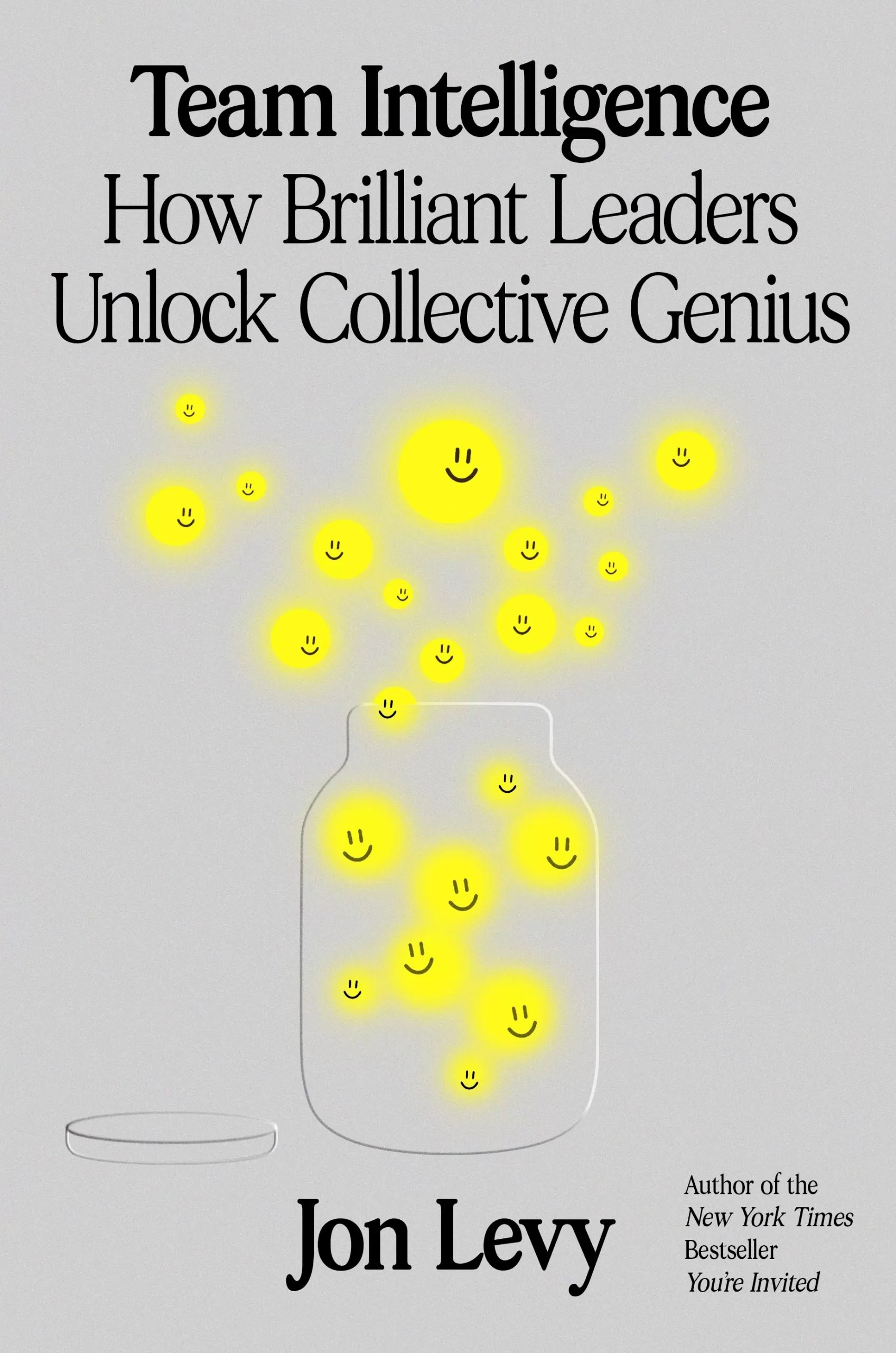
This book synthesizes the core principles of effective leadership and team performance, arguing that traditional, leader-centric models are fundamentally flawed. The central thesis is that organizational success hinges not on accumulating individual “star” talent, but on cultivating “Team Intelligence”—the skills, attitudes, and habits that enable groups to be collectively brilliant.
Effective leadership is redefined not as a set of universal traits, but as the ability to make followers feel a better future is possible, driven by a leader’s unique “super skills.” The primary function of a leader is to act as a connector, building the trust and psychological safety necessary for a team to thrive.
The performance of a team is governed by three pillars of Team Intelligence: Reasoning (achieved through clear alignment on goals), Attention (managed through synchronized, “bursty” communication and high emotional intelligence), and Resources (maximized by leveraging a diversity of skills and knowledge made explicit to the group). Organizations must actively identify and mitigate toxic personalities (the “Dark Tetrad”) while empowering “glue players” who multiply the effectiveness of others. Ultimately, sustainable success requires an organizational culture that intentionally balances the needs of all stakeholders—employees, customers, and the community—over the narrow, and often destructive, pursuit of short-term shareholder value.
——————————————————————————–
I. Deconstructing Foundational Leadership Myths
The prevailing narratives about leadership are largely inconsistent with empirical evidence. A thorough analysis reveals that widely accepted archetypes and training methodologies are ineffective and often counterproductive.
The Fallacy of the “Alpha” Leader
The popular portrayal of leaders as dominant, aggressive “alphas” is a myth rooted in flawed science. This concept gained traction from a 1970 book, The Wolf, which described wolf packs as being led by alphas who maintain control through intimidation. The author, L. David Mech, later retracted this finding, clarifying that wolf packs are typically family units led by parents guiding their young, not by constant domination.
Inapplicability: Wolf behavior is not a valid model for human organizational dynamics.
Counter-Productivity: In both wolf packs and human teams, overly aggressive leaders can provoke unnecessary conflict, alienate members, and weaken the group.
Media Distortion: The media’s focus on sensational, outsized personalities (e.g., Elon Musk, Michael O’Leary of Ryanair) creates a distorted perception. The majority of successful leaders, particularly across the Fortune 500, are not aggressive, media-seeking figures.
Negotiation: Studies show that empathetic and generous individuals are better negotiators in the long run, as aggressive tactics destroy relationships and future opportunities.
The Ineffectiveness of Traditional Leadership Training
The leadership development industry, particularly prestigious MBA programs, operates on a flawed premise derived from the Second Industrial Revolution: that leaders can be engineered like standardized machine parts.
Failed Promise: Research, including studies by McKinsey & Company and Boston Consulting Group, indicates that possessing an MBA degree does not correlate with superior career success or leadership ability compared to non-MBAs.
Historical Flaw: The “scientific management” approach, popularized by figures like Elton Mayo at Harvard Business School (who was later revealed to have faked his credentials), falsely assumes human behavior can be quantified and engineered like a physical science. The reality is that human interaction is too complex and variable for a standardized formula.
Cost vs. Impact: Leadership training accounts for approximately $40 billion in annual spending, yet research by Harvard’s Barbara Kellerman shows there is no evidence that most of it has a long-term impact on performance.
The Unreliability of Personality Assessments
Personality tests like the Myers-Briggs Type Indicator (MBTI) are widely used by corporations but lack scientific validity and predictive power. These tools are based on theories from Carl Jung, which were expanded by individuals with no formal psychological training.
The Forer Effect: These tests succeed due to a psychological phenomenon where individuals accept vague, general descriptions as being highly specific to them. An experiment by Bertram Forer in 1948 demonstrated this by giving 39 students the exact same “personalized” assessment, which they rated as highly accurate (4.3 out of 5).
Lack of Consistency: Studies show that as many as 50% of individuals get a different MBTI result when re-taking the test just five weeks later.
False Constraints: Human personality is not static; it changes based on context, time of day, and social environment. Attempting to categorize individuals into sixteen rigid types is fundamentally flawed and can lead to prejudiced hiring and promotion decisions.
The “Authenticity” Racket
The modern concept of “authentic leadership”—acting in accordance with a “true self”—is a problematic guide.
No “True Self”: Neuroscience shows the brain is a collection of competing systems. There is no single, authentic self; different behaviors emerge based on myriad factors. The notion of authenticity cannot be located in the brain or consistently measured.
Dangerous Justification: The concept can be used to excuse toxic behavior. Harvey Weinstein, for example, could be described as acting authentically, revealing the concept’s moral limitations.
Perception vs. Reality: Research indicates that “authenticity” is not an intrinsic quality but a perception. People are seen as authentic when their actions align with the narrative others have constructed for them. Furthermore, studies show that individuals who self-identify as highly authentic are more likely to lie to appear authentic.
II. The Core of Effective Leadership
Stripping away the myths reveals a simpler, more powerful definition of leadership focused on influence, unique strengths, and fostering a healthy team environment.
The Foundational Principle: Creating Followers
The single universal characteristic of a leader is having followers. People choose to follow a leader not based on a checklist of traits, but because the leader makes them feel that a new or better future is possible. This is an emotional response, not a logical one. The story of Mother Teresa illustrates this principle: her perceived selflessness created a powerful vision of a better future for humanity, inspiring a global following, even though later analysis revealed significant discrepancies between this perception and the actual results of her organization.
The Power of “Super Skills”
Effective leaders are not well-rounded paragons of virtue. Instead, they possess one or two “super skills” that are so disproportionately strong they inspire others and compensate for numerous weaknesses.
Case Study: Paul Erdős: The highly prolific mathematician Paul Erdős was socially inept and incapable of basic life tasks like laundry or boiling water. However, his profound love for mathematics and his unique ability to bring out the best in his collaborators were so powerful that colleagues flocked to work with him, caring for his basic needs in exchange for the “religious experience” of solving problems with him.
Implication: Leaders should focus on identifying and cultivating their unique super skills rather than trying to become competent in a long list of generic “essential” traits. Attempting to mimic another leader’s style is often futile, as it may not align with one’s own super skills.
The most significant gains in leadership effectiveness come not from refining existing strengths, but from mitigating negative behaviors that harm the team. The negative impact of toxic actions far outweighs the positive impact of beneficial ones.
Psychological Safety: Citing Google’s Project Aristotle, the greatest predictor of team success is psychological safety—a shared belief that team members can speak up and take risks without fear of punishment or humiliation.
Breaches of Contract: Actions that belittle, humiliate, or threaten team members breach the social contract, signaling that the environment is unsafe and causing disengagement. This can have catastrophic consequences, as seen in the Space Shuttle Challenger disaster, where engineers were afraid to voice concerns.
Building Systems: The most effective way to curb negative habits is to create systems that prevent them from occurring in the first place, rather than relying on willpower. An example is the F-16’s Auto Ground Collision Avoidance System (Auto G-Cas), which automatically pulls the jet up to prevent a crash, automating a pilot’s response under extreme pressure.
III. The Anatomy of a High-Performing Team
The essential unit of productivity is the team. An effective leader’s primary role is to shift focus from themselves to the team’s dynamics, fostering the connections that unlock collective intelligence.
The Leader as Connector
The “trickle-down” model of leadership is inefficient. A more effective model views the leader as an architect of connections, similar to how Dwight D. Eisenhower championed the Interstate Highway System to unlock the nation’s potential by connecting its resources.
The Passing Metric: The greatest predictor of a positive coaching impact in the NBA is how much more players pass the ball. Increased passing indicates a shift from self-interest to a focus on the team’s collective success, a direct result of the trust and connection fostered by the coach.
Building Trust: Trust is the foundation of connection and is composed of three elements, in order of importance:
Benevolence: Believing the other person has your best interests at heart.
Honesty: Believing they are truthful and act with integrity.
Competence: Believing they are capable of doing their job.
Trust-Building Mechanisms: Trust can be actively built through mechanisms like the Ikea Effect (we value what we build together), Stacking (starting with small favors to build to larger ones), and Vulnerability Loops (vulnerability precedes trust, it does not follow it).
The “Too-Much-Talent Problem” and Super Chickens
Simply assembling a team of individual superstars often leads to failure.
The Talent Threshold: On teams with high “task interdependence” (where members must collaborate closely), performance declines when top talent exceeds 50-60% of the team. This has been observed in both World Cup football and NBA basketball.
The Super Chicken Experiment: An experiment by evolutionary biologist William Muir contrasted two chicken breeding strategies. One group consisted of individually hyper-productive “super chickens” who achieved their output by pecking their competition to death. The other group was bred for team productivity. After six generations, the collaborative “super team” was far healthier and massively out-produced the aggressive super chickens.
Organizational Analogy: Many corporate and sports environments reward individual stats and internal competition, effectively breeding aggressive “super chickens” who undermine team success. The goal should be to create “super teams” that are rewarded for collective achievement.
The Role of the “Glue Player”
Some of the most valuable team members are “glue players”—individuals whose contributions are hard to measure with traditional stats but who significantly improve the performance of everyone around them.
Case Study: Shane Battier: The NBA player Shane Battier had unremarkable individual statistics but a consistently high “plus-minus” rating, meaning his teams scored significantly more points when he was on the court. He was described as a “Lego” piece who made everything fit together through unselfish play, constant communication, and deep strategic understanding that elevated his teammates.
IV. The Three Pillars of Team Intelligence
Research led by Anita Williams Woolley at Carnegie Mellon University identified a “general intelligence” for teams, which is uncorrelated with the IQs of individual members. This collective intelligence is built on three pillars.
Pillar 1: Reasoning
A team’s ability to reason—to plan the best route to its goal—is contingent on alignment.
Commander’s Intent: Drawing from military strategy, every team member must understand the organization’s overarching goal, the specific mission parameters, their team’s objectives, and how their individual contributions support the mission.
Leadership Fluidity: The smartest teams often have fluid leadership, where different people lead at different times based on their expertise for the task at hand. Power struggles are a primary cause of “team stupidity.”
Connection Prerequisite: In experiments, teams of subject matter experts only outperformed teams of generalists after they participated in a trust-building exercise. Connection is a prerequisite for leveraging expert resources effectively.
Pillar 2: Attention
An intelligent team knows what to focus on, when, and how. This requires synchronized attention and communication.
Case Study: LEGO: In the early 2000s, LEGO nearly went bankrupt due to “corporate ADD.” It launched a torrent of unfocused new products, diluting its core strengths. The turnaround came when new leadership imposed discipline and refocused the company’s attention on its core, profitable products.
Hallmarks of Effective Attention:
Bursty Communication: Teams communicate in intense bursts to align and define next steps, followed by periods of uninterrupted individual work.
Conversational Turn-Taking: Over the course of a project, speaking time is distributed relatively evenly among all members.
Emotional Intelligence: The single greatest predictor of team intelligence is the number of women on the team, which correlates with a higher average “theory of mind” (social sensitivity). This empathetic capacity allows the team to navigate interpersonal dynamics and manage its collective attention more effectively.
Pillar 3: Resources
Team intelligence is maximized when a team has diverse, complementary resources and makes those resources explicit.
Case Study: The Antwerp Diamond Heist: The successful 2003 heist was only possible because the team comprised individuals with highly specialized and different skills (a social engineer, a tech expert, a key forger, a mechanical “monster”).
Diversity of Resources: This includes not just knowledge and skills but also diverse life experiences, cognitive styles, and contacts. Racial and gender diversity are valuable because they often serve as proxies for these unique resources.
Making the Implicit Explicit: An intelligent team has a shared understanding of “who knows what.” Members must openly catalog their skills, expertise, and even their weaknesses, and maintain organized, accessible information systems (e.g., shared file drives).
V. Managing Team Composition and Dynamics
Building an intelligent team requires both cultivating positive contributors and actively managing negative ones.
Identifying and Mitigating Toxic Personalities
Psychologists identify a “Dark Tetrad” of toxic personality traits that are destructive to team intelligence.
Trait
Description
Key Behavior
Psychopathy
Impaired empathy, lack of remorse, superficial charm, and boldness.
Acts without regard for the consequences to others.
Narcissism
Intense entitlement, a need for admiration, and a lack of empathy.
Makes everything about themselves; may use DARVO (Deny, Attack, Reverse Victim & Offender).
Machiavellianism
Cunning and ruthless manipulation of others to achieve personal goals.
Treats people as tools to be used and discarded.
Sadism
Enjoyment derived from the physical or emotional suffering of others.
Creates situations to humiliate or cause pain.
Strategies for Dealing with Toxic Individuals:
Do Not Call Them Out Directly: This will likely trigger a defensive and aggressive response.
Find a Partner: Validate your perceptions with a trusted colleague.
Document Everything: Keep a detailed record of behaviors, conversations, and their impact.
Limit Engagement: Create physical and procedural distance where possible.
Create Transparency: Foster an open culture where workloads and responsibilities are discussed publicly, making manipulation more difficult.
How to Spot and Empower “Glue Players”
In contrast to toxic individuals, “glue players” or “multipliers” make teammates more effective. They are often undervalued because their impact is not captured by traditional metrics.
High Emotional Intelligence: They are socially sensitive and can navigate both written and unwritten organizational rules.
Benevolent/Team Orientation: They consistently put the team’s needs above their own, building trust and acting as connectors.
Proactive Thinking: They see beyond their assigned tasks and do what is needed for the team’s success, often leading from behind.
VI. Cultivating an Intelligent Organizational Culture
Team intelligence is best sustained when it is embedded in the broader organizational culture.
The Failure of Shareholder Value Theory
The doctrine that a company’s only social responsibility is to increase shareholder value, popularized by Milton Friedman, is “the dumbest idea in the world,” according to former GE CEO Jack Welch.
Case Study: Boeing: The erosion of Boeing’s world-renowned safety culture is a direct result of prioritizing shareholder value above all else. Shifting headquarters away from engineering centers, cutting design budgets, outsourcing critical work, and punishing engineers who raised concerns led to the fatal 737-Max crashes and a catastrophic loss of financial value and public trust.
A Stakeholder Approach: Long-term value is a result, not a strategy. It is created by balancing the competing responsibilities to all stakeholders: employees, customers, products, the community, and shareholders.
The Four Elements of a Strong Culture
Membership: Creating a clear sense of belonging through defined boundaries, emotional safety, personal investment, and a common symbol system (e.g., internal language, stories).
Influence: Ensuring employees feel they matter and have a voice in the organization’s direction.
Integration and Fulfillment of Needs: Clearly communicating the organization’s mission so that people can align their personal goals with it. Cultural adaptability is often more valuable than initial cultural fit.
Shared History and Values: Using stories and mythology to reinforce the organization’s core values and guide decision-making (e.g., the Nordstrom tire refund story).
VII. Synthesis: A Case Study in Leadership and Team Intelligence
The story of Draper L. Kauffman, the founder of the precursor to the Navy SEALs, serves as a powerful synthesis of all these principles. An ordinary man with poor eyesight, Kauffman embodied effective leadership and built one of the world’s most elite teams by learning and applying the core tenets of team intelligence.
He learned the importance of team connection from the French Corps Franc.
He saw the power of unconventional super skills from the nun who secured his release from a POW camp.
He demonstrated that teams must be aligned around a greater purpose by volunteering for bomb disposal.
He fostered psychological safety and bursty communication by empowering his teams to operate independently.
He unlocked his team’s potential by assembling members with diverse resources and expertise.
He built profound trust by training alongside his men, demonstrating competence, honesty, and benevolence.
Kauffman’s legacy is a testament to the fact that leadership is not about innate greatness but about intentionally creating the conditions for a team to unlock its collective genius.
The Manager’s Guide to Unlocking Team Intelligence
Executive Briefing
This guide provides a research-backed framework for managers to shift their focus from managing individuals to architecting intelligent teams. For the time-crunched executive, here are the core takeaways:
Team Dynamics Outperform Star Power: A cohesive team will consistently beat a collection of brilliant but disconnected individuals. Your primary role is to architect the system that allows the team to thrive.
Psychological Safety Is Not a Soft Skill: It is the single greatest predictor of high-performing teams. A lack of safety, where people fear speaking up, is the root cause of catastrophic failures.
Your Highest Leverage Is Eliminating Harm: The impact of negative behaviors (belittling, shaming) far outweighs the good done by positive ones. Your first priority is to create systems that prevent breaches of the team’s social contract.
Reward the “Glue,” Not Just the “Superstar”: The most valuable players are often not the ones with the highest individual stats, but the “glue players” who make everyone around them better. You must learn to see, celebrate, and give status to these contributions.
——————————————————————————–
Introduction: Beyond Individual Brilliance
For decades, we’ve been sold a simple narrative of success: hire individual stars, put a star leader in charge, and watch the magic happen. But this model, focused on individual “star power,” is outdated and often counterproductive.
Consider the 1980 US Olympic basketball team. Made up of college kids juggling math class and meal plans, they were pitted against the seasoned NBA All-Stars—the best players in the world, in the prime of their careers. The outcome wasn’t even close. The young, cohesive Olympic team demolished the All-Stars, winning four out of five exhibition games. This isn’t a fluke; it’s a fundamental principle. If packing a team with stars were enough, the 2004 US Olympic team—featuring legends like LeBron James, Dwyane Wade, and Allen Iverson—would have cruised to gold. Instead, they barely earned a bronze, suffering a devastating 19-point loss to Puerto Rico.
Time and again, from the sports arena to the corporate world, superior team dynamics consistently outperform raw individual talent. This guide provides a research-backed, actionable framework for managers to make a critical shift: from managing a collection of individuals to architecting intelligent teams that are truly greater than the sum of their parts.
——————————————————————————–
1. Redefining Your Role: From Star Player to Team Architect
To build an intelligent team, you must first challenge your fundamental role as a manager. The most significant leadership leverage comes not from top-down directives but from cultivating the network of relationships within the team. The modern leader isn’t the star player; they are the architect of the system that allows every player to thrive. This section outlines a critical paradigm shift away from outdated leadership myths and toward a more effective, research-backed approach.
1.1. The Failure of Old Models: Why “Alpha Leaders” and “Star Power” Fall Short
Our culture is saturated with myths about leadership, none more pervasive or damaging than the “alpha mentality.” This idea, rooted in debunked 1970s wolf research, portrays leaders as dominant figures who maintain control through intimidation. The problem is, humans aren’t wolves, and even if we were, the original research was wrong. Overly aggressive leaders don’t strengthen the pack; they alienate members, get into unnecessary fights, and weaken the entire group.
This flawed “top dog” model leads directly to the “star power” fallacy—the belief that packing a team with A-list talent guarantees success. The evidence shows the opposite:
Quibi, the short-form video platform helmed by Disney’s former chairman and eBay’s former CEO, burned through nearly $2 billion before shuttering almost immediately after launch because its seasoned team ignored ideas that challenged their assumptions.
The 1998 Daimler-Chrysler merger was celebrated by Wall Street, but the two superstar companies combined were soon worth less than Daimler-Benz alone. Billions in value were lost to cultural conflicts and a failure to create alignment.
These failures stand in stark contrast to underdog successes like Netflix and Pixar, which started with less experience and traditional top-tier talent but created something special that allowed them to outperform their peers. A leader’s job is not to be the most dominant person in the room but to create an environment where the entire team can become smarter together.
1.2. The Team as the Core Unit of Productivity
Globally, companies spend roughly $40 billion a year on leadership training. The shocking truth? According to extensive research, there is no evidence that almost any of it has a long-term impact on leadership performance. The fundamental flaw in this approach is its narrow focus.
Consider the leverage points. Training a manager who oversees a nine-person team affects only nine one-directional relationships. However, focusing on the dynamics of the entire ten-person team strengthens forty-five two-directional relationships.
The essential unit of productivity is not the individual; it’s the team. The magic happens in the connections between team members. Therefore, your primary function as a manager is to maximize team intelligence by focusing on these internal dynamics.
Having dismantled the myths of alpha leaders and star power, we can now build a more durable leadership model. That construction begins not with grand strategies, but with the non-negotiable foundation of any high-performing team: trust.
Manager’s Key Takeaway: Your greatest leverage is not in directing individuals, but in strengthening the 45 connections within your 10-person team. Stop focusing on the nine one-way arrows from you to them and start architecting the network that connects them to each other.
——————————————————————————–
2. The Bedrock of Success: Forging Psychological Safety and Trust
Before any advanced strategies can be implemented, a team must be built on a foundation of profound trust and psychological safety. This is not a “soft skill” to be addressed at an off-site retreat; it is the single greatest predictor of high-performing teams, as identified by extensive research from institutions like Google. It is the social contract that allows a group to move from a collection of individuals to a truly intelligent unit.
2.1. Defining Psychological Safety and Its Impact
Psychological safety is “a sense of confidence that the team will not embarrass, reject, or punish someone for speaking up.” Its absence can have catastrophic consequences.
The space shuttle Challenger disaster is a tragic real-world example. Engineers knew about the faulty seal that led to the explosion but were too uncomfortable to keep raising the issue within a culture that downplayed problems.
In Star Wars, the Death Star was built with a fatal flaw—a thermal exhaust port that led to its destruction. This kind of flagrant error could only happen in a work culture governed by fear, where engineers were too terrified of Darth Vader to point out a critical design vulnerability.
When psychological safety is low, team members stay silent. Critical errors go unnoticed, innovative ideas are never shared, and the team’s collective intelligence plummets.
2.2. Your First Priority: Eliminating Harmful Behaviors
As a manager, your most potent lever for improvement is not adding positive behaviors but eliminating harmful ones. The impact of negative actions—like belittling, shaming, or threatening—far outweighs the good done by positive ones. We’ve all been there. A project goes wrong, and our first instinct is to find out who messed up. I used to have a nasty habit of asking questions that were less about finding a solution and more about making the other person feel incompetent. I realized this was my own small breach of the social contract, creating a tiny crack in the team’s foundation of safety.
A single toxic individual can derail an entire team, regardless of their talent. NBA star Draymond Green, for example, is one of the best defensive players in the league. Yet his repeated history of unsportsmanlike acts, including punching a teammate during practice, has been cited as a key factor in derailing his team’s chemistry and performance. His individual skill is useless when his behavior gets him kicked out of the game and breaks the team’s social contract.
Expecting yourself or others to simply “use more willpower” to stop bad habits is unrealistic. Instead, you must build automatic systems that prevent breaches before they happen. Consider the F-16 fighter pilot’s Ground Collision Avoidance System (Auto G-Cas). When a pilot becomes disoriented or loses consciousness, the system automatically takes control and pulls the plane up, preventing a crash. This is a technological way to automate willpower. As a manager, your job is to create the team equivalent: processes and policies that make it difficult for harmful behaviors to occur in the first place.
2.3. The Three Pillars of Trust: Benevolence, Honesty, and Competence
When we talk about trust, we are actually talking about a combination of three distinct components. It is crucial to understand them in their order of importance:
Benevolence: This is the belief that the other person has your best interests at heart. It is the most critical element of trust.
Honesty: This is the belief that the other person is truthful and acts with integrity.
Competence: This is the belief that the other person is capable of doing the job that is expected of them.
Most corporate communication gets this backward. We lead with presentations designed to prove our competence, when what people are really assessing is our benevolence. A breach in competence is often forgivable; a breach in benevolence is almost always fatal to a relationship.
2.4. Actionable Techniques for Building Team Trust
Trust isn’t built through a single off-site event; it’s forged through consistent, intentional actions. Here are several research-backed techniques you can use to strengthen the connections on your team.
The Ikea Effect People care more about things they invest effort into. That poorly assembled bookshelf means more to you because you built it. To build trust, create opportunities for team members to invest effort in one another’s success. This can be through collaborative projects, peer mentoring, or simply asking for help.
Vulnerability Loops Most people believe trust must come before vulnerability. The research shows the opposite: vulnerability precedes trust. This happens in a predictable five-stage process: Person A signals vulnerability (e.g., “I’m nervous about this presentation”), Person B acknowledges it and signals vulnerability back (“Of course, I was nervous before my first one too”), and trust increases. As a manager, be the first to signal vulnerability in small, safe ways, and be vigilant about closing the loops your team members open.
The Pratfall Effect Research shows that highly competent individuals who make a small, relatable mistake (like spilling coffee on themselves during an interview) are liked more than those who appear perfect. Perfection can be intimidating. Demonstrating your humanity through a minor, harmless stumble can make you more approachable and trustworthy, so long as it doesn’t call your core competence into question.
Once you have established a foundation of trust, you can turn your attention to the strategic challenge of assembling the right mix of talent.
Manager’s Key Takeaway: Trust is built on benevolence first, honesty second, and competence third. Stop leading with your credentials and start by demonstrating that you genuinely have your team’s best interests at heart. This is the only sequence that works.
——————————————————————————–
3. The “Super Chicken” Dilemma: Engineering a High-Performing Talent Mix
While hiring top talent seems like the most logical path to success, research reveals a counterintuitive problem. On teams where work is highly interdependent, an over-concentration of individual stars can actually damage performance. The drive to stand out can create a hyper-competitive environment where collaboration dies. This section explains this “too-much-talent” effect and offers a superior model for team composition.
3.1. The Super Chicken vs. The Super Team
Evolutionary biologist William Muir conducted a fascinating experiment in chicken breeding that holds a powerful lesson for managers.
He first identified the most individually productive hens—the “super chickens” (Dekalb XL)—and put them together. The result was disastrous. The hyper-competitive birds became aggressive, pecking each other to death. By the end of the experiment, only three of the super chickens were left alive.
He then took a different approach. He created groups of average chickens and, over six generations, selected the most productive groups for breeding. These “super teams” were not only massively more productive than the super chickens, but they were also healthy, social, and fully feathered.
The conclusion is clear: rewarding group productivity creates healthy, high-performing teams. Corporate cultures that reward individual stats at the expense of collaboration are breeding super chickens, not super teams.
3.2. Identifying the Hidden MVP: The “Glue Player”
In the quest for a super team, one of the most valuable but overlooked roles is the “glue player”—the person who makes everyone around them better. NBA player Shane Battier is the quintessential example.
Traditional stats failed to capture Battier’s value. He didn’t score many points or grab many rebounds. But an advanced metric, the “plus-minus” score, revealed a stunning fact: every team he was on scored significantly more points when he was on the court.
His general manager, Daryl Morey, called him “Lego” because he made all the other pieces fit together. He was abnormally unselfish, constantly communicating, and always making the smart play that enabled his superstar teammates to shine.
Battier’s effectiveness is a real-world demonstration of the research from Anita Williams Woolley, which identifies high emotional intelligence as the single greatest predictor of team success. Glue players may not be the stars, but they are often the hidden MVPs. Their value comes not from individual stats, but from a unique combination of attributes:
High emotional intelligence
A benevolent, team-first orientation
Being a proactive thinker
3.3. Manager’s Action Plan: Rewarding the Right Behaviors
To shift your team from a super chicken model to a super team model, you must change what you measure and what you reward.
Audit Your Rewards: Analyze your team’s compensation, recognition, and promotion structures. Do they primarily reward individual statistics (e.g., sales numbers, lines of code written) or collaborative, team-lifting behaviors (e.g., mentoring, improving processes, resolving conflicts)? If you reward super chickens, that’s what you’ll get.
Look Beyond the Obvious Stats: Actively search for and document contributions that are hard to measure but vital to team success. Acknowledge the person who stays late to help a colleague meet a deadline or the one who proactively smooths over a conflict between two other departments.
Give Status to Glue: Publicly celebrate and reward the “glue players” who make others better. When you give status to these behaviors, you send a powerful signal to the entire team about what is truly valued.
With a well-composed team built on a foundation of trust, you can now implement the operational framework that enables peak performance.
Manager’s Key Takeaway: Your job is to stop rewarding the ‘super chickens’ who post individual stats and start giving status to the ‘glue players’ who make the entire team more productive. Audit your rewards system today: what you celebrate is what you will replicate.
——————————————————————————–
4. The Three Pillars of Team Intelligence in Action
High-performing teams don’t just happen; they operate on a set of specific, observable habits that allow them to function as a single, intelligent unit. Groundbreaking research by Anita Williams Woolley identified three core pillars of this “team intelligence”: Reasoning, Attention, and Resources. This section provides a practical breakdown of each pillar and how to cultivate it within your team.
4.1. Pillar 1: Reasoning through Alignment
The Principle: A team’s ability to reason effectively—to plan the best route from where they are to their goal—is directly tied to its alignment. Before a single F-35 fighter jet mission, the pilot, Lieutenant Colonel Justin “Hasard” Lee, may need to align hundreds of people, from intelligence analysts and cyber teams to space force operators and ground troops. Without a shared understanding of the objective, the mission is doomed.
The Strategy – Commander’s Intent: The military uses a concept called “Commander’s Intent” to ensure alignment even when plans go awry. As a leader, you must relentlessly test for alignment. Walk up to any team member at any time, and they should be able to answer these five questions without hesitation:
Commander’s Intent: What is the organization’s broader goal?
Mission Parameters: What does the successful end state for this specific project look like?
Team Objectives: What is our team’s unique contribution to that mission?
Individual Contributions: What is my specific role in supporting the team’s objective?
Personal Goals: How does this work align with my own career aspirations and development?
4.2. Pillar 2: Focusing Collective Attention
The Principle: A team’s ability to focus its collective attention is critical to success. In the early 2000s, LEGO was on the brink of bankruptcy. Despite being a beloved brand, it had developed a case of “corporate ADD,” launching a dizzying array of disconnected products, from electronics and jewelry to action figures. The company was saved when CEO Jørgen Vig Knudstorp forced a radical simplification, focusing the company’s attention back on its core, profitable products: interlocking bricks.
The Habits of High-Attention Teams: Intelligent teams manage their attention through specific communication habits.
“Bursty” Communication: This involves periods of intense, synchronized communication followed by periods of quiet, uninterrupted individual work. This pattern allows for alignment and focused execution, avoiding the constant distraction of a 24/7 communication culture.
Conversational Turn-Taking: Over the course of a project, the most intelligent teams feature roughly equal communication from all members. No single voice dominates, ensuring that all perspectives are heard and integrated.
High Emotional Intelligence: Defined as the ability to read social cues and understand others’ perspectives (also known as “theory of mind”), this is the single greatest predictor of team intelligence. It is the underlying skill that enables effective conversational turn-taking and psychological safety. It can be measured by tests like “Reading the Mind in the Eyes.”
4.3. Pillar 3: Activating Team Resources
The Principle: Success on complex tasks requires a diverse set of complementary resources—skills, knowledge, tools, and contacts. The team that pulled off the infamous Antwerp diamond heist succeeded because it was composed of a social engineer, a tech expert, a master key forger, and an all-around “monster”—not four safecrackers. Overlapping resources are redundant; complementary resources create collective genius.
The Strategy – Make Resources Explicit: The key to unlocking team resources is making them visible. Team members can’t leverage skills and knowledge they don’t know exist.
Create a “Resource Catalog” or “Player Cards” for your team. Ask each member to list their unique skills, areas of expertise, key contacts, and even areas where they need support. This makes the implicit explicit.
Organize shared information. A poorly organized shared drive is not a resource; it’s a source of distraction and team stupidity. Ensure that files, documents, and project histories are structured in a way that makes them an easily accessible shared asset.
This operational model provides the ideal framework, but real-world teams face complex human challenges, including difficult personalities and entrenched cultures.
Manager’s Key Takeaway: Team intelligence is built on three pillars: Alignment (Reasoning), Synchronization (Attention), and Visibility (Resources). Your primary job is to ensure every team member knows the mission, communicates in focused bursts, and has a clear map of the team’s collective skills.
——————————————————————————–
5. Advanced Applications: Managing Toxicity and Shaping Culture
Even with the right structures in place, teams are complex human systems. Managers must be equipped to handle two of the most difficult challenges: neutralizing the impact of toxic individuals and proactively shaping a high-intelligence team culture that can endure.
5.1. Defending Your Team from the “Dark Tetrad”
Psychologists identify a “Dark Tetrad” of toxic personality traits that can appear in the workplace: Psychopathy (lack of remorse), Narcissism (entitlement and need for admiration), Machiavellianism (manipulative exploitation), and Sadism (enjoying others’ suffering). Dealing with individuals who exhibit these traits requires a defensive, not an offensive, strategy.
The Prime Directive: Do not call them out directly. This will only make them defensive and turn their manipulative skills against you. You cannot reason with a tiger when your head is in its mouth.
Defensive Action Plan:
Document Everything: Keep a detailed, private record of behaviors, conversations, and their impact on the team. This protects you and helps you maintain your sanity against gaslighting techniques like DARVO (Deny, Attack, Reverse Victim and Offender).
Limit Engagement: Create buffers and boundaries to minimize your interaction with the individual. This might mean restructuring projects or workflows to reduce dependency.
Foster Transparency: Manipulative behavior thrives in secrecy. Foster a culture of open discussion about workloads, responsibilities, and project progress. This makes it harder for toxic individuals to exploit others or take undue credit.
5.2. Your Role as a Deliberate Culture-Shaper
Culture is not what you write in a mission statement; it is the collection of behaviors a leader models, rewards, and tolerates. While the military builds “automatic systems” like Auto G-Cas to prevent catastrophic failure, Boeing’s culture became an automatic system that incentivized it, replacing a focus on safety with a blind pursuit of shareholder value. The catastrophic result—deadly crashes and felony charges—stands in stark contrast to the legendary customer-service culture of Nordstrom. The famous (and true) story of a Nordstrom employee giving a customer a full refund on a set of tires—a product the store doesn’t even sell—perfectly illustrates a culture where employees are empowered to make decisions based on clear, shared values.
5.3. A Framework for Culture: The COACH Ways of Working
To shape culture, you need a simple, memorable, and actionable framework. The fashion house Coach provides an excellent model with its “COACH Ways of Working,” which empowers employees to use their own judgment based on five principles:
Common sense: If something doesn’t make sense, speak up.
Opt out: If a meeting or task isn’t critical, opt out and do real work.
Accept imperfection: Make thoughtful decisions with the information you have; don’t wait for impossible certainty.
Courageous: Take action and don’t operate out of fear.
Have fun!
As a manager, you can develop a similarly simple and actionable set of principles to guide your team’s daily interactions and decisions.
Manager’s Key Takeaway: Culture is the sum of the behaviors you model, reward, and tolerate. Your most critical defensive action is to protect your team from toxicity, and your most critical offensive action is to codify a simple set of principles that guide behavior when you’re not in the room.
——————————————————————————–
Conclusion: Becoming the Leader We Need
The story of Draper L. Kauffman provides the ultimate case study for the modern leader. After his poor eyesight disqualified him from a US Navy commission, he volunteered as an ambulance driver in France at the start of World War II. He was captured and became a POW, but never lost his drive to serve. His release was secured by an unconventional nun who, when a guard refused her request, simply hit his helmet in what was surely the most badass move by a nun in the entire war.
Upon his release, Kauffman joined the British Royal Navy as a bomb defuser, taking on one of the most dangerous jobs imaginable. His expertise eventually led him back to the US, where he was tasked with founding the precursor to the Navy SEALs.
Kauffman’s journey illustrates every core principle of this guide. He learned from the nun that leadership isn’t about fitting a mold but leaning into your unique super skills. He understood that selfless, aligned teams of volunteers could achieve the impossible. He built profound trust by embracing shared vulnerability, training alongside his men in the most grueling conditions to show his benevolence. And he created one of history’s most effective teams by harnessing diverse resources, bringing together people from across the military to solve problems no single group could.
Draper Kauffman was not a lone hero. He was the architect of teams that could achieve heroic things together. That is the modern leader’s true role. It is not to be the star player, but to create the conditions—the trust, the alignment, and the connections—that unlock the collective genius of the entire team.
Accounts Receivable Factoring can quickly meet the working capital needs of Distributors impacted by rising tariffs.
Our underwriting focus is solely on the quality of a company’s accounts receivable, which enables us to rapidly fund businesses which do not qualify for traditional lending such as those experiencing losses or where the owners have weak personal credit or even “character issues.”
This is Business World Review for October 22nd 2025 Mercedes et al. Here are the stories having an impact today.
GM’s shares saw a significant increase, reportedly soaring by 16%, after the automaker released its third-quarter financial results. The earnings beat analyst expectations, and the company also boosted its full-year 2025 outlook, signaling strong demand.
3M: The diversified technology company experienced a roughly 6% increase in its share price following the release of its latest earnings report. T
Shares of Coca-Cola rose by approximately 4% after the company reported its earnings. The report was one of the key catalysts for a broad uplift in the stock market.
Cleveland-Cliffs Inc.: The iron ore and steel producer saw a massive surge in its stock, climbing over 21% after announcing discoveries of rare-earth elements and revealing its entrance into the rare-earths sector.
Zions Bancorporation: The regional bank’s shares increased by around 3% to 4% after reporting its third-quarter results. Zions Bancorp’s profits and revenue both surpassed analyst expectations, despite ongoing concerns in the banking sector about bad loans.
Merck breaks ground on $3 billion manufacturing plant in Virginia. The pharmaceutical company, as part of its $70 billion U.S. investment strategy, is starting construction on a new 400,000-square-foot manufacturing facility in Elkton, Virginia.
Mercedes-Benz: The luxury automaker is developing conversational cars that use artificial intelligence to interact with drivers. This is part of a broader industry trend of integrating advanced AI to enhance the in-car experience and is an example of an established automaker leveraging new technology.
UPS: The logistics giant is focusing on supply chain efficiency and risk management. Their ventures include using machine learning to launch DeliveryDefense Address Confidence, which scores the likelihood of a successful delivery to a given address. Additionally, UPS is building a “digital twin” of its entire distribution network for real-time package tracking and improved operations.
Exxon Mobil: The energy company’s stock is mentioned in financial discussions, highlighting it as an example of a dividend stock for investors to consider. This points to the ongoing investor focus on the performance and dividend payouts of major oil and gas corporations amidst broader market volatility.
Factoring can meet the cash needs of businesses impacted by rising tariffs. Contact Chris at to learn if your business is a factoring fit.
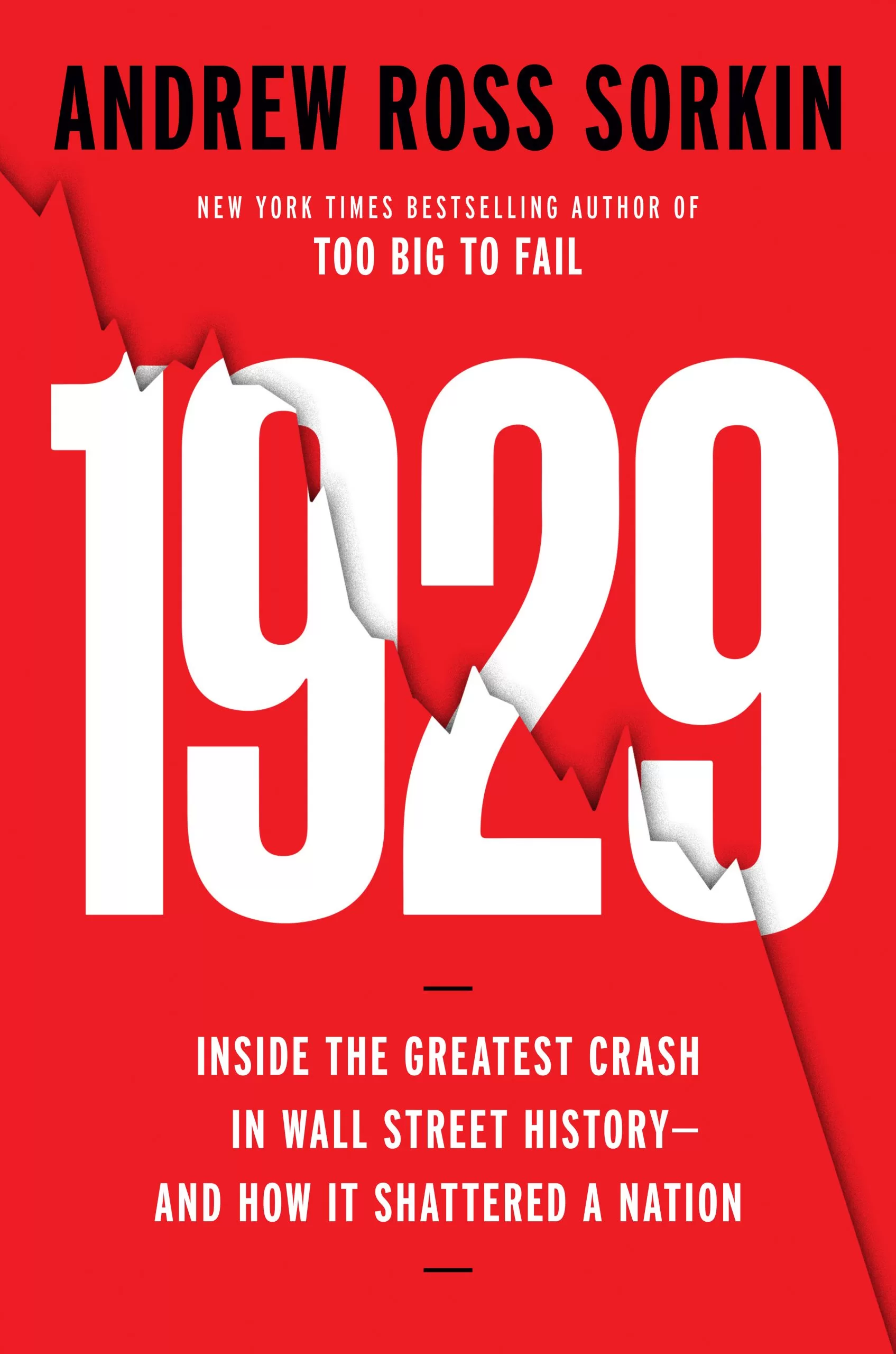
1929 is an in-depth analysis of the cultural, financial, and political dynamics that precipitated the 1929 stock market crash and its aftermath. The crash was not a singular event but the culmination of a decade defined by unprecedented credit expansion, widespread public speculation fueled by margin debt, and a culture that lionized financiers as celebrity visionaries.
Key figures like Charles E. Mitchell of National City Bank championed the democratization of stock ownership for the “Everyman,” but their aggressive promotion of credit clashed with a divided and ultimately ineffective Federal Reserve, which failed to curb the speculative bubble. The market itself was rife with manipulation through highly leveraged investment trusts and coordinated stock pools, such as the infamous RCA pool, which involved Wall Street’s most prominent institutions and individuals.
The crash unfolded over several days in late October 1929, beginning with Black Thursday (October 24). A panicked, last-ditch effort by a consortium of top bankers, led by Thomas Lamont of J.P. Morgan & Co., attempted to stabilize the market through organized buying. This intervention, personified by the “White Knight” actions of Richard Whitney, provided only a brief respite before the catastrophic selling resumed on Black Monday and Tuesday, wiping out years of gains and erasing fortunes.
The aftermath saw the onset of the Great Depression, a profound shift in public sentiment against Wall Street, and a political sea change with the election of Franklin D. Roosevelt. This led to landmark federal inquiries, most notably the Pecora hearings, which exposed the questionable practices of the financial elite. The era’s titans faced dramatic reversals of fortune: Charles Mitchell was tried for tax evasion and, though acquitted, was financially and professionally ruined; Jesse Livermore, who made a fortune shorting the market, later lost it and died by suicide; and Richard Whitney, the crash-day hero, was ultimately imprisoned for embezzlement. The period culminated in fundamental reforms, including the creation of the SEC and the passage of the Glass-Steagall Act, which separated commercial and investment banking and reshaped American finance for generations.
I. The Economic and Cultural Climate of the 1920s
The decade preceding the crash was characterized by a profound transformation in American economic life and social values, creating a fertile environment for a speculative mania.
The Rise of Consumer Credit and Speculation
The 1920s witnessed the birth of the modern consumer economy, underpinned by the widespread adoption of credit.
“Buy Now, Pay Later”: General Motors pioneered selling vehicles on credit in 1919, breaking the taboo against personal loans. Sears, Roebuck & Co. followed with “installment plans” for appliances and other goods.
Margin Buying: Wall Street extended this culture of debt to the stock market, offering stocks “on margin.” Middle-class Americans could open accounts by putting down as little as 10% or 20% of a stock’s purchase price and borrowing the rest.
Debt as a Habit: Borrowing became a normalized habit, fueled by relentless optimism. Margin loans grew from $1 billion at the start of the decade to nearly $6 billion by its end. As long as faith in the future was maintained, debts could be rolled over indefinitely.
The Bifurcation of the American Economy
The prosperity of the 1920s was not evenly distributed, creating a significant and growing divide within American society.
Urban vs. Rural: As technology made farming more efficient, agricultural workers fell into economic distress, creating a widening gulf between the urban “haves” and rural “have-nots.”
Laissez-Faire Government: President Calvin Coolidge’s administration was committed to slashing taxes and reducing the size of government, believing the American people could solve their own problems. This approach allowed business to largely make its own rules.
Wealth Concentration: Giant corporations like U.S. Steel and General Motors achieved market dominance, and the wealthy became a class unto themselves, particularly in New York City. The wealthiest individuals amassed fortunes over $100 million (nearly $2 billion in today’s dollars).
The Cult of the Financier
For the first time in American history, businessmen and financiers became mainstream celebrities, their wealth equated with genius.
Celebrity Status: Titans of Wall Street and industry became household names, joining Hollywood stars and athletes in the public spotlight.
Media Canonization: New magazines like Time (1923) and Forbes (1917) featured financiers on their covers, scrutinizing their salaries and quoting their pronouncements “like scripture.”
From Gambling to Investing: The perception of the stock market shifted. Previously disdained as a “grubby endeavor” for gamblers, it became the engine of the economy, a spectacle that drew in Americans from all walks of life, promising a chance to strike it rich.
II. Key Figures and Institutions of the Bull Market
The era was defined by a cast of powerful, ambitious, and often-flawed individuals who drove events forward, frequently without grasping the full consequences of their actions.
Charles E. Mitchell: “Sunshine Charlie” and the Everyman Investor
As Chairman of National City Bank, Charles E. Mitchell was a central figure in popularizing stock market investment.
The “Bank for All”: Mitchell transformed National City from a “sleepy relic” into the engine of the new Wall Street. He built a national sales force and aggressively marketed securities to small depositors and the middle class, whom he called “the Everyman.”
Philosophy: Mitchell believed there was “too much mystery connected with banking,” famously stating, “We sell our goods over the counter just the same way a clerk sells a necktie.”
Conflict with the Fed: He was a vocal critic of the Federal Reserve’s attempts to curb speculation. His decision to inject $25 million of National City’s funds into the call loan market on March 26, 1929, single-handedly stopped a panic but placed him in direct opposition to the Fed and drew the ire of Senator Carter Glass.
The Fall: The crash devastated his bank and his personal fortune. He became a primary target of the Pecora hearings, which investigated his massive bonuses, the sale of risky bonds to the public, and a sale of stock to his wife to avoid taxes. Though acquitted of tax evasion in a sensational 1933 trial, he was left financially ruined.
Thomas Lamont and the House of Morgan: Old Power in a New Era
Thomas Lamont, a senior partner at J.P. Morgan & Co., embodied the firm’s role as a quasi-diplomatic force in global finance.
The Banker-Ambassador: Lamont played a key role in negotiating German war reparations in Paris in 1929, believing that any problem could be solved through “the wizardry of credit.”
Investment Trusts: He and his partners embraced the era’s speculative tools, creating highly leveraged holding companies like the Alleghany Corporation.
The “Preferred List”: Lamont offered shares in these new ventures to a “friends of the firm” list at a steep discount. Recipients included former President Coolidge, Charles Lindbergh, Bernard Baruch, and John Raskob, representing an institutionalization of influence-peddling.
The Bankers’ Pool: During the October crash, Lamont convened the nation’s top bankers at 23 Wall Street, organizing a pool of capital to support the market in an echo of J. Pierpont Morgan’s actions during the 1907 panic. The effort ultimately failed to stem the tide.
The Speculators: William C. Durant and Jesse Livermore
These two figures represent the era’s speculative extremes: the industrialist-turned-market-plunger and the professional short seller.
William C. “Billy” Durant: The founder of General Motors, Durant became one of the nation’s most famous speculators. A fierce critic of the Federal Reserve, he held a secret meeting with President Hoover in April 1929 to warn that the Fed’s policies would cause a crash. He later praised Charles Mitchell in a national radio address for defying the Fed. He was nearly wiped out in the crash and declared bankruptcy in 1936.
Jesse Livermore: Known as the “Boy Plunger,” Livermore was a legendary trader famous for his instincts and his massive short positions. He made a fortune in the Panic of 1907 by shorting stocks and repeated the feat in 1929, netting a personal profit of approximately $100 million by betting against the market. However, he later lost this fortune and, beset by personal and financial turmoil, died by suicide in 1940.
John J. Raskob: The Industrialist-Politician
An executive at DuPont and General Motors, Raskob was a powerful symbol of the intersection of business, finance, and politics.
“Everybody Ought to Be Rich”: This was the title of an article he co-wrote for the Ladies’ Home Journal, promoting his plan to create an investment trust (Equities Security Company) that would allow ordinary Americans to buy stocks on an installment plan.
Political Operator: He served as Chairman of the Democratic National Committee for Al Smith’s 1928 presidential campaign, using his wealth and business connections to fund the party. After Smith’s defeat, he plotted to undermine the Hoover presidency.
The Empire State Building: The skyscraper was Raskob’s brainchild, a “monument to the future” conceived at the market’s peak.
III. Mechanisms of the Mania: Pools, Trusts, and Leverage
The bull market was fueled by financial innovations and practices that amplified risk, often through opaque and manipulative means.
Investment Trusts: The Amplification of Leverage
Investment trusts became a Wall Street craze, offering what appeared to be professional management and diversification but was often just amplified leverage.
Structure: A trust would raise public money to buy a basket of securities, financing itself with layers of debt and preferred shares.
Layered Leverage: A new trust could be launched to buy shares of the first trust, “piling still more leverage atop what was already there.”
Reputation over Assets: Investors were often buying the reputations of the financiers behind the trusts—like Morgan or Goldman Sachs—rather than the underlying assets. The most fashionable trusts traded at extraordinary premiums to the value of the assets they held. The Alleghany Corporation, created by the Van Sweringen brothers with the help of J.P. Morgan, was a prime example.
Stock Pools: The Manipulation of Markets
Stock pools were a common, legal, and patently deceptive practice used by insiders to artificially inflate stock prices.
Process: A group of investors would covertly buy up a company’s shares. Aided by a floor specialist, they would then trade shares among themselves to create the illusion of high volume and upward momentum (“painting the tape”).
Public Lure: Gullible investors, seeing the rising price, would jump in, driving the price higher. The pool operators would then “pull the plug,” dumping their shares on the market at a massive profit.
The RCA Pool (March 1929): Led by NYSE specialist Michael Meehan, a pool of 68 participants, including William Durant and Walter Chrysler, amassed over $12.6 million. In just over a week of manipulation, they drove RCA’s stock price up dramatically and walked away with a net profit of nearly $5 million.
IV. The Failure of Oversight: Government and the Federal Reserve
Government institutions and political leaders either failed to grasp the severity of the developing bubble or were unwilling to take decisive action to stop it.
The Federal Reserve’s Ineffective “Moral Suasion”
The Federal Reserve, only fifteen years old and internally divided, struggled to exert its authority.
New York vs. Washington: The New York Fed, due to its proximity to Wall Street, practically ran the institution, often creating tension with the Federal Reserve Board in Washington.
Fear of a Bubble: In February 1929, the Washington board, fearing a speculative bubble, issued advisories discouraging loans for stock speculation. This tactic was known as “moral suasion.”
Failure to Act: The strategy failed to curb speculation. The board was reluctant to take the more decisive step of raising the discount rate, fearing it would harm legitimate business. This paralysis allowed the bubble to inflate further. Charles Mitchell’s public defiance in March 1929 effectively neutered the Fed’s authority in the eyes of Wall Street.
Herbert Hoover’s Laissez-Faire Presidency
Elected in a landslide in 1928, President Herbert Hoover was an engineer who believed the economy could be operated like a machine, but he was reluctant to intervene in the market.
Private Concerns: Despite his public pronouncements, Hoover was privately unnerved by the roaring market and held reservations about New York bankers.
Rebuffing Durant: In a secret meeting in April 1929, William Durant passionately warned Hoover that the Fed’s policies were going to cause a disaster. Hoover was unconvinced and preferred to let the NYSE govern itself.
Post-Crash Response: After the crash, Hoover’s initial response was to assert that the “fundamental business of the country… is on a sound and prosperous basis.” His actions were seen as too little, too late, and the prolonged downturn became known as the “Hoover market.” He came to believe that powerful Democrats like Raskob and Baruch were organizing short-selling pools to sabotage his presidency.
V. The Crash: October 1929
In the last week of October, the collective delusion that had sustained the market for years evaporated, first gradually, then with terrifying speed.
Black Thursday (October 24)
The day began with a torrent of selling and near-total panic.
Opening Bell Bloodbath: The market opened with a calamitous sell-off. Tickers fell hopelessly behind, amplifying the panic as investors were unable to get accurate prices.
The Bankers’ Pool: At noon, Thomas Lamont convened the heads of the nation’s largest banks at J.P. Morgan & Co. They pledged an initial $120 million (later increased to over $250 million) to make stabilizing purchases in key stocks.
The “White Knight”: At 1:30 p.m., NYSE Vice President Richard Whitney, acting for the pool, strode onto the floor and famously placed a loud, above-market bid for 10,000 shares of U.S. Steel. He proceeded to other posts, placing large orders. The theatrical gesture temporarily halted the slide and turned Whitney into a momentary hero.
Record Volume: Over 12.8 million shares traded hands, a record. The day ended with the Dow down significantly, but well above its intraday lows, wiping out all gains for the year.
Black Monday and Tuesday (October 28-29)
The bankers’ intervention proved futile as the panic returned with overwhelming force.
Renewed Selling: On Monday, October 28, the Dow plummeted by 13%. The bankers’ pool was overwhelmed and could only try to fill “air pockets” where there were no bids at all.
National City’s Crisis: On Monday evening, Charles Mitchell discovered his own firm had purchased 71,000 shares of its own stock at a cost of $32 million, a “deadweight” that threatened the bank’s solvency. To save the bank, Mitchell personally borrowed $12 million to buy the shares from his company.
The Climax: Tuesday, October 29, was the most disastrous day in Wall Street’s history. Over 16 million shares were traded as the market collapsed in the face of near-total buyer absence. The Dow fell another 12%. The bankers concluded they could not fight the deluge of selling.
VI. The Aftermath and Reformation
The crash was not a fleeting panic but the beginning of a prolonged economic collapse that fundamentally altered the relationship between government and finance in America.
The Onset of the Great Depression
The collapse of asset prices eviscerated credit markets, leading to mass unemployment and bank failures.
Bank Runs: The failure of the Bank of United States in December 1930, despite efforts by major banks to save it, signaled a new, more dangerous phase of the crisis. By 1932, nearly 11,000 banks had permanently closed.
Economic Collapse: Unemployment, which was 3% before the crash, soared to 23.6% by 1932. Shantytowns known as “Hoovervilles” appeared across the nation.
The Pecora Hearings
The 1932 election swept Franklin D. Roosevelt into office and gave Democrats control of Congress. The Senate Committee on Banking and Currency, with Ferdinand Pecora as its aggressive chief counsel, launched a full-scale investigation into Wall Street.
Mitchell on Trial: Pecora’s interrogation of Charles Mitchell in February 1933 became a national spectacle. It revealed Mitchell’s $1 million+ bonuses, the sale of risky Peruvian bonds to the public, and a sale of 18,300 shares of National City stock to his wife that allowed him to claim a $2.8 million loss and pay no income tax in 1929.
Morgan Under the Microscope: In May 1933, Pecora put J.P. “Jack” Morgan Jr. and his partners on the stand. The hearings revealed the firm’s secret “preferred lists” for discounted stock offerings to influential figures and the fact that none of the 20 Morgan partners, including Jack Morgan, had paid any U.S. income tax in 1931 and 1932 due to capital losses.
Landmark Legislation: The Glass-Steagall Act
The revelations from the Pecora hearings created unstoppable momentum for reform.
A Contentious Bill: The bill was a product of fierce political infighting. Its namesake, Senator Carter Glass, wanted to protect J.P. Morgan from its provisions and was vehemently opposed to the federal deposit insurance component championed by his House co-sponsor, Henry Steagall.
Forced Separation: The final act, signed into law by FDR on June 16, 1933, forced the separation of commercial banking (which takes deposits) from investment banking (which underwrites securities). This directly targeted the business models of firms like National City and J.P. Morgan.
FDIC: It also established the Federal Deposit Insurance Corporation (FDIC) to insure bank deposits, a measure designed to end the cycle of bank runs.
The Fall of the Titans
The new era brought personal ruin and disgrace to many of the men who had defined the 1920s.
Charles Mitchell: Though acquitted of tax evasion in June 1933, he was pursued in civil court by the Roosevelt administration, which ultimately cost him over $2 million. He was stripped of all his possessions and lived out his life in relative obscurity.
Richard Whitney: The “White Knight” of 1929 was elected president of the NYSE in 1930. In 1938, it was revealed that he was massively in debt and had been systematically embezzling funds from clients, the NYSE’s gratuity fund, and even the New York Yacht Club. He pleaded guilty to grand larceny and was sentenced to Sing Sing prison. His brother George, a Morgan partner, personally repaid every dollar he stole.
1929 by Andrew Ross Sorkin chronicles the events leading up to and immediately following the 1929 stock market crash, focusing on the actions and attitudes of major figures in finance and politics, such as Charles Mitchell, Thomas Lamont, and Herbert Hoover. The narrative explores themes of market speculation, the conflict between Wall Street and the Federal Reserve, the personal lives and rivalries of powerful bankers, and the ensuing political response and legislative reforms like the Glass-Steagall Act. Furthermore, the author emphasizes the historical parallels between the 1929 era and modern economic climates and includes extensive endnotes and acknowledgments detailing the rigorous archival and academic research behind the book.
Key Figures of the 1929 Financial Era: A Collection of Biographical Profiles
——————————————————————————–
1. Charles E. Mitchell: “Sunshine Charlie” and the “Bank for All”
1.1. Introduction: The Modern Banker
Charles E. Mitchell was the embodiment of the new Wall Street of the 1920s. As the energetic and unusually optimistic chairman of National City Bank, the man known as “Sunshine Charlie” represented a seismic shift in American finance, aiming to democratize an investment landscape once dominated by an exclusive class of insiders. He was not a cloistered patrician but a dynamic public figure, a “financial human dynamo” whose mission was to dismantle the mystique of banking. Mitchell’s strategic importance lay in his revolutionary ambition to bring “the Everyman” into the stock market, transforming investing from an elite pastime into a mainstream pursuit and, in doing so, becoming a potent symbol of the era’s boundless confidence.
1.2. Background and Ascent
Born in Chelsea, Massachusetts, in 1877, Charles Edwin Mitchell attended Amherst College, where his friends voted him “the greatest” among them. His early career took him to Western Electric in Chicago before he landed at New York’s Trust Company of America. Both he and Thomas W. Lamont were shaped by the Panic of 1907, but they drew starkly different lessons. Mitchell, watching his bank get saved by J.P. Morgan, saw the need for a modern, public-facing institution to provide systemic liquidity. Lamont, a “bit player” in Morgan’s library, saw the necessity of a discreet, coordinated intervention by a powerful private elite.
Mitchell’s true ascent began in 1916 at National City Company, the securities affiliate of National City Bank. By 1921, at age forty-three, he was president of the bank itself. From this perch, he launched his vision of creating a “Bank for All,” challenging his sales force to look beyond traditional wealthy clients. When his salesmen complained they had run out of buyers, Mitchell would point to the streets of Manhattan and declare:
“There are six million people with incomes that aggregate thousands of millions of dollars. They are just waiting for someone to come to tell them what to do with their savings. Take a good look, eat a good lunch, and then go down and tell them.”
1.3. Personality and Lavish Lifestyle
Mitchell’s public image as “Sunshine Charlie” belied a more complex and intimidating personality. He drove his employees relentlessly; one regarded his browbeating of the sales force “as if Attila the Hun had coupled with one of the Borgias to create their own Nero.” In a telling anecdote, when an employee discreetly informed him that his pants were unbuttoned, Mitchell fired him on the spot.
His immense compensation—well over $1 million annually—funded a lifestyle of spectacular opulence. His suits were bespoke, and his family lived in a breathtaking showplace at 934 Fifth Avenue, a five-story mansion modeled after an Italian Renaissance palazzo. The home was run by a staff of sixteen, including a butler, a valet, and two footmen. The Mitchells also built “Hilldale,” an impressive seventy-two-acre estate in Tuxedo Park with a three-story Tudor and Gothic Revival house designed by the architects of Central Park.
1.4. Pivotal Role in the 1929 Financial Era
The People’s Capitalist
Mitchell’s philosophy was rooted in the democratization of investment. “It has always seemed to me that there is and always has been too much mystery connected with banking,” he often said. “We sell our goods over the counter just the same way a clerk sells a necktie.” While he used the machinery of National City to pursue this vision, John J. Raskob was developing a parallel philosophy with his “Everybody Ought to Be Rich” campaign, showing how this idea permeated the highest levels of both finance and industry. Mitchell aggressively promoted margin accounts with as little as 10 percent down, arguing that if Americans could use credit to buy cars and radios, they should be able to use it to buy stock.
Conflict with the Federal Reserve
On March 26, 1929, as call money rates soared to 20 percent, Mitchell took decisive action. With the Federal Reserve actively trying to curb speculation, he announced that National City would lend $25 million to stabilize the market, directly defying the central bank. This was the same day that the speculator Jesse Livermore, sensing a top, launched a massive $150 million short position—a bet that was directly, if temporarily, thwarted by Mitchell’s actions. Mitchell declared his position in what was described as “dynamite in a sentence”:
“we feel that we have an obligation which is paramount to any Federal Reserve warning, or anything else, to avert, so far as lies within our power, any dangerous crisis in the money market.”
The move single-handedly turned the tide, and Mitchell was hailed as a hero on Wall Street. In Washington, however, Senator Carter Glass was enraged, declaring that Mitchell had “slapped the board in the face” and should be “properly disciplined.”
The Crash and its Immediate Aftermath
On Monday, October 28, 1929, as National City’s stock went into a “perpendicular drop,” Mitchell discovered his stock-trading unit had purchased $32 million of the bank’s own stock to support the price. The bank lacked the cash to pay for the shares, creating a “very dangerous situation” that threatened the entire institution. That same evening, at a formal dinner hosted by Bernard Baruch for Winston Churchill, a composed Mitchell raised his champagne glass and offered a toast: “To my fellow former millionaires.”
1.5. The Fall from Grace: Trial and Legacy
In the post-crash era, Mitchell became a primary target of Ferdinand Pecora’s Senate investigation. Pecora, the “Hellhound of Wall Street,” relentlessly interrogated him on executive bonuses, risky bond sales, and a 1929 transaction where Mitchell sold 18,300 shares of National City stock to his wife to establish a $2.8 million tax loss. Mitchell defended his actions, stating he sold the shares “frankly, for tax purposes” and insisting the transaction was proper.
His testimony led to his immediate arrest and trial for tax evasion. His lawyer, Max D. Steuer, argued that Mitchell was a “big fish” being sacrificed to “mob psychology.” To the public’s shock, the jury acquitted him on all counts.
Though he escaped prison, Mitchell was financially ruined. A civil suit cost him over $2 million, forcing him to sell his Fifth Avenue mansion and his Tuxedo Park estate. He lived in reduced circumstances on his wife’s income, yet his public demeanor remained unbowed. “I have never lost my nerve,” he insisted. “One can’t quit, and I don’t propose to quit.” Mitchell’s fall from his Fifth Avenue palace marked the end of an era for the public-facing “people’s capitalist.” Yet, while he had been courting the masses, the true levers of power were still being pulled in quiet, private rooms by a more patrician class of financier, epitomized by Thomas Lamont of J.P. Morgan & Co.
——————————————————————————–
2. Thomas W. Lamont: The Patrician Banker-Statesman
2.1. Introduction: The Ambassador from Wall Street
Thomas W. Lamont was the polished, discreet, and powerful senior partner at J.P. Morgan & Co. Where Charles Mitchell was the boisterous salesman of the new Wall Street, Lamont was its ambassador—a patrician banker-statesman who moved effortlessly between high finance and international diplomacy. He represented a vital link between the old world of J. Pierpont Morgan, where a single man could bend markets to his will, and the supercharged market of the 1920s. As an adviser to presidents and negotiator on the world stage, Lamont’s strategic importance lay in his ability to project the power of American capital across the globe.
2.2. Background and Rise at the House of Morgan
The son of a minister, Lamont began his career in journalism before being personally recruited into the partnership of J.P. Morgan & Co. in 1910. Both he and Charles Mitchell were shaped by the Panic of 1907, but they drew starkly different lessons. Lamont, a “bit player” in Morgan’s library watching the great man lock the nation’s top bankers in a room, saw the necessity of a discreet, coordinated intervention by a powerful private elite. Mitchell, whose bank was saved by Morgan, saw the need for modern, public-facing institutions to provide systemic liquidity. Lamont’s experience left an indelible mark, shaping his belief in coordinated action in times of crisis.
2.3. The Art of Influence
Lamont saw himself not merely as a banker but as an “ambassador of American affluence.” A central figure in negotiating German war reparations, he believed there wasn’t a problem that couldn’t be solved through “the wizardry of credit.” His influence was cultivated through a system of institutionalized patronage, using access to guaranteed, risk-free profits to cultivate goodwill with the nation’s most powerful figures.
A prime example was his use of “preferred lists.” When J.P. Morgan organized speculative ventures like the Alleghany Corporation, Lamont and his partners would set aside shares at a steep discount for “friends of the firm.” Influential figures from former President Calvin Coolidge to rivals like Charles Mitchell and Albert Wiggin received offers of stock at a fraction of its market price. The telegram sent to Wiggin, chairman of Chase National Bank, was typical of this practice:
The Van Ess boys of Cleveland have just organized Alleghany Corporation, being a holding company, to take over their principal investment in railroad shares. Yesterday we issued 35 million of collateral trust bonds. Today Guaranty is offering 25 million preferred stock. We are making no offering of common stock, but have set aside for you and immediate associates 10,000 shares at cost to us, namely, $20. The counter market is quoted at $35.
Please wire promptly your wishes. I am sailing for Paris tonight.
With best regards, TOM
2.4. Role in the 1929 Crash
On Black Thursday, October 24, 1929, Lamont was the central figure who convened the “bankers’ pool” to halt the market’s freefall. As panic gripped Wall Street, he summoned the heads of the nation’s largest banks to the Morgan offices at 23 Wall Street and acted as the public face of the intervention. With practiced understatement, he sought to calm the markets, famously telling anxious reporters, “There has been a little distress selling on the stock exchange this morning.”
His public calm, however, contrasted with his private concerns. In communications with his son, he offered more cautious advice, writing, “In my spare moments, I keep feeling cash is a good asset.” While he worked to project confidence, he privately told the stock exchange board that “no man nor group of men can buy all the stocks that the American public can sell.”
2.5. The Aftermath and Enduring Influence
In the Pecora hearings, the firm’s use of “preferred lists” was exposed to public scorn. Lamont defended the practice, stating that the firm naturally turned to “individuals who had ample means and who understand the nature of common stock.” The explanation did little to quell the public’s sense that Wall Street was a rigged game.
Years later, Lamont’s reputation was further tested by the Richard Whitney scandal. When it was discovered that Richard, the brother of Morgan partner George Whitney, had been embezzling funds, Lamont loaned George money to secretly cover the theft. An SEC report later accused Lamont and George Whitney of following an “unwritten code of silence.” Though never prosecuted, the incident tarnished the image of the impeccable banker-statesman. Lamont’s world was one of quiet understandings and elite consensus, a stark contrast to the solitary, high-stakes game played by the era’s great speculators.
——————————————————————————–
3. Jesse L. Livermore: The “Boy Plunger”
3.1. Introduction: The Great Speculator
Jesse L. Livermore was one of Wall Street’s most iconic and enigmatic figures—a pure speculator who made and lost several fortunes with breathtaking audacity. Known as the “Boy Plunger,” he was a master of the market’s dark arts, particularly short selling. Unlike the institution builders Mitchell and Lamont, Livermore was a lone wolf operating from a fortified office far from the Wall Street scrum. In the public imagination, which desperately needed heroes and villains to make sense of the catastrophe, Livermore’s prescient bet against the market cast him as the ultimate antagonist—the man who profited from the nation’s ruin.
3.2. Origins of a Trader
Born on a farm in 1877, Livermore ran away from home as a teenager and found work at a brokerage, quickly mastering the art of reading the ticker tape. His transition into a true trader was marked by what he called his “spooky story.” In 1906, on vacation, he felt a premonition and began shorting Union Pacific stock against all advice. Days later, the San Francisco earthquake struck, the market plunged, and Livermore made a fortune. His reputation was cemented during the Panic of 1907, where his short positions earned him $3 million. His selling was so impactful that J. Pierpont Morgan himself sent an emissary to ask him to stop, a moment Livermore considered “one of the most significant of his life.”
3.3. Personality and Philosophy
Livermore lived a lavish but intensely private life. He moved his office to a discreet Midtown penthouse, a sanctum equipped with eighty phone lines, forty stock tickers clattering under glass domes, and an intimidating personal aide. He maintained a close friendship with fellow speculator Bernard Baruch, with whom he often discussed market sentiment.
His trading philosophy was built on discipline and instinct. He famously advised novices to “Beware of stock tips,” believing a trader must rely on their own analysis. His core principle was to take small losses quickly while letting profitable positions run. “Profits always take care of themselves,” he wrote, “But losses never do.”
3.4. The 1929 Crash: The Ultimate Bear Raid
In early 1929, Livermore grew wary of the market’s relentless climb, observing that “everybody was in the market.” On March 26, the same day Charles Mitchell intervened to stop a panic, Livermore launched a massive short assault, selling short $150 million worth of shares against his own capital of just $7 million—a move temporarily thwarted by Mitchell’s injection of liquidity.
When the market finally broke in October, his bets paid off spectacularly, netting him a profit of approximately $100 million. The scale of his success was so vast that when his wife, Dorothy, heard news of the crash, she assumed they were ruined. Livermore returned home to find she had hidden the paintings, rugs, and her jewelry. When he explained that they were richer than ever, he recalled, “Today was the best day I ever had in the market.”
3.5. The Final Fall
Livermore’s triumph was short-lived. Within a few years, he lost his entire 1929 fortune on another audacious bet. His success during the crash also made him a public villain, a symbol of those who profited from others’ misery. Fearing for his family’s safety, he hired a full-time bodyguard.
The final chapter of his life was tragic. Beset by financial and personal troubles, Livermore walked into the Sherry-Netherland Hotel in November 1940 and ended his own life. He left behind a leather-bound notebook containing a final, desperate message:
“I am tired of fighting. Can’t carry on any longer. This is the only way out.”
Livermore’s spectacular rise and fall stood as a testament to the raw, untamed power of speculation, a force that politicians in Washington would soon seek to bring to heel.
——————————————————————————–
4. Carter Glass: The Scourge of Wall Street
4.1. Introduction: The Unreconstructed Rebel
Senator Carter Glass of Virginia was one of the principal architects of the modern American banking system and, for decades, Wall Street’s most formidable adversary in Washington. A fiery, self-taught expert on finance, Glass was a physically frail but politically tenacious legislator who saw Wall Street speculators as “money devils” threatening the nation’s economic health. His strategic importance lies in his role as the driving force behind the post-crash reform movement, a crusade born from a deep-seated distrust of the New York banking establishment.
4.2. A Man of Two Passions
Glass’s long public career was defined by two unwavering passions. The first was his tireless fight for segregation and Jim Crow laws in his native Virginia. He once openly stated that the purpose of certain measures in the state’s constitution was discrimination, “To remove every Negro voter who can be gotten rid of, legally.”
His second, and equally powerful, passion was the banking system. Though he lacked a formal education, no one in Congress knew more about the subject. He dedicated his political life to building and defending a financial system that he believed should serve the productive economy, not the speculative whims of Wall Street.
4.3. The Architect of the Federal Reserve
After witnessing the chaos of the Panic of 1907, Glass became a pivotal figure in co-authoring the Federal Reserve Act of 1913. The legislation was the culmination of his core belief that the nation needed a central banking system to manage credit and prevent financial power from being concentrated in the hands of a few New York bankers. To Glass, speculators siphoned off capital that should have gone to building factories and creating jobs.
4.4. The Crusade Against Mitchell and Speculation
Glass watched the speculative boom of the late 1920s with growing alarm. When Charles Mitchell intervened in March 1929, directly undermining the Federal Reserve, Glass publicly declared that Mitchell had “slapped the board in the face” and should be “properly disciplined.” After the crash, Glass relentlessly blamed “Mitchellism” for the disaster, using the banker as a symbol of Wall Street’s excess. His fury fueled a legislative push that, in its initial form, tellingly exempted private firms like Thomas Lamont’s J.P. Morgan & Co., illustrating the complex alliances and rivalries of the era.
4.5. The Glass-Steagall Act: A Complicated Legacy
For years, Glass fought to pass what would become the Glass-Steagall Act of 1933. His initial goal was to separate the commercial and investment banking activities of nationally chartered banks like National City, while leaving private partnerships like J.P. Morgan untouched. His efforts were complicated by President Franklin D. Roosevelt and by Winthrop Aldrich of Chase Bank, who successfully lobbied to expand the bill’s scope to all firms, a move aimed squarely at his rival, J.P. Morgan.
Ironically, Glass staunchly opposed one of the bill’s most enduring provisions: federal deposit insurance. He believed it would subsidize weak banks. The provision was championed by his co-sponsor, Representative Henry Steagall, and its immense popularity ultimately ensured the bill’s passage. Glass’s nature remained unchanged to the end. Years later, when the Black waiters at his Washington hotel were replaced by white women, he became furious and demanded they be reinstated, declaring that “no white girl would wait on him. He would have his black boys.” While Glass sought to rewrite the rules of finance in Washington, other key figures of the era were making their own colossal bets on the future of American capitalism.
——————————————————————————–
5. Other Key Personas of the Era
5.1. William C. Durant: The Eternal Optimist
William “Billy” Durant, the visionary founder of General Motors, reinvented himself in the 1920s as a titan of speculation. He was an unshakeable bull, so convinced of the market’s strength that he secured a secret meeting with President Hoover to warn him that the Federal Reserve’s policies were threatening prosperity. He even took to the radio to deliver a public address defending speculation and praising Charles Mitchell’s defiance of the Fed. Durant’s optimism proved his undoing; he held on through the crash and was financially ruined. In 1936, the man who was once one of the richest in America declared bankruptcy, listing his total assets as $250 worth of clothing.
5.2. John J. Raskob: The People’s Capitalist
A powerful executive at DuPont and General Motors and later the chairman of the Democratic National Committee, John J. Raskob was a leading evangelist for the new era of popular capitalism. Along with Charles Mitchell, he was a chief promoter of bringing ordinary Americans into the market. He famously championed the idea that “Everybody Ought to Be Rich” and developed a plan to create an investment trust that would allow people to buy stocks on an installment plan. As the market collapsed, Raskob channeled his immense fortune into his most enduring legacy: conceiving of and financing the Empire State Building, which he envisioned as a “monument to the future.”
5.3. Richard Whitney: The “White Knight” and the Fallen Hero
Richard Whitney, the Vice President of the New York Stock Exchange and broker for J.P. Morgan, was the celebrated hero of Black Thursday. On October 24, 1929, he strode onto the chaotic trading floor with theatrical confidence. In a loud, booming voice, he placed a large, above-market bid for U.S. Steel. This act was a deliberate performance, designed to signal that the powerful bankers’ pool, led by Morgan, was stepping in. It temporarily halted the panic and earned him the sobriquet “Wall Street’s White Knight.” This heroic image shattered years later when it was revealed that Whitney was living a life of secret debt and deception. He had embezzled millions from clients, his family, and even the NYSE’s own Gratuity Fund. The fallen hero was eventually convicted of grand larceny and imprisoned at Sing Sing.
5.4. Herbert Hoover: The Great Engineer Overwhelmed
President Herbert Hoover, the “Great Engineer,” was a leader ideologically committed to laissez-faire principles who grew increasingly alarmed by the “orgy of speculation.” His initial response to the crisis was guided by his belief that “words are not of any great importance… it is action that counts.” He attempted to organize private-sector bailouts led by bankers, but these efforts proved inadequate. Convinced that powerful short sellers were deliberately sabotaging the economy to undermine his presidency, he pushed for investigations into their activities. Overwhelmed by the scale of the economic collapse and unable to restore public confidence, Hoover suffered a landslide defeat to Franklin D. Roosevelt in 1932.
(October 16, 2025) Versant Funding LLC is pleased to announce that it has funded a $2.5 Million non-recourse factoring facility to a company that provides software and consulting services to major multinational companies.
The factoring company this business had relied upon for many years to meet its working capital needs refused to fund against invoices from a few key accounts. The resulting cash shortfall was reducing the company’s ability to service its customers.
“Versant focuses solely on the credit quality of our clients’ customers,” according to Chris Lehnes, Business Development Officer for Versant Funding, and originator of this financing opportunity. “Since the company’s key accounts were financially strong entities, we were willing to factor all their invoices, greatly improving the company’s cashflow and ability to meet customer expectations.”
About Versant Funding: Versant Funding’s custom Non-Recourse Factoring Facilities have been designed to fill a void in the market by focusing exclusively on the credit quality of a company’s accounts receivable. Versant Funding offers non-recourse factoring solutions to companies with B2B or B2G sales from $100,000 to $30 Million per month. All we care about is the credit quality of the A/R. To learn more contact: Chris Lehnes|203-664-1535 | chris@chrislehnes.com
Software as a Service (SaaS): The Engine of the Modern Digital Economy
Software as a Service (SaaS) is, in the simplest terms, the delivery of software applications over the internet, on demand, and typically on a subscription basis.1 It represents a fundamental shift in how software is consumed, moving away from the traditional model of purchasing a perpetual license, installing the software on local servers or individual computers (on-premise), and managing all the associated infrastructure and maintenance.
Instead, with SaaS, the software vendor hosts the application and data on their own or a third-party cloud provider’s servers, and customers simply access it via a web browser or a dedicated mobile application.2 This paradigm shift has made software far more accessible, scalable, and cost-effective, fueling the digital transformation of businesses across every sector.
The Foundational Model and Key Characteristics
To understand why SaaS is so disruptive, one must look at its core technical and business characteristics.
1. Cloud-Native and Subscription-Based Access
The core characteristic of SaaS is that the software is hosted in the cloud and accessed via an internet connection.3 This eliminates the need for the customer to invest in servers, storage, or operating systems to run the application.4
Remote Accessibility: Users can access the application from any device, anywhere in the world, so long as they have an internet connection, making it ideal for remote, hybrid, and global workforces.5
Subscription Pricing: SaaS is overwhelmingly sold through a subscription model, usually billed monthly or annually.6 This changes software from a capital expense (a large one-time purchase, or CapEx) to an operating expense (predictable, ongoing cost, or OpEx), which is financially favorable for most businesses.7
2. Multi-Tenant Architecture
The technical backbone of most modern SaaS applications is the multi-tenant architecture.8 This is the key element that makes the model efficient and scalable.
In a multi-tenant environment, a single instance of the software application and its underlying infrastructure serves multiple customers (tenants).9 While all customers share the same application, their data and customizations are logically isolated and secured, preventing one customer from accessing another’s information.10
Efficiency: Sharing a single code base and infrastructure across thousands of users dramatically lowers the cost for the vendor, which can then pass on savings to the customer.
Automatic Updates: Since there is only one version of the software, the vendor can roll out updates, security patches, and new features instantly and simultaneously to all users without the customer having to lift a finger for manual installation.11
3. Vendor Responsibility
In the SaaS model, the provider manages the entire technology stack, taking the burden of IT management off the customer.12 This includes:
Application Maintenance: Bug fixes, new feature releases, and version control.13
Data Security and Backup: Implementing robust cybersecurity protocols, performing regular data backups, and ensuring compliance with regional data regulations.14
Infrastructure Management: Managing the servers, networking, and operating systems necessary to run the application.15
The Benefits of the SaaS Model
The advantages of adopting SaaS solutions have driven their massive global proliferation, moving beyond just simple tools to mission-critical enterprise systems.
1. Reduced Cost and Predictability
The shift from CapEx to OpEx is perhaps the most significant benefit for small and medium-sized businesses.
Lower Upfront Investment: There are no massive upfront license fees or hardware purchases.16 Businesses only pay the monthly subscription fee.17
Cost Efficiency: Customers are not paying for server capacity they don’t use and can easily scale their subscription up or down based on current business needs.18
2. Rapid Deployment and Ease of Use
Implementing a new SaaS application can often be done in hours or days, not the months required for traditional on-premise software.19 Users simply log in via a web URL. This rapid deployment allows businesses to realize value almost instantly.20
3. Scalability and Performance
SaaS applications are built on scalable cloud infrastructure.21 If a customer needs to add 100 new users or dramatically increase their storage, the vendor handles the backend resource allocation seamlessly.22 The customer never has to worry about hitting an infrastructure bottleneck.
4. Continuous Innovation
In the on-premise world, major software updates (versions 1.0 to 2.0) often occurred years apart. With SaaS, the vendor constantly deploys minor, incremental updates and new features, ensuring the customer is always using the most advanced and secure version of the product.23
The “As-a-Service” Trilogy: SaaS vs. PaaS vs. IaaS
SaaS is the most customer-facing layer of the three main cloud service models, often referred to as the “As-a-Service” trilogy.24 The difference lies in how much of the technology stack the customer manages versus the cloud provider.
Model
What is it?
Customer Manages
Provider Manages
Examples
SaaS
Software Application
Nothing (just the application’s data)
All of it: Application, Data, Runtime, Servers, Networking, etc.
Salesforce, Google Workspace, Microsoft 365, Zoom, Dropbox
Amazon Web Services (EC2), Microsoft Azure (VMs), Google Compute Engine
SaaS is akin to a fully furnished, serviced apartment: you simply move in and use the appliances. PaaS is like renting the building structure and utilities, but you’re responsible for furnishing and decorating. IaaS is like renting the empty land and laying the foundation for a structure you’ll build and manage entirely yourself.
The Business of SaaS: Key Metrics
The subscription model of SaaS necessitates tracking a distinct set of financial and operational metrics, which are crucial for evaluating a company’s health and growth potential.25
Monthly Recurring Revenue (MRR) / Annual Recurring Revenue (ARR): The lifeblood of a SaaS business. This is the predictable revenue the company expects to receive every month or year from its subscription base, excluding one-time fees.26
Churn Rate: This is the rate at which customers or revenue is lost over a given period.27
Customer Churn: The percentage of customers who cancel their subscription.
Revenue Churn: The percentage of MRR/ARR lost due to cancellations or downgrades.28 A low churn rate (ideally under 2% monthly) is vital for long-term growth.
Customer Lifetime Value (CLV or LTV): The total predicted revenue a business can expect from a single customer account over the entire period of their relationship.29
Customer Acquisition Cost (CAC): The total sales and marketing spend required to acquire a new, paying customer.30
The financial goal for a healthy SaaS business is to have a CLV that significantly outweighs the CAC, typically a ratio of 3:1 or better, supported by a low churn rate.
Evolution and Future of SaaS
SaaS traces its roots back to the 1960s concept of time-sharing, but the modern model truly began with the founding of Salesforce.com in 1999, which popularized the delivery of enterprise applications entirely over the web via a multi-tenant architecture.31
Today, SaaS dominates major software categories, including:
ERP (Enterprise Resource Planning): Oracle Cloud, SAP S/4HANA Cloud33
Collaboration & Productivity: Google Workspace, Microsoft 365, Slack, Zoom34
HR and Finance: Workday, QuickBooks Online
The future of SaaS is increasingly integrated with emerging technologies:
Vertical SaaS: Applications tailored to specific, niche industries (e.g., software for dentists, gyms, or construction management) that combine software with industry-specific data and workflow.35
Embedded AI/ML: Integrating Artificial Intelligence and Machine Learning directly into SaaS applications to automate tasks, provide predictive analytics, and enhance user experience without the user having to manage separate AI infrastructure.36
Composable Architecture: Moving toward microservices that allow businesses to easily integrate and “compose” best-of-breed SaaS tools rather than relying on a single, monolithic suite.
In conclusion, Software as a Service is more than just a software delivery method; it is a business model and a technological philosophy that has democratized access to powerful computing tools.37 By transferring the complexity of IT management to the vendor and enabling a flexible, subscription-based financial structure, SaaS has become the essential foundation upon which the modern, globally distributed, and agile digital economy operates.
The Psychology of Money synthesizes the core themes from an analysis of personal finance, arguing that financial success is less about what you know and more about how you behave. It is a soft skill, rooted in psychology, rather than a hard science like physics. The central premise is that an individual’s relationship with money is complex, often counterintuitive, and heavily influenced by unique personal experiences, emotions, and the stories they believe.
Key Takeaways:
Behavior Over Intelligence: Financial outcomes are more dependent on behavioral skills than on traditional measures of intelligence or education. A person with average financial knowledge but strong behavioral discipline can outperform a financial genius who lacks emotional control.
The Power of Personal Experience: Individual financial perspectives are shaped by personal history—generation, upbringing, and economic experiences. What seems rational to one person can appear “crazy” to another, but every decision makes sense to the individual at the time, based on their unique mental model of the world.
Luck and Risk are Siblings: Every outcome in life is guided by forces other than individual effort. Luck and risk are pervasive and powerful, yet often overlooked. Success is never as good as it seems, and failure is never as bad, making it crucial to focus on broad patterns rather than extreme individual case studies.
The Goal is “Enough”: The hardest financial skill is getting the goalpost to stop moving. An insatiable appetite for “more”—more wealth, power, and prestige—is a path to ruin, as it pushes individuals to take risks with things they have and need for things they don’t. True success lies in defining and achieving “enough.”
Survival and Compounding: Getting wealthy and staying wealthy are two different skills. Staying wealthy requires survival—avoiding ruin at all costs. The power of compounding is only unleashed through time and endurance. Therefore, a survival mindset that prioritizes being financially unbreakable over chasing the highest possible returns is paramount.
Tails Drive Everything: Most outcomes in finance are driven by a small number of extreme events, or “tails.” An investor can be wrong most of the time and still succeed if their few correct decisions generate massive returns. This means it is normal for most ventures to fail or produce mediocre results.
Wealth’s True Value is Freedom: The highest dividend money pays is control over one’s time. The ability to do what you want, when you want, with whom you want, for as long as you want, is the ultimate form of wealth.
The Importance of a Margin of Safety: The future is unpredictable, and “things that have never happened before happen all the time.” The most effective way to navigate this uncertainty is with a “room for error” or “margin of safety,” which renders precise forecasts unnecessary by allowing for a range of outcomes.
Core Themes and Analysis
I. The Behavioral Nature of Money
The foundational argument is that finance is better understood through the lens of psychology and history than through traditional financial models. While finance is taught like a math-based field with formulas and rules, real-world financial decisions are made at the dinner table, not on a spreadsheet. They are governed by emotions, ego, personal history, and the unique narratives people tell themselves.
No One’s Crazy: The Primacy of Personal Experience
People’s financial behaviors are anchored to their unique life experiences. An individual’s worldview is dominated by what they’ve personally lived through, which represents a minuscule fraction of what has happened in the world but constitutes the majority of how they think the world works.
Contrasting Case Studies:
Ronald Read: A janitor and gas station attendant who amassed an $8 million fortune through patient saving and investing in blue-chip stocks over decades. His success was entirely behavioral.
Richard Fuscone: A Harvard-educated Merrill Lynch executive who went bankrupt after taking on excessive debt, driven by greed. His failure was entirely behavioral.
The Tech Executive: A genius inventor who went broke due to childish and insecure behavior, such as throwing gold coins into the ocean for fun.
Generational and Economic Divides: Different generations experience profoundly different economic realities that shape their risk tolerance and financial outlook.
Inflation: Someone who grew up during the high inflation of the 1960s will have a fundamentally different view on bonds and cash than someone born in the low-inflation 1990s.
Stock Market: An individual born in 1970 saw the S&P 500 increase 10-fold in their teens and 20s, while someone born in 1950 saw it go nowhere during the same life stage.
Subjective Rationality: Every financial decision a person makes seems rational to them in the moment. The decision to buy lottery tickets, for instance, seems irrational to a high-income individual but can be seen by a low-income person as “paying for a dream,” the only tangible hope of attaining the lifestyle others take for granted.
Modern Finance is New: Concepts like widespread retirement savings (the 401(k) was created in 1978), index funds, and consumer credit are relatively new. Humans have had little time to adapt to the modern financial system, which helps explain why many people are “bad” at it. We are not crazy; we are all newbies.
II. The Duality of Unseen Forces: Luck and Risk
Luck and risk are two sides of the same coin: the reality that outcomes are not 100% determined by individual effort. The world is too complex for one’s actions to fully dictate results.
The Case of Bill Gates and Kent Evans:
Luck: Bill Gates had a one-in-a-million head start by attending Lakeside School, one of the only high schools in the world with a computer in 1968. He himself stated, “If there had been no Lakeside, there would have been no Microsoft.”
Risk: Gates’s classmate, Kent Evans, was equally skilled and ambitious and would have been a founding partner of Microsoft. He died in a one-in-a-million mountaineering accident before graduating high school.
The Danger of Studying Extreme Examples: When we study extreme successes (billionaires) or failures, we risk emulating traits that were heavily influenced by luck or risk, which are not repeatable. It is more effective to study broad patterns of success and failure.
Attribution Bias: We tend to attribute others’ failures to bad decisions, while attributing our own failures to bad luck (the dark side of risk).
The Thin Line: The line between “inspiringly bold” and “foolishly reckless” is often a millimeter thick and only visible in hindsight. Cornelius Vanderbilt’s success involved flagrantly breaking laws, which is praised as visionary; a different outcome could have branded him a failed criminal.
III. The Pursuit of Wealth: Strategy and Mindset
A critical distinction is made between the act of getting wealthy and the separate, more challenging skill of staying wealthy. This requires understanding the mechanics of compounding and the psychological discipline to define “enough.”
The Danger of “Never Enough”
An insatiable appetite for more will eventually lead to regret. This is driven by social comparison, which is a battle that can never be won as the ceiling is always higher.
Cautionary Tales:
Rajat Gupta: A former McKinsey CEO worth $100 million, he threw it all away chasing billionaire status through insider trading.
Bernie Madoff: He ran a wildly successful and legitimate market-making firm that made him wealthy, yet he risked it all to become even wealthier through his infamous Ponzi scheme.
The Hardest Skill: The most difficult financial skill is getting the goalpost to stop moving. If expectations rise with results, there is no end to the cycle, forcing one to take ever-greater risks. As Warren Buffett said of the traders at Long-Term Capital Management, “To make money they didn’t have and didn’t need, they risked what they did have and did need. And that’s foolish.”
Compounding and the Power of Time
Extraordinary results do not require extraordinary force; they require average force sustained over an extraordinarily long time.
Buffett’s Secret: Warren Buffett’s $84.5 billion fortune is not just due to his skill as an investor, but to the fact that he has been investing since he was a child. His secret is time. If he had started in his 30s and retired in his 60s, his net worth would be an estimated $11.9 million—99.9% less than his actual wealth.
Skill vs. Time: Hedge fund manager Jim Simons has compounded money at 66% annually, far outperforming Buffett’s 22%. Yet Simons is 75% less wealthy because he only started in his 50s and has had less time for his money to compound.
The Intuition Gap: Linear thinking is more intuitive than exponential thinking. We underestimate how quickly small changes can lead to extraordinary results, causing us to overlook the power of compounding.
Getting Wealthy vs. Staying Wealthy
These are two distinct skills. Getting money often requires optimism and risk-taking. Keeping it requires humility, fear, and a recognition that past success may have been aided by luck and is not guaranteed to repeat.
The Core Skill is Survival: The ability to stick around for a long time, without wiping out or being forced to give up, is what makes the biggest difference. Compounding only works if you can give an asset years to grow.
Key Survival Tactics:
Aim to be Financially Unbreakable: More than big returns, the goal should be to survive market downturns. Holding cash prevents being a forced seller of stocks at the worst possible time.
Plan for the Plan to Fail: A good plan embraces uncertainty and incorporates a margin of safety. Room for error is more important than any specific element of the plan.
Adopt a “Barbelled” Personality: Be optimistic about the long-term future but paranoid about the short-term threats that will prevent you from reaching it. The U.S. economy has grown 20-fold over 170 years despite constant setbacks, including wars, recessions, and pandemics.
IV. Dynamics of Markets and Investor Psychology
Understanding how markets truly work—driven by tails, played by participants with different goals, and subject to powerful narratives—is crucial for navigating them successfully.
Tails Drive Everything
A small number of events account for the majority of outcomes. This is true for venture capital, public stock markets, and individual investment careers.
Venture Capital: The majority of returns come from a tiny fraction of investments (0.5% of companies earn 50x or more), while 65% lose money.
Public Markets: Effectively all of the Russell 3000 Index’s returns since 1980 came from just 7% of its component companies. Forty percent of the companies lost most of their value and never recovered.
Investor Behavior: An investor’s lifetime returns will be determined not by their day-to-day decisions, but by how they behave during a few key moments of terror when everyone else is panicking.
The Appeal of Stories and Pessimism
Humans are story-driven creatures who use narratives to fill in the gaps of an incomplete worldview. This makes them susceptible to both appealing fictions and the seductive nature of pessimism.
Appealing Fictions: The more you want something to be true, the more likely you are to believe a story that overestimates its odds. The high stakes of investing make people particularly vulnerable to believing in forecasts and strategies with a low probability of success.
The Seduction of Pessimism: Pessimism sounds smarter, more plausible, and receives more attention than optimism. This is because:
Losses loom larger than gains (evolutionary).
Financial problems are systemic and capture everyone’s attention.
Pessimists often extrapolate current trends without accounting for how markets adapt.
Progress happens slowly, while setbacks happen quickly.
You & Me: Playing Different Games
Bubbles form when long-term investors begin taking cues from short-term traders playing a different game. Prices that are rational for a day trader (who only cares about momentum) are irrational for a long-term investor (who cares about discounted cash flows). The collision of these different time horizons and goals causes havoc.
V. A Framework for Personal Financial Strategy
Based on these psychological realities, a practical framework for managing money emerges, emphasizing reasonableness, flexibility, and a deep respect for uncertainty.
True Wealth: Control Over Time
Freedom is the Goal: Money’s greatest value is its ability to grant control over one’s time—the ability to say “I can do whatever I want today.” This is a more dependable predictor of happiness than salary, house size, or job prestige.
Wealth is What You Don’t See: Richness is current income, often displayed through lavish spending. Wealth, however, is hidden; it is income that has been saved, not spent. It represents financial assets that have not yet been converted into visible things, providing options and flexibility.
A high savings rate is the most reliable and controllable way to build wealth, more so than high income or high returns. Savings should not be for a specific goal but for the inevitable surprises life throws at you.
Reasonable > Rational
Aim to be “pretty reasonable” rather than “coldly rational.” The mathematically optimal strategy is often psychologically unbearable. The best strategy is the one you can stick with.
Embrace Room for Error
The future is a domain of odds, not certainties. A margin of safety renders precise forecasts unnecessary by creating a buffer between what you think will happen and what could happen.
Avoid Ruinous Risk
You must take risks to get ahead, but no risk that can wipe you out is ever worth taking. Leverage is the primary driver of routine risks becoming ruinous ones.
Accept That You’ll Change
The “End of History Illusion” shows we consistently underestimate how much our goals and desires will change. This makes extreme financial plans dangerous and highlights the need for balance and the courage to abandon sunk costs.
Recognize the Price
The price of investing success is not paid in dollars but in volatility, fear, uncertainty, and regret. This price must be viewed as a “fee” for admission to higher returns, not a “fine” for doing something wrong.
Click: How to Make What People Want synthesizes a systematic methodology for developing successful products, services, and projects that “click” with customers. The core premise is that most new products fail due to a flawed, chaotic development process, which leads to a colossal waste of time, money, and energy. The proposed solution is a structured, focused system built around “sprints”—intensive, time-boxed work sessions that compress months of strategic debate and validation into a matter of days or weeks.
The centerpiece of this system is the Foundation Sprint, a two-day workshop designed to establish a project’s strategic core. On Day 1, teams define the Basics (customer, problem, advantage, competition) and craft their Differentiation. On Day 2, they generate and evaluate multiple Approaches before committing to a path. The output is a testable Founding Hypothesis, a single sentence that encapsulates the entire strategy.
Once a hypothesis is formed, the methodology advocates for rapid validation through Tiny Loops of experimentation, primarily using Design Sprints. These are weeklong cycles where teams build and test realistic prototypes with actual customers. This process allows teams to see how customers react and de-risk the project before investing in a full build, transforming product development from a high-stakes gamble into a series of manageable, low-cost experiments. The ultimate goal is to find what resonates with customers, pivot efficiently, and build with confidence.
——————————————————————————–
The Core Problem: Why Most New Products Fail
The source material identifies a fundamental challenge in product development: turning a big idea into a product that people genuinely want is exceedingly difficult. The conventional approach to launching new projects is described as chaotic, inefficient, and reliant on luck.
The “Old Way”: This process is characterized by endless meetings, debates, political maneuvering, and the creation of documents that are rarely read. Strategy development can take six months or more, often culminating in a decision based on a hunch, leading to a long-term commitment of resources with no real validation.
Cognitive Biases: Human psychology exacerbates the problem. Teams are tripped up by cognitive biases such as anchoring on first ideas, confirmation bias, overconfidence, and self-serving biases. These biases lead to a “tunnel vision” that prevents objective analysis of alternatives.
The Cost of Failure: The result is that most new products don’t “click”—they fail to solve an important problem, stand out from competition, or make sense to people. This failure represents a significant waste of time, energy, and resources.
The Solution: A System of Sprints
To counteract the chaos of the “old way,” the document proposes a systematic, focused approach centered on “sprints.” This method replaces prolonged, fragmented work with short, intense, and highly structured bursts of collaborative effort.
Lesson 1: Drop Everything and Sprint
The foundational principle is to clear the calendar and focus the entire team on a single, important challenge until it is resolved. This creates a “continent” of high-quality, uninterrupted time, which is more effective than scattered “islands” of focus.
Key Techniques for Sprinting:
Involve the Decider: The person with ultimate decision-making authority (e.g., CEO, project lead) must be part of the sprint team. This ensures decisions stick and eliminates the need for time-wasting internal pitches.
Form a Tiny Team: Sprints are most effective with five or fewer people with diverse perspectives (e.g., CEO, engineering, sales, marketing).
Declare a “Good Emergency”: The team should use “eject lever” messages to signal to the rest of the organization that they are completely focused and will be slow to respond to other matters.
Work Alone Together: To avoid the pitfalls of group brainstorming (which favors loud voices and leads to mediocre consensus), sprints utilize silent, individual work followed by structured sharing, voting, and debate.
Get Started, Not Perfect: The goal is not a perfect plan but a testable hypothesis that can be refined through experiments.
——————————————————————————–
The Foundation Sprint: Building a Strategic Core in Two Days
The Foundation Sprint is a new format designed to establish a project’s fundamental strategy in just ten hours over two days. It provides clarity on the core elements of a project and culminates in a Founding Hypothesis.
Day 1, Morning: Establishing the Basics
The sprint begins by answering four fundamental questions to create a shared understanding of the project’s landscape. The primary tool for this is the Note-and-Vote, a process where team members silently generate ideas on sticky notes, post them anonymously, vote, and then the Decider makes the final choice.
Lesson 2: Start with Customer and Problem
The most successful teams are deeply focused on their customers and the real problems they can solve. This requires moving beyond jargon-filled demographics to plain-language descriptions of real people and their challenges.
“It’s hard to make a product click if you don’t care about the person it’s supposed to click with.”
Example (Google Meet): The customer was “teams with people in different locations,” and the problem was that “it was difficult to meet.”
Lesson 3: Take Advantage of Your Advantages
Teams should identify and leverage their unique advantages, which fall into three categories:
Capability: What the team can do that few others can (e.g., world-class engineering know-how).
Insight: A deep, unique understanding of the problem or the customer.
Motivation: The specific fire driving the team, which can range from a grand vision to frustration with the status quo.
Example (Phaidra): The startup combined deep expertise in AI (Capability), real-world knowledge of industrial plants (Insight), and a drive to reduce energy waste (Motivation).
Lesson 4: Get Real About the Competition
A successful strategy requires an honest assessment of the alternatives customers have.
Types of Competition:
Direct Competitors: Obvious rivals solving the same problem (e.g., Nike vs. Adidas).
Substitutes: Workarounds customers use when no direct solution exists (e.g., manual adjustments in a factory before Phaidra’s AI).
Nothing: In some cases, customers are doing nothing about a problem. This is a risky but potentially high-reward opportunity.
Go for the Gorilla: Teams should focus on competing with the strongest, most established alternative (e.g., Slack positioning itself against email).
Day 1, Afternoon: Crafting Radical Differentiation
With the basics established, the focus shifts to creating a strategy that sets the solution far apart from the competition.
Lesson 5: Differentiation Makes Products Click
Successful products don’t just offer incremental improvements; they create radical separation by reframing how customers evaluate solutions.
The 2×2 Differentiation Chart: This visual tool is used to find two key factors where a new product can own the top-right quadrant, pushing competitors into “Loserville.” The axes should reflect customer perception, not internal technical details.
Example (Google Meet): Instead of competing on video quality or network size, the team differentiated on “Ease of Use” (just a browser link) and being “Multi-Way,” creating a new framework where they were the clear winner.
Lesson 6: Use Practical Principles to Reinforce Differentiation
To translate differentiation into daily decisions, teams create a short list of practical, actionable principles.
“Differentiate, Differentiate, Safeguard”: A recommended formula is to create one principle for each of the two differentiators and a third “safeguard” principle to prevent unintended negative consequences.
Example (Google): Early principles like “Focus on the user and all else will follow” and “Fast is better than slow” were not vague platitudes but concrete decision-making guides that reinforced Google’s differentiation.
The Mini Manifesto: The 2×2 chart and the project principles are combined into a one-page “Mini Manifesto” that serves as a strategic guide for the entire project.
Day 2: Choosing the Right Approach
The second day is dedicated to ensuring the team pursues the best possible path to executing its strategy, rather than simply defaulting to the first idea.
Lesson 7: Seek Alternatives to Your First Idea
First ideas are often flawed. Before committing, teams should generate multiple alternative approaches to force a more measured decision. This “pre-pivot” can save months or years of wasted effort.
Example (Genius Loci): The founders’ first idea was a GPS-based app. By considering alternatives like a website and physical QR-code signs, they realized the app was a “fragile” solution. They ultimately chose the more robust website-and-sign combination, which proved successful.
Lesson 8: Consider Conflicting Opinions Before You Commit
To evaluate options rigorously, teams should simulate a “team of rivals” by looking at the approaches through different lenses.
Magic Lenses: This technique uses a series of 2×2 charts to plot the various approaches against different criteria. This makes complex trade-offs visual and easier to debate.
Custom Lenses: Teams also create lenses specific to their project’s risks and goals.
Example (Reclaim): The AI scheduling startup used Magic Lenses to evaluate three potential features. The exercise revealed that “Smart Scheduling Links,” an idea that was not initially the team’s favorite, consistently scored highest across all lenses. They built it, and it became their fastest-growing feature.
——————————————————————————–
From Hypothesis to Validation
The Foundation Sprint does not produce a final plan but rather a well-reasoned, testable hypothesis. The final phase of the methodology is about proving that hypothesis through rapid experimentation.
Lesson 9: It’s Just a Hypothesis Until You Prove It
A strategy is an educated guess until it makes contact with customers. Framing it as a hypothesis encourages a mindset of learning and adaptation, helping teams avoid the “Vulcan” trap—becoming so attached to a belief that they ignore conflicting evidence, as astronomer Urbain Le Verrier did.
The Founding Hypothesis Sentence: All the decisions from the sprint are distilled into one Mad Libs-style statement:
Lesson 10: Experiment with Tiny Loops Until It Clicks
Instead of embarking on a long-loop project (which takes a year or more), teams should use “tiny loops” of experimentation to test their Founding Hypothesis quickly.
Design Sprints as the Tool for Tiny Loops: The recommended method is the Design Sprint, a five-day process to prototype and test ideas with real customers.
Monday: Map the problem.
Tuesday: Sketch competing solutions.
Wednesday: Decide which to test.
Thursday: Build a realistic prototype.
Friday: Test with five customers.
The Power of Prototypes: Prototypes allow teams to get genuine customer reactions and test core strategic questions in days, not years. This allows for hyper-efficient pivots before significant resources are committed.
When to Stop Sprinting: A solution is ready to be built when customer tests show a clear “click”—unguarded, genuine reactions of excitement, where customers lean forward, ask to use the solution immediately, or try to pull the prototype out of the facilitator’s hands.
This study guide provides a review of the core concepts, methodologies, and case studies presented in the source material. It includes a short-answer quiz with an answer key, a set of essay questions for deeper analysis, and a comprehensive glossary of key terms.
——————————————————————————–
Short-Answer Quiz
Instructions: Answer the following ten questions in two to three sentences each, based on the information provided in the source context.
What are the three essential characteristics of a product that “clicks” with customers?
What is the primary goal of the two-day Foundation Sprint?
Explain the concept of “working alone together” and why it is preferred over traditional group brainstorming.
What are the three distinct types of “advantages” a team can possess, as outlined in the text?
According to the source, what does it mean for a product to be “competing against nothing,” and what are the risks associated with this situation?
What is the purpose of creating a 2×2 differentiation chart, and what is the ideal outcome for a project on this chart?
Describe the “Differentiate, differentiate, safeguard” formula for creating practical project principles.
What is the purpose of the “Magic Lenses” exercise performed on Day 2 of the Foundation Sprint?
Why is a project’s strategy referred to as a “hypothesis” rather than a “plan,” and what cognitive biases does this mindset help overcome?
Explain the concept of “tiny loops” and how they contrast with the “long loop” of a traditional product launch or Minimum Viable Product (MVP).
——————————————————————————–
Answer Key
A product that “clicks” solves an important problem for a customer, stands out from the competition, and makes sense to people. These elements must fit together like two LEGO bricks, creating a simple, compelling promise that customers will pay attention to.
The primary goal of the Foundation Sprint is to create a “Founding Hypothesis” in just ten hours over two days. This process helps a team gain clarity on fundamentals, define a differentiation strategy, and choose a testable approach, compressing what would normally take six months of chaotic meetings into a short, focused workshop.
“Working alone together” is a method where team members generate ideas and proposals silently and in parallel before sharing and voting. It is preferred over group brainstorming because it produces more higher-quality solutions, ensures participation from everyone regardless of personality, and leads to faster, better-considered decisions by avoiding the pitfalls of groupthink.
The three types of advantages are capability (what a team can do that few can match, like technical know-how), motivation (the specific reason or frustration driving the team to solve a problem), and insight (a deep understanding of the problem and customers that others lack).
“Competing against nothing” occurs when customers have a real problem, but no reasonable solution exists yet, so they currently do nothing. This is the riskiest type of opportunity because it is difficult to overcome customer inertia, but it can also be the most exciting if the new solution offers enough value.
A 2×2 differentiation chart is a visual tool used to state a project’s strategy by plotting it against competitors on two key differentiating factors. The ideal outcome is to find differentiators that place the project alone in the top-right quadrant, pushing all competitors into the other three quadrants (referred to as “Loserville”), thus making the choice easy for customers.
The “Differentiate, differentiate, safeguard” formula is a method for writing three practical project principles. The first two principles are derived directly from the project’s two main differentiators to reinforce the strategy, while the third is a “safeguard” principle designed to protect against the unintended negative consequences of a successful product.
The “Magic Lenses” exercise uses a series of 2×2 charts to evaluate multiple project approaches through different perspectives, such as the customer, pragmatic, growth, and money lenses. This structured argument helps the team consider conflicting opinions and make a well-informed decision on which approach to pursue without getting into political dogfights.
A strategy is called a “hypothesis” because, until it clicks with customers, it is just an educated guess that is intended to be tested, proven wrong, and updated. This mindset helps overcome cognitive biases like anchoring bias (loving the first idea) and confirmation bias (seeking only data that confirms a belief), encouraging a scientific process of learning and adaptation.
“Tiny loops” are rapid, experimental cycles, such as one-week Design Sprints, where teams test prototypes with customers to get feedback before committing to building a product. This contrasts with a “long loop,” which is the year-or-more timeline it typically takes to build and launch even a Minimum Viable Product (MVP), making it too slow for effective learning.
——————————————————————————–
Essay Questions
Instructions: The following questions are designed for longer-form answers that require synthesizing multiple concepts from the source material. No answers are provided.
Describe the complete system proposed in the text, from the initial Foundation Sprint through multiple Design Sprints. Explain how each stage addresses specific challenges in product development and how the ten key lessons are integrated into this overall process.
Using the case study of Phaidra, analyze how the startup embodied the principles of defining advantages, using “tiny loops,” and testing a Founding Hypothesis. How did their sprint-based approach allow them to de-risk their ambitious project before fully building their AI software?
The text uses the story of astronomer Urbain Le Verrier and his search for the planet Vulcan as a cautionary tale about cognitive biases. Explain the specific biases Le Verrier fell prey to and detail how the methodologies of the Foundation Sprint and Design Sprint are explicitly designed to counteract these human tendencies.
Compare the strategic challenges faced by Nike in the movie Air with those faced by the startup Genius Loci. How did each entity use differentiation and the evaluation of alternative approaches to craft a winning strategy against very different types of competition?
The author states, “Differentiation makes products click.” Argue why differentiation (covered in Day 1 of the Foundation Sprint) is the most critical element for a project’s success, more so than choosing the right approach (covered in Day 2). Use examples like Google Meet, Slack, and Orbital Materials to support your argument.
——————————————————————————–
Glossary of Key Terms
Term
Definition
Advantage
A unique strength a team possesses, composed of three elements: Capability (what you can do that few can match), Insight (a deep understanding of the problem and customers), and Motivation (the specific reason or frustration driving you to solve the problem).
Basics
The foundational questions addressed on Day 1 of the Foundation Sprint: defining the target Customer, the Problem to be solved, the team’s unique Advantage, and the strongest Competition.
Click
The moment a product and customer fit together perfectly. A product that “clicks” solves an important problem, stands out from the competition, and makes sense to people.
Cognitive Biases
Predictable patterns of mistakes humans make when thinking, such as Anchoring bias (falling in love with the first idea) and Confirmation bias (seeking only data that confirms our beliefs). Sprint methods are designed to counteract these.
Competition
The alternatives a customer has to a product. This includes Direct competitors (similar products), Substitutes (work-arounds), and “Do nothing” (customer inertia).
Decider
The person on the sprint team responsible for making final decisions on the project. Their presence is mandatory for a sprint’s decisions to be effective and stick.
Design Sprint
A five-day process for solving big problems and testing new ideas. It involves mapping a problem, sketching solutions, deciding on an approach, building a realistic prototype, and testing it with customers. It serves as the primary method for testing a Founding Hypothesis.
Differentiation
What makes a product or service radically different from the alternatives in the customer’s perception. It is the essence of a strategy and the reason a customer will choose a new solution.
Foundation Sprint
A two-day, ten-hour workshop designed to create a team’s foundational strategy. It compresses months of debate into a structured process that results in a testable Founding Hypothesis.
Founding Hypothesis
A single, Mad Libs-style sentence that distills a team’s complete strategy: “For [CUSTOMER], we’ll solve [PROBLEM] better than [COMPETITION] because [APPROACH], which delivers [DIFFERENTIATION].” It is an educated guess intended to be tested.
Long Loop
The extended timeframe (often a year or more) required to build and launch a real product, including a Minimum Viable Product (MVP). This lengthy cycle makes learning from real-world data slow and expensive.
Magic Lenses
A decision-making exercise using a series of 2×2 charts to evaluate multiple project approaches from different perspectives (e.g., customer, pragmatic, growth, money). It facilitates a structured argument to help a team make a well-informed choice.
Mini Manifesto
A document created at the end of Day 1 of the Foundation Sprint that combines the project’s 2×2 differentiation chart and its three practical principles. It serves as an easy-to-understand guide for future decision-making.
Minimum Viable Product (MVP)
A simpler version of a product that is just enough to be useful to customers, launched to test product-market fit. The text argues that even MVPs typically constitute a “long loop.”
Note-and-Vote
A core sprint technique for “working alone together.” Team members silently write down ideas on sticky notes, post them anonymously, and then vote on their favorites before the Decider makes a final choice.
Practical Principles
A set of three-ish project-specific rules designed to guide decision-making and reinforce differentiation. They are practical and action-oriented, not abstract corporate values.
Prototype
A realistic but non-functional fake version of a product created rapidly (often in one day) during a Design Sprint. It is used to test a hypothesis with customers without the time and expense of building a real product.
Skyscraper Robot
A metaphor from the movie Big for a product idea that focuses on company metrics (like market share) or creator ego, rather than what is actually fun or useful for the customer.
Tiny Loops
Short, rapid cycles of experimentation, like a one-week Design Sprint, that allow a team to test a hypothesis with a prototype and get customer reactions quickly. This allows for hyperefficient pivots before committing to a long development cycle.
Work Alone Together
A core collaboration principle in sprints where individuals are given time to think and generate ideas in silence before sharing them with the group. It is designed to produce higher-quality ideas and avoid the pitfalls of group brainstorming.
2×2 Differentiation Chart
A visual tool consisting of a two-axis grid used to map a project’s key differentiators against the competition. The goal is to define axes that place the project alone in the top-right quadrant.
This document synthesizes the core arguments from Sangeet Paul Choudary’s Reshufflewhich posits that the true impact of Artificial Intelligence (AI) is systematically misunderstood. The prevailing narrative, focused on task automation and job loss, is a dangerous “intelligence distraction.” The book argues that AI’s primary function is not automation but coordination—a force that fundamentally restructures the systems of work, organizations, and competitive ecosystems.
The central framework presented is one of unbundling and rebundling. AI removes old constraints (e.g., scarcity of knowledge, high cost of execution), causing existing systems like jobs and value chains to unbundle into their component parts. These parts are then rebundled into new configurations around a new logic, creating new sources of value and power.
Consequently, competitive advantage no longer stems from superior capabilities or efficiency but from the ability to manage the new system. Power shifts to those who can resolve emerging constraints, particularly those related to risk and coordination. This dynamic creates new, profound tensions between workers and tools, within organizations, and most critically, between tool providers (who create AI capabilities) and solution providers (who use them to serve customers). The ultimate strategic imperative is not to develop an “AI strategy” for optimizing tasks, but to formulate a business strategy for the new “playing field” that AI creates, focusing on where to play (system structure) and how to win (establishing control points).
——————————————————————————–
Section 1: Reframing Artificial Intelligence
The foundational argument is that common perceptions of AI are flawed, focusing on its human-like intelligence rather than its practical performance and systemic effects.
The Intelligence Distraction: Performance Over Human-like Thought
The debate over AI’s consciousness, creativity, or ability to replicate human thought is termed the “intelligence distraction.” This focus on human-like traits leads to misjudging AI’s true impact.
Key Argument: The critical question is not “How smart is it?” but “Is it effective at what it’s supposed to do?” and “What do our systems look like once they adopt this new logic of the machine?”
AI’s Mechanism: Modern AI operates not through human-like reason or intuition but by processing vast data to identify statistical patterns and make predictions. Even complex tasks like language generation are based on pattern prediction.
Performance is Paramount: AI’s value lies in its performance as a practical utility that integrates into workflows, much like GPS navigation. Both sense an environment, create a model, reason based on the model, act, and learn to update the model.
Quote:“The fundamental mistake is judging AI by how human it seems, rather than by what it can do. This ‘intelligence distraction’, constantly searching for human-like traits in AI, keeps us from focusing on the economic and systemic implications of its actual capabilities.”
AI as a Technology of Coordination
The book’s central thesis is that AI’s most transformative power lies in its ability to solve coordination problems, especially in complex and ambiguous environments.
Historical Analogy: The shipping container revolutionized global trade not through automation alone (faster cranes) but by forcing a new system of coordination (standardized sizes, single contracts). This made shipping reliable, enabling global supply chains and just-in-time manufacturing. Singapore’s rise is attributed to its early recognition of this shift, positioning itself as a coordination hub.
The Coordination Gap: While existing platforms (e.g., Stripe, Airbnb) excel at coordinating structured, repeatable processes, most economic activity involves tacit knowledge and ambiguity. AI is uniquely suited to bridge this “coordination gap.”
AI’s Five Functions for Coordination: AI’s ability to sense, model, reason, act, and learn makes it a powerful coordination mechanism. It can create a shared understanding and align actions across fragmented actors.
Quote:“AI’s real power lies not in automating individual tasks but in coordinating entire systems.”
Coordination Without Consensus: A New Paradigm
A key breakthrough enabled by AI is the ability to coordinate systems without requiring all participants to agree on standards beforehand.
Traditional Coordination: Required either top-down enforcement (like Walmart and barcodes) or upfront agreement on standards (like containerization).
AI-Enabled Coordination: AI can interpret unstructured, fragmented inputs from multiple parties and create a unified representation, enabling aligned action. Value is created immediately, which incentivizes further participation, allowing consensus to emerge over time rather than being a prerequisite.
The Five Levers of Coordination Power:
Representation: Creating a unified, shared view of the system.
Decision: Enabling aligned decision-making based on the shared view.
Execution: Facilitating assistive or agentic (autonomous) action.
Composition: Defining how different players connect and participate.
Governance: Shaping system evolution through feedback and incentives.
Section 2: The Transformation of Work and Organizations
AI’s impact on work is not about simple job replacement but about the complete restructuring of jobs, workflows, and organizational design.
The Wrong Frame: Beyond Job Loss and Task Automation
The common refrain, “AI won’t take your job, but someone using AI will,” is built on an outdated, task-centric framework that misses the systemic shift.
Task-Centric vs. System-Centric View:
Task-Centric: Views jobs as stable bundles of tasks. AI either automates or augments these tasks. The primary risk is substitution.
System-Centric: Views jobs as temporary groupings of tasks whose value is determined by the larger “system of work.” When AI changes the system, the job’s logic can collapse, even if the tasks remain.
Historical Analogy: France’s Maginot Line was a perfect answer to an outdated form of warfare. Germany’s Blitzkrieg succeeded not with better weapons, but with a new system of coordination (radio-linked tanks, infantry, and air support). Similarly, focusing on protecting individual job tasks misses the fact that AI is creating a new system of work.
Example: The job of a typist disappeared not because typing was automated, but because the word processor eliminated the high cost of revisions, removing the systemic constraint that justified a dedicated role.
Unbundling and Rebundling the Job
The core dynamic of change is the unbundling of old structures and the rebundling of their components into new forms.
The Process: When a technology removes a constraint, the system built around it (like a job) unbundles. As a new coordination logic emerges, the components are rebundled.
Example (Music): Digital distribution unbundled songs from the album format. Curation and algorithmic recommendations then rebundled them into playlists.
Application to Jobs: AI unbundles the tasks that constitute a job. These tasks are then rebundled into new roles that make sense in the new system of work.
Economic vs. Contextual Value: Redefining Worth
To understand how jobs change, one must analyze how AI affects the value of their constituent tasks.
Economic Value: Derived from scarcity. AI collapses the economic value of many knowledge tasks by making expertise abundant and substitutable. If an AI’s output is “good enough,” it erodes the skill premium once commanded by experts.
Contextual Value: Derived from a task’s importance or leverage within a specific system or workflow. AI reshuffles contextual value by changing how work is organized. A previously minor task can become critical, and vice-versa.
The Real Risk: The true risk is not just automation, but being anchored to a task whose economic and contextual value has moved elsewhere. Reskilling is a losing game if one is chasing skills without understanding the new constraints of the system.
Above vs. Below the Algorithm: A New Labor Divide
AI-driven coordination creates a new hierarchy of work based on one’s relationship to algorithmic systems.
Above-the-Algorithm Workers: Design, build, and leverage algorithmic systems. Their work is amplified by the system, and they are often aligned with capital (e.g., through stock options).
Below-the-Algorithm Workers: Are managed, assigned, and evaluated by algorithmic systems. Their work becomes standardized and commoditized, leading to a loss of agency, differentiation, and pricing power (e.g., ride-hailing drivers, some content creators).
Rebundling the Organization: Eliminating the Coordination Tax
AI offers a solution to the “coordination tax”—the hidden costs of meetings, information searching, and manual alignment that plague large organizations.
The Autonomy-Coordination Trade-off: Traditionally, giving teams more autonomy makes them harder to coordinate. AI resolves this trade-off.
AI as Organizational Knowledge Manager: AI can ingest unstructured information (emails, call logs, documents) from across an organization and create a structured, shared knowledge base. This eliminates information silos and the need for constant manual alignment.
Agentic Workflows: Within teams, AI enables “agentic execution,” where goal-oriented systems of AI agents execute complex workflows semi-autonomously, moving work forward without constant human oversight. This transforms team-level productivity.
The Autonomy-Coordination Flywheel: With a shared knowledge base, teams can operate with greater autonomy while remaining coordinated. This greater autonomy allows them to innovate with agentic workflows, further improving the system.
Section 3: Restructuring Competitive Advantage and Power
AI creates new sources of power and fundamentally alters the competitive landscape, leading to new tensions between market players.
New Power Dynamics: The Five Levers of Coordination
Control over an ecosystem is achieved by managing the mechanisms of coordination. This was demonstrated by Walmart’s use of barcodes to gain power over its suppliers. The five levers are:
Lever
Description
Walmart’s Example
Representation
Defining what is seen and measured.
Used checkout scan data to create its own view of demand, displacing suppliers’ view.
Decision
The authority to make choices.
Used sales data to control restocking, promotions, and shelf layout.
Execution
The right to determine who carries out an action.
Used its integrated logistics to automate replenishment.
Composition
Control over how actors plug into the system.
Forced suppliers to conform to its data protocols.
Governance
The ability to set and enforce rules.
Dictated terms of participation for suppliers.
The Tool Integration Trap: Tool Providers vs. Solution Providers
A central tension in the AI era is the power struggle between companies that provide foundational AI tools and those that build solutions on top of them.
AI as a Tool vs. an Engine: A tool improves efficiency within an existing model (e.g., Facebook using AI to rank a social-graph feed). An engine redefines the business model (e.g., TikTok using AI to create a behavior-graph feed, making the social graph irrelevant).
The Trap: When a solution provider builds its offering around a third-party AI “engine,” it becomes dependent. The tool provider gains a learning advantage (learning from the entire ecosystem, not just one client), can expand its scope, and innovates at a faster “clockspeed.”
Performance-Based Lock-in: The solution provider becomes trapped not by contracts, but because the external engine’s performance is so superior that leaving it means becoming uncompetitive. Power and margins shift from the solution provider to the tool provider.
The Solution Advantage: Managing Risk and Constraints
Solution providers can build a durable advantage by moving beyond delivering performance to guaranteeing reliable outcomes, which involves absorbing risk for the customer.
Tools vs. Solutions: Tools offer capability. Solutions deliver reliable outcomes by managing the real-world constraints (cost, complexity, change) that surround a tool’s deployment.
Quote:“Tools amplify performance, but solutions absorb risk. And it is that absorption of risk that assures a customer of the solution’s viability.”
Models of Service:
Work-as-a-Service: The provider is paid for keeping a tool running (e.g., Rolls-Royce’s “Power-by-the-Hour” for jet engines).
Results-as-a-Service: The provider is paid for achieving specific, measurable business improvements (e.g., Orica charging for optimal rock fragmentation in mining, not just for explosives).
Outcomes-as-a-Service: The provider is paid based on achieving strategic outcomes, assuming significant liability.
Liability as a Moat: In knowledge work, where outcomes are ambiguous, a key function of professional services firms is absorbing liability. This remains a key advantage against pure AI tools that provide performance without accountability.
Designing for Indecision: Owning the Customer Control Point
In a world of abundant choice, competitive advantage shifts to players who can simplify decision-making for customers.
The Best Buy Example: While Circuit City failed, Best Buy survived Amazon by turning its stores into “decision-support hubs.” It solved the customer’s problem of being overwhelmed by complex electronics choices, thereby earning their trust.
Establishing a Control Point: By owning a high-friction moment in the customer journey (like product evaluation), a company can establish a strategic control point.
The Right to Rebundle: This control point provides the leverage to rebundle the ecosystem. Best Buy used its control over customer decisions to get brands like Samsung to subsidize its in-store experience, effectively taxing its partners.
Direct vs. Derived Demand: Power flows to companies that address the customer’s direct demand (e.g., “confidence in my appearance”) rather than derived demand (e.g., “a bottle of foundation”). Sephora won by owning the former, turning beauty brands into suppliers for the latter.
Section 4: A New Strategic Framework
The conclusion is that firms do not need an “AI strategy” but a new business strategy that accounts for the systemic changes AI creates.
Beyond “AI Strategy”: Where to Play and How to Win
Starting with task automation is a strategic error. The correct approach is to start from the outside-in: analyze the changing system, then determine your place within it.
Where to Play (Coordination): A new technology of coordination redraws the “playing field.” It changes who can participate and expands the scope of what is possible. The strategic choice is not which market to enter, but which emerging system to bet on.
How to Win (Control): Advantage no longer comes from owning scarce resources but from establishing control points by resolving the new system’s critical constraints (coordination gaps, risks, etc.).
Four Strategic Postures
Companies can adopt one of four postures in response to the AI-driven reshuffle:
Reactive Optimizers: Use AI to improve existing tasks. They move faster but in the same direction.
Anticipators: Sense the next move and position themselves for it (“skate to where the puck is going”) but remain within the logic of the old game.
Logic Shifters: Change the rules of the game itself, forcing others to adapt. They rewire how decisions are made and value is created (e.g., John Deere moving decision-making from the farmer to the machine).
Field Reshapers: Restructure the entire playing field, reorganizing the ecosystem to unlock system-wide value and control (e.g., Climate Corp integrating data across the entire agricultural value chain).
The ultimate promise of AI is not to survive the reshuffle by being more efficient, but to master it by redesigning the playing field itself.
Contains information related to marketing campaigns of the user. These are shared with Google AdWords / Google Ads when the Google Ads and Google Analytics accounts are linked together.
90 days
__utma
ID used to identify users and sessions
2 years after last activity
__utmt
Used to monitor number of Google Analytics server requests
10 minutes
__utmb
Used to distinguish new sessions and visits. This cookie is set when the GA.js javascript library is loaded and there is no existing __utmb cookie. The cookie is updated every time data is sent to the Google Analytics server.
30 minutes after last activity
__utmc
Used only with old Urchin versions of Google Analytics and not with GA.js. Was used to distinguish between new sessions and visits at the end of a session.
End of session (browser)
__utmz
Contains information about the traffic source or campaign that directed user to the website. The cookie is set when the GA.js javascript is loaded and updated when data is sent to the Google Anaytics server
6 months after last activity
__utmv
Contains custom information set by the web developer via the _setCustomVar method in Google Analytics. This cookie is updated every time new data is sent to the Google Analytics server.
2 years after last activity
__utmx
Used to determine whether a user is included in an A / B or Multivariate test.
18 months
_ga
ID used to identify users
2 years
_gali
Used by Google Analytics to determine which links on a page are being clicked
30 seconds
_ga_
ID used to identify users
2 years
_gid
ID used to identify users for 24 hours after last activity
24 hours
_gat
Used to monitor number of Google Analytics server requests when using Google Tag Manager