Funds by New Year’s Day – We Fund in One Week

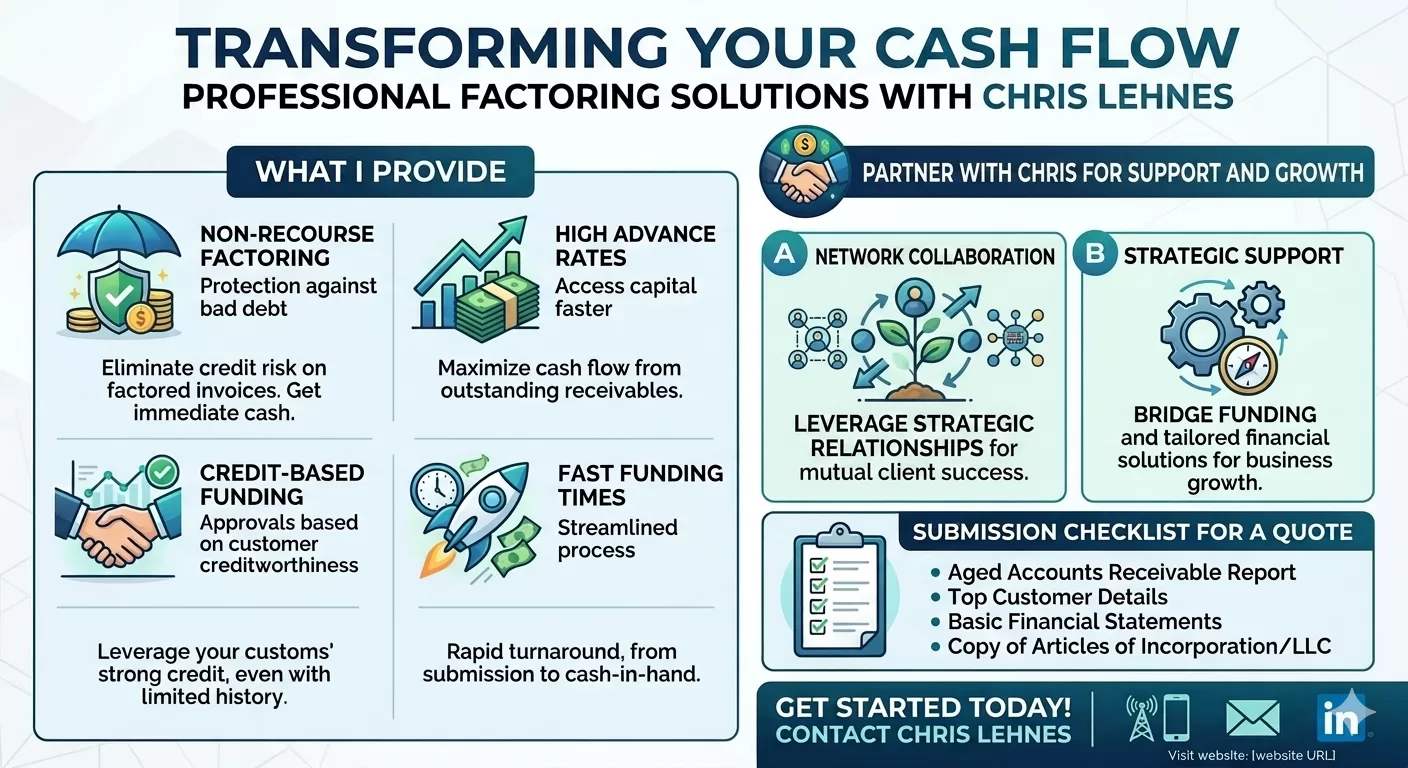
We fund tough deals and focus on the quality of your client’s accounts receivable, ignoring their financial condition. This enables us to move quickly and fund qualified businesses including Manufacturers, Distributors and a wide variety of Service Businesses in as quick as a week. Contact me today to learn if your client is a fit.
Chris Lehnes | Factoring Specialist | 203-664-1535 | Chris@chrislehnes.com
We Fund tough deals. We focus on the quality of your client's accounts receivable, ignoring their financial condition. This enables us to move quickly and fund qualified businesses including Manufacturers, Distributors and a wide variety of Service Businesses in as quick as a week.

Quick Cash for B2B Businesses – Factoring Accounts Receivable

B2B Businesses can obtain funds in as quick as a week backed by their accounts receivable.

Contact Factoring Specialist, Chris Lehnes

For B2B businesses, accounts receivable (AR) factoring is essentially a tool to accelerate cash flow. It allows you to trade the “waiting game” of Net-30 or Net-60 terms for immediate liquidity.

Instead of waiting for a client to pay an invoice, you sell that invoice to a third party (a “factor”) who advances you the majority of the funds immediately. This converts a stagnant asset (an unpaid invoice) into active working capital you can use to fund operations, payroll, or growth.

The following guide details how B2B businesses can utilize this strategy to meet working capital needs.

1. The Core Mechanism: How it Works

Factoring is technically an asset sale, not a loan. You are selling the right to collect on the invoice.

  • Step 1: Invoicing. You deliver your goods/services and send an invoice to your B2B customer as usual.
  • Step 2: Sale. You submit a copy of that invoice to the factoring company.
  • Step 3: The Advance. The factor verifies the invoice and wires you an advance—typically 80% to 90% of the invoice value—within 24 to 48 hours.
  • Step 4: Collection. The factor waits for your customer to pay them directly according to the invoice terms (e.g., 30 or 60 days).
  • Step 5: The Rebate. Once the customer pays the full amount, the factor releases the remaining 10–20% to you, minus their fee (usually 1–5%).

2. Strategic Uses for Working Capital

You can use the immediate infusion of cash to solve specific operational friction points common in B2B models:

  • Bridging the “Gap”: If your expenses (payroll, rent, utilities) are due weekly or bi-weekly, but your customers pay monthly, you have a cash flow gap. Factoring aligns your revenue intake with your expense outflow.
  • Fulfilling Large Orders: B2B growth often hurts cash flow before helping it. If you land a massive contract, you need cash now to buy raw materials and hire labor to fulfill it. Factoring existing invoices gives you the capital to fund these new orders without taking on debt.
  • Negotiating Supplier Discounts: With cash on hand, you can pay your own suppliers early. often unlocking “2/10 Net 30” discounts (a 2% discount if paid within 10 days). This discount can sometimes offset the cost of the factoring fee itself.
  • Smoothing Seasonality: For businesses with peak seasons (e.g., manufacturing for holiday retail), factoring during the busy season ensures you have the liquidity to maximize production when it matters most.

3. Critical Decisions: Configuring Your Factoring

To use this effectively, you must choose the right “type” of factoring for your risk profile.

Recourse vs. Non-Recourse

This determines who is liable if your client never pays (e.g., they go bankrupt).

  • Recourse Factoring: You are liable. If the client doesn’t pay, you must buy the invoice back from the factor. Benefit: Lower fees.
  • Non-Recourse Factoring: The factor assumes the credit risk. If the client defaults due to insolvency, the factor absorbs the loss. Benefit: Zero risk for you, but higher fees.

Notification vs. Non-Notification

  • Notification: Your customer is notified to pay the factor directly. This is standard but can sometimes signal to customers that you are tight on cash.
  • Non-Notification (White Label): The customer pays into a bank account that looks like yours but is controlled by the factor. The customer is unaware of the factoring arrangement.

4. Who Qualifies?

Unlike a bank loan, approval for factoring is based primarily on your customer’s creditworthiness, not yours.

  • Ideal Candidate: A B2B business (startups included) with reliable, large corporate or government clients who pay slowly but surely.
  • Less Ideal: Businesses with B2C customers (individuals) or clients with poor credit histories.
B2B Businesses can obtain funds in as quick as a week backed by their accounts receivable.

Factoring: Funding for Distributors Impacted By High Tariffs

Accounts Receivable Factoring can quickly meet the working capital needs of Distributors impacted by rising tariffs.

Our underwriting focus is solely on the quality of a company’s accounts receivable, which enables us to rapidly fund businesses which do not qualify for traditional lending such as those experiencing losses or where the owners have weak personal credit or even “character issues.”

Factoring Program Overview

  • $100,000 to $30 Million
  • Non-recourse
  • Flexible Term
  • Ideal for B2B or B2G

We fund challenging deals:

  • Start-ups
  • Losses
  • Highly Leveraged
  • Customer Concentrations
  • Weak Personal Credit
  • Character Issues

Contact Factoring Specialist, Chris Lehnes to learn if your client is a factoring fit

.

Accounts Receivable Factoring can quickly meet the working capital needs of Distributors impacted by rising tariffs.Our underwriting focus is solely on the quality of a company's accounts receivable, which enables us to rapidly fund businesses which do not qualify for traditional lending such as those experiencing losses or where the owners have weak personal credit or even "character issues."

Factoring Funds Seafood Companies Looking to Expand

Factoring can meet the cash needs of seafood processing companies looking to expand. Contact Chris at Versant Funding to learn if your seafood client is a factoring fit

Factoring can meet the cash needs of seafood processing companies looking to expand. Contact Chris at Versant Funding to learn if your seafood client is a factoring fit

Accounts Receivable Factoring
$100,000 to $30 Million
Quick AR Advances
No Long-Term Commitment
Non-recourse
Funding in about a week

We are a great match for businesses with traits such as:
Less than 2 years old
Negative Net Worth
Losses
Customer Concentrations
Weak Credit
Character Issues

Chris Lehnes | Factoring Specialist | 203-664-1535 | chris@chrislehnes.com

Podcast: Factoring Explained: How to Turn Invoices Into Opportunity

This podcast episode, hosted by Bob Shultz, publisher and co-founder of TCLM, and featuring Factoring Specialist, Chris Lehnes provides an in-depth exploration of factoring as a financing solution for businesses seeking improved liquidity.

Factoring is explained as the sale of a company’s accounts receivable to a third-party factor, which enables immediate cash flow without incurring debt. Lehnes outlines how the process works, from invoice verification to advancing 75 to 90 percent of its value and later releasing the balance upon customer payment, while also discussing the operational benefits, such as the factor handling collections. The conversation covers critical distinctions between recourse and non-recourse factoring, cost structures, and flexibility in factoring arrangements, including selective factoring by customer or invoice. The fees, typically 1.5 to 3 percent per month, are examined alongside aspects that influence pricing, such as credit risk, invoice volume, and payment timelines.

The discussion also offers practical guidance for businesses considering factoring, highlighting its applicability primarily for B2B and B2G companies with strong customers and urgent funding needs not being met by banks. Lehnnes addresses common concerns about customer perception, explaining that large enterprise clients are accustomed to factoring arrangements, and he emphasizes good receivables management practices to improve eligibility. The episode concludes with insights into Versant Funding’s unique position in the market, emphasizing its true non-recourse model, lack of reliance on traditional borrower qualifications, flexibility in factoring older receivables, and willingness to work with high customer concentration. This positions factoring not only as a cash flow solution but also as a strategic tool for growth, bridging financing gaps, and providing operational stability

Contact Factoring Specialist, Chris Lehnes

Factoring Explained: How to Turn Invoices Into Opportunity by David Schmidt

Unlock Working Capital with Factoring & Receivables Strategies

Read on Substack
This podcast episode, hosted by Bob Shultz, publisher and co-founder of TCLM, and featuring Chris Lehnes from Versant Funding, provides an in-depth exploration of factoring as a financing solution for businesses seeking improved liquidity. Factoring is explained as the sale of a company’s accounts receivable to a third-party factor, which enables immediate cash flow without incurring debt. Lehnes outlines how the process works, from invoice verification to advancing 75 to 90 percent of its value and later releasing the balance upon customer payment, while also discussing the operational benefits, such as the factor handling collections. The conversation covers critical distinctions between recourse and non-recourse factoring, cost structures, and flexibility in factoring arrangements, including selective factoring by customer or invoice. The fees, typically 1.5 to 3 percent per month, are examined alongside aspects that influence pricing, such as credit risk, invoice volume, and payment timelines.

Accounts Receivable Factoring
$100,000 to $30 Million
Quick AR Advances
No Long-Term Commitment
Non-recourse
Funding in about a week

We are a great match for businesses with traits such as:
Less than 2 years old
Negative Net Worth
Losses
Customer Concentrations
Weak Credit
Character Issues

Chris Lehnes | Factoring Specialist | 203-664-1535 | chris@chrislehnes.com

Factoring: Tariffs – Working Capital to Survive Implementation

Factoring can provide the working capital needed to survive in an era of increasing tariffs.

Contact me today to learn if your client is a factoring fit.

Contact Factoring Specialist, Chris Lehnes

Tariffs and the Tides of Trade: How They Imperil Small Business Working Capital

In the complex and often volatile world of international trade, tariffs emerge as a powerful, yet double-edged, sword. These government-imposed taxes on imported goods, while ostensibly designed to protect domestic industries, often send ripple effects far beyond national borders, especially into the delicate financial ecosystems of small businesses. For these agile, yet often financially lean, enterprises, tariffs can significantly strain their working capital position – the lifeblood that fuels daily operations, manages short-term obligations, and seizes growth opportunities. Understanding this impact is crucial for small business owners seeking to navigate an unpredictable global economy.

Working capital, simply put, is the difference between a business’s current assets (like cash, accounts receivable, and inventory) and its current liabilities (such as accounts payable, short-term debt, and accrued expenses). A healthy working capital position indicates liquidity and operational flexibility. Conversely, a depleted or negative working capital can signal financial distress, limiting a business’s ability to pay suppliers, meet payroll, or invest in expansion. Tariffs, by their very nature, directly attack this critical financial metric in several profound ways.

The most immediate and discernible impact of tariffs is the increased cost of goods and materials. Small businesses that rely on imported raw materials, components, or finished products for their operations suddenly face higher acquisition costs. For instance, a small furniture maker importing specialized wood from a country subject to a 25% tariff will see the cost of that wood jump by a quarter. This additional expense is a direct drain on cash flow, as businesses must find the money to pay these tariff fees to clear customs before their goods are even released. For many small businesses operating on thin margins, this unexpected and substantial outlay can create an immediate cash crunch, diverting funds that would otherwise be used for payroll, marketing, or other operational necessities.

Beyond the direct cost, tariffs trigger a cascade of challenges that further erode working capital. Supply chain disruptions are a prevalent consequence. Established trade relationships can be upended as suppliers in tariff-affected regions become less competitive or, in some cases, unable to continue supplying at viable prices. This forces small businesses to scramble for alternative sources, which often come with higher prices, longer lead times, or different quality standards. Delayed deliveries due to customs complications or supplier adjustments mean slower inventory turnover and a longer cash conversion cycle. If products sit in transit or customs longer, the capital tied up in that inventory increases, exacerbating working capital pressure. Moreover, product shortages can compel emergency purchases from new, more expensive suppliers, further straining cash reserves.

The ripple effect extends to inventory management. To mitigate the risk of supply chain disruptions and future price hikes, some small businesses may consider increasing their inventory levels as a buffer. While seemingly a protective measure, this strategy ties up more capital in goods that haven’t yet been sold, potentially leading to excess inventory and increasing storage costs. Conversely, if tariffs make certain products prohibitively expensive, businesses might be left with unsold, high-cost inventory, leading to write-downs and further losses.

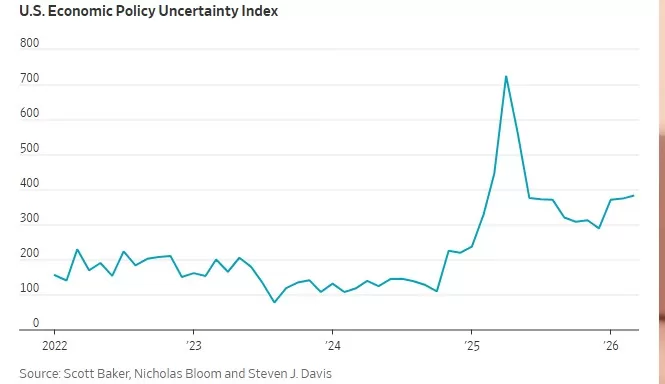
Furthermore, tariffs introduce a significant degree of uncertainty and planning challenges. The unpredictable nature of trade policies, with tariffs being imposed, adjusted, or removed with little notice, makes long-term financial planning a formidable task for small businesses. This volatility discourages investment in new equipment, technology, or hiring, as businesses become hesitant to commit capital in an unstable environment. Lenders, too, may view tariff-impacted businesses as higher risk, potentially leading to reduced credit lines or a reluctance to extend new financing, further constricting access to crucial working capital.

Historical examples highlight these impacts. The U.S. steel tariffs of 2002, while intended to protect domestic steel producers, led to higher input costs for downstream industries, such as construction and manufacturing, affecting their profitability and working capital. Similarly, the trade disputes of recent years, particularly those involving tariffs on Chinese goods, have seen anecdotal evidence of small businesses in sectors like sexual wellness and home goods struggling with increased costs, supply chain recalibrations, and the difficult decision of raising consumer prices or absorbing losses. Companies like Dame Products and Bambu Home, as seen in recent case studies, have directly experienced the strains on cash flow and the necessity of reevaluating their financial and pricing strategies.

Mitigating the Impact: Strategies for Small Businesses

While the challenges posed by tariffs are substantial, small businesses are not entirely without recourse. Proactive strategies can help mitigate their impact on working capital:

  • Diversify Supply Chains: Exploring alternative suppliers from countries not subject to tariffs, or even domestic sources, can reduce dependence on high-tariff imports and offer greater stability. This may involve significant research and relationship building but can be a vital long-term solution.
  • Negotiate with Suppliers: Open communication with existing suppliers about cost-sharing, extended payment terms, or bulk purchase discounts can help alleviate immediate financial strain.
  • Optimize Inventory Management: Implementing “just-in-time” inventory strategies where feasible, or carefully calibrating inventory levels based on accurate demand forecasts, can reduce the capital tied up in unsold goods.
  • Strategic Pricing and Cost Optimization: While raising prices is a sensitive decision, businesses should carefully analyze their cost structures, conduct margin analysis, and consider dynamic pricing models to absorb some tariff costs while remaining competitive. Simultaneously, a rigorous audit of operational expenses to identify areas for cost-cutting can free up working capital.
  • Improve Cash Flow Management: Creating detailed cash flow forecasts that account for tariff scenarios is crucial. Implementing strategies to accelerate accounts receivable (e.g., early payment incentives) and negotiating extended payment terms with customers can improve the cash conversion cycle.
  • Seek Flexible Financing: Establishing a business line of credit or exploring other working capital loans before a crisis hits can provide a crucial safety net for unexpected tariff-related costs or cash flow gaps. Government programs like the SBA’s State Trade Expansion Program (STEP) may also offer assistance for businesses looking to expand into international markets and potentially diversify their trade relationships.
  • Stay Informed and Seek Expert Advice: Monitoring trade policy developments, consulting with financial advisors, international trade consultants, or industry associations can provide invaluable insights and guidance for navigating the evolving tariff landscape.

In conclusion, tariffs represent a significant exogenous shock to the working capital position of small businesses. They directly increase costs, disrupt supply chains, complicate inventory management, and intensify competitive pressures, all of which strain a business’s liquidity and operational capacity. However, by adopting proactive strategies such as diversifying suppliers, optimizing cash flow, and seeking appropriate financial support, small businesses can enhance their resilience and navigate the turbulent waters of global trade, protecting their vital working capital and ensuring their continued viability and growth.

Accounts Receivable Factoring
$100,000 to $30 Million
Quick AR Advances
No Long-Term Commitment
Non-recourse
Funding in about a week

We are a great match for businesses with traits such as:
Less than 2 years old
Negative Net Worth
Losses
Customer Concentrations
Weak Credit
Character Issues

Chris Lehnes | Factoring Specialist | 203-664-1535 | chris@chrislehnes.com

Why More SaaS Founders are Turning to Factoring

SaaS companies are often challenged to obtain the working capital needed to continue to innovate, increase revenue and expand their customer base, but raising equity prematurely can unnecessarily dilute founder’s equity.

By factoring, SaaS companies get quick access to the funds needed to leverage their technology for success without giving up equity.

Accounts Receivable Factoring

  • $100,000 to $30 Million
  • Quick AR Advances
  • No Long-Term Commitment
  • Non-recourse
  • Funding in about a week

We are a great match for businesses with traits such as:

  • Less than 2 years old
  • Negative Net Worth
  • Losses
  • Customer Concentrations
  • Weak Credit
  • Character Issues

Contact me today to learn if your Software client is a factoring fit.

Is Your Business A Factoring Fit?

Discover how accounts receivable factoring can transform your small business by providing the essential working capital you need to grow and thrive. In under 60 seconds, learn how selling your unpaid invoices to a factoring company can improve cash flow, reduce financial stress, and empower you to seize new opportunities. Featuring inspiring visuals of successful retail owners, this quick guide highlights why factoring is a smart solution for managing finances without taking on debt. Whether you’re looking to expand inventory, cover payroll, or invest in marketing, factoring offers a flexible and reliable cash flow boost. Don’t miss out on unlocking your business’s full potential today!

SmallBusinessFinance #AccountsReceivableFactoring #WorkingCapital #RetailOwners #CashFlowSolutions #BusinessGrowth #FactoringBenefits

Contact Factoring Specialist, Chris Lehnes

Accounts Receivable Factoring
$100,000 to $30 Million
Quick AR Advances
No Long-Term Commitment
Non-recourse
Funding in about a week

We are a great match for businesses with traits such as:
Less than 2 years old
Negative Net Worth
Losses
Customer Concentrations
Weak Credit
Character Issues

Chris Lehnes | Factoring Specialist | 203-664-1535 | chris@chrislehnes.com

Discover how accounts receivable factoring can transform your small business by providing the essential working capital you need to grow and thrive. In under 60 seconds, learn how selling your unpaid invoices to a factoring company can improve cash flow, reduce financial stress, and empower you to seize new opportunities. Featuring inspiring visuals of successful retail owners, this quick guide highlights why factoring is a smart solution for managing finances without taking on debt. Whether you're looking to expand inventory, cover payroll, or invest in marketing, factoring offers a flexible and reliable cash flow boost. Don't miss out on unlocking your business's full potential today!

Factoring: The Fuel Small Businesses Need to Grow

Factoring: The Fuel Small Businesses Need to Grow

If your clients are like many small business owners, they have probably faced the frustrating gap between sending an invoice and actually getting paid.

Our Non-Recourse Accounts Receivable Factoring Program offers a smart solution.

Instead of waiting for customers to pay, factoring provides immediate access to the funds tied up in unpaid invoices. That means more money to meet payroll, restock inventory, invest in growth, or simply keep operations running smoothly.

Factoring. If your clients are like many small business owners, they have probably faced the frustrating gap between sending an invoice and actually getting paid.Versant's Non-Recourse Accounts Receivable Factoring Program offers a smart solution.Instead of waiting for customers to pay, factoring provides immediate access to the funds tied up in unpaid invoices. That means more money to meet payroll, restock inventory, invest in growth, or simply keep operations running smoothly. Factoring.

Program Overview

  • $100,000 to $30 Million
  • Non-Recourse
  • No Audits
  • No Financial Covenants
  • Most businesses with strong customers eligible

We specialize in difficult deals:

  • Start-ups
  • Weak Balance Sheets
  • Historic Losses
  • Customer Concentrations
  • Poor Personal Credit
  • Character Issues

We focus on the quality of your client’s accounts receivable, ignoring their financial condition.

This enables us to move quickly and fund qualified businesses including Manufacturers, Distributors and a wide variety of Service Businesses in as few as 3-5 days. Contact me today to learn if your client is a fit.

Contact Factoring Specialist, Chris Lehnes to learn if your client is a fit.

Factoring: The Fuel Small Businesses Need. If your clients are like many small business owners, they have probably faced the frustrating gap between sending an invoice and actually getting paid.

How Food Producers Can Use Factoring to Meet Working Capital Needs

Introduction – Food Producers need working capital too

In the fast-paced and highly competitive food production industry, maintaining adequate working capital is not just a financial strategy but a critical necessity. Food producers often operate on thin margins, face seasonal demand fluctuations, and must manage a complex supply chain that includes perishable inventory. To stay agile and responsive, they need reliable and flexible access to cash. One financial tool that has emerged as particularly useful in addressing these challenges is accounts receivable factoring.

In the fast-paced and highly competitive food production industry, maintaining adequate working capital is not just a financial strategy but a critical necessity. Food producers often operate on thin margins, face seasonal demand fluctuations, and must manage a complex supply chain that includes perishable inventory. To stay agile and responsive, they need reliable and flexible access to cash. One financial tool that has emerged as particularly useful in addressing these challenges is accounts receivable factoring.

Accounts receivable factoring allows businesses to convert their outstanding invoices into immediate cash. For food producers, this can mean the difference between seizing a growth opportunity or missing it, between meeting payroll or delaying production. This article explores how food producers can use accounts receivable factoring to meet their working capital needs, examining the mechanics of factoring, its benefits and drawbacks, and how to strategically integrate it into a broader financial strategy.


1. Understanding Working Capital in the Food Production Industry

Working capital refers to the difference between a company’s current assets and current liabilities. It represents the liquidity available to a business for day-to-day operations. In the food production industry, working capital is vital for purchasing raw materials, paying labor, managing transportation, and investing in production equipment.

Common challenges food producers face include:

  • Seasonal cash flow issues: Demand for food products can be seasonal, affecting revenue cycles.
  • Perishable inventory: Food producers must move products quickly, and delays in payment can create cash flow bottlenecks.
  • Extended payment terms: Large retailers and distributors often impose long payment cycles, sometimes up to 90 days.

2. What is Accounts Receivable Factoring?

Accounts receivable factoring, often simply referred to as factoring, is a financial transaction where a business sells its outstanding invoices to a third party (a factoring company) at a discount. The factor then assumes the responsibility of collecting the invoice payment from the customer.

Key Components of Factoring:

  • Advance Rate: Typically 70% to 90% of the invoice value is advanced to the business upfront.
  • Reserve: The remainder is held until the invoice is paid, minus the factor’s fees.
  • Fees: Usually include a discount fee (interest) and possibly administrative fees.

There are two main types of factoring:

  • Recourse Factoring: The business retains the risk if the customer fails to pay.
  • Non-Recourse Factoring: The factor assumes the risk of non-payment.

3. Benefits of Factoring for Food Producers

3.1 Immediate Access to Cash Factoring turns invoices into cash within 24 to 48 hours, enabling food producers to respond quickly to operational needs.

3.2 Improved Cash Flow Management By smoothing out cash flow irregularities, factoring helps food producers plan and budget more effectively.

3.3 Flexibility and Scalability Factoring grows with sales. As a food producer issues more invoices, they can factor more receivables, aligning financing with business growth.

3.4 No Additional Debt Factoring is not a loan; it doesn’t appear as a liability on the balance sheet. This preserves credit ratings and borrowing capacity.

3.5 Outsourced Collections The factoring company often takes on the role of collecting payments, saving administrative time and effort.


4. Practical Application in the Food Production Sector

4.1 Meeting Seasonal Demand A fruit canning company may face high production costs during harvest season but won’t receive payments from distributors for 60 days. Factoring their invoices ensures they have the cash to pay suppliers and seasonal workers.

4.2 Managing Supply Chain Costs A bakery supplying national grocery chains may need to pay flour suppliers and logistics providers upfront. Factoring their receivables from the grocery chains allows continuous operations without debt.

4.3 Funding Expansion A frozen food producer landing a new contract with a supermarket chain can use factoring to fund increased production without waiting 90 days for the supermarket to pay.


5. Selecting a Factoring Partner

Choosing the right factoring company is critical. Food producers should consider:

  • Industry experience: Some factors specialize in food and beverage and understand the unique cash flow patterns.
  • Fee structure: Transparent and competitive pricing is essential.
  • Customer service: Good support can smooth the transition and ongoing relationship.
  • Reputation: References and reviews can offer insights into reliability.

6. Risks and Considerations

6.1 Cost Factoring can be more expensive than traditional financing. It’s important to compare costs and ensure margins can absorb the fees.

6.2 Customer Relationships The factor communicates with customers for collections. Ensure the factor treats customers professionally to preserve relationships.

6.3 Dependence Over-reliance on factoring without a broader financial strategy can lead to challenges. It should be one tool among many.

6.4 Contract Terms Some factoring agreements include lock-in periods or minimum volume commitments. Businesses must review terms carefully.


Food producers often operate on thin margins, face seasonal demand fluctuations, and must manage a complex supply chain that includes perishable inventory. To stay agile and responsive, they need reliable and flexible access to cash. One financial tool that has emerged as particularly useful in addressing these challenges is accounts receivable factoring.

7. Integrating Factoring into a Financial Strategy

7.1 Strategic Use Use factoring to manage peak seasons or bridge specific gaps rather than as a permanent solution.

7.2 Combine with Other Tools Factoring can complement lines of credit, inventory financing, or equipment leasing to create a balanced working capital strategy.

7.3 Monitor Metrics Track the cost of factoring relative to the benefits—e.g., increased sales, timely payroll, supplier discounts from faster payments.


8. Regulatory and Ethical Considerations

Food producers must ensure compliance with industry regulations. Factoring does not absolve a company of its responsibilities:

  • Transparency: Be upfront with customers about the factoring arrangement.
  • Data Security: Ensure the factor adheres to data protection standards.

9. Case Studies

Case Study 1: Organic Dairy Producer An organic dairy company supplying health food stores across the country used factoring to meet growing demand. With 60-day payment terms from clients, they faced a cash crunch. Factoring enabled them to invest in new cows and expand production without debt.

Case Study 2: Small Snack Manufacturer A startup snack brand received a large order from a national chain. Lacking the capital to fulfill the order, they used factoring to fund production and delivery. The move helped them scale and build credibility.

Case Study 3: Family-Owned Produce Distributor This business faced extended payment terms from supermarkets. Factoring their invoices provided consistent cash flow, helping them pay farmers promptly and negotiate better supplier terms.


10. Future Outlook and Trends

The factoring industry is evolving, with digital platforms offering quicker and more transparent services. For food producers, this means:

  • Faster approvals
  • Lower costs due to fintech competition
  • Integration with accounting software
  • More flexible terms

Sustainability and ethical sourcing trends may also influence factoring policies, as lenders consider Environmental, Social, and Governance (ESG) factors.


Conclusion

In the dynamic landscape of food production, where timely access to capital can make or break operations, accounts receivable factoring offers a practical and powerful solution. While it may not replace traditional financing or internal cash flow management, it serves as an effective complement. By converting receivables into working capital, food producers can maintain liquidity, scale operations, and weather the seasonal and market-driven fluctuations inherent in the industry.

With careful selection of a factoring partner, clear understanding of the costs, and strategic integration into broader financial planning, factoring can be a game-changer for food producers striving to thrive in a competitive and capital-intensive environment