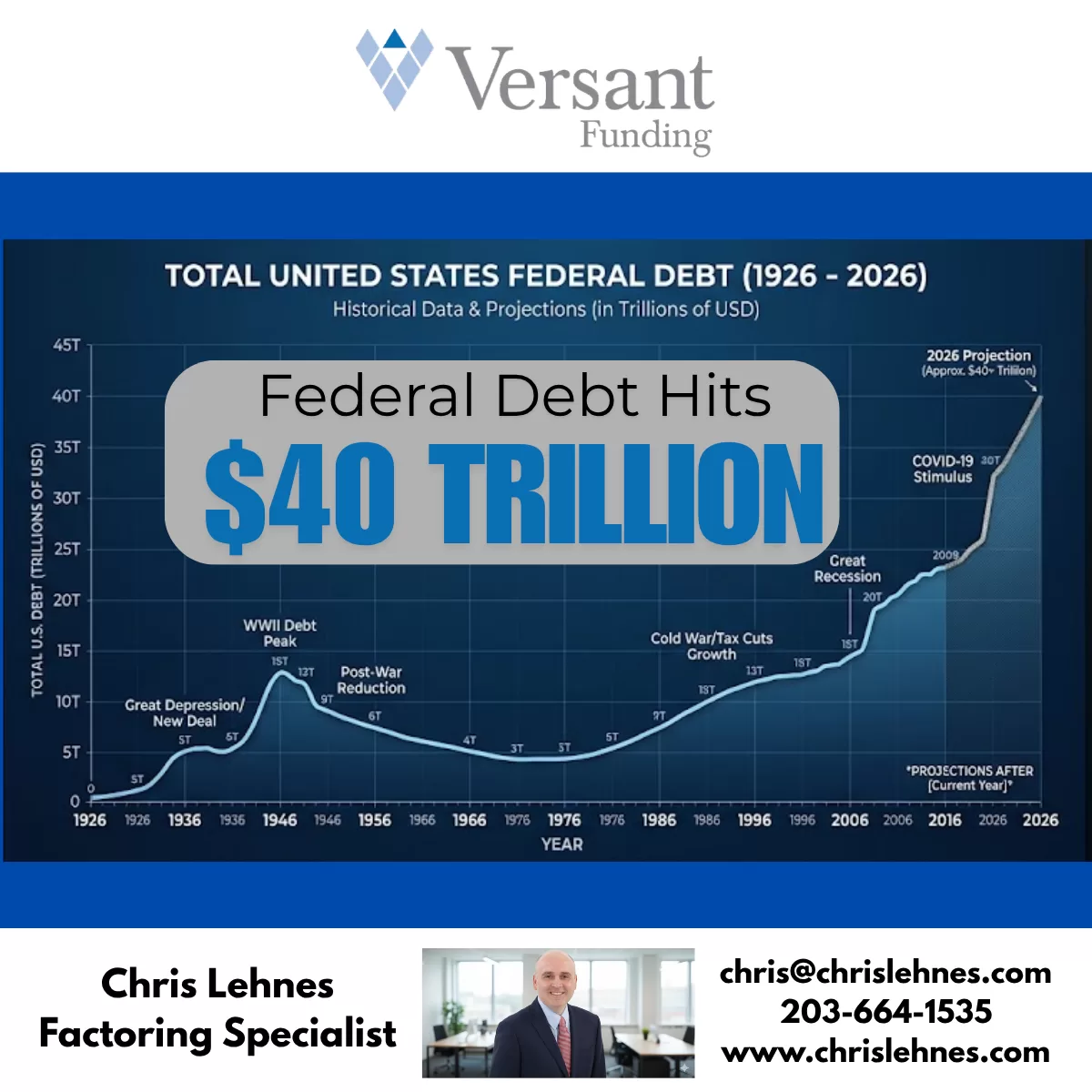
While that figures is symbolically significant, it is not economically significant. Most investors and economists focus on other metrics, like the Debt to GDP ration, a better sense of an country’s borrowing ability.
But, $40 trillion is a big number, and will draw attention to an unsustainable fiscal trajectory.
A “Side Hustle” Economy Not a Small Business Boom While 2025 saw a record 6 million new business applications, 70% were identified by the Census Bureau as “likely non-employers.” Only 1.7 million actually intend to hire paid employees [53:18].
The Founder Obsession: Scott argues this isn’t an entrepreneurial boom, but rather young people disillusioned by corporate jobs starting side gigs. This trend is highlighted by a 69% surge in users adding the title “Founder” to their LinkedIn profiles [01:07:03].
Career Advice: Scott strongly advises young professionals against romanticizing entrepreneurship, noting that the fastest and safest path to wealth is often joining an established, fast-growing corporation as an early employee (e.g., employee 10 to 1,000) rather than taking on the brutal emotional and financial toll of starting a company from scratch [01:01:09].
According to the Census Bureau, Americans filed nearly 6 million applications to start new businesses last year. While that is the most on record, the data doesn’t tell the whole story. Only 1.7 million of those applications were identified as high-propensity businesses, meaning they actually intend to hire paid employees. The vast majority of the applications were for entrepreneurs with no plans to hire anyone.
This really grabbed my attention because I’ve been seeing arguments that we are in the midst of a small business boom. I was ready to run with it—it’s a reason to be optimistic. The number of new business applications has exploded, up 10% year-over-year to hit record highs, and this trend has continued into the first half of this year. However, most of these businesses are categorized as “likely non-employer businesses,” meaning they have a very low likelihood of producing actual payrolls.
The Census Bureau uses a methodology that looks at indicators like, Have you indicated that you’re hiring?, Have you provided a first wages-paid date?, and Are you in an industry with strong employment demand? It turns out that more than 70% of these new businesses we were supposed to be celebrating are likely non-employers. This seems like a bit of a fake boom.
This blew me away. In terms of how the sausage gets made here, we do editorial calls where analysts pitch stories, and I comment on them, and our producer decides what we’ll cover. This story just blew my mind because I have this whole “AI optimist” pitch, and one of my favorite stats is that new business formation is at a record high. This data completely punctured that argument because, once again, numbers can be misleading. Six million new business applications sounds like a renaissance of the American entrepreneurial spirit. But, as you pointed out, only 1.7 million (about 30%) were high-propensity.
The other 4 million-plus applications represent one person, a laptop, and an LLC. When you try to start a restaurant, you’re going to hire 10, 20, or 30 people. When you’re starting a food blog as a side hustle, that’s not exactly great for the employment market. What the data actually shows is that this isn’t a small business boom; it’s a side-hustle economy dressed up in Census Bureau language.
In some ways, it probably reflects something unhealthy about the economy. One in three adults says they are planning a business or side hustle in 2026, which is up 94% year-over-year. There’s something very good about that, but the question is: is it entrepreneurial confidence, or economic anxiety wearing a founder’s hoodie? People aren’t starting these companies because times are good; they’re hedging because they can’t afford to pay their rent with their main job. This is one of those times I realized I don’t know what I don’t know, and this supposed new business boom isn’t really a boom at all.
I think this is an important data point, and I want to clarify it for everyone: 70% of these new businesses are likely non-employers according to the census. If you compare this to the mid-2000s, the share of likely non-employer businesses has doubled. So yes, we are seeing new businesses, but most of them are not actually contributing to the broader economy.
Why is this happening? One theory is the rise of the AI-enabled solopreneur—that AI allows you to form your own business easily. That might be part of it, but this trend began way before AI. It exploded during COVID, where suddenly, all of these non-employer businesses skyrocketed. Another theory is that more people are self-employed now—they quit their jobs and are running solo companies. But if you look at the self-employment rate, the number of self-employed Americans is actually down significantly over the past few years.
This leads me to one logical conclusion: these are mostly side gigs. It’s someone who is bored at work. They are still employed and working remotely, but they want to start a lifestyle brand, make an Instagram account, or write a Substack. If they get really excited, they might create an LLC. But to be clear, that’s not a business that is contributing to the economy. It’s essentially a hobby and a legitimized vehicle to express yourself out of the boredom you feel at your actual job.
This is becoming a real trend, especially among young people, because they are so disillusioned by the notion of traditional work—being an employee and receiving a wage. It reflects that philosophy of ‘don’t be a wage slave, start your own business, be an entrepreneur, be a hustler.’ The entrepreneurship mindset has become such a hot topic in our digital, social media-driven world that we are all fantasizing about it. People create these little side hustles so they can say, ‘I’m an entrepreneur now.’ But in reality, you aren’t, because you still work for a company and you aren’t generating a livable income off the side business that supposedly makes you a founder.”
Versant funding
Food processing companies can fund their growth using the cash provided by accounts receivable factoring. Contact Chris at Versant Funding to learn if your client is a fit for factoring. Factoring can also meet the cash needs of staffing companies looking to expand. Contact Factoring Specialist Chris Lehnes to learn if your staffing client is a factoring fit.
Today marks a significant turning point in European monetary policy: the European Central Bank (ECB) has officially reversed course, raising its key interest rates for the first time in nearly three years.
After an extended period of cuts and holds, the era of steadily declining borrowing costs in the Eurozone has temporarily hit a wall. Let’s break down the data, the underlying causes, and what this means for the broader economy.
The Decision: By the Numbers
In a move widely anticipated by financial markets and economists, the ECB’s Governing Council elected to raise its key interest rates by 0.25 percentage points (25 basis points).
Here is a quick breakdown of where the central bank’s key rates stand effective immediately:
ECB Facility
Previous Rate
New Rate (June 2026)
Deposit Facility
2.00%
2.25%
Main Refinancing Operations
2.15%
2.40%
Marginal Lending Facility
2.40%
2.65%
This decision officially ends a cycle that began back in September 2023, representing a decisive reaction to shifting economic realities on the ground.
Why is the ECB Hiking Rates Now?
The ECB has a single, primary mandate: to maintain price stability by targeting an inflation rate of 2.0%. The decision to hike rates is a direct response to recent data showing that inflation is moving in the wrong direction.
Headline Inflation Surge: In May 2026, Eurozone consumer prices rose to 3.2% year-over-year. This marks a significant acceleration from earlier in the year and blows past the central bank’s comfort zone.
The Energy Shock: A major driver behind this inflationary spike is the ongoing geopolitical conflict in the Middle East. Disrupted shipping routes and volatile commodity markets caused energy prices to jump nearly 11% last month compared to the same period last year.
Core Inflation Creep: The energy shock isn’t isolated. Core inflation—which strips out highly volatile food and energy costs—rose to 2.5%. This indicates that higher energy overheads are beginning to bleed into the broader costs of everyday goods and services.
What Does This Mean for the Eurozone?
When the ECB pulls the interest rate lever, the effects ripple through the entire financial system. Here is what to expect:
More Expensive Borrowing: For consumers and businesses, the cost of credit is going up. Homeowners holding variable-rate or tracker mortgages will see their monthly repayments increase almost immediately.
A Squeeze on Growth: While higher interest rates are necessary to cool down inflation, they simultaneously suppress economic activity. Reflecting the strain of higher energy costs and tighter financial conditions, the ECB has already revised its growth forecasts downward, anticipating the Eurozone economy will grow by a sluggish 0.8% in 2026.
Currency Impacts: Higher interest rates generally make a currency more attractive to yield-seeking investors. A hawkish stance from the ECB typically provides upward support for the Euro (EUR) against other major currencies, provided the broader economic outlook doesn’t deteriorate too sharply.
Looking Ahead: Is This the Start of a New Cycle?
The prevailing question for markets is whether this is a isolated adjustment or the beginning of a new tightening cycle.
Current market consensus suggests this won’t be a one-off event. Many analysts are pricing in at least one or two more quarter-point increases before the end of the year, which could bring the deposit rate up to 2.50% or 2.75%. However, ECB leadership has emphasized that future decisions will remain strictly “data-dependent.” The Governing Council will evaluate the ongoing impact of energy prices, geopolitical stability, and wage growth on a meeting-by-meeting basis.
The takeaway is clear: the ECB’s latest pivot highlights how rapidly external shocks can upend economic stability, forcing central banks to prioritize fighting inflation over stimulating growth.
If you’ve been keeping an eye on the economic headlines lately, you might have braced yourself for a sluggish jobs report this May. With rising inflation and the economic ripple effects of the ongoing conflict in Iran, many analysts were predicting a significant cooldown in hiring.
But the U.S. labor market just threw a massive curveball.
Here is a breakdown of the May 2026 jobs report, what the numbers actually mean, and why the American economy continues to show surprising resilience.
The Headline Numbers: Blowing Past Estimates
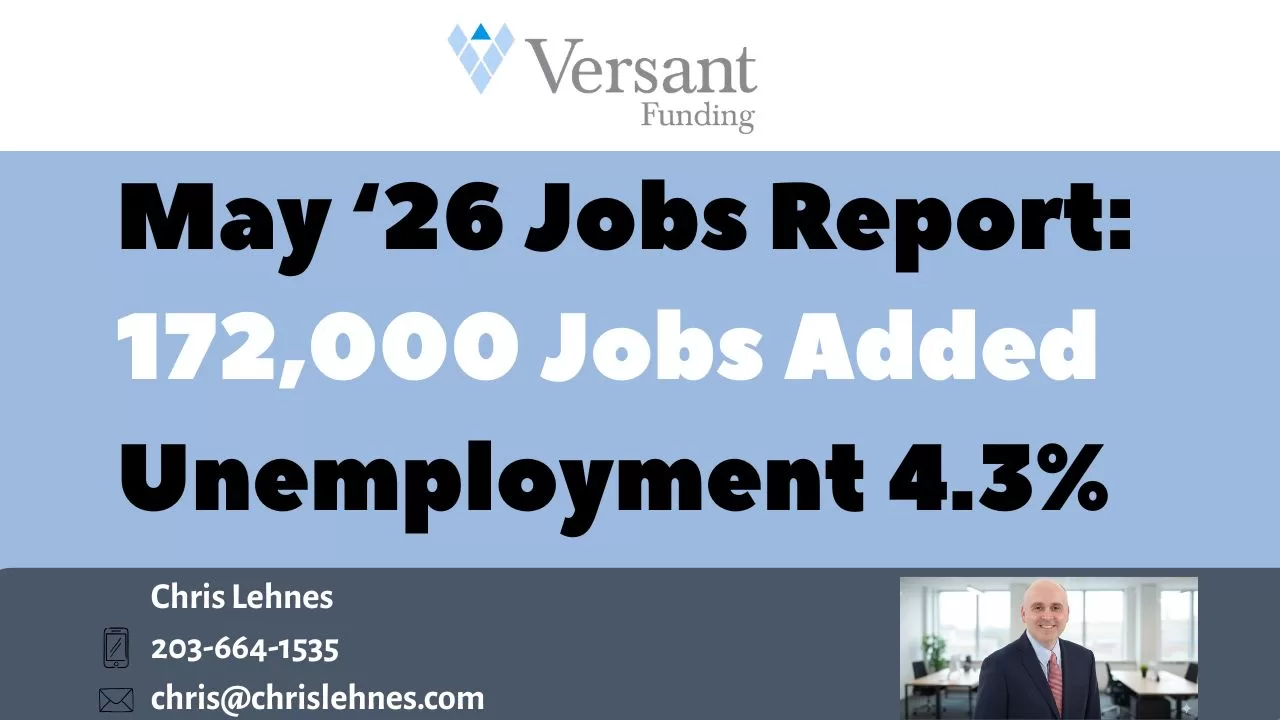
Economists were largely projecting a modest gain of around 85,000 jobs for May. Instead, the Labor Department revealed that U.S. employers added a robust 172,000 new jobs.
Total Jobs Added: 172,000 (vs. 85,000 expected)
Unemployment Rate: Held steady at 4.3%
Wage Growth: Average hourly earnings ticked up by 0.3% month-over-month.
April Revisions: April’s numbers were also sharply revised upward from 115,000 to an impressive 179,000.
This wasn’t just a slight beat; it was a doubling of expectations, indicating that businesses are still finding reasons to hire and expand, even in an uncertain macroeconomic climate.
Where Are the Jobs Coming From?
While the headline number is strong, the growth wasn’t entirely uniform across the board. The heavy lifting was done by a few key sectors:
Healthcare and Social Services: Continuing a long-running trend, healthcare remains a massive engine for job creation, accounting for a significant chunk of the new roles.
Leisure and Hospitality: As the weather warms up, consumer demand for travel and dining out remains steady, prompting strong hiring in this sector.
Local Government: Public sector hiring also saw notable gains.
Conversely, some sectors felt the pinch. Employment in financial activities slipped slightly, reflecting tighter borrowing conditions and shifting corporate strategies.
Resilience Amid Global Headwinds
The most fascinating takeaway from this report isn’t just the sheer number of jobs added—it’s the context in which they were created.
Since the escalation of the war in Iran earlier this year, global energy markets have been incredibly volatile. Spiking oil prices have renewed fears of inflation, putting pressure on consumer wallets and business operational costs alike. Despite these immense headwinds, the domestic labor market has absorbed the shock remarkably well.
The fact that employers are still confident enough to add 172,000 workers to their payrolls suggests an underlying structural strength in the U.S. economy that is, for now, overriding geopolitical anxieties.
What This Means for the Federal Reserve
Of course, a hot jobs report complicates things for the Federal Reserve.
When the labor market is strong and wage growth is steady, inflation tends to remain sticky. Prior to this report, there was speculation that the Fed might keep interest rates flat for the rest of the year. However, this display of economic resilience might push policymakers in a more hawkish direction. While the steady 4.3% unemployment rate means the labor market isn’t overheating, markets are now bracing for the possibility that the Fed could lift rates at least once by the end of 2026 to keep inflationary pressures in check.
The Bottom Line
The May 2026 jobs report is a potent reminder that the U.S. economy rarely behaves exactly as modeled. While the challenges of inflation and global conflict are very real, the underlying demand for labor remains undeniably robust. Whether this momentum can be sustained into the summer remains to be seen, but for now, the job market continues to defy the odds.
If you’ve been watching the housing market lately, you’re probably feeling a mix of exhaustion and sticker shock. It’s completely understandable to feel frustrated when home prices seem disconnected from reality. But while we often blame interest rates, zoning laws, or real estate investors for the high cost of housing, there is a hidden, grounded reality driving these numbers: the cost of raw materials. A house is essentially a massive assembly of global commodities. When the prices of the raw materials needed to build and transport a home spike, those costs are passed directly onto the buyer, limiting new inventory and driving up the prices of existing homes. https://www.hud.gov
Let’s pull back the drywall and look at how four foundational commodities—copper, lumber, aluminum, and diesel—dictate the reality of the housing market.
1. Lumber: The Skeleton of the Home
When you think of home construction, lumber is usually the first thing that comes to mind. It forms the literal skeleton of most single-family houses.
Where it’s used: Framing, flooring, roof trusses, cabinetry, and doors.
The Market Impact: The average single-family home requires roughly 16,000 board feet of lumber. When lumber prices skyrocket (as we saw during pandemic-era supply chain crunches), it can add tens of thousands of dollars to the base cost of a newly built home.
The Ripple Effect: When building a new home becomes too expensive, builders slow down construction. This chokes off new housing inventory, forcing buyers into the existing home market and bidding up prices across the board.
2. Copper: The Nervous System
You rarely see it once the house is finished, but copper is what brings a home to life. It is the gold standard for conductivity and durability.
Where it’s used: Electrical wiring, plumbing pipes, and HVAC systems. A typical single-family home contains about 400 pounds of copper.
The Market Impact: Copper is heavily dependent on global macroeconomic trends. Because it is crucial for electric vehicles and renewable energy infrastructure, the global demand for copper is surging. As builders compete with the tech and auto industries for the same metal, the cost to wire and plumb a new home steadily climbs.
3. Aluminum: The Armor
Lightweight, strong, and resistant to corrosion, aluminum protects the home from the elements while keeping it energy-efficient.
Where it’s used: Window frames, exterior siding, gutters, roofing, and garage doors.
The Market Impact: Producing aluminum is an incredibly energy-intensive process. When global energy prices rise, the cost to smelt aluminum rises with them. If aluminum becomes too expensive, builders are forced to use cheaper, less durable alternatives, or pass the premium directly to the buyer, raising the baseline cost of weatherproofing and finishing a home.
4. Diesel: The Hidden Multiplier
Diesel doesn’t end up inside the house, but the house cannot exist without it. It is the lifeblood of the construction and logistics industries.
Where it’s used: Fueling the logging trucks that carry the timber, the cargo ships that transport the copper, the 18-wheelers that deliver the aluminum, and the bulldozers, excavators, and cranes that actually build the neighborhood.
The Market Impact: Diesel acts as a cost multiplier. If the price of diesel jumps, the cost of every single other material increases because it costs more to get those materials to the job site. High diesel prices also squeeze contractors’ profit margins, meaning they have to charge more for their labor and equipment time.
The Bottom Line
The housing market doesn’t exist in a vacuum. It is deeply tied to the physical world and the global supply chain.
When you see headlines about overseas mining strikes, lumber tariffs, or fluctuations in oil markets, you are actually looking at leading indicators for tomorrow’s housing market. A spike in these four commodities makes new homes more expensive to build, which slows down development, restricts housing supply, and ultimately makes it harder for the average person to afford a home. Understanding these hidden drivers doesn’t instantly make buying a house easier, but it does demystify why the numbers on the final price tag are what they are.
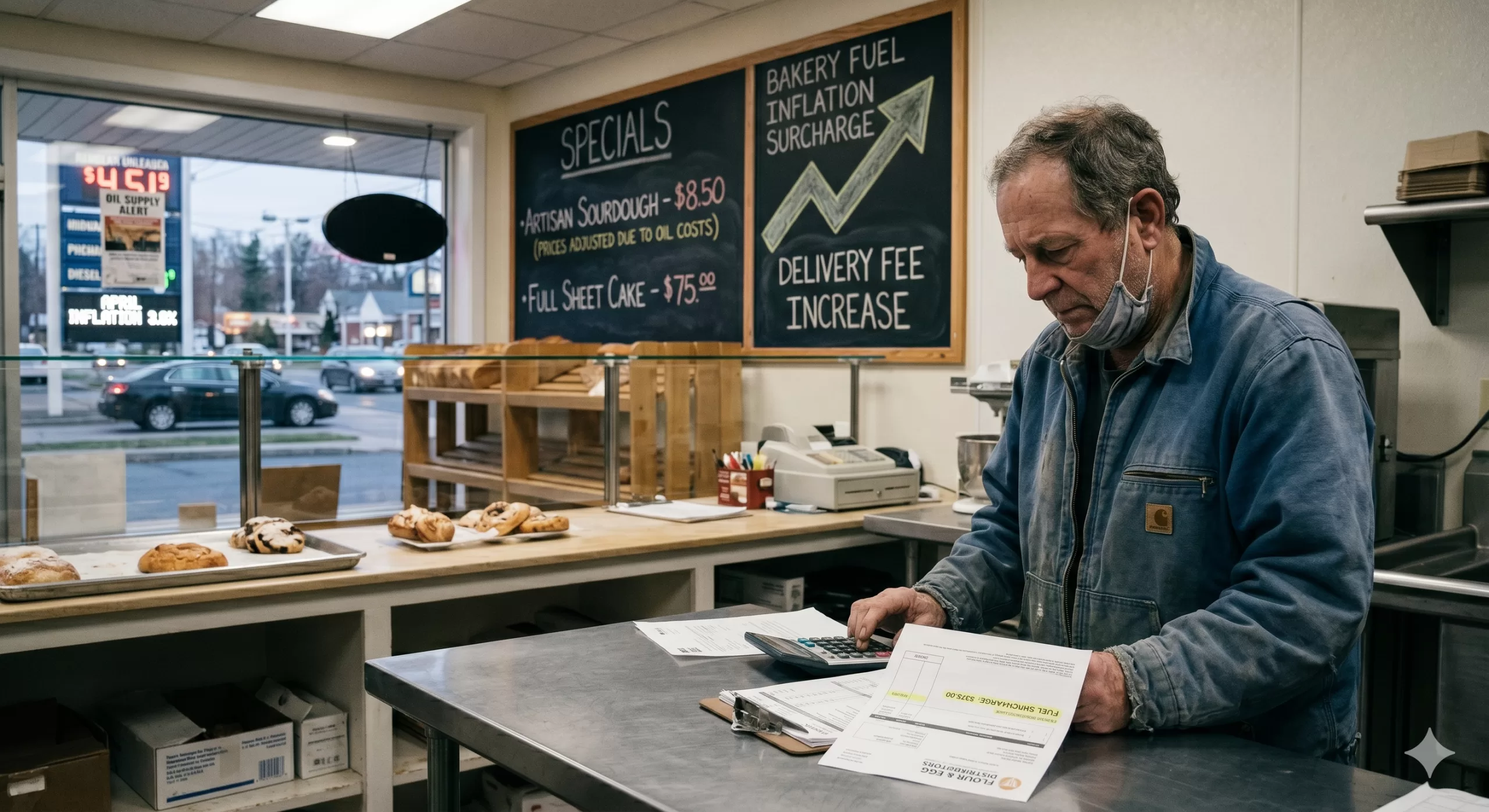
If your last trip to the gas station felt like a hit to your wallet, you aren’t alone. The latest Consumer Price Index (CPI) report is out, and the numbers confirm what we’ve all been feeling: U.S. inflation jumped to 3.8% in April, up from 3.3% in March.
This represents the highest inflation rate since 2023, and it marks a significant detour from the “path to 2%” that the Federal Reserve has been aiming for. While price increases have cooled in some sectors, the energy market is currently the primary engine driving these numbers higher.
Gasoline: The Primary Culprit
The standout figure in April’s report is the cost of energy. National average gas prices have surged to approximately $4.50 per gallon, a staggering jump from the sub-$3.00 levels seen just a few months ago in February.
This spike isn’t just a random market fluctuation. It is being driven heavily by geopolitical instability, specifically the ongoing conflict with Iran. The closure of the Strait of Hormuz—a vital artery for global oil supply—has sent shockwaves through the market. When a fifth of the world’s oil supply is threatened, the impact is immediate and felt directly at the local pump.
The “Trickle-Down” of High Energy Costs
High gas prices do more than just make commuting more expensive. They create a “cost-of-living” domino effect:
Transportation & Logistics: Shipping companies and airlines are facing massive fuel surcharges, which eventually get passed down to the consumer.
Food Prices: Agriculture and grocery distribution are energy-intensive. As diesel and gas prices rise, expect your grocery bill to remain stubbornly high.
Manufacturing: Factories that rely on heavy energy consumption are seeing their margins squeezed, leading to higher prices for finished goods.
What This Means for Interest Rates
For months, the big question in the financial world has been: When will the Fed cut interest rates?
This 3.8% reading makes that answer much more complicated. Outgoing Fed Chair Jerome Powell and incoming Chair Kevin Warsh are facing a “higher-for-longer” reality. Typically, the Fed raises interest rates to cool a hot economy and lower inflation. With inflation trending upward again, the prospect of rate cuts in 2026 is fading, and some economists are even whispering about the possibility of another hike if the energy crisis doesn’t stabilize.
The Bottom Line
The April inflation report is a sobering reminder of how interconnected our local economy is with global events. While the U.S. economy remains resilient in many areas, the “gasoline tax” created by geopolitical tension is a heavy burden for the average household.
For now, the focus remains on the Middle East. Until energy supply stabilizes, the Fed—and our bank accounts—will likely be in a defensive crouch.
What are you doing to offset rising costs? Are you changing your summer travel plans or looking into more fuel-efficient alternatives? Let us know in the comments below.
The Invisible Hand is Getting a Digital Upgrade (and a Glitch)
For decades, the US economy felt like a predictable, if sometimes temperamental, machine. We looked at the S&P 500, labor participation, and GDP, and we generally knew where we stood. But lately, with AI the gauges are spinning.
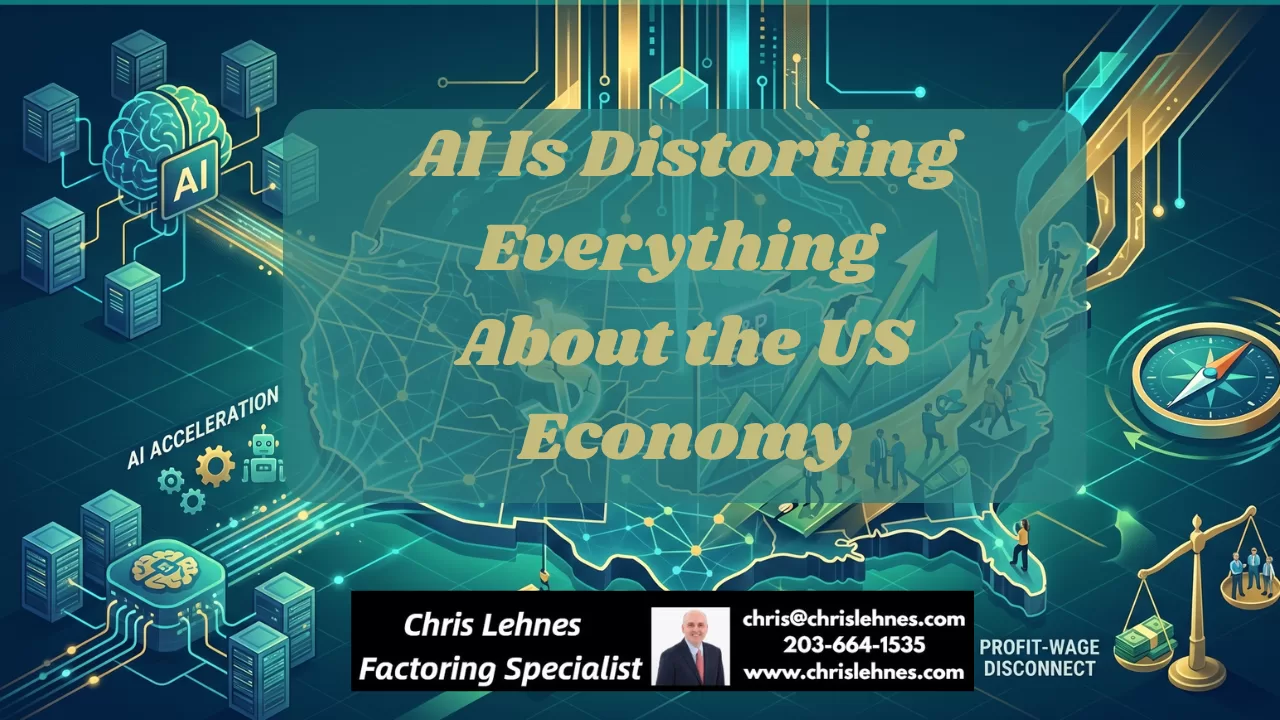
As we move through 2026, it’s becoming clear that Artificial Intelligence isn’t just another “sector” or a “tailwind.” It has become a massive, invisible force field distorting the very metrics we use to define economic health. From a soaring stock market that masks a stagnant middle class to a trade deficit driven by chips rather than cars, the “AI Distortion” is the new reality.
1. The Tale of Two Economies: AI vs. Everything Else
If you look at the surface-level GDP growth, things look great. But peel back the layers, and you’ll find a massive divergence.
Recent estimates suggest the “AI economy”—driven by massive capital expenditure from tech giants—is growing at a blistering pace of over 30%. Meanwhile, the rest of the traditional economy is barely treading water. We are seeing a “Hurricane-strength” weather system where a handful of companies (the “Magnificent 7” and their suppliers) are responsible for nearly all the growth, while sectors like housing, transportation, and traditional manufacturing face headwinds.
Key Stat: Morgan Stanley projects that capital spending by the five largest AI “hyperscalers” will top $1.1 trillion in 2027. To put that in perspective: that is more than the projected US national defense budget.
2. The Profit-Wage Disconnect
The most jarring distortion is the widening gap between corporate profits and worker pay. While S&P 500 earnings are rocketing—specifically for companies providing the “picks and shovels” of AI like NVIDIA—labor’s share of total business output has hit historic lows.
The Corporate Side: Profits are being driven by extreme efficiency and high-margin AI services.
The Human Side: Real wages, after inflation, have struggled to keep pace. Workers are feeling a “vibecesssion”—a psychological recession—even when the data says the economy is booming. The fear of replacement by AI is creating a mood of cautious pessimism that isn’t reflected in the soaring Nasdaq.
3. The Trade Deficit Illusion
Usually, a widening trade deficit is a sign of a weak domestic manufacturing base. In the Age of AI, it’s a sign of a domestic investment boom.
Because the US leads in AI software and design but relies on overseas foundries (primarily in Taiwan and South Korea) for high-end semiconductors, every dollar spent building a domestic data center often results in thousands of dollars of imported hardware. This is distorting our trade balance, making the US look “weaker” on paper even as it cements its role as the global hub for AI innovation.
4. Is It a Bubble or a Foundation?
The “B-word” is on everyone’s lips. Skeptics point to the 1990s dot-com era, noting that we are currently betting the entire economy on “scaling”—the idea that bigger models and more data will inevitably lead to AGI (Artificial General Intelligence).
If this bet pays off, we are building the infrastructure of a new civilization. If it doesn’t, the distortion could lead to a massive correction. We’ve reached a point where the US economy is “Too Big to Fail” on AI. As David Sacks, the administration’s AI czar, recently noted: a reversal in AI investment wouldn’t just be a tech correction—it would risk a full-scale national recession.
The Bottom Line
We are living in an era of synthetic growth. The numbers are real, but they don’t feel real to the average person because they are concentrated in a digital frontier. As AI continues to distort everything from job security to trade routes, the challenge for 2026 and beyond isn’t just “how to grow,” but how to ensure that the AI boom doesn’t leave the rest of the economy in its shadow.
The hand of the market is no longer just “invisible”—it’s becoming algorithmic.
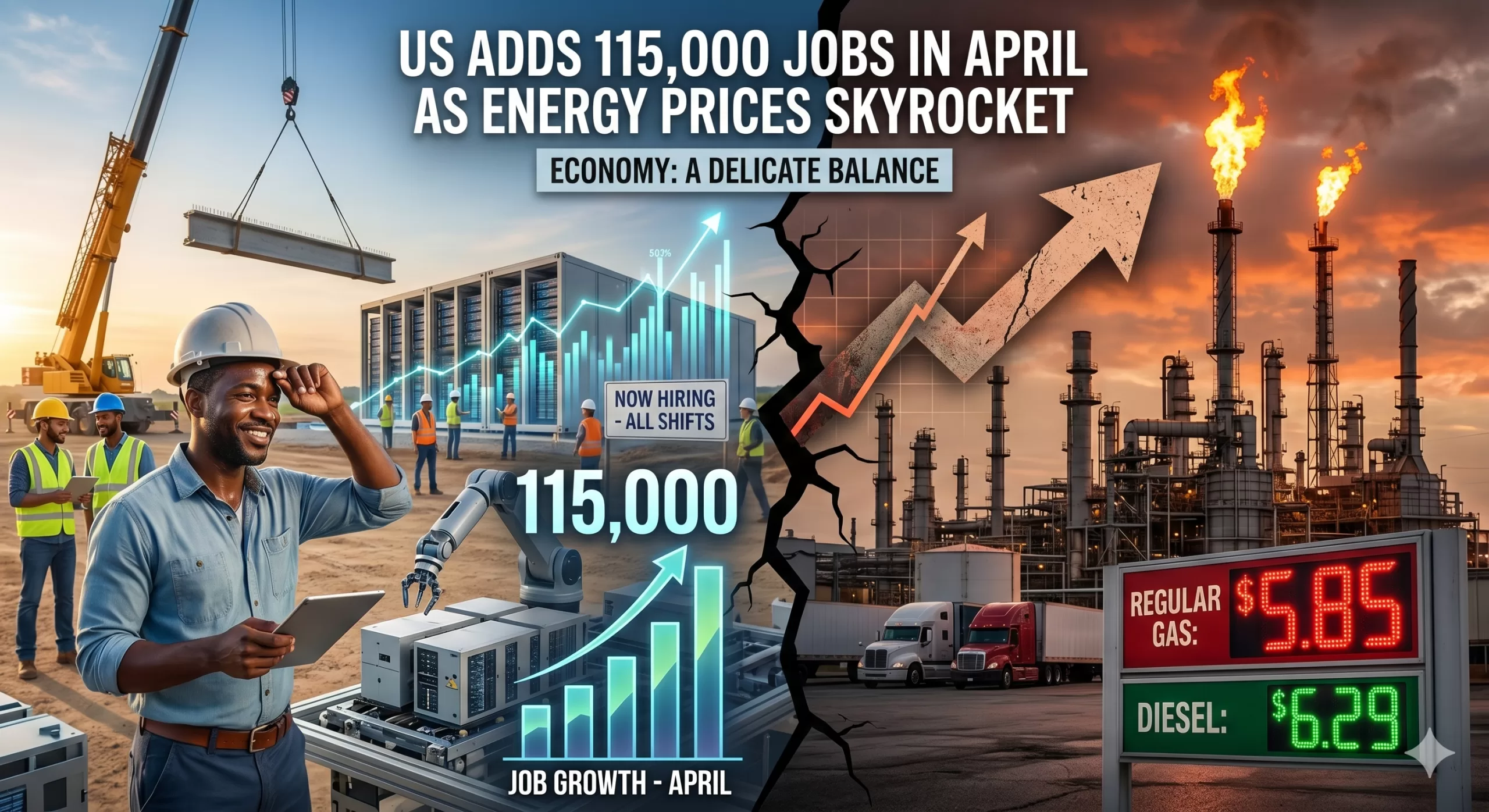
The latest Labor Department report released today, May 8, 2026, reveals a complex picture of the American economy. While the addition of 115,000 jobs in April far exceeded the conservative forecasts of 65,000, this hiring momentum is colliding with a volatile energy market and geopolitical tensions that are keeping consumers—and the Federal Reserve—on edge.
The April Jobs Numbers: A Surprising Resilience
Despite a year of uneven growth and high interest rates, the labor market continues to find its footing. The 115,000 gain marks a significant win for an economy that many feared was cooling too rapidly.
Unemployment Rate: Held steady at 4.3%, a remarkably low figure given the broader economic headwinds.
Sector Highlights: Growth was fueled by health services, education, and construction. Notably, the boom in AI data center construction is providing a sturdy floor for blue-collar employment.
Small Business Bounce: Much of the hiring surge came from small businesses (fewer than 20 employees), suggesting that local optimism remains resilient despite macro-level volatility.
The Energy Crisis: A Shadow Over the Recovery
While the job gains are a reason for celebration, they are being offset by a painful reality at the pump and in utility bills. Crude oil prices have breached the $100-per-barrel mark, driven largely by recent hostilities in the Strait of Hormuz.
For the average American household, the “energy tax” is real. Rising gas prices are eating into the gains from recent tax refunds and wage growth. This creates a “push-pull” dynamic:
The Push: Robust hiring and steady wages ($6.6\%$ growth for job-switchers) give consumers spending power.
The Pull: Skyrocketing energy costs increase the cost of goods and transportation, effectively neutralizing those wage gains for many families.
What This Means for the Federal Reserve
The Fed is now in a delicate position. Usually, a strong jobs report would signal that the economy can handle higher interest rates. However, with energy prices driving “cost-push” inflation, Fed Chair Jerome Powell and his team must decide if the labor market is stable enough to wait out the energy spike or if they need to pivot to protect growth.
Traders are currently betting on a “stable backdrop,” but the volatility in the Middle East remains the ultimate wildcard. If energy prices continue their upward trajectory, the modest 115,000-job gain might be harder to replicate in May.
Looking Ahead
The April report proves that the U.S. economy is more durable than skeptics predicted, but it also highlights our vulnerability to global supply shocks. As we move into the summer months, all eyes will be on two things: the price of a gallon of gas and whether the AI-driven infrastructure boom can continue to carry the weight of the labor market.
Bottom Line: The American worker is still in demand, but the cost of living—fueled by a chaotic energy market—is the primary threat to this hard-won stability.
If you’ve flown recently, you might have noticed the bright yellow planes of Spirit Airlines are becoming a rarer sight. As of May 2026, the “ultra-low-cost carrier” (ULCC) that changed the way we think about budget travel is locked in a high-stakes battle for its very survival.
After two bankruptcy filings in less than two years and a global energy crisis that sent fuel prices soaring, Spirit is no longer just “restructuring”—it is teetering on the edge of a total shutdown.
A Timeline of Turbulence
To understand how we got here, you have to look at the “Chapter 22” phenomenon (a slang term for when a company files for Chapter 11 twice).
November 2024: Spirit filed its first Chapter 11 bankruptcy after a federal judge blocked its $3.8 billion merger with JetBlue. It emerged quickly in March 2025, but the underlying operational issues remained.
August 2025: Just months later, the airline filed for a second Chapter 11. The goal was a massive overhaul: slashing debt from $7.4 billion down to $2 billion and shrinking the fleet to a lean 76-80 aircraft.
Early 2026: A plan was in place to emerge by summer. Then, geopolitical conflict in the Middle East caused jet fuel prices to double, blowing a hole in the airline’s recovery budget.
The $500 Million Question: Bailout or Bust?
Right now, Spirit is surviving on “days, not weeks” of cash. The current drama is centered in a New York bankruptcy court, where a controversial rescue plan is on the table:
The “Trump Takeover” Proposal: The federal government has discussed a $500 million bailout that would give the U.S. government a90% ownership stakein the airline.
While the administration argues this could save 17,000 jobs and keep fares low, the deal is currently stalled. Major bondholders are balking at being “pushed down” the repayment line by the government, and some officials argue against “putting good money after bad.”
What This Means for Travelers
If you have a flight booked with Spirit, or thousands of Free Spirit® miles saved up, here is the current reality:
Flights are still operating (for now): As of today, Spirit is maintaining its schedule, but the frequency of flights has been cut by over 50% compared to last year.
The “Use it or Lose it” Rule: If Spirit moves from Chapter 11 (reorganization) to Chapter 7 (liquidation), your loyalty points could become worthless overnight. Many experts suggest booking flights with miles now rather than holding onto them.
Fare Hikes: Spirit’s presence has historically kept legacy airlines’ prices in check. It’s estimated that if Spirit exits a route, fares on that route jump by about 23%.
The New “Premium” Spirit
If Spirit does survive, it won’t look like the airline we remember. The restructuring plan involves moving away from the “bare fare” model toward a more upscale experience to compete with Delta and United. This includes adding a third row of Big Front Seats and expanding Premium Economy options across the fleet.
The Bottom Line
Spirit Airlines is currently in the ultimate “emergency landing” scenario. Whether it emerges as a federally-backed “Value” carrier or disappears into the history books alongside names like Pan Am and Air Florida depends entirely on the court hearings happening this week.
If you’re flying Spirit this month, keep a close eye on the news—and maybe have a backup plan ready.
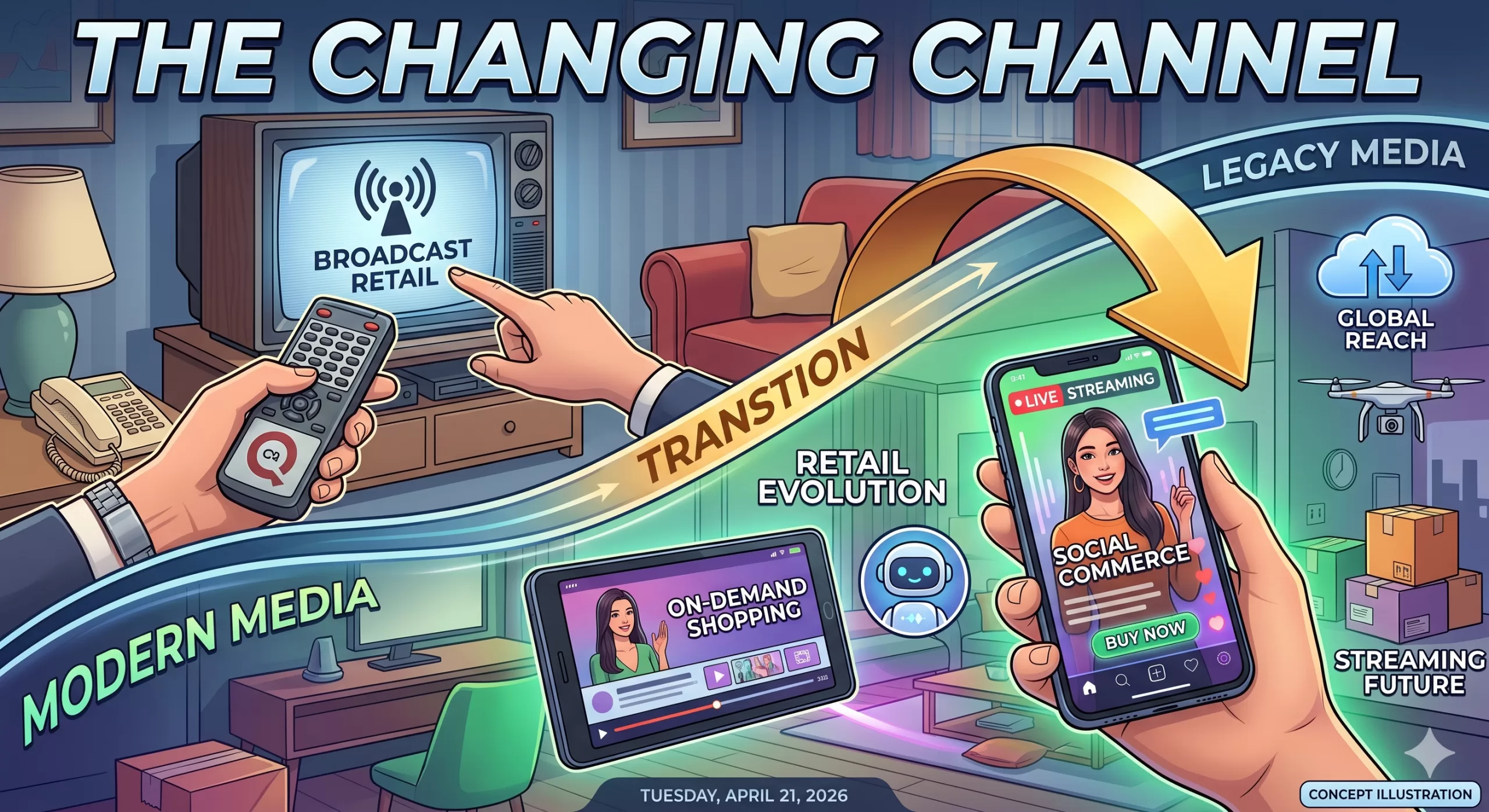
For decades, the familiar glow of QVCand HSNwas a staple of American living rooms. But in an era where “Add to Cart” happens on TikTok rather than over a landline, even the giants of home shopping have to hit the reset button.
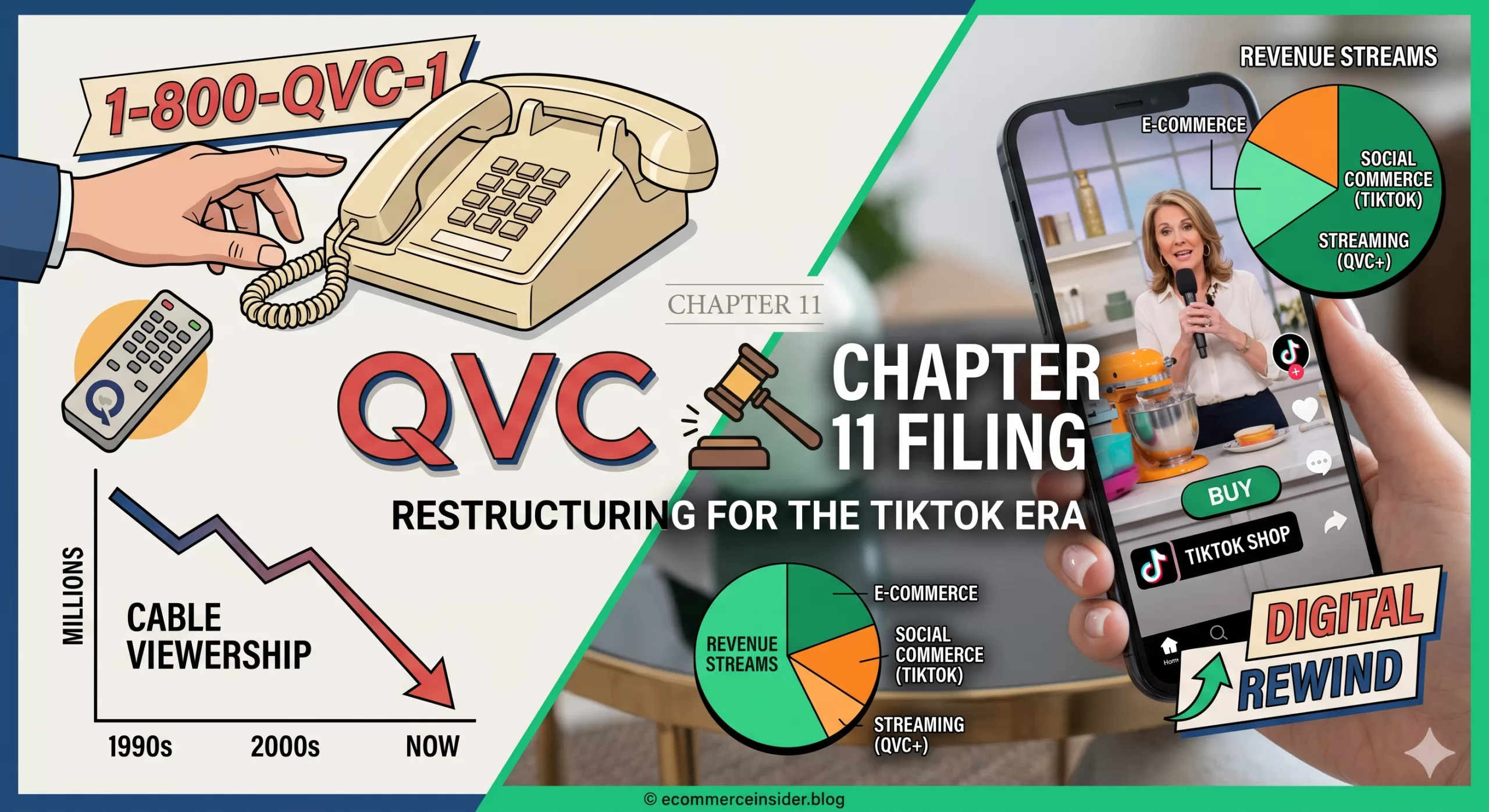
On April 16, 2026, QVC Group, Inc. officially filed for Chapter 11 bankruptcy protection. While the word “bankruptcy” often sounds like an ending, for QVC, this appears to be a calculated “financial makeover” rather than a final curtain call.
The Numbers: Shedding a $5 Billion Weight
QVC didn’t enter the courtroom empty-handed. This is what’s known as a “prepackaged” bankruptcy, meaning the company already reached an agreement with most of its lenders before filing.
Debt Reduction: The primary goal is to slash the company’s debt from a staggering $6.6 billion down to $1.3 billion.
The Timeline: They aren’t planning on sticking around the courthouse for long; the company expects to emerge from the process within 90 days.
The Stock: It’s a rough week for investors. Nasdaq has already moved to delist QVC Group’s common and preferred stock, as the restructuring plan is expected to wipe out existing equity.
Why Now? The Death of the “Linear” Living Room
The filing highlights a hard truth: the structural decline of cable TV. QVC’s business model was built on a captive audience of cable subscribers. As cord-cutting accelerated and viewership moved to streaming and social media, the massive cash flows that once serviced QVC’s debt began to dry up.
Despite the struggle, QVC hasn’t been standing still. In 2025, the company saw a surprising spark of life:
TikTok Shop: QVC acquired nearly 1 million new customers through TikTok last year.
Streaming Growth: Viewership on their streaming apps, QVC+ and HSN+, grew by 19% in 2025.
The bankruptcy is essentially a way to align their “old world” debt with their “new world” digital revenue.
What This Means for You (The Shopper)
If you’re worried about your pending orders or that Vitamix you’ve been eyeing, take a deep breath. For the average customer, it is business as usual.
The Quick Checklist for Shoppers:
Orders & Shipping: Continuing as normal.
Gift Cards: Still valid and being honored.
Returns: Policies remain unchanged.
Customer Service: Teams are operating on their regular schedules.
Layoffs: The company stated there are no planned layoffs or furloughs as part of this specific restructuring.
The “WIN” Strategy
CEO David Rawlinson is betting on the “WIN” Growth Strategy, which focuses on being “Wherever She Shops.” By shedding $5 billion in debt, QVC hopes to have the flexibility to stop acting like a legacy cable channel and start acting like a “content-to-commerce” platform.
By the summer of 2026, QVC expects to emerge as a leaner, privately held (or newly listed) “Reorganized QVC, Inc.” The iconic “Quality, Value, Convenience” slogan isn’t going anywhere—it’s just getting a much-needed digital upgrade.
Contains information related to marketing campaigns of the user. These are shared with Google AdWords / Google Ads when the Google Ads and Google Analytics accounts are linked together.
90 days
__utma
ID used to identify users and sessions
2 years after last activity
__utmt
Used to monitor number of Google Analytics server requests
10 minutes
__utmb
Used to distinguish new sessions and visits. This cookie is set when the GA.js javascript library is loaded and there is no existing __utmb cookie. The cookie is updated every time data is sent to the Google Analytics server.
30 minutes after last activity
__utmc
Used only with old Urchin versions of Google Analytics and not with GA.js. Was used to distinguish between new sessions and visits at the end of a session.
End of session (browser)
__utmz
Contains information about the traffic source or campaign that directed user to the website. The cookie is set when the GA.js javascript is loaded and updated when data is sent to the Google Anaytics server
6 months after last activity
__utmv
Contains custom information set by the web developer via the _setCustomVar method in Google Analytics. This cookie is updated every time new data is sent to the Google Analytics server.
2 years after last activity
__utmx
Used to determine whether a user is included in an A / B or Multivariate test.
18 months
_ga
ID used to identify users
2 years
_gali
Used by Google Analytics to determine which links on a page are being clicked
30 seconds
_ga_
ID used to identify users
2 years
_gid
ID used to identify users for 24 hours after last activity
24 hours
_gat
Used to monitor number of Google Analytics server requests when using Google Tag Manager