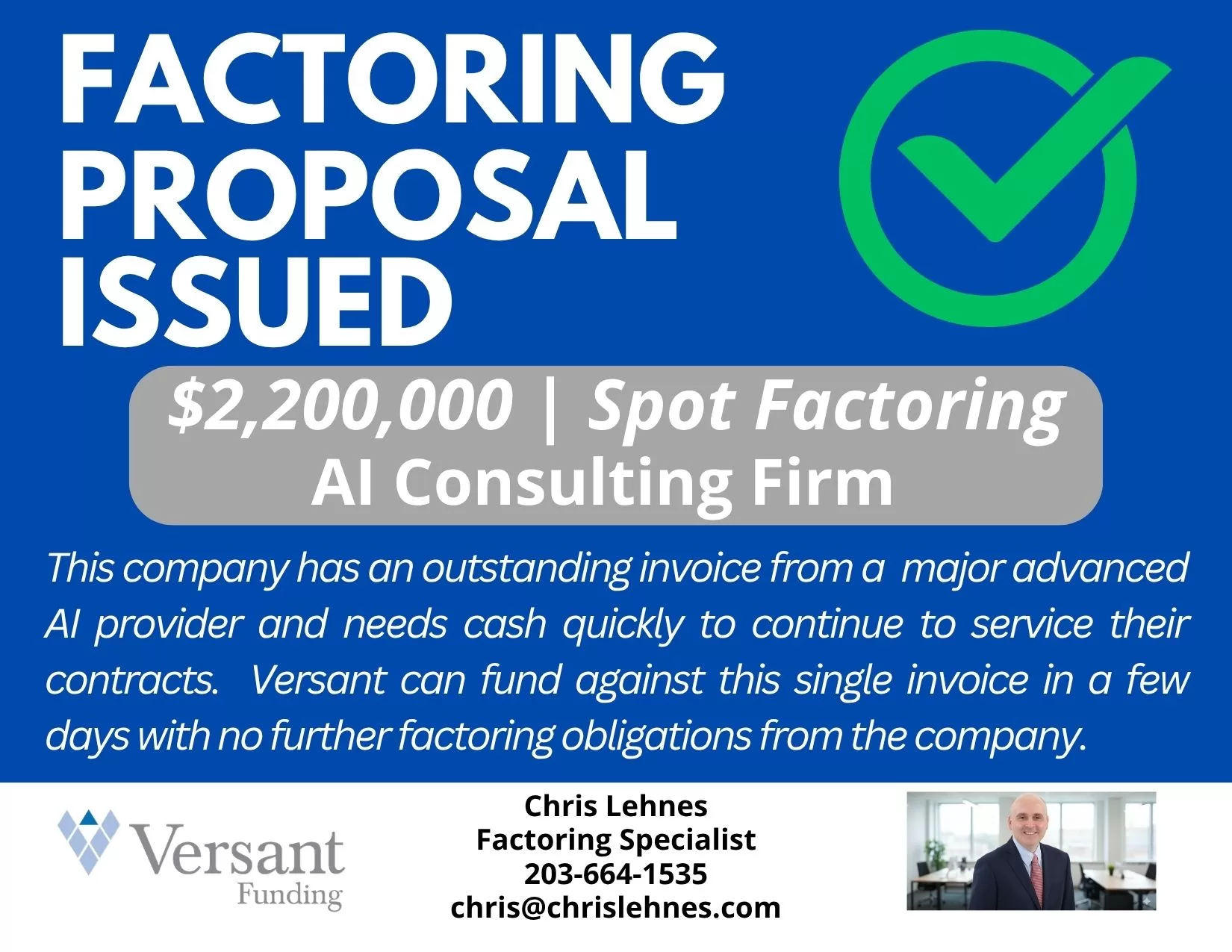
Spot Factoring Proposal Issued: This company has an outstanding invoice from a major advanced AI provider and needs cash quickly to continue to service their contracts. Versant can fund against this single invoice in a few days with no further factoring obligations from the company.
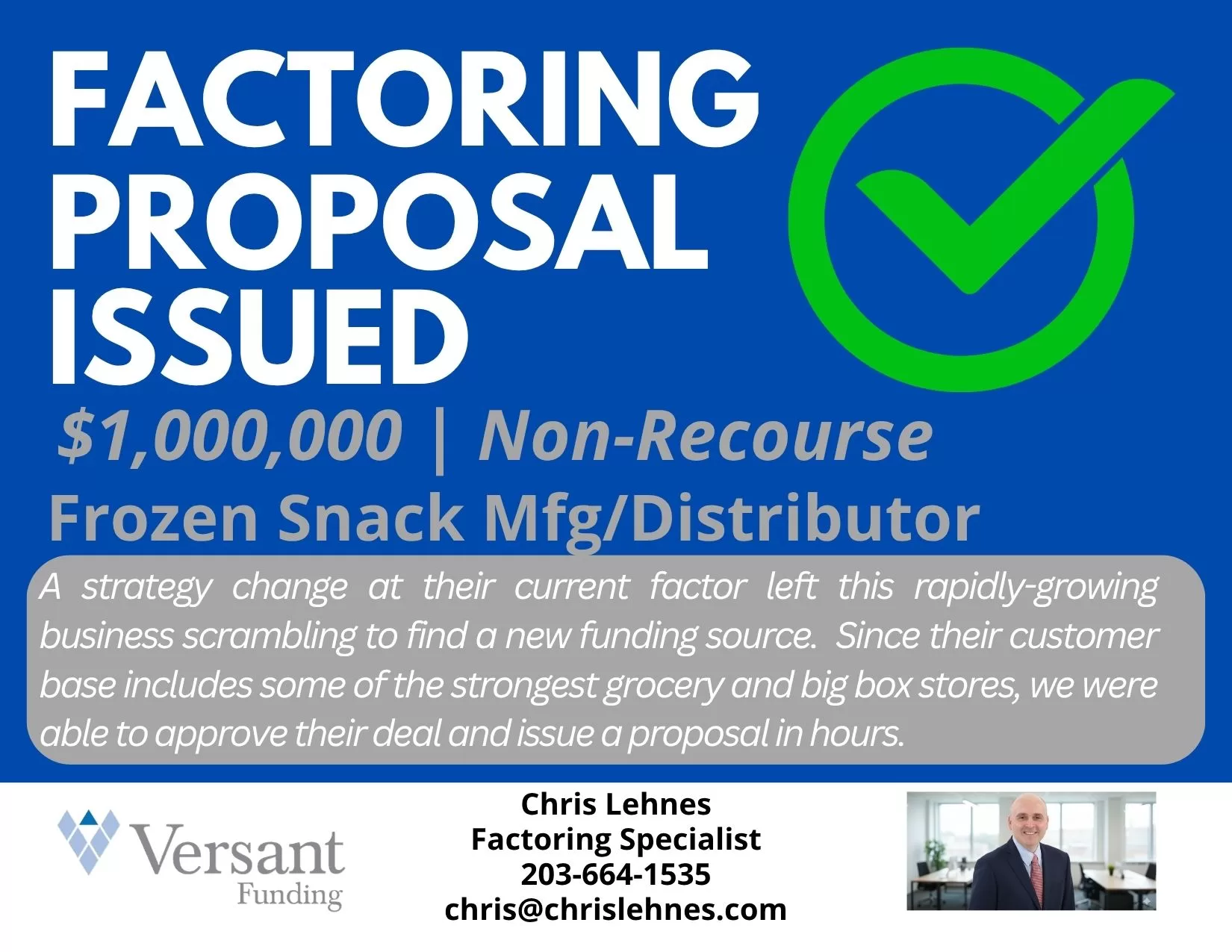
A strategy change at their current factoring company left this rapidly-growing frozen snack business scrambling to find a new funding source. Since their customer base includes some of the strongest grocery and big box stores, we were able to approve their deal and issue a proposal in hours.
Defrosting Your Working Capital: Navigating Cash Flow Challenges in the Frozen Snack Business
The frozen snack sector—whether you’re manufacturing premium frozen pizzas, artisanal ice creams, or grab-and-go appetizers—is a dynamic and growing market. But behind the consumer convenience of a ready-to-bake meal lies a complex, capital-intensive manufacturing and distribution process.
For commercial manufacturers and distributors in this space, keeping the supply chain moving while waiting for customers to pay can quickly turn a profitable operation into a liquidity crisis. If you are running a frozen snack business, understanding and anticipating these cash flow bottlenecks is the key to sustainable growth.
Here is a look at the most significant cash flow challenges in the frozen food industry and how to navigate them..
Unlike shelf-stable goods, frozen snacks require a continuous, unbroken chain of temperature-controlled environments. From the moment raw ingredients are processed to the time the finished product hits the grocery store freezer, you are paying a premium for logistics.
High Overhead: Specialized refrigerated warehousing and refrigerated freight transportation (reefers) are exceptionally expensive and subject to sudden fuel price fluctuations.
Commodity and Tariff Volatility: The cost of raw ingredients—from the dairy in your cheese to the wheat in your crusts—can swing wildly based on macroeconomic trends, global trade policies, and tariffs. When raw material costs spike unexpectedly, your margins compress, and your available cash drops before you can even adjust your retail pricing.
2. The Trap of Extended Retail Payment Terms
Perhaps the single biggest cash flow killer for food manufacturers is the gap between when you pay your suppliers and when your buyers pay you.
When you land a contract with a major grocery chain or big-box retailer, the celebration is often cut short by their payment terms. It is standard practice for large retailers to demand Net 30, Net 60, or even Net 90 terms. Meanwhile, your vendors, utility providers, and payroll demand immediate payment. This creates a massive working capital gap. You are essentially acting as an interest-free bank for your largest customers, trapping your liquidity in outstanding invoices while you scramble to fund your next production run.
3. Retailer Distress and Bankruptcy Risks
The retail landscape is volatile. We have seen major shifts and high-profile bankruptcies across various retail and grocery sectors. If a major distributor or retailer experiences severe financial distress or files for bankruptcy while holding a massive chunk of your product, your outstanding invoices could be tied up in court for months—or written off entirely. Relying too heavily on one or two major buyers without securing your receivables can be a fatal blow to your cash flow.
While freezing extends shelf life, it doesn’t make inventory immortal. Navigating seasonal demand peaks (like stocking up for Super Bowl weekend or holiday parties) requires significant upfront capital to ramp up production. Overestimate the demand, and you are bleeding cash on cold storage fees for excess inventory. Underestimate it, and you miss out on critical revenue.
Bridging the Gap: Finding Liquidity
When your cash is frozen in accounts receivable, taking on traditional bank debt isn’t always the fastest or most strategic answer—especially if your balance sheet is already highly leveraged.
Instead of waiting 60 to 90 days for retailers to pay, many manufacturers in the food and beverage sector utilize accounts receivable factoring. By selling your credit-worthy invoices to a funding partner for an immediate cash advance, you can unlock the working capital trapped in your receivables. This allows you to:
Meet payroll and cover cold-storage overhead without stress.
Take advantage of early-payment discounts from your raw ingredient suppliers.
Ramp up production to fulfill massive purchase orders from new distributors.
Running a frozen snack business means managing incredibly tight logistical tolerances. Your financing strategy needs to be just as reliable. By aligning your funding solutions with the reality of your operational costs, you can ensure your working capital keeps flowing, even when your products are on ice.
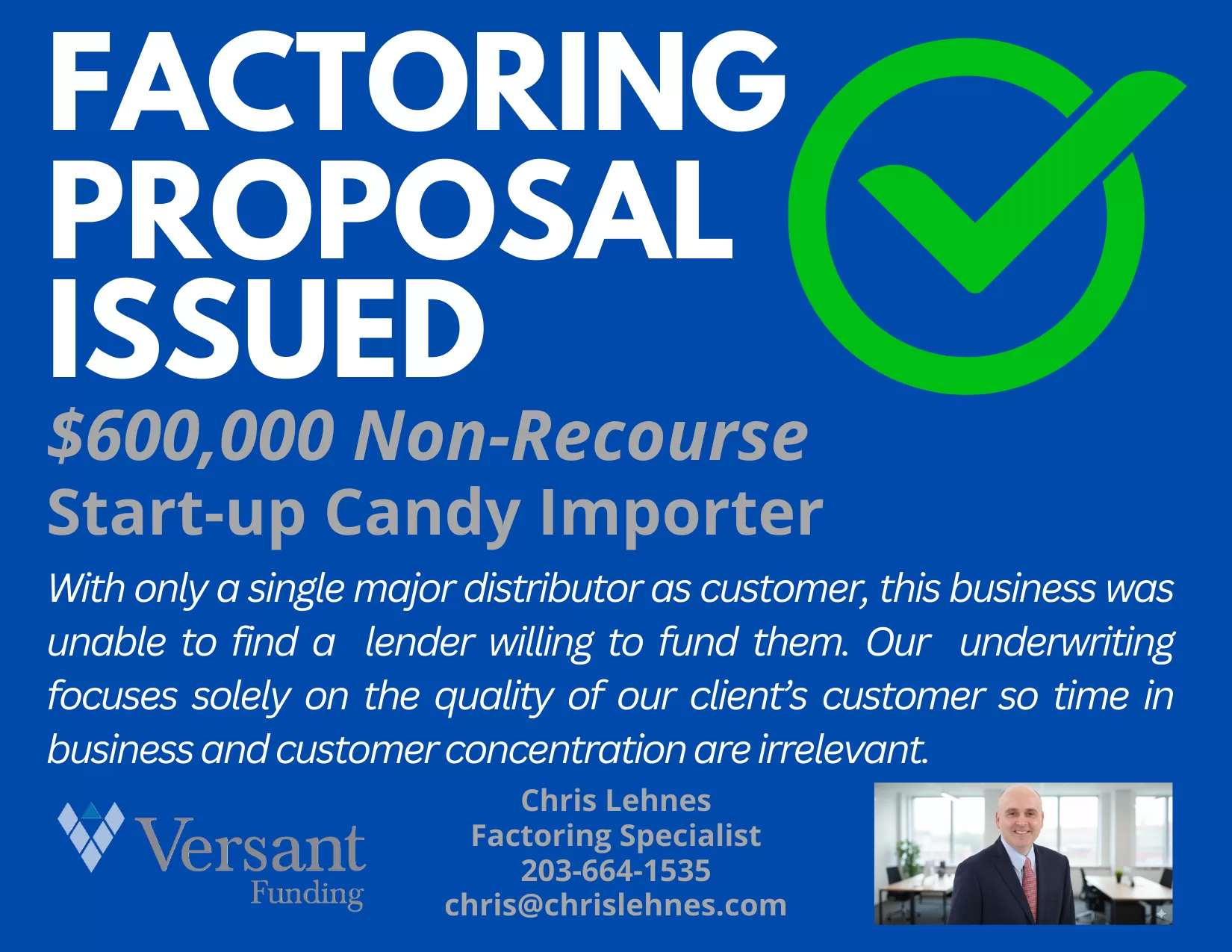
Factoring Proposal: With only a single major distributor as customer, this business was unable to find a lender willing to fund them. Our underwriting focuses solely on the quality of our client’s customer so time in business and customer concentration are irrelevant.
In the world of candy importing, timing is everything. You have to navigate seasonal peaks (think Halloween and Valentine’s Day), manage international shipping lead times, and juggle the demands of large retailers.
However, there is often a massive gap between the moment your colorful shipments clear customs and the moment your retail partners actually pay their invoices. If your capital is trapped in Accounts Receivable (AR), you might find yourself unable to jump on the next big inventory opportunity.
This is where Accounts Receivable Factoring—also known as invoice factoring—becomes a game-changer.
What Exactly is Factoring?
Factoring isn’t a loan; it’s the sale of your assets. You sell your outstanding invoices to a “factor” (a specialized financial company) at a slight discount. In return, you get immediate access to the cash that was previously tied up for 30, 60, or even 90 days.
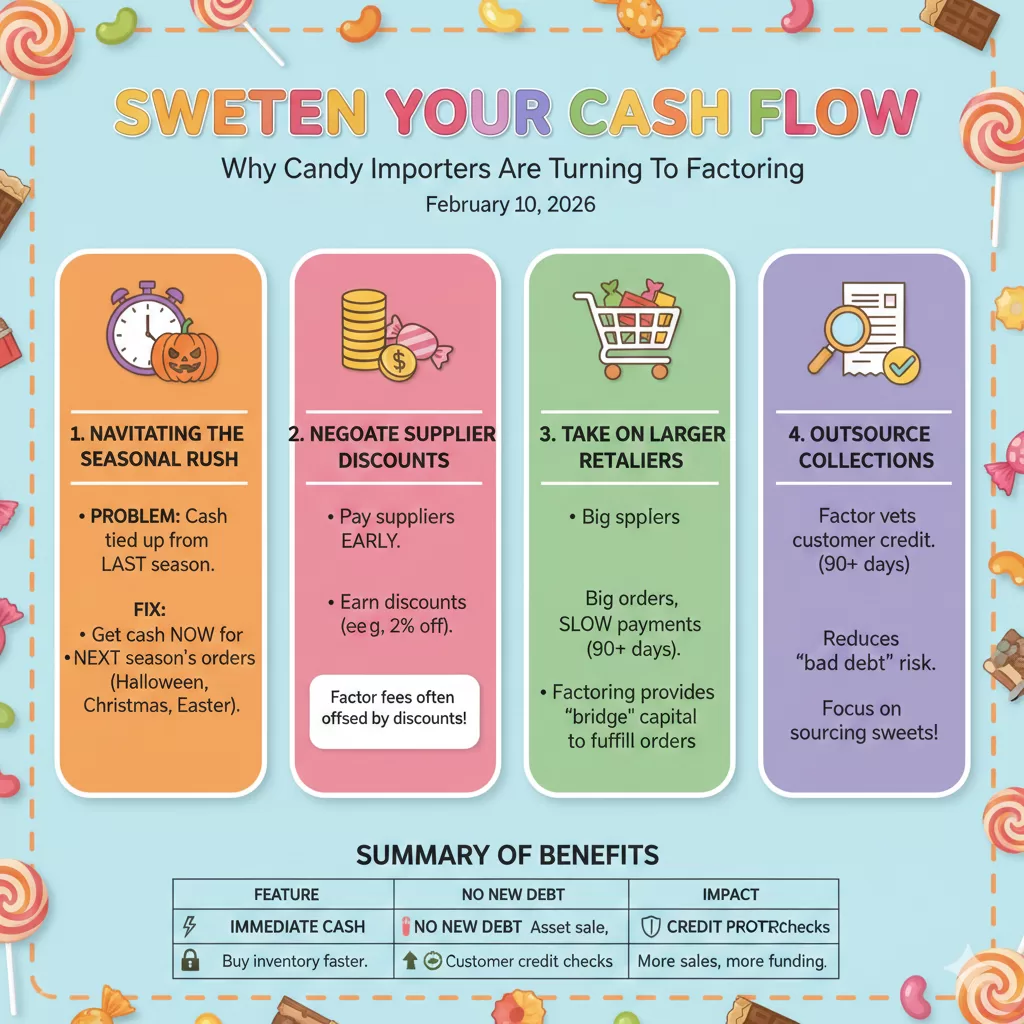
1. Navigating the Seasonal Rush
Candy is a highly seasonal business. To prepare for the “Big Three”—Halloween, Christmas, and Easter—importers must place massive orders months in advance.
The Problem: Your cash is tied up in invoices from the previous season while you need to pay suppliers for the next one.
The Factoring Fix: By factoring current invoices, you get an immediate cash injection to cover manufacturing and shipping costs for upcoming peak periods, ensuring you never miss a shelf-stocking deadline.
2. Negotiating Supplier Discounts
When you have “cash in hand” thanks to factoring, you move to the front of the line with global suppliers. Many international manufacturers offer early payment discounts (e.g., a 2% discount if paid within 10 days).
The small fee you pay for factoring is often completely offset by the discounts you earn from your suppliers by paying them early.
3. Taking on Larger Retailers
Big-box retailers are great for volume, but they are notorious for long payment terms. If a major chain wants to place a massive order but won’t pay for 90 days, a small-to-medium importer might have to say “no” simply because they can’t afford to wait that long for the payout.
Factoring provides the “bridge” capital. You can fulfill the order, factor the invoice the day the candy ships, and have the funds to keep the rest of your business running smoothly.
4. Outsourcing the “Headache” of Collections
Many factoring companies handle the back-end credit checking and collections process. For a lean importing team, this is a massive relief.
The factor vets the creditworthiness of your customers before you even ship, reducing your risk of “bad debt” and allowing you to focus on sourcing the best sweets rather than chasing down checks.
Summary of Benefits
Feature
Impact on Your Candy Business
Immediate Cash
Buy inventory for the next holiday season without waiting.
No New Debt
Factoring is an asset sale, not a bank loan with monthly interest.
Credit Protection
Many factors provide credit snapshots of your retail partners.
Scalability
The more you sell, the more funding becomes available.
Is Factoring Right for You?
If your candy importing business is growing faster than your bank account can keep up with, factoring provides the liquidity to keep your momentum. It turns your “sold” inventory back into “buying” power instantly.
Factoring Proposal Issued – $3 Million | Non-Recourse | Manufacturer/Distributor of Soft Goods
Tariffs have disrupted the supply chain of this business which sells to major retailers and quick cash is needed to meet demand of peak fall season.
We can fund in 1 week!
Accounts Receivable Factoring $100,000 to $30 Million Quick AR Advances No Long-Term Commitment Non-recourse Funding in about a week
We are a great match for businesses with traits such as: Less than 2 years old Negative Net Worth Losses Customer Concentrations Weak Credit Character Issues
Chris Lehnes | Factoring Specialist | 203-664-1535 | chris@chrislehnes.com
Contact me to learn if your client is a factoring fit.
Non-Recourse Factoring Proposal Issued – $5 Million – Textiles
Company won a new account requiring 90 day payment terms, causing a cash crunch. Versant will factor only this customer’s AR, allowing 100% customer concentration!
Accounts Receivable Factoring $100,000 to $30 Million Quick AR Advances No Long-Term Commitment Non-recourse Funding in about a week
We are a great match for businesses with traits such as: Less than 2 years old Negative Net Worth Losses Customer Concentrations Weak Credit Character Issues
Chris Lehnes | Factoring Specialist | 203-664-1535 | chris@chrislehnes.com
Factoring Proposal Issued: $1.5 Million | Manufacturer: The owner’s problematic personal credit profile resulted in declines from other factoring companies. Versant focuses on the AR alone!
Accounts Receivable Factoring $100,000 to $30 Million Quick AR Advances No Long-Term Commitment Non-recourse Funding in about a week
We are a great match for businesses with traits such as: Less than 2 years old Negative Net Worth Losses Customer Concentrations Weak Credit Character Issues
Chris Lehnes | Factoring Specialist | 203-664-1535 | chris@chrislehnes.com
Proposal Issued – $3 Million – Consumer Product Manufacturer
A backlog of orders can only be filled if additional working capital is promptly provide.
We can fund in a week.
Contact Factoring Specialist, Chris Lehnes to learn if your client is a factoring fit and would like a proposal.
The Benefits of Accounts Receivable Factoring to a Consumer Products Manufacturer
For consumer products manufacturers, maintaining steady cash flow is essential to sustaining operations, managing production costs, and ensuring timely delivery to retailers and distributors. However, long payment cycles and delayed customer payments can create financial bottlenecks that restrict growth. Accounts receivable factoring provides an effective solution by offering immediate access to working capital without the need for traditional loans. This article explores the key benefits of accounts receivable factoring and its strategic advantages for consumer products manufacturers in need of proposal.
1. Improved Cash Flow
One of the primary benefits of accounts receivable factoring is the immediate improvement in cash flow. Instead of waiting 30, 60, or even 90 days for customers to pay invoices, manufacturers can sell their receivables to a factoring company and receive a significant percentage of the invoice value upfront. This ensures that operational expenses such as raw material purchases, payroll, and transportation costs are met without disruption.
2. Reduced Dependence on Traditional Financing
Consumer products manufacturers often require additional capital to scale production or manage seasonal demand fluctuations. Unlike traditional bank loans, which require collateral, strong credit history, and lengthy approval processes, factoring is based on the creditworthiness of customers rather than the manufacturer itself. This makes it an accessible and viable financing alternative, particularly for growing businesses or those with limited borrowing history.
3. Enhanced Credit Risk Management
Factoring companies typically conduct credit assessments on a manufacturer’s customers before purchasing receivables. This due diligence helps manufacturers mitigate credit risk by identifying potentially unreliable customers. Additionally, some factoring arrangements include non-recourse options, meaning the factoring company assumes the risk of non-payment, further protecting the manufacturer from bad debts.
4. Increased Flexibility and Scalability
As a manufacturer’s sales grow, so does its need for working capital. Factoring provides a flexible financing solution that scales with business growth. Unlike traditional loans, which have fixed limits, the amount of funding available through factoring increases as invoice volumes rise. This allows manufacturers to take on larger orders and expand their operations without the constraints of limited credit lines.
5. Streamlined Accounts Receivable Management
Managing outstanding invoices and collections can be time-consuming and resource-intensive. Factoring companies often handle collections on behalf of manufacturers, allowing them to focus on core business activities such as product development, marketing, and customer relationships. By outsourcing accounts receivable management, manufacturers can improve efficiency while reducing administrative burdens.
6. Strengthened Supplier and Vendor Relationships
With improved cash flow from factoring, manufacturers can make timely payments to suppliers and vendors, potentially negotiating better terms, discounts, or bulk pricing. Strong financial standing fosters trust and enhances relationships with key stakeholders, creating a more stable supply chain and increasing competitiveness in the market.
Conclusion
For consumer products manufacturers facing cash flow challenges due to long payment cycles, accounts receivable factoring presents a strategic financial tool. By providing immediate liquidity, reducing credit risk, and streamlining receivables management, factoring enables manufacturers to sustain operations, grow their business, and remain competitive in a dynamic marketplace. As the demand for efficient financing solutions continues to rise, factoring is emerging as a valuable alternative to traditional financing methods, offering both stability and flexibility to manufacturers in the consumer products industry.
Accounts Receivable Factoring $100,000 to $30 Million Quick AR Advances No Long-Term Commitment Non-recourse Funding in about a week
We are a great match for businesses with traits such as: Less than 2 years old Negative Net Worth Losses Customer Concentrations Weak Credit Character Issues
Chris Lehnes | Factoring Specialist | 203-664-1535 | chris@chrislehnes.com