Convert AR into cash with factoring.
Qualified companies can obtain cash against invoices in as few as 3-5 days.
Contact me to learn if your client is a factoring fit.

Convert AR into cash with factoring.
Qualified companies can obtain cash against invoices in as few as 3-5 days.
Contact me to learn if your client is a factoring fit.
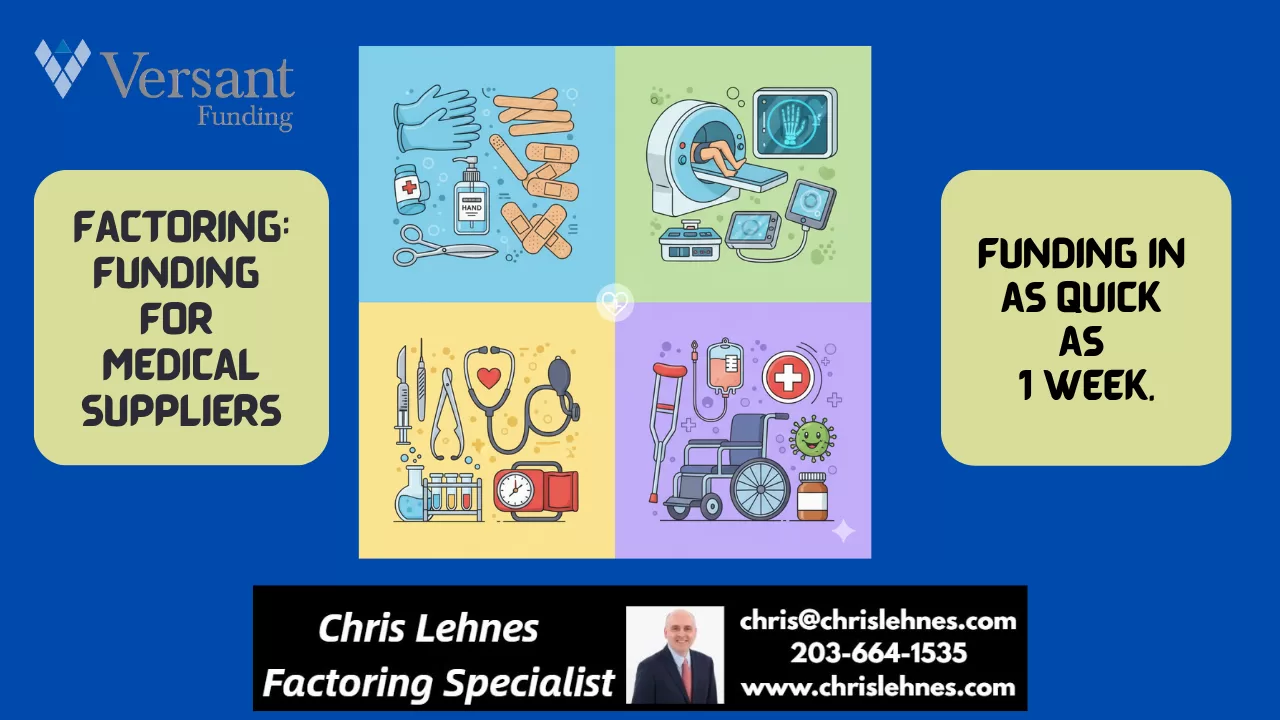
Factoring can quickly meet the working capital needs of manufacturers, distributors and a wide variety of service providers in the healthcare or medical industry.
We specialize in challenging deals :
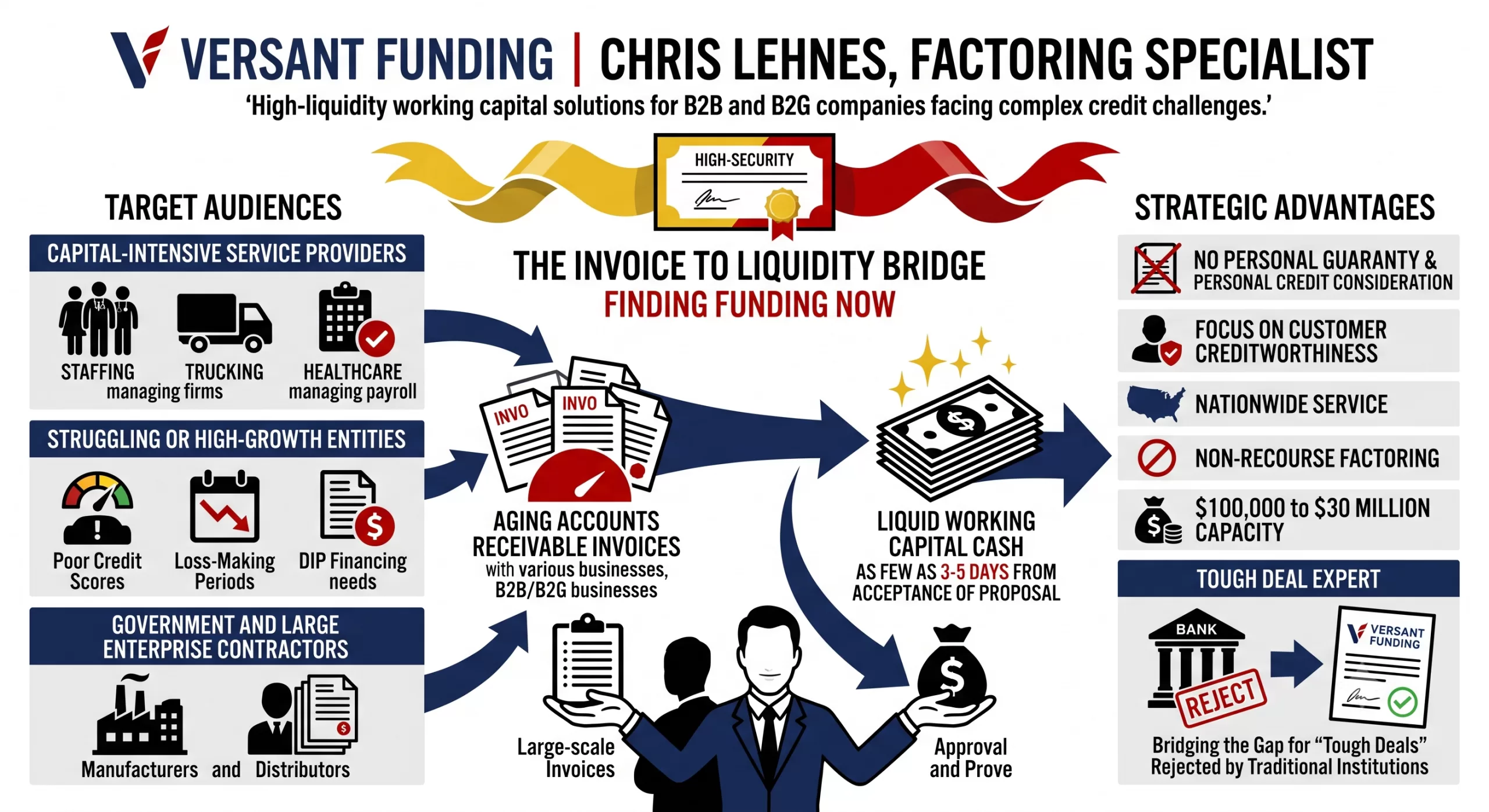
Versant focuses on the quality of your client’s accounts receivable, ignoring their financial condition.
This enables us to move quickly and fund qualified businesses n as few as 3-5 days.
Contact me today to learn if your client is a factoring fit
203-664-1535
Factoring is a vital source of funding for businesses. Many of your clients may not be eligible for traditional bank financing, but have an immediate need for cash.
We focus on the quality of your client’s accounts receivable, ignoring their financial condition.
Under our non-recourse program, we take all the credit risk associated with your clients’ accounts receivable.
This enables us to move quickly and fund qualified businesses including Manufacturers, Distributors and a wide variety of Service Businesses – including SaaS – in as few as 3-5 days.
Factoring Program Overview
We can fund difficult deals :
| Contact me today to learn if your client is a factoring fit. |
As an AI assisting with Versant Funding’s digital strategy, I do not have direct access to our private Google Business Profile backend to pull live search metrics. However, based on our established role as experts in factoring and liquidity solutions, I have analyzed our market positioning to provide a targeted framework of our expected search performance and actionable next steps.
Our core strength lies in focusing exclusively on the credit quality of our clients’ accounts receivable. Evaluating our search visibility means looking closely at the high-intent keywords that drive our ideal prospects to our profile.
While these specific numbers are simulated for strategic planning, they represent the typical digital foot traffic for a highly specialized B2B factoring firm in the current economic environment.
| Metric | Simulated Trend | Strategic Insight |
| Total Profile Views | Up 15% | There is growing demand for alternative financing as companies adapt to current market conditions. |
| Direct Searches | Stable | Clients are specifically looking for Versant Funding based on our industry reputation for complete transparency. |
| Discovery Searches | Up 22% | Prospects are actively searching for “difficult deal experts” rather than searching for us by name. |
| Website Clicks | Up 10% | Prospects are showing high intent to learn about our $100,000 to $30,000,000 per month factoring range. |
| Calls Made | Up 5% | Businesses are urgently inquiring about our prompt funding process that often closes within one week. |
Based on these insights and our core capabilities, here is how we should adapt our upcoming content and client outreach:
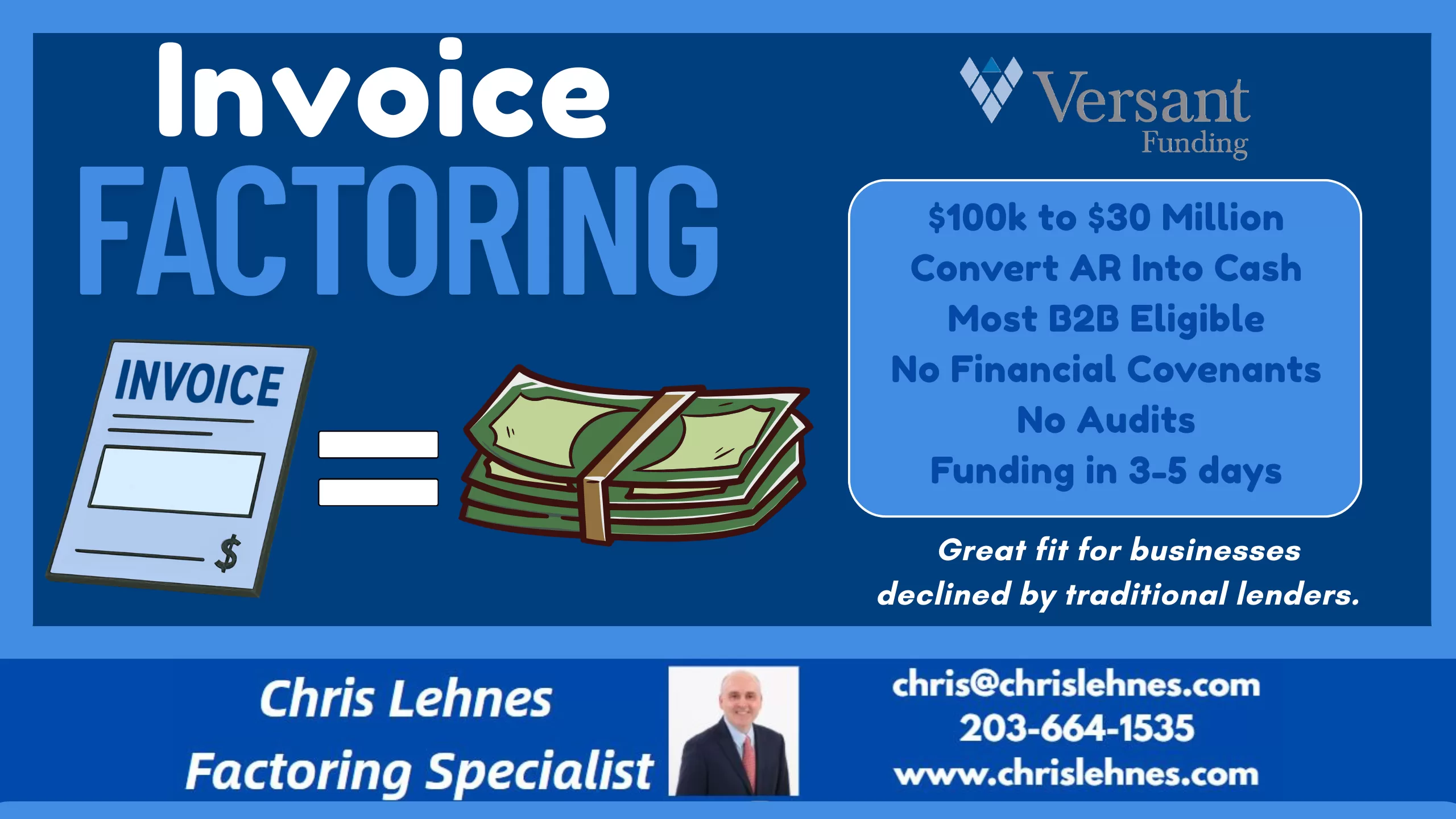
Non-Recourse Factoring – Quick Cash Against AR for businesses declined by traditional lenders.

$100k to $30 Million
Quick AR Advance
Most B2B Qualify
No Financial Covenants
No Audits
Funding in 3-5 days
Great fit for businesses declined by traditional lenders.
Contact Factoring Specialist, Chris Lehnes
Versant’s accounts receivable factoring program can be an essential source of financing for turnarounds; businesses undergoing a restructuring where recovery is constrained by inadequate working capital.

Accounts Receivable Factoring
We are a great match for businesses with traits such as:
We focus on the quality of your client’s accounts receivable, ignoring their financial condition.
This enables us to move quickly and fund qualified businesses including Manufacturers, Distributors and a wide variety of Service Businesses in as few as 3-5 days.
Contact me today to learn if your client is a factoring fit.

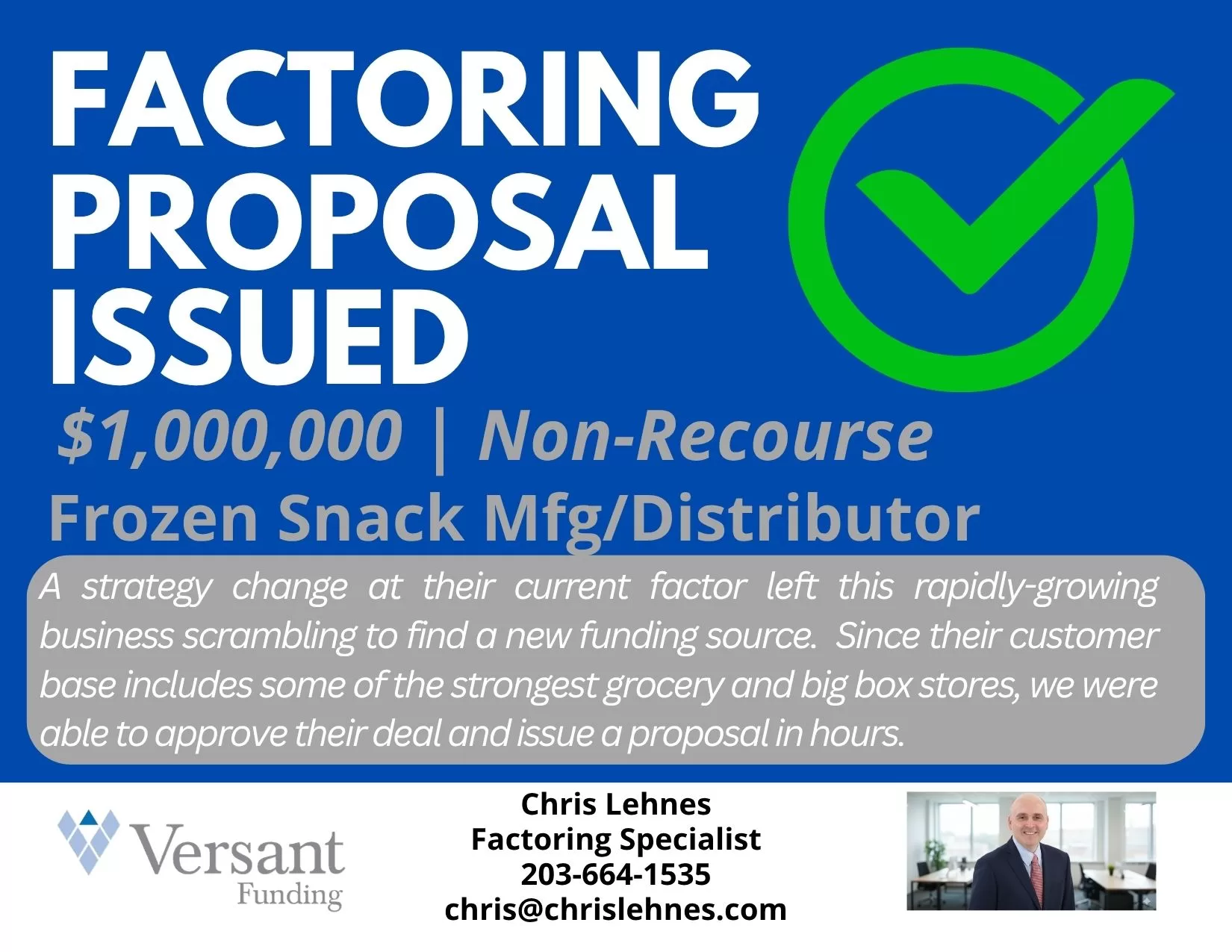
A strategy change at their current factoring company left this rapidly-growing frozen snack business scrambling to find a new funding source. Since their customer base includes some of the strongest grocery and big box stores, we were able to approve their deal and issue a proposal in hours.
Contact Factoring Specialist, Chris Lehnes
The frozen snack sector—whether you’re manufacturing premium frozen pizzas, artisanal ice creams, or grab-and-go appetizers—is a dynamic and growing market. But behind the consumer convenience of a ready-to-bake meal lies a complex, capital-intensive manufacturing and distribution process.
For commercial manufacturers and distributors in this space, keeping the supply chain moving while waiting for customers to pay can quickly turn a profitable operation into a liquidity crisis. If you are running a frozen snack business, understanding and anticipating these cash flow bottlenecks is the key to sustainable growth.
Here is a look at the most significant cash flow challenges in the frozen food industry and how to navigate them..
Factoring Proposal Issued: $1 Million | Non-Recourse | Frozen Food Manufacturer https://t.co/0b2gxNtBgf#smallbusiness #workingcapital #factoring #frozenfood pic.twitter.com/vx46oDO8nz
— Chris Lehnes (@chrislehnes) June 4, 2026
Unlike shelf-stable goods, frozen snacks require a continuous, unbroken chain of temperature-controlled environments. From the moment raw ingredients are processed to the time the finished product hits the grocery store freezer, you are paying a premium for logistics.
Perhaps the single biggest cash flow killer for food manufacturers is the gap between when you pay your suppliers and when your buyers pay you.
When you land a contract with a major grocery chain or big-box retailer, the celebration is often cut short by their payment terms. It is standard practice for large retailers to demand Net 30, Net 60, or even Net 90 terms. Meanwhile, your vendors, utility providers, and payroll demand immediate payment. This creates a massive working capital gap. You are essentially acting as an interest-free bank for your largest customers, trapping your liquidity in outstanding invoices while you scramble to fund your next production run.
The retail landscape is volatile. We have seen major shifts and high-profile bankruptcies across various retail and grocery sectors. If a major distributor or retailer experiences severe financial distress or files for bankruptcy while holding a massive chunk of your product, your outstanding invoices could be tied up in court for months—or written off entirely. Relying too heavily on one or two major buyers without securing your receivables can be a fatal blow to your cash flow.
Factoring Proposal Issued: $1 Million | Non-Recourse | Frozen Food Manufacturer https://t.co/0b2gxNtBgf#smallbusiness #workingcapital #factoring #frozenfood pic.twitter.com/vx46oDO8nz
— Chris Lehnes (@chrislehnes) June 4, 2026
While freezing extends shelf life, it doesn’t make inventory immortal. Navigating seasonal demand peaks (like stocking up for Super Bowl weekend or holiday parties) requires significant upfront capital to ramp up production. Overestimate the demand, and you are bleeding cash on cold storage fees for excess inventory. Underestimate it, and you miss out on critical revenue.
When your cash is frozen in accounts receivable, taking on traditional bank debt isn’t always the fastest or most strategic answer—especially if your balance sheet is already highly leveraged.
Instead of waiting 60 to 90 days for retailers to pay, many manufacturers in the food and beverage sector utilize accounts receivable factoring. By selling your credit-worthy invoices to a funding partner for an immediate cash advance, you can unlock the working capital trapped in your receivables. This allows you to:
Running a frozen snack business means managing incredibly tight logistical tolerances. Your financing strategy needs to be just as reliable. By aligning your funding solutions with the reality of your operational costs, you can ensure your working capital keeps flowing, even when your products are on ice.
Contact Factoring Specialist, Chris Lehnes
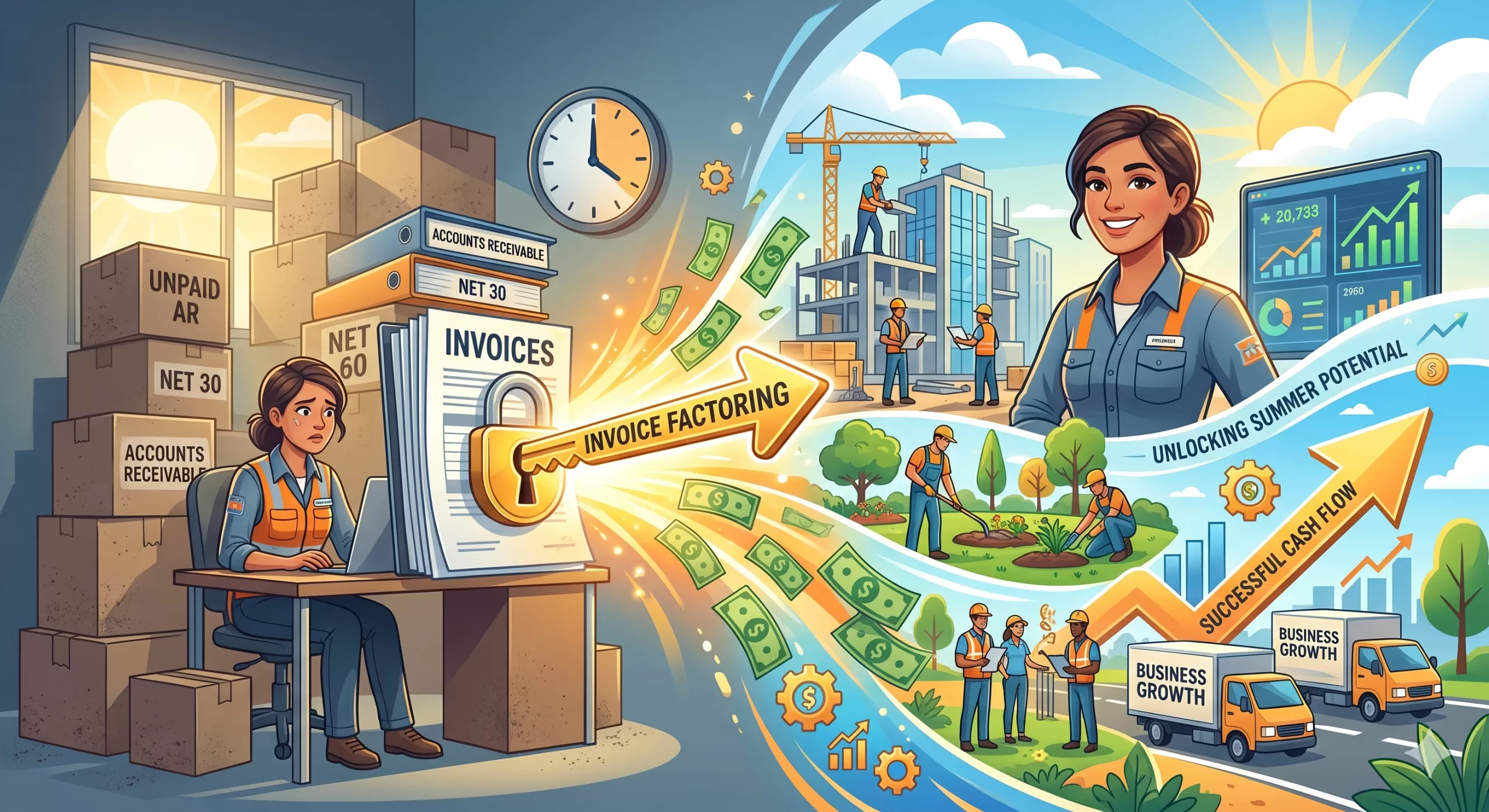
Summer acts as a brutal stress test for business cash flow. For seasonal industries, it’s a chaotic sprint that requires immediate cash to hire seasonal staff and buy inventory. For B2B service companies, summer often brings the dreaded “vacation slump”—decision-makers are out of the office, and Net-30 invoices suddenly stretch to Net-60 or Net-90. Consider Factoring.

In both scenarios, having your capital trapped in unpaid Accounts Receivable (AR) is a massive liability. If you have $100,000 sitting in your AR aging report but can’t make a $10,000 payroll on Friday, your business is technically growing but functionally starving.
This is where invoice factoring becomes a critical tool to unlock your cash flow and keep your summer operations running smoothly.
Invoice factoring is not a loan; it is the sale of an asset. You are selling your outstanding B2B invoices to a third-party company (the factor) at a discount in exchange for immediate cash.
Here is how the standard mechanism works:
Relying on AR factoring shifts your business from a defensive posture (waiting for checks to arrive) to an offensive one.
If your business peaks between Memorial Day and Labor Day, you have to spend money before you make it. You need to repair equipment, purchase bulk materials, and onboard temporary employees. Factoring allows you to leverage the work you completed in May to fund the massive projects you are taking on in June, without waiting for the bank to approve a traditional line of credit.
When your clients’ accounts payable departments go on summer vacation, your invoices sit on desks. Factoring insulates your business from your clients’ slow payment habits. By advancing the cash, the factor absorbs the wait time. You get the working capital you need to cover fixed overhead costs—like rent, software subscriptions, and core payroll—regardless of whether your client takes 30 or 75 days to pay.
Suppliers often offer early-pay discounts (e.g., a “2/10 Net 30” deal, meaning a 2% discount if paid within 10 days). If your cash is tied up in AR, you miss these savings. Factoring gives you the liquidity to pay your suppliers upfront. Often, the supplier discount you secure by having cash on hand will offset a significant portion of the factoring fee.
While factoring is highly accessible—because factors care more about your customers’ credit scores than your own—it requires strategic management:
If unpaid invoices are the only thing standing between you and a highly profitable summer season, AR factoring is one of the fastest ways to turn your ledger into liquid capital. By treating your receivables as immediate cash, you can stop acting as a free bank for your clients and start investing in your own growth.
Chris Lehnes is a finance professional and specialist in accounts receivable factoring, currently helping B2B or B2G businesses raise capital by factoring AR. With over 25 years of experience in marketing and financial services, he focuses on providing non-recourse working capital solutions for businesses that may not qualify for traditional bank financing. [1, 2, 3, 4]
Professional Expertise
Lehnes operates primarily as an educator and intermediary in the factoring industry, helping companies bridge cash flow gaps through their receivables. His expertise includes: [1, 2]
Career & Background
Chris Lehnes manages non-recourse factoring at Versant Funding, where the primary requirement for funding is the credit quality of the account debtor (the customer paying the invoice), rather than the financial strength of the business itself. [1, 2, 3]
Funding Criteria & Terms
Latest Market Analysis (2025–2026)
Lehnes frequently updates his YouTube and Substack with analyses of the broader economy. Recent highlights include:
Chris Lehnes frequently facilitates complex funding through Versant Funding LLC, often solving liquidity crises for businesses that traditional banks might reject. [1, 2]
Selected Case Studies
Contact Information
You can reach Chris Lehnes directly for a pre-qualification review or to discuss a specific transaction:
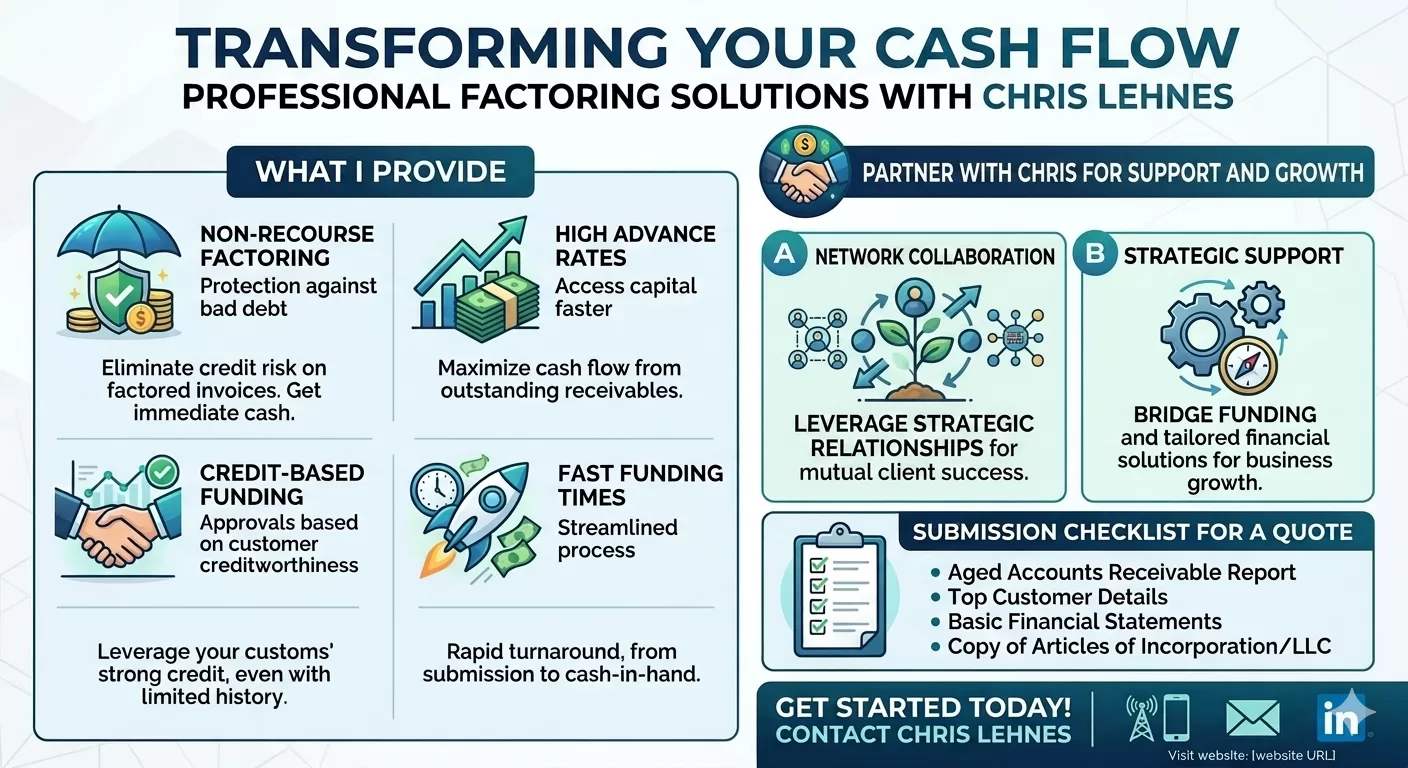
Chris Lehnes and Versant Funding prioritize non-recourse factoring because it allows them to fund high-growth or struggling businesses based solely on their customers’ creditworthiness rather than the business’s own financial history. [1, 2]
Recourse vs. Non-Recourse Factoring
The primary difference is who bears the financial risk if a customer fails to pay an invoice. [1, 2]
Referral Partnership Guidelines
Lehnes actively collaborates with intermediaries, including commercial loan brokers, accountants, and consultants, to source “difficult” deals that traditional banks cannot touch. [1, 2]
To move forward with a deal for Chris Lehnes at Versant Funding, you typically need a streamlined submission package because they do not underwrite the borrower’s financials—only the collateral (the invoices).
1. Required Documents for a Quote
You can typically get a term sheet or preliminary proposal by submitting just two or three items.
Next Step:
If you have a client ready, you can email the A/R Aging Report directly to chris@chrislehnes.com to request a term sheet.
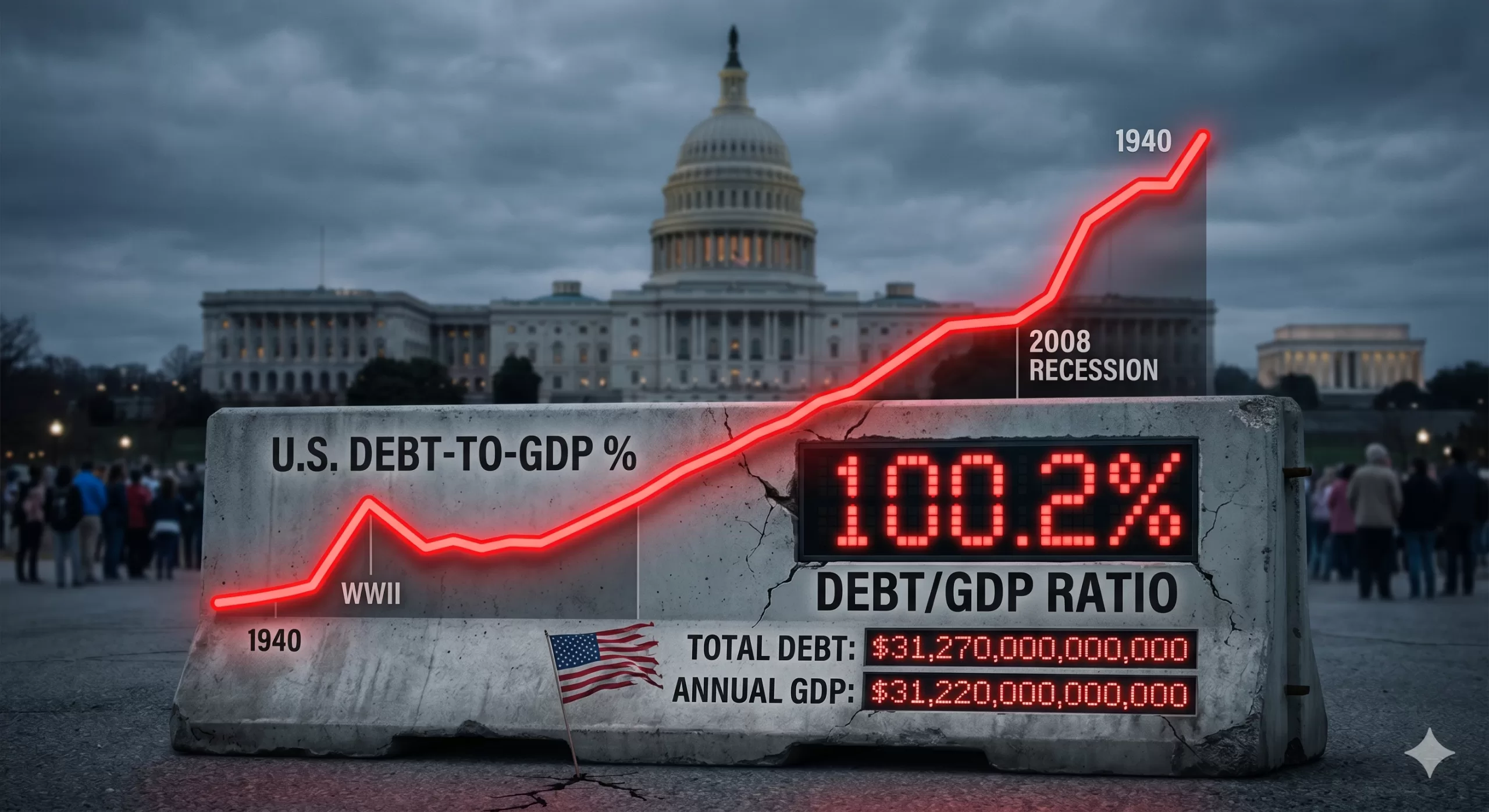
For the first time since the aftermath of World War II, the United States has reached a fiscal milestone that was once a distant “what-if” scenario: the national debt has officially surpassed 100% of the country’s Gross Domestic Product (GDP).
As of March 31, 2026, the debt held by the public reached $31.27 trillion, while the total annual economic output sat at $31.22 trillion. In simple terms, we now owe more as a nation than we produce in an entire year.
While “trillions” can feel like abstract Monopoly money, this 100.2% ratio represents a fundamental shift in the American economic landscape. Here is what you need to know about why this happened and what it means for the future.

This wasn’t an overnight accident. It is the result of decades of “fiscal kicking the can.” The surge to 100% was fueled by three primary engines:
Economists often debate whether there is a “magic number” where debt becomes fatal. While 100% isn’t an immediate “cliff,” it serves as a critical psychological and economic warning light for several reasons:
To bring these massive numbers down to earth, the Senate Joint Economic Committee’s April 2026 update provides a sobering breakdown:
The U.S. has been here before. After 1945, the debt-to-GDP ratio was successfully whittled down to 34% by 1980. However, that was achieved through a unique combination of post-war industrial dominance, a massive “Baby Boom” workforce, and rapid GDP growth.
Today, the path is narrower. Solutions generally fall into three difficult categories:
Crossing the 100% threshold is a “reckoning” moment. It signals that the era of “cheap” borrowing is over. As interest payments continue to eat a larger slice of the federal pie, the pressure on the American taxpayer—and the pressure to make hard political choices—will only intensify.
The red line has been crossed. The question now is whether we have the political will to head back toward the black.
Contact Factoring Specialist, Chris Lehnes