Podcast – Small Businesses face numerous challenges, among them is the ability to have access to sufficient working capital to meet the ongoing cash obligations of the business.
While this need can be met by a traditional line of credit for businesses which meet all traditional bank lending criteria, many businesses do not meet those standards and require an alternative.
One such option is accounts receivable factoring. With factoring, a B2B or B2G business can quickly convert their accounts receivable into cash.
Many factoring companies focus exclusively on the credit quality of the customer base and ignore the financial condition of the business and the personal financial condition of the owners.
This works well for businesses with traits such as:
Losses
Rapidly Growing
Highly Leveraged
Customer Concentrations
Out-of-favor Industries
Weak Personal Credit
Character Issues
Listen to this podcast to gain a greater understanding of the types of businesses which can benefit from this form of financing.
Few voices carry as much weight as Jamie Dimon’s. So, when the JPMorgan Chase CEO uses words regarding Fed independence like “absolutely critical” and warns of “adverse consequences,” the markets—and the public—should probably lean in.
His recent comments regarding political interference with the Federal Reserve aren’t just about high-level banking theory; they are a direct warning about the stability of the American economy and the cost of living for every citizen.
The “Referee” of the Economy
To understand Dimon’s concern, you have to look at the Federal Reserve’s role. Think of the Fed as the “referee” of the economy. Their job is to manage inflation and employment by adjusting interest rates. For this to work, they have to be able to make tough, often unpopular decisions—like raising rates to cool down inflation—without worrying about whether those moves will cost a politician an election.
As Dimon pointed out during a recent earnings call, “The independence of the Fed is absolutely critical.” Why? Because the moment the public or investors believe the Fed is taking orders from the White House, trust in the U.S. dollar and the stability of our markets begins to crumble.
The Irony of Political Pressure
The current tension stems from persistent political pressure on Fed Chair Jerome Powell to lower interest rates. The logic from the political side is simple: lower rates usually mean more borrowing, more spending, and a short-term boost to the economy.
However, Dimon warns that this pressure can backfire spectacularly. He noted that “playing around with the Fed could have adverse consequences, the absolute opposite of what you might be hoping for.”
Here is the paradox: If the Fed lowers rates because a politician told them to, rather than because the data supports it, investors will fear that inflation is going to spiral out of control. To protect themselves, those same investors will demand higher returns on government bonds. This drives “long-term” interest rates up—the very rates that determine what you pay for a mortgage, a car loan, or a credit card balance.
By trying to force rates down for a political win, leaders could inadvertently push rates higher for the average consumer.
Why This Matters Now
Dimon’s warning comes at a delicate time. Between the potential for new tariffs (which can drive up prices) and a growing federal deficit, the U.S. economy is walking a tightrope.
If the Fed loses its autonomy, the “soft landing” we’ve all been hoping for—where inflation cools without a major recession—becomes much harder to achieve. As Dimon noted, asset prices are currently priced for perfection, and the margin for error is slim.
The Bottom Line
Jamie Dimon isn’t just defending a colleague in Jerome Powell; he is defending the institutional credibility that keeps the global financial system running.
In a world of hyper-partisan politics, some things need to remain “above the fray.” The Federal Reserve is one of them. If the independence of the central bank is compromised, we won’t just see it in the headlines—we’ll feel it in our monthly bills.
*** What do you think?Is political oversight of the Fed necessary for accountability, or is Jamie Dimon right that independence is the only way to keep the economy stable? Let’s discuss in the comments.
Cimarron is a novel by Edna Ferber, published in April 1930 and based on development in Oklahoma after the Land Rush. The book was adapted into a critically acclaimed film of the same name, released in 1931 through RKO Pictures. The story was again adapted for the screen by Metro-Goldwyn-Mayer and was released in 1960, to meager success.
The Oklahoma Land Rush (also called the Oklahoma Land Race and Cherokee StripLand Run) plays a pivotal role in both the novel and film adaptations. “Manifest destiny” and the desperation of the settlers involved in the rush provides the opening drama and sets the stage for the twists and turns in the book. Every settler is desperate to stake his claim on the best piece of land (near water).
Photograph of the 1893 OklahomaLand Rush, depicted in Ferber’s book and films.
Cimarron involves two land runs. The first, for the Unassigned Lands, occurred on April 22, 1889. The second, for the Cherokee Outlet (commonly called the Cherokee Strip) occurred in 1893. The piece of land in question had been allotted to the Cherokee Nation as part of the 1828 Treaty of New Echota, while the rest of the Oklahoma Territory had been opened to settlers. As commerce grew across the area of Kansas and Oklahoma, cattlemen became increasingly annoyed by the presence of the Cherokee on prime land that they wanted to use to drive cattle from northern ranches to Texas. Some of this annoyance with the Native people can be attributed to the decision made by the Cherokees to side with the Confederate States of America during the American Civil War. In the 1880s, the government attempted to lease the land for cattle ranching, but the Native Americans refused. Eventually, the Cherokee people did sell the land to the government.
Throughout the remaining years of the 1880s various cattle associations and ranches fought over the land. Disputes even turned deadly, as large cattle companies and small ranchers both claimed the land as their own. This eventually led to a ban on cattle ranching in the area, and in 1893 the land, 58 miles (93 km) wide by 225 miles (362 km) long, was opened to homesteaders. The land was divided into 42,000 claims, and each homesteader had to literally stake (put a stake with a white flag attached) their claim, and pick up a certificate back at the starting place. Nearly 100,000 people arrived for the rush, and over half of them would be sent back home after the day was through.
Novel
Cover from a 1930 edition.
Cimarron derives its name from the Cimarron Territory. The Cimarron Territory was an unrecognized name for the No Man’s Land, an unsettled area of the West and Midwest, especially lands once inhabited by Native American tribes such as the Cherokee and Sioux. In 1886 the government declared such lands open to settlement. At the time of the novel’s opening, Oklahoma is one such “Cimarron Territory,” though in actuality the historical setting of the novel is somewhere in the Cherokee Outlet, also known as the Cherokee Strip, and probably the city of Guthrie, Oklahoma.
The novel is set in the Oklahoma of the late nineteenth and early twentieth centuries. It follows the lives of Yancey and Sabra Cravat, beginning with Yancey’s tale of his participation in the 1893 land rush. They emigrate from Wichita, Kansas, to the fictional town of Osage, Oklahoma with their son Cim and—unknowingly—a black boy named Isaiah. In Osage, the Cravats print their newspaper, the Oklahoma Wigwam, and build their fortune amongst Indian disputes, outlaws, and the discovery of oil in Oklahoma.
Upon its publication, Cimarron was a sensation in America and came to epitomize an era in American history. It was the best selling novel of 1930,[1] as it provided readers an outlet to escape their present suffering in the Great Depression. This novel became Ferber’s third successful novel and paved the way for many more Ferber-penned historical epics, and it was published as an Armed Services Edition during WWII.
While it became seen as a triumphant feminist story detailing Sabra Cravat’s growth from a traditional American housewife into a successful leader and politician, Ferber stated in her autobiography, A Peculiar Treasure, that the novel was originally intended as a satirical criticism of American womanhood and American sentimentality.[2][3] Throughout the novel, Sabra’s practice of imperial domesticity can be seen in her attempts to “civilize” Native Americans by forcing them to adopt white values, and her fixation on expanding her own sphere of influence, which as a woman, was traditionally her home.[4]
The character of Yancey Cravat is based on Temple Lea Houston, last child of Texas icon Sam Houston. Temple Houston was a brilliant trial lawyer known for his flamboyant courtroom theatrics. He was also a competent gunfighter who killed at least one man in a stand-up shootout.
Full Text of Cimarron
VINTAGE MOVIE CLASSICS
Vintage Movie Classics spotlights classic lms that have stood the test of time, now rediscovered through the publication of the novels on which they were based. OceanofPDF.com
Only the more fantastic and improbable events contained in this book are true. There is no attempt to set down a literal history of Oklahoma. All the characters, the towns, and many of the happenings contained herein are imaginary. But through reading the scant available records, documents, and histories (including the Oklahoma State Historical Library collection) and through many talks with men and women who have lived in Oklahoma since the day of the Opening, something of the spirit, the color, the movement, the life of that incredible commonwealth has, I hope, been caught. Certainly the Run, the Sunday service in the gambling tent, the death of Isaiah and of Arita Red Feather, the catching of the can of nitroglycerin, many of the shooting a rays, most descriptive passages, all of the oil phase, and the Osage Indian material complete—these are based on actual happenings. In many cases material entirely true was discarded as un t for use because it was so melodramatic, so absurd as to be too strange for the realm of ction. There is no city of Osage, Oklahoma. It is a composite of, perhaps, ve existent Oklahoma cities. The Kid is not meant to be the notorious Billy the Kid of an earlier day. There was no Yancey Cravat—he is a blending of a number of dashing Oklahoma gures of a past and present day. There is no Sabra Cravat, but she exists in a score of bright-eyed, white-haired, intensely interesting women of sixty- ve or thereabouts who told me many strange things as we talked and rocked on an Oklahoma front porch (tree-shaded now). Anything can have happened in Oklahoma. Practically everything has.
EDNA FERBER
1
All the Venables sat at Sunday dinner. All those handsome inbred Venable faces were turned, enthralled, toward Yancey Cravat, who was talking. The combined e ect was almost blinding, as of incandescence; but Yancey Cravat was not bedazzled. A sun surrounded by lesser planets, he gave out a radiance so powerful as to dim the luminous circle about him. Yancey had a disconcerting habit of abruptly concluding a meal— for himself, at least—by throwing down his napkin at the side of his plate, rising, and striding about the room, or even leaving it. It was not deliberate rudeness. He ate little. His appetite satis ed, he instinctively ceased to eat; ceased to wish to contemplate food. But the Venables sat hours at table, leisurely shelling almonds, sipping sherry; Cousin Dabney Venable peeling an orange for Cousin Bella French Vian with the absorbed concentration of a sculptor molding his clay. The Venables, dining, strangely resembled one of those fertile and dramatic family groups portrayed lolling unconventionally at meat in the less spiritual of those Biblical canvases that glow richly down at one from the great gallery walls of Europe. Though their garb was sober enough, being characteristic of the time—1889—and the place —Kansas—it yet conveyed an impression as of purple and scarlet robes enveloping these gracile shoulders. You would not have been surprised to see, moving silently about this board, Nubian blacks in loincloths, bearing aloft golden vessels piled with exotic fruits or steaming with strange pasties in which nightingales’ tongues gured
prominently. Blacks, as a matter of fact, did move about the Venable table, but these, too, wore the conventional garb of the servitor. This branch of the Venable family tree had been transplanted from Mississippi to Kansas more than two decades before, but the mid-west had failed to set her bourgeois stamp upon them. Straitened though it was, there still obtained in that household, by some genealogical miracle, many of those charming ways, remotely Oriental, that were of the South whence they had sprung. The midday meal was, more often than not, a sort of tribal feast at which sprawled hosts of impecunious kin, mysteriously sprung up at the sound of the dinner bell and the scent of baking meats. Unwilling émigrés, war ruined, Lewis Venable and his wife Felice had brought their dear customs with them into exile, as well as the superb mahogany oval at which they now sat, and the war-salvaged silver which gave elegance to the Wichita, Kansas, board. Certainly the mahogany had su ered in transit; and many of their Southern ways, transplanted to Kansas, seemed slightly silly—or would have, had they not been tinged with pathos. The hot breads of the South, heaped high at every meal, still wrought alimentary havoc. The frying pan and the deep-fat kettle (both, perhaps, as much as anything responsible for the tragedy of ’64) still spattered their deadly fusillade in this household. Indeed, the creamy pallor of the Venable women, so like that of a magnolia petal in their girlhood, and tending so surely toward the ocherous in middle age, was less a matter of pigment than of liver. Impecunious though the family now was, three or four negro servants went about the house, soft-footed, slack, charming. “Rest yo’ wrap?” they suggested, velvet voiced and hospitable, as you entered the wide hallway that was at once so bare and so cluttered. And, “Beat biscuit, Miss Adeline?” as they pro ered a fragrant plate. Even that Kansas garden was of another latitude. Lean hounds drowsed in the sun-drenched untidiness of the doorway, and that untidiness was hidden and transformed by a miracle of color and scent and bloom. Here were passion ower and wistaria and even Bougainvillea in season. Honeysuckle gave out its swooning sweetness. In the early spring lilies of the valley thrust the phantom
green of their spears up through the dead brown banking the lilac bushes. That coarse vulgarian, the Kansas sun ower, was a thing despised of the Venables. If one so much as showed its broad face among the scented élégantes of that garden it su ered instant decapitation. On one occasion Felice Venable had been known to ruin a pair of very ne-tempered embroidery scissors while impetuously acting as headsman. She had even been heard to bewail the absence of Spanish moss in this northerly climate. A neighboring midwest matron, mi ed, resented this. “But that’s a parasite! And real creepy, almost. I was in South Carolina and saw it. Kind of oating, like ghosts. And no earthly good.” “Do even the owers have to be useful in Kansas?” drawled Felice Venable. She was not very popular with the bustling wives of Wichita. They resented her ru ed and trailing white wrappers of cross-barred dimity; her pointed slippers, her arched instep, her indi erence to all that went on outside the hedge that surrounded the Venable yard; they resented the hedge itself, symbol of exclusiveness in that open-faced Kansas town. Sheathed in the velvet of Felice Venable’s languor was a sharp-edged poniard of wit inherited from her French forbears, the old Marcys of St. Louis; Missouri fur traders of almost a century earlier. You saw the Marcy mark in the black of her still bountiful hair, in the curve of the brows above the dark eyes—in the dark eyes themselves, so alive in the otherwise immobile face. As the family now sat at its noonday meal it was plain that while two decades of living in the Middle West had done little to quicken the speech or hasten the movements of Lewis Venable and his wife Felice (they still “you-alled”; they declared to goodness; the eighteenth letter of the alphabet would forever be ah to them) it had made a noticeable di erence in the younger generation. Up and down the long table they ranged, sons and daughters, sons-in-law and daughters-in-law; grandchildren; remoter kin such as visiting nieces and nephews and cousins, o shoots of this far- ung family. As the more northern-bred members of the company exclaimed at the tale they now were hearing you noted that their vowels were
shorter, their diction more clipped, the turn of the head, the lift of the hand less leisurely. In all those faces there was a resemblance, one to the other. Perhaps the listening look which all of them now wore served to accentuate this. It was late May, and unseasonably hot for the altitude. Then, too, there had been an early pest of moths and June ies this spring. High above the table, and directly over it, on a narrow board suspended by rods from the lofty ceiling sat perched Isaiah, the little black boy. With one hand he clung to the side rods of his precarious roost; with the other he wielded a shoo y of feathery asparagus ferns cut from the early garden. Its soft susurrus as he swished it back and forth was an obbligato to the music of Yancey Cravat’s golden voice. Clinging thus aloft the black boy looked a simian version of one of Raphael’s ceilinged angels. His round head, fuzzed with little tight tufts, as of woolly astrakhan through which the black of his poll gleamed richly, was cocked at an impish angle the better to catch the words that owed from the lips of the speaker. His eyes, popping with excitement, were xed in an entrancement on the great lounging gure of Yancey Cravat. So bewitched was the boy that frequently his hand fell limp and he forgot altogether his task of bestirring with his verdant fan the hot moist air above the food-laden table. An impatient upward glance from Felice Venable’s darting black eyes, together with a sharply admonitory “Ah-saiah!” would set him to swishing vigorously until the enchantment again stayed his arm. The Venables saw nothing untoward in this remnant of Mississippi feudalism. Dozens of Isaiah’s forbears had sat perched thus, bestirring the air so that generations of Mississippi Venables might the more agreeably sup and eat and talk. Wichita had rst beheld this phenomenon aghast; and even now, after twenty years, it was a subject for local tongue waggings. Yancey Cravat was talking. He had been talking for the better part of an hour. This very morning he had returned from the Oklahoma country—the newly opened Indian Territory where he had made the Run that marked the settling of this vast tract of virgin land known colloquially as the Nation. Now, as he talked, the faces of the others
had the rapt look of those who listen to a saga. It was the look that Jason’s listeners must have had, and Ulysses’; and the eager crowd that gathered about Francisco Vasquez de Coronado before they learned that his search for the Seven Cities of Cibolo had been in vain. The men at table leaned forward, their hands clasped rather loosely between their knees or on the cloth before them, their plates pushed away, their chairs shoved back. Now and then the sudden white ridge of a hardset muscle showed along the line of a masculine jaw. Their eyes were those of men who follow a game in which they would fain take part. The women listened, a little frightened, their lips parted. They shushed their children when they moved or whimpered, or, that failing, sent them, with a half-tender, half-admonitory slap behind, to play in the sunny dooryard. Sometimes a woman’s hand reached out possessively, remindingly, and was laid on the arm or the hand of the man seated beside her. “I am here,” the hand’s pressure said. “Your place is with me. Don’t listen to him like that. Don’t believe him. I am your wife. I am safety. I am security. I am comfort. I am habit. I am convention. Don’t listen like that. Don’t look like that.” But the man would shake o the hand, not roughly, but with absent-minded resentment. Of all that circlet of faces, linked by the enchantment of the tale now being unfolded before them, there stood out lambent as a ame the face of Sabra Cravat as she sat there at table, her child Cim in her lap. Though she, like her mother Felice Venable, was de nitely of the olive-skinned type, her face seemed luminously white as she listened to the amazing, incredible, and slightly ridiculous story now being unfolded by her husband. It was plain, too, that in her, as in her mother, the strain of the pioneering French Marcys was strong. Her abundant hair was as black, and her eyes; and the strong brows arched with a swooping curve like the twin scimitars that hung above the replace in the company room. Sabra was secretly ashamed of her heavy brows and given to surveying them disapprovingly in her mirror while running a fore nger (slightly moistened by her tongue) along their sable curves. For the rest,
there was something more New England than Southern in the directness of her glance, the quick turn of her head, the briskness of her speech and manner. Twenty-one now, married at sixteen, mother of a four-year-old boy, and still in love with her picturesque giant of a husband, there was about Sabra Cravat a bloom, a glow, sometimes seen at their exquisite and transitory time in a woman’s life when her chemical, emotional, and physical make-up attains its highest point and fuses. It was easy to trace the resemblance, both in face and spirit, between this glowing girl and the sallow woman at the foot of the table. But to turn from her to old Lewis Venable was to nd one’s self ba ed by the mysteries of paternity. Old Lewis Venable was not old, but aged; a futile, fumbling, gentle man, somewhat hag-ridden and rendered the more unvital by malaria. Face and hands had a yellow ivory quality born of generations subjected to hot breads, lowlands, bad liver, port wine. To say nothing of a resident unexplored bullet somewhere between the third and fth ribs, got at Murfreesboro as a member of Stanford’s Battery, Heavy Artillery, long long before Roentgen had conceived an eye like God’s. Lewis Venable, in his armchair at the head of the table, was as spellbound as black Isaiah in his high perch above it. Curiously enough, even the boy Cim had listened, or seemed to listen, as he sat in his mother’s lap. Sabra had eaten her dinner over the child’s head in absent-minded bites, her eyes always on her husband’s face. She rarely had had to say, “Hush, Cim, hush!” or to wrest a knife or fork or forbidden tidbit from his clutching ngers. Perhaps it was the curiously musical quality of the story-teller’s voice that lulled him. Sabra Venable’s disgruntled suitors had said when she married Yancey Cravat, a stranger, mysterious, out of Texas and the Cimarron, that it was his voice that had bewitched her. They were in a measure right, for though Yancey Cravat was verbose, frequently even windy, and though much that he said was dry enough in actual content, he had those priceless gifts of the born orator, a vibrant and exible voice, great sweetness and charm of manner, an hypnotic eye, and the power of making each listener feel
that what was being said was intended for his ear alone. Something of the charlatan was in him, much of the actor, a dash of the fanatic. Any tale told by Yancey Cravat was likely to contain enchantment, incredibility (though this last was not present while he was telling it), and a tinge of the absurd. Yancey himself, even at this early time, was a bizarre, glamorous, and slightly mythical gure. No room seemed big enough for his gigantic frame; no chair but dwindled beneath the breadth of his shoulders. He seemed actually to loom more than his six feet two. His black locks he wore overlong, so that they curled a little about his neck in the manner of Booth. His cheeks and forehead were, in places, deeply pitted, as with the pox. Women, perversely enough, found this attractive. But rst of all you noted his head, his huge head, like a bu alo’s, so heavy that it seemed to loll of its own weight. It was with a shock of astonishment that you remarked about him certain things totally at variance with his bulk, his virility, his appearance of enormous power. His mouth, full and sensual, had still an expression of great sweetness. His eyelashes were long and curling, like a beautiful girl’s, and when he raised his heavy head to look at you, beneath the long black locks and the dark lashes you saw with something of bewilderment that his eyes were a deep and unfathomable ocean gray. Now, in the course of his story, and under the excitement of it, he left the table and sprang to his feet, striding about and talking as he strode. His step was amazingly light and graceful for a man of his powerful frame. Fascinated, you saw that his feet were small and arched like a woman’s, and he wore, even in this year of 1889, Texas star boots of ne soft exible calf, very high heeled, thin soled, and ornamented with cunningly wrought gold stars around the tops. His hands, too, were disproportionate to a man of his stature; slim, pliant, white. He used them as he talked, and the eye followed their movements bewitched. For the rest, his costume was a Prince Albert of ne black broadcloth whose skirts swooped and spread with the vigor of his movements; a pleated white shirt, soft and exquisite material; a black string tie; trousers tucked into the gay boot-tops; and, always, a white felt hat, broad-brimmed and
rolling. On occasion he simply blubbered Shakespeare, the Old Testament, the Odyssey, the Iliad. His speech was spattered with bits of Latin, and with occasional Spanish phrases, relic of his Texas days. He attered you with his ne eyes; he bewitched you with his voice; he mesmerized you with his hands. He drank a quart of whisky a day; was almost never drunk, but on rare occasions when the liquor fumes bested him he would invariably select a hapless victim and, whipping out the pair of mother-o’-pearl-handled six- shooters he always wore at his belt, would force him to dance by shooting at his feet—a pleasing fancy brought with him from Texas and the Cimarron. Afterward, sobered, he was always lled with shame. Wine, he quoted sadly, is a mocker, strong drink is raging. Yancey Cravat could have been (in fact was, though most of America never knew it) the greatest criminal lawyer of his day. It was said that he hypnotized a jury with his eyes and his hands and his voice. His law practice yielded him nothing, or less than that, for being sentimental and melodramatic he usually found himself out of pocket following his brilliant and successful defense of some Dodge City dance-hall girl or roistering cowboy whose six-shooter had been pointed the wrong way. His past, before his coming to Wichita, was clouded with myths and surmises. Gossip said this; slander whispered that. Rumor, romantic, unsavory, fantastic, shifting and changing like clouds on a mountain peak, oated about the head of Yancey Cravat. They say he has Indian blood in him. They say he has an Indian wife somewhere, and a lot of papooses. Cherokee. They say he used to be known as “Cimarron” Cravat, hence his son’s name, corrupted to Cim. They say his real name is Cimarron Seven, of the Choctaw Indian family of Sevens; he was raised in a tepee; a wickiup had been his bedroom, a blanket his robe. It was known he had been one of the early Boomers who followed the banner of the picturesque and splendidly mad David Payne in the rst wild dash of that adventurer into Indian Territory. He had dwelt, others whispered, in that sinister strip, thirty-four miles wide and almost two hundred miles long, called No-Man’s-Land as early as 1854, and, later, known as the Cimarron, a Spanish word meaning wild or unruly.
Here, in this strange unowned empire without laws and without a government, a paradise for horse thieves, murderers, desperadoes it was rumored he had spent at least a year (and for good reason). They said the evidences of his Indian blood were plain; look at his skin, his hair, his manner of walking. And why did he protest in his newspaper against the government’s treatment of those dirty, thieving, lazy, good-for-nothing wards of a bene cent country! As for his newspaper—its very name was a scandal: The Wichita Wigwam. And just below this: All the news. Any Scandal Not Libelous. Published Once a Week if Convenient. For that matter, who ever heard of a practising lawyer who ran a newspaper at the same time? Its columns were echoes of his own thundering oratory in the courtroom or on the platform. He had started his paper in opposition to the old established Wichita Eagle. Wichita, roaring, said he should have called his sheet the Rooster. The combination law and newspaper o ce itself was a jumble and welter of pied type, unopened exchanges, boiler plate, legal volumes, paste pots, loose tobacco, old coats, and racing posters. Wichita, professing scorn of the Wigwam, read it. Wichita perused his maiden editorial entitled Shall the Blue Blood of the Decayed South Poison the Red Blood of the Great Middle West? and saw him, two months later, carry o in triumph as his bride Sabra Venable, daughter of that same Decay; Sabra Venable, whose cerulean stream might have mingled with the more vulgarly sanguine life uid of any youth in Wichita. In spite of the garden hedge, the parental pride, the arched insteps, the colored servants, and the general air of what-would-you- varlet that pervaded the Venable household at the entrance of a local male a-wooing, Sabra Venable, at sixteen, might have had her pick of the red-blooded lads of Kansas, all the way from Salina to Win eld. Not to mention more legitimate suitors of blue-blooded stock up from the South, such as Dabney Venable himself, Sabra’s cousin, who resembled at once Lafayette and old Lewis, even to the premature silver of his hair, the length of the ne, dolichocephalic, slightly decadent head, and the black stock at sight of which Wichita gasped. When, from among all these eligibles, Sabra had chosen the romantic but mysterious Cravat, Wichita mothers of
marriageable daughters felt themselves revenged of the Venable airs. Strangely enough, the marriageable daughters seemed more resentful than ever, and there was a noticeable falling o in the number of young ladies who had been wont to drop around at the Wigwam o ce with notices of this or that meeting or social event to be inserted in the columns of the paper. During the course of the bountiful meal with which the Venable table was spread Yancey Cravat had eaten almost nothing. Here was an audience to his liking. Here was a tale to his taste. His story, wild, unbelievable, yet true, was of the opening of the Oklahoma country; of a wilderness made populous in an hour; of cities numbering thousands literally sprung up overnight, where the day before had been only prairie, coyotes, rattlesnakes, red clay, scrub oak, and an occasional nester hidden in the security of a weedy draw. He had been a month absent. Like thousands of others he had gone in search of free land and a fortune. Here was an empire to be had for the taking. He talked, as always, in the highfalutin terms of the speaker who is ever conscious of his audience. Yet, fantastic as it was, all that he said was woven of the warp and woof of truth. Whole scenes, as he talked, seemed to be happening before his listeners’ eyes.
2
Coat tails swishing, eyes ashing, arms waving, voice soaring. “Folks, there’s never been anything like it since Creation. Creation! Hell! That took six days. This was done in one. It was History made in an hour—and I helped make it. Thousands and thousands of people from all over this vast commonwealth of ours” (he talked like that) “traveled hundreds of miles to get a bare piece of land for nothing. But what land! Virgin, except when the Indians had roamed it. ‘Lands of lost gods, and godlike men!’ They came like a procession—a crazy procession—all the way to the Border, covering the ground as fast as they could, by any means at hand— scrambling over the ground, pushing and shoving each other into the ditches to get there rst. God knows why—for they all knew that once arrived there they’d have to wait like penned cattle for the ring of the signal shot that opened the promised land. As I got nearer the line it was like ants swarming on sugar. Over the little hills they came, and out of the scrub-oak woods and across the prairie. They came from Texas, and Arkansas and Colorado and Missouri. They came on foot, by God, all the way from Iowa and Nebraska! They came in buggies and wagons and on horseback and muleback. In prairie schooners and ox carts and carriages. I saw a surrey, honey colored, with a fringe around the top, and two elegant bays drawing it, still stepping high along those rutted clay roads as if out for a drive in the Presidio. There was a black boy driving it, brass buttons and all, and in the back seat was a dude in a light tan coat and a cigar in his mouth and a diamond in his shirtfront; and a woman beside him in a big hat and a pink dress laughing and urging
the horses along the red dust that was halfway up to the wheel spokes and t to choke you. They had driven like that from Denver, damned if they hadn’t. I met up with one old homesteader by the roadside—a face dried and wrinkled as a nutmeg—who told me he had started weeks and weeks before, and had made the long trip as best he could, on foot or by rail and boat and wagon, just as kind- hearted people along the way would pick him up. I wonder if he ever got his piece of land in that savage rush—poor old devil.” He paused a moment, perhaps in retrospect, perhaps cunningly to whet the appetites of his listeners. He wrung a breathless, “Oh, Yancey, go on! Go on!” from Sabra. “Well, the Border at last, and it was like a Fourth of July celebration on Judgment Day. The militia was lined up at the boundary. No one was allowed to set foot on the new land until noon next day, at the ring of the guns. Two million acres of land were to be given away for the grabbing. Noon was the time. They all knew it by heart. April twenty-second, at noon. It takes generations of people hundreds of years to settle a new land. This was going to be made livable territory over night—was made—like a miracle out of the Old Testament. Compared to this, the Loaves and the Fishes and the parting of the Red Sea were nothing—mere tricks.” “Don’t be blasphemous, Yancey!” spoke up Aunt Cassandra Venable. Cousin Dabney Venable tittered into his stock. “A wilderness one day—except for an occasional wandering band of Indians—an empire the next. If that isn’t a modern miracle——” “Indians, h’m?” sneered Cousin Dabney, meaningly. “Oh, Dabney!” exclaimed Sabra, sharply. “Why do you interrupt? Why don’t you just listen!” Yancey Cravat raised a pacifying hand, but the great bu alo head was lowered toward Cousin Dabney, as though charging. The sweetest of smiles wreathed his lips. “It’s all right, Sabra. Let Cousin Dabney speak. And why not? Un cabello haze sombra.” Cousin Dabney’s ivory face ushed a delicate pink. “What’s that, Cravat? Cherokee talk?”
“Spanish, my lad. Spanish.” A little moment of silent expectation. Yancey did not explain. A plump and pretty daughter-in-law (not a Venable born) put the question. “Spanish, Cousin Yancey! I declare! Whatever in the world does it mean? Something romantic, I do hope.” “Not exactly. A Spanish proverb. It means, literally ‘Even a hair casts a shadow.’ ” Another second’s silence. The pretty daughter-in-law’s face became quite vacuous. “Oh. A hair—but I don’t see what that’s got to do with …” The time had come for Felice Venable to take charge. Her drawling, querulous voice dripped its slow sweetness upon the bitter feud that lay, a poisonous pool, between the two men. “Well, I must say I call it downright bad manners, I do indeed. Here we all are with our ears just a- apping to hear the rst sound of the militia guns at high noon on the Border, and here’s Cousin Jouett Goforth all the way up from Louisiana the rst time in fteen years, and just a-quivering with curiosity, and what do we hear but chit-chat about Spanish proverbs and shadows.” She broke o abruptly, cast a lightning glance aloft, and in a tone that would have been called a shout had it issued from the throat of any but a Venable, said, “Ah-saiah!” The black boy’s shoo- y, hanging limp from his inert hand, took up its frantic swishing. The air was cleared. The gures around the table relaxed. Their faces again turned toward Yancey Cravat. Yancey glanced at Sabra. Sabra’s lips puckered into a phantom kiss. They formed two words, unseen, unheard by the rest of the company. “Please, darling.” “Cede Deo,” said Yancey, with a little bow to her. Then, with a still slighter bow, he turned to Cousin Dabney. “ ‘Let there be no strife, I pray thee, between thee and me.’ You may not recognize that either, Dabney. It’s from the Old Testament.” Cousin Dabney Venable ran a nger along the top of his black silk stock, as though to ease his throat.
With a switch of his coat tails Yancey was o again, pausing only a moment at the sideboard to toss o three ngers of Spanish brandy, like burning liquid amber. He patted his lips with his ne linen handkerchief. “I’ve tasted nothing like that in a month, I can tell you. Raw corn whisky t to tear your throat out. And as for the water! Red mud. There wasn’t a drink of water to be had in the town after the rst twenty-four hours. There we were, thousands and thousands of us, milling around the Border like cattle, with the burning sun baking us all day, nowhere to go for shade, and the thick red dust clogging eyes and nose and mouth. No place to wash, no place to sleep, nothing to eat. Queer enough, they didn’t seem to mind. Didn’t seem to notice. They were feeding on a kind of crazy excitement, and there was a wild light in their eyes. They laughed and joked and just milled around, all day and all night and until near noon next day. If you had a bit of food you divided it with someone. I nally got a cup of water for a dollar, after standing in line for three hours, and then a woman just behind me——” “A woman!” Cousin Arminta Greenwood (of the Georgia Greenwoods). And Sabra Cravat echoed the words in a shocked whisper. “You wouldn’t believe, would you, that women would go it alone in a fracas like that. But they did. They were there with their husbands, some of them, but there were women who made the Run alone.” “What kind of women?” Felice Venable’s tone was not one of inquiry but of condemnation. “Women with iron in ’em. Women who wanted land and a home. Pioneer women.” From Aunt Cassandra Venable’s end of the table there came a word that sounded like, “Hussies!” Yancey Cravat caught the word beneath his teeth and spat it back. “Hussies, heh! The one behind me in the line was a woman of forty —or looked it—in a calico dress and a sunbonnet. She had driven across the prairies all the way from the north of Arkansas in a springless wagon. She was like the women who crossed the continent to California in ’49. A gaunt woman, with a weather-
beaten face; the terribly neglected skin”—he glanced at Sabra with her creamy coloring—“that means alkali water and sun and dust and wind. Rough hair, and unlovely hands, and boots with the mud caked on them. It’s women like her who’ve made this country what it is. You can’t read the history of the United States, my friends” (all this he later used in an Oklahoma Fourth of July speech when they tried to make him Governor) “without learning the great story of those thousands of unnamed women—women like this one I’ve described—women in mud-caked boots and calico dresses and sunbonnets, crossing the prairie and the desert and the mountains enduring hardship and privation. Good women, with a terrible and rigid goodness that comes of work and self-denial. Nothing picturesque or romantic about them, I suppose—though occasionally one of them ashes—Belle Starr the outlaw—Rose of the Cimarron —Jeannette Daisy who jumped from a moving Santa Fé train to stake her claim—but the others—no, their story’s never really been told. But it’s there, just the same. And if it’s ever told straight you’ll know it’s the sunbonnet and not the sombrero that has settled this country.” “Talking nonsense,” drawled Felice Venable. Yancey whirled on his high heels to face her, his ne eyes blazing. “You’re one of them. You came up from the South with your husband to make a new home in this Kansas——” “I am not!” retorted Felice Venable, with enormous dignity. “And I’ll thank you not to say any such thing. Sunbonnet indeed! I’ve never worn a sunbonnet in my life. And as for my skin and hair and hands, they were the toast of the South, as I can prove by anyone here, all the way from Louisiana to Tennessee. And feet so small my slippers had to be made to order. Calico and muddy boots indeed!” “Oh, Mamma, Yancey didn’t mean—he meant courage to leave your home in the South and come up—he wasn’t thinking of— Yancey, do get on with your story of the Run. You got a drink of water for a dollar—dear me!—and shared it with the woman in the calico and the sunbonnet …” He looked a little sheepish. “Well, matter of fact, it turned out she didn’t have a dollar to spare, or anywhere near it, but even if she
had it wouldn’t have done her any good. The fellow selling it was a rat-faced hombre with one eye and Mexican pants. The trigger nger of his right hand had been shot away in some fracas or other, so he ladled out water with that hand and toted his gun in his left. Bunged up he was, plenty. A scar on his nose, healed up, but showing the marks of where human teeth had bit him in a ght, as neat and clear as a dentist’s signboard. By the time I got to him there was one cup of water left in the bucket. He tipped it while I held the dipper, and it trickled out, just an even dipperful. The last cup of water on the Border. The crowd waiting in line behind me gave a kind of sound between a groan and a moan. The sound you hear a herd of cow animals give, out on the prairie, when their tongues are hanging out for water in the dry spell. I tipped up the dipper and had down a big mouthful— lthy tasting stu it was, too. Gyp water. You could feel the alkali cake on your tongue. Well, my head went back as I drank, and I got one look at that woman’s face. Her eyes were on me—on my throat, where the Adam’s apple had just given that one big gulp after the rst swallow. All bloodshot the whites of her eyes, and a look in them like a dying man looks at a light. Her mouth was open, and her lips were all split with the heat and the dust and the sun, and dry and aky as ashes. And then she shut her lips a little and tried to swallow nothing, and couldn’t. There wasn’t any spit in her mouth. I couldn’t down another mouthful, parching as I was. I’d have seen her terrible face to the last day of my life. So I righted it, and held it out to her and said, ‘Here, sister, take the rest of it. I’m through.’ ” Cousin Jouett Goforth essayed his little joke. “Are you right sure she was forty, Yancey, and weather-beaten? And that about her hair and boots and hands?” Cravat, standing behind his wife’s chair, looked down at her; at the ne white line that marked the parting of her thick black hair. With one fore nger he touched her cheek, gently. He allowed the nger to slip down the creamy surface of her skin, from cheek bone to chin. “Dead sure, Jouett. I left out one thing, though.” Cousin Jouett made a sound signifying, ah, I thought so. “Her teeth,”
Yancey Cravat went on thoughtfully. “Broken and discolored like those of a woman of seventy. And most of them gone at the side.” Here Yancey could not resist charging up and down, irting his coat tails and generally ruining the ne avor of his victory over the Venable mind. The Venable mind (or the prospect of escaping it) had been one of the reasons for his dash into the wild mêlée of the Run in the rst place. Now he stood surveying these handsome futile faces, and a great impatience shook him, and a ame of rage shot through him, and a tongue of malice icked him. With these to goad him, and the knowledge of how he had failed, he plunged again into his story to the end. “I had planned to try and get a place on the Santa Fé train that was standing, steam up, ready to run into the Nation. But you couldn’t get on. There wasn’t room for a ea. They were hanging on the cow-catcher and swarming all over the engine, and sitting on top of the cars. It was keyed down to make no more speed than a horse. It turned out they didn’t even do that. They went twenty miles in ninety minutes. I decided I’d use my Indian pony. I knew I’d get endurance, anyway, if not speed. And that’s what counted in the end. “There we stood, by the thousands, all night. Morning, and we began to line up at the Border, as near as they’d let us go. Militia all along to keep us back. They had burned the prairie ahead for miles into the Nation, so as to keep the grass down and make the way clearer. To smoke out the Sooners, too, who had sneaked in and were hiding in the scrub oaks, in the draws, wherever they could. Most of the killing was due to them. They had crawled in and staked the land and stood ready to shoot those of us who came in, fair and square, in the Run. I knew the piece I wanted. An old freighters’ trail, out of use, but still marked with deep ruts, led almost straight to it, once you found the trail, all overgrown as it was. A little creek ran through the land, and the prairie rolled a little there, too. Nothing but blackjacks for miles around it, but on that section, because of the water, I suppose, there were elms and persimmons and cottonwoods and even a grove of pecans. I had noticed it many a time, riding the range.”
(H’m! Riding the range! All the Venables made a quick mental note of that. It was thus, by stray bits and snatches, that they managed to piece together something of Yancey Cravat’s past.) “Ten o’clock, and the crowd was nervous and restless. Hundreds of us had been followers of Payne and had gone as Boomers in the old Payne colonies, and had been driven out, and had come back again. Thousands from all parts of the country had waited ten years for this day when the land-hungry would be fed. They were like people starving. I’ve seen the same look exactly on the faces of men who were ravenous for food. “Well, eleven o’clock, and they were crowding and cursing and ghting for places near the Line. They shouted and sang and yelled and argued, and the sound they made wasn’t human at all, but like thousands of wild animals penned up. The sun blazed down. It was cruel. The dust hung over everything in a thick cloud, blinding you and choking you. The black dust of the burned prairie was over everything. We were like a horde of ends with our red eyes and our cracked lips and our blackened faces. Eleven-thirty. It was a picture straight out of hell. The roar grew louder. People fought for an inch of gain on the Border. Just next to me was a girl who looked about eighteen—she turned out to be twenty- ve—and a beauty she was, too—on a coal-black thoroughbred.” “Aha!” said Cousin Jouett Goforth. He was the kind of man who says, “Aha.” “On the other side was an old fellow with a long gray beard—a plainsman, he was—a six-shooter in his belt, one wooden leg, and a ask of whisky. He took a pull out of that every minute or two. He was mounted on an Indian pony like mine. Every now and then he’d throw back his head and let out a yell that would curdle your blood, even in that chorus of ends. As we waited we fell to talking, the three of us, though you couldn’t hear much in that uproar. The girl said she had trained her thoroughbred for the race. He was from Kentucky, and so was she. She was bound to get her husband and sixty acres, she said. She had to have it. She didn’t say why, and I didn’t ask her. We were all too keyed up, anyway, to make sense. Oh, I forgot. She had on a get-up that took the attention of anyone
that saw her, even in that crazy mob. The better to cut the wind, she had shortened sail and wore a short skirt, black tights, and a skullcap.” Here there was quite a bombardment of sound as silver spoons and knives and forks were dropped from shocked and nerveless feminine Venable ngers. “It turned out that the three of us, there in the front line, were headed down the old freighters’ trail toward the creek land. I said, ‘I’ll be the rst in the Run to reach Little Bear.’ That was the name of the creek on the section. The girl pulled her cap down tight over her ears. ‘Follow me,’ she laughed. ‘I’ll show you the way.’ Then the old fellow with the wooden leg and the whiskers yelled out, ‘Whoop-ee! I’ll tell ’em along the Little Bear you’re both a-comin.’ “There we were, the girl on my left, the old plainsman on my right. Eleven forty- ve. Along the Border were the soldiers, their guns in one hand, their watches in the other. Those last ve minutes seemed years long; and funny, they’d quieted till there wasn’t a sound. Listening. The last minute was an eternity. Twelve o’clock. There went up a roar that drowned the crack of the soldiers’ musketry as they red in the air as the signal of noon and the start of the Run. You could see the pu s of smoke from their guns, but you couldn’t hear a sound. The thousands surged over the Line. It was like water going over a broken dam. The rush had started, and it was devil take the hindmost. We swept across the prairie in a cloud of black and red dust that covered our faces and hands in a minute, so that we looked like black demons from hell. O we went, down the old freight trail that was two wheel ruts, a foot wide each, worn into the prairie soil. The old man on his pony kept in one rut, the girl on her thoroughbred in the other, and I on my Whitefoot on the raised place in the middle. That rst half mile was almost a neck-and-neck race. The old fellow was yelling and waving one arm and hanging on somehow. He was beating his pony with the ask on his anks. Then he began to drop behind. Next thing I heard a terrible scream and a great shouting behind me. I threw a quick glance over my shoulder. The old plainsman’s pony had stumbled and fallen. His bottle smashed into bits, his six-shooter ew in
another direction, and he lay sprawling full length in the rut of the trail. The next instant he was hidden in a welter of pounding hoofs and ying dirt and cinders and wagon wheels.” A dramatic pause. Black Isaiah was hanging from his perch like a monkey on a branch. His asparagus shoo- y was limp. The faces around the table were balloons pulled by a single string. They swung this way and that with Yancey Cravat’s pace as he strode the room, his Prince Albert coat tails billowing. This way—the faces turned toward the sideboard. That way—they turned toward the windows. Yancey held the little moment of silence like a jewel in the circlet of faces. Sabra Cravat’s voice, high and sharp with suspense, cut the stillness. “What happened? What happened to the old man?” Yancey’s pliant hands ew up in a gesture of inevitability. “Oh, he was trampled to death in the mad mob that charged over him. Crazy. They couldn’t stop for a one-legged old whiskers with a quart ask.” Out of the well-bred murmur of horror that now arose about the Venable board there emerged the voice of Felice Venable, sharp- edged with disapproval. “And the girl. The girl with the black——” Unable to say it. Southern. “The girl and I—funny, I never did learn her name—were in the lead because we had stuck to the old trail, rutted though it was, rather than strike out across the prairie that by this time was beyond the burned area and was covered with a heavy growth of blue stem grass almost six feet high in places. A horse could only be forced through that at slow pace. That jungle of grass kept many a racer from winning his section that day. “The girl followed close behind me. That thoroughbred she rode was built for speed, not distance. A race horse, blooded. I could hear him blowing. He was trained to short bursts. My Indian pony was just getting his second wind as her horse slackened into a trot. We had come nearly sixteen miles. I was well in the lead by that time, with the girl following. She was crouched low over his neck, like a jockey, and I could hear her talking to him, low and sweet and eager, as if he were a human being. We were far in the lead now.
We had left the others behind, hundreds going this way, hundreds that, scattering for miles over the prairie. Then I saw that the prairie ahead was a re. The tall grass was blazing. Only the narrow trail down which we were galloping was open. On either side of it was a wall of ame. Some skunk of a Sooner, sneaking in ahead of the Run, had set the blaze to keep the Boomers o , saving the land for himself. The dry grass burned like oiled paper. I turned around. The girl was there, her racer stumbling, breaking and going on, his head lolling now. I saw her motion with her hand. She was coming. I whipped o my hat and clapped it over Whitefoot’s eyes, gave him the spurs, crouched down low and tight, shut my own eyes, and down the trail we went into the furnace. Hot! It was hell! The crackling and snapping on either side was like a fusillade. I could smell the singed hair on the anks of the mustang. My own hair was singeing. I could feel the ames licking my legs and back. Another hundred yards and neither the horse nor I could have come through it. But we broke out into the open choking and blinded and half su ocated. I looked down the lane of ame. The girl hung on her horse’s neck. Her skullcap was pulled down over her eyes. She was coming through game. I knew that my land—the piece that I had come through hell for—was not more than a mile ahead. I knew that hanging around here would probably get me a shot through the head, for the Sooner that started that re must be lurking somewhere in the high grass ready to kill anybody that tried to lay claim to his land. I began to wonder, too, if that girl wasn’t headed for the same section that I was bound for. I made up my mind that, woman or no woman, this was a race and devil take the hindmost. My poor little pony was coughing and sneezing and trembling. Her racer must have been ready to drop. I wheeled and went on. I kept thinking how, when I came to Little Bear Creek, I’d bathe my little mustang’s nose and face and his poor heaving anks, and how I mustn’t let him drink too much, once he got his muzzle in the water. “Just before I reached the land I was riding for I had to leave the trail and cut across the prairie. I could see a clump of elms ahead. I knew the creek was near by. But just before I got to it I came to one of those deep gullies you nd in the plains country. Drought does it
—a crack in the dry earth to begin with, widening with every rain until it becomes a small cañon. Almost ten feet across this one was, and deep. No way around it that I could see, and no time to look for one. I put Whitefoot to the leap and, by God, he took it, landing on the other side with hardly an inch to spare. I heard a wild scream behind me. I turned. The girl on her spent racer had tried to make the gulch. He had actually taken it—a thoroughbred and a gentleman, that animal—but he came down on his knees just on the farther edge, rolled, and slid down the gully side into the ditch. The girl had ung herself free. My claim was fty yards away. So was the girl, with her dying horse. She lay there on the prairie. As I raced toward her—my own poor little mount was nearly gone by this time—she scrambled to her knees. I can see her face now, black with cinders and soot and dirt, her hair all over her shoulders, her cheek bleeding where she had struck a stone in her fall, her black tights torn, her little short skirt sagging. She sort of sat up and looked around her. Then she staggered to her feet before I reached her and stood there swaying, and pushing her hair out of her eyes like someone who’d been asleep. She pointed down the gully. The black of her face was streaked with tears. “ ‘Shoot him!’ she said. ‘I can’t. His two forelegs are broken. I heard them crack. Shoot him! For God’s sake!’ “So I o my horse and down to the gully’s edge. There the animal lay, his eyes all whites, his poor legs doubled under him, his anks black and sticky with sweat and dirt. He was done for, all right. I took out my six-shooter and aimed right between his eyes. He kicked once, sort of leaped—or tried to, and then lay still. I stood there a minute, to see if he had to have another. He was so game that, some way, I didn’t want to give him more than he needed. “Then something made me turn around. The girl had mounted my mustang. She was o toward the creek section. Before I had moved ten paces she had reached the very piece I had marked in my mind for my own. She leaped from the horse, ripped o her skirt, tied it to her riding whip that she still held tight in her hand, dug the whip butt into the soil of the prairie—planted her ag—and the land was hers by right of claim.”
Yancey Cravat stopped talking. There was a moment of stricken silence. Sabra Cravat staring, staring at her husband with great round eyes. Lewis Venable, limp, yellow, tremulous. Felice Venable, upright and quivering. It was she who spoke rst. And when she did she was every inch the thrifty descendant of French forbears; nothing of the Southern belle about her. “Yancey Cravat, do you mean that you let her have your quarter section on the creek that you had gone to the Indian Territory for! That you had been gone a month for! That you had left your wife and child for! That——” “Now, Mamma!” You saw that all the Venable in Sabra was summoned to keep the tears from her eyes, and that thus denied they had crowded themselves into her trembling voice. “Now, Mamma!” “Don’t you ‘now Mamma’ me! What of the land that you were to have had! It was bad enough to think of your going to that wilderness, but to——” She paused. Her voice took on a new and more sinister note. “I don’t believe a word of it.” She whirled on Yancey, her black eyes blazing. “Why did you let that trollop in the black tights have that land?” Yancey regarded this question with considerable judicial calm, but Felice, knowing him, might have been warned by the way his great head was lowered like that of a charging bull bu alo. “If it had been a man I could have shot him. A good many had to, to keep the land they’d run fairly for. But you can’t shoot a woman.” “Why not?” demanded the erstwhile Southern belle, sharply. The Venables, as one man, gave a little jump. A nervous sound, that was half gasp and half shocked titter, went round the Venable board. A startled “Felice!” was wrung from Lewis Venable. “Why, Mamma!” said Sabra. Yancey Cravat, enormously vital, felt rising within him the tide of irritability which this vitiated family always stirred in him. Something now about their shocked and staring faces, their lolling and graceful forms, roused in him an unreasoning rebellion. He suddenly hated them. He wanted to be free of them. He wanted to be free of them—of Wichita—of convention—of smooth custom—of
—no, not of her. He now smiled his brilliant sweet smile which alone should have warned Felice Venable. But that intrepid matriarch was not one to let a tale go unpointed. “I’m mighty pleased, for one, that it turned out as it did. Do you suppose I’d have allowed a daughter of mine—a Venable—to go traipsing down into the wilderness to live among drunken one- legged plainsmen, and toothless scrags in calico, and trollops in tights! Never! It’s over now, and a mighty good thing, too. Perhaps now, Yancey, you’ll stop this ramping up and down and be content to run that newspaper of yours and conduct your law practice—such as it is—with no more talk of this Indian Territory. A daughter of mine in boots and calico and sunbonnet, if you please, a-pioneering among savages. Reared as she was! No, indeed.” Yancey was strangely silent. He was surveying his ne white hands critically, interestedly, as though seeing them in admiration for the rst time—another sign that should have warned the brash Felice. When he spoke it was with utter gentleness. “I’m no farmer. I’m no rancher. I didn’t want a section of farm land, anyway. The town’s where I belong, and I should have made for the town sites. There were towns of ten thousand and over sprung up in a night during the Run. Wagallala—Sperry— Wawhuska—Osage. It’s the last frontier in America, that new country. There isn’t a newspaper in one of those towns—or wasn’t, when I left. I want to go back there and help build a state out of prairie and Indians and scrub oaks and red clay. For it’ll be a state some day—mark my words.” “That wilderness a state!” sneered Cousin Dabney Venable. “With an Osage buck or a Cherokee chief for governor, I suppose.” “Why not? What a revenge on a government that has cheated them and driven them like cattle from place to place and broken its treaties with them and robbed them of their land. Look at Georgia! Look at Mississippi! Remember the Trail of Tears!” “Ho hum,” yawned Cousin Jouett Goforth, and rose, fumblingly. “This has all been very interesting—odd, but interesting. But if you will excuse me now I shall have my little siesta. I am accustomed after dinner …”
Lewis Venable, so long silent, now too reached for his cane and prepared to rise. He was not quick enough. Felice Venable’s hand, thin, febrile, darted out and clutched his coat sleeve—pressed him back so that he became at once prisoner and judge in his chair at the head of the table. “Lewis Venable, you heard him! Are you going to sit there? He says he’s going back. How about your daughter?” She turned blazing black eyes on her son-in-law. “Do you mean you’re going back to that Indian country? Do you?” “I’ll be back there in two weeks. And remember, it’s white man’s country now.” Sabra stood up, the boy Cim grasped about his middle in her arms, so that he began to whimper, dangling there. Her eyes were startled, enormous. “Yancey! Yancey, you’re not leaving me again!” “Leaving you, my beauty!” He strode over to her. “Not by a long shot. This time you’re going with me.” “And I say she’s not!” Felice Venable rapped it out. “And neither are you, my ne fellow. You were tricked out of your land by a trollop in tights, and that ends it. You’ll stay here with your wife and child.” He shook his great head gently. His voice was dulcet. “I’m going back to the Oklahoma country; and Sabra and Cim with me.” Felice whirled on her husband. “Lewis! You can sit there and see your daughter dragged o to be scalped among savages!” The sick man raised his ne white head. The faded blue eyes were turned on the girl. The child, sensing con ict, had buried his head in her shoulder. “You came with me, Felice, more than twenty years ago, and your mother thought you were going to the wilderness, too. You remember? She cried and made mourning for weeks.” “Sabra’s di erent. Sabra’s di erent.” The reedy voice of the sick man had the ghostly carrying quality of an echo. You heard it above the women’s shrill clamor. “No, she isn’t, Felice. She’s more like you this minute than you are yourself. She favors those pioneer women Yancey was telling about in the old days. Look at her.”
The Venable eye, from one end of the table to the other, turned like a single orb in its socket toward the young woman facing them with de ance in her bearing. Not de ance, perhaps, so much as resolve. Seeing her, head up, standing there beside her husband, one arm about the child, you saw that what her father said was indeed true. She was her mother, the Felice Venable of two decades ago; she was the woman in sunbonnet and calico to whom Yancey had given his cup of water; she was the woman jolting endless miles in covered wagons, spinning in log cabins, cooking over crude res; she was all women who have traveled American prairie and desert and mountain and plain. Here was that inner rectitude, that chastity of lip, that clearness of eye, that re nement of feature, that absence of allure that comes with cold white re. The pioneer type, as Yancey had said. Potentially a more formidable woman than her mother. Seeing something of this Felice Venable said again, more loudly, as though to convince herself, “She’s not to go.” Looking more than ever like her mother, Sabra met this stubbornly. “But I want to go, Mamma.” “I forbid it. You don’t know what you want. You don’t know what you’re talking about. I say you’ll stay here with your mother and father in decent civilization. I’ve heard enough. I hope this will serve a lesson to you, Yancey.” “I’m going back to the Nation,” said Yancey, quite pleasantly. Sabra sti ened. “I’m going with him.” In her new resolve she must have squeezed the hand of the child Cim, for he gave a little yelp. The combined Venables, nerves on edge, leaped in their chairs and then looked at each other with some hostility. “And I say you’re not.” “But I want to go.” “You don’t.” Perhaps Sabra had not realized until now how terribly she had counted on her husband’s return as marking the time when she would be free to leave the Venable board, to break away from the Venable clan; no more to be handled, talked over, peered at by the Venable eye—and most of all by the maternal Venable eye. Twenty-
one, and the yoke of her mother’s dominance was beginning to gall her. Now, at her own inner rage and sickening disappointment, all the iron in her fused and hardened. It had gone less often to the re than the older woman’s had. For the rst time this quality in her met that of her mother, and the metal of the older woman bent. “I will go,” said Sabra Cravat. If anyone had been looking at Lewis Venable at that moment (which no one ever thought of doing) he could have seen a ghostly smile momentarily irradiating the transparent ivory face. But now it was Yancey Cravat who held their fascinated eye. With a cowboy yip he swung the de ant Sabra and the boy Cim high in the air in his great arms—tossed them up, so that Sabra screamed, and Cim squealed in mingled terror and delight. It was the kind of horseplay (her word) at which Felice Venable always shuddered. Altogether the three seemed suddenly an outrage in that seemly room with its mahogany and its decanters and its circle of staring highbred faces. “Week from to-morrow,” announced Yancey, in something like a shout, so exulting it seemed. “We’ll start on a Monday, fresh and fair. Two wagons. One with the printing out t—you’ll drive that, Sabra—and one with the household goods and bedding and camp stu and the rest. We ought to make it in nine days.… Wichita!” His glance went round the room, and in that glance you saw not only Wichita! but Venables! “I’ve had enough of it. Sabra, my girl, we’ll leave all the goddamned middle-class respectability of Wichita, Kansas, behind us. We’re going out, by God, to a brand-new, two- sted, rip-snorting country, full of Injuns and rattlesnakes and two- gun toters and gyp water and desper-ah-dos! Whoop-ee!” It was too much for black Isaiah in his perilous perch high above the table. He had long ago ceased to wield his asparagus fan. He had been leaning farther and farther forward, the better to hear and see all of the scene that was spread beneath him. Now, at Yancey’s cowboy whoop, he started violently, his slight hold was loosed, and he fell like a great black grape from the vine directly into the midst of one of Felice Venable’s white and virgin frosted silver cakes. Shouts, screams, upleapings. Isaiah plucked, white-bottomed, out of the center of the vast pastry. The sudden grayish pallor of his face
matched the silver tone of his pants’ seat. Felice Venable, nerves strained to breaking, lifted her hand to cu him smartly. But the black boy was too quick for her. With the swiftness of a wild thing he scuttled across the table to where Yancey Cravat stood with his wife and child, leaped nimbly to the oor, crept between the man’s legs like a whimpering little dog, and lay there, locked in the safety of Yancey’s great knees.
3
Indians were no novelty to the townspeople of Wichita. Sabra had seen them all her life. At the age of three Cim was held up in his father’s arms to watch a great band of them go by on one of their annual pilgrimages. He played Indian, of course, patting his lips to simulate the Indian yodeling yell. He had a war bonnet made of chicken feathers sewed to the edge of a long strip of red calico. Twice a year, chaperoned by old General “Bull” Plummer, the Indians swept through the streets of Wichita in their visiting regalia —feathers, beads, blankets, chains—a brilliant sight. Ahead of them and behind them was the reassuring blue of United States army uniforms worn by the Kansas regiment from Fort Riley. All Wichita, accustomed to them though it was, rushed out to gaze at them from store doorways and o ces and kitchens. Bucks, braves, chiefs, squaws, papooses; tepees, poles, pots, dogs, ponies, the cavalcade swept through the quiet sunny streets of the mid-western town, a vivid frieze of color against the drab monotony of the prairies. In late spring it was likely to be the Cheyennes going north from their reservation in the Indian Territory to visit their cousins the Sioux in Dakota. In the late autumn it was the Sioux riding south to return the visit of the Cheyennes. Both of these were horse Indians, and of the Plains tribes, great visitors among themselves, and as gossipy and highly gregarious as old women on a hotel veranda. Usually they called a halt in their journey to make camp for the night outside the town. Though watched over by martial eye, they usually managed to pilfer, in a friendly sort of way, anything they
could lay hands on—chickens, wash unwisely left on the line, the very clothes o the scarecrows in the eld. Throughout the year there were always little groups of Indians to be seen on the streets of the town—Kaws, Osages, and Poncas. They came on ponies or in wagons from their reservations; bought bacon, calico, whisky if they could get it. You saw them squatting on their haunches in the dust of the sunny street, silent, sloe eyed, aloof. They seemed to be studying the townspeople passing to and fro. Only their eyes moved. Their dress was a mixture of savagery and civilization. The Osages, especially, clung to the blanket. Trousers, coat, and even hat might be in the conventional pattern of the whites. But over this the Osage wore his striped blanket of vivid orange and purple and red. It was as though he de ed the whites to take from him that last insignia of race. A cowed enough people they seemed by now; dirty, degraded. Since the Custer Massacre of ’76 they had been pretty thoroughly beaten into submission. Only occasionally there seemed to emanate from a band of them a sullen, enduring hate. It had no de nite expression. It was not in their bearing; it could not be said to look out from the dead black Indian eye, nor was it anywhere about the immobile parchment face. Yet somewhere black implacable resentment smoldered in the heart of this dying race. In one way or another, at school, in books and newspapers of the time, in her father’s talk with the men and women of his own generation, Sabra had picked up odds and ends of information about these silent, slothful, yet sinister gures. She had been surprised— even incredulous—at her husband’s partisanship of the redskins. It was one of his absurdities. He seemed actually to consider them as human beings. Tears came to his own eyes when he spoke of that blot on southern civilization, the Trail of Tears, in which the Cherokees, a peaceful and home-loving Indian tribe, were torn from the land which a government had given them by sworn treaty, to be sent far away on a march which, from cold, hunger, exposure, and heartbreak, was marked by bleaching bones from Georgia to Oklahoma. Yancey and old Lewis Venable had a long-standing feud
on the subject of Mississippi’s treatment of the Choctaws and Georgia’s cruelty to the Cherokees. “Oh, treaties!” sneered Yancey’s father-in-law, outraged at some blistering editorial with which Yancey had enlivened the pages of the Wichita Wigwam. “One doesn’t make treaties with savages—and expect to keep them.” “You call the Choctaws, the Creeks, the Chickasaws, the Cherokees and the Seminoles savages! They are the Five Civilized Tribes! They had their laws, they had their religion, they cultivated the land, they were peaceful, home-loving, wise. Would you call Chief Apushmataha a savage?” “Certainly, sir! Most assuredly.” “How about Sequoyah? John Ross? Stand Waitie? Quanah Parker? They were wise men. Great men.” “Savages, with enough white blood in them to make them leaders of their dull-witted, full-blood brothers. The Creeks, sir” (he pronounced it “suh”), “intermarried with niggers. And so did the Choctaws; and the Seminoles down in Florida.” Yancey smiled his winning smile. “I understand that while you Southerners didn’t exactly marry——” “Marriage, sir, is one thing. Nature, sir, is another. Far from signing treaties with these creatures and giving them valuable American land to call their own——” “Which was their own before we took it away from them.” “—I would be in favor of extermination by some humane but e ective process. They are a sore on the benign bosom of an otherwise healthy government.” “It is now being done as e ectively as even you could wish, though perhaps lacking a little something on the humane side.” From her father and mother, too, Sabra had heard much of this sort of talk before Yancey had come into her life. She had heard of them at school, as well. Their savagery and trickiness had been emphasized; their tragedy had been glossed over or scarcely touched upon. Sabra, if she considered them at all, thought of them as dirty and useless two-footed animals. In her girlhood she had gone to a school conducted by the Sisters of Loretto, under the jurisdiction of
the Jesuit Fathers. Early in the history of Kansas, long before Sabra’s day, it had started as a Mission school, and the indefatigable Jesuit priests had traveled the country on horseback, riding the weary and dangerous miles over the prairies to convert the Indians. Mother Bridget, a powerful, heavy woman of past sixty now, shrewd, dominating, yet strangely childlike, had come to the Mission when a girl just past her novitiate, in the wild and woolly days of Kansas. She had seen the oxen haul the native yellow limestone of which the building was made; she had known the fear of the scalping knife; with her own big, capable, curiously masculine hands she had planted the rst young fruit trees, the vegetable and ower garden that now ourished in the encircling osage hedge; she had superintended the building of the great hedge itself, made of the tough yet supple wood that the exploring pioneer French had called bois d’arc, because in the early days the Indians had fashioned their bows of it. Then Kansans had corrupted the word until now the wood was known as “bodark.” The Mission had been an Indian school then, with a constantly uctuating attendance. One day there would be forty pairs of curiously dead black Indian eyes intent on a primer of reading, writing, or arithmetic; the next there would none. The tribe had gone on a visit to a neighboring friendly tribe. Bucks and squaws, ponies and dogs and children, they were o on society bent, the Osages visiting the Kaws, or the Kaws the Quapaws. At other times their absence might mean something more sinister—an uprising in the brewing, or an attack on an enemy tribe. Mother Bridget had terrible tales to tell. She could even make grim jokes about those early days. “Hair-raising times they were,” she would tell you (it was her pet pun), “in more ways than one, as many a poor white settler could prove to you who’d had the scalp lifted o him by the knife.” She had taught the Indian girls to sew, to exchange wigwams for cabins, and to wear sunbonnets and to speak about their souls and their earthly troubles as well to a Great Father named God who was much more powerful than the Sun and the Rain and the Wind to whom they attributed such potency. These things they did with gratifying docility for weeks at a time, or even months, after which it was discovered that they buried their dead
under the cabins, removing enough of the puncheon oor to enable them to dig a grave, laying the timbers back neatly, and then deserting the cabins to live outdoors again, going back to the blanket at the same time and holding elaborate placating ceremonies to various gods of the elements. Mother Bridget (Sister Bridget then, red cheeked in her wimple, her beads clicking a stubborn race against the treachery of the savages) and the other Sisters of Loretto had it all to do over again from the start. All this was past now. The Indians were herded on reservations in the Indian Territory. Mother Bridget and her helpers taught embroidery and music and kindred ladylike accomplishments to the bonneted and gloved young ladies of Wichita’s gentry. The osage hedge now shielded prim and docile misses where once it had tried to con ne the wild things of the prairie. The wild things seemed tame enough now, herded together on their reservations, spirit broken, pride destroyed. Sabra had her calico pony hitched to the phaëton (a matron now, it was no longer seemly to ride him as she used to, up and down the rutted prairie roads, her black hair in a long thick braid switching to the speed of the hard-bitten hoofs). Mother Bridget was in the Mission vegetable garden, superintending the cutting of great rosy stalks of late pie plant. The skirt of her habit was hitched up informally above her list shoes, muddied by the soft loam of the garden. “Indian Territory! What does your ma say?” “She’s wild.” “Do you want to go?” “Oh, yes, yes!” Then added hastily: “Of course, I hate to leave Mamma and Papa. But the Bible says, ‘Whither thou——’ ” “I know what the Bible says,” interrupted the old nun shrewdly. “Why does he want to go—Cravat?” Sabra glowed with pride. “Yancey says it’s a chance to build an empire out of the last frontier in America. He says its lawmakers can pro t by the mistakes of the other states, so that when the Indian Territory becomes a state some day it will know wherein the other states have failed, and knowing—us—avoid the pitfalls——”
“Stu !” interrupted Mother Bridget. “He’s going for the adventure of it. They always have, no matter what excuse they’ve given, from the Holy Grail to the California gold elds. The di erence in America is that the women have always gone along. When you read the history of France you’re peeking through a bedroom keyhole. The history of England is a joust. The women-folks were always Elaineish and anemic, seems. When Ladye Guinevere had pinned a bow of ribbon to her knight’s sleeve, why, her job was done for the day. He could ride o to be killed while she stayed home and stitched at a tapestry. But here in this land, Sabra, my girl, the women, they’ve been the real hewers of wood and drawers of water. You’ll want to remember that.” “But that’s what Yancey said. Exactly.” “Did he now!” She stood up and released the full folds of her skirt from the waist cord that had served to loop it away from the moist earth. She lifted her voice in an order to the gure that stooped over the pie-plant bed. “Enough, Sister Norah, enough. Tell Sister Agnes plenty of sugar and not like the last pie, t to pucker your mouth.” She turned back to Sabra. “When do you start? How do you go?” “Next Monday. Two wagons. One with the printing out t, the other with the household goods and bedding. Yancey will have it that we’ve got to take along bed-springs for me, right out of our bed here and laid at in the wagon.” Mother Bridget seemed not to hear. She looked out across the garden to where prairie met sky. Her eyes, behind the steel-rimmed spectacles, saw a pageant that Sabra had never known. “So. It’s come to that. They’ve opened it to the whites after all—the land that was to belong to the Indians forever. ‘As long as grass grows and the rivers ow.’ That’s what the treaty said. H’m. Well, what next!” “Oh, Indians …” said Sabra. Her tone was that of one who speaks of prairie dogs, seven-year locusts, or any like Western nuisance. “I know,” said Mother Bridget. “You can’t change them. Nobody knows better than I. I’ve had Indian girls here in the school for two years at a stretch. We’d teach them to wash themselves every day; they’d learn to sew, and embroider, and cook and read and write.
They were taught worsted and coral work and drawing and even painting and vocal music. They learned the Gospel of the Son of God. They’d leave here as neat and pretty and well behaved as any girl you’d care to see. In two weeks I’d hear they’d gone back to the blanket. Say what you like, the full-blood Indian to-day is just about where he was before Joshua. Well——” Sabra was a little bored by all this. She had not come out to the old Mission to hear about Indians. She had come to say farewell to Mother Bridget, and have a fuss made over her, and to be exclaimed over. Wasn’t she going to be a pioneer woman such as you read about in the books? “I must be going, dear Mother Bridget. I just came out—there’s so much to do.” She was vaguely disappointed in the dramatics of this visit. “I’ve something for you. Come along.” She led the way through the garden, across the sandstone agging of the porch, into the dim cool mustiness of the Mission hall. She left Sabra there and went swiftly down the corridor. Sabra waited, grateful for this shady haven after the heat of the Kansas sun. She had known this hall, and the bare bright rooms that opened o it, all through her girlhood. The fragrance of pie crust, baking crisply, came to her nostrils: the shell, of course, that was to hold the succulent rhubarb. There was the sound of a heavy door opening, shutting, click, thud, somewhere down a turn in the corridor. She had never seen Mother Bridget’s room. No one had. Sabra wondered about it. The Sisters of Loretto owned nothing. It was a rule of the Order. The possessive pronoun, rst person, was never used by them. Sabra recalled how Sister Innocenta had come running in one morning in great distress. “Our rosary!” she had cried. “I have lost our rosary!” The string of devotional beads she always wore at her waist had somehow slipped or broken and was missing. They kept nothing for themselves. Strange and sometimes beautiful things came into their hands and were immediately disposed of. Sabra had seen Mother Bridget part with queer objects. Once it had been a scalping knife with brown stains on it that looked like rust and were not; another time an Osage papoose board with its gay and intricately beaded pocket in
which some Indian woman had carried her babies strapped to her tireless back. There had been a crewelwork motto done in bright- colored wool threads by the ngers of some hopeful New England émigrée of years ago. Its curlycue letters announced: Music Hath Charms to Soothe the Savage Breast. It had been found hanging on the wall just above the prim little parlor organ in the cabin of a settler whose young wife and children had been killed during a sudden uprising of Indians in his absence. Suddenly, as she waited there in the peace of the old building, there swept over Sabra a great wave of nostalgia for the very scenes she was leaving. It was as though she already had put behind her these familiar things of her girlhood: the calico pony and the little yellow phaëton; the oblong of Kansas sunshine and sky and garden seen through the Mission doorway; the scents and sounds and security of the solid stone building itself. She was shaken by terror. Indian Territory! Indian—why, she couldn’t go there to live. To live forever, the rest of her life. Yancey Cravat, her husband, became suddenly remote, a stranger, terrible. She was Sabra Venable, Sabra Venable, here, safe from harm, in the Mission school. She wouldn’t go. Her mother was right. A door at the end of the corridor opened. The huge gure of Mother Bridget appeared, lling the oblong, blotting out the sunlight. In her arms was a thick roll of cloth. “Here,” she said, and turned to let the light fall on it. It was a blanket or coverlet woven in a block pattern of white and a deep, brilliant blue. “It’s to keep you and little Cim warm, in the wagon, on the way to the Indian Territory. I wove it myself, on a hand loom. There’s no wear-out to it. The blue is Indian dye, and nothing can fade it. It’s a wild country you’ll be going to. But there’s something in the blue of this makes any room t to live in, no matter how bare and ugly. If they ask you out there what it is, tell ’em a Kansas tapestry.” She walked with Sabra to the phaëton and produced from a capacious pocket hidden in the folds of her habit a little scarlet June apple for the pony. Sabra kissed her on both plump cheeks quickly and stepped into the buggy, placing the blue and white blanket on the seat beside her. Her face was screwed up comically—the face of
a little girl who is pretending not to be crying. “Good-bye,” she said, and was surprised to nd that her voice was no more than a whisper. And at that, feeling very sorry for herself, she began to cry, openly, even as she matter-of-factly gathered up the reins in her strong young ngers. Mother Bridget stepped close to the wheel. “It’ll be all right. There’s no such thing as a new country for the people who come to it. They bring along their own ways and their own bits of things and make it like the old as fast as they can.” “I’m taking along my china dishes,” breathed Sabra through her tears, “and my lovely linen and the mantel set that Cousin Dabney gave me for a wedding present, and my own rocker to sit in, and my wine-color silk-warp henrietta, and some slips from the garden, because Yancey says there isn’t much growing.” Behind her spectacles the eyes of the wise old nun were soft with pity. “That’ll be lovely.” She watched the calico pony and the phaëton drive o up the dusty Kansas road. She turned toward the Mission house. The beads clicked. Hail, Mary, full of grace …
4
The child Cim had got it into his head that this was to be a picnic. He had smelled pies and cakes baking; had seen hampers packed. Certainly, except for the bizarre load that both wagons contained, this might have been one of those informal excursions into a near-by wood which Cim so loved, where they lunched in the open, camped near a stream, and he was allowed to run barefoot in the shadow of his aristocratic grandmother’s cool disapproval. Felice Venable loathed all forms of bucolic diversion and could, with a glance, cause more discomfort at an al fresco luncheon than a whole battalion of red ants. There was a lunatic week preceding their departure from Wichita. Felice fought their going to the last, and nally took to her bed with threats of impending dissolution which failed to achieve the desired e ect owing to the preoccupation of the persons supposed to be stricken by her plight. From time to time, intrigued by the thumpings, scurryings, shouts, laughter, quarrels, and general upheaval attendant on the Cravats’ departure, Felice rose from her bed and trailed wanly about the house, looking, in her white dimity wrapper, like a bilious and distracted ghost. She issued orders. Take this. Don’t take that. It can’t be that you’re leaving those behind! Your own Aunt Sarah Moncrief du Tisne embroidered every inch of them with her own—— “But, Mamma, you don’t understand. Yancey says there’s very little society, and it’s all quite rough and unsettled—wild, almost.” “That needn’t prevent you from remembering you’re a lady, I hope. Unless you are planning to be one of those hags in a
sunbonnet and no teeth that Yancey seems to have taken such a fancy to.” So Sabra Cravat took along to the frontier wilderness such oddments and elegancies as her training, lack of experience, and Southern family tradition dictated. A dozen silver knives, forks, and spoons in the DeGrasse pattern; actually, too, a dozen silver after- dinner co ee spoons; a silver cake dish, very handsome, upheld by three solid silver cupids in care-free attitudes; linen that had been spun by hand and that bore vine-wreathed monograms; many ru ed and embroidered and starched white muslin petticoats to be sullied in the red clay of the Western muck; her heavy black grosgrain silk with the three box pleats on each side, and trimmed with black passementerie; her black hat with the ve black plumes; her beautiful green nun’s veiling; her tulle bonnet with the little pink owers; forty jars of preserves; her own rocker, a lady’s chair whose seat and back were upholstered fashionably with bright colored Brussels carpeting. There were two wagons, canvas covered and lumbering. Dishes, trunks, bedding, boxes were snugly stowed away in the capacious belly of one; the printing out t, securely roped and lashed, went in the other. This wagon held the little hand press; two six-column forms; the case rack containing the type (cardboard was tacked snugly over this to keep the type from escaping); the rollers; a stock of paper; a can of printer’s ink, tubes of job ink, a box of wooden quoins used in locking the forms. There was, to the Wichita eye, nothing unusual in the sight of these huge covered freighters that would soon go lumbering o toward the horizon. Their like had worn many a track in the Kansas prairie. The wagon train had wound its perilous way westward since the day of the old Spanish trail, deeply rutted by the heavy wheels of Mexican carts. The very Indians who tra cked in pelts and furs and human beings had used the white man’s trails for their trading. Yet in this small expedition faring forth there was something that held the poignancy of the tragic and the ridiculous. The man, huge, bizarre, impractical; the woman, tight lipped, terribly determined, her eyes staring with the xed, unseeing gaze of one who knows that to blink but once is to be awash with tears; the child, out of
hand with excitement and impatience to be gone. From the day of Yancey’s recital of the Run, black Isaiah had begged to be taken along. Denied this, he had sulked for a week and now was nowhere to be found. The wagons, packed, stood waiting before the Venable house. Perhaps never in the history of the settling of the West did a woman go a-pioneering in such a costume. Sabra had driven horses all her life; so now she stepped agilely from ground to hub, from hub to wheel top, perched herself on the high wagon seat and gathered up the reins with deftness and outward composure. Her eyes were enormous, her pale face paler. She wore last year’s second best gray cheviot, lined, boned, basqued, and (though plain for its day) braided all the way down the front with an elaborate pattern of curlycues. Her gray straw bonnet was trimmed only with a pu of velvet and a bird. Her feet, in high buttoned shoes, were found to touch the wagon oor with di culty, so at the last minute a footstool was snatched from the house and placed so that she might brace herself properly during the long and racking drive. This article of furniture was no more at variance with its surroundings than the driver herself. A plump round mahogany foot rest it was, covered with a gay tapestry that had been stitched by Sabra’s grandmother on the dista side. Its pattern of faded scarlet and yellow and blue represented what seemed to be a pair of cockatoos sparring in a rose bush. Yancey had swung Cim up to the calico-cushioned seat beside Sabra. His short legs, in their copper-toed boots, stuck straight out in front of him. His dark eyes were huge with excitement. “Why don’t we go?” he demanded, over and over, in something like a scream. He shouted to the horses as he had heard teamsters do. “Giddap in ’ere! Gee-op! G’larng!” His grandmother and grandfather, gazing up with sudden agony in their faces at sight of this little expedition actually faring forth so absurdly into the unknown, had ceased to exist for Cim. As Sabra drove one wagon and Yancey the other, the boy pivoted between them through the long drive, spending the morning in the seat beside his mother, the afternoon beside his father, with intervals of napping curled up on the bedding at the back of the wagon. All through the rst day they
could do nothing with him. He yelled, “Giddap! Whoa! Gee-op!” until he was hoarse, pausing only to shoot imaginary bears, panthers, wildcats, and Indians, and altogether working himself up into such a state of excitement and exhaustion that he became glittering eyed and feverish and subsequently had to be inconveniently dosed with castor oil. Now, with a lurch and a rattle and a great clatter of hoofs the two wagons were o . Sabra had scarcely time for one nal frantic look at her father and mother, at minor massed Venables, at the servants’ black faces that seemed all rolling eyeballs. She was so busy with the horses, with Cim, so lled with dizzy mixture of fright and exhilaration and a kind of terror-stricken happiness that she forgot to turn and look back, as she had meant to, like the heroine in a melodrama, at the big white house, at the hedge, at the lovely untidy garden, at the three great elms. Later she reproached herself for this. And she would say to the boy, in the bare treeless ugliness of the town that became their home, “Cim, do you remember the yellow and purple ags that used to come up rst thing in the spring, in the yard?” “What yard?” “Granny’s yard, back home.” “Nope.” “Oh, Cim!” It was as though the boy’s life had begun with this trip. The four previous years of his existence seemed to be sponged from his mind like yesterday’s exercise from a slate. Perched beside his father on the high wagon seat his thirsty little mind drank in tales that became forever part of his consciousness and in uenced his whole life. They had made an early start. By ten the boy’s eyes were heavy with sleep. He refused stubbornly to lie on the mattress inside the larger wagon; denied that he was sleepy. Sabra coaxed him to curl up on the wagon seat, his head in her lap. She held the reins in one hand; one arm was about the child. It was hot and still and drowsy. Noon came with surprising swiftness. They had brought along a precious keg of water and a food supply su cient, they thought, to
last through most of the trip—salt pork, mince and apple pies, bread, doughnuts—but their appetites were enormous. At midday they stopped and ate in the shade. Sabra prepared the meal while Yancey tended the horses. Cim, wide awake now and refreshed, ate largely with them of the fried salt pork and potatoes, the hard- boiled eggs, the mince pie. He was even given one of the precious oranges with which the journey had been provided by his grandparents. It was all very gay and comfortable and relaxed. Short as the morning had been, the afternoon stretched out, somehow, endless. Sabra began to be horribly tired, cramped. The boy whimpered. It was mid-afternoon and hot; it was late afternoon; then the brilliant Western sunset began to paint the sky. Yancey, in the wagon ahead, drew up, gazed about, got out, tied his team to one of a clump of cottonwoods. “We’ll camp here,” he called to Sabra and come toward her wagon, prepared to lift her down, and the boy. She was sti , utterly weary. She stared down at him, dully, then around the landscape. “Camp?” “Yes. For the night. Come, Cim.” He lifted the boy down with a great swoop. “You mean for the night? Sleep here?” He was quite matter-of-fact. “Yes. It’s a good place. Water and trees. I’ll have a re before you can say Jack Robinson. Where’d you think you were going to sleep? Back home?” Somehow she had not thought. She had not believed it. To sleep out of doors like this, in the open, with only a wagon top as roof! All her neat conventional life she had slept in a four-poster bed with a dotted Swiss canopy and net curtains and linen sheets that smelled sweetly of the sun and the air. Yancey began to make camp. Already the duties of this new manner of living had become familiar. There was wood to gather, a re to start, water to be boiled. Cim, very wide awake now, trotted after his father, after his mother. Meat began to sizzle appetizingly in the pan. The exquisite scent of co ee revived them with its promise of stimulation.
“That roll of carpet,” called Sabra, busy at the re, to Yancey at the wagon. “Under the seat. I want Cim to sit on it … ground may be damp.…” A sudden shout from Yancey. A squeal of terror from the bundle of carpeting in his arms—a bundle that suddenly was alive and wriggling. Yancey dropped it with an oath. The bundle lay on the ground a moment, heaving, then it began to unroll itself while the three regarded it with starting eyes. A black paw, a woolly head, a face all open mouth and whites of eyes. Black Isaiah. He had found a way to come with them to the Indian Territory.
5
By noon next day they were wondering how they had got on at all without him. He gathered wood. He started res. He tended Cim like a nurse, played with him, sang to him, helped put him to bed, slept anywhere, like a little dog. He even helped Sabra to drive her team, change and change about, for after all there was little to it but the holding of the reins slackly in one’s ngers while the horses plodded across the prairie, mile on mile, mile on mile. Yancey pointed out the de niteness with which the land changed when they left Kansas and came into the Oklahoma country. “Oklahoma,” he explained to Cim. “That’s Choctaw. Okla—people. Humma—red. Red People. That’s what they called it when the Indians came here to live.” Suddenly the land, too, had become red: red clay as far as the eye could see. The rivers and little creeks were sanguine with it, and at sunset the sky seemed to re ect it, so that sometimes Sabra’s eyes burned with all this scarlet. When the trail led through a cleft in a hill the blood red of the clay on either side was like a gaping wound. Sabra shrank from it. She longed for the green of Kansas. The Oklahoma sky was not blue but steel color, and all through the day it was a brazen sheet of glittering tin over their heads. Its glare seared the eyeballs. It was a hard trip for the child. He was by turns unruly and listless. He could not run about, except when they stopped to make camp. Sabra, curiously enough, had not the gift of amusing him as Yancey had, or even Isaiah. Isaiah told him tales that were negro folklore, handed down by word of mouth through the years. Like
the songs he sang, these were primitive accounts of the sorrows and the tribulations of a wronged people and their inevitable reward in after life. “An’ de angel say to him, he say, ‘Mose, come on up on dis’ya throne an’ eat ’case yo’ hongry, an’ drink ’case yo’ parch, and res’ yo’ weary an’ achin’ feet …’ ” But when he rode with his father he heard thrilling tales. If it was just before his bedtime, after their early supper had been eaten, Yancey invariably began his story with the magic words, “It was on just such a night as this …” There would follow a legend of buried treasure. Spanish conquistadores wandered weary miles over plains and prairie and desert, led, perhaps, by the false golden promises of some captured Indian eager to get back to the home of his own tribe far away. As in all newly settled countries, there were here hundreds of such tales. The sparsely settled land was full of them. The poorer the class the more glittering the treasure. These people, wresting a meager living from the barren plains, consoled themselves with tales of buried Spanish gold; of jewels. No hairy squatter or nester in his log cabin with his pony parchment-skinned wife and litter of bare- legged brats but had some tale of long-sought treasure. Cim heard dozens of these tales as they dragged their way across the red clay of Oklahoma, as they forded rivers, passed little patches of blackjack or cottonwood. He was full of them. They became as real to him as the rivers and trees themselves. During the day Yancey told him stories of the Indians. He taught him the names of the Five Civilized Tribes, and Cim remembered the di cult Indian words and repeated them—Cherokee, Choctaw, Creek, Seminole, and Chickasaw. He heard the Indian story, not in terms of raids, scalpings, tomahawk, and tom-tom, but as the saga of a tricked and wronged people. Yancey Cravat needed only a listener. That that listener was four, and quite incapable of comprehending the signi cance of what he heard, made no di erence to Cravat. He told the boy the terri c story of the Trail of Tears—of the Cherokee Nation, a simple and unnomadic people, driven from their homes in Georgia, like cattle across hundreds of miles of plain and prairie to
die by the thousands before they reached the Oklahoma land that had been allotted to them, with two thousand troops under General Win eld Scott to urge on their agging footsteps. “Why did they make the Indians go away?” “They wanted the land for themselves.” “Why?” “It had marble, and gold and silver and iron and lead, and great forests. So they took all this away from them and drove them out. They promised them things and then broke their promise.” Sabra was horri ed at Cim’s second-hand recital of this saga. He told her all about it as he later sat on the seat beside her. “Uncle Sam is a mean bad man. He took all the farms and the gold and the silver and the bu ’loes away from the Indians and made them go away and they didn’t want to go and so they went and they died.” He knew more about David Payne than about Columbus. He was more familiar with Quanah Parker, the Comanche, with Elias Boudinot and General Stand Waitie, his brother, both full-blooded Cherokees, than he was with the names of Lincoln and Washington. Sabra, in her turn, undertook to wipe this impression from the boy’s mind. “Indians are bad people. They take little boys from their mammas and never bring them back. They burn down people’s houses, and hurt them. They’re dirty and lazy, and they steal.” She was unprepared for the hysterical burst of protest that greeted this. The boy grew white with rage. “They’re not. You’re a liar. I hate you. I won’t ride with you.” He actually prepared to climb down over the wagon wheel. She clutched at him with one hand, shook him smartly, cu ed him. He kicked her. She stopped the team, wound the reins, took him over her knee and spanked him soundly. He announced, through his tears, that he was going to run away and join the Indians and never come back. If she could have known that his later life was to be shaped by Yancey’s tales and this incident, certainly her protests would have been even more forceful than they were. “Why can’t you talk to him about something besides those dirty thieving Indians? There’s enough to teach him about the history of
his country, I should think. George Washington and Je erson Davis and Captain John Smith …” “The one who married Pocahontas, you mean?” “I declare, Yancey, sometimes I wonder if——” “What?” “Oh—nothing.” But often the days were gay enough. They fell into the routine, adjusted themselves to the discomfort. At rst Sabra had been so racked with the jolting of the wagon that she was a cripple by night. Yancey taught her how to relax; not to brace herself against the wagon’s jolting but to sway easily with it. By the second day her young body had accustomed itself to the motion. She actually began to enjoy it, and at the journey’s end missed it as a traveler at sea misses the roll and dip of a ship. By this time she had the second- best gray cheviot open at the throat and her hair in a long black braid. She looked like a schoolgirl. She had got out the sunbonnet which one of the less formidable Venables had jokingly given her at parting, and this she wore to shield her eyes from the pitiless glare of sky and plain. The gray straw bonnet, with its pu of velvet and its bird, reposed in its box in the back of the wagon. The sight of her in that prairie wilderness engaged in the domestic task of beating up a bowl of biscuit dough struck no one as being incongruous. The bread supply was early exhausted. She baked in a little portable tin oven that Yancey had tted out for her. As for Yancey himself, Sabra had never known him so happy. He was tireless, charming, varied. She herself was fascinated by his tales of hidden mines, of Spanish doubloons, of iron chests plowed up by some gaunt homesteader’s hand plow hitched to a stumbling mule. Yancey roared snatches of cowboy songs: When I was young I was a reckless lad, Lots of fun with the gals I had, I took one out each day fur a ride, An’ I always had one by my side. I’d hug ’em an’ kiss ’em just fur fun,
An’ I’ve proposed to more’n one, If there’s a gal here got a kiss for me, She’ll nd me as young as I used to be. Hi rickety whoop ti do, How I love to sing to you. Oh, I could sing an’ dance with glee, If I was as young as I used to be. Once they saw him whip a rattlesnake to death with his wagon whip. They had unhitched the horses to water them. Yancey, whip in hand, had taken them down to the muddy stream, Cim leaping and shouting at his side. His two guns, in their holsters, lay on the ground with the belt which he had just now unstrapped from about his waist. Sabra saw the thick coil, the wicked head. Perhaps she sensed it. She screamed horribly, stood trans xed. The boy’s face was a mask of fright. Yancey lashed out once with his whip, the thing struck out, he lashed again, again, again, in a kind of fury. She turned away, sickened. The whip kept up its whistle, its snap. The coiled thing lay in ribbons. Isaiah, though ashen with fright, still had to be forcibly restrained from prowling among the mass for the rattlers which, with some combination of sunset and human saliva, were supposed to be a charm against practically every misfortune known to man. Cim had nightmares, all that night and awoke screaming. Once they saw the gure of a solitary horseman against the sunset sky. Inexplicably the gure dismounted, stood a moment, mounted swiftly, and vanished. “What was that?” “That was an Indian.” “How could you tell?” “He dismounted on the opposite side from a white man.” That night it was Sabra who did not sleep. She held the boy tight in her arms. Every snap of a twig, every stamp of a horse’s hoof caused her to start up in terror.
Yancey tried in vain to reassure her. “Indian? What of it? Indians aren’t anything to be scared of. Not any more.” She remembered something that Mother Bridget had said. “They’re no di erent. They haven’t changed since Joshua.” “Since what?” He was very sleepy. “Joshua.” He could make nothing of this. He was asleep again, heavily, worn out with the day’s journey. The wind, at certain periods of the year, blows almost without ceasing in Oklahoma. And when it rains the roads become slithering bogs of greased red dough, so that a wagon will sink and slide at the same time. They had two days of rain during which they plodded miserably, inch by inch. Cim squalled, Isaiah became just a shivering black lump of misery, and Sabra thought of her dimity- hung bed back home in Wichita; of the garden in the cool of the evening; of the family gathered in the dining room; of the pleasant food, the easy talk, the luxurious ease. “Lak yo’ breakfus’ in bed, Miss Sabra? Mizzly mo’nin’.” At Pawnee Yancey saw fresh deer tracks. He saddled a horse and was o . They had, before this, caught bass in the streams, and Yancey had shot prairie chicken and quail, and Sabra had fried them delicately. But this was their rst promise of big game. Sabra felt no fear at being left alone with the two children. It was mid-afternoon. She was happy, peaceful. There was about this existence a delightful detachment. Her prim girlhood, which, because she had continued to live in her parents’ household, had lasted into her marriage, was now behind her. Ahead of her lay all manner of unknown terrors and strangeness, but here in the wilderness she was secure. She ruled her little world. Her husband was hers, alone. Her child, too. The little black boy Isaiah was as much her slave as though the Emancipation Proclamation had never been. Here, in the wide freedom of the prairie, she was, temporarily at least, suspended out of the reach of human interference. Now she welcomed this unexpected halt. She and Isaiah carried water from the creek and washed a few bits of clothes and hung them to dry. She bathed Cim. She heated water for herself and
bathed gratefully. She set Isaiah to gathering fuel for the evening meal, while Cim played in the shade of the clump of scrub oak. She was quite serene. She listened for the sound of horse’s hoofs that would announce Yancey’s triumphant return. She could hear Cim as he played under the trees, crooning to himself some snatch of song that Yancey had taught him. Vaguely she began to wonder if Yancey should not have returned by now. She brushed her hair thoroughly, enjoying the motion, throwing it over her head and bending far forward in that contortionistic attitude required by her task. After she had braided it she decided to leave it in a long thick plait down her back. Audaciously she tied it with a bright red ribbon, smiling to think of what Yancey would say. She tidied the wagon. She was frankly worried now. Nothing could happen. Of course nothing could happen. And in another part of her mind she thought that any one of a dozen dreadful things could happen. Indians. Why not? Some wild things in the woods. Broken bones. A fall from his horse. He might lose his way. Suppose she had to spend the night alone here on the prairie with the two children. Here was the little clump of scrub oaks. The land just beyond showed a series of tiny hillocks that rolled gently away toward the horizon—rolled just enough to conceal what not of horror! A head perhaps even now peering craftily over the slope’s edge to see what it could see. In a sudden panic she stepped out of the wagon with the feeling that she must have her own human things near her—Cim, Isaiah—to talk to. Cim was not there playing with his bits of stone and twigs. He had gone o with Isaiah to gather fuel, though she had forbidden it. Isaiah, his long arms full of dead twigs and small branches, was coming toward the wagon now. Cim was not with him. “Where’s Cim?” He dropped his load, looked around. “I lef’ him playin’ by hisself right hyah when Ah go fetch de wood. Ain’ he in de wagon?” “No. No.” “Might be he crep’ in de print wagon.” “Wagon?” She ran to the other wagon, peered inside, called. He was not there.
Together they looked under the wagons, behind the trees. Cim! Cim! Cimarron Cravat, if you are hiding I shall punish you if you don’t come out this minute. A shrill note of terror crept into her voice. She began to run up and down, calling him. She began to scream his name, her voice cracking grotesquely. Cim! Cim! She prayed as she ran, mumblingly. O God, help me nd him. O God, don’t let anything happen to him. Dear God, help me nd him— Cim! Cim! Cim! She had heard among pioneer stories that of the McAlastair wagon train crossing the continent toward California in ’49. The Benson party had got separated perhaps a half day’s journey from the front section when scouts brought news of Indians on the trail. Immediately they must break camp and hurry on to join the section ahead for mutual protection. In the midst of the bustle and confusion it was discovered that a child—a boy of three—was missing. The whole party searched at rst con dently, then frenziedly, then despairingly. The parents of the missing child had three other small children and another on the way. Every second’s delay meant possible death to every other member of the party. They must push on. They appealed to the mother. “I’ll go on,” she said, and the wagon train wound its dusty way across the plains. The woman sat ashen faced, stony, her eyes xed in a kind of perpetual horror. She never spoke of the child again. O God! whimpered Sabra, running this way and that. O God! Oh, Cim! Cim! She came to a little mound that dipped suddenly and unexpectedly to a draw. And there, in a hollow, she came upon him, seated before a cave in the side of the hill, the front and roof ingeniously timbered to make a log cabin. One might pass within ve feet of it and never nd it. Four men were seated about the doorstep outside the rude cabin. Cim was perched on the knee of one of them, who was cracking nuts for him. They were laughing and talking and munching nuts and having altogether a delightful time of it. Sabra’s knees suddenly became weak. She was trembling. She stumbled as she ran toward him. Her face worked queerly. The men sprang up, their hands at their hips.
“The man is cracking nuts for me,” remarked Cim, sociably, and not especially glad to see her. The man on whose knee he sat was a slim young fellow with a sandy mustache and a red handkerchief knotted cowboy fashion around his throat. He put the boy down gently as Sabra came up, and rose with a kind of easy grace. “You ran away—you—we hunted every—Cim——” she stammered, and burst into tears of mingled anger and relief. The slim young man seemed the spokesman, though the other three were obviously older than he. “Why, I’m real sorry you was distressed, ma’am. We was going to bring the boy back safe enough. He wandered down here lookin’ for his pa, he said.” He was standing with one hand resting lightly, tenderly, on Cim’s head, and looking down at Sabra with a smile of utter sweetness. His was the soft-spoken, almost caressing voice of the Southwestern cowman and ranger. At this Sabra’s anger, born of fright, vanished. Besides, he was so young—scarcely more than a boy. “Well,” she explained, a little sheepishly, “I was worried.… My husband went o on the track of a deer … hours ago … he hasn’t come back … then when Cim … I came out and he was gone.… I was so—so terribly …” She looked very wan and schoolgirlish in her prim gray dress and with her hair in a braid tied with a bright red ribbon, and her tear- stained cheeks. One of the men who had strolled o a little way with the appearance of utmost casualness returned to the group in time to hear this. “He’ll be back any minute now,” he announced. “He didn’t get no deer.” “But how do you know?” The soft-spoken young man shot a malignant look at the other, the older man looked suddenly abashed. Sabra’s question went unanswered. “Won’t you sit and rest yourself, ma’am?” suggested the spokesman. The words were hospitable enough, yet there was that in the boy’s tone which conveyed to Sabra the suggestion that she and Cim had better be gone. She took Cim’s hand. Now that her
fright was past she thought she must have looked very silly running down the draw with her tears and her pigtail and her screaming. She thanked them, using a little Southern charm and Southern drawl, which she often legitimately borrowed from the ancestral Venables for special occasions such as this. “I’m ve’y grateful to you-all,” she now said. “You’ve been mighty kind. If you would just drop around to our camp I’m sure my husband would be delighted to meet you.” The young man smiled more sweetly than ever, and the others looked at him, an inexplicable glint of humor in their weather- beaten faces. “I sure thank you, ma’am. We’re movin’ on, my friends here and me. Pronto. Floyd, how about you getting a piece of deer meat for the lady, seeing she’s been cheated of her supper. Now, if you and the little fella don’t mind sittin’ up behind and before, why, I’ll take you back a ways. You probably run fu’ther than you expected, ma’am, scared as you was.” She had, as a matter of fact, in her terror, run almost half a mile from camp. He mounted rst. His method of accomplishing this was something of a miracle. At one moment the horse was standing ready and he was at its side. The next there was a ash, and he was on its back. It was like an optical illusion in which he seemed to have been drawn to the saddle as a needle ies to the magnet. Cim he drew up to the pommel, holding him with one hand; Sabra, perched on the horse’s rump, clung with both arms round the lad’s slim waist. Something of a horsewoman, she noticed his ne Mexican saddle, studded with silver. From the sides of the saddle hung hair-covered pockets whose bulge was the outline of a gun. A slicker such as is carried by those who ride the trails made a compact ship-shape roll behind the saddle. The horse had a velvet gait, even with this triple load. Sabra found herself wishing that this exhilarating ride might go on for miles. Suddenly she noticed that the young rider wore gloves. The sight of them made her vaguely uneasy, as though some memory had been stirred. She had never seen a plainsman wearing gloves. It was absurd, somehow.
A hundred feet or so from the camp he reined in his horse abruptly, half turned in his saddle, and with his free hand swung Sabra gently to the ground, leaning far from his saddle and keeping a rm hold on Cim and reins as he did so. He placed the child in her upraised arms, wheeled, and was gone before she could open her lips to frame a word of thanks. The piece of deer meat, neatly wrapped, lay on the ground at her feet. She stood staring after the galloping gure, dumbly. She took Cim’s hand. Together they ran toward the camp. Isaiah had a re going, a pot of co ee bubbling. His greeting to Cim was sternly admonitory. Ten minutes later Yancey galloped in, empty handed. “What a chase he led me! Twice I thought I had him. I’d have run him into Texas if I hadn’t thought you’d be——” Sabra, for the rst time since her marriage, felt superior to him; was impatient of his tale of prowess. She had her own story to tell, spiced with indignation. She was not interested in his mythical deer. She had an actual piece of fresh deer meat to cook for their supper. “… and just when I was ready to die with fright, there he was, talking to those four men, and sitting on the knee of one of them as though he’d known him all his life eating nuts.… Anything might have happened to him and to me while you were o after your old deer.” Yancey seemed less interested in the part that she and Cim had played in the adventure than in the appearance and behavior of the four men in the draw, and especially the charming young man who had so gallantly brought them back. “Thin faced, was he? And a youngster? About nineteen or twenty? What else?” “Oh, a low voice, and kind of sweet, as though he sang tenor. And his teeth——” Yancey interrupted. “Long, weren’t they? The two at the side, I mean. Like a wolf’s?” “Yes. How did you—Do you know him?” “Sort of,” Yancey answered, thoughtfully. Sabra was piqued. “It was lucky for us it was someone who knows you, probably. Because you don’t seem to care much about what
happened to us—what might have happened.” “You said you wanted to go a-pioneering.” “Well?” “This is it. Stir that re, Isaiah. Sabra, get that deer meat a- frizzling that your friend gave you. Because we’re moving on.” “Now? To-night? But it’s late. I thought we were camping here for the night.” “We’ll eat and get going. Moonlight to-night. I don’t just like it here. There’s been a lot of time lost this afternoon. We’ll push on. In another day or so, with luck, we’ll be in Osage, snug and safe.” They ate hurriedly. Yancey seemed restless, anxious to be o . They jolted on. Cim slept, a little ball of weariness, in the back of the wagon. Isaiah drowsed beside Sabra, and she herself was half asleep, the reins slack in her hands. The scent of the sun-warmed prairie came up to her, and the pungent smell of the sagebrush. The Indians had swept over this plain in hordes; and bu alo by the millions. She wondered if the early Spaniards, in their lust for gold, had trod this ground—perhaps this very trail. Coronado, De Soto, Narvaez. She had seen pictures of them, these dark-skinned élégantes in their cumbersome trappings of leather and heavy metal, tramping the pitiless plains of this vast Southwest, searching like children for cities of gold.… The steady clop-clop of the horses’ feet, the rattle of the wagon, the squeak of the wheels, the smell of sun- baked earth … She must have dozed o , for suddenly the sun’s rays were sharply slanted, and she shivered with the cool of the prairie night air. Voices had awakened her. Three horsemen had dashed out of a little copse and stood in the path of Yancey’s lead wagon. They were heavily armed. Their hands rested on their guns. Their faces were grim. They wore the mournful mustaches of the Western plainsman, their eyes were the eyes of men accustomed to great distances; their gaze was searing. All three wore the badge of United States marshals, but there was about them something that announced this even before the eye was caught by their badge of o ce. The leader addressed Yancey, his voice mild, even gentle. “Howdy.”
“Howdy.” “Where you bound for, pardner?” “Osage.” The questioner’s hand rested lightly on the butt of the six-shooter at his waist. “What might your name be?” “Cravat—Yancey Cravat.” The spokesman’s face lighted up with the slow, incredulous smile of a delighted child. “I’ll be doggoned!” He turned his slow grin on the man at his right, on the man at his left. “Yancey Cravat!” he said again, as though they had not heard. “I sure am pleased to make your acquaintance. Heard about you till I feel like I knew you.” “Why, thanks,” replied Yancey, unusually modest and laconic. Sabra knew then that Yancey was playing one of his rôles. He would talk as they talked. Be one of them. “Aimin’ to make quite a stay in Osage?” “Aim to live there.” “Go on! I’ve a notion to swear you in as Deputy Marshal right now, darned if I ain’t. Citizens like you is what we need, and no mistake. Lawy’in’?” “I’m planning to take up my law practice in Osage, yes,” Yancey answered, “and start a newspaper as well.” The three looked a little perturbed at this. They glanced at each other, then at Yancey, then away, uncomfortably. “Oh, newspaper, huh?” There was little enthusiasm in the marshal’s voice. “Well, we did have a newspaper there for a little while in Osage, ’bout a week.” “A daily?” “A weekly.” There was something sinister in this. “What became of it?” “Well, seems the editor—name of Pegler—died.” There was a little silence. Sabra gathered up her reins and brought her team alongside Yancey’s, the better to hear. The three mustached ones acknowledged her more formal presence by brie y touching their hat brims with the fore nger of the hand that had rested on their guns. “Who killed him?”
A little shadow of pained surprise passed over the features of the marshal. “He was just found dead one morning on the banks of the Canadian. Bullet wounds. But bullets is all pretty much alike, out here. He might ’a’ killed himself, plumb discouraged.” The silence fell again. Yancey broke it. “The rst edition of the Oklahoma Wigwam will be o the press two weeks from to-morrow.” He gathered up the reins as though to end this chance meeting, however agreeable. “Well, gentlemen, good-evening. Glad to have met you.” The three did not budge. “What we stopped to ask you,” said the spokesman, in his gentle drawl, “was, did you happen to glimpse four men anywhere on the road? They’re nesting somewhere in here, the Kid and his gang. Stole four horses, robbed the bank at Red Fork, shot the cashier, and lit out for the prairie. Light complected, all of ’em. The Kid is a slim young fella, light hair, red handkerchief, soft spoken, and rides with gloves on. But then you know what he’s like, Cravat, well’s I do.” Yancey nodded in agreement. “Everybody’s heard of the Kid. No, sir, I haven’t seen him. Haven’t seen anybody the last three days but a Kaw on a pony and a bunch of dirty Cheyennes in a wagon. Funny thing, I never yet knew a bad man who wasn’t light complected—or, anyway, blue or gray eyes.” “Oh, say, now!” protested the marshal, stroking his sandy mustache. “Fact. You take the Kid, and the James boys, and Tom O’Phalliard, and the whole Mullins gang.” “How about yourself? You’re pretty good with the gun, from all accounts. And black as a crow.” Yancey lifted his great head and the heavy lids that usually drooped over the gray eyes and looked at the marshal. “That’s so,” said the other, as though in agreement at the end of an argument. “I reckon it goes fur killers and fur killers of killers.… Well, boys, we’ll be lopin’. Good luck to you.” “Good luck to you!” responded Yancey, politely. The three whirled their steeds spectacularly, raised their right hands in salute; the horses pivoted on their hind legs prettily; Cim
crowed with delight. They were o in a cloud of red dust made redder by the last rays of the setting sun. Yancey gathered up his reins. Sabra stared at him in bewildered indignation. “But the person who shields a criminal is just as bad as the criminal himself, isn’t he?” Yancey looked back at her around the side of his wagon top. His smile was mischievous, sparkling, irresistible. “Don’t be righteous, Sabra. It’s middle class—and a terrible trait in a woman.” Late next day, just before sunset, after pushing on relentlessly through the blistering sun of midday, Yancey pointed with his wagon whip to something that looked like a wallow of mud dotted with crazy shanties and tents. Theatrically he picked Cim up in his arms so that the child, too, might see. But he spoke to Sabra. “There it is,” he said. “That’s our future home.” Sabra looked. And her brain seemed to have no order or reason about it, for she could think only of the green nun’s veiling trimmed with ruchings of pink which lay so carefully folded, with its modish sleeves all stu ed out with soft paper, in the trunk under the canvas of the wagon. 6
Long before the end of that rst nightmarish day in Osage, Sabra had confronted her husband with blazing eyes. “I won’t bring up my boy in a town like this!” It had been a night and a day fantastic with untoward happenings. Their wagons had rumbled wearily down the broad main street of the settlement—a raw gash in the prairie. All about, on either side, were wooden shacks, and Indians and dried mud and hitching posts and dogs and crude wagons like their own. It looked like pictures Sabra had seen of California in ’49. They had supped on ham and eggs, fried potatoes, and muddy co ee in a place labeled Ice Cream and Oyster Parlor. They spent that rst night in a rooming house above one of the score of saloons that enlivened the main street—Pawhuska Avenue, it was called. It was a longish street, for the Osage town settlers seemed to have felt the need of huddling together for company in this wilderness. The street stopped abruptly at either end and became suddenly prairie. “Pawhuska Avenue,” said a tipsy sign tacked on the front of a false-front pine shack. Yancey chose this unfortunate time to impart a little Indian lore to Cim, wide eyed on the wagon seat beside his mother. “That’s Osage,” he shouted to the boy. “Pawhu—that means hair. And scah, that means white. White Hair. Pawhuska—White Hair— was an old Osage Chief——” “Yancey Cravat!” Sabra called in a shout that almost equaled his own, and in a tone startlingly like one of Felice Venable’s best (she was, in fact, slightly hysterical, what with weariness and
disappointment and fear), “Yancey Cravat, will you stop talking Indian history and nd us a place to eat and sleep! Where’s your sense? Can’t you see he’s ready to drop, and so am I?” The greasy food set before them in the eating house sickened her. She shrank from the slatternly bold-faced girl who slammed the dishes down in front of them on the oilcloth-covered table. At this same table with them—there was only one, a long board accommodating perhaps twenty—sat red-faced men talking in great rough voices, eating with a mechanical and absent-minded thoroughness, shoveling potatoes, canned vegetables, pie into their mouths with knives. Cim was terribly wide awake and noisily unruly, excited by the sounds and strangeness about him. “I’m an Indian!” he would yell, making a great clatter with his spoon on the table. “Ol’ White Hair! Wa-wa-wa-wa-wa-wa-wa!” Being reprimanded, and having the spoon forcibly removed from his clutching ngers, he burst into tears and howls. Sabra had taken him up to the bare and clean enough little room which was to be their shelter for the night. From wide-eyed wakefulness Cim had become suddenly limp with sleep. Yancey had gone out to see to the horses, to get what information he could about renting a house, and a shack for the newspaper. A score of plans were teeming in his mind. “You’ll be all right,” he had said. “A good night’s sleep and everything’ll look rosy in the morning. Don’t look so down in the mouth, honey. You’re going to like it.” “It’s horrible! It’s—and those men! Those dreadful men.” “ ‘For my part, I had rather be the rst man among these fellows than the second man in Rome.’ ” Yancey struck an attitude. Sabra looked at him dully. “Rome?” “Plutarch, my sweet.” He kissed her; was gone with a great irt of his coat tails. She heard his light step clattering down the imsy wooden stairs. She could distinguish his beautiful vibrant voice among the raucous speech of the other men below. The boy was asleep in a rude box bed drawn up beside theirs. Black Isaiah was bedded down somewhere in a little kennel outside. Sabra sank suspiciously down on the doubtful mattress. The walls of
the room were wafer thin; mere pine slats with cracks between. From the street below came women’s shrill laughter, the sound of a piano hammered horribly. Horses clattered by. Voices came up in jocose greeting; there were conversations and arguments excruciatingly prolonged beneath her window. “I was sellin’ a thousand beef steers one time—holdin’ a herd of about three thousand—and me and my foreman, we was countin’ the cattle as they come between us. Well, the steers was wild long- legged coasters—and run! Say, they come through between us like scairt wolves, and I lost the count …” “Heard where the Mullins gang rode in there this morning and cleaned up the town—both banks—eleven thousand in one and nineteen thousand in the other, and when they come out it looked like the whole county’d rallied against ’em.…” “Say, he’s a bad hombre, that fella. Got a poisoned tongue, like a rattlesnake.… Spades trump?” “No, hearts. Say, I would of known how to handle him. One time we was campin’ on Amarillo Creek …” A loud knock at the door opposite Sabra’s room. The knock repeated. Then a woman’s voice, metallic, high. “Quien es? Quien es?” The impatient rattle of a door knob, and a man’s gru voice. A long-drawn wail in the street below, “Oh, Joe! He-e-e-ere’s your mule!” followed by a burst of laughter. Yet somehow she had fallen asleep in utter exhaustion, only to be awakened by pistol shots, a series of blood-curdling yells, the crash and tinkle of broken glass. Then came screams of women, the sound of horses galloping. She lay there, cowering. Cim stirred in his bed, sighed deeply, slept again. She was too terri ed to go to the window. Her shivering seemed to shake the bed. She wanted to waken the child for comfort, for company. She summoned courage to go to the window; peered fearfully out into the dim street below. Nothing. No one in the street. Yancey’s bleeding body was not lying in the road; no masked men. Nothing again but the clink of glasses and plates; the tinny piano, the slap of cards. She longed with unutterable longing, not for the sweet security of her bed back in Wichita—that seemed unreal now—but for those
nights in the wagon on the prairie with no sound but the rustle of the scrub oaks, the occasional stamp of horses’ hoofs on dry clay, the rippling of a near-by stream. She looked at her little gold watch, all engraved with a bird and a branch and a waterfall and a church spire. It was only nine. It was midnight when Yancey came in. She sat up in bed in her high-necked, long-sleeved nightgown. Her eyes, in her white face, were two black holes burned in a piece of paper. “What was it? What was it?” “What was what? Why aren’t you asleep, sugar?” “Those shots. And the screaming. And the men hollering.” “Shots?” He was unstrapping his broad leather belt with its twin six-shooters whose menacing heads peered just above their holsters. He wore it always now. It came, in time, to represent for her a sinister symbol of all the terrors, all the perils that lay waiting for them in this new existence. “Why, sugar, I don’t recollect hearing any——Oh—that!” He threw back his great head and laughed. “That was just a cowboy, feeling high, shooting out the lights over in Strap Turket’s saloon. On his way home and having a little fun with the boys. Scare you, did it?” He came over to her, put a hand on her shoulder. She shrugged away from him, furious. She pressed her hand frantically to her forehead. It was cold and wet. She was panting a little. “I won’t bring my boy up in a town like this. I won’t. I’m going back. I’m going back home, I tell you.” “Wait till morning, anyhow, won’t you, honey?” he said, and took her in his arms. Next morning was, somehow, magically, next morning, with the terrors of the night vanished quite. The sun was shining. For a moment Sabra had the illusion that she was again at home in her own bed at Wichita. Then she realized that this was because she had been awakened by a familiar sound. It was the sound of Isaiah’s voice somewhere below in the dusty yard. He was polishing Yancey’s boots, spitting on them industriously and singing as he rubbed. His husky sweet voice came up to her as she lay there.
Lis’en to de lambs, all a-cryin’ Lis’en to de lambs, all a-cryin’ Lis’en to de lambs, all a-cryin’ Ah wanta go to heab’n when ah die. Come on, sister, wid yo’ ups an’ downs, Wanta go to heab’n when ah die, De angels waitin’ fo’ to gib yo’ a crown, Wanta go to heab’n when ah die. Lugubrious though the words were, Sabra knew he was utterly happy. There was much to be done—a dwelling to be got somehow—a place in which to house the newspaper plant. If necessary, Yancey said, they could live in the rear and set up the printing and law o ce in the front. Almost everyone who conducted a business in the town did this. “Houses are mighty scarce,” Yancey said, making a great masculine snorting and snu ing at the wash bowl as they dressed. “It’s take what you can get or live in a tent. I heard last night that Doc Nisbett’s got a good house. Five rooms, and he’ll furnish us with water. There’s a dozen families after it, and Doc’s as independent as a hog on ice.” Sabra rather welcomed this idea of combining o ce and home. She would be near him all day. As soon as breakfast was over she and Yancey fared forth, leaving Cim in Isaiah’s care (under many and detailed instructions from Sabra). She had put on her black grosgrain silk with the three box pleats on each side, trimmed with the passementerie and jet buttons—somewhat wrinkled from its long stay in the trunk—and her modish hat with the ve ostrich plumes and the pink roses that had cost twelve dollars and fty cents in Wichita, and her best black buttoned kid shoes and her black kid gloves. In the tightly basqued black silk she was nineteen inches round the waist and very proud of it. Her dark eyes, slightly shadowed now, what with weariness, excitement, and loss of sleep, were enormous beneath the brim of the romantic black plumed hat.
Yancey, seeing her thus attired in splendor after almost a fortnight of the gray cheviot, struck an attitude of dazzlement. Blank verse leaped to his ready lips. “ ‘But who is this, what thing of sea or land,—female of sex it seems—that so bedeck’d, ornate, and gay, comes this way sailing, like a stately ship of Tarsus, bound for th’ isles of Javan or Gadire, with all her bravery on.…’ ” “Oh, now, Yancey, don’t talk nonsense. It’s only my second-best black grosgrain.” “You’re right, my darling. Even Milton has no words for such beauty.” “Do hurry, dear. We’ve so much to do.” With his curling locks, his broad-brimmed white sombrero, his high-heeled boots, his ne white shirt, the ample skirts of his Prince Albert spreading and swooping with the vigor of his movements, Yancey was an equally striking gure, though perhaps not so unusual as she, in this day and place. The little haphazard town lay broiling in the summer sun. The sky that Sabra was to know so well hung at and glaring, a gray-blue metal disk, over the prairie. “Well, Sabra honey, this isn’t so bad!” exclaimed Yancey, and looked about him largely. “ ‘Now Morning sa ron-robed arose from the streams of Ocean to bring light to gods and men.’ ” “Ocean!” echoed Sabra, the literal. “Mighty little water I’ve seen around here—unless you call that desert prairie the ocean.” “And so it is, my pet. That’s very poetic of you. The prairie’s an ocean of land.” He seemed enormously elated—jubilant, almost. His coat tails switched; he stepped high in his ne Texas star boots. She tucked her hand in her handsome husband’s arm. The air was sweet, and they were young, and it was morning. Perhaps it was not going to be so dreadful, after all. Somehow, she had yet no feeling that she, Sabra Cravat, was part of this thing. She was an onlooker. The rst thing she noticed, as she stepped into the dust of the street in her modish dress and hat, caused her heart to sink. The few women to be seen scuttling about wore sunbonnets and calico—the kind of garments in which Sabra had seen the women back home in Wichita hanging up the Monday
wash to dry on the line in the back yard. Here they came out of butcher’s shop or grocery store with the day’s provisions in their arms; a packet of meat, tins of tomatoes or peaches, unwrapped. After sharp furtive glances at Sabra, they vanished into this little pine shack or that. Immediately afterward there was great agitation among the prim coarse window curtains in those dwellings boasting such elegance. “But the others—the other kind of women——” Sabra faltered. Yancey misunderstood. “Plenty of the other kind in a town like this, but they aren’t stirring this time of day.” “Don’t be coarse, Yancey. I mean ladies like myself—that I can talk to—who’ll come calling—that is——” He waved a hand this way and that. “Why, you just saw some women folks, didn’t you?” “Those!” “Well, now, honey, you can’t expect those ladies to be wearing their best bib and tucker mornings to do the housework in. Besides, most of the men came without their women folks. They’ll send for them, and then you’ll have plenty of company. It isn’t every woman who’d have the courage you showed, roughing it out here. You’re the stu that Rachel was made of, and the mother of the Gracchi.” Rachel was, she knew, out of the Bible; she was a little hazy about the Gracchi, but basked serene in the knowledge that a compliment was intended. There was the absurdly wide street—surely fty feet wide—in this little one-street town. Here and there a straggling house or so branched o it. But the life of Osage seemed to be concentrated just here. There were tents still to be seen serving as dwellings. Houses and stores were built of unpainted wood. They looked as if they had been run up overnight, as indeed they had. They stared starkly out into the wide-rutted red clay road, and the muddy road glared back at them, and the brazen sky burned with erce intensity down on both, with never a tree or bit of green to cheer the spirit or rest the eye. Tied to the crude hitching posts driven well into the ground were all sorts of vehicles: buckboards, crazy carts, dilapidated wagons, mule drawn; here and there a top buggy covered with the
dust of the prairie; and everywhere, lording it, those four-footed kings without which life in this remote place could not have been sustained—horses of every size and type and color and degree. Indian ponies, pintos, pack horses, lean long-legged range horses, and occasionally a ashing-eyed creature who spurned the red clay with the disdainful hoof of one whose ancestors have known the mesas of Spain. Direct descendants, these, of the equine patricians who, almost four hundred years before, had been brought across the ocean by Coronado or Moscosco to the land of the Seven Cities of Gold. There were the sounds of the hammer and the saw, the rattle of chains, the thud of hoofs, all very sharp and distinct, as though this mushroom town were pulling itself out of the red clay of the prairie by its own boot straps before one’s very eyes. Crude and ugly though the scene was that now spread itself before Sabra and Yancey, it still was not squalid. It had vitality. You sensed that behind those bare boards people were planning and stirring mightily. There was life in the feel of it. The very names tacked up over the store fronts had bite and sting. Sam Pack. Mott Bixler. Strap Buckner. Ike Hawes. Clint Hopper. Jim Click. Though they had come to town but the night before, it seemed to her that a surprising number of people knew Yancey and greeted him as they passed down the street. “H’are you, Yancey! Howdy, ma’am.” Loungers in doorways stared at them curiously. Cowboys loping by gave her a long hard look that still had in it something of shyness—a boyish look, much like that with which the outlaws had greeted her down in the draw on the prairie when they learned that she was Cim’s mother. It struck Sabra suddenly with a little shock of discovery that the men really were doing nothing. They lounged in doorways and against hitching posts and talked; you heard their voices in animated conversation within saloon and store and o ce; they cantered by gracefully, and wheeled and whirled and cantered back again. She was to learn that many of these men were not builders but scavengers. The indomitable old ’49ers were no kin of these. They were, frequently, soft, cruel, furtive, and avaricious. They had
gathered here to pick up what they could and move on. Some were cowmen, full of resentment against a government that had taken the free range away from them and given it over to the homesteaders. Deprived of their only occupation, many of these became outlaws. Equipped with six-shooters, a deadly aim, and horsemanship that amounted to the miraculous, they took to the Gyp Hills, or the Osage, swooping down from their hidden haunts to terrorize a town, shoot up a bank, hold up a train, and dash out again, leaving blood behind them. They risked their lives for a few hundred dollars. Here was a vast domain without written laws, without precedent, without the customs of civilization; part of a great country, yet no part of its government. Here a horse was more valuable than a human life. A horse thief, caught, was summarily hanged to the nearest tree; the killer of a man often went free. Down the street these two stepped in their nery, the man swaggering a little as a man should in a white sombrero and with a pretty woman on his arm; the woman looking about her interestedly, terri ed at what she saw and determined not to show it. If two can be said to make a procession, then Yancey and Sabra Cravat formed quite a parade as they walked down Pawhuska Avenue in the blaze of the morning sun. Certainly they seemed to be causing a stir. Lean rangers in buckboards turned to stare. Loungers in doorways nudged each other, yawping. Cowboys clattering by whooped a greeting. It was unreal, absurd, grotesque. “Hi, Yancey! Howdy, ma’am.” Past the Red Dog Saloon. A group in chairs tilted up against the wall or standing about in high-heeled boots and sombreros greeted Yancey now with a familiarity that astonished Sabra. “Howdy, Cim! Hello, Yancey!” “He called you Cim!” He ignored her surprised remark. Narrowly he was watching them as he passed. “Boys are up to something. If they try to get funny while you’re here with me …” Sabra, glancing at the group from beneath her shielding hat brim, did see that they were behaving much like a lot of snickering schoolboys who are preparing to let y a bombardment of
snowballs. There was nudging, there was whispering, an air of secret mischief afoot. “Why are they—what do you think makes them——” Sabra began, a tri e nervously. “Oh, they’re probably xing up a little initiation for me,” Yancey explained, his tone light but his eye wary. “Don’t get nervous. They won’t dare try any monkey-shines while you’re with me.” “But who are they?” He evaded her question. She persisted. “Who are they?” “I can’t say for sure. But I suspect they’re the boys that did Pegler dirt.” “Pegler? Who is—oh, isn’t that the man—the editor—the one who was found dead—shot dead on the banks of the——Yancey! Do you mean they did it!” “I don’t say they did it—exactly. They know more than is comfortable, even for these parts. I was inquiring around last night, and everybody shut up like a clam. I’m going to nd out who killed Pegler and print it in the rst number of the Oklahoma Wigwam.” “Oh, Yancey! Yancey, I’m frightened!” She clung tighter to his arm. The grinning mirthless faces of the men on the saloon porch seemed to her like the fanged and snarling muzzles of wolves in a pack. “Nothing to be frightened of, honey. They know me. I’m no Pegler they can scare. They don’t like my white hat, that’s the truth of it. Dared me last night down at the Sunny Southwest Saloon to wear it this morning. Just to try me out. They won’t have the guts to come out in the open——” The sentence never was nished. Sabra heard a curious buzzing sound past her ear. Something sang—zing! Yancey’s white sombrero went spinning into the dust of the road. Sabra’s mouth opened as though she were screaming, but the sounds she would have made emerged, feebly, as a croak. “Stay where you are,” Yancey ordered, his voice low and even. “The dirty dogs.” She stood trans xed. She could not have run if she had wanted to. Her legs seemed suddenly no part of her—remote, melting beneath her, and yet pricked with a thousand pins and
needles. Yancey strolled leisurely over to where the white hat lay in the dust. He stooped carelessly, his back to the crowd on the saloon porch, picked up the hat, surveyed it, and reached toward his pocket for his handkerchief. At that movement there was a rush and a scramble on the porch. Tilted chairs leaped forward, heels clattered, a door slammed. The white-aproned proprietor who, tray in hand, had been standing idly in the doorway, vanished as though he had been blotted out by blackness. Of the group only three men remained. One of these leaned insolently against a porch post, a second stood warily behind him, and a third was edging prudently toward the closed door. There was nothing to indicate who had red the shot that had sent Yancey’s hat spinning. Yancey, now half turned toward them, had taken his ne white handkerchief from his pocket, had shaken out its ample folds with a gesture of elegant leisure, and, hat in hand, was icking the dust from his headgear. This done he surveyed the hat critically, seemed to nd it little the worse for its experience unless, perhaps, one excepts the two neat round holes that were drilled, back and front, through the peak of its crown. He now placed it on his head again with a gesture almost languid, tossed the ne handkerchief into the road, and with almost the same gesture, or with another so lightning quick that Sabra’s eye never followed it, his hand went to his hip. There was the crack of a shot. The man who was edging toward the door clapped his hand to his ear and brought his hand away and looked at it, and it was darkly smeared. Yancey still stood in the road, his hand at his thigh, one slim foot, in its ne high-heeled Texas star boot, advanced carelessly. His great head was lowered menacingly. His eyes, steel gray beneath the brim of the white sombrero, looked as Sabra had never before seen them look. They were terrible eyes, merciless, cold, hypnotic. She could only think of the eyes of the rattler that Yancey had whipped to death with the wagon whip on the trip across the prairie. “A three-cornered piece, you’ll nd it, Lon. The Cravat sheep brand.” “Can’t you take a joke, Yancey?” whined one of the three, his eyes on Yancey’s gun hand.
“Joke—hell!” snarled the man who had been nicked. His hand was clapped over his ear. “God help you, Cravat.” “He always has,” replied Yancey, piously. “If your missus wasn’t with you——” began the man whom Yancey had called Lon. Perhaps the rough joke would have ended grimly enough. But here, suddenly, Sabra herself took a hand in the proceedings. Her fright had vanished. These were no longer men, evil, sinister, to be feared, but mean little boys to be put in their place. She now advanced on them in the majesty of her plumes and her silk, her ne eyes ashing, her gloved fore nger admonishing them as if they were indeed naughty children. She was every inch the descendant of the Marcys of France and the very essence of that iron woman, Felice Venable. “Don’t you ‘missus’ me! You’re a lot of miserable, good-for- nothing loafers, that’s what you are! Shooting at people in the streets. You leave my husband alone. I declare, I’ve a notion to——” For one ridiculous dreadful moment it looked as though she meant to slap the leathery bearded cheek of the bad man known as Lon Yountis. Certainly she raised her little hand in its neat black kid. The eyes of the three were popping. Lon Yountis ducked his head exactly like an urchin who is about to be smacked by the schoolmarm. Then, with a yelp of pure terror he ed into the saloon, followed by the other two. Sabra stood a moment. It really looked as though she might make after them. But she thought better of it and sailed down the steps in triumph to behold a crushed, a despairing Yancey. “Oh, my God, Sabra! What have you done to me!” “What’s the matter?” “This time to-morrow it’ll be all over the whole Southwest, from Mexico to Arkansas, that Yancey Cravat hid behind a woman’s petticoats.” “But you didn’t. They can’t say so. You shot him very nicely in the ear, darling.” Thus had a scant eighteen hours in the Oklahoma country twisted her normal viewpoint so askew that she did not even notice the grotesquerie of what she had just said.
“They’re telling it now, in there. My God, a woman’s got no call to interfere when men are having a little dispute.” “Dispute! Why, Yancey Cravat! He shot your hat right o your head!” “What of it! Little friendly shooting.” The enormity of this example of masculine clannishness left her temporarily speechless with indignation. “Let’s be getting on,” Yancey continued, calmly. “If we’re going to look at Doc Nisbett’s house we’d better look at it. There are only two or three to be had in the whole town, and his is the pick of them. It’s central” (Central! she thought, looking about her) “and according to what he said last night there’s a room in the front big enough for getting out the paper. It’ll have to be newspaper and law o ce in one. Then there are four rooms in the back to live in. Plenty.” “Oh, plenty,” echoed Sabra, thinking of the nine or ten visiting Venables always comfortably tucked away in the various high- ceilinged bedrooms in the Wichita house. They resumed their walk. Sabra wondered if she had imagined the shooting outside the Red Dog Saloon. Doc Nisbett (veterinarian), shirt sleeved, shrewd, with generations of New England ancestry behind him, was seated in a chair tipped up against the front of his coveted property. Nothing of the brilliant Southwest sun had mellowed the vinegar of his chemical make-up. In the rush for Territory town sites at the time of the Opening he had managed to lay his gnarled hands on ve choice pieces. On these he erected dwellings, tilted his chair up against each in turn, and took his pick of late-comers frantic for some sort of shelter they could call a home. That perjury, thieving, trickery, gun play, and murder had gone into the acquiring of these—as well as many other —sites was not considered important or, for that matter, especially interesting. The dwelling itself looked like one of Cim’s childish drawings of a house. The roof was an inverted V; there was a front door, a side door, and a spindling little porch. It was a box, a shelter merely, as angular and unlovely as the man who owned it. The walls were no more than partitions, the oors boards laid on dirt.
Taking her cue from Yancey—“Lovely,” murmured Sabra, agonized. The mantel ornaments that had been Cousin Dabney’s wedding present! The hand-woven monogrammed linen! The silver cake dish with the carefree cupids. The dozen solid silver co ee spoons! “Do very nicely. Perfectly comfortable. I see. I see. I see.” “There you are!” They stood again on the porch, the tour completed. Yancey clapped his hands together gayly, as though by so doing he had summoned a genie who had tossed up the house before their very eyes. In the discussion of monthly rental he had been a child in the hands of this lean and grasping New Englander. “There you are! That’s all settled.” He struck an attitude. “ ‘Survey our empire, and behold our home!’ ” “Heh, hold on a minute,” rasped Doc Nisbett. “How about water?” “Sabra, honey, you settle these little matters between you—you and the Doc—will you? I’ve got to run down the street and see Jesse Rickey about putting up the press and setting up the type racks and helping me haul the form tables, and then we’ve got the furniture to buy for the house. Meet you down the street at Hefner’s Furniture Store. Ten minutes.” He was o , with a irt of his coat tails. She would have called, “Yancey! Don’t leave me!” but for a prideful reluctance to show fear before this dour-visaged man with the tight lips and the gimlet eyes. From the rst he had seemed to regard her with disfavor. She could not imagine why. It was, of course, his Puritan New England revulsion against her plumes, her silks, her faintly Latin beauty. “Well, now,” repeated Doc Nisbett, nasally, “about water.” “Water?” “How much you going to need? Renting this house depends on how much water you think you going to need. How many barrels.” Sabra had always taken water for granted, like air and sunshine. It was one of the elements. It was simply there. But since leaving Wichita there was always talk of water. Yancey, on the prairie journey, made it the basis of their camping site. “Oh, barrels,” she now repeated, trying to appear intensely practical. “Well, let—me—see. There’s cooking, of course, and all the cleaning around the house, and drinking, and bathing. I always
give Cim his bath in the evening if I can. You wouldn’t believe how dirty that child gets by the end of the day. His knees—oh, yes—well, I should think ten barrels a day would be enough.” “Ten barrels,” said Doc Nesbitt, in a at voice utterly devoid of expression, “a day.” “I should think that would be ample,” Sabra repeated, judiciously. Doc Nisbett now regarded Sabra with a look of active dislike. Then he did a strange thing. He walked across the little porch, shut the front door, locked it, put the key in his pocket, seated himself in the chair and tilted it up against the wall at exactly the angle at which they had come upon him. Sabra stood there. Seeing her, it would have been almost impossible to believe that anyone so bravely decked out in silk and plumes and pink roses could present a gure so bewildered, so disconsolate, so defeated. Literally, she did not know what to do. She had met and surmounted many strange experiences in these last ten days. But she had been born of generations of women to whom men had paid homage. Perhaps in all her life she had never encountered the slightest discourtesy in a man, much less this abysmal boorishness. She looked at him, her face white, shocked. She looked up, in embarrassment, at the glaring steel sky; she looked down at the blinding red dust, she looked helplessly in the direction that Yancey had so blithely taken. She glanced again at Doc Nisbett, propped so woodenly against the wall of his hateful house. His eye was as cold, as glassy, as unseeing as the eye of a dead sh. She should, of course, have gone straight up to him and said, “Do you mean that ten barrels are too much? I didn’t know. I am new to all this. Whatever you say.” But she was young, and inexperienced, and full of pride, and terribly o ended. So without another word she turned and marched down the dusty street. Her head in its plumed hat was high. On either cheek burned a scarlet patch. Her eyes, in her e ort to keep back the hot tears, were blazing, liquid, enormous. She saw nothing. From the saloons that lined the street there came, even at this hour of the morning, yelps and the sound of music.
And then a fearful thing happened to Sabra Cravat. Down the street toward her came a galloping cowboy in sombrero and chaps and six-shooters. Sabra was used to such as he. Full of her troubles, she was scarcely aware that she had glanced at him. How could she know that he was just up from the plains of Texas, that this raw town represented for him the height of e ete civilization, that he was, in celebration of his arrival, already howling drunk as be ts a cowboy just o the range, and that never before in his life (he was barely twenty-three) had he seen a creature so gorgeous as this which now came toward him, all silk, plumes, roses, jet, scarlet cheeks, and great liquid eyes. Up he galloped; stared, wheeled, ung himself o his horse, ran toward her in his high-heeled cowboy boots (strangely enough all that Sabra could recall about him afterward were those boots as he came toward her. The gay tops were of shiny leather, and alternating around them was the gure of a dancing girl with aring skirts, and a poker hand of cards which later she learned was a royal ush, all handsomely embossed on the patent leather cu s of the boots). She realized, in a ash of pure terror, that he was making straight for her. She stood, petri ed. He came nearer, he stood before her, he threw his arms like steel bands about her, he kissed her full on the lips, released her, leaped on his horse, and was o with a blood-curdling yelp and a clatter and a whirl of dust. She thought that she was going to be sick, there, in the road. Then she began to run, eetly but awkwardly, in her ounced and bustled silken skirts. Hefner’s Furniture Store. Hefner’s Furniture Store. Hefner’s Furniture Store. She saw it at last. Hefner’s Furniture and Undertaking Parlors. A crude wooden shack, like the rest. She ran in. Yancey. Yancey! Everything looked dim to her bewildered and sun-blinded eyes. Someone came toward her. A large moist man, in shirt sleeves. Hefner, probably. My husband. My husband, Yancey Cravat. No. Sorry, ma’am. Ain’t been in, I know of. Anything I can do for you, ma’am? She blurted it, hysterically. “A man—a cowboy—I was walking along—he jumped o his horse—he—I never saw him b——he
kissed me—there on the street in broad daylight—a cowboy—he kissed——” “Why, ma’am, don’t take on so. Young fella o the range, prob’ly. Up from Texas, more’n likely, and never did see a gorgeous critter like yourself, if you’ll pardon my mentioning it.” Her voice rose in her hysteria. “You don’t understand! He kissed me. He k-k-k-k——” racking sobs. “Now, now, lady. He was drunk, and you kind of went to his head. He’ll ride back to Texas, and you’ll be none the worse for it.” At this calloused viewpoint of a tragedy she broke down completely and buried her head on her folded arms atop the object nearest at hand. Her slim body shook with her sobs. Her tears owed. She cried aloud like a child. But at that a plaintive but rm note of protest entered Mr. Hefner’s voice. “Excuse me, ma’am, but that’s velvet you’re crying on, and water spots velvet something terrible. If you’d just lean on something else …” She raised herself from the object on which she had collapsed, weeping, and looked at it with brimming eyes that widened in horror as she realized that she had showered her tears on that pride of Hefner’s Furniture and Undertaking establishment, the newly arrived white velvet co n (child’s size) intended for show window purposes alone.
7
From Doc Nisbett, Yancey received laconic information to the e ect that the house had been rented by a family whose aquatic demands were more modest than Sabra’s. Sabra was inconsolable, but Yancey did not once reproach her for her mistake. It was characteristic of him that he was most charming and considerate in crises which might have been expected to infuriate him. “Never mind, sugar. Don’t take on like that. We’ll nd a house. And, anyway, we’re here. That’s the main thing. God, when I think of those years in Wichita!” “Why, Yancey! I thought you were happy there.” “ ‘A prison’d soul, lapped in Elysium.’ Almost ve years in one place—that’s the longest stretch I’ve ever done, honey. Five years, back and forth like a trail horse; walking down to the Wigwam o ce in the morning, setting up personal and local items and writing editorials for a smug citizenry interested in nothing but the new waterworks. Walking back to dinner at noon, sitting on the veranda evenings, looking at the vegetables in the garden or the Venables in the house until I couldn’t tell vegetables from Venables and began to think, by God, that I was turning into one or the other myself.” He groaned with relief, stretched his mighty arms, shook himself like a great shaggy lion. In all this welter of red clay and Indians and shirt sleeves and tobacco juice and drought he seemed to nd a beauty and an exhilaration that eluded Sabra quite. But then Sabra, after those rst two days, had ceased to search for a reason for anything. She met and accepted the most grotesque, the most fantastic happenings. When she looked back on the things she had done and the things she had said in the rst few hours of her
Oklahoma experience it was as though she were tolerantly regarding the naïvetés of a child. Ten barrels of water a day! She knew now that water, in this burning land, was a precious thing to be measured out like wine. Life here was an anachronism, a great crude joke. It was hard to realize that while the rest of the United States, in this year of 1889, was living a conventionally civilized and primly Victorian existence, in which plumbing, gaslight, trees, gardens, books, laws, millinery, Sunday churchgoing, were taken for granted, here in this Oklahoma country life had been set back according to the frontier standards of half a century earlier. Literally she was pioneering in a wilderness surrounded but untouched by civilization. Yancey had reverted. Always—even in his staidest Wichita incarnation—a somewhat incredibly romantic gure, he now was remarkable even in this town of fantastic humans gathered from every corner of the brilliantly picturesque Southwest. His towering form, his curling locks, his massive head, his vibrant voice, his dashing dress, his orid speech, his magnetic personality drew attention wherever he went. On the day following their arrival Yancey had taken from his trunk a pair of silver-mounted ivory- handled six-shooters and a belt and holster studded with silver. She had never before seen them. She had not known that he possessed these grim and gaudy trappings. His white sombrero he had banded with a rattlesnake skin of gold and silver, with glass eyes, a treasure also produced from the secret trunk, as well as a pair of gold- mounted spurs which further enhanced the Texas star boots. Thus bedecked for his legal and editorial pursuits he was by far the best dressed and most spectacular male in all the cycloramic Oklahoma country. He had always patronized a good tailor, and because the local talent was still so limited in this new community he later sent as far as San Antonio, Texas, when his wardrobe needed replenishing. Sabra learned many astounding things in these rst few days, and among the most terrifying were the things she learned about the husband to whom she had been happily married for more than ve years. She learned, for example, that this Yancey Cravat was famed
as the deadliest shot in all the deadly shooting Southwest. He had the gift of being able to point his six-shooters without sighting, as one would point with a nger. It was a direction-born gift in him and an enviable one in this community. He was one of the few who could draw and re two six-shooters at once with equal speed and accuracy. His hands would go to his hips with a lightning gesture that yet was so smooth, so economical that the onlooker’s eye scarcely followed it. He could hit his mark as he walked, as he ran, as he rode his horse. He practised a great deal. From the back door of their cabin Sabra and Cim and rolling-eyed Isaiah used to stand watching him. He sometimes talked of wind and trajectory. You had to make allowance mathematically, he said, for this ever-blowing Oklahoma wind. Sabra was vaguely uneasy. Wichita had not been exactly e ete, and Dodge City, Kansas, was notoriously a gun-play town. But here no man walked without his six-shooters strapped to his body. On the very day of her harrowing encounter with Doc Nisbett and the cowboy, Sabra, her composure regained, had gone with Yancey to see still another house owner about the possible renting of his treasure. The man was found in his crude one-room shack which he used as a combination dwelling and land o ce. He and Yancey seemed to know each other. Sabra was no longer astonished to nd that Yancey, twenty-four hours after his arrival, appeared to be acquainted with everyone in the town. The man glanced up at them from the rough pine table at which he was writing. “Howdy, Yancey!” “Howdy, Cass!” Yancey, all grace, performed an introduction. The lean, leather- skinned house owner wiped his palm on his pants’ seat in courtly fashion and, thus puri ed, extended a hospitable hand to Sabra. Yancey revealed to him their plight. “Well, now, say, that’s plumb terr’ble, that is. Might be I can help you out—you and your good lady here. But say, Yancey, just let me step out, will you, to the corner, and mail this here letter. The bag’s goin’ any minute now.”
He licked and stamped the envelope, rose, and took from the table beside him his broad leather belt with its pair of holstered six- shooters, evidently temporarily laid aside for comfort while writing. This he now strapped quickly about his waist with the same unconcern that another man would use in slipping into his coat. He merely was donning conventional street attire for the well-dressed man of the locality. He picked up his sheaf of envelopes and stepped out. In three minutes he was back, and a ably ready to talk terms with them. It was, perhaps, this simple and sinister act, more than anything she had hitherto witnessed, that impressed Sabra with the utter lawlessness of this new land to which her husband had brought her. This house, so dearly held by the man called Cass, turned out to be a four-room dwelling inadequate to their needs, and they were in despair at the thought of being obliged to wait until a house could be built. Then Yancey had a brilliant idea. He found a two-room cabin made of rough boards. This was hauled to the site of the main house, plastered, and—added to it—provided them with a six-room combination dwelling, newspaper plant, and law o ce. There was all the splendor of sitting room, dining room, bedroom, and kitchen to live in. One room of the small attached cabin was a combination law and newspaper o ce. The other served as composing room and print shop. The Hefner Furniture and Undertaking Parlors provided them with furniture—a large wooden bedstead to t Sabra’s mattress and spring; a small bed for Cim; tables, chairs—the plainest of everything. The few bits of furnishing and ornament that Sabra had brought with her from Wichita were fortunately—or unfortunately—possessed of the enduring beauty of objects which have been carefully made by hands exquisitely aware of line, texture, color, and further enhanced by the rich mellow patina that comes with the years. Her pieces of silver, of china, of ne linen were as out of place in this roughly furnished cabin of unpainted lumber as a court lady in a peasant’s hovel. In two days Sabra was a housewife established in her routine as though she had been at it for years. A pan of biscuits in the oven of the wood-burning kitchen
stove; a dress pattern of calico, cut out and ready for basting, on the table in the sitting room. Setting up the newspaper plant and law o ce was not so simple. Yancey, for example, was inclined to write his rst editorial entitled Whither Oklahoma? before the hand press had been put together. He was more absorbed in the e ect of the sign tacked up over the front of the shop than he was in the proper mechanical arrangement of the necessary appliances inside. THE OKLAHOMA WIGWAM, read the sign in block letters two feet high, so that the little cabin itself was almost obscured. Then, beneath, in letters scarcely less impressive: YANCEY CRAVAT, PROP. AND EDITOR. ATTORNEY AT LAW. NOTARY. The placing of this sign took the better part of a day, during which time all other work was suspended. While the operation was in progress Yancey crossed the road fty times, ostensibly to direct matters from a proper vantage point of criticism, but really to bask in the dazzling e ect of the bold fat black letters. As always in the course of such proceedings on the part of the laboring male there was much hoarse shouting, gesticulation, and general rumpus. To Sabra, coming to the door from time to time, dish towel or ladle in hand, the clamor seemed out of all proportion to the results achieved. She thought (privately) that two women could have nished the job in half the time with one tenth the fuss. She still was far too feminine, tactful, and in love with her husband to say so. Cim enjoyed the whole thing enormously, as did his black satellite, bodyguard, and playmate, Isaiah. They capered, shouted, whooped, and added much to the din. Yancey from across the road—“Lift her up a little higher that end!” “What say?” from the perspiring Jesse Rickey, his assistant. “That end—up! NO! UP! I said, UP!” “Well, which end, f’r Chris’ sakes, right or left?” “Right! RIGHT! God Almighty, man, don’t you know your right from your left?” “Easy now. E-e-e-esy! Over now. Over! There! That’s—no—yeh— now head her a little this way.…”
“How’s that?” “Oh, my land’s sakes alive!” thought Sabra, going back to her orderly kitchen. “Men make such a lot of work of nothing.” It was her rst admission that the male of the species might be fallible. A product of Southern training, even though a daily witness, during her girlhood, to the dominance of her matriarchal mother over her weak and war-shattered father, she had been bred to the tradition that the male was always right, always to be deferred to. Yancey, still her passionate lover, had always treated her tenderly, as a charming little fool, and this rôle she had meekly—even gratefully—accepted. But now suspicion began to rear its ugly head. These last three weeks had shown her that the male was often mistaken, as a sex, and that Yancey was almost always wrong as an individual. But these frightening discoveries she would not yet admit even to herself. Also that he was enthralled by the dramatics of any plan he might conceive, but that he often was too impatient of its mechanics to carry it through to completion. “Yancey, this case of type’s badly pied.” Jesse Rickey, journeyman printer and periodic drunkard, was responsible for this misfortune, having dropped a case, face down, in the dust of the road while assisting Yancey in the moving. “It’ll have to be sorted before you can get out a paper.” “Oh, Rickey’ll tend to that. I’ve got a lot of important work to do. Editorials to write, news to get, lot of real estate transfers—and I’m going to nd out who killed Pegler and print it in the rst issue if it takes the last drop of blood in me.” “Oh, please don’t. What does it matter! He’s dead. Maybe he did shoot himself. And besides, you’ve got Cim and me to think of. You can’t let anything happen to you.” “Let that Yountis gang get away with a thing like that and anything is likely to happen to me; the same thing that happened to him. No, sir! I’ll show them, rst crack, that the Oklahoma Wigwam prints all the news, all the time, knowing no law but the Law of God and the government of these United States! Say, that’s a pretty good slogan. Top of the page, just above the editorial column.”
In the end it was she who sorted the case of pied type. The ve years of Yancey’s newspaper ownership in Wichita had familiarized her, almost unconsciously, with many of the mechanical aspects of a newspaper printing shop. She even liked the smell of printer’s ink, of the metal type, of the paper wet from the hand press. She found that the brass and copper thin spaces, used for setting up ads, had no proper container, and at a loss to nd one she hit upon the idea of using a mu n tin until a proper receptacle could be found. It never was found, and the mu n tin still served after a quarter of a century had gone by. She was, by that time, sentimental about it, and superstitious. The hand press was nally set up, and the little job press, and the case rack containing the type. The rollers were in place, and their little stock of paper. Curiously enough, though neither Yancey nor Sabra was conscious of it, it was she who had directed most of this manual work and who had indeed actually performed much of it, with Isaiah and Jesse Rickey to help her. Yancey was o and up the street every ten minutes. Returning, he would lose himself in the placing of his law library, his books of reference, and his favorite volumes, for which he contended there was not enough shelf room in the house proper. He had brought along boxes of books stowed away in the covered wagons. If the combined book wealth contained in all the houses, o ces, and shops of the entire Oklahoma country so newly settled could have been gathered in one spot it probably would have been found to number less than this preposterous library of the paradoxical Yancey Cravat. Glib and showy though he was with his book knowledge Yancey still had in these volumes of his the absorption of the true book lover. He gave more attention to the carpenter who put up these crude bookshelves than he had bestowed upon the actual coupling of the two cabins when rst they had moved in. The books he insisted on placing himself, picking them up, one by one, and losing himself now in this page, now in that, so that at the end of the long hot afternoon he had accomplished nothing. Blackstone and Kent (ine ectual enough in this lawless land) were shocked to nd themselves hobnobbing side by side with Childe Harold and the Decameron. Culpepper’s Torts
nestled cosily between the shameless tale of the sprightly Wife of Bath and Yancey’s new and joyously discovered copy of Fitzgerald’s Omar Khayyám. Lost to all else he would call happily in to Sabra as she bent over the case rack, her cheek streaked with ink, her ngers stained, her head close to Jesse Rickey’s bleary-eyed one as she sorted type or lled the mu n tin with the metal thin spaces: “Sabe! Oh, Sabe— listen to this.” He would clear his throat. “ ‘Son of Nestor, delight of my heart, mark the ashing of bronze through the echoing halls, and the ashing of gold and of amber and of silver and of ivory. Such like, methinks, is the court of Olympian Zeus within, for the world of things that are here; wonder comes over me as I look thereon.’ … God, Sabra, it’s as ne as the Old Testament. Finer!” “ ‘The world of things that are here,’ ” echoed Sabra, not bitterly, but with grave common sense. “Perhaps if you’d pay more attention to those, and less to your nonsense in books about gold and silver and ivory, we might get settled.” But he was ready with a honeyed reply culled from the same book so dear to his heart and his grandiloquent tongue. “ ‘Be not wroth with me hereat, goddess and queen.’ ” The goddess and queen pushed her hair back from her forehead with a sooty hand, leaving still another smudge of printer’s ink upon that worried surface. Jesse Rickey, the printer (known, naturally, to his familiars as “Gin” Rickey, owing to his periods of intemperance), and black Isaiah were, next to Sabra, most responsible for the astounding fact that the Cravat family nally was settled in house and o ce. The front door, which was the o ce entrance, faced the wide wallow of the main street. The back and the side doors of the dwelling looked out on a stretch of Oklahoma red clay, littered with the empty tin cans that mark any new American settlement, and especially one whose drought is relieved by the thirst-quenching coolness of tinned tomatoes and peaches. Perhaps the canned tomato, as much as anything, made possible the settling of the vast West and Southwest. In the midst of this clay and refuse, in a sort of shed-kennel, lived little Isaiah; rather, he slept there, like a faithful dog, for all day
long he was about the house and the printing o ce, tireless, willing, invaluable. He belonged to Sabra, body and soul, as completely as though the Civil War had never been. A little servant of twelve, born to labor, he became as dear to Sabra, as accustomed, as one of her own children, despite her Southern training and his black skin. He dried the dishes, a towel tied around his neck; he laid the table; he was playmate and nursemaid for Cim; he ran errands, a swift and splay-footed Mercury; he was a born reporter, and in the course of his day’s scurrying about the town on this errand or that brought into Sabra’s kitchen more items of news and gossip (which were later transferred to the newspaper o ce) than a whole sta of trained newspaper men could have done. He was so little, so black, so lithe, so harmless looking, that his presence was, more often than not, completely overlooked. The saloon loungers, cowboys, rangers, and homesteaders in and about the town alternately spoiled and plagued him. One minute they were throwing him dimes in the dust for his rendition of his favorite song: King Jesus come a-ridin’ on a milk-white steed, Wid a rainbow on his shoulder. The next moment they were making his splay-feet dance frenziedly as the bullets from their six-shooters plopped playfully all about him and his kinky hair seemed to grow straight and dank with terror. Sabra, in time, taught him to read, write, and gure. He was quick to learn, industrious, lovable. He thought he actually belonged to her. Cim was beginning to learn the alphabet, and as Sabra bent over the child, Isaiah, too, would bring his little stool out of its corner. Perched on it like an intelligent monkey he mastered the curlycues in their proper sequence. He cleared the unsightly back yard of its litter of tin cans and refuse. Together he and Sabra even tried to plant a little garden in this barren sanguine clay. More than anything else, Sabra missed the trees and owers. In the whole town of almost ten thousand inhabitants there were two trees: stunted jack oaks. Sometimes she dreamed of lilies of the valley—the
translucent, almost liquid green of their stems and leaves, the perfumed purity of their white bells. All this, however, came later. These rst few days were lled to over owing with the labor of making the house habitable and the o ce and plant t for Yancey’s professional pursuits. Already his talents as a silver-tongue were being sought in defense of murderers, horse thieves, land grabbers, and more civil o enders in all the surrounding towns and counties. It was known that the average jury was wax in his hands. Once started on his plea it was as though he were painting the emotions that succeeded each other across the faces of the twelve (or less, depending on the number available in the community) good men (or good enough) and true. A tremolo tone—their eyes began to moisten, their mouth muscles to sag with sympathy; a wave of the hand, a lilt of the golden voice—they gu awed with mirth. Even a horse thief, that blackest of criminals in this country, was said to have a bare chance for his life if Yancey Cravat could be induced to plead for him—and provided always, of course, that the posse had not dealt with the o ender rst. Yancey, from the time he rose in the morning until he went to bed late at night, was always a little overstimulated by the whisky he drank. This, together with a natural fearlessness, an enormous vitality, and a devouring interest in everybody and everything in this fantastic Oklahoma country, gained him friends and enemies in almost equal proportion. In the ten days following their arrival in Osage, his one interest seemed to be the tracing of the Pegler murder—for he sco ed at the idea that his predecessor’s death was due to any other cause. He asked his question everywhere, even in the most foolhardy circumstances, and watched the e ect of his question. Pegler had been a Denver newspaper man; known, respected, decent. Yancey had sworn to bring his murderers to justice. Sabra argued with him, almost hysterically, but in vain. “You didn’t do anything about helping them catch the Kid, out there on the prairie, when they were looking for him, and you knew where he was—or just about—and he had killed a man, too, and robbed a bank, and I don’t know what all.”
“That was di erent. The Kid’s di erent,” Yancey answered, unreasonably and infuriatingly. “Di erent! How di erent? What’s this Pegler to you! They’ll kill you, too—they’ll shoot you down—and then what shall I do?—Cim —Cim—and I here, alone—Yancey, darling—I love you so—if anything should happen to you——” She waxed incoherent. “Listen, honey. Hush your crying and listen. Try to understand. The Kid’s a terror. He’s a bad one. But it isn’t his fault. The government at Washington made him an outlaw.” “Why, Yancey Cravat, what are you talking about? Don’t you ever say a thing like that before Cim.” “The Kid’s father rode the range before there were fences or railroads in Kansas, and when this part of the country was running wild with longhorn cattle that had descended straight from the animals that the Spaniards had brought over four centuries ago. The railroads began coming in. The settlers came with it, from the Gulf Coast, up across Texas, through the Indian Territory to the end of steel at Abilene, Kansas. The Kid was brought up to all that. Freighters, bull whackers, mule skinners, hunters, and cowboys— that’s all he knew. Into Dodge City, with perhaps nine months’ pay jingling in his pocket. I’ll bet neither the Kid nor his father before him ever saw a nickel or a dime. They wouldn’t have bothered with such chicken feed. Silver dollars were the smallest coin they knew. They worked for it, too. I’ve seen seventy- ve thousand cattle at a time waiting shipment to the East, with lads like the Kid in charge. The Kid’s grandfather was a bu alo hunter. The range was the only life they wanted. Along comes the government. What happens?” “What?” breathed Sabra, as always enthralled by one of Yancey’s arguments, forgetting quite that she must oppose this very plea. “They take the range away from the cattle men and cowboys—the free range that never belonged to them really, but that they had come to think of as theirs through right of use. Squatters come in, Sooners, too, and Nesters, and then the whole rush of the Opening. The range is cut up into town sites, and the town into lots, before their very eyes. Why, it must have sickened them—killed them almost—to see it.”
“But that’s progress, Yancey. The country’s got to be settled.” “This was di erent. There’s never been anything like this. Settling a great section of a country always has been a matter of years— decades—centuries, even. But here they swept over it in a day. You know that as well as I do. Wilderness one day; town sites the next. And the cowboys and rangers having no more chance than chips in a ood. Can’t you see it? Shanties where the horizon used to be; grocery stores on the old bu alo trails. They went plumb locoed, I tell you. They couldn’t ght progress, but they could get revenge on the people who had taken their world away from them and cut it into little strips and dirtied it.” “You’re taking the part of criminals, of murderers, of bad men! I’m ashamed of you! I’m afraid of you! You’re as bad as they are.” “Now, now, Sabra. No dramatics. Leave that for me. I’m better at it. The Kid’s bad, yes. They don’t come worse than he. And they’ll get him, eventually. But he never kills unless he has to. When he robs a bank or holds up a train it’s in broad daylight, by God, with a hundred guns against him. He runs a risk. He doesn’t shoot in the dark. The other fellow always has a chance. It’s three or four, usually, against fty. He was brought up a reckless, lawless, unschooled youngster. He’s a killer now, and he’ll die by the gun, with his boots on. But the man who fathered him needn’t be ashamed of him. There’s no yellow in the Kid.” For one dreadful sickening second something closed with iron ngers around Sabra Cravat’s heart and squeezed it, and it ceased to beat. White faced, her dark eyes searched her husband’s face. Wichita whispers. Kansas slander. But that face was all exaltation, like the face of an evangelist, and as pure. His eyes were glowing. The iron ngers relaxed. “But Pegler. The men who killed Pegler. Why are they so much worse——” “Skunks. Dirty jackals hired by white-livered politicians.” “But why? Why?” “Because Pegler had the same idea I have—that here’s a chance to start clean, right from scratch. Live and let live. Clean politics instead of the skulduggery all around; a new way of living and of
thinking, because we’ve had a chance to see how rotten and narrow and bigoted the other way has been. Here everything’s fresh. It’s all to do, and we can do it. There’s never been a chance like it in the world. We can make a model empire out of this Oklahoma country, with all the mistakes of the other pioneers to pro t by. New England, and California, and the settlers of the Middle West—it got away from them, and they fell into the rut. Ugly politics, ugly towns, ugly buildings, ugly minds.” He was o again. Sabra, all impatience, stopped him. “But Pegler. What’s that got to do with Pegler?” She hated the name. She hated the dead man who was stalking their new life and threatening to destroy it. “I saw that one copy of his paper. He called it the New Day—poor devil. And in it he named names, and he outlined a policy and a belief something like—well—along the lines I’ve tried to explain to you. He accused the government of robbing the Indians. He accused the settlers of cheating them. He told just how they got their whisky, in spite of its being forbidden, and how their monthly allotment was pinched out of their foolish ngers——” “Oh, my heavens, Yancey! Indians! You and your miserable dirty Indians! You’re always going on about them as if they mattered! The sooner they’re all dead the better. What good are they? Filthy, thieving, lazy things. They won’t work. You’ve said so yourself. They just squat there, rotting.” “I’ve tried to explain to you,” Yancey began, gently. “White men can’t do those things to a helpless——” “And so they killed him!” Sabra cried, irrelevantly. “And they’ll kill you, too. Oh, Yancey—please—please—I don’t want to be a pioneer woman. I thought I did, but I don’t. I can’t make things di erent. I liked them as they were. Comfortable and safe. Let them alone. I don’t want to live in a model empire. Darling! Darling! Let’s just make it a town like Wichita … with trees … and people being sociable … not killing each other all the time … church on Sunday … a school for Cim.…” The face she adored was a mask. The ocean-gray eyes were slate- gray now, with the look she had seen and dreaded—cold,
determined, relentless. “All right. Go back there. Go back to your trees and your churches and your sidewalks and your Sunday roast beef and your whole goddamned, smug, dead-alive family. But not me! Me, I’m staying here. And when I nd the man who killed Pegler I’ll face him with it, and I’ll publish his name, and if he’s alive by then I’ll bring him to justice and I’ll see him strung up on a tree. If I don’t it’ll be because I’m not alive myself.” “Oh, God!” whimpered Sabra, and sank, a limp bundle of misery, into his arms. But those arms were, suddenly, no haven, no shelter. He put her from him, gently, but with iron rmness, and walked out of the house, through the newspaper o ce, down the broad and sinister red road.
8
Yancey put his question wherever he came upon a little group of three or four lounging on saloon or store porch or street corner. “How did Pegler come to die?” The e ect of the question always was the same. One minute they were standing sociably, gossiping, rolling cigarettes; citizenry at ease in their shirt sleeves. Yancey would stroll up with his light, graceful step, his white sombrero with the two bullet holes in its crown, his Prince Albert, his ne high-heeled boots. He would ask his question. As though by magic the group dispersed, faded, vanished. He visited Coroner Hefner, of Hefner’s Furniture Store and Undertaking Parlor. That gentleman was seated, idle for the moment, in his combination o ce and laboratory. “Listen, Louie. How did Pegler come to die?” Hefner’s sun-kissed and whisky-rouged countenance became noticeably less roseate. His pale blue pop-eyes stared at Yancey in dismay. “Are you going around town askin’ that there question, or just me?” “Oh—around.” Hefner leaned forward. He looked about him furtively. He lowered his voice. “Yancey, you and your missus, you bought your furniture and so on here in my place, and what’s more, you paid cash for it. I want you as a customer, see, but not in the other branch of my business. Don’t go round askin’ that there question.” “Think I’d better not, h’m?” “I know you better not.” “Why not?”
The versatile Hefner made a little gesture of despair, rose, vanished by way of his own back door, and did not return. Yancey strolled out into the glaring sunshine of Pawhuska Avenue. Indians, Mexicans, cowboys, solid citizens lounged in whatever of shade could be found in the hot, dry, dusty street. On the corner stood Pete Pitchlyn talking to the Spaniard, Estevan Miro. They were the gossips of the town, these two. This Yancey knew. News not only of the town, but of the Territory—not alone of the Territory but of the whole brilliant burning Southwest, from Texas through New Mexico into Arizona, sieved through this pair. Miro not only knew; he sold his knowledge. The Spaniard made a gay splash of color in the drab prairie street. He wore a sash of purple wound round his middle in place of a belt and his neckerchief was of scarlet. His face was tiny, like the face of a child, and pointed; his hair was thick, blue-black, and lay in de nite strands, coarse and glossy, like ne wire. His two upper incisor teeth were separated by, perhaps, the width of an eighth of an inch. He was very quiet, and his movements appeared slow because of their feline grace. Eternally he rolled cigarettes in the cowboy fashion, with exquisite deftness, manipulating the tobacco and brown paper magically between the thumb and two ngers of his right hand. The smoke of these he inhaled, consuming a cigarette in three voracious pulls. The street corner on which he lounged was ringed with limp butts. Pete Pitchlyn, famous Indian scout of a bygone day, has grown pot-bellied and abby, now that the Indians were rotting on their reservations and there was no more work for him to do. He was a vast fellow, his height of six feet three now balanced by his bulk. His wife, a full-blood Cherokee squaw, squatted on the ground in the shade of a near-by frame shack about ten feet away, as be ts a wife whose husband is conversing with another male. On the ground all around her, like a litter of puppies tumbling about a bitch, were their half-breed children. Late in his hazardous career as a scout on the plains Pitchlyn had been shot in the left heel by a poisoned Indian arrow. It was thought he would surely die. This failing, it was then thought he would lose that leg. But a combination of unlimited whisky, a constitution made up of chilled
steel, and a determination that those varmints should never kill him, somehow caused him not only to live but to keep the poison- ravaged leg climbing to his carcase. Stubbornly he had refused to have it amputated, and by a miracle it had failed to send its poison through the rest of that iron frame. But the leg had withered and shrunk until now it was fully twelve inches shorter than the sound limb. He refused to use crutches or the clumsy mechanical devices of the day, and got about with astonishing speed and agility. When he stood on the sound leg he was, with his magni cent breadth of shoulders, a giant of six feet three. But occasionally the sound leg tired, and he would rest it by slumping for a moment on the other. He then became a runt ve feet high. The story was told of him that when he rst came to Osage in the rush of the Run he, with hundreds of others, sought the refreshment of the Montezuma Saloon, which hospice—a mere tent—had opened its bar and stood ready for business as the earliest homesteader drew his red-eyed sweating horse up before the rst town site to which claim was laid in the settlement of Osage (at that time—fully a month before—a piece of prairie as bare and at as the palm of your hand). The crowd around the rough pine slab of the hastily improvised bar was parched, wild eyed, clamorous. The bartenders, hardened importations though they were, were soon ready to drop with fatigue. Even in this milling mob the towering gure of Pete Pitchlyn was one to command attention. Above the clamor he ordered his drink—three ngers of whisky. It was a long time coming. He had had a hard day. He leaned one elbow on the bar, while shouts emerged as croaks from parched throats, and glasses and bottles whirled all about him. Dead tired, he shifted his weight from the sound right leg to the withered left, and conversed halfheartedly with the thirsty ones on this side and that. The harried bartender poured Pitchlyn’s whisky, shoved it toward him, saw in his place only a wearily pensive little man whose head barely showed above the bar, and, outraged, his patience tried beyond endurance, yelled: “Hey, you runt! Get out of there! Where’s the son of a bitch who ordered this whisky?”
Like a python Pete Pitchlyn uncoiled to his full height and glared down on the bewildered bartender. Crowded though it was, the drinks were on the house. These two specimens of the Southwest it was that Yancey now approached, his step a saunter, his manner carefree, even bland. Almost imperceptibly the two seemed to sti en, as though bracing themselves for action. In the old scout it evidenced itself in his sudden emergence from lounging cripple to statuesque giant. In the Spaniard you sensed, rather than saw, only a curiously rippling motion of the muscles beneath the smooth tawny skin, like a snake that glides before it really moves to go. “Howdy, Pete!” “Howdy, Yancey!” He looked at the Spaniard. Miro eyed him innocently. “Que tal?” “Bien. Y tu?” They stood, the three, wary, silent. Yancey balanced gayly from shining boot toe to high heel and back again. The Cherokee woman kept her sloe eyes on her man, as though, having received one signal, she were holding herself in readiness for another. Yancey put the eternal question of the inquiring reporter. “Well, boys, what do you know?” The two were braced for a query less airy. Their faces relaxed in an expression resembling disappointment. It was as when gun re fails to explode. The Spaniard shrugged his shoulders, a protean gesture intended on this occasion to convey to the utter innocence and uneventfulness of the daily existence led by Estevan Miro. Pete Pitchlyn’s eyes, in that ravaged face, were coals in an ash heap. It was not for him to be seen talking on the street corner with the man who was asking a fatal question—fatal not only to the asker but to the one who should be foolhardy enough to answer it. He knew Yancey, admired him, wished him well. Yet there was little he dared say now before the reptilian Miro. Yancey continued, conversationally: “I understand there’s an element rarin’ around town bragging that they’re going to make Osage the terror of the Southwest, like Abilene and Dodge City in the old days; and the Cimarron.” The
jaws of Pete Pitchlyn worked rhythmically on the form of nicotine to which he was addicted. Estevan Miro inhaled a deep draught of his brand of poison and sent forth its wraith, a pale gray jet, through his nostrils. Thus each maintained an air of nonchalance to hide his nervousness. “I’m interviewing citizens of note,” continued Yancey, blandly, “on whether they think this town ought to be run on that principle or on a Socratic one that the more modern element has in mind.” He lifted his great head and turned his rare gaze full on the little Spaniard. His gray eyes, quizzical, mocking, met the black eyes, and the darker ones shifted. “Are you at all familiar with the works of Socrates—‘Socrates … whom well inspir’d the oracle pronounced wisest of men’?” Again Estevan Miro shrugged. This time the gesture was exquisitely complicated in its meaning, even for a low-class Spaniard. Slight embarrassment was in it, some bewilderment, and a grain—the merest eck—of something as nearly approaching contempt as was possible in him for a man whom he feared. “Yancey,” said Pete Pitchlyn, deliberately, “stick to your lawy’in’.” “Why?” “Anybody’s got the gift of gab like you have is wastin’ their time doin’ anything else.” “Oh, I wouldn’t say that,” Yancey replied, all modesty. “Running a newspaper keeps me in touch with folks. I like it. Besides, the law isn’t very remunerative in these parts. Running a newspaper’s my way of earning a living. Of course,” he continued brightly, as an afterthought, “there have been times when running a newspaper has saved the editor the trouble of ever again having to earn a living.” The faces of the two were blank as a sponged slate. Suddenly —“Come on, boys. Who killed Pegler?” Pete Pitchlyn, his Cherokee squaw, and the litter of babies dispersed. It was magic. They faded, vanished. It was as though the woman had tossed her young into a pouch, like a kangaroo. As for the cripple, he might have been a centipede. Yancey and the Spaniard were left alone on the sunny street corner. The face of Miro now became strangely pinched. The eyes were inky slits. He
was summoning all his little bravado, pulling it out of his inmost depths. “I know something. I have that to tell you,” he said in Spanish, his lips barely moving. Yancey replied in the same tongue, “Out with it.” The Spaniard did not speak. The slits looked at Yancey. Yancey knew that already he must have been well paid by someone to show such temerity when his very vitals were gripped with fear. “You know something, h’m? Well, Miro, mas vale saber que haber.” With which bit of philosophy he showed Miro what a Westerner can do in the way of a shrug; and sauntered o . Miro leaped after him in one noiseless bound, like a cat. He seemed now to be more afraid of not revealing that which he had been paid to say than of saying it. He spoke rapidly, in Spanish. His hard r sounds drummed like hail on a tin roof. “I say only that which was told to me. The words are not mine. They say, ‘Are you a friend of Yancey Cravat?’ I say, ‘Yes.’ They say then, ‘Tell your friend Yancey Cravat that wisdom is better than wealth. If he does not keep his damn mouth shut he will die.’ The words are not mine.” “Thanks,” replied Yancey, thoughtfully, speaking in English now. Then with one ne white hand he reached out swiftly and gave Miro’s scarlet neckerchief a quick strong jerk and twist. The gesture was at once an insult and a threat. “Tell them——” Suddenly Yancey stopped. He opened his mouth, and there issued from it a sound so dreadful, so unearthly as to freeze the blood of any within hearing. It was a sound between the gobble of an angry turkey cock and the howl of a coyote. Throughout the Southwest it was known that this terrible sound, famed as the gobble, was Cherokee in origin and a death cry among the Territory Indians. It was known, too, that when an Indian gobbled it meant sudden destruction to any or all in his path. The Spaniard’s face went a curious dough gray. With a whimper he ran, a streak of purple and scarlet and brown, round the corner of the nearest shack, and vanished.
Unfortunately, Yancey could not resist the temptation of dilating to Sabra on this dramatic triumph. The story was, furthermore, told in the presence of Cim and Isaiah, and illustrated—before Sabra could prevent it—with a magni cent rendering the blood-curdling gobble. They were seated at noonday dinner, with Isaiah slapping briskly back and forth between stove and table. Sabra’s fork, halfway to her mouth, fell clattering on her plate. Her face blanched. Her appetite was gone. Cim, tutored by that natural Thespian and mimic, black Isaiah, spent the afternoon attempting faithfully to reproduce the hideous sound, to the disastrous end that Sabra, nerves torn to shreds, spanked him soundly and administered a smart cu to Isaiah for good measure. Luckily, the full import of the sinister Indian gobble was lost on her, else she might have taken even stronger measures. It was all like a nightmarish game, she thought. The shooting, the carousing, the brawls and high altercations; the sounds of laughter and ribaldry and drinking and song that issued from the imsy cardboard false-front shacks that lined the preposterous street. Steadfastly she refused to believe that this was to be the accepted order of their existence. Yancey was always talking of a new code, a new day; live and let live. He was full of wisdom culled from the Old Testament, with which he pointed his remarks. “ ‘The fathers have eaten sour grapes, and the children’s teeth are set on edge,’ ” when Sabra reminded him of this or that pleasant Wichita custom. But Sabra prepared herself with a retort, and was able, after some quiet research, to refute this with: “ ‘Stand ye in the ways, and see, and ask for the old paths, where is the good way, and walk therein.’ There! Now perhaps you’ll stop quoting the Bible at me every time you want an excuse for something you do.” “The devil,” retorted Yancey, “can cite Scripture for his purpose.” But later she wondered whether by this he had intended a rather ungallant ing at her own quotation or a sheepish excuse for his own. She refused to believe, too, that this business of the Pegler shooting was as serious as Yancey made it out to be. It was just one
of his whims. He would, she told herself, publish something or other about it in the rst edition of the Oklahoma Wigwam. Yancey stoutly maintained it was due o the press on Thursday. Privately, Sabra thought that this would have to be accomplished by a miracle. This was Friday. A fortnight had gone by. Nothing had been done. Perhaps he was exaggerating the danger as well as the importance of all this Pegler business. Something else would come up to attract his interest, arouse his indignation, or outrage his sense of justice. She was overjoyed when, that same day, a solemn deputation of citizens, three in number, de rigueur in sombreros and six-shooters, called on Yancey in his o ce (where, by some chance, he happened momentarily to be) with the amazing request that he conduct divine service the following Sunday morning. Osage was over a month old. The women folks, they said, in e ect, thought it high time that some contact be established between the little town sprawled on the prairie and the Power supposedly gazing down upon it from beyond the brilliant steel-blue dome suspended over it. Beneath the calico and sunbonnets despised of Sabra on that rst day of her coming to Osage there apparently glowed the same urge for convention, discipline, and the old order that so red her to revolt. She warmed toward them. She made up her mind that, once the paper had gone to press, she would don the black silk and the hat with the plumes and go calling on such of the wooden shacks as she knew had fostered this meeting. Then she recollected her mother’s training and the stern commands of fashion. The sunbonnets had been residents of Osage before she had arrived. They would have to call rst. She pictured, mentally, a group of Mother Hubbards balanced stylishly on the edge of her parlor chairs, making small talk in this welter of Southwestern barbarism. She got out a plaid silk tie for Cim. “Church meeting!” she exclaimed, joyously. Here, at last, was something familiar; something on which she could get a rm foothold in this quagmire. Yancey temporarily abandoned his journalistic mission in order to make proper arrangements for Sunday’s meeting. There was, certainly, no building large enough to hold the thousands who, surprisingly enough, made up this settlement spawned overnight on
the prairie. Yancey, born entrepreneur, took hold with the enthusiasm that he always displayed in the rst spurt of a new enterprise. Already news of the prospective meeting had spread by the mysterious means common to isolated settlements. Nesters, homesteaders, rangers, cowboys for miles around somehow got wind of it. Saddles were polished, harnesses shined, calicoes washed and ironed, faces scrubbed. Church meeting. Yancey turned quite naturally to the one shelter in the town adequate to the size of the crowd expected. It was the gambling tent that stood at the far north end of Pawhuska Avenue, ags waving gayly from its top in the brisk Oklahoma wind. For the men it was the social center of Osage. Faro, stud poker, chuckaluck diverted their minds from the stern business of citizenship and saved them the trouble of counting their ready cash on Saturday night. Sunday was, of course, the great day in the gambling tent. Rangers, cowboys, a generous sprinkling of professional bad men from the near-by hills and plains, and all the town women who were not respectable ocked to the tent on Sunday for recreation, society, and excitement. Shouts, the tinkle of glass, the sound of a tubercular piano playing Champagne Charley assailed the ears of the passers- by. The great canvas dome, measuring ninety by one hundred and fty feet, was decorated with ags and bunting; cheerful, bright, gay. It was a question whether the owner and dealer would be willing to sacri ce any portion of Sunday’s brisk trade for the furtherance of the Lord’s business, even though the goodwill of the townspeople were to be gained thereby. After all, he might argue, it was not this element that kept a faro game going. Yancey, because of his professional position and his well-known power to charm, was delegated to confer with that citizen du monde, Mr. Grat Gotch, better known as Arkansas Grat, proprietor and dealer of the gambling tent. Mr. Gotch was in. Not only that, it being midafternoon and a slack hour for business, he was superintending the placing of a work of art recently purchased by him and just arrived via the Missouri, Kansas & Texas Railroad, familiarly known throughout the Territory, by a natural process of
elision, as the Katy. The newly acquired treasure was a picture, done in oils, of a robust and very pink lady of full habit who, apparently having expended all her energy upon the arrangement of her elaborate and highly modern coi ure, was temporarily unable to proceed further with her toilette until forti ed by refreshment and repose. To this end she had ung herself in a complete state of nature (barring the hairpins) down on a convenient couch where she lolled at ease, her lips parted to receive a pair of ripe red cherries which she held dangling between thumb and fore nger of a hand whose little nger was elegantly crooked. Her eyes were not on the cherries but on the beholder, of whom she was, plainly, all unaware. As a tent naturally boasts no walls, it was impossible properly to hang this objet d’art, and it was being suspended by guy ropes from the tent top so that it dangled just in front of the bar, as it properly should, anked by mirrors. Arkansas Grat had pursued his profession in the bonanza days of Denver, San Francisco, White Oaks, and Dodge City. In these precocious cities his artistic tastes had been developed. He knew that the eye, as well as the gullet, must have refreshment in hours of ease. A little plump man, Grat, with a round and smiling countenance, strangely unlined. He looked like an old baby. He now, at Yancey’s entrance, called his attention to the newly acquired treasure, expressing at the same time his admiration for it. “Ain’t she,” he demanded, “a lalapaloosa!” Yancey surveyed the bright pink lady. He had come to ask a favor of Grat, but he would not sell his artistic soul for this mess of pottage. “It’s a calumny,” he announced, with some vehemence, “on nature’s fairest achievement.” The word was not contained in Mr. Gotch’s vocabulary. He mistook Yancey’s warmth of tone for enthusiasm. “That’s right,” he agreed, in triumphant satisfaction. “I was sayin’ to the boys only this morning when she come.” Yancey ordered his drink and invited Gotch to have one with him. Arkansas Grat was not one of those abstemious characters
frequently found in ction who, being dispensers of alcoholic refreshment, never sample their own wares. Over the whisky Yancey put his case. “Listen, Grat. The women folks have got it into their heads that there ought to be a church service Sunday, now that Osage is over a month old, with ten thousand inhabitants, and probably the metropolis of the great Southwest in another ten years. They want the thing done right. I’m chosen to conduct the meeting. There’s no building in town big enough to hold the crowd. What I want to know is, can we have the loan of your tent here for about an hour Sunday morning for the purpose of divine worship?” Arkansas Grat set down his glass, made a sweeping gesture with his right hand that included faro tables, lolling cherry eater, bar, piano, and all else that the tent contained. “Divine worship! Why, hell, yes, Yancey,” he replied, graciously. They went to work early Sunday. So as not to mar the numbers they covered the faro and roulette tables with twenty-two-foot boards. Such of the prospective congregation as came early would use these for seats. There were, too, a few rude benches on which the players usually sat. The remainder must stand. The meeting was to be from eleven to twelve. As early as nine o’clock they began to arrive. They seemed to spring out of the earth. The horizon spewed up little hurrying gures, black against the brilliant Oklahoma sky. They came from lonely cabins, dugouts, tents. Ox carts, wagons, buggies, horsemen, mule teams. They were starving for company. It wasn’t religion they sought; it was the stimulation that comes of meeting their kind in the mass. They brought picnic baskets and boxes prepared for a holiday. The cowboys were gorgeous. They wore their pink and purple shirts, their ve-gallon hats, their gayest neckerchiefs, their most ornate high-heeled boots. They rode up and down before the big tent, their horses curveting and stepping high. “Whoa there! Don’t crowd the cattle! … You ggerin’ on gettin’ saved, Quince? … Yessir, I’m here for the circus and I’m stayin’ for the concert and grand olio besides.… Say, you’re too late, son. Good whisky and bad women has ruined you.” The town seemed alive with blanketed Indians.
They squatted in the shade of the wooden shacks. They walked in from their near-by reservations, or rode their mangy horses, or brought in their entire families—squaw, papoose, two or three children of assorted sizes, dogs. The family rarely was a large one. Sabra had once remarked this. “They don’t have big families, do they? Two or three children. You’d think savages like that—I mean——” Yancey explained. “The Indian is a cold race—passionless, or almost. I don’t know whether it’s the food they eat—their diet—or the vigorous outdoor life they’ve lived for centuries, or whether they’re a naturally sterile race. Funny. No hair on their faces—no beards. Did you ever see an Indian festival dance?” “Oh, no! I’ve heard they——” “They work themselves up, you know, at those dances. Insidious music, mutilations, hysteria—all kinds of orgies to get themselves up to pitch.” Sabra had shuddered with disgust. This Sunday morning they ocked in by the dozens, with their sorry nags and their scabrous dogs. The men were decked in all their beads and chains with metal plaques. They camped outside the town, at the end of the street. Sabra, seeing them, told herself sternly that she must remember to have a Christian spirit, and they were all God’s children; that these red men had been converted. She didn’t believe a word of it. “They’re just where they were before Joshua,” Mother Bridget had said. Rangers, storekeepers, settlers. Lean squatters with their bony wives and their bare-legged, rickety children, as untamed as little wolves. Sabra superintended the toilettes of her men folk from Yancey to Isaiah. She herself had stayed up the night before to iron his nest shirt. Isaiah had polished his boots until they glittered. Sabra sprinkled a drop of her own cherished cologne on his handkerchief. It was as though they were making ready a bridegroom. He chided her, laughing, “My good woman, do you realize that this is no way to titivate for the work of delivering the Word of
God? Sackcloth and ashes is, I believe, the prescribed costume.” He poured and drank down three ngers of whisky, the third since breakfast. Cim cavorted excitedly in his best suit, with the bright plaid silk tie and the buttoned shoes, tasseled at the top. The boy, Sabra thought as she dressed him, grew more and more like Yancey, except that he seemed to lack his father’s driving force, his ebullience. But he was high spirited enough now, so that she had di culty in dressing him. “I’m going to church!” he shouted, his voice shrill. “Hi, Isaiah! Blessed be the name of the Lawd Amen hall’ujah glory be oh my fren’s come and be save hell re and brimstone——” “Cimarron Cravat, stop that this minute or you’ll have to stay home.” Evidently he and Isaiah, full of the Sunday meeting, had been playing church on Saturday afternoon. This was the result of their rehearsal. Yancey’s sure dramatic instinct bade him delay until he could make an e ective entrance. A dozen times Sabra called to him, as he sat in the front o ce busy with paper and pencil. This was, she decided, his sole preparation for the sermon he would be bound to deliver within the next hour. Later she found in the pocket of his sweeping Prince Albert the piece of paper on which he had made these notes. The paper was lled with those cabalistic whorls, crisscrosses, parallel lines and skulls with which the hand unconsciously gives relief to the troubled or restless mind. One word he had written on it, and then disguised it with meaningless marks —but not quite. Sabra, studying the paper after the events of the morning, made out the word “Yountis.” At last he was ready. As they stepped into the road they saw that stragglers were still hurrying toward the tent. Sabra had put on, not her second-best black grosgrain, but her best, and the hat with the plumes, none of which splendor she had worn since that eventful rst day. She and Yancey stepped sedately down the street, with Cim’s warm wriggling ngers in her own clasp. Sabra was a slimly elegant little gure in her modish black; Yancey, as always, a dashing one; Cim’s clothes were identical with those being worn,
perhaps, by a million little boys all over the United States, now on their unwilling way to church. Isaiah, on being summoned from his little kennel in the back yard, had announced that his churchgoing toilette was not quite completed, urged them to proceed without him, and promised to catch up with them before they should have gone a hundred feet. They went on their way. It occurred neither to Sabra nor to Yancey that there was anything bizarre or even unusual in their thus proceeding, three well-dressed and reasonably conventional gures, toward a gambling tent and saloon which, packed to su ocation with the worst and the best that a frontier town has to o er, was for one short hour to become a House of God. “Are you nervous, Yancey dear?” “No, sugar. Though I will say I’d fty times rather plead with a jury of Texas Panhandle cattlemen for the life of a professional horse thief than stand up to preach before this gang of——” He broke o abruptly. “What’s everybody laughing at and pointing to?” Certainly passers-by were acting strangely. Instinctively Sabra and Yancey turned to look behind them. Down the street, perhaps fty paces behind them, came Isaiah. He was strutting in an absurd and yet unmistakably recognizable imitation of Yancey’s stride and swing. Around his waist was wound a red calico sash, and over that hung a holstered leather belt so large for his small waist that it hung to his knees and bumped against them at every step. Protruding from the holsters one saw the ugly heads of what seemed at rst glance to be two six-shooters, but which turned out, on investigation by the infuriated Mrs. Cravat, to be the household monkey wrench and a bar of ink-soaked iron which went to make up one of the printing shop metal forms. On his head was a battered—an unspeakable—sombrero which he must have salvaged from the backyard débris. But this was not, after all, the high point of his sartorial triumph. He had found somewhere a pair of Yancey’s discarded boots. They were high heeled, slim, star trimmed. Even in their nal degradation they still had something of the elegance of cut and material that Yancey’s footgear always bore. Into these wrecks of splendor Isaiah had thrust, as far as possible, his own
great bare splay feet. The high heels toppled. The arched insteps split under the pressure. Isaiah teetered, wobbled, walked now on his ankles as the treacherous heel betrayed him; now on his toes. Yet he managed, by the very power of his dramatic gift, to give to the appreciative onlooker a complete picture of Yancey Cravat in ludicrous—in grotesque miniature. He advanced toward them, in spite of his pedestrian handicaps, with an appalling imitation of Yancey’s stride. Sabra’s face went curiously sallow, so that she was, suddenly, Felice Venable, enraged. Yancey gave a great roar of laughter, and at that Sabra’s blazing eyes turned from the ludicrous gure of the black boy to her husband. She was literally panting with fury. Her idol, her god, was being mocked. “You—laugh! … Stop.…” She went in a kind of swoop of rage toward the now halting gure of Isaiah. Though Cim’s hand was still tightly clutched by her own she had quite forgotten that he was there so that, as she ew toward the small mimic, Cim was yanked along as a cyclone carries small objects in its trail by the very force of its own velocity. She reached him. The black face, all eyes now (and those all whites), looked up at her, startled, terrorized. She raised her hand in its neat black kid glove to cu him smartly. But Yancey was too quick for her. Swiftly as she had swooped upon Isaiah, Yancey’s leap had been quicker. He caught her hand halfway in its descent. His ngers closed round her wrist in an iron grip. “Let me go!” For that instant she hated him. “If you touch him I swear before God I’ll not set foot inside the tent. Look at him!” The black face gazed up at him. In it was worship, utter devotion. Yancey, himself a born actor, knew that in Isaiah’s grotesque costume, in his struttings and swaggerings, there had been only that sincerest of attery, imitation of that which was adored. The eyes were those of a dog, faithful, hurt, bewildered. Yancey released Sabra’s wrist. He turned his brilliant winning smile on Isaiah. He put out his hand, removed the mangy sombrero
from the child’s head, and let his ne white hand rest a moment on the woolly poll. Isaiah began to blubber, his fright giving way to injury. “Ah didn’t go fo’ to fret nobody. You-all was dress up ne fo’ chu’ch meetin’ so I crave to dress myself up Sunday style——” “That’s right, Isaiah. You look ner than any of us. Now listen to me. Do you want a real suit of Sunday clothes?” The white teeth now vied with the rolling eyes. “Sunday suit fo’ me to wear! Fo’ true!” “Listen close, Isaiah. I want you to do something for me. Something big. I don’t want you to go to the church meeting.” Then, as the black boy’s expressive face, all smiles the instant before, became suddenly doleful: “Isaiah, listen hard. This is something important. Everybody in town’s at the church meeting. Jesse Rickey’s drunk. The house and the newspaper o ce are left alone. There are people in town who’d sooner set re to the newspaper plant and the house than see the paper come out on Thursday. I want you to go back to the house and into the kitchen, where you can see the back yard and the side entrance, too. Patrol duty, that’s what I’m putting you on.” “Yes, suh, Mr. Yancey!” agreed Isaiah. “Patrol.” His dejected frame now underwent a transformation as it sti ened to t the new martial rôle. “Now listen close. If anybody comes up to the house—they won’t come the front way, but at the back, probably, or the side—you take this—and shoot.” He took from beneath the Prince Albert a gun which, well on the left, under the coat, was not visible as were the two six-shooters that he always carried at his belt. It was a six- shooter of the kind known as the single action. The trigger was dead. It had been put out of commission. The dog—that part of the mechanism by which the hammer was held cocked and which was released at the pulling of the trigger—had been led o . It was the deadliest of Southwestern weapons, a six-shooter whose hammer, when pulled back by the thumb, would fall again as soon as released. No need for Isaiah’s small fore nger to wrestle with the trigger.
“Oh, Yancey!” breathed Sabra, in horror. She made as though to put Cim behind her—to shield him with her best black grosgrain silk from sight of this latest horror of pioneer existence. “Yancey! He’s a child!” Now it was she who was protecting the black boy from Yancey. Yancey ignored her. “You remember what I told you last week,” he went on, equably. “When we were shooting at the tin can on the fence post in the yard. Do it just as you did then—draw, aim, and shoot with the one motion.” “Yes, suh, Mr. Yancey! I kill ’em daid.” “You’ll have a brand-new suit of Sunday clothes next week, remember, and boots to go with it. Now, scoot!” Isaiah turned on the crazy high-heeled boots. “Take them o !” screamed Sabra. “You’ll kill yourself. The gun. You’ll stumble!” But he ashed a brilliant, a glori ed smile at her over his shoulder and was o , a ludicrous black Don Quixote miraculously keeping his balance; the boots slapping the deep dust of the road now this way, now that. All Sabra’s pleasurable anticipation in the church meeting had ed. “How could you give a gun to a child like that! You’ll be giving one to Cim, here, next. Alone in the house, with a gun.” “It isn’t loaded. Come on, honey. We’re late.” For the rst time in their married life she doubted his word absolutely. He strode along toward the tent. She hurried at his side. Cim trotted to keep up with her, his hand in hers. “What did you mean when you said there were people who would set re to the house? I never heard of such … Did you really mean that someone … or was it an excuse to send Isaiah back because of the way he looked?” “That was it.” For the second time she doubted him. “I don’t believe you. There’s something going on—something you haven’t told me. Yancey, tell me.” “I haven’t time now. Don’t be foolish. I just don’t like the complexion of—I just thought that maybe this meeting was the idea of somebody who isn’t altogether inspired by a desire for a closer
communion with God. Just occurred to me. I don’t know why. Good joke on me, if it’s true.” “I’m not going to the meeting. I’m going back to the house.” She was desperate. Her house was burning up, Isaiah was being murdered. Her linen, the silver in the DeGrasse pattern, the cake dish, the green nun’s veiling. “You’re coming with me.” He rarely used this tone toward her. “Yancey! Yancey, I’m afraid to have you stand up there, before all those people. I’m afraid. Let’s go back. Tell them you’re sick. Tell them I’m sick. Tell them—” They had reached the tent. The ap was open. A roar of talk came to them from within. The entrance was packed with lean gures smoking and spitting. “Hi, Yancey! How’s the preacher? Where’s your Bible, Yancey?” “Right here, boys.” And Yancey reached into the capacious skirt of his Prince Albert to produce in triumph the Word of God. “Come in or stay out, boys. No loa ng in the doorway.” With Sabra on his arm he marched through the close-packed tent. “They’ve saved two seats for you and Cim down front—or should have. Yes, there they are.” Sabra felt faint. She had seen the foxlike face of Lon Yountis in the doorway. “That man,” she whispered to Yancey. “He was there. He looked at you as you passed by—he looked at you so——” “That’s ne, honey. Better than I hoped for. Nothing I like better than to have members of my ock right under my eye.”
9
Ranged along the rear of the tent were the Indians. Osages, Poncas, Cherokees, Creeks. They had come from miles around. The Osages wore their blankets, striped orange, purple, green, scarlet, blue. The bucks wore hats—battered and dirty sombreros set high up on their heads. The thin snaky braids of their long black hair hung like wire ropes over their shoulders and down their breasts. Though they wore, for the most part, the checked gingham shirt of the white man there was always about them the gleam of metal, the ash of some brightly dyed fabric, the pattern of colored beads. The older women were shapeless bundles, with the exception of those of the Osage tribe. The Osage alone had never intermarried with the negro. Except for intermingled white blood, the tribe was pure. The Indian children tumbled all about. The savages viewed the proceedings impassively, their faces bronze masks in which only the eyes moved. Later, on their reservations, with no white man to see and hear, they would gossip like shwives; they would shake with laughter; they would retail this or that absurdity which, with their own eyes, they had seen the white man perform. They would slap their knees and rock with mirth. “Great jokers, the Indians,” Yancey had once said, o hand, to Sabra. She had felt sure that he was mistaken. They were sullen, taciturn, grave. They did not speak; they grunted. They never laughed. Holding Cim’s hand tightly in her own, Sabra, escorted by Yancey, found that two chairs had been placed for them. Other fortunate ones sat perched on the saloon bar, on the gambling tables, on the
benches, on upturned barrels. The rest of the congregation stood. Sabra glanced shyly about her. Men—hundreds of men. They were strangely alike, all those faces; young-old, weather-beaten, deeply seamed, and, for the most part, beardless. The Plains had taken them early, had scorched them with her sun, parched them with her drought, bu eted them with her wind, stung them with her dust. Sabra had grown accustomed to these faces during the past two weeks. But the women—she was not prepared for the women. Calico and sunbonnets there were in plenty; but the wives of Osage’s citizenry had taken this rst opportunity to show what they had in the way of nery; dresses that they had brought with them from Kansas, from Texas, from Arkansas, from Colorado, carefully laid away in layers of papers which in turn were smoothed into pasteboard boxes or into trunks. Headgear trembled with wired roses. Cheviot and lady’s-cloth and henrietta graced shoulders that had known only cotton this month past. Near her, and occupying one of the seats evidently reserved for persons of distinction, was a woman who must be, Sabra thought, about her own age; perhaps twenty or twenty-one, fair, blue eyed, almost childlike in her girlish slimness and purity of contour. She was very well dressed in a wine- color silk-warp henrietta, bustled, very tightly basqued, and elaborate with uting on sleeves and collar. Dress and bonnet were city made and very modish. From Denver, Sabra thought, or Kansas City, or even Chicago. Sabra further decided, with feminine unreason, that her nose was the most exquisite feature of the kind she had ever seen; that her fair skin could not long endure this burning, wind-deviled climate and that the man beside her, who looked old enough to be her father, must be, after all, her husband. It was in the way he spoke to her, gazed at her, touched her. Yancey had pointed him out one day. She remembered his name because it had amused her at the time: Waltz, Evergreen Waltz. He was a notorious Southwest gambler, earned his living by the cards, and was supposed to be the errant son of the former governor of some state or other—she thought it was Texas. The girl looked unhappy; and beneath that, rebellious.
Still, the sight of this lovely face, and of the other feminine faces looking out from at least fairly modish and decent straw bonnets and toques, gave Sabra a glow of reassurance. Immediately this was quenched at the late, showy, and dramatic entrance, just before Yancey took his place, of a group of women of whom Sabra had actually been unaware. As a matter of fact, the leader of this spectacular group, whose appearance caused a buzz and stir throughout the tent, had arrived in Osage only the day before, accompanied by a bevy of six young ladies. The group had stepped o the passenger coach of the Katy at the town of Wahoo arrayed in such cinder-strewn splendor as to cause the depot loafers to reel. The Katy had not yet been brought as far as Osage. It terminated at Wahoo, twenty-two miles away. The vision, in her purple grosgrain silk, with a parasol to match, and two purple plumes in her hat, with her six gayly bedecked companions had mounted a buckboard amid much shrill clamor and many giggles and a striking display of ankle. In this crude vehicle, their silks outspread, their astounding parasols unfurled, they had bumped their way over the prairie to the town. Osage, since that rst mad day of its beginning, had had its quota of shady ladies, but these had been raddled creatures, driftwood from this or that deserted mining camp or abandoned town site, middle aged, unsavory, and doubtless slightly subnormal mentally. These were di erent. The leader, a handsome black-haired woman of not more than twenty-two or -three, had taken for herself and her companions such rooms as they could get in the town. Osage gazed on the parasols, bedazzled. Within an hour it was known that the woman claimed the name of Dixie Lee. That she was a descendant of decayed Southern aristocracy. That her blooming companions boasted such fancy nomenclature as Cherry de St. Maurice, Carmen Brown, Belle Mansero, and the like. That the woman, shrewd as a man and sharp as a knife, had driven a bargain whereby she was to come into possession, at a sti price, of the building known as the Elite Rooming House and Café, situated at the far end of Pawhuska Avenue, near the gambling tent; and that she contemplated building a house of her own, planned for her own
peculiar needs, if business warranted. Finally, she brought the news, gained God knows how or where, that the Katy was to be extended to Osage and perhaps beyond it. Thus harlotry, heretofore a sordid enough slut in a wrapper and curling pins, came to Osage in silks and plumes, with a brain behind it and a promise of prosperity in its gaudy train. Dixie Lee, shrewd saleswoman, had been quick to learn of Sunday’s meeting, and quicker still to see the advantage of this opportunity for a public advertisement of her business. So now, at Osage’s rst church meeting, in marched the six, with Dixie Lee at their head making a seventh. They rustled in silks. The air of the close-packed tent became as su ocating with scent as a Persian garden at sunset. Necks were craned; whispers became a buzz; seats were miraculously found for these representatives of a recognized social order, as for visiting royalty. The dazzling tent top, seeming to focus rather than disseminate the glare of the Oklahoma sun, cast its revealing spotlight upon painted cheeks and beaded lashes. The nude and lolling lady of the cherries in Grat Gotch’s newly acquired art treasure stared down at them, open-mouthed, with the look of one who is surprised and vanquished by an enemy from her own camp. The hard-working worthy wives of Osage, in their cheviots and their faded bonnets and cotton gloves, suddenly seemed sallow, scrawny, and almost spectacularly unalluring. All this Sabra beheld in a single glance, as did the entire congregation. Only the Indians, standing or squatting in a row at the back, like an Egyptian frieze against the white of the tent, remained unagitated, remote. Yancey, having lifted Cim into the chair next his mother, looked up at the entrance of this splendid procession. “God Almighty!” he said. His tone was as irreverent as the words were sacred. A dull ush su used his face, a thing so rare in him as to startle Sabra more than the words he had uttered or the tone in which he had said them. “What is it? Yancey! What’s wrong?” “That’s the girl.” “What girl?”
“That one—Dixie Lee—she’s the girl in the black tights and the skullcap … in the Run … on the thoroughbred …” he was whispering. “Oh, no!” cried Sabra, aloud. It was wrung from her. Those near by stared. So this was the church meeting toward which she had looked with such hope, such happy assurance. Harlots, pictures of nude women, Indians, heat, glare, her house probably blazing at this moment, Isaiah weltering in his own gore, Lon Yountis’s sinister face sneering in the tent entrance. And now this woman, unscrupulous, evil, who had stolen Yancey’s quarter section from him by a trick. Yancey made his way through the close-packed crowd, leaped to the top of the roulette table which was to be his platform, ung his broad-brimmed white sombrero dexterously to the outjutting base of a suspended oil lamp, where it spun and then clung, cocked rakishly; and, lifting the great lolling head, swept the expectant congregation with his mysterious, his magnetic eyes. Probably never in the history of the Christian religion had the Word of God been preached by so romantic and dashing a gure. His long black locks curled on his shoulders; the ne eyes glowed; the Prince Albert swayed with his graceful movements; his six- shooters, one on each side, bulged reassuringly in their holsters. His thrilling voice sounded through the tent, stilling its buzz and movement. “Friends and fellow citizens, I have been called on to conduct this opening meeting of the Osage First Methodist, Episcopal, Lutheran, Presbyterian, Congregational, Baptist, Catholic, Unitarian Church. In the course of my career as a lawyer and an editor I have been required to speak on varied occasions and on many subjects. I have spoken in defense of my country and in criticism of it; I have been called on to defend and to convict horse thieves, harlots, murderers, samples of which professions could doubtless be found in any large gathering in the Indian Territory to-day. I name no names. I point no nger. Whether for good or for evil, the fact remains that any man or woman, for whatever purpose, found in this great Oklahoma country to-day is here because in his or her veins, actuated by
motives lofty or base, there is the spirit of adventure. I ask with Shakespeare, ‘Why should a man, whose blood is warm within, sit like his grandsire cut in alabaster?’ Though I know the Bible from cover to cover, and while many of its passages and precepts are graven on my heart and in my memory, this, fellow citizens of Osage, is the rst time that I have been required to speak the Word of God in His Temple.” He glanced around the gaudy, glaring tent. “For any shelter, however sordid, however humble—no o ense, Grat—becomes, while His Word is spoken within it, His Temple. Suppose, then, that we unite in spirit by uniting in song. We have, you will notice, no hymn books. We will therefore open this auspicious occasion in the brief but inevitably glorious history of the city of Osage by singing—uh—what do you all know boys, anyway?” There was a moment’s slightly embarrassing pause. The hard- bitten faces of the motley congregation stared blankly up at Yancey. Yancey, self-possessed, vibrant, looked warmly down on them. He raised an arm in encouragement. “Come on, boys! Name it! Any suggestions, ladies and gentlemen?” “How about Who Were You At Home? just for a starter,” called out a voice belonging to a man with a shining dome-shaped bald head and a owing silky beard, reddish in color. He was standing near the rear of the tent. It was Shanghai Wiley, up from Texas; owner of more than one hundred thousand long-horn cattle and of the Rancho Palacios, on Tres Palacios Creek. He was the most famous cattle singer in the whole Southwest, besides being one of its richest cattle and land owners. Possessed of a remarkably high sweet tenor voice that just escaped being a clear soprano, he had been known to quiet a whole herd of restless cattle on the verge of a mad stampede. It was an art he had learned when a cowboy on the range. Many cowboys had it, but none possessed the magic soothing quality of Shanghai’s voice. It was reputed to have in it the sorcery of the superhuman. It was told of him that in a milling herd, their nostrils distended, their anks heaving, he had been seen to leap from the back of one maddened steer to another, traveling the moving mass that was like a shifting sea, singing to them in his
magic tenor, stopping them just as they were about to plunge into the Rio Grande. Yancey acknowledged this suggestion with a grateful wave of the hand. “That’s right, Shanghai. Thanks for speaking up. A good song, though a little secular for the occasion, perhaps. But anyway, you all know it, and that’s the main thing. Kindly favor us with the pitch, will you, Shanghai? Will the ladies kindly join in with their sweet soprano voices? Now, then, all together!” It was a well-known song in the Territory where, on coming to this new and wild country, so many settlers with a checkered—not to say plaid—past had found it convenient to change their names. The congregation took it up feelingly, almost solemnly: Who were you at home? Who were you at home? God alone remembers Ere you rst began to roam. Jack or Jo or Bill or Pete, Anyone you chance to meet, Sure to hit it just as neat, Oh, who were you at home? “Now, all together! Again!” Somebody in the rear suddenly produced an accordion, and from the crowd perched on the saloon bar came the sound of a jew’s- harp. The chorus now swelled with all the fervor of song’s ecstasy. They might have been singing Onward, Christian Soldiers. Through it all, high and clear, sounded Shanghai Wiley’s piercing tenor, like brasses in a band, and sustaining it from the roulette table platform the ’cello of Yancey Cravat’s powerful, rich barytone. Oh, WHO were you at home? WHO were you at HOME?
They had not risen to sing for the reason that most of the congregation was already standing, and the few who were seated were afraid to rise for fear that their seats would be snatched from under them. Sabra had joined in the singing, not at rst, but later, timidly. It had seemed, somehow, to relieve her. This, she thought, was better. Perhaps, after all, this new community was about to make a proper beginning. Yancey, she thought, looked terribly handsome, towering there on the roulette table, his eyes alight, his slim foot, in its shining boot, keeping time to the music. She began to feel prim and good and settled at last. “Now, then,” said Yancey, all aglow, “the next thing in order is to take up the collection before the sermon.” “What for?” yelled Pete De Vargas. Yancey xed him with a pitying gray eye. “Because, you Spanish in del, part of a church service is taking up a collection. Southwest Davis, I appoint you to work this side of the house. Ike Bixler, you take that side. The collection, fellow citizens, ladies and gentlemen —and you, too, Pete—is for the new church organ.” “Why, hell, Yancey, we ain’t even got a church!” bawled Pete again, aggrieved. “That’s all right, Pete. Once we buy an organ we’ll have to build a church to put it in. Stands to reason. Members of the congregation, anybody putting in less than two bits will be thrown out of the tent by me. Indians not included.” The collection was taken up, in two ve-gallon sombreros, the contents of which, as they passed from one hairy sunburned paw to the next, were watched with eagle eyes by Southwest Davis and Ike Bixler, and, in fact, by the entire gathering. The sombreros were then solemnly and with some hesitation brought to the roulette table pulpit for Yancey’s inspection. “Mr. Grat Gotch, being used to lightning calculations in the matter of coins, will kindly count the proceeds of the collection.” Arkansas Grat, red-faced and perspiring, elbowed his way to the pulpit and made his swift and accurate count. He muttered the result to Yancey. Yancey announced it publicly. “Fellow citizens, the
sum of the rst collection for the new church organ for the Osage church, whose denomination shall be nameless, is the gratifying total of one hundred and thirty-three dollars and fty- ve cents.— Heh, wait a minute, Grat! Fifty- ve—did you say fty- ve cents?” “That’s right, Yancey.” Yancey’s eye swept his ock. “Some miserable tight- sted skin- int of a——But maybe it was a Ponca or an Osage, by mistake.” “How about a Cherokee, Yancey!” came a taunting voice from somewhere in the rear. “No, not a Cherokee, Sid. Recognized your voice by the squeak. A Cherokee—as you’d know if you knew anything at all—you and Yountis and the rest of your out t—is too smart to put anything in the contribution box of a race that has robbed him of his birthright.” He did not pause for the titter that went round. He now took from the rear pocket of the owing Prince Albert the small and worn little Bible. “Friends! We’ve come to the sermon. What I have to say is going to take fteen minutes. The rst ve minutes are going to be devoted to a confession by me to you, and I didn’t expect to make it when I accepted the job of conducting this church meeting. Walt Whitman—say, boys, there’s a poet with red blood in him, and the feel of the land, and a love of his fellow beings!—Walt Whitman has a line that has stuck in my memory. It is: ‘I say the real and permanent grandeur of these states must be their religion.’ That’s what Walt says. And that’s the text I intended to use for the subject of my sermon, though I know that the Bible should furnish it. And now, at the eleventh hour, I’ve changed my mind. It’s from the Good Book, after all. I’ll announce my text, and then I’ll make my confession, and following that, any time left will be devoted to the sermon. Any lady or gent wishing to leave the tent will kindly do so now, before the confession, and with my full consent, or remain in his or her seat until the conclusion of the service, on pain of being publicly held up to scorn by me in the rst issue of my newspaper, the Oklahoma Wigwam, due o the press next Thursday. Anyone wishing to leave the tent kindly rise now and pass as quietly as may be to the rear. Please make way for all departing—uh—worshipers.”
An earthquake might have moved a worshiper from his place in that hushed and expectant gathering: certainly no lesser cataclysm of nature. Yancey waited, Bible in hand, a sweet and brilliant smile on his face. He waited quietly, holding the eyes of the throng in that sti ing tent. A kind of power seemed to ow from him to them, drawing them, xing them, enthralling them. Yet in his eyes, and in the great head raised now as it so rarely was, there was that which sent a warning pang of fear through Sabra. She, too, felt his magnetic draw, but mingled with it was a dreadful terror—a stab of premonition. The little pitted places in the skin of forehead and cheeks were somehow more noticeable. Twice she had seen his eyes look like that. Yancey waited yet another moment. Then he drew a long breath. “My text is from Proverbs. ‘There is a lion in the way; a lion is in the streets.’ Friends, there is a lion in the streets of Osage, our fair city, soon to be Queen of the Great Southwest. A lion is in the streets. And I have been a liar and a coward and an avaricious knave. For I pretended not to have knowledge which I have; and I went about asking for information of this lion—though I would change the word lion to jackal or dirty skunk if I did not feel it to be sacrilege to take liberties with Holy Writ—when already I had proof positive of his guilt—proof in writing, for which I paid, and about which I said nothing. And the reason for this deceit of mine I am ashamed to confess to you, but I shall confess it. I intended to announce to you all to-day that I had this knowledge, and I meant to announce to you from this pulpit—” he glanced down at the roulette table —“from this platform—that I would publish this knowledge in the columns of the Oklahoma Wigwam on Thursday, hoping thereby to gain pro t and fame because of the circulation which this would gain for my paper, starting it o with a bang!” At the word “bang,” uttered with much vehemence, the congregation of Osage’s First Methodist, Episcopal, Lutheran, etc., church jumped noticeably and nervously. “Friends and fellow citizens, I repent of my greed and of my desire for self-advancement at the expense of this community. I no longer intend to withhold, for my own pro t, the name of the jackal in a lion’s skin who, by threats of sudden death, has held this
town abjectly terrorized. I stand here to announce to you that the name of that skunk, that skulking end and soulless murderer who shot down Jack Pegler when his back was turned—that coward and poltroon—” he was gesturing with his Bible in his hand, brandishing it aloft—“was none other than—” He dropped the Bible to the oor as if by accident, in his rage. As he stooped for it, on that instant, there was the crack of a revolver, a bullet from a six-shooter in the rear of the tent sang past the spot where his head had been, and there appeared in the white surface of the tent a tiny circlet of blue that was the Oklahoma sky. But before that dot of blue appeared Yancey Cravat had raised himself halfway from the hips, had red from the waist without, seemingly, pausing to take aim. His thumb icked the hammer. That was all. The crack of his six-shooter was, in fact, so close on the heels of that rst report that the two seemed almost simultaneous. The congregation was now on its feet, en masse, its back to the roulette table pulpit. Its eyes were on one gure; its breath was suspended. That gure— a man—was seen to perform some curious antics. He looked, rst of all, surprised. With his left hand he had gripped one of the taut tent ropes, and now, with his hand still grasping the hempen line, his ngers slipping gently along it, as though loath to let go, he sank to the oor, sat there a moment, as if in meditation, loosed his hand’s hold of the rope, turned slightly, rolled over on one side and lay there, quite still. “—Lon Yountis,” nished Yancey, neatly concluding his sentence and now holding an ivory-mounted six-shooter in right and left hand. Screams. Shouts. A stampede for the door. Then the voice of Yancey Cravat, powerful, compelling, above the roar. He sent one shot through the dome of the tent to command attention. “Stop! Stand where you are! The rst person who stampedes this crowd gets a bullet. Shut that tent ap, Jesse, like I told you to this morning. Louie Hefner, remove the body and do your duty.” “Okeh, Yancey. It’s self-defense and justi able homicide.” “I know it. Louis, … Fellow citizens! We will forego the sermon this morning, but next Sabbath, if requested, I shall be glad to take
the pulpit again, unless a suitable and ordained minister of God can be procured. The subject of my sermon for next Sabbath will be from Proverbs XXVI, 27: ‘Whoso diggeth a pit shall fall therein’ … This church meeting, brethren and sisters, will now be concluded with prayer.” There was a little thudding, scu ing sound as a heavy, inert burden was carried out through the tent ap into the noonday sunshine. His six-shooters still in his hands, Yancey Cravat bowed his magni cent bu alo head—but not too far—and sent the thrilling tones of his beautiful voice out into the agitated crowd before him. “… bless this community, O Lord.…”
10
Mournfully, and in accordance with the custom of the community, Yancey carved a notch in the handsome ivory and silver-mounted butt of his six-shooter. It was then for the rst time that Sabra, her eyes widening with horror, noticed that there were ve earlier notches cut in the butts of Yancey’s two guns—two on one, three on the other. This latest addition brought the number up to six. Aghast, she gingerly investigated further. She saw that the two terrifying weapons were not worn completely encased in the holster but each was held within it by an ingenious steel clip, elastic and sensitive as a watch spring. This spring gripped the barrel securely and yet so lightly that the least e ort would set it free. Yancey could pull his gun and thumb the hammer with but one motion, instead of two. The in nitesimal saving of time had saved his life that day. “Oh, Yancey, you haven’t killed six men!” “I’ve never killed a man unless I knew he’d kill me if I didn’t.” “But that’s murder!” “Would you have liked to see Yountis get me?” “Oh, darling, no! I died a thousand deaths while you were standing there. That terrible prayer, when I thought surely someone else would shoot you. But wasn’t there some other way? Did you have to kill him? Like that?” “Why, no, honey. I could have let him kill me.” “Cim has seen his own father shoot a man and kill him.” “Better than seeing a man shoot and kill his own father.” There was nothing more that she could say on this subject. But still another question was consuming her.
“That woman. That woman. I saw you talking to her, right on the street, in broad daylight to-day, after the meeting. All that horrible shooting—all those people around you—Cim screaming—and then to nd that woman smirking and talking. Bad enough if you’d never seen her before. But she stole your land from you in the Run. You stood there, actually talking to her. Chatting.” “I know. She said she had made up her mind that day of the Run to get a piece of land, and farm it, and raise cattle. She wanted to give up her way of living. She’s been at it since she was eighteen. Now she’s twenty-six. Older than she looks. She comes of good stock. She was desperate.” “What she doing here, then!” “Before the month was up she saw she couldn’t make it go. One hundred and sixty acres. Then the other women homesteaders found out about her. It was no use. She sold out for ve hundred dollars, added to it whatever money she had saved, and went to Denver.” “Why didn’t she stay there?” “Her business was overcrowded there. She got a tip that the railroad was coming through here. She’s a smart girl. She got together her out t, and down she came.” “You talk as though you admired her! That—shat—” Felice Venable’s word came to her lips—“that hussy!” “She’s a smart girl. She’s a—” he hesitated, as though embarrassed —“in a way she’s a—well, in a way, she’s a good girl.” Sabra’s voice rose to the pitch of hysteria. “Don’t you quote your Bible at me, Yancey Cravat! You with your Lukes and your Johns and your Magdalenes! I’m sick of them.” The rst issue of the Oklahoma Wigwam actually appeared on Thursday, as scheduled. It was a masterly mixture of reticence and indiscretion. A half column, rst page, was devoted to the church meeting. The incident of the shooting was not referred to in this account. An outsider, reading it, would have gathered that all had been sweetness and light. On an inside column of the four-page sheet was a brief notice:
It is to be regretted that an unimportant but annoying shooting a ray somewhat marred the otherwise splendid and truly impressive religious services held in the recreation tent last Sunday, kindness of the genial and popular proprietor, Mr. Grat Gotch. A ru an, who too long had been infesting the streets of our fair city of Osage, terrorizing innocent citizens, and who was of the contemptible ilk that has done so much toward besmirching the dazzling fame of the magni cent Southwest, took this occasion to create a disturbance, during which he shot, with intent to kill, at the person presiding. It was necessary to reply in kind. The body, unclaimed, was interred in Boot Hill, with only the prowling jackals to mourn him, their own kin. It is hoped that his nameless grave will serve as a warning to others of his class. Having thus modestly contained himself in the matter of the actual shooting, Yancey let himself go a little on the editorial page. His editorials, in fact, for a time threatened the paper’s news items. Sabra and Jesse Rickey had to convince him that the coming of the Katy was of more interest to prospective subscribers than was the editorial entitled, Lower than the Rattlesnake. He was prevailed upon to cut it slightly, though under protest. The rattlesnake has a bad reputation. People accuse him of a great many mean things, and it cannot be denied that the world would be better o if his species were exterminated. Nine times out of ten his bite is fatal, and many homes have been saddened because of his venomous attacks. But the rattlesnake is a gentleman and a scholar beside some snakes. He always gives warning. It is the snake that takes you unawares that hurts the worst.… Thus for a good half column. Sabra, reading the damp galley proof, was murmurous with admiration. “It’s just wonderful! But, Yancey, don’t you think we ought to have more news items? Gossip, sort of. I don’t mean gossip, really, but about people, and what they’re doing, and so on. Those
are the things I like to read in a newspaper. Of course men like editorials and important things like that. But women——” “That’s right, too,” agreed Jesse Rickey, looking up, ink smeared, from his case. “Get the women folks to reading the paper.” Sabra was emerging slowly from her rôle of charming little fool. By degrees she was to take more and more of a hand in the assembling of the paper’s intimate weekly items, while Yancey was concerned with cosmic a airs. Indeed, had it not been for Sabra and Jesse Rickey that rst issue of the Oklahoma Wigwam might never have appeared, for the front o ce of the little wooden shack that served as newspaper plant was crowded, following that eventful Sunday, with congratulatory committees, so that it seemed stu ed to su ocation with sombreros, six-shooters, boots, tobacco, and repetitious talk. “Yessir, Yancey, that was one of the quickest draws I ever see.… And you was on to him all the time, huh? Sa-a-ay, you’re a slick one, all right. They don’t come no slicker.… The rest of the gang has took to the Hills, I understand. That shows they’re scairt, because they got a feud with the Kid and his out t, and the Kid sees ’em he’ll drop ’em like a row of gobblers at a turkey shootin’. Yancey, you’re the kind of stu this country needs out here. First thing you know you’ll be Governor of the Territory. How’s that, boys! Come on out and have a drink to the future new Governor, the Honorable Yancey Cravat!” The group moved in a body across the dusty street into the Sunny Southwest Saloon, from whence came further and more emphatic sounds of approbation. Sabra, in her checked gingham kitchen apron, was selecting fascinating facts from the stock of ready-print brought with them from Wichita, fresh supplies of which they would receive spasmodically by mail or express via the Katy or the Santa Fé.
SWIMMING BRIDES
Girls inhabiting the Island of Himla, near Rhodes, are not allowed to marry until they have brought up a speci ed
number of sponges, each taken from a certain depth. The people of the Island earn their living by the sponge shery.
STRENGTH OF THE THUMB
The thumb is stronger than all the other ngers together.
COMPRESSED AIR FOR MINE HAULAGE
During the last ten years a great many mines have replaced animal haulage with compressed air motors. As the printing plant boasted only a little hand press, the two six- column forms had to be inked with a hand roller. Over this was placed the damp piece of white print paper. Each sheet was done by hand. The rst issue of the Oklahoma Wigwam numbered four hundred and fty copies, and before it was run o , Yancey, Jesse Rickey, Sabra, Isaiah—every member of the household except little Cim—had taken a turn at the roller. Sabra’s back and arm muscles ached for a week. Yancey made vigorous protest. “What! Ink on the white wonder of dear Juliet’s hand! Out, damned spot! See here, honey. This will never do. My sweet Southern jasmine working over a miserable roller! I’d rather never get out a paper, I tell you.” “It looks as if you never would, anyway.” The sweet Southern jasmine did not mean to be acid; but the events of the past two or three weeks were beginning to tell on her nerves. The ready-print contained the opening chapters of a novel by Bertha M. Clay in which beauty and virtue triumphed over evil. An instalment of this would appear weekly. The second half of it was missing. But Sabra sagely decided that this fragment, for a time at least, would compensate the feminine readers of the Oklahoma Wigwam for the preponderance of civic and political matter and the scarcity of social and personal items. She made up her mind that she would conquer her shyness and become better acquainted with some of those cheviots and straw bonnets seen at the Sunday church meeting.
Yancey and Jesse Rickey seemed to have some joke between them. Sabra, in her kitchen, could hear them snickering like a couple of schoolgirls. They were up to some mischief. Yancey was possessed of the rough and childlike notion of humor that was of the day and place. “What are you boys up to?” she asked him at dinner. He was all innocence. “Nothing. Not a thing! What a suspicious little puss you’re getting to be.” The paper came out on Thursday afternoon, as scheduled. Sabra was astonished and a little terri ed to see the occasion treated as an event, with a crowd of cowboys and local citizens in front of the house, pistols red, whoops and yells; and Yancey himself, aided by Jesse Rickey, handing out copies as if they had cost nothing to print. Perhaps twenty- ve of these were distributed, opened eagerly, perused by citizens leaning against the porch posts, and by cowboys on horseback, before Sabra, peeking out of the o ce window, saw an unmistakable look of surprise—even of shock—on their faces and heard Cass Bixby drawl, “Say, Yancey, that’s a hell of a name for a newspaper.” She sent Isaiah out to get hold of a copy. He came back with it, grinning. It was a single sheet. The Oklahoma Galoot. Motto: Take It or Leave It. Beneath this a hastily assembled and somewhat pied collection of very personal items, calculated to reveal the weakness and foibles of certain prominent citizens now engaged in perusing the false sheet. The practical joke being revealed and the bona de paper issued, this was considered a superb triumph for Yancey, and he was again borne away to receive the congratulatory toasts of his somewhat sheepish associates. It was a man’s town. The men enjoyed it. They rode, gambled, swore, fought, shed, hunted, drank. The antics of many of them seemed like those of little boys playing robber’s cave under the porch. The saloon was their club, the brothel their social rendezvous, the town women their sweethearts. Literally there were no other young girls of marriageable age; for the men and women who had come out here were, like Sabra and Yancey, married
couples whose ages ranged between twenty and forty. It was no place for the very young, the very old, or even the middle-aged. Through it all wove the Indians, making a sad yet colorful pattern. The Osage reservation was that nearest the town of Osage. There now was some talk of changing the name of the town because of this, but it never was done. It had been named in the rush of the Run. The Osages, unlike many of the other Territory Plains tribes, were a handsome people—tall, broad-shouldered, proud. The women carried themselves well, head up, shoulders rm, their step leisurely and light. Their garments were mean enough, but over them they wore the striped blanket of the tribe, orange and purple and scarlet and blue, dyed with the same brilliant lasting dyes that Mother Bridget had used in Sabra’s coverlet. They came in from the Reservation on foot; sometimes a family rattled along the red clay road that led into town, huddled in a wagon, rickety, mud spattered. Sometimes a buck rode a scrofulous horse, his lean legs hugging its sorry anks. The town treated them with less consideration than the mongrel curs that sunned themselves in the road. They bought their meager supplies with the stipend that the government allowed them; the men bought, stole, or begged whisky when they could, though re water was strictly forbidden them, and to sell or give it to an Indian was a criminal o ense. They lolled or squatted in the sun. They would not work. They raised a little corn which, mixed with lye, they called so ca. This mess, hot or cold, was eaten with a spoon made from the horn of a cow. Sabra hated them, even feared them, though Yancey laughed at her for this. Cim was forbidden by her to talk to them. This after she discovered that Yancey had taken him out to visit the Reservation one afternoon. Here, then, was the monstrous society in which Sabra Cravat now found herself. For her, and the other respectable women of the town, there was nothing but their housework, their children, their memories of the homes they had left. And so the woman who was, after all, the most intelligent among them, set about creating some sort of social order for the good wives of the community. All her life Sabra had been accustomed to the open-handed hospitality of the South. The Venable household in
Wichita had been as nearly as possible a duplicate of the Mississippi mansion which had housed generations of Sabra’s luxury-loving and open-handed ancestors. Hordes of relatives came and went. Food and drink were constantly being passed in abundance. White muslin dresses and blue sashes whirled at the least provocative tinkle of the handsome old square piano with its great blobs of grapevine carving. Friends drove up for midday dinner and stayed a week. Felice Venable’s musical drawl was always tempting the sated guest to further excesses. “I declare, Cousin Flora May, you haven’t eaten enough to keep a bird alive. Angie’ll think you don’t fancy her cooking.… Lacy, just another quail. They’re only a mouthful.… Mittie, pass the currant jell.” Grimly Sabra (and, in time, the other virtuous women of the community) set about making this new frontier town like the old as speedily as possible. Yancey, almost single handed, tried to make the new as unlike the old as possible. He fought a losing ght from the rst. He was muddled; frequently insincere; a brilliant swaggerer. He himself was not very clear as to what he wanted, or how to go about getting it. He only knew that he was impatient of things as they were; that greed, injustice, and dishonesty in o ce were everywhere; that here, in this wild and virgin land, was a chance for a Utopian plan. But he had no plan. He was sentimental about the under dog; overgallant to women; emotional, quick- tempered, impulsive, dramatic, idealistic. And idealism does not ourish in a frontier settlement. Yancey Cravat, with his unformed dreams—much less the roistering play boys of saloon and plain and gambling house—never had a chance against the indomitable materialism of the women. Like Sabra, most of the women had brought with them from their homes in Nebraska, in Arkansas, in Missouri, in Kansas, some household treasure that in their eyes represented elegance or which was meant to mark them as possessed of taste and background. A chair, a bed, a piece of silver, a vase, a set of linen. It was the period of the horrible gimcrack. Women all over the country were covering wire bread toasters with red plush, embroidering sulphurous yellow chenille roses on this, tying the whole with satin ribbons and
hanging it on the wall to represent a paper rack (to be used on pain of death). They painted the backsides of frying pans with gold leaf and daisies, enhanced the handles of these, too, with bows of gay ribbon and, the utilitarian duckling thus turned into a swan, hung it on the wall opposite the toaster. Rolling pins were gilded or sheathed in velvet. Coal scuttles and tin shovels were surprised to nd themselves elevated from the kitchen to the parlor, having rst been subjected to the new beautifying process. Sabra’s house became a sort of social center following the discovery that she received copies of Harper’s Bazar with fair regularity. Felice Venable sometimes sent it to her, prompted, no doubt, by Sabra’s rather guarded account of the lack of style hints for the person or for the home in this new community. Sabra’s social triumph was complete when she displayed her new draped jars, done by her after minute instructions found in the latest copy of Harper’s. She then graciously printed these instructions in the Oklahoma Wigwam, causing a urry of excitement in a hundred homes and mystifying the local storekeepers by the sudden demand for jars. As everything [the fashion note announced, haughtily] is now draped, we give an illustration [Sabra did not—at least in the limited columns of the Wigwam] of a china or glass jar draped with India silk and trimmed with lace and ribbon, the decoration entirely concealing any native hideousness in the shape or ornamentation of the jar. Perfectly plain jars can also be draped with a pretty piece of silk and tied with ribbon bows or ornamented with an odd fragment of lace and thereby makes a pretty ornament at little or no cost. Certainly the last four words of the hint were true. With elegancies such as these the womenfolk of Osage tried to disguise the crudeness and bareness of their glaring wooden shacks. Usually, there was as well a plush chair which had survived the wagon journey; a tortured whatnot on which reposed painted seashells and the objets d’art above described; or, on the wall, a crayon portrait or even an oil painting of some stern and
bewhiskered or black-silk and chued parent looking down in surprised disapproval upon the ructions that comprised the daily activities of this town. From stark ugliness the house interiors were thus transformed into grotesque ugliness, but the Victorian sense of beauty was satis ed. The fact was that these women were hungry for the feel of soft silken things; their eyes, smarting with the glare, the wind, the dust, ached to rest on that which was rich and soothing; their hands, roughened by alkali water, and red dust, and burning sun and wind, dwelt lovingly on these absurd scraps of silk and velvet, snipped from an old wedding dress, from a bonnet, from nery that had found its way to the scrap bag. Aside from the wedding silver and linen that she had brought with her, the loveliest thing that Sabra possessed was the hand- woven blue coverlet that Mother Bridget had given her. It made a true and brilliant spot of color in the sitting room, where it lay neatly folded at the foot of the sofa, partly masking the ugliness of that utilitarian piece of furniture. This Sabra did not know. As silk patchwork quilts, made in wheel and fan patterns, and embroidered in spider webs of bright-colored threads were quite the fashion, the blue coverlet was looked on with considerable disrespect. Thirty years later, its color undimmed, Sabra contributed it temporarily to an exhibition of early American handiwork held in the Venetian room of the Savoy-Bixby Hotel, and it was cooed and ah’d over by all the members of Osage’s smart set. They said it was quaint and authentic and very native and a ne example of pioneer handicraft and Sabra said yes indeed, and told them of Mother Bridget. They said she must have been quaint, too. Sabra said she was. Slowly, in Sabra’s eyes, the other women of the town began to emerge from a mist of drabness into distinct personalities. There was one who had been a school teacher in Cairo, Illinois. Her husband, Tracy Wyatt, ran the spasmodic bus and dray line between Wahoo and Osage. They had no children. She was a sparse and simpering woman of thirty-nine, who talked a good deal of former trips to Chicago during which she had reveled in the culture of that e ete city. Yancey was heard learnedly discoursing to her on the
subject of Etruscan pottery, of which he knew nothing. The ex- school teacher rolled her eyes and tossed her head a good deal. “You don’t know what a privilege it is, Mr. Cravat, to nd myself talking to someone whose mind can soar above the sordid life of this horrible town.” Yancey’s ardent eyes took on their most melting look. “Madam, it is you who have carried me with you to your heights. ‘In youth and beauty wisdom is but rare!’ ” It was simply his way. He could not help it. “Ah, Shakespeare!” breathed Mrs. Wyatt, bridling. “Shakespeare—hell!” said Yancey to Sabra, later. “She doesn’t know Pope when she hears him. No woman ought to pretend to be intelligent. And if she is she ought to have the intelligence to pretend she isn’t. And this one looks like Cornelia Blimber, to boot.” “Cornelia? …” “A schoolmarm in Dickens’s Dombey and Son. A magni cent book, honey. I want you to read it. I want Cim to read it by the time he’s twelve. I’ve got it somewhere here on the shelves.” He was searching among the jumble of books. Five minutes later he was deep in a copy of Plutarch which he had bewailed as lost. Sabra persisted. “But why did you make her think she was so smart and attractive when you were talking to her?” “Because she is so plain, darling.” “It’s just that you can’t bear not to have everybody think you’re fascinating.” She never read Dombey and Son, after all. She decided that she preferred exchanging recipes and discussing the rearing of children with the other women to the more intellectual conversation of Mrs. Wyatt.
It was Sabra who started the Philomathean Club. The other women clutched at the idea. It was part of their defense against these wilds. After all, a town that boasted a culture club could not be altogether
lost. Sabra had had no experience with this phase of social activity. The languorous yet acid Felice Venable had always scorned to take part in any civic social life that Wichita knew. Kansas, even then, had had its women’s clubs, though they were not known by this title. The Ladies’ Sewing Circle, one was called; the Twentieth Century Culture Society; the Hypatias. Felice Venable, approached as a prospective member, had refused languidly. “I just naturally hate sewing,” she had drawled, looking up from the novel she was reading. “And as for culture! Why, the Venables and the Marcys have had it in this country for three hundred years, not to speak of England and France, where they practically started it going. Besides, I don’t believe in women running around to club meetings. They’ll be going into politics next.” Sabra timidly approached Mrs. Wyatt with her plan to form a woman’s club, and Mrs. Wyatt snatched at it with such ferocity as almost to make it appear her own idea. Each was to invite four women of the town’s élite. Ten, they decided, would be enough as charter members. “I,” began Mrs. Wyatt promptly, “am going to ask Mrs. Louie Hefner, Mrs. Doc Nisbett——” “Her husband’s horrid! I hate him. I don’t want her in my club.” The ten barrels of water still rankled. “We’re not asking husbands, my dear Mrs. Cravat. This is a ladies’ club.” “Well, I don’t think the wife of any such man could be a lady.” “Mrs. Nisbett,” retorted Mrs. Wyatt, introducing snobbery into that welter of mud, Indians, pine shacks, drought, and semi- barbarism known as Osage, Indian Territory, “was a Krumpf of Ouachita, Arkansas.” Sabra, descendant of the Marcys and the Venables, lifted her handsome black eyebrows. Privately, she decided to select her four from among the less vertebrate and more ebullient of Osage’s matrons. Culture was all very well, but the thought of mingling once every fortnight with nine versions of the bony Mrs. Wyatt or the pedigreed Mrs. Nisbett (née Krumpf) was depressing. She made up
her mind that next day, after the housework was done, she would call on her candidates, beginning with that pretty and stylish Mrs. Evergreen Waltz. Sabra had inherited a strain of frivolity from Felice Venable. At supper that evening she told Yancey of her plans. “We’re going to take up literature, you know. And maybe early American history.” “Why, honey, don’t you know you’re making it?” This she did not take seriously. “And then current events, too.” “Well, the events in this town are current enough. I’ll say that for them. The trick is to catch them as they go by. You girls’ll have to be quick.” She told him of her four prospective members. “Waltz’s wife!” Surprise and amusement, too, were in his voice, but she was too full of her plans to notice. Besides, Yancey often was mystifyingly amused at things that seemed to Sabra quite serious. “Why, that’s ne, Sabra. That’s ne! That’s the spirit!” “I noticed her at church meeting last Sunday. She’s so pretty, it rests me to look at her, after all these—not that they’re—I don’t mean they’re not very nice ladies. But after all, even if it’s a culture club, someone nearer my own age would be much more fun.” “Oh, much,” Yancey agreed, still smiling. “That’s what a town like this should be. No class distinctions, no snobbery, no highfalutin notions.” “I saw her washing hanging on the line. Just by accident. You can tell she’s a lady. Such pretty underthings all trimmed with embroidery, and there were two embroidery petticoats all ounced and every bit as nice as the ones Cousin Belle French Vian made for me by hand, for my trousseau.” “I’m not surprised.” Yancey was less loquacious than usual. But then, men were not interested in women’s clothes. “She looks kind of babyish and lonely, sitting there by the window sewing all day. And her husband’s so much older, and a cripple, too, or almost. I noticed he limps quite badly. What’s his trouble?” “Shot in the leg.” “Oh.” She had already learned to accept this form of injury as a matter of course. “I thought I’d ask her to prepare a paper for the
third meeting on Mrs. Browning’s ‘Aurora Leigh.’ I could lend her yours to read up on, if you don’t mind, just in case she hasn’t got it.” Yancey thought it unlikely. Mrs. Wyatt’s house was one of the few in Osage which were used for dwelling purposes alone. No store or o ce occupied the front of it. Tracy Wyatt’s bus and dray line certainly could not be contained in a pine shack intended for family use. Mrs. Wyatt had ve rooms. She was annoyingly proud of this, and referred to it on all possible occasions. “The rst meeting,” she said, “will be held at my house, of course. It will be so much nicer.” She did not say nicer than what, but Sabra’s face set itself in a sort of mask of icy stubbornness. “The rst meeting of the Philomathean Society will be held at the home of the Founder.” After all, Mrs. Wyatt’s house could not boast a screen door, as Sabra’s could. It was the only house in Osage that had one. Yancey had had Hefner order it from Kansas City. The wind and the ies seemed to torture Sabra. It was so unusual a luxury that frequently strangers came to the door by mistake, thinking that here was the butcher shop, which boasted the only other screen door in the town. “I’ll serve co ee and doughnuts,” Sabra added, graciously. “And I’ll move to elect you president. I”—this not without a ick of malice—“am too busy with my household and my child and the newspaper—I often assist my husband editorially—to take up with any more work.” The paper on Mrs. Browning’s “Aurora Leigh” never was written by the pretty Mrs. Evergreen Waltz. Three days later Sabra, chancing to glance out of her sitting-room window, saw the crippled and middle-aged gambler passing her house, and in spite of his in rmity he was walking with great speed—running, almost. In his hand was a piece of white paper—a letter, Sabra thought. She hoped it was not bad news. He had looked, she thought, sort of odd and wild. Evergreen Waltz, after weeks of tireless waiting and watching, had at last intercepted a letter from his young wife’s lover. As he now came panting up the street the girl sat at the window, sewing.
The single shot went just through the center of the wide white space between her great babyish blue eyes. They found her with the gold initialed thimble on her nger, and the bit of work on which she had been sewing, now brightly spotted with crimson, in her lap. “Why didn’t you tell me that when she married him she was a girl out of a—out of a—house!” Sabra demanded, between horror and wrath. “I thought you knew. Women are supposed to have intuition, or whatever they call it, aren’t they? All those embroidered underthings on the line in a town where water’s scarce as champagne—scarcer. And then ‘Aurora Leigh.’ ” She was thoroughly enraged by now. “What, for pity’s sake, has ‘Aurora Leigh’ got to do with her!” He got down the volume. “I thought you’d been reading it yourself, perhaps.” He opened it. “ ‘Dreams of doing good for good- for-nothing people.’ ”
11
Sabra’s second child, a girl, was born in June, a little more than a year after their coming to Osage. It was not as dreadful an ordeal there in those crude surroundings as one might have thought. She refused to send for her mother; indeed, Sabra insisted that Felice Venable be told nothing of the event until after her granddaughter had wailed her way into the Red Man’s country. Yancey had been relieved at Sabra’s decision. The thought of his luxury-loving and formidable mother-in-law with her ounced dimities and her high- heeled slippers in the midst of this Western wallow to which he had brought her daughter was a thing from which even the redoubtable Yancey shrank. Curiously enough, it was not the pain, the heat, nor the inexpert attention she received that most distressed Sabra. It was the wind. The Oklahoma wind tortured her. It rattled the doors and windows; it whirled the red dust through the house; its hot breath was on her agonized face as she lay there; if allowed its own way it leaped through the rooms, snatching the cloth o the table, the sheets o the bed, the dishes o the shelves. “The wind!” Sabra moaned. “The wind! The wind! Make it stop.” She was a little delirious. “Yancey! With your gun. Shoot it. Seven notches. I don’t care. Only stop it.” She was tended, during her accouchement, by the best doctor in the county and certainly the most picturesque man of medicine in the whole Southwest, Dr. Don Valliant. Like thousands of others living in this new country, his past was his own secret. He rode to his calls on horseback, in a black velveteen coat and velveteen trousers tucked into fancy leather boots. His soft black hat, rivaling
Yancey’s white one, intensi ed the black of his eyes and hair. It was known that he often vanished for days, leaving the sick to get on as best they could. He would reappear as inexplicably as he had vanished; and it was noticed then that he was worn looking and his horse was jaded. It was no secret that he was often called to attend the bandits when one of their number, wounded in some outlaw raid, had taken to their hiding place in the Hills. He was tender and deft with Sabra, though between them he and Yancey consumed an incredible quantity of whisky during the racking hours of her con nement. At the end he held up a caterwauling morsel of esh torn from Sabra’s esh—a thing perfect of its kind, with an astonishing mop of black hair. “This is a Spanish beauty you have for a daughter, Yancey. I present to you Señorita Doña Cravat.” And Donna Cravat she remained. The town, somewhat scandalized, thought she had been named after Dr. Don himself. Besides, they did not consider Donna a name at all. The other women of the community fed their hunger for romance by endowing their girl children with such orid names as they could conjure up out of their imagination or from the novels they read between dish washings. The result was likely to range from the pathetic to the ridiculous. Czarina McKee; Emmeretta Folsom; Gazelle Slaughter; Maurine Turket; Cassandra Sipes; Jewel Riggs. The neighborhood wives showered the Cravat household with the customary cakes, pies, meat loaves, and bowls of broth. Black Isaiah was touching, was wonderful. He washed dishes, he mopped oors, he actually cooked as though he had inherited the art from Angie, his vast black mother, left behind in Wichita. One of Sabra’s gingham kitchen aprons, checked blue and white, was always hitched up under his arms, and beneath this utilitarian yet coquettish garment his great bare feet slapped in and out as he did the work of the household. He was utterly fascinated by the new baby. “Looka dat! She know me! Hi, who yo’ rollin’ yo’ eyes at, makin’ faces!” He danced for her, he sang negro songs to her, he rocked her to sleep. He was, as Donna grew older, her nursemaid,
pushing her baby buggy up and down the dusty street, and later still her playmate as well as Cim’s. When Sabra Cravat arose from that bed something in her had crystallized. Perhaps it was that, for the rst time in a year, she had had hours in which to rest her tired limbs; perhaps the ordeal itself worked a psychic as well as a physical change in her; it might have been that she realized she must cut a new pattern in this Oklahoma life of theirs. The boy Cim might surmount it; the girl Donna never. During the hours through which she had lain in her bed in the sti ing wooden shack, mists seemed to have rolled away from before her eyes. She saw clearly. She felt light and terribly capable —so much so that she made the mistake of getting up, dizzily donning slippers and wrapper, and tottering into the newspaper o ce where Yancey was writing an editorial and shouting choice passages of it into the inattentive ear of Jesse Rickey, who was setting type in the printing shop. “… the most stupendous farce ever conceived by the mind of man in a civilized country.…” He looked up to see in the doorway a wraith, all eyes and long black braids. “Why, sugar! What’s this? You can’t get up!” She smiled rather feebly. “I’m up. I felt so light, so——” “I should think you would. All that physic.” “I feel so strong. I’m going to do so many things. You’ll see. I’m going to paper the whole house. Rosebuds in the bedroom. I’m going to plant two trees in the front. I’m going to start another club —not like the Philomathean—I think that’s silly now—but one to make this town … no saloons … women like that Dixie Lee … going to have a real hired girl as soon as the newspaper begins to … feel so queer … Yancey …” As she began to topple, Yancey caught the Osage Joan of Arc in his arms. Incredibly enough, she actually did paper the entire house, aided by Isaiah and Jesse Rickey. Isaiah’s ebony countenance splashed with the white paste mixture made a bizarre e ect, a tri e startling to anyone coming upon the scene unawares. Also Jesse Rickey’s inebriate eye, which so often resulted in many grotesque pied print
lines appearing in unexpected and inconvenient places in the Oklahoma Wigwam columns, was none too dependable in the matching of rosebud patterns. The result, in spots, was Burbankian, with roses grafted on leaves and tendrils emerging from petals. Still, the e ect was gay, even luxurious. The Philomathean Club, as one woman, fell upon wall paper and paste pot, as they had upon the covered jars in Sabra’s earlier e ort at decoration. Within a month Louie Hefner was compelled to install a full line of wall paper to satisfy the local demand. Slowly, slowly, the life of the community, in the beginning so wild, so unrelated in its parts, began to weave in and out, warp and woof, to make a pattern. It was at rst faint, almost undiscernible. But presently the eye could trace here a motif, there a gure, here a motif, there a gure. The shuttle swept back, forward, back, forward. “It’s almost time for the Jew,” Sabra would say, looking up from her sewing. “I need some number forty sewing-machine needles.” And then perhaps next day, or the day after, Cim, playing in the yard, would see a familiar gure, bent almost double, gnomelike and grotesque, against the western sky. It was Sol Levy, the peddler, the Alsatian Jew. Cim would come running into the house, Donna, perhaps, trotting at his heels. “Mom, here comes the Jew!” Sabra would fold up her work, brush the threads from her apron; or if her hands were in the dough she would hastily mold and crimp her pie crust so as to be ready for his visit. Sol Levy had come over an immigrant in the noisome bowels of some dreadful ship. His hair was blue-black and very thick, and his face was white in spite of the burning Southwest sun. A black stubble of beard intensi ed this pallor. He had delicate blue-veined hands and narrow arched feet. His face was delicate, too, and narrow, and his eyes slanted ever so little at the outer corners, so that he had the faintly Oriental look sometimes seen in the student type of his race. He belonged in crowded places, in populous places, in the color and glow and swift drama of the bazaars. God knows how he had found his way to this vast wilderness. Perhaps in Chicago, or in Kansas City, or Omaha he had heard of this new
country and the rush of thousands for its land. And he had bummed his way on foot. He had started to peddle with an oilcloth-covered pack on his back. Through the little hot Western towns in summer. Through the bitter cold Western towns in winter. They turned the dogs on him. The children cried, “Jew! Jew!” He was only a boy, disguised with that stubble of beard. He would enter the yard of a farmhouse or a dwelling in a town such as Osage. A wary eye on the dog. Nice Fido. Nice doggie. Down, down! Pins, sewing-machine needles, rolls of gingham and calico, and last, craftily, his Hamburg lace. Hamburg lace for the little girls’ petticoats, for the aprons of the lady of the house; the white muslin apron edged with Hamburg lace, to be donned after the midday dinner dishes were done, the house set to rights, her hair tidied with a wet comb, the basket of mending got out, or the roll of strips for the rag rug, to be plaited in the precious hours between three and ve. He brought news, too. “The bridge is out below Gray Horse.… The Osages are having a powwow at Hominy. All night they kept me awake with their drums, those savages.… The Kid and his gang held up the Santa Fé near Wetoka and got thirty- ve thousand dollars; but one of them will never hold up a train again. A shot in the head. Verdigris Bob, they call him. A name! They say the posse almost caught the Kid himself because this Verdigris Bob when he nds he is dying he begs the others to leave him and go on, but rst they must stop to take his boots o . His boots he wants to have o , that murderer, to die a respectable man! The Kid stops to oblige him, and the posse in ten more minutes would have caught him, too. A feather in that sheri ’s cap, to catch the Kid! … A country! My forefathers should have lived to see me here!” His beautiful, civilized face, mobile as an actor’s, was at once expressive of despair and bitter amusement. His long slender hands were spread in a gesture of wondering resignation. Later he bought a horse—a quadruped possessed unbelievably of the power of locomotion—a thing rheumy-eyed, cadaverous, high rumped, like a cloth horse in a pantomime. Sol Levy was always a little afraid of it; timorous of those great square white teeth, like gravestones. He came of a race of scholars and traders. Horses had
been no part of their experience. He had to nerve himself to wait on it, to give it the feed bag, an occasional apple or lump of sugar. With the horse and rickety wagon he now added kitchenware to his stock, coarse china, too; bolts of woollen cloth; and, slyly, bright colored silks and muslin owers and ribbons. Dixie Lee and her girls fell upon these with feverish ngers and shrill cries, like children. He spread his wares for them silently. Sometimes they teased him, those pretty morons; they hung on his meager shoulders, stroked his beard. He regarded them remotely, almost sadly. “Come on, Solly!” they said. “Why don’t you smile? Don’t you never have no fun? I bet you’re rich. Jews is all rich. Ain’t that the truth, Maude?” His deep-sunk eyes looked at them. Schicksas. They grew uncomfortable under his gaze, then sullen, then angry. “Go on, get the hell out of here! You got your money, ain’t you? Get, sheeny!” He sometimes talked to Dixie Lee. There existed between these two a strange relation of understanding and something resembling respect. Outcasts, both of them, he because of his race, she because of her calling. “A smart girl like you, what do you want in such a business?” “I’ve got to live, Solly. God knows why!” “You come from a good family. You are young yet, you are smart. There are other ways.” “Ye-e-e-s? I guess I’ll take up school teaching. Tell a lot of snotty- nosed brats that two and two make four and get handed eleven dollars at the end of the month for it. I tried a couple of things. Nix, nix!” In a year or two he opened a little store in Osage. It was, at rst, only a wooden shack containing two or three rough pine tables on which his wares were spread. He was the town Jew. He was a person apart. Sometimes the cowboys deviled him; or the saloon loungers and professional bad men. They looked upon him as fair game. He thought of them as savages. Yancey came to his rescue one day in the spectacular fashion he enjoyed. Seated at his desk in the Wigwam o ce Yancey heard hoots, howls, catcalls, and then the crack and rat-a-tat-tat of a fusillade. The porch of the Sunny
Southwest Saloon was lled with grinning faces beneath sombreros. In the middle of the dusty road, his back against a Howe scale, stood Sol Levy. They had tried to force him to drink a great glass of whisky straight. He had struggled, coughed, sputtered; had succeeded in spitting out the burning stu . They had got another. They were holding it up from their vantage point on the porch. Their six-shooters were in their hands. And they were shooting at him—at his feet, at his head, at his hands, expertly, devilishly, miraculously, never hitting him but always careful to come within a fraction of an inch. He had no weapon. He would not have known how to use it if he had possessed one. He was not of a race of ghters. “Drink it!” the yells were high and less than human. “You’re a dead Jew if you don’t. Dance, gol darn you! Dance for your drink!” The bullets spat all about him, sang past his ears, whipped up the dust about his feet. He did not run. He stood there, facing them, frozen with fear. His arms hung at his sides. His face was deathly white. They had shot o his hat. He was bareheaded. His eyes were sunken, su ering, stricken. His head lolled a little on one side. His thick black locks hung dank on his forehead. At that rst instant of seeing him as he rushed out of his o ce, Yancey thought, subconsciously, “He looks like—like——” But the resemblance eluded him then. It was only later, after the sickening incident had ended, that he realized of Whom it was that the Jew had reminded him as he stood there, cruci ed against the scale. Yancey ran into the road. It is impossible to say how he escaped being killed by one of the bullets. He seemed to leap into the thick of them like a charmed thing. As he ran he whipped out his ivory- handled guns, and at that half the crowd on the saloon porch made a dash for the door and were caught in it and fell sprawling, and picked themselves up, and crawled or ran again until they were inside. Yancey stood beside Sol Levy, the terrible look in his eyes, the great head thrust forward and down, like a bu alo charging. Here was a scene to his liking. “I’ll drill the rst son of a bitch that res another shot. I will, so help me God! Go on, re now, you dirty dogs. You lthy loafers.
You stinking spawn of a rattlesnake!” He was, by now, a person in the community—he was, in fact, the person in the town. The porch loafers looked sheepish. They sheathed their weapons, or twirled them, sulkily. “Aw, Yancey, we was foolin’!” “We was only kiddin’ the Jew.… Lookit him, the white-livered son of a gun. Lookit—Holy Doggie, look at him! He’s oppin’.” With a little sigh Sol Levy slid to the dust of the road and lay in a crumpled heap at the foot of the Howe scale. It was at that moment, so curiously does the human mind work, that Yancey caught that elusive resemblance. Now he picked the man up and ung him over his great shoulder as he would a sack of meal. “Yah!” hooted the jokesters, perhaps a little shame-faced now. Yancey, on his way to his own house so near by, made rst a small detour that brought him to the foot of the tobacco-stained saloon porch steps. His eyes were like two sword blades ashing in the sun. “Greasers! Scum of the Run! Monkey skulls!” His limp burden dangling over his shoulder, he now strode through the Wigwam o ce, into the house, and laid him gently down on the sitting-room couch. Revived, Sol Levy stopped to midday dinner with the Cravats. He sat, very white, very still, in his chair and made delicate pretense of eating. Sabra, because Yancey asked her to, though she was mysti ed, had got out her DeGrasse silver and a set of her linen. His long meager ngers dwelt lingeringly on the ne hand-wrought stu . His deep-sunk haunting eyes went from Sabra’s clear-cut features, with the bold determined brows, to Yancey’s massive head, then to the dazzling freshness of the children’s artless countenances. “This is the rst time that I have sat at such a table in two years. My mother’s table was like this, in the old country. My father— peace to his soul!—lighted the candles. My mother—sainted— spread the table with her linen and her precious thin silver. Here in this country I eat as we would not have allowed a beggar to eat that came to the door for charity.”
“This Oklahoma country’s no place for you, Sol. It’s too rough, too hard. You come of a race of dreamers.” The melancholy eyes took on a remote—a prophetic look. There was, suddenly, a slight cast in them, as though he were turning his vision toward something the others could not see. “It will not always be like this. Wait. Those savages to-day will be myths, like the pictures of monsters you see in books of prehistoric days.” “Don’t worry about those dirty skunks, Sol. I’ll see that they leave you alone from now on.” Sol Levy smiled a little bitter smile. His thin shoulders lifted in a weary shrug. “Those barbarians! My ancestors were studying the Talmud and writing the laws the civilized world now lives by when theirs were swinging from tree to tree.” 12
In the three and a half years of her residence in Osage Sabra had yielded hardly an inch. It was amazing. It was heroic. She had set herself certain standards, and those she had maintained in spite of almost overwhelming opposition. She had been bred on tradition. If she had yielded at all it was in minor matters and because to do so was expedient. True, she could be seen of a morning on her way to the butcher’s or the grocer’s shielded from the sun by one of the gingham sunbonnets which in the beginning she had despised. Certainly one could not don a straw bonnet, velvet or ower trimmed, to dart out in a calico house dress for the purchase of a pound and a half of round steak, ten cents worth of onions, and a yeast cake. Once only in those three years had she gone back to Wichita. At the prospect of the journey she had been in a fever of anticipation for days. She had taken with her Cim and Donna. She was so proud of them, so intent on out tting them with a wardrobe su ciently splendid to set o their charms, that she neglected the matter of her own costuming and found herself arriving in Wichita with a trunk containing the very clothes with which she had departed from it almost four years earlier. Prominent among these was the green nun’s veiling with the pink ruchings. She had had little enough use for it in these past years or for the wine-colored silkwarp henrietta. “Your skin!” Felice Venable had exclaimed at sight of her daughter. “Your hands! Your hair! As dry as a bone! You look a million. What have you done to yourself?”
Sabra remembered something that Yancey once had said about Texas. Mischievously she paraphrased it in order to shock her tactless mother. “Oklahoma is ne for men and horses, but it’s hell on women and oxen.” The visit was not a success. The very things she had expected to enjoy fell, somehow, at. She missed the pace, the exhilarating uncertainty of the Oklahoma life. The teacup conversation of her girlhood friends seemed to lack tang and meaning. Their existence was orderly, calm, accepted. For herself and the other women of Osage there was everything still to do. There lay a city, a county, a whole vast Territory to be swept and garnished by an army of sunbonnets. Paradoxically enough, she was trying to implant in the red clay of Osage the very forms and institutions that now bored her in Wichita. Yet it was, perhaps, a very human trait. It was illustrated literally by the fact that she was, on her return, more thrilled to nd that the scrawny elm, no larger than a baby’s arm, which she had planted outside the doorway in Osage, actually had found some moisture for its thirsty roots, and was now feebly vernal, than she had been at sight of the cool glossy canopy of cedar, arbor vitae, sweet locust, and crêpe myrtle that shaded the Kansas garden. She took a perverse delight in bringing the shocked look to the faces of her Wichita friends, and to all the horde of Venables and Marcys and Vians that swarmed up from the South to greet the pioneer. Curiously enough, it was not the shooting a rays and Indian yarns that ru ed them so much as her stories of the town’s social life. “… rubber boots to parties, often, because when it rains we wade up to our ankles in mud. We carry lanterns when we go to the church sociables.… Mrs. Buckner’s sister came to visit her from St. Joseph, Missouri, and she remarked that she had noticed that the one pattern of table silver seemed to be such a favorite. She had seen it at all the little tea parties that had been given for her during her visit. Of course it was my set that had been the rounds. Everybody borrowed it. We borrow each other’s lamps, too, and china, and even linen.” At this the Venables and Marcys and Vians and Goforths looked not only shocked but stricken. Chests of lavender-scented linen,
sideboards ashing with stately silver, had always been part of the Venable and Marcy tradition. Then the children. The visiting Venables insisted on calling Cim by his full name—Cimarron. Sabra had heard it so rarely since the day of his birth that she now realized, for the rst time, how foolish she had been to yield to Yancey’s whim in the naming of the boy. Cimarron. Spanish: wild, or unruly. The boy had made such an obstreperous entrance into the world, and Yancey had shouted, in delight, “Look at him! See him kick with his feet and strike out with his sts! He’s a wild one. Heh, Cimarron! Peceno Gitano.” Cousin Jouett Goforth or Cousin Dabney Venable said, pompously, “And now, Cimarron, my little man, tell us about the big red Indians. Did you ever ght Indians, eh, Cimarron?” The boy surveyed them from beneath his long lashes, his head lowered, looking for all the world like his father. Cimarron was almost eight now. If it is possible for a boy of eight to be romantic in aspect, Cimarron Cravat was that. His head was not large, like Yancey’s, but long and ne, like Sabra’s—a Venable head. His eyes were Sabra’s, too, dark and large, but they had the ardent look of Yancey’s gray ones, and he had Yancey’s absurdly long and curling lashes, like a beautiful girl’s. His mannerisms—the head held down, the rare upward glance that cut you like a sword thrust when he turned it full on you—the swing of his walk, the way he gestured with his delicate hands—all these were Yancey in startling miniature. His speech was strangely adult. This, perhaps, because of his close association with his elders in those rst formative years in Osage. Yancey had delighted in talking to the boy; in taking him on rides and drives about the broad burning countryside. His skin was bronzed the color of his father’s. He looked like a little patrician Spaniard or perhaps (the Venables thought privately) part Indian. Then, too, there had been few children of his age in the town’s beginning. Sabra had been, at rst, too suspicious of such as there were. He would, probably, have seemed a rather unpleasant and priggish little boy if his voice and manner had not been endowed
miraculously with all the charm and magnetism that his father possessed in such disarming degree. He now surveyed his middle-aged cousins with the concentrated and disconcerting gaze of the precocious child. “Indians,” he answered, with great distinctness, “don’t ght white men any more. They can’t. Their—uh—spirit is broken.” Cousin Dabney Venable, who still a ected black stocks (modi ed), now looked slightly apoplectic. “They only fought in the rst place because the white men took their bu ’loes away from them that they lived on and ate and traded the skins and that was all they had; and their land away from them.” “Well,” exclaimed Cousin Jouett Goforth, of the Louisiana Goforths, “this is quite a little Redskin you have here, Cousin Sabra.” “And,” continued Cimarron, warming to his subject, “look at the Osage Indians where my father took me to visit the reservation near where we live. The white people made them move out of Missouri to Kansas because they wanted their land, and from there to another place—I forget—and then they wanted that, too, and they said, ‘Look, you go and live in the Indian Territory where we tell you,’ and it’s all bare there, and nothing grows in that place—it’s called the Bad Lands—unless you work and slave and the Osages they were used to hunting and shing not farming, so they are just starving to death and my father says some day they will get their revenge on the white——” Felice Venable turned her ashing dark gaze on her daughter. “Aha!” said Cousin Jouett Goforth. Cousin Dabney Venable, still the disgruntled suitor, brought malicious eyes to bear on Sabra. “Well, well, Cousin Sabra! Look out that you don’t have a Pocahontas for a daughter-in-law some ne day.” Sabra was furious, though she tried in her pride to conceal it. “Oh, Cim has just heard the talk of the men around the newspaper o ce—the Indian agent, Mr. Heeney, sometimes drops in on his trips to Osage—they’re talking now of having the Indian Agent’s o ce transferred to Osage, though Oklahoma City is ghting for it
—Yancey has always been very much stirred by the wretched Indians—Cim has heard him talking.” Cim sensed that he had not made his desired e ect on his listeners. “My father says,” he announced, suddenly, striding up and down the room in absurd and unconscious imitation of his idol—one could almost see the Prince Albert coat tails switching—“my father says that some day an Indian will be President of the United States, and then you bet you’ll all be sorry you were such dirty skunks to ’em.” The eyes of the visiting Venables swung, as one orb, from the truculent gure of the boy to the agitated face of the mother. “My poor child!” came from Felice Venable in accents of rage rather than pity. She was addressing Sabra. Sabra took refuge in hauteur. “You wouldn’t understand. Our life there is so di erent from yours here. Yancey’s Indian editorials in the Wigwam have made a sensation. They were spoken of in the Senate at Washington.” Felice dismissed all Yancey’s written works with a wave of her hand. “In fact,” Sabra went on—she who hated Indians and all their ways—“in fact, his editorials on the subject have been so fearless and free that he has been in danger of his life from the people who have been cheating the Indians. It has been even more dangerous than when he tracked down the murderer of Pegler.” “Pegler,” repeated the Venables, disdainfully, and without the slightest curiosity in their voices. Sabra gave it up. “You don’t understand. The only thing you care about is whether the duck runs red or not.” Even little Donna was not much of a success. The baby was an eerie little elf, as plain as the boy was handsome. She resembled her grandmother, Felice Venable, without a trace of that redoubtable matron’s former beauty. But she had that almost inde nable thing known as style. At the age of two she wore with undeniable chic the rather clumsy little garments that Sabra had so painstakingly made for her; and when she was dressed, for the rst time, in one of the exquisitely hemstitched, tucked and embroidered white frocks that her grandmother had wrought for her, that gifted though reluctant
needlewomen said, tartly, “Thank God, she’s got style, at least. She’ll have to make out with that.” All in all, Sabra found herself joyously returning to the barren burning country to which, four years earlier, she had gone in such dread and terror. She resented her mother’s do-this, do-that. She saw Felice Venable now, no longer as a power, an authority in all matters of importance, but as a sallow old lady who tottered on heels that were too high and who, as she sat talking, pleated and unpleated with tremulous ngers the many ru es of her white dimity wrapper. The matriarch had lost her crown. Sabra was matriarch now of her own little kingdom; and already she was planning to extend that realm beyond and beyond its present con nes into who knows what vastness of demesne. She decided that she must take the children more than ever in hand. No more of this talk of Indians, of freedom, or equality of man. She did not realize (it being long before the day of psychology as applied so glibly to the training of children) that she was, so far as Cim was concerned, years too late. At eight his character was formed. She had taught him the things that Felice Venable had taught her—stand up straight; eat your bread and butter; wash your hands; say how do you do to the lady; one and one are two; somebody has been eating my porridge, said the little wee bear. But Yancey had taught him poetry far beyond his years, and accustomed his ears to the superb cadences of the Bible; Yancey had told him, bit by bit, and all unconsciously, the saga of the settling of the great Southwest. “Cowboys wear big sombreros to shield their faces from the rain and the sun when they’re riding the range, and the snow from dripping down their backs. He wears a handkerchief knotted at the back of the neck and hanging down in front so that he can wipe the sweat and dust from his face with it, and then there it is, open, drying in the wind; and in a dust storm he pulls it over his mouth and nose, and in a blizzard it keeps his nose and chin from freezing. He wears chaps, with the hairy side out, to keep his legs warm in winter and to protect them from being torn by chaparral and cactus thorns in summer. His boots are high heeled to keep his feet from
slipping in the stirrups when he has to work standing in the saddle, and because he can sink them in the sod when he’s o his horse and roping a plunging bronc. He totes a six-shooter to keep the other fellow from shooting.” The child’s eyes were enormous, glowing, enthralled. Yancey told him the story of the bu alo; he talked endlessly of the Indians. He even taught him some words of Comanche, which is the court language of the Indian. He put him on a horse at the age of six. A sentimentalist and a romantic, he talked to the boy of the sunset; of Spanish gold; of the wild days of the Cimarron and the empire so nearly founded there. The boy loved his mother dutifully, and as a matter of course, as a child loves the fount of food, of tender care, of shelter. But his father he worshiped, he adored. Sabra’s leave-taking held one regret, one pain. Mother Bridget had died two weeks before Sabra arrived in Wichita. It was not until she learned this sad news that Sabra realized how tremendously she had counted on telling her tale of Osage to the nun. She would have understood. She would have laughed at the story of the ten barrels of water; of the wild cowboy’s kiss in the road; she would have sympathized with Sabra’s terror during that Sunday church meeting. She had known that very life a half century ago, there in Kansas. Sabra, during her visit, did not go to the Mission School. She could not. She had meant, at the last, to nd occasion to inform her mother and the minor Venables that it was she who ironed Yancey’s ne white linen shirts. But she was not a spiteful woman. And she re ected that this might be construed as a criticism of her husband. So, gladly, eagerly, Sabra went back to the wilds she once had despised.
13
Before the Katy pulled in at the Osage station (the railroad actually had been extended, true to Dixie Lee’s prediction, from Wahoo to Osage and beyond) Sabra’s eyes were searching the glaring wooden platform. Len Orson, the chatty and accommodating conductor, took Donna in his arms and stood with her at the foot of the car steps. His heavy gold plated watch chain, as broad as a cable, with its concomitant Masonic charm, elk’s tooth, gold pencil, and peach pit carved in the likeness of an ape, still held Donna enthralled, though she had snatched at it whenever he passed their seat or stood to relate the gossip of the Territory to Sabra. She was hungry for news, and Len was a notorious shwife. Now, as she stepped o the train, Sabra’s face wore that look of radiant expectancy characteristic of the returned traveler, con dent of a welcome. “Well, I guess I know somebody’ll be pretty sorry to see you,” Len said, archly. He looked about for powerful waiting arms in which to deposit Donna. The engine bell clanged, the whistle tooted. His kindly and inquisitive blue eyes swept the station platform. He plumped Donna, perforce, into Sabra’s strangely slack arms, and planted one foot, in its square-toed easy black shoe, onto the car step in the nick of time, the other leg swinging out behind him as the train moved on. Yancey was not there. The stark red-painted wooden station sat blistering in the sun. Yancey simply was not there. Not only that, the station platform, usually graced by a score of vacuous faces and limp gures gathered to witness the exciting event of the Katy’s daily arrival and departure, was bare. Even the familiar gure of Pat
Leary, the station agent, who always ran out in his shirt sleeves to wrestle such freight or express as was left on the Osage platform, could not be seen. From within the ticket o ce came the sound of his telegraph instrument. Its click was busy; was frantic. It chattered unceasingly in the hot afternoon stillness. Sabra felt sick and weak. Something was wrong. She left her boxes and bags and parcels on the platform where Len Orsen had obligingly dumped them. Half an hour before their arrival in Osage she had entrusted the children to the care of a fellow passenger while she had gone to the washroom to put on one of the new dresses made in Wichita and bearing the style cachet of Kansas City: green, with cream colored ruchings at the throat and wrists, and a leghorn hat with pink roses. She had anticipated the look in Yancey’s gray eyes at sight of it. She had made the children spotless and threatened them with dire things if they sullied their splendor before their father should see them. And now he was not there. With Donna in her arms and Cim at her heels she hurried toward the sound of the clicking. And as she went her eyes still scanned the dusty red road that led to the station, for sight of a great gure in a white sombrero, its coat tails swooping as it came. She peered in at the station window. Pat Leary was bent over his telegraph key. A smart tight little Irishman who had come to the Territory with the railroad section crew when the Katy was being built. Station agent now, and studying law at night. “Mr. Leary! Mr. Leary! Have you seen Yancey?” He looked up at her absently, his hand still on the key. Click … click … clickclickclickety—clicketyclickclick. “Wha’ say?” “I’m Mrs. Cravat. I just got o the Katy. Where’s my husband? Where’s Yancey?” He clicked on a moment longer; then wiped his wet forehead with his forearm protected by the black sateen sleevelet. “Ain’t you heard?” “No,” whispered Sabra, with sti lips that seemed no part of her. Then, in a voice rising to a scream, “No! No! No! What? Is he
dead?” The Irishman came over to her then, as she crouched at the window. “Oh, no, ma’am. Yancey’s all right. He ain’t hurt to speak of. Just a nick in the arm—and left arm at that.” “Oh, my God!” “Don’t take on. You goin’ to faint or——?” “No. Tell me.” “I been so busy.… Yancey got the Kid, you know. Killed him. The whole town’s gone crazy. Pitched battle right there on Pawhuska Avenue in front of the bank, and bodies layin’ around like a battle eld. I’m sending it out. I ain’t got much time, but I’ll give you an idea. Biggest thing that’s happened in the history of the Territory —or the whole Southwest, for that matter. Shouldn’t wonder if they’d make Yancey President. Governor, anyway. Seems Yancey was out hunting up in the Hills last Thursday——” “Thursday! But that’s the day the paper comes out.” “Well, the Wigwam ain’t been so regular since you been away.” She allowed that to pass without comment. “Up in the Hills he stumbles on Doc Valliant, drunk, but not so drunk he don’t recognize Yancey. Funny thing about Doc Valliant. He can be drunker’n a fool, but one part of his brain stays clear as a diamond. I seen him take a bullet out of Luke Slaughter once and sew him up when he was so drunk he didn’t know his right hand from his left, or where he was at, but he done it. What? Oh, yeh—well, he tells Yancey, drunk as he is, that he’s right in the camp where the Kid and his gang is hiding out. One of them was hurt bad in that last Santa Fé hold-up at Cimarron. Like to died, only they sent for Doc, and he came and saved him. They got close to thirty thousand that trick, and it kind of went to their head. Valliant overheard them planning to ride in here to Osage, like to-day, and hold up the Citizens’ National in broad daylight like the Kid always does. They was already started. Well, Yancey o on his horse to warn the town, and knows he’s got to detour or he’ll come on the gang and they’ll smell a rat. Well, say, he actually did meet ’em. Came on ’em, accidental. The Kid sees him and grins that wolf grin of his and sings out, ‘Yancey, you still runnin’ that paper of yourn down at
Osage?’ Yancey says, ‘Yes.’ ‘Well, say,’ he says, ‘how much is it?’ Yancey says a dollar a year. The Kid reaches down and throws Yancey a shot sack with ten silver dollars in it. ‘Send me the paper for ten years,’ he says. ‘Where to?’ Yancey asks him. Well, say, the Kid laughs that wolf laugh of his again and he says, ‘I never thought of that. I’ll have to leave you know later.’ Well, Yancey, looking as meek and mealy-mouthed as a baby, he rides his way, he’s got a little book of poems in his hand and he’s reading as he rides, or pretending to, but rst chance he sees he cuts across the Hills, puts his horse through the gullies and into the draws and across the scrub oaks like he was a circus horse or a centipede or something. He gets into Osage, dead tired and his horse in a lather, ten minutes before the Kid and his gang sweeps down Pawhuska Avenue, their six-shooters barking like a regiment was coming, and makes a rush for the bank. But the town is expecting them. Say! Blood!” Sabra waited for no more. She turned. And as she turned she saw coming down the road in a cloud of dust a grotesque scarecrow, all shanks and teeth and rolling eyes. Black Isaiah. “No’m, Miss Sabra, he ain’t hurt—not what yo’ rightly call hurt. No, ma’am. Jes’ a nip in de arm, and he got it slung in a black silk hank’chief and looks right sma’t handsome. They wouldn’t let him alone noways. Ev’ybody in town they shakin’ his hand caze he shoot that shot dat kill de Kid. An’ you know what he do then, Miss Sabra? He kneel down an’ he cry like a baby.… Le’ me tote dis yere valise. Ah kin tote Miss Donna, too. My, she sho’ growed!” The newspaper o ce, the print shop, her parlor, her kitchen, her bedroom, were packed with men in boots, spurs, sombreros; men in overalls; with women; with children. Mrs. Wyatt was there—the Philomatheans as one woman were there; Dixie Lee actually; everyone but—sinisterly—Louie Hefner. “Well, Mis’ Cravat, I guess you must be pretty proud of him! … This is a big day for Osage. I guess Oklahoma City knows this town’s on the map now, all right.… You missed the shootin’, Mis’ Cravat, but you’re in time to help Yancey celebrate.… Say, the Santa Fé alone o ered ve thousand dollars for the capture of the Kid, dead or alive. Yancey gets it, all right. And the Katy done the same. And
they’s a government price on his head, and the Citizens’ National is making up a purse. You’ll be ridin’ in your own carriage, settin’ in silks, from now.” Yancey was standing at his desk in the Wigwam o ce. His back was against the desk, as though he were holding this crowd at bay instead of welcoming them as congratulatory guests. His long locks hung limp on his shoulders. His face was white beneath the tan, like silver under lacquer. His great head lolled on his chest. His left arm lay in a black and scarlet silk sling made of one of his more piratical handkerchiefs. He looked up as she came in, and at the look in his face she forgave him his neglect of her; forgave him the house full of what Felice Venable would term ri ra and worse; his faithlessness to the Wigwam. Donna, tired and frightened, had set up a wail. Cim, bewildered, had gone on a rampage. But as Yancey took a stumbling step toward her she had only one child, and that one needed her. She thrust Donna again into Isaiah’s arms; left Cim whirling among the throng; ran toward him. She was in his great arms, but it was her arms that seemed to sustain him. “Sabra. Sugar. Send them away. I’m so tired. Oh, God, I’m so tired.” Next day they exhibited the body of the Kid in the new plate glass show window of Hefner’s Furniture Store and Undertaking Parlors. All Osage came to view him, all the county came to view him; they rode in on trains, on horses, in wagons, in ox carts for miles and miles around. The Kid. The boy who, in his early twenties, had sent no one knew how many men to their death—whose name was the symbol for terror and daring and merciless marauding throughout the Southwest. Even in the East—in New York—the name of the Kid was known. Stories had been written about him. He was, long before his death, a mythical gure. And now he, together with Clay McNulty, his lieutenant, lay side by side, quite still, quite passive. The crowd was so dense that it threatened Louie Hefner’s window. He had to put up rope barriers to protect it and when the mob surged through these he stationed guards with six-shooters, and there was talk of calling out the militia from Fort Tipton. Sabra said
it was disgusting, uncivilized. She forbade Cim to go within ve hundred yards of the place—kept him, in fact, virtually a prisoner in the yard. Isaiah she could not hold. His lean black body could be seen squirming in and out of the crowds; his ebony face, its eyes popping, was always in the front row of the throng gloating before Hefner’s window. He became, in fact, a sort of guide and uno cial lecturer, holding forth upon the Kid, his life, his desperate record, the battle in which he met his death in front of the bank he had meant to despoil. “Well, you got to hand it to him,” the men said, gazing their ll. “He wasn’t no piker. When he held up a train or robbed a bank or shot up a posse it was always in broad daylight, by God. Middle of the day he’d come riding into town. No nitro-glycerin for him, or shootin’ behind fence posts and trees in the dark. Nosiree! Out in the open, and takin’ a bigger chance than them that was robbed. Ride! Say, you couldn’t tell which was him and which was horse. They was one piece. And shoot! It wa’n’t shootin’. It was magic. They say he’s got half a million in gold cached away up in the Hills.” For weeks, for months, the hills were honeycombed with prowlers in search for this buried treasure. Sabra did a strange, a terrible thing. Yancey would not go near the grisly window. Sabra upheld him; denounced the gaping crowd as scavengers and ghouls. Then, suddenly, at the last minute, as the sun was setting blood red across the prairie, she walked out of the house, down the road, as if impelled, as if in a trance, like a sleep walker, and stood before Hefner’s window. The crowd made way for her respectfully. They knew her. This was the wife of Yancey Cravat, the man whose name appeared in headlines in every newspaper throughout the United States, and even beyond the ocean. They had dressed the two bandits in new cheap black suits of store clothes, square in cut, clumsy, so that they stood woodenly away from the lean hard bodies. Clay McNulty’s face had a faintly surprised look. His long sandy mustaches drooped over a mouth singularly sweet and resigned. But the face of the boy was xed in a smile that brought the lips in a sardonic snarl away from the wolf-
like teeth. He looked older in death than he had in life, for his years had been too few for lines such as death’s ngers usually erase; and the eyes, whose lightning glance had pierced you through and through like one of the bullets from his own dreaded six-shooters, now were extinguished forever behind the waxen shades of his eyelids. It was at the boy that Sabra looked; and having looked she turned and walked back to the house. They gave them a decent funeral and a burial with everything in proper order, and when the minister refused to read the service over these two sinners Yancey consented to do it and did, standing there with the fresh-turned mounds of red Oklahoma clay sullying his ne high-heeled boots, and the sun blazing down upon the curling locks of his uncovered head. “ ‘Whoso sheddeth man’s blood, by man shall his blood be shed.… His hand will be against every man, and every man’s hand against him.… The words of his mouth were smoother than butter, but war was in his heart.… Fools make mock at sin.…’ ” They put up two rough wooden slabs, marking the graves. But souvenir hunters with little bright knives soon made short work of those. The two mounds sank lower, lower. Soon nothing marked this spot on the prairie to di erentiate it from the red clay that stretched for miles all about it. They sent to Yancey, by mail, in checks, and through solemn committees in store clothes and white collars, the substantial money rewards that, for almost ve years, had been o ered by the Santa Fé road, the M.K. & T., the government itself, and various banks, for the capture of the Kid, dead or alive. Yancey refused every penny of it. The committees, the townspeople, the county, were shocked and even o ended. Sabra, tight lipped, at last broke out in protest. “We could have a decent house—a new printing press—Cim’s education—Donna——” “I don’t take money for killing a man,” Yancey repeated, to each o er of money. The committees and the checks went back as they had come.
14
Sabra noticed that Yancey’s hand shook with a perceptible palsy before breakfast, and that this was more than ever noticeable as that hand approached the rst drink of whisky which he always swallowed before he ate a morsel. He tossed it down as one who, seeking relief from pain, takes medicine. When he returned the glass to the table he drew a deep breath. His hand was, miraculously, quite steady. More and more he neglected the news and business details of the Wigwam. He was restless, moody, distrait. Sabra remembered with a pang of dismay something that he had said on rst coming to Osage. “God, when I think of those years in Wichita! Almost ve years in one place—that’s the longest stretch I’ve ever done.” The newspaper was prospering, for Sabra gave more and more time to it. But Yancey seemed to have lost interest, as he did in any venture once it got under way. It was now a matter of getting advertisements, taking personal and local items, recording the events in legal, real estate, commercial, and social circles. Mr. and Mrs. Abel Dagley spent Sunday in Chuckmubbee. The Rev. McAlestar Couch is riding the Doakville circuit. Even in the courtroom or while addressing a meeting of townspeople Yancey sometimes would behave strangely. He would stop in the midst of a orid period. At once a creature savage and overcivilized, the aring lamps, the hot, breathless atmosphere, the vacuous white faces looming up at him like balloons would repel him. He had been known to stalk out, leaving them staring. In the courtroom he was an alarming gure. When he was defending a
local county or Territorial case they ocked from miles around to hear him, and the crude pine shack that was the courtroom would be packed to su ocation. He towered over any jury of frontiersmen —a behemoth in a Prince Albert coat and ne linen, his great shaggy bu alo’s head charging menacingly at his opponent. His was the orid hifalutin oratory of the day, full of sentiment, hyperbole, and wind. But he could be trenchant enough when needs be; and his charm, his magnetic power, were undeniable, and almost invariably he emerged from the courtroom victorious. He was not above employing tricks to win his case. On one occasion, when his client was being tried for an a air of gunplay which had ended disastrously, the jury, in spite of all that Yancey could do, turned out to be one which would be, he was certain, heavily for conviction. He deliberately worked himself up into an appearance of Brobdingnagian rage. He thundered, he roared, he stamped, he wept, he acted out the events leading up to the killing and then, while the jury’s eyes rolled and the weaker among them wiped the sweat from their brows, he suddenly whipped his two well known and deadly ivory-handled and silver six-shooters from their holsters in his belt. “And this, gentlemen, is what my client did.” He pointed them. But at that, with a concerted yelp of pure terror the jury rose as one man and leaped for the windows, the doors, and ed. Yancey looked around, all surprise and injured innocence. The jury had disbanded. According to the law, a new jury had to be impaneled. The case was retried. Yancey won it. Sabra saw more and more to the editing and to the actual printing of the Oklahoma Wigwam. She got in as general houseworker and helper an Osage Indian girl of fteen who had been to the Indian school and who had learned some of the rudiments of household duties: cleaning, dishwashing, laundering, even some of the simpler forms of cookery. She tended Donna, as well. Her name was Arita Red Feather, a quiet gentle girl who went about the house in her calico dress and moccasins and had to be told everything over again, daily. Isaiah was beginning to be too big for these duties. He was something of a problem in the household. At the suggestion that he be sent back to Wichita he set up a howling and wailing and would
not be consoled until both Sabra and Yancey assured him that he might remain with them forever. So he now helped Arita Red Feather with the heavier housework; did odd jobs about the printing shop; ran errands; saw that Donna kept from under horses’ hoofs; he could even beat up a pan of good light biscuits in a pinch. When Jesse Rickey was too drunk to stand at the type case and Yancey was o on some legal matter, he slowly and painstakingly helped Sabra to make possible the weekly issue of the Oklahoma Wigwam. Arita Red Feather’s dialect became a bewildering thing in which her native Osage, Sabra’s re ned diction, and Isaiah’s Southern negro accent were rolled into an almost unintelligible jargon. “I’m gwine wash um clothes big rain water extremely nice um make um clothes white fo’ true.” “That’s ne!” Sabra would say. Then, an hour later, “Oh, Arita, don’t you remember I’ve told you a hundred times you put the bluing in after they’re rubbed, not before?” Arita’s dead black Indian eyes, utterly devoid of expression, would stare back at her. Names of families of mixed Indian and white blood appeared from time to time in the columns of the Wigwam, for Sabra knew by now that there were in the Territory French-Indian families who looked upon themselves as aristocrats. This was the old French St. Louis, Missouri, background cropping up in the newly opened land. The early French who had come to St. Louis, there to trade furs and hides with the Osages, had taken Indian girls as squaws. You saw, sprinkled among the commonplace nomenclature of the frontier, such proud old names as Bellieu, Revard, Revelette, Tayrien, Perrier, Chouteau; and their owners had the unmistakable coloring and the bearing of the Indian. These dark-skinned people bore, often enough, and ridiculously enough, Irish names as well, for the Irish laborers who had come out with pickax and shovel and crowbar to build the Territory railroads had wooed and married the girls of the Indian tribes. You saw little Indian Kellys and Flahertys and Riordans and Caseys. All this was bewildering to Sabra. But she did a man’s job with the paper, often against frightening odds, for Yancey was frequently
absent now, and she had no one but the wavering Jesse Rickey to consult. There were times when he, too, failed her. Still the weekly appeared regularly, somehow. Grandma Rosey, living eleven miles northwest of town, is very ill with the la grippe. Mrs. Rosey is quite aged and fears are entertained for her recovery. Preaching next Sunday morning and evening at the Presbyterian church by Rev. J. H. Canby. Come and hear the new bell. Mrs. Wicksley is visiting with the Judge this week. A movement is on foot to ll up the sink holes on Pawhuska Avenue. The street in its present state is a disgrace to the community. C. H. Snack and family expect to leave next week for an extended visit with Mrs. Snack’s relatives in southeastern Kansas. Mr. Snack disposed of his personal property at public sale last Monday. Our loss is Kansas’s gain. (A sinister paragraph this. You saw C. H. Snack, the failure, the defeated, led back to Kansas there to live the life of the nagged and unsuccessful husband tolerated by his wife’s kin.) Sabra, in a pinch, even tried her unaccustomed hand at an occasional editorial, though Yancey seldom failed her utterly in this department. A rival newspaper set up quarters across the street and, for two or three months, kept up a feeble pretense of existence. Yancey’s editorials, during this period, were extremely personal. The so-called publishers of the organ across the street have again been looking through glasses that re ect their own images. A tree is known by its fruit. The course pursued by the Dispatch does not substantiate its claim that it is a Republican paper.
The men readers liked this sort of thing. It was Yancey who brought in such items as: Charles Flasher, wanted for murder, forgery, selling liquor without a license, and breaking jail at Skiatook, was captured in Oklahoma City as he was trying to board a train in the Choctaw yards. But it was Sabra who held the women readers with her accounts of the veal loaf, cole slaw, baked beans, and angel-food cake served at the church supper, and the somewhat touching decorations and costumes worn at the wedding of a local or county belle. If, in the quarter of a century that followed, every trace of the settling of the Oklahoma country had been lost, excepting only the numbers of the Oklahoma Wigwam, there still would have been left a clear and inclusive record of the lives, morals, political and social and economic workings of this bizarre community. Week by week, month by month, the reader could have noticed in its columns whatever of progress was being made in this fantastic slice of the Republic of the United States. It was the day of the practical joke, and Yancey was always neglecting his newspaper and his law practice to concoct, with a choice group of conspirators, some elaborate and gaudy scheme for the comic downfall of a fellow citizen or a newcomer to the region. These jokes often took weeks for their successful consummation. Frequently they were founded on the newcomer’s misapprehension concerning the Indians. If this was the Indian Territory, he argued, not unreasonably, it was full of Indians. He had statistics. There were 200,000 Indians in the Territory. Indians meant tomahawks, scalping, burnings, raidings, and worse. When the local citizens assured him that all this was part of the dead past the tenderfoot quoted, sagely, that there was no good Indian but a dead Indian. Many of the jokes, then, hinged on the mythical bad Indian. The newcomer was told that there was a threatened uprising; the Cheyennes had been sold calico—bolts and bolts of it—with the stripes running the wrong way. This, it was explained, was a
mistake most calculated to madden them. The jokesters armed themselves to the teeth. Six-shooters were put in the clammy, trembling hand of the tenderfoot. He was told that the nights were freezing cold. He was led to a near-by eld that was man-high with sun owers and cautioned not to re unless he heard the yells of the maddened savages. There, shaking and sweating in overcoat, overshoes, mu ers, ear mu s, and leggings, he cowered for hours while all about him (at a safe distance) he heard the horrid, blood- curdling yells of the supposed Indians. His scalp, when nally he was rescued, usually was found to be almost lifted of its own accord. Next day, Yancey would spend hours writing a humorous account of this Indian uprising for the Thursday issue of the Wigwam. The drinks were on the newcomer. That ceremony also took hours. O jest unseen, inscrutable, invisible, As a nose on a man’s face, or a weathercock on a steeple. Thus Yancey’s article would begin with a quotation from his favorite poet. “Oh, Yancey darling, sometimes I think you’re younger than Cim.” “What would you like me to be, honey? A venerable Venable? ‘A man whose blood is very snow-broth; one who never feels the wanton stings and motions of the sense’?” Sabra, except for Yancey’s growing restlessness, was content enough. The children were well; the paper was prospering; she had her friends; the house had taken on an aspect of comfort; they had added another bedroom; Arita Red Feather and Isaiah together relieved her of the rougher work of the household. She was, in a way, a leader in the crude social life of the community. Church suppers; sewing societies; family picnics. One thing rankled deep. Yancey had been urged to accept the o ce of Territorial delegate to Congress (without vote) and had refused. All sorts of Territorial political positions were held out to him. The city of Guthrie, Capital of the Territory, wooed him in
vain. He laughed at political position, rejected all o ers of public nature. Now he was being o ered the position of Governor of the Territory. His oratory, his dramatic quality, his record in many a airs, including the Pegler murder and the shooting of the Kid, had spread his fame even beyond the Southwest. “Oh, Yancey!” Sabra thought of the Venables, the Marcys, the Vians, the Goforths. At last her choice of a mate was to be vindicated. Governor! But Yancey shook his great head. There was no moving him. He would go on the stump to make others Congressmen and Governors, but he himself would not take o ce. “Palavering to a lot of greasy o ce seekers and panhandlers! Dancing to the tune of that gang in Washington! I know the whole dirty lot of them.” Restless. Moody. Irritable. Riding out into the prairies to be gone for days. Coming back to regale Cim with stories of evenings spent on this or that far-o Reservation, smoking and talking with Chief Big Horse of the Cherokees, with Chief Bu alo Hide of the Chickasaws, with old Black Kettle of the Osages. But he was not always like this. There were times when his old ery spirit took possession. He entered the ght for the statehood of Oklahoma Territory, and here he encountered opposition enough even for him. He was for the consolidation of the Oklahoma Territory and the Indian Territory under single statehood. The thousands who were opposed to the Indians—who looked upon them as savages totally un t for citizenship—fought him. A year after their coming to Oklahoma the land had been divided into two territories—one owned and occupied by the Indian Tribes, the other owned by the whites. Here the Cravats lived, on the border line. And here was Yancey, ghting week after week, in the editorial and news columns of the Oklahoma Wigwam, for the rights of the Indians; for the consolidation of the two halves as one state. Yet, unreasonably enough, he sympathized with the Five Civilized Tribes in their e orts to retain their tribal laws in place of the United States Court laws which were being forced upon them. He made a thousand bitter enemies. Many of the Indians themselves were opposed to him. These were for separate statehood for the Indian
Territory, the state to be known as Sequoyah, after the great Cherokee leader of that name. Sabra, who at rst had paid little enough heed to these political problems, discovered that she must know something of them as protection against those times (increasingly frequent) when Yancey was absent and she must get out the paper with only the uncertain aid of Jesse Rickey. She dared not, during these absences of Yancey, oppose outright his political and Territorial stand. But she edged as near the line as she could, for her hatred of the Indians was still deep and (she insisted) unconquerable. She even published—slyly—the speeches and arguments of the Double Statehood party leaders, stating simply that these were the beliefs of the opposition. They sounded very reasonable and convincing as the Wigwam readers perused them. Sabra came home one afternoon from a successful and stirring meeting of the Twentieth Century Philomathean Culture Club (the two had now formed a pleasing whole) at which she had read a paper entitled, Whither Oklahoma? It had been received with much applause on the part of Osage’s twenty most exclusive ladies, who had heard scarcely a word of it, their minds being intent on Sabra’s new dress. She had worn it for the rst time at the club meeting, and it was a bombshell far exceeding any tumult that her paper might create. Her wealthy Cousin Bella French Vian, visiting the World’s Fair in Chicago, had sent it from Marshall Field’s store. It consisted of a blue serge skirt, cut wide and aring at the hem but snug at the hips; a waist-length blue serge Eton jacket trimmed with black soutache braid; and a garment called a shirtwaist to be worn beneath the jacket. But astounding—revolutionary—as all this was, it was not the thing that caused the eyes of feminine Osage to bulge with envy and despair. The sleeves! The sleeves riveted the attention of those present, to the utter neglect of Whither Oklahoma? The balloon sleeve now appeared for the rst time in the Oklahoma Territory, sponsored by Mrs. Yancey Cravat. They were bou ant, enormous; a yard of material at least had gone into
each of them. Every woman present was, in her mind, tearing to rag strips, bit by bit, every gown in her own scanty wardrobe. Sabra returned home, ushed, elated. She entered by way of the newspaper o ce, seeking Yancey’s approval. Curtseying and dimpling she stood before him. She wanted him to see the new costume before she must thriftily take it o for the preparation of supper. Yancey’s comment, as she pirouetted for his approval, infuriated her. “Good God! Sleeves! Let the squaws see those and they’ll be throwing away their papoose boards, and using the new fashion for carrying their babies, one in each sleeve.” “They’re the very latest thing in Chicago. Cousin Bella French Vian wrote that they’ll be even fuller than this, by autumn.” “By autumn,” echoed Yancey. He held in his hand a slip of paper. Later she knew that it was a telegram—one of the few telegraphic messages which the Wigwam’s somewhat sketchy service received. He was again completely oblivious of the new costume, the balloon sleeves. “Listen, sugar. President Cleveland’s just issued a proclamation setting September sixteenth for the opening of the Cherokee Strip.” “Cherokee Strip?” “Six million, three hundred thousand acres of Oklahoma land to be opened for white settlement. The government has bought it from the Cherokees. It was all to be theirs—all Oklahoma. Now they’re pushing them farther and farther out.” “Good thing,” snapped Sabra, still cross about the matter of Yancey’s indi erence to her costume. Indians. Who cared! She raised her arms to unpin her hat. Yancey rose from his desk. He turned his rare full gaze on her, his handsome eyes aglow. “Honey, let’s get out of this. Clubs, sleeves, church suppers—God! Let’s get our hundred and sixty acre allotment of Cherokee Strip land and start a ranch—raise cattle— live in the open—ride—this town life is no good—it’s hideous.” Her arms fell, leaden, to her side. “Ranch? Where?” “You’re not listening. There’s to be a new Run. The Cherokee Strip Opening. You know. You wrote news stories about it only last week,
before the opening date had been announced. Let’s go, Sabra. It’s the biggest thing yet. The 1889 Run was nothing compared to it. Sell the Wigwam, take the children, make the Run, get our hundred and sixty, start a ranch, stock up with cattle and horses, build a ranch house and patio; in the saddle all day——” “Never!” screamed Sabra. Her face was distorted. Her hands were clutching the air, as though she would tear to bits this plan of his for the future. “I won’t. I won’t go. I’d rather die rst. You can’t make me.” He came to her, tried to take her in his arms, to pacify her. “Sugar, you won’t understand. It’s the chance of a lifetime. It’s the biggest thing in the history of Oklahoma. When the Territory’s a state we’ll own forever one hundred and sixty acres of the nest land anywhere. I know the section I want.” “Yes. You know. You know. You knew the last time, too. You let that slut—that hussy—take it away from you—or you gave it to her. Go and take her with you. You’ll never make me go. I’ll stay here with my children and run the paper. Mother! Cim! Donna!” She had a rare and violent t of hysterics, after which Yancey, aided clumsily by Arita Red Feather, divested her of the new nery, quieted the now screaming children, and nally restored to a semblance of supper-time order the household into which he had hurled such a bomb. Felice Venable herself, in her heyday, could not have given a ner exhibition of Marcy temperament. It was intended, as are all hysterics (no one ever has hysterics in private), to intimidate the beholder and ll him with remorse. Yancey was properly solicitous, tender, charming, as only he could be. From the shelter of her husband’s arms Sabra looked about the cosy room, smiled wanly upon her children, bade Arita Red Feather bring on the belated supper. “That,” thought Sabra to herself, bathing her eyes, smoothing her hair, and coming pale and wistful to the table, her lip quivering with a nal e ective sigh, “settles that.” But it did not. September actually saw Yancey making ready to go. Nothing that Sabra could say, nothing that she could do, served to stop him. She even negotiated for a little strip of farm land outside the town of Osage and managed to get Yancey to make a
payment on it, in the hope that this would keep him from the Run. “If it’s land you want you can stay here and farm the piece at Tuskamingo. You can raise cattle on it. You can breed horses on it.” Yancey shook his head. He took no interest in the farm. It was Sabra who saw to the erection of a crude little farmhouse, arranged for the planting of such crops as it was thought that land would yield. It was very near the Osage Reservation land and turned out, surprisingly enough, doubtless owing to some mineral or geological reason (they knew why, later), to be fertile, though the Osage land so near by was barren and inty. “Farm! That’s no farm. It’s a garden patch. D’you think I’m settling down to be a potato digger and chicken feeder, in a hayseed hat and manure on my boots!” September, the month of the opening of the vast Cherokee Strip, saw him well on his way. Cim howled to be taken along, and would not be consoled for days. Sabra’s farewell was intended to be cold. Her heart, she told herself, was breaking. The change that these last four years had made in her never was more apparent than now. “You felt the same way when I went o to the rst Run,” Yancey reminded her. “Remember? You carried on just one degree less than your mother. And if I hadn’t gone you’d still be living in the house in Wichita, with your family smothering you in Southern fried chicken and advice.” There was much truth in this, she had to admit. She melted; clung to him. “Yancey! Yancey!” “Smile, sugar. Wait till you see Cim and Donna, ve years from now, riding the Cravat acres.” After all, a hundred other men in Osage were going to make the Cherokee Strip Run. The town—the whole Territory—had talked of nothing else for months. She dried her eyes. She even managed a watery smile. He was making the Run on a brilliant, wild-eyed mare named Cimarron, with a strain of Spanish in her for speed and grace, and a strain of American mustang for endurance. He had decided to make the trip from Osage to the Cherokee Outlet on horseback by easy stages so
as to keep the animal in condition, though the Santa Fé and the Rock Island roads were to run trains into the Strip. He made a dashing, a magni cent gure as he sat the strong, graceful animal that now was pawing and pirouetting to be o . Though a score of others were starting with him, it was Yancey that the town turned out to see. He rode in his white sombrero, his ne white shirt, his suit with the Prince Albert coat, his glittering high-heeled Texas star boots with the gold-plated spurs. The start was made shortly after sunrise so as to make progress before the heat of the day. But a cavalcade awoke them before dawn with a rat-a-tat-tat of six- shooters and a blood-curdling series of cowboy yips. The escort rode with Yancey and the others for a distance out on the Plains. Sabra, at the last minute, had the family horse hitched to the buggy, bundled Cim and Donna in with her, and—Isaiah hanging on behind, somehow—the prim little vehicle bumped and reeled its way over the prairie road in the wake of the departing adventurers. At the last Sabra threw the reins to Isaiah, sprang from the buggy, ran to Yancey as he pulled up his horse. He bent far over in his saddle, picked her up in one great arm, held her close while he kissed her long and hard. “Sabra, come with me. Let’s get clear away from this.” “You’ve gone crazy! The children!” “The children, too. All of us. Come on. Now.” His eyes were blazing. She saw that he actually meant it. A sudden premonition shook her. “Where are you going? Where are you going?” He set her down gently and was o , turned halfway in his saddle to face her, his white sombrero held aloft in his hand, his curling black locks tossing in the Oklahoma breeze. Five years passed before she saw him again.
15
Dixie Lee’s girls were riding by on their daily afternoon parade. Sabra recognized their laughter and the easy measured clatter of their horses’ hoofs before they came into view. She knew it was Dixie Lee’s girls. Somehow, the virtuous women of Osage did not laugh much, though Sabra did not put this thought into words, ever in her mind. She glanced up now as they drove by. She was seated at her desk by the window in the front o ce of the Oklahoma Wigwam. Their plumes, their parasols, their brilliant-hued dresses made a gay garden of color in the monotony of Pawhuska Avenue. They rode in open phaëtons, but without the usual top, so that they had only their parasols to shade their brightly painted faces from the ardent Southwest sun. The color of the parasols and plumes and dresses was changed from day to day, but they always were done in ensemble e ect. One day the eyes of Osage’s male population were dazzled (and its female population’s eyes a ronted) by a burst of rosy splendor shading from pale pink to scarlet. The next day they would shade from palest lavender to deepest purple. The next, from delicate lemon to orange; the day following they ran the gamut of green. They came four by four, and usually one in each carriage handled the reins, though occasionally a Negro driver occupied the front seat alone. They were not boisterous. Indeed, they conducted themselves in seemly enough fashion except perhaps for the little bursts of laughter and for the fact that they were generous with the ankles beneath the ru ed skirts. Often they carried dolls in their arms. Sometimes—rarely—they called to each other. Their voices
were high and curiously unformed, like the voices of little children, and yet with a metallic note in them. “Madge, looka! When we get to the end of Pawhuska we’ll race you to Coley’s Gulch and back.” These afternoon races became almost daily sporting events, and the young bloods of Osage got into the habit of stationing themselves along the road to bet on the pale pink plumes or the deep rose plumes. “Heh, go it, Clemmie! Whip him up, Carmen. Give him the whip! Come on! Whoop-ee! Yi!” Plumes whirling, parasols bobbing, skirts ying, shrill shouts and screams of laughter from the edge of town. But on the return drive their behavior was again seemly enough, their cheeks ushed with a natural color beneath the obvious red. Sabra’s face darkened now as she saw them driving slowly by. Dixie Lee never drove with them. Sabra knew where she was this afternoon. She was down in the back room of the Osage First National Bank talking business to the President, Murch Rankin. The business men of the town were negotiating for the bringing of the packing house and a plough works and a watch factory to Osage. Any one of these industries required a substantial bonus. The spirit of the day was the boom spirit. Boom the town of Osage. Dixie Lee was essentially a commercial woman—shrewd, clear headed. She had made a great success of her business. It was one of the crude town’s industries, and now she, as well as the banker, the hardware man, the proprietor of the furniture store, the meat market, the clothing store, contributed her share toward coaxing new industries to favor Osage. That way lay prosperity. Dixie Lee was a personage in the town. Visitors came to her house now from the cities and counties round about. She had built for herself and her thriving business the rst brick structure in the wooden town; a square, solid, and imposing two-story house, its bricks formed from the native Oklahoma red clay. Cal Bixby had followed close on it with the Bixby Block on Pawhuska Avenue, but Dixie Lee had led the way. She had commissioned Louie Hefner to buy her red velvet and gold furniture and her long gilt-framed mirrors, her scarlet deep-pile carpet—that famous velvet-pile carpet in which Shanghai Wiley, that bearded, cultured, and magnetic
barbarian, said he sank so deep that for a terri ed moment he fell into a panic, being unable to tell which was red carpet and which his own owing red beard. Dixie herself had gone East for her statues and pictures. The new house had been opened with a celebration the like of which had never been seen in the Southwest. Sabra Cravat, mentioning no names, had had an editorial about it in which the phrases “insult to the fair womanhood of America” and “orgy rivaling the Bacchanalian revels of history” (Yancey’s library stood her in good stead these days) gured prominently. Both the Philomathean Society and the Twentieth Century Culture Club had, for the duration of one meeting at least, deserted literature and culture for the discussion of the more vital topic of Dixie Lee’s new mansion. It was—this red brick brothel—less sinister than these good and innocent women suspected. Dixie Lee, now a woman of thirty or more, ruled it with an iron hand. Within it obtained certain laws and rules of conduct so rigid as to be almost prim. In a crude, wild, and nearly lawless country the brick mansion occupied a strange place, lled a want foreign to its original purpose. It was, in a way, a club, a rendezvous, a salon. For hundreds of men who came there it was all they had ever known of richness, of color, of luxury. The red and gold, the plush and silk, the perfume, the draperies, the white arms, the gleaming shoulders sank deep into their hard-bitten senses, long starved from years on wind-swept ranches, plains dust bedeviled, prairies baked barren by the erce Southwest sun. Here they lolled, sunk deep in rosy comfort, while they talked Territory politics, swapped yarns of the old cattle days, played cards, drank wines which tasted like sweet prickling water to their whisky- scarred palates. They kissed these women, embraced them ercely, thought tenderly of many of them, and frequently married them; and these women, once married, settled down contentedly to an almost slavish domesticity. A hard woman, Dixie Lee; a bad woman. Sabra was morally right in her attitude toward her. Yet this woman, as well as Sabra, lled her place in the early life of the Territory.
Now, as the laughter sounded nearer and the equipages came within her view, Sabra, seated at her desk in the newspaper o ce, put down the soft pencil with which she had been lling sheet after sheet of copy paper. She wrote easily now, with no pretense to style, but concisely and with an excellent sense of news values. The Oklahoma Wigwam had ourished in these last ve years of her proprietorship. She was thinking seriously of making it a daily instead of a weekly; of using the entire building on Pawhuska Avenue for the newspaper plant and building a proper house for herself and the two children on one of the residence streets newly sprung up—streets that boasted neatly painted houses and elm and cottonwood trees in the front yards. Someone came up the steps of the little porch and into the o ce. It was Mrs. Wyatt. She often brought club notices and social items to the Wigwam: rather fancied herself as a writer; a born woman’s club corresponding secretary. “Well!” she exclaimed now, simply, but managing to put enormous bite and signi cance into the monosyllable. Her glance followed Sabra’s. Together the two women, tight lipped, condemnatory, watched the gay parade of Dixie Lee’s girls go by. The ashing company disappeared. A whi of patchouli oated back to the two women standing by the open window. Their nostrils lifted in disdain. The sound of the horses’ hoofs grew fainter. “It’s a disgrace to the community”—Mrs. Wyatt’s voice took on its platform note—“and an insult to every wife and mother in the Territory. There ought to be a law.” Sabra turned away from the window. Her eyes sought the orderly rows of books, bound neatly in tan and red—Yancey’s law books, so long unused now, except, perhaps, for occasional newspaper reference. Her face set itself in lines of resolve. “Perhaps there is.” It had taken almost three of those ve years to bring those lines into Sabra Cravat’s face. They were not, after all, lines. Her face was smooth, her skin still fresh in spite of dust and alkali water and sun and wind. It was, rather, that a certain hardening process had taken place—a crystallization. Yancey had told her, tenderly, that she was a charming little fool, and she had believed it—though perhaps with
subconscious reservations. It was not until he left her, and the years rolled round without him, that she developed her powers. The sombrero had ridden gayly away. The head under the sunbonnet had held itself high in spite of hints, innuendoes, gossip. A man like Yancey Cravat—spectacular, dramatic, impulsive—has a thousand critics, scores of bitter enemies. As the weeks had gone by and Yancey failed to return—had failed to write—rumor, clouded by scandal, leaped like prairie re from house to house in Osage, from town to town in the Oklahoma Country, over the Southwest, indeed. All the old stories were revived, and their ugly red tongues licked a sordid path through the newly opened land. They say he is living with the Cherokee squaw who is really his wife. They say he was seen making the Run in the Kickapoo Land Opening in 1895. They say he killed a man in the Cherokee Strip Run and was caught by a posse and hung. They say he got a section of land, sold it at a high gure, and was seen lording it around the bar of the Brown Palace Hotel in Denver, in his white sombrero and his Prince Albert coat. They say Dixie Lee is his real wife, and he left her when she was seventeen, came to Wichita, and married Sabra Venable; and he is the one who has set Dixie up in the brick house. They say he drank ve quarts of whisky one night and died and is buried in an unmarked grave in Horseshoe Ranch, where the Doolin gang held forth. They say he is really the leader of the Doolin gang. They say. They say. They say. It is impossible to know how Sabra survived those rst terrible weeks that lengthened into months that lengthened into years. There was in her the wiry endurance of the French Marcys; the pride of the Southern Venables. Curiously enough, in spite of all that had happened to her she still had that virginal look—that chastity of lip, that clearness of the eye, that purity of brow. Men come back to the women who look as Sabra Cravat looked, but the tempests of men’s love pass them by.
She told herself that he was dead. She told the world that he was dead. She knew, by some deep and unerring instinct, that he was alive. Donna had been so young when he left that he now was all but wiped from her memory. But Cim, strangely enough, spoke of Yancey Cravat as though he were in the next room. “My father says …” Sometimes, when Sabra saw the boy coming toward her with that familiar swinging stride, his head held down and a little thrust forward, she was wrenched by a physical pang of agony that was almost nausea. She ran the paper competently; wrung from it a decent livelihood for herself and the two children. When it had no longer been possible to keep secret from her parents the fact of Yancey’s prolonged absence, Felice Venable had descended upon her prepared to gather to the family bosom her deserted child and to bring her, together with her o spring, back to the parental home. Lewis Venable had been too frail and ill to accompany his wife, so Felice had brought with her the more imposing among the Venables, Goforths, and Vians who chanced to be visiting the Wichita house at the time of her departure. Osage had looked upon these stately gures with much awe, but Sabra’s reception of them had been as coolly cordial as her rejection of their plans for her future was rm. “I intend to stay right here in Osage,” she announced, quietly, but in a tone that even Felice Venable recognized as in exible, “and run the paper, and bring up my children as their father would have expected them to be brought up.” “Their father!” Felice Venable repeated, in withering accents. The boy Cimarron, curiously sensitive to sounds and moods, stood before his grandmother, his head thrust forward, his handsome eyes glowing. “My father is the most famous man in Oklahoma. The Indians call him Bu alo Head.” Felice Venable pounced on this. “If that’s what you mean by bringing them up as their father …” The meeting degenerated into one of those family bickerings. “I do wish, Mamma, that you wouldn’t repeat everything I say and twist it by your tone into something poisonous.”
“I say! I can’t help it if the things you say sound ridiculous when they are repeated. I simply mean——” “I don’t care what you mean. I mean to stay here in Osage until Yancey—until——” She never nished that sentence. The Osage society notes became less simple. From bare accounts of quiltings, sewing bees, and church sociables they blossomed into owery imitations of the metropolitan dailies’ descriptions of social events. Refreshments were termed elegant. Osage matrons turned from the sturdy baked beans, cole slaw, and veal loaf of an earlier day to express themselves in food terms culled from the pictures in the household magazines. They heard about fruit salads. They built angel-food cakes whose basis was the whites of thirteen eggs, and their husbands, at breakfast, said, “What makes these scrambled eggs so yellow?” Countri ed costumes were described in terms of fashion. The wilted prairie owers that graced weddings and parties were transformed into rare hothouse blooms by the magic touch of the Oklahoma Wigwam hand press. Sabra cannily published all the brilliant social news items that somewhat belatedly came her way via the ready-print and the paper’s scant outside news service. Newport. Oct. 4—One of the most brilliant weddings which Newport has seen for many years was solemnized in old Trinity Church today. The principals were Miss Georgina Harwood and Mr. Harold Blake, both members of families within the charmed circle of the 400. The bride wore a gown of ivory satin with draperies and ru ings of rarest point lace, the lace veil being caught with a tiara of pearls and diamonds. After the ceremony a magni cent collation … The feminine population of Osage—of the county—felt that it had seen the ivory satin, the point lace, the tiara of pearls and diamonds, as these splendors moved down the aisle of old Trinity on the person of Miss Georgina Harwood of Newport. They derived from it the vicarious satisfaction that a dieting dyspeptic gets from reading the cook book.
Sabra was, without being fully aware of it, a power that shaped the social aspect of this crude Southwestern town. The Ladies of the new Happy Hour Club, on her declining to become a member, pleading lack of time and press of work (as well she might), made her an honorary member, resolved to have her in uential name on their club roster, somehow. They were paying unconscious tribute to Oklahoma’s rst feminist. She still ran the paper single handed, with the aid of Jesse Rickey, the most expert printer in the Southwest (when sober), and as good as the average when drunk. Sabra, serene in the knowledge that the attacked could do little to wreak vengeance on a woman, printed stories and statements which for boldness and downright e rontery would have earned a male editor a horsewhipping. She publicly scolded the street loafers who, in useless sombreros and six-shooters and boots and spurs, relics of a bygone day, lolled limply on Pawhuska Avenue corners, spitting tobacco juice into the gutter. Sometimes she borrowed Yancey’s vigorous and picturesque phraseology. She denounced a local politician as being too crooked to sleep in a roundhouse, and the phrase stuck, and in the end defeated him. Law, order, the sanctity of the home, prunes, prisms. Though the Gyp Hills and the Osage Hills still were as venomous with outlaws as the Plains were with rattlesnakes; though the six-shooter still was as ordinary a part of the Oklahoma male costume as boots or trousers; though outlawry still meant stealing a horse rather than killing a man; though the Territory itself had been settled and peopled, in thousands of cases, by men who had come to it, not in a spirit of adventure, but from cowardice, rapacity, or worse, Sabra Cravat and the other basically conventional women of the community were working unconsciously, yet with a quiet ferocity, toward that day when one of them would be able to say, standing in a doorway with a sti little smile: “Awfully nice of you to come.” “Awfully nice of you to ask me,” the other would reply. When that day came, Osage would no longer need to feel itself looked down upon by Kansas City, Denver, Chicago, St. Louis, and San Francisco.
Slowly, slowly, certain gures began to take on the proportions of personalities. No one had arisen in the Territory to ll Yancey Cravat’s romantic boots. Pat Leary was coming on as a Territory lawyer, with an o ce in the Bixby Block and the railroads on which he had worked as section hand now consulting him on points of Territorial law. In his early railroad days he had married an Osage girl named Crook Nose. People shook their heads over this and said that he regretted it now, and that a lawyer could never hope to get on with this marital millstone round his neck. There still was very little actual money in the Territory. People traded this for that. Sabra often translated subscriptions to the Oklahoma Wigwam—and even advertising space—into terms of fresh vegetables, berries, wild turkey, quail, prairie chickens, dress lengths, and shoes and stockings for the children. Sol Levy’s store, grown to respectable proportions now, provided Sabra with countless necessities in return for the advertisement which, sent through the country via the Oklahoma Wigwam, urged its readers to Trade at Sol Levy’s. Visit the Only Zoo in the Territory. This invitation, a tri e bewildering to the uninitiated, was meant to be taken literally. In the back of his store Sol Levy kept a sizable menagerie. It had started through one of those chance encounters. A gaunt and bearded plainsman had come into the store one day with the suggestion that the proprietor trade a pair of pants for a bear cub. The idea had amused Sol Levy; then he had glanced out into the glare of Pawhuska Avenue and had seen the man’s ocherous wife, his litter of spindling children, huddled together in a crazy wagon attached by what appeared to be ropes, strings, and bits of nail and wire, to horses so cadaverous that his amusement was changed to pity. He gave the man the pants, stockings for the children, and—the sentimentalist in him—a piece of bright-colored cotton stu for the woman. The bear cub, little larger than a puppy, had been led gingerly into the welter of packing cases, straw, excelsior, and broken china which was the Levy Mercantile Company’s back yard, and there tied with a piece of rope which he immediately bit in two. Five minutes later a local housewife, deep in the purchase of a dress length of
gingham, and feeling something rubbing against her stout calves, looked down to see the bear cub sociably gnawing his way through her basket of provisions, carelessly placed on the oor by her side. One week later the grateful ranger brought in a pair of catamounts. A crude wire cage was built. There were added coyotes, prairie dogs, an eagle. The zoo became famous, and all the town came to see it. It brought trade to the Mercantile Company, and free advertising. It was the nucleus for the zoo which, fteen years later, Sol Levy shyly presented to the Osage City Park, and which contained every wild thing that the Southwest had known, from the bu alo to the rattlesnake. In a quiet, dreamy way Sol Levy had managed to buy a surprising amount of Osage real estate by now. He owned the lot on which his store stood, the one just south of it, and, among other pieces, the building and lot which comprised the site of the Wigwam and the Cravat house. In the year following Yancey’s departure Sabra’s economic survival was made possible only through the almost shame-faced generosity of this quiet, sad-eyed man. “I’ve got it all down in my books,” Sabra would say, proudly. “You know that it will all be paid back some day.” He began in the Oklahoma Wigwam a campaign of advertising out of all proportions to his needs, and Sabra’s debt to him began to shrink to the vanishing point. She got into the habit of talking to him about her business problems, and he advised her shrewdly. When she was utterly discouraged, he would say, not triumphantly, but as one who states an irrefutable and not particularly happy fact: “Some day, Mrs. Cravat, you and I will look back on this and we will laugh—but not very loud.” “How do you mean—laugh?” The little curious cast came into his eyes. “Oh—I will be very rich, and you will be very famous. And Yancey——” “Yancey!” The word was wrenched from her like a cry. “They will tell stories about Yancey until he will grow into a legend. He will be part of the history of the Southwest. They will remember him and write about him when all these mealy-faced governors are dead and gone and forgotten. They will tell the little
children about him, and they will dispute about him—he did this, he did that; he was like this, he was like that. You will see.” Sabra thought of her own children, who knew so little of their father. Donna, a thin secretive child of almost seven now, with dark, straight black hair and a sallow skin like Yancey’s; Cim, almost thirteen, moody, charming, imaginative. Donna was more like her grandmother Felice Venable than her own mother; Cim resembled Yancey so strongly in mood, manner, and emotions as to have almost no trace of Sabra. She wondered, with a pang, if she had failed to impress herself on them because of her absorption in the town, in the newspaper, in the resolve to succeed. She got out a photograph of Yancey that she had hidden away because to see it was to feel a stab of pain, and had it framed, and hung it on the wall where the children could see it daily. He was shown in the familiar costume—the Prince Albert, the white sombrero, the six-shooters, the boots, the spurs, the long black locks curling beneath the hat brim, the hypnotic eyes startling you with their arresting gaze, so that it was as if he were examining you rather than that you were seeing his likeness in a photograph. One slim foot, in its high-heeled boot, was slightly advanced, the coat tails ared, the whole picture was somehow endowed with a sense of life and motion. “Your father——” Sabra would begin, courageously, resolved to make him live again in the minds of the children. Donna was not especially interested. Cim said, “I know it,” and capped her story with a tale of his own in which Yancey’s feat of derring-do outrivaled any swashbuckling escapade of D’Artagnan. “Oh, but Cim, that’s not true! You mustn’t believe stories like that about your father.” “It is true. Isaiah told me. I guess he ought to know.” And then the question she dreaded. “When are Isaiah and Father coming back?” She could answer, somehow, evasively, about Yancey, for her instinct concerning him was sure and strong. But at the fate that had overtaken the Negro boy she cowered, afraid even to face the thought of it. For the thing that had happened to the black boy was so dreadful, so remorseless that when the truth of it came to Sabra she felt all this little world of propriety, of middle-class Middle West
convention that she had built up about her turning to ashes under the sudden aring re of hidden savagery. She tried never to think of it, but sometimes, at night, the hideous thing took possession of her, and she was swept by such horror that she crouched there under the bedclothes, clammy and shivering with the sweat of utter fear. Her hatred of the Indians now amounted to an obsession. It was in the fourth year of Yancey’s absence that, coming suddenly and silently into the kitchen from the newspaper o ce, where she had been busy as usual, she saw Arita Red Feather twisted in a contortion in front of the table where she had been at work. Her face was grotesque, was wet, with agony. It was the agony which only one kind of pain can bring to a woman’s face. The Indian girl was in the pangs of childbirth. Even as she saw her Sabra realized that something about her had vaguely disturbed her in the past few weeks. Yet she had not known, had not dreamed of this. The loose garment which the girl always wore—her strong natural slenderness—the erect dignity of her Indian carriage—the stoicism of her race—had served to keep secret her condition. She had had, too, Sabra now realized in a ash, a way of being out of the room when her mistress was in it; busy in the pantry when Sabra was in the kitchen; busy in the kitchen when Sabra was in the dining room; in and out like a dark, swift shadow. “Arita! Here. Come. Lie down. I’ll send for your father—your mother.” Her father was Big Knee, well known and something of a power in the Osage tribe. Of the tribal o cers he was one of the eight members of the Council and as such was part of the tribe’s governing body. Dreadful as the look on Arita Red Feather’s face had been, it was now contorted almost beyond recognition. “No! No!” She broke into a storm of pleading in her own tongue. Her eyes were black pools of agony. Sabra had never thought that one of pure Indian blood would thus give way to any emotion before a white person. She put the girl to bed. She sent Isaiah for Dr. Valliant, who luckily was in town and sober. He went to work quietly, e ciently, aided by Sabra, making the best of such crude and hasty necessities as came to hand. The girl made no outcry. Her eyes were a dull,
dead black; her face was rigid. Sabra, passing from the kitchen to the girl’s bedroom with hot water, cloths, blankets, saw Isaiah crouched in a corner by the wood box. He looked up at her mutely. His face was a curious ash gray. As Sabra looked at him she knew. The child was a boy. His hair was coarse and kinky. His nose was wide. His lips were thick. He was a Negro child. Doc Valliant looked at him as Sabra held the writhing red-purple bundle in her arms. “This is a bad business.” “I’ll send for her parents. I’ll speak to Isaiah. They can marry.” “Marry! Don’t you know?” Something in his voice startled her. “What?” “The Osages don’t marry Negroes. It’s forbidden.” “Why, lots of them have. You see Negroes who are Indians every day. On the street.” “Not Osages. Seminoles, yes. And Creeks, and Choctaws, and even Chickasaws. But the Osages, except for intermarriage with whites, have kept the tribe pure.” This information seemed to Sabra to be unimportant and slightly silly. Purity of the tribe, indeed! Osages! She resolved to be matter of fact and sensible now that the shocking event was at hand, waiting to be dealt with. She herself felt guilty, for this thing had happened in her own house. She should have foreseen danger and avoided it. Isaiah had been a faithful black child in her mind, whereas he was, in reality, a man grown. Dr. Valliant had nished his work. The girl lay on the bed, her dull black eyes xed on them; silent, watchful, hopeless. Isaiah crouched in the kitchen. The child lay now in Sabra’s arms. Donna and Cim were, fortunately, asleep, for it was now long past midnight. The tense excitement past, the whole a air seemed to Sabra sordid, dreadful. What would the town say? What would the members of the Philomathean Club and the Twentieth Century Culture Club think? Doc Valliant came over to her and looked down at the queer shriveled morsel in her arms. “We must let his father see him.” Sabra shrank. “Oh, no!”
He took the baby from her and turned toward the kitchen. “I’ll do it. Let me have a drink of whisky, will you, Sabra? I’m dead tired.” She went past him into the dining room, without a glance at the Negro boy cowering in the kitchen. Doc Valliant followed her. As she poured a drink of Yancey’s store of whisky, almost untouched since he had left, she heard Valliant’s voice, very gentle, and then the sound of Isaiah’s blubbering. All the primness in her was outraged. Her rm mouth took on a still straighter line. Valliant took the child back to the Indian girl’s bed and placed it by her side. He stumbled with weariness as he entered the dining room where Sabra stood at the table. As he reached for the drink Sabra saw that his hand shook a little as Yancey’s used to do in that same gesture. She must not think of that. She must not think of that. “There’s no use talking now, Doctor, about what the Osages do or don’t do that you say is so pure. The baby’s born. I shall send for the old man—what’s his name?—Big Knee. As soon as Arita can be moved he must take her home. As for Isaiah, I’ve a notion to send him back to Kansas, as I wanted to do years ago, only he begged so to stay, and Yancey let him. And now this.” Doc Valliant had swallowed the whisky at a gulp—had thrown it down his throat as one takes medicine to relieve pain. He poured another glass. His face was tired and drawn. It was late. His nerves were not what they had been, what with drink, overwork, and countless nights without sleep as he rode the country on his black horse, his handsome gure grown a little soft and sagging now. But he still was a dashing sight when he sat the saddle in his black corduroys and his soft-brimmed black hat. He swallowed his second drink. His face seemed less drawn, his hand steadier, his whole bearing more alert. “Now listen, Sabra. You don’t understand. You don’t understand the Osages. This is serious.” Sabra interrupted quickly. “Don’t think I’m hard. I’m not condemning her altogether, or Isaiah, either. I’m partly to blame. I should have seen. But I am so busy. Anyway, I can’t have her here now, can I? With Isaiah. Even you …” He lled his glass. She wished he would stop drinking; go home. She would sit up the night with the Indian girl. And in the morning
—well, she must get someone in to help. They would know, sooner or later. He was repeating rather listlessly what he had said. “The Osages have kept the tribe absolutely free of Negro blood. This is a bad business.” Her patience was at an end. “What of it? And how do you know? How do you know?” “Because they remove any member of the tribe that has had to do with a Negro.” “Remove!” “Kill. By torture.” She stared at him. He was drunk, of course. “You’re talking nonsense,” she said crisply. She was very angry. “Don’t let this get around. They might blame you. The Osages. They might——I’ll just go and take another look at her.” The girl was sleeping. Sabra felt a pang of pity as she gazed down at her. “Go to bed—o with you,” said Doc Valliant to Isaiah. The boy’s face was wet, pulpy with tears and sweat and fright. He walked slackly, as though exhausted. “Wait.” Sabra cut him some bread from the loaf, sliced a piece of meat left from supper. “Here. Eat this. Everything will be all right in the morning.” The news got round. Perhaps Doc Valliant talked in drink. Doubtless the girl who came in to help her. Perhaps Isaiah, who after a night’s exhausted sleep had suddenly become proudly paternal and boasted loudly about the house (and no doubt out of it) of the size, beauty, and intelligence of the little lump of dusky esh that lay beside Arita Red Feather’s bed in the very cradle that had held Donna when an infant. Arita Red Feather was frantic to get up. They had to keep her in bed by main force. She had not spoken a dozen words since the birth of the child. On the fourth day following the child’s birth Sabra came into Arita Red Feather’s room early in the morning and she was not there. The infant was not there. Their beds had been slept in and now were empty. She ran straight into the yard where Isaiah’s little hut stood. He was not there. She questioned the girl who now
helped with the housework and who slept on a couch in the dining room. She had heard nothing, seen nothing. The three had vanished in the night. Well, Sabra thought, philosophically, they have gone o . Isaiah can make out, somehow. Perhaps he can even get a job as a printer somewhere. He was handy, quick, bright. He had some money, for she had given him, in these later years, a little weekly wage, and he had earned a quarter here, a half dollar there. Enough, perhaps, to take them by train back to Kansas. Certainly they had not gone to Arita’s people, for Big Knee, questioned, denied all knowledge of his daughter, of her child, of the black boy. He behaved like an Indian in a Cooper novel. He grunted, looked blank, folded his arms, stared with dead black, expressionless eyes. They could make nothing of him. His squaw, stout, silent, only shook her head; pretended that she neither spoke nor understood English. Then the rumor rose, spread, received credence. It was started by Pete Pitchlyn, the old Indian guide and plainsman who sometimes lived with the Indians for months at a time on their reservations, who went with them on their visiting jaunts, hunted, shed, ate with them, who was married to a Cherokee, and who had even been adopted into the Cherokee tribe. He had got the story from a Cherokee who in turn had had it from an Osage. The Osage, having managed to lay hands on some whisky, and becoming very drunk, now told the grisly tale for the rst time. There had been an Osage meeting of the Principal Chief, old Howling Wolf; the Assistant Chief; the eight members of the Council, which included Big Knee, Arita’s father. There the news of the girl’s dereliction had been discussed, her punishment gravely decided upon, and that of Isaiah. They had come in the night and got them—the black boy, the Indian girl, the infant—by what means no one knew. Arita Red Feather and her child had been bound together, placed in an untanned and uncured steer hide, the hide was securely fastened, they were carried then to the open, sun-baked, and deserted prairie and left there, with a guard. The hide shrank and shrank and shrank
in the burning sun, closer and closer, day by day, until soon there was no movement within it. Isaiah, already half dead with fright, was at noonday securely bound and fastened to a stake. Near by, but not near enough quite to touch him, was a rattlesnake so caught by a leather thong that, strike and coil and strike as it might, it could not quite reach, with its venomous head, the writhing, gibbering thing that lay staring with eyes that protruded out of all semblance to human features. But as dusk came on the dew fell, and the leather thong stretched a little with the wet. And as twilight deepened and the dew grew heavier the leather thong holding the horrible reptile stretched more and more. Presently it was long enough.
16
“Remember the Maine! To hell with Spain!” You read this in aming sentiment on posters and banners and on little white buttons pinned to coat lapels or dress fronts. There were other buttons and pennants bearing the likeness of an elderly gentleman with a mild face disguised behind a martial white mustache; and thousands of male children born within the United States in 1898 grew up under the slight handicap of the christened name of Dewey. The Oklahoma Wigwam bristled with new words: Manila Bay—Hobson— Philippines. Throughout the Southwest sombreros suddenly became dust-colored army hats with broad, at brims and peaked crowns. People who, if they had thought of Spain at all, saw it in the romantic terms of the early Southwest explorers—Coronado, De Soto, Moscoso—and, with admiration for these intrepid and mistaken seekers after gold, now were told that they must hate Spain and the Spanish and kill as many little brown men living in the place called the Philippines as possible. This was done as dutifully as could be, but with less than complete enthusiasm. Rough Riders! That was another matter. Here was something that the Oklahoma country knew and understood—tall, lean, hard young men who had practically been born with a horse under them and a gun in hand; riders, hunters, dead shots; sunburned, keen eyed, daredevil. Their uniforms, worn with a swagger, had about them a dashing something that the other regiments lacked. Their hat crowns were dented, not peaked, and the brims were turned romantically up at one side and caught with the insignia of the Regiment—the crossed sabers. And their lieutenant-colonel and
leader was that energetic, toothy young fellow who was making something of a stir in New York State—Roosevelt, his name was. Theodore Roosevelt. Osage was shaken by chills and fever; the hot spasms of patriotism, the cold rigors of virtue. One day the good wives of the community would have a meeting at which they arranged for a home-cooked supper, with co ee, to be served to this or that regiment. Their features would soften with sentiment, their bosoms heave with patriotic pride. Next day, eyes narrowed, lips forming a straight line, they met to condemn Dixie Lee and her ilk, and to discuss ways and means for ridding the town of their contaminating presence. The existence of this woman in the town had always been a festering sore to Sabra. Dixie Lee, the saloons that still lined Pawhuska Avenue, the gambling houses, all the paraphernalia of vice, were anathema lumped together in the minds of the redoubtable sunbonnets. A new political group had sprung up, ostensibly on the platform of civic virtue. In reality they were tired of seeing all the plums dropping into the laps of the early-day crew, made up of such strong-arm politicians as had been the rst to shake the Territorial tree. In the righteous ladies of the Wyatt type they saw their chance for a strong ally. The saloons and the gamblers were too rmly intrenched to be moved by the reform element: they had tried it. Sabra had been urged to help. In the columns of the Oklahoma Wigwam she had unwisely essayed to conduct a campaign against Wick Mongold’s saloon, in whose particularly lawless back room it was known that the young boys of the community were in the habit of meeting. With Cim’s future in mind (and as an excuse) she wrote a stirring editorial in which she said bold things about shielding criminals and protecting the Flower of our Southwest’s Manhood. Two days later a passer-by at seven in the morning saw brisk ames licking the foundations of the Oklahoma Wigwam o ce and the Cravat dwelling behind it. The whole had been nicely soaked in coal oil. But for the chance passer- by, Sabra, Cim, Donna, newspaper plant, and house would have been charred beyond recognition. As the town re protection was
still of the scantiest, the alarmed neighbors beat out the re with blankets wet in the near-by horse trough. It was learned that a Mexican had been hired to do the job for twenty dollars. Mongold skipped out. After an interval reform turned its attention to that always vulnerable objective known then as the Scarlet Woman. Here it met with less opposition. Almost ve years after Yancey’s departure it looked very much as though Dixie Lee and her ne brick house and her plumed and parasoled girls would soon be routed by the spiritual broom sticks and sunbonnets of the purity squad. It was characteristic that at this moment in Osage’s history, when the town was torn, now by martial music, now by the call of civic virtue, Yancey Cravat should have chosen to come riding home; and not that alone, but to come riding home in pull panoply of war, more dashing, more romantic, more mysterious than on the day he had ridden away. It was eight o’clock in the morning. The case of Dixie Lee (on the charge of disorderly conduct) was due to come up at ten in the local court. Sabra had been at her desk in the Wigwam o ce since seven. One ear was cocked for the sounds that came from the house; the other was intent on Jesse Rickey’s erratic comings and goings in the printing shop just next the o ce. “Cim! Cim Cravat! Will you stop teasing Donna and eat your breakfast. Miss Swisher’s report said you were late three times last month, and all because you dawdle while you dress, you dawdle over breakfast, you dawdle——Jesse! Oh, Jesse! The Dixie Lee case will be our news lead. Hold two columns open.…” Horse’s hoofs at a gallop, stopping spectacularly in front of the Wigwam o ce in a whirl of dust. A quick, light step. That step! But it couldn’t be. Sabra sprang to her feet, one hand at her breast, one hand on the desk, to steady herself. He strode into the o ce. For ve years she had pictured him returning to her in dramatic fashion; in his white sombrero, his Prince Albert, his high-heeled boots. For ve years she had known what she would say, how she would look at him, in what manner she would conduct herself toward him— toward this man who had deserted her without a word, cruelly. In
an instant, at sight of him, all this left her mind, her consciousness. She was in his arms with an inarticulate cry, she was weeping, her arms were about him, the buttons of his uniform crushed her breasts. His uniform. She realized then, without surprise, that he was in the uniform of the Oklahoma Rough Riders. It is no use saying to a man who has been gone for ve years, “Where have you been?” Besides, there was not time. Next morning he was on his way to the Philippines. It was not until he had gone that she realized her failure actually to put this question that had been haunting her for half a decade. Cim and Donna took him for granted, as children do. So did Jesse Rickey, with his mind of a child. For that matter, Yancey took his own return for granted. His manner was nonchalant, his spirits high, his exuberance infectious. He set the pitch. There was about him nothing of the delinquent husband. He now strode magni cently into the room where the children were at breakfast, snatched them up, kissed them. You would have thought he had been gone a week. Donna was shy of him. “Your daughter’s a Venable, Mrs. Cravat,” he said, and turned to the boy. Cim, slender, graceful, taller than he seemed because of that trick of lowering his ne head and gazing at you from beneath his too-long lashes, reached almost to Yancey’s broad shoulders. But he had not Yancey’s heroic bulk, his vitality. The Cravat skull structure was contradicted by the narrow Venable face. The mouth was over-sensitive, the hands and feet too exquisite, the smile almost girlish in its wistful sweetness. “ ‘Gods! How the son degenerates from the sire!’ ” “Yancey!” cried Sabra in shocked protest. It was as though the ve years had never been. “Do you want to see my dog?” Cim asked. “Have you got a pony?” “Oh, no.” “I’ll buy you one this afternoon. A pinto. Here. Look.” He took from his pocket a little soft leathern pouch soiled and worn from much handling. It was laced through at the top with a bit of stout string. He loosed this, poured the bag’s contents onto the
breakfast table; a little heap of shining yellow. The three stood looking at it. Cim touched it with one nger. “What is it?” Yancey scooped up a handful of it and let it trickle through his ngers. “That’s gold.” He turned to Sabra. “It’s all I’ve got to show, honey, for two years and more in Alaska.” “Alaska!” she could only repeat, feebly. So that was it. “I’m famished. What’s this? Bacon and eggs?” He reached for a slice of bread from the plate on the table, buttered it lavishly, clapped a strip of coldish bacon on top of that, and devoured it in eager bites. Sabra saw then, for the rst time, that he was thinner; there were hollow shadows in the pock-marked cheeks; there was a scarcely perceptible sag to the massive shoulders. There was something about his hand. The fore nger of the right hand was gone. She felt suddenly faint, ill. She reeled a little and stumbled. As always, he sprang toward her. His lips were against her hair. “Oh, God! How I’ve missed you, Sabra, sugar!” “Yancey! The children!” It was the prim exclamation of a woman who had forgotten the pleasant ways of dalliance. Those ve years had served to accentuate her spinsterish qualities; had made her more and more powerful; less human; had slowed the machinery of her emotional equipment. A man in the house. A possessive male, enfolding her in his arms; touching her hair, her throat with urgent ngers. She was embarrassed almost. Besides, this man had neglected her, deserted her, had left his children to get on as best they could. She shrugged herself free. Anger leaped within her. He was a stranger. “Don’t touch me. You can’t come home like this—after years— after years——” “Ah, Penelope!” She stared. “Who?” “ ‘Strange lady, surely to thee above all woman kind the Olympians have given a heart that cannot be softened. No other woman in the world would harden her heart to stand thus aloof from her husband, who after travail and sore had come to her … to his own country.’ ”
“You and your miserable Milton!” He looked only slightly surprised and did not correct her. One by one, and then in groups and then in crowds, the neighbors and townspeople began to come in—the Wyatts, Louis Hefner, Cass Peery, Mott Bixler, Ike Hawes, Grat Gotch, Doc Nisbett—the local politicians, the storekeepers, their wives. They came out of curiosity, though they felt proper resentment toward this strange— this ba ing creature who had ridden carelessly away, leaving his wife and children to fend for themselves, and now had ridden as casually back again. They would have stayed away if they could, but his enchantment was too strong. Perhaps he represented, for them, the thing they fain would be or have. When Yancey, outing responsibility and convention, rode away to be gone for mysterious years, a hundred men, bound by ties of work and wife and child, escaped in spirit with him; a hundred women, faithful wives and dutiful mothers, thought of Yancey as the elusive, the romantic, the desirable male. Well, they would see how she had met it, and take their cue from her. A smart woman, Sabra Cravat. Throw him out, likely as not, and serve him right. But at sight of Yancey Cravat in his Rough Rider uniform of khaki, U.S.V. on the collar, the hat brim dashingly caught up on the left side with the insignia of crossed sabers, they were snared again in the mesh of his enchantment. The Rough Riders. Remember the Maine, to hell with Spain! There’ll Be a Hot Time in the Old Town To-night. He became a gure symbolic of the war, of the Oklahoma country, of the Territory, of the Southwest— impetuous, romantic, adventuring. “Hi, Yancey! Well, say, where you been, you old son of a stampedin’ steer!” “Howdy, Cimarron! Where at’s your white hat?” “You and this Roosevelt get goin’ in this war, I guess the Spaniards’ll wish Columbus never been born.” And Yancey, in return, “Hello, Clint! Howdy, Sam! Well, damn’ if it isn’t you, Grat! H’are you, Ike, you old hoss thief!” The great gure towered even above these tall plainsmen; the ne eyes glowed; the melli uous voice worked its magic. The renegade
was a hero; the outcast had returned a conquerer. Alaska. Oklahoma had not been so busy with its own growing pains that it had failed to hear of Alaska and the Gold Rush. “Alaska! Go on, you wasn’t never in Alaska! Heard you’d turned Injun. Heard you was buried up in Boot Hill along of the Doolins.” He got out the little leather sack. While they gathered round him he poured out before their glistening eyes the shining yellow heap of that treasure with which the whole history of the Southwest was intertwined. Gold. The hills and the plains had been honeycombed for it; men had hungered and fought and parched for it; had died for it; had been killed for it; had sacri ced honor, home, happiness in the hope of nding it. And here was the precious yellow stu from far-o Alaska trickling through Yancey Cravat’s slim white ngers. “Damn it all, Yancey, some folks has all the luck.” And so he stood, this Odysseus, and wove for them this new chapter in his saga. And they listened, and wondered, and believed and were stirred with envy and admiration and the longing for like adventure. He talked, he laughed, he gesticulated, he strode up and down, and they never missed the irt of the Prince Albert coat tails, for there were brass buttons and patch pockets and gold embroidery and the glitter of crossed sabers to take their place. “Luck! Call it luck, do you, Mott, to be frozen, starved, lost, snow- blinded! One whole winter shut up alone in a one-room cabin with the snow piled to the roof-top and no living soul to talk to for months. Luck to have your pardner that you trusted cheat you out of your claim and rob you of your gold in the bargain! All but this handful. I was going to see Sabra covered in gold like an Aztec princess.” The eyes of listening Osage swung to the prim blue serge gure of the cheated Aztec princess, encountered the level gaze, the unsmiling lips; swung back again hastily to the dashing, the martial gure of the lately despised wanderer. A tale of another world; a story of a land so remote from the brilliant scarlet and orange of the burning Southwest country that the very sound of the words he used in describing it fell with a strange cadence on the ears of the eager listeners. And as always
when Yancey was telling the tale, he lled his hearers with a longing for the place he described; a longing that was like a nostalgia for something they had never known. Well, folks, winters at fty below zero. Two hours of bitter winter sunshine, and then blackness. Long splendid summer days in May and June, with twenty hours of sunshine and four hours of twilight. Sabra, listening with the others, found this new vocabulary as strange, as terrifying, as the jargon of the Oklahoma country had been to her when rst she had encountered it years ago. Yukon. Chilkoot Pass. Skagway. Kuskokwim. Klondike. Moose. Caribou. Huskies. Sledges. Nome. Sitka. Blizzards. Snow blindness. Frozen ngers. Pemmican. Cold. Cold. Cold. Gold. Gold. Gold. To the fascinated gures crowded into the stu y rooms of this little frame house squatting on the sun-baked Oklahoma prairie he brought, by the magic of his voice and his eloquence, the relentless movement of the glaciers, the black menace of icy rivers, the waste plains of blinding, treacherous snow. Two years of this, he said; and looked ruefully down at the stump that had been his famous trigger nger. They, too, looked. Two years. Two years, and he had been gone ve. That left three unaccounted for, right enough. The old stories seeped up in their minds. Their eyes, grown accustomed to the uniform, were less dazzled now. They saw the inde nable break that had come to the magni cent gure—not a break, really, but a loosening, a lowering of the resistance such as comes to steel that has been too often in the aming furnace. You looked at the massive shoulders—they did not droop. The rare glance still pierced you like a sword thrust. The bu alo head, lowered, menaced you; lifted, thrilled you. Yet something had vanished. “Where’d you join up, Yancey?” “San Antonio. Leonard Wood’s down there—Colonel Wood now— and young Roosevelt, Lieutenant Colonel. He’s been drilling the boys. Most of them born on a horse and weaned on a Winchester. We’re better equipped than the regulars that have been at it for years. Young Roosevelt’s to thank for that. They were all for issuing us winter clothing, by God, to wear through a summer campaign in
the tropics—those nincompoops in Washington—and they’d have done it if it hadn’t been for him.” Southwest Davis spoke up from the crowd. “That case, you’ll be leaving right soon, won’t you? Week or so.” “Week!” echoed Yancey, and looked at Sabra. “I go back to San Antonio to-morrow. The regiment leaves for Tampa next day.” He had not told her before. Yet she said nothing, gave no sign. She had outfaced them with her pride and her spirit for ve years; she would give them no satisfaction now. Five years. One day. San Antonio—Tampa—Cuba—the Philippines—War. She gave no sign. Curiously, the picture that was passing in her mind was this: she saw herself, as though it were someone she had known in the dim, far past, standing in the cool, shady corridor of the Mission School in Wichita. She saw, through the open door, the oblong of Kansas sunshine and sky and garden; there swept over her again that wave of nostalgia she had felt for the scene she was leaving; she was shaken by terror of this strange Indian country to which she was going with her husband. “… but here in this land, Sabra, my girl, the women, they’ve been the real hewers of wood and drawers of water. You’ll want to remember that.” Sabra remembered it now, well enough. Slowly the crowd began to disperse. The men had their business; the women their housework. Wives linked their arms through those of husbands, and the gesture was one of perhaps not entirely unconscious cruelty, accompanied as it was by a darting glance at Sabra. “Rough Rider uniform, sack of gold, golden voice, and melting eye,” that glance seemed to say. “You’re welcome to all the happiness you can get from those. Security, permanence, home, husband—I wouldn’t change places with you.” “Come on, Yancey!” shouted Strap Buckner. “Over to the Sunny Southwest and have a drink. We got a terrible lot of drinking to do, ain’t we, boys? Come on, you old longhorn. We got to drink to you because you’re back and because you’re going away.” “And to the war!” yelled Bixler.
“And the Rough Riders!” “And Alaska!” Their boots clattered across the board oor of the newspaper o ce. They swept the towering gure in its khaki uniform with them. He turned, waved his hat at her. “Back in a minute, honey.” They were gone. Sabra turned to the children, Cim and Donna, ushed, both, with the unwonted excitement; out of hand. Her face set itself with that look of quiet resolve. “Half the morning’s gone. But I want you to go along to school, anyway. Now, none of that! It’s no use your staying around here. The paper must be got out. Jesse’ll be no good to me the rest of the day. It’s easy to see that. I’ll write a note to your teachers.… Run along now. I must go to court.” She actually had made up her mind that she would see the day through as she had started it. The Dixie Lee case, seething for weeks, was coming to a crisis this morning—this very minute. She would be late if she did not hasten. She would not let the work of months go for nothing because this man—this stranger had seen t to stride into her life for a day. She pinned on her hat, saw that her handbag contained pencil and paper, hurried into the back room that was printing shop, composing room, press room combined, she had been right about Jesse Rickey. That consistently irresponsible one was even now leaning a familiar elbow on the polished surface of the Sunny Southwest bar as he helped toast the returned wanderer or the departing hero or the war in the semi-tropics, or the snows of Alaska “—or God knows what!” concluded Sabra, in her mind. Cli Means, the ink-smeared printer’s devil who, at fteen, served as Jesse Rickey’s sole assistant in the mechanical end of the Wigwam o ce, looked up from his case rack as Sabra entered. “It’s all right, Mis’ Cravat. I got the head all set up like you said. ‘Vice Gets Death Blow. Reign of Scarlet Woman Ends. Judge Issues Ban.’ Even if Jesse don’t—even if he ain’t—why, you and me can set up the story this afternoon so we can start the press goin’ for Thursday. We ain’t been late with the paper yet, have we?”
“Out on time every Thursday for ve years,” Sabra said, almost de antly. Suddenly, sharp and clear, Yancey’s voice calling her from the o ce porch, from the front o ce, from the print-shop doorway; urgent, perturbed. “Sabra! Sabra! Sabra!” He strode into the back shop. She faced him. Instinctively she knew. “What’s this about Dixie Lee?” His news-trained eye leaped to the form. He read the setup head, upside down, expertly. “When’s this case come up?” “Now.” “Who’s defending her?” “Nobody in town would touch the case. They say she got a lawyer from Denver. He didn’t show up. He knew better than to take her money.” “Prosecuting?” “Pat Leary.” Without a word he turned. She caught him at the door, gripped his arm. “Where are you going?” “Court.” “What for? What for?” But she knew. She actually interposed her body between him and the street door then, as though physically to prevent him from going. Her face was white. Her eyes stared enormous. “You can’t take the case of that woman.” “Why not?” “Because you can’t. Because I’ve been ghting her. Because the Wigwam has come out against all that she stands for.” “Why, Sabra, honey, where are you thinking of sending her?” “Away. Away from Osage.” “But where?” “I don’t know. I don’t care. Things have changed since you went away. Went away and left me.” “Nothing’s changed. It’s all the same. Dixie’s been stoned in the market place for two thousand years and more. Driving her out is not going to do it. You’ve got to drive the devil out of——”
“Yancey Cravat, are you preaching to me? You who left your wife and children to starve, for all you cared! And now you come back and you take this creature’s part against every respectable woman in Osage—against me!” “I know it. I can’t help it, Sabra.” “I’ll tell you what I think,” cried Sabra—the Sabra Cravat who had been evolved in the past ve years. “I think you’re crazy! They’ve all said so. And now I know they are right.” “Maybe so.” “If you dare to think of disgracing me by defending her. And your children. I’ve fought her for months in the paper. A miserable creature like that! Your own wife—a laughing stock—for a—a——” “The Territory’s rotten. But, by God, every citizen’s still got the legal right to ght for existence!” He put her gently aside. She went mad. She became a wildcat. She tried to hold him. She beat herself against him. It was like an infuriated sparrow hurling itself upon a mastodon. “If you dare! Why did you come back? I hate you. What’s she to you? I say you won’t. I’d rather see you dead. I’d kill you rst. That scum! That lth! That harlot!” Her dignity was gone. He lifted her, scratching, kicking, clawing, set her gently down in the chair in front of her desk. The screen slammed. His quick, light step across the porch, down the stair. Crumpled, tearstained, wild as she was, and with her hat on one side she reached automatically for her pencil, a pad of copy paper, and wrote a new head. Vice Again Triumphs Over Justice. Then, with what composure she could summon, she sped down the dusty road to where the combination jail and courthouse—a crude wooden building—sat broiling in the sun. Because of the notoriety of the defendant the inadequate little courtroom would have been crowded enough in any case. But the news of Yancey’s abrupt departure from the Sunny Southwest Saloon—and the reason for it—had spread from house to house through the little town with the rapidity of a forest re leaping from tree to tree. Mad Yancey Cravat’s latest freak. Men left their o ces, their stores; women their cooking, their cleaning. The courtroom, sti ing, y infested, baked by the morning sun, was packed beyond
endurance. The crowd perched on the window sills, stood on boxes outside the windows, su ocated in the doorway, squatted on the oor. The jury so hastily assembled, Pat Leary in a solemn suit of black, Dixie Lee with her girls, even Judge Sipes himself seemed in momentary danger of being trampled by the milling mob. It was a travesty of a courtroom. The Judge nervously champing his cud of tobacco, the corners of his mouth stained brown; Pat Leary neat, tight, representing law and order in his glittering celluloid collar; Dixie Lee, with a sense of the dramatic, all in black, her white cheeks unrouged, her dark abundant hair in neat smooth bands under the prim brim of her toque. But her girls were in full panoply of plumes. It was rather exhilarating to see them in that assemblage of drab respectability. The jury was a hard-faced lot for the most part. Plucked from the plains or the hills; halting of speech, slow of mind, quick on the trigger. Two or three in overalls; one or two in the unaccustomed discomfort of store clothes. The rest in the conventional boots, corduroys or jeans, and rough shirt. A slow, rhythmic motion of the jaw was evidence that a generous preliminary bite of plug served as a precaution to soothe the nerves and steady the judgment. This legal farce had already begun before Yancey made his spectacular entrance.
17
“Case of the Territory of Oklahoma versus Dixie Lee!” (So they had made it a Territorial case.…) “Counsel for the Territory of Oklahoma!” Pat Leary stood up. “… for the defense.” No one. The close-packed courtroom was a nightmare of staring eyes and sh- like mouths greedily devouring Dixie Lee’s white, ravaged face. Oddly enough, compared to these, she seemed pure, aloof, exquisite. “The defendant having failed to provide herself with counsel, it is my duty, according to the laws of the gover’ment of the United States and the Territory of Oklahoma to appoint counsel for the defendant.” He shifted his quid, the while his cunning, red-rimmed eyes roved solemnly through the crowd seeking the shyster, Gwin Larkin. A stir in the close-packed crowd; a murmur. “I hereby appoint——” The murmur swelled. “Order in the court!” “Your Honor!” Towering above the crowd, forging his way through like some relentless force of nature, came the great bu alo head, the romantic Rough Rider hat with its turned-up brim caught by the crossed sabers; the massive khaki-clad gure. It was dramatic, it was melodramatic, it was ridiculous. It was superb. The sh faces turned their staring eyes and their gasping mouths away from the white- faced woman and upon him. Here was the kind of situation that the Southwest loved and craved; here was action, here was blood-and- thunder, here was adventure. Here, in a word, was Cimarron. He stood before the shoddy judge. He swept o his hat with a gesture that invested it with plumes. “If it please Your Honor, I represent the defendant, Dixie Lee.”
No Territorial judge, denying Yancey Cravat, would have dared to face that crowd. He cast another glance round—a helpless, ba ed one, this time—waved the approaching Gwin Larkin back with a feeble gesture, and prepared to proceed with the case according to the laws of the Territory. Certainly the look that he turned on Sabra Cravat as she entered a scant ten minutes later, white faced, resolute, and took her place as representative of the press, was one of such mingled bewilderment and reproach as would have embarrassed anyone less utterly preoccupied than the editor and publisher of the Oklahoma Wigwam. Objection on the part of the slick Pat Leary. Overruled, perforce, by the Judge. A shout from the crowd. Order! Bang! Another shout. Law in a lawless community not yet ten years old; a community made up, for the most part, of people whose very presence there meant impatience with the old order, de ance of the conventions. Ten minutes earlier they had been all for the cocky little Leary, erstwhile station agent; eager to cast the rst stone at the woman in the temple. Now, with the inexplicable ckleness of the mob, the electric current of sympathy owed out from them to the woman to be tried, to the man who would defend her. Hot and swift and plenty of action—that was the way the Southwest liked its justice. Pat Leary. Irish, ambitious, ery. His temper, none too even at best, had been lost before he ever rose. The thought of Yancey ahead of him, the purity brigade behind him, spurred him to his frantic, his disorderly charge. His years as section hand on the railroad had equipped him with a vocabulary well suited to scourge this woman in black who sat so quietly, so white faced, before him, for all the crowd to see. Adjective on adjective; vituperation; words which are considered obscenity outside the Bible and the courtroom. “… all the vicious in uences, your Honor, with which our glorious Territory is infested, can be laid at this woman’s leprous door.… A refuge for the evil, for the diseased, for the criminal … waxed fat and sleek in her foul trade, on the money that should have been spent to help build up, to ennoble this fair Southwest land of ours … scavenger … vilest of humans … disgrace to the fair
name of woman.…” Names, then, that writhed from his tongue like snakes. A curious embarrassment seized the crowd. There were many in the packed room who had known the easy hospitality of Dixie’s ménage; who had eaten at her board, who had been broken in Grat Gotch’s gambling place and had borrowed money from Dixie to save themselves from rough frontier revenge. She had plied her trade and taken the town’s money and given it out again with the other merchants of the town. The banker could testify to that; the mayor; this committee; that committee. Put Dixie Lee’s name down for a thousand. Part of the order of that disorderly, haphazard town. Names. Names. Names. The dull red of resentment deepened the natural red of their sunburned faces. The jurors shifted in their places. A low mutter, ominous, like a growl, sounded its distant thunder. Blunt. Sharp. Ruthless. Younger than Yancey, less experienced, he still should have known better. These men of the inadequate jury, these men in the courtroom crowd, had come of a frontier background, had lived in the frontier atmosphere. In their rough youth, and now, women were scarce, with the scarcity that the hard life predicated. And because they were scarce they were precious. No woman so plain, so hard, so undesirable that she did not take on, by the very fact of her sex, a value far beyond her deserts. The attitude of a whole nation had been touched by this sentimental fact which was, after all, largely geographic. For a full century the countries of Europe, bewildered by it, unable to account for it, had laughed at this adolescent reverence of the American man for the American woman. Here was Pat Leary, jumping excitedly about, mouthing execrations, when he himself, working on the railroads ten years before, had married an Indian girl out of the scarcity of girls in the Oklahoma country. Out of the corner of his eye, as he harangued, he saw the great lolling gure of Yancey Cravat. The huge head was sunk on the breast; the eyelids were lowered. Beaten, Pat Leary thought. Defeated, and he knows it. Cravat, the windbag, the wife deserter. He nished in a burst of oratory so ruthless, so brutal that he had the satisfaction of seeing the painful, unaccustomed red
surge thickly over Dixie Lee’s pale face from her brow down to where the ladylike white turnover of her high collar met the line of her throat. The pompous little Irishman seated himself, chest out, head high, eye roving the crowd and the bench, lips open with self-satisfaction. A few more cases like this and maybe they’d see there was material for a Territory governor right here in Osage. The crowd shifted, murmured, gabbled. Yancey still sat sunk in his chair as though lost in thought. The gabble rose, soared. “He’s given it up,” thought Sabra, exulting. “He sees how it is.” The eyes of the crowd so close packed in that su ocating little courtroom were concentrated on the inert gure lolling so limply in its chair. Perhaps they were going to be cheated of their show after all. Slowly the big head lifted, the powerful shoulders straightened, he rose, he seemed to rise endlessly, he walked to Judge Sipes’s crude desk with his light, graceful stride. The lids were still cast down over the lightning eyes. He stood a moment, that singularly sweet and winning smile wreathing his lips. He began to speak. The vibrant voice, after Leary’s shouts, was so low pitched that the crowd held its breath in order to hear. “Your Honor. Gentlemen of the Jury. I am the rst to bow to achievement. Recognition where recognition is due—this, gentlemen, has ever been my way. May I, then, before I begin my poor plea in defense of this lady, my client, most respectfully call your attention to that which, in my humble opinion, has never before been achieved, much less duplicated, in the whole of the Southwest. Turn your eye to the gure which has so recently and so deservedly held your attention. Gaze once more upon him. Regard him well. You will not look upon his like again. For, gentlemen, in my opinion this gifted person, Mr. Patrick Leary, is the only man in the Oklahoma Territory—in the Indian Territory—in the whole of the brilliant and glorious Southwest—nay, I may even go so far as to say the only man in this magni cent country, the United States of America!—of whom it actually can be said that he is able to strut sitting down.”
The pu ed little gure in the chair collapsed, then bounded to its feet, red faced, gesticulating. “Your Honor! I object!” But the rest was lost in the gigantic roar of the delighted crowd. “Go it, Yancey!” “That’s the stu , Cimarron!” Here was what they had come for. Doggone, there was nobody like him, damn if they was! Even to-day, though more than a quarter of a century has gone by, there still are people in Oklahoma who have kept a copy, typed neatly now from records made by hand, of the speech made that day by Yancey Cravat in defense of the town woman, Dixie Lee. Yancey Cravat’s Plea for a Fallen Woman, it is called; and never was speech more sentimental, windy, false, and utterly moving. The slang words hokum and bunk were not then in use, but even had they been they never would have been applied, by that appreciative crowd, at least, to the owery and impassioned oratory of the Southwest Silver Tongue, Yancey Cravat. Cheap, melodramatic, gorgeous, impassioned. A quart of whisky in him; an enthralled audience behind him; a white-faced woman with hopeless eyes to spur him on; the cry of his wronged and righteous wife still sounding in his ears—Booth himself, in his heyday, never gave a more brilliant, a more false performance. “Your Honor! Gentlemen of the Jury! You have heard with what cruelty the prosecution has referred to the sins of this woman, as if her condition was of her own preference. A dreadful—a vicious—a revolting picture has been painted for you of her life and surroundings. Tell me—tell me—do you really think that she willingly embraced a life so repellent, so horrible? No, gentlemen! A thousand times, no! This girl was bred in such luxury, such re nement, as few of us have known. And just as the young girl was budding into womanhood, cruel fate snatched all this from her, bereft her of her dear ones, took from her, one by one, with a terrible and erce rapidity, those upon whom she had come to look for love and support. And then in that moment of darkest terror and loneliness, came one of our sex, gentlemen. A wolf in sheep’s clothing. A end in the guise of a human. False promises. Lies.
Deceit so palpable that it would have deceived no one but a young girl as innocent, as pure, as starry eyed as was this woman you now see white and trembling before you. One of our sex was the author of her ruin, more to blame than she. What could be more pathetic than the spectacle she presents? An immortal soul in ruin. The star of purity, once glittering on her girlish brow, has set its seal, and forever. A moment ago you heard her reviled, in the lowest terms a man can employ toward a woman, for the depths to which she has sunk, for the company she keeps, for the life she leads. Yet where can she go that her sin does not pursue her? You would drive her out. But where? Gentlemen, the very promises of God are denied her. Who was it said, ‘Come unto me all ye that are heavy laden, and I will give you rest’? She is indeed heavy laden, this trampled ower of the South, but if at this instant she were to kneel down before us all and confess her Redeemer, where is the Church that would receive her, where the community that would take her in? Scorn and mockery would greet her; those she met of her own sex would gather their skirts the more closely to avoid the pollution of her touch. Our sex wrecked her once pure life. Her own sex shrinks from her as from a pestilence. Society has reared its relentless walls against her. Only in the friendly shelter of the grave can her betrayed and broken heart ever nd the Redeemer’s promised rest. The gentleman who so eloquently spoke before me told you of her assumed names, of her sins, of her habits. He never, for all his eloquence, told you of her sorrows, her agonies, her hopes, her despairs. But I could tell you. I could tell you of the desperate day— the red-letter day in the banner of the great Oklahoma country— when she tried to win a home for herself where she could live in decency and quiet.… When the remembered voices of father and mother and sisters and brothers fall like music on her erring ears … who shall tell what this heavy heart, sinful though it may seem to you and to me … understanding, pity, help, like music on her erring soul … oh, gentlemen … gentlemen …” But by this time the gentlemen, between emotion and tobacco juice, were having such di culty with their Adam’s apples as to make a wholesale strangling seem inevitable. The beautiful exible
voice went on, the hands wove their enchantment, the eyes held you in their spell. The pompous gure of little Pat Leary shrank, dwindled, disappeared before their mind’s eye. The harlot Dixie Lee, in her black, became a woman romantic, piteous, appealing. Sabra Cravat, her pencil ying over her paper, thought grimly: “It isn’t true. Don’t believe him. He is wrong. He has always been wrong. For fteen years he has always been wrong. Don’t believe him. I shall have to print this. How lovely his voice is. It’s like a knife in my heart. I mustn’t look at his eyes. His hands—what was that he said?—I must keep my mind on … music on her erring soul … oh, my love … I ought to hate him … I do hate him.…” Dixie Lee’s head drooped on her ravaged breast. Even her plumed satellites had the wit to languish like crushed lilies and to wipe their eyes with lmy handkerchiefs the while they sni ed audibly. It was nished. Yancey walked to his seat, sat as before, the great bu alo head lowered, the lids closed over the compelling eyes, the beautiful hands folded, relaxed. The good men and true of the jury led solemnly out through the crowd that made way for them. As solemnly they crossed the dusty road and repaired to draw at the roadside, where they squatted on such bits of rock or board as came to hand. Solemnly, brie y, and with utter disregard of its legal aspect, they discussed the case—if their inarticulate monosyllables could be termed discussion. The courtroom throng, scattering for refreshment, had barely time to down its drink before the jury stamped heavily across the road and into the noisome courtroom. “… nd the defendant, Dixie Lee, not guilty.”
18
It was as though Osage and the whole Oklahoma country now stopped and took a deep breath. Well it might. Just ahead of it, all unknown, waited years of such clangor and strife as would make the past years seem uneventful in comparison. Ever since the day of the Run, more than fteen years ago, it had been racing helter-skelter, devil take the hindmost; shooting into the air, prancing and yelping out of sheer vitality and cussedness. A rough roof over its head; coarse food on its table; a horse to ride; a burning drink to toss down its throat; border justice; gyp water; a girl to hug; mud roads to the edge of the sun-baked prairie, and thereafter no road; grab what you need; ght for what you want—the men who had come to the wilderness of the Oklahoma country had expected no more than this; and this they had got. A man’s country it seemed to be, ruled by men for men. The women allowed them to think so. The word feminism was unknown to the Sabra Cravats, the Mrs. Wyatts, the Mrs. Hefners, the Mesdames Turket and Folsom and Sipes. Prim, good women and courageous, banded together by their goodness and by their common resolve to tame the wilderness. Their power was the more tremendous because they did not know they had it. They never once said, during those fteen years, “We women will do this. We women will change that.” Quietly, indomitably, relentlessly, without even a furtive glance of understanding exchanged between them, but secure in their common knowledge of the sentimental American male, they went ahead with their plans. The Philomathean Club. The Twentieth Century Culture Club. The Eastern Star. The Daughters of Rebekah. The Venus Lodge.
“Ha-ha!” and “Ho-ho!” roared their menfolk. “What do you girls do at these meetings of yours? Swap cooking receipts and dress patterns?” “Oh, yes. And we talk.” “I bet you do. Say, you don’t have to tell any man that. Talk! Time about ten of you women folks start gabblin’ together I bet you get the whole Territory settled—politics, Injuns, land ghts, and all.” “Just about.” Yancey had come home from the Spanish-American War a hero. Other men from Osage had been in the Philippines. One had even died there (dysentery and ptomaine from bad tinned beef). But Yancey was the town’s Rough Rider. He had charged up San Juan Hill with Roosevelt. Osage, knowing Yancey and never having seen Roosevelt, assumed that Yancey Cravat—the Southwest Cimarron— had led the way, an ivory- and silver-mounted six-shooter in either hand, the great bu alo head lowered with such menace that the little brown men had ed to their jungles in terror. His return had been the occasion for such a celebration as the town had never known and never would know again, they assured each other, between drinks, until the day when statehood should come to the Territory. He returned a captain, unwounded, but thin and yellow, with the livery look that con rmed the stories one had heard of putrid food, typhoid, dysentery, and mosquitoes more deadly, in this semitropical country, than bullets or cannon. Poisoned and enfeebled though he was, his return seemed to energize the crude little town. Wherever he might be he lived in a swirl of events that drew into its eddy all that came within its radius. Hi, Yancey! Hi, Clint! He shed the khaki and the cocked hat and actually appeared again in the familiar white sombrero, Prince Albert, and high-heeled boots. Osage breathed a sigh of satisfaction. His dereliction was forgiven, the rumors about him forgotten—or allowed to subside, at least. Again the editorial columns of the Oklahoma Wigwam blazed with hyperbole. It was hard for Sabra to take second place (or to appear to take second place) in the o ce of the Wigwam. She had so long ruled
there alone. Her word had been law to the wavering Jesse Rickey and to the worshiping Cli Means. And now to say, “You’d better ask Mr. Cravat.” “He says leave it to you. He’s went out.” Yancey did a good deal of going out. Sabra, after all, still did most of the work of the paper without having the satisfaction of dictating its policy. A linotype machine, that talented iron monster, now chattered and chittered and clanked in the composing room of the Wigwam. It was the rst of its kind in the Oklahoma country. Very costly and uncannily human, Sabra never quite got over her fear of it. The long arm reached down with such leisurely assurance, snatched its handful of metal, carried it over, descended, dropped it. It opened its capacious maw to be fed bars of silvery lead which it spat forth again in the shape of neat cakes of type. Its keys were like grinning teeth. It grunted, shivered, clumped, spoke—or nearly. “I never come near it,” Sabra once admitted, “that I don’t expect the thing to reach down with its iron arm and clap me on the shoulder and clatter, ‘Hello, Sabra!’ ” She was proud of the linotype machine, for it had been her ve years at the head of the Wigwam that had made it possible. It was she who had gone out after job printing contracts; who had educated the local merchants to the value of advertising. Certainly Yancey, prancing and prating, had never given a thought to these substantial foundations on which the entire business success of the paper rested. They now got out with ease the daily Wigwam for the Osage townspeople and the weekly for county subscribers. Passing the windows of the Wigwam o ce on Pawhuska Avenue you could hear the thump and rattle of the iron monster. Between them Jesse Rickey and Cli Means ran the linotype. Often they labored far into the night on job work, and the late passer-by would see the little light burning in the printing shop and hear the rattle and thump of the machine. In a pinch Sabra herself could run it. Yancey never went near it, and, strangely enough, young Cim had a horror of it, as he had of most things mechanical. After one attempt at the keyboard, during which he had hopelessly jammed the machine’s delicate insides, he was forbidden ever to go near it again. For that
matter, Cim had little enough taste for the newspaper business. He pied type at the case rack. He had no news sense. He had neither his father’s gift for mingling with people and winning their con dence nor his mother’s more orderly materialistic mind. He had much of Yancey Cravat’s charm, and something of the vagueness of his grandfather, old Lewis Venable (dead these two years), but combining the worst features of both. “Stop dreaming!” Sabra said to him, often and often. “What are you dreaming about?” She had grown to love the atmosphere of the newspaper o ce and resented the boy’s indi erence to it. She loved the very smell of it—the mixed odor of hot metal, printer’s ink, dust, white paper, acid, corncob pipe, and cats. “Stop dreaming!” Yancey hearing her thus admonishing Cim, whirled on her in one of his rare moments of utter rage. “God a’mighty, Sabra! That’s what Ann Hathaway said to Shakespeare. Don’t you women know that ‘Dreams grow holy put in action; work grows fair through starry dreaming’? Leave the boy alone! Let him dream! Let him dream!” “One starry dreamer in a family is enough,” Sabra retorted, tartly. Five years had gone by—six years since Yancey’s return. Yet, strangely enough, Sabra never had a feeling of security. She never forgot what he had said about Wichita. “Almost ve years in one place. That’s the longest stretch I’ve ever done, honey.” Five years. And this was well into the sixth. He had plunged head rst into the statehood ght, into the Indian Territory situation. The anti-Indian faction was bitterly opposed to the plan for combining the Oklahoma Territory and the Indian Territory under the single state of Oklahoma. Their slogan was The White Man’s State for the White Man. “Who brought the Indian here to the Oklahoma country in the rst place?” shouted Yancey in the editorial columns of the Wigwam. “White men. They hounded them from Missouri to Arkansas, from Arkansas to southern Kansas, then to northern Kansas, to northern Oklahoma, to southern Oklahoma. You white men sold them the piece of arid and barren land on which they now live in squalor and
misery. It isn’t t for a white man to live on, or the Indians wouldn’t be living on it now. Deprived of their tribal laws, deprived of their tribal rites, herded together in stockades like wild animals, robbed, cheated, kicked, hounded from place to place, give them the protection of the country that has taken their country away from them. Give them at least the right to become citizens of the state of Oklahoma.” He was obsessed by it. He traveled to Washington in the hope of lobbying for it, and made quite a stir in that formal capital with his white sombrero, his Prince Albert, his Texas star boots, his great bu alo head, his charm, his grace, his manner. Roosevelt was characteristically cordial to his old campaign comrade. Washington ladies were captivated by the owery speeches of this romantic this story-book swaggerer out of the Southwest. It was rumored on good authority that he was to be appointed the next Governor of the Oklahoma Territory. “Oh, Yancey,” Sabra said, “do be careful. Governor of the Territory! It would mean so much. It would help Cim in the future. Donna, too. Their father a governor.” She thought, “Perhaps everything will be all right now. Perhaps all that I’ve gone through in the last ten years will be worth it, now. Perhaps it was for this. He’ll settle down.… Mamma can’t say now … and all the Venables and the Vians and the Goforths and the Greenwoods.…” She had had to endure their pity, even from a distance, all these years. The rumor took on substance. My husband, Yancey Cravat, Governor of the Territory of Oklahoma. And then, when statehood came, as it must in the next few years, perhaps Governor of the state of Oklahoma. Why not! At which point Yancey blasted any possibility of his appointment to the governorship by hurling a red-hot editorial into the columns of the Wigwam. The gist of it was that the hundreds of thousands of Indians now living on reservations throughout the United States should be allowed to live where they pleased, at liberty. The whites of the Oklahoma Territory and the Indian Territory, with an Indian population of about one hundred and twenty thousand of various tribes—Poncas, Cherokees, Chickasaws, Creeks, Osages, Kiowas,
Comanches, Kaws, Choctaws, Seminoles, and a score of others— read, emitted a roar of rage, and brandishing the paper ran screaming into the streets, cursing the name of Yancey Cravat. Sabra had caught the editorial in the wet proof sheet. Her eye leaped down its lines. Herded like sheep in a corral—no, like wild animals in a cage— they are left to rot on their reservations by a government that has taken rst their land, then their self-respect, then their liberty from them. The land of the free! When the very people who rst dwelt on it are prisoners! Slaves, but slaves deprived of the solace of work. What hope have they, what ambition, what object in living! Their spirit is broken. Their pride is gone. Slothful, yes. Why not? Each month he receives his dole, his pittance. Look at the Osage Nation, now dwindled to a wretched two thousand souls. The men are still handsome, strong, vital; the women beautiful, digni ed, often intelligent. Yet there they huddle in their miserable shanties like beaten animals eating the food that is thrown them by a great—a muni cent—government. The government of these United States! Let them be free. Let the Red Man live a free man as the White Man lives.… Much that he wrote was true, perhaps. Yet the plight of the Indian was not as pitiable as Yancey painted it. He cast over them the glamour of his own romantic nature. The truth was that they themselves cared little—except a few of their tribal leaders, more intelligent than the rest. They hunted a little, shed, slept, visited from tribe to tribe, the Poncas visiting the Osages, the Osages the Poncas, gossiping, eating, holding powwows. The men were great poker players, having learned the game from the white man, and spent hours at it. They passed through the town of Osage in their brilliant striped blankets, sometimes walking, sometimes on sorry nags, sometimes in rickety wagons laden with pots, poles, rags, papooses, hounds. The townspeople hastily removed such articles as might please the pilfering fancy.
Sabra picked up the proof sheet, still damp from the press, and walked into Yancey’s o ce. Her face was white, set. “You’re going to run this, Yancey?” “Yes.” “You’ll never be Governor of the Territory.” “Never.” She stood a moment, her face working. She crushed the galley proof in her hand so that her knuckles stood out, white. “I’ve forgiven you many, many things, God knows, in the last ten years. I’ll never forgive you for this. Never.” “Yes, you will, honey. Never is a long time. Not while I’m alive, maybe. But some day, a long time from now—though not so very long, maybe—you’ll be able to turn back to the old les of the Oklahoma Wigwam and lift this editorial of mine right out of it, word for word, and run it as your own.” “Never.… Donna … Cim …” “I can’t live my children’s lives for them, Sabra, honey. They’ve got to live their own. I believe what I believe. This town is rotten— the Territory—the whole country. Rotten.” “You’re a ne one to say what is or isn’t rotten. You with your whisky and your Indians and your women. I despise you. So does everyone in the town—in the Territory.” “ ‘A prophet is not without honor, save in his own country and in his own home.’ ” A tri e sonorously. She never really knew whether he had done this thing with the very purpose of making his governorship impossible. It was like him. Curiously enough, the editorial, while it maddened the white population of the Territory, gained the paper many readers. The Wigwam prospered. Osage blossomed. The town was still rough, crude, wide open, even dangerous. But it began to take on an aspect of permanence. It was no longer a camp; it was a town. It began to build schools, churches, halls. Arkansas Grat’s gambling tent had long ago been replaced by a solid wooden structure, just as gambling terms of the West and the Southwest had slowly been incorporated into the language of daily use. I’m keeping cases on
him … standing pat … blu ng … bucking the tiger. Terms lched from the gaming table; poker and faro and keno. Sol Levy’s store—the Levy Mercantile Company—had two waxen ladies in the window, their features only slightly a ected by the burning Southwest sun. Yancey boomed Sol Levy for mayor of Osage, but he never had a chance. It was remarkable how the Oklahoma Wigwam persisted, though its position in most public questions was violently unpopular. Perhaps it, like Yancey, had a vitality and a charm that no one could withstand. Although Sol Levy was still the town Jew, respected, prosperous, the town had never quite absorbed this Oriental. A citizen of years’ standing, he still was a stranger. He mingled little with his fellow townsmen outside business hours. He lived lonesomely at the Bixby House and ate the notoriously bad meals served by Mrs. Bixby. He was shy of the town women though the Women of the Town found him kindly, passionate, and generous. The business men liked him. They put him on committees. Occasionally Sabra or some other woman who knew him well enough would say, half playfully, half seriously, “Why don’t you get married, Sol? A nice fellow like you. You’d make some girl happy.” Sometimes he thought vaguely of going to Wichita or Kansas City or even Chicago to meet some nice Jewish girl there, but he never did. It never entered his head to marry a Gentile. The social life of the town was almost unknown to him. Sometimes if a big local organization—the Elks, the Odd Fellows, the Sons of the Southwest —gave a bene t dance, you would glimpse him brie y, in the early part of the evening, standing shyly against the wall or leaning half hidden in the doorway, a darkling, remote, curiously Oriental gure in the midst of these robust red-faced plainsmen and ex-cowmen. “Come on, Sol, mix in! Grab o one of the girls and get to dancin’, why don’t you? What you scairt of?” But Sol remained aloof. He regarded the hot, sweaty, shouting dancers with a kind of interested bewilderment and wonder, much as the dancers themselves sometimes watched the Indians during one of the Festival Dances on the outlying reservations. On occasion he made himself politely agreeable to a stout matron well past middle age. They looked up at
his tragic dark eyes; they noticed his slim ivory hand as it passed them a plate of cake or a cup of co ee. “He’s real nice when you get to know him,” they said. “For a Jew, that is.” Between him and Yancey there existed a deep sympathy and understanding. Yancey campaigned for Sol Levy in the mayoralty race—if a thing so one-sided could be called a race. The Wigwam extolled him. Sol Levy, the genial proprietor of the Levy Mercantile Company, is the Wigwam’s candidate for mayor. It behooves the people of Osage to do honor to one of its pioneer citizens whose career, since its early days, has been marked by industry, prosperity, generosity. He comes of a race of dreamers and doers.… “Why, the very idea!” snorted the redoubtable virago, Mrs. Tracy Wyatt, whose husband was the opposing candidate. “A Jew for mayor of Osage! They’ll be having an Indian mayor next. Mr. Wyatt’s folks are real Americans. They helped settle Arkansas. And as for me, why, I can trace my ancestry right back to William Whipple, who was one of the signers of the Declaration of Independence.” Sol Levy never had a chance for public honor. He, in fact, did practically nothing to further his own possible election. He seemed to regard the whole matter with a remoteness slightly tinged with ironic humor. Yancey dropped into Sol’s store to bring him this latest pronouncement of the bristling Mrs. Wyatt. Sol was busy in the back of the store, where he was helping the boy unpack a new invoice of china and lamps just received, for the Levy Mercantile Company had blossomed into a general store of parts. His head was in a barrel, and when he straightened and looked up at the towering Yancey there were bits of straw and excelsior clinging to his shirt sleeves and necktie and his black hair. “Declaration of Independence!” he exclaimed, thoughtfully. “Tell her one of my ancestors wrote the Ten Commandments. Fella name of Moses.”
Yancey, roaring with laughter, used this in the Wigwam, and it naturally helped as much as anything to defeat the already defeated candidate. Sometimes the slim, white-faced proprietor, with his friend Yancey Cravat, stood in the doorway of the store, watching the town go by. They said little. It was as though they were outsiders, looking on at a strange pageant. “What the hell are you doing here in this town, anyway, Sol?” Yancey would say, as though musing aloud. “And you?” Sol would retort. “A civilized barbarian.” The town went by—Indians, cowboys up from Texas, plainsmen, ranchers. They still squatted at the curb, as in the early days. They chewed tobacco and spat. The big sombrero persisted, and even the boots and spurs. “Howdy, Yancey! Howdy, Sol! H’are you, Cim!” There was talk of paving Pawhuska Avenue, but this did not come for years. The town actually boasted a waterworks. The Wigwam o ce still stood on Pawhuska, but it now occupied the entire house. Two years after Yancey’s return they had decided to build a home on Kihekah Street, where there actually were trees now almost ten years old. Sabra had built the house as she wanted it, though at rst there had been a spirited argument about this. Yancey’s idea had been, of course, ridiculous, fantastic. He said he wanted the house built in native style. “Native! What in the world! A wickiup?” “Well, a house in the old Southwest Indian style—almost pueblo, I mean. Or Spanish, sort of, made of Oklahoma red clay—plaster, maybe. Not brick. And low, with a patio where you can be out of doors and yet away from the sun. And where you can have privacy.” Sabra made short work of that idea. Or perhaps Yancey did not persist. He withdrew his plan as suddenly as he had presented it; shrugged his great shoulders as though the house no longer interested him. Osage built its new houses with an attached front porch gaping socially out into the street. It sat on the front porch in its shirt
sleeves and kitchen apron. It called from porch to porch, “How’s your tomato plants doing? I see the Packses got out-of-town company visiting.” It didn’t in the least want privacy. Sabra built a white frame house in the style of the day, with turrets, towers, minarets, cupolas, and scroll work. There was a stained glass window in the hall, in purple and red and green and yellow, which, confronting the entering caller, gave him the look of being suddenly stricken with bubonic plague. There were parlor, sitting room, dining room, kitchen on the rst oor; four bedrooms on the second oor, and a bathroom, actually, with a full-size bathtub, a toilet, and a marble washstand with varicose veins. In the cellar there was a hot air furnace. In the parlor were brown brocade- and-velvet settee and stu ed chairs. In the sitting room was a lamp with a leaded glass shade in the shape of a strange and bloated ower—a Burbankian monstrosity, half water lily, half petunia. “As long as we’re building and furnishing,” Sabra said, “it might as well be the best.” She had gone about planning the house, and furnishing it, with her customary energy and capability. With it all she found time to do her work on the Wigwam—for without her the paper would have been run to the ground in six months. Osage had long since ceased to consider it queer that she, a woman, and the wife of one of its most prominent citizens, should go to work every morning like a man. By ten every morning she had attended to her household, seen it started for the day, had planned the meals, ordered them on her way downtown, and was at her desk in the Wigwam o ce, sorting mail, reading exchanges, taking ads, covering news, writing heads, pasting up. Yancey’s contributions were brilliant but spasmodic. The necessary departmental items—real estate transfers, routine court news, out-of-town district and county gleanings—bored him, though he knew well that they were necessary to the success of the paper. He left these to Sabra, among many other things. Sabra, in common with the other well-to-do housewives of the community, employed an Indian girl as a house servant. There was no other kind of help available. After her hideous experience with Arita Red Feather she had been careful to get Indian girls older,
more settled, though this was di cult. She preferred Osage girls. These married young, often before they had nished their studies at the Indian school. Ruby Big Elk had been with Sabra now for three years. A curious, big, silent girl of about twenty-two—almost handsome—one of six children—a large family for an Osage. Sabra was somewhat taken aback, after the girl had been with her for some months, to learn that she already had been twice married. “What became of your husbands, Ruby?” “Died.” She had a manner that bordered on the insolent. Sabra put it down to Indian dignity. When she walked she scu ed her feet ever so little, and this, for some inexplicable reason, seemed to add insolence to her bearing. “Oh, do lift your feet, Ruby! Don’t scu e when you walk.” The girl made no reply. Went on scu ing. Sabra discovered that she was lame; the left leg was slightly shorter than the right. She did not limp—or, rather, hid the tendency to limp by the irritating sliding sound. Her walk was straight, leisurely, measured. Sabra was terribly embarrassed; apologized to the Indian girl. The girl only looked at her and said nothing. Sabra repressed a little shiver. She had never got accustomed to the Indians. Sabra was a bustler and a driver. As she went about the house in the morning, performing a dozen household duties before leaving for the Wigwam o ce, her quick tapping step drummed like hail on a tin roof. It annoyed her intensely, always, to see Ruby Big Elk making up the beds with that regal manner, or moving about the kitchen with the pace and air of a Lady Macbeth. The girl’s broad, immobile face, her unspeaking eyes, her secret manner all worked a slow constant poison in Sabra. She spoke seldom; never smiled. When Sabra spoke to her about some household task she would regard her mistress with an unblinking gaze that was highly disconcerting. “Did you understand about the grape jell, Ruby? To let it get thoroughly cool before you pour on the wax?” Ruby would majestically incline her ne head, large, like a man’s head. The word sinister came into Sabra’s mind. Still, Sabra argued,
she was good to the children, fed them well, never complained about the work. Sometimes—on rare occasions—she would dig a little pit in the back yard and build a slow hot smothered re by some secret Indian process, and there, to the intense delight of young Cim, she would roast meats deliciously in the Indian fashion, crisp and sweet, skewered with little shafts of wood that she herself whittled down. Donna refused to touch the meat, as did Sabra. Donna shared her mother’s dislike of the Indians—or perhaps she had early been impressed with her mother’s feeling about them. Sometimes Donna, the spoiled, the pampered, the imperious (every inch her grandmother Felice Venable), would feel Ruby Big Elk’s eye on her—that expressionless, dead black Indian eye. Yet back of its deadness, its utter lack of expression, there still seemed to lurk a cold contempt. “What are you staring at, Ruby?” Donna would cry, pettishly. Ruby would walk out of the room with her slow scu ing step, her body erect, her head regal, her eyes looking straight ahead. She said nothing. “Miserable squaw!” Donna would hiss under her breath. “Gives herself the airs of a princess because her greasy old father runs the tribe or something.” Ruby’s father, Big Elk, had in fact been Chief of the Osage tribe by election for ten years, and though he no longer held this highest o ce, was a man much looked up to in the Osage Nation. He had sent his six children and actually his fat wife to the Indian school, but he himself steadfastly refused to speak a word of English, though he knew enough of the language. He conversed in Osage, and when necessary used an interpreter. It was a kind of stubborn Indian pride in him. It was his enduring challenge to the white man. “You have not defeated me.” His pride did not, however, extend to more material things, and Sabra was frequently annoyed by the sight of the entire Big Elk family, the old ex-Chief, his squaw, and the ve brothers and sisters, squatting in her kitchen doorway enjoying such juicy bits as Ruby saw t to bestow upon them from the Cravat larder. When Sabra would have put a stop to this, Yancey intervened.
“He’s a wise old man. If he had a little white blood in him he’d be as great as Quanah Parker was, or Sequoyah. Everything he says is wisdom. I like to talk with him. Leave him alone.” This did not serve to lessen Sabra’s irritation. Often she returned home to nd Yancey squatting on the ground with old Big Elk, smoking and conversing in a mixture of Osage and English, for Big Elk did not refuse to understand the English language, even though he would not speak it. Yancey had some knowledge of Osage. Sabra, coming upon the two grunting and muttering and smoking and staring ahead into nothingness or (worse still) cracking some Indian joke and shaking with silent laughter, Indian fashion, was lled with fury. Nothing so maddened her. It slowly dawned on Sabra that young Cim was always to be found lolling in the kitchen, talking to Ruby. Ruby, she discovered to her horror, was teaching Cim to speak Osage. A di cult language to the white, he seemed to have a natural aptitude for it. She came upon them, their heads close together over the kitchen table, laughing and talking and singing. Rather, Ruby Big Elk was singing a song with a curious rhythm, and (to Sabra’s ear, at least) no melody. There was a pulsation of the girl’s voice on sustained notes such as is sometimes produced on a violin when the same note is sounded several times during a single bow stroke. Cim was trying to follow the strange gutturals, slurs, and accents, his eyes xed on Ruby’s face, his own expression utterly absorbed, rapt. “What are you doing? What is this?” The Indian girl’s face took on its customary expression of proud disdain. She rose. “Teach um song,” she said; which was queer, for she spoke English perfectly. “Well, I must say, Cimarron Cravat! When you know your father is expecting you down at the o ce——” She stopped. Her quick eye had leaped to the table where lay the little round peyote disk or mescal button which is the hashish of the Indian. She had heard about it; knew how prevalent among the Indian tribes from Nebraska down to Mexico had become the habit of eating this little buttonlike top of a Mexican cactus plant. In shape a disk about an inch and a half in diameter and a quarter of an inch
thick, the mescal or peyote gave the eater a strange feeling of lightness, dispelled pain and fatigue, caused visions of marvelous beauty and grandeur. The use of it had become an Indian religious rite. Like a fury Sabra advanced to the table, snatched up the little round button of soft green. “Peyote!” She whirled on Cim. “What are you doing with this thing?” Cim’s eyes were cast down sullenly. His hands in his pockets, he leaned against the wall, very limp, very bored, very infuriating and insolent. “Ruby was just teaching me one of the Mescal Ceremony songs. Darned interesting. It’s the last song. They sing it at sunrise when they’re just about all in. Goes like this.” To Sabra’s horror he began an eerie song as he stood there leaning against the kitchen wall, his eyes half closed.
“Stop it!” screamed Sabra. With the gesture of a tragedy queen she motioned him out of the kitchen. He obeyed with very bad grace, his going more annoying, in its manner, than his staying. Sabra followed him, silently. Suddenly she realized she hated his walk, and knew why. He walked with a queer little springing gait, on the very soles of his feet. It came over her that it always had annoyed her. She remembered that someone had laughingly told her what Pete Pitchlyn, the old Indian scout, lounging on his street corner, had said about young Cim: “Every time I see that young Cimarron Cravat a-comin’ down the street I expect to hear a twig snap. Walks like a story-book Injun.”
In the privacy of the sitting room Sabra confronted her son, the bit of peyote still crushed in her hand. “So you’ve come to this! I’m ashamed of you!” “Come to what?” She opened her hand to show the button of pulpy green crushed in her palm. “Peyote. A son of mine. I’d rather see you dead——” “Oh, for heaven’s sake, Mom, don’t get Biblical, like Dad. To hear you a person would think you’d found me drugged in a Chinese opium den.” “I think I’d almost rather.” “It’s nothing but a miserable little piece of cactus. And what was I doing but sitting in the kitchen listening to Ruby tell how her father ——” “I should think a man of almost eighteen could nd something better to do than sit in a kitchen in the middle of the day talking to an Indian hired girl. Where’s your pride!” Cim’s eyes were still cast down. He still lounged insolently, his hands in his pockets. “How about these stories you’ve told me all your life about the love you Southerners had for your servants and how old Angie was like a second mother to you?” “Niggers are di erent. They know their place.” He raised the heavy eyelids then and lifted his ne head with the menacing look that she knew so well in his father. “You’re right. They are di erent. In the rst place, Ruby isn’t an Indian hired girl. She is the daughter of an Osage chief.” “Osage ddlesticks! What of it!” “Ruby Big Elk is just as important a person in the Osage Nation as Alice Roosevelt is in Washington.” “Now, listen here, Cimarron Cravat! I’ve heard about enough. A lot of dirty Indians! Just you march yourself down to the Wigwam o ce, young man, and don’t you ever again let me catch you talking in that disrespectful manner about the daughter of the President of the United States. And if I ever hear that you’ve eaten a bite of this miserable stu ”—she held out her hand, shaking a little, the mescal button crushed in her palm—“I’ll have your father thrash
you within an inch of your life, big as you are. As it is, he shall hear of this.” But Yancey, on being told, only looked thoughtful and a little sad. “It’s your own fault, Sabra. You’re bound that the boy shall live the life you’ve planned for him instead of the one he wants. So he’s trying to escape into a dream life. Like the Indians. It’s all the same thing.” “I don’t know what you’re talking about. I don’t think you know, either.” “The Indians started to eat peyote after the whites had taken their religious and spiritual and decent physical life away from them. They had owned the plains and the prairies for centuries. The whites took those. The whites killed o the bu alo, whose esh had been the Indians’ food, and whose skins had been their shelter, and gave them bacon and tumbledown wooden houses in their place. The whites told them that the gods they had worshiped were commonplace things. The Sun was a dying planet—the Stars lumps of hot metal—the Rain a thing that could be regulated by tree planting—the Wind just a current of air that a man in Washington knew all about and whose travels he could prophesy by looking at a piece of machinery.” “And they ought to be grateful for it. The government’s given them food and clothes and homes and land. They’re a shiftless good- for-nothing lot and won’t work. They won’t plant crops.” “ ‘Man cannot live by bread alone.’ He has got to have dreams, or life is unendurable. So the Indian turned to the peyote. He nds peace and comfort and beauty in his dreams.” A horrible suspicion darted through Sabra. “Yancey Cravat, have you ever——” He nodded his magni cent head slowly, sadly. “Many times. Many times.”
19
Cim was nineteen, Donna fteen. And now Sabra lived quite alone in the new house on Kihekah Street, except for a colored woman servant sent from Kansas. She ran the paper alone, as she wished it run. She ordered the house as she wished it. She very nearly ran the town of Osage. She was a power in the Territory. And Yancey was gone, Cim was gone, Donna was gone. Sabra had refused to compromise with life, and life had take matters out of her hands. Donna was away at an Eastern nishing school—Miss Dignum’s on the Hudson. Yancey had opposed that, of course. It had been Sabra’s idea to send Donna east to school. “East?” Yancey had said. “Kansas City?” “Certainly not.” “Oh—Chicago.” “I mean New York.” “You’re crazy.” “I didn’t expect you to approve. I suppose you’d like her to go to an Indian school. Donna’s an unusual girl. She’s not a beauty and never will be, but she’s brilliant, that’s what she is. Brilliant. I don’t mean intellectual. You needn’t smile. I mean that she’s got the ambition and the insight and the foresight, too, of a woman of twice her age.” “I’m sorry to hear that.” “I’m not. She’s like Mamma in many ways, only she’s got intelligence and drive. She doesn’t get along with the girls here— Maurine Turket and Gazelle Slaughter and Jewel Riggs and Czarina McKee, and those. She’s di erent. They go switching up and down
Pawhuska Avenue. They’ll marry one of these tobacco-chewing loafers and settle down like vegetables. Well, she won’t. I’ll see to that.” “Going to marry her o to an Eastern potentate—at fteen?” “You wait. You’ll see. She knows what she wants. She’ll get it, too.” “Sure it isn’t you who know what you want her to want?” But Sabra had sent her o to Miss Dignum’s on a diet of prunes and prisms that even her high-and-mighty old grandmother Felice Venable approved. Cim, walking the prairies beyond Osage with that peculiar light step of his, his eyes cast down; prowling the draws and sprawling upon the clay banks of the rivers that ran so red through the Red Man’s Territory, said that he wanted to be a geologist. He spoke of the Colorado School of Mines. He worked in the Wigwam o ce and hated it. He could pi a case of type more quickly and completely than a drunken tramp printer. The familiar “shrdlu etaoin” was likely to appear in any column in which he had a hand. Even Jesse Rickey, his mournful mustaches more drooping than ever, protested to Yancey. “She can’t make a newspaper man out of that kid,” he said. “Not in a million years. Newspaper men are born, not made. Cim, he just naturally hates news, let alone a newspaper o ce. He was born without a nose for news, like a fellow that’s born without an arm, or something. You can’t grow it if you haven’t got it.” “I know it,” said Yancey, wearily. “He’ll nd a way out.” For the rst time a rival newspaper ourished in the town of Osage. The town was scarcely large enough to support two daily papers, but Yancey’s political attitude so often was at variance with the feeling of the Territory politicians that the new daily, slipshod and dishonest though it was, and owned body and soul by Territorial interests, achieved a degree of popularity. Sabra, unable to dictate the policy of the Wigwam with Yancey at its head, had to content herself with the management of its mechanical workings and with its increasingly important social and club columns. Osage swarmed with meetings, committees, lodges,
Knights of This and Sisters of That. The Philomathean and the Twentieth Century clubs began to go in for Civic Betterment, and no Osage merchant or professional man was safe from cajoling and unattractive females in shirtwaists and skirts and eyeglasses demanding his name signed to this or that petition (with a contribution. Whatever you feel that you can give, Mr. Hefner. Of course, as a leading business man …). They planted shrubs about the cinder-strewn environs of the Santa Fé and the Katy depots. They agitated for the immediate paving of Pawhuska Avenue (it wasn’t done). The Ladies of the Eastern Star. The Venus Lodge. Sisters of Rebekah. Daughters of the Southwest. They came into the Wigwam o ce with notices to be printed about lodge suppers and church sociables. Strangely enough, they were likely to stay longer and to chat more freely if Yancey and not Sabra were there to receive them. Sabra was polite but businesslike to her own sex encountered in o ce hours. But Yancey made himself utterly charming. He could no more help it than he could help breathing. It was almost functional with him. He made the stout, commonplace, middle-aged women feel that they were royal—and seductive. He attered them with his ne eyes; he bowed them to the door; their eyeglasses quivered. He was likely, on their departure, to crumple their carefully worded notice and throw it on the oor. Sabra, though she made short work of the visiting Venuses and Rebekahs, ran their notice and, if necessary, carefully rewrote it. “God A’mighty!” he would groan at noonday dinner. “The o ce was full of Wenuses this morning. Like a swarm of overstu ed locusts.” Sabra was at the head of many of these Betterment movements. Also if there could be said to be anything so formal as society in Osage, Sabra Cravat was the leader of it. She was the rst to electrify the ladies of the Twentieth Century Culture Club by serving them Waldorf salad—that abominable mixture of apple cubes, chopped nuts, whipped cream, and mayonnaise. The club fell upon it with little cries and murmurs. Thereafter it was served at club meetings until Osage husbands, returning home to supper after a
day’s work, and being o ered this salvage from the feast, would push it aside with masculine contempt for its contents and roar, “I can’t eat this stu . Fix me some bacon and eggs.” From this culinary and social triumph Sabra proceeded to pineapple and marshmallow salad, the recipe for which had been sent her by Donna in the East. Its indirect e ects were fatal. When it again became her turn to act as hostess to the members of the club she made her preparations for the afternoon meeting, held at the grisly hour of half-past two. Refreshments were invariably served at four. With all arrangements made, she was confronted by Ruby Big Elk with the astounding statement that this was a great Indian Festival day (September, and the corn dances were on) and that she must go to the Reservation in time for the Mescal Ceremony. “You can’t go,” said Sabra, atly. Midday dinner was over. Yancey had returned to the o ce. Cim was lounging in the hammock on the porch. For answer Ruby turned and walked with her stately, irritating step into her own room just o the kitchen and closed the door. “Well,” shouted Sabra in the tones of Felice Venable herself, “if you do go you needn’t come back.” She marched out to the front porch, where the sight of the lounging Cim only aggravated her annoyance. “This ends it. That girl has got to leave.” “What girl?” “Ruby. Twenty women this afternoon, and she says she’s going to the Reservation. They’ll be here at half-past two.” It was rather incoherent, but Cim, surprisingly enough, seemed to understand. “But she told you a month ago.” “Told me what? How do you know?” “Because she told me she told you, ever so long ago.” “Maybe she did. She never mentioned it again. I can’t be expected to remember every time the Indians have one of their powwows. I told her she couldn’t go. She’s in there getting ready. Well, this ends it. She needn’t come back.”
She ounced into the kitchen. There stood a mild-mannered young Indian girl unknown to her. “What do you want?” “I am here,” the girl answered, composedly, “to take Ruby Big Elk’s place this afternoon. I am Cherokee. She told me to come.” She plucked Ruby’s blue and white checked gingham apron o the hook behind the door and tied it around her waist. “Well!” gasped Sabra, relieved, but still angry. Through the kitchen window she saw Cim hitching up the two pintos to the racy little yellow phaëton that Yancey had bought. She must run out and tell him before he left. He had seemed disturbed. She was glad he was clearing out. She liked having the men folks out of the way when afternoon company was due. Ruby’s door opened. The girl came out. Her appearance was amazing. She wore a dress of white doeskin hanging straight from shoulders to ankles, and as soft and pliable as velvet. The hem was fringed. Front, sleeves, collar were nely beaded in an intricate pattern that was more like embroidery than beading. On her feet were moccasins in ivory white and as exquisitely beaded as the dress. It was the robe of a princess. Her dark Indian eyes were alive. Her skin seemed to glow in contrast with the garment. The girl was, for the moment, almost beautiful. “Hello, Theresa Jump.… This is Theresa Jump. She will do my work this day. I have told her. She knows about the pineapple and marshmallow salad.” For a moment it seemed to Sabra that just the faintest shadow of amusement itted over Ruby’s face as she said this. But then, Sabra never had pretended to understand these Indians. “I will be back to-morrow morning.” She walked slowly out of the house by way of the kitchen door, across the yard with her slow insolent dragging step. A stab of suspicion cut Sabra. She ew to the back porch, stood there a moment. Ruby Big Elk walked slowly toward the barn. Cim drove out with the phaëton and pintos. He saw the Indian woman in her white doeskin dress. His eyes shone enormous. He lifted his head as though to breathe deeply. At that look in his face Sabra ran across the yard. One hand was at her breast, as though an Indian arrow
had pierced her. Ruby had set one foot in its cream white moccasin on the buggy step. Cim held out his free hand. Sabra reached them, panting. “Where are you going?” “I’m driving Ruby out to the Reservation.” “No, you’re not. No, you’re not.” She put one hand in a futile gesture on the buggy wheel, as though to stop them by main force. She knew she must not lose her dignity before this Indian woman— before her son. Yet this thing was, to her way of thinking, monstrous. Cim gathered up the reins, his eyes on the restive ponies. “I may stay to see some of the dancing and the Mescal Ceremony. Father says it’s very interesting. Big Elk has invited me.” “Your father knows you’re going? Like this?” “Oh, yes.” He cast a slight, an oblique glance at her hand on the wheel. Her hand dropped heavily to her side. He spoke to the horses. They were o . Ruby Big Elk looked straight ahead. She had uttered no word. Sabra turned and walked back to the house. The hot tears blinded her. She was choking. But her pride spoke, even then. You must not go the kitchen way. That Indian girl will see you. They are all alike. You must go around by the front way. Pretend it is nothing. Oh, God, what shall I do! All those women this afternoon. Perhaps I am making a fuss over nothing. Why shouldn’t he take the Indian girl out to the Reservation and stop an hour or two to see the dances and the rites? … His face! His face when he saw her in that dress. She bathed her eyes, powdered her nose, changed her dress, came into the kitchen, smiling. “… the pineapple cut into chunks about like this. Then you snip the marshmallow into it with the scissors. Mix whipped cream into your mayonnaise … a cherry on top … little thin sandwiches … damp napkin …” She went into the sitting doom, adjusted a shade, plumped a pillow. The door bell rang. “Howdy-do, Mrs. Nisbett.… No, you’re not. You’re just on time. It’s everybody else who’s late.” She thought, “Women are wonderful. No man could do what I am doing. Smiling and chatting when I am almost crazy.” Her ne dark eyes were luminous. Her clear ivory
skin was tinged now with a spot of red on either cheek. She looked very handsome. Theresa Jump proved clumsy and unteachable. Sabra herself mixed and served the pineapple and marshmallow salad, and though this novelty proved a great success, the triumph of serving it was spoiled for Sabra. She bundled the girl o at six, after the dishes were done. Wearily she began to set the house to rights, but Yancey came home to a confusion of chairs and squashed pillows, a mingled odor of perfumery and co ee; a litter of cake crumbs, bits of embroidery silk, and crumpled tea napkins. His huge frame moving about the cluttered sitting room made these feminine remnants seem ridiculous. The disorder of the household irked him. Worst of all, Sabra, relieved now of her guests, was free to pour out upon him all the pent-up wrath, anxiety, and shock of the past few hours. Ruby. Cim. Theresa Jump. Peyote. Osages. If his own father allows such things—what will people say—no use trying to make something of yourself. Yancey, usually so glib with quotations from this or that sonorous passage of poetry, said little. He did not even try to cajole her into a better humor with his attery, his charm, his tenderness. His eyes were bloodshot, his hand more unsteady than usual. He had been drinking even more than was his wont, she knew that at once. By no means drunk (she had never seen him really drunk—no one had— he was seemingly incapable of reaching a visible state of drunkenness), he was in one of his ts of moody depression. The great shoulders sagged. The splendid head lolled on his breast. He seemed sunk in gloomy thought. She felt that he hardly heard what she was saying. She herself could eat nothing. She set a place for him at the dining-room table and plumped down before him a dish of the absurd salad, a cup of co ee, some cake, a plate of the leftover sandwiches, their edges curled dismally. “What’s this?” he said. “Pineapple and marshmallow salad. With Ruby gone and all, I didn’t get anything for your supper—I was so upset—all those women …”
He sat looking down at the slippery mass on his plate. His great arms were spread out on the table before him. The beautiful hands were opening and closing convulsively. So a mastodon might have looked at a worm. “Pineapple and marshmallow salad,” he repeated, thoughtfully, almost wonderingly. Suddenly he threw back the magni cent head and began to laugh. Peal after peal of Herculean laughter. “Pineapple and marsh——” choking, the tears running down his cheeks. Sabra was angry, then frightened. For as suddenly as he had begun to laugh he became serious. He stood up, one hand on the table. Then he seemed to pull his whole body together like a tiger who is about to spring. He stood thus a moment, swaying a little. “ ‘Actum est de republica.’ ” “What?” said Sabra, sharply. “Latin, Latin, my love. Pineapple and marshmallow salad! ‘It is all over with the Republic.’ ” She shrugged her shoulders impatiently. Yancey turned, sti y, like a soldier, walked out of the room, icked his white sombrero o the hall rack and put it on at the usual jaunty angle, went down the porch stair with his light, graceful step, to the sidewalk and up the street, the great head lowered, the arms swinging despondently at his sides. Sabra went on with her work of tidying up the house. Her eyes burned, her throat was constricted. Men! Men! Cim o with that squaw. Yancey angry because she had given him this very feminine dish of left-overs. What was the use of working, what was the use of pride, what was the use of ambition for your children, your home, your town if this was all it amounted to? Her work done, she allowed herself the luxury of a deliberate and cleansing storm of tears. Eight o’clock. She heated some of the afternoon co ee and drank it sitting at the kitchen table. She went out on the front porch. Darkness had come on. A hot September evening. The crickets squeaked and ground away in the weeds. She was conscious of an aching weariness in all her body, but she could not sleep. Her eyes felt as though they were being pulled apart by invisible ngers. She put her palms over them, to shut them, to cool them. Nine. Ten. Eleven. Twelve. She undressed, unpinned the braids of her thick
hair, brushed it, plaited it for the night. All the time she was listening. Listening. One. Suddenly she began to dress again with icy fumbling ngers. She did up her hair, put on her hat and a jacket. She closed the door behind her, locked it, slipped the key into the mail box. The Wigwam o ce. Yancey was not there. The o ce was dark. She shook the door, rattled the knob, peered in, unlocked it with the key in her handbag. Her heart was pounding, but she was not afraid of the darkness. A cat’s eyes gleamed at her from the printing shop. She struck a light. No one. No one. The linotype machine grinned at her with its white teeth. Its iron arm and hand shook tauntingly at her in the wavering light. With a sudden premonition she ran to Yancey’s desk, opened the drawer in which he kept his holster and six-shooters, now that Osage had become so e ete as to make them an unessential article of dress. They were not there. She knew then that Yancey had gone. Doc Valliant. She closed and locked the door after her, stepped out into the quiet blackness of Pawhuska Avenue. Doc Valliant. He would go with her. He would drive her out there. But his o ce and the room at the rear, which was his dwelling, gave forth no response. Gone out somewhere—a case. Down the rickety wooden steps of the two-story brick building. She stood a moment in the street, looking this way and that. She struck her palms together in a kind of agony of futility. She would go alone if she had a horse and buggy. She could rent one at the livery stable. But what would they think—those men at the livery stable? They were the gossips of the town. It would be all over Osage, all over the county. Sabra Cravat driving out into the prairie alone in the middle of the night. Something up. Well, she couldn’t help that. She had to go. She had to get him. Toward the livery stable, past the Bixby House. A quiet little gure rose from the blackness of the porch where all through the day the traveling men and loafers sat with their chairs tilted back against the wall. The red coal of his cigar was an eye in the darkness.
“Sabra! What is this! What are you doing running around at this hour of the night?” Sol Levy, sitting there in the Oklahoma night, a lonely little gure, sleepless, brooding. He had never before called her Sabra. “Sol! Sol! Cim’s out at the Reservation. Something’s happened. I know. I feel it.” He did not sco at this, as most men would. He seemed to understand her fear, her premonition, and to accept it with Oriental fatalism. “What do you want to do?” “Take me out there. Hitch up and drive me out there. Cim’s got the buggy. He went out with her.” He did not ask where Yancey was. He asked nothing. “Go home,” he said. “Wait on your porch. I will get my rig and come for you. They shouldn’t see you. Do you want me to go home with you rst?” “No, no. I’m not afraid. I’m not afraid of anything.” Sol Levy had two very ne horses; really good animals. They won the races regularly at the local fairs. The little light rig with its smart rubber tires whirled behind them over the red dusty Oklahoma prairie roads. His slim hands were not expert with horses. He was a nervous, jerky driver. They left the town behind them, were swallowed up by the prairie. The Reservation was a full two hours distant. Sabra took o her hat. The night air rushed against her face, cooling it. A half hour. “Let me drive, will you, Sol?” Without a word he entrusted the reins to her strong, accustomed hands; the hands of one who had come of generations of horse lovers. The animals sensed the change. They leaped ahead in the darkness. The light buggy rocked and bounced over the rutted roads. Sol asked her nothing. They drove in silence. Presently she began to talk, disjointedly. Yet, surprisingly enough, he seemed intuitively to understand—to ll in the gaps with his own instinct and imagination. What she said sounded absurd; he knew it for tragedy.
“… pineapple and marshmallow salad … hates that kind of thing … queer for a long time … moody … drinking … Ruby Big Elk … Cim … his face … peyote … Mescal Ceremony … Osage … white doeskin dress … Theresa Jump …” “I see,” said Sol Levy, soothingly. “Sure. Well, sure. The boy will be all right. The boy will be all right. Well, Yancey—you know how he is—Yancey. Do you think he has gone away again? I mean— gone?” “I don’t know.” Then, “Yes.” Three o’clock and after. They came in sight of the Osage Reservation, a scattered settlement of sterile farms and wooden shanties sprawled on the bare unlovely prairie. Darkness. The utter darkness that precedes the dawn. Stillness, except for the thud of their horses’ ying hoofs and the whir and bump of the buggy wheels. Then, as Sabra slowed them down, uncertainly, undecided as to what they might best do, they heard it —the weird wavering cadences of the Mescal song, the hail-like clatter of the gourd rattle shaken vigorously and monotonously; and beneath and above and around it all, reverberating, haunting, ominous, the beat of the buckskin drum. Through the still, cool night air of the prairie it came to them—to the overwrought woman, and to the little peaceful Jew. Barbaric sounds, wild, sinister. She pulled up the horses. They sat a moment, listening. Listening. The drum. The savage sound of the drum. Fear was gnawing at her vitals, wringing her very heart with clammy ngers, yet Sabra spoke matter-of-factly, her voice holding a hard little note because she was trying to keep it from quavering. “He’ll be in the Mescal tepee next to Big Elk’s House. They built it there when he was Chief, and they still use it regularly for the ceremony. Yancey showed it to me once, when he drove me out here.” She stopped and cleared her throat, for her voice was suddenly husky. She wondered, confusedly, if that sound was the drum or her own heart beating. She gave a little cracked laugh that bordered on hysteria. “A drum in the night. It sounds so terrible. So savage.”
Sol Levy took the reins from her shaking ngers. “Nothing to be frightened about. A lot of poor ignorant Indians trying to forget their misery. Come.” Perhaps no man ever made a more courageous gesture, for the little sensitive Jew was terribly frightened. Uncertainly, in the blackness, they made their way toward the drum beat. Nearer and nearer, louder and louder. And yet all about, darkness, silence. Only that pulsing cry and rattle and beat pounding through the night like the tide. What if he is not there? thought Sabra. Sol Levy pulled up in the roadway before the trampled yard that held the Mescal tepee, round, to typify the sun, built of wood, larger than any other building on the Reservation. The horses were frightened, restive. All about in the blackness you heard the stamp of other horses’ hoofs, heard them crunching the dried herbage of the autumn prairie. With di culty he groped his way to a stump that served as hitching post, tied the horses. As he helped Sabra down her knees suddenly bent, and he caught her as she sank. “Oh! It’s all right. Sti , I guess—from the ride.” She leaned against him a moment, then straightened determinedly. He took her arm rmly. Together they made their way toward the tent-shaped wooden tepee. Two great, silent blanketed gures at the door through which the tful ame of the sacred re ared. The gures did not speak. They stood there, barring the way. The little Jew felt Sabra’s arm trembling in his hand. He peered up into the faces of the silent, immobile gures. Suddenly, “Hello, Joe!” He turned to Sabra. “It’s Joe Yellow Eyes. He was in the store only yesterday. Say, Joe, the lady here—Mrs. Cravat—she wants her son should come out and go home.” The blanketed gures stood silent. Suddenly Sabra thought, “This is ridiculous.” She loosed her arm. She took a step forward, her pro le sharp and clear in the relight. “I am the woman of Yancey Cravat, the one you call Bu alo Head. If my son is in there I want to take him home now. It is time.”
“Sure take um home,” replied the blanket that Sol had addressed as Joe Yellow Eyes. He stood aside. Blinking, stumbling a little, Sol and Sabra entered the crowded Mescal tepee. The ceremony was almost at an end. With daybreak it would be nished. Blinded by the light, Sabra at rst could discern nothing except the central re and the gure crouched before it. Yet her eyes went this way and that, searching for him. Gradually her vision cleared. The gures within the tepee paid no attention to those two white intruders. They stood there in the doorway, bewildered, terri ed; brave. In the center a crescent of earth about six inches high curved around a re built of sticks so arranged that as the ashes fell they formed a second crescent within the other. A man squatted, tending this re, watchfully, absorbedly. In the center of the crescent, upon a little star of sage twigs, lay the mescal, symbol of the rite. Facing them was the Chief, old Stump Horn, in the place of honor, the emblems of o ce in his hands—the rattle, the wand, the fan of eagle plumes. All about the tepee crouched or lay blanketed motionless gures. Some sat with heads bowed, other gazed xedly upon the central mescal button. All had been eating the mescal or drinking a brew in which it had steeped. Now and then a gure would slowly draw the blanket over his head and sink back to receive the vision. And the song went on, the shaking of the gourd rattle, the beat-beat of the buckskin drum. The air of the room was sti ing, the room itself scrupulously clean. At intervals around the wall, and almost level with the dirt oor, were apertures perhaps sixteen inches square. A little wooden door was shut upon most of these. Near each lay gures limper, more spent even than the other inert bodies. As Sabra and Sol stood, blinking, they learned the use of these openings. For suddenly nausea overcame one of the Indians crouched in the semicircle near the ame. The man crawled swiftly to one of the little doors, opened it, thrust head and shoulders out into the night air, relieved his body of the drug’s overdose. Sabra only turned her eyes away, searching, searching. Then she saw where the boy lay under his gay striped blanket. His face was
covered, but she knew. She knew well how the slim body curled in its blankets, how it lay at night, asleep. This was a di erent sleep, but she knew. They went to him, picking their way over the crouching gures with the xed trancelike gaze; the recumbent forms that lay so still. She turned back the blanket. His face was smiling, peaceful, lovely. She thought, “This is the way I should look at him if he were dead.” Then, “He is dead.” The boy lay breathing quietly. All about the room was an atmosphere of reverie, of swooning bliss. If the Indians looked at all at Sabra, at the Jew, at their e orts to rouse the boy, it was with the eyes of sleep-walkers. Their lips were gently smiling. Sometimes they swayed a little. The sacred re leaped orange and scarlet and gold. Old Stump Horn wielded his eagle feather fan, back and forth, back and forth. The quavering cadences of the Mescal song rose and fell to the accompaniment of the gourd rattle and the unceasing drum. The white man and woman, frail both, tugged and strained at the inert gure of the boy. “Oh, God!” whimpered Sabra. “He’s so heavy. What shall we do?” They bent again, tugged with all their strength, lifted but could not carry him. “We must drag him,” Sol said, at last. They took an arm each. So, dragging, tugging, past those rapt still forms, past those mazed smiling faces, they struggled with him to the door. The little beads of sweat stood out on her forehead, on her lip. She breathed in choking gasps. Her eyes were wide and staring and dreadful in their determination. The rattle. The drum beat. The high eerie song notes, wordless. The blackness of the outer air; past the two towering motionless blanketed gures at the door. Dragging him along the earth, through the trampled weeds. “We can’t lift him into the buggy. We can’t——” She ran back to the two at the door. She clasped her hands before the one called Joe Yellow Eyes. She lifted her white, agonized face to him. “Help me. Help me.” She made a futile gesture of lifting. The Indian looked at her a moment with a dead, unseeing gaze. Flecks of gold and red and yellow danced, re ected in the black
pools of his eyes, and died there. Leisurely, wordless, he walked over to where the boy lay, picked him up lightly in his great arms as though he were a sack of meal, swung him into the buggy seat. He turned, then, and went back to his place at the door. They drove back to the town of Osage. Cim’s body leaned heavily, slackly against hers; his head lay in her lap, like a little boy’s. One aching arm she held rmly about him to keep him from slipping to the oor of the buggy, so that nally it ceased to ache and became numb. The dawn came, and then the sunrise over the prairie, its red meeting the red of the Oklahoma earth, so that they drove through a ery furnace. She had been quiet enough until now, with a kind of stony quiet. She began to sob; a curious dry racking sound, like a hiccough. “Now, now,” said Sol Levy, and made a little comforting noise between tongue and teeth. “So bad it isn’t. What did the boy do, he went out to see the sights on the Reservation and try what it was like to eat this dope stu —this peyote. Say, when I was a boy I did lots worse.” She did not seem to pay much heed to this, but it must have penetrated her numbed brain at last, for presently she stopped the painful sobbing and looked down at his lovely smiling face in her lap, the long lashes, like a girl’s, resting so fragilely on the olive cheek. “He wanted to go. I wouldn’t let him. Is is too late, Sol?” “Go? Go where?” “The Colorado School of Mines. Geology.” “Too late! That kid there! Don’t talk foolish. September. This is the time to go. It just starts. Sure he’ll go.” They drove through the yard, over Sabra’s carefully tended grass, of which she was so proud, right to the edge of the porch steps, and so, dragging again and pulling, they got him in, undressed him; she washed his dust-smeared face. “Well,” said Sol Levy. “I guess I go and open the store and then have a good cup of co ee.” She put out her hand. Her lower lip was caught between her teeth, sharp and tight. Her face was distorted absurdly with her
e ort not to cry. But when he would have patted her grimed and trembling hand with his own, in a gesture of comforting, she caught his hand to her lips and kissed it. The sound of the horses’ hoofs died away on the still morning air. She looked down at Cim. She thought, I will take a bath, and then I will have some co ee, too. Yancey has gone again. Has left me. I know that. How do I know it? Well, nothing more can happen to me now. I have had it all, and I have borne it. Nothing more can happen to me now. OceanofPDF.com
20
For years Oklahoma had longed for statehood as a bride awaits the dawn of her wedding day. At last, “Behold the bridegroom!” said a paternal government, handing her over to the Union. “Here is a star for your forehead. Meet the family.” Then, at the very altar, the nal words spoken, the pact sealed, the bride had turned to encounter a stranger—an unexpected guest, dazzling, breath-taking, embodying all her wildest girlish dreams. “Bridegroom—hell!” yelled Oklahoma, hurling herself into the stranger’s arms. “What’s family to me! Go away! Don’t bother me. I’m busy.” The name of the gorgeous stranger was Oil. Oil. Nothing else mattered. Oklahoma, the dry, the wind-swept, the burning, was a sea of hidden oil. The red prairies, pricked, ran black and slimy with it. The work of years was undone in a day. The sunbonnets shrank back, aghast. Compared to that which now took place the early days following the Run in ’89 were idyllic. They swarmed on Oklahoma from every state in the Union. The plains became black with little eager delving gures. The sanguine roads were choked with every sort of vehicle. Once more tent and shanty towns sprang up where the day before had been only open prairie staring up at a blazing sky. Again the gambling tent, the six-shooter, the roaring saloon, the dance hall, the harlot. Men fought, stole, killed, died for a piece of ground beneath whose arid surface lay who knew what wealth of uid richness. Every barren sun-baked farm was a potential fortune; every ditch and draw and dried-up creek bed might conceal liquid treasure. The Wildcat Field—
Panhandle—Cimarron—Crook Nose—Cartwright—Wahoo—Bear Creek—these became magic names; these were the Seven Cities of Cibola, rich beyond Coronado’s wildest dream. Millions of barrels of oil burst through the sand and shale and clay and drenched the parched earth. Drill, pump, blast. Nitroglycerin. Here she comes. A roar. Oklahoma went stark raving mad. Sabra Cravat went oil mad with the rest of them. Just outside the town of Osage, for miles around, they were drilling. There was that piece of farm land she had bought years ago, when Yancey rst showed signs of restlessness. She had thought herself shrewd to have picked up this fertile little oasis in the midst of the bare unlovely plain. She was proud of her bit of farm land with its plump yield of alfalfa, corn, potatoes, and garden truck. She knew now why it had been so proli c. By a whim of nature rich black oil lay under all that surrounding land, rendering it barren through its hidden riches. No taint of corroding oil ran beneath that tract of Cravat farm land, and because of this it lay there now, so green, so lush, with its beans, its squash, its ridiculous onions, taunting her, deriding her, like a mirage in the desert. Queerly enough, she had no better luck with her share in an oil lease for which she had paid a substantial sum— much more than she could a ord to lose. Machinery, crew, days of drilling, weeks of drilling, sand, shale, salt. The well had come up dry—a duster. That which happened to Sabra happened to thousands. The stu was elusive, tantalizing. Here might be a gusher vomiting millions. Fifty feet away not so much as a spot of grease could be forced to the surface. Fortune seemed to take a delight in choosing strange victims for her pranks. Erv Wissler, the gawk who delivered the milk to Sabra’s door each morning, found himself owner of a gusher whose outpourings yielded him seven thousand dollars a day. He could not grasp it. Seven dollars a day his mind might have encompassed. Seven thousand had no meaning. “Why, Erv!” Sabra exclaimed, when he arrived at her kitchen door as usual, smelling of the barnyard. “Seven thousand dollars a day! What in the world are you going to do with it!”
Erv’s putty features and all his loose-hung frame seemed to sti en with the e ort of his new and momentous resolve. “Well, I tell you, Mis’ Cravat, I made up my mind I ain’t going to make no more Sunday delivery myself. I’m a-going to hire Pete Lynch’s boy to take the milk route Sundays.” Everyone in Osage knew the story of Ferd Sloat’s wife when the news was brought to her that weeks of drilling on the sterile little Sloat farm had brought up a gusher. They had come running to her across the trampled elds with the news. She had stood there on the back porch of the shabby farmhouse, a bony drudge, as weather- beaten and unlovely as the house itself. “Millions!” they shouted at her. “Millions and millions! What are you going to do?” Ferd Sloat’s wife had looked down at her hands, shriveled and gnarled from alkali water and rough work. She wiped them now on a corner of her gingham apron with a gesture of utter nality. Her meager shoulders straightened. The querulous voice took on a note of de ance. “From now on I’m goin’ to have the washin’ done out.” In those rst few frenzied weeks there was no time for scienti c methods. That came later. Now, in the rush of it, they all but burrowed in the red clay with their nger nails. Men prowled the plains with divining rods, with absurd things called witch sticks, hoping thus to detect the precious stu beneath the earth’s surface. For years the meandering red clay roads that were little more than trails had seen only occasional buggies, farm wagons, horsemen, an Indian family creeping along in a miserable cart or— rarely—an automobile making perilous progress through the thick dust in the dry season or the slippery dough in the wet. Now those same roads were choked, impassable. The frail wooden one-way bridges over creeks and draws sagged and splintered with the stream of tra c, but no one took the time to repair them. A torrent of vehicles of every description owed without ceasing, night and day. Frequently the torrent choked itself with its own volume, and then the thousands were piled there, locked, cursing, writhing, battling, on their way to the oil elds. From the Crook Nose eld to
Wahoo was a scant four miles; it sometimes took half a day to cover it in a motor car. Trucks, drays, wagons, rigs, Fords, buckboards. Every day was like the day of the Opening back in ’89. Millionaire promoters from the East, engineers, prospectors, drillers, tool dressers, shooters, pumpers, roustabouts, Indians. Men in oil-soaked overalls that hadn’t been changed for days. Men in London tailored suits and shirts from Charvet’s. Only the ruthless and desperate survived. In the days of the covered wagon scarcely twenty years earlier those roads had been trails over the hot, dry plains marked by the bleaching skull of a steer or the carcass of a horse, picked clean by the desert scavengers and turned white and desolate to the blazing sky. A wagon wheel, a rusted rim, a split wagon tongue lay at the side of the trail, mute evidence of a traveler laboriously crawling his way across the prairie. Now the ditches by the side of these same roads were strewn with the bodies of wrecked and abandoned automobiles, their skeletons stripped and rotting, their lamps staring up at the sky like sightless eyes, testimony to the passing of the modern ravisher of that tortured region. Up and down the dust-choked roads, fenders ripped o like ies’ wings, wheels interlocking, trucks overturned, loads sunk in the mud, plank bridges splitting beneath the strain. Devil take the hindmost. It was like an army push, but without an army’s morale or discipline. Bear Creek boasted a killing a day and not a jail nor a courthouse for miles around. Men and women, manacled to a common chain, were marched like slave convicts down the road to the nearest temple of justice, a rough pine shack in a town that had sprung overnight on the prairie. There were no railroads where there had been no towns. Boilers loaded on two wagons were hauled by twenty-mule-team out ts. Stuck in the mud as they inevitably were, only mules could have pulled the loads out. Long lines of them choked the already impassable road. Wagons were heaped with the pipes through which the oil must be led; with lumber, hardware, rigs, tools, portable houses—all the vast paraphernalia of sudden wealth and growth in a frontier community. Tough careless young boys drove the nitroglycerin cars, a deadly job on those rough and crowded roads. It was this precious and
dreadful stu that shot the oil up out of the earth. Hard lads in corduroys took their chances and pocketed their high pay, driving the death-dealing wagons, singing as they drove, a red shirt tail tied to a pole aunting its warning at the back of the load. Often an expected wagon would fail to appear. The workers on the eld never took the trouble to trace it or the time to wait for it. They knew that somewhere along the road was a great gaping hole, with never a sizable fragment of wood or steel or bone or esh anywhere for yards around to tell the tale they already knew. Acres that had been carefully tended so that they might yield their scanty crop of cabbages, onions, potatoes were abandoned to oil, the garden truck rotting in the ground. Rawboned farmers and their scrawny wives and pindling brats, grown spectacularly rich overnight, walked out of their houses without taking the trouble to move the furniture or lock the door. It was not worth while. They left the sleazy curtains on the windows, the pots on the stove. The oil crew, clanking in, did not bother to wreck the house unless they found it necessary. In the midst of an inferno of oil rigs, drills, smoke, steam, and seeping oil itself the passer-by would often see a weather-beaten farmhouse, its windows broken, its front askew, like a beldame gone mad, gray hair streaming about her crazed face as she stared out at the pandemonium of oil hell about her. The farmers moved into Osage, or Oklahoma City, or Wahoo. They bought automobiles and silk shirts and gew-gaws, like children. The men sat on the front porch in shirt sleeves and stocking feet and spat tobacco juice into the fresh young grass. Mile on mile, as far as the eye could see, were the skeleton frames of oil rigs outlined against the sky like giant Martian gures stalking across the landscape. Horrible new towns—Bret Harte wooden-front towns—sprang up overnight on the heels of an oil strike; towns inhabited by people who never meant to stay in them; stark and hideous houses thrown up by dwellers who never intended to remain in them; rude frontier crossroad stores stu ed with the necessities of frontier life and the luxuries of sudden wealth all jumbled together in a sort of mercantile miscegenation. The thump and clank of the pump and drill; curses, shouts; the clatter of thick
dishes, the clink of glasses, the shrill laughter of women; y-infested shanties. Oil, smearing itself over the prairies like a plague, killing the grass, blighting the trees, spreading over the surface of the creeks and rivers. Signs tacked to tree stumps or posts; For Ambulance Call 487. Sim Neeley Undertaker. Call 549. Call Dr. Keogh 735. Oklahoma—the Red People’s Country—lay heaving under the hot summer sun, a scarred and dreadful thing with the oil drooling down its face a viscid stream. Tracy Wyatt, who used to drive the bus and dray line between Wahoo and Osage, standing up to the reins like a good-natured red- faced charioteer as the wagon bumped over the rough roads, was one of the richest men in Oklahoma—in the whole of the United States, for that matter. Wyatt. The Wyatt Oil Company. In another ve years the Wyatt Oil Companies. You were to see their signs all over the world. The Big Boys from the East were to come to him, hat in hand, to ask his advice about this; to seek his favor for that. The sum of his daily income was fantastic. The mind simply did not grasp it. Tracy himself was, by now, a portly and not undigni ed looking man of a little more than fty. His good-natured rubicund face wore the grave slightly astonished look of a common-place man who suddenly nds himself a personage. Mrs. Wyatt, plainer, more horse-faced than ever in her expensive New York clothes, tried to patronize Sabra Cravat, but the Whipple blood was no match for the Marcy. The new money a ected her queerly. She became nervous, full of spleen, and the Eastern doctors spoke to her of high blood pressure. Sabra frankly envied these lucky ones. A letter from the adder- tongued Felice Venable to her daughter was characteristic of that awesome old matriarch. Sabra still dreaded to open her mother’s letters. They always contained a sting. All this talk of oil and millions and everyone in Oklahoma rolling in it. I’ll be bound that you and that husband of yours haven’t so much as enough to ll a lamp. Trust Yancey Cravat to get hold of the wrong piece of land. Well, at least you can’t be
disappointed. It has been like that from the day you married him, though you can’t say your mother didn’t warn you. I hope Donna will show more sense. Donna, home after two years at Miss Dignum’s on the Hudson, seemed indeed to be a granddaughter after Felice Venable’s own heart. She was, in coloring, contour, manner, and outlook, so unlike the other Oklahoma girls—Czarina McKee, Gazelle Slaughter, Jewel Riggs, Maurine Turket—as to make that tortured, wind-deviled day of her birth on the Oklahoma prairie almost nineteen years ago seem impossible. Even during her homecomings in the summer vacations she had about her an air of cool disdain together with a kind of disillusioned calculation very disconcerting to her former intimates, not to speak of her own family. The other girls living in Osage and Oklahoma City and Guthrie and Wahoo were true products of the new raw Southwest country. They liked to dress in crude high colors—glaring pinks, cerise, yellow, red, vivid orange, magenta. They made up naïvely with white powder and big daubs of carmine paint on either cheek. The daughters of more wealthy parents drove their own cars in a day when this was considered rather daring for a woman. Donna came home tall, thin to the point of scrawniness in their opinion; sallow, unrouged, drawling, mysterious. She talked with an Eastern accent, ignored the letter r, said eyether and nyether and rih’ally and altogether made herself poisonously unpopular with the girls and undeniably stirring to the boys. She paid very little heed to the clumsy attentions of the Oklahoma hometown lads, adopting toward them a serpent-of-the-Nile attitude very ba ing to these frank and open-faced prairie products. Her school days nished, and she a nished product of those days, she now looked about her coolly, calculatingly. Her mother she regarded with a kind of a ectionate amusement. “What a rotten deal you’ve had, Sabra dear,” she would drawl. “Really, I don’t see how you’ve stood it all these years.” Sabra would come to her own defense, goaded by something strangely hostile in herself toward this remote, disdainful o spring.
“Stood what?” “Oh—you know. This being a pioneer woman and a professional Marcy, and head-held-high in spite of a bum of a husband.” “Donna Cravat, if you ever again dare to speak like that of your father I shall punish you, big as you are.” “Sabra darling, how can you punish a grown woman? You might slap me, and I wouldn’t slap you back, of course. But I’d be terribly embarrassed for you. As for Father—he is a museum piece. You know it.” “Your father is one of the greatest gures the Southwest has ever produced.” “Mm. Well, he’s picturesque enough, I suppose. But I wish he hadn’t worked so hard at it. And Cim! There’s a brother! A great help to me in my career, the men folks of this quaint family.” “I wasn’t aware that you were planning a career,” Sabra retorted, very much in the manner of Felice Venable. “Unless getting up at noon, slopping around in a kimono most of the day, and lying in the hammock reading is called a career by Dignum graduates. If it is, you’re the outstanding success of your class.” “Darling, I adore you when you get viperish and Venable like that. Perhaps you in uenced me in my early youth. That’s the new psychology, you know. You used to tell me about Grandma trailing around in her white ru ed dimity wrappers and her high heels, never lifting a lily hand.” “At least your grandmother didn’t consider it a career.” “Neither do I. This lovely ower-like head isn’t so empty as you think, lolling in the front porch hammock. I know it’s no use counting on Father, even when he’s not o on one of his mysterious jaunts. What is he doing, anyway? Living with some squaw? … Forgive me, Mother darling. I didn’t mean to hurt you.… Cim’s just as bad, and worse, because he’s weak and hasn’t even Dad’s phony ideals. You’re busy with the paper. That’s all right. I’m not blaming you. If it weren’t for you we’d all be on the town—or back in Wichita living on Grandma in genteel poverty. I think you’re wonderful, and I ought to try to be like you. But I don’t want to be a
girl reporter. Describing the sumptuous decorations of dandelions and sun owers at one of Cassandra Sipes’ parties.” Goaded by curiosity and a kind of wonder at this unnatural creature, Sabra must put her question: “What do you want to do, then?” “I want to marry the richest man in Oklahoma, and build a palace that I’ll hardly ever live in, and travel like royalty, and clank with emeralds. With my skin and hair they’re my stone.” “Oh, emeralds, by all means,” Sabra agreed, cuttingly. “Diamonds are so ordinary. And the gentleman that you consider honoring—let me see. From your requirements that would have to be Tracy Wyatt, wouldn’t it?” “Yes,” replied Donna, calmly. “You’ve probably overlooked Mrs. Wyatt. Of course, Tracy’s only fty-one, and you being nineteen, there’s plenty of time if you’ll just be patient.” She was too amused to be really disturbed. “I don’t intend to be patient, Mamma darling.” Something in her hard, ruthless tone startled Sabra. “Donna Cravat, don’t you start any of your monkey business. I saw you cooing and ah-ing at him the other day when we went over the Wyatts’ new house. And I heard you saying some drivel about his being a man that craved beauty in his life, and that he should have it; and sneering politely at the new house until I could see him beginning to doubt everything in it, poor fellow. He had been so proud to show it. But I thought you were just talking that New York talk of yours.” “I wasn’t. I was talking business.” Sabra was revolted, alarmed, and distressed, all at once. She gained reassurance by telling herself that this was just one of Donna’s queer jokes—part of the streak in her that Sabra had never understood and that corresponded to the practical joker in Yancey. That, too, had always bewildered her. Absorbed in the workings of the growing, thriving newspaper, Sabra let the conversation fade to a dim and almost unimportant memory. Sabra was su ciently shrewd and level headed to take Sol Levy’s sound advice. “You settle down to running your paper, Sabra, and
you won’t need any oil wells. You can have the best-paying paper and the most powerful in the Southwest. Bigger than Houston or Dallas or San Antonio. Because Osage is going to be bigger and richer than any of them. You mark what I say. Hardly any oil in the town of Osage, but billions of barrels of oil all around it. This town won’t be torn to pieces, then. It’ll grow and grow. Five years from now it’ll look like Chicago.” “Oh, Sol, how can that be?” “You’ll see. There where the gambling tent stood with a mud hole in front of it a few years ago you’ll see in another ve years a skyscraper like those in New York.” She laughed at that. Just as she had known that Yancey had again left her on that night of the Mescal ceremony, so now she sensed that he would come back in the midst of this new insanity that had seized all Oklahoma. And come back he did, from God knows where, on the very crest of the oil wave, and bringing with him news that overshadowed his return. He entered as he had left, with no word of explanation, and, as always, his entrance was so dramatic, so bizarre as to cause everything else to fade into the background. He came riding, as always, but it was a sorry enough nag that he bestrode this time; and his white sombrero was grimed and battered, the Prince Albert coat was spotted, the linen frayed, the whole gure covered with the heavy red dust of the trampled road. He must have ridden like an avenging angel, for his long black locks were damp, his eyes red rimmed. And when she saw this Don Quixote, so sullied, so shabby, her blood turned to water within her veins for pity. She thought, it will always be like this as long as he lives, and each time he will be a little more broken, older, less and less the gure of splendor I married, until at last … She only said, “Yancey,” quietly. He was roaring, he was reeling with Jovian laughter as he strode into the Wigwam o ce where she sat at her neat orderly desk just as she had sat on that day years before. For a dreadful moment she thought that he was drunk or mad. He ung his soiled white
sombrero to the desk top, he swept her into his arms, he set her down. “Sabra! Here’s news for you. Jesse! Heh, Jesse! Where’s that rum- soaked son of a printer’s devil? Jesse! Come in here! God, I’ve been laughing so that I almost rolled o my horse.” He was striding up and down as of old, his shabby coat tails spreading with the vigor of his movements, the beautiful hands gesticulating, the ne eyes— bloodshot now—still ashing with the re that would burn until it consumed him. “Oil, my children! More oil than anybody ever thought there was in any one spot in the world. And where! Where! On the Osage Indian Reservation. It came in an hour ago, like the ocean. It makes every other eld look like the Sahara. There never was such a joke! It’s cosmic—it’s terrible. How the gods must be roaring. ‘Laughter unquenchable among the blessed gods!’ ” “Yancey dear, we’re used to oil out here. It’s an old story. Come now. Come home and have a hot bath and clean clothes.” In her mind’s eye she saw those ne white linen shirts of his all neatly stacked in the drawer as he had left them. For answer he reached out with one great arm and swept a pile of exchanges, copy paper, galley proofs, and clippings o the desk, while with the other hand he seized the typewriter by its steel bar and plumped it to the oor with a force that wrung a protesting whine and zing from its startled insides. He had always scorned to use a typewriter. The black swathes of his herculean pencil bit deeper into the paper’s surface than any typewriter’s metal teeth. “Hot bath! Hot hell, honey! Do you realize what this means? Do you understand that two thousand Osage Indians, squatting in their rags in front of their miserable shanties, are now the richest nation in the world? In the world, I tell you. They were given that land— the barest, meanest desert land in the whole of the Oklahoma country. And the government of these United States said, ‘There, you red dogs, take that and live on it. And if you can’t live on it, then die on it.’ God A’mighty, I could die myself with laughing. Millions and millions of dollars. They’re spattering, I tell you, all over the Osage Reservation. There’s no stopping that ow. Every
buck and squaw on the Osage Reservation is a millionaire. They own that land, and, by God, I’m going to see that no one takes it away from them!” “Oh, Yancey, be careful.” He was driving his pencil across the paper. “Send this out A.P. They tried to keep it dark when the ow came, but I’ll show them. Sabra, kill your editorial lead, whatever it was. I’ll write it. Make this your news lead, too. Listen. ‘The gaudiest star-spangled cosmic joke that ever was played on a double-dealing government burst into reworks to-day when, with a roar that could be heard for miles around, thousands of barrels of oil shot into the air on the miserable desert land known as the Osage Indian Reservation and occupied by those duped and wretched——!” “We can’t use that, I tell you.” “Why not?” “This isn’t the Cimarron. It’s the state of Oklahoma. That’s treason —that’s anarchy——” “It’s the truth. It’s history. I can prove it. They’ll be down on those Osages like a pack of wolves. At least I’ll let them know they’re expected. I’ll run the story, by God, as I want it run, and they can shoot me for it.” “And I say you won’t. You can’t come in here like that. I’m editor of this paper.” He turned quietly and looked at her, the great head jutting out, the eyes like cold steel. “Who is?” “I am.” Without a word he grasped her wrist and led her out, across the old porch, down the steps and into the street. There, on Pawhuska Avenue, in the full glare of noonday, he pointed to the weatherworn sign that he himself, aided by Jesse Rickey, had hung there almost twenty years before. She had had it painted and repainted. She had had it repaired. She had never replaced it with another.
THE OKLAHOMA WIGWAM YANCEY CRAVAT PROP. AND EDITOR.
“When you take that down, Sabra honey, and paint your own name up in my place, you’ll be the editor of this newspaper. Until you do that, I am.” As they stood there, she in her neat blue serge, he in his crumpled and shabby attire, she knew that she never would do it. OceanofPDF.com
21
Young Cim came home from Colorado for the summer vacation, was caught up in the oil ood, and never went back. With his geological knowledge, slight as it was, and his familiarity with the region, he was shuttled back and forth from one end of the state to the other. Curiously enough Cim, like his father, was more an onlooker than a participant in this fantastic spectacle. The quality of business acumen seemed to be lacking in both these men; or perhaps a certain mad fastidiousness in them kept them from taking part in the feverish ght. A hint of oil in this corner, a trace of oil in that, and the thousands were upon it, pushing, scrambling, nose to the ground, down on all-fours like pigs in a trough. A hundred times Yancey could have bought an oil lease share for a song. Head lolling on his breast, lids lowered over the lightning eyes, he shrugged indi erent shoulders. “I don’t want the lthy muck,” he said. “It stinks. Let the Indians have it. It’s theirs. And the Big Boys from the East—let them sweat and scheme for it. They know where Oklahoma is now, all right.” His comings and goings had ceased to cause Sabra the keen agony of earlier days. She knew now that their existence, so long as Yancey lived, would always be made up of just such unexplained absences and melodramatic homecomings. She had made up her mind to accept the inevitable. She did not mind that Yancey spent much time on the old elds. He knew the men he called the Big Boys from the East, and they often sought him out for his company, which they found amusing, and for a certain regional wisdom that they considered valuable. He
despised them and spent more of his time with the pumpers and roustabouts, drillers and tool dressers and shooters—a hard- drinking, hard-talking, hard- ghting crew. In his white sombrero and his outdated Prince Albert and his high-heeled boots he was known as a picturesque character. Years of heavy drinking were taking their toll of the magni cent body and mind. The long locks showed streaks of gray. Local townsmen who once had feared and admired him began to patronize him or to laugh at him, tolerantly. Many of them were rich now, counting their riches not in thousands but in millions. They had owned a piece of Oklahoma dirt, or a piece of a piece of dirt—and suddenly, through no act of theirs, it was worth its weight in diamonds. Pat Leary, the pugnacious little Irish lawyer who had once been a section hand in the early days of the building of the Santa Fé road, was now so rich through his vast oil holdings that his Indian wife, Crook Nose, was considered a quaint and picturesque note by the wives of Eastern operators who came down on oil business. After the rst shrill excitement of it Sabra Cravat relinquished the hope of making sudden millions as other luckier ones had done. Her land had yielded no oil; she owned no oil leases. It was a curious fact that Sabra still queened it in Osage and had actually become a power in the state. The paper was read, respected, and feared throughout the Southwest. It was said with pride by Osage’s civic minded that no oil was rich enough to stain the pages of the Oklahoma Wigwam. Though few realized it, and though Sabra herself never admitted it, it was Yancey who had made this true. He neglected it for years together, but he always turned up in a crisis, whether political, economic, or social, to hurl his barbed editorials at the heads of the o enders, to sting with the poison of his ridicule. He championed the Indians, he denounced the oil kings, he laughed at the money grabbers, he exposed the land thieves. He was afraid of nothing. He would absent himself for six months. The Wigwam would run along smoothly, placidly. He would return, torch in hand, again set re to the paper until the town, the county, the state were ablaze. The Osages came to him with their legal problems, and he
advised them soundly and took a minimum fee. He seemed always to sense an important happening from afar and to emerge, growling like an old lion, from his hidden jungle lair, broken, mangy, but ghting, the ne eyes still alight, the magni cent head still as menacing as that of a bu alo charging. He had, on one occasion, come back just in time to learn of Dixie Lee’s death. Dixie had struck oil and had retired, a rich woman. She had closed her house and gone to Oklahoma City, and there she bought a house in a decent neighborhood and adopted a baby girl. She had gone to Kansas City for it, and though she had engaged a capable and somewhat bewildered nurse on that trip, Dixie herself carried the child home in her arms, its head close against the expansive satin bosom. No one knew what means she had used to pull the wool over the eyes of the Kansas City authorities. She never could have done it in Oklahoma. She had had the child almost a year when the women of Osage got wind of it. They say she took it out herself in its perambulator daily, and perhaps someone recognized her on the street, though she looked like any plump and respectable matron now, in her rich, quiet dress and her pince nez, a little gray showing in the black, abundant hair. Sabra Cravat heard of it. Mrs. Wyatt. Mrs. Doc Nisbett. Mrs. Pack. They took the child away from her by law. Six months later Dixie Lee died; the sentimental said of a broken heart. It was Yancey Cravat who wrote her obituary: Dixie Lee, for years one of the most prominent citizens of Osage and a pioneer in the early days of Oklahoma, having made the Run in ’89, one of the few women who had the courage to enter that historic and terrible race, is dead. She was murdered by the good women of Osage.… The story was a nine-days’ wonder, even in that melodramatic state. Sabra read it, white faced. The circulation of the Wigwam took another bound upward.
“Some day,” said Osage, over its afternoon paper, “somebody is going to come along and shoot old Cimarron.” “I should think his wife would save them the trouble,” someone suggested. If Yancey’s sporadic contributions increased the paper’s circulation it was Sabra’s steady drive that maintained it. It was a gigantic task to keep up with the changes that were sweeping over Osage and all of Oklahoma. Yet the columns of the Wigwam recorded these changes in its news columns, in its editorial pages, in its personal and local items and its advertisements, as faithfully as on that day of its rst issue when Yancey had told them who killed Pegler. Perhaps it was because Sabra, even during Yancey’s many absences, felt that the paper must be prepared any day to meet his scathing eye. Strange items began to appear daily in the paper’s columns— strange to the eye not interested in oil; but there was no such eye in Oklahoma, nor, for that matter, in the whole Southwest. Cryptic though these items might be to dwellers in other parts of the United States, they were of more absorbing interest to Oklahomans than front-page stories of war, romance, intrigue, royalty, crime. Indian Territory Illuminating Oil Company swabbed 42 barrels in its No. 3 Lizzie in the northwest corner of the southwest of the northwest of 11-8-6 after having plugged back to 4,268 feet, and shooting with 52 quarts. The wildcat test of McComb two miles north of Kewoka which is No. 1 Sutton in the southwest corner of the southeast of the northeast of 35-2-9 was given a shot of 105 quarts in the sand from 1,867 feet and hole bridged. As it stands it is estimated good for 450 barrels daily. The paper’s ads re ected the change. The old livery stable, with its buggies and phaëtons, its plugs to be hired, its tobacco-chewing loungers, its odor of straw, manure, and axle grease, was swept away, and in its place was Fink’s Garage and Auto Livery. Repairs of All Kinds. Buy a Stimson Salient Six. The smell of gasoline, the hiss
of the hose, lean young lads with grease-grimed ngers, engine wise. Come to the Chamber of Commerce Dinner. The Oklahoma City College Glee Club will sing. Osage began to travel, to see the world. Their wanderings were no longer local. Where, two years ago, you read that Dr. and Mrs. Horace McGill are up from Concho to do their Christmas buying, you now saw that Mr. and Mrs. W. Fletcher Busby have left for a trip to Europe, Egypt, and the Holy Land. You know that old Wick Busby had made his pile in oil and that Nettie Busby was out to see the world. Most astounding of all were the Indian items, for now the Oklahoma Wigwam and every other paper in the county regularly ran news about those incredible people who in one short year had leaped from the Neolithic Age to Broadway. The Osage Indians, a little more than two thousand in number, who but yesterday were a ragged, half-fed, and listless band, squatting wretchedly on the Reservation allotted them, waiting until time, sickness, and misery should blot them forever from the land, were now, by a miracle of nature, the richest nation in the world. The barren ground on which they had lived now yielded the most lavish oil ow in the state. Yancey Cravat’s news story and editorial had been copied and read all over the country. A stunned government tried to bring order out of a chaos of riches. The two thousand Osages were swept o the Reservation to make way for the ood of oil that was transmuted into a ood of gold. They were transported to a new section called Wazhazhe, which is the ancient Indian word for Osage. Agents appointed. O ces established. Millions of barrels of oil. Millions of dollars. Millions of dollars yearly to be divided somehow among two thousand Osage Indians, to whom a blanket, a bowl of So ca, a mangy pony, a bit of tobacco, a disk of peyote had meant riches. And now every full-blood, half-blood, or quarter-blood Osage was put on the Indian Roll, and every name on the Indian Roll was entitled to a Head Right. Every head right meant a de nite share in the millions. Five in a family— ve head rights. Ten in a family—ten
head rights. The Indian Agent’s o ce was full of typewriters, les, pads, ledgers, neat young clerks all occupied with papers and documents that read like some fantastic nightmare. The white man’s eye, traveling down the tidy list, with its storybook Indian names and its hard, cold, matter-of-fact gures, rejected what it read as being too absurd for the mind to grasp. Clint Tall Meat $523,000 Benny Warrior $192,000 Ho ki ah se $265,887 Long Foot Magpie $387,942 The government bought them farms with their own oil money, and built big red brick houses near the roadside and furnished them in plush and pianos and linoleum and gas ranges and phonographs. You saw their powerful motor cars, dust covered, whirling up and down the red clay Oklahoma roads—those roads still rutted, unpaved, hazardous, for Oklahoma had had no time to attend to such matters. Fifty years before, whole bands of Osages on their wiry little ponies had traveled south in the winter and north in the summer to visit their Indian cousins. Later, huddled miserably on their Reservation, they had issued forth on foot or in wretched wagons to pay their seasonal visits and to try to recapture, by talk and song and dance and ritual, some pale ghost of their departed happiness. A shabby enough procession, guarded, furtive, smoldering. But now you saw each Osage buck in his high-powered car, his inexpert hands grasping the wheel, his enormous sombrero—larger even than the white man’s hat— apping in the breeze that he made by his speed. In the back you saw the brilliance of feathers and blankets worn by the beady-eyed children and the great placid squaw crouched in the bottom of the car. The white man driving the same road gave these Indian cars a wide berth, for he knew they stopped for no one, kept the middle of the road, ew over bridges, draws, and ditches like mad things.
Grudgingly, for she still despised them, Sabra Cravat devoted a page of the Wigwam to news of the Osages, those moneyed, petted wards of a bewildered government. The page appeared under the title of Indian News, and its contents were more than tinged with the grotesque. Long Foot Magpie and wife were week-end visitors of Plenty Horses at Watonga recently. Grandma Standing Woman of near Hominy was a visitor at the home of Red Paint Woman. Mr. and Mrs. Sampson Lame Bull have returned from Osage after accompanying Mrs. Twin Woman, who is now a patient in the Osage Hospital. Albert Short Tooth and Robert White Eyes are batching it at the home of Mrs. Ghost Woman during her absence. Laura Bird Woman and Thelma Eagle Nest of near here motored to Grey Horse to visit Sore Head but he was not at home. Woodson Short Man and wife were shopping in Osage one day last week. Red Bird Scabby has left the Reservation for a visit to Colorado Springs and Manitou. Squaw Iki has returned recently after being a patient at the Concho Hospital for some time. Joe Stump Horn and his wife Mrs. Long Dead are visiting Red Nose Scabby for a few days. Sun Maker has given up the e ort to nd a rst-class cook in Wazhazhe and is looking around in Osage. The Osages were Wigwam subscribers. They read the paper, or had it read to them if they were of the older and less literate generation. Sabra was accustomed to seeing the doorway suddenly darkened by a huge blanketed form or to look up, startled, to behold the brilliant striped gure standing beside her desk in the business o ce. If Yancey chanced to be in the occasion became very social. “How!”
“How!” “Want um paper.” “All right, Short Tooth. Five dollars.” The blanketed gure would produce a wallet whose cheeks were plump to bursting with round silver dollars, for the Osage loved the sound and feel of the bright metal disks. Down on the desk they clinked. The huge Osage stood then, waiting. Yancey knew what was wanted, as did Sabra. “Me want see iron man. Make um name.” Whereupon Yancey or Sabra would conduct the visitor into the composing room. There were three linotype machines now, clanking and chattering away. Once Yancey had taken old Big Elk, Ruby’s father, back there to see how the linotype turned liquid lead into printed words. He had had Jesse Rickey, at the linotype’s keyboard, turn out old Big Elk’s name in the form of a neat metal bar, together with the paper slip of its imprint. There was no stopping it. The story of the iron monster that could talk and write and move spread like a prairie re through Wazhazhe. Whole families subscribed separately for the Oklahoma Wigwam—bucks, squaws, girls, boys, papooses in arms. The iron monster had for them a fascination that was a mingling of admiration, awe, and fear. It was useless to explain that they need not take out a subscription in order to own one of these coveted metal bars. It had been done once. They always would do it that way. Sabra, if she happened to be in charge, always gave the ve dollars to her pet charity, after trying in vain to refuse it when pro ered. Yancey took it cheerfully and treated the boys at the new Sunny South Saloon, now a thing of splendor with its mahogany bar, its brass rail, its mirror, chandeliers, and esh-tinted oil paintings. Up and down the dusty Oklahoma roads at terri c speed, up and down Pawhuska Avenue, went the blanketed gures in their Packard and Pierce Arrow cars. The merchants of Osage liked to see them in town. It meant money freely spent on luxuries. The Osage Indian men were broad shouldered, magni cent, the women tall,
stately. Now they grew huge with sloth and overfeeding. They ate enormously and richly. They paced Pawhuska Avenue with slow measured tread; calm, complete, grandly content. The women walked bareheaded, their brilliant blankets, striped purple and orange and green and red, wrapped about their shoulders and enveloping them from neck to heels. But beneath this you saw dresses of silk, American in make and style. On their feet were slippers of pale ne kid, high-heeled, or of patent-leather, ornamented with buckles of cut steel, shining and costly. The men wore the blanket, too, but beneath it they liked a shirt of silk brocade in gorgeous colors—bright green or purple or cerise—its tail worn outside the trousers, and the trousers often as not trimmed with a pattern of beadwork at the side. On their heads they wore huge sombreros trimmed with bands of snakeskin ornamented with silver. They hired white chau eurs to drive their big sedan cars and sat back grandly after ordering them to drive round and round and round the main business block. Jewelry shops began to display their glistening ware in Osage, not so much in the hope of winning the favor of the white oil millionaire as the red. Bracelets, watches, gaudy rings and pins and bangles and beads and combs and buckles. Diamonds. These the Indians seemed instinctively to know about, and they bought them clear and blue-white and costly. The Levy Mercantile Company had added a fancy grocery and market department to its three-story brick store. It was situated on the street oor and enhanced with a great plate-glass window. In this window Sol displayed a mouth-watering assortment of foods. Juicy white stalks of asparagus in glass, as large around as a man’s two thumbs; great ripe olives, their purple-black cheeks glistening with oil; lobster, mushrooms, French peas, sardines, mountainous golden cheeses, tender broilers, peaches in syrup, pork roasts dressed in frills. Dozens of chickens, pounds of pork, baskets of delicacies were piled in the cars of homeward bound Osages. Often, when the food bills mounted too high, the Indian Agent at Wazhazhe threatened to let the bill go unpaid. He alone had the power to check the outpouring of Indian gold, and even he frequently was unable to cope with their mad extravagances.
“It’s disgusting,” Sabra Cravat said, again and again. “What are they good for? What earthly good are they? Ignorant savages who do nothing but eat and sleep and drive around in their ridiculous huge automobiles.” “Keep money in circulation,” Sol Levy replied, for she often took him to task after seeing a line of Indian cars parked outside the Osage Mercantile Company’s store. “You ought to be ashamed of yourself.” “Now, now, Sabra. Not so grand, please. I don’t do like dozens of other merchants here in town. Make out bills for goods they haven’t bought and give them the money. Or charge them double on the bill that the Indian Agent sees, and return them the overcharge. They come in my store, they buy, they pay what the article is marked, and they get what they pay for. Inez Bull comes in and gets a silk step-in, or Sun Maker he buys twelve pounds of chicken and ten pounds of pork. I should tell them they can’t have it! Let the President of the United States do it. The Big White Father.” Not only did Yancey agree with Sol, he seemed to nd enormous satisfaction in the lavishness with which they spent their oil money; in the very absurdity of the things they bought. “The joke gets better and better. We took their land away from them and exterminated the bu alo, then expected them to squat on the Reservations weaving baskets and molding pottery that nobody wanted to buy. Well, at least the Osages never did that. They’re spending their money just as the white people do when they get a handful of it—chicken and plush and automobiles and phonographs and silk shirts and jewelry.” “Why don’t they do some good with it?” Sabra demanded. “What good’s Wyatt doing? Or Nisbett, or old Buckner, or Ike Hawes, or their wives! Blowing it on houses and travel and diamonds and high-priced cars.” “The Osages could help the other tribes—poor Indian tribes that haven’t struck oil.” “Maybe they will—when Bixby gives away his millions to down- and-out hotel keepers who are as poor as he was when he ran the Bixby House, back in the old days.”
“Filthy savages!” “No, honey. Just blanket Indians—horse Indians—Plains Indians, with about twenty- ve millions of dollars a year gushing up out of the earth and splattering all around them. The wonder to me is that they don’t die laughing and spoil their own good time.” Sometimes Sabra encountered old Big Elk and his vast squaw and Ruby Big Elk, together with others of the family—a large one for an Osage—driving through Pawhuska Avenue. With their assembled head rights the family was enormously rich—one of the wealthiest on the Wazhazhe Reservation. When the Big Elks drove through the town it was a parade. No one car could have contained the family, though they would have scorned such economy even if it had been possible. They made a brilliant Indian frieze in the modern manner. Old Big Elk and his wife, somewhat conservatively, lolled in a glittering Lincoln driven by a white chau eur. Through the generous glass windows you saw the two fat bronze faces, the massive bodies, the brilliant colors of their blankets and chains and beads. One of the Big Elk boys drove a snow-white Pierce Arrow roadster that tore and shrieked like an avenging demon up and down the dusty road between Osage and Wazhazhe. Ruby herself, and a sister-in-law or so, and a brother, might follow in one of the Packards, while still another brother or sister preferred a Cadillac. If they walked at all it was to ascend with stately step the entrance to the Indian Agent’s O ce. The boys wore American dress, with perhaps an occasional Indian incongruity—beaded pants, a ve-gallon hat with an eagle feather in it, sometimes moccasins. Ruby and her sisters and her sister-in-law wore the ne and gaudy blanket over their American dresses, they were hatless, and their long bountiful hair was done Indian fashion. The dress of old Big Elk and his wife was a gorgeous mixture of Indian and American, with the Indian triumphantly predominating. About the whole party, as in the case of any of the Osage oil families, there was an air of quiet insolence, of deep rich triumph. Sabra always greeted them politely enough. “How do you do, Ruby,” she would say. “What a beautiful dress.” Ruby would say
nothing. She would look at Sabra’s neat business dress of dark blue or gray, at Sabra’s plain little hat and sensible oxford ties. “Give my regards to your father and mother,” Sabra would continue, blandly, but inwardly furious to nd herself feeling uncomfortable and awkward beneath this expressionless Indian gaze. She fancied that in it there was something menacing, something triumphant. She wondered if Ruby, the oft-married, had married yet again. Once she asked young Cim about her, making her tone casual. “Do you ever see that girl who used to work here—Ruby, wasn’t that it? Ruby Big Elk?” Cim’s tone was even more casual than hers. “Oh, yes. We were working out Wazhazhe way, you know, on the Choteau eld. That’s near by.” “They’re terribly rich, aren’t they?” “Oh, rotten. A eet of cars and a regular ock of houses.” “It’s a wonder that some miserable white squaw man hasn’t married that big greasy Ruby for her head right. Mrs. Conn Sanders told me that one of the Big Elk boys was actually playing golf out at the Westchester Apawamis Club last Saturday. It’s disgusting. He must know there’s a rule against Indians. Mrs. Sanders reported him to the house committee.” “There’s a rule, all right. But you ought to see the gallery when Standing Bear whams it out so straight and so far that he makes the pro look like a ping-pong player.” “How is he in a tomahawk contest?” “Oh, Mother, you talk like Grandma when she used to visit here.” “The Marcys and the Venables didn’t hobnob with dirty savages in blankets.” “Standing Bear doesn’t wear his blanket when he plays golf,” retorted Cim, coolly. “And he took a shower after he’d made the course in seven below par.” Donna came home from a bridge party one afternoon a week later, the creamy Venable pallor showing the Marcy tinge of ocherous rage. She burst in upon Sabra, home from the o ce. “Do you know that Cim spends his time at the Big Elks’ when we think he’s out in the oil elds?”
Sabra met this as calmly as might be. “He’s working near there. He told me he had seen them.” “Seen them! That miserable Gazelle Slaughter said that he’s out there all the time. All the time, I tell you, and that he and Ruby drive around in her car, and he eats with them, he stays there, he ——” “I’ll speak to your father. Cim’s coming home Saturday. Gazelle is angry at Cim, you know that, because he won’t notice her and she likes him.” She turned her clear appraising gaze upon this strange daughter of hers. She thought, suddenly, that Donna was like a cobra, with that sleek black head, that cold and slanting eye, that long creamy throat in which a pulse sometimes could be seen to beat and swell a little—the only sign of emotion in this ba ing creature. “I’ll tell you what, Donna. If you’d pay a little less attention to your brother’s social lapses and a little more to your own vulgar conduct, perhaps it would be better.” Donna bestowed her rare and brilliant smile upon her forthright mother. “Now, now, darling! I suppose I say, ‘What do you mean?’ And you say, ‘You know very well what I mean.’ ” “You certainly do know what I mean. If you weren’t my own daughter I’d say your conduct with Tracy Wyatt was that of a—a ——” “Harlot,” put in Donna, sweetly. “Donna! How can you talk like that? You are breaking my heart. Haven’t I had enough? I’ve never complained, have I? But now— you——” Donna came over to her and put her arms about her, as though she were the older woman protecting the younger. “It’s all right, Mamma darling. You just don’t understand. Life isn’t as simple as it was when you were a frontier gal. I know what I want and I’m going to get it.” Sabra shrugged away from her; faced her with scorn. “I’ve seen you. I’m ashamed for you. You press against him like a—like a——” Again she could not say it. Another generation. “And that horse you
ride. You say he loans it to you. He gave it to you. It’s yours. What for?” She was weeping. “I tell you it’s all right, Mamma. He did give it to me. He wants to give me lots of things, but I won’t take them, yet. Tracy’s in love with me. He thinks I’m young and beautiful and stimulating and wonderful. He’s married to a dried-up, vinegary, bitter old hag who was just that when he married her, years ago. He’s never known what love is. She has never given him children. He’s insanely rich, and not too old, and rather sweet. We’re going to be married. Tracy will get his divorce. Money does anything. It has taken me a year and a half to do it. I’ve never worked so hard in all my life. But it’s going to be worth it. Don’t worry, darling. Tracy’s making an honest woman of your wayward daughter.” Sabra drew herself up, every inch the daughter of her mother, Felice Venable, née Marcy. “You are disgusting.” “Not really, if you just look at it without a lot of sentiment. I shall be happy, and Tracy, too. His wife will be unhappy, I suppose, for a while. But she isn’t happy anyway, as it is. Better one than three. It’ll work out. You’ll see. Don’t bother about me. It’s Cim that needs looking after. He’s got a streak of—of——” She looked at her mother. Did not nish the sentence. “When he comes home Saturday I wish you’d speak to him.” OceanofPDF.com
22
But Cim did not come home on Saturday. On Saturday, at noon, when Sabra and Yancey drove from the o ce in their little utility car to the house on Kihekah Street for their noonday dinner they saw a great limousine drawn up at the curb. A chau eur, vaguely familiar, lounged in front. The car was thick with the red dust of the country road. A vague pang of premonition stabbed at Sabra’s vitals. She clutched Yancey’s arm. “Whose car is that?” Yancey glanced at it indi erently. “Somebody drove Cim home, I suppose. Got enough dinner for company?” Donna had gone to Oklahoma City to spend the week-end. It must be Cim. “Cim!” Sabra called, as she entered the front door. “Cim!” But there was no answer. She went straight to the sitting room. Empty. But in the sti little parlor, so seldom used, sat two massive, silent gures. With the Indian sense of ceremony and formality old Big Elk and his squaw had known the proper room to use for an occasion such as this. “Why—Big Elk!” “How!” replied Big Elk, and held up his palm in the gesture of greeting. “Yancey!” cried Sabra suddenly, in a terrible voice. The two pairs of black Indian eyes stared at her. Sabra saw that their dress was elaborate; the formal dress reserved for great occasions. The woman wore a dark skirt and a bright cerise satin blouse, ample and shaped like a dressing sacque. Over her shoulders was the ne bright-hued
blanket. Her hair was neatly braided and wound about her hatless head. She wore no ornaments. That was the prerogative of the male. Old Big Elk was a structure of splendor. His enormous bulk lled the chair. His great knees were wide apart. His blue trousers were slashed and beaded elaborately at the sides and on his feet were moccasins heavy with intricate beadwork. His huge upper body was covered with a shirt of brilliant green brocade worn outside the trousers, and his striped blanket hung regally from his shoulders. About his neck and on his broad breast hung chains, beads, necklaces. In the bright silk neckerchief knotted about his throat you saw the silver emblem of his former glory as chief of the tribe. There were other insignia of distinction made of beaten silver—the star, the crescent, the sun. On his head was a round high cap of brown beaver like a Cossack’s. Up the back of this was stuck an eagle feather. His long locks, hanging about his shoulders, straight and sti , were dyed a brilliant orange, like an old burlesque queen’s, a startling, a fantastic background for the parchment face, lined and creased and crisscrossed with a thousand wrinkles. One hand rested on his knee. The other wielded languidly, back and forth, back and forth, an enormous semicircular fan made of eagle feathers. Side by side the two massive gures sat like things of bronze. Only their eyes moved, and that nightmarish eagle feather fan, back and forth, back and forth, regally. Those dull black unsmiling eyes, that weaving fan, moved Sabra to nameless terror. “Yancey!” she cried again, through sti lips. “Yancey!” At the note of terror in her voice he was down the stairs and in the room with his quick light step. But at sight of old Big Elk and his wife his look of concern changed to one of relief. He smiled his utterly charming smile. “How!” “How!” croaked Big Elk. Mrs. Big Elk nodded her greeting. She was a woman younger, perhaps, by thirty years than her aged husband; his third wife. She spoke English; had even attended an Indian Mission school in her
girlhood. But through carelessness or indi erence she used the broken, slovenly English of the unlettered Indian. Now the two relapsed into impassive silence. “What do they want? Ask them what they want.” Yancey spoke a few words in Osage. Big Elk replied with a monosyllable. “What did he say? What is it?” “I asked them to eat dinner with us. He says he cannot.” “I should hope not. Tell her to speak English. She speaks English.” Big Elk turned his great head, slowly, as though it moved on a mechanical pivot. He stared at his fat, round-faced wife. He uttered a brief command in his own tongue. The squaw smiled a little strange, embarrassed smile, like a schoolgirl—it was less a smile than a contortion of the face, so rare in her race as to be more frightening than a scowl. “Big Elk and me come take you back to Wazhazhe.” “What for?” cried Sabra, sharply. “Four o’clock big dinner, big dance. Your son want um come tell you. Want um know he marry Ruby this morning.” She was silent again, smiling her foolish xed smile. Big Elk’s fan went back and forth, back and forth. “God A’mighty!” said Yancey Cravat. He looked at Sabra, came over to her quickly, but she waved him away. “Don’t. I’m not going to—it’s all right.” It was as though she shrank from his touch. She stood there, staring at the two barbaric gures staring so stonily back at her with their dead black Indian eyes. It was at times like this that the Marcy in her stood her in good stead. She came of iron stock, t to stand the re. Only beneath her ne dark eyes you now suddenly saw a smudge of purplish brown, as though a dirty thumb had rubbed there; and a sagging of all the muscles of her face, so that she looked wattled, lined, old. “Don’t look like that, honey. Come. Sit down.” Again the groping wave of her hand. “I’m all right, I tell you. Come. We must go there.”
Yancey came forward. He shook hands formally with Big Elk, with the Indian woman. Sabra, seeing him, suddenly realized that he was not displeased. She knew that no formal politeness would have prevented him from voicing his anger if this monstrous announcement had shattered him as it had her, so that her very vitals seemed to be withering within her. “Sugar, shake hands with them, won’t you?” “No. No.” She wet her dry lips a little with her tongue, like one in a fever. She turned, woodenly, and walked to the door, ignoring the Indians. Across the hall, slowly, like an old woman, down the porch steps, toward the shabby little car next to the big rich one. As she went she heard Yancey’s voice (was there an exultant note in it?) at the telephone. “Jesse! Take this. Get it in. Ready! … Ex-Chief Big Elk, of the Osage Nation, and Mrs. Big Elk, living at Wazhazhe, announce the marriage of their daughter Ruby Big Elk to Cimarron Cravat, son of —don’t interrupt me—I’m in a hurry—son of Mr. and Mrs. Yancey Cravat, of this city. The wedding was solemnized at the home of the bride’s parents and was followed by an elaborate dinner made up of many Indian and American dishes, partaken of by the parents of the bride and the groom, many relatives and numerous friends of the young …” Sabra climbed heavily into the car and sat staring at the broad back of the car ahead of her. Chief Big Elk and his wife came out presently, unreal, bizarre in the brilliant noonday Oklahoma sunshine, ushered by Yancey. He was being charming. They heaved their ponderous bulk into the big car. Yancey got in beside Sabra. She spoke to him once only. “I think you are glad.” “This is Oklahoma. In a way it’s what I wanted it to be when I came here twenty years ago. Cim’s like your father, Lewis Venable. Weak stu , but good stock. Ruby’s pure Indian blood and a magni cent animal. It’s hard on you now, my darling. But their children and their grandchildren are going to be such stu as Americans are made of. You’ll see.” “I hope I shall die before that day.”
The shabby little middle-class car followed the one whirling ahead of them over the red clay Oklahoma roads. Eating the dust of the big car just ahead. She went through it and stood it, miraculously, until one grotesquerie proved too much for her strained nerves and broke them. But she went into the Indian house, and saw Cim sitting beside the Indian woman, and as she looked at his beautiful weak face she thought, I wish that I had never found him that day when he was lost on the prairie long ago. He came toward her, his head lowered with that familiar look, his ne eyes hidden by the lids. “Look at me!” Sabra commanded, in the voice of Felice Venable. The boy raised his eyes. She looked at him, her face stony. Ruby Big Elk came toward her with that leisurely, insolent, scu ing step. The two women gazed at each other; rather, their looks clashed, like swords held high. They did not shake hands. There were races, there were prizes, there was dancing. In the old Indian days the bucks had raced on foot for a prize that was a pony tethered at a distance and won by the eetest to reach him, mount, and ride him back to the starting point. To-day the prize was a magni cent motor car that stood glittering in the open eld half a mile distant. Sabra thought, I am dying, I am dying. And Donna. This squaw is her sister-in-law. Miss Dignum’s on the Hudson. Ruby’s handsome head right had bought the young couple the house just across the road from Big Elk’s—a one-story red brick bungalow, substantial, ugly. They showed Sabra and Yancey through it. It was furnished complete. Mongrel Spanish furniture in the living room—red plush, fringe, brass nail heads as big as twenty- dollar gold pieces. An upright piano. An oak dining-room set. A ne bathroom with heavy rich bath towels neatly hung on the racks. A shining stained oak bedroom set with a rose-colored ta eta spread. Sabra felt a wave of nausea. Cim’s face was smiling, radiant. Yancey was joking and laughing with the Indians. In the kitchen sat a white girl in a gingham dress and a kitchen apron. The girl’s hair was so light a yellow as to appear almost white. Her unintelligent eyes were palest blue. Her skin was so fair as to be quite colorless. In the midst of the roomful of dark Indian faces the white face of the new
Cravat hired girl seemed to swim in a hazy blob before Sabra’s eyes. But she held on. She felt Ruby’s scornful dark eyes on her. Sabra had a feeling as though she had been disemboweled and now was a hollow thing, an empty shell that moved and walked and talked. Dinner. White servants and negro servants to wait on them. A long table seating a score or more, and many such tables. Bowls and plates piled with food all down the length of it. Piles of crisp pork, roasted in the Indian fashion over hot embers sunk in a pit in the yard, and skewered with a sharp pointed stick. Bowls of dried corn. Great fat, black ripe olives. Tinned lobster. Chicken. Piles of dead ripe strawberries. Vast plateaus of angel-food cake covered with snow elds of icing. Sabra went through the motions of eating. Sometimes she put a morsel into her mouth and actually swallowed it. There was a great clatter of knives and forks and dishes. Everything was eaten out of one plate. Platters and bowls were replenished. Sabra found herself seated beside Mrs. Big Elk. On her other side was Yancey. He was eating and laughing and talking. Mrs. Big Elk was being almost comically polite, solicitous. She pressed this tidbit, that dainty, on her stony guest. Down the center of the table, at intervals, were huge bowls piled with a sort of pastry stu ed with forcemeat. It was like a great ravioli, and piles of it vanished beneath the onslaught of appreciative guests. “For God’s sake, pretend to eat something, Sabra,” Yancey murmured, under his breath. “It’s done now. They consider it an insult. Try to eat something.” She stirred the pastry and chopped meat that had been put on her plate. “Good,” said Mrs. Big Elk, beside her, and pointed at the mass with one dusky maculate nger. Sabra lifted her fork to her lips and swallowed a bit of it. It was delicious—spicy, rich, appetizing. “Yes,” she said, and thought, I am being wonderful. This is killing me. “Yes, it is very good. This meat —this stu ng—is it chopped or ground through a grinder?”
The huge Indian woman beside her turned her expressionless gaze on Sabra. Ponderously she shook her head from side to side in negation. “Naw,” she answered, politely. “Chawed.” The clatter of a fork dropped to the plate, a clash among the cups and saucers. Sabra Cravat had fainted. OceanofPDF.com
23
Osage was so sophisticated that it had again become simple. The society editor of the Oklahoma Wigwam used almost no adjectives. In the old days, you had read that “the house was beautifully decorated with an artistic arrangement of smilax, sent from Kansas City, pink and purple asters in profusion making a bower before which the young couple stood, while in the dining room the brilliance of golden glow, scarlet salvia, and autumn leaves gave a seasonal touch.” But now the society column said, austerely, “The decorations were orchids and Pernet roses.” Osage, Oklahoma, was a city. Where, scarcely two decades ago, prairie and sky had met the eye with here a bu alo wallow, there an Indian encampment, you now saw a twenty-story hotel: the Savoy-Bixby. The Italian head waiter bent from the waist and murmured in your ear his secret about the veal sauté with mushrooms or the spaghetti Caruso du jour. Sabra Cravat, Congresswoman from Oklahoma, lunching in the Louis XIV room with the members of the Women’s State Republican Committee, would say, looking up at him with those intelligent dark eyes, “I’ll leave it to you, Nick. Only quickly. We haven’t much time.” Niccolo Mazzarini would say yes, he understood. No one had much time in Osage, Oklahoma. A black jackanapes in a tight scarlet jacket with brass buttons and even tighter bright blue pants, an impudent round red cap cocked over one ear, strolled through the dining room bawling, “Mistah Thisandthat! Mistah Whoandwhat!” He carried messages on a silver salver. There were separate ice-
water taps in every bedroom. Servidors. Ring once for the waiter. Twice for the chambermaid. A valet is at your service. Twenty- ve years earlier anybody who was anybody in Oklahoma had dilated on his or her Eastern connections. Iowa, if necessary, was East. They had been a little ashamed of the Run. Bragged about the splendors of the homes from which they had come. Now it was considered the height of chic to be able to say that your parents had come through in a covered wagon. Grandparents were still rather rare in Oklahoma. As for the Run of ’89—it was Osage’s May ower. At the huge dinner given in Sabra Cravat’s honor when she was elected Congresswoman, and from which they tried to exclude Sol Levy over Sabra’s vigorous (and triumphant) protest, the chairman of the Committee on Arrangements explained it all to Sol, patronizingly. “You see, we’re inviting only people who came to Oklahoma in the Run.” “Well, sure,” said the former peddler, genially. “That’s all right. I walked.” The Levy Mercantile Company’s building now occupied an entire square block and was fteen stories high. In the huge plate-glass windows on Pawhuska postured ladies waxen and coquettish, as on Fifth Avenue. You went to the Salon Moderne to buy Little French Dresses, and the saleswomen of this department wore black satin and a very nice little strand of imitation pearls, and their eyes were hard and shrewd and their phrases the latest. The Osage Indian women had learned about these Little French Dresses, and they often came in with their stately measured stride: soft and accid from easy living, rolls of fat about their hips and thighs. They tried on sequined dresses, satin dresses, chi on. Sometimes even the younger Osage Indian girls still wore the brilliant striped blanket, in a kind of contemptuous de ance of the whites. And to these, as well as to the other women customers, the saleswomen said, “That’s awfully good this year.… That’s dreadfully smart on you, Mrs. Bu alo Hide.… I think that line isn’t the thing for your gure, Mrs.
Plenty Vest.… My dear, I want you to have that. It’s perfect with your coloring.” The daughter of Mrs. Pat Leary (née Crook Nose) always caused quite a utter when she came in, for accustomed though Osage was to money and the spending of it, the Learys’ lavishness was something spectacular. Hand-made silk underwear, the sheerest of cobweb French stockings, model hats, dresses—well, in the matter of gowns it was no good trying to in uence Maude Leary or her mother. They frankly wanted beads, spangles, and paillettes on a foundation of crude color. The saleswomen were polite and acquiescent, but they cocked an eyebrow at one another. Squaw stu . Now that little Cravat girl—Felice Cravat, Cimarron Cravat’s daughter—was di erent. She insisted on plain, smart tailored things. Young though she was, she was Oklahoma State Woman Tennis Champion. She always said she looked a freak in u y things —like a boy dressed up in girl’s clothes. She had long, lean, muscular arms and a surprising breadth of shoulder, was slim anked and practically stomachless. She had a curious trick of holding her head down and looking up at you under her lashes and when she did that you forgot her boyishness, for her lashes were like fern fronds, and her eyes, in her dark face, an astounding ocean gray. She was a good sport, too. She didn’t seem to mind the fact that her mother, when she accompanied her, wore the blanket and was hatless, just like any poor Kaw, instead of being one of the richest of the Osages. She was rather handsome for a squaw, in a big, insolent, slow-moving way. Felice Cravat, everyone agreed, was a chip of the old block, and by that they did not mean her father. They were thinking of Yancey Cravat—old Cimarron, her grandfather, who was now something of a legend in Osage and throughout Oklahoma. Young Cim and his Osage wife had had a second child—a boy—and they had called him Yancey, after the old boy. Young Yancey was a bewilderingly handsome mixture of a dozen types and forbears—Indian, Spanish, French, Southern, Southwest. With that long narrow face, the dolichocephalic head, people said he looked like the King of Spain—without that dreadful Hapsburg jaw. Others said he was the image of his grandmother,
Sabra Cravat. Still others contended that he was his Indian mother over again—insolence and all. A third would come along and say, “You’re crazy. He’s old Yancey, born again. I guess you don’t remember him. There, look, that’s what I mean! The way he closes his eyes as if he were sleepy, and then when he does look at you straight you feel as if you’d been struck by lightning. They say he’s so smart that the Osages believe he’s one of their old gods come back to earth.” Mrs. Tracy Wyatt (she who had been Donna Cravat) had tried to adopt one of her brother’s children, being herself childless, but Cim and his wife Ruby Big Elk had never consented to this. She was a case, that Donna Cravat, Oklahoma was agreed about that. She could get away with things that any other woman would be shot for. When old Tracy Wyatt had divorced his wife to marry this girl local feeling had been very much against her. Everyone had turned to the abandoned middle-aged wife with attentions and sympathy, but she had met their warmth and friendliness with such vitriol that they fell back in terror and nally came to believe the stories of how she had deviled and nagged old Tracy all through their marriage. They actually came to feel that he had been justi ed in deserting her and taking to wife this young and fascinating girl. Certainly he seemed to take a new lease on life, lost ve inches around the waist line, played polo, regained something of the high color and good spirits of his old dray-driving days, and made a great hit in London during the season when Donna was presented at court. Besides, there was no withstanding the Wyatt money. Even in a country blasé of millionaires Tracy Wyatt’s fortune was something to marvel about. The name of Wyatt seemed to be everywhere. As you rode in trains you saw the shining round black anks of oil cars, thousands of them, and painted on them in letters of white, “Wyatt Oils.” Motoring through Oklahoma and the whole of the Southwest you passed miles of Wyatt oil tanks, whole silent cities of monoliths, like something grimly Egyptian, squatting eunuch-like on the prairies. As for the Wyatt house—it wasn’t a house at all, but a combination of the palace of Versailles and the Grand Central Station in New York. It occupied grounds about the size of the
duchy of Luxembourg, and on the ground, once barren plain, had been set great trees brought from England. A mile of avenue, planted in elms, led up to the mansion, and each elm, bought, transported, and stuck in the ground, had cost fteen hundred dollars. There were rare plants, farms, forests, lakes, tennis courts, golf links, polo elds, race tracks, airdromes, swimming pools. Whole paneled rooms had been brought from France. In the bathrooms were electric cabinets, and sunken tubs of rare marble, and shower baths glass enclosed. These bathrooms were the size of bedrooms, and the bedrooms the size of ballrooms, and the ballroom as big as an auditorium. There was an ice plant and cooling system that could chill the air of every room in the house, even on the hottest Oklahoma windy day. The kitchen range looked like a house in itself, and the kitchen looked like that of the Biltmore, only larger. When you entered the dining room you felt that here should be seated solemn diplomats in gold braid signing world treaties and having their portraits painted doing it. Sixty gardeners manned the grounds. The house servants would have peopled a village. Sabra Cravat rarely came to visit her daughter’s house, and when she did the very simplicity of her slim straight little gure in its dark blue georgette or black crêpe was startling in the midst of these marble columns and vast corridors and royal hangings. She did come occasionally, and on those occasions you found her in the great central apartment that was like a throne room, standing there before the portraits of her son’s two children, Felice and Yancey Cravat. Failing to possess either of the children for her own, Donna had had them painted and hung there, one either side of the enormous replace. She had meant them to be a gift to her mother, but Sabra Cravat had refused to take them. “Don’t you like them, Sabra darling? They’re the best things Segovia has ever done. Is it because they’re modern? I think they look like the kids—don’t you?” “They’re just wonderful.” “Well, then?”
“I’d have to build a house for them. How would they look in the sitting room of the house on Kihekah! No, let me come here and look at them now and then. That way they’re always a fresh surprise to me.” Certainly they were rather surprising, those portraits. Rather, one of them was. Segovia had got little Felice well enough, but he had made the mistake of painting her in Spanish costume, and somehow her angular contours and boyish frame had not lent themselves to these gorgeous lace and satin trappings. The boy, Yancey, had refused to dress up for the occasion—had, indeed, been impatient of posing at all. Segovia had caught him quickly and brilliantly, with startling results. He wore a pair of loose, rather grimy white tennis pants, a white woolly sweater with a hole in the elbow, and was hatless. In his right hand—that slim, beautiful, speaking hand—he held a limp, half-smoked cigarette, its blue-gray smoke spiraling faintly, its dull red eye the only note of color in the picture. Yet the whole portrait was colorful, moving, alive. The boy’s pose was so insolent, so lithe, so careless. The eyes followed you. He was a person. “Looks like Ruby, don’t you think?” Donna had said, when rst she had shown it to her mother. “No!” Sabra had replied, with enormous vigor. “Not at all. Your father.” “Well—maybe—a little.” “A little! You’re crazy! Look at his eyes. His hands. Of course they’re not as beautiful as your father’s hands were—are …” It had been ve years since Sabra had heard news of her husband, Yancey Cravat. And now, for the rst time, she felt that he was dead, though she had never admitted this. In spite of his years she had heard that Yancey had gone to France during the war. The American and the English armies had rejected him, so he had dyed his graying hair, lied about his age, thrown back his still magni cent shoulders, and somehow, by his eyes, his voice, his hands, or a combination of all these, had hypnotized them into taking him. An uno cial report had listed him among the missing
after the carnage had ceased in the shambles that had been a wooded plateau called the Argonne. “He isn’t dead,” Sabra had said, almost calmly. “When Yancey Cravat dies he’ll be on the front page, and the world will know it.” Donna, in talking it over with her brother Cim, had been inclined to agree with this, though she did not put it thus to her mother. “Dad wouldn’t let himself die in a list. He’s too good an actor to be lost in a mob scene.” But a year had gone by. The Oklahoma Wigwam now issued a morning as well as an afternoon edition and was known as the most powerful newspaper in the Southwest. Its presses thundered out tens of thousands of copies an hour, and hour on hour— ve editions. Its linotype room was now a regiment of iron men, its sta boasted executive editor, editor in chief, managing editor, city editor, editor, and on down into the dozens of minor minions. When Sabra was in town she made a practice of driving down to the o ce at eleven every night, remaining there for an hour looking over the layout, reading the wet galley proof of the night’s news lead, scanning the A. P. wires. Her entrance was in the nature of the passage of royalty, and when she came into the city room the sta all but saluted. True, she wasn’t there very much, except in the summer, when Congress was not in session. The sight of a woman on the oor of the Congressional House was still something of a novelty. Sentimental America had shrunk from the thought of women in active politics. Woman’s place was in the Home, and American Womanhood was too exquisite a ower to be subjected to the harsh atmosphere of the Assembly oor and the committee room. Sabra stumped the state and developed a surprising gift of oratory. “If American politics are too dirty for women to take part in, there’s something wrong with American politics.… We weren’t too delicate and owerlike to cross the plains and prairies and deserts in a covered wagon and to stand the hardships and heartbreaks of frontier life … history of France peeking through a bedroom
keyhole … history of England a joust … but here in this land the women have been the hewers of wood and drawers of water … thousands of unnamed heroines with weather-beaten faces and mud- caked boots … alkali water … sun … dust … wind.… I am not belittling the brave pioneer men but the sunbonnet as well as the sombrero has helped to settle this glorious land of ours.…” It had been so many years since she had heard this—it had sunk so deep into her consciousness—that perhaps she actually thought she had originated this speech. Certainly it was received with tremendous emotional response, copied throughout the Southwest, the Far West, the Mid-West states, and it won her the election and gained her fame that was nation wide. Perhaps it was not altogether what Sabra Cravat said that counted in her favor. Her appearance must have had something to do with it. A slim, straight, digni ed woman, yet touchingly feminine. Her voice not loud, but clear. Her white hair was shingled and beautifully waved and beneath this her soft dark eyes took on an added depth and brilliance. Her eyebrows had remained black and thick, still further enhancing her nest feature. Her dress was always dark, becoming, smart, and her silken ankles above the slim slippers with their cut-steel buckles were those of a young girl. The aristocratic Marcy feet and ankles. Her speeches were not altogether romantic, by any means. She knew her state. Its politics were notoriously rotten. Governor after governor was impeached with musical comedy swiftness and regularity, and the impeachment proceedings stank to Washington. This governor was practically an outlaw and desperado; that governor, who resembled a traveling evangelist with his long locks and his sanctimonious face, aunted his mistress, and all the o ce plums fell to her rapscallion kin. Sabra had statistics at her tongue’s end. Millions of barrels of oil. Millions of tons of zinc. Third in mineral products. First in oil. Coal. Gypsum. Granite. Live stock. In Washington she was quite a belle among the old boys in Congress and even the Senate. The opposition party tried to blackmail her with publicity about certain unproved items in the life of her dead (or missing) husband Yancey Cravat: a two-gun man, a
desperado, a killer, a drunkard, a squaw man. Then they started on young Cim and his Osage Indian wife, but Sabra and Donna were too quick for them. Donna Wyatt leased a handsome Washington house in Dupont Circle, sta ed it, brought Tracy Wyatt’s vast wealth and in uence to bear, and planned a coup so brilliant that it routed the enemy forever. She brought her handsome, sleepy-eyed brother Cim and his wife Ruby Big Elk, and the youngsters Felice and Yancey to the house in Dupont Circle, and together she and Sabra gave a reception for them to which they invited a group so precious that it actually came. Sabra and Donna, exquisitely dressed, stood in line at the head of the magni cent room, and between them stood Ruby Big Elk in her Indian dress of creamy white doeskin all embroidered in beads from shoulder to hem. She was an imposing gure, massive but not o ensively fat as were many of the older Osage women, and her black abundant hair had taken on a mist of gray. “My daughter-in-law, Mrs. Cimarron Cravat, of the Osage Indian tribe.” “My son’s wife, Ruby Big Elk—Mrs. Cimarron Cravat.” “My sister-in-law, Mrs. Cimarron Cravat. A full-blood Osage Indian.… Yes, indeed. We think so, too.” And, “How do you do?” said Ruby, in her calm, insolent way. For the bene t of those who had not quite been able to encompass the Indian woman in her native dress Ruby’s next public appearance was made in a Paris gown of white. She became the rage, was considered picturesque, and left Washington in disgust, her work done. No one but her husband, whom she loved with a dog-like devotion, could have induced her to go through this ceremony. The opposition retired, vanquished. Donna and Tracy Wyatt then hired a special train in which they took fty Eastern potentates on a tour of Oklahoma. One vague and not very bright Washington matron, of great social prestige, impressed with what she saw, voiced her opinion to young Yancey Cravat, quite confused as to his identity and seeing only an
attractive and very handsome young male seated beside her at a country club luncheon. “I had no idea Oklahoma was like this. I thought it was all oil and dirty Indians.” “There is quite a lot of oil, but we’re not all dirty.” “We?” “I’m an Indian.” Osage, Oklahoma, was now just as much like New York as Osage could manage to make it. They built twenty-story o ce buildings in a city that had hundreds of miles of prairie to spread in. Tracy Wyatt built the rst skyscraper—the Wyatt building. It was pointed out and advertised all over the at prairie state. Then Pat Leary, dancing an Irish jig of jealousy, built the Leary building, twenty- three stories high. But the sweet fruits of triumph soon turned to ashes in his mouth. The Wyatt building’s foundations were not built to stand the added strain of ve full stories. So he had built a ve- story tower, slim and tapering, a taunting nger pointing to the sky. Again Tracy Wyatt owned the tallest building in Oklahoma. On the roof of the Levy Mercantile Company’s Building Sol had had built a penthouse after his own plans. It was the only one of its kind in all Oklahoma. That small part of Osage which did not make an annual pilgrimage to New York was slightly bewildered by Sol Levy’s roof life. They fed one another with scraps of gossip got from servants, clerks, stenographers who claimed to have seen the place at one time or another. It was, these said, lled with the rarest of carpets, rugs, books, hangings. Super radio, super phonograph, super player piano. Music hungry. There he lived, alone, in luxury, of the town, yet no part of it. At sunset, in the early morning, late of a star-spangled night he might have been seen leaning over the parapet of his sky house, a lonely little gure, lean, ivory, aloof, like a gargoyle brooding over the ridiculous city sprawled below; over the oil rigs that encircled it like giant Martian guards holding it in their power; beyond, to where the sky, in a veil of gray chi on that commerce had wrought, stooped to meet the debauched red prairie. Money was now the only standard. If Pat Leary had sixty-two million dollars on Tuesday he was Oklahoma’s leading citizen. If
Tracy Wyatt had seventy-eight million dollars on Wednesday then Tracy Wyatt was Oklahoma’s leading citizen. Osage had those fascinating little specialty shops and interior decorating shops on Pawhuska just like those you see on Madison Avenue, whose owners are the daughters of decayed Eastern aristocracy on the make. The head of the shop appeared only to special clients and then with a hat on. She wore the hat from morning until night, her badge of revolt against this position of service. “I am a lady,” the hat said. “Make no mistake about that. Just because I am a shopkeeper don’t think you can patronize me. I am not working. I am playing at work. This is my fad. At any moment I can walk out of here, just like any of you.” Feminine Osage’s hat, by the way, was cut and tted right on its head, just like Paris. Sabra probably was the only woman of her own generation and social position in Osage who still wore on the third nger of her left hand the plain broad gold band of a long-past day. Synchronous with the permanent wave and the reducing diet the oil-rich Osage matrons of Sabra’s age cast sentiment aside for fashion, quietly placed the clumsy gold band in a bureau drawer and appeared with a slim platinum circlet bearing, perhaps, the engraved anachronism, “M. G.-K. L. 1884.” Certainly it was much more at ease among its square-cut emerald and oblong-diamond neighbors. These ladies explained (if at all) that the gold band had grown too tight for the nger, or too loose. Sabra looked down at the broad old-fashioned wedding ring on her own gemless nger. She had not once taken it o in over forty years. It was as much a part of her as the nger itself. Osage began to rechristen streets, changing the ne native Indian names to commonplace American ones. Hetoappe Street became the Boston Road; very fashionable it was, too. Still, the very nicest people were building out a ways on the new section (formerly Okemah Hill) now River View. The river was the ruddy Canadian, the view the forest of oil rigs bristling on the opposite shore. The grounds sloped down to the river except on those occasions when the river rose in red anger and sloped down to the houses. The
houses themselves were Italian palazzi or French châteaux or English manors; none, perhaps, quite so vast or inclusive as Tracy Wyatt’s, but all provided with such necessities as pipe organs, sunken baths, Greek temples, ancient tapestries, Venetian glass, billiard rooms, and butlers. Pat Leary, the smart little erstwhile section hand, had a melodramatic idea. Not content with peacocks, golf links, and swimming pools on his estate he now had placed an old and weathered covered wagon, a rusted and splintered wagon tongue, the bleached skull of a bu alo, an Indian tepee, and a battered lantern on a little island at the foot of the arti cial lake below the heights on which his house stood. At night a searchlight, red, green, or orange, played from the tower of the house upon the mute relics of frontier days. “The covered wagon my folks crossed the prairies in,” Pat Leary explained, with shy pride. Eastern visitors were much impressed. It was considered a great joke in Osage, intimately familiar with Pat’s Oklahoma beginnings. “Forgot something, ain’t you Pat, in that out t you got rigged up in the yard?” old Bixby asked. “What’s that?” “Pickax and shovel,” Bixby replied, laconically. “Keg of spikes and a hand car.” Old Sam Pack, who had made the Run on a mule, said that if Pat Leary’s folks had come to Oklahoma in a covered wagon then his had made the trip in an airplane. All the Oklahoma millionaire houses had libraries. Yards and yards of ne leather libraries, with gold tooling. Ike Hawkes’s library had ve sets of Dickens alone, handsomely bound in red, green, blue, brown, and black, and Ike all unaware of any of them. Moving picture palaces, with white-gloved ushers, had all the big Broadway super- lms. Gas lling stations on every corner. Hot dog, chili con carne, and hamburger stands on the most remote country road. The Arverne Grand Opera Company at the McKee Theater for a whole week every year, and the best of everything—Traviata, Bohème, Carmen, Louise, The Barber of Seville. The display of jewels
during that week made the Diamond Horseshoe at the Metropolitan look like the Black Hole of Calcutta.
SMART DANCING PARTY
Social events of the week just closed were worthily concluded with the smart dancing party at which Mr. and Mrs. Clint Hopper entertained a small company at the Osage Club. The roof garden of the club …
SMALL DINNER
Mr. and Mrs. James Click honored two distinguished Eastern visitors on Wednesday at the small dinner at which they entertained in courtesy to Mr. and Mrs. C. Swearingen Church, of St. Paul, Minnesota. There were covers for eighty.… Mr. and Mrs. Buchanan Ketcham and Miss Patricia Ketcham left for New York last night, from which city they will sail for Europe, there to meet the J. C. McConnells on their yacht at Monaco.… Le Cercle Français will meet Tuesday evening at the home of Mr. and Mrs. Everard Pack.… The sunbonnets had triumphed. OceanofPDF.com
24
Still, oil was oil, and Indians were Indians. There was no way in which either of those native forces could quite be molded to t the New York pattern. The Osages still whirled up and down the Oklahoma roads, and those roads, for hundreds of miles, were still unpaved red prairie dust. They crashed into ditches and draws and culverts as of old, walked back to town and, entering the automobile salesroom in which they had bought the original car, pointed with one dusky nger at a new and glittering model. “ ’Nother,” they said, succinctly. And drove out with it. It was common news that Charley Vest had smashed eight Cadillac cars in a year, but then Charley had a mysterious source through which he procured re water. They bought airplanes now, but they were forbidden the use of local and neighboring ying elds after a series of fatal smashes. They seemed, for the most part (the full bloods, at least), to be totally lacking in engine sense. They had electric refrigerators—sometimes in the parlor, very proud. They ate enormously and waxed fatter and fatter. The young Osages now wore made-to-order shirts with monograms embroidered on them the size of a saucer. The Osages had taken to spending their summers in Colorado Springs or Manitou. At rst the white residents of those cities had refused to rent their ne houses, furnished, to the Indians for the season. But the vast sums o ered them soon overcame their reluctance. The Indian problem was still a problem, for he was considered legitimate prey, and thousands of prairie buzzards fed on his richness.
Sabra Cravat had introduced a bill for the further protection of the Osages, and rather took away the breath of the House assembled by advocating abolition of the Indian Reservation system. Her speech, radical though it was, and sensational, was greeted with favor by some of the more liberal of the Congressmen. They even conceded that this idea of hers, to the e ect that the Indian would never develop or express himself until he was as free as the Negro, might some day become a reality. These were the reformers—the long-hairs—fanatics. Oklahoma was very proud of Sabra Cravat, editor, Congresswoman, pioneer. Osage said she embodied the nest spirit of the state and of the Southwest. When ten of Osage’s most unctuous millionaires contributed fty thousand dollars each for a ve-hundred-thousand-dollar statue that should embody the Oklahoma Pioneer no one was surprised to hear that the sculptor, Masja Krbecek, wanted to interview Sabra Cravat. Osage was not familiar with the sculpture of Krbecek, but it was impressed with the price of it. Half a million dollars for a statue! “Certainly,” said the committee, calmly. “He’s the best there is. Half a million is nothing for his stu . He wouldn’t kick a pebble for less than a quarter of a million.” “Do you suppose he’ll do her as a pioneer woman in a sunbonnet? Holding little Cim by the hand, huh? Or maybe in a covered wagon.” Sabra received Krbecek in a simple (draped) dress. He turned out to be a quiet, rather snu y little Pole in eyeglasses, who looked more like a tailor—a “little” tailor—than a sculptor. His eye roamed about the living room of the house on Kihekah. The old wooden house had been covered with plaster in a deep warm shade much the color of the native clay; the gimcrack porch and the cupolas had been torn away and a great square veranda and a terrace built at the side, away from the street and screened by a thick hedge and an iron grille. It was now, in fact, much the house that Yancey had planned when Sabra rst built it years ago. The old pieces of mahogany and glass and silver were back, triumphant again over the plush and brocade with which Sabra had furnished the house
when new. The old, despised since pioneer days, was again the fashion in Osage. There was the DeGrasse silver, the cake dish with the carefree cupids, the mantelpiece gures of china, even the hand- woven coverlet that Mother Bridget had given her that day in Wichita so long ago. Its rich deep blue was unfaded. “You are very comfortable here in Oklahoma,” said Masja Krbecek. He pronounced it syllable by syllable, painfully. O-kla-ho- ma. “It is a very simple home,” Sabra replied, “compared to the other places you have seen hereabouts.” “It is the home of a good woman,” said Krbecek, dryly. Sabra was a tri e startled, but she said thank you, primly. “You are a Congress member, you are editor of a great newspaper, you are well known through the country. You American women, you are really amazing.” Again Sabra thanked him. “Tell me, will you, my dear lady,” he went on, “some of the many interesting things about your life and that of your husband, this Yancey Cravat who so far preceded his time.” So Sabra told him. Somehow, as she talked, the years rolled back, curtain after curtain, into the past. The Run. Then they were crossing the prairie, there was the rst glimpse of the mud wallow that was Osage, the church meeting in the tent, the Pegler murder, the outlaws, the early years of the paper, the Indians, oil. She talked very well in her clear, decisive voice. At his request she showed him the time-yellowed photographs of Yancey, of herself. Krbecek listened. At the end, “It is touching,” he said. “It makes me weep.” Then he kissed her hand and went away, taking one or two of the old photographs with him. The statue of the Spirit of the Oklahoma Pioneer was unveiled a year later, with terri c ceremonies. It was an heroic gure of Yancey Cravat stepping forward with that light graceful stride in the high-heeled Texas star boots, the skirts of the Prince Albert billowing behind with the vigor of his movements, the sombrero atop the great menacing bu alo head, one beautiful hand resting lightly on the weapon in his two-gun holster. Behind him, one hand
just touching his shoulder for support, stumbled the weary, blanketed gure of an Indian. OceanofPDF.com
25
Sabra Cravat, Congresswoman from Oklahoma, had started a campaign against the disgraceful condition of the new oil towns. With an imposing party of twenty made up of front-page oil men, Senators, Congressmen, and editors, she led the way to Bowlegs, newest and crudest of the new oil strikes. Cities like Osage were suave enough in a surface way. But what could a state do when oil was forever surging up in unexpected places, bringing the days of the Run back again? At each newly discovered pool there followed the rush and scramble. Another Bret Harte town sprang up on the prairie; elds oozed slimy black; oil rigs clanked; false-front wooden shacks lined a one-street village. Dance halls. Brothels. Gunmen. Brawls. Heat. Flies. Dirt. Crime. The clank of machinery. The roar of tra c boiling over a road never meant for more than a plodding wagon. Nitroglycerin cars bearing their deadly freight. Overalls, corduroys, blue prints, engines. The human scum of each new oil town was like the scum of the Run, but harder, crueler, more wol sh and degraded. The imposing party, in high-powered motor cars, bumped over the terrible roads, creating a red dust barrage. “It is all due to our rotten Oklahoma state politics,” Sabra explained to the great Senator from Pennsylvania who sat at her right and the great editor from New York who sat at her left in the big luxurious car. “Our laws are laughed at. The Capitol is rotten with graft. Anything goes. Oklahoma is still a Territory in everything but title. This town of Bowlegs. It’s a throwback to the frontier days of forty years ago—and worse. It’s like the old
Cimarron. People who have lived in Osage all their lives don’t know what goes on out here. They don’t care. It’s more oil, more millions. That’s all. Any one of you men, well known as you are, could come out here, put on overalls, and be as lost as though you had vanished in the wilderness.” The Pennsylvania Senator laughed a plump laugh and with the elbow nearest Sabra made a little movement that would have amounted to a nudge—in anyone but a Senator from Pennsylvania. “What they need out here is a woman Governor—eh, Lippmann!” to the great editor. Sabra said nothing. On the drive out from Osage they stopped for lunch in an older oil town hotel dining room—a surprisingly good lunch, the Senators and editors were glad to nd, with a tender steak, and little green onions, and near beer, and cheese, and co ee served in great thick cups, hot and strong and refreshing. The waitress was deft and friendly: a tall angular woman with something frank and engaging about the two circles of vermilion on the parchment of her withered cheeks. “How are you, Nettie?” Sabra said to her. “I’m grand, Mis’ Cravat. How’s all your folks?” The Senator from Ohio winked at Sabra. “You’re a politician, all right.” Arrived at Bowlegs, Sabra showed them everything, pitilessly. The dreadful town lay in the hot June sun, a scarred thing, ies buzzing over it, the oil drooling down its face, a slimy stream. A one-street wooden shanty town, like the towns of the old Territory days, but more sordid. A red-cheeked young Harvard engineer was their o cial guide: an engaging boy in bone-rimmed glasses and a very blue shirt that made his pink cheeks pinker. That is what I wanted my Cim to be, Sabra thought with a great wrench at her heart. I mustn’t think of that now. The drilling of the oil. The workmen’s shanties. The trial of a dance-hall girl in the one-room pine shack that served as courtroom. The charge, nonpayment of rent. The little room, sti ing, stinking, was already crowded. Men and women lled the doorway, lounged
in the windows. The judge was a yellow-faced fellow with a cud of tobacco in his cheek, and a Sears-Roebuck catalogue and a single law book on a shelf as his library. It was a trial by jury. The jurors were nine in number, their faces a rogues’ gallery. There had happened to be nine men loa ng near by. It might have been less or more. Bowlegs did not consider these ne legal points. They wore overalls and shirts. The defendant was a tiny rat-faced girl in a soiled green dress that parodied the fashions, a pathetic green poke bonnet, down-at-heel shoes, and a great run in her stocking. Her friends were there—a dozen or more dance-hall girls in striped overalls and jockey caps or knee-length gingham dresses with sashes. Their ages ranged from sixteen to nineteen, perhaps. It was incredible that life, in those few years, could have etched that look on their faces. The girls were charming, hospitable. They made way for the imposing visitors. “Come on in,” they said. “How-do!”—like friendly children. The mid-afternoon sun was pitiless on their sick eyes, their bad skin, their unhealthy hair. Clustered behind the rude bench on which the jury sat, the girls, from time to time, leaned a sociable elbow on a juryman’s shoulder, occasionally enlivening the judicial proceedings by a spirited comment uttered in defense of their sister, and spoken in the near-by ear or aloud, for the bene t of the close- packed crowd. “She never done no such thing!” “He’s a damn liar, an’ I can prove it.” No one, least of all the tobacco-chewing judge, appeared to nd these girlish informalities at all unusual in the legal conduct of the case. In the corner of the little room was a kind of pen made of wooden slats, like a sizable chicken coop, and in it, on the oor, lay a man. “What’s he there for?” Sabra asked one of the girls. “What is that?” “That’s Bill. He’s in jail. He shot a man last night, and he’s up for carrying concealed weapons. It ain’t allowed.” “I’m going to talk to him,” said Sabra. And crossed the room, through the crowd. The jurors had just led out. They repaired to a
draw at the side of the road to make their nding. Two or three of the dance-hall girls, squatted on the oor, were talking to Bill through the bars. They asked Sabra her name, and she told them, and they gave her their own. Toots. Peewee. Bee. The face of the boy on the oor was battered and blood-caked. There was a festering sore on his left hand, and the hand and arm were swollen and angry looking. “You were carrying a concealed weapon?” Sabra asked, squatting there with the girls. A Senator or two and an editor were just behind her. An injured look softened Bill’s battered features. He pouted like a child. “No, ma’am. I run the dance hall, see? And I was standing in the middle of the oor, working, and I had the gun right in my hand. Anybody could see. I wasn’t carrying no concealed weapon.” The jury led back. Not guilty. The rat-faced girl’s shyster lawyer said something in her ear. She spoke in a dreadful raucous voice, simpering. “I sure thank you, gents.” The dance-hall girls cheered feebly. Out of that fetid air into the late afternoon blaze. “The dance halls open about nine,” Sabra said. “We’ll wait for that. In the meantime I’ll show you their rooms. Their rooms——” she looked about for the fresh-cheeked Harvard boy. “Why, where——” “There’s some kind of excitement,” said the New York editor. “People have been running and shouting. Over there in that eld we visited a while ago. Here comes our young friend now. Perhaps he’ll tell us.” The Harvard boy’s color was higher still. He was breathing fast. He had been running. His eyes shone behind the bone-rimmed spectacles. “Well, folks, we’ll never have a narrower squeak than that.” “What?” “They put fty quarts in the Gypsy pool but before she got down the oil came up——” “Quarts of what?” interrupted an editorial voice. “Oh—excuse me—quarts of nitroglycerin.”
“My God!” “It’s in a can, you know. A thing like a can. It never had a chance to explode down there. It just shot up with the gas and oil. If it had hit the ground everything for miles around would have been shot to hell and all of us killed. But he caught it. They say he just ran back like an out elder and gauged it with his eye while it was up in the air, and ran to where it would fall, and caught it in his two arms, like a baby, right on his chest. It didn’t explode. But he’s dying. Chest all caved in. They’ve sent for the ambulance.” “Who? Who’s he?” “I don’t know his real name. He’s an old bum that’s been around the eld, doing odd jobs and drinking. They say he used to be quite a fellow in Oklahoma in his day. Picturesque pioneer or something. Some call him old Yance and I’ve heard others call him Sim or Simeon or——” Sabra began to run across the road. “Mrs. Cravat! You mustn’t—where are you going?” She ran on, across the oil-soaked eld and the dirt, in her little buckled high-heeled slippers. She did not even know that she was running. The crowd was dense around some central object. They formed a wall—roustabouts, drillers, tool dressers, shooters, pumpers. They were gazing down at something on the ground. “Let me by! Let me by!” They fell back before this white-faced woman with the white hair. He lay on the ground, a queer, crumpled, broken gure. She ung herself on the oil-soaked earth beside him and lifted the magni cent head gently, so that it lay cushioned by her arm. A little purplish bubble rose to his lips, and she wiped it away with her ne white handkerchief, and another rose to take its place. “Yancey! Yancey!” He opened his eyes—those ocean-gray eyes with the long curling lashes like a beautiful girl’s. She had thought of them often and often, in an agony of pain. Glazed now, unseeing. Then, dying, they cleared. His lips moved. He knew her. Even then, dying, he must speak in measured verse.
“ ‘Wife and mother—you stainless woman—hide me—hide me in your love!’ ” She had never heard a line of it. She did not know that this was Peer Gynt, humbled before Solveig. The once magnetic eyes glazed, stared; were eyes no longer. She closed them, gently. She forgave him everything. Quite simply, all unknowing, she murmured through her tears the very words of Solveig. “Sleep, my boy, my dearest boy.”
THE END OceanofPDF.com
ACKNOWLEDGMENTS
For certain descriptive passages in the portion of this book concerned with the Opening of Oklahoma in 1889 acknowledgment is made to Hands Up, by Fred E. Sutton and A. B. MacDonald, published and copyrighted 1927 by the Bobbs-Merrill Company. OceanofPDF.com
Movie Adaptations of Edna Ferber’s CIMARRON
1931: Produced by RKO (Radio-Keith-Orpheum) Pictures. Directed by Wesley Ruggles. Starring Richard Dix, Irene Dunne, and Estelle Taylor. Screenplay by Howard Estabrook. Academy Award winner for Outstanding Production, Best Writing/Adaptation, and Best Art Direction. Academy Award nominee for Best Director, Best Actor, Best Actress, and Best Cinematography.
1960: Produced by MGM (Metro-Goldwyn-Mayer). Directed by Anthony Mann. Starring Glenn Ford, Maria Schell, Anne Baxter, and Arthur O’Connell. Screenplay by Arnold Schulman. Academy Award nominee for Best Art Direction (Color) and Best Sound. OceanofPDF.com
Edna Ferber CIMARRON
Edna Ferber was an American novelist, short-story writer, and playwright. Her bestselling novels were especially popular and included the Pulitzer Prize–winning So Big, Show Boat, Giant, and Cimarron, which was made into the 1931 lm that won the Academy Award for Best Picture. She died in 1968. OceanofPDF.com
BOOKS BY EDNA FERBER
American Beauty Cimarron Come and Get It
Dawn O’Hara: The Girl Who Laughed Fanny Herself Giant Gigolo The Girls Great Son Ice Palace A Kind of Magic One Basket A Peculiar Treasure Saratoga Trunk Show Boat So Big OceanofPDF.com
Mrs. Ferrars died on the night of the 16th–17th September—a Thursday. I was sent for at eight o’clock on the morning of Friday the 17th. There was nothing to be done. She had been dead some hours.
It was just a few minutes after nine when I reached home once more. I opened the front door with my latch-key, and purposely delayed a few moments in the hall, hanging up my hat and the light overcoat that I had deemed a wise precaution against the chill of an early autumn morning. To tell the truth, I was considerably upset and worried. I am not going to pretend that at that moment I foresaw the events of the next few weeks. I emphatically did not do so. But my instinct told me that there were stirring times ahead.
From the dining-room on my left there came the rattle of tea-cups and the short, dry cough of my sister Caroline.
“Is that you, James?” she called.
An unnecessary question, since who else could it be? To tell the truth, it was precisely my sister Caroline who was the cause of my few minutes’ delay. The motto of the mongoose family, so Mr. Kipling tells us, is: “Go and find out.” If Caroline ever adopts a crest, I should certainly suggest a mongoose rampant. One2 might omit the first part of the motto. Caroline can do any amount of finding out by sitting placidly at home. I don’t know how she manages it, but there it is. I suspect that the servants and the tradesmen constitute her Intelligence Corps. When she goes out, it is not to gather in information, but to spread it. At that, too, she is amazingly expert.
It was really this last named trait of hers which was causing me these pangs of indecision. Whatever I told Caroline now concerning the demise of Mrs. Ferrars would be common knowledge all over the village within the space of an hour and a half. As a professional man, I naturally aim at discretion. Therefore I have got into the habit of continually withholding all information possible from my sister. She usually finds out just the same, but I have the moral satisfaction of knowing that I am in no way to blame.
Mrs. Ferrars’ husband died just over a year ago, and Caroline has constantly asserted, without the least foundation for the assertion, that his wife poisoned him.
She scorns my invariable rejoinder that Mr. Ferrars died of acute gastritis, helped on by habitual over-indulgence in alcoholic beverages. The symptoms of gastritis and arsenical poisoning are not, I agree, unlike, but Caroline bases her accusation on quite different lines.
“You’ve only got to look at her,” I have heard her say.
Mrs. Ferrars, though not in her first youth, was a very attractive woman, and her clothes, though simple, always seemed to fit her very well, but all the same, lots of women buy their clothes in Paris and have not, on that account, necessarily poisoned their husbands.
3
As I stood hesitating in the hall, with all this passing through my mind, Caroline’s voice came again, with a sharper note in it.
“What on earth are you doing out there, James? Why don’t you come and get your breakfast?”
“Just coming, my dear,” I said hastily. “I’ve been hanging up my overcoat.”
“You could have hung up half a dozen overcoats in this time.”
She was quite right. I could have.
I walked into the dining-room, gave Caroline the accustomed peck on the cheek, and sat down to eggs and bacon. The bacon was rather cold.
“You’ve had an early call,” remarked Caroline.
“Yes,” I said. “King’s Paddock. Mrs. Ferrars.”
“I know,” said my sister.
“How did you know?”
“Annie told me.”
Annie is the house parlormaid. A nice girl, but an inveterate talker.
There was a pause. I continued to eat eggs and bacon. My sister’s nose, which is long and thin, quivered a little at the tip, as it always does when she is interested or excited over anything.
“Well?” she demanded.
“A bad business. Nothing to be done. Must have died in her sleep.”
“I know,” said my sister again.
This time I was annoyed.
“You can’t know,” I snapped. “I didn’t know myself4 until I got there, and I haven’t mentioned it to a soul yet. If that girl Annie knows, she must be a clairvoyant.”
“It wasn’t Annie who told me. It was the milkman. He had it from the Ferrars’ cook.”
As I say, there is no need for Caroline to go out to get information. She sits at home, and it comes to her.
My sister continued:
“What did she die of? Heart failure?”
“Didn’t the milkman tell you that?” I inquired sarcastically.
Sarcasm is wasted on Caroline. She takes it seriously and answers accordingly.
“He didn’t know,” she explained.
After all, Caroline was bound to hear sooner or later. She might as well hear from me.
“She died of an overdose of veronal. She’s been taking it lately for sleeplessness. Must have taken too much.”
“Nonsense,” said Caroline immediately. “She took it on purpose. Don’t tell me!”
It is odd how, when you have a secret belief of your own which you do not wish to acknowledge, the voicing of it by some one else will rouse you to a fury of denial. I burst immediately into indignant speech.
“There you go again,” I said. “Rushing along without rhyme or reason. Why on earth should Mrs. Ferrars wish to commit suicide? A widow, fairly young still, very well off, good health, and nothing to do but enjoy life. It’s absurd.”
5
“Not at all. Even you must have noticed how different she has been looking lately. It’s been coming on for the last six months. She’s looked positively hag-ridden. And you have just admitted that she hasn’t been able to sleep.”
“What is your diagnosis?” I demanded coldly. “An unfortunate love affair, I suppose?”
My sister shook her head.
“Remorse,” she said, with great gusto.
“Remorse?”
“Yes. You never would believe me when I told you she poisoned her husband. I’m more than ever convinced of it now.”
“I don’t think you’re very logical,” I objected. “Surely if a woman committed a crime like murder, she’d be sufficiently cold-blooded to enjoy the fruits of it without any weak-minded sentimentality such as repentance.”
Caroline shook her head.
“There probably are women like that—but Mrs. Ferrars wasn’t one of them. She was a mass of nerves. An overmastering impulse drove her on to get rid of her husband because she was the sort of person who simply can’t endure suffering of any kind, and there’s no doubt that the wife of a man like Ashley Ferrars must have had to suffer a good deal——”
I nodded.
“And ever since she’s been haunted by what she did. I can’t help feeling sorry for her.”
I don’t think Caroline ever felt sorry for Mrs. Ferrars whilst she was alive. Now that she has gone where (presumably)6 Paris frocks can no longer be worn, Caroline is prepared to indulge in the softer emotions of pity and comprehension.
I told her firmly that her whole idea was nonsense. I was all the more firm because I secretly agreed with some part, at least, of what she had said. But it is all wrong that Caroline should arrive at the truth simply by a kind of inspired guesswork. I wasn’t going to encourage that sort of thing. She will go round the village airing her views, and every one will think that she is doing so on medical data supplied by me. Life is very trying.
“Nonsense,” said Caroline, in reply to my strictures. “You’ll see. Ten to one she’s left a letter confessing everything.”
“She didn’t leave a letter of any kind,” I said sharply, and not seeing where the admission was going to land me.
“Oh!” said Caroline. “So you did inquire about that, did you? I believe, James, that in your heart of hearts, you think very much as I do. You’re a precious old humbug.”
“One always has to take the possibility of suicide into consideration,” I said repressively.
“Will there be an inquest?”
“There may be. It all depends. If I am able to declare myself absolutely satisfied that the overdose was taken accidentally, an inquest might be dispensed with.”
“And are you absolutely satisfied?” asked my sister shrewdly.
I did not answer, but got up from table.
7
CHAPTER II
WHO’S WHO IN KING’S ABBOT
Before I proceed further with what I said to Caroline and what Caroline said to me, it might be as well to give some idea of what I should describe as our local geography. Our village, King’s Abbot, is, I imagine, very much like any other village. Our big town is Cranchester, nine miles away. We have a large railway station, a small post office, and two rival “General Stores.” Able-bodied men are apt to leave the place early in life, but we are rich in unmarried ladies and retired military officers. Our hobbies and recreations can be summed up in the one word, “gossip.”
There are only two houses of any importance in King’s Abbot. One is King’s Paddock, left to Mrs. Ferrars by her late husband. The other, Fernly Park, is owned by Roger Ackroyd. Ackroyd has always interested me by being a man more impossibly like a country squire than any country squire could really be. He reminds one of the red-faced sportsmen who always appeared early in the first act of an old-fashioned musical comedy, the setting being the village green. They usually sang a song about going up to London. Nowadays we have revues, and the country squire has died out of musical fashion.
Of course, Ackroyd is not really a country squire. He8 is an immensely successful manufacturer of (I think) wagon wheels. He is a man of nearly fifty years of age, rubicund of face and genial of manner. He is hand and glove with the vicar, subscribes liberally to parish funds (though rumor has it that he is extremely mean in personal expenditure), encourages cricket matches, Lads’ Clubs, and Disabled Soldiers’ Institutes. He is, in fact, the life and soul of our peaceful village of King’s Abbot.
Now when Roger Ackroyd was a lad of twenty-one, he fell in love with, and married, a beautiful woman some five or six years his senior. Her name was Paton, and she was a widow with one child. The history of the marriage was short and painful. To put it bluntly, Mrs. Ackroyd was a dipsomaniac. She succeeded in drinking herself into her grave four years after her marriage.
In the years that followed, Ackroyd showed no disposition to make a second matrimonial adventure. His wife’s child by her first marriage was only seven years old when his mother died. He is now twenty-five. Ackroyd has always regarded him as his own son, and has brought him up accordingly, but he has been a wild lad and a continual source of worry and trouble to his stepfather. Nevertheless we are all very fond of Ralph Paton in King’s Abbot. He is such a good-looking youngster for one thing.
As I said before, we are ready enough to gossip in our village. Everybody noticed from the first that Ackroyd and Mrs. Ferrars got on very well together. After her husband’s death, the intimacy became more marked. They were always seen about together, and it was freely9 conjectured that at the end of her period of mourning, Mrs. Ferrars would become Mrs. Roger Ackroyd. It was felt, indeed, that there was a certain fitness in the thing. Roger Ackroyd’s wife had admittedly died of drink. Ashley Ferrars had been a drunkard for many years before his death. It was only fitting that these two victims of alcoholic excess should make up to each other for all that they had previously endured at the hands of their former spouses.
The Ferrars only came to live here just over a year ago, but a halo of gossip has surrounded Ackroyd for many years past. All the time that Ralph Paton was growing up to manhood, a series of lady housekeepers presided over Ackroyd’s establishment, and each in turn was regarded with lively suspicion by Caroline and her cronies. It is not too much to say that for at least fifteen years the whole village has confidently expected Ackroyd to marry one of his housekeepers. The last of them, a redoubtable lady called Miss Russell, has reigned undisputed for five years, twice as long as any of her predecessors. It is felt that but for the advent of Mrs. Ferrars, Ackroyd could hardly have escaped. That—and one other factor—the unexpected arrival of a widowed sister-in-law with her daughter from Canada. Mrs. Cecil Ackroyd, widow of Ackroyd’s ne’er-do-well younger brother, has taken up her residence at Fernly Park, and has succeeded, according to Caroline, in putting Miss Russell in her proper place.
I don’t know exactly what a “proper place” constitutes—it sounds chilly and unpleasant—but I know that10 Miss Russell goes about with pinched lips, and what I can only describe as an acid smile, and that she professes the utmost sympathy for “poor Mrs. Ackroyd—dependent on the charity of her husband’s brother. The bread of charity is so bitter, is it not? I should be quite miserable if I did not work for my living.”
I don’t know what Mrs. Cecil Ackroyd thought of the Ferrars affair when it came on the tapis. It was clearly to her advantage that Ackroyd should remain unmarried. She was always very charming—not to say gushing—to Mrs. Ferrars when they met. Caroline says that proves less than nothing.
Such have been our preoccupations in King’s Abbot for the last few years. We have discussed Ackroyd and his affairs from every standpoint. Mrs. Ferrars has fitted into her place in the scheme.
Now there has been a rearrangement of the kaleidoscope. From a mild discussion of probable wedding presents, we have been jerked into the midst of tragedy.
Revolving these and sundry other matters in my mind, I went mechanically on my round. I had no cases of special interest to attend, which was, perhaps, as well, for my thoughts returned again and again to the mystery of Mrs. Ferrars’s death. Had she taken her own life? Surely, if she had done so, she would have left some word behind to say what she contemplated doing? Women, in my experience, if they once reach the determination to commit suicide, usually wish to reveal the state of mind that led to the fatal action. They covet the limelight.
11
When had I last seen her? Not for over a week. Her manner then had been normal enough considering—well—considering everything.
Then I suddenly remembered that I had seen her, though not to speak to, only yesterday. She had been walking with Ralph Paton, and I had been surprised because I had had no idea that he was likely to be in King’s Abbot. I thought, indeed, that he had quarreled finally with his stepfather. Nothing had been seen of him down here for nearly six months. They had been walking along, side by side, their heads close together, and she had been talking very earnestly.
I think I can safely say that it was at this moment that a foreboding of the future first swept over me. Nothing tangible as yet—but a vague premonition of the way things were setting. That earnest tête-à-tête between Ralph Paton and Mrs. Ferrars the day before struck me disagreeably.
I was still thinking of it when I came face to face with Roger Ackroyd.
“Sheppard!” he exclaimed. “Just the man I wanted to get hold of. This is a terrible business.”
“You’ve heard then?”
He nodded. He had felt the blow keenly, I could see. His big red cheeks seemed to have fallen in, and he looked a positive wreck of his usual jolly, healthy self.
“It’s worse than you know,” he said quietly. “Look here, Sheppard, I’ve got to talk to you. Can you come back with me now?”
12
“Hardly. I’ve got three patients to see still, and I must be back by twelve to see my surgery patients.”
“Then this afternoon—no, better still, dine to-night. At 7.30? Will that suit you?”
“Yes—I can manage that all right. What’s wrong? Is it Ralph?”
I hardly knew why I said that—except, perhaps, that it had so often been Ralph.
Ackroyd stared blankly at me as though he hardly understood. I began to realize that there must be something very wrong indeed somewhere. I had never seen Ackroyd so upset before.
“Ralph?” he said vaguely. “Oh! no, it’s not Ralph. Ralph’s in London——Damn! Here’s old Miss Ganett coming. I don’t want to have to talk to her about this ghastly business. See you to-night, Sheppard. Seven-thirty.”
I nodded, and he hurried away, leaving me wondering. Ralph in London? But he had certainly been in King’s Abbot the preceding afternoon. He must have gone back to town last night or early this morning, and yet Ackroyd’s manner had conveyed quite a different impression. He had spoken as though Ralph had not been near the place for months.
I had no time to puzzle the matter out further. Miss Ganett was upon me, thirsting for information. Miss Ganett has all the characteristics of my sister Caroline, but she lacks that unerring aim in jumping to conclusions which lends a touch of greatness to Caroline’s13 maneuvers. Miss Ganett was breathless and interrogatory.
Wasn’t it sad about poor dear Mrs. Ferrars? A lot of people were saying she had been a confirmed drug-taker for years. So wicked the way people went about saying things. And yet, the worst of it was, there was usually a grain of truth somewhere in these wild statements. No smoke without fire! They were saying too that Mr. Ackroyd had found out about it, and had broken off the engagement—because there was an engagement. She, Miss Ganett, had proof positive of that. Of course I must know all about it—doctors always did—but they never tell?
And all this with a sharp beady eye on me to see how I reacted to these suggestions. Fortunately long association with Caroline has led me to preserve an impassive countenance, and to be ready with small non-committal remarks.
On this occasion I congratulated Miss Ganett on not joining in ill-natured gossip. Rather a neat counterattack, I thought. It left her in difficulties, and before she could pull herself together, I had passed on.
I went home thoughtful, to find several patients waiting for me in the surgery.
I had dismissed the last of them, as I thought, and was just contemplating a few minutes in the garden before lunch when I perceived one more patient waiting for me. She rose and came towards me as I stood somewhat surprised.
I don’t know why I should have been, except that there14 is a suggestion of cast iron about Miss Russell, a something that is above the ills of the flesh.
Ackroyd’s housekeeper is a tall woman, handsome but forbidding in appearance. She has a stern eye, and lips that shut tightly, and I feel that if I were an under housemaid or a kitchenmaid I should run for my life whenever I heard her coming.
“Good morning, Dr. Sheppard,” said Miss Russell. “I should be much obliged if you would take a look at my knee.”
I took a look, but, truth to tell, I was very little wiser when I had done so. Miss Russell’s account of vague pains was so unconvincing that with a woman of less integrity of character I should have suspected a trumped-up tale. It did cross my mind for one moment that Miss Russell might have deliberately invented this affection of the knee in order to pump me on the subject of Mrs. Ferrars’s death, but I soon saw that there, at least, I had misjudged her. She made a brief reference to the tragedy, nothing more. Yet she certainly seemed disposed to linger and chat.
“Well, thank you very much for this bottle of liniment, doctor,” she said at last. “Not that I believe it will do the least good.”
I didn’t think it would either, but I protested in duty bound. After all, it couldn’t do any harm, and one must stick up for the tools of one’s trade.
“I don’t believe in all these drugs,” said Miss Russell, her eyes sweeping over my array of bottles disparagingly.15 “Drugs do a lot of harm. Look at the cocaine habit.”
“Well, as far as that goes——”
“It’s very prevalent in high society.”
I’m sure Miss Russell knows far more about high society than I do. I didn’t attempt to argue with her.
“Just tell me this, doctor,” said Miss Russell. “Suppose you are really a slave of the drug habit. Is there any cure?”
One cannot answer a question like that offhand. I gave her a short lecture on the subject, and she listened with close attention. I still suspected her of seeking information about Mrs. Ferrars.
“Now, veronal, for instance——” I proceeded.
But, strangely enough, she didn’t seem interested in veronal. Instead she changed the subject, and asked me if it was true that there were certain poisons so rare as to baffle detection.
“Ah!” I said. “You’ve been reading detective stories.”
She admitted that she had.
“The essence of a detective story,” I said, “is to have a rare poison—if possible something from South America, that nobody has ever heard of—something that one obscure tribe of savages use to poison their arrows with. Death is instantaneous, and Western science is powerless to detect it. That is the kind of thing you mean?”
“Yes. Is there really such a thing?”
I shook my head regretfully.
“I’m afraid there isn’t. There’s curare, of course.”
I told her a good deal about curare, but she seemed to16 have lost interest once more. She asked me if I had any in my poison cupboard, and when I replied in the negative I fancy I fell in her estimation.
She said she must be getting back, and I saw her out at the surgery door just as the luncheon gong went.
I should never have suspected Miss Russell of a fondness for detective stories. It pleases me very much to think of her stepping out of the housekeeper’s room to rebuke a delinquent housemaid, and then returning to a comfortable perusal of The Mystery of the Seventh Death, or something of the kind.
17
CHAPTER III
THE MAN WHO GREW VEGETABLE MARROWS
I told Caroline at lunch time that I should be dining at Fernly. She expressed no objection—on the contrary——
“Excellent,” she said. “You’ll hear all about it. By the way, what is the trouble with Ralph?”
“With Ralph?” I said, surprised; “there’s isn’t any.”
“Then why is he staying at the Three Boars instead of at Fernly Park?”
I did not for a minute question Caroline’s statement that Ralph Paton was staying at the local inn. That Caroline said so was enough for me.
“Ackroyd told me he was in London,” I said. In the surprise of the moment I departed from my valuable rule of never parting with information.
“Oh!” said Caroline. I could see her nose twitching as she worked on this.
“He arrived at the Three Boars yesterday morning,” she said. “And he’s still there. Last night he was out with a girl.”
That did not surprise me in the least. Ralph, I should say, is out with a girl most nights of his life. But I did rather wonder that he chose to indulge in the pastime in King’s Abbot instead of in the gay metropolis.
“One of the barmaids?” I asked.
18
“No. That’s just it. He went out to meet her. I don’t know who she is.”
(Bitter for Caroline to have to admit such a thing.)
“But I can guess,” continued my indefatigable sister.
I waited patiently.
“His cousin.”
“Flora Ackroyd?” I exclaimed in surprise.
Flora Ackroyd is, of course, no relation whatever really to Ralph Paton, but Ralph has been looked upon for so long as practically Ackroyd’s own son, that cousinship is taken for granted.
“Flora Ackroyd,” said my sister.
“But why not go to Fernly if he wanted to see her?”
“Secretly engaged,” said Caroline, with immense enjoyment. “Old Ackroyd won’t hear of it, and they have to meet this way.”
I saw a good many flaws in Caroline’s theory, but I forbore to point them out to her. An innocent remark about our new neighbor created a diversion.
The house next door, The Larches, has recently been taken by a stranger. To Caroline’s extreme annoyance, she has not been able to find out anything about him, except that he is a foreigner. The Intelligence Corps has proved a broken reed. Presumably the man has milk and vegetables and joints of meat and occasional whitings just like everybody else, but none of the people who make it their business to supply these things seem to have acquired any information. His name, apparently, is Mr. Porrott—a name which conveys an odd feeling of unreality. The one thing we do know about him is that19 he is interested in the growing of vegetable marrows.
But that is certainly not the sort of information that Caroline is after. She wants to know where he comes from, what he does, whether he is married, what his wife was, or is, like, whether he has children, what his mother’s maiden name was—and so on. Somebody very like Caroline must have invented the questions on passports, I think.
“My dear Caroline,” I said. “There’s no doubt at all about what the man’s profession has been. He’s a retired hairdresser. Look at that mustache of his.”
Caroline dissented. She said that if the man was a hairdresser, he would have wavy hair—not straight. All hairdressers did.
I cited several hairdressers personally known to me who had straight hair, but Caroline refused to be convinced.
“I can’t make him out at all,” she said in an aggrieved voice. “I borrowed some garden tools the other day, and he was most polite, but I couldn’t get anything out of him. I asked him point blank at last whether he was a Frenchman, and he said he wasn’t—and somehow I didn’t like to ask him any more.”
I began to be more interested in our mysterious neighbor. A man who is capable of shutting up Caroline and sending her, like the Queen of Sheba, empty away must be something of a personality.
“I believe,” said Caroline, “that he’s got one of those new vacuum cleaners——”
I saw a meditated loan and the opportunity of further20 questioning gleaming from her eye. I seized the chance to escape into the garden. I am rather fond of gardening. I was busily exterminating dandelion roots when a shout of warning sounded from close by and a heavy body whizzed by my ear and fell at my feet with a repellant squelch. It was a vegetable marrow!
I looked up angrily. Over the wall, to my left, there appeared a face. An egg-shaped head, partially covered with suspiciously black hair, two immense mustaches, and a pair of watchful eyes. It was our mysterious neighbor, Mr. Porrott.
He broke at once into fluent apologies.
“I demand of you a thousand pardons, monsieur. I am without defense. For some months now I cultivate the marrows. This morning suddenly I enrage myself with these marrows. I send them to promenade themselves—alas! not only mentally but physically. I seize the biggest. I hurl him over the wall. Monsieur, I am ashamed. I prostrate myself.”
Before such profuse apologies, my anger was forced to melt. After all, the wretched vegetable hadn’t hit me. But I sincerely hoped that throwing large vegetables over walls was not our new friend’s hobby. Such a habit could hardly endear him to us as a neighbor.
The strange little man seemed to read my thoughts.
“Ah! no,” he exclaimed. “Do not disquiet yourself. It is not with me a habit. But can you figure to yourself, monsieur, that a man may work towards a certain object, may labor and toil to attain a certain kind of leisure and occupation, and then find that, after all, he yearns for21 the old busy days, and the old occupations that he thought himself so glad to leave?”
“Yes,” I said slowly. “I fancy that that is a common enough occurrence. I myself am perhaps an instance. A year ago I came into a legacy—enough to enable me to realize a dream. I have always wanted to travel, to see the world. Well, that was a year ago, as I said, and—I am still here.”
My little neighbor nodded.
“The chains of habit. We work to attain an object, and the object gained, we find that what we miss is the daily toil. And mark you, monsieur, my work was interesting work. The most interesting work there is in the world.”
“Yes?” I said encouragingly. For the moment the spirit of Caroline was strong within me.
“The study of human nature, monsieur!”
“Just so,” I said kindly.
Clearly a retired hairdresser. Who knows the secrets of human nature better than a hairdresser?
“Also, I had a friend—a friend who for many years never left my side. Occasionally of an imbecility to make one afraid, nevertheless he was very dear to me. Figure to yourself that I miss even his stupidity. His naïveté, his honest outlook, the pleasure of delighting and surprising him by my superior gifts—all these I miss more than I can tell you.”
“He died?” I asked sympathetically.
“Not so. He lives and flourishes—but on the other side of the world. He is now in the Argentine.”
“In the Argentine,” I said enviously.
22
I have always wanted to go to South America. I sighed, and then looked up to find Mr. Porrott eyeing me sympathetically. He seemed an understanding little man.
“You will go there, yes?” he asked.
I shook my head with a sigh.
“I could have gone,” I said, “a year ago. But I was foolish—and worse than foolish—greedy. I risked the substance for the shadow.”
“I comprehend,” said Mr. Porrott. “You speculated?”
I nodded mournfully, but in spite of myself I felt secretly entertained. This ridiculous little man was so portentously solemn.
“Not the Porcupine Oilfields?” he asked suddenly.
I stared.
“I thought of them, as a matter of fact, but in the end I plumped for a gold mine in Western Australia.”
My neighbor was regarding me with a strange expression which I could not fathom.
“It is Fate,” he said at last.
“What is Fate?” I asked irritably.
“That I should live next to a man who seriously considers Porcupine Oilfields, and also West Australian Gold Mines. Tell me, have you also a penchant for auburn hair?”
I stared at him open-mouthed, and he burst out laughing.
“No, no, it is not the insanity that I suffer from. Make your mind easy. It was a foolish question that I put to you there, for, see you, my friend of whom I spoke was23 a young man, a man who thought all women good, and most of them beautiful. But you are a man of middle age, a doctor, a man who knows the folly and the vanity of most things in this life of ours. Well, well, we are neighbors. I beg of you to accept and present to your excellent sister my best marrow.”
He stooped, and with a flourish produced an immense specimen of the tribe, which I duly accepted in the spirit in which it was offered.
“Indeed,” said the little man cheerfully, “this has not been a wasted morning. I have made the acquaintance of a man who in some ways resembles my far-off friend. By the way, I should like to ask you a question. You doubtless know every one in this tiny village. Who is the young man with the very dark hair and eyes, and the handsome face. He walks with his head flung back, and an easy smile on his lips?”
The description left me in no doubt.
“That must be Captain Ralph Paton,” I said slowly.
“I have not seen him about here before?”
“No, he has not been here for some time. But he is the son—adopted son, rather—of Mr. Ackroyd of Fernly Park.”
My neighbor made a slight gesture of impatience.
“Of course, I should have guessed. Mr. Ackroyd spoke of him many times.”
“You know Mr. Ackroyd?” I said, slightly surprised.
“Mr. Ackroyd knew me in London—when I was at work there. I have asked him to say nothing of my profession down here.”
24
“I see,” I said, rather amused by this patent snobbery, as I thought it.
But the little man went on with an almost grandiloquent smirk.
“One prefers to remain incognito. I am not anxious for notoriety. I have not even troubled to correct the local version of my name.”
“Indeed,” I said, not knowing quite what to say.
“Captain Ralph Paton,” mused Mr. Porrott. “And so he is engaged to Mr. Ackroyd’s niece, the charming Miss Flora.”
“Who told you so?” I asked, very much surprised.
“Mr. Ackroyd. About a week ago. He is very pleased about it—has long desired that such a thing should come to pass, or so I understood from him. I even believe that he brought some pressure to bear upon the young man. That is never wise. A young man should marry to please himself—not to please a stepfather from whom he has expectations.”
My ideas were completely upset. I could not see Ackroyd taking a hairdresser into his confidence, and discussing the marriage of his niece and stepson with him. Ackroyd extends a genial patronage to the lower orders, but he has a very great sense of his own dignity. I began to think that Porrott couldn’t be a hairdresser after all.
To hide my confusion, I said the first thing that came into my head.
“What made you notice Ralph Paton? His good looks?”
“No, not that alone—though he is unusually good-looking25 for an Englishman—what your lady novelists would call a Greek God. No, there was something about that young man that I did not understand.”
He said the last sentence in a musing tone of voice which made an indefinable impression upon me. It was as though he was summing up the boy by the light of some inner knowledge that I did not share. It was that impression that was left with me, for at that moment my sister’s voice called me from the house.
I went in. Caroline had her hat on, and had evidently just come in from the village. She began without preamble.
“I met Mr. Ackroyd.”
“Yes?” I said.
“I stopped him, of course, but he seemed in a great hurry, and anxious to get away.”
I have no doubt but that that was the case. He would feel towards Caroline much as he had felt towards Miss Ganett earlier in the day—perhaps more so. Caroline is less easy to shake off.
“I asked him at once about Ralph. He was absolutely astonished. Had no idea the boy was down here. He actually said he thought I must have made a mistake. I! A mistake!”
“Ridiculous,” I said. “He ought to have known you better.”
“Then he went on to tell me that Ralph and Flora are engaged.”
“I know that too,” I interrupted, with modest pride.
“Who told you?”
26
“Our new neighbor.”
Caroline visibly wavered for a second or two, much as a roulette ball might coyly hover between two numbers. Then she declined the tempting red herring.
“I told Mr. Ackroyd that Ralph was staying at the Three Boars.”
“Caroline,” I said, “do you never reflect that you might do a lot of harm with this habit of yours of repeating everything indiscriminately?”
“Nonsense,” said my sister. “People ought to know things. I consider it my duty to tell them. Mr. Ackroyd was very grateful to me.”
“Well?” I said, for there was clearly more to come.
“I think he went straight off to the Three Boars, but if so he didn’t find Ralph there.”
“No?”
“No. Because as I was coming back through the wood——”
“Coming back through the wood?” I interrupted.
Caroline had the grace to blush.
“It was such a lovely day,” she exclaimed. “I thought I would make a little round. The woods with their autumnal tints are so perfect at this time of year.”
Caroline does not care a hang for woods at any time of year. Normally she regards them as places where you get your feet damp, and where all kinds of unpleasant things may drop on your head. No, it was good sound mongoose instinct which took her to our local wood. It is the only place adjacent to the village of King’s Abbot27 where you can talk with a young woman unseen by the whole of the village. It adjoins the Park of Fernly.
“Well,” I said, “go on.”
“As I say, I was just coming back through the wood when I heard voices.”
Caroline paused.
“Yes?”
“One was Ralph Paton’s—I knew it at once. The other was a girl’s. Of course I didn’t mean to listen——”
“Of course not,” I interjected, with patent sarcasm—which was, however, wasted on Caroline.
“But I simply couldn’t help overhearing. The girl said something—I didn’t quite catch what it was, and Ralph answered. He sounded very angry. ‘My dear girl,’ he said. ‘Don’t you realize that it is quite on the cards the old man will cut me off with a shilling? He’s been pretty fed up with me for the last few years. A little more would do it. And we need the dibs, my dear. I shall be a very rich man when the old fellow pops off. He’s mean as they make ’em, but he’s rolling in money really. I don’t want him to go altering his will. You leave it to me, and don’t worry.’ Those were his exact words. I remember them perfectly. Unfortunately, just then I stepped on a dry twig or something, and they lowered their voices and moved away. I couldn’t, of course, go rushing after them, so wasn’t able to see who the girl was.”
“That must have been most vexing,” I said. “I suppose, though, you hurried on to the Three Boars, felt28 faint, and went into the bar for a glass of brandy, and so were able to see if both the barmaids were on duty?”
“It wasn’t a barmaid,” said Caroline unhesitatingly. “In fact, I’m almost sure that it was Flora Ackroyd, only——”
“Only it doesn’t seem to make sense,” I agreed.
“But if it wasn’t Flora, who could it have been?”
Rapidly my sister ran over a list of maidens living in the neighborhood, with profuse reasons for and against.
When she paused for breath, I murmured something about a patient, and slipped out.
I proposed to make my way to the Three Boars. It seemed likely that Ralph Paton would have returned there by now.
I knew Ralph very well—better, perhaps, than any one else in King’s Abbot, for I had known his mother before him, and therefore I understood much in him that puzzled others. He was, to a certain extent, the victim of heredity. He had not inherited his mother’s fatal propensity for drink, but nevertheless he had in him a strain of weakness. As my new friend of this morning had declared, he was extraordinarily handsome. Just on six feet, perfectly proportioned, with the easy grace of an athlete, he was dark, like his mother, with a handsome, sunburnt face always ready to break into a smile. Ralph Paton was of those born to charm easily and without effort. He was self-indulgent and extravagant, with no veneration for anything on earth, but he was lovable nevertheless, and his friends were all devoted to him.
Could I do anything with the boy? I thought I could.
29
On inquiry at the Three Boars I found that Captain Paton had just come in. I went up to his room and entered unannounced.
For a moment, remembering what I had heard and seen, I was doubtful of my reception, but I need have had no misgivings.
“Why, it’s Sheppard! Glad to see you.”
He came forward to meet me, hand outstretched, a sunny smile lighting up his face.
“The one person I am glad to see in this infernal place.”
I raised my eyebrows.
“What’s the place been doing?”
He gave a vexed laugh.
“It’s a long story. Things haven’t been going well with me, doctor. But have a drink, won’t you?”
“Thanks,” I said, “I will.”
He pressed the bell, then, coming back, threw himself into a chair.
“Not to mince matters,” he said gloomily, “I’m in the devil of a mess. In fact, I haven’t the least idea what to do next.”
“What’s the matter?” I asked sympathetically.
“It’s my confounded stepfather.”
“What has he done?”
“It isn’t what he’s done yet, but what he’s likely to do.”
The bell was answered, and Ralph ordered the drinks. When the man had gone again, he sat hunched in the arm-chair, frowning to himself.
30
“Is it really—serious?” I asked.
He nodded.
“I’m fairly up against it this time,” he said soberly.
The unusual ring of gravity in his voice told me that he spoke the truth. It took a good deal to make Ralph grave.
“In fact,” he continued, “I can’t see my way ahead…. I’m damned if I can.”
“If I could help——” I suggested diffidently.
But he shook his head very decidedly.
“Good of you, doctor. But I can’t let you in on this. I’ve got to play a lone hand.”
He was silent a minute and then repeated in a slightly different tone of voice:—
“Yes—I’ve got to play a lone hand….”
31
CHAPTER IV
DINNER AT FERNLY
It was just a few minutes before half-past seven when I rang the front door bell of Fernly Park. The door was opened with admirable promptitude by Parker, the butler.
The night was such a fine one that I had preferred to come on foot. I stepped into the big square hall and Parker relieved me of my overcoat. Just then Ackroyd’s secretary, a pleasant young fellow by the name of Raymond, passed through the hall on his way to Ackroyd’s study, his hands full of papers.
“Good-evening, doctor. Coming to dine? Or is this a professional call?”
The last was in allusion to my black bag, which I had laid down on the oak chest.
I explained that I expected a summons to a confinement case at any moment, and so had come out prepared for an emergency call. Raymond nodded, and went on his way, calling over his shoulder:—
“Go into the drawing-room. You know the way. The ladies will be down in a minute. I must just take these papers to Mr. Ackroyd, and I’ll tell him you’re here.”
On Raymond’s appearance Parker had withdrawn, so I was alone in the hall. I settled my tie, glanced in a large mirror which hung there, and crossed to the door32 directly facing me, which was, as I knew, the door of the drawing-room.
I noticed, just as I was turning the handle, a sound from within—the shutting down of a window, I took it to be. I noted it, I may say, quite mechanically, without attaching any importance to it at the time.
I opened the door and walked in. As I did so, I almost collided with Miss Russell, who was just coming out. We both apologized.
For the first time I found myself appraising the housekeeper and thinking what a handsome woman she must once have been—indeed, as far as that goes, still was. Her dark hair was unstreaked with gray, and when she had a color, as she had at this minute, the stern quality of her looks was not so apparent.
Quite subconsciously I wondered whether she had been out, for she was breathing hard, as though she had been running.
“I’m afraid I’m a few minutes early,” I said.
“Oh! I don’t think so. It’s gone half-past seven, Dr. Sheppard.” She paused a minute before saying, “I—didn’t know you were expected to dinner to-night. Mr. Ackroyd didn’t mention it.”
I received a vague impression that my dining there displeased her in some way, but I couldn’t imagine why.
“How’s the knee?” I inquired.
“Much the same, thank you, doctor. I must be going now. Mrs. Ackroyd will be down in a moment. I—I only came in here to see if the flowers were all right.”
She passed quickly out of the room. I strolled to the33 window, wondering at her evident desire to justify her presence in the room. As I did so, I saw what, of course, I might have known all the time had I troubled to give my mind to it, namely, that the windows were long French ones opening on the terrace. The sound I had heard, therefore, could not have been that of a window being shut down.
Quite idly, and more to distract my mind from painful thoughts than for any other reason, I amused myself by trying to guess what could have caused the sound in question.
Coals on the fire? No, that was not the kind of noise at all. A drawer of the bureau pushed in? No, not that.
Then my eye was caught by what, I believe, is called a silver table, the lid of which lifts, and through the glass of which you can see the contents. I crossed over to it, studying the things. There were one or two pieces of old silver, a baby shoe belonging to King Charles the First, some Chinese jade figures, and quite a number of African implements and curios. Wanting to examine one of the jade figures more closely, I lifted the lid. It slipped through my fingers and fell.
At once I recognized the sound I had heard. It was this same table lid being shut down gently and carefully. I repeated the action once or twice for my own satisfaction. Then I lifted the lid to scrutinize the contents more closely.
I was still bending over the open silver table when Flora Ackroyd came into the room.
Quite a lot of people do not like Flora Ackroyd, but34 nobody can help admiring her. And to her friends she can be very charming. The first thing that strikes you about her is her extraordinary fairness. She has the real Scandinavian pale gold hair. Her eyes are blue—blue as the waters of a Norwegian fiord, and her skin is cream and roses. She has square, boyish shoulders and slight hips. And to a jaded medical man it is very refreshing to come across such perfect health.
A simple straight-forward English girl—I may be old-fashioned, but I think the genuine article takes a lot of beating.
Flora joined me by the silver table, and expressed heretical doubts as to King Charles I ever having worn the baby shoe.
“And anyway,” continued Miss Flora, “all this making a fuss about things because some one wore or used them seems to me all nonsense. They’re not wearing or using them now. The pen that George Eliot wrote The Mill on the Floss with—that sort of thing—well, it’s only just a pen after all. If you’re really keen on George Eliot, why not get The Mill on the Floss in a cheap edition and read it.”
“I suppose you never read such old out-of-date stuff, Miss Flora?”
“You’re wrong, Dr. Sheppard. I love The Mill on the Floss.”
I was rather pleased to hear it. The things young women read nowadays and profess to enjoy positively frighten me.
“You haven’t congratulated me yet, Dr. Sheppard,” said Flora. “Haven’t you heard?”
35
She held out her left hand. On the third finger of it was an exquisitely set single pearl.
“I’m going to marry Ralph, you know,” she went on. “Uncle is very pleased. It keeps me in the family, you see.”
I took both her hands in mine.
“My dear,” I said, “I hope you’ll be very happy.”
“We’ve been engaged for about a month,” continued Flora in her cool voice, “but it was only announced yesterday. Uncle is going to do up Cross-stones, and give it to us to live in, and we’re going to pretend to farm. Really, we shall hunt all the winter, town for the season, and then go yachting. I love the sea. And, of course, I shall take a great interest in the parish affairs, and attend all the Mothers’ Meetings.”
Just then Mrs. Ackroyd rustled in, full of apologies for being late.
I am sorry to say I detest Mrs. Ackroyd. She is all chains and teeth and bones. A most unpleasant woman. She has small pale flinty blue eyes, and however gushing her words may be, those eyes of hers always remain coldly speculative.
I went across to her, leaving Flora by the window. She gave me a handful of assorted knuckles and rings to squeeze, and began talking volubly.
Had I heard about Flora’s engagement? So suitable in every way. The dear young things had fallen in love at first sight. Such a perfect pair, he so dark and she so fair.
“I can’t tell you, my dear Dr. Sheppard, the relief to a mother’s heart.”
36
Mrs. Ackroyd sighed—a tribute to her mother’s heart, whilst her eyes remained shrewdly observant of me.
“I was wondering. You are such an old friend of dear Roger’s. We know how much he trusts to your judgment. So difficult for me—in my position, as poor Cecil’s widow. But there are so many tiresome things—settlements, you know—all that. I fully believe that Roger intends to make settlements upon dear Flora, but, as you know, he is just a leetle peculiar about money. Very usual, I’ve heard, amongst men who are captains of industry. I wondered, you know, if you could just sound him on the subject? Flora is so fond of you. We feel you are quite an old friend, although we have only really known you just over two years.”
Mrs. Ackroyd’s eloquence was cut short as the drawing-room door opened once more. I was pleased at the interruption. I hate interfering in other people’s affairs, and I had not the least intention of tackling Ackroyd on the subject of Flora’s settlements. In another moment I should have been forced to tell Mrs. Ackroyd as much.
“You know Major Blunt, don’t you, doctor?”
“Yes, indeed,” I said.
A lot of people know Hector Blunt—at least by repute. He has shot more wild animals in unlikely places than any man living, I suppose. When you mention him, people say: “Blunt—you don’t mean the big game man, do you?”
His friendship with Ackroyd has always puzzled me a little. The two men are so totally dissimilar. Hector Blunt is perhaps five years Ackroyd’s junior. They made37 friends early in life, and though their ways have diverged, the friendship still holds. About once in two years Blunt spends a fortnight at Fernly, and an immense animal’s head, with an amazing number of horns which fixes you with a glazed stare as soon as you come inside the front door, is a permanent reminder of the friendship.
Blunt had entered the room now with his own peculiar, deliberate, yet soft-footed tread. He is a man of medium height, sturdily and rather stockily built. His face is almost mahogany-colored, and is peculiarly expressionless. He has gray eyes that give the impression of always watching something that is happening very far away. He talks little, and what he does say is said jerkily, as though the words were forced out of him unwillingly.
He said now: “How are you, Sheppard?” in his usual abrupt fashion, and then stood squarely in front of the fireplace looking over our heads as though he saw something very interesting happening in Timbuctoo.
“Major Blunt,” said Flora, “I wish you’d tell me about these African things. I’m sure you know what they all are.”
I have heard Hector Blunt described as a woman hater, but I noticed that he joined Flora at the silver table with what might be described as alacrity. They bent over it together.
I was afraid Mrs. Ackroyd would begin talking about settlements again, so I made a few hurried remarks about the new sweet pea. I knew there was a new sweet pea because the Daily Mail had told me so that morning.38 Mrs. Ackroyd knows nothing about horticulture, but she is the kind of woman who likes to appear well-informed about the topics of the day, and she, too, reads the Daily Mail. We were able to converse quite intelligently until Ackroyd and his secretary joined us, and immediately afterwards Parker announced dinner.
My place at table was between Mrs. Ackroyd and Flora. Blunt was on Mrs. Ackroyd’s other side, and Geoffrey Raymond next to him.
Dinner was not a cheerful affair. Ackroyd was visibly preoccupied. He looked wretched, and ate next to nothing. Mrs. Ackroyd, Raymond, and I kept the conversation going. Flora seemed affected by her uncle’s depression, and Blunt relapsed into his usual taciturnity.
Immediately after dinner Ackroyd slipped his arm through mine and led me off to his study.
“Once we’ve had coffee, we shan’t be disturbed again,” he explained. “I told Raymond to see to it that we shouldn’t be interrupted.”
I studied him quietly without appearing to do so. He was clearly under the influence of some strong excitement. For a minute or two he paced up and down the room, then, as Parker entered with the coffee tray, he sank into an arm-chair in front of the fire.
The study was a comfortable apartment. Book-shelves lined one wall of it. The chairs were big and covered in dark blue leather. A large desk stood by the window and was covered with papers neatly docketed and filed. On a round table were various magazines and sporting papers.
39
“I’ve had a return of that pain after food lately,” remarked Ackroyd casually, as he helped himself to coffee. “You must give me some more of those tablets of yours.”
It struck me that he was anxious to convey the impression that our conference was a medical one. I played up accordingly.
“I thought as much. I brought some up with me.”
“Good man. Hand them over now.”
“They’re in my bag in the hall. I’ll get them.”
Ackroyd arrested me.
“Don’t you trouble. Parker will get them. Bring in the doctor’s bag, will you, Parker?”
“Very good, sir.”
Parker withdrew. As I was about to speak, Ackroyd threw up his hand.
“Not yet. Wait. Don’t you see I’m in such a state of nerves that I can hardly contain myself?”
I saw that plainly enough. And I was very uneasy. All sorts of forebodings assailed me.
Ackroyd spoke again almost immediately.
“Make certain that window’s closed, will you?” he asked.
Somewhat surprised, I got up and went to it. It was not a French window, but one of the ordinary sash type. The heavy blue velvet curtains were drawn in front of it, but the window itself was open at the top.
Parker reëntered the room with my bag while I was still at the window.
“That’s all right,” I said, emerging again into the room.
40
“You’ve put the latch across?”
“Yes, yes. What’s the matter with you, Ackroyd?”
The door had just closed behind Parker, or I would not have put the question.
Ackroyd waited just a minute before replying.
“I’m in hell,” he said slowly, after a minute. “No, don’t bother with those damned tablets. I only said that for Parker. Servants are so curious. Come here and sit down. The door’s closed too, isn’t it?”
“Yes. Nobody can overhear; don’t be uneasy.”
“Sheppard, nobody knows what I’ve gone through in the last twenty-four hours. If a man’s house ever fell in ruins about him, mine has about me. This business of Ralph’s is the last straw. But we won’t talk about that now. It’s the other—the other——! I don’t know what to do about it. And I’ve got to make up my mind soon.”
“What’s the trouble?”
Ackroyd remained silent for a minute or two. He seemed curiously averse to begin. When he did speak, the question he asked came as a complete surprise. It was the last thing I expected.
“Sheppard, you attended Ashley Ferrars in his last illness, didn’t you?”
“Yes, I did.”
He seemed to find even greater difficulty in framing his next question.
“Did you never suspect—did it ever enter your head—that—well, that he might have been poisoned?”
I was silent for a minute or two. Then I made up my mind what to say. Roger Ackroyd was not Caroline.
41
“I’ll tell you the truth,” I said. “At the time I had no suspicion whatever, but since—well, it was mere idle talk on my sister’s part that first put the idea into my head. Since then I haven’t been able to get it out again. But, mind you, I’ve no foundation whatever for that suspicion.”
“He was poisoned,” said Ackroyd.
He spoke in a dull heavy voice.
“Who by?” I asked sharply.
“His wife.”
“How do you know that?”
“She told me so herself.”
“When?”
“Yesterday! My God! yesterday! It seems ten years ago.”
I waited a minute, and then he went on.
“You understand, Sheppard, I’m telling you this in confidence. It’s to go no further. I want your advice—I can’t carry the whole weight by myself. As I said just now, I don’t know what to do.”
“Can you tell me the whole story?” I said. “I’m still in the dark. How did Mrs. Ferrars come to make this confession to you?”
“It’s like this. Three months ago I asked Mrs. Ferrars to marry me. She refused. I asked her again and she consented, but she refused to allow me to make the engagement public until her year of mourning was up. Yesterday I called upon her, pointed out that a year and three weeks had now elapsed since her husband’s death, and that there could be no further objection to making the42 engagement public property. I had noticed that she had been very strange in her manner for some days. Now, suddenly, without the least warning, she broke down completely. She—she told me everything. Her hatred of her brute of a husband, her growing love for me, and the—the dreadful means she had taken. Poison! My God! It was murder in cold blood.”
I saw the repulsion, the horror, in Ackroyd’s face. So Mrs. Ferrars must have seen it. Ackroyd is not the type of the great lover who can forgive all for love’s sake. He is fundamentally a good citizen. All that was sound and wholesome and law-abiding in him must have turned from her utterly in that moment of revelation.
“Yes,” he went on, in a low, monotonous voice, “she confessed everything. It seems that there is one person who has known all along—who has been blackmailing her for huge sums. It was the strain of that that drove her nearly mad.”
“Who was the man?”
Suddenly before my eyes there arose the picture of Ralph Paton and Mrs. Ferrars side by side. Their heads so close together. I felt a momentary throb of anxiety. Supposing—oh! but surely that was impossible. I remembered the frankness of Ralph’s greeting that very afternoon. Absurd!
“She wouldn’t tell me his name,” said Ackroyd slowly. “As a matter of fact, she didn’t actually say that it was a man. But of course——”
“Of course,” I agreed. “It must have been a man. And you’ve no suspicion at all?”
43
For answer Ackroyd groaned and dropped his head into his hands.
“It can’t be,” he said. “I’m mad even to think of such a thing. No, I won’t even admit to you the wild suspicion that crossed my mind. I’ll tell you this much, though. Something she said made me think that the person in question might be actually among my household—but that can’t be so. I must have misunderstood her.”
“What did you say to her?” I asked.
“What could I say? She saw, of course, the awful shock it had been to me. And then there was the question, what was my duty in the matter? She had made me, you see, an accessory after the fact. She saw all that, I think, quicker than I did. I was stunned, you know. She asked me for twenty-four hours—made me promise to do nothing till the end of that time. And she steadfastly refused to give me the name of the scoundrel who had been blackmailing her. I suppose she was afraid that I might go straight off and hammer him, and then the fat would have been in the fire as far as she was concerned. She told me that I should hear from her before twenty-four hours had passed. My God! I swear to you, Sheppard, that it never entered my head what she meant to do. Suicide! And I drove her to it.”
“No, no,” I said. “Don’t take an exaggerated view of things. The responsibility for her death doesn’t lie at your door.”
“The question is, what am I to do now? The poor lady is dead. Why rake up past trouble?”
“I rather agree with you,” I said.
44
“But there’s another point. How am I to get hold of that scoundrel who drove her to death as surely as if he’d killed her. He knew of the first crime, and he fastened on to it like some obscene vulture. She’s paid the penalty. Is he to go scot-free?”
“I see,” I said slowly. “You want to hunt him down? It will mean a lot of publicity, you know.”
“Yes, I’ve thought of that. I’ve zigzagged to and fro in my mind.”
“I agree with you that the villain ought to be punished, but the cost has got to be reckoned.”
Ackroyd rose and walked up and down. Presently he sank into the chair again.
“Look here, Sheppard, suppose we leave it like this. If no word comes from her, we’ll let the dead things lie.”
“What do you mean by word coming from her?” I asked curiously.
“I have the strongest impression that somewhere or somehow she must have left a message for me—before she went. I can’t argue about it, but there it is.”
I shook my head.
“She left no letter or word of any kind. I asked.”
“Sheppard, I’m convinced that she did. And more, I’ve a feeling that by deliberately choosing death, she wanted the whole thing to come out, if only to be revenged on the man who drove her to desperation. I believe that if I could have seen her then, she would have told me his name and bid me go for him for all I was worth.”
He looked at me.
45
“You don’t believe in impressions?”
“Oh, yes, I do, in a sense. If, as you put it, word should come from her——”
I broke off. The door opened noiselessly and Parker entered with a salver on which were some letters.
“The evening post, sir,” he said, handing the salver to Ackroyd.
Then he collected the coffee cups and withdrew.
My attention, diverted for a moment, came back to Ackroyd. He was staring like a man turned to stone at a long blue envelope. The other letters he had let drop to the ground.
“Her writing,” he said in a whisper. “She must have gone out and posted it last night, just before—before——”
He ripped open the envelope and drew out a thick enclosure. Then he looked up sharply.
“You’re sure you shut the window?” he said.
“Quite sure,” I said, surprised. “Why?”
“All this evening I’ve had a queer feeling of being watched, spied upon. What’s that——?”
He turned sharply. So did I. We both had the impression of hearing the latch of the door give ever so slightly. I went across to it and opened it. There was no one there.
“Nerves,” murmured Ackroyd to himself.
He unfolded the thick sheets of paper, and read aloud in a low voice.
46
“My dear, my very dear Roger,—A life calls for a life. I see that—I saw it in your face this afternoon. So I am taking the only road open to me. I leave to you the punishment of the person who has made my life a hell upon earth for the last year. I would not tell you the name this afternoon, but I propose to write it to you now. I have no children or near relations to be spared, so do not fear publicity. If you can, Roger, my very dear Roger, forgive me the wrong I meant to do you, since when the time came, I could not do it after all….”
Ackroyd, his finger on the sheet to turn it over, paused.
“Sheppard, forgive me, but I must read this alone,” he said unsteadily. “It was meant for my eyes, and my eyes only.”
He put the letter in the envelope and laid it on the table.
“Later, when I am alone.”
“No,” I cried impulsively, “read it now.”
Ackroyd stared at me in some surprise.
“I beg your pardon,” I said, reddening. “I do not mean read it aloud to me. But read it through whilst I am still here.”
Ackroyd shook his head.
“No, I’d rather wait.”
But for some reason, obscure to myself, I continued to urge him.
“At least, read the name of the man,” I said.
Now Ackroyd is essentially pig-headed. The more you urge him to do a thing, the more determined he is not to do it. All my arguments were in vain.
47
The letter had been brought in at twenty minutes to nine. It was just on ten minutes to nine when I left him, the letter still unread. I hesitated with my hand on the door handle, looking back and wondering if there was anything I had left undone. I could think of nothing. With a shake of the head I passed out and closed the door behind me.
I was startled by seeing the figure of Parker close at hand. He looked embarrassed, and it occurred to me that he might have been listening at the door.
What a fat, smug, oily face the man had, and surely there was something decidedly shifty in his eye.
“Mr. Ackroyd particularly does not want to be disturbed,” I said coldly. “He told me to tell you so.”
“Quite so, sir. I—I fancied I heard the bell ring.”
This was such a palpable untruth that I did not trouble to reply. Preceding me to the hall, Parker helped me on with my overcoat, and I stepped out into the night. The moon was overcast and everything seemed very dark and still. The village church clock chimed nine o’clock as I passed through the lodge gates. I turned to the left towards the village, and almost cannoned into a man coming in the opposite direction.
“This the way to Fernly Park, mister?” asked the stranger in a hoarse voice.
I looked at him. He was wearing a hat pulled down over his eyes, and his coat collar turned up. I could see little or nothing of his face, but he seemed a young fellow. The voice was rough and uneducated.
“These are the lodge gates here,” I said.
48
“Thank you, mister.” He paused, and then added, quite unnecessarily, “I’m a stranger in these parts, you see.”
He went on, passing through the gates as I turned to look after him.
The odd thing was that his voice reminded me of some one’s voice that I knew, but whose it was I could not think.
Ten minutes later I was at home once more. Caroline was full of curiosity to know why I had returned so early. I had to make up a slightly fictitious account of the evening in order to satisfy her, and I had an uneasy feeling that she saw through the transparent device.
At ten o’clock I rose, yawned, and suggested bed. Caroline acquiesced.
It was Friday night, and on Friday night I wind the clocks. I did it as usual, whilst Caroline satisfied herself that the servants had locked up the kitchen properly.
It was a quarter past ten as we went up the stairs. I had just reached the top when the telephone rang in the hall below.
“Mrs. Bates,” said Caroline immediately.
“I’m afraid so,” I said ruefully.
I ran down the stairs and took up the receiver.
“What?” I said. “What? Certainly, I’ll come at once.”
I ran upstairs, caught up my bag, and stuffed a few extra dressings into it.
“Parker telephoning,” I shouted to Caroline, “from Fernly. They’ve just found Roger Ackroyd murdered.”
49
CHAPTER V
MURDER
I got out the car in next to no time, and drove rapidly to Fernly. Jumping out, I pulled the bell impatiently. There was some delay in answering, and I rang again.
Then I heard the rattle of the chain and Parker, his impassivity of countenance quite unmoved, stood in the open doorway.
I pushed past him into the hall.
“Where is he?” I demanded sharply.
“I beg your pardon, sir?”
“Your master. Mr. Ackroyd. Don’t stand there staring at me, man. Have you notified the police?”
“The police, sir? Did you say the police?” Parker stared at me as though I were a ghost.
“What’s the matter with you, Parker? If, as you say, your master has been murdered——”
A gasp broke from Parker.
“The master? Murdered? Impossible, sir!”
It was my turn to stare.
“Didn’t you telephone to me, not five minutes ago, and tell me that Mr. Ackroyd had been found murdered?”
“Me, sir? Oh! no indeed, sir. I wouldn’t dream of doing such a thing.”
“Do you mean to say it’s all a hoax? That there’s nothing the matter with Mr. Ackroyd?”
50
“Excuse me, sir, did the person telephoning use my name?”
“I’ll give you the exact words I heard. ‘Is that Dr. Sheppard? Parker, the butler at Fernly, speaking. Will you please come at once, sir. Mr. Ackroyd has been murdered.’”
Parker and I stared at each other blankly.
“A very wicked joke to play, sir,” he said at last, in a shocked tone. “Fancy saying a thing like that.”
“Where is Mr. Ackroyd?” I asked suddenly.
“Still in the study, I fancy, sir. The ladies have gone to bed, and Major Blunt and Mr. Raymond are in the billiard room.”
“I think I’ll just look in and see him for a minute,” I said. “I know he didn’t want to be disturbed again, but this odd practical joke has made me uneasy. I’d just like to satisfy myself that he’s all right.”
“Quite so, sir. It makes me feel quite uneasy myself. If you don’t object to my accompanying you as far as the door, sir——?”
“Not at all,” I said. “Come along.”
I passed through the door on the right, Parker on my heels, traversed the little lobby where a small flight of stairs led upstairs to Ackroyd’s bedroom, and tapped on the study door.
There was no answer. I turned the handle, but the door was locked.
“Allow me, sir,” said Parker.
Very nimbly, for a man of his build, he dropped on one knee and applied his eye to the keyhole.
51
“Key is in the lock all right, sir,” he said, rising. “On the inside. Mr. Ackroyd must have locked himself in and possibly just dropped off to sleep.”
I bent down and verified Parker’s statement.
“It seems all right,” I said, “but, all the same, Parker, I’m going to wake your master up. I shouldn’t be satisfied to go home without hearing from his own lips that he’s quite all right.”
So saying, I rattled the handle and called out, “Ackroyd, Ackroyd, just a minute.”
But still there was no answer. I glanced over my shoulder.
“I don’t want to alarm the household,” I said hesitatingly.
Parker went across and shut the door from the big hall through which we had come.
“I think that will be all right now, sir. The billiard room is at the other side of the house, and so are the kitchen quarters and the ladies’ bedrooms.”
I nodded comprehendingly. Then I banged once more frantically on the door, and stooping down, fairly bawled through the keyhole:—
“Ackroyd, Ackroyd! It’s Sheppard. Let me in.”
And still—silence. Not a sign of life from within the locked room. Parker and I glanced at each other.
“Look here, Parker,” I said, “I’m going to break this door in—or rather, we are. I’ll take the responsibility.”
“If you say so, sir,” said Parker, rather doubtfully.
“I do say so. I’m seriously alarmed about Mr. Ackroyd.”
52
I looked round the small lobby and picked up a heavy oak chair. Parker and I held it between us and advanced to the assault. Once, twice, and three times we hurled it against the lock. At the third blow it gave, and we staggered into the room.
Ackroyd was sitting as I had left him in the arm-chair before the fire. His head had fallen sideways, and clearly visible, just below the collar of his coat, was a shining piece of twisted metalwork.
Parker and I advanced till we stood over the recumbent figure. I heard the butler draw in his breath with a sharp hiss.
“Stabbed from be’ind,” he murmured. “’Orrible!”
He wiped his moist brow with his handkerchief, then stretched out a hand gingerly towards the hilt of the dagger.
“You mustn’t touch that,” I said sharply. “Go at once to the telephone and ring up the police station. Inform them of what has happened. Then tell Mr. Raymond and Major Blunt.”
“Very good, sir.”
Parker hurried away, still wiping his perspiring brow.
I did what little had to be done. I was careful not to disturb the position of the body, and not to handle the dagger at all. No object was to be attained by moving it. Ackroyd had clearly been dead some little time.
Then I heard young Raymond’s voice, horror-stricken and incredulous, outside.
“What do you say? Oh! impossible! Where’s the doctor?”
53
He appeared impetuously in the doorway, then stopped dead, his face very white. A hand put him aside, and Hector Blunt came past him into the room.
“My God!” said Raymond from behind him; “it’s true, then.”
Blunt came straight on till he reached the chair. He bent over the body, and I thought that, like Parker, he was going to lay hold of the dagger hilt. I drew him back with one hand.
“Nothing must be moved,” I explained. “The police must see him exactly as he is now.”
Blunt nodded in instant comprehension. His face was expressionless as ever, but I thought I detected signs of emotion beneath the stolid mask. Geoffrey Raymond had joined us now, and stood peering over Blunt’s shoulder at the body.
“This is terrible,” he said in a low voice.
He had regained his composure, but as he took off the pince-nez he habitually wore and polished them I observed that his hand was shaking.
“Robbery, I suppose,” he said. “How did the fellow get in? Through the window? Has anything been taken?”
He went towards the desk.
“You think it’s burglary?” I said slowly.
“What else could it be? There’s no question of suicide, I suppose?”
“No man could stab himself in such a way,” I said confidently. “It’s murder right enough. But with what motive?”
54
“Roger hadn’t an enemy in the world,” said Blunt quietly. “Must have been burglars. But what was the thief after? Nothing seems to be disarranged?”
He looked round the room. Raymond was still sorting the papers on the desk.
“There seems nothing missing, and none of the drawers show signs of having been tampered with,” the secretary observed at last. “It’s very mysterious.”
Blunt made a slight motion with his head.
“There are some letters on the floor here,” he said.
I looked down. Three or four letters still lay where Ackroyd had dropped them earlier in the evening.
But the blue envelope containing Mrs. Ferrars’s letter had disappeared. I half opened my mouth to speak, but at that moment the sound of a bell pealed through the house. There was a confused murmur of voices in the hall, and then Parker appeared with our local inspector and a police constable.
“Good evening, gentlemen,” said the inspector. “I’m terribly sorry for this! A good kind gentleman like Mr. Ackroyd. The butler says it is murder. No possibility of accident or suicide, doctor?”
“None whatever,” I said.
“Ah! A bad business.”
He came and stood over the body.
“Been moved at all?” he asked sharply.
“Beyond making certain that life was extinct—an easy matter—I have not disturbed the body in any way.”
“Ah! And everything points to the murderer having55 got clear away—for the moment, that is. Now then, let me hear all about it. Who found the body?”
I explained the circumstances carefully.
“A telephone message, you say? From the butler?”
“A message that I never sent,” declared Parker earnestly. “I’ve not been near the telephone the whole evening. The others can bear me out that I haven’t.”
“Very odd, that. Did it sound like Parker’s voice, doctor?”
“Well—I can’t say I noticed. I took it for granted, you see.”
“Naturally. Well, you got up here, broke in the door, and found poor Mr. Ackroyd like this. How long should you say he had been dead, doctor?”
“Half an hour at least—perhaps longer,” I said.
“The door was locked on the inside, you say? What about the window?”
“I myself closed and bolted it earlier in the evening at Mr. Ackroyd’s request.”
The inspector strode across to it and threw back the curtains.
“Well, it’s open now anyway,” he remarked.
True enough, the window was open, the lower sash being raised to its fullest extent.
The inspector produced a pocket torch and flashed it along the sill outside.
“This is the way he went all right,” he remarked, “and got in. See here.”
In the light of the powerful torch, several clearly defined footmarks could be seen. They seemed to be those56 of shoes with rubber studs in the soles. One particularly clear one pointed inwards, another, slightly overlapping it, pointed outwards.
“Plain as a pikestaff,” said the inspector. “Any valuables missing?”
Geoffrey Raymond shook his head.
“Not so that we can discover. Mr. Ackroyd never kept anything of particular value in this room.”
“H’m,” said the inspector. “Man found an open window. Climbed in, saw Mr. Ackroyd sitting there—maybe he’d fallen asleep. Man stabbed him from behind, then lost his nerve and made off. But he’s left his tracks pretty clearly. We ought to get hold of him without much difficulty. No suspicious strangers been hanging about anywhere?”
“Oh!” I said suddenly.
“What is it, doctor?”
“I met a man this evening—just as I was turning out of the gate. He asked me the way to Fernly Park.”
“What time would that be?”
“Just nine o’clock. I heard it chime the hour as I was turning out of the gate.”
“Can you describe him?”
I did so to the best of my ability.
The inspector turned to the butler.
“Any one answering that description come to the front door?”
“No, sir. No one has been to the house at all this evening.”
“What about the back?”
57
“I don’t think so, sir, but I’ll make inquiries.”
He moved towards the door, but the inspector held up a large hand.
“No, thanks. I’ll do my own inquiring. But first of all I want to fix the time a little more clearly. When was Mr. Ackroyd last seen alive?”
“Probably by me,” I said, “when I left at—let me see—about ten minutes to nine. He told me that he didn’t wish to be disturbed, and I repeated the order to Parker.”
“Just so, sir,” said Parker respectfully.
“Mr. Ackroyd was certainly alive at half-past nine,” put in Raymond, “for I heard his voice in here talking.”
“Who was he talking to?”
“That I don’t know. Of course, at the time I took it for granted that it was Dr. Sheppard who was with him. I wanted to ask him a question about some papers I was engaged upon, but when I heard the voices I remembered that he had said he wanted to talk to Dr. Sheppard without being disturbed, and I went away again. But now it seems that the doctor had already left?”
I nodded.
“I was at home by a quarter-past nine,” I said. “I didn’t go out again until I received the telephone call.”
“Who could have been with him at half-past nine?” queried the inspector. “It wasn’t you, Mr.—er——”
“Major Blunt,” I said.
“Major Hector Blunt?” asked the inspector, a respectful tone creeping into his voice.
Blunt merely jerked his head affirmatively.
“I think we’ve seen you down here before, sir,” said the58 inspector. “I didn’t recognize you for the moment, but you were staying with Mr. Ackroyd a year ago last May.”
“June,” corrected Blunt.
“Just so, June it was. Now, as I was saying, it wasn’t you with Mr. Ackroyd at nine-thirty this evening?”
Blunt shook his head.
“Never saw him after dinner,” he volunteered.
The inspector turned once more to Raymond.
“You didn’t overhear any of the conversation going on, did you, sir?”
“I did catch just a fragment of it,” said the secretary, “and, supposing as I did that it was Dr. Sheppard who was with Mr. Ackroyd, that fragment struck me as distinctly odd. As far as I can remember, the exact words were these. Mr. Ackroyd was speaking. ‘The calls on my purse have been so frequent of late’—that is what he was saying—‘of late, that I fear it is impossible for me to accede to your request….’ I went away again at once, of course, so did not hear any more. But I rather wondered because Dr. Sheppard——”
“——Does not ask for loans for himself or subscriptions for others,” I finished.
“A demand for money,” said the inspector musingly. “It may be that here we have a very important clew.” He turned to the butler. “You say, Parker, that nobody was admitted by the front door this evening?”
“That’s what I say, sir.”
“Then it seems almost certain that Mr. Ackroyd himself59 must have admitted this stranger. But I don’t quite see——”
The inspector went into a kind of day-dream for some minutes.
“One thing’s clear,” he said at length, rousing himself from his absorption. “Mr. Ackroyd was alive and well at nine-thirty. That is the last moment at which he is known to have been alive.”
Parker gave vent to an apologetic cough which brought the inspector’s eyes on him at once.
“Well?” he said sharply.
“If you’ll excuse me, sir, Miss Flora saw him after that.”
“Miss Flora?”
“Yes, sir. About a quarter to ten that would be. It was after that that she told me Mr. Ackroyd wasn’t to be disturbed again to-night.”
“Did he send her to you with that message?”
“Not exactly, sir. I was bringing a tray with soda and whisky when Miss Flora, who was just coming out of this room, stopped me and said her uncle didn’t want to be disturbed.”
The inspector looked at the butler with rather closer attention than he had bestowed on him up to now.
“You’d already been told that Mr. Ackroyd didn’t want to be disturbed, hadn’t you?”
Parker began to stammer. His hands shook.
“Yes, sir. Yes, sir. Quite so, sir.”
“And yet you were proposing to do so?”
“I’d forgotten, sir. At least I mean, I always bring60 the whisky and soda about that time, sir, and ask if there’s anything more, and I thought—well, I was doing as usual without thinking.”
It was at this moment that it began to dawn upon me that Parker was most suspiciously flustered. The man was shaking and twitching all over.
“H’m,” said the inspector. “I must see Miss Ackroyd at once. For the moment we’ll leave this room exactly as it is. I can return here after I’ve heard what Miss Ackroyd has to tell me. I shall just take the precaution of shutting and bolting the window.”
This precaution accomplished, he led the way into the hall and we followed him. He paused a moment, as he glanced up at the little staircase, then spoke over his shoulder to the constable.
“Jones, you’d better stay here. Don’t let any one go into that room.”
Parker interposed deferentially.
“If you’ll excuse me, sir. If you were to lock the door into the main hall, nobody could gain access to this part. That staircase leads only to Mr. Ackroyd’s bedroom and bathroom. There is no communication with the other part of the house. There once was a door through, but Mr. Ackroyd had it blocked up. He liked to feel that his suite was entirely private.”
To make things clear and explain the position, I have appended a rough sketch of the right-hand wing of the house. The small staircase leads, as Parker explained, to a big bedroom (made by two being knocked into one) and an adjoining bathroom and lavatory.
61
62
The inspector took in the position at a glance. We went through into the large hall and he locked the door behind him, slipping the key into his pocket. Then he gave the constable some low-voiced instructions, and the latter prepared to depart.
“We must get busy on those shoe tracks,” explained the inspector. “But first of all, I must have a word with Miss Ackroyd. She was the last person to see her uncle alive. Does she know yet?”
Raymond shook his head.
“Well, no need to tell her for another five minutes. She can answer my questions better without being upset by knowing the truth about her uncle. Tell her there’s been a burglary, and ask her if she would mind dressing and coming down to answer a few questions.”
It was Raymond who went upstairs on this errand.
“Miss Ackroyd will be down in a minute,” he said, when he returned. “I told her just what you suggested.”
In less than five minutes Flora descended the staircase. She was wrapped in a pale pink silk kimono. She looked anxious and excited.
The inspector stepped forward.
“Good-evening, Miss Ackroyd,” he said civilly. “We’re afraid there’s been an attempt at robbery, and we want you to help us. What’s this room—the billiard room? Come in here and sit down.”
Flora sat down composedly on the wide divan which ran the length of the wall, and looked up at the inspector.
“I don’t quite understand. What has been stolen? What do you want me to tell you?”
63
“It’s just this, Miss Ackroyd. Parker here says you came out of your uncle’s study at about a quarter to ten. Is that right?”
“Quite right. I had been to say good-night to him.”
“And the time is correct?”
“Well, it must have been about then. I can’t say exactly. It might have been later.”
“Was your uncle alone, or was there any one with him?”
“He was alone. Dr. Sheppard had gone.”
“Did you happen to notice whether the window was open or shut?”
Flora shook her head.
“I can’t say. The curtains were drawn.”
“Exactly. And your uncle seemed quite as usual?”
“I think so.”
“Do you mind telling us exactly what passed between you?”
Flora paused a minute, as though to collect her recollections.
“I went in and said, ‘Good-night, uncle, I’m going to bed now. I’m tired to-night.’ He gave a sort of grunt, and—I went over and kissed him, and he said something about my looking nice in the frock I had on, and then he told me to run away as he was busy. So I went.”
“Did he ask specially not to be disturbed?”
“Oh! yes, I forgot. He said: ‘Tell Parker I don’t want anything more to-night, and that he’s not to disturb me.’ I met Parker just outside the door and gave him uncle’s message.”
64
“Just so,” said the inspector.
“Won’t you tell me what it is that has been stolen?”
“We’re not quite—certain,” said the inspector hesitatingly.
A wide look of alarm came into the girl’s eyes. She started up.
“What is it? You’re hiding something from me?”
Moving in his usual unobtrusive manner, Hector Blunt came between her and the inspector. She half stretched out her hand, and he took it in both of his, patting it as though she were a very small child, and she turned to him as though something in his stolid, rocklike demeanor promised comfort and safety.
“It’s bad news, Flora,” he said quietly. “Bad news for all of us. Your Uncle Roger——”
“Yes?”
“It will be a shock to you. Bound to be. Poor Roger’s dead.”
Flora drew away from him, her eyes dilating with horror.
“When?” she whispered. “When?”
“Very soon after you left him, I’m afraid,” said Blunt gravely.
Flora raised her hand to her throat, gave a little cry, and I hurried to catch her as she fell. She had fainted, and Blunt and I carried her upstairs and laid her on her bed. Then I got him to wake Mrs. Ackroyd and tell her the news. Flora soon revived, and I brought her mother to her, telling her what to do for the girl. Then I hurried downstairs again.
65
CHAPTER VI
THE TUNISIAN DAGGER
I met the inspector just coming from the door which led into the kitchen quarters.
“How’s the young lady, doctor?”
“Coming round nicely. Her mother’s with her.”
“That’s good. I’ve been questioning the servants. They all declare that no one has been to the back door to-night. Your description of that stranger was rather vague. Can’t you give us something more definite to go upon?”
“I’m afraid not,” I said regretfully. “It was a dark night, you see, and the fellow had his coat collar well pulled up and his hat squashed down over his eyes.”
“H’m,” said the inspector. “Looked as though he wanted to conceal his face. Sure it was no one you know?”
I replied in the negative, but not as decidedly as I might have done. I remembered my impression that the stranger’s voice was not unfamiliar to me. I explained this rather haltingly to the inspector.
“It was a rough, uneducated voice, you say?”
I agreed, but it occurred to me that the roughness had been of an almost exaggerated quality. If, as the inspector thought, the man had wished to hide his face, he might equally well have tried to disguise his voice.
66
“Do you mind coming into the study with me again, doctor? There are one or two things I want to ask you.”
I acquiesced. Inspector Davis unlocked the door of the lobby, we passed through, and he locked the door again behind him.
“We don’t want to be disturbed,” he said grimly. “And we don’t want any eavesdropping either. What’s all this about blackmail?”
“Blackmail!” I exclaimed, very much startled.
“Is it an effort of Parker’s imagination? Or is there something in it?”
“If Parker heard anything about blackmail,” I said slowly, “he must have been listening outside this door with his ear glued against the keyhole.”
Davis nodded.
“Nothing more likely. You see, I’ve been instituting a few inquiries as to what Parker has been doing with himself this evening. To tell the truth, I didn’t like his manner. The man knows something. When I began to question him, he got the wind up, and plumped out some garbled story of blackmail.”
I took an instant decision.
“I’m rather glad you’ve brought the matter up,” I said. “I’ve been trying to decide whether to make a clean breast of things or not. I’d already practically decided to tell you everything, but I was going to wait for a favorable opportunity. You might as well have it now.”
And then and there I narrated the whole events of the evening as I have set them down here. The inspector listened keenly, occasionally interjecting a question.
67
“Most extraordinary story I ever heard,” he said, when I had finished. “And you say that letter has completely disappeared? It looks bad—it looks very bad indeed. It gives us what we’ve been looking for—a motive for the murder.”
I nodded.
“I realize that.”
“You say that Mr. Ackroyd hinted at a suspicion he had that some member of his household was involved? Household’s rather an elastic term.”
“You don’t think that Parker himself might be the man we’re after?” I suggested.
“It looks very like it. He was obviously listening at the door when you came out. Then Miss Ackroyd came across him later bent on entering the study. Say he tried again when she was safely out of the way. He stabbed Ackroyd, locked the door on the inside, opened the window, and got out that way, and went round to a side door which he had previously left open. How’s that?”
“There’s only one thing against it,” I said slowly. “If Ackroyd went on reading that letter as soon as I left, as he intended to do, I don’t see him continuing to sit on here and turn things over in his mind for another hour. He’d have had Parker in at once, accused him then and there, and there would have been a fine old uproar. Remember, Ackroyd was a man of choleric temper.”
“Mightn’t have had time to go on with the letter just then,” suggested the inspector. “We know some one was with him at half-past nine. If that visitor turned up as soon as you left, and after he went, Miss Ackroyd came in68 to say good-night—well, he wouldn’t be able to go on with the letter until close upon ten o’clock.”
“And the telephone call?”
“Parker sent that all right—perhaps before he thought of the locked door and open window. Then he changed his mind—or got in a panic—and decided to deny all knowledge of it. That was it, depend upon it.”
“Ye-es,” I said rather doubtfully.
“Anyway, we can find out the truth about the telephone call from the exchange. If it was put through from here, I don’t see how any one else but Parker could have sent it. Depend upon it, he’s our man. But keep it dark—we don’t want to alarm him just yet, till we’ve got all the evidence. I’ll see to it he doesn’t give us the slip. To all appearances we’ll be concentrating on your mysterious stranger.”
He rose from where he had been sitting astride the chair belonging to the desk, and crossed over to the still form in the arm-chair.
“The weapon ought to give us a clew,” he remarked, looking up. “It’s something quite unique—a curio, I should think, by the look of it.”
He bent down, surveying the handle attentively, and I heard him give a grunt of satisfaction. Then, very gingerly, he pressed his hands down below the hilt and drew the blade out from the wound. Still carrying it so as not to touch the handle, he placed it in a wide china mug which adorned the mantelpiece.
“Yes,” he said, nodding at it. “Quite a work of art. There can’t be many of them about.”
69
It was indeed a beautiful object. A narrow, tapering blade, and a hilt of elaborately intertwined metals of curious and careful workmanship. He touched the blade gingerly with his finger, testing its sharpness, and made an appreciative grimace.
“Lord, what an edge,” he exclaimed. “A child could drive that into a man—as easy as cutting butter. A dangerous sort of toy to have about.”
“May I examine the body properly now?” I asked.
He nodded.
“Go ahead.”
I made a thorough examination.
“Well?” said the inspector, when I had finished.
“I’ll spare you the technical language,” I said. “We’ll keep that for the inquest. The blow was delivered by a right-handed man standing behind him, and death must have been instantaneous. By the expression on the dead man’s face, I should say that the blow was quite unexpected. He probably died without knowing who his assailant was.”
“Butlers can creep about as soft-footed as cats,” said Inspector Davis. “There’s not going to be much mystery about this crime. Take a look at the hilt of that dagger.”
I took the look.
“I dare say they’re not apparent to you, but I can see them clearly enough.” He lowered his voice. “Fingerprints!”
He stood off a few steps to judge of his effect.
“Yes,” I said mildly. “I guessed that.”
I do not see why I should be supposed to be totally70 devoid of intelligence. After all, I read detective stories, and the newspapers, and am a man of quite average ability. If there had been toe marks on the dagger handle, now, that would have been quite a different thing. I would then have registered any amount of surprise and awe.
I think the inspector was annoyed with me for declining to get thrilled. He picked up the china mug and invited me to accompany him to the billiard room.
“I want to see if Mr. Raymond can tell us anything about this dagger,” he explained.
Locking the outer door behind us again, we made our way to the billiard room, where we found Geoffrey Raymond. The inspector held up his exhibit.
“Ever seen this before, Mr. Raymond?”
“Why—I believe—I’m almost sure that is a curio given to Mr. Ackroyd by Major Blunt. It comes from Morocco—no, Tunis. So the crime was committed with that? What an extraordinary thing. It seems almost impossible, and yet there could hardly be two daggers the same. May I fetch Major Blunt?”
Without waiting for an answer, he hurried off.
“Nice young fellow that,” said the inspector. “Something honest and ingenuous about him.”
I agreed. In the two years that Geoffrey Raymond has been secretary to Ackroyd, I have never seen him ruffled or out of temper. And he has been, I know, a most efficient secretary.
In a minute or two Raymond returned, accompanied by Blunt.
71
“I was right,” said Raymond excitedly. “It is the Tunisian dagger.”
“Major Blunt hasn’t looked at it yet,” objected the inspector.
“Saw it the moment I came into the study,” said the quiet man.
“You recognized it then?”
Blunt nodded.
“You said nothing about it,” said the inspector suspiciously.
“Wrong moment,” said Blunt. “Lot of harm done by blurting out things at the wrong time.”
He returned the inspector’s stare placidly enough.
The latter grunted at last and turned away. He brought the dagger over to Blunt.
“You’re quite sure about it, sir. You identify it positively?”
“Absolutely. No doubt whatever.”
“Where was this—er—curio usually kept? Can you tell me that, sir?”
It was the secretary who answered.
“In the silver table in the drawing-room.”
“What?” I exclaimed.
The others looked at me.
“Yes, doctor?” said the inspector encouragingly.
“It’s nothing.”
“Yes, doctor?” said the inspector again, still more encouragingly.
“It’s so trivial,” I explained apologetically. “Only that when I arrived last night for dinner I heard the lid of the silver table being shut down in the drawing-room.”
72
I saw profound skepticism and a trace of suspicion on the inspector’s countenance.
“How did you know it was the silver table lid?”
I was forced to explain in detail—a long, tedious explanation which I would infinitely rather not have had to make.
The inspector heard me to the end.
“Was the dagger in its place when you were looking over the contents?” he asked.
“I don’t know,” I said. “I can’t say I remember noticing it—but, of course, it may have been there all the time.”
“We’d better get hold of the housekeeper,” remarked the inspector, and pulled the bell.
A few minutes later Miss Russell, summoned by Parker, entered the room.
“I don’t think I went near the silver table,” she said, when the inspector had posed his question. “I was looking to see that all the flowers were fresh. Oh! yes, I remember now. The silver table was open—which it had no business to be, and I shut the lid down as I passed.”
She looked at him aggressively.
“I see,” said the inspector. “Can you tell me if this dagger was in its place then?”
Miss Russell looked at the weapon composedly.
“I can’t say, I’m sure,” she replied. “I didn’t stop to look. I knew the family would be down any minute, and I wanted to get away.”
“Thank you,” said the inspector.
There was just a trace of hesitation in his manner, as73 though he would have liked to question her further, but Miss Russell clearly accepted the words as a dismissal, and glided from the room.
“Rather a Tartar, I should fancy, eh?” said the inspector, looking after her. “Let me see. This silver table is in front of one of the windows, I think you said, doctor?”
Raymond answered for me.
“Yes, the left-hand window.”
“And the window was open?”
“They were both ajar.”
“Well, I don’t think we need go into the question much further. Somebody—I’ll just say somebody—could get that dagger any time he liked, and exactly when he got it doesn’t matter in the least. I’ll be coming up in the morning with the chief constable, Mr. Raymond. Until then, I’ll keep the key of that door. I want Colonel Melrose to see everything exactly as it is. I happen to know that he’s dining out the other side of the county, and, I believe, staying the night….”
We watched the inspector take up the jar.
“I shall have to pack this carefully,” he observed. “It’s going to be an important piece of evidence in more ways than one.”
A few minutes later as I came out of the billiard room with Raymond, the latter gave a low chuckle of amusement.
I felt the pressure of his hand on my arm, and followed the direction of his eyes. Inspector Davis seemed to be inviting Parker’s opinion of a small pocket diary.
74
“A little obvious,” murmured my companion. “So Parker is the suspect, is he? Shall we oblige Inspector Davis with a set of our fingerprints also?”
He took two cards from the card tray, wiped them with his silk handkerchief, then handed one to me and took the other himself. Then, with a grin, he handed them to the police inspector.
“Souvenirs,” he said. “No. 1, Dr. Sheppard; No. 2, my humble self. One from Major Blunt will be forthcoming in the morning.”
Youth is very buoyant. Even the brutal murder of his friend and employer could not dim Geoffrey Raymond’s spirits for long. Perhaps that is as it should be. I do not know. I have lost the quality of resilience long since myself.
It was very late when I got back, and I hoped that Caroline would have gone to bed. I might have known better.
She had hot cocoa waiting for me, and whilst I drank it, she extracted the whole history of the evening from me. I said nothing of the blackmailing business, but contented myself with giving her the facts of the murder.
“The police suspect Parker,” I said, as I rose to my feet and prepared to ascend to bed. “There seems a fairly clear case against him.”
“Parker!” said my sister. “Fiddlesticks! That inspector must be a perfect fool. Parker indeed! Don’t tell me.”
With which obscure pronouncement we went up to bed.
75
CHAPTER VII
I LEARN MY NEIGHBOR’S PROFESSION
On the following morning I hurried unforgivably over my round. My excuse can be that I had no very serious cases to attend. On my return Caroline came into the hall to greet me.
“Flora Ackroyd is here,” she announced in an excited whisper.
“What?”
I concealed my surprise as best I could.
“She’s very anxious to see you. She’s been here half an hour.”
Caroline led the way into our small sitting-room, and I followed.
Flora was sitting on the sofa by the window. She was in black and she sat nervously twisting her hands together. I was shocked by the sight of her face. All the color had faded away from it. But when she spoke her manner was as composed and resolute as possible.
“Dr. Sheppard, I have come to ask you to help me.”
“Of course he’ll help you, my dear,” said Caroline.
I don’t think Flora really wished Caroline to be present at the interview. She would, I am sure, have infinitely preferred to speak to me privately. But she also wanted to waste no time, so she made the best of it.
76
“I want you to come to The Larches with me.”
“The Larches?” I queried, surprised.
“To see that funny little man?” exclaimed Caroline.
“Yes. You know who he is, don’t you?”
“We fancied,” I said, “that he might be a retired hairdresser.”
Flora’s blue eyes opened very wide.
“Why, he’s Hercule Poirot! You know who I mean—the private detective. They say he’s done the most wonderful things—just like detectives do in books. A year ago he retired and came to live down here. Uncle knew who he was, but he promised not to tell any one, because M. Poirot wanted to live quietly without being bothered by people.”
“So that’s who he is,” I said slowly.
“You’ve heard of him, of course?”
“I’m rather an old fogey, as Caroline tells me,” I said, “but I have just heard of him.”
“Extraordinary!” commented Caroline.
I don’t know what she was referring to—possibly her own failure to discover the truth.
“You want to go and see him?” I asked slowly. “Now why?”
“To get him to investigate this murder, of course,” said Caroline sharply. “Don’t be so stupid, James.”
I was not really being stupid. Caroline does not always understand what I am driving at.
“You haven’t got confidence in Inspector Davis?” I went on.
77
“Of course she hasn’t,” said Caroline. “I haven’t either.”
Any one would have thought it was Caroline’s uncle who had been murdered.
“And how do you know he would take up the case?” I asked. “Remember he has retired from active work.”
“That’s just it,” said Flora simply. “I’ve got to persuade him.”
“You are sure you are doing wisely?” I asked gravely.
“Of course she is,” said Caroline. “I’ll go with her myself if she likes.”
“I’d rather the doctor came with me if you don’t mind, Miss Sheppard,” said Flora.
She knows the value of being direct on certain occasions. Any hints would certainly have been wasted on Caroline.
“You see,” she explained, following directness with tact, “Dr. Sheppard being the doctor, and having found the body, he would be able to give all the details to M. Poirot.”
“Yes,” said Caroline grudgingly, “I see that.”
I took a turn or two up and down the room.
“Flora,” I said gravely, “be guided by me. I advise you not to drag this detective into the case.”
Flora sprang to her feet. The color rushed into her cheeks.
“I know why you say that,” she cried. “But it’s exactly for that reason I’m so anxious to go. You’re afraid! But I’m not. I know Ralph better than you do.”
78
“Ralph,” said Caroline. “What has Ralph got to do with it?”
Neither of us heeded her.
“Ralph may be weak,” continued Flora. “He may have done foolish things in the past—wicked things even—but he wouldn’t murder any one.”
“No, no,” I exclaimed. “I never thought it of him.”
“Then why did you go to the Three Boars last night?” demanded Flora, “on your way home—after uncle’s body was found?”
I was momentarily silenced. I had hoped that that visit of mine would remain unnoticed.
“How did you know about that?” I countered.
“I went there this morning,” said Flora. “I heard from the servants that Ralph was staying there——”
I interrupted her.
“You had no idea that he was in King’s Abbot?”
“No. I was astounded. I couldn’t understand it. I went there and asked for him. They told me, what I suppose they told you last night, that he went out at about nine o’clock yesterday evening—and—and never came back.”
Her eyes met mine defiantly, and as though answering something in my look, she burst out:—
“Well, why shouldn’t he? He might have gone—anywhere. He may even have gone back to London.”
“Leaving his luggage behind?” I asked gently.
Flora stamped her foot.
“I don’t care. There must be a simple explanation.”
“And that’s why you want to go to Hercule Poirot?79 Isn’t it better to leave things as they are? The police don’t suspect Ralph in the least, remember. They’re working on quite another tack.”
“But that’s just it,” cried the girl. “They do suspect him. A man from Cranchester turned up this morning—Inspector Raglan, a horrid, weaselly little man. I found he had been to the Three Boars this morning before me. They told me all about his having been there, and the questions he had asked. He must think Ralph did it.”
“That’s a change of mind from last night, if so,” I said slowly. “He doesn’t believe in Davis’s theory that it was Parker then?”
“Parker indeed,” said my sister, and snorted.
Flora came forward and laid her hand on my arm.
“Oh! Dr. Sheppard, let us go at once to this M. Poirot. He will find out the truth.”
“My dear Flora,” I said gently, laying my hand on hers. “Are you quite sure it is the truth we want?”
She looked at me, nodding her head gravely.
“You’re not sure,” she said. “I am. I know Ralph better than you do.”
“Of course he didn’t do it,” said Caroline, who had been keeping silent with great difficulty. “Ralph may be extravagant, but he’s a dear boy, and has the nicest manners.”
I wanted to tell Caroline that large numbers of murderers have had nice manners, but the presence of Flora restrained me. Since the girl was determined, I was forced to give in to her and we started at once, getting away before my sister was able to fire off any more pronouncements80 beginning with her favorite words, “Of course.”
An old woman with an immense Breton cap opened the door of The Larches to us. M. Poirot was at home, it seemed.
We were ushered into a little sitting-room arranged with formal precision, and there, after the lapse of a minute or so, my friend of yesterday came to us.
“Monsieur le docteur,” he said, smiling. “Mademoiselle.”
He bowed to Flora.
“Perhaps,” I began, “you have heard of the tragedy which occurred last night.”
His face grew grave.
“But certainly I have heard. It is horrible. I offer mademoiselle all my sympathy. In what way can I serve you?”
“Miss Ackroyd,” I said, “wants you to—to——”
“To find the murderer,” said Flora in a clear voice.
“I see,” said the little man. “But the police will do that, will they not?”
“They might make a mistake,” said Flora. “They are on their way to make a mistake now, I think. Please, M. Poirot, won’t you help us? If—if it is a question of money——”
Poirot held up his hand.
“Not that, I beg of you, mademoiselle. Not that I do not care for money.” His eyes showed a momentary twinkle. “Money, it means much to me and always has done. No, if I go into this, you must understand one81 thing clearly. I shall go through with it to the end. The good dog, he does not leave the scent, remember! You may wish that, after all, you had left it to the local police.”
“I want the truth,” said Flora, looking him straight in the eyes.
“All the truth?”
“All the truth.”
“Then I accept,” said the little man quietly. “And I hope you will not regret those words. Now, tell me all the circumstances.”
“Dr. Sheppard had better tell you,” said Flora. “He knows more than I do.”
Thus enjoined, I plunged into a careful narrative, embodying all the facts I have previously set down. Poirot listened carefully, inserting a question here and there, but for the most part sitting in silence, his eyes on the ceiling.
I brought my story to a close with the departure of the inspector and myself from Fernly Park the previous night.
“And now,” said Flora, as I finished, “tell him all about Ralph.”
I hesitated, but her imperious glance drove me on.
“You went to this inn—this Three Boars—last night on your way home?” asked Poirot, as I brought my tale to a close. “Now exactly why was that?”
I paused a moment to choose my words carefully.
“I thought some one ought to inform the young man of his uncle’s death. It occurred to me after I had left82 Fernly that possibly no one but myself and Mr. Ackroyd were aware that he was staying in the village.”
Poirot nodded.
“Quite so. That was your only motive in going there, eh?”
“That was my only motive,” I said stiffly.
“It was not to—shall we say—reassure yourself about ce jeune homme?”
“Reassure myself?”
“I think, M. le docteur, that you know very well what I mean, though you pretend not to do so. I suggest that it would have been a relief to you if you had found that Captain Paton had been at home all the evening.”
“Not at all,” I said sharply.
The little detective shook his head at me gravely.
“You have not the trust in me of Miss Flora,” he said. “But no matter. What we have to look at is this—Captain Paton is missing, under circumstances which call for an explanation. I will not hide from you that the matter looks grave. Still, it may admit of a perfectly simple explanation.”
“That’s just what I keep saying,” cried Flora eagerly.
Poirot touched no more upon that theme. Instead he suggested an immediate visit to the local police. He thought it better for Flora to return home, and for me to be the one to accompany him there and introduce him to the officer in charge of the case.
We carried out this plan forthwith. We found Inspector Davis outside the police station looking very glum indeed. With him was Colonel Melrose, the Chief Constable,83 and another man whom, from Flora’s description of “weaselly,” I had no difficulty in recognizing as Inspector Raglan from Cranchester.
I know Melrose fairly well, and I introduced Poirot to him and explained the situation. The chief constable was clearly vexed, and Inspector Raglan looked as black as thunder. Davis, however, seemed slightly exhilarated by the sight of his superior officer’s annoyance.
“The case is going to be plain as a pikestaff,” said Raglan. “Not the least need for amateurs to come butting in. You’d think any fool would have seen the way things were last night, and then we shouldn’t have lost twelve hours.”
He directed a vengeful glance at poor Davis, who received it with perfect stolidity.
“Mr. Ackroyd’s family must, of course, do what they see fit,” said Colonel Melrose. “But we cannot have the official investigation hampered in any way. I know M. Poirot’s great reputation, of course,” he added courteously.
“The police can’t advertise themselves, worse luck,” said Raglan.
It was Poirot who saved the situation.
“It is true that I have retired from the world,” he said. “I never intended to take up a case again. Above all things, I have a horror of publicity. I must beg, that in the case of my being able to contribute something to the solution of the mystery, my name may not be mentioned.”
Inspector Raglan’s face lightened a little.
84
“I’ve heard of some very remarkable successes of yours,” observed the colonel, thawing.
“I have had much experience,” said Poirot quietly. “But most of my successes have been obtained by the aid of the police. I admire enormously your English police. If Inspector Raglan permits me to assist him, I shall be both honored and flattered.”
The inspector’s countenance became still more gracious.
Colonel Melrose drew me aside.
“From all I hear, this little fellow’s done some really remarkable things,” he murmured. “We’re naturally anxious not to have to call in Scotland Yard. Raglan seems very sure of himself, but I’m not quite certain that I agree with him. You see, I—er—know the parties concerned better than he does. This fellow doesn’t seem out after kudos, does he? Would work in with us unobtrusively, eh?”
“To the greater glory of Inspector Raglan,” I said solemnly.
“Well, well,” said Colonel Melrose breezily in a louder voice, “we must put you wise to the latest developments, M. Poirot.”
“I thank you,” said Poirot. “My friend, Dr. Sheppard, said something of the butler being suspected?”
“That’s all bunkum,” said Raglan instantly. “These high-class servants get in such a funk that they act suspiciously for nothing at all.”
“The fingerprints?” I hinted.
“Nothing like Parker’s.” He gave a faint smile, and85 added: “And yours and Mr. Raymond’s don’t fit either, doctor.”
“What about those of Captain Ralph Paton?” asked Poirot quietly.
I felt a secret admiration for the way he took the bull by the horns. I saw a look of respect creep into the inspector’s eye.
“I see you don’t let the grass grow under your feet, Mr. Poirot. It will be a pleasure to work with you, I’m sure. We’re going to take that young gentleman’s fingerprints as soon as we can lay hands upon him.”
“I can’t help thinking you’re mistaken, inspector,” said Colonel Melrose warmly. “I’ve known Ralph Paton from a boy upward. He’d never stoop to murder.”
“Maybe not,” said the inspector tonelessly.
“What have you got against him?” I asked.
“Went out just on nine o’clock last night. Was seen in neighborhood of Fernly Park somewhere about nine-thirty. Not been seen since. Believed to be in serious money difficulties. I’ve got a pair of his shoes here—shoes with rubber studs in them. He had two pairs, almost exactly alike. I’m going up now to compare them with those footmarks. The constable is up there seeing that no one tampers with them.”
“We’ll go at once,” said Colonel Melrose. “You and M. Poirot will accompany us, will you not?”
We assented, and all drove up in the colonel’s car. The inspector was anxious to get at once to the footmarks, and asked to be put down at the lodge. About half-way up the drive, on the right, a path branched off86 which led round to the terrace and the window of Ackroyd’s study.
“Would you like to go with the inspector, M. Poirot?” asked the chief constable, “or would you prefer to examine the study?”
Poirot chose the latter alternative. Parker opened the door to us. His manner was smug and deferential, and he seemed to have recovered from his panic of the night before.
Colonel Melrose took a key from his pocket, and unlocking the door which led into the lobby, he ushered us through into the study.
“Except for the removal of the body, M. Poirot, this room is exactly as it was last night.”
“And the body was found—where?”
As precisely as possible, I described Ackroyd’s position. The arm-chair still stood in front of the fire.
Poirot went and sat down in it.
“The blue letter you speak of, where was it when you left the room?”
“Mr. Ackroyd had laid it down on this little table at his right hand.”
Poirot nodded.
“Except for that, everything was in its place?”
“Yes, I think so.”
“Colonel Melrose, would you be so extremely obliging as to sit down in this chair a minute. I thank you. Now, M. le docteur, will you kindly indicate to me the exact position of the dagger?”
I did so, whilst the little man stood in the doorway.
87
“The hilt of the dagger was plainly visible from the door then. Both you and Parker could see it at once?”
“Yes.”
Poirot went next to the window.
“The electric light was on, of course, when you discovered the body?” he asked over his shoulder.
I assented, and joined him where he was studying the marks on the window-sill.
“The rubber studs are the same pattern as those in Captain Paton’s shoes,” he said quietly.
Then he came back once more to the middle of the room. His eye traveled round, searching everything in the room with a quick, trained glance.
“Are you a man of good observation, Dr. Sheppard?” he asked at last.
“I think so,” I said, surprised.
“There was a fire in the grate, I see. When you broke the door down and found Mr. Ackroyd dead, how was the fire? Was it low?”
I gave a vexed laugh.
“I—I really can’t say. I didn’t notice. Perhaps Mr. Raymond or Major Blunt——”
The little man opposite me shook his head with a faint smile.
“One must always proceed with method. I made an error of judgment in asking you that question. To each man his own knowledge. You could tell me the details of the patient’s appearance—nothing there would escape you. If I wanted information about the papers on that desk, Mr. Raymond would have noticed anything88 there was to see. To find out about the fire, I must ask the man whose business it is to observe such things. You permit——”
He moved swiftly to the fireplace and rang the bell.
After a lapse of a minute or two Parker appeared.
“The bell rang, sir,” he said hesitatingly.
“Come in, Parker,” said Colonel Melrose. “This gentleman wants to ask you something.”
Parker transferred a respectful attention to Poirot.
“Parker,” said the little man, “when you broke down the door with Dr. Sheppard last night, and found your master dead, what was the state of the fire?”
Parker replied without a pause.
“It had burned very low, sir. It was almost out.”
“Ah!” said Poirot. The exclamation sounded almost triumphant. He went on:—
“Look round you, my good Parker. Is this room exactly as it was then?”
The butler’s eye swept round. It came to rest on the windows.
“The curtains were drawn, sir, and the electric light was on.”
Poirot nodded approval.
“Anything else?”
“Yes, sir, this chair was drawn out a little more.”
He indicated a big grandfather chair to the left of the door between it and the window. I append a plan of the room with the chair in question marked with an X.
“Just show me,” said Poirot.
89
The butler drew the chair in question out a good two feet from the wall, turning it so that the seat faced the door.
“Voilà ce qui est curieux,” murmured Poirot. “No one would want to sit in a chair in such a position, I fancy. Now who pushed it back into place again, I wonder? Did you, my friend?”
“No, sir,” said Parker. “I was too upset with seeing the master and all.”
Poirot looked across at me.
“Did you, doctor?”
I shook my head.
“It was back in position when I arrived with the police, sir,” put in Parker. “I’m sure of that.”
“Curious,” said Poirot again.
90
“Raymond or Blunt must have pushed it back,” I suggested. “Surely it isn’t important?”
“It is completely unimportant,” said Poirot. “That is why it is so interesting,” he added softly.
“Excuse me a minute,” said Colonel Melrose. He left the room with Parker.
“Do you think Parker is speaking the truth?” I asked.
“About the chair, yes. Otherwise I do not know. You will find, M. le docteur, if you have much to do with cases of this kind, that they all resemble each other in one thing.”
“What is that?” I asked curiously.
“Every one concerned in them has something to hide.”
“Have I?” I asked, smiling.
Poirot looked at me attentively.
“I think you have,” he said quietly.
“But——”
“Have you told me everything known to you about this young man Paton?” He smiled as I grew red. “Oh! do not fear. I will not press you. I shall learn it in good time.”
“I wish you’d tell me something of your methods,” I said hastily, to cover my confusion. “The point about the fire, for instance?”
“Oh! that was very simple. You leave Mr. Ackroyd at—ten minutes to nine, was it not?”
“Yes, exactly, I should say.”
“The window is then closed and bolted and the door unlocked. At a quarter past ten when the body is discovered, the door is locked and the window is open.91 Who opened it? Clearly only Mr. Ackroyd himself could have done so, and for one of two reasons. Either because the room became unbearably hot (but since the fire was nearly out and there was a sharp drop in temperature last night, that cannot be the reason), or because he admitted some one that way. And if he admitted some one that way, it must have been some one well known to him, since he had previously shown himself uneasy on the subject of that same window.”
“It sounds very simple,” I said.
“Everything is simple, if you arrange the facts methodically. We are concerned now with the personality of the person who was with him at nine-thirty last night. Everything goes to show that that was the individual admitted by the window, and though Mr. Ackroyd was seen alive later by Miss Flora, we cannot approach a solution of the mystery until we know who that visitor was. The window may have been left open after his departure and so afforded entrance to the murderer, or the same person may have returned a second time. Ah! here is the colonel who returns.”
Colonel Melrose entered with an animated manner.
“That telephone call has been traced at last,” he said. “It did not come from here. It was put through to Dr. Sheppard at 10.15 last night from a public call office at King’s Abbot station. And at 10.23 the night mail leaves for Liverpool.”
92
CHAPTER VIII
INSPECTOR RAGLAN IS CONFIDENT
We looked at each other.
“You’ll have inquiries made at the station, of course?” I said.
“Naturally, but I’m not over sanguine as to the result. You know what that station is like.”
I did. King’s Abbot is a mere village, but its station happens to be an important junction. Most of the big expresses stop there, and trains are shunted, re-sorted, and made up. It has two or three public telephone boxes. At that time of night three local trains come in close upon each other, to catch the connection with the express for the north which comes in at 10.19 and leaves at 10.23. The whole place is in a bustle, and the chances of one particular person being noticed telephoning or getting into the express are very small indeed.
“But why telephone at all?” demanded Melrose. “That is what I find so extraordinary. There seems no rhyme or reason in the thing.”
Poirot carefully straightened a china ornament on one of the bookcases.
“Be sure there was a reason,” he said over his shoulder.
“But what reason could it be?”
“When we know that, we shall know everything. This case is very curious and very interesting.”
93
There was something almost indescribable in the way he said those last words. I felt that he was looking at the case from some peculiar angle of his own, and what he saw I could not tell.
He went to the window and stood there, looking out.
“You say it was nine o’clock, Dr. Sheppard, when you met this stranger outside the gate?”
He asked the question without turning round.
“Yes,” I replied. “I heard the church clock chime the hour.”
“How long would it take him to reach the house—to reach this window, for instance?”
“Five minutes at the outside. Two or three minutes only if he took the path at the right of the drive and came straight here.”
“But to do that he would have to know the way. How can I explain myself?—it would mean that he had been here before—that he knew his surroundings.”
“That is true,” replied Colonel Melrose.
“We could find out, doubtless, if Mr. Ackroyd had received any strangers during the past week?”
“Young Raymond could tell us that,” I said.
“Or Parker,” suggested Colonel Melrose.
“Ou tous les deux,” suggested Poirot, smiling.
Colonel Melrose went in search of Raymond, and I rang the bell once more for Parker.
Colonel Melrose returned almost immediately, accompanied by the young secretary, whom he introduced to Poirot. Geoffrey Raymond was fresh and debonair as94 ever. He seemed surprised and delighted to make Poirot’s acquaintance.
“No idea you’d been living among us incognito, M. Poirot,” he said. “It will be a great privilege to watch you at work——Hallo, what’s this?”
Poirot had been standing just to the left of the door. Now he moved aside suddenly, and I saw that while my back was turned he must have swiftly drawn out the arm-chair till it stood in the position Parker had indicated.
“Want me to sit in the chair whilst you take a blood test?” asked Raymond good-humoredly. “What’s the idea?”
“M. Raymond, this chair was pulled out—so—last night when Mr. Ackroyd was found killed. Some one moved it back again into place. Did you do so?”
The secretary’s reply came without a second’s hesitation.
“No, indeed I didn’t. I don’t even remember that it was in that position, but it must have been if you say so. Anyway, somebody else must have moved it back to its proper place. Have they destroyed a clew in doing so? Too bad!”
“It is of no consequence,” said the detective. “Of no consequence whatever. What I really want to ask you is this, M. Raymond: Did any stranger come to see Mr. Ackroyd during this past week?”
The secretary reflected for a minute or two, knitting his brows, and during the pause Parker appeared in answer to the bell.
95
“No,” said Raymond at last. “I can’t remember any one. Can you, Parker?”
“I beg your pardon, sir?”
“Any stranger coming to see Mr. Ackroyd this week?”
The butler reflected for a minute or two.
“There was the young man who came on Wednesday, sir,” he said at last. “From Curtis and Troute, I understood he was.”
Raymond moved this aside with an impatient hand.
“Oh! yes, I remember, but that is not the kind of stranger this gentleman means.” He turned to Poirot. “Mr. Ackroyd had some idea of purchasing a dictaphone,” he explained. “It would have enabled us to get through a lot more work in a limited time. The firm in question sent down their representative, but nothing came of it. Mr. Ackroyd did not make up his mind to purchase.”
Poirot turned to the butler.
“Can you describe this young man to me, my good Parker?”
“He was fair-haired, sir, and short. Very neatly dressed in a blue serge suit. A very presentable young man, sir, for his station in life.”
Poirot turned to me.
“The man you met outside the gate, doctor, was tall, was he not?”
“Yes,” I said. “Somewhere about six feet, I should say.”
“There is nothing in that, then,” declared the Belgian. “I thank you, Parker.”
96
The butler spoke to Raymond.
“Mr. Hammond has just arrived, sir,” he said. “He is anxious to know if he can be of any service, and he would be glad to have a word with you.”
“I’ll come at once,” said the young man. He hurried out. Poirot looked inquiringly at the chief constable.
“The family solicitor, M. Poirot,” said the latter.
“It is a busy time for this young M. Raymond,” murmured M. Poirot. “He has the air efficient, that one.”
“I believe Mr. Ackroyd considered him a most able secretary.”
“He has been here—how long?”
“Just on two years, I fancy.”
“His duties he fulfills punctiliously. Of that I am sure. In what manner does he amuse himself? Does he go in for le sport?”
“Private secretaries haven’t much time for that sort of thing,” said Colonel Melrose, smiling. “Raymond plays golf, I believe. And tennis in the summer time.”
“He does not attend the courses—I should say the running of the horses?”
“Race meetings? No, I don’t think he’s interested in racing.”
Poirot nodded and seemed to lose interest. He glanced slowly round the study.
“I have seen, I think, all that there is to be seen here.”
I, too, looked round.
“If those walls could speak,” I murmured.
Poirot shook his head.
“A tongue is not enough,” he said. “They would have97 to have also eyes and ears. But do not be too sure that these dead things”—he touched the top of the bookcase as he spoke—“are always dumb. To me they speak sometimes—chairs, tables—they have their message!”
He turned away towards the door.
“What message?” I cried. “What have they said to you to-day?”
He looked over his shoulder and raised one eyebrow quizzically.
“An opened window,” he said. “A locked door. A chair that apparently moved itself. To all three I say, ‘Why?’ and I find no answer.”
He shook his head, puffed out his chest, and stood blinking at us. He looked ridiculously full of his own importance. It crossed my mind to wonder whether he was really any good as a detective. Had his big reputation been built up on a series of lucky chances?
I think the same thought must have occurred to Colonel Melrose, for he frowned.
“Anything more you want to see, M. Poirot?” he inquired brusquely.
“You would perhaps be so kind as to show me the silver table from which the weapon was taken? After that, I will trespass on your kindness no longer.”
We went to the drawing-room, but on the way the constable waylaid the colonel, and after a muttered conversation the latter excused himself and left us together. I showed Poirot the silver table, and after raising the lid once or twice and letting it fall, he pushed open the window and stepped out on the terrace. I followed him.
98
Inspector Raglan had just turned the corner of the house, and was coming towards us. His face looked grim and satisfied.
“So there you are, M. Poirot,” he said. “Well, this isn’t going to be much of a case. I’m sorry, too. A nice enough young fellow gone wrong.”
Poirot’s face fell, and he spoke very mildly.
“I’m afraid I shall not be able to be of much aid to you, then?”
“Next time, perhaps,” said the inspector soothingly. “Though we don’t have murders every day in this quiet little corner of the world.”
Poirot’s gaze took on an admiring quality.
“You have been of a marvelous promptness,” he observed. “How exactly did you go to work, if I may ask?”
“Certainly,” said the inspector. “To begin with—method. That’s what I always say—method!”
“Ah!” cried the other. “That, too, is my watchword. Method, order, and the little gray cells.”
“The cells?” said the inspector, staring.
“The little gray cells of the brain,” explained the Belgian.
“Oh, of course; well, we all use them, I suppose.”
“In a greater or lesser degree,” murmured Poirot. “And there are, too, differences in quality. Then there is the psychology of a crime. One must study that.”
“Ah!” said the inspector, “you’ve been bitten with all this psychoanalysis stuff? Now, I’m a plain man——”
99
“Mrs. Raglan would not agree, I am sure, to that,” said Poirot, making him a little bow.
Inspector Raglan, a little taken aback, bowed.
“You don’t understand,” he said, grinning broadly. “Lord, what a lot of difference language makes. I’m telling you how I set to work. First of all, method. Mr. Ackroyd was last seen alive at a quarter to ten by his niece, Miss Flora Ackroyd. That’s fact number one, isn’t it?”
“If you say so.”
“Well, it is. At half-past ten, the doctor here says that Mr. Ackroyd has been dead at least half an hour. You stick to that, doctor?”
“Certainly,” I said. “Half an hour or longer.”
“Very good. That gives us exactly a quarter of an hour in which the crime must have been committed. I make a list of every one in the house, and work through it, setting down opposite their names where they were and what they were doing between the hour of 9.45 and 10 p.m.”
He handed a sheet of paper to Poirot. I read it over his shoulder. It ran as follows, written in a neat script:—
Major Blunt.—In billiard room with Mr. Raymond. (Latter confirms.)
Mr. Raymond.—Billiard room. (See above.)
Mrs. Ackroyd.—9.45 watching billiard match. Went up to bed 9.55. (Raymond and Blunt watched her up staircase.)
100
Miss Ackroyd.—Went straight from her uncle’s room upstairs. (Confirmed by Parker, also housemaid, Elsie Dale.)
Servants:—
Parker.—Went straight to butler’s pantry. (Confirmed by housekeeper, Miss Russell, who came down to speak to him about something at 9.47, and remained at least ten minutes.)
Miss Russell.—As above. Spoke to housemaid, Elsie Dale, upstairs at 9.45.
Ursula Bourne (parlormaid).—In her own room until 9.55. Then in Servants’ Hall.
Mrs. Cooper (cook).—In Servants’ Hall.
Gladys Jones (second housemaid).—In Servants’ Hall.
Elsie Dale.—Upstairs in bedroom. Seen there by Miss Russell and Miss Flora Ackroyd.
Mary Thripp (kitchenmaid).—Servants’ Hall.
“The cook has been here seven years, the parlormaid eighteen months, and Parker just over a year. The others are new. Except for something fishy about Parker, they all seem quite all right.”
“A very complete list,” said Poirot, handing it back to him. “I am quite sure that Parker did not do the murder,” he added gravely.
“So is my sister,” I struck in. “And she’s usually right.” Nobody paid any attention to my interpolation.
“That disposes pretty effectually of the household,” continued the inspector. “Now we come to a very grave point. The woman at the lodge—Mary Black—was101 pulling the curtains last night when she saw Ralph Paton turn in at the gate and go up towards the house.”
“She is sure of that?” I asked sharply.
“Quite sure. She knows him well by sight. He went past very quickly and turned off by the path to the right, which is a short cut to the terrace.”
“And what time was that?” asked Poirot, who had sat with an immovable face.
“Exactly twenty-five minutes past nine,” said the inspector gravely.
There was a silence. Then the inspector spoke again.
“It’s all clear enough. It fits in without a flaw. At twenty-five minutes past nine, Captain Paton is seen passing the lodge; at nine-thirty or thereabouts, Mr. Geoffrey Raymond hears some one in here asking for money and Mr. Ackroyd refusing. What happens next? Captain Paton leaves the same way—through the window. He walks along the terrace, angry and baffled. He comes to the open drawing-room window. Say it’s now a quarter to ten. Miss Flora Ackroyd is saying good-night to her uncle. Major Blunt, Mr. Raymond, and Mrs. Ackroyd are in the billiard room. The drawing-room is empty. He steals in, takes the dagger from the silver table, and returns to the study window. He slips off his shoes, climbs in, and—well, I don’t need to go into details. Then he slips out again and goes off. Hadn’t the nerve to go back to the inn. He makes for the station, rings up from there——”
“Why?” said Poirot softly.
I jumped at the interruption. The little man was102 leaning forward. His eyes shone with a queer green light.
For a moment Inspector Raglan was taken aback by the question.
“It’s difficult to say exactly why he did that,” he said at last. “But murderers do funny things. You’d know that if you were in the police force. The cleverest of them make stupid mistakes sometimes. But come along and I’ll show you those footprints.”
We followed him round the corner of the terrace to the study window. At a word from Raglan a police constable produced the shoes which had been obtained from the local inn.
The inspector laid them over the marks.
“They’re the same,” he said confidently. “That is to say, they’re not the same pair that actually made these prints. He went away in those. This is a pair just like them, but older—see how the studs are worn down.”
“Surely a great many people wear shoes with rubber studs in them?” asked Poirot.
“That’s so, of course,” said the inspector. “I shouldn’t put so much stress on the footmarks if it wasn’t for everything else.”
“A very foolish young man, Captain Ralph Paton,” said Poirot thoughtfully. “To leave so much evidence of his presence.”
“Ah! well,” said the inspector, “it was a dry, fine night, you know. He left no prints on the terrace or on the graveled path. But, unluckily for him, a spring103 must have welled up just lately at the end of the path from the drive. See here.”
A small graveled path joined the terrace a few feet away. In one spot, a few yards from its termination, the ground was wet and boggy. Crossing this wet place there were again the marks of footsteps, and amongst them the shoes with rubber studs.
Poirot followed the path on a little way, the inspector by his side.
“You noticed the women’s footprints?” he said suddenly.
The inspector laughed.
“Naturally. But several different women have walked this way—and men as well. It’s a regular short cut to the house, you see. It would be impossible to sort out all the footsteps. After all, it’s the ones on the window-sill that are really important.”
Poirot nodded.
“It’s no good going farther,” said the inspector, as we came in view of the drive. “It’s all graveled again here, and hard as it can be.”
Again Poirot nodded, but his eyes were fixed on a small garden house—a kind of superior summer-house. It was a little to the left of the path ahead of us, and a graveled walk ran up to it.
Poirot lingered about until the inspector had gone back towards the house. Then he looked at me.
“You must have indeed been sent from the good God to replace my friend Hastings,” he said, with a twinkle. “I observe that you do not quit my side. How say104 you, Dr. Sheppard, shall we investigate that summer-house? It interests me.”
He went up to the door and opened it. Inside, the place was almost dark. There were one or two rustic seats, a croquet set, and some folded deck-chairs.
I was startled to observe my new friend. He had dropped to his hands and knees and was crawling about the floor. Every now and then he shook his head as though not satisfied. Finally, he sat back on his heels.
“Nothing,” he murmured. “Well, perhaps it was not to be expected. But it would have meant so much——”
He broke off, stiffening all over. Then he stretched out his hand to one of the rustic chairs. He detached something from one side of it.
“What is it?” I cried. “What have you found?”
He smiled, unclosing his hand so that I should see what lay in the palm of it. A scrap of stiff white cambric.
I took it from him, looked at it curiously, and then handed it back.
“What do you make of it, eh, my friend?” he asked, eyeing me keenly.
“A scrap torn from a handkerchief,” I suggested, shrugging my shoulders.
He made another dart and picked up a small quill—a goose quill by the look of it.
“And that?” he cried triumphantly. “What do you make of that?”
I only stared.
He slipped the quill into his pocket, and looked again at the scrap of white stuff.
105
“A fragment of a handkerchief?” he mused. “Perhaps you are right. But remember this—a good laundry does not starch a handkerchief.”
He nodded at me triumphantly, then he put away the scrap carefully in his pocket-book.
106
CHAPTER IX
THE GOLDFISH POND
We walked back to the house together. There was no sign of the inspector. Poirot paused on the terrace and stood with his back to the house, slowly turning his head from side to side.
“Une belle propriété,” he said at last appreciatively. “Who inherits it?”
His words gave me almost a shock. It is an odd thing, but until that moment the question of inheritance had never come into my head. Poirot watched me keenly.
“It is a new idea to you, that,” he said at last. “You had not thought of it before—eh?”
“No,” I said truthfully. “I wish I had.”
He looked at me again curiously.
“I wonder just what you mean by that,” he said thoughtfully. “Ah! no,” as I was about to speak. “Inutile! You would not tell me your real thought.”
“Every one has something to hide,” I quoted, smiling.
“Exactly.”
“You still believe that?”
“More than ever, my friend. But it is not easy to hide things from Hercule Poirot. He has a knack of finding out.”
He descended the steps of the Dutch garden as he spoke.
107
“Let us walk a little,” he said over his shoulder. “The air is pleasant to-day.”
I followed him. He led me down a path to the left enclosed in yew hedges. A walk led down the middle, bordered each side with formal flower beds, and at the end was a round paved recess with a seat and a pond of goldfish. Instead of pursuing the path to the end, Poirot took another which wound up the side of a wooded slope. In one spot the trees had been cleared away, and a seat had been put. Sitting there one had a splendid view over the countryside, and one looked right down on the paved recess and the goldfish pond.
“England is very beautiful,” said Poirot, his eyes straying over the prospect. Then he smiled. “And so are English girls,” he said in a lower tone. “Hush, my friend, and look at the pretty picture below us.”
It was then that I saw Flora. She was moving along the path we had just left and she was humming a little snatch of song. Her step was more dancing than walking, and in spite of her black dress, there was nothing but joy in her whole attitude. She gave a sudden pirouette on her toes, and her black draperies swung out. At the same time she flung her head back and laughed outright.
As she did so a man stepped out from the trees. It was Hector Blunt.
The girl started. Her expression changed a little.
“How you startled me—I didn’t see you.”
Blunt said nothing, but stood looking at her for a minute or two in silence.
108
“What I like about you,” said Flora, with a touch of malice, “is your cheery conversation.”
I fancy that at that Blunt reddened under his tan. His voice, when he spoke, sounded different—it had a curious sort of humility in it.
“Never was much of a fellow for talking. Not even when I was young.”
“That was a very long time ago, I suppose,” said Flora gravely.
I caught the undercurrent of laughter in her voice, but I don’t think Blunt did.
“Yes,” he said simply, “it was.”
“How does it feel to be Methuselah?” asked Flora.
This time the laughter was more apparent, but Blunt was following out an idea of his own.
“Remember the Johnny who sold his soul to the devil? In return for being made young again? There’s an opera about it.”
“Faust, you mean?”
“That’s the beggar. Rum story. Some of us would do it if we could.”
“Any one would think you were creaking at the joints to hear you talk,” cried Flora, half vexed, half amused.
Blunt said nothing for a minute or two. Then he looked away from Flora into the middle distance and observed to an adjacent tree trunk that it was about time he got back to Africa.
“Are you going on another expedition—shooting things?”
109
“Expect so. Usually do, you know—shoot things, I mean.”
“You shot that head in the hall, didn’t you?”
Blunt nodded. Then he jerked out, going rather red, as he did so:—
“Care for some decent skins any time? If so, I could get ’em for you.”
“Oh! please do,” cried Flora. “Will you really? You won’t forget?”
“I shan’t forget,” said Hector Blunt.
He added, in a sudden burst of communicativeness:—
“Time I went. I’m no good in this sort of life. Haven’t got the manners for it. I’m a rough fellow, no use in society. Never remember the things one’s expected to say. Yes, time I went.”
“But you’re not going at once,” cried Flora. “Not—not while we’re in all this trouble. Oh! please. If you go——”
She turned away a little.
“You want me to stay?” asked Blunt.
He spoke deliberately but quite simply.
“We all——”
“I meant you personally,” said Blunt, with directness.
Flora turned slowly back again and met his eyes.
“I want you to stay,” she said, “if—if that makes any difference.”
“It makes all the difference,” said Blunt.
There was a moment’s silence. They sat down on the stone seat by the goldfish pond. It seemed as though neither of them knew quite what to say next.
110
“It—it’s such a lovely morning,” said Flora at last. “You know, I can’t help feeling happy, in spite—in spite of everything. That’s awful, I suppose?”
“Quite natural,” said Blunt. “Never saw your uncle until two years ago, did you? Can’t be expected to grieve very much. Much better to have no humbug about it.”
“There’s something awfully consoling about you,” said Flora. “You make things so simple.”
“Things are simple as a rule,” said the big game hunter.
“Not always,” said Flora.
Her voice had lowered itself, and I saw Blunt turn and look at her, bringing his eyes back from (apparently) the coast of Africa to do so. He evidently put his own construction on her change of tone, for he said, after a minute or two, in rather an abrupt manner:—
“I say, you know, you mustn’t worry. About that young chap, I mean. Inspector’s an ass. Everybody knows—utterly absurd to think he could have done it. Man from outside. Burglar chap. That’s the only possible solution.”
Flora turned to look at him.
“You really think so?”
“Don’t you?” said Blunt quickly.
“I—oh, yes, of course.”
Another silence, and then Flora burst out:—
“I’m—I’ll tell you why I felt so happy this morning. However heartless you think me, I’d rather tell you. It’s because the lawyer has been—Mr. Hammond. He told us about the will. Uncle Roger has left me twenty thousand111 pounds. Think of it—twenty thousand beautiful pounds.”
Blunt looked surprised.
“Does it mean so much to you?”
“Mean much to me? Why, it’s everything. Freedom—life—no more scheming and scraping and lying——”
“Lying?” said Blunt, sharply interrupting.
Flora seemed taken aback for a minute.
“You know what I mean,” she said uncertainly. “Pretending to be thankful for all the nasty castoff things rich relations give you. Last year’s coats and skirts and hats.”
“Don’t know much about ladies’ clothes; should have said you were always very well turned out.”
“It’s cost me something, though,” said Flora in a low voice. “Don’t let’s talk of horrid things. I’m so happy. I’m free. Free to do what I like. Free not to——”
She stopped suddenly.
“Not to what?” asked Blunt quickly.
“I forget now. Nothing important.”
Blunt had a stick in his hand, and he thrust it into the pond, poking at something.
“What are you doing, Major Blunt?”
“There’s something bright down there. Wondered what it was—looks like a gold brooch. Now I’ve stirred up the mud and it’s gone.”
“Perhaps it’s a crown,” suggested Flora. “Like the one Mélisande saw in the water.”
“Mélisande,” said Blunt reflectively—“she’s in an opera, isn’t she?”
112
“Yes, you seem to know a lot about operas.”
“People take me sometimes,” said Blunt sadly. “Funny idea of pleasure—worse racket than the natives make with their tom-toms.”
Flora laughed.
“I remember Mélisande,” continued Blunt, “married an old chap old enough to be her father.”
He threw a small piece of flint into the goldfish pond. Then, with a change of manner, he turned to Flora.
“Miss Ackroyd, can I do anything? About Paton, I mean. I know how dreadfully anxious you must be.”
“Thank you,” said Flora in a cold voice. “There is really nothing to be done. Ralph will be all right. I’ve got hold of the most wonderful detective in the world, and he’s going to find out all about it.”
For some time I had felt uneasy as to our position. We were not exactly eavesdropping, since the two in the garden below had only to lift their heads to see us. Nevertheless, I should have drawn attention to our presence before now, had not my companion put a warning pressure on my arm. Clearly he wished me to remain silent.
But now he rose briskly to his feet, clearing his throat.
“I demand pardon,” he cried. “I cannot allow mademoiselle thus extravagantly to compliment me, and not draw attention to my presence. They say the listener hears no good of himself, but that is not the case this time. To spare my blushes, I must join you and apologize.”
113
He hurried down the path with me close behind him, and joined the others by the pond.
“This is M. Hercule Poirot,” said Flora. “I expect you’ve heard of him.”
Poirot bowed.
“I know Major Blunt by reputation,” he said politely. “I am glad to have encountered you, monsieur. I am in need of some information that you can give me.”
Blunt looked at him inquiringly.
“When did you last see M. Ackroyd alive?”
“At dinner.”
“And you neither saw nor heard anything of him after that?”
“Didn’t see him. Heard his voice.”
“How was that?”
“I strolled out on the terrace——”
“Pardon me, what time was this?”
“About half-past nine. I was walking up and down smoking in front of the drawing-room window. I heard Ackroyd talking in his study——”
Poirot stooped and removed a microscopic weed.
“Surely you couldn’t hear voices in the study from that part of the terrace,” he murmured.
He was not looking at Blunt, but I was, and to my intense surprise, I saw the latter flush.
“Went as far as the corner,” he explained unwillingly.
“Ah! indeed?” said Poirot.
In the mildest manner he conveyed an impression that more was wanted.
114
“Thought I saw—a woman disappearing into the bushes. Just a gleam of white, you know. Must have been mistaken. It was while I was standing at the corner of the terrace that I heard Ackroyd’s voice speaking to that secretary of his.”
“Speaking to Mr. Geoffrey Raymond?”
“Yes—that’s what I supposed at the time. Seems I was wrong.”
“Mr. Ackroyd didn’t address him by name?”
“Oh, no.”
“Then, if I may ask, why did you think——?”
Blunt explained laboriously.
“Took it for granted that it would be Raymond, because he had said just before I came out that he was taking some papers to Ackroyd. Never thought of it being anybody else.”
“Can you remember what the words you heard were?”
“Afraid I can’t. Something quite ordinary and unimportant. Only caught a scrap of it. I was thinking of something else at the time.”
“It is of no importance,” murmured Poirot. “Did you move a chair back against the wall when you went into the study after the body was discovered?”
“Chair? No—why should I?”
Poirot shrugged his shoulders but did not answer. He turned to Flora.
“There is one thing I should like to know from you, mademoiselle. When you were examining the things in the silver table with Dr. Sheppard, was the dagger in its place, or was it not?”
115
Flora’s chin shot up.
“Inspector Raglan has been asking me that,” she said resentfully. “I’ve told him, and I’ll tell you. I’m perfectly certain the dagger was not there. He thinks it was and that Ralph sneaked it later in the evening. And—and he doesn’t believe me. He thinks I’m saying it to—to shield Ralph.”
“And aren’t you?” I asked gravely.
Flora stamped her foot.
“You, too, Dr. Sheppard! Oh! it’s too bad.”
Poirot tactfully made a diversion.
“It is true what I heard you say, Major Blunt. There is something that glitters in this pond. Let us see if I can reach it.”
He knelt down by the pond, baring his arm to the elbow, and lowered it in very slowly, so as not to disturb the bottom of the pond. But in spite of all his precautions the mud eddied and swirled, and he was forced to draw his arm out again empty-handed.
He gazed ruefully at the mud upon his arm. I offered him my handkerchief, which he accepted with fervent protestations of thanks. Blunt looked at his watch.
“Nearly lunch time,” he said. “We’d better be getting back to the house.”
“You will lunch with us, M. Poirot?” asked Flora. “I should like you to meet my mother. She is—very fond of Ralph.”
The little man bowed.
“I shall be delighted, mademoiselle.”
116
“And you will stay, too, won’t you, Dr. Sheppard?”
I hesitated.
“Oh, do!”
I wanted to, so I accepted the invitation without further ceremony.
We set out towards the house, Flora and Blunt walking ahead.
“What hair,” said Poirot to me in a low tone, nodding towards Flora. “The real gold! They will make a pretty couple. She and the dark, handsome Captain Paton. Will they not?”
I looked at him inquiringly, but he began to fuss about a few microscopic drops of water on his coat sleeve. The man reminded me in some ways of a cat. His green eyes and his finicking habits.
“And all for nothing, too,” I said sympathetically. “I wonder what it was in the pond?”
“Would you like to see?” asked Poirot.
I stared at him. He nodded.
“My good friend,” he said gently and reproachfully, “Hercule Poirot does not run the risk of disarranging his costume without being sure of attaining his object. To do so would be ridiculous and absurd. I am never ridiculous.”
“But you brought your hand out empty,” I objected.
“There are times when it is necessary to have discretion. Do you tell your patients everything—everything, doctor? I think not. Nor do you tell your excellent sister everything either, is it not so? Before showing117 my empty hand, I dropped what it contained into my other hand. You shall see what that was.”
He held out his left hand, palm open. On it lay a little circlet of gold. A woman’s wedding ring.
I took it from him.
“Look inside,” commanded Poirot.
I did so. Inside was an inscription in fine writing:—
From R., March 13th.
I looked at Poirot, but he was busy inspecting his appearance in a tiny pocket glass. He paid particular attention to his mustaches, and none at all to me. I saw that he did not intend to be communicative.
118
CHAPTER X
THE PARLORMAID
We found Mrs. Ackroyd in the hall. With her was a small dried-up little man, with an aggressive chin and sharp gray eyes, and “lawyer” written all over him.
“Mr. Hammond is staying to lunch with us,” said Mrs. Ackroyd. “You know Major Blunt, Mr. Hammond? And dear Dr. Sheppard—also a close friend of poor Roger’s. And, let me see——”
She paused, surveying Hercule Poirot in some perplexity.
“This is M. Poirot, mother,” said Flora. “I told you about him this morning.”
“Oh! yes,” said Mrs. Ackroyd vaguely. “Of course, my dear, of course. He is to find Ralph, is he not?”
“He is to find out who killed uncle,” said Flora.
“Oh! my dear,” cried her mother. “Please! My poor nerves. I am a wreck this morning, a positive wreck. Such a dreadful thing to happen. I can’t help feeling that it must have been an accident of some kind. Roger was so fond of handling queer curios. His hand must have slipped, or something.”
This theory was received in polite silence. I saw Poirot edge up to the lawyer, and speak to him in a confidential undertone. They moved aside into the embrasure of the window. I joined them—then hesitated.
119
“Perhaps I’m intruding,” I said.
“Not at all,” cried Poirot heartily. “You and I, M. le docteur, we investigate this affair side by side. Without you I should be lost. I desire a little information from the good Mr. Hammond.”
“You are acting on behalf of Captain Ralph Paton, I understand,” said the lawyer cautiously.
Poirot shook his head.
“Not so. I am acting in the interests of justice. Miss Ackroyd has asked me to investigate the death of her uncle.”
Mr. Hammond seemed slightly taken aback.
“I cannot seriously believe that Captain Paton can be concerned in this crime,” he said, “however strong the circumstantial evidence against him may be. The mere fact that he was hard pressed for money——”
“Was he hard pressed for money?” interpolated Poirot quickly.
The lawyer shrugged his shoulders.
“It was a chronic condition with Ralph Paton,” he said dryly. “Money went through his hands like water. He was always applying to his stepfather.”
“Had he done so of late? During the last year, for instance?”
“I cannot say. Mr. Ackroyd did not mention the fact to me.”
“I comprehend. Mr. Hammond, I take it that you are acquainted with the provisions of Mr. Ackroyd’s will?”
“Certainly. That is my principal business here to-day.”
120
“Then, seeing that I am acting for Miss Ackroyd, you will not object to telling me the terms of that will?”
“They are quite simple. Shorn of legal phraseology, and after paying certain legacies and bequests——”
“Such as——?” interrupted Poirot.
Mr. Hammond seemed a little surprised.
“A thousand pounds to his housekeeper, Miss Russell; fifty pounds to the cook, Emma Cooper; five hundred pounds to his secretary, Mr. Geoffrey Raymond. Then to various hospitals——”
Poirot held up his hand.
“Ah! the charitable bequests, they interest me not.”
“Quite so. The income on ten thousand pounds’ worth of shares to be paid to Mrs. Cecil Ackroyd during her lifetime. Miss Flora Ackroyd inherits twenty thousand pounds outright. The residue—including this property, and the shares in Ackroyd and Son—to his adopted son, Ralph Paton.”
“Mr. Ackroyd possessed a large fortune?”
“A very large fortune. Captain Paton will be an exceedingly wealthy young man.”
There was a silence. Poirot and the lawyer looked at each other.
“Mr. Hammond,” came Mrs. Ackroyd’s voice plaintively from the fireplace.
The lawyer answered the summons. Poirot took my arm and drew me right into the window.
“Regard the irises,” he remarked in rather a loud voice. “Magnificent, are they not? A straight and pleasing effect.”
121
At the same time I felt the pressure of his hand on my arm, and he added in a low tone:—
“Do you really wish to aid me? To take part in this investigation?”
“Yes, indeed,” I said eagerly. “There’s nothing I should like better. You don’t know what a dull old fogey’s life I lead. Never anything out of the ordinary.”
“Good, we will be colleagues then. In a minute or two I fancy Major Blunt will join us. He is not happy with the good mamma. Now there are some things I want to know—but I do not wish to seem to want to know them. You comprehend? So it will be your part to ask the questions.”
“What questions do you want me to ask?” I asked apprehensively.
“I want you to introduce the name of Mrs. Ferrars.”
“Yes?”
“Speak of her in a natural fashion. Ask him if he was down here when her husband died. You understand the kind of thing I mean. And while he replies, watch his face without seeming to watch it. C’est compris?”
There was no time for more, for at that minute, as Poirot had prophesied, Blunt left the others in his abrupt fashion and came over to us.
I suggested strolling on the terrace, and he acquiesced. Poirot stayed behind.
I stopped to examine a late rose.
“How things change in the course of a day or so,” I observed. “I was up here last Wednesday, I remember, walking up and down this same terrace. Ackroyd was122 with me—full of spirits. And now—three days later—Ackroyd’s dead, poor fellow, Mrs. Ferrars’s dead—you knew her, didn’t you? But of course you did.”
Blunt nodded his head.
“Had you seen her since you’d been down this time?”
“Went with Ackroyd to call. Last Tuesday, think it was. Fascinating woman—but something queer about her. Deep—one would never know what she was up to.”
I looked into his steady gray eyes. Nothing there surely. I went on:—
“I suppose you’d met her before.”
“Last time I was here—she and her husband had just come here to live.” He paused a minute and then added: “Rum thing, she had changed a lot between then and now.”
“How—changed?” I asked.
“Looked ten years older.”
“Were you down here when her husband died?” I asked, trying to make the question sound as casual as possible.
“No. From all I heard it would be a good riddance. Uncharitable, perhaps, but the truth.”
I agreed.
“Ashley Ferrars was by no means a pattern husband,” I said cautiously.
“Blackguard, I thought,” said Blunt.
“No,” I said, “only a man with more money than was good for him.”
“Oh! money! All the troubles in the world can be put down to money—or the lack of it.”
123
“Which has been your particular trouble?” I asked.
“I’ve enough for what I want. I’m one of the lucky ones.”
“Indeed.”
“I’m not too flush just now, as a matter of fact. Came into a legacy a year ago, and like a fool let myself be persuaded into putting it into some wild-cat scheme.”
I sympathized, and narrated my own similar trouble.
Then the gong pealed out, and we all went in to lunch. Poirot drew me back a little.
“Eh! bien?”
“He’s all right,” I said. “I’m sure of it.”
“Nothing—disturbing?”
“He had a legacy just a year ago,” I said. “But why not? Why shouldn’t he? I’ll swear the man is perfectly square and aboveboard.”
“Without doubt, without doubt,” said Poirot soothingly. “Do not upset yourself.”
He spoke as though to a fractious child.
We all trooped into the dining-room. It seemed incredible that less than twenty-four hours had passed since I last sat at that table.
Afterwards, Mrs. Ackroyd took me aside and sat down with me on a sofa.
“I can’t help feeling a little hurt,” she murmured, producing a handkerchief of the kind obviously not meant to be cried into. “Hurt, I mean, by Roger’s lack of confidence in me. That twenty thousand pounds ought to have been left to me—not to Flora. A mother could be124 trusted to safeguard the interests of her child. A lack of trust, I call it.”
“You forget, Mrs. Ackroyd,” I said, “Flora was Ackroyd’s own niece, a blood relation. It would have been different had you been his sister instead of his sister-in-law.”
“As poor Cecil’s widow, I think my feelings ought to have been considered,” said the lady, touching her eye-lashes gingerly with the handkerchief. “But Roger was always most peculiar—not to say mean—about money matters. It has been a most difficult position for both Flora and myself. He did not even give the poor child an allowance. He would pay her bills, you know, and even that with a good deal of reluctance and asking what she wanted all those fal-lals for—so like a man—but—now I’ve forgotten what it was I was going to say! Oh, yes, not a penny we could call our own, you know. Flora resented it—yes, I must say she resented it—very strongly. Though devoted to her uncle, of course. But any girl would have resented it. Yes, I must say Roger had very strange ideas about money. He wouldn’t even buy new face towels, though I told him the old ones were in holes. And then,” proceeded Mrs. Ackroyd, with a sudden leap highly characteristic of her conversation, “to leave all that money—a thousand pounds—fancy, a thousand pounds!—to that woman.”
“What woman?”
“That Russell woman. Something very queer about her, and so I’ve always said. But Roger wouldn’t hear a word against her. Said she was a woman of great force of125 character, and that he admired and respected her. He was always going on about her rectitude and independence and moral worth. I think there’s something fishy about her. She was certainly doing her best to marry Roger. But I soon put a stop to that. She’s always hated me. Naturally. I saw through her.”
I began to wonder if there was any chance of stemming Mrs. Ackroyd’s eloquence, and getting away.
Mr. Hammond provided the necessary diversion by coming up to say good-by. I seized my chance and rose also.
“About the inquest,” I said. “Where would you prefer it to be held. Here, or at the Three Boars?”
Mrs. Ackroyd stared at me with a dropped jaw.
“The inquest?” she asked, the picture of consternation. “But surely there won’t have to be an inquest?”
Mr. Hammond gave a dry little cough and murmured, “Inevitable. Under the circumstances,” in two short little barks.
“But surely Dr. Sheppard can arrange——”
“There are limits to my powers of arrangement,” I said dryly.
“If his death was an accident——”
“He was murdered, Mrs. Ackroyd,” I said brutally.
She gave a little cry.
“No theory of accident will hold water for a minute.”
Mrs. Ackroyd looked at me in distress. I had no patience with what I thought was her silly fear of unpleasantness.
126
“If there’s an inquest, I—I shan’t have to answer questions and all that, shall I?” she asked.
“I don’t know what will be necessary,” I answered. “I imagine Mr. Raymond will take the brunt of it off you. He knows all the circumstances, and can give formal evidence of identification.”
The lawyer assented with a little bow.
“I really don’t think there is anything to dread, Mrs. Ackroyd,” he said. “You will be spared all unpleasantness. Now, as to the question of money, have you all you need for the present? I mean,” he added, as she looked at him inquiringly, “ready money. Cash, you know. If not, I can arrange to let you have whatever you require.”
“That ought to be all right,” said Raymond, who was standing by. “Mr. Ackroyd cashed a cheque for a hundred pounds yesterday.”
“A hundred pounds?”
“Yes. For wages and other expenses due to-day. At the moment it is still intact.”
“Where is this money? In his desk?”
“No, he always kept his cash in his bedroom. In an old collar-box, to be accurate. Funny idea, wasn’t it?”
“I think,” said the lawyer, “we ought to make sure the money is there before I leave.”
“Certainly,” agreed the secretary. “I’ll take you up now…. Oh! I forgot. The door’s locked.”
Inquiry from Parker elicited the information that Inspector Raglan was in the housekeeper’s room asking a few supplementary questions. A few minutes later the inspector joined the party in the hall, bringing the key with127 him. He unlocked the door and we passed into the lobby and up the small staircase. At the top of the stairs the door into Ackroyd’s bedroom stood open. Inside the room it was dark, the curtains were drawn, and the bed was turned down just as it had been last night. The inspector drew the curtains, letting in the sunlight, and Geoffrey Raymond went to the top drawer of a rosewood bureau.
“He kept his money like that, in an unlocked drawer. Just fancy,” commented the inspector.
The secretary flushed a little.
“Mr. Ackroyd had perfect faith in the honesty of all the servants,” he said hotly.
“Oh! quite so,” said the inspector hastily.
Raymond opened the drawer, took out a round leather collar-box from the back of it, and opening it, drew out a thick wallet.
“Here is the money,” he said, taking out a fat roll of notes. “You will find the hundred intact, I know, for Mr. Ackroyd put it in the collar-box in my presence last night when he was dressing for dinner, and of course it has not been touched since.”
Mr. Hammond took the roll from him and counted it. He looked up sharply.
“A hundred pounds, you said. But there is only sixty here.”
Raymond stared at him.
“Impossible,” he cried, springing forward. Taking the notes from the other’s hand, he counted them aloud.
Mr. Hammond had been right. The total amounted to sixty pounds.
128
“But—I can’t understand it,” cried the secretary, bewildered.
Poirot asked a question.
“You saw Mr. Ackroyd put this money away last night when he was dressing for dinner? You are sure he had not paid away any of it already?”
“I’m sure he hadn’t. He even said, ‘I don’t want to take a hundred pounds down to dinner with me. Too bulgy.’”
“Then the affair is very simple,” remarked Poirot. “Either he paid out that forty pounds sometime last evening, or else it has been stolen.”
“That’s the matter in a nutshell,” agreed the inspector. He turned to Mrs. Ackroyd. “Which of the servants would come in here yesterday evening?”
“I suppose the housemaid would turn down the bed.”
“Who is she? What do you know about her?”
“She’s not been here very long,” said Mrs. Ackroyd. “But she’s a nice ordinary country girl.”
“I think we ought to clear this matter up,” said the inspector. “If Mr. Ackroyd paid that money away himself, it may have a bearing on the mystery of the crime. The other servants all right, as far as you know?”
“Oh, I think so.”
“Not missed anything before?”
“No.”
“None of them leaving, or anything like that?”
“The parlormaid is leaving.”
“When?”
“She gave notice yesterday, I believe.”
129
“To you?”
“Oh, no. I have nothing to do with the servants. Miss Russell attends to the household matters.”
The inspector remained lost in thought for a minute or two. Then he nodded his head and remarked, “I think I’d better have a word with Miss Russell, and I’ll see the girl Dale as well.”
Poirot and I accompanied him to the housekeeper’s room. Miss Russell received us with her usual sang-froid.
Elsie Dale had been at Fernly five months. A nice girl, quick at her duties, and most respectable. Good references. The last girl in the world to take anything not belonging to her.
What about the parlormaid?
“She, too, was a most superior girl. Very quiet and ladylike. An excellent worker.”
“Then why is she leaving?” asked the inspector.
Miss Russell pursed up her lips.
“It was none of my doing. I understand Mr. Ackroyd found fault with her yesterday afternoon. It was her duty to do the study, and she disarranged some of the papers on his desk, I believe. He was very annoyed about it, and she gave notice. At least, that is what I understood from her, but perhaps you’d like to see her yourselves?”
The inspector assented. I had already noticed the girl when she was waiting on us at lunch. A tall girl, with a lot of brown hair rolled tightly away at the back of her neck, and very steady gray eyes. She came in answer to130 the housekeeper’s summons, and stood very straight with those same gray eyes fixed on us.
“You are Ursula Bourne?” asked the inspector.
“Yes, sir.”
“I understand you are leaving?”
“Yes, sir.”
“Why is that?”
“I disarranged some papers on Mr. Ackroyd’s desk. He was very angry about it, and I said I had better leave. He told me to go as soon as possible.”
“Were you in Mr. Ackroyd’s bedroom at all last night? Tidying up or anything?”
“No, sir. That is Elsie’s work. I never went near that part of the house.”
“I must tell you, my girl, that a large sum of money is missing from Mr. Ackroyd’s room.”
At last I saw her roused. A wave of color swept over her face.
“I know nothing about any money. If you think I took it, and that that is why Mr. Ackroyd dismissed me, you are wrong.”
“I’m not accusing you of taking it, my girl,” said the inspector. “Don’t flare up so.”
The girl looked at him coldly.
“You can search my things if you like,” she said disdainfully. “But you won’t find anything.”
Poirot suddenly interposed.
“It was yesterday afternoon that Mr. Ackroyd dismissed you—or you dismissed yourself, was it not?” he asked.
131
The girl nodded.
“How long did the interview last?”
“The interview?”
“Yes, the interview between you and Mr. Ackroyd in the study?”
“I—I don’t know.”
“Twenty minutes? Half an hour?”
“Something like that.”
“Not longer?”
“Not longer than half an hour, certainly.”
“Thank you, mademoiselle.”
I looked curiously at him. He was rearranging a few objects on the table, setting them straight with precise fingers. His eyes were shining.
“That’ll do,” said the inspector.
Ursula Bourne disappeared. The inspector turned to Miss Russell.
“How long has she been here? Have you got a copy of the reference you had with her?”
Without answering the first question, Miss Russell moved to an adjacent bureau, opened one of the drawers, and took out a handful of letters clipped together with a patent fastener. She selected one and handed it to the inspector.
“H’m,” said he. “Reads all right. Mrs. Richard Folliott, Marby Grange, Marby. Who’s this woman?”
“Quite good county people,” said Miss Russell.
“Well,” said the inspector, handing it back, “let’s have a look at the other one, Elsie Dale.”
Elsie Dale was a big fair girl, with a pleasant but132 slightly stupid face. She answered our questions readily enough, and showed much distress and concern at the loss of the money.
“I don’t think there’s anything wrong with her,” observed the inspector, after he had dismissed her.
“What about Parker?”
Miss Russell pursed her lips together and made no reply.
“I’ve a feeling there’s something wrong about that man,” the inspector continued thoughtfully. “The trouble is that I don’t quite see when he got his opportunity. He’d be busy with his duties immediately after dinner, and he’s got a pretty good alibi all through the evening. I know, for I’ve been devoting particular attention to it. Well, thank you very much, Miss Russell. We’ll leave things as they are for the present. It’s highly probable Mr. Ackroyd paid that money away himself.”
The housekeeper bade us a dry good-afternoon, and we took our leave.
I left the house with Poirot.
“I wonder,” I said, breaking the silence, “what the papers the girl disarranged could have been for Ackroyd to have got into such a state about them? I wonder if there is any clew there to the mystery.”
“The secretary said there were no papers of particular importance on the desk,” said Poirot quietly.
“Yes, but——” I paused.
“It strikes you as odd that Ackroyd should have flown into a rage about so trivial a matter?”
“Yes, it does rather.”
133
“But was it a trivial matter?”
“Of course,” I admitted, “we don’t know what those papers may have been. But Raymond certainly said——”
“Leave M. Raymond out of it for a minute. What did you think of that girl?”
“Which girl? The parlormaid?”
“Yes, the parlormaid. Ursula Bourne.”
“She seemed a nice girl,” I said hesitatingly.
Poirot repeated my words, but whereas I had laid a slight stress on the fourth word, he put it on the second.
“She seemed a nice girl—yes.”
Then, after a minute’s silence, he took something from his pocket and handed it to me.
“See, my friend, I will show you something. Look there.”
The paper he had handed me was that compiled by the inspector and given by him to Poirot that morning. Following the pointing finger, I saw a small cross marked in pencil opposite the name Ursula Bourne.
“You may not have noticed it at the time, my good friend, but there was one person on this list whose alibi had no kind of confirmation. Ursula Bourne.”
“You don’t think——”
“Dr. Sheppard, I dare to think anything. Ursula Bourne may have killed Mr. Ackroyd, but I confess I can see no motive for her doing so. Can you?”
He looked at me very hard—so hard that I felt uncomfortable.
“Can you?” he repeated.
134
“No motive whatsoever,” I said firmly.
His gaze relaxed. He frowned and murmured to himself:—
“Since the blackmailer was a man, it follows that she cannot be the blackmailer, then——”
I coughed.
“As far as that goes——” I began doubtfully.
He spun round on me.
“What? What are you going to say?”
“Nothing. Nothing. Only that, strictly speaking, Mrs. Ferrars in her letter mentioned a person—she didn’t actually specify a man. But we took it for granted, Ackroyd and I, that it was a man.”
Poirot did not seem to be listening to me. He was muttering to himself again.
“But then it is possible after all—yes, certainly it is possible—but then—ah! I must rearrange my ideas. Method, order; never have I needed them more. Everything must fit in—in its appointed place—otherwise I am on the wrong tack.”
He broke off, and whirled round upon me again.
“Where is Marby?”
“It’s on the other side of Cranchester.”
“How far away?”
“Oh!—fourteen miles, perhaps.”
“Would it be possible for you to go there? To-morrow, say?”
“To-morrow? Let me see, that’s Sunday. Yes, I could arrange it. What do you want me to do there?”
135
“See this Mrs. Folliott. Find out all you can about Ursula Bourne.”
“Very well. But—I don’t much care for the job.”
“It is not the time to make difficulties. A man’s life may hang on this.”
“Poor Ralph,” I said with a sigh. “You believe him to be innocent, though?”
Poirot looked at me very gravely.
“Do you want to know the truth?”
“Of course.”
“Then you shall have it. My friend, everything points to the assumption that he is guilty.”
“What!” I exclaimed.
Poirot nodded.
“Yes, that stupid inspector—for he is stupid—has everything pointing his way. I seek for the truth—and the truth leads me every time to Ralph Paton. Motive, opportunity, means. But I will leave no stone unturned. I promised Mademoiselle Flora. And she was very sure, that little one. But very sure indeed.”
136
CHAPTER XI
POIROT PAYS A CALL
I was slightly nervous when I rang the bell at Marby Grange the following afternoon. I wondered very much what Poirot expected to find out. He had entrusted the job to me. Why? Was it because, as in the case of questioning Major Blunt, he wished to remain in the background? The wish, intelligible in the first case, seemed to me quite meaningless here.
My meditations were interrupted by the advent of a smart parlormaid.
Yes, Mrs. Folliott was at home. I was ushered into a big drawing-room, and looked round me curiously as I waited for the mistress of the house. A large bare room, some good bits of old china, and some beautiful etchings, shabby covers and curtains. A lady’s room in every sense of the term.
I turned from the inspection of a Bartolozzi on the wall as Mrs. Folliott came into the room. She was a tall woman, with untidy brown hair, and a very winning smile.
“Dr. Sheppard,” she said hesitatingly.
“That is my name,” I replied. “I must apologize for calling upon you like this, but I wanted some information about a parlormaid previously employed by you, Ursula Bourne.”
137
With the utterance of the name the smile vanished from her face, and all the cordiality froze out of her manner. She looked uncomfortable and ill at ease.
“Ursula Bourne?” she said hesitatingly.
“Yes,” I said. “Perhaps you don’t remember the name?”
“Oh, yes, of course. I—I remember perfectly.”
“She left you just over a year ago, I understand?”
“Yes. Yes, she did. That is quite right.”
“And you were satisfied with her whilst she was with you? How long was she with you, by the way?”
“Oh! a year or two—I can’t remember exactly how long. She—she is very capable. I’m sure you will find her quite satisfactory. I didn’t know she was leaving Fernly. I hadn’t the least idea of it.”
“Can you tell me anything about her?” I asked.
“Anything about her?”
“Yes, where she comes from, who her people are—that sort of thing?”
Mrs. Folliott’s face wore more than ever its frozen look.
“I don’t know at all.”
“Who was she with before she came to you?”
“I’m afraid I don’t remember.”
There was a spark of anger now underlying her nervousness. She flung up her head in a gesture that was vaguely familiar.
“Is it really necessary to ask all these questions?”
“Not at all,” I said, with an air of surprise and a138 tinge of apology in my manner. “I had no idea you would mind answering them. I am very sorry.”
Her anger left her and she became confused again.
“Oh! I don’t mind answering them. I assure you I don’t. Why should I? It—it just seemed a little odd, you know. That’s all. A little odd.”
One advantage of being a medical practitioner is that you can usually tell when people are lying to you. I should have known from Mrs. Folliott’s manner, if from nothing else, that she did mind answering my questions—minded intensely. She was thoroughly uncomfortable and upset, and there was plainly some mystery in the background. I judged her to be a woman quite unused to deception of any kind, and consequently rendered acutely uneasy when forced to practice it. A child could have seen through her.
But it was also clear that she had no intention of telling me anything further. Whatever the mystery centering around Ursula Bourne might be, I was not going to learn it through Mrs. Folliott.
Defeated, I apologized once more for disturbing her, took my hat and departed.
I went to see a couple of patients and arrived home about six o’clock. Caroline was sitting beside the wreck of tea things. She had that look of suppressed exultation on her face which I know only too well. It is a sure sign with her, of either the getting or the giving of information. I wondered which it had been.
“I’ve had a very interesting afternoon,” began Caroline as I dropped into my own particular easy chair, and139 stretched out my feet to the inviting blaze in the fireplace.
“Have you?” I asked. “Miss Ganett drop in to tea?”
Miss Ganett is one of the chief of our newsmongers.
“Guess again,” said Caroline with intense complacency.
I guessed several times, working slowly through all the members of Caroline’s Intelligence Corps. My sister received each guess with a triumphant shake of the head. In the end she volunteered the information herself.
“M. Poirot!” she said. “Now what do you think of that?”
I thought a good many things of it, but I was careful not to say them to Caroline.
“Why did he come?” I asked.
“To see me, of course. He said that knowing my brother so well, he hoped he might be permitted to make the acquaintance of his charming sister—your charming sister, I’ve got mixed up, but you know what I mean.”
“What did he talk about?” I asked.
“He told me a lot about himself and his cases. You know that Prince Paul of Mauretania—the one who’s just married a dancer?”
“Yes?”
“I saw a most intriguing paragraph about her in Society Snippets the other day, hinting that she was really a Russian Grand Duchess—one of the Czar’s daughters who managed to escape from the Bolsheviks. Well, it seems that M. Poirot solved a baffling murder mystery that threatened to involve them both. Prince Paul was beside himself with gratitude.”
140
“Did he give him an emerald tie pin the size of a plover’s egg?” I inquired sarcastically.
“He didn’t mention it. Why?”
“Nothing,” I said. “I thought it was always done. It is in detective fiction anyway. The super detective always has his rooms littered with rubies and pearls and emeralds from grateful Royal clients.”
“It’s very interesting to hear about these things from the inside,” said my sister complacently.
It would be—to Caroline. I could not but admire the ingenuity of M. Hercule Poirot, who had selected unerringly the case of all others that would most appeal to an elderly maiden lady living in a small village.
“Did he tell you if the dancer was really a Grand Duchess?” I inquired.
“He was not at liberty to speak,” said Caroline importantly.
I wondered how far Poirot had strained the truth in talking to Caroline—probably not at all. He had conveyed his innuendoes by means of his eyebrows and his shoulders.
“And after all this,” I remarked, “I suppose you were ready to eat out of his hand.”
“Don’t be coarse, James. I don’t know where you get these vulgar expressions from.”
“Probably from my only link with the outside world—my patients. Unfortunately my practice does not lie amongst Royal princes and interesting Russian émigrés.”
Caroline pushed her spectacles up and looked at me.
“You seem very grumpy, James. It must be your liver. A blue pill, I think, to-night.”
141
To see me in my own home, you would never imagine that I was a doctor of medicine. Caroline does the home prescribing both for herself and me.
“Damn my liver,” I said irritably. “Did you talk about the murder at all?”
“Well, naturally, James. What else is there to talk about locally? I was able to set M. Poirot right upon several points. He was very grateful to me. He said I had the makings of a born detective in me—and a wonderful psychological insight into human nature.”
Caroline was exactly like a cat that is full to overflowing with rich cream. She was positively purring.
“He talked a lot about the little gray cells of the brain, and of their functions. His own, he says, are of the first quality.”
“He would say so,” I remarked bitterly. “Modesty is certainly not his middle name.”
“I wish you would not be so horribly American, James. He thought it very important that Ralph should be found as soon as possible, and induced to come forward and give an account of himself. He says that his disappearance will produce a very unfortunate impression at the inquest.”
“And what did you say to that?”
“I agreed with him,” said Caroline importantly. “And I was able to tell him the way people were already talking about it.”
“Caroline,” I said sharply, “did you tell M. Poirot what you overheard in the wood that day?”
“I did,” said Caroline complacently.
I got up and began to walk about.
142
“You realize what you’re doing, I hope,” I jerked out. “You’re putting a halter round Ralph Paton’s neck as surely as you’re sitting in that chair.”
“Not at all,” said Caroline, quite unruffled. “I was surprised you hadn’t told him.”
“I took very good care not to,” I said. “I’m fond of that boy.”
“So am I. That’s why I say you’re talking nonsense. I don’t believe Ralph did it, and so the truth can’t hurt him, and we ought to give M. Poirot all the help we can. Why, think, very likely Ralph was out with that identical girl on the night of the murder, and if so, he’s got a perfect alibi.”
“If he’s got a perfect alibi,” I retorted, “why doesn’t he come forward and say so?”
“Might get the girl into trouble,” said Caroline sapiently. “But if M. Poirot gets hold of her, and puts it to her as her duty, she’ll come forward of her own accord and clear Ralph.”
“You seem to have invented a romantic fairy story of your own,” I said. “You read too many trashy novels, Caroline. I’ve always told you so.”
I dropped into my chair again.
“Did Poirot ask you any more questions?” I inquired.
“Only about the patients you had that morning.”
“The patients?” I demanded, unbelievingly.
“Yes, your surgery patients. How many and who they were?”
“Do you mean to say you were able to tell him that?” I demanded.
143
Caroline is really amazing.
“Why not?” asked my sister triumphantly. “I can see the path up to the surgery door perfectly from this window. And I’ve got an excellent memory, James. Much better than yours, let me tell you.”
“I’m sure you have,” I murmured mechanically.
My sister went on, checking the names on her fingers.
“There was old Mrs. Bennett, and that boy from the farm with the bad finger, Dolly Grice to have a needle out of her finger; that American steward off the liner. Let me see—that’s four. Yes, and old George Evans with his ulcer. And lastly——”
She paused significantly.
“Well?”
Caroline brought out her climax triumphantly. She hissed in the most approved style—aided by the fortunate number of s’s at her disposal.
“Miss Russell!”
She sat back in her chair and looked at me meaningly, and when Caroline looks at you meaningly, it is impossible to miss it.
“I don’t know what you mean,” I said, quite untruthfully. “Why shouldn’t Miss Russell consult me about her bad knee?”
“Bad knee,” said Caroline. “Fiddlesticks! No more bad knee than you and I. She was after something else.”
“What?” I asked.
Caroline had to admit that she didn’t know.
“But depend upon it, that was what he was trying to144 get at, M. Poirot, I mean. There’s something fishy about that woman, and he knows it.”
“Precisely the remark Mrs. Ackroyd made to me yesterday,” I said. “That there was something fishy about Miss Russell.”
“Ah!” said Caroline darkly, “Mrs. Ackroyd! There’s another!”
“Another what?”
Caroline refused to explain her remarks. She merely nodded her head several times, rolled up her knitting, and went upstairs to don the high mauve silk blouse and the gold locket which she calls dressing for dinner.
I stayed there staring into the fire and thinking over Caroline’s words. Had Poirot really come to gain information about Miss Russell, or was it only Caroline’s tortuous mind that interpreted everything according to her own ideas?
There had certainly been nothing in Miss Russell’s manner that morning to arouse suspicion. At least——
I remembered her persistent conversation on the subject of drug-taking and from that she had led the conversation to poisons and poisoning. But there was nothing in that. Ackroyd had not been poisoned. Still, it was odd….
I heard Caroline’s voice, rather acid in note, calling from the top of the stairs.
“James, you will be late for dinner.”
I put some coal on the fire and went upstairs obediently.
It is well at any price to have peace in the home.
145
CHAPTER XII
ROUND THE TABLE
A joint inquest was held on Monday.
I do not propose to give the proceedings in detail. To do so would only be to go over the same ground again and again. By arrangement with the police, very little was allowed to come out. I gave evidence as to the cause of Ackroyd’s death and the probable time. The absence of Ralph Paton was commented on by the coroner, but not unduly stressed.
Afterwards, Poirot and I had a few words with Inspector Raglan. The inspector was very grave.
“It looks bad, Mr. Poirot,” he said. “I’m trying to judge the thing fair and square. I’m a local man, and I’ve seen Captain Paton many times in Cranchester. I’m not wanting him to be the guilty one—but it’s bad whichever way you look at it. If he’s innocent, why doesn’t he come forward? We’ve got evidence against him, but it’s just possible that that evidence could be explained away. Then why doesn’t he give an explanation?”
A lot more lay behind the inspector’s words than I knew at the time. Ralph’s description had been wired to every port and railway station in England. The police everywhere were on the alert. His rooms in town were watched, and any houses he had been known to be in146 the habit of frequenting. With such a cordon it seemed impossible that Ralph should be able to evade detection. He had no luggage, and, as far as any one knew, no money.
“I can’t find any one who saw him at the station that night,” continued the inspector. “And yet he’s well known down here, and you’d think somebody would have noticed him. There’s no news from Liverpool either.”
“You think he went to Liverpool?” queried Poirot.
“Well, it’s on the cards. That telephone message from the station, just three minutes before the Liverpool express left—there ought to be something in that.”
“Unless it was deliberately intended to throw you off the scent. That might just possibly be the point of the telephone message.”
“That’s an idea,” said the inspector eagerly. “Do you really think that’s the explanation of the telephone call?”
“My friend,” said Poirot gravely, “I do not know. But I will tell you this: I believe that when we find the explanation of that telephone call we shall find the explanation of the murder.”
“You said something like that before, I remember,” I observed, looking at him curiously.
Poirot nodded.
“I always come back to it,” he said seriously.
“It seems to me utterly irrelevant,” I declared.
“I wouldn’t say that,” demurred the inspector. “But I must confess I think Mr. Poirot here harps on it a little too much. We’ve better clews than that. The fingerprints on the dagger, for instance.”
147
Poirot became suddenly very foreign in manner, as he often did when excited over anything.
“M. l’Inspecteur,” he said, “beware of the blind—the blind—comment dire?—the little street that has no end to it.”
Inspector Raglan stared, but I was quicker.
“You mean a blind alley?” I said.
“That is it—the blind street that leads nowhere. So it may be with those fingerprints—they may lead you nowhere.”
“I don’t see how that can well be,” said the police officer. “I suppose you’re hinting that they’re faked? I’ve read of such things being done, though I can’t say I’ve ever come across it in my experience. But fake or true—they’re bound to lead somewhere.”
Poirot merely shrugged his shoulders, flinging out his arms wide.
The inspector then showed us various enlarged photographs of the fingerprints, and proceeded to become technical on the subject of loops and whorls.
“Come now,” he said at last, annoyed by Poirot’s detached manner, “you’ve got to admit that those prints were made by some one who was in the house that night?”
“Bien entendu,” said Poirot, nodding his head.
“Well, I’ve taken the prints of every member of the household, every one, mind you, from the old lady down to the kitchenmaid.”
I don’t think Mrs. Ackroyd would enjoy being referred to as the old lady. She must spend a considerable amount on cosmetics.
148
“Every one’s,” repeated the inspector fussily.
“Including mine,” I said dryly.
“Very well. None of them correspond. That leaves us two alternatives. Ralph Paton, or the mysterious stranger the doctor here tells us about. When we get hold of those two——”
“Much valuable time may have been lost,” broke in Poirot.
“I don’t quite get you, Mr. Poirot?”
“You have taken the prints of every one in the house, you say,” murmured Poirot. “Is that the exact truth you are telling me there, M. l’Inspecteur?”
“Certainly.”
“Without overlooking any one?”
“Without overlooking any one.”
“The quick or the dead?”
For a moment the inspector looked bewildered at what he took to be a religious observation. Then he reacted slowly.
“You mean——”
“The dead, M. l’Inspecteur.”
The inspector still took a minute or two to understand.
“I am suggesting,” said Poirot placidly, “that the fingerprints on the dagger handle are those of Mr. Ackroyd himself. It is an easy matter to verify. His body is still available.”
“But why? What would be the point of it? You’re surely not suggesting suicide, Mr. Poirot?”
“Ah! no. My theory is that the murderer wore gloves149 or wrapped something round his hand. After the blow was struck, he picked up the victim’s hand and closed it round the dagger handle.”
“But why?”
Poirot shrugged his shoulders again.
“To make a confusing case even more confusing.”
“Well,” said the inspector, “I’ll look into it. What gave you the idea in the first place?”
“When you were so kind as to show me the dagger and draw attention to the fingerprints. I know very little of loops and whorls—see, I confess my ignorance frankly. But it did occur to me that the position of the prints was somewhat awkward. Not so would I have held a dagger in order to strike. Naturally, with the right hand brought up over the shoulder backwards, it would have been difficult to put it in exactly the right position.”
Inspector Raglan stared at the little man. Poirot, with an air of great unconcern, flecked a speck of dust from his coat sleeve.
“Well,” said the inspector, “it’s an idea. I’ll look into it all right, but don’t you be disappointed if nothing comes of it.”
He endeavored to make his tone kindly and patronizing. Poirot watched him go off. Then he turned to me with twinkling eyes.
“Another time,” he observed, “I must be more careful of his amour propre. And now that we are left to our own devices, what do you think, my good friend, of a little reunion of the family?”
The “little reunion,” as Poirot called it, took place150 about half an hour later. We sat round the table in the dining-room at Fernly—Poirot at the head of the table, like the chairman of some ghastly board meeting. The servants were not present, so we were six in all. Mrs. Ackroyd, Flora, Major Blunt, young Raymond, Poirot, and myself.
When every one was assembled, Poirot rose and bowed.
“Messieurs, mesdames, I have called you together for a certain purpose.” He paused. “To begin with, I want to make a very special plea to mademoiselle.”
“To me?” said Flora.
“Mademoiselle, you are engaged to Captain Ralph Paton. If any one is in his confidence, you are. I beg you, most earnestly, if you know of his whereabouts, to persuade him to come forward. One little minute”—as Flora raised her head to speak—“say nothing till you have well reflected. Mademoiselle, his position grows daily more dangerous. If he had come forward at once, no matter how damning the facts, he might have had a chance of explaining them away. But this silence—this flight—what can it mean? Surely only one thing, knowledge of guilt. Mademoiselle, if you really believe in his innocence, persuade him to come forward before it is too late.”
Flora’s face had gone very white.
“Too late!” she repeated, very low.
Poirot leant forward, looking at her.
“See now, mademoiselle,” he said very gently, “it is Papa Poirot who asks you this. The old Papa Poirot who has much knowledge and much experience. I would not151 seek to entrap you, mademoiselle. Will you not trust me—and tell me where Ralph Paton is hiding?”
The girl rose, and stood facing him.
“M. Poirot,” she said in a clear voice, “I swear to you—swear solemnly—that I have no idea where Ralph is, and that I have neither seen him nor heard from him either on the day of—of the murder, or since.”
She sat down again. Poirot gazed at her in silence for a minute or two, then he brought his hand down on the table with a sharp rap.
“Bien! That is that,” he said. His face hardened. “Now I appeal to these others who sit round this table, Mrs. Ackroyd, Major Blunt, Dr. Sheppard, Mr. Raymond. You are all friends and intimates of the missing man. If you know where Ralph Paton is hiding, speak out.”
There was a long silence. Poirot looked to each in turn.
“I beg of you,” he said in a low voice, “speak out.”
But still there was silence, broken at last by Mrs. Ackroyd.
“I must say,” she observed in a plaintive voice, “that Ralph’s absence is most peculiar—most peculiar indeed. Not to come forward at such a time. It looks, you know, as though there were something behind it. I can’t help thinking, Flora dear, that it was a very fortunate thing your engagement was never formally announced.”
“Mother!” cried Flora angrily.
“Providence,” declared Mrs. Ackroyd. “I have a devout152 belief in Providence—a divinity that shapes our ends, as Shakespeare’s beautiful line runs.”
“Surely you don’t make the Almighty directly responsible for thick ankles, Mrs. Ackroyd, do you?” asked Geoffrey Raymond, his irresponsible laugh ringing out.
His idea was, I think, to loosen the tension, but Mrs. Ackroyd threw him a glance of reproach and took out her handkerchief.
“Flora has been saved a terrible amount of notoriety and unpleasantness. Not for a moment that I think dear Ralph had anything to do with poor Roger’s death. I don’t think so. But then I have a trusting heart—I always have had, ever since a child. I am loath to believe the worst of any one. But, of course, one must remember that Ralph was in several air raids as a young boy. The results are apparent long after, sometimes, they say. People are not responsible for their actions in the least. They lose control, you know, without being able to help it.”
“Mother,” cried Flora, “you don’t think Ralph did it?”
“Come, Mrs. Ackroyd,” said Blunt.
“I don’t know what to think,” said Mrs. Ackroyd tearfully. “It’s all very upsetting. What would happen to the estate, I wonder, if Ralph were found guilty?”
Raymond pushed his chair away from the table violently. Major Blunt remained very quiet, looking thoughtfully at her. “Like shell-shock, you know,” said Mrs. Ackroyd obstinately, “and I dare say Roger kept him very short of money—with the best intentions, of course. I can see you are all against me, but I do think153 it is very odd that Ralph has not come forward, and I must say I am thankful Flora’s engagement was never announced formally.”
“It will be to-morrow,” said Flora in a clear voice.
“Flora!” cried her mother, aghast.
Flora had turned to the secretary.
“Will you send the announcement to the Morning Post and the Times, please, Mr. Raymond.”
“If you are sure that it is wise, Miss Ackroyd,” he replied gravely.
She turned impulsively to Blunt.
“You understand,” she said. “What else can I do? As things are, I must stand by Ralph. Don’t you see that I must?”
She looked very searchingly at him, and after a long pause he nodded abruptly.
Mrs. Ackroyd burst out into shrill protests. Flora remained unmoved. Then Raymond spoke.
“I appreciate your motives, Miss Ackroyd. But don’t you think you’re being rather precipitate? Wait a day or two.”
“To-morrow,” said Flora, in a clear voice. “It’s no good, mother, going on like this. Whatever else I am, I’m not disloyal to my friends.”
“M. Poirot,” Mrs. Ackroyd appealed tearfully, “can’t you say anything at all?”
“Nothing to be said,” interpolated Blunt. “She’s doing the right thing. I’ll stand by her through thick and thin.”
Flora held out her hand to him.
154
“Thank you, Major Blunt,” she said.
“Mademoiselle,” said Poirot, “will you let an old man congratulate you on your courage and your loyalty? And will you not misunderstand me if I ask you—ask you most solemnly—to postpone the announcement you speak of for at least two days more?”
Flora hesitated.
“I ask it in Ralph Paton’s interests as much as in yours, mademoiselle. You frown. You do not see how that can be. But I assure you that it is so. Pas de blagues. You put the case into my hands—you must not hamper me now.”
Flora paused a few minutes before replying.
“I do not like it,” she said at last, “but I will do what you say.”
She sat down again at the table.
“And now, messieurs et mesdames,” said Poirot rapidly, “I will continue with what I was about to say. Understand this, I mean to arrive at the truth. The truth, however ugly in itself, is always curious and beautiful to the seeker after it. I am much aged, my powers may not be what they were.” Here he clearly expected a contradiction. “In all probability this is the last case I shall ever investigate. But Hercule Poirot does not end with a failure. Messieurs et mesdames, I tell you, I mean to know. And I shall know—in spite of you all.”
He brought out the last words provocatively, hurling them in our face as it were. I think we all flinched back a little, excepting Geoffrey Raymond, who remained good humored and imperturbable as usual.
155
“How do you mean—in spite of us all?” he asked, with slightly raised eyebrows.
“But—just that, monsieur. Every one of you in this room is concealing something from me.” He raised his hand as a faint murmur of protest arose. “Yes, yes, I know what I am saying. It may be something unimportant—trivial—which is supposed to have no bearing on the case, but there it is. Each one of you has something to hide. Come, now, am I right?”
His glance, challenging and accusing, swept round the table. And every pair of eyes dropped before his. Yes, mine as well.
“I am answered,” said Poirot, with a curious laugh. He got up from his seat. “I appeal to you all. Tell me the truth—the whole truth.” There was a silence. “Will no one speak?”
He gave the same short laugh again.
“C’est dommage,” he said, and went out.
156
CHAPTER XIII
THE GOOSE QUILL
That evening, at Poirot’s request, I went over to his house after dinner. Caroline saw me depart with visible reluctance. I think she would have liked to have accompanied me.
Poirot greeted me hospitably. He had placed a bottle of Irish whisky (which I detest) on a small table, with a soda water siphon and a glass. He himself was engaged in brewing hot chocolate. It was a favorite beverage of his, I discovered later.
He inquired politely after my sister, whom he declared to be a most interesting woman.
“I’m afraid you’ve been giving her a swelled head,” I said dryly. “What about Sunday afternoon?”
He laughed and twinkled.
“I always like to employ the expert,” he remarked obscurely, but he refused to explain the remark.
“You got all the local gossip anyway,” I remarked. “True, and untrue.”
“And a great deal of valuable information,” he added quietly.
“Such as——?”
He shook his head.
“Why not have told me the truth?” he countered.157 “In a place like this, all Ralph Paton’s doings were bound to be known. If your sister had not happened to pass through the wood that day somebody else would have done so.”
“I suppose they would,” I said grumpily. “What about this interest of yours in my patients?”
Again he twinkled.
“Only one of them, doctor. Only one of them.”
“The last?” I hazarded.
“I find Miss Russell a study of the most interesting,” he said evasively.
“Do you agree with my sister and Mrs. Ackroyd that there is something fishy about her?” I asked.
“Eh? What do you say—fishy?”
I explained to the best of my ability.
“And they say that, do they?”
“Didn’t my sister convey as much to you yesterday afternoon?”
“C’est possible.”
“For no reason whatever,” I declared.
“Les femmes,” generalized Poirot. “They are marvelous! They invent haphazard—and by miracle they are right. Not that it is that, really. Women observe subconsciously a thousand little details, without knowing that they are doing so. Their subconscious mind adds these little things together—and they call the result intuition. Me, I am very skilled in psychology. I know these things.”
He swelled his chest out importantly, looking so ridiculous, that I found it difficult not to burst out laughing.158 Then he took a small sip of his chocolate, and carefully wiped his mustache.
“I wish you’d tell me,” I burst out, “what you really think of it all?”
He put down his cup.
“You wish that?”
“I do.”
“You have seen what I have seen. Should not our ideas be the same?”
“I’m afraid you’re laughing at me,” I said stiffly. “Of course, I’ve no experience of matters of this kind.”
Poirot smiled at me indulgently.
“You are like the little child who wants to know the way the engine works. You wish to see the affair, not as the family doctor sees it, but with the eye of a detective who knows and cares for no one—to whom they are all strangers and all equally liable to suspicion.”
“You put it very well,” I said.
“So I give you then, a little lecture. The first thing is to get a clear history of what happened that evening—always bearing in mind that the person who speaks may be lying.”
I raised my eyebrows.
“Rather a suspicious attitude.”
“But necessary—I assure you, necessary. Now first—Dr. Sheppard leaves the house at ten minutes to nine. How do I know that?”
“Because I told you so.”
“But you might not be speaking the truth—or the watch you went by might be wrong. But Parker also says159 that you left the house at ten minutes to nine. So we accept that statement and pass on. At nine o’clock you run into a man—and here we come to what we will call the Romance of the Mysterious Stranger—just outside the Park gates. How do I know that that is so?”
“I told you so,” I began again, but Poirot interrupted me with a gesture of impatience.
“Ah! but it is that you are a little stupid to-night, my friend. You know that it is so—but how am I to know? Eh bien, I am able to tell you that the Mysterious Stranger was not a hallucination on your part, because the maid of a Miss Ganett met him a few minutes before you did, and of her too he inquired the way to Fernly Park. We accept his presence, therefore, and we can be fairly sure of two things about him—that he was a stranger to the neighborhood, and that whatever his object in going to Fernly, there was no great secrecy about it, since he twice asked the way there.”
“Yes,” I said, “I see that.”
“Now I have made it my business to find out more about this man. He had a drink at the Three Boars, I learn, and the barmaid there says that he spoke with an American accent and mentioned having just come over from the States. Did it strike you that he had an American accent?”
“Yes, I think he had,” I said, after a minute or two, during which I cast my mind back; “but a very slight one.”
“Précisément. There is also this which, you will remember, I picked up in the summer-house?”
160
He held out to me the little quill. I looked at it curiously. Then a memory of something I had read stirred in me.
Poirot, who had been watching my face, nodded.
“Yes, heroin ‘snow.’ Drug-takers carry it like this, and sniff it up the nose.”
“Diamorphine hydrochloride,” I murmured mechanically.
“This method of taking the drug is very common on the other side. Another proof, if we wanted one, that the man came from Canada or the States.”
“What first attracted your attention to that summer-house?” I asked curiously.
“My friend the inspector took it for granted that any one using that path did so as a short cut to the house, but as soon as I saw the summer-house, I realized that the same path would be taken by any one using the summer-house as a rendezvous. Now it seems fairly certain that the stranger came neither to the front nor to the back door. Then did some one from the house go out and meet him? If so, what could be a more convenient place than that little summer-house? I searched it with the hope that I might find some clew inside. I found two, the scrap of cambric and the quill.”
“And the scrap of cambric?” I asked curiously. “What about that?”
Poirot raised his eyebrows.
“You do not use your little gray cells,” he remarked dryly. “The scrap of starched cambric should be obvious.”
161
“Not very obvious to me.” I changed the subject. “Anyway,” I said, “this man went to the summer-house to meet somebody. Who was that somebody?”
“Exactly the question,” said Poirot. “You will remember that Mrs. Ackroyd and her daughter came over from Canada to live here?”
“Is that what you meant to-day when you accused them of hiding the truth?”
“Perhaps. Now another point. What did you think of the parlormaid’s story?”
“What story?”
“The story of her dismissal. Does it take half an hour to dismiss a servant? Was the story of those important papers a likely one? And remember, though she says she was in her bedroom from nine-thirty until ten o’clock, there is no one to confirm her statement.”
“You bewilder me,” I said.
“To me it grows clearer. But tell me now your own ideas and theories.”
I drew a piece of paper from my pocket.
“I just scribbled down a few suggestions,” I said apologetically.
“But excellent—you have method. Let us hear them.”
I read out in a somewhat embarrassed voice.
“To begin with, one must look at the thing logically——”
“Just what my poor Hastings used to say,” interrupted Poirot, “but alas! he never did so.”
“Point No. 1.—Mr. Ackroyd was heard talking to some one at half-past nine.
162
“Point No. 2.—At some time during the evening Ralph Paton must have come in through the window, as evidenced by the prints of his shoes.
“Point No. 3.—Mr. Ackroyd was nervous that evening, and would only have admitted some one he knew.
“Point No. 4.—The person with Mr. Ackroyd at nine-thirty was asking for money. We know Ralph Paton was in a scrape.
“These four points go to show that the person with Mr. Ackroyd at nine-thirty was Ralph Paton. But we know that Mr. Ackroyd was alive at a quarter to ten, therefore it was not Ralph who killed him. Ralph left the window open. Afterwards the murderer came in that way.”
“And who was the murderer?” inquired Poirot.
“The American stranger. He may have been in league with Parker, and possibly in Parker we have the man who blackmailed Mrs. Ferrars. If so, Parker may have heard enough to realize the game was up, have told his accomplice so, and the latter did the crime with the dagger which Parker gave him.”
“It is a theory that,” admitted Poirot. “Decidedly you have cells of a kind. But it leaves a good deal unaccounted for.”
“Such as——?”
“The telephone call, the pushed-out chair——”
“Do you really think the latter important?” I interrupted.
“Perhaps not,” admitted my friend. “It may have been pulled out by accident, and Raymond or Blunt may have shoved it into place unconsciously under the stress163 of emotion. Then there is the missing forty pounds.”
“Given by Ackroyd to Ralph,” I suggested. “He may have reconsidered his first refusal.”
“That still leaves one thing unexplained?”
“What?”
“Why was Blunt so certain in his own mind that it was Raymond with Mr. Ackroyd at nine-thirty?”
“He explained that,” I said.
“You think so? I will not press the point. Tell me instead, what were Ralph Paton’s reasons for disappearing?”
“That’s rather more difficult,” I said slowly. “I shall have to speak as a medical man. Ralph’s nerves must have gone phut! If he suddenly found out that his uncle had been murdered within a few minutes of his leaving him—after, perhaps, a rather stormy interview—well, he might get the wind up and clear right out. Men have been known to do that—act guiltily when they’re perfectly innocent.”
“Yes, that is true,” said Poirot. “But we must not lose sight of one thing.”
“I know what you’re going to say,” I remarked: “motive. Ralph Paton inherits a great fortune by his uncle’s death.”
“That is one motive,” agreed Poirot.
“One?”
“Mais oui. Do you realize that there are three separate motives staring us in the face. Somebody certainly stole the blue envelope and its contents. That is one motive. Blackmail! Ralph Paton may have been the164 man who blackmailed Mrs. Ferrars. Remember, as far as Hammond knew, Ralph Paton had not applied to his uncle for help of late. That looks as though he were being supplied with money elsewhere. Then there is the fact that he was in some—how do you say—scrape?—which he feared might get to his uncle’s ears. And finally there is the one you have just mentioned.”
“Dear me,” I said, rather taken aback. “The case does seem black against him.”
“Does it?” said Poirot. “That is where we disagree, you and I. Three motives—it is almost too much. I am inclined to believe that, after all, Ralph Paton is innocent.”
165
CHAPTER XIV
MRS. ACKROYD
After the evening talk I have just chronicled, the affair seemed to me to enter on a different phase. The whole thing can be divided into two parts, each clear and distinct from the other. Part I. ranges from Ackroyd’s death on the Friday evening to the following Monday night. It is the straight-forward narrative of what occurred, as presented to Hercule Poirot. I was at Poirot’s elbow the whole time. I saw what he saw. I tried my best to read his mind. As I know now, I failed in this latter task. Though Poirot showed me all his discoveries—as, for instance, the gold wedding-ring—he held back the vital and yet logical impressions that he formed. As I came to know later, this secrecy was characteristic of him. He would throw out hints and suggestions, but beyond that he would not go.
As I say, up till the Monday evening, my narrative might have been that of Poirot himself. I played Watson to his Sherlock. But after Monday our ways diverged. Poirot was busy on his own account. I got to hear of what he was doing, because, in King’s Abbot, you get to hear of everything, but he did not take me into his confidence beforehand. And I, too, had my own preoccupations.
166
On looking back, the thing that strikes me most is the piecemeal character of this period. Every one had a hand in the elucidation of the mystery. It was rather like a jig-saw puzzle to which every one contributed their own little piece of knowledge or discovery. But their task ended there. To Poirot alone belongs the renown of fitting those pieces into their correct place.
Some of the incidents seemed at the time irrelevant and unmeaning. There was, for instance, the question of the black boots. But that comes later…. To take things strictly in chronological order, I must begin with the summons from Mrs. Ackroyd.
She sent for me early on Tuesday morning, and since the summons sounded an urgent one, I hastened there, expecting to find her in extremis.
The lady was in bed. So much did she concede to the etiquette of the situation. She gave me her bony hand, and indicated a chair drawn up to the bedside.
“Well, Mrs. Ackroyd,” I said, “and what’s the matter with you?”
I spoke with that kind of spurious geniality which seems to be expected of general practitioners.
“I’m prostrated,” said Mrs. Ackroyd in a faint voice. “Absolutely prostrated. It’s the shock of poor Roger’s death. They say these things often aren’t felt at the time, you know. It’s the reaction afterwards.”
It is a pity that a doctor is precluded by his profession from being able sometimes to say what he really thinks.
I would have given anything to be able to answer “Bunkum!”
167
Instead, I suggested a tonic. Mrs. Ackroyd accepted the tonic. One move in the game seemed now to be concluded. Not for a moment did I imagine that I had been sent for because of the shock occasioned by Ackroyd’s death. But Mrs. Ackroyd is totally incapable of pursuing a straight-forward course on any subject. She always approaches her object by tortuous means. I wondered very much why it was she had sent for me.
“And then that scene—yesterday,” continued my patient.
She paused as though expecting me to take up a cue.
“What scene?”
“Doctor, how can you? Have you forgotten? That dreadful little Frenchman—or Belgian—or whatever he is. Bullying us all like he did. It has quite upset me. Coming on top of Roger’s death.”
“I’m very sorry, Mrs. Ackroyd,” I said.
“I don’t know what he meant—shouting at us like he did. I should hope I know my duty too well to dream of concealing anything. I have given the police every assistance in my power.”
Mrs. Ackroyd paused, and I said, “Quite so.” I was beginning to have a glimmering of what all the trouble was about.
“No one can say that I have failed in my duty,” continued Mrs. Ackroyd. “I am sure Inspector Raglan is perfectly satisfied. Why should this little upstart of a foreigner make a fuss? A most ridiculous-looking creature he is too—just like a comic Frenchman in a revue. I can’t think why Flora insisted on bringing him into the168 case. She never said a word to me about it. Just went off and did it on her own. Flora is too independent. I am a woman of the world and her mother. She should have come to me for advice first.”
I listened to all this in silence.
“What does he think? That’s what I want to know. Does he actually imagine I’m hiding something? He—he—positively accused me yesterday.”
I shrugged my shoulders.
“It is surely of no consequence, Mrs. Ackroyd,” I said. “Since you are not concealing anything, any remarks he may have made do not apply to you.”
Mrs. Ackroyd went off at a tangent, after her usual fashion.
“Servants are so tiresome,” she said. “They gossip, and talk amongst themselves. And then it gets round—and all the time there’s probably nothing in it at all.”
“Have the servants been talking?” I asked. “What about?”
Mrs. Ackroyd cast a very shrewd glance at me. It quite threw me off my balance.
“I was sure you’d know, doctor, if any one did. You were with M. Poirot all the time, weren’t you?”
“I was.”
“Then of course you know. It was that girl, Ursula Bourne, wasn’t it? Naturally—she’s leaving. She would want to make all the trouble she could. Spiteful, that’s what they are. They’re all alike. Now, you being there, doctor, you must know exactly what she did say? I’m most anxious that no wrong impression should get about.169 After all, you don’t repeat every little detail to the police, do you? There are family matters sometimes—nothing to do with the question of the murder. But if the girl was spiteful, she may have made out all sorts of things.”
I was shrewd enough to see that a very real anxiety lay behind these outpourings. Poirot had been justified in his premises. Of the six people round the table yesterday, Mrs. Ackroyd at least had had something to hide. It was for me to discover what that something might be.
“If I were you, Mrs. Ackroyd,” I said brusquely, “I should make a clean breast of things.”
She gave a little scream.
“Oh! doctor, how can you be so abrupt. It sounds as though—as though——And I can explain everything so simply.”
“Then why not do so,” I suggested.
Mrs. Ackroyd took out a frilled handkerchief, and became tearful.
“I thought, doctor, that you might put it to M. Poirot—explain it, you know—because it’s so difficult for a foreigner to see our point of view. And you don’t know—nobody could know—what I’ve had to contend with. A martyrdom—a long martyrdom. That’s what my life has been. I don’t like to speak ill of the dead—but there it is. Not the smallest bill, but it had all to be gone over—just as though Roger had had a few miserly hundreds a year instead of being (as Mr. Hammond told me yesterday) one of the wealthiest men in these parts.”
Mrs. Ackroyd paused to dab her eyes with the frilled handkerchief.
170
“Yes,” I said encouragingly. “You were talking about bills?”
“Those dreadful bills. And some I didn’t like to show Roger at all. They were things a man wouldn’t understand. He would have said the things weren’t necessary. And of course they mounted up, you know, and they kept coming in——”
She looked at me appealingly, as though asking me to condole with her on this striking peculiarity.
“It’s a habit they have,” I agreed.
“And the tone altered—became quite abusive. I assure you, doctor, I was becoming a nervous wreck. I couldn’t sleep at nights. And a dreadful fluttering round the heart. And then I got a letter from a Scotch gentleman—as a matter of fact there were two letters—both Scotch gentlemen. Mr. Bruce MacPherson was one, and the other were Colin MacDonald. Quite a coincidence.”
“Hardly that,” I said dryly. “They are usually Scotch gentlemen, but I suspect a Semitic strain in their ancestry.”
“Ten pounds to ten thousand on note of hand alone,” murmured Mrs. Ackroyd reminiscently. “I wrote to one of them, but it seemed there were difficulties.”
She paused.
I gathered that we were just coming to delicate ground. I have never known any one more difficult to bring to the point.
“You see,” murmured Mrs. Ackroyd, “it’s all a question of expectations, isn’t it? Testamentary expectations. And though, of course, I expected that Roger171 would provide for me, I didn’t know. I thought that if only I could glance over a copy of his will—not in any sense of vulgar prying—but just so that I could make my own arrangements.”
She glanced sideways at me. The position was now very delicate indeed. Fortunately words, ingeniously used, will serve to mask the ugliness of naked facts.
“I could only tell this to you, dear Dr. Sheppard,” said Mrs. Ackroyd rapidly. “I can trust you not to misjudge me, and to represent the matter in the right light to M. Poirot. It was on Friday afternoon——”
She came to a stop and swallowed uncertainly.
“Yes,” I repeated encouragingly. “On Friday afternoon. Well?”
“Every one was out, or so I thought. And I went into Roger’s study—I had some real reason for going there—I mean, there was nothing underhand about it. And as I saw all the papers heaped on the desk, it just came to me, like a flash: ‘I wonder if Roger keeps his will in one of the drawers of the desk.’ I’m so impulsive, always was, from a child. I do things on the spur of the moment. He’d left his keys—very careless of him—in the lock of the top drawer.”
“I see,” I said helpfully. “So you searched the desk. Did you find the will?”
Mrs. Ackroyd gave a little scream, and I realized that I had not been sufficiently diplomatic.
“How dreadful it sounds. But it wasn’t at all like that really.”
172
“Of course it wasn’t,” I said hastily. “You must forgive my unfortunate way of putting things.”
“You see, men are so peculiar. In dear Roger’s place, I should not have objected to revealing the provisions of my will. But men are so secretive. One is forced to adopt little subterfuges in self-defence.”
“And the result of the little subterfuge?” I asked.
“That’s just what I’m telling you. As I got to the bottom drawer, Bourne came in. Most awkward. Of course I shut the drawer and stood up, and I called her attention to a few specks of dust on the surface. But I didn’t like the way she looked—quite respectful in manner, but a very nasty light in her eyes. Almost contemptuous, if you know what I mean. I never have liked that girl very much. She’s a good servant, and she says Ma’am, and doesn’t object to wearing caps and aprons (which I declare to you a lot of them do nowadays), and she can say ‘Not at home’ without scruples if she has to answer the door instead of Parker, and she doesn’t have those peculiar gurgling noises inside which so many parlormaids seem to have when they wait at table——Let me see, where was I?”
“You were saying, that in spite of several valuable qualities, you never liked Bourne.”
“No more I do. She’s—odd. There’s something different about her from the others. Too well educated, that’s my opinion. You can’t tell who are ladies and who aren’t nowadays.”
“And what happened next?” I asked.
“Nothing. At least, Roger came in. And I thought173 he was out for a walk. And he said: ‘What’s all this?’ and I said, ‘Nothing. I just came in to fetch Punch.’ And I took Punch and went out with it. Bourne stayed behind. I heard her asking Roger if she could speak to him for a minute. I went straight up to my room, to lie down. I was very upset.”
There was a pause.
“You will explain to M. Poirot, won’t you? You can see for yourself what a trivial matter the whole thing was. But, of course, when he was so stern about concealing things, I thought of this at once. Bourne may have made some extraordinary story out of it, but you can explain, can’t you?”
“That is all?” I said. “You have told me everything?”
“Ye-es,” said Mrs. Ackroyd. “Oh! yes,” she added firmly.
But I had noted the momentary hesitation, and I knew that there was still something she was keeping back. It was nothing less than a flash of sheer genius that prompted me to ask the question I did.
“Mrs. Ackroyd,” I said, “was it you who left the silver table open?”
I had my answer in the blush of guilt that even rouge and powder could not conceal.
“How did you know?” she whispered.
“It was you, then?”
“Yes—I—you see—there were one or two pieces of old silver—very interesting. I had been reading up the subject and there was an illustration of quite a small piece which had fetched an immense sum at Christy’s.174 It looked to me just the same as the one in the silver table. I thought I would take it up to London with me when I went—and—and have it valued. Then if it really was a valuable piece, just think what a charming surprise it would have been for Roger?”
I refrained from comments, accepting Mrs. Ackroyd’s story on its merits. I even forbore to ask her why it was necessary to abstract what she wanted in such a surreptitious manner.
“Why did you leave the lid open?” I asked. “Did you forget?”
“I was startled,” said Mrs. Ackroyd. “I heard footsteps coming along the terrace outside. I hastened out of the room and just got up the stairs before Parker opened the front door to you.”
“That must have been Miss Russell,” I said thoughtfully. Mrs. Ackroyd had revealed to me one fact that was extremely interesting. Whether her designs upon Ackroyd’s silver had been strictly honorable I neither knew nor cared. What did interest me was the fact that Miss Russell must have entered the drawing-room by the window, and that I had not been wrong when I judged her to be out of breath with running. Where had she been? I thought of the summer-house and the scrap of cambric.
“I wonder if Miss Russell has her handkerchiefs starched!” I exclaimed on the spur of the moment.
Mrs. Ackroyd’s start recalled me to myself, and I rose.
175
“You think you can explain to M. Poirot?” she asked anxiously.
“Oh, certainly. Absolutely.”
I got away at last, after being forced to listen to more justifications of her conduct.
The parlormaid was in the hall, and it was she who helped me on with my overcoat. I observed her more closely than I had done heretofore. It was clear that she had been crying.
“How is it,” I asked, “that you told us that Mr. Ackroyd sent for you on Friday to his study? I hear now that it was you who asked to speak to him?”
For a minute the girl’s eyes dropped before mine.
Then she spoke.
“I meant to leave in any case,” she said uncertainly.
I said no more. She opened the front door for me. Just as I was passing out, she said suddenly in a low voice:—
“Excuse me, sir, is there any news of Captain Paton?”
I shook my head, looking at her inquiringly.
“He ought to come back,” she said. “Indeed—indeed he ought to come back.”
She was looking at me with appealing eyes.
“Does no one know where he is?” she asked.
“Do you?” I said sharply.
She shook her head.
“No, indeed. I know nothing. But any one who was a friend to him would tell him this: he ought to come back.”
176
I lingered, thinking that perhaps the girl would say more. Her next question surprised me.
“When do they think the murder was done? Just before ten o’clock?”
“That is the idea,” I said. “Between a quarter to ten and the hour.”
“Not earlier? Not before a quarter to ten?”
I looked at her attentively. She was so clearly eager for a reply in the affirmative.
“That’s out of the question,” I said. “Miss Ackroyd saw her uncle alive at a quarter to ten.”
She turned away, and her whole figure seemed to droop.
“A handsome girl,” I said to myself as I drove off. “An exceedingly handsome girl.”
Caroline was at home. She had had a visit from Poirot and was very pleased and important about it.
“I am helping him with the case,” she explained.
I felt rather uneasy. Caroline is bad enough as it is. What will she be like with her detective instincts encouraged?
“Are you going round the neighborhood looking for Ralph Paton’s mysterious girl?” I inquired.
“I might do that on my own account,” said Caroline. “No, this is a special thing M. Poirot wants me to find out for him.”
“What is it?” I asked.
“He wants to know whether Ralph Paton’s boots were black or brown,” said Caroline with tremendous solemnity.
177
I stared at her. I see now that I was unbelievably stupid about these boots. I failed altogether to grasp the point.
“They were brown shoes,” I said. “I saw them.”
“Not shoes, James, boots. M. Poirot wants to know whether a pair of boots Ralph had with him at the hotel were brown or black. A lot hangs on it.”
Call me dense if you like. I didn’t see.
“And how are you going to find out?” I asked.
Caroline said there would be no difficulty about that. Our Annie’s dearest friend was Miss Ganett’s maid, Clara. And Clara was walking out with the boots at the Three Boars. The whole thing was simplicity itself, and by the aid of Miss Ganett, who coöperated loyally, at once giving Clara leave of absence, the matter was rushed through at express speed.
It was when we were sitting down to lunch that Caroline remarked, with would-be unconcern:—
“About those boots of Ralph Paton’s.”
“Well,” I said, “what about them?”
“M. Poirot thought they were probably brown. He was wrong. They’re black.”
And Caroline nodded her head several times. She evidently felt that she had scored a point over Poirot.
I did not answer. I was puzzling over what the color of a pair of Ralph Paton’s boots had to do with the case.
178
CHAPTER XV
GEOFFREY RAYMOND
I was to have a further proof that day of the success of Poirot’s tactics. That challenge of his had been a subtle touch born of his knowledge of human nature. A mixture of fear and guilt had wrung the truth from Mrs. Ackroyd. She was the first to react.
That afternoon when I returned from seeing my patients, Caroline told me that Geoffrey Raymond had just left.
“Did he want to see me?” I asked, as I hung up my coat in the hall.
Caroline was hovering by my elbow.
“It was M. Poirot he wanted to see,” she said. “He’d just come from The Larches. M. Poirot was out. Mr. Raymond thought that he might be here, or that you might know where he was.”
“I haven’t the least idea.”
“I tried to make him wait,” said Caroline, “but he said he would call back at The Larches in half an hour, and went away down the village. A great pity, because M. Poirot came in practically the minute after he left.”
“Came in here?”
“No, to his own house.”
“How do you know?”
“The side window,” said Caroline briefly.
179
It seemed to me that we had now exhausted the topic. Caroline thought otherwise.
“Aren’t you going across?”
“Across where?”
“To The Larches, of course.”
“My dear Caroline,” I said, “what for?”
“Mr. Raymond wanted to see him very particularly,” said Caroline. “You might hear what it’s all about.”
I raised my eyebrows.
“Curiosity is not my besetting sin,” I remarked coldly. “I can exist comfortably without knowing exactly what my neighbors are doing and thinking.”
“Stuff and nonsense, James,” said my sister. “You want to know just as much as I do. You’re not so honest, that’s all. You always have to pretend.”
“Really, Caroline,” I said, and retired into my surgery.
Ten minutes later Caroline tapped at the door and entered. In her hand she held what seemed to be a pot of jam.
“I wonder, James,” she said, “if you would mind taking this pot of medlar jelly across to M. Poirot? I promised it to him. He has never tasted any home-made medlar jelly.”
“Why can’t Annie go?” I asked coldly.
“She’s doing some mending. I can’t spare her.”
Caroline and I looked at each other.
“Very well,” I said, rising. “But if I take the beastly thing, I shall just leave it at the door. You understand that?”
180
My sister raised her eyebrows.
“Naturally,” she said. “Who suggested you should do anything else?”
The honors were with Caroline.
“If you do happen to see M. Poirot,” she said, as I opened the front door, “you might tell him about the boots.”
It was a most subtle parting shot. I wanted dreadfully to understand the enigma of the boots. When the old lady with the Breton cap opened the door to me, I found myself asking if M. Poirot was in, quite automatically.
Poirot sprang up to meet me, with every appearance of pleasure.
“Sit down, my good friend,” he said. “The big chair? This small one? The room is not too hot, no?”
I thought it was stifling, but refrained from saying so. The windows were closed, and a large fire burned in the grate.
“The English people, they have a mania for the fresh air,” declared Poirot. “The big air, it is all very well outside, where it belongs. Why admit it to the house? But let us not discuss such banalities. You have something for me, yes?”
“Two things,” I said. “First—this—from my sister.”
I handed over the pot of medlar jelly.
“How kind of Mademoiselle Caroline. She has remembered her promise. And the second thing?”
“Information—of a kind.”
181
And I told him of my interview with Mrs. Ackroyd. He listened with interest, but not much excitement.
“It clears the ground,” he said thoughtfully. “And it has a certain value as confirming the evidence of the housekeeper. She said, you remember, that she found the silver table lid open and closed it down in passing.”
“What about her statement that she went into the drawing-room to see if the flowers were fresh?”
“Ah! we never took that very seriously, did we, my friend? It was patently an excuse, trumped up in a hurry, by a woman who felt it urgent to explain her presence—which, by the way, you would probably never have thought of questioning. I considered it possible that her agitation might arise from the fact that she had been tampering with the silver table, but I think now that we must look for another cause.”
“Yes,” I said. “Whom did she go out to meet? And why?”
“You think she went to meet some one?”
“I do.”
Poirot nodded.
“So do I,” he said thoughtfully.
There was a pause.
“By the way,” I said, “I’ve got a message for you from my sister. Ralph Paton’s boots were black, not brown.”
I was watching him closely as I gave the message, and I fancied that I saw a momentary flicker of discomposure. If so, it passed almost immediately.
“She is absolutely positive they are not brown?”
“Absolutely.”
182
“Ah!” said Poirot regretfully. “That is a pity.”
And he seemed quite crestfallen.
He entered into no explanations, but at once started a new subject of conversation.
“The housekeeper, Miss Russell, who came to consult you on that Friday morning—is it indiscreet to ask what passed at the interview—apart from the medical details, I mean?”
“Not at all,” I said. “When the professional part of the conversation was over, we talked for a few minutes about poisons, and the ease or difficulty of detecting them, and about drug-taking and drug-takers.”
“With special reference to cocaine?” asked Poirot.
“How did you know?” I asked, somewhat surprised.
For answer, the little man rose and crossed the room to where newspapers were filed. He brought me a copy of the Daily Budget, dated Friday, 16th September, and showed me an article dealing with the smuggling of cocaine. It was a somewhat lurid article, written with an eye to picturesque effect.
“That is what put cocaine into her head, my friend,” he said.
I would have catechized him further, for I did not quite understand his meaning, but at that moment the door opened and Geoffrey Raymond was announced.
He came in fresh and debonair as ever, and greeted us both.
“How are you, doctor? M. Poirot, this is the second time I’ve been here this morning. I was anxious to catch you.”
183
“Perhaps I’d better be off,” I suggested rather awkwardly.
“Not on my account, doctor. No, it’s just this,” he went on, seating himself at a wave of invitation from Poirot, “I’ve got a confession to make.”
“En verité?” said Poirot, with an air of polite interest.
“Oh, it’s of no consequence, really. But, as a matter of fact, my conscience has been pricking me ever since yesterday afternoon. You accused us all of keeping back something, M. Poirot. I plead guilty. I’ve had something up my sleeve.”
“And what is that, M. Raymond?”
“As I say, it’s nothing of consequence—just this. I was in debt—badly, and that legacy came in the nick of time. Five hundred pounds puts me on my feet again with a little to spare.”
He smiled at us both with that engaging frankness that made him such a likable youngster.
“You know how it is. Suspicious looking policeman—don’t like to admit you were hard up for money—think it will look bad to them. But I was a fool, really, because Blunt and I were in the billiard room from a quarter to ten onwards, so I’ve got a watertight alibi and nothing to fear. Still, when you thundered out that stuff about concealing things, I felt a nasty prick of conscience, and I thought I’d like to get it off my mind.”
He got up again and stood smiling at us.
“You are a very wise young man,” said Poirot, nodding at him with approval. “See you, when I know that184 any one is hiding things from me, I suspect that the thing hidden may be something very bad indeed. You have done well.”
“I’m glad I’m cleared from suspicion,” laughed Raymond. “I’ll be off now.”
“So that is that,” I remarked, as the door closed behind the young secretary.
“Yes,” agreed Poirot. “A mere bagatelle—but if he had not been in the billiard room—who knows? After all, many crimes have been committed for the sake of less than five hundred pounds. It all depends on what sum is sufficient to break a man. A question of the relativity, is it not so? Have you reflected, my friend, that many people in that house stood to benefit by Mr. Ackroyd’s death? Mrs. Ackroyd, Miss Flora, young Mr. Raymond, the housekeeper, Miss Russell. Only one, in fact, does not, Major Blunt.”
His tone in uttering that name was so peculiar that I looked up, puzzled.
“I don’t quite understand you?” I said.
“Two of the people I accused have given me the truth.”
“You think Major Blunt has something to conceal also?”
“As for that,” remarked Poirot nonchalantly, “there is a saying, is there not, that Englishmen conceal only one thing—their love? And Major Blunt, I should say, is not good at concealments.”
“Sometimes,” I said, “I wonder if we haven’t rather jumped to conclusions on one point.”
“What is that?”
185
“We’ve assumed that the blackmailer of Mrs. Ferrars is necessarily the murderer of Mr. Ackroyd. Mightn’t we be mistaken?”
Poirot nodded energetically.
“Very good. Very good indeed. I wondered if that idea would come to you. Of course it is possible. But we must remember one point. The letter disappeared. Still, that, as you say, may not necessarily mean that the murderer took it. When you first found the body, Parker may have abstracted the letter unnoticed by you.”
“Parker?”
“Yes, Parker. I always come back to Parker—not as the murderer—no, he did not commit the murder; but who is more suitable than he as the mysterious scoundrel who terrorized Mrs. Ferrars? He may have got his information about Mr. Ferrars’s death from one of the King’s Paddock servants. At any rate, he is more likely to have come upon it than a casual guest such as Blunt, for instance.”
“Parker might have taken the letter,” I admitted. “It wasn’t till later that I noticed it was gone.”
“How much later? After Blunt and Raymond were in the room, or before?”
“I can’t remember,” I said slowly. “I think it was before—no, afterwards. Yes, I’m almost sure it was afterwards.”
“That widens the field to three,” said Poirot thoughtfully. “But Parker is the most likely. It is in my mind to try a little experiment with Parker. How say you, my friend, will you accompany me to Fernly?”
186
I acquiesced, and we set out at once. Poirot asked to see Miss Ackroyd, and presently Flora came to us.
“Mademoiselle Flora,” said Poirot, “I have to confide in you a little secret. I am not yet satisfied of the innocence of Parker. I propose to make a little experiment with your assistance. I want to reconstruct some of his actions on that night. But we must think of something to tell him—ah! I have it. I wish to satisfy myself as to whether voices in the little lobby could have been heard outside on the terrace. Now, ring for Parker, if you will be so good.”
I did so, and presently the butler appeared, suave as ever.
“You rang, sir?”
“Yes, my good Parker. I have in mind a little experiment. I have placed Major Blunt on the terrace outside the study window. I want to see if any one there could have heard the voices of Miss Ackroyd and yourself in the lobby that night. I want to enact that little scene over again. Perhaps you would fetch the tray or whatever it was you were carrying?”
Parker vanished, and we repaired to the lobby outside the study door. Presently we heard a chink in the outer hall, and Parker appeared in the doorway carrying a tray with a siphon, a decanter of whisky, and two glasses on it.
“One moment,” cried Poirot, raising his hand and seemingly very excited. “We must have everything in order. Just as it occurred. It is a little method of mine.”
187
“A foreign custom, sir,” said Parker. “Reconstruction of the crime they call it, do they not?”
He was quite imperturbable as he stood there politely waiting on Poirot’s orders.
“Ah! he knows something, the good Parker,” cried Poirot. “He has read of these things. Now, I beg you, let us have everything of the most exact. You came from the outer hall—so. Mademoiselle was—where?”
“Here,” said Flora, taking up her stand just outside the study door.
“Quite right, sir,” said Parker.
“I had just closed the door,” continued Flora.
“Yes, miss,” agreed Parker. “Your hand was still on the handle as it is now.”
“Then allez,” said Poirot. “Play me the little comedy.”
Flora stood with her hand on the door handle, and Parker came stepping through the door from the hall, bearing the tray.
He stopped just inside the door. Flora spoke.
“Oh! Parker. Mr. Ackroyd doesn’t want to be disturbed again to-night.”
“Is that right?” she added in an undertone.
“To the best of my recollection, Miss Flora,” said Parker, “but I fancy you used the word evening instead of night.” Then, raising his voice in a somewhat theatrical fashion: “Very good, miss. Shall I lock up as usual?”
“Yes, please.”
188
Parker retired through the door, Flora followed him, and started to ascend the main staircase.
“Is that enough?” she asked over her shoulder.
“Admirable,” declared the little man, rubbing his hands. “By the way, Parker, are you sure there were two glasses on the tray that evening? Who was the second one for?”
“I always bring two glasses, sir,” said Parker. “Is there anything further?”
“Nothing. I thank you.”
Parker withdrew, dignified to the last.
Poirot stood in the middle of the hall frowning. Flora came down and joined us.
“Has your experiment been successful?” she asked. “I don’t quite understand, you know——”
Poirot smiled admiringly at her.
“It is not necessary that you should,” he said. “But tell me, were there indeed two glasses on Parker’s tray that night?”
Flora wrinkled her brows a minute.
“I really can’t remember,” she said. “I think there were. Is—is that the object of your experiment?”
Poirot took her hand and patted it.
“Put it this way,” he said. “I am always interested to see if people will speak the truth.”
“And did Parker speak the truth?”
“I rather think he did,” said Poirot thoughtfully.
A few minutes later saw us retracing our steps to the village.
189
“What was the point of that question about the glasses?” I asked curiously.
Poirot shrugged his shoulders.
“One must say something,” he remarked. “That particular question did as well as any other.”
I stared at him.
“At any rate, my friend,” he said more seriously, “I know now something I wanted to know. Let us leave it at that.”
190
CHAPTER XVI
AN EVENING AT MAH JONG
That night we had a little Mah Jong party. This kind of simple entertainment is very popular in King’s Abbot. The guests arrive in goloshes and waterproofs after dinner. They partake of coffee and later of cake, sandwiches, and tea.
On this particular night our guests were Miss Ganett, and Colonel Carter, who lives near the church. A good deal of gossip is handed round at these evenings, sometimes seriously interfering with the game in progress. We used to play bridge—chatty bridge of the worst description. We find Mah Jong much more peaceful. The irritated demand as to why on earth your partner did not lead a certain card is entirely done away with, and though we still express criticisms frankly, there is not the same acrimonious spirit.
“Very cold evening, eh, Sheppard?” said Colonel Carter, standing with his back to the fire. Caroline had taken Miss Ganett to her own room, and was there assisting her to disentangle herself from her many wraps. “Reminds me of the Afghan passes.”
“Indeed?” I said politely.
“Very mysterious business this about poor Ackroyd,” continued the colonel, accepting a cup of coffee. “A191 deuce of a lot behind it—that’s what I say. Between you and me, Sheppard, I’ve heard the word blackmail mentioned!”
The colonel gave me the look which might be tabulated “one man of the world to another.”
“A woman in it, no doubt,” he said. “Depend upon it, a woman in it.”
Caroline and Miss Ganett joined us at this minute. Miss Ganett drank coffee whilst Caroline got out the Mah Jong box and poured out the tiles upon the table.
“Washing the tiles,” said the colonel facetiously. “That’s right—washing the tiles, as we used to say in the Shanghai Club.”
It is the private opinion of both Caroline and myself that Colonel Carter has never been in the Shanghai Club in his life. More, that he has never been farther east than India, where he juggled with tins of bully beef and plum and apple jam during the Great War. But the colonel is determinedly military, and in King’s Abbot we permit people to indulge their little idiosyncrasies freely.
“Shall we begin?” said Caroline.
We sat round the table. For some five minutes there was complete silence, owing to the fact that there is tremendous secret competition amongst us as to who can build their wall quickest.
“Go on, James,” said Caroline at last. “You’re East Wind.”
I discarded a tile. A round or two proceeded, broken by the monotonous remarks of “Three Bamboos,” “Two Circles,” “Pung,” and frequently from Miss Ganett “Unpung,”192 owing to that lady’s habit of too hastily claiming tiles to which she had no right.
“I saw Flora Ackroyd this morning,” said Miss Ganett. “Pung—no—Unpung. I made a mistake.”
“Four Circles,” said Caroline. “Where did you see her?”
“She didn’t see me,” said Miss Ganett, with that tremendous significance only to be met with in small villages.
“Ah!” said Caroline interestedly. “Chow.”
“I believe,” said Miss Ganett, temporarily diverted, “that it’s the right thing nowadays to say ‘Chee’ not ‘Chow.’”
“Nonsense,” said Caroline. “I have always said ‘Chow.’”
“In the Shanghai Club,” said Colonel Carter, “they say ‘Chow.’”
Miss Ganett retired, crushed.
“What were you saying about Flora Ackroyd?” asked Caroline, after a moment or two devoted to the game. “Was she with any one?”
“Very much so,” said Miss Ganett.
The eyes of the two ladies met, and seemed to exchange information.
“Really,” said Caroline interestedly. “Is that it? Well, it doesn’t surprise me in the least.”
“We’re waiting for you to discard, Miss Caroline,” said the colonel. He sometimes affects the pose of the bluff male, intent on the game and indifferent to gossip. But nobody is deceived.
193
“If you ask me,” said Miss Ganett. (“Was that a Bamboo you discarded, dear? Oh! no, I see now—it was a Circle.) As I was saying, if you ask me, Flora’s been exceedingly lucky. Exceedingly lucky she’s been.”
“How’s that, Miss Ganett?” asked the colonel. “I’ll Pung that Green Dragon. How do you make out that Miss Flora’s been lucky? Very charming girl and all that, I know.”
“I mayn’t know very much about crime,” said Miss Ganett, with the air of one who knows everything there is to know, “but I can tell you one thing. The first question that’s always asked is ‘Who last saw the deceased alive?’ And the person who did is regarded with suspicion. Now, Flora Ackroyd last saw her uncle alive. It might have looked very nasty for her—very nasty indeed. It’s my opinion—and I give it for what it’s worth, that Ralph Paton is staying away on her account, to draw suspicion away from her.”
“Come, now,” I protested mildly, “you surely can’t suggest that a young girl like Flora Ackroyd is capable of stabbing her uncle in cold blood?”
“Well, I don’t know,” said Miss Ganett. “I’ve just been reading a book from the library about the underworld of Paris, and it says that some of the worst women criminals are young girls with the faces of angels.”
“That’s in France,” said Caroline instantly.
“Just so,” said the colonel. “Now, I’ll tell you a very curious thing—a story that was going round the Bazaars in India….”
The colonel’s story was one of interminable length,194 and of curiously little interest. A thing that happened in India many years ago cannot compare for a moment with an event that took place in King’s Abbot the day before yesterday.
It was Caroline who brought the colonel’s story to a close by fortunately going Mah Jong. After the slight unpleasantness always occasioned by my corrections of Caroline’s somewhat faulty arithmetic, we started a new hand.
“East Wind passes,” said Caroline. “I’ve got an idea of my own about Ralph Paton. Three Characters. But I’m keeping it to myself for the present.”
“Are you, dear?” said Miss Ganett. “Chow—I mean Pung.”
“Yes,” said Caroline firmly.
“Was it all right about the boots?” asked Miss Ganett. “Their being black, I mean?”
“Quite all right,” said Caroline.
“What was the point, do you think?” asked Miss Ganett.
Caroline pursed up her lips, and shook her head with an air of knowing all about it.
“Pung,” said Miss Ganett. “No—Unpung. I suppose that now the doctor’s in with M. Poirot he knows all the secrets?”
“Far from it,” I said.
“James is so modest,” said Caroline. “Ah! a concealed Kong.”
The colonel gave vent to a whistle. For the moment gossip was forgotten.
195
“Your own wind, too,” he said. “And you’ve got two Pungs of Dragons. We must be careful. Miss Caroline’s out for a big hand.”
We played for some minutes with no irrelevant conversation.
“This M. Poirot now,” said Colonel Carter, “is he really such a great detective?”
“The greatest the world has ever known,” said Caroline solemnly. “He had to come here incognito to avoid publicity.”
“Chow,” said Miss Ganett. “Quite wonderful for our little village, I’m sure. By the way, Clara—my maid, you know—is great friends with Elsie, the housemaid at Fernly, and what do you think Elsie told her? That there’s been a lot of money stolen, and it’s her opinion—Elsie’s—I mean, that the parlormaid had something to do with it. She’s leaving at the month, and she’s crying a good deal at night. If you ask me, the girl is very likely in league with a gang. She’s always been a queer girl—she’s not friends with any of the girls round here. She goes off by herself on her days out—very unnatural, I call it, and most suspicious. I asked her once to come to our Girls’ Friendly Evenings, but she refused, and then I asked her a few questions about her home and her family—all that sort of thing, and I’m bound to say I considered her manner most impertinent. Outwardly very respectful—but she shut me up in the most barefaced way.”
Miss Ganett stopped for breath, and the colonel, who was totally uninterested in the servant question, remarked196 that in the Shanghai Club brisk play was the invariable rule.
We had a round of brisk play.
“That Miss Russell,” said Caroline. “She came here pretending to consult James on Friday morning. It’s my opinion she wanted to see where the poisons were kept. Five Characters.”
“Chow,” said Miss Ganett. “What an extraordinary idea? I wonder if you can be right.”
“Talking of poisons,” said the colonel. “Eh—what? Haven’t I discarded? Oh! Eight Bamboos.”
“Mah Jong!” said Miss Ganett.
Caroline was very much annoyed.
“One Red Dragon,” she said regretfully, “and I should have had a hand of three doubles.”
“I’ve had two Red Dragons all the time,” I mentioned.
“So exactly like you, James,” said Caroline reproachfully. “You’ve no conception of the spirit of the game.”
I myself thought I had played rather cleverly. I should have had to pay Caroline an enormous amount if she had gone Mah Jong. Miss Ganett’s Mah Jong was of the poorest variety possible, as Caroline did not fail to point out to her.
East Wind passed, and we started a new hand in silence.
“What I was going to tell you just now was this,” said Caroline.
“Yes?” said Miss Ganett encouragingly.
“My idea about Ralph Paton, I mean.”
197
“Yes, dear,” said Miss Ganett, still more encouragingly. “Chow!”
“It’s a sign of weakness to Chow so early,” said Caroline severely. “You should go for a big hand.”
“I know,” said Miss Ganett. “You were saying—about Ralph Paton, you know?”
“Yes. Well, I’ve a pretty shrewd idea where he is.”
We all stopped to stare at her.
“This is very interesting, Miss Caroline,” said Colonel Carter. “All your own idea, eh?”
“Well, not exactly. I’ll tell you about it. You know that big map of the county we have in the hall?”
We all said Yes.
“As M. Poirot was going out the other day, he stopped and looked at it, and he made some remark—I can’t remember exactly what it was. Something about Cranchester being the only big town anywhere near us—which is true, of course. But after he had gone—it came to me suddenly.”
“What came to you?”
“His meaning. Of course Ralph is in Cranchester.”
It was at that moment that I knocked down the rack that held my pieces. My sister immediately reproved me for clumsiness, but half-heartedly. She was intent on her theory.
“Cranchester, Miss Caroline?” said Colonel Carter. “Surely not Cranchester! It’s so near.”
“That’s exactly it,” cried Caroline triumphantly. “It seems quite clear by now that he didn’t get away from198 here by train. He must simply have walked into Cranchester. And I believe he’s there still. No one would dream of his being so near at hand.”
I pointed out several objections to the theory, but when once Caroline has got something firmly into her head, nothing dislodges it.
“And you think M. Poirot has the same idea,” said Miss Ganett thoughtfully. “It’s a curious coincidence, but I was out for a walk this afternoon on the Cranchester road, and he passed me in a car coming from that direction.”
We all looked at each other.
“Why, dear me,” said Miss Ganett suddenly, “I’m Mah Jong all the time, and I never noticed it.”
Caroline’s attention was distracted from her own inventive exercises. She pointed out to Miss Ganett that a hand consisting of mixed suits and too many Chows was hardly worth going Mah Jong on. Miss Ganett listened imperturbably and collected her counters.
“Yes, dear, I know what you mean,” she said. “But it rather depends on what kind of a hand you have to start with, doesn’t it?”
“You’ll never get the big hands if you don’t go for them,” urged Caroline.
“Well, we must all play our own way, mustn’t we?” said Miss Ganett. She looked down at her counters. “After all, I’m up, so far.”
Caroline, who was considerably down, said nothing.
East Wind passed, and we set to once more. Annie brought in the tea things. Caroline and Miss Ganett199 were both slightly ruffled as is often the case during one of these festive evenings.
“If you would only play a leetle quicker, dear,” said Caroline, as Miss Ganett hesitated over her discard. “The Chinese put down the tiles so quickly it sounds like little birds pattering.”
For some few minutes we played like the Chinese.
“You haven’t contributed much to the sum of information, Sheppard,” said Colonel Carter genially. “You’re a sly dog. Hand in glove with the great detective, and not a hint as to the way things are going.”
“James is an extraordinary creature,” said Caroline. “He can not bring himself to part with information.”
She looked at me with some disfavor.
“I assure you,” I said, “that I don’t know anything. Poirot keeps his own counsel.”
“Wise man,” said the colonel with a chuckle. “He doesn’t give himself away. But they’re wonderful fellows, these foreign detectives. Up to all sorts of dodges, I believe.”
“Pung,” said Miss Ganett, in a tone of quiet triumph. “And Mah Jong.”
The situation became more strained. It was annoyance at Miss Ganett’s going Mah Jong for the third time running which prompted Caroline to say to me as we built a fresh wall:—
“You are too tiresome, James. You sit there like a dead head, and say nothing at all!”
“But, my dear,” I protested, “I have really nothing to say—that is, of the kind you mean.”
200
“Nonsense,” said Caroline, as she sorted her hand. “You must know something interesting.”
I did not answer for a moment. I was overwhelmed and intoxicated. I had read of there being such a thing as the Perfect Winning—going Mah Jong on one’s original hand. I had never hoped to hold the hand myself.
With suppressed triumph I laid my hand face upwards on the table.
“As they say in the Shanghai Club,” I remarked, “Tin-ho—the Perfect Winning!”
The colonel’s eyes nearly bulged out of his head.
“Upon my soul,” he said. “What an extraordinary thing. I never saw that happen before!”
It was then that I went on, goaded by Caroline’s gibes, and rendered reckless by my triumph.
“And as to anything interesting,” I said. “What about a gold wedding ring with a date and ‘From R.’ inside.”
I pass over the scene that followed. I was made to say exactly where this treasure was found. I was made to reveal the date.
“March 13th,” said Caroline. “Just six months ago. Ah!”
Out of the babel of excited suggestions and suppositions three theories were evolved:—
1. That of Colonel Carter: that Ralph was secretly married to Flora. The first or most simple solution.
2. That of Miss Ganett: that Roger Ackroyd had been secretly married to Mrs. Ferrars.
3. That of my sister: that Roger Ackroyd had married his housekeeper, Miss Russell.
201
A fourth or super-theory was propounded by Caroline later as we went up to bed.
“Mark my words,” she said suddenly, “I shouldn’t be at all surprised if Geoffrey Raymond and Flora weren’t married.”
“Surely it would be ‘From G,’ not ‘From R’ then,” I suggested.
“You never know. Some girls call men by their surnames. And you heard what Miss Ganett said this evening—about Flora’s carryings on.”
Strictly speaking, I had not heard Miss Ganett say anything of the kind, but I respected Caroline’s knowledge of innuendoes.
“How about Hector Blunt,” I hinted. “If it’s anybody——”
“Nonsense,” said Caroline. “I dare say he admires her—may even be in love with her. But depend upon it a girl isn’t going to fall in love with a man old enough to be her father when there’s a good-looking young secretary about. She may encourage Major Blunt just as a blind. Girls are very artful. But there’s one thing I do tell you, James Sheppard. Flora Ackroyd does not care a penny piece for Ralph Paton, and never has. You can take it from me.”
I took it from her meekly.
202
CHAPTER XVII
PARKER
It occurred to me the next morning that under the exhilaration produced by Tin-ho, or the Perfect Winning, I might have been slightly indiscreet. True, Poirot had not asked me to keep the discovery of the ring to myself. On the other hand, he had said nothing about it whilst at Fernly, and as far as I knew, I was the only person aware that it had been found. I felt distinctly guilty. The fact was by now spreading through King’s Abbot like wildfire. I was expecting wholesale reproaches from Poirot any minute.
The joint funeral of Mrs. Ferrars and Roger Ackroyd was fixed for eleven o’clock. It was a melancholy and impressive ceremony. All the party from Fernly were there.
After it was over, Poirot, who had also been present, took me by the arm, and invited me to accompany him back to The Larches. He was looking very grave, and I feared that my indiscretion of the night before had got round to his ears. But it soon transpired that his thoughts were occupied by something of a totally different nature.
“See you,” he said. “We must act. With your help I propose to examine a witness. We will question him, we203 will put such fear into him that the truth is bound to come out.”
“What witness are you talking of?” I asked, very much surprised.
“Parker!” said Poirot. “I asked him to be at my house this morning at twelve o’clock. He should await us there at this very minute.”
“What do you think,” I ventured, glancing sideways at his face.
“I know this—that I am not satisfied.”
“You think that it was he who blackmailed Mrs. Ferrars?”
“Either that, or——”
“Well?” I said, after waiting a minute or two.
“My friend, I will say this to you—I hope it was he.”
The gravity of his manner, and something indefinable that tinged it, reduced me to silence.
On arrival at The Larches, we were informed that Parker was already there awaiting our return. As we entered the room, the butler rose respectfully.
“Good morning, Parker,” said Poirot pleasantly. “One instant, I pray of you.”
He removed his overcoat and gloves.
“Allow me, sir,” said Parker, and sprang forward to assist him. He deposited the articles neatly on a chair by the door. Poirot watched him with approval.
“Thank you, my good Parker,” he said. “Take a seat, will you not? What I have to say may take some time.”
204
Parker seated himself with an apologetic bend of the head.
“Now what do you think I asked you to come here for this morning—eh?”
Parker coughed.
“I understood, sir, that you wished to ask me a few questions about my late master—private like.”
“Précisément,” said Poirot, beaming. “Have you made many experiments in blackmail?”
“Sir!”
The butler sprang to his feet.
“Do not excite yourself,” said Poirot placidly. “Do not play the farce of the honest, injured man. You know all there is to know about the blackmail, is it not so?”
“Sir, I—I’ve never—never been——”
“Insulted,” suggested Poirot, “in such a way before. Then why, my excellent Parker, were you so anxious to overhear the conversation in Mr. Ackroyd’s study the other evening, after you had caught the word blackmail?”
“I wasn’t—I——”
“Who was your last master?” rapped out Poirot suddenly.
“My last master?”
“Yes, the master you were with before you came to Mr. Ackroyd.”
“A Major Ellerby, sir——”
Poirot took the words out of his mouth.
“Just so, Major Ellerby. Major Ellerby was addicted to drugs, was he not? You traveled about with him. When he was in Bermuda there was some trouble—a man205 was killed. Major Ellerby was partly responsible. It was hushed up. But you knew about it. How much did Major Ellerby pay you to keep your mouth shut?”
Parker was staring at him open-mouthed. The man had gone to pieces, his cheeks shook flabbily.
“You see, me, I have made inquiries,” said Poirot pleasantly. “It is as I say. You got a good sum then as blackmail, and Major Ellerby went on paying you until he died. Now I want to hear about your latest experiment.”
Parker still stared.
“It is useless to deny. Hercule Poirot knows. It is so, what I have said about Major Ellerby, is it not?”
As though against his will, Parker nodded reluctantly once. His face was ashen pale.
“But I never hurt a hair of Mr. Ackroyd’s head,” he moaned. “Honest to God, sir, I didn’t. I’ve been afraid of this coming all the time. And I tell you I didn’t—I didn’t kill him.”
His voice rose almost to a scream.
“I am inclined to believe you, my friend,” said Poirot. “You have not the nerve—the courage. But I must have the truth.”
“I’ll tell you anything, sir, anything you want to know. It’s true that I tried to listen that night. A word or two I heard made me curious. And Mr. Ackroyd’s wanting not to be disturbed, and shutting himself up with the doctor the way he did. It’s God’s own truth what I told the police. I heard the word blackmail, sir, and well——”
206
He paused.
“You thought there might be something in it for you?” suggested Poirot smoothly.
“Well—well, yes, I did, sir. I thought that if Mr. Ackroyd was being blackmailed, why shouldn’t I have a share of the pickings?”
A very curious expression passed over Poirot’s face. He leaned forward.
“Had you any reason to suppose before that night that Mr. Ackroyd was being blackmailed?”
“No, indeed, sir. It was a great surprise to me. Such a regular gentleman in all his habits.”
“How much did you overhear?”
“Not very much, sir. There seemed what I might call a spite against me. Of course I had to attend to my duties in the pantry. And when I did creep along once or twice to the study it was no use. The first time Dr. Sheppard came out and almost caught me in the act, and another time Mr. Raymond passed me in the big hall and went that way, so I knew it was no use; and when I went with the tray, Miss Flora headed me off.”
Poirot stared for a long time at the man, as if to test his sincerity. Parker returned his gaze earnestly.
“I hope you believe me, sir. I’ve been afraid all along the police would rake up that old business with Major Ellerby and be suspicious of me in consequence.”
“Eh bien,” said Poirot at last. “I am disposed to believe you. But there is one thing I must request of you—to show me your bank-book. You have a bank-book, I presume?”
207
“Yes, sir, as a matter of fact, I have it with me now.”
With no sign of confusion, he produced it from his pocket. Poirot took the slim, green-covered book and perused the entries.
“Ah! I perceive you have purchased £500 of National Savings Certificates this year?”
“Yes, sir. I have already over a thousand pounds saved—the result of my connection with—er—my late master, Major Ellerby. And I have had quite a little flutter on some horses this year—very successful. If you remember, sir, a rank outsider won the Jubilee. I was fortunate enough to back it—£20.”
Poirot handed him back the book.
“I will wish you good-morning. I believe that you have told me the truth. If you have not—so much the worse for you, my friend.”
When Parker had departed, Poirot picked up his overcoat once more.
“Going out again?” I asked.
“Yes, we will pay a little visit to the good M. Hammond.”
“You believe Parker’s story?”
“It is credible enough on the face of it. It seems clear that—unless he is a very good actor indeed—he genuinely believes it was Ackroyd himself who was the victim of blackmail. If so, he knows nothing at all about the Mrs. Ferrars business.”
“Then in that case—who——”
“Précisément! Who? But our visit to M. Hammond208 will accomplish one purpose. It will either clear Parker completely or else——”
“Well?”
“I fall into the bad habit of leaving my sentences unfinished this morning,” said Poirot apologetically. “You must bear with me.”
“By the way,” I said, rather sheepishly, “I’ve got a confession to make. I’m afraid I have inadvertently let out something about that ring.”
“What ring?”
“The ring you found in the goldfish pond.”
“Ah! yes,” said Poirot, smiling broadly.
“I hope you’re not annoyed? It was very careless of me.”
“But not at all, my good friend, not at all. I laid no commands upon you. You were at liberty to speak of it if you so wished. She was interested, your sister?”
“She was indeed. It created a sensation. All sorts of theories are flying about.”
“Ah! And yet it is so simple. The true explanation leapt to the eye, did it not?”
“Did it?” I said dryly.
Poirot laughed.
“The wise man does not commit himself,” he observed. “Is not that so? But here we are at Mr. Hammond’s.”
The lawyer was in his office, and we were ushered in without any delay. He rose and greeted us in his dry, precise manner.
Poirot came at once to the point.
“Monsieur, I desire from you certain information, that209 is, if you will be so good as to give it to me. You acted, I understand, for the late Mrs. Ferrars of King’s Paddock?”
I noticed the swift gleam of surprise which showed in the lawyer’s eyes, before his professional reserve came down once more like a mask over his face.
“Certainly. All her affairs passed through our hands.”
“Very good. Now, before I ask you to tell me anything, I should like you to listen to the story Dr. Sheppard will relate to you. You have no objection, have you, my friend, to repeating the conversation you had with Mr. Ackroyd last Friday night?”
“Not in the least,” I said, and straightway began the recital of that strange evening.
Hammond listened with close attention.
“That is all,” I said, when I had finished.
“Blackmail,” said the lawyer thoughtfully.
“You are surprised?” asked Poirot.
The lawyer took off his pince-nez and polished them with his handkerchief.
“No,” he replied, “I can hardly say that I am surprised. I have suspected something of the kind for some time.”
“That brings us,” said Poirot, “to the information for which I am asking. If any one can give us an idea of the actual sums paid, you are the man, monsieur.”
“I see no object in withholding the information,” said Hammond, after a moment or two. “During the past year, Mrs. Ferrars has sold out certain securities, and the money for them was paid into her account and not reinvested. As her income was a large one, and she lived210 very quietly after her husband’s death, it seems certain that these sums of money were paid away for some special purpose. I once sounded her on the subject, and she said that she was obliged to support several of her husband’s poor relations. I let the matter drop, of course. Until now, I have always imagined that the money was paid to some woman who had had a claim on Ashley Ferrars. I never dreamed that Mrs. Ferrars herself was involved.”
“And the amount?” asked Poirot.
“In all, I should say the various sums totaled at least twenty thousand pounds.”
“Twenty thousand pounds!” I exclaimed. “In one year!”
“Mrs. Ferrars was a very wealthy woman,” said Poirot dryly. “And the penalty for murder is not a pleasant one.”
“Is there anything else that I can tell you?” inquired Mr. Hammond.
“I thank you, no,” said Poirot, rising. “All my excuses for having deranged you.”
“Not at all, not at all.”
“The word derange,” I remarked, when we were outside again, “is applicable to mental disorder only.”
“Ah!” cried Poirot, “never will my English be quite perfect. A curious language. I should then have said disarranged, n’est-ce pas?”
“Disturbed is the word you had in mind.”
“I thank you, my friend. The word exact, you are zealous for it. Eh bien, what about our friend Parker211 now? With twenty thousand pounds in hand, would he have continued being a butler? Je ne pense pas. It is, of course, possible that he banked the money under another name, but I am disposed to believe he spoke the truth to us. If he is a scoundrel, he is a scoundrel on a mean scale. He has not the big ideas. That leaves us as a possibility, Raymond, or—well—Major Blunt.”
“Surely not Raymond,” I objected. “Since we know that he was desperately hard up for a matter of five hundred pounds.”
“That is what he says, yes.”
“And as to Hector Blunt——”
“I will tell you something as to the good Major Blunt,” interrupted Poirot. “It is my business to make inquiries. I make them. Eh bien—that legacy of which he speaks, I have discovered that the amount of it was close upon twenty thousand pounds. What do you think of that?”
I was so taken aback that I could hardly speak.
“It’s impossible,” I said at last. “A well-known man like Hector Blunt.”
Poirot shrugged his shoulders.
“Who knows? At least he is a man with big ideas. I confess that I hardly see him as a blackmailer, but there is another possibility that you have not even considered.”
“What is that?”
“The fire, my friend. Ackroyd himself may have destroyed that letter, blue envelope and all, after you left him.”
“I hardly think that likely,” I said slowly. “And yet—212of course, it may be so. He might have changed his mind.”
We had just arrived at my house, and on the spur of the moment I invited Poirot to come in and take pot luck.
I thought Caroline would be pleased with me, but it is hard to satisfy one’s women folk. It appears that we were eating chops for lunch—the kitchen staff being regaled on tripe and onions. And two chops set before three people are productive of embarrassment.
But Caroline is seldom daunted for long. With magnificent mendacity, she explained to Poirot that although James laughed at her for doing so, she adhered strictly to a vegetarian diet. She descanted ecstatically on the delights of nut cutlets (which I am quite sure she has never tasted) and ate a Welsh rarebit with gusto and frequent cutting remarks as to the dangers of “flesh” foods.
Afterwards, when we were sitting in front of the fire and smoking, Caroline attacked Poirot directly.
“Not found Ralph Paton yet?” she asked.
“Where should I find him, mademoiselle?”
“I thought, perhaps, you’d found him in Cranchester,” said Caroline, with intense meaning in her tone.
Poirot looked merely bewildered.
“In Cranchester? But why in Cranchester?”
I enlightened him with a touch of malice.
“One of our ample staff of private detectives happened to see you in a car on the Cranchester road yesterday,” I explained.
Poirot’s bewilderment vanished. He laughed heartily.
213
“Ah, that! A simple visit to the dentist, c’est tout. My tooth, it aches. I go there. My tooth, it is at once better. I think to return quickly. The dentist, he says No. Better to have it out. I argue. He insists. He has his way! That particular tooth, it will never ache again.”
Caroline collapsed rather like a pricked balloon.
We fell to discussing Ralph Paton.
“A weak nature,” I insisted. “But not a vicious one.”
“Ah!” said Poirot. “But weakness, where does it end?”
“Exactly,” said Caroline. “Take James here—weak as water, if I weren’t about to look after him.”
“My dear Caroline,” I said irritably, “can’t you talk without dragging in personalities?”
“You are weak, James,” said Caroline, quite unmoved. “I’m eight years older than you are—oh! I don’t mind M. Poirot knowing that——”
“I should never have guessed it, mademoiselle,” said Poirot, with a gallant little bow.
“Eight years older. But I’ve always considered it my duty to look after you. With a bad bringing up, Heaven knows what mischief you might have got into by now.”
“I might have married a beautiful adventuress,” I murmured, gazing at the ceiling, and blowing smoke rings.
“Adventuress!” said Caroline, with a snort. “If we’re talking of adventuresses——”
She left the sentence unfinished.
214
“Well?” I said, with some curiosity.
“Nothing. But I can think of some one not a hundred miles away.”
Then she turned to Poirot suddenly.
“James sticks to it that you believe some one in the house committed the murder. All I can say is, you’re wrong.”
“I should not like to be wrong,” said Poirot. “It is not—how do you say—my métier?”
“I’ve got the facts pretty clearly,” continued Caroline, taking no notice of Poirot’s remark, “from James and others. As far as I can see, of the people in the house, only two could have had the chance of doing it. Ralph Paton and Flora Ackroyd.”
“My dear Caroline——”
“Now, James, don’t interrupt me. I know what I’m talking about. Parker met her outside the door, didn’t he? He didn’t hear her uncle saying good-night to her. She could have killed him then and there.”
“Caroline.”
“I’m not saying she did, James. I’m saying she could have done. As a matter of fact, though Flora is like all these young girls nowadays, with no veneration for their betters and thinking they know best on every subject under the sun, I don’t for a minute believe she’d kill even a chicken. But there it is. Mr. Raymond and Major Blunt have alibis. Mrs. Ackroyd’s got an alibi. Even that Russell woman seems to have one—and a good job for her it is she has. Who is left? Only Ralph and215 Flora! And say what you will, I don’t believe Ralph Paton is a murderer. A boy we’ve known all our lives.”
Poirot was silent for a minute, watching the curling smoke rise from his cigarette. When at last he spoke, it was in a gentle far-away voice that produced a curious impression. It was totally unlike his usual manner.
“Let us take a man—a very ordinary man. A man with no idea of murder in his heart. There is in him somewhere a strain of weakness—deep down. It has so far never been called into play. Perhaps it never will be—and if so he will go to his grave honored and respected by every one. But let us suppose that something occurs. He is in difficulties—or perhaps not that even. He may stumble by accident on a secret—a secret involving life or death to some one. And his first impulse will be to speak out—to do his duty as an honest citizen. And then the strain of weakness tells. Here is a chance of money—a great amount of money. He wants money—he desires it—and it is so easy. He has to do nothing for it—just keep silence. That is the beginning. The desire for money grows. He must have more—and more! He is intoxicated by the gold mine which has opened at his feet. He becomes greedy. And in his greed he overreaches himself. One can press a man as far as one likes—but with a woman one must not press too far. For a woman has at heart a great desire to speak the truth. How many husbands who have deceived their wives go comfortably to their graves, carrying their secret with them! How many wives who have deceived their216 husbands wreck their lives by throwing the fact in those same husbands’ teeth! They have been pressed too far. In a reckless moment (which they will afterwards regret, bien entendu) they fling safety to the winds and turn at bay, proclaiming the truth with great momentary satisfaction to themselves. So it was, I think, in this case. The strain was too great. And so there came your proverb, the death of the goose that laid the golden eggs. But that is not the end. Exposure faced the man of whom we are speaking. And he is not the same man he was—say, a year ago. His moral fiber is blunted. He is desperate. He is fighting a losing battle, and he is prepared to take any means that come to his hand, for exposure means ruin to him. And so—the dagger strikes!”
He was silent for a moment. It was as though he had laid a spell upon the room. I cannot try to describe the impression his words produced. There was something in the merciless analysis, and the ruthless power of vision which struck fear into both of us.
“Afterwards,” he went on softly, “the danger removed, he will be himself again, normal, kindly. But if the need again arises, then once more he will strike.”
Caroline roused herself at last.
“You are speaking of Ralph Paton,” she said. “You may be right, you may not, but you have no business to condemn a man unheard.”
The telephone bell rang sharply. I went out into the hall, and took off the receiver.
“What?” I said. “Yes. Dr. Sheppard speaking.”
217
I listened for a minute or two, then replied briefly. Replacing the receiver, I went back into the drawing-room.
“Poirot,” I said, “they have detained a man at Liverpool. His name is Charles Kent, and he is believed to be the stranger who visited Fernly that night. They want me to go to Liverpool at once and identify him.”
218
CHAPTER XVIII
CHARLES KENT
Half an hour later saw Poirot, myself, and Inspector Raglan in the train on the way to Liverpool. The inspector was clearly very excited.
“We may get a line on the blackmailing part of the business, if on nothing else,” he declared jubilantly. “He’s a rough customer, this fellow, by what I heard over the phone. Takes dope, too. We ought to find it easy to get what we want out of him. If there was the shadow of a motive, nothing’s more likely than that he killed Mr. Ackroyd. But in that case, why is young Paton keeping out of the way? The whole thing’s a muddle—that’s what it is. By the way, M. Poirot, you were quite right about those fingerprints. They were Mr. Ackroyd’s own. I had rather the same idea myself, but I dismissed it as hardly feasible.”
I smiled to myself. Inspector Raglan was so very plainly saving his face.
“As regards this man,” said Poirot, “he is not yet arrested, eh?”
“No, detained under suspicion.”
“And what account does he give of himself?”
“Precious little,” said the inspector, with a grin. “He’s a wary bird, I gather. A lot of abuse, but very little more.”
219
On arrival at Liverpool I was surprised to find that Poirot was welcomed with acclamation. Superintendent Hayes, who met us, had worked with Poirot over some case long ago, and had evidently an exaggerated opinion of his powers.
“Now we’ve got M. Poirot here we shan’t be long,” he said cheerfully. “I thought you’d retired, moosior?”
“So I had, my good Hayes, so I had. But how tedious is retirement! You cannot imagine to yourself the monotony with which day comes after day.”
“Very likely. So you’ve come to have a look at our own particular find? Is this Dr. Sheppard? Think you’ll be able to identify him, sir?”
“I’m not very sure,” I said doubtfully.
“How did you get hold of him?” inquired Poirot.
“Description was circulated, as you know. In the press and privately. Not much to go on, I admit. This fellow has an American accent all right, and he doesn’t deny that he was near King’s Abbot that night. Just asks what the hell it is to do with us, and that he’ll see us in —— before he answers any questions.”
“Is it permitted that I, too, see him?” asked Poirot.
The superintendent closed one eye knowingly.
“Very glad to have you, sir. You’ve got permission to do anything you please. Inspector Japp of Scotland Yard was asking after you the other day. Said he’d heard you were connected unofficially with this case. Where’s Captain Paton hiding, sir, can you tell me that?”
“I doubt if it would be wise at the present juncture,”220 said Poirot primly, and I bit my lips to prevent a smile.
The little man really did it very well.
After some further parley, we were taken to interview the prisoner.
He was a young fellow, I should say not more than twenty-two or three. Tall, thin, with slightly shaking hands, and the evidences of considerable physical strength somewhat run to seed. His hair was dark, but his eyes were blue and shifty, seldom meeting a glance squarely. I had all along cherished the illusion that there was something familiar about the figure I had met that night, but if this were indeed he, I was completely mistaken. He did not remind me in the least of any one I knew.
“Now then, Kent,” said the superintendent, “stand up. Here are some visitors come to see you. Recognize any of them.”
Kent glared at us sullenly, but did not reply. I saw his glance waver over the three of us, and come back to rest on me.
“Well, sir,” said the superintendent to me, “what do you say?”
“The height’s the same,” I said, “and as far as general appearance goes it might well be the man in question. Beyond that, I couldn’t go.”
“What the hell’s the meaning of all this?” asked Kent. “What have you got against me? Come on, out with it! What am I supposed to have done?”
I nodded my head.
“It’s the man,” I said. “I recognize the voice.”
221
“Recognize my voice, do you? Where do you think you heard it before?”
“On Friday evening last, outside the gates of Fernly Park. You asked me the way there.”
“I did, did I?”
“Do you admit it?” asked the inspector.
“I don’t admit anything. Not till I know what you’ve got on me.”
“Have you not read the papers in the last few days?” asked Poirot, speaking for the first time.
The man’s eyes narrowed.
“So that’s it, is it? I saw an old gent had been croaked at Fernly. Trying to make out I did the job, are you?”
“You were there that night,” said Poirot quietly.
“How do you know, mister?”
“By this.” Poirot took something from his pocket and held it out.
It was the goose quill we had found in the summer-house.
At the sight of it the man’s face changed. He half held out his hand.
“Snow,” said Poirot thoughtfully. “No, my friend, it is empty. It lay where you dropped it in the summer-house that night.”
Charles Kent looked at him uncertainly.
“You seem to know a hell of a lot about everything, you little foreign cock duck. Perhaps you remember this: the papers say that the old gent was croaked between a quarter to ten and ten o’clock?”
222
“That is so,” agreed Poirot.
“Yes, but is it really so? That’s what I’m getting at.”
“This gentleman will tell you,” said Poirot.
He indicated Inspector Raglan. The latter hesitated, glanced at Superintendent Hayes, then at Poirot, and finally, as though receiving sanction, he said:—
“That’s right. Between a quarter to ten and ten o’clock.”
“Then you’ve nothing to keep me here for,” said Kent. “I was away from Fernly Park by twenty-five minutes past nine. You can ask at the Dog and Whistle. That’s a saloon about a mile out of Fernly on the road to Cranchester. I kicked up a bit of a row there, I remember. As near as nothing to quarter to ten, it was. How about that?”
Inspector Raglan wrote down something in his notebook.
“Well?” demanded Kent.
“Inquiries will be made,” said the inspector. “If you’ve spoken the truth, you won’t have anything to complain about. What were you doing at Fernly Park anyway?”
“Went there to meet some one.”
“Who?”
“That’s none of your business.”
“You’d better keep a civil tongue in your head, my man,” the superintendent warned him.
“To hell with a civil tongue. I went there on my own business, and that’s all there is to it. If I was clear away before the murder was done, that’s all that concerns the cops.”
223
“Your name, it is Charles Kent,” said Poirot. “Where were you born?”
The man stared at him, then he grinned.
“I’m a full-blown Britisher all right,” he said.
“Yes,” said Poirot meditatively, “I think you are. I fancy you were born in Kent.”
The man stared.
“Why’s that? Because of my name? What’s that to do with it? Is a man whose name is Kent bound to be born in that particular county?”
“Under certain circumstances, I can imagine he might be,” said Poirot very deliberately. “Under certain circumstances, you comprehend.”
There was so much meaning in his voice as to surprise the two police officers. As for Charles Kent, he flushed a brick red, and for a moment I thought he was going to spring at Poirot. He thought better of it, however, and turned away with a kind of laugh.
Poirot nodded as though satisfied, and made his way out through the door. He was joined presently by the two officers.
“We’ll verify that statement,” remarked Raglan. “I don’t think he’s lying, though. But he’s got to come clear with a statement as to what he was doing at Fernly. It looks to me as though we’d got our blackmailer all right. On the other hand, granted his story’s correct, he couldn’t have had anything to do with the actual murder. He’d got ten pounds on him when he was arrested—rather a large sum. I fancy that forty pounds went to him—the numbers of the notes didn’t correspond, but of course224 he’d have changed them first thing. Mr. Ackroyd must have given him the money, and he made off with it as fast as possible. What was that about Kent being his birthplace? What’s that got to do with it?”
“Nothing whatever,” said Poirot mildly. “A little idea of mine, that was all. Me, I am famous for my little ideas.”
“Are you really?” said Raglan, studying him with a puzzled expression.
The superintendent went into a roar of laughter.
“Many’s the time I’ve heard Inspector Japp say that. M. Poirot and his little ideas! Too fanciful for me, he’d say, but always something in them.”
“You mock yourself at me,” said Poirot, smiling; “but never mind. The old ones they laugh last sometimes, when the young, clever ones do not laugh at all.”
And nodding his head at them in a sage manner, he walked out into the street.
He and I lunched together at an hotel. I know now that the whole thing lay clearly unravelled before him. He had got the last thread he needed to lead him to the truth.
But at the time I had no suspicion of the fact. I overestimated his general self-confidence, and I took it for granted that the things which puzzled me must be equally puzzling to him.
My chief puzzle was what the man Charles Kent could have been doing at Fernly. Again and again I put the question to myself and could get no satisfactory reply.
225
At last I ventured a tentative query to Poirot. His reply was immediate.
“Mon ami, I do not think; I know.”
“Really?” I said incredulously.
“Yes, indeed. I suppose now that to you it would not make sense if I said that he went to Fernly that night because he was born in Kent?”
I stared at him.
“It certainly doesn’t seem to make sense to me,” I said dryly.
“Ah!” said Poirot pityingly. “Well, no matter. I have still my little idea.”
226
CHAPTER XIX
FLORA ACKROYD
As I was returning from my round the following morning, I was hailed by Inspector Raglan. I pulled up, and the inspector mounted on the step.
“Good-morning, Dr. Sheppard,” he said. “Well, that alibi is all right enough.”
“Charles Kent’s?”
“Charles Kent’s. The barmaid at the Dog and Whistle, Sally Jones, she remembers him perfectly. Picked out his photograph from among five others. It was just a quarter to ten when he came into the bar, and the Dog and Whistle is well over a mile from Fernly Park. The girl mentions that he had a lot of money on him—she saw him take a handful of notes out of his pocket. Rather surprised her, it did, seeing the class of fellow he was, with a pair of boots clean dropping off him. That’s where that forty pounds went right enough.”
“The man still refuses to give an account of his visit to Fernly?”
“Obstinate as a mule he is. I had a chat with Hayes at Liverpool over the wire this morning.”
“Hercule Poirot says he knows the reason the man went there that night,” I observed.
“Does he?” cried the inspector eagerly.
227
“Yes,” I said maliciously. “He says he went there because he was born in Kent.”
I felt a distinct pleasure in passing on my own discomfiture.
Raglan stared at me for a moment or two uncomprehendingly. Then a grin overspread his weaselly countenance and he tapped his forehead significantly.
“Bit gone here,” he said. “I’ve thought so for some time. Poor old chap, so that’s why he had to give up and come down here. In the family, very likely. He’s got a nephew who’s quite off his crumpet.”
“Poirot has?” I said, very surprised.
“Yes. Hasn’t he ever mentioned him to you? Quite docile, I believe, and all that, but mad as a hatter, poor lad.”
“Who told you that?”
Again a grin showed itself on Inspector Raglan’s face.
“Your sister, Miss Sheppard, she told me all about it.”
Really, Caroline is amazing. She never rests until she knows the last details of everybody’s family secrets. Unfortunately, I have never been able to instill into her the decency of keeping them to herself.
“Jump in, inspector,” I said, opening the door of the car. “We’ll go up to The Larches together, and acquaint our Belgian friend with the latest news.”
“Might as well, I suppose. After all, even if he is a bit balmy, it was a useful tip he gave me about those fingerprints. He’s got a bee in his bonnet about the man Kent, but who knows—there may be something useful behind it.”
228
Poirot received us with his usual smiling courtesy.
He listened to the information we had brought him, nodding his head now and then.
“Seems quite O.K., doesn’t it?” said the inspector rather gloomily. “A chap can’t be murdering some one in one place when he’s drinking in the bar in another place a mile away.”
“Are you going to release him?”
“Don’t see what else we can do. We can’t very well hold him for obtaining money on false pretences. Can’t prove a ruddy thing.”
The inspector tossed a match into the grate in a disgruntled fashion. Poirot retrieved it and put it neatly in a little receptacle designed for the purpose. His action was purely mechanical. I could see that his thoughts were on something very different.
“If I were you,” he said at last, “I should not release the man Charles Kent yet.”
“What do you mean?”
Raglan stared at him.
“What I say. I should not release him yet.”
“You don’t think he can have had anything to do with the murder, do you?”
“I think probably not—but one cannot be certain yet.”
“But haven’t I just told you——”
Poirot raised a hand protestingly.
“Mais oui, mais oui. I heard. I am not deaf—nor stupid, thank the good God! But see you, you approach the matter from the wrong—the wrong—premises, is not that the word?”
229
The inspector stared at him heavily.
“I don’t see how you make that out. Look here, we know Mr. Ackroyd was alive at a quarter to ten. You admit that, don’t you?”
Poirot looked at him for a moment, then shook his head with a quick smile.
“I admit nothing that is not—proved!”
“Well, we’ve got proof enough of that. We’ve got Miss Flora Ackroyd’s evidence.”
“That she said good-night to her uncle? But me—I do not always believe what a young lady tells me—no, not even when she is charming and beautiful.”
“But hang it all, man, Parker saw her coming out of the door.”
“No.” Poirot’s voice rang out with sudden sharpness. “That is just what he did not see. I satisfied myself of that by a little experiment the other day—you remember, doctor? Parker saw her outside the door, with her hand on the handle. He did not see her come out of the room.”
“But—where else could she have been?”
“Perhaps on the stairs.”
“The stairs?”
“That is my little idea—yes.”
“But those stairs only lead to Mr. Ackroyd’s bedroom.”
“Precisely.”
And still the inspector stared.
“You think she’d been up to her uncle’s bedroom? Well, why not? Why should she lie about it?”
230
“Ah! that is just the question. It depends on what she was doing there, does it not?”
“You mean—the money? Hang it all, you don’t suggest that it was Miss Ackroyd who took that forty pounds?”
“I suggest nothing,” said Poirot. “But I will remind you of this. Life was not very easy for that mother and daughter. There were bills—there was constant trouble over small sums of money. Roger Ackroyd was a peculiar man over money matters. The girl might be at her wit’s end for a comparatively small sum. Figure to yourself then what happens. She has taken the money, she descends the little staircase. When she is half-way down she hears the chink of glass from the hall. She has not a doubt of what it is—Parker coming to the study. At all costs she must not be found on the stairs—Parker will not forget it, he will think it odd. If the money is missed, Parker is sure to remember having seen her come down those stairs. She has just time to rush down to the study door—with her hand on the handle to show that she has just come out, when Parker appears in the doorway. She says the first thing that comes into her head, a repetition of Roger Ackroyd’s orders earlier in the evening, and then goes upstairs to her own room.”
“Yes, but later,” persisted the inspector, “she must have realized the vital importance of speaking the truth? Why, the whole case hinges on it!”
“Afterwards,” said Poirot dryly, “it was a little difficult for Mademoiselle Flora. She is told simply that the police are here and that there has been a robbery. Naturally231 she jumps to the conclusion that the theft of the money has been discovered. Her one idea is to stick to her story. When she learns that her uncle is dead she is panic-stricken. Young women do not faint nowadays, monsieur, without considerable provocation. Eh bien! there it is. She is bound to stick to her story, or else confess everything. And a young and pretty girl does not like to admit that she is a thief—especially before those whose esteem she is anxious to retain.”
Raglan brought his fist down with a thump on the table.
“I’ll not believe it,” he said. “It’s—it’s not credible. And you—you’ve known this all along?”
“The possibility has been in my mind from the first,” admitted Poirot. “I was always convinced that Mademoiselle Flora was hiding something from us. To satisfy myself, I made the little experiment I told you of. Dr. Sheppard accompanied me.”
“A test for Parker, you said it was,” I remarked bitterly.
“Mon ami,” said Poirot apologetically, “as I told you at the time, one must say something.”
The inspector rose.
“There’s only one thing for it,” he declared. “We must tackle the young lady right away. You’ll come up to Fernly with me, M. Poirot?”
“Certainly. Dr. Sheppard will drive us up in his car.”
I acquiesced willingly.
On inquiry for Miss Ackroyd, we were shown into the232 billiard room. Flora and Major Hector Blunt were sitting on the long window seat.
“Good-morning, Miss Ackroyd,” said the inspector. “Can we have a word or two alone with you?”
Blunt got up at once and moved to the door.
“What is it?” asked Flora nervously. “Don’t go, Major Blunt. He can stay, can’t he?” she asked, turning to the inspector.
“That’s as you like,” said the inspector dryly. “There’s a question or two it’s my duty to put to you, miss, but I’d prefer to do so privately, and I dare say you’d prefer it also.”
Flora looked keenly at him. I saw her face grow whiter. Then she turned and spoke to Blunt.
“I want you to stay—please—yes, I mean it. Whatever the inspector has to say to me, I’d rather you heard it.”
Raglan shrugged his shoulders.
“Well, if you will have it so, that’s all there is to it. Now, Miss Ackroyd, M. Poirot here has made a certain suggestion to me. He suggests that you weren’t in the study at all last Friday night, that you never saw Mr. Ackroyd to say good-night to him, that instead of being in the study you were on the stairs leading down from your uncle’s bedroom when you heard Parker coming across the hall.”
Flora’s gaze shifted to Poirot. He nodded back at her.
“Mademoiselle, the other day, when we sat round the table, I implored you to be frank with me. What one does not tell to Papa Poirot he finds out. It was233 that, was it not? See, I will make it easy for you. You took the money, did you not?”
“The money,” said Blunt sharply.
There was a silence which lasted for at least a minute.
Then Flora drew herself up and spoke.
“M. Poirot is right. I took that money. I stole. I am a thief—yes, a common, vulgar little thief. Now you know! I am glad it has come out. It’s been a nightmare, these last few days!” She sat down suddenly and buried her face in her hands. She spoke huskily through her fingers. “You don’t know what my life has been since I came here. Wanting things, scheming for them, lying, cheating, running up bills, promising to pay—oh! I hate myself when I think of it all! That’s what brought us together, Ralph and I. We were both weak! I understood him, and I was sorry—because I’m the same underneath. We’re not strong enough to stand alone, either of us. We’re weak, miserable, despicable things.”
She looked at Blunt and suddenly stamped her foot.
“Why do you look at me like that—as though you couldn’t believe? I may be a thief—but at any rate I’m real now. I’m not lying any more. I’m not pretending to be the kind of girl you like, young and innocent and simple. I don’t care if you never want to see me again. I hate myself, despise myself—but you’ve got to believe one thing, if speaking the truth would have made things better for Ralph, I would have spoken out. But I’ve seen all along that it wouldn’t be better for Ralph—it makes the case against him blacker than ever. I was not doing him any harm by sticking to my lie.”
234
“Ralph,” said Blunt. “I see—always Ralph.”
“You don’t understand,” said Flora hopelessly. “You never will.”
She turned to the inspector.
“I admit everything; I was at my wit’s end for money. I never saw my uncle that evening after he left the dinner-table. As to the money, you can take what steps you please. Nothing could be worse than it is now!”
Suddenly she broke down again, hid her face in her hands, and rushed from the room.
“Well,” said the inspector in a flat tone, “so that’s that.”
He seemed rather at a loss what to do next.
Blunt came forward.
“Inspector Raglan,” he said quietly, “that money was given to me by Mr. Ackroyd for a special purpose. Miss Ackroyd never touched it. When she says she did, she is lying with the idea of shielding Captain Paton. The truth is as I said, and I am prepared to go into the witness box and swear to it.”
He made a kind of jerky bow, then turning abruptly, he left the room.
Poirot was after him in a flash. He caught the other up in the hall.
“Monsieur—a moment, I beg of you, if you will be so good.”
“Well, sir?”
Blunt was obviously impatient. He stood frowning down on Poirot.
“It is this,” said Poirot rapidly: “I am not deceived by235 your little fantasy. No, indeed. It was truly Miss Flora who took the money. All the same it is well imagined what you say—it pleases me. It is very good what you have done there. You are a man quick to think and to act.”
“I’m not in the least anxious for your opinion, thank you,” said Blunt coldly.
He made once more as though to pass on, but Poirot, not at all offended, laid a detaining hand on his arm.
“Ah! but you are to listen to me. I have more to say. The other day I spoke of concealments. Very well, all along have I seen what you are concealing. Mademoiselle Flora, you love her with all your heart. From the first moment you saw her, is it not so? Oh! let us not mind saying these things—why must one in England think it necessary to mention love as though it were some disgraceful secret? You love Mademoiselle Flora. You seek to conceal that fact from all the world. That is very good—that is as it should be. But take the advice of Hercule Poirot—do not conceal it from mademoiselle herself.”
Blunt had shown several signs of restlessness whilst Poirot was speaking, but the closing words seemed to rivet his attention.
“What d’you mean by that?” he said sharply.
“You think that she loves the Capitaine Ralph Paton—but I, Hercule Poirot, tell you that that is not so. Mademoiselle Flora accepted Captain Paton to please her uncle, and because she saw in the marriage a way of escape from her life here which was becoming frankly insupportable236 to her. She liked him, and there was much sympathy and understanding between them. But love—no! It is not Captain Paton Mademoiselle Flora loves.”
“What the devil do you mean?” asked Blunt.
I saw the dark flush under his tan.
“You have been blind, monsieur. Blind! She is loyal, the little one. Ralph Paton is under a cloud, she is bound in honor to stick by him.”
I felt it was time I put in a word to help on the good work.
“My sister told me the other night,” I said encouragingly, “that Flora had never cared a penny piece for Ralph Paton, and never would. My sister is always right about these things.”
Blunt ignored my well-meant efforts. He spoke to Poirot.
“D’you really think——” he began, and stopped.
He is one of those inarticulate men who find it hard to put things into words.
Poirot knows no such disability.
“If you doubt me, ask her yourself, monsieur. But perhaps you no longer care to—the affair of the money——”
Blunt gave a sound like an angry laugh.
“Think I’d hold that against her? Roger was always a queer chap about money. She got in a mess and didn’t dare tell him. Poor kid. Poor lonely kid.”
Poirot looked thoughtfully at the side door.
“Mademoiselle Flora went into the garden, I think,” he murmured.
237
“I’ve been every kind of a fool,” said Blunt abruptly. “Rum conversation we’ve been having. Like one of those Danish plays. But you’re a sound fellow, M. Poirot. Thank you.”
He took Poirot’s hand and gave it a grip which caused the other to wince in anguish. Then he strode to the side door and passed out into the garden.
“Not every kind of a fool,” murmured Poirot, tenderly nursing the injured member. “Only one kind—the fool in love.”
238
CHAPTER XX
MISS RUSSELL
Inspector Raglan had received a bad jolt. He was not deceived by Blunt’s valiant lie any more than we had been. Our way back to the village was punctuated by his complaints.
“This alters everything, this does. I don’t know whether you’ve realized it, Monsieur Poirot?”
“I think so, yes, I think so,” said Poirot. “You see, me, I have been familiar with the idea for some time.”
Inspector Raglan, who had only had the idea presented to him a short half-hour ago, looked at Poirot unhappily, and went on with his discoveries.
“Those alibis now. Worthless! Absolutely worthless. Got to start again. Find out what every one was doing from nine-thirty onwards. Nine-thirty—that’s the time we’ve got to hang on to. You were quite right about the man Kent—we don’t release him yet awhile. Let me see now—nine-forty-five at the Dog and Whistle. He might have got there in a quarter of an hour if he ran. It’s just possible that it was his voice Mr. Raymond heard talking to Mr. Ackroyd—asking for money which Mr. Ackroyd refused. But one thing’s clear—it wasn’t he who sent the telephone message. The station is half a mile in the other direction—over a mile and a half from239 the Dog and Whistle, and he was at the Dog and Whistle until about ten minutes past ten. Dang that telephone call! We always come up against it.”
“We do indeed,” agreed Poirot. “It is curious.”
“It’s just possible that if Captain Paton climbed into his uncle’s room and found him there murdered, he may have sent it. Got the wind up, thought he’d be accused, and cleared out. That’s possible, isn’t it?”
“Why should he have telephoned?”
“May have had doubts if the old man was really dead. Thought he’d get the doctor up there as soon as possible, but didn’t want to give himself away. Yes, I say now, how’s that for a theory? Something in that, I should say.”
The inspector swelled his chest out importantly. He was so plainly delighted with himself that any words of ours would have been quite superfluous.
We arrived back at my house at this minute, and I hurried in to my surgery patients, who had all been waiting a considerable time, leaving Poirot to walk to the police station with the inspector.
Having dismissed the last patient, I strolled into the little room at the back of the house which I call my workshop—I am rather proud of the home-made wireless set I turned out. Caroline hates my workroom. I keep my tools there, and Annie is not allowed to wreak havoc with a dustpan and brush. I was just adjusting the interior of an alarm clock which had been denounced as wholly unreliable by the household, when the door opened and Caroline put her head in.
240
“Oh! there you are, James,” she said, with deep disapproval. “M. Poirot wants to see you.”
“Well,” I said, rather irritably, for her sudden entrance had startled me and I had let go of a piece of delicate mechanism, “if he wants to see me, he can come in here.”
“In here?” said Caroline.
“That’s what I said—in here.”
Caroline gave a sniff of disapproval and retired. She returned in a moment or two, ushering in Poirot, and then retired again, shutting the door with a bang.
“Aha! my friend,” said Poirot, coming forward and rubbing his hands. “You have not got rid of me so easily, you see!”
“Finished with the inspector?” I asked.
“For the moment, yes. And you, you have seen all the patients?”
“Yes.”
Poirot sat down and looked at me, tilting his egg-shaped head on one side, with the air of one who savors a very delicious joke.
“You are in error,” he said at last. “You have still one patient to see.”
“Not you?” I exclaimed in surprise.
“Ah, not me, bien entendu. Me, I have the health magnificent. No, to tell you the truth, it is a little complot of mine. There is some one I wish to see, you understand—and at the same time it is not necessary that the whole village should intrigue itself about the matter—which is what would happen if the lady were seen to241 come to my house—for it is a lady. But to you she has already come as a patient before.”
“Miss Russell!” I exclaimed.
“Précisément. I wish much to speak with her, so I send her the little note and make the appointment in your surgery. You are not annoyed with me?”
“On the contrary,” I said. “That is, presuming I am allowed to be present at the interview?”
“But naturally! In your own surgery!”
“You know,” I said, throwing down the pincers I was holding, “it’s extraordinarily intriguing, the whole thing. Every new development that arises is like the shake you give to a kaleidoscope—the thing changes entirely in aspect. Now, why are you so anxious to see Miss Russell?”
Poirot raised his eyebrows.
“Surely it is obvious?” he murmured.
“There you go again,” I grumbled. “According to you everything is obvious. But you leave me walking about in a fog.”
Poirot shook his head genially at me.
“You mock yourself at me. Take the matter of Mademoiselle Flora. The inspector was surprised—but you—you were not.”
“I never dreamed of her being the thief,” I expostulated.
“That—perhaps no. But I was watching your face and you were not—like Inspector Raglan—startled and incredulous.”
I thought for a minute or two.
242
“Perhaps you are right,” I said at last. “All along I’ve felt that Flora was keeping back something—so the truth, when it came, was subconsciously expected. It upset Inspector Raglan very much indeed, poor man.”
“Ah! pour ça, oui! The poor man must rearrange all his ideas. I profited by his state of mental chaos to induce him to grant me a little favor.”
“What was that?”
Poirot took a sheet of notepaper from his pocket. Some words were written on it, and he read them aloud.
“The police have, for some days, been seeking for Captain Ralph Paton, the nephew of Mr. Ackroyd of Fernly Park, whose death occurred under such tragic circumstances last Friday. Captain Paton has been found at Liverpool, where he was on the point of embarking for America.”
He folded up the piece of paper again.
“That, my friend, will be in the newspapers to-morrow morning.”
I stared at him, dumbfounded.
“But—but it isn’t true! He’s not at Liverpool!”
Poirot beamed on me.
“You have the intelligence so quick! No, he has not been found at Liverpool. Inspector Raglan was very loath to let me send this paragraph to the press, especially as I could not take him into my confidence. But I assured him most solemnly that very interesting results would follow its appearance in print, so he gave in, after stipulating that he was, on no account, to bear the responsibility.”
243
I stared at Poirot. He smiled back at me.
“It beats me,” I said at last, “what you expect to get out of that.”
“You should employ your little gray cells,” said Poirot gravely.
He rose and came across to the bench.
“It is that you have really the love of the machinery,” he said, after inspecting the débris of my labors.
Every man has his hobby. I immediately drew Poirot’s attention to my home-made wireless. Finding him sympathetic, I showed him one or two little inventions of my own—trifling things, but useful in the house.
“Decidedly,” said Poirot, “you should be an inventor by trade, not a doctor. But I hear the bell—that is your patient. Let us go into the surgery.”
Once before I had been struck by the remnants of beauty in the housekeeper’s face. This morning I was struck anew. Very simply dressed in black, tall, upright and independent as ever, with her big dark eyes and an unwonted flush of color in her usually pale cheeks, I realized that as a girl she must have been startlingly handsome.
“Good-morning, mademoiselle,” said Poirot. “Will you be seated? Dr. Sheppard is so kind as to permit me the use of his surgery for a little conversation I am anxious to have with you.”
Miss Russell sat down with her usual composure. If she felt any inward agitation, it did not display itself in any outward manifestation.
244
“It seems a queer way of doing things, if you’ll allow me to say so,” she remarked.
“Miss Russell—I have news to give you.”
“Indeed!”
“Charles Kent has been arrested at Liverpool.”
Not a muscle of her face moved. She merely opened her eyes a trifle wider, and asked, with a tinge of defiance:
“Well, what of it?”
But at that moment it came to me—the resemblance that had haunted me all along, something familiar in the defiance of Charles Kent’s manner. The two voices, one rough and coarse, the other painfully ladylike—were strangely the same in timbre. It was of Miss Russell that I had been reminded that night outside the gates of Fernly Park.
I looked at Poirot, full of my discovery, and he gave me an imperceptible nod.
In answer to Miss Russell’s question, he threw out his hands in a thoroughly French gesture.
“I thought you might be interested, that is all,” he said mildly.
“Well, I’m not particularly,” said Miss Russell. “Who is this Charles Kent anyway?”
“He is a man, mademoiselle, who was at Fernly on the night of the murder.”
“Really?”
“Fortunately for him, he has an alibi. At a quarter to ten he was at a public-house a mile from here.”
“Lucky for him,” commented Miss Russell.
245
“But we still do not know what he was doing at Fernly—who it was he went to meet, for instance.”
“I’m afraid I can’t help you at all,” said the housekeeper politely. “Nothing came to my ears. If that is all——”
She made a tentative movement as though to rise. Poirot stopped her.
“It is not quite all,” he said smoothly. “This morning fresh developments have arisen. It seems now that Mr. Ackroyd was murdered, not at a quarter to ten, but before. Between ten minutes to nine, when Dr. Sheppard left, and a quarter to ten.”
I saw the color drain from the housekeeper’s face, leaving it dead white. She leaned forward, her figure swaying.
“But Miss Ackroyd said—Miss Ackroyd said——”
“Miss Ackroyd has admitted that she was lying. She was never in the study at all that evening.”
“Then——?”
“Then it would seem that in this Charles Kent we have the man we are looking for. He came to Fernly, can give no account of what he was doing there——”
“I can tell you what he was doing there. He never touched a hair of old Ackroyd’s head—he never went near the study. He didn’t do it, I tell you.”
She was leaning forward. That iron self-control was broken through at last. Terror and desperation were in her face.
“M. Poirot! M. Poirot! Oh, do believe me.”
246
Poirot got up and came to her. He patted her reassuringly on the shoulder.
“But yes—but yes, I will believe. I had to make you speak, you know.”
For an instant suspicion flared up in her.
“Is what you said true?”
“That Charles Kent is suspected of the crime? Yes, that is true. You alone can save him, by telling the reason for his being at Fernly.”
“He came to see me.” She spoke in a low, hurried voice. “I went out to meet him——”
“In the summer-house, yes, I know.”
“How do you know?”
“Mademoiselle, it is the business of Hercule Poirot to know things. I know that you went out earlier in the evening, that you left a message in the summer-house to say what time you would be there.”
“Yes, I did. I had heard from him—saying he was coming. I dared not let him come to the house. I wrote to the address he gave me and said I would meet him in the summer-house, and described it to him so that he would be able to find it. Then I was afraid he might not wait there patiently, and I ran out and left a piece of paper to say I would be there about ten minutes past nine. I didn’t want the servants to see me, so I slipped out through the drawing-room window. As I came back, I met Dr. Sheppard, and I fancied that he would think it queer. I was out of breath, for I had been running. I had no idea that he was expected to dinner that night.”
She paused.
247
“Go on,” said Poirot. “You went out to meet him at ten minutes past nine. What did you say to each other?”
“It’s difficult. You see——”
“Mademoiselle,” said Poirot, interrupting her, “in this matter I must have the whole truth. What you tell us need never go beyond these four walls. Dr. Sheppard will be discreet, and so shall I. See, I will help you. This Charles Kent, he is your son, is he not?”
She nodded. The color had flamed into her cheeks.
“No one has ever known. It was long ago—long ago—down in Kent. I was not married….”
“So you took the name of the county as a surname for him. I understand.”
“I got work. I managed to pay for his board and lodging. I never told him that I was his mother. But he turned out badly, he drank, then took to drugs. I managed to pay his passage out to Canada. I didn’t hear of him for a year or two. Then, somehow or other, he found out that I was his mother. He wrote asking me for money. Finally, I heard from him back in this country again. He was coming to see me at Fernly, he said. I dared not let him come to the house. I have always been considered so—so very respectable. If any one got an inkling—it would have been all up with my post as housekeeper. So I wrote to him in the way I have just told you.”
“And in the morning you came to see Dr. Sheppard?”
“Yes. I wondered if something could be done. He was not a bad boy—before he took to drugs.”
248
“I see,” said Poirot. “Now let us go on with the story. He came that night to the summer-house?”
“Yes, he was waiting for me when I got there. He was very rough and abusive. I had brought with me all the money I had, and I gave it to him. We talked a little, and then he went away.”
“What time was that?”
“It must have been between twenty and twenty-five minutes past nine. It was not yet half-past when I got back to the house.”
“Which way did he go?”
“Straight out the same way he came, by the path that joined the drive just inside the lodge gates.”
Poirot nodded.
“And you, what did you do?”
“I went back to the house. Major Blunt was walking up and down the terrace smoking, so I made a detour to get round to the side door. It was then just on half-past nine, as I tell you.”
Poirot nodded again. He made a note or two in a microscopic pocket-book.
“I think that is all,” he said thoughtfully.
“Ought I——” she hesitated. “Ought I to tell all this to Inspector Raglan?”
“It may come to that. But let us not be in a hurry. Let us proceed slowly, with due order and method. Charles Kent is not yet formally charged with murder. Circumstances may arise which will render your story unnecessary.”
Miss Russell rose.
249
“Thank you very much, M. Poirot,” she said. “You have been very kind—very kind indeed. You—you do believe me, don’t you? That Charles had nothing to do with this wicked murder!”
“There seems no doubt that the man who was talking to Mr. Ackroyd in the library at nine-thirty could not possibly have been your son. Be of good courage, mademoiselle. All will yet be well.”
Miss Russell departed. Poirot and I were left together.
“So that’s that,” I said. “Every time we come back to Ralph Paton. How did you manage to spot Miss Russell as the person Charles Kent came to meet? Did you notice the resemblance?”
“I had connected her with the unknown man long before we actually came face to face with him. As soon as we found that quill. The quill suggested dope, and I remembered your account of Miss Russell’s visit to you. Then I found the article on cocaine in that morning’s paper. It all seemed very clear. She had heard from some one that morning—some one addicted to drugs, she read the article in the paper, and she came to you to ask a few tentative questions. She mentioned cocaine, since the article in question was on cocaine. Then, when you seemed too interested, she switched hurriedly to the subject of detective stories and untraceable poisons. I suspected a son or a brother, or some other undesirable male relation. Ah! but I must go. It is the time of the lunch.”
“Stay and lunch with us,” I suggested.
250
Poirot shook his head. A faint twinkle came into his eye.
“Not again to-day. I should not like to force Mademoiselle Caroline to adopt a vegetarian diet two days in succession.”
It occurred to me that there was not much which escaped Hercule Poirot.
251
CHAPTER XXI
THE PARAGRAPH IN THE PAPER
Caroline, of course, had not failed to see Miss Russell come to the surgery door. I had anticipated this, and had ready an elaborate account of the lady’s bad knee. But Caroline was not in a cross-questioning mood. Her point of view was that she knew what Miss Russell had really come for and that I didn’t.
“Pumping you, James,” said Caroline. “Pumping you in the most shameless manner, I’ve not a doubt. It’s no good interrupting. I dare say you hadn’t the least idea she was doing it even. Men are so simple. She knows that you are in M. Poirot’s confidence, and she wants to find out things. Do you know what I think, James?”
“I couldn’t begin to imagine. You think so many extraordinary things.”
“It’s no good being sarcastic. I think Miss Russell knows more about Mr. Ackroyd’s death than she is prepared to admit.”
Caroline leaned back triumphantly in her chair.
“Do you really think so?” I said absently.
“You are very dull to-day, James. No animation about you. It’s that liver of yours.”
Our conversation then dealt with purely personal matters.
252
The paragraph inspired by Poirot duly appeared in our daily paper the next morning. I was in the dark as to its purpose, but its effect on Caroline was immense.
She began by stating, most untruly, that she had said as much all along. I raised my eyebrows, but did not argue. Caroline, however, must have felt a prick of conscience, for she went on:—
“I mayn’t have actually mentioned Liverpool, but I knew he’d try to get away to America. That’s what Crippen did.”
“Without much success,” I reminded her.
“Poor boy, and so they’ve caught him. I consider, James, that it’s your duty to see that he isn’t hung.”
“What do you expect me to do?”
“Why, you’re a medical man, aren’t you? You’ve known him from a boy upwards. Not mentally responsible. That’s the line to take, clearly. I read only the other day that they’re very happy in Broadmoor—it’s quite like a high-class club.”
But Caroline’s words had reminded me of something.
“I never knew that Poirot had an imbecile nephew?” I said curiously.
“Didn’t you? Oh, he told me all about it. Poor lad. It’s a great grief to all the family. They’ve kept him at home so far, but it’s getting to such a pitch that they’re afraid he’ll have to go into some kind of institution.”
“I suppose you know pretty well everything there is to know about Poirot’s family by this time,” I said, exasperated.
“Pretty well,” said Caroline complacently. “It’s a253 great relief to people to be able to tell all their troubles to some one.”
“It might be,” I said, “if they were ever allowed to do so spontaneously. Whether they enjoy having confidences screwed out of them by force is another matter.”
Caroline merely looked at me with the air of a Christian martyr enjoying martyrdom.
“You are so self-contained, James,” she said. “You hate speaking out, or parting with any information yourself, and you think everybody else must be just like you. I should hope that I never screw confidences out of anybody. For instance, if M. Poirot comes in this afternoon, as he said he might do, I shall not dream of asking him who it was arrived at his house early this morning.”
“Early this morning?” I queried.
“Very early,” said Caroline. “Before the milk came. I just happened to be looking out of the window—the blind was flapping. It was a man. He came in a closed car, and he was all muffled up. I couldn’t get a glimpse of his face. But I will tell you my idea, and you’ll see that I’m right.”
“What’s your idea?”
Caroline dropped her voice mysteriously.
“A Home Office expert,” she breathed.
“A Home Office expert,” I said, amazed. “My dear Caroline!”
“Mark my words, James, you’ll see that I’m right. That Russell woman was here that morning after your poisons. Roger Ackroyd might easily have been poisoned in his food that night.”
254
I laughed out loud.
“Nonsense,” I cried. “He was stabbed in the neck. You know that as well as I do.”
“After death, James,” said Caroline; “to make a false clew.”
“My good woman,” I said, “I examined the body, and I know what I’m talking about. That wound wasn’t inflicted after death—it was the cause of death, and you need make no mistake about it.”
Caroline merely continued to look omniscient, which so annoyed me that I went on:—
“Perhaps you will tell me, Caroline, if I have a medical degree or if I have not?”
“You have the medical degree, I dare say, James—at least, I mean I know you have. But you’ve no imagination whatever.”
“Having endowed you with a treble portion, there was none left over for me,” I said dryly.
I was amused to notice Caroline’s maneuvers that afternoon when Poirot duly arrived. My sister, without asking a direct question, skirted the subject of the mysterious guest in every way imaginable. By the twinkle in Poirot’s eyes, I saw that he realized her object. He remained blandly impervious, and blocked her bowling so successfully that she herself was at a loss how to proceed.
Having, I suspect, quietly enjoyed the little game, he rose to his feet and suggested a walk.
“It is that I need to reduce the figure a little,” he explained.255 “You will come with me, doctor? And perhaps later Miss Caroline will give us some tea.”
“Delighted,” said Caroline. “Won’t your—er—guest come in also?”
“You are too kind,” said Poirot. “But no, my friend reposes himself. Soon you must make his acquaintance.”
“Quite an old friend of yours, so somebody told me,” said Caroline, making one last valiant effort.
“Did they?” murmured Poirot. “Well, we must start.”
Our tramp took us in the direction of Fernly. I had guessed beforehand that it might do so. I was beginning to understand Poirot’s methods. Every little irrelevancy had a bearing upon the whole.
“I have a commission for you, my friend,” he said at last. “To-night, at my house, I desire to have a little conference. You will attend, will you not?”
“Certainly,” I said.
“Good. I need also all those in the house—that is to say: Mrs. Ackroyd, Mademoiselle Flora, Major Blunt, M. Raymond. I want you to be my ambassador. This little reunion is fixed for nine o’clock. You will ask them—yes?”
“With pleasure; but why not ask them yourself?”
“Because they will then put the questions: Why? What for? They will demand what my idea is. And, as you know, my friend, I much dislike to have to explain my little ideas until the time comes.”
I smiled a little.
“My friend Hastings, he of whom I told you, used to say of me that I was the human oyster. But he was unjust.256 Of facts, I keep nothing to myself. But to every one his own interpretation of them.”
“When do you want me to do this?”
“Now, if you will. We are close to the house.”
“Aren’t you coming in?”
“No, me, I will promenade myself in the grounds. I will rejoin you by the lodge gates in a quarter of an hour’s time.”
I nodded, and set off on my task. The only member of the family at home proved to be Mrs. Ackroyd, who was sipping an early cup of tea. She received me very graciously.
“So grateful to you, doctor,” she murmured, “for clearing up that little matter with M. Poirot. But life is one trouble after another. You have heard about Flora, of course?”
“What exactly?” I asked cautiously.
“This new engagement. Flora and Hector Blunt. Of course not such a good match as Ralph would have been. But after all, happiness comes first. What dear Flora needs is an older man—some one steady and reliable, and then Hector is really a very distinguished man in his way. You saw the news of Ralph’s arrest in the paper this morning?”
“Yes,” I said, “I did.”
“Horrible.” Mrs. Ackroyd closed her eyes and shuddered. “Geoffrey Raymond was in a terrible way. Rang up Liverpool. But they wouldn’t tell him anything at the police station there. In fact, they said they hadn’t arrested Ralph at all. Mr. Raymond insists that it’s all257 a mistake—a—what do they call it?—canard of the newspaper’s. I’ve forbidden it to be mentioned before the servants. Such a terrible disgrace. Fancy if Flora had actually been married to him.”
Mrs. Ackroyd shut her eyes in anguish. I began to wonder how soon I should be able to deliver Poirot’s invitation.
Before I had time to speak, Mrs. Ackroyd was off again.
“You were here yesterday, weren’t you, with that dreadful Inspector Raglan? Brute of a man—he terrified Flora into saying she took that money from poor Roger’s room. And the matter was so simple, really. The dear child wanted to borrow a few pounds, didn’t like to disturb her uncle since he’d given strict orders against it, but knowing where he kept his notes she went there and took what she needed.”
“Is that Flora’s account of the matter?” I asked.
“My dear doctor, you know what girls are nowadays. So easily acted on by suggestion. You, of course, know all about hypnosis and that sort of thing. The inspector shouts at her, says the word ‘steal’ over and over again, until the poor child gets an inhibition—or is it a complex?—I always mix up those two words—and actually thinks herself that she has stolen the money. I saw at once how it was. But I can’t be too thankful for the whole misunderstanding in one way—it seems to have brought those two together—Hector and Flora, I mean. And I assure you that I have been very much worried about Flora in the past: why, at one time I actually258 thought there was going to be some kind of understanding between her and young Raymond. Just think of it!” Mrs. Ackroyd’s voice rose in shrill horror. “A private secretary—with practically no means of his own.”
“It would have been a severe blow to you,” I said. “Now, Mrs. Ackroyd, I’ve got a message for you from M. Hercule Poirot.”
“For me?”
Mrs. Ackroyd looked quite alarmed.
I hastened to reassure her, and I explained what Poirot wanted.
“Certainly,” said Mrs. Ackroyd rather doubtfully, “I suppose we must come if M. Poirot says so. But what is it all about? I like to know beforehand.”
I assured the lady truthfully that I myself did not know any more than she did.
“Very well,” said Mrs. Ackroyd at last, rather grudgingly, “I will tell the others, and we will be there at nine o’clock.”
Thereupon I took my leave, and joined Poirot at the agreed meeting-place.
“I’ve been longer than a quarter of an hour, I’m afraid,” I remarked. “But once that good lady starts talking it’s a matter of the utmost difficulty to get a word in edgeways.”
“It is of no matter,” said Poirot. “Me, I have been well amused. This park is magnificent.”
We set off homewards. When we arrived, to our great surprise Caroline, who had evidently been watching for us, herself opened the door.
259
She put her fingers to her lips. Her face was full of importance and excitement.
“Ursula Bourne,” she said, “the parlormaid from Fernly. She’s here! I’ve put her in the dining-room. She’s in a terrible way, poor thing. Says she must see M. Poirot at once. I’ve done all I could. Taken her a cup of hot tea. It really goes to one’s heart to see any one in such a state.”
“In the dining-room?” asked Poirot.
“This way,” I said, and flung open the door.
Ursula Bourne was sitting by the table. Her arms were spread out in front of her, and she had evidently just lifted her head from where it had been buried. Her eyes were red with weeping.
“Ursula Bourne,” I murmured.
But Poirot went past me with outstretched hands.
“No,” he said, “that is not quite right, I think. It is not Ursula Bourne, is it, my child—but Ursula Paton? Mrs. Ralph Paton.”
260
CHAPTER XXII
URSULA’S STORY
For a moment or two the girl looked mutely at Poirot. Then, her reserve breaking down completely, she nodded her head once, and burst into an outburst of sobs.
Caroline pushed past me, and putting her arm round the girl, patted her on the shoulder.
“There, there, my dear,” she said soothingly, “it will be all right. You’ll see—everything will be all right.”
Buried under curiosity and scandal-mongering there is a lot of kindness in Caroline. For the moment, even the interest of Poirot’s revelation was lost in the sight of the girl’s distress.
Presently Ursula sat up and wiped her eyes.
“This is very weak and silly of me,” she said.
“No, no, my child,” said Poirot kindly. “We can all realize the strain of this last week.”
“It must have been a terrible ordeal,” I said.
“And then to find that you knew,” continued Ursula. “How did you know? Was it Ralph who told you?”
Poirot shook his head.
“You know what brought me to you to-night,” went on the girl. “This——”
She held out a crumpled piece of newspaper, and I recognized the paragraph that Poirot had had inserted.
261
“It says that Ralph has been arrested. So everything is useless. I need not pretend any longer.”
“Newspaper paragraphs are not always true, mademoiselle,” murmured Poirot, having the grace to look ashamed of himself. “All the same, I think you will do well to make a clean breast of things. The truth is what we need now.”
The girl hesitated, looking at him doubtfully.
“You do not trust me,” said Poirot gently. “Yet all the same you came here to find me, did you not? Why was that?”
“Because I don’t believe that Ralph did it,” said the girl in a very low voice. “And I think that you are clever, and will find out the truth. And also——”
“Yes?”
“I think you are kind.”
Poirot nodded his head several times.
“It is very good that—yes, it is very good. Listen, I do in verity believe that this husband of yours is innocent—but the affair marches badly. If I am to save him, I must know all there is to know—even if it should seem to make the case against him blacker than before.”
“How well you understand,” said Ursula.
“So you will tell me the whole story, will you not? From the beginning.”
“You’re not going to send me away, I hope,” said Caroline, settling herself comfortably in an arm-chair. “What I want to know,” she continued, “is why this child was masquerading as a parlormaid?”
“Masquerading?” I queried.
262
“That’s what I said. Why did you do it, child? For a wager?”
“For a living,” said Ursula dryly.
And encouraged, she began the story which I reproduce here in my own words.
Ursula Bourne, it seemed, was one of a family of seven—impoverished Irish gentlefolk. On the death of her father, most of the girls were cast out into the world to earn their own living. Ursula’s eldest sister was married to Captain Folliott. It was she whom I had seen that Sunday, and the cause of her embarrassment was clear enough now. Determined to earn her living and not attracted to the idea of being a nursery governess—the one profession open to an untrained girl, Ursula preferred the job of parlormaid. She scorned to label herself a “lady parlormaid.” She would be the real thing, her reference being supplied by her sister. At Fernly, despite an aloofness which, as has been seen, caused some comment, she was a success at her job—quick, competent, and thorough.
“I enjoyed the work,” she explained. “And I had plenty of time to myself.”
And then came her meeting with Ralph Paton, and the love affair which culminated in a secret marriage. Ralph had persuaded her into that, somewhat against her will. He had declared that his stepfather would not hear of his marrying a penniless girl. Better to be married secretly, and break the news to him at some later and more favorable minute.
And so the deed was done, and Ursula Bourne became263 Ursula Paton. Ralph had declared that he meant to pay off his debts, find a job, and then, when he was in a position to support her, and independent of his adopted father, they would break the news to him.
But to people like Ralph Paton, turning over a new leaf is easier in theory than in practice. He hoped that his stepfather, whilst still in ignorance of the marriage, might be persuaded to pay his debts and put him on his feet again. But the revelation of the amount of Ralph’s liabilities merely enraged Roger Ackroyd, and he refused to do anything at all. Some months passed, and then Ralph was bidden once more to Fernly. Roger Ackroyd did not beat about the bush. It was the desire of his heart that Ralph should marry Flora, and he put the matter plainly before the young man.
And here it was that the innate weakness of Ralph Paton showed itself. As always, he grasped at the easy, the immediate solution. As far as I could make out, neither Flora nor Ralph made any pretence of love. It was, on both sides, a business arrangement. Roger Ackroyd dictated his wishes—they agreed to them. Flora accepted a chance of liberty, money, and an enlarged horizon, Ralph, of course, was playing a different game. But he was in a very awkward hole financially. He seized at the chance. His debts would be paid. He could start again with a clean sheet. His was not a nature to envisage the future, but I gather that he saw vaguely the engagement with Flora being broken off after a decent interval had elapsed. Both Flora and he stipulated that it should be kept a secret for the present. He was anxious to conceal it from264 Ursula. He felt instinctively that her nature, strong and resolute, with an inherent distaste for duplicity, was not one to welcome such a course.
Then came the crucial moment when Roger Ackroyd, always high-handed, decided to announce the engagement. He said no word of his intention to Ralph—only to Flora, and Flora, apathetic, raised no objection. On Ursula, the news fell like a bombshell. Summoned by her, Ralph came hurriedly down from town. They met in the wood, where part of their conversation was overheard by my sister. Ralph implored her to keep silent for a little while longer, Ursula was equally determined to have done with concealments. She would tell Mr. Ackroyd the truth without any further delay. Husband and wife parted acrimoniously.
Ursula, steadfast in her purpose, sought an interview with Roger Ackroyd that very afternoon, and revealed the truth to him. Their interview was a stormy one—it might have been even more stormy had not Roger Ackroyd been already obsessed with his own troubles. It was bad enough, however. Ackroyd was not the kind of man to forgive the deceit that had been practiced upon him. His rancor was mainly directed to Ralph, but Ursula came in for her share, since he regarded her as a girl who had deliberately tried to “entrap” the adopted son of a very wealthy man. Unforgivable things were said on both sides.
That same evening Ursula met Ralph by appointment in the small summer-house, stealing out from the house by the side door in order to do so. Their interview was265 made up of reproaches on both sides. Ralph charged Ursula with having irretrievably ruined his prospects by her ill-timed revelation. Ursula reproached Ralph with his duplicity.
They parted at last. A little over half an hour later came the discovery of Roger Ackroyd’s body. Since that night Ursula had neither seen nor heard from Ralph.
As the story unfolded itself, I realized more and more what a damning series of facts it was. Alive, Ackroyd could hardly have failed to alter his will—I knew him well enough to realize that to do so would be his first thought. His death came in the nick of time for Ralph and Ursula Paton. Small wonder the girl had held her tongue, and played her part so consistently.
My meditations were interrupted. It was Poirot’s voice speaking, and I knew from the gravity of his tone that he, too, was fully alive to the implications of the position.
“Mademoiselle, I must ask you one question, and you must answer it truthfully, for on it everything may hang: What time was it when you parted from Captain Ralph Paton in the summer-house? Now, take a little minute so that your answer may be very exact.”
The girl gave a half laugh, bitter enough in all conscience.
“Do you think I haven’t gone over that again and again in my own mind? It was just half-past nine when I went out to meet him. Major Blunt was walking up and down the terrace, so I had to go round through the bushes to avoid him. It must have been about twenty-seven minutes266 to ten when I reached the summer-house. Ralph was waiting for me. I was with him ten minutes—not longer, for it was just a quarter to ten when I got back to the house.”
I saw now the insistence of her question the other day. If only Ackroyd could have been proved to have been killed before a quarter to ten, and not after.
I saw the reflection of that thought in Poirot’s next question.
“Who left the summer-house first?”
“I did.”
“Leaving Ralph Paton in the summer-house?”
“Yes—but you don’t think——”
“Mademoiselle, it is of no importance what I think. What did you do when you got back to the house?”
“I went up to my room.”
“And stayed there until when?”
“Until about ten o’clock.”
“Is there any one who can prove that?”
“Prove? That I was in my room, you mean? Oh! no. But surely—oh! I see, they might think—they might think——”
I saw the dawning horror in her eyes.
Poirot finished the sentence for her.
“That it was you who entered by the window and stabbed Mr. Ackroyd as he sat in his chair? Yes, they might think just that.”
“Nobody but a fool would think any such thing,” said Caroline indignantly.
She patted Ursula on the shoulder.
267
The girl had her face hidden in her hands.
“Horrible,” she was murmuring. “Horrible.”
Caroline gave her a friendly shake.
“Don’t worry, my dear,” she said. “M. Poirot doesn’t think that really. As for that husband of yours, I don’t think much of him, and I tell you so candidly. Running away and leaving you to face the music.”
But Ursula shook her head energetically.
“Oh, no,” she cried. “It wasn’t like that at all. Ralph would not run away on his own account. I see now. If he heard of his stepfather’s murder, he might think himself that I had done it.”
“He wouldn’t think any such thing,” said Caroline.
“I was so cruel to him that night—so hard and bitter. I wouldn’t listen to what he was trying to say—wouldn’t believe that he really cared. I just stood there telling him what I thought of him, and saying the coldest, cruelest things that came into my mind—trying my best to hurt him.”
“Do him no harm,” said Caroline. “Never worry about what you say to a man. They’re so conceited that they never believe you mean it if it’s unflattering.”
Ursula went on, nervously twisting and untwisting her hands.
“When the murder was discovered and he didn’t come forward, I was terribly upset. Just for a moment I wondered—but then I knew he couldn’t—he couldn’t…. But I wished he would come forward and say openly that he’d had nothing to do with it. I knew that he was very fond of Dr. Sheppard, and I fancied that perhaps Dr. Sheppard might know where he was hiding.”
268
She turned to me.
“That’s why I said what I did to you that day. I thought, if you knew where he was, you might pass on the message to him.”
“I?” I exclaimed.
“Why should James know where he was?” demanded Caroline sharply.
“It was very unlikely, I know,” admitted Ursula, “but Ralph had often spoken of Dr. Sheppard, and I knew that he would be likely to consider him as his best friend in King’s Abbot.”
“My dear child,” I said, “I have not the least idea where Ralph Paton is at the present moment.”
“That is true enough,” said Poirot.
“But——” Ursula held out the newspaper cutting in a puzzled fashion.
“Ah! that,” said Poirot, slightly embarrassed; “a bagatelle, mademoiselle. A rien du tout. Not for a moment do I believe that Ralph Paton has been arrested.”
“But then——” began the girl slowly.
Poirot went on quickly:—
“There is one thing I should like to know—did Captain Paton wear shoes or boots that night?”
Ursula shook her head.
“I can’t remember.”
“A pity! But how should you? Now, madame,” he smiled at her, his head on one side, his forefinger wagging eloquently, “no questions. And do not torment yourself. Be of good courage, and place your faith in Hercule Poirot.”
269
CHAPTER XXIII
POIROT’S LITTLE REUNION
“And now,” said Caroline, rising, “that child is coming upstairs to lie down. Don’t you worry, my dear. M. Poirot will do everything he can for you—be sure of that.”
“I ought to go back to Fernly,” said Ursula uncertainly.
But Caroline silenced her protests with a firm hand.
“Nonsense. You’re in my hands for the time being. You’ll stay here for the present, anyway—eh, M. Poirot?”
“It will be the best plan,” agreed the little Belgian. “This evening I shall want mademoiselle—I beg her pardon, madame—to attend my little reunion. Nine o’clock at my house. It is most necessary that she should be there.”
Caroline nodded, and went with Ursula out of the room. The door shut behind them. Poirot dropped down into a chair again.
“So far, so good,” he said. “Things are straightening themselves out.”
“They’re getting to look blacker and blacker against Ralph Paton,” I observed gloomily.
Poirot nodded.
270
“Yes, that is so. But it was to be expected, was it not?”
I looked at him, slightly puzzled by the remark. He was leaning back in the chair, his eyes half closed, the tips of his fingers just touching each other. Suddenly he sighed and shook his head.
“What is it?” I asked.
“It is that there are moments when a great longing for my friend Hastings comes over me. That is the friend of whom I spoke to you—the one who resides now in the Argentine. Always, when I have had a big case, he has been by my side. And he has helped me—yes, often he has helped me. For he had a knack, that one, of stumbling over the truth unawares—without noticing it himself, bien entendu. At times he has said something particularly foolish, and behold that foolish remark has revealed the truth to me! And then, too, it was his practice to keep a written record of the cases that proved interesting.”
I gave a slight embarrassed cough.
“As far as that goes,” I began, and then stopped.
Poirot sat upright in his chair. His eyes sparkled.
“But yes? What is it that you would say?”
“Well, as a matter of fact, I’ve read some of Captain Hastings’s narratives, and I thought, why not try my hand at something of the same kind? Seemed a pity not to—unique opportunity—probably the only time I’ll be mixed up with anything of this kind.”
I felt myself getting hotter and hotter, and more and271 more incoherent, as I floundered through the above speech.
Poirot sprang from his chair. I had a moment’s terror that he was going to embrace me French fashion, but mercifully he refrained.
“But this is magnificent—you have then written down your impressions of the case as you went along?”
I nodded.
“Epatant!” cried Poirot. “Let me see them—this instant.”
I was not quite prepared for such a sudden demand. I racked my brains to remember certain details.
“I hope you won’t mind,” I stammered. “I may have been a little—er—personal now and then.”
“Oh! I comprehend perfectly; you have referred to me as comic—as, perhaps, ridiculous now and then? It matters not at all. Hastings, he also was not always polite. Me, I have the mind above such trivialities.”
Still somewhat doubtful, I rummaged in the drawers of my desk and produced an untidy pile of manuscript which I handed over to him. With an eye on possible publication in the future, I had divided the work into chapters, and the night before I had brought it up to date with an account of Miss Russell’s visit. Poirot had therefore twenty chapters.
I left him with them.
I was obliged to go out to a case at some distance away, and it was past eight o’clock when I got back, to be greeted with a plate of hot dinner on a tray, and the announcement that Poirot and my sister had supped together272 at half-past seven, and that the former had then gone to my workshop to finish his reading of the manuscript.
“I hope, James,” said my sister, “that you’ve been careful in what you say about me in it?”
My jaw dropped. I had not been careful at all.
“Not that it matters very much,” said Caroline, reading my expression correctly. “M. Poirot will know what to think. He understands me much better than you do.”
I went into the workshop. Poirot was sitting by the window. The manuscript lay neatly piled on a chair beside him. He laid his hand on it and spoke.
“Eh bien,” he said, “I congratulate you—on your modesty!”
“Oh!” I said, rather taken aback.
“And on your reticence,” he added.
I said “Oh!” again.
“Not so did Hastings write,” continued my friend. “On every page, many, many times was the word ‘I.’ What he thought—what he did. But you—you have kept your personality in the background; only once or twice does it obtrude—in scenes of home life, shall we say?”
I blushed a little before the twinkle in his eye.
“What do you really think of the stuff?” I asked nervously.
“You want my candid opinion?”
“Yes.”
Poirot laid his jesting manner aside.
“A very meticulous and accurate account,” he said kindly. “You have recorded all the facts faithfully and273 exactly—though you have shown yourself becomingly reticent as to your own share in them.”
“And it has helped you?”
“Yes. I may say that it has helped me considerably. Come, we must go over to my house and set the stage for my little performance.”
Caroline was in the hall. I think she hoped that she might be invited to accompany us. Poirot dealt with the situation tactfully.
“I should much like to have had you present, mademoiselle,” he said regretfully, “but at this juncture it would not be wise. See you, all these people to-night are suspects. Amongst them, I shall find the person who killed Mr. Ackroyd.”
“You really believe that?” I said incredulously.
“I see that you do not,” said Poirot dryly. “Not yet do you appreciate Hercule Poirot at his true worth.”
At that minute Ursula came down the staircase.
“You are ready, my child?” said Poirot. “That is good. We will go to my house together. Mademoiselle Caroline, believe me, I do everything possible to render you service. Good-evening.”
We went out, leaving Caroline, rather like a dog who has been refused a walk, standing on the front door step gazing after us.
The sitting-room at The Larches had been got ready. On the table were various sirops and glasses. Also a plate of biscuits. Several chairs had been brought in from the other room.
Poirot ran to and fro rearranging things. Pulling out274 a chair here, altering the position of a lamp there, occasionally stooping to straighten one of the mats that covered the floor. He was specially fussy over the lighting. The lamps were arranged in such a way as to throw a clear light on the side of the room where the chairs were grouped, at the same time leaving the other end of the room, where I presumed Poirot himself would sit, in a dim twilight.
Ursula and I watched him. Presently a bell was heard.
“They arrive,” said Poirot. “Good, all is in readiness.”
The door opened and the party from Fernly filed in. Poirot went forward and greeted Mrs. Ackroyd and Flora.
“It is most good of you to come,” he said. “And Major Blunt and Mr. Raymond.”
The secretary was debonair as ever.
“What’s the great idea?” he said, laughing. “Some scientific machine? Do we have bands round our wrists which register guilty heart-beats? There is such an invention, isn’t there?”
“I have read of it, yes,” admitted Poirot. “But me, I am old-fashioned. I use the old methods. I work only with the little gray cells. Now let us begin—but first I have an announcement to make to you all.”
He took Ursula’s hand and drew her forward.
“This lady is Mrs. Ralph Paton. She was married to Captain Paton last March.”
A little shriek burst from Mrs. Ackroyd.
“Ralph! Married! Last March! Oh! but it’s absurd. How could he be?”
275
She stared at Ursula as though she had never seen her before.
“Married to Bourne?” she said. “Really, M. Poirot, I don’t believe you.”
Ursula flushed and began to speak, but Flora forestalled her.
Going quickly to the other girl’s side, she passed her hand through her arm.
“You must not mind our being surprised,” she said. “You see, we had no idea of such a thing. You and Ralph have kept your secret very well. I am—very glad about it.”
“You are very kind, Miss Ackroyd,” said Ursula in a low voice, “and you have every right to be exceedingly angry. Ralph behaved very badly—especially to you.”
“You needn’t worry about that,” said Flora, giving her arm a consoling little pat. “Ralph was in a corner and took the only way out. I should probably have done the same in his place. I do think he might have trusted me with the secret, though. I wouldn’t have let him down.”
Poirot rapped gently on a table and cleared his throat significantly.
“The board meeting’s going to begin,” said Flora. “M. Poirot hints that we mustn’t talk. But just tell me one thing. Where is Ralph? You must know if any one does.”
“But I don’t,” cried Ursula, almost in a wail. “That’s just it, I don’t.”
“Isn’t he detained at Liverpool?” asked Raymond. “It said so in the paper.”
276
“He is not at Liverpool,” said Poirot shortly.
“In fact,” I remarked, “no one knows where he is.”
“Excepting Hercule Poirot, eh?” said Raymond.
Poirot replied seriously to the other’s banter.
“Me, I know everything. Remember that.”
Geoffrey Raymond lifted his eyebrows.
“Everything?” He whistled. “Whew! that’s a tall order.”
“Do you mean to say you can really guess where Ralph Paton is hiding?” I asked incredulously.
“You call it guessing. I call it knowing, my friend.”
“In Cranchester?” I hazarded.
“No,” replied Poirot gravely, “not in Cranchester.”
He said no more, but at a gesture from him the assembled party took their seats. As they did so, the door opened once more and two other people came in and sat down near the door. They were Parker and the housekeeper.
“The number is complete,” said Poirot. “Every one is here.”
There was a ring of satisfaction in his tone. And with the sound of it I saw a ripple of something like uneasiness pass over all those faces grouped at the other end of the room. There was a suggestion in all this as of a trap—a trap that had closed.
Poirot read from a list in an important manner.
“Mrs. Ackroyd, Miss Flora Ackroyd, Major Blunt, Mr. Geoffrey Raymond, Mrs. Ralph Paton, John Parker, Elizabeth Russell.”
He laid the paper down on the table.
277
“What’s the meaning of all this?” began Raymond.
“The list I have just read,” said Poirot, “is a list of suspected persons. Every one of you present had the opportunity to kill Mr. Ackroyd——”
With a cry Mrs. Ackroyd sprang up, her throat working.
“I don’t like it,” she wailed. “I don’t like it. I would much prefer to go home.”
“You cannot go home, madame,” said Poirot sternly, “until you have heard what I have to say.”
He paused a moment, then cleared his throat.
“I will start at the beginning. When Miss Ackroyd asked me to investigate the case, I went up to Fernly Park with the good Dr. Sheppard. I walked with him along the terrace, where I was shown the footprints on the window-sill. From there Inspector Raglan took me along the path which leads to the drive. My eye was caught by a little summer-house, and I searched it thoroughly. I found two things—a scrap of starched cambric and an empty goose quill. The scrap of cambric immediately suggested to me a maid’s apron. When Inspector Raglan showed me his list of the people in the house, I noticed at once that one of the maids—Ursula Bourne, the parlormaid—had no real alibi. According to her own story, she was in her bedroom from nine-thirty until ten. But supposing that instead she was in the summer-house? If so, she must have gone there to meet some one. Now we know from Dr. Sheppard that some one from outside did come to the house that night—the stranger whom he met just by the gate. At a first glance278 it would seem that our problem was solved, and that the stranger went to the summer-house to meet Ursula Bourne. It was fairly certain that he did go to the summer-house because of the goose quill. That suggested at once to my mind a taker of drugs—and one who had acquired the habit on the other side of the Atlantic where sniffing ‘snow’ is more common than in this country. The man whom Dr. Sheppard met had an American accent, which fitted in with that supposition.
“But I was held up by one point. The times did not fit. Ursula Bourne could certainly not have gone to the summer-house before nine-thirty, whereas the man must have got there by a few minutes past nine. I could, of course, assume that he waited there for half an hour. The only alternative supposition was that there had been two separate meetings in the summer-house that night. Eh bien, as soon as I went into that alternative I found several significant facts. I discovered that Miss Russell, the housekeeper, had visited Dr. Sheppard that morning, and had displayed a good deal of interest in cures for victims of the drug habit. Taking that in conjunction with the goose quill, I assumed that the man in question came to Fernly to meet the housekeeper, and not Ursula Bourne. Who, then, did Ursula Bourne come to the rendezvous to meet? I was not long in doubt. First I found a ring—a wedding ring—with ‘From R.’ and a date inside it. Then I learnt that Ralph Paton had been seen coming up the path which led to the summer-house at twenty-five minutes past nine, and I also heard of a certain conversation which had taken place in279 the wood near the village that very afternoon—a conversation between Ralph Paton and some unknown girl. So I had my facts succeeding each other in a neat and orderly manner. A secret marriage, an engagement announced on the day of the tragedy, the stormy interview in the wood, and the meeting arranged for the summer-house that night.
“Incidentally this proved to me one thing, that both Ralph Paton and Ursula Bourne (or Paton) had the strongest motives for wishing Mr. Ackroyd out of the way. And it also made one other point unexpectedly clear. It could not have been Ralph Paton who was with Mr. Ackroyd in the study at nine-thirty.
“So we come to another and most interesting aspect of the crime. Who was it in the room with Mr. Ackroyd at nine-thirty? Not Ralph Paton, who was in the summer-house with his wife. Not Charles Kent, who had already left. Who, then? I posed my cleverest—my most audacious question: Was any one with him?”
Poirot leaned forward and shot the last words triumphantly at us, drawing back afterwards with the air of one who has made a decided hit.
Raymond, however, did not seem impressed, and lodged a mild protest.
“I don’t know if you’re trying to make me out a liar, M. Poirot, but the matter does not rest on my evidence alone—except perhaps as to the exact words used. Remember, Major Blunt also heard Mr. Ackroyd talking to some one. He was on the terrace outside, and couldn’t280 catch the words clearly, but he distinctly heard the voices.”
Poirot nodded.
“I have not forgotten,” he said quietly. “But Major Blunt was under the impression that it was you to whom Mr. Ackroyd was speaking.”
For a moment Raymond seemed taken aback. Then he recovered himself.
“Blunt knows now that he was mistaken,” he said.
“Exactly,” agreed the other man.
“Yet there must have been some reason for his thinking so,” mused Poirot. “Oh! no,” he held up his hand in protest, “I know the reason you will give—but it is not enough. We must seek elsewhere. I will put it this way. From the beginning of the case I have been struck by one thing—the nature of those words which Mr. Raymond overheard. It has been amazing to me that no one has commented on them—has seen anything odd about them.”
He paused a minute, and then quoted softly:—
“… The calls on my purse have been so frequent of late that I fear it is impossible for me to accede to your request. Does nothing strike you as odd about that?”
“I don’t think so,” said Raymond. “He has frequently dictated letters to me, using almost exactly those same words.”
“Exactly,” cried Poirot. “That is what I seek to arrive at. Would any man use such a phrase in talking to another? Impossible that that should be part of a real conversation. Now, if he had been dictating a letter——”
281
“You mean he was reading a letter aloud,” said Raymond slowly. “Even so, he must have been reading to some one.”
“But why? We have no evidence that there was any one else in the room. No other voice but Mr. Ackroyd’s was heard, remember.”
“Surely a man wouldn’t read letters of that type aloud to himself—not unless he was—well—going balmy.”
“You have all forgotten one thing,” said Poirot softly: “the stranger who called at the house the preceding Wednesday.”
They all stared at him.
“But yes,” said Poirot, nodding encouragingly, “on Wednesday. The young man was not of himself important. But the firm he represented interested me very much.”
“The Dictaphone Company,” gasped Raymond. “I see it now. A dictaphone. That’s what you think?”
Poirot nodded.
“Mr. Ackroyd had promised to invest in a dictaphone, you remember. Me, I had the curiosity to inquire of the company in question. Their reply is that Mr. Ackroyd did purchase a dictaphone from their representative. Why he concealed the matter from you, I do not know.”
“He must have meant to surprise me with it,” murmured Raymond. “He had quite a childish love of surprising people. Meant to keep it up his sleeve for a day or so. Probably was playing with it like a new toy. Yes, it fits in. You’re quite right—no one would use quite those words in casual conversation.”
282
“It explains, too,” said Poirot, “why Major Blunt thought it was you who were in the study. Such scraps as came to him were fragments of dictation, and so his subconscious mind deduced that you were with him. His conscious mind was occupied with something quite different—the white figure he had caught a glimpse of. He fancied it was Miss Ackroyd. Really, of course, it was Ursula Bourne’s white apron he saw as she was stealing down to the summer-house.”
Raymond had recovered from his first surprise.
“All the same,” he remarked, “this discovery of yours, brilliant though it is (I’m quite sure I should never have thought of it), leaves the essential position unchanged. Mr. Ackroyd was alive at nine-thirty, since he was speaking into the dictaphone. It seems clear that the man Charles Kent was really off the premises by then. As to Ralph Paton——?”
He hesitated, glancing at Ursula.
Her color flared up, but she answered steadily enough.
“Ralph and I parted just before a quarter to ten. He never went near the house, I am sure of that. He had no intention of doing so. The last thing on earth he wanted was to face his stepfather. He would have funked it badly.”
“It isn’t that I doubt your story for a moment,” explained Raymond. “I’ve always been quite sure Captain Paton was innocent. But one has to think of a court of law—and the questions that would be asked. He is in a most unfortunate position, but if he were to come forward——”
283
Poirot interrupted.
“That is your advice, yes? That he should come forward?”
“Certainly. If you know where he is——”
“I perceive that you do not believe that I do know. And yet I have told you just now that I know everything. The truth of the telephone call, of the footprints on the window-sill, of the hiding-place of Ralph Paton——”
“Where is he?” said Blunt sharply.
“Not very far away,” said Poirot, smiling.
“In Cranchester?” I asked.
Poirot turned towards me.
“Always you ask me that. The idea of Cranchester it is with you an idée fixe. No, he is not in Cranchester. He is—there!”
He pointed a dramatic forefinger. Every one’s head turned.
Ralph Paton was standing in the doorway.
284
CHAPTER XXIV
RALPH PATON’S STORY
It was a very uncomfortable minute for me. I hardly took in what happened next, but there were exclamations and cries of surprise! When I was sufficiently master of myself to be able to realize what was going on, Ralph Paton was standing by his wife, her hand in his, and he was smiling across the room at me.
Poirot, too, was smiling, and at the same time shaking an eloquent finger at me.
“Have I not told you at least thirty-six times that it is useless to conceal things from Hercule Poirot?” he demanded. “That in such a case he finds out?”
He turned to the others.
“One day, you remember, we held a little séance about a table—just the six of us. I accused the other five persons present of concealing something from me. Four of them gave up their secret. Dr. Sheppard did not give up his. But all along I have had my suspicions. Dr. Sheppard went to the Three Boars that night hoping to find Ralph. He did not find him there; but supposing, I said to myself, that he met him in the street on his way home? Dr. Sheppard was a friend of Captain Paton’s, and he had come straight from the scene of the crime. He must know that things looked very black against him. Perhaps he knew more than the general public did——”
285
“I did,” I said ruefully. “I suppose I might as well make a clean breast of things now. I went to see Ralph that afternoon. At first he refused to take me into his confidence, but later he told me about his marriage, and the hole he was in. As soon as the murder was discovered, I realized that once the facts were known, suspicion could not fail to attach to Ralph—or, if not to him, to the girl he loved. That night I put the facts plainly before him. The thought of having possibly to give evidence which might incriminate his wife made him resolve at all costs to—to——”
I hesitated, and Ralph filled up the gap.
“To do a bunk,” he said graphically. “You see, Ursula left me to go back to the house. I thought it possible that she might have attempted to have another interview with my stepfather. He had already been very rude to her that afternoon. It occurred to me that he might have so insulted her—in such an unforgivable manner—that without knowing what she was doing——”
He stopped. Ursula released her hand from his, and stepped back.
“You thought that, Ralph! You actually thought that I might have done it?”
“Let us get back to the culpable conduct of Dr. Sheppard,” said Poirot dryly. “Dr. Sheppard consented to do what he could to help him. He was successful in hiding Captain Paton from the police.”
“Where?” asked Raymond. “In his own house?”
“Ah, no, indeed,” said Poirot. “You should ask yourself the question that I did. If the good doctor is concealing286 the young man, what place would he choose? It must necessarily be somewhere near at hand. I think of Cranchester. A hotel? No. Lodgings? Even more emphatically, no. Where, then? Ah! I have it. A nursing home. A home for the mentally unfit. I test my theory. I invent a nephew with mental trouble. I consult Mademoiselle Sheppard as to suitable homes. She gives me the names of two near Cranchester to which her brother has sent patients. I make inquiries. Yes, at one of them a patient was brought there by the doctor himself early on Saturday morning. That patient, though known by another name, I had no difficulty in identifying as Captain Paton. After certain necessary formalities, I was allowed to bring him away. He arrived at my house in the early hours of yesterday morning.”
I looked at him ruefully.
“Caroline’s Home Office expert,” I murmured. “And to think I never guessed!”
“You see now why I drew attention to the reticence of your manuscript,” murmured Poirot. “It was strictly truthful as far as it went—but it did not go very far, eh, my friend?”
I was too abashed to argue.
“Dr. Sheppard has been very loyal,” said Ralph. “He has stood by me through thick and thin. He did what he thought was the best. I see now, from what M. Poirot has told me, that it was not really the best. I should have come forward and faced the music. You see, in the home, we never saw a newspaper. I knew nothing of what was going on.”
287
“Dr. Sheppard has been a model of discretion,” said Poirot dryly. “But me, I discover all the little secrets. It is my business.”
“Now we can have your story of what happened that night,” said Raymond impatiently.
“You know it already,” said Ralph. “There’s very little for me to add. I left the summer-house about nine-forty-five, and tramped about the lanes, trying to make up my mind as to what to do next—what line to take. I’m bound to admit that I’ve not the shadow of an alibi, but I give you my solemn word that I never went to the study, that I never saw my stepfather alive—or dead. Whatever the world thinks, I’d like all of you to believe me.”
“No alibi,” murmured Raymond. “That’s bad. I believe you, of course, but—it’s a bad business.”
“It makes things very simple, though,” said Poirot, in a cheerful voice. “Very simple indeed.”
We all stared at him.
“You see what I mean? No? Just this—to save Captain Paton the real criminal must confess.”
He beamed round at us all.
“But yes—I mean what I say. See now, I did not invite Inspector Raglan to be present. That was for a reason. I did not want to tell him all that I knew—at least I did not want to tell him to-night.”
He leaned forward, and suddenly his voice and his whole personality changed. He suddenly became dangerous.
“I who speak to you—I know the murderer of Mr.288 Ackroyd is in this room now. It is to the murderer I speak. To-morrow the truth goes to Inspector Raglan. You understand?”
There was a tense silence. Into the midst of it came the old Breton woman with a telegram on a salver. Poirot tore it open.
Blunt’s voice rose abrupt and resonant.
“The murderer is amongst us, you say? You know—which?”
Poirot had read the message. He crumpled it up in his hand.
“I know—now.”
He tapped the crumpled ball of paper.
“What is that?” said Raymond sharply.
“A wireless message—from a steamer now on her way to the United States.”
There was a dead silence. Poirot rose to his feet bowing.
“Messieurs et Mesdames, this reunion of mine is at an end. Remember—the truth goes to Inspector Raglan in the morning.”
289
CHAPTER XXV
THE WHOLE TRUTH
A slight gesture from Poirot enjoined me to stay behind the rest. I obeyed, going over to the fire and thoughtfully stirring the big logs on it with the toe of my boot.
I was puzzled. For the first time I was absolutely at sea as to Poirot’s meaning. For a moment I was inclined to think that the scene I had just witnessed was a gigantic piece of bombast—that he had been what he called “playing the comedy” with a view to making himself interesting and important. But, in spite of myself, I was forced to believe in an underlying reality. There had been real menace in his words—a certain indisputable sincerity. But I still believed him to be on entirely the wrong tack.
When the door shut behind the last of the party he came over to the fire.
“Well, my friend,” he said quietly, “and what do you think of it all?”
“I don’t know what to think,” I said frankly. “What was the point? Why not go straight to Inspector Raglan with the truth instead of giving the guilty person this elaborate warning?”
Poirot sat down and drew out his case of tiny Russian290 cigarettes. He smoked for a minute or two in silence. Then:—
“Use your little gray cells,” he said. “There is always a reason behind my actions.”
I hesitated for a moment, and then I said slowly:
“The first one that occurs to me is that you yourself do not know who the guilty person is, but that you are sure that he is to be found amongst the people here to-night. Therefore your words were intended to force a confession from the unknown murderer?”
Poirot nodded approvingly.
“A clever idea, but not the truth.”
“I thought, perhaps, that by making him believe you knew, you might force him out into the open—not necessarily by confession. He might try to silence you as he formerly silenced Mr. Ackroyd—before you could act to-morrow morning.”
“A trap with myself as the bait! Merci, mon ami, but I am not sufficiently heroic for that.”
“Then I fail to understand you. Surely you are running the risk of letting the murderer escape by thus putting him on his guard?”
Poirot shook his head.
“He cannot escape,” he said gravely. “There is only one way out—and that way does not lead to freedom.”
“You really believe that one of those people here to-night committed the murder?” I asked incredulously.
“Yes, my friend.”
“Which one?”
There was a silence for some minutes. Then Poirot291 tossed the stump of his cigarette into the grate and began to speak in a quiet, reflective tone.
“I will take you the way that I have traveled myself. Step by step you shall accompany me, and see for yourself that all the facts point indisputably to one person. Now, to begin with, there were two facts and one little discrepancy in time which especially attracted my attention. The first fact was the telephone call. If Ralph Paton were indeed the murderer, the telephone call became meaningless and absurd. Therefore, I said to myself, Ralph Paton is not the murderer.
“I satisfied myself that the call could not have been sent by any one in the house, yet I was convinced that it was amongst those present on the fatal evening that I had to look for my criminal. Therefore I concluded that the telephone call must have been sent by an accomplice. I was not quite pleased with that deduction, but I let it stand for the minute.
“I next examined the motive for the call. That was difficult. I could only get at it by judging its result. Which was—that the murder was discovered that night instead of—in all probability—the following morning. You agree with that?”
“Ye-es,” I admitted. “Yes. As you say, Mr. Ackroyd, having given orders that he was not to be disturbed, nobody would have been likely to go to the study that night.”
“Très bien. The affair marches, does it not? But matters were still obscure. What was the advantage of having the crime discovered that night in preference to292 the following morning? The only idea I could get hold of was that the murderer, knowing the crime was to be discovered at a certain time, could make sure of being present when the door was broken in—or at any rate immediately afterwards. And now we come to the second fact—the chair pulled out from the wall. Inspector Raglan dismissed that as of no importance. I, on the contrary, have always regarded it as of supreme importance.
“In your manuscript you have drawn a neat little plan of the study. If you had it with you this minute you would see that—the chair being drawn out in the position indicated by Parker—it would stand in a direct line between the door and the window.”
“The window!” I said quickly.
“You, too, have my first idea. I imagined that the chair was drawn out so that something connected with the window should not be seen by any one entering through the door. But I soon abandoned that supposition, for though the chair was a grandfather with a high back, it obscured very little of the window—only the part between the sash and the ground. No, mon ami—but remember that just in front of the window there stood a table with books and magazines upon it. Now that table was completely hidden by the drawn-out chair—and immediately I had my first shadowy suspicion of the truth.
“Supposing that there had been something on that table not intended to be seen? Something placed there by the murderer? As yet I had no inkling of what that something might be. But I knew certain very interesting293 facts about it. For instance, it was something that the murderer had not been able to take away with him at the time that he committed the crime. At the same time it was vital that it should be removed as soon as possible after the crime had been discovered. And so—the telephone message, and the opportunity for the murderer to be on the spot when the body was discovered.
“Now four people were on the scene before the police arrived. Yourself, Parker, Major Blunt, and Mr. Raymond. Parker I eliminated at once, since at whatever time the crime was discovered, he was the one person certain to be on the spot. Also it was he who told me of the pulled-out chair. Parker, then, was cleared (of the murder, that is. I still thought it possible that he had been blackmailing Mrs. Ferrars). Raymond and Blunt, however, remained under suspicion since, if the crime had been discovered in the early hours of the morning, it was quite possible that they might have arrived on the scene too late to prevent the object on the round table being discovered.
“Now what was that object? You heard my arguments to-night in reference to the scrap of conversation overheard? As soon as I learned that a representative of a dictaphone company had called, the idea of a dictaphone took root in my mind. You heard what I said in this room not half an hour ago? They all agreed with my theory—but one vital fact seems to have escaped them. Granted that a dictaphone was being used by Mr. Ackroyd that night—why was no dictaphone found?”
“I never thought of that,” I said.
294
“We know that a dictaphone was supplied to Mr. Ackroyd. But no dictaphone has been found amongst his effects. So, if something was taken from that table—why should not that something be the dictaphone? But there were certain difficulties in the way. The attention of every one was, of course, focused on the murdered man. I think any one could have gone to the table unnoticed by the other people in the room. But a dictaphone has a certain bulk—it cannot be slipped casually into a pocket. There must have been a receptacle of some kind capable of holding it.
“You see where I am arriving? The figure of the murderer is taking shape. A person who was on the scene straightway, but who might not have been if the crime had been discovered the following morning. A person carrying a receptacle into which the dictaphone might be fitted——”
I interrupted.
“But why remove the dictaphone? What was the point?”
“You are like Mr. Raymond. You take it for granted that what was heard at nine-thirty was Mr. Ackroyd’s voice speaking into a dictaphone. But consider this useful invention for a little minute. You dictate into it, do you not? And at some later time a secretary or a typist turns it on, and the voice speaks again.”
“You mean——” I gasped.
Poirot nodded.
“Yes, I mean that. At nine-thirty Mr. Ackroyd was295 already dead. It was the dictaphone speaking—not the man.”
“And the murderer switched it on. Then he must have been in the room at that minute?”
“Possibly. But we must not exclude the likelihood of some mechanical device having been applied—something after the nature of a time lock, or even of a simple alarm clock. But in that case we must add two qualifications to our imaginary portrait of the murderer. It must be some one who knew of Mr. Ackroyd’s purchase of the dictaphone and also some one with the necessary mechanical knowledge.
“I had got thus far in my own mind when we came to the footprints on the window ledge. Here there were three conclusions open to me. (1) They might really have been made by Ralph Paton. He had been at Fernly that night, and might have climbed into the study and found his uncle dead there. That was one hypothesis. (2) There was the possibility that the footmarks might have been made by somebody else who happened to have the same kind of studs in his shoes. But the inmates of the house had shoes soled with crepe rubber, and I declined to believe in the coincidence of some one from outside having the same kind of shoes as Ralph Paton wore. Charles Kent, as we know from the barmaid of the Dog and Whistle, had on a pair of boots ‘clean dropping off him.’ (3) Those prints were made by some one deliberately trying to throw suspicion on Ralph Paton. To test this last conclusion, it was necessary to ascertain certain facts. One pair of Ralph’s shoes had been296 obtained from the Three Boars by the police. Neither Ralph nor any one else could have worn them that evening, since they were downstairs being cleaned. According to the police theory, Ralph was wearing another pair of the same kind, and I found out that it was true that he had two pairs. Now for my theory to be proved correct it was necessary for the murderer to have worn Ralph’s shoes that evening—in which case Ralph must have been wearing yet a third pair of footwear of some kind. I could hardly suppose that he would bring three pairs of shoes all alike—the third pair of footwear were more likely to be boots. I got your sister to make inquiries on this point—laying some stress on the color, in order—I admit it frankly—to obscure the real reason for my asking.
“You know the result of her investigations. Ralph Paton had had a pair of boots with him. The first question I asked him when he came to my house yesterday morning was what he was wearing on his feet on the fatal night. He replied at once that he had worn boots—he was still wearing them, in fact—having nothing else to put on.
“So we get a step further in our description of the murderer—a person who had the opportunity to take these shoes of Ralph Paton’s from the Three Boars that day.”
He paused, and then said, with a slightly raised voice:—
“There is one further point. The murderer must have been a person who had the opportunity to purloin that297 dagger from the silver table. You might argue that any one in the house might have done so, but I will recall to you that Miss Ackroyd was very positive that the dagger was not there when she examined the silver table.”
He paused again.
“Let us recapitulate—now that all is clear. A person who was at the Three Boars earlier that day, a person who knew Ackroyd well enough to know that he had purchased a dictaphone, a person who was of a mechanical turn of mind, who had the opportunity to take the dagger from the silver table before Miss Flora arrived, who had with him a receptacle suitable for hiding the dictaphone—such as a black bag, and who had the study to himself for a few minutes after the crime was discovered while Parker was telephoning for the police. In fact—Dr. Sheppard!”
298
CHAPTER XXVI
AND NOTHING BUT THE TRUTH
There was a dead silence for a minute and a half.
Then I laughed.
“You’re mad,” I said.
“No,” said Poirot placidly. “I am not mad. It was the little discrepancy in time that first drew my attention to you—right at the beginning.”
“Discrepancy in time?” I queried, puzzled.
“But yes. You will remember that every one agreed—you yourself included—that it took five minutes to walk from the lodge to the house—less if you took the short cut to the terrace. But you left the house at ten minutes to nine—both by your own statement and that of Parker, and yet it was nine o’clock as you passed through the lodge gates. It was a chilly night—not an evening a man would be inclined to dawdle; why had you taken ten minutes to do a five-minutes’ walk? All along I realized that we had only your statement for it that the study window was ever fastened. Ackroyd asked you if you had done so—he never looked to see. Supposing, then, that the study window was unfastened? Would there be time in that ten minutes for you to run round the outside of the house, change your shoes, climb in through the window, kill Ackroyd, and get to the gate by nine299 o’clock? I decided against that theory since in all probability a man as nervous as Ackroyd was that night would hear you climbing in, and then there would have been a struggle. But supposing that you killed Ackroyd before you left—as you were standing beside his chair? Then you go out of the front door, run round to the summer-house, take Ralph Paton’s shoes out of the bag you brought up with you that night, slip them on, walk through the mud in them, and leave prints on the window ledge, you climb in, lock the study door on the inside, run back to the summer-house, change back into your own shoes, and race down to the gate. (I went through similar actions the other day, when you were with Mrs. Ackroyd—it took ten minutes exactly.) Then home—and an alibi—since you had timed the dictaphone for half-past nine.”
“My dear Poirot,” I said in a voice that sounded strange and forced to my own ears, “you’ve been brooding over this case too long. What on earth had I to gain by murdering Ackroyd?”
“Safety. It was you who blackmailed Mrs. Ferrars. Who could have had a better knowledge of what killed Mr. Ferrars than the doctor who was attending him? When you spoke to me that first day in the garden, you mentioned a legacy received about a year ago. I have been unable to discover any trace of a legacy. You had to invent some way of accounting for Mrs. Ferrars’s twenty thousand pounds. It has not done you much good. You lost most of it in speculation—then you put the screw on too hard, and Mrs. Ferrars took a way out300 that you had not expected. If Ackroyd had learnt the truth he would have had no mercy on you—you were ruined for ever.”
“And the telephone call?” I asked, trying to rally. “You have a plausible explanation of that also, I suppose?”
“I will confess to you that it was my greatest stumbling block when I found that a call had actually been put through to you from King’s Abbot station. I at first believed that you had simply invented the story. It was a very clever touch, that. You must have some excuse for arriving at Fernly, finding the body, and so getting the chance to remove the dictaphone on which your alibi depended. I had a very vague notion of how it was worked when I came to see your sister that first day and inquired as to what patients you had seen on Friday morning. I had no thought of Miss Russell in my mind at that time. Her visit was a lucky coincidence, since it distracted your mind from the real object of my questions. I found what I was looking for. Among your patients that morning was the steward of an American liner. Who more suitable than he to be leaving for Liverpool by the train that evening? And afterwards he would be on the high seas, well out of the way. I noted that the Orion sailed on Saturday, and having obtained the name of the steward I sent him a wireless message asking a certain question. This is his reply you saw me receive just now.”
He held out the message to me. It ran as follows—
301
“Quite correct. Dr. Sheppard asked me to leave a note at a patient’s house. I was to ring him up from the station with the reply. Reply was ‘No answer.’”
** ***
“It was a clever idea,” said Poirot. “The call was genuine. Your sister saw you take it. But there was only one man’s word as to what was actually said—your own!”
I yawned.
“All this,” I said, “is very interesting—but hardly in the sphere of practical politics.”
“You think not? Remember what I said—the truth goes to Inspector Raglan in the morning. But, for the sake of your good sister, I am willing to give you the chance of another way out. There might be, for instance, an overdose of a sleeping draught. You comprehend me? But Captain Ralph Paton must be cleared—ça va sans dire. I should suggest that you finish that very interesting manuscript of yours—but abandoning your former reticence.”
“You seem to be very prolific of suggestions,” I remarked. “Are you sure you’ve quite finished.”
“Now that you remind me of the fact, it is true that there is one thing more. It would be most unwise on your part to attempt to silence me as you silenced M. Ackroyd. That kind of business does not succeed against Hercule Poirot, you understand.”
“My dear Poirot,” I said, smiling a little, “whatever else I may be, I am not a fool.”
I rose to my feet.
302
“Well, well,” I said, with a slight yawn, “I must be off home. Thank you for a most interesting and instructive evening.”
Poirot also rose and bowed with his accustomed politeness as I passed out of the room.
303
CHAPTER XXVII
APOLOGIA
Five a.m. I am very tired—but I have finished my task. My arm aches from writing.
A strange end to my manuscript. I meant it to be published some day as the history of one of Poirot’s failures! Odd, how things pan out.
All along I’ve had a premonition of disaster, from the moment I saw Ralph Paton and Mrs. Ferrars with their heads together. I thought then that she was confiding in him; as it happened I was quite wrong there, but the idea persisted even after I went into the study with Ackroyd that night, until he told me the truth.
Poor old Ackroyd. I’m always glad that I gave him a chance. I urged him to read that letter before it was too late. Or let me be honest—didn’t I subconsciously realize that with a pig-headed chap like him, it was my best chance of getting him not to read it? His nervousness that night was interesting psychologically. He knew danger was close at hand. And yet he never suspected me.
The dagger was an afterthought. I’d brought up a very handy little weapon of my own, but when I saw the dagger lying in the silver table, it occurred to me at once how much better it would be to use a weapon that couldn’t be traced to me.
304
I suppose I must have meant to murder him all along. As soon as I heard of Mrs. Ferrars’s death, I felt convinced that she would have told him everything before she died. When I met him and he seemed so agitated, I thought that perhaps he knew the truth, but that he couldn’t bring himself to believe it, and was going to give me the chance of refuting it.
So I went home and took my precautions. If the trouble were after all only something to do with Ralph—well, no harm would have been done. The dictaphone he had given me two days before to adjust. Something had gone a little wrong with it, and I persuaded him to let me have a go at it, instead of sending it back. I did what I wanted to it, and took it up with me in my bag that evening.
I am rather pleased with myself as a writer. What could be neater, for instance, than the following:—
“The letters were brought in at twenty minutes to nine. It was just on ten minutes to nine when I left him, the letter still unread. I hesitated with my hand on the door handle, looking back and wondering if there was anything I had left undone.”
All true, you see. But suppose I had put a row of stars after the first sentence! Would somebody then have wondered what exactly happened in that blank ten minutes?
When I looked round the room from the door, I was quite satisfied. Nothing had been left undone. The dictaphone was on the table by the window, timed to go off305 at nine-thirty (the mechanism of that little device was rather clever—based on the principle of an alarm clock), and the arm-chair was pulled out so as to hide it from the door.
I must admit that it gave me rather a shock to run into Parker just outside the door. I have faithfully recorded that fact.
Then later, when the body was discovered, and I had sent Parker to telephone for the police, what a judicious use of words: “I did what little had to be done!” It was quite little—just to shove the dictaphone into my bag and push back the chair against the wall in its proper place. I never dreamed that Parker would have noticed that chair. Logically, he ought to have been so agog over the body as to be blind to everything else. But I hadn’t reckoned with the trained-servant complex.
I wish I could have known beforehand that Flora was going to say she’d seen her uncle alive at a quarter to ten. That puzzled me more than I can say. In fact, all through the case there have been things that puzzled me hopelessly. Every one seems to have taken a hand.
My greatest fear all through has been Caroline. I have fancied she might guess. Curious the way she spoke that day of my “strain of weakness.”
Well, she will never know the truth. There is, as Poirot said, one way out….
I can trust him. He and Inspector Raglan will manage it between them. I should not like Caroline to know. She is fond of me, and then, too, she is proud….306 My death will be a grief to her, but grief passes….
When I have finished writing, I shall enclose this whole manuscript in an envelope and address it to Poirot.
And then—what shall it be? Veronal? There would be a kind of poetic justice. Not that I take any responsibility for Mrs. Ferrars’s death. It was the direct consequence of her own actions. I feel no pity for her.
I have no pity for myself either.
So let it be veronal.
But I wish Hercule Poirot had never retired from work and come here to grow vegetable marrows.
THE END
“The Books You Like to Read at the Price You Like to Pay”
There Are Two Sides to Everything——
—including the wrapper which covers every Grosset & Dunlap book. When you feel in the mood for a good romance, refer to the carefully selected list of modern fiction comprising most of the successes by prominent writers of the day which is printed on the back of every Grosset & Dunlap book wrapper.
You will find more than five hundred titles to choose from—books for every mood and every taste and every pocket-book.
Don’t forget the other side, but in case the wrapper is lost, write to the publishers for a complete catalog.
There is a Grosset & Dunlap Book for every mood and for every taste
THE NOVELS OF VIDA HURST
May be had wherever books are sold. Ask for Grosset & Dunlap’s list.
Vida Hurst is recognized as one of the foremost authors of “Romances of the Modern Girl.” All of her stories have been widely serialized in newspapers throughout the country and her novels are always in great demand. There are five stories now available in the Grosset & Dunlap edition.
BIG GAME
The story of a girl who thought love more powerful than society—more important even than marriage. A tremendous and gripping romance of a girl who dared.
DIANA
After a hastened marriage between Diana and Arthur Vane, years older and a successful lawyer, Diana soon runs away to New York where a terrible experience brings her to her senses.
THE GREATER LOVE
A story in which Nancy Gage found after trials and tribulations that the superficialities of pride are only surface deep. But that true love is everlasting.
SONIA
Sonia Marsh goes to San Francisco to seek a new life and a happy one but she finds everything is not smooth sailing. After many harrowing experiences she finally marries the man she loves.
SEQUEL TO SONIA
It continues the life story of Sonia Marsh, who left her small town to go to the city, where she falls in love with a Doctor and marries him.
GROSSET & DUNLAP, Publishers, NEW YORK
RAFAEL SABATINI’S NOVELS
May be had wherever books are sold. Ask for Grosset & Dunlap’s list.
JESI a diminutive city of the Italian Marches, was the birthplace of Rafael Sabatini.
He first went to school in Switzerland and from there to Lycee of Oporto, Portugal, and has never attended an English school. But English is hardly an adopted language for him, as he learned it from his mother, an English woman.
Today Rafael Sabatini is regarded as “The Alexandre Dumas of Modern Fiction.”
THE LION’S SKIN
THE SHAME OF MOTLEY
THE TRAMPLING OF THE LILIES
THE GATES OF DOOM
THE STROLLING SAINT
THE BANNER OF THE BULL
THE CAROLINIAN
SAINT MARTIN’S SUMMER
MISTRESS WILDING
FORTUNE’S FOOL
BARDELYS THE MAGNIFICENT
THE SNARE
CAPTAIN BLOOD
THE SEA-HAWK
SCARAMOUCHE
GROSSET & DUNLAP, Publishers, NEW YORK
ZANE GREY’S NOVELS
May be had wherever books are sold. Ask for Grosset & Dunlap’s list.
UNDER THE TONTO RIM
TAPPAN’S BURRO
THE VANISHING AMERICAN
THE THUNDERING HERD
THE CALL OF THE CANYON
WANDERER OF THE WASTELAND
TO THE LAST MAN
THE MYSTERIOUS RIDER
THE MAN OF THE FOREST
THE DESERT OF WHEAT
THE U. P. TRAIL
WILDFIRE
THE BORDER LEGION
THE RAINBOW TRAIL
THE HERITAGE OF THE DESERT
RIDERS OF THE PURPLE SAGE
THE LIGHT OF WESTERN STARS
THE LAST OF THE PLAINSMEN
THE LONE STAR RANGER
DESERT GOLD
BETTY ZANE
THE DAY OF THE BEAST
** *** **
LAST OF THE GREAT SCOUTS
The life story of “Buffalo Bill” by his sister Helen Cody Wetmore, with Foreword and conclusion by Zane Grey.
ZANE GREY’S BOOKS FOR BOYS
ROPING LIONS IN THE GRAND CANYON
KEN WARD IN THE JUNGLE
THE YOUNG LION HUNTER
THE YOUNG FORESTER
THE YOUNG PITCHER
THE SHORT STOP
THE RED-HEADED OUTFIELD AND OTHER BASEBALL STORIES
GROSSET & DUNLAP, Publishers, NEW YORK
Transcriber’s Notes:
Blank pages have been removed.
Obvious typographical errors have been silently corrected.
In the line “On this particular night our guests were Miss Ganett, and Colonel Carter who lives near the church.” it is unclear who “who lives” refers to, so a comma was added as the simplest change.
*** END OF THE PROJECT GUTENBERG EBOOK THE MURDER OF ROGER ACKROYD ***
Updated editions will replace the previous one—the old editions will be renamed.
Creating the works from print editions not protected by U.S. copyright law means that no one owns a United States copyright in these works, so the Foundation (and you!) can copy and distribute it in the United States without permission and without paying copyright royalties. Special rules, set forth in the General Terms of Use part of this license, apply to copying and distributing Project Gutenberg™ electronic works to protect the PROJECT GUTENBERG™ concept and trademark. Project Gutenberg is a registered trademark, and may not be used if you charge for an eBook, except by following the terms of the trademark license, including paying royalties for use of the Project Gutenberg trademark. If you do not charge anything for copies of this eBook, complying with the trademark license is very easy. You may use this eBook for nearly any purpose such as creation of derivative works, reports, performances and research. Project Gutenberg eBooks may be modified and printed and given away—you may do practically ANYTHING in the United States with eBooks not protected by U.S. copyright law. Redistribution is subject to the trademark license, especially commercial redistribution.
START: FULL LICENSE
THE FULL PROJECT GUTENBERG LICENSE
PLEASE READ THIS BEFORE YOU DISTRIBUTE OR USE THIS WORK
To protect the Project Gutenberg™ mission of promoting the free distribution of electronic works, by using or distributing this work (or any other work associated in any way with the phrase “Project Gutenberg”), you agree to comply with all the terms of the Full Project Gutenberg™ License available with this file or online at www.gutenberg.org/license.
Section 1. General Terms of Use and Redistributing Project Gutenberg™ electronic works
1.A. By reading or using any part of this Project Gutenberg™ electronic work, you indicate that you have read, understand, agree to and accept all the terms of this license and intellectual property (trademark/copyright) agreement. If you do not agree to abide by all the terms of this agreement, you must cease using and return or destroy all copies of Project Gutenberg™ electronic works in your possession. If you paid a fee for obtaining a copy of or access to a Project Gutenberg™ electronic work and you do not agree to be bound by the terms of this agreement, you may obtain a refund from the person or entity to whom you paid the fee as set forth in paragraph 1.E.8.
1.B. “Project Gutenberg” is a registered trademark. It may only be used on or associated in any way with an electronic work by people who agree to be bound by the terms of this agreement. There are a few things that you can do with most Project Gutenberg™ electronic works even without complying with the full terms of this agreement. See paragraph 1.C below. There are a lot of things you can do with Project Gutenberg™ electronic works if you follow the terms of this agreement and help preserve free future access to Project Gutenberg™ electronic works. See paragraph 1.E below.
1.C. The Project Gutenberg Literary Archive Foundation (“the Foundation” or PGLAF), owns a compilation copyright in the collection of Project Gutenberg™ electronic works. Nearly all the individual works in the collection are in the public domain in the United States. If an individual work is unprotected by copyright law in the United States and you are located in the United States, we do not claim a right to prevent you from copying, distributing, performing, displaying or creating derivative works based on the work as long as all references to Project Gutenberg are removed. Of course, we hope that you will support the Project Gutenberg™ mission of promoting free access to electronic works by freely sharing Project Gutenberg™ works in compliance with the terms of this agreement for keeping the Project Gutenberg™ name associated with the work. You can easily comply with the terms of this agreement by keeping this work in the same format with its attached full Project Gutenberg™ License when you share it without charge with others.
1.D. The copyright laws of the place where you are located also govern what you can do with this work. Copyright laws in most countries are in a constant state of change. If you are outside the United States, check the laws of your country in addition to the terms of this agreement before downloading, copying, displaying, performing, distributing or creating derivative works based on this work or any other Project Gutenberg™ work. The Foundation makes no representations concerning the copyright status of any work in any country other than the United States.
1.E. Unless you have removed all references to Project Gutenberg:
1.E.1. The following sentence, with active links to, or other immediate access to, the full Project Gutenberg™ License must appear prominently whenever any copy of a Project Gutenberg™ work (any work on which the phrase “Project Gutenberg” appears, or with which the phrase “Project Gutenberg” is associated) is accessed, displayed, performed, viewed, copied or distributed:
This eBook is for the use of anyone anywhere in the United States and most other parts of the world at no cost and with almost no restrictions whatsoever. You may copy it, give it away or re-use it under the terms of the Project Gutenberg License included with this eBook or online at www.gutenberg.org. If you are not located in the United States, you will have to check the laws of the country where you are located before using this eBook.
1.E.2. If an individual Project Gutenberg™ electronic work is derived from texts not protected by U.S. copyright law (does not contain a notice indicating that it is posted with permission of the copyright holder), the work can be copied and distributed to anyone in the United States without paying any fees or charges. If you are redistributing or providing access to a work with the phrase “Project Gutenberg” associated with or appearing on the work, you must comply either with the requirements of paragraphs 1.E.1 through 1.E.7 or obtain permission for the use of the work and the Project Gutenberg™ trademark as set forth in paragraphs 1.E.8 or 1.E.9.
1.E.3. If an individual Project Gutenberg™ electronic work is posted with the permission of the copyright holder, your use and distribution must comply with both paragraphs 1.E.1 through 1.E.7 and any additional terms imposed by the copyright holder. Additional terms will be linked to the Project Gutenberg™ License for all works posted with the permission of the copyright holder found at the beginning of this work.
1.E.4. Do not unlink or detach or remove the full Project Gutenberg™ License terms from this work, or any files containing a part of this work or any other work associated with Project Gutenberg™.
1.E.5. Do not copy, display, perform, distribute or redistribute this electronic work, or any part of this electronic work, without prominently displaying the sentence set forth in paragraph 1.E.1 with active links or immediate access to the full terms of the Project Gutenberg™ License.
1.E.6. You may convert to and distribute this work in any binary, compressed, marked up, nonproprietary or proprietary form, including any word processing or hypertext form. However, if you provide access to or distribute copies of a Project Gutenberg™ work in a format other than “Plain Vanilla ASCII” or other format used in the official version posted on the official Project Gutenberg™ website (www.gutenberg.org), you must, at no additional cost, fee or expense to the user, provide a copy, a means of exporting a copy, or a means of obtaining a copy upon request, of the work in its original “Plain Vanilla ASCII” or other form. Any alternate format must include the full Project Gutenberg™ License as specified in paragraph 1.E.1.
1.E.7. Do not charge a fee for access to, viewing, displaying, performing, copying or distributing any Project Gutenberg™ works unless you comply with paragraph 1.E.8 or 1.E.9.
1.E.8. You may charge a reasonable fee for copies of or providing access to or distributing Project Gutenberg™ electronic works provided that:
• You pay a royalty fee of 20% of the gross profits you derive from the use of Project Gutenberg™ works calculated using the method you already use to calculate your applicable taxes. The fee is owed to the owner of the Project Gutenberg™ trademark, but he has agreed to donate royalties under this paragraph to the Project Gutenberg Literary Archive Foundation. Royalty payments must be paid within 60 days following each date on which you prepare (or are legally required to prepare) your periodic tax returns. Royalty payments should be clearly marked as such and sent to the Project Gutenberg Literary Archive Foundation at the address specified in Section 4, “Information about donations to the Project Gutenberg Literary Archive Foundation.”
• You provide a full refund of any money paid by a user who notifies you in writing (or by e-mail) within 30 days of receipt that s/he does not agree to the terms of the full Project Gutenberg™ License. You must require such a user to return or destroy all copies of the works possessed in a physical medium and discontinue all use of and all access to other copies of Project Gutenberg™ works.
• You provide, in accordance with paragraph 1.F.3, a full refund of any money paid for a work or a replacement copy, if a defect in the electronic work is discovered and reported to you within 90 days of receipt of the work.
• You comply with all other terms of this agreement for free distribution of Project Gutenberg™ works.
1.E.9. If you wish to charge a fee or distribute a Project Gutenberg™ electronic work or group of works on different terms than are set forth in this agreement, you must obtain permission in writing from the Project Gutenberg Literary Archive Foundation, the manager of the Project Gutenberg™ trademark. Contact the Foundation as set forth in Section 3 below.
1.F.
1.F.1. Project Gutenberg volunteers and employees expend considerable effort to identify, do copyright research on, transcribe and proofread works not protected by U.S. copyright law in creating the Project Gutenberg™ collection. Despite these efforts, Project Gutenberg™ electronic works, and the medium on which they may be stored, may contain “Defects,” such as, but not limited to, incomplete, inaccurate or corrupt data, transcription errors, a copyright or other intellectual property infringement, a defective or damaged disk or other medium, a computer virus, or computer codes that damage or cannot be read by your equipment.
1.F.2. LIMITED WARRANTY, DISCLAIMER OF DAMAGES – Except for the “Right of Replacement or Refund” described in paragraph 1.F.3, the Project Gutenberg Literary Archive Foundation, the owner of the Project Gutenberg™ trademark, and any other party distributing a Project Gutenberg™ electronic work under this agreement, disclaim all liability to you for damages, costs and expenses, including legal fees. YOU AGREE THAT YOU HAVE NO REMEDIES FOR NEGLIGENCE, STRICT LIABILITY, BREACH OF WARRANTY OR BREACH OF CONTRACT EXCEPT THOSE PROVIDED IN PARAGRAPH 1.F.3. YOU AGREE THAT THE FOUNDATION, THE TRADEMARK OWNER, AND ANY DISTRIBUTOR UNDER THIS AGREEMENT WILL NOT BE LIABLE TO YOU FOR ACTUAL, DIRECT, INDIRECT, CONSEQUENTIAL, PUNITIVE OR INCIDENTAL DAMAGES EVEN IF YOU GIVE NOTICE OF THE POSSIBILITY OF SUCH DAMAGE.
1.F.3. LIMITED RIGHT OF REPLACEMENT OR REFUND – If you discover a defect in this electronic work within 90 days of receiving it, you can receive a refund of the money (if any) you paid for it by sending a written explanation to the person you received the work from. If you received the work on a physical medium, you must return the medium with your written explanation. The person or entity that provided you with the defective work may elect to provide a replacement copy in lieu of a refund. If you received the work electronically, the person or entity providing it to you may choose to give you a second opportunity to receive the work electronically in lieu of a refund. If the second copy is also defective, you may demand a refund in writing without further opportunities to fix the problem.
1.F.4. Except for the limited right of replacement or refund set forth in paragraph 1.F.3, this work is provided to you ‘AS-IS’, WITH NO OTHER WARRANTIES OF ANY KIND, EXPRESS OR IMPLIED, INCLUDING BUT NOT LIMITED TO WARRANTIES OF MERCHANTABILITY OR FITNESS FOR ANY PURPOSE.
1.F.5. Some states do not allow disclaimers of certain implied warranties or the exclusion or limitation of certain types of damages. If any disclaimer or limitation set forth in this agreement violates the law of the state applicable to this agreement, the agreement shall be interpreted to make the maximum disclaimer or limitation permitted by the applicable state law. The invalidity or unenforceability of any provision of this agreement shall not void the remaining provisions.
1.F.6. INDEMNITY – You agree to indemnify and hold the Foundation, the trademark owner, any agent or employee of the Foundation, anyone providing copies of Project Gutenberg™ electronic works in accordance with this agreement, and any volunteers associated with the production, promotion and distribution of Project Gutenberg™ electronic works, harmless from all liability, costs and expenses, including legal fees, that arise directly or indirectly from any of the following which you do or cause to occur: (a) distribution of this or any Project Gutenberg™ work, (b) alteration, modification, or additions or deletions to any Project Gutenberg™ work, and (c) any Defect you cause.
Section 2. Information about the Mission of Project Gutenberg™
Project Gutenberg™ is synonymous with the free distribution of electronic works in formats readable by the widest variety of computers including obsolete, old, middle-aged and new computers. It exists because of the efforts of hundreds of volunteers and donations from people in all walks of life.
Volunteers and financial support to provide volunteers with the assistance they need are critical to reaching Project Gutenberg™’s goals and ensuring that the Project Gutenberg™ collection will remain freely available for generations to come. In 2001, the Project Gutenberg Literary Archive Foundation was created to provide a secure and permanent future for Project Gutenberg™ and future generations. To learn more about the Project Gutenberg Literary Archive Foundation and how your efforts and donations can help, see Sections 3 and 4 and the Foundation information page at www.gutenberg.org.
Section 3. Information about the Project Gutenberg Literary Archive Foundation
The Project Gutenberg Literary Archive Foundation is a non-profit 501(c)(3) educational corporation organized under the laws of the state of Mississippi and granted tax exempt status by the Internal Revenue Service. The Foundation’s EIN or federal tax identification number is 64-6221541. Contributions to the Project Gutenberg Literary Archive Foundation are tax deductible to the full extent permitted by U.S. federal laws and your state’s laws.
The Foundation’s business office is located at 809 North 1500 West, Salt Lake City, UT 84116, (801) 596-1887. Email contact links and up to date contact information can be found at the Foundation’s website and official page at www.gutenberg.org/contact
Section 4. Information about Donations to the Project Gutenberg Literary Archive Foundation
Project Gutenberg™ depends upon and cannot survive without widespread public support and donations to carry out its mission of increasing the number of public domain and licensed works that can be freely distributed in machine-readable form accessible by the widest array of equipment including outdated equipment. Many small donations ($1 to $5,000) are particularly important to maintaining tax exempt status with the IRS.
The Foundation is committed to complying with the laws regulating charities and charitable donations in all 50 states of the United States. Compliance requirements are not uniform and it takes a considerable effort, much paperwork and many fees to meet and keep up with these requirements. We do not solicit donations in locations where we have not received written confirmation of compliance. To SEND DONATIONS or determine the status of compliance for any particular state visit www.gutenberg.org/donate.
While we cannot and do not solicit contributions from states where we have not met the solicitation requirements, we know of no prohibition against accepting unsolicited donations from donors in such states who approach us with offers to donate.
International donations are gratefully accepted, but we cannot make any statements concerning tax treatment of donations received from outside the United States. U.S. laws alone swamp our small staff.
Please check the Project Gutenberg web pages for current donation methods and addresses. Donations are accepted in a number of other ways including checks, online payments and credit card donations. To donate, please visit: www.gutenberg.org/donate.
Section 5. General Information About Project Gutenberg™ electronic works
Professor Michael S. Hart was the originator of the Project Gutenberg™ concept of a library of electronic works that could be freely shared with anyone. For forty years, he produced and distributed Project Gutenberg™ eBooks with only a loose network of volunteer support.
Project Gutenberg™ eBooks are often created from several printed editions, all of which are confirmed as not protected by copyright in the U.S. unless a copyright notice is included. Thus, we do not necessarily keep eBooks in compliance with any particular paper edition.
Most people start at our website which has the main PG search facility: www.gutenberg.org.
This website includes information about Project Gutenberg™, including how to make donations to the Project Gutenberg Literary Archive Foundation, how to help produce our new eBooks, and how to subscribe to our email newsletter to hear about new eBooks.
The Project Gutenberg eBook of The Maltese falcon This ebook is for the use of anyone anywhere in the United States and most other parts of the world at no cost and with almost no restrictions whatsoever. You may copy it, give it away or re- use it under the terms of the Project Gutenberg License included with this ebook or online at www.gutenberg.org. If you are not located in the United States, you will have to check the laws of the country where you are located before using this eBook. Title: The Maltese falcon Author: Dashiell Hammett Release date: January 1, 2026 [eBook #77600] Language: English Original publication: New York: Alfred A. Knopf, 1930 Credits: This ebook was produced by: Al Haines, Cindy Beyer & the online Distributed Proofreaders Canada team at http://www.pgdpcanada.net *** START OF THE PROJECT GUTENBERG EBOOK THE MALTESE FALCON ***
THE MALTESE FALCON DASHIELL HAMMETT
ALFRED · A · KNOPF NEW YORK
COPYRIGHT 1930 BY DASHIELL HAMMETT COPYRIGHT RENEWED 1957 BY DASHIELL HAMMETT All rights reserved. No part of this book may be reproduced in any form or by any mechanical means, including mimeograph and tape recorder, without permission in writing from the publisher. Printed in the United States of America
TO JOSE
1 SPADE & ARCHER
SAMUEL SPADE’S jaw was long and bony, his chin a jutting v under the more flexible v of his mouth. His nostrils curved back to make another, smaller, v. His yellow-grey eyes were horizontal. The v motif was picked up again by thickish brows rising outward from twin creases above a hooked nose, and his pale brown hair grew down—from high flat temples—in a point on his forehead. He looked rather pleasantly like a blond satan. He said to Effie Perine: “Yes, sweetheart?” She was a lanky sunburned girl whose tan dress of thin woolen stuff clung to her with an effect of dampness. Her eyes were brown and playful in a shiny boyish face. She finished shutting the door behind her, leaned against it, and said: “There’s a girl wants to see you. Her name’s Wonderly.” “A customer?” “I guess so. You’ll want to see her anyway: she’s a knockout.” “Shoo her in, darling,” said Spade. “Shoo her in.” Effie Perine opened the door again, following it back into the outer office, standing with a hand on the knob while saying: “Will you come in, Miss Wonderly?” A voice said, “Thank you,” so softly that only the purest articulation made the words intelligible, and a young woman came through the doorway. She advanced slowly, with tentative steps, looking at Spade with cobalt-blue eyes that were both shy and probing. She was tall and pliantly slender, without angularity anywhere. Her body was erect and high-breasted, her legs long, her hands and feet narrow. She wore two shades of blue that had been selected because of her eyes. The hair curling from under her blue hat was darkly red, her full lips more brightly red. White teeth glistened in the crescent her timid smile made. Spade rose bowing and indicating with a thick-fingered hand the oaken armchair beside his desk. He was quite six feet tall. The steep rounded slope of his shoulders made his body seem almost conical—no broader than it was thick—and kept his freshly pressed grey coat from fitting very well. Miss Wonderly murmured, “Thank you,” softly as before and sat down on the edge of the chair’s wooden seat. Spade sank into his swivel-chair, made a quarter-turn to face her, smiled politely. He smiled without separating his lips. All the v’s in his face grew longer.
The tappity-tap-tap and the thin bell and muffled whir of Effie Perine’s typewriting came through the closed door. Somewhere in a neighboring office a power-driven machine vibrated dully. On Spade’s desk a limp cigarette smoldered in a brass tray filled with the remains of limp cigarettes. Ragged grey flakes of cigarette-ash dotted the yellow top of the desk and the green blotter and the papers that were there. A buff- curtained window, eight or ten inches open, let in from the court a current of air faintly scented with ammonia. The ashes on the desk twitched and crawled in the current. Miss Wonderly watched the grey flakes twitch and crawl. Her eyes were uneasy. She sat on the very edge of the chair. Her feet were flat on the floor, as if she were about to rise. Her hands in dark gloves clasped a flat dark handbag in her lap. Spade rocked back in his chair and asked: “Now what can I do for you, Miss Wonderly?” She caught her breath and looked at him. She swallowed and said hurriedly: “Could you—? I thought—I—that is—” Then she tortured her lower lip with glistening teeth and said nothing. Only her dark eyes spoke now, pleading. Spade smiled and nodded as if he understood her, but pleasantly, as if nothing serious were involved. He said: “Suppose you tell me about it, from the beginning, and then we’ll know what needs doing. Better begin as far back as you can.” “That was in New York.” “Yes.” “I don’t know where she met him. I mean I don’t know where in New York. She’s five years younger than I—only seventeen—and we didn’t have the same friends. I don’t suppose we’ve ever been as close as sisters should be. Mama and Papa are in Europe. It would kill them. I’ve got to get her back before they come home.” “Yes,” he said. “They’re coming home the first of the month.” Spade’s eyes brightened. “Then we’ve two weeks,” he said. “I didn’t know what she had done until her letter came. I was frantic.” Her lips trembled. Her hands mashed the dark handbag in her lap. “I was too afraid she had done something like this to go to the police, and the fear that something had happened to her kept urging me to go. There wasn’t anyone I could go to for advice. I didn’t know what to do. What could I do?” “Nothing, of course,” Spade said, “but then her letter came?” “Yes, and I sent her a telegram asking her to come home. I sent it to General Delivery here. That was the only address she gave me. I waited a whole week, but no answer came, not another word from her. And Mama and Papa’s return was drawing nearer and nearer. So I came to San Francisco to get her. I wrote her I was coming. I shouldn’t have done that, should I?” “Maybe not. It’s not always easy to know what to do. You haven’t found her?”
“No, I haven’t. I wrote her that I would go to the St. Mark, and I begged her to come and let me talk to her even if she didn’t intend to go home with me. But she didn’t come. I waited three days, and she didn’t come, didn’t even send me a message of any sort.” Spade nodded his blond satan’s head, frowned sympathetically, and tightened his lips together. “It was horrible,” Miss Wonderly said, trying to smile. “I couldn’t sit there like that—waiting—not knowing what had happened to her, what might be happening to her.” She stopped trying to smile. She shuddered. “The only address I had was General Delivery. I wrote her another letter, and yesterday afternoon I went to the Post Office. I stayed there until after dark, but I didn’t see her. I went there again this morning, and still didn’t see Corinne, but I saw Floyd Thursby.” Spade nodded again. His frown went away. In its place came a look of sharp attentiveness. “He wouldn’t tell me where Corinne was,” she went on, hopelessly. “He wouldn’t tell me anything, except that she was well and happy. But how can I believe that? That is what he would tell me anyhow, isn’t it?” “Sure,” Spade agreed. “But it might be true.” “I hope it is. I do hope it is,” she exclaimed. “But I can’t go back home like this, without having seen her, without even having talked to her on the phone. He wouldn’t take me to her. He said she didn’t want to see me. I can’t believe that. He promised to tell her he had seen me, and to bring her to see me—if she would come—this evening at the hotel. He said he knew she wouldn’t. He promised to come himself if she wouldn’t. He—” She broke off with a startled hand to her mouth as the door opened.
The man who had opened the door came in a step, said, “Oh, excuse me!” hastily took his brown hat from his head, and backed out. “It’s all right, Miles,” Spade told him. “Come in. Miss Wonderly, this is Mr. Archer, my partner.” Miles Archer came into the office again, shutting the door behind him, ducking his head and smiling at Miss Wonderly, making a vaguely polite gesture with the hat in his hand. He was of medium height, solidly built, wide in the shoulders, thick in the neck, with a jovial heavy-jawed red face and some grey in his close-trimmed hair. He was apparently as many years past forty as Spade was past thirty. Spade said: “Miss Wonderly’s sister ran away from New York with a fellow named Floyd Thursby. They’re here. Miss Wonderly has seen Thursby and has a date with him tonight. Maybe he’ll bring the sister with him. The chances are he won’t. Miss Wonderly wants us to find the sister and get her away from him and back home.” He looked at Miss Wonderly. “Right?”
“Yes,” she said indistinctly. The embarrassment that had gradually been driven away by Spade’s ingratiating smiles and nods and assurances was pinkening her face again. She looked at the bag in her lap and picked nervously at it with a gloved finger. Spade winked at his partner. Miles Archer came forward to stand at a corner of the desk. While the girl looked at her bag he looked at her. His little brown eyes ran their bold appraising gaze from her lowered face to her feet and up to her face again. Then he looked at Spade and made a silent whistling mouth of appreciation. Spade lifted two fingers from the arm of his chair in a brief warning gesture and said: “We shouldn’t have any trouble with it. It’s simply a matter of having a man at the hotel this evening to shadow him away when he leaves, and shadow him until he leads us to your sister. If she comes with him, and you persuade her to return with you, so much the better. Otherwise—if she doesn’t want to leave him after we’ve found her— well, we’ll find a way of managing that.” Archer said: “Yeh.” His voice was heavy, coarse. Miss Wonderly looked up at Spade, quickly, puckering her forehead between her eyebrows. “Oh, but you must be careful!” Her voice shook a little, and her lips shaped the words with nervous jerkiness. “I’m deathly afraid of him, of what he might do. She’s so young and his bringing her here from New York is such a serious—Mightn’t he— mightn’t he do—something to her?” Spade smiled and patted the arms of his chair. “Just leave that to us,” he said. “We’ll know how to handle him.” “But mightn’t he?” she insisted. “There’s always a chance.” Spade nodded judicially. “But you can trust us to take care of that.” “I do trust you,” she said earnestly, “but I want you to know that he’s a dangerous man. I honestly don’t think he’d stop at anything. I don’t believe he’d hesitate to—to kill Corinne if he thought it would save him. Mightn’t he do that?” “You didn’t threaten him, did you?” “I told him that all I wanted was to get her home before Mama and Papa came so they’d never know what she had done. I promised him I’d never say a word to them about it if he helped me, but if he didn’t Papa would certainly see that he was punished. I—I don’t suppose he believed me, altogether.” “Can he cover up by marrying her?” Archer asked. The girl blushed and replied in a confused voice: “He has a wife and three children in England. Corinne wrote me that, to explain why she had gone off with him.”
“They usually do,” Spade said, “though not always in England.” He leaned forward to reach for pencil and pad of paper. “What does he look like?” “Oh, he’s thirty-five years old, perhaps, and as tall as you, and either naturally dark or quite sunburned. His hair is dark too, and he has thick eyebrows. He talks in a rather loud, blustery way and has a nervous, irritable manner. He gives the impression of being—of violence.” Spade, scribbling on the pad, asked without looking up: “What color eyes?” “They’re blue-grey and watery, though not in a weak way. And—oh, yes—he has a marked cleft in his chin.” “Thin, medium, or heavy build?” “Quite athletic. He’s broad-shouldered and carries himself erect, has what could be called a decidedly military carriage. He was wearing a light grey suit and a grey hat when I saw him this morning.” “What does he do for a living?” Spade asked as he laid down his pencil. “I don’t know,” she said. “I haven’t the slightest idea.” “What time is he coming to see you?” “After eight o’clock.” “All right, Miss Wonderly, we’ll have a man there. It’ll help if—” “Mr. Spade, could either you or Mr. Archer?” She made an appealing gesture with both hands. “Could either of you look after it personally? I don’t mean that the man you’d send wouldn’t be capable, but—oh!—I’m so afraid of what might happen to Corinne. I’m afraid of him. Could you? I’d be—I’d expect to be charged more, of course.” She opened her handbag with nervous fingers and put two hundred-dollar bills on Spade’s desk. “Would that be enough?” “Yeh,” Archer said, “and I’ll look after it myself.” Miss Wonderly stood up, impulsively holding a hand out to him. “Thank you! Thank you!” she exclaimed, and then gave Spade her hand, repeating: “Thank you!” “Not at all,” Spade said over it. “Glad to. It’ll help some if you either meet Thursby downstairs or let yourself be seen in the lobby with him at some time.” “I will,” she promised, and thanked the partners again. “And don’t look for me,” Archer cautioned her. “I’ll see you all right.”
Spade went to the corridor-door with Miss Wonderly. When he returned to his desk Archer nodded at the hundred-dollar bills there, growled complacently, “They’re right enough,” picked one up, folded it, and tucked it into a vest-pocket. “And they had brothers in her bag.”
Spade pocketed the other bill before he sat down. Then he said: “Well, don’t dynamite her too much. What do you think of her?” “Sweet! And you telling me not to dynamite her.” Archer guffawed suddenly without merriment. “Maybe you saw her first, Sam, but I spoke first.” He put his hands in his trousers-pockets and teetered on his heels. “You’ll play hell with her, you will.” Spade grinned wolfishly, showing the edges of teeth far back in his jaw. “You’ve got brains, yes you have.” He began to make a cigarette.
2 DEATH IN THE FOG
A TELEPHONE-BELL rang in darkness. When it had rung three times bed-springs creaked, fingers fumbled on wood, something small and hard thudded on a carpeted floor, the springs creaked again, and a man’s voice said: “Hello. . . . Yes, speaking. . . . Dead? . . . Yes. Fifteen minutes. Thanks.” A switch clicked and a white bowl hung on three gilded chains from the ceiling’s center filled the room with light. Spade, barefooted in green and white checked pajamas, sat on the side of his bed. He scowled at the telephone on the table while his hands took from beside it a packet of brown papers and a sack of Bull Durham tobacco. Cold steamy air blew in through two open windows, bringing with it half a dozen times a minute the Alcatraz foghorn’s dull moaning. A tinny alarm-clock, insecurely mounted on a corner of Duke’s Celebrated Criminal Cases of America—face down on the table—held its hands at five minutes past two. Spade’s thick fingers made a cigarette with deliberate care, sifting a measured quantity of tan flakes down into curved paper, spreading the flakes so that they lay equal at the ends with a slight depression in the middle, thumbs rolling the paper’s inner edge down and up under the outer edge as forefingers pressed it over, thumbs and fingers sliding to the paper cylinder’s ends to hold it even while tongue licked the flap, left forefinger and thumb pinching their end while right forefinger and thumb smoothed the damp seam, right forefinger and thumb twisting their end and lifting the other to Spade’s mouth. He picked up the pigskin and nickel lighter that had fallen to the floor, manipulated it, and with the cigarette burning in a corner of his mouth stood up. He took off his
pajamas. The smooth thickness of his arms, legs, and body, the sag of his big rounded shoulders, made his body like a bear’s. It was like a shaved bear’s: his chest was hairless. His skin was childishly soft and pink. He scratched the back of his neck and began to dress. He put on a thin white union- suit, grey socks, black garters, and dark brown shoes. When he had fastened his shoes he picked up the telephone, called Graystone 4500, and ordered a taxicab. He put on a green-striped white shirt, a soft white collar, a green necktie, the grey suit he had worn that day, a loose tweed overcoat, and a dark grey hat. The street-door-bell rang as he stuffed tobacco, keys, and money into his pockets.
Where Bush Street roofed Stockton before slipping downhill to Chinatown, Spade paid his fare and left the taxicab. San Francisco’s night-fog, thin, clammy, and penetrant, blurred the street. A few yards from where Spade had dismissed the taxicab a small group of men stood looking up an alley. Two women stood with a man on the other side of Bush Street, looking at the alley. There were faces at windows. Spade crossed the sidewalk between iron-railed hatchways that opened above bare ugly stairs, went to the parapet, and, resting his hands on the damp coping, looked down into Stockton Street. An automobile popped out of the tunnel beneath him with a roaring swish, as if it had been blown out, and ran away. Not far from the tunnel’s mouth a man was hunkered on his heels before a billboard that held advertisements of a moving picture and a gasoline across the front of a gap between two store-buildings. The hunkered man’s head was bent almost to the sidewalk so he could look under the billboard. A hand flat on the paving, a hand clenched on the billboard’s green frame, held him in this grotesque position. Two other men stood awkwardly together at one end of the billboard, peeping through the few inches of space between it and the building at that end. The building at the other end had a blank grey sidewall that looked down on the lot behind the billboard. Lights flickered on the sidewall, and the shadows of men moving among lights. Spade turned from the parapet and walked up Bush Street to the alley where men were grouped. A uniformed policeman chewing gum under an enameled sign that said Burritt St. in white against dark blue put out an arm and asked: “What do you want here?” “I’m Sam Spade. Tom Polhaus phoned me.” “Sure you are.” The policeman’s arm went down. “I didn’t know you at first. Well, they’re back there.” He jerked a thumb over his shoulder. “Bad business.” “Bad enough,” Spade agreed, and went up the alley. Half-way up it, not far from the entrance, a dark ambulance stood. Behind the ambulance, to the left, the alley was bounded by a waist-high fence, horizontal strips of
rough boarding. From the fence dark ground fell away steeply to the billboard on Stockton Street below. A ten-foot length of the fence’s top rail had been torn from a post at one end and hung dangling from the other. Fifteen feet down the slope a flat boulder stuck out. In the notch between boulder and slope Miles Archer lay on his back. Two men stood over him. One of them held the beam of an electric torch on the dead man. Other men with lights moved up and down the slope. One of them hailed Spade, “Hello, Sam,” and clambered up to the alley, his shadow running up the slope before him. He was a barrel-bellied tall man with shrewd small eyes, a thick mouth, and carelessly shaven dark jowls. His shoes, knees, hands, and chin were daubed with brown loam. “I figured you’d want to see it before we took him away,” he said as he stepped over the broken fence. “Thanks, Tom,” Spade said. “What happened?” He put an elbow on a fence-post and looked down at the men below, nodding to those who nodded to him. Tom Polhaus poked his own left breast with a dirty finger. “Got him right through the pump—with this.” He took a fat revolver from his coat-pocket and held it out to Spade. Mud inlaid the depressions in the revolver’s surface. “A Webley. English, ain’t it?” Spade took his elbow from the fence-post and leaned down to look at the weapon, but he did not touch it. “Yes,” he said, “Webley-Fosbery automatic revolver. That’s it. Thirty-eight, eight shot. They don’t make them any more. How many gone out of it?” “One pill.” Tom poked his breast again. “He must’ve been dead when he cracked the fence.” He raised the muddy revolver. “Ever seen this before?” Spade nodded. “I’ve seen Webley-Fosberys,” he said without interest, and then spoke rapidly: “He was shot up here, huh? Standing where you are, with his back to the fence. The man that shot him stands here.” He went around in front of Tom and raised a hand breast-high with leveled forefinger. “Lets him have it and Miles goes back, taking the top off the fence and going on through and down till the rock catches him. That it?” “That’s it,” Tom replied slowly, working his brows together. “The blast burnt his coat.” “Who found him?” “The man on the beat, Shilling. He was coming down Bush, and just as he got here a machine turning threw headlights up here, and he saw the top off the fence. So he came up to look at it, and found him.” “What about the machine that was turning around?”
“Not a damned thing about it, Sam. Shilling didn’t pay any attention to it, not knowing anything was wrong then. He says nobody didn’t come out of here while he was coming down from Powell or he’d’ve seen them. The only other way out would be under the billboard on Stockton. Nobody went that way. The fog’s got the ground soggy, and the only marks are where Miles slid down and where this here gun rolled.” “Didn’t anybody hear the shot?” “For the love of God, Sam, we only just got here. Somebody must’ve heard it, when we find them.” He turned and put a leg over the fence. “Coming down for a look at him before he’s moved?” Spade said: “No.” Tom halted astride the fence and looked back at Spade with surprised small eyes. Spade said: “You’ve seen him. You’d see everything I could.” Tom, still looking at Spade, nodded doubtfully and withdrew his leg over the fence. “His gun was tucked away on his hip,” he said. “It hadn’t been fired. His overcoat was buttoned. There’s a hundred and sixty-some bucks in his clothes. Was he working, Sam?” Spade, after a moment’s hesitation, nodded. Tom asked: “Well?” “He was supposed to be tailing a fellow named Floyd Thursby,” Spade said, and described Thursby as Miss Wonderly had described him. “What for?” Spade put his hands into his overcoat-pockets and blinked sleepy eyes at Tom. Tom repeated impatiently: “What for?” “He was an Englishman, maybe. I don’t know what his game was, exactly. We were trying to find out where he lived.” Spade grinned faintly and took a hand from his pocket to pat Tom’s shoulder. “Don’t crowd me.” He put the hand in his pocket again. “I’m going out to break the news to Miles’s wife.” He turned away. Tom, scowling, opened his mouth, closed it without having said anything, cleared his throat, put the scowl off his face, and spoke with a husky sort of gentleness: “It’s tough, him getting it like that. Miles had his faults same as the rest of us, but I guess he must’ve had some good points too.” “I guess so,” Spade agreed in a tone that was utterly meaningless, and went out of the alley.
In an all-night drug-store on the corner of Bush and Taylor Streets, Spade used a telephone. “Precious,” he said into it a little while after he had given a number, “Miles has been shot. . . . Yes, he’s dead. . . . Now don’t get excited. Yes. You’ll have to break
it to Iva. . . . No, I’m damned if I will. You’ve got to do it. . . . That’s a good girl. . . . And keep her away from the office. . . . Tell her I’ll see her—uh—some time. Yes, but don’t tie me up to anything That’s the stuff. You’re an angel. ’Bye.”
Spade’s tinny alarm-clock said three-forty when he turned on the light in the suspended bowl again. He dropped his hat and overcoat on the bed and went into his kitchen, returning to the bedroom with a wine-glass and a tall bottle of Bacardi. He poured a drink and drank it standing. He put bottle and glass on the table, sat on the side of the bed facing them, and rolled a cigarette. He had drunk his third glass of Bacardi and was lighting his fifth cigarette when the street-door-bell rang. The hands of the alarm-clock registered four-thirty. Spade sighed, rose from the bed, and went to the telephone-box beside his bathroom- door. He pressed the button that released the street-door-lock. He muttered, “Damn her,” and stood scowling at the black telephone-box, breathing irregularly while a dull flush grew in his cheeks. The grating and rattling of the elevator-door opening and closing came from the corridor. Spade sighed again and moved towards the corridor-door. Soft heavy footsteps sounded on the carpeted floor outside, the footsteps of two men. Spade’s face brightened. His eyes were no longer harassed. He opened the door quickly. “Hello, Tom,” he said to the barrel-bellied tall detective with whom he had talked in Burritt Street, and, “Hello, Lieutenant,” to the man beside Tom. “Come in.” They nodded together, neither saying anything, and came in. Spade shut the door and ushered them into his bedroom. Tom sat on an end of the sofa by the windows. The Lieutenant sat on a chair beside the table. The Lieutenant was a compactly built man with a round head under short-cut grizzled hair and a square face behind a short-cut grizzled mustache. A five-dollar gold- piece was pinned to his necktie and there was a small elaborate diamond-set secret- society-emblem on his lapel. Spade brought two wine-glasses in from the kitchen, filled them and his own with Bacardi, gave one to each of his visitors, and sat down with his on the side of the bed. His face was placid and uncurious. He raised his glass, and said, “Success to crime,” and drank it down. Tom emptied his glass, set it on the floor beside his feet, and wiped his mouth with a muddy forefinger. He stared at the foot of the bed as if trying to remember something of which it vaguely reminded him. The Lieutenant looked at his glass for a dozen seconds, took a very small sip of its contents, and put the glass on the table at his elbow. He examined the room with hard deliberate eyes, and then looked at Tom.
Tom moved uncomfortably on the sofa and, not looking up, asked: “Did you break the news to Miles’s wife, Sam?” Spade said: “Uh-huh.” “How’d she take it?” Spade shook his head. “I don’t know anything about women.” Tom said softly: “The hell you don’t.” The Lieutenant put his hands on his knees and leaned forward. His greenish eyes were fixed on Spade in a peculiarly rigid stare, as if their focus were a matter of mechanics, to be changed only by pulling a lever or pressing a button. “What kind of gun do you carry?” he asked. “None. I don’t like them much. Of course there are some in the office.” “I’d like to see one of them,” the Lieutenant said. “You don’t happen to have one here?” “No.” “You sure of that?” “Look around.” Spade smiled and waved his empty glass a little. “Turn the dump upside-down if you want. I won’t squawk—if you’ve got a search-warrant.” Tom protested: “Oh, hell, Sam!” Spade set his glass on the table and stood up facing the Lieutenant. “What do you want, Dundy?” he asked in a voice hard and cold as his eyes. Lieutenant Dundy’s eyes had moved to maintain their focus on Spade’s. Only his eyes had moved. Tom shifted his weight on the sofa again, blew a deep breath out through his nose, and growled plaintively: “We’re not wanting to make any trouble, Sam.” Spade, ignoring Tom, said to Dundy: “Well, what do you want? Talk turkey. Who in hell do you think you are, coming in here trying to rope me?” “All right,” Dundy said in his chest, “sit down and listen.” “I’ll sit or stand as I damned please,” said Spade, not moving. “For Christ’s sake be reasonable,” Tom begged. “What’s the use of us having a row? If you want to know why we didn’t talk turkey it’s because when I asked you who this Thursby was you as good as told me it was none of my business. You can’t treat us that way, Sam. It ain’t right and it won’t get you anywheres. We got our work to do.” Lieutenant Dundy jumped up, stood close to Spade, and thrust his square face up at the taller man’s. “I’ve warned you your foot was going to slip one of these days,” he said. Spade made a depreciative mouth, raising his eyebrows. “Everybody’s foot slips sometime,” he replied with derisive mildness.
“And this is yours.” Spade smiled and shook his head. “No, I’ll do nicely, thank you.” He stopped smiling. His upper lip, on the left side, twitched over his eyetooth. His eyes became narrow and sultry. His voice came out deep as the Lieutenant’s. “I don’t like this. What are you sucking around for? Tell me, or get out and let me go to bed.” “Who’s Thursby?” Dundy demanded. “I told Tom what I knew about him.” “You told Tom damned little.” “I knew damned little.” “Why were you tailing him?” “I wasn’t. Miles was—for the swell reason that we had a client who was paying good United States money to have him tailed.” “Who’s the client?” Placidity came back to Spade’s face and voice. He said reprovingly: “You know I can’t tell you that until I’ve talked it over with the client.” “You’ll tell it to me or you’ll tell it in court,” Dundy said hotly. “This is murder and don’t you forget it.” “Maybe. And here’s something for you to not forget, sweetheart. I’ll tell it or not as I damned please. It’s a long while since I burst out crying because policemen didn’t like me.” Tom left the sofa and sat on the foot of the bed. His carelessly shaven mud-smeared face was tired and lined. “Be reasonable, Sam,” he pleaded. “Give us a chance. How can we turn up anything on Miles’s killing if you won’t give us what you’ve got?” “You needn’t get a headache over that,” Spade told him. “I’ll bury my dead.” Lieutenant Dundy sat down and put his hands on his knees again. His eyes were warm green discs. “I thought you would,” he said. He smiled with grim content. “That’s just exactly why we came to see you. Isn’t it, Tom?” Tom groaned, but said nothing articulate. Spade watched Dundy warily. “That’s just exactly what I said to Tom,” the Lieutenant went on. “I said: ‘Tom, I’ve got a hunch that Sam Spade’s a man to keep the family-troubles in the family.’ That’s just what I said to him.” The wariness went out of Spade’s eyes. He made his eyes dull with boredom. He turned his face around to Tom and asked with great carelessness: “What’s itching your boy-friend now?”
Dundy jumped up and tapped Spade’s chest with the ends of two bent fingers. “Just this,” he said, taking pains to make each word distinct, emphasizing them with his tapping finger-ends: “Thursby was shot down in front of his hotel just thirty-five minutes after you left Burritt Street.” Spade spoke, taking equal pains with his words: “Keep your God-damned paws off me.” Dundy withdrew the tapping fingers, but there was no change in his voice: “Tom says you were in too much of a hurry to even stop for a look at your partner.” Tom growled apologetically: “Well, damn it, Sam, you did run off like that.” “And you didn’t go to Archer’s house to tell his wife,” the Lieutenant said. “We called up and that girl in your office was there, and she said you sent her.” Spade nodded. His face was stupid in its calmness. Lieutenant Dundy raised his two bent fingers towards Spade’s chest, quickly lowered them, and said: “I give you ten minutes to get to a phone and do your talking to the girl. I give you ten minutes to get to Thursby’s joint—Geary near Leavenworth— you could do it easy in that time, or fifteen at the most. And that gives you ten or fifteen minutes of waiting before he showed up.” “I knew where he lived?” Spade asked. “And I knew he hadn’t gone straight home from killing Miles?” “You knew what you knew,” Dundy replied stubbornly. “What time did you get home?” “Twenty minutes to four. I walked around thinking things over.” The Lieutenant wagged his round head up and down. “We knew you weren’t home at three-thirty. We tried to get you on the phone. Where’d you do your walking?” “Out Bush Street a way and back.” “Did you see anybody that—?” “No, no witnesses,” Spade said and laughed pleasantly. “Sit down, Dundy. You haven’t finished your drink. Get your glass, Tom.” Tom said: “No, thanks, Sam.” Dundy sat down, but paid no attention to his glass of rum. Spade filled his own glass, drank, set the empty glass on the table, and returned to his bedside-seat. “I know where I stand now,” he said, looking with friendly eyes from one of the police-detectives to the other. “I’m sorry I got up on my hind legs, but you birds coming in and trying to put the work on me made me nervous. Having Miles knocked off bothered me, and then you birds cracking foxy. That’s all right now, though, now that I know what you’re up to.” Tom said: “Forget it.”
The Lieutenant said nothing. Spade asked: “Thursby die?” While the Lieutenant hesitated Tom said: “Yes.” Then the Lieutenant said angrily: “And you might just as well know it—if you don’t—that he died before he could tell anybody anything.” Spade was rolling a cigarette. He asked, not looking up: “What do you mean by that? You think I did know it?” “I meant what I said,” Dundy replied bluntly. Spade looked up at him and smiled, holding the finished cigarette in one hand, his lighter in the other. “You’re not ready to pinch me yet, are you, Dundy?” he asked. Dundy looked with hard green eyes at Spade and did not answer him. “Then,” said Spade, “there’s no particular reason why I should give a damn what you think, is there, Dundy?” Tom said: “Aw, be reasonable, Sam.” Spade put the cigarette in his mouth, set fire to it, and laughed smoke out. “I’ll be reasonable, Tom,” he promised. “How did I kill this Thursby? I’ve forgotten.” Tom grunted disgust. Lieutenant Dundy said: “He was shot four times in the back, with a forty-four or forty-five, from across the street, when he started to go in the hotel. Nobody saw it, but that’s the way it figures.” “And he was wearing a Luger in a shoulder-holster,” Tom added. “It hadn’t been fired.” “What do the hotel-people know about him?” Spade asked. “Nothing except that he’d been there a week.” “Alone?” “Alone.” “What did you find on him? or in his room?” Dundy drew his lips in and asked: “What’d you think we’d find?” Spade made a careless circle with his limp cigarette. “Something to tell you who he was, what his story was. Did you?” “We thought you could tell us that.” Spade looked at the Lieutenant with yellow-grey eyes that held an almost exaggerated amount of candor. “I’ve never seen Thursby, dead or alive.” Lieutenant Dundy stood up looking dissatisfied. Tom rose yawning and stretching.
“We’ve asked what we came to ask,” Dundy said, frowning over eyes hard as green pebbles. He held his mustached upper lip tight to his teeth, letting his lower lip push the words out. “We’ve told you more than you’ve told us. That’s fair enough. You know me, Spade. If you did or you didn’t you’ll get a square deal out of me, and most of the breaks. I don’t know that I’d blame you a hell of a lot—but that wouldn’t keep me from nailing you.” “Fair enough,” Spade replied evenly. “But I’d feel better about it if you’d drink your drink.” Lieutenant Dundy turned to the table, picked up his glass, and slowly emptied it. Then he said, “Good night,” and held out his hand. They shook hands ceremoniously. Tom and Spade shook hands ceremoniously. Spade let them out. Then he undressed, turned off the lights, and went to bed.
3 THREE WOMEN
WHEN Spade reached his office at ten o’clock the following morning Effie Perine was at her desk opening the morning’s mail. Her boyish face was pale under its sunburn. She put down the handful of envelopes and the brass paper-knife she held and said: “She’s in there.” Her voice was low and warning. “I asked you to keep her away,” Spade complained. He too kept his voice low. Effie Perine’s brown eyes opened wide and her voice was irritable as his: “Yes, but you didn’t tell me how.” Her eyelids went together a little and her shoulders drooped. “Don’t be cranky, Sam,” she said wearily. “I had her all night.” Spade stood beside the girl, put a hand on her head, and smoothed her hair away from its parting. “Sorry, angel, I haven’t—” He broke off as the inner door opened. “Hello, Iva,” he said to the woman who had opened it. “Oh, Sam!” she said. She was a blonde woman of a few more years than thirty. Her facial prettiness was perhaps five years past its best moment. Her body for all its sturdiness was finely modeled and exquisite. She wore black clothes from hat to shoes. They had as mourning an impromptu air. Having spoken, she stepped back from the door and stood waiting for Spade.
He took his hand from Effie Perine’s head and entered the inner office, shutting the door. Iva came quickly to him, raising her sad face for his kiss. Her arms were around him before his held her. When they had kissed he made a little movement as if to release her, but she pressed her face to his chest and began sobbing. He stroked her round back, saying: “Poor darling.” His voice was tender. His eyes, squinting at the desk that had been his partner’s, across the room from his own, were angry. He drew his lips back over his teeth in an impatient grimace and turned his chin aside to avoid contact with the crown of her hat. “Did you send for Miles’s brother?” he asked. “Yes, he came over this morning.” The words were blurred by her sobbing and his coat against her mouth. He grimaced again and bent his head for a surreptitious look at the watch on his wrist. His left arm was around her, the hand on her left shoulder. His cuff was pulled back far enough to leave the watch uncovered. It showed ten-ten. The woman stirred in his arms and raised her face again. Her blue eyes were wet, round, and white-ringed. Her mouth was moist. “Oh, Sam,” she moaned, “did you kill him?” Spade stared at her with bulging eyes. His bony jaw fell down. He took his arms from her and stepped back out of her arms. He scowled at her and cleared his throat. She held her arms up as he had left them. Anguish clouded her eyes, partly closed them under eyebrows pulled up at the inner ends. Her soft damp red lips trembled. Spade laughed a harsh syllable, “Ha!” and went to the buff-curtained window. He stood there with his back to her looking through the curtain into the court until she started towards him. Then he turned quickly and went to his desk. He sat down, put his elbows on the desk, his chin between his fists, and looked at her. His yellowish eyes glittered between narrowed lids. “Who,” he asked coldly, “put that bright idea in your head?” “I thought—” She lifted a hand to her mouth and fresh tears came to her eyes. She came to stand beside the desk, moving with easy sure-footed grace in black slippers whose smallness and heel-height were extreme. “Be kind to me, Sam,” she said humbly. He laughed at her, his eyes still glittering. “You killed my husband, Sam, be kind to me.” He clapped his palms together and said: “Jesus Christ.” She began to cry audibly, holding a white handkerchief to her face. He got up and stood close behind her. He put his arms around her. He kissed her neck between ear and coat-collar. He said: “Now, Iva, don’t.” His face was expressionless. When she had stopped crying he put his mouth to her ear and murmured: “You shouldn’t have come here today, precious. It wasn’t wise. You can’t stay. You ought to be home.” She turned around in his arms to face him and asked: “You’ll come tonight?”
He shook his head gently. “Not tonight.” “Soon?” “Yes.” “How soon?” “As soon as I can.” He kissed her mouth, led her to the door, opened it, said, “Good-bye, Iva,” bowed her out, shut the door, and returned to his desk. He took tobacco and cigarette-papers from his vest-pockets, but did not roll a cigarette. He sat holding the papers in one hand, the tobacco in the other, and looked with brooding eyes at his dead partner’s desk.
Effie Perine opened the door and came in. Her brown eyes were uneasy. Her voice was careless. She asked: “Well?” Spade said nothing. His brooding gaze did not move from his partner’s desk. The girl frowned and came around to his side. “Well,” she asked in a louder voice, “how did you and the widow make out?” “She thinks I shot Miles,” he said. Only his lips moved. “So you could marry her?” Spade made no reply to that. The girl took his hat from his head and put it on the desk. Then she leaned over and took the tobacco-sack and the papers from his inert fingers. “The police think I shot Thursby,” he said. “Who is he?” she asked, separating a cigarette-paper from the packet, sifting tobacco into it. “Who do you think I shot?” he asked. When she ignored that question he said: “Thursby’s the guy Miles was supposed to be tailing for the Wonderly girl.” Her thin fingers finished shaping the cigarette. She licked it, smoothed it, twisted its ends, and placed it between Spade’s lips. He said, “Thanks, honey,” put an arm around her slim waist, and rested his cheek wearily against her hip, shutting his eyes. “Are you going to marry Iva?” she asked, looking down at his pale brown hair. “Don’t be silly,” he muttered. The unlighted cigarette bobbed up and down with the movement of his lips. “She doesn’t think it’s silly. Why should she—the way you’ve played around with her?” He sighed and said: “I wish to Christ I’d never seen her.”
“Maybe you do now.” A trace of spitefulness came into the girl’s voice. “But there was a time.” “I never know what to do or say to women except that way,” he grumbled, “and then I didn’t like Miles.” “That’s a lie, Sam,” the girl said. “You know I think she’s a louse, but I’d be a louse too if it would give me a body like hers.” Spade rubbed his face impatiently against her hip, but said nothing. Effie Perine bit her lip, wrinkled her forehead, and, bending over for a better view of his face, asked: “Do you suppose she could have killed him?” Spade sat up straight and took his arm from her waist. He smiled at her. His smile held nothing but amusement. He took out his lighter, snapped on the flame, and applied it to the end of his cigarette. “You’re an angel,” he said tenderly through smoke, “a nice rattle-brained angel.” She smiled a bit wryly. “Oh, am I? Suppose I told you that your Iva hadn’t been home many minutes when I arrived to break the news at three o’clock this morning?” “Are you telling me?” he asked. His eyes had become alert though his mouth continued to smile. “She kept me waiting at the door while she undressed or finished undressing. I saw her clothes where she had dumped them on a chair. Her hat and coat were underneath. Her singlet, on top, was still warm. She said she had been asleep, but she hadn’t. She had wrinkled up the bed, but the wrinkles weren’t mashed down.” Spade took the girl’s hand and patted it. “You’re a detective, darling, but”—he shook his head—“she didn’t kill him.” Effie Perine snatched her hand away. “That louse wants to marry you, Sam,” she said bitterly. He made an impatient gesture with his head and one hand. She frowned at him and demanded: “Did you see her last night?” “No.” “Honestly?” “Honestly. Don’t act like Dundy, sweetheart. It ill becomes you.” “Has Dundy been after you?” “Uh-huh. He and Tom Polhaus dropped in for a drink at four o’clock.” “Do they really think you shot this what’s-his-name?” “Thursby.” He dropped what was left of his cigarette into the brass tray and began to roll another. “Do they?” she insisted.
“God knows.” His eyes were on the cigarette he was making. “They did have some such notion. I don’t know how far I talked them out of it.” “Look at me, Sam.” He looked at her and laughed so that for the moment merriment mingled with the anxiety in her face. “You worry me,” she said, seriousness returning to her face as she talked. “You always think you know what you’re doing, but you’re too slick for your own good, and some day you’re going to find it out.” He sighed mockingly and rubbed his cheek against her arm. “That’s what Dundy says, but you keep Iva away from me, sweet, and I’ll manage to survive the rest of my troubles.” He stood up and put on his hat. “Have the Spade & Archer taken off the door and Samuel Spade put on. I’ll be back in an hour, or phone you.”
Spade went through the St. Mark’s long purplish lobby to the desk and asked a red- haired dandy whether Miss Wonderly was in. The red-haired dandy turned away, and then back shaking his head. “She checked out this morning, Mr. Spade.” “Thanks.” Spade walked past the desk to an alcove off the lobby where a plump young-middle- aged man in dark clothes sat at a flat-topped mahogany desk. On the edge of the desk facing the lobby was a triangular prism of mahogany and brass inscribed Mr. Freed. The plump man got up and came around the desk holding out his hand. “I was awfully sorry to hear about Archer, Spade,” he said in the tone of one trained to sympathize readily without intrusiveness. “I’ve just seen it in the Call. He was in here last night, you know.” “Thanks, Freed. Were you talking to him?” “No. He was sitting in the lobby when I came in early in the evening. I didn’t stop. I thought he was probably working and I know you fellows like to be left alone when you’re busy. Did that have anything to do with his—?” “I don’t think so, but we don’t know yet. Anyway, we won’t mix the house up in it if it can be helped.” “Thanks.” “That’s all right. Can you give me some dope on an ex-guest, and then forget that I asked for it?” “Surely.” “A Miss Wonderly checked out this morning. I’d like to know the details.” “Come along,” Freed said, “and we’ll see what we can learn.” Spade stood still, shaking his head. “I don’t want to show in it.”
Freed nodded and went out of the alcove. In the lobby he halted suddenly and came back to Spade. “Harriman was the house-detective on duty last night,” he said. “He’s sure to have seen Archer. Shall I caution him not to mention it?” Spade looked at Freed from the corners of his eyes. “Better not. That won’t make any difference as long as there’s no connection shown with this Wonderly. Harriman’s all right, but he likes to talk, and I’d as lief not have him think there’s anything to be kept quiet.” Freed nodded again and went away. Fifteen minutes later he returned. “She arrived last Tuesday, registering from New York. She hadn’t a trunk, only some bags. There were no phone-calls charged to her room, and she doesn’t seem to have received much, if any, mail. The only one anybody remembers having seen her with was a tall dark man of thirty-six or so. She went out at half-past nine this morning, came back an hour later, paid her bill, and had her bags carried out to a car. The boy who carried them says it was a Nash touring car, probably a hired one. She left a forwarding address—the Ambassador, Los Angeles.” Spade said, “Thanks a lot, Freed,” and left the St. Mark. When Spade returned to his office Effie Perine stopped typing a letter to tell him: “Your friend Dundy was in. He wanted to look at your guns.” “And?” “I told him to come back when you were here.” “Good girl. If he comes back again let him look at them.” “And Miss Wonderly called up.” “It’s about time. What did she say?” “She wants to see you.” The girl picked up a slip of paper from her desk and read the memorandum penciled on it: “She’s at the Coronet, on California Street, apartment one thousand and one. You’re to ask for Miss Leblanc.” Spade said, “Give me,” and held out his hand. When she had given him the memorandum he took out his lighter, snapped on the flame, set it to the slip of paper, held the paper until all but one corner was curling black ash, dropped it on the linoleum floor, and mashed it under his shoesole. The girl watched him with disapproving eyes. He grinned at her, said, “That’s just the way it is, dear,” and went out again.
4 THE BLACK BIRD
MISS WONDERLY, in a belted green crêpe silk dress, opened the door of apartment 1001 at the Coronet. Her face was flushed. Her dark red hair, parted on the left side, swept back in loose waves over her right temple, was somewhat tousled. Spade took off his hat and said: “Good morning.” His smile brought a fainter smile to her face. Her eyes, of blue that was almost violet, did not lose their troubled look. She lowered her head and said in a hushed, timid voice: “Come in, Mr. Spade.” She led him past open kitchen-, bathroom-, and bedroom-doors into a cream and red living-room, apologizing for its confusion: “Everything is upside-down. I haven’t even finished unpacking.” She laid his hat on a table and sat down on a walnut settee. He sat on a brocaded oval-backed chair facing her. She looked at her fingers, working them together, and said: “Mr. Spade, I’ve a terrible, terrible confession to make.” Spade smiled a polite smile, which she did not lift her eyes to see, and said nothing. “That—that story I told you yesterday was all—a story,” she stammered, and looked up at him now with miserable frightened eyes. “Oh, that,” Spade said lightly. “We didn’t exactly believe your story.” “Then—?” Perplexity was added to the misery and fright in her eyes. “We believed your two hundred dollars.” “You mean—?” She seemed to not know what he meant. “I mean that you paid us more than if you’d been telling the truth,” he explained blandly, “and enough more to make it all right.” Her eyes suddenly lighted up. She lifted herself a few inches from the settee, settled down again, smoothed her skirt, leaned forward, and spoke eagerly: “And even now you’d be willing to—?” Spade stopped her with a palm-up motion of one hand. The upper part of his face frowned. The lower part smiled. “That depends,” he said. “The hell of it is, Miss—— Is your name Wonderly or Leblanc?” She blushed and murmured: “It’s really O’Shaughnessy—Brigid O’Shaughnessy.” “The hell of it is, Miss O’Shaughnessy, that a couple of murders”—she winced— “coming together like this get everybody stirred up, make the police think they can go the limit, make everybody hard to handle and expensive. It’s not—”
He stopped talking because she had stopped listening and was waiting for him to finish. “Mr. Spade, tell me the truth.” Her voice quivered on the verge of hysteria. Her face had become haggard around desperate eyes. “Am I to blame for—for last night?” Spade shook his head. “Not unless there are things I don’t know about,” he said. “You warned us that Thursby was dangerous. Of course you lied to us about your sister and all, but that doesn’t count: we didn’t believe you.” He shrugged his sloping shoulders. “I wouldn’t say it was your fault.” She said, “Thank you,” very softly, and then moved her head from side to side. “But I’ll always blame myself.” She put a hand to her throat. “Mr. Archer was so—so alive yesterday afternoon, so solid and hearty and—” “Stop it,” Spade commanded. “He knew what he was doing. They’re the chances we take.” “Was—was he married?” “Yes, with ten thousand insurance, no children, and a wife who didn’t like him.” “Oh, please don’t!” she whispered. Spade shrugged again. “That’s the way it was.” He glanced at his watch and moved from his chair to the settee beside her. “There’s no time for worrying about that now.” His voice was pleasant but firm. “Out there a flock of policemen and assistant district attorneys and reporters are running around with their noses to the ground. What do you want to do?” “I want you to save me from—from it all,” she replied in a thin tremulous voice. She put a timid hand on his sleeve. “Mr. Spade, do they know about me?” “Not yet. I wanted to see you first.” “What—what would they think if they knew about the way I came to you—with those lies?” “It would make them suspicious. That’s why I’ve been stalling them till I could see you. I thought maybe we wouldn’t have to let them know all of it. We ought to be able to fake a story that will rock them to sleep, if necessary.” “You don’t think I had anything to do with the—the murders—do you?” Spade grinned at her and said: “I forgot to ask you that. Did you?” “No.” “That’s good. Now what are we going to tell the police?” She squirmed on her end of the settee and her eyes wavered between heavy lashes, as if trying and failing to free their gaze from his. She seemed smaller, and very young and oppressed. “Must they know about me at all?” she asked. “I think I’d rather die than that, Mr. Spade. I can’t explain now, but can’t you somehow manage so that you can shield me
from them, so I won’t have to answer their questions? I don’t think I could stand being questioned now. I think I would rather die. Can’t you, Mr. Spade?” “Maybe,” he said, “but I’ll have to know what it’s all about.” She went down on her knees at his knees. She held her face up to him. Her face was wan, taut, and fearful over tight-clasped hands. “I haven’t lived a good life,” she cried. “I’ve been bad—worse than you could know—but I’m not all bad. Look at me, Mr. Spade. You know I’m not all bad, don’t you? You can see that, can’t you? Then can’t you trust me a little? Oh, I’m so alone and afraid, and I’ve got nobody to help me if you won’t help me. I know I’ve no right to ask you to trust me if I won’t trust you. I do trust you, but I can’t tell you. I can’t tell you now. Later I will, when I can. I’m afraid, Mr. Spade. I’m afraid of trusting you. I don’t mean that. I do trust you, but—I trusted Floyd and—I’ve nobody else, nobody else, Mr. Spade. You can help me. You’ve said you can help me. If I hadn’t believed you could save me I would have run away today instead of sending for you. If I thought anybody else could save me would I be down on my knees like this? I know this isn’t fair of me. But be generous, Mr. Spade, don’t ask me to be fair. You’re strong, you’re resourceful, you’re brave. You can spare me some of that strength and resourcefulness and courage, surely. Help me, Mr. Spade. Help me because I need help so badly, and because if you don’t where will I find anyone who can, no matter how willing? Help me. I’ve no right to ask you to help me blindly, but I do ask you. Be generous, Mr. Spade. You can help me. Help me.” Spade, who had held his breath through much of this speech, now emptied his lungs with a long sighing exhalation between pursed lips and said: “You won’t need much of anybody’s help. You’re good. You’re very good. It’s chiefly your eyes, I think, and that throb you get into your voice when you say things like ‘Be generous, Mr. Spade.’ ” She jumped up on her feet. Her face crimsoned painfully, but she held her head erect and she looked Spade straight in the eyes. “I deserve that,” she said. “I deserve it, but—oh!—I did want your help so much. I do want it, and need it, so much. And the lie was in the way I said it, and not at all in what I said.” She turned away, no longer holding herself erect. “It is my own fault that you can’t believe me now.” Spade’s face reddened and he looked down at the floor, muttering: “Now you are dangerous.” Brigid O’Shaughnessy went to the table and picked up his hat. She came back and stood in front of him holding the hat, not offering it to him, but holding it for him to take if he wished. Her face was white and thin. Spade looked at his hat and asked: “What happened last night?” “Floyd came to the hotel at nine o’clock, and we went out for a walk. I suggested that so Mr. Archer could see him. We stopped at a restaurant in Geary Street, I think it
was, for supper and to dance, and came back to the hotel at about half-past twelve. Floyd left me at the door and I stood inside and watched Mr. Archer follow him down the street, on the other side.” “Down? You mean towards Market Street?” “Yes.” “Do you know what they’d be doing in the neighborhood of Bush and Stockton, where Archer was shot?” “Isn’t that near where Floyd lived?” “No. It would be nearly a dozen blocks out of his way if he was going from your hotel to his. Well, what did you do after they had gone?” “I went to bed. And this morning when I went out for breakfast I saw the headlines in the papers and read about—you know. Then I went up to Union Square, where I had seen automobiles for hire, and got one and went to the hotel for my luggage. After I found my room had been searched yesterday I knew I would have to move, and I had found this place yesterday afternoon. So I came up here and then telephoned your office.” “Your room at the St. Mark was searched?” he asked. “Yes, while I was at your office.” She bit her lip. “I didn’t mean to tell you that.” “That means I’m not supposed to question you about it?” She nodded shyly. He frowned. She moved his hat a little in her hands. He laughed impatiently and said: “Stop waving the hat in my face. Haven’t I offered to do what I can?” She smiled contritely, returned the hat to the table, and sat beside him on the settee again. He said: “I’ve got nothing against trusting you blindly except that I won’t be able to do you much good if I haven’t some idea of what it’s all about. For instance, I’ve got to have some sort of a line on your Floyd Thursby.” “I met him in the Orient.” She spoke slowly, looking down at a pointed finger tracing eights on the settee between them. “We came here from Hongkong last week. He was— he had promised to help me. He took advantage of my helplessness and dependence on him to betray me.” “Betray you how?” She shook her head and said nothing. Spade, frowning with impatience, asked: “Why did you want him shadowed?”
“I wanted to learn how far he had gone. He wouldn’t even let me know where he was staying. I wanted to find out what he was doing, whom he was meeting, things like that.” “Did he kill Archer?” She looked up at him, surprised. “Yes, certainly,” she said. “He had a Luger in a shoulder-holster. Archer wasn’t shot with a Luger.” “He had a revolver in his overcoat-pocket,” she said. “You saw it?” “Oh, I’ve seen it often. I know he always carries one there. I didn’t see it last night, but I know he never wears an overcoat without it.” “Why all the guns?” “He lived by them. There was a story in Hongkong that he had come out there, to the Orient, as bodyguard to a gambler who had had to leave the States, and that the gambler had since disappeared. They said Floyd knew about his disappearing. I don’t know. I do know that he always went heavily armed and that he never went to sleep without covering the floor around his bed with crumpled newspaper so nobody could come silently into his room.” “You picked a nice sort of playmate.” “Only that sort could have helped me,” she said simply, “if he had been loyal.” “Yes, if.” Spade pinched his lower lip between finger and thumb and looked gloomily at her. The vertical creases over his nose deepened, drawing his brows together. “How bad a hole are you actually in?” “As bad,” she said, “as could be.” “Physical danger?” “I’m not heroic. I don’t think there’s anything worse than death.” “Then it’s that?” “It’s that as surely as we’re sitting here”—she shivered—“unless you help me.” He took his fingers away from his mouth and ran them through his hair. “I’m not Christ,” he said irritably. “I can’t work miracles out of thin air.” He looked at his watch. “The day’s going and you’re giving me nothing to work with. Who killed Thursby?” She put a crumpled handkerchief to her mouth and said, “I don’t know,” through it. “Your enemies or his?” “I don’t know. His, I hope, but I’m afraid—I don’t know.” “How was he supposed to be helping you? Why did you bring him here from Hongkong?” She looked at him with frightened eyes and shook her head in silence. Her face was haggard and pitifully stubborn.
Spade stood up, thrust his hands into the pockets of his jacket, and scowled down at her. “This is hopeless,” he said savagely. “I can’t do anything for you. I don’t know what you want done. I don’t even know if you know what you want.” She hung her head and wept. He made a growling animal noise in his throat and went to the table for his hat. “You won’t,” she begged in a small choked voice, not looking up, “go to the police?” “Go to them!” he exclaimed, his voice loud with rage. “They’ve been running me ragged since four o’clock this morning. I’ve made myself God knows how much trouble standing them off. For what? For some crazy notion that I could help you. I can’t. I won’t try.” He put his hat on his head and pulled it down tight. “Go to them? All I’ve got to do is stand still and they’ll be swarming all over me. Well, I’ll tell them what I know and you’ll have to take your chances.” She rose from the settee and held herself straight in front of him though her knees were trembling, and she held her white panic-stricken face up high though she couldn’t hold the twitching muscles of mouth and chin still. She said: “You’ve been patient. You’ve tried to help me. It is hopeless, and useless, I suppose.” She stretched out her right hand. “I thank you for what you have done. I—I’ll have to take my chances.” Spade made the growling animal noise in his throat again and sat down on the settee. “How much money have you got?” he asked. The question startled her. Then she pinched her lower lip between her teeth and answered reluctantly: “I’ve about five hundred dollars left.” “Give it to me.” She hesitated, looking timidly at him. He made angry gestures with mouth, eyebrows, hands, and shoulders. She went into her bedroom, returning almost immediately with a sheaf of paper money in one hand. He took the money from her, counted it, and said: “There’s only four hundred here.” “I had to keep some to live on,” she explained meekly, putting a hand to her breast. “Can’t you get any more?” “No.” “You must have something you can raise money on,” he insisted. “I’ve some rings, a little jewelry.” “You’ll have to hock them,” he said, and held out his hand. “The Remedial’s the best place—Mission and Fifth.” She looked pleadingly at him. His yellow-grey eyes were hard and implacable. Slowly she put her hand inside the neck of her dress, brought out a slender roll of bills, and put them in his waiting hand. He smoothed the bills out and counted them—four twenties, four tens, and a five. He returned two of the tens and the five to her. The others he put in his pocket. Then he
stood up and said: “I’m going out and see what I can do for you. I’ll be back as soon as I can with the best news I can manage. I’ll ring four times—long, short, long, short— so you’ll know it’s me. You needn’t go to the door with me. I can let myself out.” He left her standing in the center of the floor looking after him with dazed blue eyes.
Spade went into a reception-room whose door bore the legend Wise, Merican & Wise. The red-haired girl at the switchboard said: “Oh, hello, Mr. Spade.” “Hello, darling,” he replied. “Is Sid in?” He stood beside her with a hand on her plump shoulder while she manipulated a plug and spoke into the mouthpiece: “Mr. Spade to see you, Mr. Wise.” She looked up at Spade. “Go right in.” He squeezed her shoulder by way of acknowledgment, crossed the reception-room to a dully lighted inner corridor, and passed down the corridor to a frosted glass door at its far end. He opened the frosted glass door and went into an office where a small olive- skinned man with a tired oval face under thin dark hair dotted with dandruff sat behind an immense desk on which bales of paper were heaped. The small man flourished a cold cigar-stub at Spade and said: “Pull a chair around. So Miles got the big one last night?” Neither his tired face nor his rather shrill voice held any emotion. “Uh-huh, that’s what I came in about.” Spade frowned and cleared his throat. “I think I’m going to have to tell a coroner to go to hell, Sid. Can I hide behind the sanctity of my clients’ secrets and identities and what-not, all the same priest or lawyer?” Sid Wise lifted his shoulders and lowered the ends of his mouth. “Why not? An inquest is not a court-trial. You can try, anyway. You’ve gotten away with more than that before this.” “I know, but Dundy’s getting snotty, and maybe it is a little bit thick this time. Get your hat, Sid, and we’ll go see the right people. I want to be safe.” Sid Wise looked at the papers massed on his desk and groaned, but he got up from his chair and went to the closet by the window. “You’re a son of a gun, Sammy,” he said as he took his hat from its hook.
Spade returned to his office at ten minutes past five that evening. Effie Perine was sitting at his desk reading Time. Spade sat on the desk and asked: “Anything stirring?” “Not here. You look like you’d swallowed the canary.” He grinned contentedly. “I think we’ve got a future. I always had an idea that if Miles would go off and die somewhere we’d stand a better chance of thriving. Will you take care of sending flowers for me?” “I did.” “You’re an invaluable angel. How’s your woman’s intuition today?”
“Why?” “What do you think of Wonderly?” “I’m for her,” the girl replied without hesitation. “She’s got too many names,” Spade mused, “Wonderly, Leblanc, and she says the right one’s O’Shaughnessy.” “I don’t care if she’s got all the names in the phone-book. That girl is all right, and you know it.” “I wonder.” Spade blinked sleepily at Effie Perine. He chuckled. “Anyway she’s given up seven hundred smacks in two days, and that’s all right.” Effie Perine sat up straight and said: “Sam, if that girl’s in trouble and you let her down, or take advantage of it to bleed her, I’ll never forgive you, never have any respect for you, as long as I live.” Spade smiled unnaturally. Then he frowned. The frown was unnatural. He opened his mouth to speak, but the sound of someone’s entrance through the corridor-door stopped him. Effie Perine rose and went into the outer office. Spade took off his hat and sat in his chair. The girl returned with an engraved card—Mr. Joel Cairo. “This guy is queer,” she said. “In with him, then, darling,” said Spade. Mr. Joel Cairo was a small-boned dark man of medium height. His hair was black and smooth and very glossy. His features were Levantine. A square-cut ruby, its sides paralleled by four baguette diamonds, gleamed against the deep green of his cravat. His black coat, cut tight to narrow shoulders, flared a little over slightly plump hips. His trousers fitted his round legs more snugly than was the current fashion. The uppers of his patent-leather shoes were hidden by fawn spats. He held a black derby hat in a chamois-gloved hand and came towards Spade with short, mincing, bobbing steps. The fragrance of chypre came with him. Spade inclined his head at his visitor and then at a chair, saying: “Sit down, Mr. Cairo.” Cairo bowed elaborately over his hat, said, “I thank you,” in a high-pitched thin voice and sat down. He sat down primly, crossing his ankles, placing his hat on his knees, and began to draw off his yellow gloves. Spade rocked back in his chair and asked: “Now what can I do for you, Mr. Cairo?” The amiable negligence of his tone, his motion in the chair, were precisely as they had been when he had addressed the same question to Brigid O’Shaughnessy on the previous day. Cairo turned his hat over, dropping his gloves into it, and placed it bottom-up on the corner of the desk nearest him. Diamonds twinkled on the second and fourth fingers of
his left hand, a ruby that matched the one in his tie even to the surrounding diamonds on the third finger of his right hand. His hands were soft and well cared for. Though they were not large their flaccid bluntness made them seem clumsy. He rubbed his palms together and said over the whispering sound they made: “May a stranger offer condolences for your partner’s unfortunate death?” “Thanks.” “May I ask, Mr. Spade, if there was, as the newspapers inferred, a certain—ah— relationship between that unfortunate happening and the death a little later of the man Thursby?” Spade said nothing in a blank-faced definite way. Cairo rose and bowed. “I beg your pardon.” He sat down and placed his hands side by side, palms down, on the corner of the desk. “More than idle curiosity made me ask that, Mr. Spade. I am trying to recover an—ah—ornament that has been—shall we say?—mislaid. I thought, and hoped, you could assist me.” Spade nodded with eyebrows lifted to indicate attentiveness. “The ornament is a statuette,” Cairo went on, selecting and mouthing his words carefully, “the black figure of a bird.” Spade nodded again, with courteous interest. “I am prepared to pay, on behalf of the figure’s rightful owner, the sum of five thousand dollars for its recovery.” Cairo raised one hand from the desk-corner and touched a spot in the air with the broad-nailed tip of an ugly forefinger. “I am prepared to promise that—what is the phrase?—no questions will be asked.” He put his hand on the desk again beside the other and smiled blandly over them at the private detective. “Five thousand is a lot of money,” Spade commented, looking thoughtfully at Cairo. “It—” Fingers drummed lightly on the door. When Spade had called, “Come in,” the door opened far enough to admit Effie Perine’s head and shoulders. She had put on a small dark felt hat and a dark coat with a grey fur collar. “Is there anything else?” she asked. “No. Good night. Lock the door when you go, will you?” Spade turned in his chair to face Cairo again, saying: “It’s an interesting figure.” The sound of the corridor-door’s closing behind Effie Perine came to them. Cairo smiled and took a short compact flat black pistol out of an inner pocket. “You will please,” he said, “clasp your hands together at the back of your neck.”
5 THE LEVANTINE
SPADE did not look at the pistol. He raised his arms and, leaning back in his chair, intertwined the fingers of his two hands behind his head. His eyes, holding no particular expression, remained focused on Cairo’s dark face. Cairo coughed a little apologetic cough and smiled nervously with lips that had lost some of their redness. His dark eyes were humid and bashful and very earnest. “I intend to search your offices, Mr. Spade. I warn you that if you attempt to prevent me I shall certainly shoot you.” “Go ahead.” Spade’s voice was as empty of expression as his face. “You will please stand,” the man with the pistol instructed him at whose thick chest the pistol was aimed. “I shall have to make sure that you are not armed.” Spade stood up pushing his chair back with his calves as he straightened his legs. Cairo went around behind him. He transferred the pistol from his right hand to his left. He lifted Spade’s coat-tail and looked under it. Holding the pistol close to Spade’s back, he put his right hand around Spade’s side and patted his chest. The Levantine face was then no more than six inches below and behind Spade’s right elbow. Spade’s elbow dropped as Spade spun to the right. Cairo’s face jerked back not far enough: Spade’s right heel on the patent-leathered toes anchored the smaller man in the elbow’s path. The elbow struck him beneath the cheek-bone, staggering him so that he must have fallen had he not been held by Spade’s foot on his foot. Spade’s elbow went on past the astonished dark face and straightened when Spade’s hand struck down at the pistol. Cairo let the pistol go the instant that Spade’s fingers touched it. The pistol was small in Spade’s hand. Spade took his foot off Cairo’s to complete his about-face. With his left hand Spade gathered together the smaller man’s coat-lapels—the ruby-set green tie bunching out over his knuckles—while his right hand stowed the captured weapon away in a coat- pocket. Spade’s yellow-grey eyes were somber. His face was wooden, with a trace of sullenness around the mouth. Cairo’s face was twisted by pain and chagrin. There were tears in his dark eyes. His skin was the complexion of polished lead except where the elbow had reddened his cheek. Spade by means of his grip on the Levantine’s lapels turned him slowly and pushed him back until he was standing close in front of the chair he had lately occupied. A puzzled look replaced the look of pain in the lead-colored face. Then Spade smiled. His smile was gentle, even dreamy. His right shoulder raised a few inches. His bent right
arm was driven up by the shoulder’s lift. Fist, wrist, forearm, crooked elbow, and upper arm seemed all one rigid piece, with only the limber shoulder giving them motion. The fist struck Cairo’s face, covering for a moment one side of his chin, a corner of his mouth, and most of his cheek between cheek-bone and jaw-bone. Cairo shut his eyes and was unconscious. Spade lowered the limp body into the chair, where it lay with sprawled arms and legs, the head lolling back against the chair’s back, the mouth open. Spade emptied the unconscious man’s pockets one by one, working methodically, moving the lax body when necessary, making a pile of the pockets’ contents on the desk. When the last pocket had been turned out he returned to his own chair, rolled and lighted a cigarette, and began to examine his spoils. He examined them with grave unhurried thoroughness. There was a large wallet of dark soft leather. The wallet contained three hundred and sixty-five dollars in United States bills of several sizes; three five-pound notes; a much-visaed Greek passport bearing Cairo’s name and portrait; five folded sheets of pinkish onion-skin paper covered with what seemed to be Arabic writing; a raggedly clipped newspaper-account of the finding of Archer’s and Thursby’s bodies; a post- card-photograph of a dusky woman with bold cruel eyes and a tender drooping mouth; a large silk handkerchief, yellow with age and somewhat cracked along its folds; a thin sheaf of Mr. Joel Cairo’s engraved cards; and a ticket for an orchestra seat at the Geary Theatre that evening. Besides the wallet and its contents there were three gaily colored silk handkerchiefs fragrant of chypre; a platinum Longines watch on a platinum and red gold chain, attached at the other end to a small pear-shaped pendant of some white metal; a handful of United States, British, French, and Chinese coins; a ring holding half a dozen keys; a silver and onyx fountain-pen; a metal comb in a leatherette case; a nail-file in a leatherette case; a small street-guide to San Francisco; a Southern Pacific baggage- check; a half-filled package of violet pastilles; a Shanghai insurance-broker’s business- card; and four sheets of Hotel Belvedere writing paper, on one of which was written in small precise letters Samuel Spade’s name and the addresses of his office and his apartment. Having examined these articles carefully—he even opened the back of the watch- case to see that nothing was hidden inside—Spade leaned over and took the unconscious man’s wrist between finger and thumb, feeling his pulse. Then he dropped the wrist, settled back in his chair, and rolled and lighted another cigarette. His face while he smoked was, except for occasional slight and aimless movements of his lower lip, so still and reflective that it seemed stupid; but when Cairo presently moaned and fluttered his eyelids Spade’s face became bland, and he put the beginning of a friendly smile into his eyes and mouth.
Joel Cairo awakened slowly. His eyes opened first, but a full minute passed before they fixed their gaze on any definite part of the ceiling. Then he shut his mouth and swallowed, exhaling heavily through his nose afterward. He drew in one foot and turned a hand over on his thigh. Then he raised his head from the chair-back, looked around the office in confusion, saw Spade, and sat up. He opened his mouth to speak, started, clapped a hand to his face where Spade’s fist had struck and where there was now a florid bruise. Cairo said through his teeth, painfully: “I could have shot you, Mr. Spade.” “You could have tried,” Spade conceded. “I did not try.” “I know.” “Then why did you strike me after I was disarmed?” “Sorry,” Spade said, and grinned wolfishly, showing his jaw-teeth, “but imagine my embarrassment when I found that five-thousand-dollar offer was just hooey.” “You are mistaken, Mr. Spade. That was, and is, a genuine offer.” “What the hell?” Spade’s surprise was genuine. “I am prepared to pay five thousand dollars for the figure’s return.” Cairo took his hand away from his bruised face and sat up prim and business-like again. “You have it?” “No.” “If it is not here”—Cairo was very politely skeptical—“why should you have risked serious injury to prevent my searching for it?” “I should sit around and let people come in and stick me up?” Spade flicked a finger at Cairo’s possessions on the desk. “You’ve got my apartment-address. Been up there yet?” “Yes, Mr. Spade. I am ready to pay five thousand dollars for the figure’s return, but surely it is natural enough that I should try first to spare the owner that expense if possible.” “Who is he?” Cairo shook his head and smiled. “You will have to forgive my not answering that question.” “Will I?” Spade leaned forward smiling with tight lips. “I’ve got you by the neck, Cairo. You’ve walked in and tied yourself up, plenty strong enough to suit the police, with last night’s killings. Well, now you’ll have to play with me or else.” Cairo’s smile was demure and not in any way alarmed. “I made somewhat extensive inquiries about you before taking any action,” he said, “and was assured that you were far too reasonable to allow other considerations to interfere with profitable business relations.”
Spade shrugged. “Where are they?” he asked. “I have offered you five thousand dollars for—” Spade thumped Cairo’s wallet with the backs of his fingers and said: “There’s nothing like five thousand dollars here. You’re betting your eyes. You could come in and say you’d pay me a million for a purple elephant, but what in hell would that mean?” “I see, I see,” Cairo said thoughtfully, screwing up his eyes. “You wish some assurance of my sincerity.” He brushed his red lower lip with a fingertip. “A retainer, would that serve?” “It might.” Cairo put his hand out towards his wallet, hesitated, withdrew the hand, and said: “You will take, say, a hundred dollars?” Spade picked up the wallet and took out a hundred dollars. Then he frowned, said, “Better make it two hundred,” and did. Cairo said nothing. “Your first guess was that I had the bird,” Spade said in a crisp voice when he had put the two hundred dollars into his pocket and had dropped the wallet on the desk again. “There’s nothing in that. What’s your second?” “That you know where it is, or, if not exactly that, that you know it is where you can get it.” Spade neither denied nor affirmed that: he seemed hardly to have heard it. He asked: “What sort of proof can you give me that your man is the owner?” “Very little, unfortunately. There is this, though: nobody else can give you any authentic evidence of ownership at all. And if you know as much about the affair as I suppose—or I should not be here—you know that the means by which it was taken from him shows that his right to it was more valid than anyone else’s—certainly more valid than Thursby’s.” “What about his daughter?” Spade asked. Excitement opened Cairo’s eyes and mouth, turned his face red, made his voice shrill. “He is not the owner!” Spade said, “Oh,” mildly and ambiguously. “Is he here, in San Francisco, now?” Cairo asked in a less shrill, but still excited, voice. Spade blinked his eyes sleepily and suggested: “It might be better all around if we put our cards on the table.” Cairo recovered composure with a little jerk. “I do not think it would be better.” His voice was suave now. “If you know more than I, I shall profit by your knowledge, and so will you to the extent of five thousand dollars. If you do not then I have made a
mistake in coming to you, and to do as you suggest would be simply to make that mistake worse.” Spade nodded indifferently and waved his hand at the articles on the desk, saying: “There’s your stuff”; and then, when Cairo was returning them to his pockets: “It’s understood that you’re to pay my expenses while I’m getting this black bird for you, and five thousand dollars when it’s done?” “Yes, Mr. Spade; that is, five thousand dollars less whatever moneys have been advanced to you—five thousand in all.” “Right. And it’s a legitimate proposition.” Spade’s face was solemn except for wrinkles at the corners of his eyes. “You’re not hiring me to do any murders or burglaries for you, but simply to get it back if possible in an honest and lawful way.” “If possible,” Cairo agreed. His face also was solemn except for the eyes. “And in any event with discretion.” He rose and picked up his hat. “I am at the Hotel Belvedere when you wish to communicate with me—room six-thirty-five. I confidently expect the greatest mutual benefit from our association, Mr. Spade.” He hesitated. “May I have my pistol?” “Sure. I’d forgotten it.” Spade took the pistol out of his coat-pocket and handed it to Cairo. Cairo pointed the pistol at Spade’s chest. “You will please keep your hands on the top of the desk,” Cairo said earnestly. “I intend to search your offices.” Spade said: “I’ll be damned.” Then he laughed in his throat and said: “All right. Go ahead. I won’t stop you.”
6 THE UNDERSIZED SHADOW
FOR half an hour after Joel Cairo had gone Spade sat alone, still and frowning, at his desk. Then he said aloud in the tone of one dismissing a problem, “Well, they’re paying for it,” and took a bottle of Manhattan cocktail and a paper drinking-cup from a desk- drawer. He filled the cup two-thirds full, drank, returned the bottle to the drawer, tossed the cup into the wastebasket, put on his hat and overcoat, turned off the lights, and went down to the night-lit street.
An undersized youth of twenty or twenty-one in neat grey cap and overcoat was standing idly on the corner below Spade’s building. Spade walked up Sutter Street to Kearny, where he entered a cigar-store to buy two sacks of Bull Durham. When he came out the youth was one of four people waiting for a street-car on the opposite corner. Spade ate dinner at Herbert’s Grill in Powell Street. When he left the Grill, at a quarter to eight, the youth was looking into a nearby haberdasher’s window. Spade went to the Hotel Belvedere, asking at the desk for Mr. Cairo. He was told that Cairo was not in. The youth sat in a chair in a far corner of the lobby. Spade went to the Geary Theatre, failed to see Cairo in the lobby, and posted himself on the curb in front, facing the theatre. The youth loitered with other loiterers before Marquard’s restaurant below. At ten minutes past eight Joel Cairo appeared, walking up Geary Street with his little mincing bobbing steps. Apparently he did not see Spade until the private detective touched his shoulder. He seemed moderately surprised for a moment, and then said: “Oh, yes, of course you saw the ticket.” “Uh-huh. I’ve got something I want to show you.” Spade drew Cairo back towards the curb a little away from the other waiting theatre-goers. “The kid in the cap down by Marquard’s.” Cairo murmured, “I’ll see,” and looked at his watch. He looked up Geary Street. He looked at a theatre-sign in front of him on which George Arliss was shown costumed as Shylock, and then his dark eyes crawled sidewise in their sockets until they were looking at the kid in the cap, at his cool pale face with curling lashes hiding lowered eyes. “Who is he?” Spade asked. Cairo smiled up at Spade. “I do not know him.” “He’s been tailing me around town.” Cairo wet his lower lip with his tongue and asked: “Do you think it was wise, then, to let him see us together?” “How do I know?” Spade replied. “Anyway, it’s done.” Cairo removed his hat and smoothed his hair with a gloved hand. He replaced his hat carefully on his head and said with every appearance of candor: “I give you my word I do not know him, Mr. Spade. I give you my word I have nothing to do with him. I have asked nobody’s assistance except yours, on my word of honor.” “Then he’s one of the others?” “That may be.” “I just wanted to know, because if he gets to be a nuisance I may have to hurt him.” “Do as you think best. He is not a friend of mine.”
“That’s good. There goes the curtain. Good night,” Spade said, and crossed the street to board a westbound street-car. The youth in the cap boarded the same car. Spade left the car at Hyde Street and went up to his apartment. His rooms were not greatly upset, but showed unmistakable signs of having been searched. When Spade had washed and had put on a fresh shirt and collar he went out again, walked up to Sutter Street, and boarded a westbound car. The youth boarded it also. Within half a dozen blocks of the Coronet Spade left the car and went into the vestibule of a tall brown apartment-building. He pressed three bell-buttons together. The street-door-lock buzzed. He entered, passed the elevator and stairs, went down a long yellow-walled corridor to the rear of the building, found a back door fastened by a Yale lock, and let himself out into a narrow court. The court led to a dark back street, up which Spade walked for two blocks. Then he crossed over to California Street and went to the Coronet. It was not quite half-past nine o’clock.
The eagerness with which Brigid O’Shaughnessy welcomed Spade suggested that she had been not entirely certain of his coming. She had put on a satin gown of the blue shade called Artoise that season, with chalcedony shoulder-straps, and her stockings and slippers were Artoise. The red and cream sitting-room had been brought to order and livened with flowers in squat pottery vases of black and silver. Three small rough-barked logs burned in the fireplace. Spade watched them burn while she put away his hat and coat. “Do you bring me good news?” she asked when she came into the room again. Anxiety looked through her smile, and she held her breath. “We won’t have to make anything public that hasn’t already been made public.” “The police won’t have to know about me?” “No.” She sighed happily and sat on the walnut settee. Her face relaxed and her body relaxed. She smiled up at him with admiring eyes. “However did you manage it?” she asked more in wonder than in curiosity. “Most things in San Francisco can be bought, or taken.” “And you won’t get into trouble? Do sit down.” She made room for him on the settee. “I don’t mind a reasonable amount of trouble,” he said with not too much complacence. He stood beside the fireplace and looked at her with eyes that studied, weighed, judged her without pretense that they were not studying, weighing, judging her. She flushed slightly under the frankness of his scrutiny, but she seemed more sure of herself than before, though a becoming shyness had not left her eyes. He stood there until it
seemed plain that he meant to ignore her invitation to sit beside her, and then crossed to the settee. “You aren’t,” he asked as he sat down, “exactly the sort of person you pretend to be, are you?” “I’m not sure I know what you mean,” she said in her hushed voice, looking at him with puzzled eyes. “Schoolgirl manner,” he explained, “stammering and blushing and all that.” She blushed and replied hurriedly, not looking at him: “I told you this afternoon that I’ve been bad—worse than you could know.” “That’s what I mean,” he said. “You told me that this afternoon in the same words, same tone. It’s a speech you’ve practiced.” After a moment in which she seemed confused almost to the point of tears she laughed and said: “Very well, then, Mr. Spade, I’m not at all the sort of person I pretend to be. I’m eighty years old, incredibly wicked, and an iron-molder by trade. But if it’s a pose it’s one I’ve grown into, so you won’t expect me to drop it entirely, will you?” “Oh, it’s all right,” he assured her. “Only it wouldn’t be all right if you were actually that innocent. We’d never get anywhere.” “I won’t be innocent,” she promised with a hand on her heart. “I saw Joel Cairo tonight,” he said in the manner of one making polite conversation. Gaiety went out of her face. Her eyes, focused on his profile, became frightened, then cautious. He had stretched his legs out and was looking at his crossed feet. His face did not indicate that he was thinking about anything. There was a long pause before she asked uneasily: “You—you know him?” “I saw him tonight.” Spade did not look up and he maintained his light conversational tone. “He was going to see George Arliss.” “You mean you talked to him?” “Only for a minute or two, till the curtain-bell rang.” She got up from the settee and went to the fireplace to poke the fire. She changed slightly the position of an ornament on the mantelpiece, crossed the room to get a box of cigarettes from a table in a corner, straightened a curtain, and returned to her seat. Her face now was smooth and unworried. Spade grinned sidewise at her and said: “You’re good. You’re very good.” Her face did not change. She asked quietly: “What did he say?” “About what?” She hesitated. “About me.”
“Nothing.” Spade turned to hold his lighter under the end of her cigarette. His eyes were shiny in a wooden satan’s face. “Well, what did he say?” she asked with half-playful petulance. “He offered me five thousand dollars for the black bird.” She started, her teeth tore the end of her cigarette, and her eyes, after a swift alarmed glance at Spade, turned away from him. “You’re not going to go around poking at the fire and straightening up the room again, are you?” he asked lazily. She laughed a clear merry laugh, dropped the mangled cigarette into a tray, and looked at him with clear merry eyes. “I won’t,” she promised. “And what did you say?” “Five thousand dollars is a lot of money.” She smiled, but when, instead of smiling, he looked gravely at her, her smile became faint, confused, and presently vanished. In its place came a hurt, bewildered look. “Surely you’re not really considering it,” she said. “Why not? Five thousand dollars is a lot of money.” “But, Mr. Spade, you promised to help me.” Her hands were on his arm. “I trusted you. You can’t—” She broke off, took her hands from his sleeve and worked them together. Spade smiled gently into her troubled eyes. “Don’t let’s try to figure out how much you’ve trusted me,” he said. “I promised to help you—sure—but you didn’t say anything about any black birds.” “But you must’ve known or—or you wouldn’t have mentioned it to me. You do know now. You won’t—you can’t—treat me like that.” Her eyes were cobalt-blue prayers. “Five thousand dollars is,” he said for the third time, “a lot of money.” She lifted her shoulders and hands and let them fall in a gesture that accepted defeat. “It is,” she agreed in a small dull voice. “It is far more than I could ever offer you, if I must bid for your loyalty.” Spade laughed. His laughter was brief and somewhat bitter. “That is good,” he said, “coming from you. What have you given me besides money? Have you given me any of your confidence? any of the truth? any help in helping you? Haven’t you tried to buy my loyalty with money and nothing else? Well, if I’m peddling it, why shouldn’t I let it go to the highest bidder?” “I’ve given you all the money I have.” Tears glistened in her white-ringed eyes. Her voice was hoarse, vibrant. “I’ve thrown myself on your mercy, told you that without your help I’m utterly lost. What else is there?” She suddenly moved close to him on the settee and cried angrily: “Can I buy you with my body?”
Their faces were a few inches apart. Spade took her face between his hands and he kissed her mouth roughly and contemptuously. Then he sat back and said: “I’ll think it over.” His face was hard and furious. She sat still holding her numbed face where his hands had left it. He stood up and said: “Christ! there’s no sense to this.” He took two steps towards the fireplace and stopped, glowering at the burning logs, grinding his teeth together. She did not move. He turned to face her. The two vertical lines above his nose were deep clefts between red wales. “I don’t give a damn about your honesty,” he told her, trying to make himself speak calmly. “I don’t care what kind of tricks you’re up to, what your secrets are, but I’ve got to have something to show that you know what you’re doing.” “I do know. Please believe that I do, and that it’s all for the best, and—” “Show me,” he ordered. “I’m willing to help you. I’ve done what I could so far. If necessary I’ll go ahead blindfolded, but I can’t do it without more confidence in you than I’ve got now. You’ve got to convince me that you know what it’s all about, that you’re not simply fiddling around by guess and by God, hoping it’ll come out all right somehow in the end.” “Can’t you trust me just a little longer?” “How much is a little? And what are you waiting for?” She bit her lip and looked down. “I must talk to Joel Cairo,” she said almost inaudibly. “You can see him tonight,” Spade said, looking at his watch. “His show will be out soon. We can get him on the phone at his hotel.” She raised her eyes, alarmed. “But he can’t come here. I can’t let him know where I am. I’m afraid.” “My place,” Spade suggested. She hesitated, working her lips together, then asked: “Do you think he’d go there?” Spade nodded. “All right,” she exclaimed, jumping up, her eyes large and bright. “Shall we go now?” She went into the next room. Spade went to the table in the corner and silently pulled the drawer out. The drawer held two packs of playing-cards, a pad of score-cards for bridge, a brass screw, a piece of red string, and a gold pencil. He had shut the drawer and was lighting a cigarette when she returned wearing a small dark hat and a grey kidskin coat, carrying his hat and coat.
Their taxicab drew up behind a dark sedan that stood directly in front of Spade’s street-door. Iva Archer was alone in the sedan, sitting at the wheel. Spade lifted his hat
to her and went indoors with Brigid O’Shaughnessy. In the lobby he halted beside one of the benches and asked: “Do you mind waiting here a moment? I won’t be long.” “That’s perfectly all right,” Brigid O’Shaughnessy said, sitting down. “You needn’t hurry.” Spade went out to the sedan. When he had opened the sedan’s door Iva spoke quickly: “I’ve got to talk to you, Sam. Can’t I come in?” Her face was pale and nervous. “Not now.” Iva clicked her teeth together and asked sharply: “Who is she?” “I’ve only a minute, Iva,” Spade said patiently. “What is it?” “Who is she?” she repeated, nodding at the street-door. He looked away from her, down the street. In front of a garage on the next corner an undersized youth of twenty or twenty-one in neat grey cap and overcoat loafed with his back against a wall. Spade frowned and returned his gaze to Iva’s insistent face. “What is the matter?” he asked. “Has anything happened? You oughtn’t to be here at this time of night.” “I’m beginning to believe that,” she complained. “You told me I oughtn’t to come to the office, and now I oughtn’t to come here. Do you mean I oughtn’t to chase after you? If that’s what you mean why don’t you say it right out?” “Now, Iva, you’ve got no right to take that attitude.” “I know I haven’t. I haven’t any rights at all, it seems, where you’re concerned. I thought I did. I thought your pretending to love me gave me—” Spade said wearily: “This is no time to be arguing about that, precious. What was it you wanted to see me about?” “I can’t talk to you here, Sam. Can’t I come in?” “Not now.” “Why can’t I?” Spade said nothing. She made a thin line of her mouth, squirmed around straight behind the wheel, and started the sedan’s engine, staring angrily ahead. When the sedan began to move Spade said, “Good night, Iva,” shut the door, and stood at the curb with his hat in his hand until it had been driven away. Then he went indoors again. Brigid O’Shaughnessy rose smiling cheerfully from the bench and they went up to his apartment.
7 G IN THE AIR
IN HIS bedroom that was a living-room now the wall-bed was up, Spade took Brigid O’Shaughnessy’s hat and coat, made her comfortable in a padded rocking chair, and telephoned the Hotel Belvedere. Cairo had not returned from the theatre. Spade left his telephone-number with the request that Cairo call him as soon as he came in. Spade sat down in the armchair beside the table and without any preliminary, without an introductory remark of any sort, began to tell the girl about a thing that had happened some years before in the Northwest. He talked in a steady matter-of-fact voice that was devoid of emphasis or pauses, though now and then he repeated a sentence slightly rearranged, as if it were important that each detail be related exactly as it had happened. At the beginning Brigid O’Shaughnessy listened with only partial attentiveness, obviously more surprised by his telling the story than interested in it, her curiosity more engaged with his purpose in telling the story than with the story he told; but presently, as the story went on, it caught her more and more fully and she became still and receptive. A man named Flitcraft had left his real-estate-office, in Tacoma, to go to luncheon one day and had never returned. He did not keep an engagement to play golf after four that afternoon, though he had taken the initiative in making the engagement less than half an hour before he went out to luncheon. His wife and children never saw him again. His wife and he were supposed to be on the best of terms. He had two children, boys, one five and the other three. He owned his house in a Tacoma suburb, a new Packard, and the rest of the appurtenances of successful American living. Flitcraft had inherited seventy thousand dollars from his father, and, with his success in real estate, was worth something in the neighborhood of two hundred thousand dollars at the time he vanished. His affairs were in order, though there were enough loose ends to indicate that he had not been setting them in order preparatory to vanishing. A deal that would have brought him an attractive profit, for instance, was to have been concluded the day after the one on which he disappeared. There was nothing to suggest that he had more than fifty or sixty dollars in his immediate possession at the time of his going. His habits for months past could be accounted for too thoroughly to justify any suspicion of secret vices, or even of another woman in his life, though either was barely possible. “He went like that,” Spade said, “like a fist when you open your hand.” When he had reached this point in his story the telephone-bell rang.
“Hello,” Spade said into the instrument. “Mr. Cairo? . . . This is Spade. Can you come up to my place—Post Street—now? . . . Yes, I think it is.” He looked at the girl, pursed his lips, and then said rapidly: “Miss O’Shaughnessy is here and wants to see you.” Brigid O’Shaughnessy frowned and stirred in her chair, but did not say anything. Spade put the telephone down and told her: “He’ll be up in a few minutes. Well, that was in 1922. In 1927 I was with one of the big detective agencies in Seattle. Mrs. Flitcraft came in and told us somebody had seen a man in Spokane who looked a lot like her husband. I went over there. It was Flitcraft, all right. He had been living in Spokane for a couple of years as Charles—that was his first name—Pierce. He had an automobile-business that was netting him twenty or twenty-five thousand a year, a wife, a baby son, owned his home in a Spokane suburb, and usually got away to play golf after four in the afternoon during the season.” Spade had not been told very definitely what to do when he found Flitcraft. They talked in Spade’s room at the Davenport. Flitcraft had no feeling of guilt. He had left his first family well provided for, and what he had done seemed to him perfectly reasonable. The only thing that bothered him was a doubt that he could make that reasonableness clear to Spade. He had never told anybody his story before, and thus had not had to attempt to make its reasonableness explicit. He tried now. “I got it all right,” Spade told Brigid O’Shaughnessy, “but Mrs. Flitcraft never did. She thought it was silly. Maybe it was. Anyway, it came out all right. She didn’t want any scandal, and, after the trick he had played on her—the way she looked at it—she didn’t want him. So they were divorced on the quiet and everything was swell all around. “Here’s what had happened to him. Going to lunch he passed an office-building that was being put up—just the skeleton. A beam or something fell eight or ten stories down and smacked the sidewalk alongside him. It brushed pretty close to him, but didn’t touch him, though a piece of the sidewalk was chipped off and flew up and hit his cheek. It only took a piece of skin off, but he still had the scar when I saw him. He rubbed it with his finger—well, affectionately—when he told me about it. He was scared stiff of course, he said, but he was more shocked than really frightened. He felt like somebody had taken the lid off life and let him look at the works.” Flitcraft had been a good citizen and a good husband and father, not by any outer compulsion, but simply because he was a man who was most comfortable in step with his surroundings. He had been raised that way. The people he knew were like that. The life he knew was a clean orderly sane responsible affair. Now a falling beam had shown him that life was fundamentally none of these things. He, the good citizen-husband- father, could be wiped out between office and restaurant by the accident of a falling beam. He knew then that men died at haphazard like that, and lived only while blind chance spared them.
It was not, primarily, the injustice of it that disturbed him: he accepted that after the first shock. What disturbed him was the discovery that in sensibly ordering his affairs he had got out of step, and not into step, with life. He said he knew before he had gone twenty feet from the fallen beam that he would never know peace again until he had adjusted himself to this new glimpse of life. By the time he had eaten his luncheon he had found his means of adjustment. Life could be ended for him at random by a falling beam: he would change his life at random by simply going away. He loved his family, he said, as much as he supposed was usual, but he knew he was leaving them adequately provided for, and his love for them was not of the sort that would make absence painful. “He went to Seattle that afternoon,” Spade said, “and from there by boat to San Francisco. For a couple of years he wandered around and then drifted back to the Northwest, and settled in Spokane and got married. His second wife didn’t look like the first, but they were more alike than they were different. You know, the kind of women that play fair games of golf and bridge and like new salad-recipes. He wasn’t sorry for what he had done. It seemed reasonable enough to him. I don’t think he even knew he had settled back naturally into the same groove he had jumped out of in Tacoma. But that’s the part of it I always liked. He adjusted himself to beams falling, and then no more of them fell, and he adjusted himself to them not falling.” “How perfectly fascinating,” Brigid O’Shaughnessy said. She left her chair and stood in front of him, close. Her eyes were wide and deep. “I don’t have to tell you how utterly at a disadvantage you’ll have me, with him here, if you choose.” Spade smiled slightly without separating his lips. “No, you don’t have to tell me,” he agreed. “And you know I’d never have placed myself in this position if I hadn’t trusted you completely.” Her thumb and forefinger twisted a black button on his blue coat. Spade said, “That again!” with mock resignation. “But you know it’s so,” she insisted. “No, I don’t know it.” He patted the hand that was twisting the button. “My asking for reasons why I should trust you brought us here. Don’t let’s confuse things. You don’t have to trust me, anyhow, as long as you can persuade me to trust you.” She studied his face. Her nostrils quivered. Spade laughed. He patted her hand again and said: “Don’t worry about that now. He’ll be here in a moment. Get your business with him over, and then we’ll see how we’ll stand.” “And you’ll let me go about it—with him—in my own way?” “Sure.” She turned her hand under his so that her fingers pressed his. She said softly: “You’re a God-send.” Spade said: “Don’t overdo it.”
She looked reproachfully at him, though smiling, and returned to the padded rocker. Joel Cairo was excited. His dark eyes seemed all irises and his high-pitched thin- voiced words were tumbling out before Spade had the door half-open. “That boy is out there watching the house, Mr. Spade, that boy you showed me, or to whom you showed me, in front of the theatre. What am I to understand from that, Mr. Spade? I came here in good faith, with no thought of tricks or traps.” “You were asked in good faith.” Spade frowned thoughtfully. “But I ought to’ve guessed he might show up. He saw you come in?” “Naturally. I could have gone on, but that seemed useless, since you had already let him see us together.” Brigid O’Shaughnessy came into the passageway behind Spade and asked anxiously: “What boy? What is it?” Cairo removed his black hat from his head, bowed stiffly, and said in a prim voice: “If you do not know, ask Mr. Spade. I know nothing about it except through him.” “A kid who’s been trying to tail me around town all evening,” Spade said carelessly over his shoulder, not turning to face the girl. “Come on in, Cairo. There’s no use standing here talking for all the neighbors.” Brigid O’Shaughnessy grasped Spade’s arm above the elbow and demanded: “Did he follow you to my apartment?” “No. I shook him before that. Then I suppose he came back here to try to pick me up again.” Cairo, holding his black hat to his belly with both hands, had come into the passageway. Spade shut the corridor-door behind him and they went into the living- room. There Cairo bowed stiffly over his hat once more and said: “I am delighted to see you again, Miss O’Shaughnessy.” “I was sure you would be, Joe,” she replied, giving him her hand. He made a formal bow over her hand and released it quickly. She sat in the padded rocker she had occupied before. Cairo sat in the armchair by the table. Spade, when he had hung Cairo’s hat and coat in the closet, sat on an end of the sofa in front of the windows and began to roll a cigarette. Brigid O’Shaughnessy said to Cairo: “Sam told me about your offer for the falcon. How soon can you have the money ready?” Cairo’s eyebrows twitched. He smiled. “It is ready.” He continued to smile at the girl for a little while after he had spoken, and then looked at Spade. Spade was lighting his cigarette. His face was tranquil. “In cash?” the girl asked. “Oh, yes,” Cairo replied.
She frowned, put her tongue between her lips, withdrew it, and asked: “You are ready to give us five thousand dollars, now, if we give you the falcon?” Cairo held up a wriggling hand. “Excuse me,” he said. “I expressed myself badly. I did not mean to say that I have the money in my pockets, but that I am prepared to get it on a very few minutes’ notice at any time during banking hours.” “Oh!” She looked at Spade. Spade blew cigarette-smoke down the front of his vest and said: “That’s probably right. He had only a few hundred in his pockets when I frisked him this afternoon.” When her eyes opened round and wide he grinned. The Levantine bent forward in his chair. He failed to keep eagerness from showing in his eyes and voice. “I can be quite prepared to give you the money at, say, half-past ten in the morning. Eh?” Brigid O’Shaughnessy smiled at him and said: “But I haven’t got the falcon.” Cairo’s face was darkened by a flush of annoyance. He put an ugly hand on either arm of his chair, holding his small-boned body erect and stiff between them. His dark eyes were angry. He did not say anything. The girl made a mock-placatory face at him. “I’ll have it in a week at the most, though,” she said. “Where is it?” Cairo used politeness of mien to express skepticism. “Where Floyd hid it.” “Floyd? Thursby?” She nodded. “And you know where that is?” he asked. “I think I do.” “Then why must we wait a week?” “Perhaps not a whole week. Whom are you buying it for, Joe?” Cairo raised his eyebrows. “I told Mr. Spade. For its owner.” Surprise illuminated the girl’s face. “So you went back to him?” “Naturally I did.” She laughed softly in her throat and said: “I should have liked to have seen that.” Cairo shrugged. “That was the logical development.” He rubbed the back of one hand with the palm of the other. His upper lids came down to shade his eyes. “Why, if I in turn may ask a question, are you willing to sell to me?” “I’m afraid,” she said simply, “after what happened to Floyd. That’s why I haven’t it now. I’m afraid to touch it except to turn it over to somebody else right away.”
Spade, propped on an elbow on the sofa, looked at and listened to them impartially. In the comfortable slackness of his body, in the easy stillness of his features, there was no indication of either curiosity or impatience. “Exactly what,” Cairo asked in a low voice, “happened to Floyd?” The tip of Brigid O’Shaughnessy’s right forefinger traced a swift G in the air. Cairo said, “I see,” but there was something doubting in his smile. “Is he here?” “I don’t know.” She spoke impatiently. “What difference does it make?” The doubt in Cairo’s smile deepened. “It might make a world of difference,” he said, and rearranged his hands in his lap so that, intentionally or not, a blunt forefinger pointed at Spade. The girl glanced at the pointing finger and made an impatient motion with her head. “Or me,” she said, “or you.” “Exactly, and shall we add more certainly the boy outside?” “Yes,” she agreed and laughed. “Yes, unless he’s the one you had in Constantinople.” Sudden blood mottled Cairo’s face. In a shrill enraged voice he cried: “The one you couldn’t make?” Brigid O’Shaughnessy jumped up from her chair. Her lower lip was between her teeth. Her eyes were dark and wide in a tense white face. She took two quick steps towards Cairo. He started to rise. Her right hand went out and cracked sharply against his cheek, leaving the imprint of fingers there. Cairo grunted and slapped her cheek, staggering her sidewise, bringing from her mouth a brief muffled scream. Spade, wooden of face, was up from the sofa and close to them by then. He caught Cairo by the throat and shook him. Cairo gurgled and put a hand inside his coat. Spade grasped the Levantine’s wrist, wrenched it away from the coat, forced it straight out to the side, and twisted it until the clumsy flaccid fingers opened to let the black pistol fall down on the rug. Brigid O’Shaughnessy quickly picked up the pistol. Cairo, speaking with difficulty because of the fingers on his throat, said: “This is the second time you’ve put your hands on me.” His eyes, though the throttling pressure on his throat made them bulge, were cold and menacing. “Yes,” Spade growled. “And when you’re slapped you’ll take it and like it.” He released Cairo’s wrist and with a thick open hand struck the side of his face three times, savagely. Cairo tried to spit in Spade’s face, but the dryness of the Levantine’s mouth made it only an angry gesture. Spade slapped the mouth, cutting the lower lip. The door-bell rang.
Cairo’s eyes jerked into focus on the passageway that led to the corridor-door. His eyes had become unangry and wary. The girl had gasped and turned to face the passageway. Her face was frightened. Spade stared gloomily for a moment at the blood trickling from Cairo’s lip, and then stepped back, taking his hand from the Levantine’s throat. “Who is it?” the girl whispered, coming close to Spade; and Cairo’s eyes jerked back to ask the same question. Spade gave his answer irritably: “I don’t know.” The bell rang again, more insistently. “Well, keep quiet,” Spade said, and went out of the room, shutting the door behind him.
Spade turned on the light in the passageway and opened the door to the corridor. Lieutenant Dundy and Tom Polhaus were there. “Hello, Sam,” Tom said. “We thought maybe you wouldn’t’ve gone to bed yet.” Dundy nodded, but said nothing. Spade said good-naturedly: “Hello. You guys pick swell hours to do your visiting in. What is it this time?” Dundy spoke then, quietly: “We want to talk to you, Spade.” “Well?” Spade stood in the doorway, blocking it. “Go ahead and talk.” Tom Polhaus advanced saying: “We don’t have to do it standing here, do we?” Spade stood in the doorway and said: “You can’t come in.” His tone was very slightly apologetic. Tom’s thick-featured face, even in height with Spade’s, took on an expression of friendly scorn, though there was a bright gleam in his small shrewd eyes. “What the hell, Sam?” he protested and put a big hand playfully on Spade’s chest. Spade leaned against the pushing hand, grinned wolfishly, and asked: “Going to strong-arm me, Tom?” Tom grumbled, “Aw, for God’s sake,” and took his hand away. Dundy clicked his teeth together and said through them: “Let us in.” Spade’s lip twitched over his eyetooth. He said: “You’re not coming in. What do you want to do about it? Try to get in? Or do your talking here? Or go to hell?” Tom groaned. Dundy, still speaking through his teeth, said: “It’d pay you to play along with us a little, Spade. You’ve got away with this and you’ve got away with that, but you can’t keep it up forever.” “Stop me when you can,” Spade replied arrogantly.
“That’s what I’ll do.” Dundy put his hands behind him and thrust his hard face up towards the private detective’s. “There’s talk going around that you and Archer’s wife were cheating on him.” Spade laughed. “That sounds like something you thought up yourself.” “Then there’s not anything to it?” “Not anything.” “The talk is,” Dundy said, “that she tried to get a divorce out of him so’s she could put in with you, but he wouldn’t give it to her. Anything to that?” “No.” “There’s even talk,” Dundy went on stolidly, “that that’s why he was put on the spot.” Spade seemed mildly amused. “Don’t be a hog,” he said. “You oughtn’t try to pin more than one murder at a time on me. Your first idea that I knocked Thursby off because he’d killed Miles falls apart if you blame me for killing Miles too.” “You haven’t heard me say you killed anybody,” Dundy replied. “You’re the one that keeps bringing that up. But suppose I did. You could have blipped them both. There’s a way of figuring it.” “Uh-huh. I could’ve butchered Miles to get his wife, and then Thursby so I could hang Miles’s killing on him. That’s a hell of a swell system, or will be when I can give somebody else the bump and hang Thursby’s on them. How long am I supposed to keep that up? Are you going to put your hand on my shoulder for all the killings in San Francisco from now on?” Tom said: “Aw, cut the comedy, Sam. You know damned well we don’t like this any more than you do, but we got our work to do.” “I hope you’ve got something to do besides pop in here early every morning with a lot of damned fool questions.” “And get damned lying answers,” Dundy added deliberately. “Take it easy,” Spade cautioned him. Dundy looked him up and down and then looked him straight in the eyes. “If you say there was nothing between you and Archer’s wife,” he said, “you’re a liar, and I’m telling you so.” A startled look came into Tom’s small eyes. Spade moistened his lips with the tip of his tongue and asked: “Is that the hot tip that brought you here at this ungodly time of night?” “That’s one of them.” “And the others?” Dundy pulled down the corners of his mouth. “Let us in.” He nodded significantly at the doorway in which Spade stood.
Spade frowned and shook his head. Dundy’s mouth-corners lifted in a smile of grim satisfaction. “There must’ve been something to it,” he told Tom. Tom shifted his feet and, not looking at either man, mumbled: “God knows.” “What’s this?” Spade asked. “Charades?” “All right, Spade, we’re going.” Dundy buttoned his overcoat. “We’ll be in to see you now and then. Maybe you’re right in bucking us. Think it over.” “Uh-huh,” Spade said, grinning. “Glad to see you any time, Lieutenant, and whenever I’m not busy I’ll let you in.” A voice in Spade’s living-room screamed: “Help! Help! Police! Help!” The voice, high and thin and shrill, was Joel Cairo’s. Lieutenant Dundy stopped turning away from the door, confronted Spade again, and said decisively: “I guess we’re going in.” The sounds of a brief struggle, of a blow, of a subdued cry, came to them. Spade’s face twisted into a smile that held little joy. He said, “I guess you are,” and stood out of the way. When the police-detectives had entered he shut the corridor-door and followed them back to the living-room.
8 HORSE FEATHERS
BRIGID O’SHAUGHNESSY was huddled in the armchair by the table. Her forearms were up over her cheeks, her knees drawn up until they hid the lower part of her face. Her eyes were white-circled and terrified. Joel Cairo stood in front of her, bending over her, holding in one hand the pistol Spade had twisted out of his hand. His other hand was clapped to his forehead. Blood ran through the fingers of that hand and down under them to his eyes. A smaller trickle from his cut lip made three wavy lines across his chin. Cairo did not heed the detectives. He was glaring at the girl huddled in front of him. His lips were working spasmodically, but no coherent sound came from between them.
Dundy, the first of the three into the living-room, moved swiftly to Cairo’s side, put a hand on his own hip under his overcoat, a hand on the Levantine’s wrist, and growled: “What are you up to here?” Cairo took the red-smeared hand from his head and flourished it close to the Lieutenant’s face. Uncovered by the hand, his forehead showed a three-inch ragged tear. “This is what she has done,” he cried. “Look at it.” The girl put her feet down on the floor and looked warily from Dundy, holding Cairo’s wrist, to Tom Polhaus, standing a little behind them, to Spade, leaning against the door-frame. Spade’s face was placid. When his gaze met hers his yellow-grey eyes glinted for an instant with malicious humor and then became expressionless again. “Did you do that?” Dundy asked the girl, nodding at Cairo’s cut head. She looked at Spade again. He did not in any way respond to the appeal in her eyes. He leaned against the door-frame and observed the occupants of the room with the polite detached air of a disinterested spectator. The girl turned her eyes up to Dundy’s. Her eyes were wide and dark and earnest. “I had to,” she said in a low throbbing voice. “I was all alone in here with him when he attacked me. I couldn’t—I tried to keep him off. I—I couldn’t make myself shoot him.” “Oh, you liar!” Cairo cried, trying unsuccessfully to pull the arm that held his pistol out of Dundy’s grip. “Oh, you dirty filthy liar!” He twisted himself around to face Dundy. “She’s lying awfully. I came here in good faith and was attacked by both of them, and when you came he went out to talk to you, leaving her here with this pistol, and then she said they were going to kill me after you left, and I called for help, so you wouldn’t leave me here to be murdered, and then she struck me with the pistol.” “Here, give me this thing,” Dundy said, and took the pistol from Cairo’s hand. “Now let’s get this straight. What’d you come here for?” “He sent for me.” Cairo twisted his head around to stare defiantly at Spade. “He called me up on the phone and asked me to come here.” Spade blinked sleepily at the Levantine and said nothing. Dundy asked: “What’d he want you for?” Cairo withheld his reply until he had mopped his bloody forehead and chin with a lavender-barred silk handkerchief. By then some of the indignation in his manner had been replaced by caution. “He said he wanted—they wanted—to see me. I didn’t know what about.” Tom Polhaus lowered his head, sniffed the odor of chypre that the mopping handkerchief had released in the air, and turned his head to scowl interrogatively at Spade. Spade winked at him and went on rolling a cigarette. Dundy asked: “Well, what happened then?” “Then they attacked me. She struck me first, and then he choked me and took the pistol out of my pocket. I don’t know what they would have done next if you hadn’t
arrived at that moment. I dare say they would have murdered me then and there. When he went out to answer the bell he left her here with the pistol to watch over me.” Brigid O’Shaughnessy jumped out of the armchair crying, “Why don’t you make him tell the truth?” and slapped Cairo on the cheek. Cairo yelled inarticulately. Dundy pushed the girl back into the chair with the hand that was not holding the Levantine’s arm and growled: “None of that now.” Spade, lighting his cigarette, grinned softly through smoke and told Tom: “She’s impulsive.” “Yeah,” Tom agreed. Dundy scowled down at the girl and asked: “What do you want us to think the truth is?” “Not what he said,” she replied. “Not anything he said.” She turned to Spade. “Is it?” “How do I know?” Spade responded. “I was out in the kitchen mixing an omelette when it all happened, wasn’t I?” She wrinkled her forehead, studying him with eyes that perplexity clouded. Tom grunted in disgust. Dundy, still scowling at the girl, ignored Spade’s speech and asked her: “If he’s not telling the truth, how come he did the squawking for help, and not you?” “Oh, he was frightened to death when I struck him,” she replied, looking contemptuously at the Levantine. Cairo’s face flushed where it was not blood-smeared. He exclaimed: “Pfoo! Another lie!” She kicked his leg, the high heel of her blue slipper striking him just below the knee. Dundy pulled him away from her while big Tom came to stand close to her, rumbling: “Behave, sister. That’s no way to act.” “Then make him tell the truth,” she said defiantly. “We’ll do that all right,” he promised. “Just don’t get rough.” Dundy, looking at Spade with green eyes hard and bright and satisfied, addressed his subordinate: “Well, Tom, I don’t guess we’ll go wrong pulling the lot of them in.” Tom nodded gloomily. Spade left the door and advanced to the center of the room, dropping his cigarette into a tray on the table as he passed it. His smile and manner were amiably composed. “Don’t be in a hurry,” he said. “Everything can be explained.” “I bet you,” Dundy agreed, sneering.
Spade bowed to the girl. “Miss O’Shaughnessy,” he said, “may I present Lieutenant Dundy and Detective-sergeant Polhaus.” He bowed to Dundy. “Miss O’Shaughnessy is an operative in my employ.” Joel Cairo said indignantly: “That isn’t so. She—” Spade interrupted him in a quite loud, but still genial, voice: “I hired her just recently, yesterday. This is Mr. Joel Cairo, a friend—an acquaintance, at any rate—of Thursby’s. He came to me this afternoon and tried to hire me to find something Thursby was supposed to have on him when he was bumped off. It looked funny, the way he put it to me, so I wouldn’t touch it. Then he pulled a gun—well, never mind that unless it comes to a point of laying charges against each other. Anyway, after talking it over with Miss O’Shaughnessy, I thought maybe I could get something out of him about Miles’s and Thursby’s killings, so I asked him to come up here. Maybe we put the questions to him a little rough, but he wasn’t hurt any, not enough to have to cry for help. I’d already had to take his gun away from him again.” As Spade talked anxiety came into Cairo’s reddened face. His eyes moved jerkily up and down, shifting their focus uneasily between the floor and Spade’s bland face. Dundy confronted Cairo and bruskly demanded: “Well, what’ve you got to say to that?” Cairo had nothing to say for nearly a minute while he stared at the Lieutenant’s chest. When he lifted his eyes they were shy and wary. “I don’t know what I should say,” he murmured. His embarrassment seemed genuine. “Try telling the facts,” Dundy suggested. “The facts?” Cairo’s eyes fidgeted, though their gaze did not actually leave the Lieutenant’s. “What assurance have I that the facts will be believed?” “Quit stalling. All you’ve got to do is swear to a complaint that they took a poke at you and the warrant-clerk will believe you enough to issue a warrant that’ll let us throw them in the can.” Spade spoke in an amused tone: “Go ahead, Cairo. Make him happy. Tell him you’ll do it, and then we’ll swear to one against you, and he’ll have the lot of us.” Cairo cleared his throat and looked nervously around the room, not into the eyes of anyone there. Dundy blew breath through his nose in a puff that was not quite a snort and said: “Get your hats.” Cairo’s eyes, holding worry and a question, met Spade’s mocking gaze. Spade winked at him and sat on the arm of the padded rocker. “Well, boys and girls,” he said, grinning at the Levantine and at the girl with nothing but delight in his voice and grin, “we put it over nicely.” Dundy’s hard square face darkened the least of shades. He repeated peremptorily: “Get your hats.”
Spade turned his grin on the Lieutenant, squirmed into a more comfortable position on the chair-arm, and asked lazily: “Don’t you know when you’re being kidded?” Tom Polhaus’s face became red and shiny. Dundy’s face, still darkening, was immobile except for lips moving stiffly to say: “No, but we’ll let that wait till we get down to the Hall.” Spade rose and put his hands in his trousers-pockets. He stood erect so he might look that much farther down at the Lieutenant. His grin was a taunt and self-certainty spoke in every line of his posture. “I dare you to take us in, Dundy,” he said. “We’ll laugh at you in every newspaper in San Francisco. You don’t think any of us is going to swear to any complaints against the others, do you? Wake up. You’ve been kidded. When the bell rang I said to Miss O’Shaughnessy and Cairo: ‘It’s those damned bulls again. They’re getting to be nuisances. Let’s play a joke on them. When you hear them going one of you scream, and then we’ll see how far we can string them along before they tumble.’ And—” Brigid O’Shaughnessy bent forward in her chair and began to laugh hysterically. Cairo started and smiled. There was no vitality in his smile, but he held it fixed on his face. Tom, glowering, grumbled: “Cut it out, Sam.” Spade chuckled and said: “But that’s the way it was. We—” “And the cut on his head and mouth?” Dundy asked scornfully. “Where’d they come from?” “Ask him,” Spade suggested. “Maybe he cut himself shaving.” Cairo spoke quickly, before he could be questioned, and the muscles of his face quivered under the strain of holding his smile in place while he spoke. “I fell. We intended to be struggling for the pistol when you came in, but I fell. I tripped on the end of the rug and fell while we were pretending to struggle.” Dundy said: “Horse feathers.” Spade said: “That’s all right, Dundy, believe it or not. The point is that that’s our story and we’ll stick to it. The newspapers will print it whether they believe it or not, and it’ll be just as funny one way as the other, or more so. What are you going to do about it? It’s no crime to kid a copper, is it? You haven’t got anything on anybody here. Everything we told you was part of the joke. What are you going to do about it?” Dundy put his back to Spade and gripped Cairo by the shoulders. “You can’t get away with that,” he snarled, shaking the Levantine. “You belched for help and you’ve got to take it.” “No, sir,” Cairo sputtered. “It was a joke. He said you were friends of his and would understand.” Spade laughed.
Dundy pulled Cairo roughly around, holding him now by one wrist and the nape of his neck. “I’ll take you along for packing the gun, anyway,” he said. “And I’ll take the rest of you along to see who laughs at the joke.” Cairo’s alarmed eyes jerked sidewise to focus on Spade’s face. Spade said: “Don’t be a sap, Dundy. The gun was part of the plant. It’s one of mine.” He laughed. “Too bad it’s only a thirty-two, or maybe you could find it was the one Thursby and Miles were shot with.” Dundy released Cairo, spun on his heel, and his right fist clicked on Spade’s chin. Brigid O’Shaughnessy uttered a short cry. Spade’s smile flickered out at the instant of the impact, but returned immediately with a dreamy quality added. He steadied himself with a short backward step and his thick sloping shoulders writhed under his coat. Before his fist could come up Tom Polhaus had pushed himself between the two men, facing Spade, encumbering Spade’s arms with the closeness of his barrel-like belly and his own arms. “No, no, for Christ’s sake!” Tom begged. After a long moment of motionlessness Spade’s muscles relaxed. “Then get him out of here quick,” he said. His smile had gone away again, leaving his face sullen and somewhat pale. Tom, staying close to Spade, keeping his arms on Spade’s arms, turned his head to look over his shoulder at Lieutenant Dundy. Tom’s small eyes were reproachful. Dundy’s fists were clenched in front of his body and his feet were planted firm and a little apart on the floor, but the truculence in his face was modified by thin rims of white showing between green irises and upper eyelids. “Get their names and addresses,” he ordered. Tom looked at Cairo, who said quickly: “Joel Cairo, Hotel Belvedere.” Spade spoke before Tom could question the girl. “You can always get in touch with Miss O’Shaughnessy through me.” Tom looked at Dundy. Dundy growled: “Get her address.” Spade said: “Her address is in care of my office.” Dundy took a step forward, halting in front of the girl. “Where do you live?” he asked. Spade addressed Tom: “Get him out of here. I’ve had enough of this.” Tom looked at Spade’s eyes—hard and glittering—and mumbled: “Take it easy, Sam.” He buttoned his coat and turned to Dundy, asking, in a voice that aped casualness, “Well, is that all?” and taking a step towards the door. Dundy’s scowl failed to conceal indecision. Cairo moved suddenly towards the door, saying: “I’m going too, if Mr. Spade will be kind enough to give me my hat and coat.”
Spade asked: “What’s the hurry?” Dundy said angrily: “It was all in fun, but just the same you’re afraid to be left here with them.” “Not at all,” the Levantine replied, fidgeting, looking at neither of them, “but it’s quite late and—and I’m going. I’ll go out with you if you don’t mind.” Dundy put his lips together firmly and said nothing. A light was glinting in his green eyes. Spade went to the closet in the passageway and fetched Cairo’s hat and coat. Spade’s face was blank. His voice held the same blankness when he stepped back from helping the Levantine into his coat and said to Tom: “Tell him to leave the gun.” Dundy took Cairo’s pistol from his overcoat-pocket and put it on the table. He went out first, with Cairo at his heels. Tom halted in front of Spade, muttering, “I hope to God you know what you’re doing,” got no response, sighed, and followed the others out. Spade went after them as far as the bend in the passageway, where he stood until Tom had closed the corridor-door.
9 BRIGID
SPADE returned to the living-room and sat on an end of the sofa, elbows on knees, cheeks in hands, looking at the floor and not at Brigid O’Shaughnessy smiling weakly at him from the armchair. His eyes were sultry. The creases between brows over his nose were deep. His nostrils moved in and out with his breathing. Brigid O’Shaughnessy, when it became apparent that he was not going to look up at her, stopped smiling and regarded him with growing uneasiness. Red rage came suddenly into his face and he began to talk in a harsh guttural voice. Holding his maddened face in his hands, glaring at the floor, he cursed Dundy for five minutes without break, cursed him obscenely, blasphemously, repetitiously, in a harsh guttural voice. Then he took his face out of his hands, looked at the girl, grinned sheepishly, and said: “Childish, huh? I know, but, by God, I do hate being hit without hitting back.” He touched his chin with careful fingers. “Not that it was so much of a sock at that.” He laughed and lounged back on the sofa, crossing his legs. “A cheap enough price to pay for winning.” His brows came together in a fleeting scowl. “Though I’ll remember it.”
The girl, smiling again, left her chair and sat on the sofa beside him. “You’re absolutely the wildest person I’ve ever known,” she said. “Do you always carry on so high-handed?” “I let him hit me, didn’t I?” “Oh, yes, but a police official.” “It wasn’t that,” Spade explained. “It was that in losing his head and slugging me he overplayed his hand. If I’d mixed it with him then he couldn’t’ve backed down. He’d’ve had to go through with it, and we’d’ve had to tell that goofy story at headquarters.” He stared thoughtfully at the girl, and asked: “What did you do to Cairo?” “Nothing.” Her face became flushed. “I tried to frighten him into keeping still until they had gone and he either got too frightened or stubborn and yelled.” “And then you smacked him with the gun?” “I had to. He attacked me.” “You don’t know what you’re doing.” Spade’s smile did not hide his annoyance. “It’s just what I told you: you’re fumbling along by guess and by God.” “I’m sorry,” she said, face and voice soft with contrition, “Sam.” “Sure you are.” He took tobacco and papers from his pockets and began to make a cigarette. “Now you’ve had your talk with Cairo. Now you can talk to me.” She put a fingertip to her mouth, staring across the room at nothing with widened eyes, and then, with narrower eyes, glanced quickly at Spade. He was engrossed in the making of his cigarette. “Oh, yes,” she began, “of course—” She took the finger away from her mouth and smoothed her blue dress over her knees. She frowned at her knees. Spade licked his cigarette, sealed it, and asked, “Well?” while he felt for his lighter. “But I didn’t,” she said, pausing between words as if she were selecting them with great care, “have time to finish talking to him.” She stopped frowning at her knees and looked at Spade with clear candid eyes. “We were interrupted almost before we had begun.” Spade lighted his cigarette and laughed his mouth empty of smoke. “Want me to phone him and ask him to come back?” She shook her head, not smiling. Her eyes moved back and forth between her lids as she shook her head, maintaining their focus on Spade’s eyes. Her eyes were inquisitive. Spade put an arm across her back, cupping his hand over the smooth bare white shoulder farthest from him. She leaned back into the bend of his arm. He said: “Well, I’m listening.” She twisted her head around to smile up at him with playful insolence, asking: “Do you need your arm there for that?”
“No.” He removed his hand from her shoulder and let his arm drop down behind her. “You’re altogether unpredictable,” she murmured. He nodded and said amiably: “I’m still listening.” “Look at the time!” she exclaimed, wriggling a finger at the alarm-clock perched atop the book saying two-fifty with its clumsily shaped hands. “Uh-huh, it’s been a busy evening.” “I must go.” She rose from the sofa. “This is terrible.” Spade did not rise. He shook his head and said: “Not until you’ve told me about it.” “But look at the time,” she protested, “and it would take hours to tell you.” “It’ll have to take them then.” “Am I a prisoner?” she asked gaily. “Besides, there’s the kid outside. Maybe he hasn’t gone home to sleep yet.” Her gaiety vanished. “Do you think he’s still there?” “It’s likely.” She shivered. “Could you find out?” “I could go down and see.” “Oh, that’s—will you?” Spade studied her anxious face for a moment and then got up from the sofa saying: “Sure.” He got a hat and overcoat from the closet. “I’ll be gone about ten minutes.” “Do be careful,” she begged as she followed him to the corridor-door. He said, “I will,” and went out.
Post Street was empty when Spade issued into it. He walked east a block, crossed the street, walked west two blocks on the other side, recrossed it, and returned to his building without having seen anyone except two mechanics working on a car in a garage. When he opened his apartment-door Brigid O’Shaughnessy was standing at the bend in the passageway, holding Cairo’s pistol straight down at her side. “He’s still there,” Spade said. She bit the inside of her lip and turned slowly, going back into the living-room. Spade followed her in, put his hat and overcoat on a chair, said, “So we’ll have time to talk,” and went into the kitchen. He had put the coffee-pot on the stove when she came to the door, and was slicing a slender loaf of French bread. She stood in the doorway and watched him with preoccupied eyes. The fingers of her left hand idly caressed the body and barrel of the pistol her right hand still held.
“The table-cloth’s in there,” he said, pointing the bread-knife at a cupboard that was one breakfast-nook partition. She set the table while he spread liverwurst on, or put cold corned beef between, the small ovals of bread he had sliced. Then he poured the coffee, added brandy to it from a squat bottle, and they sat at the table. They sat side by side on one of the benches. She put the pistol down on the end of the bench nearer her. “You can start now, between bites,” he said. She made a face at him, complained, “You’re the most insistent person,” and bit a sandwich. “Yes, and wild and unpredictable. What’s this bird, this falcon, that everybody’s all steamed up about?” She chewed the beef and bread in her mouth, swallowed it, looked attentively at the small crescent its removal had made in the sandwich’s rim, and asked: “Suppose I wouldn’t tell you? Suppose I wouldn’t tell you anything at all about it? What would you do?” “You mean about the bird?” “I mean about the whole thing.” “I wouldn’t be too surprised,” he told her, grinning so that the edges of his jaw-teeth were visible, “to know what to do next.” “And that would be?” She transferred her attention from the sandwich to his face. “That’s what I wanted to know: what would you do next?” He shook his head. Mockery rippled in a smile on her face. “Something wild and unpredictable?” “Maybe. But I don’t see what you’ve got to gain by covering up now. It’s coming out bit by bit anyhow. There’s a lot of it I don’t know, but there’s some of it I do, and some more that I can guess at, and, give me another day like this, I’ll soon be knowing things about it that you don’t know.” “I suppose you do now,” she said, looking at her sandwich again, her face serious. “But—oh!—I’m so tired of it, and I do so hate having to talk about it. Wouldn’t it— wouldn’t it be just as well to wait and let you learn about it as you say you will?” Spade laughed. “I don’t know. You’ll have to figure that out for yourself. My way of learning is to heave a wild and unpredictable monkey-wrench into the machinery. It’s all right with me, if you’re sure none of the flying pieces will hurt you.” She moved her bare shoulders uneasily, but said nothing. For several minutes they ate in silence, he phlegmatically, she thoughtfully. Then she said in a hushed voice: “I’m afraid of you, and that’s the truth.” He said: “That’s not the truth.”
“It is,” she insisted in the same low voice. “I know two men I’m afraid of and I’ve seen both of them tonight.” “I can understand your being afraid of Cairo,” Spade said. “He’s out of your reach.” “And you aren’t?” “Not that way,” he said and grinned. She blushed. She picked up a slice of bread encrusted with grey liverwurst. She put it down on her plate. She wrinkled her white forehead and she said: “It’s a black figure, as you know, smooth and shiny, of a bird, a hawk or falcon, about that high.” She held her hands a foot apart. “What makes it important?” She sipped coffee and brandy before she shook her head. “I don’t know,” she said. “They’d never tell me. They promised me five hundred pounds if I helped them get it. Then Floyd said afterward, after we’d left Joe, that he’d give me seven hundred and fifty.” “So it must be worth more than seventy-five hundred dollars?” “Oh, much more than that,” she said. “They didn’t pretend that they were sharing equally with me. They were simply hiring me to help them.” “To help them how?” She lifted her cup to her lips again. Spade, not moving the domineering stare of his yellow-grey eyes from her face, began to make a cigarette. Behind them the percolator bubbled on the stove. “To help them get it from the man who had it,” she said slowly when she had lowered her cup, “a Russian named Kemidov.” “How?” “Oh, but that’s not important,” she objected, “and wouldn’t help you”—she smiled impudently—“and is certainly none of your business.” “This was in Constantinople?” She hesitated, nodded, and said: “Marmora.” He waved his cigarette at her, saying: “Go ahead, what happened then?” “But that’s all. I’ve told you. They promised me five hundred pounds to help them and I did and then we found that Joe Cairo meant to desert us, taking the falcon with him and leaving us nothing. So we did exactly that to him, first. But then I wasn’t any better off than I had been before, because Floyd hadn’t any intention at all of paying me the seven hundred and fifty pounds he had promised me. I had learned that by the time we got here. He said we would go to New York, where he would sell it and give me my share, but I could see he wasn’t telling me the truth.” Indignation had darkened her eyes to violet. “And that’s why I came to you to get you to help me learn where the falcon was.”
“And suppose you’d got it? What then?” “Then I’d have been in a position to talk terms with Mr. Floyd Thursby.” Spade squinted at her and suggested: “But you wouldn’t have known where to take it to get more money than he’d give you, the larger sum that you knew he expected to sell it for?” “I did not know,” she said. Spade scowled at the ashes he had dumped on his plate. “What makes it worth all that money?” he demanded. “You must have some idea, at least be able to guess.” “I haven’t the slightest idea.” He directed the scowl at her. “What’s it made of?” “Porcelain or black stone. I don’t know. I’ve never touched it. I’ve only seen it once, for a few minutes. Floyd showed it to me when we’d first got hold of it.” Spade mashed the end of his cigarette in his plate and made one draught of the coffee and brandy in his cup. His scowl had gone away. He wiped his lips with his napkin, dropped it crumpled on the table, and spoke casually: “You are a liar.” She got up and stood at the end of the table, looking down at him with dark abashed eyes in a pinkening face. “I am a liar,” she said. “I have always been a liar.” “Don’t brag about it. It’s childish.” His voice was good-humored. He came out from between table and bench. “Was there any truth at all in that yarn?” She hung her head. Dampness glistened on her dark lashes. “Some,” she whispered. “How much?” “Not—not very much.” Spade put a hand under her chin and lifted her head. He laughed into her wet eyes and said: “We’ve got all night before us. I’ll put some more brandy in some more coffee and we’ll try again.” Her eyelids drooped. “Oh, I’m so tired,” she said tremulously, “so tired of it all, of myself, of lying and thinking up lies, and of not knowing what is a lie and what is the truth. I wish I—” She put her hands up to Spade’s cheeks, put her open mouth hard against his mouth, her body flat against his body. Spade’s arms went around her, holding her to him, muscles bulging his blue sleeves, a hand cradling her head, its fingers half lost among red hair, a hand moving groping fingers over her slim back. His eyes burned yellowly.
10 THE BELVEDERE DIVAN
BEGINNING day had reduced night to a thin smokiness when Spade sat up. At his side Brigid O’Shaughnessy’s soft breathing had the regularity of utter sleep. Spade was quiet leaving bed and bedroom and shutting the bedroom-door. He dressed in the bathroom. Then he examined the sleeping girl’s clothes, took a flat brass key from the pocket of her coat, and went out. He went to the Coronet, letting himself into the building and into her apartment with the key. To the eye there was nothing furtive about his going in: he entered boldly and directly. To the ear his going in was almost unnoticeable: he made as little sound as might be. In the girl’s apartment he switched on all the lights. He searched the place from wall to wall. His eyes and thick fingers moved without apparent haste, and without ever lingering or fumbling or going back, from one inch of their fields to the next, probing, scrutinizing, testing with expert certainty. Every drawer, cupboard, cubbyhole, box, bag, trunk—locked or unlocked—was opened and its contents subjected to examination by eyes and fingers. Every piece of clothing was tested by hands that felt for telltale bulges and ears that listened for the crinkle of paper between pressing fingers. He stripped the bed of bedclothes. He looked under rugs and at the under side of each piece of furniture. He pulled down blinds to see that nothing had been rolled up in them for concealment. He leaned through windows to see that nothing hung below them on the outside. He poked with a fork into powder and cream-jars on the dressing-table. He held atomizers and bottles up against the light. He examined dishes and pans and food and food-containers. He emptied the garbage-can on spread sheets of newspaper. He opened the top of the flush-box in the bathroom, drained the box, and peered down into it. He examined and tested the metal screens over the drains of bathtub, wash-bowl, sink, and laundry-tub. He did not find the black bird. He found nothing that seemed to have any connection with a black bird. The only piece of writing he found was a week-old receipt for the month’s apartment-rent Brigid O’Shaughnessy had paid. The only thing he found that interested him enough to delay his search while he looked at it was a double-handful of rather fine jewelry in a polychrome box in a locked dressing-table-drawer. When he had finished he made and drank a cup of coffee. Then he unlocked the kitchen-window, scarred the edge of its lock a little with his pocket-knife, opened the window—over a fire-escape—got his hat and overcoat from the settee in the living- room, and left the apartment as he had come.
On his way home he stopped at a store that was being opened by a puffy-eyed shivering plump grocer and bought oranges, eggs, rolls, butter, and cream. Spade went quietly into his apartment, but before he had shut the corridor-door behind him Brigid O’Shaughnessy cried: “Who is that?” “Young Spade bearing breakfast.” “Oh, you frightened me!” The bedroom-door he had shut was open. The girl sat on the side of the bed, trembling, with her right hand out of sight under a pillow. Spade put his packages on the kitchen-table and went into the bedroom. He sat on the bed beside the girl, kissed her smooth shoulder, and said: “I wanted to see if that kid was still on the job, and to get stuff for breakfast.” “Is he?” “No.” She sighed and leaned against him. “I awakened and you weren’t here and then I heard someone coming in. I was terrified.” Spade combed her red hair back from her face with his fingers and said: “I’m sorry, angel. I thought you’d sleep through it. Did you have that gun under your pillow all night?” “No. You know I didn’t. I jumped up and got it when I was frightened.” He cooked breakfast—and slipped the flat brass key into her coat-pocket again— while she bathed and dressed. She came out of the bathroom whistling En Cuba. “Shall I make the bed?” she asked. “That’d be swell. The eggs need a couple of minutes more.” Their breakfast was on the table when she returned to the kitchen. They sat where they had sat the night before and ate heartily. “Now about the bird?” Spade suggested presently as they ate. She put her fork down and looked at him. She drew her eyebrows together and made her mouth small and tight. “You can’t ask me to talk about that this morning of all mornings,” she protested. “I don’t want to and I won’t.” “It’s a stubborn damned hussy,” he said sadly and put a piece of roll into his mouth.
The youth who had shadowed Spade was not in sight when Spade and Brigid O’Shaughnessy crossed the sidewalk to the waiting taxicab. The taxicab was not followed. Neither the youth nor another loiterer was visible in the vicinity of the Coronet when the taxicab arrived there. Brigid O’Shaughnessy would not let Spade go in with her. “It’s bad enough to be coming home in evening dress at this hour without bringing company. I hope I don’t meet anybody.”
“Dinner tonight?” “Yes.” They kissed. She went into the Coronet. He told the chauffeur: “Hotel Belvedere.” When he reached the Belvedere he saw the youth who had shadowed him sitting in the lobby on a divan from which the elevators could be seen. Apparently the youth was reading a newspaper. At the desk Spade learned that Cairo was not in. He frowned and pinched his lower lip. Points of yellow light began to dance in his eyes. “Thanks,” he said softly to the clerk and turned away. Sauntering, he crossed the lobby to the divan from which the elevators could be seen and sat down beside—not more than a foot from—the young man who was apparently reading a newspaper. The young man did not look up from his newspaper. Seen at this scant distance, he seemed certainly less than twenty years old. His features were small, in keeping with his stature, and regular. His skin was very fair. The whiteness of his cheeks was as little blurred by any considerable growth of beard as by the glow of blood. His clothing was neither new nor of more than ordinary quality, but it, and his manner of wearing it, was marked by a hard masculine neatness. Spade asked casually, “Where is he?” while shaking tobacco down into a brown paper curved to catch it. The boy lowered his paper and looked around, moving with a purposeful sort of slowness, as of a more natural swiftness restrained. He looked with small hazel eyes under somewhat long curling lashes at Spade’s chest. He said, in a voice as colorless and composed and cold as his young face: “What?” “Where is he?” Spade was busy with his cigarette. “Who?” “The fairy.” The hazel eyes’ gaze went up Spade’s chest to the knot of his maroon tie and rested there. “What do you think you’re doing, Jack?” the boy demanded. “Kidding me?” “I’ll tell you when I am.” Spade licked his cigarette and smiled amiably at the boy. “New York, aren’t you?” The boy stared at Spade’s tie and did not speak. Spade nodded as if the boy had said yes and asked: “Baumes rush?” The boy stared at Spade’s tie for a moment longer, then raised his newspaper and returned his attention to it. “Shove off,” he said from the side of his mouth. Spade lighted his cigarette, leaned back comfortably on the divan, and spoke with good-natured carelessness: “You’ll have to talk to me before you’re through, sonny— some of you will—and you can tell G. I said so.”
The boy put his paper down quickly and faced Spade, staring at his necktie with bleak hazel eyes. The boy’s small hands were spread flat over his belly. “Keep asking for it and you’re going to get it,” he said, “plenty.” His voice was low and flat and menacing. “I told you to shove off. Shove off.” Spade waited until a bespectacled pudgy man and a thin-legged blonde girl had passed out of hearing. Then he chuckled and said: “That would go over big back on Seventh Avenue. But you’re not in Romeville now. You’re in my burg.” He inhaled cigarette-smoke and blew it out in a long pale cloud. “Well, where is he?” The boy spoke two words, the first a short guttural verb, the second “you.” “People lose teeth talking like that.” Spade’s voice was still amiable though his face had become wooden. “If you want to hang around you’ll be polite.” The boy repeated his two words. Spade dropped his cigarette into a tall stone jar beside the divan and with a lifted hand caught the attention of a man who had been standing at an end of the cigar-stand for several minutes. The man nodded and came towards them. He was a middle-aged man of medium height, round and sallow of face, compactly built, tidily dressed in dark clothes. “Hello, Sam,” he said as he came up. “Hello, Luke.” They shook hands and Luke said: “Say, that’s too bad about Miles.” “Uh-huh, a bad break.” Spade jerked his head to indicate the boy on the divan beside him. “What do you let these cheap gunmen hang out in your lobby for, with their tools bulging their clothes?” “Yes?” Luke examined the boy with crafty brown eyes set in a suddenly hard face. “What do you want here?” he asked. The boy stood up. Spade stood up. The boy looked at the two men, at their neckties, from one to the other. Luke’s necktie was black. The boy looked like a schoolboy standing in front of them. Luke said: “Well, if you don’t want anything, beat it, and don’t come back.” The boy said, “I won’t forget you guys,” and went out. They watched him go out. Spade took off his hat and wiped his damp forehead with a handkerchief. The hotel-detective asked: “What is it?” “Damned if I know,” Spade replied. “I just happened to spot him. Know anything about Joel Cairo—six-thirty-five?” “Oh, that one!” The hotel-detective leered. “How long’s he been here?” “Four days. This is the fifth.”
“What about him?” “Search me, Sam. I got nothing against him but his looks.” “Find out if he came in last night?” “Try to,” the hotel-detective promised and went away. Spade sat on the divan until he returned. “No,” Luke reported, “he didn’t sleep in his room. What is it?” “Nothing.” “Come clean. You know I’ll keep my clam shut, but if there’s anything wrong we ought to know about it so’s we can collect our bill.” “Nothing like that,” Spade assured him. “As a matter of fact, I’m doing a little work for him. I’d tell you if he was wrong.” “You’d better. Want me to kind of keep an eye on him?” “Thanks, Luke. It wouldn’t hurt. You can’t know too much about the men you’re working for these days.”
It was twenty-one minutes past eleven by the clock over the elevator-doors when Joel Cairo came in from the street. His forehead was bandaged. His clothes had the limp unfreshness of too many hours’ consecutive wear. His face was pasty, with sagging mouth and eyelids. Spade met him in front of the desk. “Good morning,” Spade said easily. Cairo drew his tired body up straight and the drooping lines of his face tightened. “Good morning,” he responded without enthusiasm. There was a pause. Spade said: “Let’s go some place where we can talk.” Cairo raised his chin. “Please excuse me,” he said. “Our conversations in private have not been such that I am anxious to continue them. Pardon my speaking bluntly, but it is the truth.” “You mean last night?” Spade made an impatient gesture with head and hands. “What in hell else could I do? I thought you’d see that. If you pick a fight with her, or let her pick one with you, I’ve got to throw in with her. I don’t know where that damned bird is. You don’t. She does. How in hell are we going to get it if I don’t play along with her?” Cairo hesitated, said dubiously: “You have always, I must say, a smooth explanation ready.” Spade scowled. “What do you want me to do? Learn to stutter? Well, we can talk over here.” He led the way to the divan. When they were seated he asked: “Dundy take you down to the Hall?” “Yes.” “How long did they work on you?”
“Until a very little while ago, and very much against my will.” Pain and indignation were mixed in Cairo’s face and voice. “I shall certainly take the matter up with the Consulate General of Greece and with an attorney.” “Go ahead, and see what it gets you. What did you let the police shake out of you?” There was prim satisfaction in Cairo’s smile. “Not a single thing. I adhered to the course you indicated earlier in your rooms.” His smile went away. “Though I certainly wished you had devised a more reasonable story. I felt decidedly ridiculous repeating it.” Spade grinned mockingly. “Sure,” he said, “but its goofiness is what makes it good. You sure you didn’t give them anything?” “You may rely upon it, Mr. Spade, I did not.” Spade drummed with his fingers on the leather seat between them. “You’ll be hearing from Dundy again. Stay dummied-up on him and you’ll be all right. Don’t worry about the story’s goofiness. A sensible one would’ve had us all in the cooler.” He rose to his feet. “You’ll want sleep if you’ve been standing up under a police-storm all night. See you later.”
Effie Perine was saying, “No, not yet,” into the telephone when Spade entered his outer office. She looked around at him and her lips shaped a silent word: “Iva.” He shook his head. “Yes, I’ll have him call you as soon as he comes in,” she said aloud and replaced the receiver on its prong. “That’s the third time she’s called up this morning,” she told Spade. He made an impatient growling noise. The girl moved her brown eyes to indicate the inner office. “Your Miss O’Shaughnessy’s in there. She’s been waiting since a few minutes after nine.” Spade nodded as if he had expected that and asked: “What else?” “Sergeant Polhaus called up. He didn’t leave any message.” “Get him for me.” “And G. called up.” Spade’s eyes brightened. He asked: “Who?” “G. That’s what he said.” Her air of personal indifference to the subject was flawless. “When I told him you weren’t in he said: ‘When he comes in, will you please tell him that G., who got his message, phoned and will phone again?’.” Spade worked his lips together as if tasting something he liked. “Thanks, darling,” he said. “See if you can get Tom Polhaus.” He opened the inner door and went into his private office, pulling the door to behind him.
Brigid O’Shaughnessy, dressed as on her first visit to the office, rose from a chair beside his desk and came quickly towards him. “Somebody has been in my apartment,” she explained. “It is all upside-down, every which way.” He seemed moderately surprised. “Anything taken?” “I don’t think so. I don’t know. I was afraid to stay. I changed as fast as I could and came down here. Oh, you must’ve let that boy follow you there!” Spade shook his head. “No, angel.” He took an early copy of an afternoon paper from his pocket, opened it, and showed her a quarter-column headed SCREAM ROUTS BURGLAR. A young woman named Caroline Beale, who lived alone in a Sutter Street apartment, had been awakened at four that morning by the sound of somebody moving in her bedroom. She had screamed. The mover had run away. Two other women who lived alone in the same building had discovered, later in the morning, signs of the burglar’s having visited their apartments. Nothing had been taken from any of the three. “That’s where I shook him,” Spade explained. “I went into that building and ducked out the back door. That’s why all three were women who lived alone. He tried the apartments that had women’s names in the vestibule-register, hunting for you under an alias.” “But he was watching your place when we were there,” she objected. Spade shrugged. “There’s no reason to think he’s working alone. Or maybe he went to Sutter Street after he had begun to think you were going to stay all night in my place. There are a lot of maybes, but I didn’t lead him to the Coronet.” She was not satisfied. “But he found it, or somebody did.” “Sure.” He frowned at her feet. “I wonder if it could have been Cairo. He wasn’t at his hotel all night, didn’t get in till a few minutes ago. He told me he had been standing up under a police-grilling all night. I wonder.” He turned, opened the door, and asked Effie Perine: “Got Tom yet?” “He’s not in. I’ll try again in a few minutes.” “Thanks.” Spade shut the door and faced Brigid O’Shaughnessy. She looked at him with cloudy eyes. “You went to see Joe this morning?” she asked. “Yes.” She hesitated. “Why?” “Why?” He smiled down at her. “Because, my own true love, I’ve got to keep in some sort of touch with all the loose ends of this dizzy affair if I’m ever going to make heads or tails of it.” He put an arm around her shoulders and led her over to his swivel- chair. He kissed the tip of her nose lightly and set her down in the chair. He sat on the desk in front of her. He said: “Now we’ve got to find a new home for you, haven’t we?” She nodded with emphasis. “I won’t go back there.”
He patted the desk beside his thighs and made a thoughtful face. “I think I’ve got it,” he said presently. “Wait a minute.” He went into the outer office, shutting the door. Effie Perine reached for the telephone, saying: “I’ll try again.” “Afterwards. Does your woman’s intuition still tell you that she’s a madonna or something?” She looked sharply up at him. “I still believe that no matter what kind of trouble she’s gotten into she’s all right, if that’s what you mean.” “That’s what I mean,” he said. “Are you strong enough for her to give her a lift?” “How?” “Could you put her up for a few days?” “You mean at home?” “Yes. Her joint’s been broken into. That’s the second burglary she’s had this week. It’d be better for her if she wasn’t alone. It would help a lot if you could take her in.” Effie Perine leaned forward, asking earnestly: “Is she really in danger, Sam?” “I think she is.” She scratched her lip with a fingernail. “That would scare Ma into a green hemorrhage. I’ll have to tell her she’s a surprise-witness or something that you’re keeping under cover till the last minute.” “You’re a darling,” Spade said. “Better take her out there now. I’ll get her key from her and bring whatever she needs over from her apartment. Let’s see. You oughtn’t to be seen leaving here together. You go home now. Take a taxi, but make sure you aren’t followed. You probably won’t be, but make sure. I’ll send her out in another in a little while, making sure she isn’t followed.”
11 THE FAT MAN
THE telephone-bell was ringing when Spade returned to his office after sending Brigid O’Shaughnessy off to Effie Perine’s house. He went to the telephone. “Hello. . . . Yes, this is Spade. . . . Yes, I got it. I’ve been waiting to hear from you. . . . Who? . . . Mr. Gutman? Oh, yes, sure! . . . Now—the sooner the better. . . . Twelve C. . . . Right. Say fifteen minutes. Right.”
Spade sat on the corner of his desk beside the telephone and rolled a cigarette. His mouth was a hard complacent v. His eyes, watching his fingers make the cigarette, smoldered over lower lids drawn up straight. The door opened and Iva Archer came in. Spade said, “Hello, honey,” in a voice as lightly amiable as his face had suddenly become. “Oh, Sam, forgive me! forgive me!” she cried in a choked voice. She stood just inside the door, wadding a black-bordered handkerchief in her small gloved hands, peering into his face with frightened red and swollen eyes. He did not get up from his seat on the desk-corner. He said: “Sure. That’s all right. Forget it.” “But, Sam,” she wailed, “I sent those policemen there. I was mad, crazy with jealousy, and I phoned them that if they’d go there they’d learn something about Miles’s murder.” “What made you think that?” “Oh, I didn’t! But I was mad, Sam, and I wanted to hurt you.” “It made things damned awkward.” He put his arm around her and drew her nearer. “But it’s all right now, only don’t get any more crazy notions like that.” “I won’t,” she promised, “ever. But you weren’t nice to me last night. You were cold and distant and wanted to get rid of me, when I had come down there and waited so long to warn you, and you—” “Warn me about what?” “About Phil. He’s found out about—about you being in love with me, and Miles had told him about my wanting a divorce, though of course he never knew what for, and now Phil thinks we—you killed his brother because he wouldn’t give me the divorce so we could get married. He told me he believed that, and yesterday he went and told the police.” “That’s nice,” Spade said softly. “And you came to warn me, and because I was busy you got up on your ear and helped this damned Phil Archer stir things up.” “I’m sorry,” she whimpered, “I know you won’t forgive me. I—I’m sorry, sorry, sorry.” “You ought to be,” he agreed, “on your own account as well as mine. Has Dundy been to see you since Phil did his talking? Or anybody from the bureau?” “No.” Alarm opened her eyes and mouth. “They will,” he said, “and it’d be just as well to not let them find you here. Did you tell them who you were when you phoned?” “Oh, no! I simply told them that if they’d go to your apartment right away they’d learn something about the murder and hung up.”
“Where’d you phone from?” “The drug-store up above your place. Oh, Sam, dearest, I—” He patted her shoulder and said pleasantly: “It was a dumb trick, all right, but it’s done now. You’d better run along home and think up things to tell the police. You’ll be hearing from them. Maybe it’d be best to say ‘no’ right across the board.” He frowned at something distant. “Or maybe you’d better see Sid Wise first.” He removed his arm from around her, took a card out of his pocket, scribbled three lines on its back, and gave it to her. “You can tell Sid everything.” He frowned. “Or almost everything. Where were you the night Miles was shot?” “Home,” she replied without hesitating. He shook his head, grinning at her. “I was,” she insisted. “No,” he said, “but if that’s your story it’s all right with me. Go see Sid. It’s up on the next corner, the pinkish building, room eight-twenty-seven.” Her blue eyes tried to probe his yellow-grey ones. “What makes you think I wasn’t home?” she asked slowly. “Nothing except that I know you weren’t.” “But I was, I was.” Her lips twisted and anger darkened her eyes. “Effie Perine told you that,” she said indignantly. “I saw her looking at my clothes and snooping around. You know she doesn’t like me, Sam. Why do you believe things she tells you when you know she’d do anything to make trouble for me?” “Jesus, you women,” Spade said mildly. He looked at the watch on his wrist. “You’ll have to trot along, precious. I’m late for an appointment now. You do what you want, but if I were you I’d tell Sid the truth or nothing. I mean leave out the parts you don’t want to tell him, but don’t make up anything to take its place.” “I’m not lying to you, Sam,” she protested. “Like hell you’re not,” he said and stood up. She strained on tiptoe to hold her face nearer his. “You don’t believe me?” she whispered. “I don’t believe you.” “And you won’t forgive me for—for what I did?” “Sure I do.” He bent his head and kissed her mouth. “That’s all right. Now run along.” She put her arms around him. “Won’t you go with me to see Mr. Wise?” “I can’t, and I’d only be in the way.” He patted her arms, took them from around his body, and kissed her left wrist between glove and sleeve. He put his hands on her shoulders, turned her to face the door, and released her with a little push. “Beat it,” he ordered.
The mahogany door of suite 12-C at the Alexandria Hotel was opened by the boy Spade had talked to in the Belvedere lobby. Spade said, “Hello,” good-naturedly. The boy did not say anything. He stood aside holding the door open. Spade went in. A fat man came to meet him. The fat man was flabbily fat with bulbous pink cheeks and lips and chins and neck, with a great soft egg of a belly that was all his torso, and pendant cones for arms and legs. As he advanced to meet Spade all his bulbs rose and shook and fell separately with each step, in the manner of clustered soap-bubbles not yet released from the pipe through which they had been blown. His eyes, made small by fat puffs around them, were dark and sleek. Dark ringlets thinly covered his broad scalp. He wore a black cutaway coat, black vest, black satin Ascot tie holding a pinkish pearl, striped grey worsted trousers, and patent-leather shoes. His voice was a throaty purr. “Ah, Mr. Spade,” he said with enthusiasm and held out a hand like a fat pink star. Spade took the hand and smiled and said: “How do you do, Mr. Gutman?” Holding Spade’s hand, the fat man turned beside him, put his other hand to Spade’s elbow, and guided him across a green rug to a green plush chair beside a table that held a siphon, some glasses, and a bottle of Johnnie Walker whiskey on a tray, a box of cigars—Coronas del Ritz—two newspapers, and a small and plain yellow soapstone box. Spade sat in the green chair. The fat man began to fill two glasses from bottle and siphon. The boy had disappeared. Doors set in three of the room’s walls were shut. The fourth wall, behind Spade, was pierced by two windows looking out over Geary Street. “We begin well, sir,” the fat man purred, turning with a proffered glass in his hand. “I distrust a man that says when. If he’s got to be careful not to drink too much it’s because he’s not to be trusted when he does.” Spade took the glass and, smiling, made the beginning of a bow over it. The fat man raised his glass and held it against a window’s light. He nodded approvingly at the bubbles running up in it. He said: “Well, sir, here’s to plain speaking and clear understanding.” They drank and lowered their glasses. The fat man looked shrewdly at Spade and asked: “You’re a close-mouthed man?” Spade shook his head. “I like to talk.” “Better and better!” the fat man exclaimed. “I distrust a close-mouthed man. He generally picks the wrong time to talk and says the wrong things. Talking’s something you can’t do judiciously unless you keep in practice.” He beamed over his glass. “We’ll get along, sir, that we will.” He set his glass on the table and held the box of Coronas del Ritz out to Spade. “A cigar, sir.”
Spade took a cigar, trimmed the end of it, and lighted it. Meanwhile the fat man pulled another green plush chair around to face Spade’s within convenient distance and placed a smoking-stand within reach of both chairs. Then he took his glass from the table, took a cigar from the box, and lowered himself into his chair. His bulbs stopped jouncing and settled into flabby rest. He sighed comfortably and said: “Now, sir, we’ll talk if you like. And I’ll tell you right out that I’m a man who likes talking to a man that likes to talk.” “Swell. Will we talk about the black bird?” The fat man laughed and his bulbs rode up and down on his laughter. “Will we?” he asked and, “We will,” he replied. His pink face was shiny with delight. “You’re the man for me, sir, a man cut along my own lines. No beating about the bush, but right to the point. ‘Will we talk about the black bird?’ We will. I like that, sir. I like that way of doing business. Let us talk about the black bird by all means, but first, sir, answer me a question, please, though maybe it’s an unnecessary one, so we’ll understand each other from the beginning. You’re here as Miss O’Shaughnessy’s representative?” Spade blew smoke above the fat man’s head in a long slanting plume. He frowned thoughtfully at the ash-tipped end of his cigar. He replied deliberately: “I can’t say yes or no. There’s nothing certain about it either way, yet.” He looked up at the fat man and stopped frowning. “It depends.” “It depends on—?” Spade shook his head. “If I knew what it depends on I could say yes or no.” The fat man took a mouthful from his glass, swallowed it, and suggested: “Maybe it depends on Joel Cairo?” Spade’s prompt “Maybe” was noncommittal. He drank. The fat man leaned forward until his belly stopped him. His smile was ingratiating and so was his purring voice. “You could say, then, that the question is which one of them you’ll represent?” “You could put it that way.” “It will be one or the other?” “I didn’t say that.” The fat man’s eyes glistened. His voice sank to a throaty whisper asking: “Who else is there?” Spade pointed his cigar at his own chest. “There’s me,” he said. The fat man sank back in his chair and let his body go flaccid. He blew his breath out in a long contented gust. “That’s wonderful, sir,” he purred. “That’s wonderful. I do like a man that tells you right out he’s looking out for himself. Don’t we all? I don’t trust a man that says he’s not. And the man that’s telling the truth when he says he’s not I distrust most of all, because he’s an ass and an ass that’s going contrary to the laws of nature.”
Spade exhaled smoke. His face was politely attentive. He said: “Uh-huh. Now let’s talk about the black bird.” The fat man smiled benevolently. “Let’s,” he said. He squinted so that fat puffs crowding together left nothing of his eyes but a dark gleam visible. “Mr. Spade, have you any conception of how much money can be made out of that black bird?” “No.” The fat man leaned forward again and put a bloated pink hand on the arm of Spade’s chair. “Well, sir, if I told you—by Gad, if I told you half!—you’d call me a liar.” Spade smiled. “No,” he said, “not even if I thought it. But if you won’t take the risk just tell me what it is and I’ll figure out the profits.” The fat man laughed. “You couldn’t do it, sir. Nobody could do it that hadn’t had a world of experience with things of that sort, and”—he paused impressively—“there aren’t any other things of that sort.” His bulbs jostled one another as he laughed again. He stopped laughing, abruptly. His fleshy lips hung open as laughter had left them. He stared at Spade with an intentness that suggested myopia. He asked: “You mean you don’t know what it is?” Amazement took the throatiness out of his voice. Spade made a careless gesture with his cigar. “Oh, hell,” he said lightly, “I know what it’s supposed to look like. I know the value in life you people put on it. I don’t know what it is.” “She didn’t tell you?” “Miss O’Shaughnessy?” “Yes. A lovely girl, sir.” “Uh-huh. No.” The fat man’s eyes were dark gleams in ambush behind pink puffs of flesh. He said indistinctly, “She must know,” and then, “And Cairo didn’t either?” “Cairo is cagey. He’s willing to buy it, but he won’t risk telling me anything I don’t know already.” The fat man moistened his lips with his tongue. “How much is he willing to buy it for?” he asked. “Ten thousand dollars.” The fat man laughed scornfully. “Ten thousand, and dollars, mind you, not even pounds. That’s the Greek for you. Humph! And what did you say to that?” “I said if I turned it over to him I’d expect the ten thousand.” “Ah, yes, if! Nicely put, sir.” The fat man’s forehead squirmed in a flesh-blurred frown. “They must know,” he said only partly aloud, then: “Do they? Do they know what the bird is, sir? What was your impression?”
“I can’t help you there,” Spade confessed. “There’s not much to go by. Cairo didn’t say he did and he didn’t say he didn’t. She said she didn’t, but I took it for granted that she was lying.” “That was not an injudicious thing to do,” the fat man said, but his mind was obviously not on his words. He scratched his head. He frowned until his forehead was marked by raw red creases. He fidgeted in his chair as much as his size and the size of the chair permitted fidgeting. He shut his eyes, opened them suddenly—wide—and said to Spade: “Maybe they don’t.” His bulbous pink face slowly lost its worried frown and then, more quickly, took on an expression of ineffable happiness. “If they don’t,” he cried, and again: “If they don’t I’m the only one in the whole wide sweet world who does!” Spade drew his lips back in a tight smile. “I’m glad I came to the right place,” he said. The fat man smiled too, but somewhat vaguely. Happiness had gone out of his face, though he continued to smile, and caution had come into his eyes. His face was a watchful-eyed smiling mask held up between his thoughts and Spade. His eyes, avoiding Spade’s, shifted to the glass at Spade’s elbow. His face brightened. “By Gad, sir,” he said, “your glass is empty.” He got up and went to the table and clattered glasses and siphon and bottle mixing two drinks. Spade was immobile in his chair until the fat man, with a flourish and a bow and a jocular “Ah, sir, this kind of medicine will never hurt you!” had handed him his refilled glass. Then Spade rose and stood close to the fat man, looking down at him, and Spade’s eyes were hard and bright. He raised his glass. His voice was deliberate, challenging: “Here’s to plain speaking and clear understanding.” The fat man chuckled and they drank. The fat man sat down. He held his glass against his belly with both hands and smiled up at Spade. He said: “Well, sir, it’s surprising, but it well may be a fact that neither of them does know exactly what that bird is, and that nobody in all this whole wide sweet world knows what it is, saving and excepting only your humble servant, Casper Gutman, Esquire.” “Swell.” Spade stood with legs apart, one hand in his trousers-pocket, the other holding his glass. “When you’ve told me there’ll only be two of us who know.” “Mathematically correct, sir”—the fat man’s eyes twinkled—“but”—his smile spread—“I don’t know for certain that I’m going to tell you.” “Don’t be a damned fool,” Spade said patiently. “You know what it is. I know where it is. That’s why we’re here.” “Well, sir, where is it?” Spade ignored the question. The fat man bunched his lips, raised his eyebrows, and cocked his head a little to the left. “You see,” he said blandly, “I must tell you what I know, but you will not tell me
what you know. That is hardly equitable, sir. No, no, I do not think we can do business along those lines.” Spade’s face became pale and hard. He spoke rapidly in a low furious voice: “Think again and think fast. I told that punk of yours that you’d have to talk to me before you got through. I’ll tell you now that you’ll do your talking today or you are through. What are you wasting my time for? You and your lousy secret! Christ! I know exactly what that stuff is that they keep in the sub-treasury vaults, but what good does that do me? I can get along without you. God damn you! Maybe you could have got along without me if you’d kept clear of me. You can’t now. Not in San Francisco. You’ll come in or you’ll get out—and you’ll do it today.” He turned and with angry heedlessness tossed his glass at the table. The glass struck the wood, burst apart, and splashed its contents and glittering fragments over table and floor. Spade, deaf and blind to the crash, wheeled to confront the fat man again. The fat man paid no more attention to the glass’s fate than Spade did: lips pursed, eyebrows raised, head cocked a little to the left, he had maintained his pink-faced blandness throughout Spade’s angry speech, and he maintained it now. Spade, still furious, said: “And another thing, I don’t want—” The door to Spade’s left opened. The boy who had admitted Spade came in. He shut the door, stood in front of it with his hands flat against his flanks, and looked at Spade. The boy’s eyes were wide open and dark with wide pupils. Their gaze ran over Spade’s body from shoulders to knees, and up again to settle on the handkerchief whose maroon border peeped from the breast-pocket of Spade’s brown coat. “Another thing,” Spade repeated, glaring at the boy: “Keep that gunsel away from me while you’re making up your mind. I’ll kill him. I don’t like him. He makes me nervous. I’ll kill him the first time he gets in my way. I won’t give him an even break. I won’t give him a chance. I’ll kill him.” The boy’s lips twitched in a shadowy smile. He neither raised his eyes nor spoke. The fat man said tolerantly: “Well, sir, I must say you have a most violent temper.” “Temper?” Spade laughed crazily. He crossed to the chair on which he had dropped his hat, picked up the hat, and set it on his head. He held out a long arm that ended in a thick forefinger pointing at the fat man’s belly. His angry voice filled the room. “Think it over and think like hell. You’ve got till five-thirty to do it in. Then you’re either in or out, for keeps.” He let his arm drop, scowled at the bland fat man for a moment, scowled at the boy, and went to the door through which he had entered. When he opened the door he turned and said harshly: “Five-thirty—then the curtain.” The boy, staring at Spade’s chest, repeated the two words he had twice spoken in the Belvedere lobby. His voice was not loud. It was bitter. Spade went out and slammed the door.
12 MERRY-GO-ROUND
SPADE rode down from Gutman’s floor in an elevator. His lips were dry and rough in a face otherwise pale and damp. When he took out his handkerchief to wipe his face he saw his hand trembling. He grinned at it and said, “Whew!” so loudly that the elevator- operator turned his head over his shoulder and asked: “Sir?” Spade walked down Geary Street to the Palace Hotel, where he ate luncheon. His face had lost its pallor, his lips their dryness, and his hand its trembling by the time he had sat down. He ate hungrily without haste, and then went to Sid Wise’s office. When Spade entered, Wise was biting a fingernail and staring at the window. He took his hand from his mouth, screwed his chair around to face Spade, and said: “ ’Lo. Push a chair up.” Spade moved a chair to the side of the big paper-laden desk and sat down. “Mrs. Archer come in?” he asked. “Yes.” The faintest of lights flickered in Wise’s eyes. “Going to marry the lady, Sammy?” Spade sighed irritably through his nose. “Christ, now you start that!” he grumbled. A brief tired smile lifted the corners of the lawyer’s mouth. “If you don’t,” he said, “you’re going to have a job on your hands.” Spade looked up from the cigarette he was making and spoke sourly: “You mean you are? Well, that’s what you’re for. What did she tell you?” “About you?” “About anything I ought to know.” Wise ran fingers through his hair, sprinkling dandruff down on his shoulders. “She told me she had tried to get a divorce from Miles so she could—” “I know all that,” Spade interrupted him. “You can skip it. Get to the part I don’t know.” “How do I know how much she—?” “Quit stalling, Sid.” Spade held the flame of his lighter to the end of his cigarette. “What did she tell you that she wanted kept from me?” Wise looked reprovingly at Spade. “Now, Sammy,” he began, “that’s not—”
Spade looked heavenward at the ceiling and groaned: “Dear God, he’s my own lawyer that’s got rich off me and I have to get down on my knees and beg him to tell me things!” He lowered at Wise. “What in hell do you think I sent her to you for?” Wise made a weary grimace. “Just one more client like you,” he complained, “and I’d be in a sanitarium—or San Quentin.” “You’d be with most of your clients. Did she tell you where she was the night he was killed?” “Yes.” “Where?” “Following him.” Spade sat up straight and blinked. He exclaimed incredulously: “Jesus, these women!” Then he laughed, relaxed, and asked: “Well, what did she see?” Wise shook his head. “Nothing much. When he came home for dinner that evening he told her he had a date with a girl at the St. Mark, ragging her, telling her that was her chance to get the divorce she wanted. She thought at first he was just trying to get under her skin. He knew—” “I know the family history,” Spade said. “Skip it. Tell me what she did.” “I will if you’ll give me a chance. After he had gone out she began to think that maybe he might have had that date. You know Miles. It would have been like him to— ” “You can skip Miles’s character too.” “I oughtn’t to tell you a damned thing,” the lawyer said. “So she got their car from the garage and drove down to the St. Mark, sitting in the car across the street. She saw him come out of the hotel and she saw that he was shadowing a man and a girl—she says she saw the same girl with you last night—who had come out just ahead of him. She knew then that he was working, had been kidding her. I suppose she was disappointed, and mad—she sounded that way when she told me about it. She followed Miles long enough to make sure he was shadowing the pair, and then she went up to your apartment. You weren’t home.” “What time was that?” Spade asked. “When she got to your place? Between half-past nine and ten the first time.” “The first time?” “Yes. She drove around for half an hour or so and then tried again. That would make it, say, ten-thirty. You were still out, so she drove back downtown and went to a movie to kill time until after midnight, when she thought she’d be more likely to find you in.” Spade frowned. “She went to a movie at ten-thirty?” “So she says—the one on Powell Street that stays open till one in the morning. She didn’t want to go home, she said, because she didn’t want to be there when Miles came.
That always made him mad, it seems, especially if it was around midnight. She stayed in the movie till it closed.” Wise’s words came out slower now and there was a sardonic glint in his eye. “She says she had decided by then not to go back to your place again. She says she didn’t know whether you’d like having her drop in that late. So she went to Tait’s—the one on Ellis Street—had something to eat and then went home—alone.” Wise rocked back in his chair and waited for Spade to speak. Spade’s face was expressionless. He asked: “You believe her?” “Don’t you?” Wise replied. “How do I know? How do I know it isn’t something you fixed up between you to tell me?” Wise smiled. “You don’t cash many checks for strangers, do you, Sammy?” “Not basketfuls. Well, what then? Miles wasn’t home. It was at least two o’clock by then—must’ve been—and he was dead.” “Miles wasn’t home,” Wise said. “That seems to have made her mad again—his not being home first to be made mad by her not being home. So she took the car out of the garage again and went back to your place.” “And I wasn’t home. I was down looking at Miles’s corpse. Jesus, what a swell lot of merry-go-round riding. Then what?” “She went home, and her husband still wasn’t there, and while she was undressing your messenger came with the news of his death.” Spade didn’t speak until he had with great care rolled and lighted another cigarette. Then he said: “I think that’s an all right spread. It seems to click with most of the known facts. It ought to hold.” Wise’s fingers, running through his hair again, combed more dandruff down on his shoulders. He studied Spade’s face with curious eyes and asked: “But you don’t believe it?” Spade plucked his cigarette from between his lips. “I don’t believe it or disbelieve it, Sid. I don’t know a damned thing about it.” A wry smile twisted the lawyer’s mouth. He moved his shoulders wearily and said: “That’s right—I’m selling you out. Why don’t you get an honest lawyer—one you can trust?” “That fellow’s dead.” Spade stood up. He sneered at Wise. “Getting touchy, huh? I haven’t got enough to think about: now I’ve got to remember to be polite to you. What did I do? Forget to genuflect when I came in?” Sid Wise smiled sheepishly. “You’re a son of a gun, Sammy,” he said.
Effie Perine was standing in the center of Spade’s outer office when he entered. She looked at him with worried brown eyes and asked: “What happened?”
Spade’s face grew stiff. “What happened where?” he demanded. “Why didn’t she come?” Spade took two long steps and caught Effie Perine by the shoulders. “She didn’t get there?” he bawled into her frightened face. She shook her head violently from side to side. “I waited and waited and she didn’t come, and I couldn’t get you on the phone, so I came down.” Spade jerked his hands away from her shoulders, thrust them far down in his trousers-pockets, said, “Another merry-go-round,” in a loud enraged voice, and strode into his private office. He came out again. “Phone your mother,” he commanded. “See if she’s come yet.” He walked up and down the office while the girl used the telephone. “No,” she said when she had finished. “Did—did you send her out in a taxi?” His grunt probably meant yes. “Are you sure she—Somebody must have followed her!” Spade stopped pacing the floor. He put his hands on his hips and glared at the girl. He addressed her in a loud savage voice: “Nobody followed her. Do you think I’m a God-damned schoolboy? I made sure of it before I put her in the cab, I rode a dozen blocks with her to be more sure, and I checked her another half-dozen blocks after I got out.” “Well, but—” “But she didn’t get there. You’ve told me that. I believe it. Do you think I think she did get there?” Effie Perine sniffed. “You certainly act like a God-damned schoolboy,” she said. Spade made a harsh noise in his throat and went to the corridor-door. “I’m going out and find her if I have to dig up sewers,” he said. “Stay here till I’m back or you hear from me. For Christ’s sake let’s do something right.” He went out, walked half the distance to the elevators, and retraced his steps. Effie Perine was sitting at her desk when he opened the door. He said: “You ought to know better than to pay any attention to me when I talk like that.” “If you think I pay any attention to you you’re crazy,” she replied, “only”—she crossed her arms and felt her shoulders, and her mouth twitched uncertainly—“I won’t be able to wear an evening gown for two weeks, you big brute.” He grinned humbly, said, “I’m no damned good, darling,” made an exaggerated bow, and went out again.
Two yellow taxicabs were at the corner-stand to which Spade went. Their chauffeurs were standing together talking. Spade asked: “Where’s the red-faced blond driver that was here at noon?”
“Got a load,” one of the chauffeurs said. “Will he be back here?” “I guess so.” The other chauffeur ducked his head to the east. “Here he comes now.” Spade walked down to the corner and stood by the curb until the red-faced blond chauffeur had parked his cab and got out. Then Spade went up to him and said: “I got into your cab with a lady at noontime. We went out Stockton Street and up Sacramento to Jones, where I got out.” “Sure,” the red-faced man said, “I remember that.” “I told you to take her to a Ninth-Avenue-number. You didn’t take her there. Where did you take her?” The chauffeur rubbed his cheek with a grimy hand and looked doubtfully at Spade. “I don’t know about this.” “It’s all right,” Spade assured him, giving him one of his cards. “If you want to play safe, though, we can ride up to your office and get your superintendent’s O K.” “I guess it’s all right. I took her to the Ferry Building.” “By herself?” “Yeah. Sure.” “Didn’t take her anywhere else first?” “No. It was like this: after we dropped you I went on out Sacramento, and when we got to Polk she rapped on the glass and said she wanted to get a newspaper, so I stopped at the corner and whistled for a kid, and she got her paper.” “Which paper?” “The Call. Then I went on out Sacramento some more, and just after we’d crossed Van Ness she knocked on the glass again and said take her to the Ferry Building.” “Was she excited or anything?” “Not so’s I noticed.” “And when you got to the Ferry Building?” “She paid me off, and that was all.” “Anybody waiting for her there?” “I didn’t see them if they was.” “Which way did she go?” “At the Ferry? I don’t know. Maybe upstairs, or towards the stairs.” “Take the newspaper with her?” “Yeah, she had it tucked under her arm when she paid me.” “With the pink sheet outside, or one of the white?”
“Hell, Cap, I don’t remember that.” Spade thanked the chauffeur, said, “Get yourself a smoke,” and gave him a silver dollar.
Spade bought a copy of the Call and carried it into an office-building-vestibule to examine it out of the wind. His eyes ran swiftly over the front-page-headlines and over those on the second and third pages. They paused for a moment under SUSPECT ARRESTED AS COUNTERFEITER on the fourth page, and again on page five under BAY YOUTH SEEKS DEATH WITH BULLET. Pages six and seven held nothing to interest him. On eight 3 BOYS ARRESTED AS S. F. BURGLARS AFTER SHOOTING held his attention for a moment, and after that nothing until he reached the thirty-fifth page, which held news of the weather, shipping, produce, finance, divorce, births, marriages, and deaths. He read the list of dead, passed over pages thirty-six and thirty-seven—financial news—found nothing to stop his eyes on the thirty-eighth and last page, sighed, folded the newspaper, put it in his coat-pocket, and rolled a cigarette. For five minutes he stood there in the office-building-vestibule smoking and staring sulkily at nothing. Then he walked up to Stockton Street, hailed a taxicab, and had himself driven to the Coronet. He let himself into the building and into Brigid O’Shaughnessy’s apartment with the key she had given him. The blue gown she had worn the previous night was hanging across the foot of her bed. Her blue stockings and slippers were on the bedroom floor. The polychrome box that had held jewelry in her dressing-table-drawer now stood empty on the dressing-table-top. Spade frowned at it, ran his tongue across his lips, strolled through the rooms, looking around but not touching anything, then left the Coronet and went downtown again. In the doorway of Spade’s office-building he came face to face with the boy he had left at Gutman’s. The boy put himself in Spade’s path, blocking the entrance, and said: “Come on. He wants to see you.” The boy’s hands were in his overcoat-pockets. His pockets bulged more than his hands need have made them bulge. Spade grinned and said mockingly: “I didn’t expect you till five-twenty-five. I hope I haven’t kept you waiting.” The boy raised his eyes to Spade’s mouth and spoke in the strained voice of one in physical pain: “Keep on riding me and you’re going to be picking iron out of your navel.” Spade chuckled. “The cheaper the crook, the gaudier the patter,” he said cheerfully. “Well, let’s go.”
They walked up Sutter Street side by side. The boy kept his hands in his overcoat- pockets. They walked a little more than a block in silence. Then Spade asked pleasantly: “How long have you been off the goose-berry lay, son?” The boy did not show that he had heard the question. “Did you ever—?” Spade began, and stopped. A soft light began to glow in his yellowish eyes. He did not address the boy again. They went into the Alexandria, rode up to the twelfth floor, and walked down the corridor towards Gutman’s suite. Nobody else was in the corridor. Spade lagged a little, so that, when they were within fifteen feet of Gutman’s door, he was perhaps a foot and a half behind the boy. He leaned sidewise suddenly and grasped the boy from behind by both arms, just beneath the boy’s elbows. He forced the boy’s arms forward so that the boy’s hands, in his overcoat-pockets, lifted the overcoat up before him. The boy struggled and squirmed, but he was impotent in the big man’s grip. The boy kicked back, but his feet went between Spade’s spread legs. Spade lifted the boy straight up from the floor and brought him down hard on his feet again. The impact made little noise on the thick carpet. At the moment of impact Spade’s hands slid down and got a fresh grip on the boy’s wrists. The boy, teeth set hard together, did not stop straining against the man’s big hands, but he could not tear himself loose, could not keep the man’s hands from crawling down over his own hands. The boy’s teeth ground together audibly, making a noise that mingled with the noise of Spade’s breathing as Spade crushed the boy’s hands. They were tense and motionless for a long moment. Then the boy’s arms became limp. Spade released the boy and stepped back. In each of Spade’s hands, when they came out of the boy’s overcoat-pockets, there was a heavy automatic pistol. The boy turned and faced Spade. The boy’s face was a ghastly white blank. He kept his hands in his overcoat-pockets. He looked at Spade’s chest and did not say anything. Spade put the pistols in his own pockets and grinned derisively. “Come on,” he said. “This will put you in solid with your boss.” They went to Gutman’s door and Spade knocked.
13 THE EMPEROR’S GIFT
GUTMAN opened the door. A glad smile lighted his fat face. He held out a hand and said: “Ah, come in, sir! Thank you for coming. Come in.” Spade shook the hand and entered. The boy went in behind him. The fat man shut the door. Spade took the boy’s pistols from his pockets and held them out to Gutman. “Here. You shouldn’t let him run around with these. He’ll get himself hurt.” The fat man laughed merrily and took the pistols. “Well, well,” he said, “what’s this?” He looked from Spade to the boy. Spade said: “A crippled newsie took them away from him, but I made him give them back.” The white-faced boy took the pistols out of Gutman’s hands and pocketed them. The boy did not speak. Gutman laughed again. “By Gad, sir,” he told Spade, “you’re a chap worth knowing, an amazing character. Come in. Sit down. Give me your hat.” The boy left the room by the door to the right of the entrance. The fat man installed Spade in a green plush chair by the table, pressed a cigar upon him, held a light to it, mixed whiskey and carbonated water, put one glass in Spade’s hand, and, holding the other, sat down facing Spade. “Now, sir,” he said, “I hope you’ll let me apologize for—” “Never mind that,” Spade said. “Let’s talk about the black bird.” The fat man cocked his head to the left and regarded Spade with fond eyes. “All right, sir,” he agreed. “Let’s.” He took a sip from the glass in his hand. “This is going to be the most astounding thing you’ve ever heard of, sir, and I say that knowing that a man of your caliber in your profession must have known some astounding things in his time.” Spade nodded politely. The fat man screwed up his eyes and asked: “What do you know, sir, about the Order of the Hospital of St. John of Jerusalem, later called the Knights of Rhodes and other things?” Spade waved his cigar. “Not much—only what I remember from history in school— Crusaders or something.” “Very good. Now you don’t remember that Suleiman the Magnificent chased them out of Rhodes in 1523?” “No.” “Well, sir, he did, and they settled in Crete. And they stayed there for seven years, until 1530 when they persuaded the Emperor Charles V to give them”—Gutman held up three puffy fingers and counted them—“Malta, Gozo, and Tripoli.” “Yes?”
“Yes, sir, but with these conditions: they were to pay the Emperor each year the tribute of one”—he held up a finger—“falcon in acknowledgment that Malta was still under Spain, and if they ever left the island it was to revert to Spain. Understand? He was giving it to them, but not unless they used it, and they couldn’t give or sell it to anybody else.” “Yes.” The fat man looked over his shoulders at the three closed doors, hunched his chair a few inches nearer Spade’s, and reduced his voice to a husky whisper: “Have you any conception of the extreme, the immeasurable, wealth of the Order at that time?” “If I remember,” Spade said, “they were pretty well fixed.” Gutman smiled indulgently. “Pretty well, sir, is putting it mildly.” His whisper became lower and more purring. “They were rolling in wealth, sir. You’ve no idea. None of us has any idea. For years they had preyed on the Saracens, had taken nobody knows what spoils of gems, precious metals, silks, ivories—the cream of the cream of the East. That is history, sir. We all know that the Holy Wars to them, as to the Templars, were largely a matter of loot. “Well, now, the Emperor Charles has given them Malta, and all the rent he asks is one insignificant bird per annum, just as a matter of form. What could be more natural than for these immeasurably wealthy Knights to look around for some way of expressing their gratitude? Well, sir, that’s exactly what they did, and they hit on the happy thought of sending Charles for the first year’s tribute, not an insignificant live bird, but a glorious golden falcon encrusted from head to foot with the finest jewels in their coffers. And—remember, sir—they had fine ones, the finest out of Asia.” Gutman stopped whispering. His sleek dark eyes examined Spade’s face, which was placid. The fat man asked: “Well, sir, what do you think of that?” “I don’t know.” The fat man smiled complacently. “These are facts, historical facts, not schoolbook history, not Mr. Wells’s history, but history nevertheless.” He leaned forward. “The archives of the Order from the twelfth century on are still at Malta. They are not intact, but what is there holds no less than three”—he held up three fingers—“references that can’t be to anything else but this jeweled falcon. In J. Delaville Le Roulx’s Les Archives de l’Ordre de Saint-Jean there is a reference to it—oblique to be sure, but a reference still. And the unpublished—because unfinished at the time of his death—supplement to Paoli’s Dell’ origine ed instituto del sacro militar ordine has a clear and unmistakable statement of the facts I am telling you.” “All right,” Spade said. “All right, sir. Grand Master Villiers de l’Isle d’Adam had this foot-high jeweled bird made by Turkish slaves in the castle of St. Angelo and sent it to Charles, who was in Spain. He sent it in a galley commanded by a French knight named Cormier or Corvere, a member of the Order.” His voice dropped to a whisper again. “It never
reached Spain.” He smiled with compressed lips and asked: “You know of Barbarossa, Redbeard, Khair-ed-Din? No? A famous admiral of buccaneers sailing out of Algiers then. Well, sir, he took the Knights’ galley and he took the bird. The bird went to Algiers. That’s a fact. That’s a fact that the French historian Pierre Dan put in one of his letters from Algiers. He wrote that the bird had been there for more than a hundred years, until it was carried away by Sir Francis Verney, the English adventurer who was with the Algerian buccaneers for a while. Maybe it wasn’t, but Pierre Dan believed it was, and that’s good enough for me. “There’s nothing said about the bird in Lady Francis Verney’s Memoirs of the Verney Family during the Seventeenth Century, to be sure. I looked. And it’s pretty certain that Sir Francis didn’t have the bird when he died in a Messina hospital in 1615. He was stony broke. But, sir, there’s no denying that the bird did go to Sicily. It was there and it came into the possession there of Victor Amadeus II some time after he became king in 1713, and it was one of his gifts to his wife when he married in Chambéry after abdicating. That is a fact, sir. Carutti, the author of Storia del Regno di Vittorio Amadeo II, himself vouched for it. “Maybe they—Amadeo and his wife—took it along with them to Turin when he tried to revoke his abdication. Be that as it may, it turned up next in the possession of a Spaniard who had been with the army that took Naples in 1734—the father of Don José Monino y Redondo, Count of Floridablanca, who was Charles III’s chief minister. There’s nothing to show that it didn’t stay in that family until at least the end of the Carlist War in ’40. Then it appeared in Paris at just about the time that Paris was full of Carlists who had had to get out of Spain. One of them must have brought it with him, but, whoever he was, it’s likely he knew nothing about its real value. It had been—no doubt as a precaution during the Carlist trouble in Spain—painted or enameled over to look like nothing more than a fairly interesting black statuette. And in that disguise, sir, it was, you might say, kicked around Paris for seventy years by private owners and dealers too stupid to see what it was under the skin.” The fat man paused to smile and shake his head regretfully. Then he went on: “For seventy years, sir, this marvelous item was, as you might say, a football in the gutters of Paris—until 1911 when a Greek dealer named Charilaos Konstantinides found it in an obscure shop. It didn’t take Charilaos long to learn what it was and to acquire it. No thickness of enamel could conceal value from his eyes and nose. Well, sir, Charilaos was the man who traced most of its history and who identified it as what it actually was. I got wind of it and finally forced most of the history out of him, though I’ve been able to add a few details since. “Charilaos was in no hurry to convert his find into money at once. He knew that— enormous as its intrinsic value was—a far higher, a terrific, price could be obtained for it once its authenticity was established beyond doubt. Possibly he planned to do business with one of the modern descendents of the old Order—the English Order of
St. John of Jerusalem, the Prussian Johanniterorden, or the Italian or German langues of the Sovereign Order of Malta—all wealthy orders.” The fat man raised his glass, smiled at its emptiness, and rose to fill it and Spade’s. “You begin to believe me a little?” he asked as he worked the siphon. “I haven’t said I didn’t.” “No,” Gutman chuckled. “But how you looked.” He sat down, drank generously, and patted his mouth with a white handkerchief. “Well, sir, to hold it safe while pursuing his researches into its history, Charilaos had re-enameled the bird, apparently just as it is now. One year to the very day after he had acquired it—that was possibly three months after I’d made him confess to me—I picked up the Times in London and read that his establishment had been burglarized and him murdered. I was in Paris the next day.” He shook his head sadly. “The bird was gone. By Gad, sir, I was wild. I didn’t believe anybody else knew what it was. I didn’t believe he had told anybody but me. A great quantity of stuff had been stolen. That made me think that the thief had simply taken the bird along with the rest of his plunder, not knowing what it was. Because I assure you that a thief who knew its value would not burden himself with anything else—no, sir—at least not anything less than crown jewels.” He shut his eyes and smiled complacently at an inner thought. He opened his eyes and said: “That was seventeen years ago. Well, sir, it took me seventeen years to locate that bird, but I did it. I wanted it, and I’m not a man that’s easily discouraged when he wants something.” His smile grew broad. “I wanted it and I found it. I want it and I’m going to have it.” He drained his glass, dried his lips again, and returned his handkerchief to his pocket. “I traced it to the home of a Russian general—one Kemidov—in a Constantinople suburb. He didn’t know a thing about it. It was nothing but a black enameled figure to him, but his natural contrariness—the natural contrariness of a Russian general—kept him from selling it to me when I made him an offer. Perhaps in my eagerness I was a little unskillful, though not very. I don’t know about that. But I did know I wanted it and I was afraid this stupid soldier might begin to investigate his property, might chip off some of the enamel. So I sent some—ah— agents to get it. Well, sir, they got it and I haven’t got it.” He stood up and carried his empty glass to the table. “But I’m going to get it. Your glass, sir.” “Then the bird doesn’t belong to any of you?” Spade asked, “but to a General Kemidov?” “Belong?” the fat man said jovially. “Well, sir, you might say it belonged to the King of Spain, but I don’t see how you can honestly grant anybody else clear title to it—except by right of possession.” He clucked. “An article of that value that has passed from hand to hand by such means is clearly the property of whoever can get hold of it.” “Then it’s Miss O’Shaughnessy’s now?” “No, sir, except as my agent.” Spade said, “Oh,” ironically.
Gutman, looking thoughtfully at the stopper of the whiskey-bottle in his hand, asked: “There’s no doubt that she’s got it now?” “Not much.” “Where?” “I don’t know exactly.” The fat man set the bottle on the table with a bang. “But you said you did,” he protested. Spade made a careless gesture with one hand. “I meant to say I know where to get it when the time comes.” The pink bulbs of Gutman’s face arranged themselves more happily. “And you do?” he asked. “Yes.” “Where?” Spade grinned and said: “Leave that to me. That’s my end.” “When?” “When I’m ready.” The fat man pursed his lips and, smiling with only slight uneasiness, asked: “Mr. Spade, where is Miss O’Shaughnessy now?” “In my hands, safely tucked away.” Gutman smiled with approval. “Trust you for that, sir,” he said. “Well now, sir, before we sit down to talk prices, answer me this: how soon can you—or how soon are you willing to—produce the falcon?” “A couple of days.” The fat man nodded. “That is satisfactory. We—But I forgot our nourishment.” He turned to the table, poured whiskey, squirted charged water into it, set a glass at Spade’s elbow and held his own aloft. “Well, sir, here’s to a fair bargain and profits large enough for both of us.” They drank. The fat man sat down. Spade asked: “What’s your idea of a fair bargain?” Gutman held his glass up to the light, looked affectionately at it, took another long drink, and said: “I have two proposals to make, sir, and either is fair. Take your choice. I will give you twenty-five thousand dollars when you deliver the falcon to me, and another twenty-five thousand as soon as I get to New York; or I will give you one quarter—twenty-five per cent—of what I realize on the falcon. There you are, sir: an almost immediate fifty thousand dollars or a vastly greater sum within, say, a couple of months.” Spade drank and asked: “How much greater?”
“Vastly,” the fat man repeated. “Who knows how much greater? Shall I say a hundred thousand, or a quarter of a million? Will you believe me if I name the sum that seems the probable minimum?” “Why not?” The fat man smacked his lips and lowered his voice to a purring murmur. “What would you say, sir, to half a million?” Spade narrowed his eyes. “Then you think the dingus is worth two million?” Gutman smiled serenely. “In your own words, why not?” he asked. Spade emptied his glass and set it on the table. He put his cigar in his mouth, took it out, looked at it, and put it back in. His yellow-grey eyes were faintly muddy. He said: “That’s a hell of a lot of dough.” The fat man agreed: “That’s a hell of a lot of dough.” He leaned forward and patted Spade’s knee. “That is the absolute rock-bottom minimum—or Charilaos Konstantinides was a blithering idiot—and he wasn’t.” Spade removed the cigar from his mouth again, frowned at it with distaste, and put it on the smoking-stand. He shut his eyes hard, opened them again. Their muddiness had thickened. He said: “The—the minimum, huh? And the maximum?” An unmistakable sh followed the x in maximum as he said it. “The maximum?” Gutman held his empty hand out, palm up. “I refuse to guess. You’d think me crazy. I don’t know. There’s no telling how high it could go, sir, and that’s the one and only truth about it.” Spade pulled his sagging lower lip tight against the upper. He shook his head impatiently. A sharp frightened gleam awoke in his eyes—and was smothered by the deepening muddiness. He stood up, helping himself up with his hands on the arms of his chair. He shook his head again and took an uncertain step forward. He laughed thickly and muttered: “God damn you.” Gutman jumped up and pushed his chair back. His fat globes jiggled. His eyes were dark holes in an oily pink face. Spade swung his head from side to side until his dull eyes were pointed at—if not focused on—the door. He took another uncertain step. The fat man called sharply: “Wilmer!” A door opened and the boy came in. Spade took a third step. His face was grey now, with jaw-muscles standing out like tumors under his ears. His legs did not straighten again after his fourth step and his muddy eyes were almost covered by their lids. He took his fifth step. The boy walked over and stood close to Spade, a little in front of him, but not directly between Spade and the door. The boy’s right hand was inside his coat over his heart. The corners of his mouth twitched.
Spade essayed his sixth step. The boy’s leg darted out across Spade’s leg, in front. Spade tripped over the interfering leg and crashed face-down on the floor. The boy, keeping his right hand under his coat, looked down at Spade. Spade tried to get up. The boy drew his right foot far back and kicked Spade’s temple. The kick rolled Spade over on his side. Once more he tried to get up, could not, and went to sleep.
14 LA PALOMA
SPADE, coming around the corner from the elevator at a few minutes past six in the morning, saw yellow light glowing through the frosted glass of his office-door. He halted abruptly, set his lips together, looked up and down the corridor, and advanced to the door with swift quiet strides. He put his hand on the knob and turned it with care that permitted neither rattle nor click. He turned the knob until it would turn no farther: the door was locked. Holding the knob still, he changed hands, taking it now in his left hand. With his right hand he brought his keys out of his pocket, carefully, so they could not jingle against one another. He separated the office-key from the others and, smothering the others together in his palm, inserted the office-key in the lock. The insertion was soundless. He balanced himself on the balls of his feet, filled his lungs, clicked the door open, and went in. Effie Perine sat sleeping with her head on her forearms, her forearms on her desk. She wore her coat and had one of Spade’s overcoats wrapped cape-fashion around her. Spade blew his breath out in a muffled laugh, shut the door behind him, and crossed to the inner door. The inner office was empty. He went over to the girl and put a hand on her shoulder. She stirred, raised her head drowsily, and her eyelids fluttered. Suddenly she sat up straight, opening her eyes wide. She saw Spade, smiled, leaned back in her chair, and rubbed her eyes with her fingers. “So you finally got back?” she said. “What time is it?” “Six o’clock. What are you doing here?” She shivered, drew Spade’s overcoat closer around her, and yawned. “You told me to stay till you got back or phoned.”
“Oh, you’re the sister of the boy who stood on the burning deck?” “I wasn’t going to—” She broke off and stood up, letting his coat slide down on the chair behind her. She looked with dark excited eyes at his temple under the brim of his hat and exclaimed: “Oh, your head! What happened?” His right temple was dark and swollen. “I don’t know whether I fell or was slugged. I don’t think it amounts to much, but it hurts like hell.” He barely touched it with his fingers, flinched, turned his grimace into a grim smile, and explained: “I went visiting, was fed knockout-drops, and came to twelve hours later all spread out on a man’s floor.” She reached up and removed his hat from his head. “It’s terrible,” she said. “You’ll have to get a doctor. You can’t walk around with a head like that.” “It’s not as bad as it looks, except for the headache, and that might be mostly from the drops.” He went to the cabinet in the corner of the office and ran cold water on a handkerchief. “Anything turn up after I left?” “Did you find Miss O’Shaughnessy, Sam?” “Not yet. Anything turn up after I left?” “The District Attorney’s office phoned. He wants to see you.” “Himself?” “Yes, that’s the way I understood it. And a boy came in with a message—that Mr. Gutman would be delighted to talk to you before five-thirty.” Spade turned off the water, squeezed the handkerchief, and came away from the cabinet holding the handkerchief to his temple. “I got that,” he said. “I met the boy downstairs, and talking to Mr. Gutman got me this.” “Is that the G. who phoned, Sam?” “Yes.” “And what—?” Spade stared through the girl and spoke as if using speech to arrange his thoughts: “He wants something he thinks I can get. I persuaded him I could keep him from getting it if he didn’t make the deal with me before five-thirty. Then—uh-huh—sure—it was after I’d told him he’d have to wait a couple of days that he fed me the junk. It’s not likely he thought I’d die. He’d know I’d be up and around in ten or twelve hours. So maybe the answer’s that he figured he could get it without my help in that time if I was fixed so I couldn’t butt in.” He scowled. “I hope to Christ he was wrong.” His stare became less distant. “You didn’t get any word from the O’Shaughnessy?” The girl shook her head no and asked: “Has this got anything to do with her?” “Something.” “This thing he wants belongs to her?”
“Or to the King of Spain. Sweetheart, you’ve got an uncle who teaches history or something over at the University?” “A cousin. Why?” “If we brightened his life with an alleged historical secret four centuries old could we trust him to keep it dark awhile?” “Oh, yes, he’s good people.” “Fine. Get your pencil and book.” She got them and sat in her chair. Spade ran more cold water on his handkerchief and, holding it to his temple, stood in front of her and dictated the story of the falcon as he had heard it from Gutman, from Charles V’s grant to the Hospitallers up to—but no further than—the enameled bird’s arrival in Paris at the time of the Carlist influx. He stumbled over the names of authors and their works that Gutman had mentioned, but managed to achieve some sort of phonetic likeness. The rest of the history he repeated with the accuracy of a trained interviewer. When he had finished the girl shut her notebook and raised a flushed smiling face to him. “Oh, isn’t this thrilling?” she said. “It’s—” “Yes, or ridiculous. Now will you take it over and read it to your cousin and ask him what he thinks of it? Has he ever run across anything that might have some connection with it? Is it probable? Is it possible—even barely possible? Or is it the bunk? If he wants more time to look it up, O K, but get some sort of opinion out of him now. And for God’s sake make him keep it under his hat.” “I’ll go right now,” she said, “and you go see a doctor about that head.” “We’ll have breakfast first.” “No, I’ll eat over in Berkeley. I can’t wait to hear what Ted thinks of this.” “Well,” Spade said, “don’t start boo-hooing if he laughs at you.” After a leisurely breakfast at the Palace, during which he read both morning papers, Spade went home, shaved, bathed, rubbed ice on his bruised temple, and put on fresh clothes. He went to Brigid O’Shaughnessy’s apartment at the Coronet. Nobody was in the apartment. Nothing had been changed in it since his last visit. He went to the Alexandria Hotel. Gutman was not in. None of the other occupants of Gutman’s suite was in. Spade learned that these other occupants were the fat man’s secretary, Wilmer Cook, and his daughter Rhea, a brown-eyed fair-haired smallish girl of seventeen whom the hotel-staff said was beautiful. Spade was told that the Gutman party had arrived at the hotel, from New York, ten days before, and had not checked out. Spade went to the Belvedere and found the hotel-detective eating in the hotel-café.
“Morning, Sam. Set down and bite an egg.” The hotel-detective stared at Spade’s temple. “By God, somebody maced you plenty!” “Thanks, I’ve had mine,” Spade said as he sat down, and then, referring to his temple: “It looks worse than it is. How’s my Cairo’s conduct?” “He went out not more than half an hour behind you yesterday and I ain’t seen him since. He didn’t sleep here again last night.” “He’s getting bad habits.” “Well, a fellow like that alone in a big city. Who put the slug to you, Sam?” “It wasn’t Cairo.” Spade looked attentively at the small silver dome covering Luke’s toast. “How’s chances of giving his room a casing while he’s out?” “Can do. You know I’m willing to go all the way with you all the time.” Luke pushed his coffee back, put his elbows on the table, and screwed up his eyes at Spade. “But I got a hunch you ain’t going all the way with me. What’s the honest-to-God on this guy, Sam? You don’t have to kick back on me. You know I’m regular.” Spade lifted his eyes from the silver dome. They were clear and candid. “Sure, you are,” he said. “I’m not holding out. I gave you it straight. I’m doing a job for him, but he’s got some friends that look wrong to me and I’m a little leery of him.” “The kid we chased out yesterday was one of his friends.” “Yes, Luke, he was.” “And it was one of them that shoved Miles across.” Spade shook his head. “Thursby killed Miles.” “And who killed him?” Spade smiled. “That’s supposed to be a secret, but, confidentially, I did,” he said, “according to the police.” Luke grunted and stood up saying: “You’re a tough one to figure out, Sam. Come on, we’ll have that look-see.” They stopped at the desk long enough for Luke to “fix it so we’ll get a ring if he comes in,” and went up to Cairo’s room. Cairo’s bed was smooth and trim, but paper in the wastebasket, unevenly drawn blinds, and a couple of rumpled towels in the bathroom showed that the chambermaid had not yet been in that morning. Cairo’s luggage consisted of a square trunk, a valise, and a gladstone bag. His bathroom-cabinet was stocked with cosmetics—boxes, cans, jars, and bottles of powders, creams, unguents, perfumes, lotions, and tonics. Two suits and an overcoat hung in the closet over three pairs of carefully treed shoes. The valise and smaller bag were unlocked. Luke had the trunk unlocked by the time Spade had finished searching elsewhere. “Blank so far,” Spade said as they dug down into the trunk. They found nothing there to interest them.
“Any particular thing we’re supposed to be looking for?” Luke asked as he locked the trunk again. “No. He’s supposed to have come here from Constantinople. I’d like to know if he did. I haven’t seen anything that says he didn’t.” “What’s his racket?” Spade shook his head. “That’s something else I’d like to know.” He crossed the room and bent down over the wastebasket. “Well, this is our last shot.” He took a newspaper from the basket. His eyes brightened when he saw it was the previous day’s Call. It was folded with the classified-advertising-page outside. He opened it, examined that page, and nothing there stopped his eyes. He turned the paper over and looked at the page that had been folded inside, the page that held financial and shipping news, the weather, births, marriages, divorces, and deaths. From the lower left-hand corner, a little more than two inches of the bottom of the second column had been torn out. Immediately above the tear was a small caption Arrived Today followed by: 12:20 A. M.—Capac from Astoria. 5:05 A. M.—Helen P. Drew from Greenwood. 5:06 A. M.—Albarado from Bandon. The tear passed through the next line, leaving only enough of its letters to make from Sydney inferable. Spade put the Call down on the desk and looked into the wastebasket again. He found a small piece of wrapping-paper, a piece of string, two hosiery tags, a haberdasher’s sale-ticket for half a dozen pairs of socks, and, in the bottom of the basket, a piece of newspaper rolled into a tiny ball. He opened the ball carefully, smoothed it out on the desk, and fitted it into the torn part of the Call. The fit at the sides was exact, but between the top of the crumpled fragment and the inferable from Sydney half an inch was missing, sufficient space to have held announcement of six or seven boats’ arrival. He turned the sheet over and saw that the other side of the missing portion could have held only a meaningless corner of a stock-broker’s advertisement. Luke, leaning over his shoulder, asked: “What’s this all about?” “Looks like the gent’s interested in a boat.” “Well, there’s no law against that, or is there?” Luke said while Spade was folding the torn page and the crumpled fragment together and putting them into his coat-pocket. “You all through here now?” “Yes. Thanks a lot, Luke. Will you give me a ring as soon as he comes in?”
“Sure.”
Spade went to the Business Office of the Call, bought a copy of the previous day’s issue, opened it to the shipping-news-page, and compared it with the page taken from Cairo’s wastebasket. The missing portion had read: 5:17 A. M.—Tahiti from Sydney and Papeete. 6:05 A. M.—Admiral Peoples from Astoria. 8:07 A. M.—Caddopeak from San Pedro. 8:17 A. M.—Silverado from San Pedro. 8:05 A. M.—La Paloma from Hongkong. 9:03 A. M.—Daisy Gray from Seattle. He read the list slowly and when he had finished he underscored Hongkong with a fingernail, cut the list of arrivals from the paper with his pocket-knife, put the rest of the paper and Cairo’s sheet into the wastebasket, and returned to his office. He sat down at his desk, looked up a number in the telephone-book, and used the telephone. “Kearny one four o one, please. . . . Where is the Paloma, in from Hongkong yesterday morning, docked?” He repeated the question. “Thanks.” He held the receiver-hook down with his thumb for a moment, released it, and said: “Davenport two o two o, please. Detective bureau, please. Is Sergeant Polhaus there? . . . Thanks. . . . Hello, Tom, this is Sam Spade. . . . Yes, I tried to get you yesterday afternoon. . . . Sure, suppose you go to lunch with me. Right.” He kept the receiver to his ear while his thumb worked the hook again. “Davenport o one seven o, please. Hello, this is Samuel Spade. My secretary got a phone-message yesterday that Mr. Bryan wanted to see me. Will you ask him what time’s the most convenient for him? . . . Yes, Spade, S-p-a-d-e.” A long pause. “Yes. . . . Two-thirty? All right. Thanks.” He called a fifth number and said: “Hello, darling, let me talk to Sid? Hello, Sid—Sam. I’ve got a date with the District Attorney at half-past two this afternoon. Will you give me a ring—here or there—around four, just to see that I’m not in trouble? . . . Hell with your Saturday afternoon golf: your job’s to keep me out of jail Right, Sid. ’Bye.” He pushed the telephone away, yawned, stretched, felt his bruised temple, looked at his watch, and rolled and lighted a cigarette. He smoked sleepily until Effie Perine came in.
Effie Perine came in smiling, bright-eyed and rosy-faced. “Ted says it could be,” she reported, “and he hopes it is. He says he’s not a specialist in that field, but the names and dates are all right, and at least none of your authorities or their works are out-and- out fakes. He’s all excited over it.” “That’s swell, as long as he doesn’t get too enthusiastic to see through it if it’s phoney.” “Oh, he wouldn’t—not Ted! He’s too good at his stuff for that.” “Uh-huh, the whole damned Perine family’s wonderful,” Spade said, “including you and the smudge of soot on your nose.” “He’s not a Perine, he’s a Christy.” She bent her head to look at her nose in her vanity-case-mirror. “I must’ve got that from the fire.” She scrubbed the smudge with the corner of a handkerchief. “The Perine-Christy enthusiasm ignite Berkeley?” he asked. She made a face at him while patting her nose with a powdered pink disc. “There was a boat on fire when I came back. They were towing it out from the pier and the smoke blew all over our ferry-boat.” Spade put his hands on the arms of his chair. “Were you near enough to see the name of the boat?” he asked. “Yes. La Paloma. Why?” Spade smiled ruefully. “I’m damned if I know why, sister,” he said.
15 EVERY CRACKPOT
SPADE and Detective-sergeant Polhaus ate pickled pigs’ feet at one of big John’s tables at the States Hof Brau. Polhaus, balancing pale bright jelly on a fork half-way between plate and mouth, said: “Hey, listen, Sam! Forget about the other night. He was dead wrong, but you know anybody’s liable to lose their head if you ride them thataway.” Spade looked thoughtfully at the police-detective. “Was that what you wanted to see me about?” he asked.
Polhaus nodded, put the forkful of jelly into his mouth, swallowed it, and qualified his nod: “Mostly.” “Dundy send you?” Polhaus made a disgusted mouth. “You know he didn’t. He’s as bullheaded as you are.” Spade smiled and shook his head. “No, he’s not, Tom,” he said. “He just thinks he is.” Tom scowled and chopped at his pig’s foot with a knife. “Ain’t you ever going to grow up?” he grumbled. “What’ve you got to beef about? He didn’t hurt you. You came out on top. What’s the sense of making a grudge of it? You’re just making a lot of grief for yourself.” Spade placed his knife and fork carefully together on his plate, and put his hands on the table beside his plate. His smile was faint and devoid of warmth. “With every bull in town working overtime trying to pile up grief for me a little more won’t hurt. I won’t even know it’s there.” Polhaus’s ruddiness deepened. He said: “That’s a swell thing to say to me.” Spade picked up his knife and fork and began to eat. Polhaus ate. Presently Spade asked: “See the boat on fire in the bay?” “I saw the smoke. Be reasonable, Sam. Dundy was wrong and he knows it. Why don’t you let it go at that?” “Think I ought to go around and tell him I hope my chin didn’t hurt his fist?” Polhaus cut savagely into his pig’s foot. Spade said: “Phil Archer been in with any more hot tips?” “Aw, hell! Dundy didn’t think you shot Miles, but what else could he do except run the lead down? You’d’ve done the same thing in his place, and you know it.” “Yes?” Malice glittered in Spade’s eyes. “What made him think I didn’t do it? What makes you think I didn’t? Or don’t you?” Polhaus’s ruddy face flushed again. He said: “Thursby shot Miles.” “You think he did.” “He did. That Webley was his, and the slug in Miles came out of it.” “Sure?” Spade demanded. “Dead sure,” the police-detective replied. “We got hold of a kid—a bellhop at Thursby’s hotel—that had seen it in his room just that morning. He noticed it particular because he’d never saw one just like it before. I never saw one. You say they don’t make them any more. It ain’t likely there’d be another around and—anyway—if that wasn’t Thursby’s what happened to his? And that’s the gun the slug in Miles come out of.” He started to put a piece of bread into his mouth, withdrew it, and asked:
“You say you’ve seen them before: where was that at?” He put the bread into his mouth. “In England before the war.” “Sure, there you are.” Spade nodded and said: “Then that leaves Thursby the only one I killed.” Polhaus squirmed in his chair and his face was red and shiny. “Christ’s sake, ain’t you never going to forget that?” he complained earnestly. “That’s out. You know it as well as I do. You’d think you wasn’t a dick yourself the way you bellyache over things. I suppose you don’t never pull the same stuff on anybody that we pulled on you?” “You mean that you tried to pull on me, Tom—just tried.” Polhaus swore under his breath and attacked the remainder of his pig’s foot. Spade said: “All right. You know it’s out and I know it’s out. What does Dundy know?” “He knows it’s out.” “What woke him up?” “Aw, Sam, he never really thought you’d—” Spade’s smile checked Polhaus. He left the sentence incomplete and said: “We dug up a record on Thursby.” “Yes? Who was he?” Polhaus’s shrewd small brown eyes studied Spade’s face. Spade exclaimed irritably: “I wish to God I knew half as much about this business as you smart guys think I do!” “I wish we all did,” Polhaus grumbled. “Well, he was a St. Louis gunman the first we hear of him. He was picked up a lot of times back there for this and that, but he belonged to the Egan mob, so nothing much was ever done about any of it. I don’t know how come he left that shelter, but they got him once in New York for knocking over a row of stuss-games—his twist turned him up—and he was in a year before Fallon got him sprung. A couple of years later he did a short hitch in Joliet for pistol-whipping another twist that had given him the needle, but after that he took up with Dixie Monahan and didn’t have any trouble getting out whenever he happened to get in. That was when Dixie was almost as big a shot as Nick the Greek in Chicago gambling. This Thursby was Dixie’s bodyguard and he took the run-out with him when Dixie got in wrong with the rest of the boys over some debts he couldn’t or wouldn’t pay off. That was a couple of years back—about the time the Newport Beach Boating Club was shut up. I don’t know if Dixie had any part in that. Anyways, this is the first time him or Thursby’s been seen since.” “Dixie’s been seen?” Spade asked. Polhaus shook his head. “No.” His small eyes became sharp, prying. “Not unless you’ve seen him or know somebody’s seen him.”
Spade lounged back in his chair and began to make a cigarette. “I haven’t,” he said mildly. “This is all new stuff to me.” “I guess it is,” Polhaus snorted. Spade grinned at him and asked: “Where’d you pick up all this news about Thursby?” “Some of it’s on the records. The rest—well—we got it here and there.” “From Cairo, for instance?” Now Spade’s eyes held the prying gleam. Polhaus put down his coffee-cup and shook his head. “Not a word of it. You poisoned that guy for us.” Spade laughed. “You mean a couple of high-class sleuths like you and Dundy worked on that lily-of-the-valley all night and couldn’t crack him?” “What do you mean—all night?” Polhaus protested. “We worked on him for less than a couple of hours. We saw we wasn’t getting nowhere, and let him go.” Spade laughed again and looked at his watch. He caught John’s eye and asked for the check. “I’ve got a date with the D. A. this afternoon,” he told Polhaus while they waited for his change. “He send for you?” “Yes.” Polhaus pushed his chair back and stood up, a barrel-bellied tall man, solid and phlegmatic. “You won’t be doing me any favor,” he said, “by telling him I’ve talked to you like this.”
A lathy youth with salient ears ushered Spade into the District Attorney’s office. Spade went in smiling easily, saying easily: “Hello, Bryan!” District Attorney Bryan stood up and held his hand out across his desk. He was a blond man of medium stature, perhaps forty-five years old, with aggressive blue eyes behind black-ribboned nose-glasses, the over-large mouth of an orator, and a wide dimpled chin. When he said, “How do you do, Spade?” his voice was resonant with latent power. They shook hands and sat down. The District Attorney put his finger on one of the pearl buttons in a battery of four on his desk, said to the lathy youth who opened the door again, “Ask Mr. Thomas and Healy to come in,” and then, rocking back in his chair, addressed Spade pleasantly: “You and the police haven’t been hitting it off so well, have you?” Spade made a negligent gesture with the fingers of his right hand. “Nothing serious,” he said lightly. “Dundy gets too enthusiastic.” The door opened to admit two men. The one to whom Spade said, “Hello, Thomas!” was a sunburned stocky man of thirty in clothing and hair of a kindred unruliness. He
clapped Spade on the shoulder with a freckled hand, asked, “How’s tricks?” and sat down beside him. The second man was younger and colorless. He took a seat a little apart from the others and balanced a stenographer’s notebook on his knee, holding a green pencil over it. Spade glanced his way, chuckled, and asked Bryan: “Anything I say will be used against me?” The District Attorney smiled. “That always holds good.” He took his glasses off, looked at them, and set them on his nose again. He looked through them at Spade and asked: “Who killed Thursby?” Spade said: “I don’t know.” Bryan rubbed his black eyeglass-ribbon between thumb and fingers and said knowingly: “Perhaps you don’t, but you certainly could make an excellent guess.” “Maybe, but I wouldn’t.” The District Attorney raised his eyebrows. “I wouldn’t,” Spade repeated. He was serene. “My guess might be excellent, or it might be crummy, but Mrs. Spade didn’t raise any children dippy enough to make guesses in front of a district attorney, an assistant district attorney, and a stenographer.” “Why shouldn’t you, if you’ve nothing to conceal?” “Everybody,” Spade responded mildly, “has something to conceal.” “And you have—?” “My guesses, for one thing.” The District Attorney looked down at his desk and then up at Spade. He settled his glasses more firmly on his nose. He said: “If you’d prefer not having the stenographer here we can dismiss him. It was simply as a matter of convenience that I brought him in.” “I don’t mind him a damned bit,” Spade replied. “I’m willing to have anything I say put down and I’m willing to sign it.” “We don’t intend asking you to sign anything,” Bryan assured him. “I wish you wouldn’t regard this as a formal inquiry at all. And please don’t think I’ve any belief— much less confidence—in those theories the police seem to have formed.” “No?” “Not a particle.” Spade sighed and crossed his legs. “I’m glad of that.” He felt in his pockets for tobacco and papers. “What’s your theory?” Bryan leaned forward in his chair and his eyes were hard and shiny as the lenses over them. “Tell me who Archer was shadowing Thursby for and I’ll tell you who killed Thursby.” Spade’s laugh was brief and scornful. “You’re as wrong as Dundy,” he said.
“Don’t misunderstand me, Spade,” Bryan said, knocking on the desk with his knuckles. “I don’t say your client killed Thursby or had him killed, but I do say that, knowing who your client is, or was, I’ll mighty soon know who killed Thursby.” Spade lighted his cigarette, removed it from his lips, emptied his lungs of smoke, and spoke as if puzzled: “I don’t exactly get that.” “You don’t? Then suppose I put it this way: where is Dixie Monahan?” Spade’s face retained its puzzled look. “Putting it that way doesn’t help much,” he said. “I still don’t get it.” The District Attorney took his glasses off and shook them for emphasis. He said: “We know Thursby was Monahan’s bodyguard and went with him when Monahan found it wise to vanish from Chicago. We know Monahan welshed on something like two-hundred-thousand-dollars’ worth of bets when he vanished. We don’t know—not yet—who his creditors were.” He put the glasses on again and smiled grimly. “But we all know what’s likely to happen to a gambler who welshes, and to his bodyguard, when his creditors find him. It’s happened before.” Spade ran his tongue over his lips and pulled his lips back over his teeth in an ugly grin. His eyes glittered under pulled-down brows. His reddening neck bulged over the rim of his collar. His voice was low and hoarse and passionate. “Well, what do you think? Did I kill him for his creditors? Or just find him and let them do their own killing?” “No, no!” the District Attorney protested. “You misunderstand me.” “I hope to Christ I do,” Spade said. “He didn’t mean that,” Thomas said. “Then what did he mean?” Bryan waved a hand. “I only mean that you might have been involved in it without knowing what it was. That could—” “I see,” Spade sneered. “You don’t think I’m naughty. You just think I’m dumb.” “Nonsense,” Bryan insisted: “Suppose someone came to you and engaged you to find Monahan, telling you they had reasons for thinking he was in the city. The someone might give you a completely false story—any one of a dozen or more would do—or might say he was a debtor who had run away, without giving you any of the details. How could you tell what was behind it? How would you know it wasn’t an ordinary piece of detective work? And under those circumstances you certainly couldn’t be held responsible for your part in it unless”—his voice sank to a more impressive key and his words came out spaced and distinct—“you made yourself an accomplice by concealing your knowledge of the murderer’s identity or information that would lead to his apprehension.” Anger was leaving Spade’s face. No anger remained in his voice when he asked: “That’s what you meant?”
“Precisely.” “All right. Then there’s no hard feelings. But you’re wrong.” “Prove it.” Spade shook his head. “I can’t prove it to you now. I can tell you.” “Then tell me.” “Nobody ever hired me to do anything about Dixie Monahan.” Bryan and Thomas exchanged glances. Bryan’s eyes came back to Spade and he said: “But, by your own admission, somebody did hire you to do something about his bodyguard Thursby.” “Yes, about his ex-bodyguard Thursby.” “Ex?” “Yes, ex.” “You know that Thursby was no longer associated with Monahan? You know that positively?” Spade stretched out his hand and dropped the stub of his cigarette into an ashtray on the desk. He spoke carelessly: “I don’t know anything positively except that my client wasn’t interested in Monahan, had never been interested in Monahan. I heard that Thursby took Monahan out to the Orient and lost him.” Again the District Attorney and his assistant exchanged glances. Thomas, in a tone whose matter-of-factness did not quite hide excitement, said: “That opens another angle. Monahan’s friends could have knocked Thursby off for ditching Monahan.” “Dead gamblers don’t have any friends,” Spade said. “It opens up two new lines,” Bryan said. He leaned back and stared at the ceiling for several seconds, then sat upright quickly. His orator’s face was alight. “It narrows down to three things. Number one: Thursby was killed by the gamblers Monahan had welshed on in Chicago. Not knowing Thursby had sloughed Monahan—or not believing it— they killed him because he had been Monahan’s associate, or to get him out of the way so they could get to Monahan, or because he had refused to lead them to Monahan. Number two: he was killed by friends of Monahan. Or number three: he sold Monahan out to his enemies and then fell out with them and they killed him.” “Or number four,” Spade suggested with a cheerful smile: “he died of old age. You folks aren’t serious, are you?” The two men stared at Spade, but neither of them spoke. Spade turned his smile from one to the other of them and shook his head in mock pity. “You’ve got Arnold Rothstein on the brain,” he said. Bryan smacked the back of his left hand down into the palm of his right. “In one of those three categories lies the solution.” The power in his voice was no longer latent.
His right hand, a fist except for protruding forefinger, went up and then down to stop with a jerk when the finger was leveled at Spade’s chest. “And you can give us the information that will enable us to determine the category.” Spade said, “Yes?” very lazily. His face was somber. He touched his lower lip with a finger, looked at the finger, and then scratched the back of his neck with it. Little irritable lines had appeared in his forehead. He blew his breath out heavily through his nose and his voice was an ill-humored growl. “You wouldn’t want the kind of information I could give you, Bryan. You couldn’t use it. It’d poop this gambler’s- revenge-scenario for you.” Bryan sat up straight and squared his shoulders. His voice was stern without blustering. “You are not the judge of that. Right or wrong, I am nonetheless the District Attorney.” Spade’s lifted lip showed his eyetooth. “I thought this was an informal talk.” “I am a sworn officer of the law twenty-four hours a day,” Bryan said, “and neither formality nor informality justifies your withholding from me evidence of crime, except of course”—he nodded meaningly—“on certain constitutional grounds.” “You mean if it might incriminate me?” Spade asked. His voice was placid, almost amused, but his face was not. “Well, I’ve got better grounds than that, or grounds that suit me better. My clients are entitled to a decent amount of secrecy. Maybe I can be made to talk to a Grand Jury or even a Coroner’s Jury, but I haven’t been called before either yet, and it’s a cinch I’m not going to advertise my clients’ business until I have to. Then again, you and the police have both accused me of being mixed up in the other night’s murders. I’ve had trouble with both of you before. As far as I can see, my best chance of clearing myself of the trouble you’re trying to make for me is by bringing in the murderers—all tied up. And my only chance of ever catching them and tying them up and bringing them in is by keeping away from you and the police, because neither of you show any signs of knowing what in hell it’s all about.” He rose and turned his head over his shoulder to address the stenographer: “Getting this all right, son? Or am I going too fast for you?” The stenographer looked at him with startled eyes and replied: “No, sir, I’m getting it all right.” “Good work,” Spade said and turned to Bryan again. “Now if you want to go to the Board and tell them I’m obstructing justice and ask them to revoke my license, hop to it. You’ve tried it before and it didn’t get you anything but a good laugh all around.” He picked up his hat. Bryan began: “But look here—” Spade said: “And I don’t want any more of these informal talks. I’ve got nothing to tell you or the police and I’m God-damned tired of being called things by every crackpot on the city payroll. If you want to see me, pinch me or subpœna me or something and
I’ll come down with my lawyer.” He put his hat on his head, said, “See you at the inquest, maybe,” and stalked out.
16 THE THIRD MURDER
SPADE went into the Hotel Sutter and telephoned the Alexandria. Gutman was not in. No member of Gutman’s party was in. Spade telephoned the Belvedere. Cairo was not in, had not been in that day. Spade went to his office. A swart greasy man in notable clothes was waiting in the outer room. Effie Perine, indicating the swart man, said: “This gentleman wishes to see you, Mr. Spade.” Spade smiled and bowed and opened the inner door. “Come in.” Before following the man in Spade asked Effie Perine: “Any news on that other matter?” “No, sir.” The swart man was the proprietor of a moving-picture-theater in Market Street. He suspected one of his cashiers and a doorman of colluding to defraud him. Spade hurried him through the story, promised to “take care of it,” asked for and received fifty dollars, and got rid of him in less than half an hour. When the corridor-door had closed behind the showman Effie Perine came into the inner office. Her sunburned face was worried and questioning. “You haven’t found her yet?” she asked. He shook his head and went on stroking his bruised temple lightly in circles with his fingertips. “How is it?” she asked. “All right, but I’ve got plenty of headache.” She went around behind him, put his hand down, and stroked his temple with her slender fingers. He leaned back until the back of his head over the chair-top rested against her breast. He said: “You’re an angel.” She bent her head forward over his and looked down into his face. “You’ve got to find her, Sam. It’s more than a day and she—” He stirred and impatiently interrupted her: “I haven’t got to do anything, but if you’ll let me rest this damned head a minute or two I’ll go out and find her.”
She murmured, “Poor head,” and stroked it in silence awhile. Then she asked: “You know where she is? Have you any idea?” The telephone-bell rang. Spade picked up the telephone and said: “Hello Yes, Sid, it came out all right, thanks. . . . No. . . . Sure. He got snotty, but so did I. He’s nursing a gambler’s-war pipe-dream. . . . Well, we didn’t kiss when we parted. I declared my weight and walked out on him. . . . That’s something for you to worry about Right. ’Bye.” He put the telephone down and leaned back in his chair again. Effie Perine came from behind him and stood at his side. She demanded: “Do you think you know where she is, Sam?” “I know where she went,” he replied in a grudging tone. “Where?” She was excited. “Down to the boat you saw burning.” Her eyes opened until their brown was surrounded by white. “You went down there.” It was not a question. “I did not,” Spade said. “Sam,” she cried angrily, “she may be—” “She went down there,” he said in a surly voice. “She wasn’t taken. She went down there instead of to your house when she learned the boat was in. Well, what the hell? Am I supposed to run around after my clients begging them to let me help them?” “But, Sam, when I told you the boat was on fire!” “That was at noon and I had a date with Polhaus and another with Bryan.” She glared at him between tightened lids. “Sam Spade,” she said, “you’re the most contemptible man God ever made when you want to be. Because she did something without confiding in you you’d sit here and do nothing when you know she’s in danger, when you know she might be—” Spade’s face flushed. He said stubbornly: “She’s pretty capable of taking care of herself and she knows where to come for help when she thinks she needs it, and when it suits her.” “That’s spite,” the girl cried, “and that’s all it is! You’re sore because she did something on her own hook, without telling you. Why shouldn’t she? You’re not so damned honest, and you haven’t been so much on the level with her, that she should trust you completely.” Spade said: “That’s enough of that.” His tone brought a brief uneasy glint into her hot eyes, but she tossed her head and the glint vanished. Her mouth was drawn taut and small. She said: “If you don’t go down there this very minute, Sam, I will and I’ll take the police down there.” Her voice trembled, broke, and was thin and wailing. “Oh, Sam, go!”
He stood up cursing her. Then he said: “Christ! It’ll be easier on my head than sitting here listening to you squawk.” He looked at his watch. “You might as well lock up and go home.” She said: “I won’t. I’m going to wait right here till you come back.” He said, “Do as you damned please,” put his hat on, flinched, took it off, and went out carrying it in his hand.
An hour and a half later, at twenty minutes past five, Spade returned. He was cheerful. He came in asking: “What makes you so hard to get along with, sweetheart?” “Me?” “Yes, you.” He put a finger on the tip of Effie Perine’s nose and flattened it. He put his hands under her elbows, lifted her straight up, and kissed her chin. He set her down on the floor again and asked: “Anything doing while I was gone?” “Luke—what’s his name?—at the Belvedere called up to tell you Cairo has returned. That was about half an hour ago.” Spade snapped his mouth shut, turned with a long step, and started for the door. “Did you find her?” the girl called. “Tell you about it when I’m back,” he replied without pausing and hurried out. A taxicab brought Spade to the Belvedere within ten minutes of his departure from his office. He found Luke in the lobby. The hotel-detective came grinning and shaking his head to meet Spade. “Fifteen minutes late,” he said. “Your bird has fluttered.” Spade cursed his luck. “Checked out—gone bag and baggage,” Luke said. He took a battered memorandum-book from a vest-pocket, licked his thumb, thumbed pages, and held the book out open to Spade. “There’s the number of the taxi that hauled him. I got that much for you.” “Thanks.” Spade copied the number on the back of an envelope. “Any forwarding address?” “No. He just come in carrying a big suitcase and went upstairs and packed and come down with his stuff and paid his bill and got a taxi and went without anybody being able to hear what he told the driver.” “How about his trunk?” Luke’s lower lip sagged. “By God,” he said, “I forgot that! Come on.” They went up to Cairo’s room. The trunk was there. It was closed, but not locked. They raised the lid. The trunk was empty. Luke said: “What do you know about that!” Spade did not say anything.
Spade went back to his office. Effie Perine looked up at him, inquisitively. “Missed him,” Spade grumbled and passed into his private room. She followed him in. He sat in his chair and began to roll a cigarette. She sat on the desk in front of him and put her toes on a corner of his chair-seat. “What about Miss O’Shaughnessy?” she demanded. “I missed her too,” he replied, “but she had been there.” “On the La Paloma?” “The La is a lousy combination,” he said. “Stop it. Be nice, Sam. Tell me.” He set fire to his cigarette, pocketed his lighter, patted her shins, and said: “Yes, La Paloma. She got down there at a little after noon yesterday.” He pulled his brows down. “That means she went straight thereafter leaving the cab at the Ferry Building. It’s only a few piers away. The Captain wasn’t aboard. His name’s Jacobi and she asked for him by name. He was uptown on business. That would mean he didn’t expect her, or not at that time anyway. She waited there till he came back at four o’clock. They spent the time from then till meal-time in his cabin and she ate with him.” He inhaled and exhaled smoke, turned his head aside to spit a yellow tobacco-flake off his lip, and went on: “After the meal Captain Jacobi had three more visitors. One of them was Gutman and one was Cairo and one was the kid who delivered Gutman’s message to you yesterday. Those three came together while Brigid was there and the five of them did a lot of talking in the Captain’s cabin. It’s hard to get anything out of the crew, but they had a row and somewhere around eleven o’clock that night a gun went off there, in the Captain’s cabin. The watchman beat it down there, but the Captain met him outside and told him everything was all right. There’s a fresh bullet-hole in one corner of the cabin, up high enough to make it likely that the bullet didn’t go through anybody to get there. As far as I could learn there was only the one shot. But as far as I could learn wasn’t very far.” He scowled and inhaled smoke again. “Well, they left around midnight—the Captain and his four visitors all together—and all of them seem to have been walking all right. I got that from the watchman. I haven’t been able to get hold of the Custom-House-men who were on duty there then. That’s all of it. The Captain hasn’t been back since. He didn’t keep a date he had this noon with some shipping-agents, and they haven’t found him to tell him about the fire.” “And the fire?” she asked. Spade shrugged. “I don’t know. It was discovered in the hold, aft—in the rear basement—late this morning. The chances are it got started some time yesterday. They got it out all right, though it did damage enough. Nobody liked to talk about it much while the Captain’s away. It’s the—”
The corridor-door opened. Spade shut his mouth. Effie Perine jumped down from the desk, but a man opened the connecting door before she could reach it. “Where’s Spade?” the man asked. His voice brought Spade up erect and alert in his chair. It was a voice harsh and rasping with agony and with the strain of keeping two words from being smothered by the liquid bubbling that ran under and behind them. Effie Perine, frightened, stepped out of the man’s way. He stood in the doorway with his soft hat crushed between his head and the top of the door-frame: he was nearly seven feet tall. A black overcoat cut long and straight and like a sheath, buttoned from throat to knees, exaggerated his leanness. His shoulders stuck out, high, thin, angular. His bony face—weather-coarsened, age-lined—was the color of wet sand and was wet with sweat on cheeks and chin. His eyes were dark and bloodshot and mad above lower lids that hung down to show pink inner membrane. Held tight against the left side of his chest by a black-sleeved arm that ended in a yellowish claw was a brown-paper-wrapped parcel bound with thin rope—an ellipsoid somewhat larger than an American football. The tall man stood in the doorway and there was nothing to show that he saw Spade. He said, “You know—” and then the liquid bubbling came up in his throat and submerged whatever else he said. He put his other hand over the hand that held the ellipsoid. Holding himself stiffly straight, not putting his hands out to break his fall, he fell forward as a tree falls. Spade, wooden-faced and nimble, sprang from his chair and caught the falling man. When Spade caught him the man’s mouth opened and a little blood spurted out, and the brown-wrapped parcel dropped from the man’s hands and rolled across the floor until a foot of the desk stopped it. Then the man’s knees bent and he bent at the waist and his thin body became limber inside the sheathlike overcoat, sagging in Spade’s arms so that Spade could not hold it up from the floor. Spade lowered the man carefully until he lay on the floor on his left side. The man’s eyes—dark and bloodshot, but not now mad—were wide open and still. His mouth was open as when blood had spurted from it, but no more blood came from it, and all his long body was as still as the floor it lay on. Spade said: “Lock the door.”
While Effie Perine, her teeth chattering, fumbled with the corridor-door’s lock Spade knelt beside the thin man, turned him over on his back, and ran a hand down inside his overcoat. When he withdrew the hand presently it came out smeared with blood. The sight of his bloody hand brought not the least nor briefest of changes to Spade’s face. Holding that hand up where it would touch nothing, he took his lighter out of his pocket with his other hand. He snapped on the flame and held the flame close
to first one and then the other of the thin man’s eyes. The eyes—lids, balls, irises, and pupils—remained frozen, immobile. Spade extinguished the flame and returned the lighter to his pocket. He moved on his knees around to the dead man’s side and, using his one clean hand, unbuttoned and opened the tubular overcoat. The inside of the overcoat was wet with blood and the double-breasted blue jacket beneath it was sodden. The jacket’s lapels, where they crossed over the man’s chest, and both sides of his coat immediately below that point, were pierced by soggy ragged holes. Spade rose and went to the wash-bowl in the outer office. Effie Perine, wan and trembling and holding herself upright by means of a hand on the corridor-door’s knob and her back against its glass, whispered: “Is—is he—?” “Yes. Shot through the chest, maybe half a dozen times.” Spade began to wash his hands. “Oughtn’t we—?” she began, but he cut her short: “It’s too late for a doctor now and I’ve got to think before we do anything.” He finished washing his hands and began to rinse the bowl. “He couldn’t have come far with those in him. If he—Why in hell couldn’t he have stood up long enough to say something?” He frowned at the girl, rinsed his hands again, and picked up a towel. “Pull yourself together. For Christ’s sake don’t get sick on me now!” He threw the towel down and ran fingers through his hair. “We’ll have a look at that bundle.” He went into the inner office again, stepped over the dead man’s legs, and picked up the brown-paper-wrapped parcel. When he felt its weight his eyes glowed. He put it on his desk, turning it over so that the knotted part of the rope was uppermost. The knot was hard and tight. He took out his pocket-knife and cut the rope. The girl had left the door and, edging around the dead man with her face turned away, had come to Spade’s side. As she stood there—hands on a corner of the desk— watching him pull the rope loose and push aside brown paper, excitement began to supplant nausea in her face. “Do you think it is?” she whispered. “We’ll soon know,” Spade said, his big fingers busy with the inner husk of coarse grey paper, three sheets thick, that the brown paper’s removal had revealed. His face was hard and dull. His eyes were shining. When he had put the grey paper out of the way he had an egg-shaped mass of pale excelsior, wadded tight. His fingers tore the wad apart and then he had the foot-high figure of a bird, black as coal and shiny where its polish was not dulled by wood-dust and fragments of excelsior. Spade laughed. He put a hand down on the bird. His wide-spread fingers had ownership in their curving. He put his other arm around Effie Perine and crushed her body against his. “We’ve got the damned thing, angel,” he said. “Ouch!” she said, “you’re hurting me.”
He took his arm away from her, picked the black bird up in both hands, and shook it to dislodge clinging excelsior. Then he stepped back holding it up in front of him and blew dust off it, regarding it triumphantly. Effie Perine made a horrified face and screamed, pointing at his feet. He looked down at his feet. His last backward step had brought his left heel into contact with the dead man’s hand, pinching a quarter-inch of flesh at a side of the palm between heel and floor. Spade jerked his foot away from the hand. The telephone-bell rang. He nodded at the girl. She turned to the desk and put the receiver to her ear. She said: “Hello. . . . Yes. . . . Who? . . . Oh, yes!” Her eyes became large. “Yes. . . . Yes. . . . Hold the line. ” Her mouth suddenly stretched wide and fearful. She cried: “Hello! Hello! Hello!” She rattled the prong up and down and cried, “Hello!” twice. Then she sobbed and spun around to face Spade, who was close beside her by now. “It was Miss O’Shaughnessy,” she said wildly. “She wants you. She’s at the Alexandria— in danger. Her voice was—oh, it was awful, Sam!—and something happened to her before she could finish. Go help her, Sam!” Spade put the falcon down on the desk and scowled gloomily. “I’ve got to take care of this fellow first,” he said, pointing his thumb at the thin corpse on the floor. She beat his chest with her fists, crying: “No, no—you’ve got to go to her. Don’t you see, Sam? He had the thing that was hers and he came to you with it. Don’t you see? He was helping her and they killed him and now she’s—Oh, you’ve got to go!” “All right.” Spade pushed her away and bent over his desk, putting the black bird back into its nest of excelsior, bending the paper around it, working rapidly, making a larger and clumsy package. “As soon as I’ve gone phone the police. Tell them how it happened, but don’t drag any names in. You don’t know. I got the phone-call and I told you I had to go out, but I didn’t say where.” He cursed the rope for being tangled, yanked it into straightness, and began to bind the package. “Forget this thing. Tell it as it happened, but forget he had a bundle.” He chewed his lower lip. “Unless they pin you down. If they seem to know about it you’ll have to admit it. But that’s not likely. If they do then I took the bundle away with me, unopened.” He finished tying the knot and straightened up with the parcel under his left arm. “Get it straight, now. Everything happened the way it did happen, but without this dingus unless they already know about it. Don’t deny it—just don’t mention it. And I got the phone-call—not you. And you don’t know anything about anybody else having any connection with this fellow. You don’t know anything about him and you can’t talk about my business until you see me. Got it?” “Yes, Sam. Who—do you know who he is?” He grinned wolfishly. “Uh-huh,” he said, “but I’d guess he was Captain Jacobi, master of La Paloma.” He picked up his hat and put it on. He looked thoughtfully at the dead man and then around the room.
“Hurry, Sam,” the girl begged. “Sure,” he said absent-mindedly, “I’ll hurry. Might not hurt to get those few scraps of excelsior off the floor before the police come. And maybe you ought to try to get hold of Sid. No.” He rubbed his chin. “We’ll leave him out of it awhile. It’ll look better. I’d keep the door locked till they come.” He took his hand from his chin and rubbed her cheek. “You’re a damned good man, sister,” he said and went out.
17 SATURDAY NIGHT
CARRYING the parcel lightly under his arm, walking briskly, with only the ceaseless shifting of his eyes to denote wariness, Spade went, partly by way of an alley and a narrow court, from his office-building to Kearny and Post Streets, where he hailed a passing taxicab. The taxicab carried him to the Pickwick Stage terminal in Fifth Street. He checked the bird at the Parcel Room there, put the check into a stamped envelope, wrote M. F. Holland and a San Francisco Post Office box-number on the envelope, sealed it, and dropped it into a mail-box. From the stage-terminal another taxicab carried him to the Alexandria Hotel. Spade went up to suite 12-C and knocked on the door. The door was opened, when he had knocked a second time, by a small fair-haired girl in a shimmering yellow dressing-gown—a small girl whose face was white and dim and who clung desperately to the inner doorknob with both hands and gasped: “Mr. Spade?” Spade said, “Yes,” and caught her as she swayed. Her body arched back over his arm and her head dropped straight back so that her short fair hair hung down her scalp and her slender throat was a firm curve from chin to chest. Spade slid his supporting arm higher up her back and bent to get his other arm under her knees, but she stirred then, resisting, and between parted lips that barely moved blurred words came: “No! Ma’ me wa’!” Spade made her walk. He kicked the door shut and he walked her up and down the green-carpeted room from wall to wall. One of his arms around her small body, that hand under her armpit, his other hand gripping her other arm, held her erect when she stumbled, checked her swaying, kept urging her forward, but made her tottering legs
bear all her weight they could bear. They walked across and across the floor, the girl falteringly, with incoördinate steps, Spade surely on the balls of his feet with balance unaffected by her staggering. Her face was chalk-white and eyeless, his sullen, with eyes hardened to watch everywhere at once. He talked to her monotonously: “That’s the stuff. Left, right, left, right. That’s the stuff. One, two, three, four, one, two, three, now we turn.” He shook her as they turned from the wall. “Now back again. One, two, three, four. Hold your head up. That’s the stuff. Good girl. Left, right, left, right. Now we turn again.” He shook her again. “That’s the girl. Walk, walk, walk, walk. One, two, three, four. Now we go around.” He shook her, more roughly, and increased their pace. “That’s the trick. Left, right, left, right. We’re in a hurry. One, two, three ” She shuddered and swallowed audibly. Spade began to chafe her arm and side and he put his mouth nearer her ear. “That’s fine. You’re doing fine. One, two, three, four. Faster, faster, faster, faster. That’s it. Step, step, step, step. Pick them up and lay them down. That’s the stuff. Now we turn. Left, right, left, right. What’d they do—dope you? The same stuff they gave me?” Her eyelids twitched up then for an instant over dulled golden-brown eyes and she managed to say all of “Yes” except the final consonant. They walked the floor, the girl almost trotting now to keep up with Spade, Spade slapping and kneading her flesh through yellow silk with both hands, talking and talking while his eyes remained hard and aloof and watchful. “Left, right, left, right, left, right, turn. That’s the girl. One, two, three, four, one, two, three, four. Keep the chin up. That’s the stuff. One, two ” Her lids lifted again a bare fraction of an inch and under them her eyes moved weakly from side to side. “That’s fine,” he said in a crisp voice, dropping his monotone. “Keep them open. Open them wide—wide!” He shook her. She moaned in protest, but her lids went farther up, though her eyes were without inner light. He raised his hand and slapped her cheek half a dozen times in quick succession. She moaned again and tried to break away from him. His arm held her and swept her along beside him from wall to wall. “Keep walking,” he ordered in a harsh voice, and then: “Who are you?” Her “Rhea Gutman” was thick but intelligible. “The daughter?” “Yes.” Now she was no farther from the final consonant than sh. “Where’s Brigid?” She twisted convulsively around in his arms and caught at one of his hands with both of hers. He pulled his hand away quickly and looked at it. Across its back was a thin red scratch an inch and a half or more in length.
“What the hell?” he growled and examined her hands. Her left hand was empty. In her right hand, when he forced it open, lay a three-inch jade-headed steel bouquet-pin. “What the hell?” he growled again and held the pin up in front of her eyes. When she saw the pin she whimpered and opened her dressing-gown. She pushed aside the cream-colored pajama-coat under it and showed him her body below her left breast—white flesh criss-crossed with thin red lines, dotted with tiny red dots, where the pin had scratched and punctured it. “To stay awake . . . walk . . . till you came. . . . She said you’d come . . . were so long.” She swayed. Spade tightened his arm around her and said: “Walk.” She fought against his arm, squirming around to face him again. “No . . . tell you . . . sleep . . . save her . . .” “Brigid?” he demanded. “Yes . . . took her . . . Bur-Burlingame . . . twenty-six Ancho . . . hurry . . . too late . . .” Her head fell over on her shoulder. Spade pushed her head up roughly. “Who took her there? Your father?” “Yes . . . Wilmer . . . Cairo.” She writhed and her eyelids twitched but did not open. “. . . kill her.” Her head fell over again, and again he pushed it up. “Who shot Jacobi?” She did not seem to hear the question. She tried pitifully to hold her head up, to open her eyes. She mumbled: “Go . . . she . . .” He shook her brutally. “Stay awake till the doctor comes.” Fear opened her eyes and pushed for a moment the cloudiness from her face. “No, no,” she cried thickly, “father . . . kill me . . . swear you won’t . . . he’d know . . . I did . . . for her . . . promise . . . won’t. . . sleep . . . all right . . . morning . . .” He shook her again. “You’re sure you can sleep the stuff off all right?” “Ye’.” Her head fell down again. “Where’s your bed?” She tried to raise a hand, but the effort had become too much for her before the hand pointed at anything except the carpet. With the sigh of a tired child she let her whole body relax and crumple. Spade caught her up in his arms—scooped her up as she sank—and, holding her easily against his chest, went to the nearest of the three doors. He turned the knob far enough to release the catch, pushed the door open with his foot, and went into a passageway that ran past an open bathroom-door to a bedroom. He looked into the bathroom, saw it was empty, and carried the girl into the bedroom. Nobody was there. The clothing that was in sight and things on the chiffonier said it was a man’s room. Spade carried the girl back to the green-carpeted room and tried the opposite door. Through it he passed into another passageway, past another empty bathroom, and into
a bedroom that was feminine in its accessories. He turned back the bedclothes and laid the girl on the bed, removed her slippers, raised her a little to slide the yellow dressing- gown off, fixed a pillow under her head, and put the covers up over her. Then he opened the room’s two windows and stood with his back to them staring at the sleeping girl. Her breathing was heavy but not troubled. He frowned and looked around, working his lips together. Twilight was dimming the room. He stood there in the weakening light for perhaps five minutes. Finally he shook his thick sloping shoulders impatiently and went out, leaving the suite’s outer door unlocked.
Spade went to the Pacific Telephone and Telegraph Company’s station in Powell Street and called Davenport 2020. “Emergency Hospital, please. . . . Hello, there’s a girl in suite twelve C at the Alexandria Hotel who has been drugged. . . . Yes, you’d better send somebody to take a look at her This is Mr. Hooper of the Alexandria.” He put the receiver on its prong and laughed. He called another number and said: “Hello, Frank. This is Sam Spade. Can you let me have a car with a driver who’ll keep his mouth shut? . . . To go down the peninsula right away. . . . Just a couple of hours. Right. Have him pick me up at John’s, Ellis Street, as soon as he can make it.” He called another number—his office’s—held the receiver to his ear for a little while without saying anything, and replaced it on its hook. He went to John’s Grill, asked the waiter to hurry his order of chops, baked potato, and sliced tomatoes, ate hurriedly, and was smoking a cigarette with his coffee when a thick-set youngish man with a plaid cap set askew above pale eyes and a tough cheery face came into the Grill and to his table. “All set, Mr. Spade. She’s full of gas and rearing to go.” “Swell.” Spade emptied his cup and went out with the thick-set man. “Know where Ancho Avenue, or Road, or Boulevard, is in Burlingame?” “Nope, but if she’s there we can find her.” “Let’s do that,” Spade said as he sat beside the chauffeur in the dark Cadillac sedan. “Twenty-six is the number we want, and the sooner the better, but we don’t want to pull up at the front door.” “Correct.” They rode half a dozen blocks in silence. The chauffeur said: “Your partner got knocked off, didn’t he, Mr. Spade?” “Uh-huh.” The chauffeur clucked. “She’s a tough racket. You can have it for mine.” “Well, hack-drivers don’t live forever.”
“Maybe that’s right,” the thick-set man conceded, “but, just the same, it’ll always be a surprise to me if I don’t.” Spade stared ahead at nothing and thereafter, until the chauffeur tired of making conversation, replied with uninterested yeses and noes.
At a drug-store in Burlingame the chauffeur learned how to reach Ancho Avenue. Ten minutes later he stopped the sedan near a dark corner, turned off the lights, and waved his hand at the block ahead. “There she is,” he said. “She ought to be on the other side, maybe the third or fourth house.” Spade said, “Right,” and got out of the car. “Keep the engine going. We may have to leave in a hurry.” He crossed the street and went up the other side. Far ahead a lone street-light burned. Warmer lights dotted the night on either side where houses were spaced half a dozen to a block. A high thin moon was cold and feeble as the distant street-light. A radio droned through the open windows of a house on the other side of the street. In front of the second house from the corner Spade halted. On one of the gateposts that were massive out of all proportion to the fence flanking them a 2 and a 6 of pale metal caught what light there was. A square white card was nailed over them. Putting his face close to the card, Spade could see that it was a For Sale or Rent sign. There was no gate between the posts. Spade went up the cement walk to the house. He stood still on the walk at the foot of the porch-steps for a long moment. No sound came from the house. The house was dark except for another pale square card nailed on its door. Spade went up to the door and listened. He could hear nothing. He tried to look through the glass of the door. There was no curtain to keep his gaze out, but inner darkness. He tiptoed to a window and then to another. They, like the door, were uncurtained except by inner darkness. He tried both windows. They were locked. He tried the door. It was locked. He left the porch and, stepping carefully over dark unfamiliar ground, walked through weeds around the house. The side-windows were too high to be reached from the ground. The back door and the one back window he could reach were locked. Spade went back to the gatepost and, cupping the flame between his hands, held his lighter up to the For Sale or Rent sign. It bore the printed name and address of a San Mateo real-estate-dealer and a line penciled in blue: Key at 31. Spade returned to the sedan and asked the chauffeur: “Got a flashlight?” “Sure.” He gave it to Spade. “Can I give you a hand at anything?” “Maybe.” Spade got into the sedan. “We’ll ride up to number thirty-one. You can use your lights.” Number 31 was a square grey house across the street from, but a little farther up than, 26. Lights glowed in its downstairs-windows. Spade went up on the porch and
rang the bell. A dark-haired girl of fourteen or fifteen opened the door. Spade, bowing and smiling, said: “I’d like to get the key to number twenty-six.” “I’ll call Papa,” she said and went back into the house calling: “Papa!” A plump red-faced man, bald-headed and heavily mustached, appeared, carrying a newspaper. Spade said: “I’d like to get the key to twenty-six.” The plump man looked doubtful. He said: “The juice is not on. You couldn’t see anything.” Spade patted his pocket. “I’ve a flashlight.” The plump man looked more doubtful. He cleared his throat uneasily and crumpled the newspaper in his hand. Spade showed him one of his business-cards, put it back in his pocket, and said in a low voice: “We got a tip that there might be something hidden there.” The plump man’s face and voice were eager. “Wait a minute,” he said. “I’ll go over with you.” A moment later he came back carrying a brass key attached to a black and red tag. Spade beckoned to the chauffeur as they passed the car and the chauffeur joined them. “Anybody been looking at the house lately?” Spade asked. “Not that I know of,” the plump man replied. “Nobody’s been to me for the key in a couple of months.” The plump man marched ahead with the key until they had gone up on the porch. Then he thrust the key into Spade’s hand, mumbled, “Here you are,” and stepped aside. Spade unlocked the door and pushed it open. There was silence and darkness. Holding the flashlight—dark—in his left hand, Spade entered. The chauffeur came close behind him and then, at a little distance, the plump man followed them. They searched the house from bottom to top, cautiously at first, then, finding nothing, boldly. The house was empty—unmistakably—and there was nothing to indicate that it had been visited in weeks.
Saying, “Thanks, that’s all,” Spade left the sedan in front of the Alexandria. He went into the hotel, to the desk, where a tall young man with a dark grave face said: “Good evening, Mr. Spade.” “Good evening.” Spade drew the young man to one end of the desk. “These Gutmans—up in twelve C—are they in?” The young man replied, “No,” darting a quick glance at Spade. Then he looked away, hesitated, looked at Spade again, and murmured: “A funny thing happened in connection with them this evening, Mr. Spade. Somebody called the Emergency Hospital and told them there was a sick girl up there.”
“And there wasn’t?” “Oh, no, there was nobody up there. They went out earlier in the evening.” Spade said: “Well, these practical-jokers have to have their fun. Thanks.” He went to a telephone-booth, called a number, and said: “Hello Mrs. Perine? . . . Is Effie there? . . . Yes, please. Thanks. “Hello, angel! What’s the good word? Fine, fine! Hold it. I’ll be out in twenty minutes. Right.”
Half an hour later Spade rang the doorbell of a two-story brick building in Ninth Avenue. Effie Perine opened the door. Her boyish face was tired and smiling. “Hello, boss,” she said. “Enter.” She said in a low voice: “If Ma says anything to you, Sam, be nice to her. She’s all up in the air.” Spade grinned reassuringly and patted her shoulder. She put her hands on his arm. “Miss O’Shaughnessy?” “No,” he growled. “I ran into a plant. Are you sure it was her voice?” “Yes.” He made an unpleasant face. “Well, it was hooey.” She took him into a bright living-room, sighed, and slumped down on one end of a Chesterfield, smiling cheerfully up at him through her weariness. He sat beside her and asked: “Everything went O K? Nothing said about the bundle?” “Nothing. I told them what you told me to tell them, and they seemed to take it for granted that the phone-call had something to do with it, and that you were out running it down.” “Dundy there?” “No. Hoff and O’Gar and some others I didn’t know. I talked to the Captain too.” “They took you down to the Hall?” “Oh, yes, and they asked me loads of questions, but it was all—you know—routine.” Spade rubbed his palms together. “Swell,” he said and then frowned, “though I guess they’ll think up plenty to put to me when we meet. That damned Dundy will, anyway, and Bryan.” He moved his shoulders. “Anybody you know, outside of the police, come around?” “Yes.” She sat up straight. “That boy—the one who brought the message from Gutman—was there. He didn’t come in, but the police left the corridor-door open while they were there and I saw him standing there.” “You didn’t say anything?”
“Oh, no. You had said not to. So I didn’t pay any attention to him and the next time I looked he was gone.” Spade grinned at her. “Damned lucky for you, sister, that the coppers got there first.” “Why?” “He’s a bad egg, that lad—poison. Was the dead man Jacobi?” “Yes.” He pressed her hands and stood up. “I’m going to run along. You’d better hit the hay. You’re all in.” She rose. “Sam, what is—?” He stopped her words with his hand on her mouth. “Save it till Monday,” he said. “I want to sneak out before your mother catches me and gives me hell for dragging her lamb through gutters.”
Midnight was a few minutes away when Spade reached his home. He put his key into the street-door’s lock. Heels clicked rapidly on the sidewalk behind him. He let go the key and wheeled. Brigid O’Shaughnessy ran up the steps to him. She put her arms around him and hung on him, panting: “Oh, I thought you’d never come!” Her face was haggard, distraught, shaken by the tremors that shook her from head to foot. With the hand not supporting her he felt for the key again, opened the door, and half lifted her inside. “You’ve been waiting?” he asked. “Yes.” Panting spaced her words. “In a—doorway—up the—street.” “Can you make it all right?” he asked. “Or shall I carry you?” She shook her head against his shoulder. “I’ll be—all right—when I—get where— I can—sit down.” They rode up to Spade’s floor in the elevator and went around to his apartment. She left his arm and stood beside him—panting, both hands to her breast—while he unlocked his door. He switched on the passageway light. They went in. He shut the door and, with his arm around her again, took her back towards the living-room. When they were within a step of the living-room-door the light in the living-room went on. The girl cried out and clung to Spade. Just inside the living-room-door fat Gutman stood smiling benevolently at them. The boy Wilmer came out of the kitchen behind them. Black pistols were gigantic in his small hands. Cairo came from the bathroom. He too had a pistol. Gutman said: “Well, sir, we’re all here, as you can see for yourself. Now let’s come in and sit down and be comfortable and talk.”
18 THE FALL-GUY
SPADE, with his arms around Brigid O’Shaughnessy, smiled meagerly over her head and said: “Sure, we’ll talk.” Gutman’s bulbs jounced as he took three waddling backward steps away from the door. Spade and the girl went in together. The boy and Cairo followed them in. Cairo stopped in the doorway. The boy put away one of his pistols and came up close behind Spade. Spade turned his head far around to look down over his shoulder at the boy and said: “Get away. You’re not going to frisk me.” The boy said: “Stand still. Shut up.” Spade’s nostrils went in and out with his breathing. His voice was level. “Get away. Put your paw on me and I’m going to make you use the gun. Ask your boss if he wants me shot up before we talk.” “Never mind, Wilmer,” the fat man said. He frowned indulgently at Spade. “You are certainly a most headstrong individual. Well, let’s be seated.” Spade said, “I told you I didn’t like that punk,” and took Brigid O’Shaughnessy to the sofa by the windows. They sat close together, her head against his left shoulder, his left arm around her shoulders. She had stopped trembling, had stopped panting. The appearance of Gutman and his companions seemed to have robbed her of that freedom of personal movement and emotion that is animal, leaving her alive, conscious, but quiescent as a plant. Gutman lowered himself into the padded rocking chair. Cairo chose the armchair by the table. The boy Wilmer did not sit down. He stood in the doorway where Cairo had stood, letting his one visible pistol hang down at his side, looking under curling lashes at Spade’s body. Cairo put his pistol on the table beside him. Spade took off his hat and tossed it to the other end of the sofa. He grinned at Gutman. The looseness of his lower lip and the droop of his upper eyelids combined with the v’s in his face to make his grin lewd as a satyr’s. “That daughter of yours has a nice belly,” he said, “too nice to be scratched up with pins.” Gutman’s smile was affable if a bit oily. The boy in the doorway took a short step forward, raising his pistol as far as his hip. Everybody in the room looked at him. In the dissimilar eyes with which Brigid O’Shaughnessy and Joel Cairo looked at him there was, oddly, something identically reproving. The boy blushed, drew back his advanced foot, straightened his legs, lowered
the pistol and stood as he had stood before, looking under lashes that hid his eyes at Spade’s chest. The blush was pale enough and lasted for only an instant, but it was startling on his face that habitually was so cold and composed. Gutman turned his sleek-eyed fat smile on Spade again. His voice was a suave purring. “Yes, sir, that was a shame, but you must admit that it served its purpose.” Spade’s brows twitched together. “Anything would’ve,” he said. “Naturally I wanted to see you as soon as I had the falcon. Cash customers—why not? I went to Burlingame expecting to run into this sort of a meeting. I didn’t know you were blundering around, half an hour late, trying to get me out of the way so you could find Jacobi again before he found me.” Gutman chuckled. His chuckle seemed to hold nothing but satisfaction. “Well, sir,” he said, “in any case, here we are having our little meeting, if that’s what you wanted.” “That’s what I wanted. How soon are you ready to make the first payment and take the falcon off my hands?” Brigid O’Shaughnessy sat up straight and looked at Spade with surprised blue eyes. He patted her shoulder inattentively. His eyes were steady on Gutman’s. Gutman’s twinkled merrily between sheltering fat-puffs. He said: “Well, sir, as to that,” and put a hand inside the breast of his coat. Cairo, hands on thighs, leaned forward in his chair, breathing between parted soft lips. His dark eyes had the surface-shine of lacquer. They shifted their focus warily from Spade’s face to Gutman’s, from Gutman’s to Spade’s. Gutman repeated, “Well, sir, as to that,” and took a white envelope from his pocket. Ten eyes—the boy’s now only half obscured by his lashes—looked at the envelope. Turning the envelope over in his swollen hands, Gutman studied for a moment its blank white front and then its back, unsealed, with the flap tucked in. He raised his head, smiled amiably, and scaled the envelope at Spade’s lap. The envelope, though not bulky, was heavy enough to fly true. It struck the lower part of Spade’s chest and dropped down on his thighs. He picked it up deliberately and opened it deliberately, using both hands, having taken his left arm from around the girl. The contents of the envelope were thousand-dollar bills, smooth and stiff and new. Spade took them out and counted them. There were ten of them. Spade looked up smiling. He said mildly: “We were talking about more money than this.” “Yes, sir, we were,” Gutman agreed, “but we were talking then. This is actual money, genuine coin of the realm, sir. With a dollar of this you can buy more than with ten dollars of talk.” Silent laughter shook his bulbs. When their commotion stopped he said more seriously, yet not altogether seriously: “There are more of us to be taken care of now.” He moved his twinkling eyes and his fat head to indicate Cairo. “And—well, sir, in short—the situation has changed.”
While Gutman talked Spade had tapped the edges of the ten bills into alignment and returned them to their envelope, tucking the flap in over them. Now, with forearms on knees, he sat hunched forward, dangling the envelope from a corner held lightly by finger and thumb down between his legs. His reply to the fat man was careless: “Sure. You’re together now, but I’ve got the falcon.” Joel Cairo spoke. Ugly hands grasping the arms of his chair, he leaned forward and said primly in his high-pitched thin voice: “I shouldn’t think it would be necessary to remind you, Mr. Spade, that though you may have the falcon yet we certainly have you.” Spade grinned. “I’m trying to not let that worry me,” he said. He sat up straight, put the envelope aside—on the sofa—and addressed Gutman: “We’ll come back to the money later. There’s another thing that’s got to be taken care of first. We’ve got to have a fall-guy.” The fat man frowned without comprehension, but before he could speak Spade was explaining: “The police have got to have a victim—somebody they can stick for those three murders. We—” Cairo, speaking in a brittle excited voice, interrupted Spade. “Two—only two— murders, Mr. Spade. Thursby undoubtedly killed your partner.” “All right, two,” Spade growled. “What difference does that make? The point is we’ve got to feed the police some—” Now Gutman broke in, smiling confidently, talking with good-natured assurance: “Well, sir, from what we’ve seen and heard of you I don’t think we’ll have to bother ourselves about that. We can leave the handling of the police to you, all right. You won’t need any of our inexpert help.” “If that’s what you think,” Spade said, “you haven’t seen or heard enough.” “Now come, Mr. Spade. You can’t expect us to believe at this late date that you are the least bit afraid of the police, or that you are not quite able to handle—” Spade snorted with throat and nose. He bent forward, resting forearms on knees again, and interrupted Gutman irritably: “I’m not a damned bit afraid of them and I know how to handle them. That’s what I’m trying to tell you. The way to handle them is to toss them a victim, somebody they can hang the works on.” “Well, sir, I grant you that’s one way of doing it, but—” “ ‘But’ hell!” Spade said. “It’s the only way.” His eyes were hot and earnest under a reddening forehead. The bruise on his temple was liver-colored. “I know what I’m talking about. I’ve been through it all before and expect to go through it again. At one time or another I’ve had to tell everybody from the Supreme Court down to go to hell, and I’ve got away with it. I got away with it because I never let myself forget that a day of reckoning was coming. I never forget that when the day of reckoning comes I want to be all set to march into headquarters pushing a victim in front of me, saying: ‘Here,
you chumps, is your criminal.’ As long as I can do that I can put my thumb to my nose and wriggle my fingers at all the laws in the book. The first time I can’t do it my name’s Mud. There hasn’t been a first time yet. This isn’t going to be it. That’s flat.” Gutman’s eyes flickered and their sleekness became dubious, but he held his other features in their bulbous pink smiling complacent cast and there was nothing of uneasiness in his voice. He said: “That’s a system that’s got a lot to recommend it, sir— by Gad, it has! And if it was anyway practical this time I’d be the first to say: ‘Stick to it by all means, sir.’ But this just happens to be a case where it’s not possible. That’s the way it is with the best of systems. There comes a time when you’ve got to make exceptions, and a wise man just goes ahead and makes them. Well, sir, that’s just the way it is in this case and I don’t mind telling you that I think you’re being very well paid for making an exception. Now maybe it will be a little more trouble to you than if you had your victim to hand over to the police, but”—he laughed and spread his hands—“you’re not a man that’s afraid of a little bit of trouble. You know how to do things and you know you’ll land on your feet in the end, no matter what happens.” He pursed his lips and partly closed one eye. “You’ll manage that, sir.” Spade’s eyes had lost their warmth. His face was dull and lumpy. “I know what I’m talking about,” he said in a low, consciously patient, tone. “This is my city and my game. I could manage to land on my feet—sure—this time, but the next time I tried to put over a fast one they’d stop me so fast I’d swallow my teeth. Hell with that. You birds’ll be in New York or Constantinople or some place else. I’m in business here.” “But surely,” Gutman began, “you can—” “I can’t,” Spade said earnestly. “I won’t. I mean it.” He sat up straight. A pleasant smile illuminated his face, erasing its dull lumpishness. He spoke rapidly in an agreeable, persuasive tone: “Listen to me, Gutman. I’m telling you what’s best for all of us. If we don’t give the police a fall-guy it’s ten to one they’ll sooner or later stumble on information about the falcon. Then you’ll have to duck for cover with it—no matter where you are—and that’s not going to help you make a fortune off it. Give them a fall- guy and they’ll stop right there.” “Well, sir, that’s just the point,” Gutman replied, and still only in his eyes was uneasiness faintly apparent. “Will they stop right there? Or won’t the fall-guy be a fresh clue that as likely as not will lead them to information about the falcon? And, on the other hand, wouldn’t you say they were stopped right now, and that the best thing for us to do is leave well enough alone?” A forked vein began to swell in Spade’s forehead. “Jesus! you don’t know what it’s all about either,” he said in a restrained tone. “They’re not asleep, Gutman. They’re lying low, waiting. Try to get that. I’m in it up to my neck and they know it. That’s all right as long as I do something when the time comes. But it won’t be all right if I don’t.” His voice became persuasive again. “Listen, Gutman, we’ve absolutely got to give them a victim. There’s no way out of it. Let’s give them the punk.” He nodded pleasantly at
the boy in the doorway. “He actually did shoot both of them—Thursby and Jacobi— didn’t he? Anyway, he’s made to order for the part. Let’s pin the necessary evidence on him and turn him over to them.” The boy in the doorway tightened the corners of his mouth in what may have been a minute smile. Spade’s proposal seemed to have no other effect on him. Joel Cairo’s dark face was open-mouthed, open-eyed, yellowish, and amazed. He breathed through his mouth, his round effeminate chest rising and falling, while he gaped at Spade. Brigid O’Shaughnessy had moved away from Spade and had twisted herself around on the sofa to stare at him. There was a suggestion of hysterical laughter behind the startled confusion in her face. Gutman remained still and expressionless for a long moment. Then he decided to laugh. He laughed heartily and lengthily, not stopping until his sleek eyes had borrowed merriment from his laughter. When he stopped laughing he said: “By Gad, sir, you’re a character, that you are!” He took a white handkerchief from his pocket and wiped his eyes. “Yes, sir, there’s never any telling what you’ll do or say next, except that it’s bound to be something astonishing.” “There’s nothing funny about it.” Spade did not seem offended by the fat man’s laughter, nor in any way impressed. He spoke in the manner of one reasoning with a recalcitrant, but not altogether unreasonable, friend. “It’s our best bet. With him in their hands, the police will—” “But, my dear man,” Gutman objected, “can’t you see? If I even for a moment thought of doing it—But that’s ridiculous too. I feel towards Wilmer just exactly as if he were my own son. I really do. But if I even for a moment thought of doing what you propose, what in the world do you think would keep Wilmer from telling the police every last detail about the falcon and all of us?” Spade grinned with stiff lips. “If we had to,” he said softly, “we could have him killed resisting arrest. But we won’t have to go that far. Let him talk his head off. I promise you nobody’ll do anything about it. That’s easy enough to fix.” The pink flesh on Gutman’s forehead crawled in a frown. He lowered his head, mashing his chins together over his collar, and asked: “How?” Then, with an abruptness that set all his fat bulbs to quivering and tumbling against one another, he raised his head, squirmed around to look at the boy, and laughed uproariously. “What do you think of this, Wilmer? It’s funny, eh?” The boy’s eyes were cold hazel gleams under his lashes. He said in a low distinct voice: “Yes, it’s funny—the son of a bitch.” Spade was talking to Brigid O’Shaughnessy: “How do you feel now, angel? Any better?” “Yes, much better, only”—she reduced her voice until the last words would have been unintelligible two feet away—“I’m frightened.”
“Don’t be,” he said carelessly and put a hand on her grey-stockinged knee. “Nothing very bad’s going to happen. Want a drink?” “Not now, thanks.” Her voice sank again. “Be careful, Sam.” Spade grinned and looked at Gutman, who was looking at him. The fat man smiled genially, saying nothing for a moment, and then asked: “How?” Spade was stupid. “How what?” The fat man considered more laughter necessary then, and an explanation: “Well, sir, if you’re really serious about this—this suggestion of yours, the least we can do in common politeness is to hear you out. Now how are you going about fixing it so that Wilmer”—he paused here to laugh again—“won’t be able to do us any harm?” Spade shook his head. “No,” he said, “I wouldn’t want to take advantage of anybody’s politeness, no matter how common, like that. Forget it.” The fat man puckered up his facial bulbs. “Now come, come,” he protested, “you make me decidedly uncomfortable. I shouldn’t have laughed, and I apologize most humbly and sincerely. I wouldn’t want to seem to ridicule anything you’d suggest, Mr. Spade, regardless of how much I disagreed with you, for you must know that I have the greatest respect and admiration for your astuteness. Now mind you, I don’t see how this suggestion of yours can be in any way practical—even leaving out the fact that I couldn’t feel any different towards Wilmer if he was my own flesh and blood—but I’ll consider it a personal favor as well as a sign that you’ve accepted my apologies, sir, if you’ll go ahead and outline the rest of it.” “Fair enough,” Spade said. “Bryan is like most district attorneys. He’s more interested in how his record will look on paper than in anything else. He’d rather drop a doubtful case than try it and have it go against him. I don’t know that he ever deliberately framed anybody he believed innocent, but I can’t imagine him letting himself believe them innocent if he could scrape up, or twist into shape, proof of their guilt. To be sure of convicting one man he’ll let half a dozen equally guilty accomplices go free—if trying to convict them all might confuse his case. “That’s the choice we’ll give him and he’ll gobble it up. He wouldn’t want to know about the falcon. He’ll be tickled pink to persuade himself that anything the punk tells him about it is a lot of chewing-gum, an attempt to muddle things up. Leave that end to me. I can show him that if he starts fooling around trying to gather up everybody he’s going to have a tangled case that no jury will be able to make heads or tails of, while if he sticks to the punk he can get a conviction standing on his head.” Gutman wagged his head sidewise in a slow smiling gesture of benign disapproval. “No, sir,” he said, “I’m afraid that won’t do, won’t do at all. I don’t see how even this District Attorney of yours can link Thursby and Jacobi and Wilmer together without having to—”
“You don’t know district attorneys,” Spade told him. “The Thursby angle is easy. He was a gunman and so’s your punk. Bryan’s already got a theory about that. There’ll be no catch there. Well, Christ! they can only hang the punk once. Why try him for Jacobi’s murder after he’s been convicted of Thursby’s? They simply close the record by writing it up against him and let it go at that. If, as is likely enough, he used the same gun on both, the bullets will match up. Everybody will be satisfied.” “Yes, but—” Gutman began, and stopped to look at the boy. The boy advanced from the doorway, walking stiff-legged, with his legs apart, until he was between Gutman and Cairo, almost in the center of the floor. He halted there, leaning forward slightly from the waist, his shoulders raised towards the front. The pistol in his hand still hung at his side, but his knuckles were white over its grip. His other hand was a small hard fist down at his other side. The indelible youngness of his face gave an indescribably vicious—and inhuman—turn to the white-hot hatred and the cold white malevolence in his face. He said to Spade in a voice cramped by passion: “You bastard, get up on your feet and go for your heater!” Spade smiled at the boy. His smile was not broad, but the amusement in it seemed genuine and unalloyed. The boy said: “You bastard, get up and shoot it out if you’ve got the guts. I’ve taken all the riding from you I’m going to take.” The amusement in Spade’s smile deepened. He looked at Gutman and said: “Young Wild West.” His voice matched his smile. “Maybe you ought to tell him that shooting me before you get your hands on the falcon would be bad for business.” Gutman’s attempt at a smile was not successful, but he kept the resultant grimace on his mottled face. He licked dry lips with a dry tongue. His voice was too hoarse and gritty for the paternally admonishing tone it tried to achieve. “Now, now, Wilmer,” he said, “we can’t have any of that. You shouldn’t let yourself attach so much importance to these things. You—” The boy, not taking his eyes from Spade, spoke in a choked voice out the side of his mouth: “Make him lay off me then. I’m going to fog him if he keeps it up and there won’t be anything that’ll stop me from doing it.” “Now, Wilmer,” Gutman said and turned to Spade. His face and voice were under control now. “Your plan is, sir, as I said in the first place, not at all practical. Let’s not say anything more about it.” Spade looked from one of them to the other. He had stopped smiling. His face held no expression at all. “I say what I please,” he told them. “You certainly do,” Gutman said quickly, “and that’s one of the things I’ve always admired in you. But this matter is, as I say, not at all practical, so there’s not the least bit of use of discussing it any further, as you can see for yourself.”
“I can’t see it for myself,” Spade said, “and you haven’t made me see it, and I don’t think you can.” He frowned at Gutman. “Let’s get this straight. Am I wasting time talking to you? I thought this was your show. Should I do my talking to the punk? I know how to do that.” “No, sir,” Gutman replied, “you’re quite right in dealing with me.” Spade said: “All right. Now I’ve got another suggestion. It’s not as good as the first, but it’s better than nothing. Want to hear it?” “Most assuredly.” “Give them Cairo.” Cairo hastily picked up his pistol from the table beside him. He held it tight in his lap with both hands. Its muzzle pointed at the floor a little to one side of the sofa. His face had become yellowish again. His black eyes darted their gaze from face to face. The opaqueness of his eyes made them seem flat, two-dimensional. Gutman, looking as if he could not believe he had heard what he had heard, asked: “Do what?” “Give the police Cairo.” Gutman seemed about to laugh, but he did not laugh. Finally he exclaimed: “Well, by Gad, sir!” in an uncertain tone. “It’s not as good as giving them the punk,” Spade said. “Cairo’s not a gunman and he carries a smaller gun than Thursby and Jacobi were shot with. We’ll have to go to more trouble framing him, but that’s better than not giving the police anybody.” Cairo cried in a voice shrill with indignation: “Suppose we give them you, Mr. Spade, or Miss O’Shaughnessy? How about that if you’re so set on giving them somebody?” Spade smiled at the Levantine and answered him evenly: “You people want the falcon. I’ve got it. A fall-guy is part of the price I’m asking. As for Miss O’Shaughnessy”—his dispassionate glance moved to her white perplexed face and then back to Cairo and his shoulders rose and fell a fraction of an inch—“if you think she can be rigged for the part I’m perfectly willing to discuss it with you.” The girl put her hands to her throat, uttered a short strangled cry, and moved farther away from him. Cairo, his face and body twitching with excitement, exclaimed: “You seem to forget that you are not in a position to insist on anything.” Spade laughed, a harsh derisive snort. Gutman said, in a voice that tried to make firmness ingratiating: “Come now, gentlemen, let’s keep our discussion on a friendly basis; but there certainly is”—he was addressing Spade—“something in what Mr. Cairo says. You must take into consideration the—”
“Like hell I must.” Spade flung his words out with a brutal sort of carelessness that gave them more weight than they could have got from dramatic emphasis or from loudness. “If you kill me, how are you going to get the bird? If I know you can’t afford to kill me till you have it, how are you going to scare me into giving it to you?” Gutman cocked his head to the left and considered these questions. His eyes twinkled between puckered lids. Presently he gave his genial answer: “Well, sir, there are other means of persuasion besides killing and threatening to kill.” “Sure,” Spade agreed, “but they’re not much good unless the threat of death is behind them to hold the victim down. See what I mean? If you try anything I don’t like I won’t stand for it. I’ll make it a matter of your having to call it off or kill me, knowing you can’t afford to kill me.” “I see what you mean.” Gutman chuckled. “That is an attitude, sir, that calls for the most delicate judgment on both sides, because, as you know, sir, men are likely to forget in the heat of action where their best interest lies and let their emotions carry them away.” Spade too was all smiling blandness. “That’s the trick, from my side,” he said, “to make my play strong enough that it ties you up, but yet not make you mad enough to bump me off against your better judgment.” Gutman said fondly: “By Gad, sir, you are a character!” Joel Cairo jumped up from his chair and went around behind the boy and behind Gutman’s chair. He bent over the back of Gutman’s chair and, screening his mouth and the fat man’s ear with his empty hand, whispered. Gutman listened attentively, shutting his eyes. Spade grinned at Brigid O’Shaughnessy. Her lips smiled feebly in response, but there was no change in her eyes; they did not lose their numb stare. Spade turned to the boy: “Two to one they’re selling you out, son.” The boy did not say anything. A trembling in his knees began to shake the knees of his trousers. Spade addressed Gutman: “I hope you’re not letting yourself be influenced by the guns these pocket-edition desperadoes are waving.” Gutman opened his eyes. Cairo stopped whispering and stood erect behind the fat man’s chair. Spade said: “I’ve practiced taking them away from both of them, so there’ll be no trouble there. The punk is—” In a voice choked horribly by emotion the boy cried, “All right!” and jerked his pistol up in front of his chest. Gutman flung a fat hand out at the boy’s wrist, caught the wrist, and bore it and the gun down while Gutman’s fat body was rising in haste from the rocking chair. Joel Cairo scurried around to the boy’s other side and grasped his other arm. They wrestled
with the boy, forcing his arms down, holding them down, while he struggled futilely against them. Words came out of the struggling group: fragments of the boy’s incoherent speech—“right . . . go . . . bastard . . . smoke”—Gutman’s “Now, now, Wilmer!” repeated many times; Cairo’s “No, please, don’t” and “Don’t do that, Wilmer.” Wooden-faced, dreamy-eyed, Spade got up from the sofa and went over to the group. The boy, unable to cope with the weight against him, had stopped struggling. Cairo, still holding the boy’s arm, stood partly in front of him, talking to him soothingly. Spade pushed Cairo aside gently and drove his left fist against the boy’s chin. The boy’s head snapped back as far as it could while his arms were held, and then came forward. Gutman began a desperate “Here, what—?” Spade drove his right fist against the boy’s chin. Cairo dropped the boy’s arm, letting him collapse against Gutman’s great round belly. Cairo sprang at Spade, clawing at his face with the curved stiff fingers of both hands. Spade blew his breath out and pushed the Levantine away. Cairo sprang at him again. Tears were in Cairo’s eyes and his red lips worked angrily, forming words, but no sound came from between them. Spade laughed, grunted, “Jesus, you’re a pip!” and cuffed the side of Cairo’s face with an open hand, knocking him over against the table. Cairo regained his balance and sprang at Spade the third time. Spade stopped him with both palms held out on long rigid arms against his face. Cairo, failing to reach Spade’s face with his shorter arms, thumped Spade’s arms. “Stop it,” Spade growled. “I’ll hurt you.” Cairo cried, “Oh, you big coward!” and backed away from him. Spade stooped to pick up Cairo’s pistol from the floor, and then the boy’s. He straightened up holding them in his left hand, dangling them upside-down by their trigger-guards from his forefinger. Gutman had put the boy in the rocking chair and stood looking at him with troubled eyes in an uncertainly puckered face. Cairo went down on his knees beside the chair and began to chafe one of the boy’s limp hands. Spade felt the boy’s chin with his fingers. “Nothing cracked,” he said. “We’ll spread him on the sofa.” He put his right arm under the boy’s arm and around his back, put his left forearm under the boy’s knees, lifted him without apparent effort, and carried him to the sofa. Brigid O’Shaughnessy got up quickly and Spade laid the boy there. With his right hand Spade patted the boy’s clothes, found his second pistol, added it to the others in his left hand, and turned his back on the sofa. Cairo was already sitting beside the boy’s head.
Spade clinked the pistols together in his hand and smiled cheerfully at Gutman. “Well,” he said, “there’s our fall-guy.” Gutman’s face was grey and his eyes were clouded. He did not look at Spade. He looked at the floor and did not say anything. Spade said: “Don’t be a damned fool again. You let Cairo whisper to you and you held the kid while I pasted him. You can’t laugh that off and you’re likely to get yourself shot trying to.” Gutman moved his feet on the rug and said nothing. Spade said: “And the other side of it is that you’ll either say yes right now or I’ll turn the falcon and the whole God-damned lot of you in.” Gutman raised his head and muttered through his teeth: “I don’t like that, sir.” “You won’t like it,” Spade said. “Well?” The fat man sighed and made a wry face and replied sadly: “You can have him.” Spade said: “That’s swell.”
19 THE RUSSIAN’S HAND
THE boy lay on his back on the sofa, a small figure that was—except for its breathing— altogether corpselike to the eye. Joel Cairo sat beside the boy, bending over him, rubbing his cheeks and wrists, smoothing his hair back from his forehead, whispering to him, and peering anxiously down at his white still face. Brigid O’Shaughnessy stood in an angle made by table and wall. One of her hands was flat on the table, the other to her breast. She pinched her lower lip between her teeth and glanced furtively at Spade whenever he was not looking at her. When he looked at her she looked at Cairo and the boy. Gutman’s face had lost its troubled cast and was becoming rosy again. He had put his hands in his trousers-pockets. He stood facing Spade, watching him without curiosity. Spade, idly jingling his handful of pistols, nodded at Cairo’s rounded back and asked Gutman: “It’ll be all right with him?” “I don’t know,” the fat man replied placidly. “That part will have to be strictly up to you, sir.”
Spade’s smile made his v-shaped chin more salient. He said: “Cairo.” The Levantine screwed his dark anxious face around over his shoulder. Spade said: “Let him rest awhile. We’re going to give him to the police. We ought to get the details fixed before he comes to.” Cairo asked bitterly: “Don’t you think you’ve done enough to him without that?” Spade said: “No.” Cairo left the sofa and went close to the fat man. “Please don’t do this thing, Mr. Gutman,” he begged. “You must realize that—” Spade interrupted him: “That’s settled. The question is, what are you going to do about it? Coming in? Or getting out?” Though Gutman’s smile was a bit sad, even wistful in its way, he nodded his head. “I don’t like it either,” he told the Levantine, “but we can’t help ourselves now. We really can’t.” Spade asked: “What are you doing, Cairo? In or out?” Cairo wet his lips and turned slowly to face Spade. “Suppose,” he said, and swallowed. “Have I—? Can I choose?” “You can,” Spade assured him seriously, “but you ought to know that if the answer is out we’ll give you to the police with your boy-friend.” “Oh, come, Mr. Spade,” Gutman protested, “that is not—” “Like hell we’ll let him walk out on us,” Spade said. “He’ll either come in or he’ll go in. We can’t have a lot of loose ends hanging around.” He scowled at Gutman and burst out irritably: “Jesus God! is this the first thing you guys ever stole? You’re a fine lot of lollipops! What are you going to do next—get down and pray?” He directed his scowl at Cairo. “Well? Which?” “You give me no choice.” Cairo’s narrow shoulders moved in a hopeless shrug. “I come in.” “Good,” Spade said and looked at Gutman and at Brigid O’Shaughnessy. “Sit down.” The girl sat down gingerly on the end of the sofa by the unconscious boy’s feet. Gutman returned to the padded rocking chair, and Cairo to the armchair. Spade put his handful of pistols on the table and sat on the table-corner beside them. He looked at the watch on his wrist and said: “Two o’clock. I can’t get the falcon till daylight, or maybe eight o’clock. We’ve got plenty of time to arrange everything.” Gutman cleared his throat. “Where is it?” he asked and then added in haste: “I don’t really care, sir. What I had in mind was that it would be best for all concerned if we did not get out of each other’s sight until our business has been transacted.” He looked at the sofa and at Spade again, sharply. “You have the envelope?”
Spade shook his head, looking at the sofa and then at the girl. He smiled with his eyes and said: “Miss O’Shaughnessy has it.” “Yes, I have it,” she murmured, putting a hand inside her coat. “I picked it up ” “That’s all right,” Spade told her. “Hang on to it.” He addressed Gutman: “We won’t have to lose sight of each other. I can have the falcon brought here.” “That will be excellent,” Gutman purred. “Then, sir, in exchange for the ten thousand dollars and Wilmer you will give us the falcon and an hour or two of grace— so we won’t be in the city when you surrender him to the authorities.” “You don’t have to duck,” Spade said. “It’ll be air-tight.” “That may be, sir, but nevertheless we’ll feel safer well out of the city when Wilmer is being questioned by your District Attorney.” “Suit yourself,” Spade replied. “I can hold him here all day if you want.” He began to roll a cigarette. “Let’s get the details fixed. Why did he shoot Thursby? And why and where and how did he shoot Jacobi?” Gutman smiled indulgently, shaking his head and purring: “Now come, sir, you can’t expect that. We’ve given you the money and Wilmer. That is our part of the agreement.” “I do expect it,” Spade said. He held his lighter to his cigarette. “A fall-guy is what I asked for, and he’s not a fall-guy unless he’s a cinch to take the fall. Well, to cinch that I’ve got to know what’s what.” He pulled his brows together. “What are you bellyaching about? You’re not going to be sitting so damned pretty if you leave him with an out.” Gutman leaned forward and wagged a fat finger at the pistols on the table beside Spade’s legs. “There’s ample evidence of his guilt, sir. Both men were shot with those weapons. It’s a very simple matter for the police-department-experts to determine that the bullets that killed the men were fired from those weapons. You know that; you’ve mentioned it yourself. And that, it seems to me, is ample proof of his guilt.” “Maybe,” Spade agreed, “but the thing’s more complicated than that and I’ve got to know what happened so I can be sure the parts that won’t fit in are covered up.” Cairo’s eyes were round and hot. “Apparently you’ve forgotten that you assured us it would be a very simple affair,” Cairo said. He turned his excited dark face to Gutman. “You see! I advised you not to do this. I don’t think—” “It doesn’t make a damned bit of difference what either of you think,” Spade said bluntly. “It’s too late for that now and you’re in too deep. Why did he kill Thursby?” Gutman interlaced his fingers over his belly and rocked his chair. His voice, like his smile, was frankly rueful. “You are an uncommonly difficult person to get the best of,” he said. “I begin to think that we made a mistake in not letting you alone from the very first. By Gad, I do, sir!” Spade moved his hand carelessly. “You haven’t done so bad. You’re staying out of jail and you’re getting the falcon. What do you want?” He put his cigarette in a corner
of his mouth and said around it: “Anyhow you know where you stand now. Why did he kill Thursby?” Gutman stopped rocking. “Thursby was a notorious killer and Miss O’Shaughnessy’s ally. We knew that removing him in just that manner would make her stop and think that perhaps it would be best to patch up her differences with us after all, besides leaving her without so violent a protector. You see, sir, I am being candid with you?” “Yes. Keep it up. You didn’t think he might have the falcon?” Gutman shook his head so that his round cheeks wobbled. “We didn’t think that for a minute,” he replied. He smiled benevolently. “We had the advantage of knowing Miss O’Shaughnessy far too well for that and, while we didn’t know then that she had given the falcon to Captain Jacobi in Hongkong to be brought over on the Paloma while they took a faster boat, still we didn’t for a minute think that, if only one of them knew where it was, Thursby was the one.” Spade nodded thoughtfully and asked: “You didn’t try to make a deal with him before you gave him the works?” “Yes, sir, we certainly did. I talked to him myself that night. Wilmer had located him two days before and had been trying to follow him to wherever he was meeting Miss O’Shaughnessy, but Thursby was too crafty for that even if he didn’t know he was being watched. So that night Wilmer went to his hotel, learned he wasn’t in, and waited outside for him. I suppose Thursby returned immediately after killing your partner. Be that as it may, Wilmer brought him to see me. We could do nothing with him. He was quite determinedly loyal to Miss O’Shaughnessy. Well, sir, Wilmer followed him back to his hotel and did what he did.” Spade thought for a moment. “That sounds all right. Now Jacobi.” Gutman looked at Spade with grave eyes and said: “Captain Jacobi’s death was entirely Miss O’Shaughnessy’s fault.” The girl gasped, “Oh!” and put a hand to her mouth. Spade’s voice was heavy and even. “Never mind that now. Tell me what happened.” After a shrewd look at Spade, Gutman smiled. “Just as you say, sir,” he said. “Well, Cairo, as you know, got in touch with me—I sent for him—after he left police headquarters the night—or morning—he was up here. We recognized the mutual advantage of pooling forces.” He directed his smile at the Levantine. “Mr. Cairo is a man of nice judgment. The Paloma was his thought. He saw the notice of its arrival in the papers that morning and remembered that he had heard in Hongkong that Jacobi and Miss O’Shaughnessy had been seen together. That was when he had been trying to find her there, and he thought at first that she had left on the Paloma, though later he learned that she hadn’t. Well, sir, when he saw the notice of arrival in the paper he guessed just what had happened: she had given the bird to Jacobi to bring here for her.
Jacobi did not know what it was, of course. Miss O’Shaughnessy is too discreet for that.” He beamed at the girl, rocked his chair twice, and went on: “Mr. Cairo and Wilmer and I went to call on Captain Jacobi and were fortunate enough to arrive while Miss O’Shaughnessy was there. In many ways it was a difficult conference, but finally, by midnight we had persuaded Miss O’Shaughnessy to come to terms, or so we thought. We then left the boat and set out for my hotel, where I was to pay Miss O’Shaughnessy and receive the bird. Well, sir, we mere men should have known better than to suppose ourselves capable of coping with her. En route, she and Captain Jacobi and the falcon slipped completely through our fingers.” He laughed merrily. “By Gad, sir, it was neatly done.” Spade looked at the girl. Her eyes, large and dark with pleading, met his. He asked Gutman: “You touched off the boat before you left?” “Not intentionally, no, sir,” the fat man replied, “though I dare say we—or Wilmer at least—were responsible for the fire. He had been out trying to find the falcon while the rest of us were talking in the cabin and no doubt was careless with matches.” “That’s fine,” Spade said. “If any slip-up makes it necessary for us to try him for Jacobi’s murder we can also hang an arson-rap on him. All right. Now about the shooting.” “Well, sir, we dashed around town all day trying to find them and we found them late this afternoon. We weren’t sure at first that we’d found them. All we were sure of was that we’d found Miss O’Shaughnessy’s apartment. But when we listened at the door we heard them moving around inside, so we were pretty confident we had them and rang the bell. When she asked us who we were and we told her—through the door— we heard a window going up. “We knew what that meant, of course; so Wilmer hurried downstairs as fast as he could and around to the rear of the building to cover the fire-escape. And when he turned into the alley he ran right plumb smack into Captain Jacobi running away with the falcon under his arm. That was a difficult situation to handle, but Wilmer did every bit as well as he could. He shot Jacobi—more than once—but Jacobi was too tough to either fall or drop the falcon, and he was too close for Wilmer to keep out of his way. He knocked Wilmer down and ran on. And this was in broad daylight, you understand, in the afternoon. When Wilmer got up he could see a policeman coming up from the block below. So he had to give it up. He dodged into the open back door of the building next the Coronet, through into the street, and then up to join us—and very fortunate he was, sir, to make it without being seen. “Well, sir, there we were—stumped again. Miss O’Shaughnessy had opened the door for Mr. Cairo and me after she had shut the window behind Jacobi, and she—” He broke off to smile at a memory. “We persuaded—that is the word, sir—her to tell us that she had told Jacobi to take the falcon to you. It seemed very unlikely that he’d live
to go that far, even if the police didn’t pick him up, but that was the only chance we had, sir. And so, once more, we persuaded Miss O’Shaughnessy to give us a little assistance. We—well—persuaded her to phone your office in an attempt to draw you away before Jacobi got there, and we sent Wilmer after him. Unfortunately it had taken us too long to decide and to persuade Miss O’Shaughnessy to—” The boy on the sofa groaned and rolled over on his side. His eyes opened and closed several times. The girl stood up and moved into the angle of table and wall again. “—coöperate with us,” Gutman concluded hurriedly, “and so you had the falcon before we could reach you.” The boy put one foot on the floor, raised himself on an elbow, opened his eyes wide, put the other foot down, sat up, and looked around. When his eyes focused on Spade bewilderment went out of them. Cairo left his armchair and went over to the boy. He put his arm on the boy’s shoulders and started to say something. The boy rose quickly to his feet, shaking Cairo’s arm off. He glanced around the room once and then fixed his eyes on Spade again. His face was set hard and he held his body so tense that it seemed drawn in and shrunken. Spade, sitting on the corner of the table, swinging his legs carelessly, said: “Now listen, kid. If you come over here and start cutting up I’m going to kick you in the face. Sit down and shut up and behave and you’ll last longer.” The boy looked at Gutman. Gutman smiled benignly at him and said: “Well, Wilmer, I’m sorry indeed to lose you, and I want you to know that I couldn’t be any fonder of you if you were my own son; but—well, by Gad!—if you lose a son it’s possible to get another—and there’s only one Maltese falcon.” Spade laughed. Cairo moved over and whispered in the boy’s ear. The boy, keeping his cold hazel eyes on Gutman’s face, sat down on the sofa again. The Levantine sat beside him. Gutman’s sigh did not affect the benignity of his smile. He said to Spade: “When you’re young you simply don’t understand things.” Cairo had an arm around the boy’s shoulders again and was whispering to him. Spade grinned at Gutman and addressed Brigid O’Shaughnessy: “I think it’d be swell if you’d see what you can find us to eat in the kitchen, with plenty of coffee. Will you? I don’t like to leave my guests.” “Surely,” she said and started towards the door. Gutman stopped rocking. “Just a moment, my dear.” He held up a thick hand. “Hadn’t you better leave the envelope in here? You don’t want to get grease-spots on it.” The girl’s eyes questioned Spade. He said in an indifferent tone: “It’s still his.”
She put her hand inside her coat, took out the envelope, and gave it to Spade. Spade tossed it into Gutman’s lap, saying: “Sit on it if you’re afraid of losing it.” “You misunderstand me,” Gutman replied suavely. “It’s not that at all, but business should be transacted in a business-like manner.” He opened the flap of the envelope, took out the thousand-dollar bills, counted them, and chuckled so that his belly bounced. “For instance there are only nine bills here now.” He spread them out on his fat knees and thighs. “There were ten when I handed it to you, as you very well know.” His smile was broad and jovial and triumphant. Spade looked at Brigid O’Shaughnessy and asked: “Well?” She shook her head sidewise with emphasis. She did not say anything, though her lips moved slightly, as if she had tried to. Her face was frightened. Spade held his hand out to Gutman and the fat man put the money into it. Spade counted the money—nine thousand-dollar bills—and returned it to Gutman. Then Spade stood up and his face was dull and placid. He picked up the three pistols on the table. He spoke in a matter-of-fact voice. “I want to know about this. We”—he nodded at the girl, but without looking at her—“are going in the bathroom. The door will be open and I’ll be facing it. Unless you want a three-story drop there’s no way out of here except past the bathroom door. Don’t try to make it.” “Really, sir,” Gutman protested, “it’s not necessary, and certainly not very courteous of you, to threaten us in this manner. You must know that we’ve not the least desire to leave.” “I’ll know a lot when I’m through.” Spade was patient but resolute. “This trick upsets things. I’ve got to find the answer. It won’t take long.” He touched the girl’s elbow. “Come on.”
In the bathroom Brigid O’Shaughnessy found words. She put her hands up flat on Spade’s chest and her face up close to his and whispered: “I did not take that bill, Sam.” “I don’t think you did,” he said, “but I’ve got to know. Take your clothes off.” “You won’t take my word for it?” “No. Take your clothes off.” “I won’t.” “All right. We’ll go back to the other room and I’ll have them taken off.” She stepped back with a hand to her mouth. Her eyes were round and horrified. “You would?” she asked through her fingers. “I will,” he said. “I’ve got to know what happened to that bill and I’m not going to be held up by anybody’s maidenly modesty.”
“Oh, it isn’t that.” She came close to him and put her hands on his chest again. “I’m not ashamed to be naked before you, but—can’t you see?—not like this. Can’t you see that if you make me you’ll—you’ll be killing something?” He did not raise his voice. “I don’t know anything about that. I’ve got to know what happened to the bill. Take them off.” She looked at his unblinking yellow-grey eyes and her face became pink and then white again. She drew herself up tall and began to undress. He sat on the side of the bathtub watching her and the open door. No sound came from the living-room. She removed her clothes swiftly, without fumbling, letting them fall down on the floor around her feet. When she was naked she stepped back from her clothing and stood looking at him. In her mien was pride without defiance or embarrassment. He put his pistols on the toilet-seat and, facing the door, went down on one knee in front of her garments. He picked up each piece and examined it with fingers as well as eyes. He did not find the thousand-dollar bill. When he had finished he stood up holding her clothes out in his hands to her. “Thanks,” he said. “Now I know.” She took the clothing from him. She did not say anything. He picked up his pistols. He shut the bathroom door behind him and went into the living-room. Gutman smiled amiably at him from the rocking chair. “Find it?” he asked. Cairo, sitting beside the boy on the sofa, looked at Spade with questioning opaque eyes. The boy did not look up. He was leaning forward, head between hands, elbows on knees, staring at the floor between his feet. Spade told Gutman: “No, I didn’t find it. You palmed it.” The fat man chuckled. “I palmed it?” “Yes,” Spade said, jingling the pistols in his hand. “Do you want to say so or do you want to stand for a frisk?” “Stand for—?” “You’re going to admit it,” Spade said, “or I’m going to search you. There’s no third way.” Gutman looked up at Spade’s hard face and laughed outright. “By Gad, sir, I believe you would. I really do. You’re a character, sir, if you don’t mind my saying so.” “You palmed it,” Spade said. “Yes, sir, that I did.” The fat man took a crumpled bill from his vest-pocket, smoothed it on a wide thigh, took the envelope holding the nine bills from his coat- pocket, and put the smoothed bill in with the others. “I must have my little joke every now and then and I was curious to know what you’d do in a situation of that sort. I must say that you passed the test with flying colors, sir. It never occurred to me that you’d hit on such a simple and direct way of getting at the truth.”
Spade sneered at him without bitterness. “That’s the kind of thing I’d expect from somebody the punk’s age.” Gutman chuckled. Brigid O’Shaughnessy, dressed again except for coat and hat, came out of the bathroom, took a step towards the living-room, turned around, went to the kitchen, and turned on the light. Cairo edged closer to the boy on the sofa and began whispering in his ear again. The boy shrugged irritably. Spade, looking at the pistols in his hand and then at Gutman, went out into the passageway, to the closet there. He opened the door, put the pistols inside on the top of a trunk, shut the door, locked it, put the key in his trousers-pocket, and went to the kitchen door. Brigid O’Shaughnessy was filling an aluminum percolator. “Find everything?” Spade asked. “Yes,” she replied in a cool voice, not raising her head. Then she set the percolator aside and came to the door. She blushed and her eyes were large and moist and chiding. “You shouldn’t have done that to me, Sam,” she said softly. “I had to find out, angel.” He bent down, kissed her mouth lightly, and returned to the living-room.
Gutman smiled at Spade and offered him the white envelope, saying: “This will soon be yours; you might as well take it now.” Spade did not take it. He sat in the armchair and said: “There’s plenty of time for that. We haven’t done enough talking about the money-end. I ought to have more than ten thousand.” Gutman said: “Ten thousand dollars is a lot of money.” Spade said: “You’re quoting me, but it’s not all the money in the world.” “No, sir, it’s not. I grant you that. But it’s a lot of money to be picked up in as few days and as easily as you’re getting it.” “You think it’s been so damned easy?” Spade asked, and shrugged. “Well, maybe, but that’s my business.” “It certainly is,” the fat man agreed. He screwed up his eyes, moved his head to indicate the kitchen, and lowered his voice. “Are you sharing with her?” Spade said: “That’s my business too.” “It certainly is,” the fat man agreed once more, “but”—he hesitated—“I’d like to give you a word of advice.” “Go ahead.”
“If you don’t—I dare say you’ll give her some money in any event, but—if you don’t give her as much as she thinks she ought to have, my word of advice is—be careful.” Spade’s eyes held a mocking light. He asked: “Bad?” “Bad,” the fat man replied. Spade grinned and began to roll a cigarette. Cairo, still muttering in the boy’s ear, had put his arm around the boy’s shoulders again. Suddenly the boy pushed his arm away and turned on the sofa to face the Levantine. The boy’s face held disgust and anger. He made a fist of one small hand and struck Cairo’s mouth with it. Cairo cried out as a woman might have cried and drew back to the very end of the sofa. He took a silk handkerchief from his pocket and put it to his mouth. It came away daubed with blood. He put it to his mouth once more and looked reproachfully at the boy. The boy snarled, “Keep away from me,” and put his face between his hands again. Cairo’s handkerchief released the fragrance of chypre in the room. Cairo’s cry had brought Brigid O’Shaughnessy to the door. Spade, grinning, jerked a thumb at the sofa and told her: “The course of true love. How’s the food coming along?” “It’s coming,” she said and went back to the kitchen. Spade lighted his cigarette and addressed Gutman: “Let’s talk about money.” “Willingly, sir, with all my heart,” the fat man replied, “but I might as well tell you frankly right now that ten thousand is every cent I can raise.” Spade exhaled smoke. “I ought to have twenty.” “I wish you could. I’d give it to you gladly if I had it, but ten thousand dollars is every cent I can manage, on my word of honor. Of course, sir, you understand that is simply the first payment. Later—” Spade laughed. “I know you’ll give me millions later,” he said, “but let’s stick to this first payment now. Fifteen thousand?” Gutman smiled and frowned and shook his head. “Mr. Spade, I’ve told you frankly and candidly and on my word of honor as a gentleman that ten thousand dollars is all the money I’ve got—every penny—and all I can raise.” “But you didn’t say positively.” Gutman laughed and said: “Positively.” Spade said gloomily: “That’s not any too good, but if it’s the best you can do—give it to me.” Gutman handed him the envelope. Spade counted the bills and was putting them in his pocket when Brigid O’Shaughnessy came in carrying a tray.
The boy would not eat. Cairo took a cup of coffee. The girl, Gutman, and Spade ate the scrambled eggs, bacon, toast, and marmalade she had prepared, and drank two cups of coffee apiece. Then they settled down to wait the rest of the night through. Gutman smoked a cigar and read Celebrated Criminal Cases of America, now and then chuckling over or commenting on the parts of its contents that amused him. Cairo nursed his mouth and sulked on his end of the sofa. The boy sat with his head in his hands until a little after four o’clock. Then he lay down with his feet towards Cairo, turned his face to the window, and went to sleep. Brigid O’Shaughnessy, in the armchair, dozed, listened to the fat man’s comments, and carried on wide-spaced desultory conversations with Spade. Spade rolled and smoked cigarettes and moved, without fidgeting or nervousness, around the room. He sat sometimes on an arm of the girl’s chair, on the table-corner, on the floor at her feet, on a straight-backed chair. He was wide-awake, cheerful, and full of vigor. At half-past five he went into the kitchen and made more coffee. Half an hour later the boy stirred, awakened, and sat up yawning. Gutman looked at his watch and questioned Spade: “Can you get it now?” “Give me another hour.” Gutman nodded and went back to his book. At seven o’clock Spade went to the telephone and called Effie Perine’s number. “Hello, Mrs. Perine? . . . This is Mr. Spade. Will you let me talk to Effie, please? . . . Yes, it is. Thanks.” He whistled two lines of En Cuba, softly. “Hello, angel. Sorry to get you up Yes, very. Here’s the plot: in our Holland box at the Post Office you’ll find an envelope addressed in my scribble. There’s a Pickwick Stage parcel-room-check in it—for the bundle we got yesterday. Will you get the bundle and bring it to me—p. d. q.? . . . Yes, I’m home. . . . That’s the girl—hustle. ’Bye.” The street-door-bell rang at ten minutes of eight. Spade went to the telephone-box and pressed the button that released the lock. Gutman put down his book and rose smiling. “You don’t mind if I go to the door with you?” he asked. “O K,” Spade told him. Gutman followed him to the corridor-door. Spade opened it. Presently Effie Perine, carrying the brown-wrapped parcel, came from the elevator. Her boyish face was gay and bright and she came forward quickly, almost trotting. After one glance she did not look at Gutman. She smiled at Spade and gave him the parcel. He took it saying: “Thanks a lot, lady. I’m sorry to spoil your day of rest, but this— ” “It’s not the first one you’ve spoiled,” she replied, laughing, and then, when it was apparent that he was not going to invite her in, asked: “Anything else?” He shook his head. “No, thanks.”
She said, “Bye-bye,” and went back to the elevator. Spade shut the door and carried the parcel into the living-room. Gutman’s face was red and his cheeks quivered. Cairo and Brigid O’Shaughnessy came to the table as Spade put the parcel there. They were excited. The boy rose, pale and tense, but he remained by the sofa, staring under curling lashes at the others. Spade stepped back from the table saying: “There you are.” Gutman’s fat fingers made short work of cord and paper and excelsior, and he had the black bird in his hands. “Ah,” he said huskily, “now, after seventeen years!” His eyes were moist. Cairo licked his red lips and worked his hands together. The girl’s lower lip was between her teeth. She and Cairo, like Gutman, and like Spade and the boy, were breathing heavily. The air in the room was chilly and stale, and thick with tobacco smoke. Gutman set the bird down on the table again and fumbled at a pocket. “It’s it,” he said, “but we’ll make sure.” Sweat glistened on his round cheeks. His fingers twitched as he took out a gold pocket-knife and opened it. Cairo and the girl stood close to him, one on either side. Spade stood back a little where he could watch the boy as well as the group at the table. Gutman turned the bird upside-down and scraped an edge of its base with his knife. Black enamel came off in tiny curls, exposing blackened metal beneath. Gutman’s knife-blade bit into the metal, turning back a thin curved shaving. The inside of the shaving, and the narrow plane its removal had left, had the soft grey sheen of lead. Gutman’s breath hissed between his teeth. His face became turgid with hot blood. He twisted the bird around and hacked at its head. There too the edge of his knife bared lead. He let knife and bird bang down on the table where he wheeled to confront Spade. “It’s a fake,” he said hoarsely. Spade’s face had become somber. His nod was slow, but there was no slowness in his hand’s going out to catch Brigid O’Shaughnessy’s wrist. He pulled her to him and grasped her chin with his other hand, raising her face roughly. “All right,” he growled into her face. “You’ve had your little joke. Now tell us about it.” She cried: “No, Sam, no! That is the one I got from Kemidov. I swear—” Joel Cairo thrust himself between Spade and Gutman and began to emit words in a shrill spluttering stream: “That’s it! That’s it! It was the Russian! I should have known! What a fool we thought him, and what fools he made of us!” Tears ran down the Levantine’s cheeks and he danced up and down. “You bungled it!” he screamed at Gutman. “You and your stupid attempt to buy it from him! You fat fool! You let him know it was valuable and he found out how valuable and made a duplicate for us! No wonder we had so little trouble stealing it! No wonder he was so willing to send me off
around the world looking for it! You imbecile! You bloated idiot!” He put his hands to his face and blubbered. Gutman’s jaw sagged. He blinked vacant eyes. Then he shook himself and was—by the time his bulbs had stopped jouncing—again a jovial fat man. “Come, sir,” he said good-naturedly, “there’s no need of going on like that. Everybody errs at times and you may be sure this is every bit as severe a blow to me as to anyone else. Yes, that is the Russian’s hand, there’s no doubt of it. Well, sir, what do you suggest? Shall we stand here and shed tears and call each other names? Or shall we”—he paused and his smile was a cherub’s—“go to Constantinople?” Cairo took his hands from his face and his eyes bulged. He stammered: “You are— ?” Amazement coming with full comprehension made him speechless. Gutman patted his fat hands together. His eyes twinkled. His voice was a complacent throaty purring: “For seventeen years I have wanted that little item and have been trying to get it. If I must spend another year on the quest—well, sir—that will be an additional expenditure in time of only”—his lips moved silently as he calculated—“five and fifteen-seventeenths per cent.” The Levantine giggled and cried: “I go with you!” Spade suddenly released the girl’s wrist and looked around the room. The boy was not there. Spade went into the passageway. The corridor-door stood open. Spade made a dissatisfied mouth, shut the door, and returned to the living-room. He leaned against the door-frame and looked at Gutman and Cairo. He looked at Gutman for a long time, sourly. Then he spoke, mimicking the fat man’s throaty purr: “Well, sir, I must say you’re a swell lot of thieves!” Gutman chuckled. “We’ve little enough to boast about, and that’s a fact, sir,” he said. “But, well, we’re none of us dead yet and there’s not a bit of use thinking the world’s come to an end just because we’ve run into a little setback.” He brought his left hand from behind him and held it out towards Spade, pink smooth hilly palm up. “I’ll have to ask you for that envelope, sir.” Spade did not move. His face was wooden. He said: “I held up my end. You got your dingus. It’s your hard luck, not mine, that it wasn’t what you wanted.” “Now come, sir,” Gutman said persuasively, “we’ve all failed and there’s no reason for expecting any one of us to bear the brunt of it, and—” He brought his right hand from behind him. In the hand was a small pistol, an ornately engraved and inlaid affair of silver and gold and mother-of-pearl. “In short, sir, I must ask you to return my ten thousand dollars.” Spade’s face did not change. He shrugged and took the envelope from his pocket. He started to hold it out to Gutman, hesitated, opened the envelope, and took out one thousand-dollar bill. He put that bill into his trousers-pocket. He tucked the envelope’s flap in over the other bills and held them out to Gutman. “That’ll take care of my time and expenses,” he said.
Gutman, after a little pause, imitated Spade’s shrug and accepted the envelope. He said: “Now, sir, we will say good-bye to you, unless”—the fat puffs around his eyes crinkled—“you care to undertake the Constantinople expedition with us. You don’t? Well, sir, frankly I’d like to have you along. You’re a man to my liking, a man of many resources and nice judgment. Because we know you’re a man of nice judgment we know we can say good-bye with every assurance that you’ll hold the details of our little enterprise in confidence. We know we can count on you to appreciate the fact that, as the situation now stands, any legal difficulties that come to us in connection with these last few days would likewise and equally come to you and the charming Miss O’Shaughnessy. You’re too shrewd not to recognize that, sir, I’m sure.” “I understand that,” Spade replied. “I was sure you would. I’m also sure that, now there’s no alternative, you’ll somehow manage the police without a fall-guy.” “I’ll make out all right,” Spade replied. “I was sure you would. Well, sir, the shortest farewells are the best. Adieu.” He made a portly bow. “And to you, Miss O’Shaughnessy, adieu. I leave you the rara avis on the table as a little memento.”
20 IF THEY HANG YOU
FOR all of five minutes after the outer door had closed behind Casper Gutman and Joel Cairo, Spade, motionless, stood staring at the knob of the open living-room-door. His eyes were gloomy under a forehead drawn down. The clefts at the root of his nose were deep and red. His lips protruded loosely, pouting. He drew them in to make a hard v and went to the telephone. He had not looked at Brigid O’Shaughnessy, who stood by the table looking with uneasy eyes at him. He picked up the telephone, set it on its shelf again, and bent to look into the telephone-directory hanging from a corner of the shelf. He turned the pages rapidly until he found the one he wanted, ran his finger down a column, straightened up, and lifted the telephone from the shelf again. He called a number and said: “Hello, is Sergeant Polhaus there? . . . Will you call him, please? This is Samuel Spade. . . .” He stared into space, waiting. “Hello, Tom, I’ve got something for you. . . . Yes, plenty. Here it is: Thursby and Jacobi were shot by a kid named Wilmer Cook.” He described the boy minutely. “He’s working for a man named Casper Gutman.” He
described Gutman. “That fellow Cairo you met here is in with them too Yes, that’s it. Gutman’s staying at the Alexandria, suite twelve C, or was. They’ve just left here and they’re blowing town, so you’ll have to move fast, but I don’t think they’re expecting a pinch There’s a girl in it too—Gutman’s daughter.” He described Rhea Gutman. “Watch yourself when you go up against the kid. He’s supposed to be pretty good with the gun That’s right, Tom, and I’ve got some stuff here for you. I think I’ve got the guns he used. That’s right. Step on it—and luck to you!” Spade slowly replaced receiver on prong, telephone on shelf. He wet his lips and looked down at his hands. Their palms were wet. He filled his deep chest with air. His eyes were glittering between straightened lids. He turned and took three long swift steps into the living-room. Brigid O’Shaughnessy, startled by the suddenness of his approach, let her breath out in a little laughing gasp. Spade, face to face with her, very close to her, tall, big-boned and thick-muscled, coldly smiling, hard of jaw and eye, said: “They’ll talk when they’re nailed—about us. We’re sitting on dynamite, and we’ve only got minutes to get set for the police. Give me all of it—fast. Gutman sent you and Cairo to Constantinople?” She started to speak, hesitated, and bit her lip. He put a hand on her shoulder. “God damn you, talk!” he said. “I’m in this with you and you’re not going to gum it. Talk. He sent you to Constantinople?” “Y-yes, he sent me. I met Joe there and—and asked him to help me. Then we—” “Wait. You asked Cairo to help you get it from Kemidov?” “Yes.” “For Gutman?” She hesitated again, squirmed under the hard angry glare of his eyes, swallowed, and said: “No, not then. We thought we would get it for ourselves.” “All right. Then?” “Oh, then I began to be afraid that Joe wouldn’t play fair with me, so—so I asked Floyd Thursby to help me.” “And he did. Well?” “Well, we got it and went to Hongkong.” “With Cairo? Or had you ditched him before that?” “Yes. We left him in Constantinople, in jail—something about a check.” “Something you fixed up to hold him there?” She looked shamefacedly at Spade and whispered: “Yes.” “Right. Now you and Thursby are in Hongkong with the bird.”
“Yes, and then—I didn’t know him very well—I didn’t know whether I could trust him. I thought it would be safer—anyway, I met Captain Jacobi and I knew his boat was coming here, so I asked him to bring a package for me—and that was the bird. I wasn’t sure I could trust Thursby, or that Joe or—or somebody working for Gutman might not be on the boat we came on—and that seemed the safest plan.” “All right. Then you and Thursby caught one of the fast boats over. Then what?” “Then—then I was afraid of Gutman. I knew he had people—connections— everywhere, and he’d soon know what we had done. And I was afraid he’d have learned that we had left Hongkong for San Francisco. He was in New York and I knew if he heard that by cable he would have plenty of time to get here by the time we did, or before. He did. I didn’t know that then, but I was afraid of it, and I had to wait here until Captain Jacobi’s boat arrived. And I was afraid Gutman would find me—or find Floyd and buy him over. That’s why I came to you and asked you to watch him for—” “That’s a lie,” Spade said. “You had Thursby hooked and you knew it. He was a sucker for women. His record shows that—the only falls he took were over women. And once a chump, always a chump. Maybe you didn’t know his record, but you’d know you had him safe.” She blushed and looked timidly at him. He said: “You wanted to get him out of the way before Jacobi came with the loot. What was your scheme?” “I—I knew he’d left the States with a gambler after some trouble. I didn’t know what it was, but I thought that if it was anything serious and he saw a detective watching him he’d think it was on account of the old trouble, and would be frightened into going away. I didn’t think—” “You told him he was being shadowed,” Spade said confidently. “Miles hadn’t many brains, but he wasn’t clumsy enough to be spotted the first night.” “I told him, yes. When we went out for a walk that night I pretended to discover Mr. Archer following us and pointed him out to Floyd.” She sobbed. “But please believe, Sam, that I wouldn’t have done it if I had thought Floyd would kill him. I thought he’d be frightened into leaving the city. I didn’t for a minute think he’d shoot him like that.” Spade smiled wolfishly with his lips, but not at all with his eyes. He said: “If you thought he wouldn’t you were right, angel.” The girl’s upraised face held utter astonishment. Spade said: “Thursby didn’t shoot him.” Incredulity joined astonishment in the girl’s face. Spade said: “Miles hadn’t many brains, but, Christ! he had too many years’ experience as a detective to be caught like that by the man he was shadowing. Up a blind alley with his gun tucked away on his hip and his overcoat buttoned? Not a chance. He was as dumb as any man ought to be, but he wasn’t quite that dumb. The only two
ways out of the alley could be watched from the edge of Bush Street over the tunnel. You’d told us Thursby was a bad actor. He couldn’t have tricked Miles into the alley like that, and he couldn’t have driven him in. He was dumb, but not dumb enough for that.” He ran his tongue over the inside of his lips and smiled affectionately at the girl. He said: “But he’d’ve gone up there with you, angel, if he was sure nobody else was up there. You were his client, so he would have had no reason for not dropping the shadow on your say-so, and if you caught up with him and asked him to go up there he’d’ve gone. He was just dumb enough for that. He’d’ve looked you up and down and licked his lips and gone grinning from ear to ear—and then you could’ve stood as close to him as you liked in the dark and put a hole through him with the gun you had got from Thursby that evening.” Brigid O’Shaughnessy shrank back from him until the edge of the table stopped her. She looked at him with terrified eyes and cried: “Don’t—don’t talk to me like that, Sam! You know I didn’t! You know—” “Stop it.” He looked at the watch on his wrist. “The police will be blowing in any minute now and we’re sitting on dynamite. Talk!” She put the back of a hand on her forehead. “Oh, why do you accuse me of such a terrible—?” “Will you stop it?” he demanded in a low impatient voice. “This isn’t the spot for the schoolgirl-act. Listen to me. The pair of us are sitting under the gallows.” He took hold of her wrists and made her stand up straight in front of him. “Talk!” “I—I—How did you know he—he licked his lips and looked—?” Spade laughed harshly. “I knew Miles. But never mind that. Why did you shoot him?” She twisted her wrists out of Spade’s fingers and put her hands up around the back of his neck, pulling his head down until his mouth all but touched hers. Her body was flat against his from knees to chest. He put his arms around her, holding her tight to him. Her dark-lashed lids were half down over velvet eyes. Her voice was hushed, throbbing: “I didn’t mean to, at first. I didn’t, really. I meant what I told you, but when I saw Floyd couldn’t be frightened I—” Spade slapped her shoulder. He said: “That’s a lie. You asked Miles and me to handle it ourselves. You wanted to be sure the shadower was somebody you knew and who knew you, so they’d go with you. You got the gun from Thursby that day—that night. You had already rented the apartment at the Coronet. You had trunks there and none at the hotel and when I looked the apartment over I found a rent-receipt dated five or six days before the time you told me you rented it.” She swallowed with difficulty and her voice was humble. “Yes, that’s a lie, Sam. I did intend to if Floyd—I—I can’t look at you and tell you this, Sam.” She pulled his
head farther down until her cheek was against his cheek, her mouth by his ear, and whispered: “I knew Floyd wouldn’t be easily frightened, but I thought that if he knew somebody was shadowing him either he’d—Oh, I can’t say it, Sam!” She clung to him, sobbing. Spade said: “You thought Floyd would tackle him and one or the other of them would go down. If Thursby was the one then you were rid of him. If Miles was, then you could see that Floyd was caught and you’d be rid of him. That it?” “S-something like that.” “And when you found that Thursby didn’t mean to tackle him you borrowed the gun and did it yourself. Right?” “Yes—though not exactly.” “But exact enough. And you had that plan up your sleeve from the first. You thought Floyd would be nailed for the killing.” “I—I thought they’d hold him at least until after Captain Jacobi had arrived with the falcon and—” “And you didn’t know then that Gutman was here hunting for you. You didn’t suspect that or you wouldn’t have shaken your gunman. You knew Gutman was here as soon as you heard Thursby had been shot. Then you knew you needed another protector, so you came back to me. Right?” “Yes, but—oh, sweetheart!—it wasn’t only that. I would have come back to you sooner or later. From the first instant I saw you I knew—” Spade said tenderly: “You angel! Well, if you get a good break you’ll be out of San Quentin in twenty years and you can come back to me then.” She took her cheek away from his, drawing her head far back to stare up without comprehension at him. He was pale. He said tenderly: “I hope to Christ they don’t hang you, precious, by that sweet neck.” He slid his hands up to caress her throat. In an instant she was out of his arms, back against the table, crouching, both hands spread over her throat. Her face was wild-eyed, haggard. Her dry mouth opened and closed. She said in a small parched voice: “You’re not—” She could get no other words out. Spade’s face was yellow-white now. His mouth smiled and there were smile- wrinkles around his glittering eyes. His voice was soft, gentle. He said: “I’m going to send you over. The chances are you’ll get off with life. That means you’ll be out again in twenty years. You’re an angel. I’ll wait for you.” He cleared his throat. “If they hang you I’ll always remember you.” She dropped her hands and stood erect. Her face became smooth and untroubled except for the faintest of dubious glints in her eyes. She smiled back at him, gently. “Don’t, Sam, don’t say that even in fun. Oh, you frightened me for a moment! I really
thought you—You know you do such wild and unpredictable things that—” She broke off. She thrust her face forward and stared deep into his eyes. Her cheeks and the flesh around her mouth shivered and fear came back into her eyes. “What—? Sam!” She put her hands to her throat again and lost her erectness. Spade laughed. His yellow-white face was damp with sweat and though he held his smile he could not hold softness in his voice. He croaked: “Don’t be silly. You’re taking the fall. One of us has got to take it, after the talking those birds will do. They’d hang me sure. You’re likely to get a better break. Well?” “But—but, Sam, you can’t! Not after what we’ve been to each other. You can’t—” “Like hell I can’t.” She took a long trembling breath. “You’ve been playing with me? Only pretending you cared—to trap me like this? You didn’t—care at all? You didn’t—don’t—l-love me?” “I think I do,” Spade said. “What of it?” The muscles holding his smile in place stood out like wales. “I’m not Thursby. I’m not Jacobi. I won’t play the sap for you.” “That is not just,” she cried. Tears came to her eyes. “It’s unfair. It’s contemptible of you. You know it was not that. You can’t say that.” “Like hell I can’t,” Spade said. “You came into my bed to stop me asking questions. You led me out yesterday for Gutman with that phoney call for help. Last night you came here with them and waited outside for me and came in with me. You were in my arms when the trap was sprung—I couldn’t have gone for a gun if I’d had one on me and couldn’t have made a fight of it if I had wanted to. And if they didn’t take you away with them it was only because Gutman’s got too much sense to trust you except for short stretches when he has to and because he thought I’d play the sap for you and— not wanting to hurt you—wouldn’t be able to hurt him.” Brigid O’Shaughnessy blinked her tears away. She took a step towards him and stood looking him in the eyes, straight and proud. “You called me a liar,” she said. “Now you are lying. You’re lying if you say you don’t know down in your heart that, in spite of anything I’ve done, I love you.” Spade made a short abrupt bow. His eyes were becoming bloodshot, but there was no other change in his damp and yellowish fixedly smiling face. “Maybe I do,” he said. “What of it? I should trust you? You who arranged that nice little trick for—for my predecessor, Thursby? You who knocked off Miles, a man you had nothing against, in cold blood, just like swatting a fly, for the sake of double-crossing Thursby? You who double-crossed Gutman, Cairo, Thursby—one, two, three? You who’ve never played square with me for half an hour at a stretch since I’ve known you? I should trust you? No, no, darling. I wouldn’t do it even if I could. Why should I?”
Her eyes were steady under his and her hushed voice was steady when she replied: “Why should you? If you’ve been playing with me, if you do not love me, there is no answer to that. If you did, no answer would be needed.” Blood streaked Spade’s eyeballs now and his long-held smile had become a frightful grimace. He cleared his throat huskily and said: “Making speeches is no damned good now.” He put a hand on her shoulder. The hand shook and jerked. “I don’t care who loves who I’m not going to play the sap for you. I won’t walk in Thursby’s and Christ knows who else’s footsteps. You killed Miles and you’re going over for it. I could have helped you by letting the others go and standing off the police the best way I could. It’s too late for that now. I can’t help you now. And I wouldn’t if I could.” She put a hand on his hand on her shoulder. “Don’t help me then,” she whispered, “but don’t hurt me. Let me go away now.” “No,” he said. “I’m sunk if I haven’t got you to hand over to the police when they come. That’s the only thing that can keep me from going down with the others.” “You won’t do that for me?” “I won’t play the sap for you.” “Don’t say that, please.” She took his hand from her shoulder and held it to her face. “Why must you do this to me, Sam? Surely Mr. Archer wasn’t as much to you as—” “Miles,” Spade said hoarsely, “was a son of a bitch. I found that out the first week we were in business together and I meant to kick him out as soon as the year was up. You didn’t do me a damned bit of harm by killing him.” “Then what?” Spade pulled his hand out of hers. He no longer either smiled or grimaced. His wet yellow face was set hard and deeply lined. His eyes burned madly. He said: “Listen. This isn’t a damned bit of good. You’ll never understand me, but I’ll try once more and then we’ll give it up. Listen. When a man’s partner is killed he’s supposed to do something about it. It doesn’t make any difference what you thought of him. He was your partner and you’re supposed to do something about it. Then it happens we were in the detective business. Well, when one of your organization gets killed it’s bad business to let the killer get away with it. It’s bad all around—bad for that one organization, bad for every detective everywhere. Third, I’m a detective and expecting me to run criminals down and then let them go free is like asking a dog to catch a rabbit and let it go. It can be done, all right, and sometimes it is done, but it’s not the natural thing. The only way I could have let you go was by letting Gutman and Cairo and the kid go. That’s—” “You’re not serious,” she said. “You don’t expect me to think that these things you’re saying are sufficient reason for sending me to the—” “Wait till I’m through and then you can talk. Fourth, no matter what I wanted to do now it would be absolutely impossible for me to let you go without having myself
dragged to the gallows with the others. Next, I’ve no reason in God’s world to think I can trust you and if I did this and got away with it you’d have something on me that you could use whenever you happened to want to. That’s five of them. The sixth would be that, since I’ve also got something on you, I couldn’t be sure you wouldn’t decide to shoot a hole in me some day. Seventh, I don’t even like the idea of thinking that there might be one chance in a hundred that you’d played me for a sucker. And eighth—but that’s enough. All those on one side. Maybe some of them are unimportant. I won’t argue about that. But look at the number of them. Now on the other side we’ve got what? All we’ve got is the fact that maybe you love me and maybe I love you.” “You know,” she whispered, “whether you do or not.” “I don’t. It’s easy enough to be nuts about you.” He looked hungrily from her hair to her feet and up to her eyes again. “But I don’t know what that amounts to. Does anybody ever? But suppose I do? What of it? Maybe next month I won’t. I’ve been through it before—when it lasted that long. Then what? Then I’ll think I played the sap. And if I did it and got sent over then I’d be sure I was the sap. Well, if I send you over I’ll be sorry as hell—I’ll have some rotten nights—but that’ll pass. Listen.” He took her by the shoulders and bent her back, leaning over her. “If that doesn’t mean anything to you forget it and we’ll make it this: I won’t because all of me wants to—wants to say to hell with the consequences and do it—and because—God damn you—you’ve counted on that with me the same as you counted on that with the others.” He took his hands from her shoulders and let them fall to his sides. She put her hands up to his cheeks and drew his face down again. “Look at me,” she said, “and tell me the truth. Would you have done this to me if the falcon had been real and you had been paid your money?” “What difference does that make now? Don’t be too sure I’m as crooked as I’m supposed to be. That kind of reputation might be good business—bringing in high- priced jobs and making it easier to deal with the enemy.” She looked at him, saying nothing. He moved his shoulders a little and said: “Well, a lot of money would have been at least one more item on the other side of the scales.” She put her face up to his face. Her mouth was slightly open with lips a little thrust out. She whispered: “If you loved me you’d need nothing more on that side.” Spade set the edges of his teeth together and said through them: “I won’t play the sap for you.” She put her mouth to his, slowly, her arms around him, and came into his arms. She was in his arms when the door-bell rang.
Spade, left arm around Brigid O’Shaughnessy, opened the corridor-door. Lieutenant Dundy, Detective-sergeant Tom Polhaus, and two other detectives were there.
Spade said: “Hello, Tom. Get them?” Polhaus said: “Got them.” “Swell. Come in. Here’s another one for you.” Spade pressed the girl forward. “She killed Miles. And I’ve got some exhibits—the boy’s guns, one of Cairo’s, a black statuette that all the hell was about, and a thousand-dollar bill that I was supposed to be bribed with.” He looked at Dundy, drew his brows together, leaned forward to peer into the Lieutenant’s face, and burst out laughing. “What in hell’s the matter with your little playmate, Tom? He looks heartbroken.” He laughed again. “I bet, by God! when he heard Gutman’s story he thought he had me at last.” “Cut it out, Sam,” Tom grumbled. “We didn’t think—” “Like hell he didn’t,” Spade said merrily. “He came up here with his mouth watering, though you’d have sense enough to know I’d been stringing Gutman.” “Cut it out,” Tom grumbled again, looking uneasily sidewise at his superior. “Anyways we got it from Cairo. Gutman’s dead. The kid had just finished shooting him up when we got there.” Spade nodded. “He ought to have expected that,” he said.
Effie Perine put down her newspaper and jumped out of Spade’s chair when he came into the office at a little after nine o’clock Monday morning. He said: “Morning, angel.” “Is that—what the papers have—right?” she asked. “Yes, ma’am.” He dropped his hat on the desk and sat down. His face was pasty in color, but its lines were strong and cheerful and his eyes, though still somewhat red- veined, were clear. The girl’s brown eyes were peculiarly enlarged and there was a queer twist to her mouth. She stood beside him, staring down at him. He raised his head, grinned, and said mockingly: “So much for your woman’s intuition.” Her voice was queer as the expression on her face. “You did that, Sam, to her?” He nodded. “Your Sam’s a detective.” He looked sharply at her. He put his arm around her waist, his hand on her hip. “She did kill Miles, angel,” he said gently, “offhand, like that.” He snapped the fingers of his other hand. She escaped from his arm as if it had hurt her. “Don’t, please, don’t touch me,” she said brokenly. “I know—I know you’re right. You’re right. But don’t touch me now— not now.” Spade’s face became pale as his collar. The corridor-door’s knob rattled. Effie Perine turned quickly and went into the outer office, shutting the door behind her. When she came in again she shut it behind her.
She said in a small flat voice: “Iva is here.” Spade, looking down at his desk, nodded almost imperceptibly. “Yes,” he said, and shivered. “Well, send her in.”
THE END
TRANSCRIBER NOTES
Misspelled words and printer errors have been corrected. Where multiple spellings occur, majority use has been employed. Punctuation has been maintained except where obvious printer errors occur.
Factoring: The Quick Cash Solution Manufacturers Need Now
In today’s dynamic market, manufacturers face a unique set of challenges. From managing inventory and production schedules to navigating supply chain disruptions and fluctuating demand, the need for reliable, accessible capital is constant. That’s where factoring comes in, offering a powerful and often overlooked solution for quick cash.
At Versant Funding, we understand the specific financial pressures manufacturers endure. That’s why we specialize in providing tailored factoring services designed to get you the capital you need, when you need it. Our latest video, which you can watch above, highlights how factoring can be a game-changer for your business.
What is Factoring, and Why is it Perfect for Manufacturers?
Simply put, factoring allows you to sell your accounts receivable (invoices) to a third party (the factor) at a small discount in exchange for immediate cash. Instead of waiting 30, 60, or even 90 days for your customers to pay, you get the funds right away.
For manufacturers, this means:
Quick Cash Flow: No more cash flow gaps hindering your production or growth initiatives. Get funds in as quick as a week!
Significant Funding: We offer funding from $100,000 to $30 Million, providing substantial support whether you’re a growing mid-sized company or a large enterprise.
Non-Recourse Factoring: This is a crucial benefit for manufacturers. With non-recourse factoring, if your customer fails to pay due to bankruptcy or insolvency, you’re typically not responsible for repaying the advance. This transfers the credit risk away from your balance sheet.
Flexible Terms: We work with you to create terms that fit your unique business model and cash flow requirements.
Ideal for “Tough-to-Finance” Businesses: Traditional bank loans can be hard to secure, especially for newer companies, those with limited collateral, or those experiencing rapid growth. Factoring focuses on the quality of your accounts receivable, making it an accessible option when other avenues are closed.
How Manufacturers Benefit from Factoring:
Imagine being able to:
Purchase Raw Materials: Take advantage of bulk discounts or secure critical components without delay.
Meet Payroll: Ensure your skilled workforce is paid on time, every time.
Invest in New Equipment: Upgrade machinery or expand your production lines to increase efficiency and capacity.
Handle Large Orders: Don’t turn away big opportunities because of insufficient working capital.
Improve Credit Standing: Use the immediate cash to pay suppliers promptly, potentially earning early payment discounts and strengthening your vendor relationships.
Why?
We pride ourselves on being more than just a capital provider. We are your partner in growth. I am dedicated to understanding the intricacies of the manufacturing sector and crafting financial solutions that truly work.
Ready to unlock the potential of your accounts receivable?
To see how factoring can transform your manufacturing business reach out to Chris Lehnes today for a no-obligation consultation.
In“Stolen Focus”, author Johann Hari investigates the modern erosion of human attention through personal anecdotes and scientific research. He argues that our inability to focus is not a personal failure of willpower but a result of systemic environmental factors, including the rise of surveillance capitalism and addictive technology. The text highlights how digital platforms use algorithms to maximize screen time, which disrupts our flow states and capacity for deep thought. Hari describes his own digital detox in Provincetown to illustrate that individual isolation is an insufficient long-term solution to a global crisis. Ultimately, the book calls for an “Attention Rebellion” to reclaim our minds from corporate and structural forces that prioritize speed over depth. Through interviews with experts, he explores how better sleep, nutrition, and play are essential to restoring our collective focus.
Briefing Document: The Crisis of Stolen Focus
Executive Summary
This document synthesizes key findings on the contemporary crisis of attention, arguing that the pervasive decline in our ability to focus is not an individual failing but a systemic problem driven by powerful technological, social, and economic forces. Decades of research and expert testimony indicate that our environment is being systematically engineered to degrade focus for profit and productivity, a reality that necessitates a collective, structural response rather than isolated individual efforts.
Key Takeaways:
Systemic, Not Personal, Failure: The collapsing ability to pay attention is not primarily due to personal laziness or a lack of willpower. It is a societal issue caused by powerful forces—from Big Tech to broader economic pressures—that are actively “pouring acid on your attention every day.”
The Architecture of Distraction: The dominant business model of major technology platforms, “surveillance capitalism,” is fundamentally designed to capture and sell human attention. This model incentivizes the creation of features like infinite scroll and outrage-fueling algorithms that maximize screen time by hijacking psychological vulnerabilities, leading to a state of constant distraction and heightened societal anger.
Erosion of Deep Thinking: The crisis extends beyond simple distraction. Foundational states for deep thought are being systematically crippled. These include “flow states” (deep, effortless immersion), the cognitive patience fostered by deep reading, and the creative consolidation that occurs during mind-wandering—all of which are suppressed by an environment of constant switching and stimulation.
The Fallacy of “Cruel Optimism”: Solutions that focus exclusively on individual willpower—such as digital detoxes or self-help techniques—are a form of “cruel optimism.” They offer inadequate, small-scale answers to vast, systemic problems, effectively blaming the victim. This is analogous to responding to the obesity crisis with diet books alone while ignoring the toxic food environment that drives it.
A Call for an “Attention Rebellion”: Addressing the crisis requires a collective social and political movement. The path forward involves systemic changes, including the regulation of technology companies to ban surveillance capitalism, a widespread shift to a four-day work week to combat exhaustion, and a fundamental rethinking of a culture predicated on ever-increasing speed and growth.
I. The Nature of the Attention Crisis
The degradation of focus is a tangible, measurable phenomenon impacting individuals and societies. It manifests in the struggle to be present in one’s own life, as illustrated by a trip to Graceland where visitors, including the author’s godson, experienced the iconic location primarily through the mediated reality of iPads and smartphones rather than direct observation. This personal experience is a microcosm of a larger, scientifically documented trend.
A. Scientific Evidence of Shrinking Attention
A landmark study led by scientist Sune Lehmann at the Technical University of Denmark analyzed data from the 1880s to the present, including Google Books, Twitter, and movie ticket sales.
Key Finding: The research provides the first major scientific proof that collective attention spans have been shrinking for over 130 years. Topics now rise to peak popularity and fade from public discussion at an ever-accelerating rate.
Primary Cause: While the internet has dramatically accelerated this trend, the root cause is a continuous increase in the volume and speed of information. As Lehmann’s model demonstrates, “The more information you pump in, the less time people can focus on any individual piece of it.”
Consequence: The sacrifice for this speed is depth. As Sune Lehmann states, “Depth takes time. And depth takes reflection… All of these things that require depth are suffering. It’s pulling us more and more up onto the surface.”
B. A Systemic Problem, Not an Individual Failing
The prevailing narrative of self-blame—attributing distraction to laziness or lack of discipline—is a profound misunderstanding of the issue. The source context argues that this is a systemic problem being actively perpetrated.
An “Attentional Pathogenic Culture”: Experts believe society is creating an environment where sustained focus is exceptionally difficult, forcing individuals to “swim upstream to achieve it.”
An expert, when asked how one might design a society to ruin people’s attention, replied, “Probably about what our society is doing.”
The Core Argument: The document posits that there are twelve deep forces damaging attention, driven by powerful entities including, but not limited to, Big Tech. The central thesis is that “you are living in a system that is pouring acid on your attention every day, and then you are being told to blame yourself and to fiddle with your own habits while the world’s attention burns.”
II. Key Drivers of Attention Degradation
The crisis is multifaceted, stemming from a confluence of technological, physiological, and environmental factors that have fundamentally altered how we live, work, and think.
A. The Architecture of Distraction: Technology’s Business Model
The design of modern digital technology is a primary cause of attention degradation, driven by a business model known as surveillance capitalism. Former Silicon Valley insiders like Tristan Harris (ex-Google) and Aza Raskin (inventor of infinite scroll) provide a detailed critique.
The Business Model: Social media companies profit not just from showing advertisements, but from collecting vast amounts of user data to create predictive models. These models are then sold to advertisers who wish to influence behavior. This economic model has a single imperative: maximize user screen time to gather more data.
Designed for Addiction: To achieve maximum screen time, platforms are built using principles from B.F. Skinner’s behavioral psychology, creating “a craving” in users. Techniques include:
Infinite Scroll: Designed by Aza Raskin, this feature removes natural stopping points, encouraging continuous, mindless consumption. Raskin estimates it makes users spend 50% more time on sites.
Variable Reinforcements: The unpredictable delivery of “likes” and notifications operates like a slot machine, creating a compulsive need to check for rewards.
Task Switching: Notifications are designed to constantly pull users away from other tasks, incurring a “switch cost effect” that slows thinking, increases errors, reduces creativity, and impairs memory.
Algorithms of Outrage: To keep users engaged, algorithms on platforms like YouTube and Facebook have learned that shocking, anger-inducing, and extreme content is most effective.
The YouTube Effect: Former YouTube engineer Guillaume Chaslot revealed that the algorithm systematically recommends increasingly extreme content. Watching a factual video about the Holocaust could lead to Holocaust-denial content within five videos.
Political Consequences: This dynamic has profound real-world impacts, contributing to political polarization and radicalization. In Brazil, Jair Bolsonaro’s rise was fueled by social media algorithms promoting his outrageous content, leading his supporters to chant “Facebook! Facebook!” upon his victory.
B. The Erosion of Foundational States for Focus
Beyond active distraction, the modern environment systematically undermines the mental states essential for deep thinking and well-being.
Flow States: Researched by psychologist Mihaly Csikszentmihalyi, “flow” is the deepest form of human focus, achieved when one is fully absorbed in a single, meaningful task at the edge of one’s abilities. Multitasking and constant interruption are antithetical to flow. Starved of flow, we become “stumps of ourselves, sensing somewhere what we might have been.”
Deep Reading: The decline in sustained reading of physical books represents a major loss of a common flow state.
Comprehension: Studies show that reading on screens leads to lower comprehension compared to reading on paper. The gap for elementary school children is equivalent to two-thirds of a year’s growth.
Empathy: Research by Professor Raymond Mar shows that reading fiction functions as an “empathy gym.” By simulating the inner lives of others, it measurably improves a reader’s ability to understand real-world emotions. This effect is not found with non-fiction or the fragmented narratives of social media.
Mind-Wandering: Far from being a waste of time, mind-wandering is an essential brain state (the “default mode network”) critical for consolidating memories, making new connections, and long-term planning. Constant digital stimulation suppresses this state, degrading the quality of our thinking.
C. Physiological and Environmental Assaults on Attention
Our ability to focus is also under direct physiological attack from changes in our lifestyles and physical environment.
Factor
Description of Impact
Sleep Deprivation
Chronic sleep loss has severe cognitive effects. Staying awake for 18 hours impairs reaction time to a level equivalent to 0.05% blood alcohol. The prefrontal cortex, crucial for judgment, is particularly sensitive. This is exacerbated by evening exposure to blue light from screens, which disrupts sleep-regulating hormones.
Stress & Hypervigilance
As demonstrated by Dr. Nadine Burke Harris, Surgeon General of California, stress and trauma (especially in childhood) trigger a state of hypervigilance. The brain becomes wired to constantly scan for threats, making deep, calm focus impossible. This is often misdiagnosed as ADHD.
Overwork & Exhaustion
Working hours have steadily increased, leading to widespread exhaustion. An experiment at Perpetual Guardian in New Zealand, led by CEO Andrew Barnes, proved that a four-day work week (for the same pay) led to a 35% decrease in off-task social media use, a 15% drop in stress, and an overall increase in productivity.
Diet & Pollution
A growing body of evidence suggests that modern diets high in processed foods and exposure to environmental pollutants (such as lead, BPA, and other industrial chemicals) directly harm brain function and focus. Professor Barbara Demeneix states, “there is no way we can have a normal brain today” due to this constant chemical exposure.
D. The Transformation of Childhood and the Rise of ADHD
Children’s attention problems are escalating dramatically, a trend that cannot be explained by biology alone. The very nature of childhood has been radically altered in ways that undermine the development of focus.
The Collapse of Free Play: Unsupervised, unstructured play has been nearly eliminated from children’s lives, replaced by homework (up 145% between 1981-1997), screens, and adult-supervised activities.
The Importance of Play: Free play is “the primary technology for learning.” It is where children learn negotiation, problem-solving, emotional regulation, and how to pursue their own intrinsic motivations—the internal drive to do things for their own sake, which is the foundation of sustained attention.
An Environmental Mismatch: Drawing an analogy from veterinary science, the text suggests children are like zoo animals. When a horse is confined to a stall, it develops compulsive behaviors because its “frustrated biological objectives” (the need to run and graze) are denied. Similarly, children are being raised in environments that thwart their innate needs for play and autonomy, leading to behaviors labeled as ADHD.
III. The Fallacy of Individual Solutions and “Cruel Optimism”
The dominant cultural response to the attention crisis is to advocate for individual self-discipline. This approach, while well-intentioned, is fundamentally flawed and represents a form of “cruel optimism.”
The Provincetown Experiment: The author’s three-month digital detox in Provincetown demonstrated the profound benefits of disconnecting—a recovery of flow, deep reading, and calm. However, it also highlighted the limitations of this approach: it is a privilege few can afford, and the return to the normal environment quickly eroded the gains.
The “Indistractible” Argument: This viewpoint, championed by tech designer Nir Eyal (author of Hooked), posits that distraction is caused by “internal triggers” and can be managed through personal life-hacks.
The Obesity Analogy: This individual-centric view is compared to the failed response to the obesity crisis. For decades, the culture blamed individuals for being overweight and sold them diet books. This failed because the root problem was a systemic change in the food environment. Similarly, digital diet books will not solve the attention crisis.
Authentic Optimism: The alternative is to collectively address the underlying causes of the problem. Instead of shaming individuals, the focus must shift to changing the toxic environment that is degrading everyone’s attention.
IV. A Path Forward: Systemic Change and the “Attention Rebellion”
Reclaiming focus requires a collective fight to change the systems that are stealing it. This involves a multi-pronged strategy aimed at reforming technology, work culture, and ultimately, our societal values.
A. Reforming Technology
The business model of surveillance capitalism must be dismantled.
Ban the Current Model: Regulation is needed to make the current “track and manipulate” business model illegal.
Shift to New Models: Alternatives include subscription-based services (where the user is the customer, not the product) or treating major platforms as public utilities.
Redesign for Human Values: Once financial incentives are realigned, technology can be redesigned to serve human intentions, not to capture attention. Simple changes could include:
Batching notifications into a single daily update.
Designing platforms to facilitate real-world meetups.
B. Reclaiming Time and Rest
Structural changes are necessary to combat the culture of exhaustion.
The Four-Day Work Week: Widespread adoption of a shorter work week has been proven to increase focus, reduce stress, and maintain or even boost productivity.
The Fight for Time: Historically, gains like the weekend were not given freely by employers; they were won through decades of organized labor campaigns. A similar fight will be required to reclaim more time for rest and reflection.
C. Building a Movement: The Attention Rebellion
Individual action is insufficient; a broad-based social movement is required to force systemic change.
Historical Precedent: The women’s rights movement and the successful campaign to ban leaded gasoline demonstrate that organized citizens can defeat powerful interests.
“Site Battles”: Activist Ben Stewart suggests the movement can gain momentum through “site battles”—dramatic, nonviolent confrontations at symbolic locations (e.g., Facebook HQ) to raise public consciousness about the crisis.
The Goal: The movement’s aim is “personal liberation—liberating ourselves from people who are controlling our minds without our consent.”
The Ultimate Challenge: In the long term, a sustainable solution will require challenging the core logic of an economy built on perpetual growth, which fuels the relentless demand for more speed, more consumption, and ultimately, less attention. As Dr. Charles Czeisler notes, “our economic system has become dependent on sleep-depriving people. The attentional failures are just roadkill. That’s just the cost of doing business.”
From its beginnings as a single storefront in Washington, D.C., to its current status as the centerpiece of a multi-billion dollar luxury conglomerate, Saks Fifth Avenue has been the ultimate arbiter of American high fashion. However, as of late December 2024 and 2025, the gilded halls of its flagship stores face a grim reality: the threat of Chapter 11 bankruptcy.1
Following a massive $2.7 billion acquisition of Neiman Marcus Group, the newly formed Saks Global is grappling with a staggering $4.7 billion debt load, severe vendor payment backlogs, and a “last resort” consideration of bankruptcy as a major $100 million debt payment looms.2
Part I: The Gilded Origins (1867–1924)
The story of Saks begins with Andrew Saks, a young merchant who opened his first clothing store in Washington, D.C., in 1867.3 By 1902, he moved his operations to New York City, opening a massive store in Herald Square.4 After Andrew’s death in 1912, his son Horace Saks took the reins, envisioning a retail experience that moved beyond the middle-class bustle of 34th Street.5
The 1924 Flagship Opening
The defining moment in the brand’s history occurred in 1924. Horace Saks partnered with Bernard Gimbel of the Gimbel Brothers department store empire.6 Together, they opened the flagship Saks Fifth Avenue at 611 Fifth Avenue, directly across from what would later become Rockefeller Center. It was a revolutionary move: the first major retail operation to open in what was then a residential district.7
Part II: The Golden Era and National Expansion (1926–1990s)
After Horace Saks’s sudden death in 1926, Adam Gimbel—Bernard’s cousin—became president.8 Adam was a visionary who redecorated the store in the Art Moderne style and pioneered the concept of “specialty shops” within the store.9
First Resort: In 1926, Saks became the first specialty store to go national, opening a branch in Palm Beach, Florida.10
Post-War Growth: During the 1940s and 50s, Saks expanded into Beverly Hills, Detroit, and San Francisco, positioning itself as the primary rival to local luxury powers like I. Magnin.
Corporate Musical Chairs: In 1973, the company was sold to British American Tobacco (BATUS).11 Under this ownership, the chain grew to over 50 stores before being sold again in 1990 to Investcorp for $1.6 billion.
Part III: The Modern Era: Public Ownership and HBC (1996–2021)
In 1996, the holding company went public as Saks Holdings, Inc., and was later acquired by Proffitt’s, Inc.12 for $2.1 billion. The company changed its name to Saks Incorporated, merging the luxury brand with a portfolio of more accessible department stores.
The Hudson’s Bay Acquisition
In 2013, the Canadian Hudson’s Bay Company (HBC) purchased Saks for $2.9 billion.13 Under CEO Richard Baker, the strategy shifted toward a “real estate first” model, leveraging the immense value of Saks’ physical locations.
In 2021, HBC made the controversial decision to split the digital and physical businesses.14Saks.com became a separate e-commerce entity (funded by Insight Partners), while the brick-and-mortar stores remained under the “Saks Fifth Avenue” banner.15 This move was designed to unlock tech-level valuations for the website, but critics argued it hollowed out the brand’s core identity.
Part IV: The Current Crisis: Debt, Synergies, and the Neiman Merger
The current financial turmoil stems from an aggressive bet placed in late 2024.16 HBC orchestrated a $2.7 billion acquisition of Neiman Marcus Group, merging its two biggest rivals—Saks and Neiman Marcus—under a new umbrella called Saks Global.17
The Financial Strain
The merger was intended to create a luxury giant with $7 billion in annual revenue, backed by technological support from Amazon and Salesforce.18 However, the integration has been plagued by several factors:
Vendor Revolt: Since February 2025, CEO Marc Metrick has admitted to an 18-month backlog of overdue payments to vendors.19 Many designers, including major luxury houses, began pausing shipments, leading to “inventory stumbles.”20
Mounting Debt: Total debt for Saks Global is estimated at $4.7 billion.21 The company has been forced into multiple debt restructurings, including a $600 million emergency injection in mid-2025 that S&P Global Ratings classified as “tantamount to a default.”
The $100 Million Deadline: Reports in late December 2025 indicate that Saks faces a critical interest payment of over $100 million due by December 30.22
Luxury Slump: A broader pullback in U.S. consumer spending on luxury items—driven by inflation and economic uncertainty—has seen Saks’ revenue fall by nearly 16% year-over-year.
Financial Metric (2025)
Estimated Status
Total Debt
$4.7 Billion
Q2 Net Loss
$288 Million
Revenue Change
-13% to -16% (Pro forma)
Credit Rating
CCC (S&P Global)
Is Bankruptcy Inevitable?
Management has maintained that “a restructuring is not being contemplated” publicly, but internal sources suggest that Chapter 11 bankruptcy is now being weighed as a “last resort.”23 The company is reportedly negotiating a debtor-in-possession (DIP) loan—a specific type of financing used only when a company is preparing for a bankruptcy filing—to keep the lights on while it restructures.24
Conclusion: The Future of a Landmark
If Saks Global files for bankruptcy, it would represent one of the most significant retail collapses of the decade. While the brand itself is likely to survive in some form, the “store of dreams” is currently a case study in the dangers of high-leverage mergers during a retail downturn.
Let’s explore the potential trends in its Gross Domestic Product (GDP) growth rate throughout 2025. While no one has a crystal ball, we can analyze current trajectories, expert projections, and potential influencing factors to paint a picture of what lies ahead.
The Current Economic Pulse (Briefly looking back at late 2024)
To understand 2025, it’s crucial to acknowledge the economic momentum (or lack thereof) leading into it. We’re likely seeing a continued moderation from the robust growth experienced in the immediate post-pandemic recovery. Inflation, while hopefully tamer, will still be a key variable, influencing consumer spending and investment. Interest rates, dictated by the Federal Reserve, will also play a significant role. Let’s imagine a snapshot of the US economy as we enter 2025.
Q1 2025: A Cautious Start?
As 2025 kicks off, many economists anticipate a period of continued cautious growth. Businesses may still be adjusting to lingering supply chain complexities and a potentially tighter labor market. Consumer spending, the bedrock of the US economy, might see moderate gains, influenced by real wage growth (or lack thereof) and household savings levels. Investment in new projects could be selective, driven by a desire for efficiency and technological advancement. We might see the GDP growth rate hover in the lower to mid-2% range during this initial quarter.
Q2 2025: Finding its Rhythm
Moving into the second quarter, we could witness the economy starting to find a more stable rhythm. Factors such as potentially easing inflationary pressures and a clearer outlook on monetary policy could provide more certainty for businesses and consumers. We might see a slight uptick in manufacturing activity and continued strength in the services sector. Technological innovation, particularly in areas like AI and green energy, could begin to show more tangible contributions to productivity.
Q3 2025: Potential for Acceleration
The third quarter often provides a good indicator of annual performance, and 2025 could see some positive momentum building. If global economic conditions stabilize and major geopolitical tensions remain subdued, US exports could see a boost. Domestically, renewed consumer confidence, perhaps fueled by a strong job market and stable prices, could lead to increased discretionary spending. Business investment might also pick up as companies look to capitalize on growth opportunities. This could be a quarter where GDP growth nudges closer to the mid-2% to even 3% range. Imagine the vibrancy of a thriving economy in full swing.
Q4 2025: A Strong Finish or Continued Moderation?
The final quarter of 2025 will be crucial in determining the overall annual growth rate. Much will depend on the preceding quarters’ performance and any new unforeseen global or domestic events. A strong holiday shopping season, robust corporate earnings, and continued investment in key sectors could lead to a solid finish. However, potential headwinds like persistent inflation or unexpected global economic slowdowns could temper growth. The Federal Reserve’s stance on interest rates will also be keenly watched. The year could conclude with growth stabilizing, setting the stage for 2026.
Key Influencing Factors for 2025:
Inflation and Interest Rates: The Fed’s ability to manage inflation without stifling growth will be paramount.
Consumer Spending: The health of the consumer, driven by wages, employment, and savings, is always a critical determinant.
Business Investment: Companies’ willingness to invest in expansion, R&D, and technology will fuel future growth.
Global Economic Health: International trade and geopolitical stability will have a ripple effect on the US economy.
Technological Advancement: Innovations in AI, automation, and green technologies could boost productivity.
In conclusion, 2025 is shaping up to be a year of continued adaptation and potential growth for the US economy. While we can anticipate some fluctuations, a path of cautious yet steady expansion seems to be the prevailing view among many analysts. The resilience and dynamism of the American economy will undoubtedly be tested, but its capacity for innovation and recovery remains a powerful force.
As we sit here in mid-December 2025, the “soft landing” narrative that dominated headlines for the last two years feels significantly bumpier than advertised. The release of the November jobs report—delayed and distorted by the recent government shutdown—dropped a reality check on the US economy: 4.6% unemployment.
This is the highest level we’ve seen since late 2021. With only weeks left in the year, the big question isn’t just where we end 2025, but whether this upward trend is a blip or a break in the dam.
The “Shutdown” Distortion & The Real Trend
We spent October flying blind due to the federal data collection freeze, which makes the November numbers even more jarring.
The jump to 4.6% (up from 4.3% in August) wasn’t just a statistical noise event. The underlying data shows a cooling engine:
Hiring Freeze: Employers added only 64,000 jobs in November.
Revisions: August and September numbers were revised downward, revealing that the labor market was weaker than we thought before the shutdown drama.
Sector Rot: While healthcare and construction are holding up, we are seeing real contraction in transportation, warehousing, and federal employment.
The Policy Headwinds: Tariffs and Immigration
We cannot ignore the elephant in the room: the policy shifts of the second Trump administration. The search results and economic reports highlight two major levers pulling on the labor market right now:
Tariffs: Businesses are clearly pausing hiring to assess the cost impact of new trade barriers. The “wait-and-see” approach is freezing capital expenditure and headcount.
Immigration Crackdowns: Industries reliant on immigrant labor (agriculture, hospitality) are facing supply shocks, but paradoxically, this hasn’t lowered the unemployment rate yet—likely because the broader cooling in demand is outpacing the contraction in labor supply.
The Speculation: Where do we hit the finish line?
So, what will the final number be for 2025?
The December jobs report won’t be released until January 9, 2026, but we can make an educated speculation based on the high-frequency data we have now.
My Prediction: 4.6% – 4.7%
I believe the unemployment rate will likely hold at 4.6% or tick up slightly to 4.7% to close out the year. Here is why:
Seasonal Lulls: December hiring is usually robust in retail, but with consumer confidence shaky and inflation stickier than hoped, seasonal hiring has been muted.
The Lag Effect: The Fed’s recent rate cuts (referenced in the Dec 10 meeting) take months to work through the system. They won’t save the December jobs numbers.
Momentum: The trend line is undeniably upward. When unemployment rises 0.5% from its cycle low (which was down near 3.4%), it rarely stops immediately. We have breached that “Sahm Rule” threshold.
The Bottom Line
2025 is ending on a note of caution. We aren’t in a freefall, but the labor market has lost its ironclad resilience. The “employee’s market” of 2022-2023 is officially dead; 2026 will be about protecting the gains we have left.






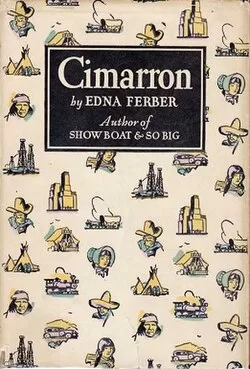

_cover.jpg)