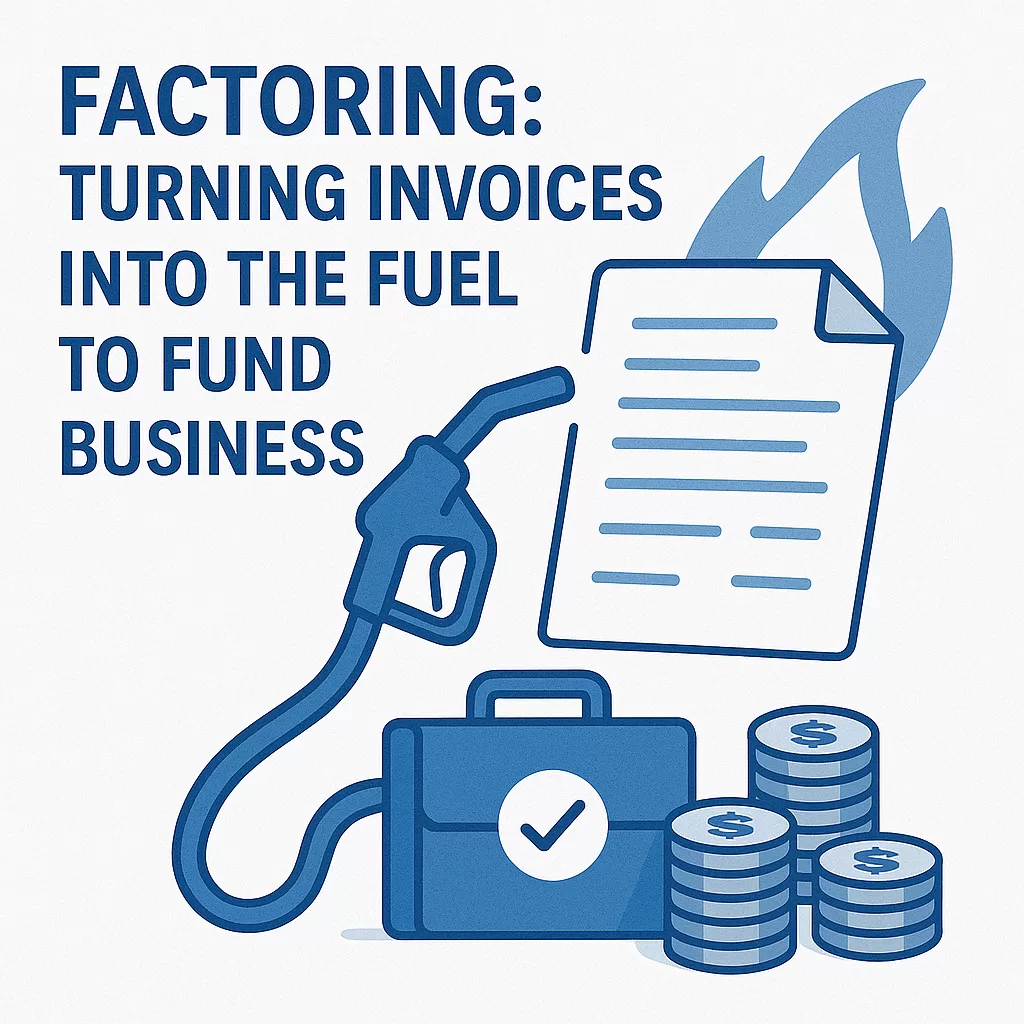
How Small Businesses can use Factoring as Bridge Financing

How Small Businesses can use Factoring as Bridge Financing

In the world of small business operations, managing cash flow can often be one of the biggest challenges. Business owners frequently find themselves in situations where they need immediate working capital to cover expenses, purchase inventory, pay employees, or invest in growth—long before customers pay their invoices. In such scenarios, accounts receivable factoring emerges as a powerful financial tool that can act as bridge financing, helping businesses stay afloat and even thrive.

This article explores the concept of accounts receivable factoring, how it works, the benefits and risks, and why it can serve as an effective bridge financing solution for small businesses.


Understanding Accounts Receivable Factoring

Accounts receivable factoring, often simply referred to as “factoring,” is a financial transaction in which a business sells its accounts receivable (unpaid customer invoices) to a third party, known as a factor, at a discount. In return, the business receives immediate cash—typically 70% to 90% of the invoice value—while the factor takes on the responsibility of collecting payment from the customers.

How It Works

The factoring process generally follows these steps:

  1. Invoice Generation: A business provides goods or services to its customers and issues invoices, usually with payment terms of 30, 60, or 90 days.
  2. Sale to Factor: Instead of waiting for the invoice to be paid, the business sells the receivable to a factoring company.
  3. Advance Payment: The factoring company pays a portion of the invoice value upfront—known as the advance rate.
  4. Collection: The factor then collects the payment directly from the customer.
  5. Remainder Payment: Once the customer pays the invoice in full, the factor remits the remaining balance to the business, minus a factoring fee (typically 1% to 5%).

Bridge Financing Defined

Bridge financing refers to a short-term funding solution used to cover immediate cash flow needs until a business secures more permanent financing or receives expected income. It’s often used to “bridge the gap” between a financial need and a future event, such as:

  • Collecting on outstanding invoices
  • Receiving a bank loan
  • Closing a round of equity investment
  • Selling an asset or property

Bridge financing is crucial in time-sensitive situations and often carries higher costs or stricter terms due to the short-term risk for lenders.


Why Small Businesses Need Bridge Financing

Small businesses often experience erratic cash flows. Even profitable enterprises can run into short-term liquidity crunches. Here are some common scenarios where bridge financing is necessary:

  • Seasonal businesses ramping up for a busy season but needing cash to buy inventory.
  • Service providers waiting 30–90 days for customer payments while needing to pay employees weekly.
  • Manufacturers needing funds to cover production costs before receiving payment for completed goods.
  • Startups between investment rounds but needing funds to sustain operations.

For many small businesses, traditional loans or lines of credit may not be available, especially if they have limited credit history or lack collateral. This is where accounts receivable factoring can fill the void.


How Accounts Receivable Factoring Serves as Bridge Financing

Accounts receivable factoring fits the definition of bridge financing because it offers immediate liquidity based on income that is expected in the near future. Here’s how factoring acts as a bridge:

1. Accelerating Cash Flow

When a business issues an invoice with net 30, 60, or 90-day terms, the funds are essentially locked up for that duration. Factoring unlocks that value immediately, allowing the business to maintain operations or capitalize on opportunities without waiting.

2. Providing Short-Term Relief

Factoring provides funding until longer-term solutions are realized. For example, a business awaiting a loan approval can use factoring to maintain cash flow in the interim. Once the loan is secured, the business can rely less on factoring.

3. No New Debt Incurred

Bridge loans often come with interest and increase the business’s debt burden. Factoring, on the other hand, is not a loan—it’s a sale of assets. This makes it a particularly attractive option for businesses that want to preserve their balance sheets.

4. Flexibility and Scalability

Unlike bank loans with rigid terms, factoring is inherently flexible. The more invoices a business generates, the more capital it can access. This makes it an ideal bridge for growing businesses scaling their operations.


Advantages of Using Factoring as Bridge Financing

1. Quick Access to Cash

Factoring companies can often approve applications and release funds within a few days. This speed is critical in time-sensitive scenarios where traditional financing may take weeks or months.

2. Improved Cash Flow Management

By converting receivables into immediate cash, businesses can better plan and manage their operational expenses without delays.

3. No Credit Score Requirements

Factoring is based on the creditworthiness of a business’s customers—not the business itself. This makes it viable for new or struggling businesses with strong accounts receivable.

4. Support for Growth Opportunities

If a business receives a large new order but lacks the funds to fulfill it, factoring can provide the necessary capital. This allows businesses to say “yes” to growth rather than turning down opportunities due to cash constraints.

5. Outsourced Collections

Some factoring arrangements include credit checks and collections, saving the business time and resources in chasing down payments.


Disadvantages and Considerations

While factoring offers many benefits, it’s not without downsides. Business owners should consider the following:

1. Cost

Factoring fees can range from 1% to 5% or more per month. Over time, this can be more expensive than traditional financing.

2. Customer Perception

Some customers may view factoring negatively, especially if they are contacted by the factoring company. This can affect customer relationships if not handled properly.

3. Qualification Requirements

Not all invoices are eligible. Factoring companies typically only accept invoices from creditworthy customers, which may limit the amount of capital available.

4. Loss of Control

With non-recourse factoring, the factor assumes the risk of non-payment. However, with recourse factoring, the business must repay the advance if the customer fails to pay—introducing additional risk.


Types of Factoring Arrangements

Understanding the different types of factoring is important when considering it as bridge financing.

1. Recourse vs. Non-Recourse

  • Recourse Factoring: The business is liable if the customer doesn’t pay the invoice. This is cheaper but riskier.
  • Non-Recourse Factoring: The factor assumes the risk of non-payment, but charges higher fees.

2. Spot Factoring vs. Full-Service Factoring

  • Spot Factoring: The business factors a single invoice or a few invoices on a one-time basis.
  • Full-Service Factoring: The business enters into a long-term relationship with the factor, often factoring all receivables.

3. Disclosed vs. Undisclosed Factoring

  • Disclosed: The customer is informed that the invoice has been sold to a factor.
  • Undisclosed: The customer pays the business, which then remits payment to the factor (also known as invoice discounting).

Use Cases: Real-World Examples of Bridge Financing with Factoring

Example 1: A Seasonal Retailer

A toy store generates most of its revenue during the holiday season. In the fall, the business needs to order large quantities of inventory. Since customer invoices from previous sales are still unpaid, the retailer sells them to a factoring company and receives immediate funds to stock up. By December, customer payments are in, and the business is flush with cash again—making factoring a perfect seasonal bridge.

Example 2: A Construction Company

A small construction firm wins a contract to build a commercial property but needs to pay subcontractors and buy materials upfront. Bank financing is unavailable due to limited credit history. The company factors its receivables from a previous job, receives 85% of the invoice value in cash, and uses it to fund the new project while awaiting customer payment.

Example 3: A Tech Startup

A software development company with several corporate clients faces a funding gap between seed and Series A investment rounds. Though it has solid contracts and invoices pending payment in 60 days, it lacks cash for payroll and rent. Factoring those receivables helps the startup survive the interim without taking on high-interest loans or diluting equity.


When Factoring Is the Right Bridge Financing Option

Factoring may be a strategic bridge financing option if:

  • You have a predictable flow of accounts receivable.
  • Your customers are creditworthy and pay on time.
  • You need funds quickly to cover essential operations or fulfill new business.
  • You want to avoid additional debt or can’t qualify for a bank loan.
  • You are in a high-growth or seasonal industry that demands immediate working capital.

Selecting a Factoring Partner

Not all factoring companies are created equal. When choosing a partner, small businesses should consider:

  • Reputation and Experience: Choose a factor with industry experience and positive reviews.
  • Fee Structure: Understand all costs, including advance rate, factoring fee, and any hidden charges.
  • Recourse Terms: Know who is responsible in case of customer non-payment.
  • Flexibility: Can you factor only the invoices you choose?
  • Customer Service: Will the factor treat your customers professionally and protect your relationships?

Conclusion

Accounts receivable factoring is a powerful and flexible tool for small businesses facing short-term cash flow challenges. As a form of bridge financing, it offers quick access to working capital without the burden of debt or the wait for customer payments. While it comes at a cost and involves handing over some control, the benefits—especially for businesses with steady receivables and creditworthy customers—can far outweigh the downsides.

In an economic landscape where agility is often the key to survival and success, factoring can be the bridge that helps small businesses cross from financial uncertainty to stability and growth.

Contact Factoring Specialist, Chris Lehnes

Accounts Receivable Factoring
$100,000 to $30 Million
Quick AR Advances
No Long-Term Commitment
Non-recourse
Funding in about a week

We are a great match for businesses with traits such as:
Less than 2 years old
Negative Net Worth
Losses
Customer Concentrations
Weak Credit
Character Issues

Chris Lehnes | Factoring Specialist | 203-664-1535 | chris@chrislehnes.com

How Cuts at the SBA Are Damaging Small Businesses

How Cuts at the SBA Are Damaging Small Businesses

The Small Business Administration (SBA) has historically served as a lifeline for entrepreneurs across the United States. By facilitating access to loans, offering training and mentorship programs, and providing disaster relief, the SBA has played a critical role in supporting the country’s economic backbone: small businesses. However, recent federal budgetary decisions and administrative restructuring have led to significant cuts within the agency. These changes are having far-reaching consequences for small businesses, especially those in underserved or rural areas.

Strategic SBA Reorganization or Service Erosion?

In early 2025, the SBA announced a sweeping reorganization initiative aimed at increasing efficiency and aligning the agency more closely with its core missions. Key elements of the plan included a 43% reduction in staff and the decentralization of services from the central office to regional and field locations. The agency maintained that these steps were designed to streamline operations, focus on disaster response and capital access, and eliminate redundant positions created during the COVID-19 pandemic.

While the SBA leadership emphasized that essential services would not be impacted, many stakeholders expressed skepticism. Reducing the workforce by nearly half is likely to limit the SBA’s capacity to respond to the diverse and often urgent needs of small businesses. The decrease in personnel could result in slower loan processing times, fewer outreach initiatives, and diminished ability to provide personalized guidance and mentorship.

Budget Cuts to Core SBA Programs

In addition to organizational restructuring, the SBA has faced deep funding cuts under recent federal budget proposals. These proposed reductions affect multiple programs that are crucial to the vitality and success of small businesses.

Entrepreneurial Development

One of the most significant impacts is to entrepreneurial development programs. Funding reductions threaten the future of Women’s Business Centers, Veteran Business Outreach Centers, and mentorship networks like SCORE. These programs have helped thousands of entrepreneurs gain business knowledge, refine their strategies, and connect with experienced mentors. With fewer resources, their ability to serve communities will inevitably diminish.

Access to Capital in Underserved Areas

Cuts to funding for Community Development Financial Institutions (CDFIs) represent another major setback. CDFIs provide critical capital to minority-owned businesses, startups, and entrepreneurs in economically disadvantaged areas who often struggle to secure traditional financing. Reducing this support could curtail business development in communities already facing economic hardship.

Rural Business Support

Small businesses in rural America may be among the hardest hit. Rural Development programs—formerly bolstered through agencies such as the USDA—have experienced reductions that could jeopardize initiatives like broadband expansion and renewable energy improvements. Without these investments, rural entrepreneurs may face increasing difficulty in competing with their urban counterparts.

Real-World Effects: Entrepreneurs Speak Out

The ramifications of these policy shifts are not merely theoretical; they are being felt on the ground by small business owners across the country.

Jacob Thomas, a third-generation farmer in Kansas, has seen his family’s modest farm struggle after the elimination of federal programs that once purchased produce directly from small farms. This loss of income has led to a 10% drop in revenue, threatening the long-term viability of the operation.

Similarly, small manufacturers and food producers in rural areas have made investments in energy-efficient infrastructure based on the expectation of receiving government rebates and support. With those programs now on hold or dramatically scaled back, these businesses are left shouldering costs they hadn’t planned to bear alone.

Additionally, entrepreneurs from underserved communities report increasing difficulties in accessing capital. Many relied on CDFI loans or SBA microloans to start or expand their businesses. With fewer funds and staff available to process these applications, many find themselves unable to move forward with business plans.

Political Responses and Public Pushback

These cuts have not gone unnoticed on Capitol Hill. Lawmakers from both parties have voiced concern about the potential consequences of reducing SBA resources. Some argue that in an already challenging economic environment, it is shortsighted to cut support for the very entities that generate two-thirds of net new jobs in the U.S. economy.

There is also concern about the SBA’s ability to respond effectively to future disasters. In past crises—from hurricanes to wildfires to the pandemic—the SBA was instrumental in providing emergency funding and guidance. With a smaller workforce and fewer resources, the agency’s capacity to respond quickly and efficiently to future events could be severely compromised.

In response to public and political outcry, some legislators are pushing for targeted reinvestment in programs that have shown a strong return on investment, particularly those aimed at empowering women, veterans, and minority entrepreneurs.

The Road Ahead for SBA

For many small businesses, the future is uncertain. The shift in the SBA’s priorities and the associated cuts require business owners to seek alternative support systems. Community organizations, local chambers of commerce, and state-level small business agencies may need to fill the gap left by the federal government.

Entrepreneurs will also need to become more self-reliant, utilizing digital tools and private networks to find mentorship, financing, and business development resources. However, these options are not equally accessible to all, and the risk is that the gap between well-connected entrepreneurs and those in marginalized communities will continue to widen.

At the same time, small business advocacy groups are mobilizing to push for policy reversals and increased investment. They argue that empowering small businesses is not just a matter of economic development but of social equity and national resilience.

SBA Impact Summary

The SBA has long served as a foundation of support for the entrepreneurial spirit that drives the U.S. economy. However, the agency’s recent restructuring and funding cuts are creating ripple effects that threaten to destabilize small businesses, particularly those that are most vulnerable.

Whether these changes result in long-term improvements in efficiency or lasting damage to the small business ecosystem will depend largely on how the government, private sector, and local communities respond. What is clear, though, is that small businesses are facing a new reality—one that will require adaptability, advocacy, and innovation to navigate successfully.

Contact Factoring Specialist, Chris Lehnes

“Inner Entrepreneur” by Grant Sabatier – Summary and Analysis – Essential Reading

Inner Entrepreneur by Grant Sabatier provides an extensive overview of entrepreneurship, emphasizing that it’s a path to building a fulfilling life and opportunities rather than solely focusing on immense wealth. It covers various aspects of starting, growing, and managing a business, including finding ideas, building a brand through storytelling and content, leveraging platforms like websites and social media, and crucial financial management like pricing, expenses, and cash flow. The text also explores strategies for scaling through team building and leveraging technology, selling a business, and establishing a holding company for further investment and growth, all while highlighting the importance of aligning business decisions with personal values and seeking financial freedom.

Author’s Background and Philosophy:

Grant Sabatier, author of Inner Entrepreneur positions himself not as an academic or consultant, but as a seasoned “bootstrapped entrepreneur” who built his wealth primarily through creating, running, and growing businesses. He emphasizes a practical, in-the-trenches approach to entrepreneurship, having funded his growth through revenue and focusing on profitability. His personal journey from having “$2.26 in my bank account” at age twenty-five to a net worth of “$1.25 million” five years later underscores the transformative power of entrepreneurship, saving, and investing. Sabatier’s philosophy is deeply intertwined with achieving freedom, both financial and personal, viewing entrepreneurship as a means to create a “sustainable life through business.” He quotes Thich Nhat Hanh: “The amount of happiness that you have depends on the amount of freedom you have in your heart.”

Key Themes and Ideas of Inner Entrepreneur

1. The Accessibility and Essentiality of Entrepreneurship:

Sabatier argues that “IT’S NEVER BEEN EASIER OR MORE ESSENTIAL TO BECOME AN ENTREPRENEUR.” He suggests that opportunities are abundant and can be seized by taking small, consistent actions. He posits that the world is changing rapidly, making the ability to make decisions and adapt crucial.

2. The 7 Truths of Successful Entrepreneurs (Implied):

While not explicitly listing seven truths in the provided excerpts, the text highlights several core principles that successful entrepreneurs embody:

  • Taking Action and Making Decisions: Sabatier emphasizes the importance of making decisions, even small ones, to gain knowledge and progress. He advocates for training intuition through repeated decision-making and provides a series of questions to overcome feeling stuck.
  • Leveraging Existing Skills and Passions: The “Perfect Business Formula” stresses the need to find an opportunity, dedicate time, leverage existing skills, and do something you’re passionate about for a business to be “successful and fulfilling.” Amplifying this with a mission “bigger than yourself” is seen as maximizing potential.
  • Understanding and Reaching Your Customers: Sabatier asserts that “marketing is the most valuable skill when building a business.” Knowing “who your customers are, where they are, and what they want” is crucial for effective outreach. He suggests immersing yourself in customer communities and industries to understand them better.
  • Focus on Profitability and Cash Flow: While profit is important, Sabatier echoes Peter Drucker, stating, “Cash flow matters most.” He details cash flow management phases and emphasizes tracking key financial metrics like Profit and Loss (P&L), Balance Sheet, and Cash Flow Statements.
  • Strategic Planning and Continuous Improvement: Successful entrepreneurs engage in strategic planning, even if not perfect, to make immediate progress. He recommends a system of 1-month, 2-month, and 4-month planning windows to review performance, set goals, and analyze finances.
  • Doubling Down on What Works: Sabatier is wary of short-term “growth hacks” that lack sustainability. He advocates for focusing on strategies that build long-term resilience and predictability in the business.
  • Building a Business to Sell (or Operate as if You Might): Even without immediate plans to sell, operating as if you might is key to preserving value. This involves maintaining organized financials, clear systems, and understanding what buyers look for.

3. The Importance of Financial Management and Metrics in Inner Entrepreneur

A significant portion of the text is dedicated to financial health and tracking.

  • Separating Finances: Essential for any business size, “Set up a separate business checking account” to clearly distinguish personal and business funds.
  • Understanding Financial Statements: Sabatier highlights the importance of P&L statements, Balance Sheets, and Cash Flow Statements for assessing business health, making decisions, and preparing for potential acquisitions.
  • Tracking Key Metrics: He lists essential metrics for Solopreneurs, including Net Profit Margin, Customer Acquisition Cost (CAC), Customer Lifetime Value (CLV), Average Revenue Per User (ARPU), and Churn Rate. Tracking these provides insights into what’s working and areas for improvement.

4. Diversification and the Holding Company Model in Inner Entrepreneur

Sabatier champions diversification of income streams and investments. He presents the holding company structure as a path to building an “empire” that is “recession- and climate-change resistant.” Holding companies allow for diversification across industries, leveraging centralized teams, and reinvesting cash flow for further growth or acquisitions. He outlines different types of holding companies, from simple aggregators to traditional HoldCos like Berkshire Hathaway.

5. Acquiring Existing Businesses as a Growth Strategy in Inner Entrepreneur

Acquisitions are presented as a powerful way to accelerate growth and build an empire quickly.

  • Strategic Considerations: Before pursuing an acquisition, Sabatier urges self-reflection: “Do I REALLY WANT TO DO THIS?” He emphasizes leveraging existing skills and resources and creating a personal criteria to narrow down opportunities.
  • Due Diligence: A thorough due diligence process is critical to uncover potential issues before committing to a purchase. This involves reviewing financial records, legal documents, operational procedures, and market positioning.
  • Financing Options: While Sabatier prefers to avoid debt, he discusses various financing methods, including all-cash, bank loans, SBA loans, and syndication, outlining the pros and cons of each.
  • Valuation Methods: He explains different approaches to valuing a business, including Market Valuation, Multiples Valuation (revenue or EBITDA multiples), and Income-Based Valuation (SDE/ODI and DCF).
  • Negotiation and Deal Terms: The process involves making initial offers (IOI or LOI), conducting due diligence, and negotiating terms like price, non-compete agreements, and exclusivity periods.

6. The Personal Journey and Evolution of an Entrepreneur in Inner Entrepreneur

Beyond the technical aspects, Sabatier shares personal reflections on the entrepreneurial journey. He discusses the stress and physical toll of his early pursuit of financial independence and the importance of prioritizing personal well-being. He highlights the grounding influence of his daughter and the shift in his focus towards maximizing impact and leaving a legacy. His concluding thoughts reveal a sense of peace and fulfillment, emphasizing that the struggles and uncertainty are part of a process of “becoming.”

Most Important Ideas or Facts in Inner Entrepreneur

  • Entrepreneurship is presented as a accessible and essential path to financial and personal freedom.
  • Focusing on profitability and cash flow is paramount for business sustainability.
  • Leveraging existing skills and passions is a core component of a fulfilling business.
  • Effective marketing is crucial for reaching customers and driving sales.
  • Tracking key financial and operational metrics provides valuable insights for decision-making.
  • The holding company structure offers a strategic approach to diversification and empire building.
  • Acquiring existing businesses can accelerate growth, but requires careful consideration and due diligence.
  • The entrepreneurial journey is not just about financial gain, but also personal growth and finding fulfillment.
  • Operating a business with organized financials and systems, as if you might sell, builds inherent value.
  • “Time is more valuable than money,” influencing decisions about which opportunities to pursue.

In conclusion, the excerpts from “Inner Entrepreneur” offer a practical, personal, and inspiring perspective on entrepreneurship. Grant Sabatier provides a roadmap grounded in his own experiences, emphasizing the importance of strategic planning, financial discipline, customer focus, and the pursuit of freedom and fulfillment alongside profit. The text serves as a valuable guide for aspiring and established entrepreneurs alike, highlighting the potential for significant growth and personal transformation through building and managing successful businesses.

Contact Factoring Specialist, Chris Lehnes


Entrepreneurship Study Guide: Insights from Inner Entrepreneur by Grant Sabatier

Quiz: Short Answer

Answer each question in 2-3 sentences.

  1. According to the source, what is more important to a new enterprise than profit?
  2. How does Grant Sabatier describe his approach to funding the growth of his businesses?
  3. What does Grant Sabatier suggest is the most valuable skill when building a business, regardless of how great the product or service is?
  4. What did Grant Sabatier do to make over $30,000 despite not being a designer?
  5. What is a key metric that Grant Sabatier used to analyze and improve his business performance as a Solopreneur, and what does it represent?
  6. According to the text, what is a significant difference between successful and unsuccessful entrepreneurs?
  7. What does a negative churn rate indicate for a business?
  8. What is Seller’s Discretionary Earnings (SDE) or Owner’s Discretionary Income (ODI), and what type of businesses is it typically used to value?
  9. What is the concept of “time value of money” as explained in the context of discounted cash flow (DCF) valuation?
  10. What is Seller Financing, and why might it be beneficial for both buyers and sellers of a business?

Answer Key for Inner Entrepreneur

  1. According to Peter Drucker, cited in the source, cash flow matters most in a new enterprise, even more than profit.
  2. Grant Sabatier describes himself as a bootstrapped entrepreneur, meaning he has funded all his business growth through revenue and focused on making his businesses profitable quickly.
  3. Grant Sabatier suggests that marketing is the most valuable skill when building a business because if people don’t know your product or service exists, they cannot buy it.
  4. Despite not being a designer, Grant Sabatier made over $30,000 by selling the Excel template he used to track his net worth on his website, Millennial Money.
  5. One key metric Grant Sabatier used was the Email Click to Conversion Rate, which measures the percentage of email recipients who clicked a link and completed a desired action, such as a purchase.
  6. A significant difference is that successful entrepreneurs engage in strategic planning and continually work to improve their businesses through consistent rhythm and making immediate progress.
  7. A negative churn rate means that a business has gained customers within a defined period, indicating strong customer retention and growth.
  8. SDE or ODI looks at the income a buyer could expect to receive from a business and is typically used to value small businesses, especially those with a single owner-operator or less than $1 million in annual revenue.
  9. The “time value of money” is the concept that money available today is worth more than the same amount in the future because of its potential earning capacity through investment.
  10. Seller Financing is when the seller of a business lends the buyer money to finance the purchase, offering flexibility and indicating the seller’s belief in the business’s future success.

Essay Format Questions

  1. Discuss the “7 Truths of Successful Entrepreneurs” mentioned in the text, using examples from the source material to illustrate each truth.
  2. Analyze the different business models discussed in the text (product, service, affiliate/advertising) and explain how Grant Sabatier suggests evaluating their potential for success and growth.
  3. Explain the importance of financial management for entrepreneurs as outlined in the text, detailing the key financial statements and metrics that should be tracked and analyzed.
  4. Describe the process of building a business with the intention of selling it, highlighting the key factors that make a business attractive to potential buyers according to the source.
  5. Evaluate the concept of establishing a holding company as a strategy for entrepreneurial growth and diversification, discussing the different types of holding companies and their potential benefits.

Glossary of Key Terms in Inner Entrepreneur

  • Bootstrapped Entrepreneur: An entrepreneur who funds business growth solely through revenue generated by the business, without external investment.
  • Cash Flow: The movement of money into and out of a business. It is emphasized as more important than profit for a new enterprise.
  • Monthly Recurring Revenue (MRR): Income a business can expect to receive on a recurring monthly basis, often from subscription models.
  • Churn Rate: The rate at which customers stop doing business with an entity over a defined period. A lower rate indicates better customer retention.
  • Seller’s Discretionary Earnings (SDE) / Owner’s Discretionary Income (ODI): A valuation method for small businesses that estimates the income a buyer could expect to receive from the business.
  • Discounted Cash Flow (DCF): An income-based valuation method that estimates the present value of a business’s future cash flows, considering the time value of money.
  • Time Value of Money: The concept that money available today is worth more than the same amount in the future due to its potential earning capacity.
  • Seller Financing: A method where the seller of a business provides financing to the buyer, typically through a loan.
  • Holding Company: A parent company that owns controlling stock in other companies, known as subsidiary companies. Used for diversification and economies of scale.
  • Due Diligence: An investigation or audit of a potential business acquisition to confirm financial records and other facts.
  • Indication of Interest (IOI): A non-binding initial offer to purchase a business, outlining key terms.
  • Letter of Intent (LOI): A formal, typically legally binding document that outlines the key terms of a business acquisition agreement.
  • Accounts Receivable (A/R): Money owed to a company by its customers for goods or services that have been delivered but not yet paid for.
  • Accounts Payable (A/P): Money owed by a company to its suppliers for goods or services received.
  • Balance Sheet: A financial statement that reports a company’s assets, liabilities, and equity at a specific point in time.
  • Profit and Loss Statement (P&L): A financial statement that summarizes the revenues, costs, and expenses incurred during a specified period.
  • Customer Acquisition Cost (CAC): The cost associated with convincing a consumer to buy a product or service.
  • Customer Lifetime Value (CLV): A prediction of the net profit attributed to the entire future relationship with a customer.
  • Average Revenue Per User (ARPU): A metric used to calculate the average revenue generated per user or customer over a specific period.
  • Net Dollar Retention (NDR): A metric measuring the percentage of recurring revenue retained from existing customers over a period, including expansions and downgrades.

When I Start My Business I’ll be Happy – By Sam Vander Wielen – Summary and Analysis

When I Start My Business I’ll be Happy – By Sam Vander Wielen

The provided excerpts from Sam Vander Wielen’s book offer a candid and practical guide to online entrepreneurship, heavily influenced by the author’s personal journey from a dissatisfying legal career to building a successful legal template business. The core message is that entrepreneurship is not a magic fix for personal unhappiness, but rather an opportunity for significant personal growth and the ability to navigate life’s inevitable challenges while building a thriving business. The excerpts highlight the importance of self-awareness, embracing challenges, conducting thorough research (especially regarding demand and supply), strategically building and nurturing an audience (particularly through email marketing), and fostering a strong, community-focused customer experience. Mindset plays a crucial role, with the author addressing common obstacles like perfect timing excuses, impostor syndrome, scarcity mindset, the challenges of being a beginner, and the fear of competition and comparison.

Main Themes and Key Ideas:

  1. Entrepreneurship as a Vehicle for Growth, Not a Happiness Fix:
  • A central tenet is that starting a business won’t automatically solve personal problems or bring happiness. The title itself, “When I Start My Business, I’ll Be Happy,” is presented as a common misconception.
  • Instead, entrepreneurship is framed as an opportunity for personal development and confronting one’s “shadow side and flaws.”
  • Quote: “If you’re disappointed because you thought your business was going to fix your life, I’m sorry to be a downer, but it won’t. What it can do is give you the opportunity to make many facets of your life richer and fuller. It will gift you the opportunity to be a better person, one who faces their fears and shadows.”
  • The author emphasizes the importance of a healthy sense of self outside of one’s job or business.
  1. Embracing Challenges and Life’s “Speed Bumps”:
  • The author’s narrative is punctuated by personal difficulties, including a scary flight experience, the disillusionment with her legal career, the passing of both her parents within a short period, and navigating imposter syndrome and other mindset challenges.
  • These experiences are presented as formative and strengthening, both personally and for her business.
  • Quote: “Throughout this book, I will share parts of my own story, as well as a few stories from my colleagues, to demonstrate that life’s challenges don’t just make us stronger; they make our businesses stronger, too.”
  • The author views painful moments as potential “fuel” for action and growth.
  1. The Importance of “Why” – Focusing on Impact and Others:
  • While personal motivations exist, the author encourages entrepreneurs to define a deeper “why” that extends beyond personal gain.
  • This outward-focused “why” involves considering the impact on others and the people the business is intended to help.
  • Quote: “When it comes to defining your why behind starting and running a business, go deeper than what having a business will afford you. How will your business impact others? Who are the people you’re here to help? What do they need help with? What impact will it have on them, the people around them, and the universe as a whole?”
  1. Strategic Planning and Preparation Before “Diving In”:
  • Contrary to common “start before you’re ready” advice, the author advocates for careful planning and preparation to avoid failed businesses and dashed hopes.
  • This includes financial preparation (personal budget, start-up expenses, saving), ensuring necessary qualifications/skills, and developing a viable business plan.
  • Quote: “When it comes to cold plunging, jumping in without thinking is key to success. However, the same is not true when it comes to starting your own business. In this case, it’s crucial to be as prepared as possible and do things right, even if that means going slower than you want to.”
  • The “foot in both worlds” phase, working a traditional job while building the business, is acknowledged as stressful but valuable for testing ideas and building readiness.
  1. Mindset Obstacles and How to Overcome Them:
  • A significant portion is dedicated to addressing common “entrepreneur virus” symptoms.
  • Perfect Timing Excuses: Fear often manifests as believing the timing isn’t right. The author suggests asking practical questions about preparation and recognizing fear’s role in keeping one “safe.”
  • Impostor Syndrome: This involves doubting one’s abilities and feeling undeserving of success. It’s a recurring challenge throughout the business journey.
  • Quote: “I still have a little impostor syndrome… It doesn’t go away, that feeling that you shouldn’t take me that seriously. What do I know? I share that with you because we all have doubts in our abilities, about our power and what that power is.” – Michelle Obama (quoted in the text)
  • The concept of “future-proofing” (acting like the person who runs the business you aspire to have) is offered as a strategy.
  • Scarcity vs. Abundance Mindset: Scarcity focuses on lack and conservation, while abundance sees limitless possibilities and resources. Recognizing scarcity patterns and practicing gratitude and admiration are suggested for shifting.
  • Being a Beginner Sucks: Acknowledging the discomfort of being new and emphasizing the value of learning and continuous improvement.
  • Fear of Competition and Comparison: Discouraging excessive focus on competitors (“cloudy competitors”) as it hinders creativity and fosters comparison.
  1. The Importance of Uniqueness (Personal and Business):
  • Standing out requires embracing personal quirks and unique business approaches, products, vibes, or methodologies.
  • Quote: “Honestly, it’s just flat-out boring to see the same person, voice, personality, and viewpoint expressed on the same issues online… Most people don’t want to dress exactly like my mom. But people were envious of how confidently she carried herself. That’s what got people’s attention…”
  • Businesses should highlight their unique selling propositions, whether it’s a specific skill set, a named methodology, a distinct vibe (e.g., “unstuffy lawyer”), or an innovative product.
  • Educating the audience on the value of qualified professionals (if applicable) is also a form of differentiation.
  1. Researching Demand and Supply for Business and Product Ideas:
  • Thorough research is crucial for both the initial business idea and specific products.
  • Demand research involves confirming that others need and want the product or service, not just the entrepreneur. Methods include online searches (forums, social media), conversation analysis, and attempting to beta sell.
  • Supply research means understanding existing competition. While competition indicates demand, entrepreneurs must identify their unique differentiators or “hole in the market.”
  • Quote: “To determine if outside demand exists ask yourself these questions: Are people asking for it? Are people searching for it? Are there conversations happening about it? Are there already other people out there doing something similar (indicating a market exists)?”
  1. Building and Nurturing an Email List as a Core Asset:
  • Email marketing is presented as a crucial strategy for building an audience and fostering connection.
  • The author emphasizes the value of data derived from email engagement (open rates, click-through rates, unsubscribes) for informing future content and targeting.
  • Welcome Sequences: Automated email series are vital for setting expectations, providing immediate value, and sharing “hero stories.”
  • Weekly Emails: Consistent, valuable content is key to staying “top of mind” and earning trust. These emails should provide value while also centering products as solutions and encouraging engagement.
  • Quote: “I see my weekly email as a way to stay top of mind and continue earning their trust, respect, and time.”
  • Branding newsletters with themes and pitching them based on the value provided is recommended.
  1. Creating and Selling Products (including a “Million-Dollar Product”):
  • The concept of a “million-dollar product” is introduced, emphasizing that success is defined on one’s own terms and doesn’t have to reach that revenue mark.
  • The process involves researching demand and supply specifically for the product, even if the business is already established.
  • Minimum Viable Product (MVP): The approach of launching a basic version of a product to test viability before investing heavily in design and features.
  • Beta Testing: Selling the MVP to a small group at a discount in exchange for feedback is a key step in refining the product.
  • Analyzing Results: Tracking the tangible outcomes customers achieve with the product is vital for marketing and improvement.
  • Pricing: Calculating costs, desired profit margins, and the number of sales needed to cover expenses and pay oneself.
  • Promotions and Sales (Live Launches): Complementing evergreen sales funnels with time-bound promotions or launches using urgency triggers (time, money, bonuses).
  1. The “Olive Garden Effect” – Prioritizing Customer Experience and Retention:
  • Nurturing existing customers is highlighted as a high-ROI strategy that leads to repeat business and referrals.
  • Quote: “Treating your customers like they’re the most special part of your business community is crucial to long-term business success. It is so easy to get trapped in a cycle of thinking about how to get new or more clients. But in my experience, nurturing the heck out of your current customers is a strategy that reaps a higher return on investment…”
  • The “Three R’s” of customer focus are: Retention, Referrals, and Revenue (generated from repeat customers and referrals).
  • Providing excellent service and creating a sense of community makes customers happy and motivates them to share their positive experiences.
  1. Financial Literacy and Discipline:
  • The author stresses the importance of understanding business finances from the outset, including tracking expenses, saving for taxes, and building a “business war chest.”
  • Saving consistently, even small amounts, is emphasized.
  • The decision of when to pay oneself (“owner’s draw”) and the importance of reinvesting profits are discussed.
  1. Navigating Criticism and Building a Strong Sense of Self:
  • Receiving feedback and criticism, especially online, is inevitable.
  • Developing a strong sense of self (“deepening roots”) helps entrepreneurs withstand negativity without being derailed.
  • Recognizing that harsh criticism often reflects more on the giver than the receiver is a key takeaway.
  • Taking time for personal interests, setting internal boundaries (regarding self-judgment and comparison), and finding humor are coping mechanisms.

Most Important Ideas/Facts:

  • Entrepreneurship itself does not guarantee happiness; it’s a vehicle for personal growth.
  • Embracing life’s challenges strengthens both the individual and the business.
  • Defining a “why” that focuses on helping others creates a deeper and more connected business.
  • Careful planning and financial preparation are crucial before launching fully.
  • Common mindset obstacles (timing, imposter syndrome, scarcity, beginner struggles, comparison) are normal but must be addressed for growth.
  • Authentic uniqueness (personal and business) is key to standing out in a crowded online space.
  • Thoroughly researching both demand and supply is essential for viable business and product ideas.
  • Building and nurturing an email list is a foundational strategy for audience connection and sales.
  • Adopting a Minimum Viable Product (MVP) approach and conducting beta testing saves time and resources while refining offerings.
  • Prioritizing existing customers and fostering a community-like experience (the “Olive Garden Effect”) drives long-term success through retention and referrals.
  • Financial discipline, including saving for taxes and building a “war chest,” is non-negotiable.
  • Developing a strong sense of self is essential for navigating criticism and maintaining resilience.

In conclusion, Sam Vander Wielen’s book, based on these excerpts, offers a realistic and empowering perspective on online entrepreneurship. It acknowledges the personal and professional challenges inherent in the journey while providing practical strategies for building a sustainable and impactful business grounded in self-awareness, audience connection, and a strong customer focus.

Contact Factoring Specialist, Chris Lehnes

Study Guide: When I Start My Business, I’ll Be Happy

  1. What major life event spurred the author to reflect on the trajectory of her life and career?
  2. How did the author’s boss react initially to her leaving the law firm, and what did she overhear shortly after that impacted her?
  3. What was the author’s first business “misfire” before starting her current legal templates business?
  4. What was the “dreamlike state” the author experienced during an acupuncture appointment that led to her legal templates business idea?
  5. How did the author financially prepare for her exit from her nine-to-five job?
  6. According to the author, why should entrepreneurs aim to define their “why” beyond personal gain?
  7. What is the author’s definition of a “Business War Chest” and why is it important for entrepreneurs?
  8. How does the author define the “entrepreneur virus” and how does she suggest dealing with its symptoms?
  9. What is the “Minimum Viable Product (MVP)” theory in the context of developing a product?
  10. What is the “Olive Garden Effect” and how does the author relate it to business success?

Quiz Answer Key

  1. The author’s near-death experience on a turbulent flight from Amsterdam to Philadelphia caused her to deeply consider her life choices, particularly her dissatisfaction with her legal career.
  2. Her boss initially seemed supportive and congratulated her, but she then overheard him mocking her decision to start a health coaching business, which deeply stung her but also became a catalyst for her.
  3. Before her legal templates business, the author started a health coaching business, which she later shut down after realizing her legal business idea was more viable.
  4. During the acupuncture appointment, the author had a vision of doors flying open, symbolizing the opportunities that would await her if she pursued the legal templates business idea.
  5. She created a detailed financial plan that involved saving for both personal and start-up expenses, and budgeting carefully during the period she worked both her legal job and her business.
  6. Defining their why beyond personal gain helps entrepreneurs create a deeper, more connected business that focuses on the impact they will have on others and the wider community.
  7. A Business War Chest is money set aside from revenue after taxes and expenses, dedicated to reinvesting in future projects and growth within the business.
  8. The “entrepreneur virus” refers to common mindset obstacles like impostor syndrome and scarcity mindset that affect business owners, and the author suggests recognizing them as opportunities for growth and using prescriptions like gratitude and future-proofing.
  9. MVP is the concept of releasing a basic version of a product to the market quickly to test its viability and gather feedback before investing significant time and resources into developing all features.
  10. The “Olive Garden Effect” describes the phenomenon where creating a positive and welcoming customer experience makes customers happy, encourages retention, and naturally leads to word-of-mouth referrals.

Essay Format Questions

  1. Analyze the significance of the turbulent plane ride and the “cheeseburger comment” in the author’s entrepreneurial journey. How did these difficult moments act as catalysts for change and growth?
  2. Discuss the different “mindset obstacles” presented in the text. Choose two that resonate most with you and explain how an entrepreneur can actively work to overcome them based on the author’s suggestions.
  3. Explain the author’s approach to balancing her full-time job with starting her business. What were the key strategies she employed during this transitional period, and what lessons did she learn?
  4. Evaluate the importance of market research (demand and supply) in the author’s process of developing both her initial business idea and her specific products. How did her research inform her decisions and contribute to her success?
  5. Describe the author’s philosophy on providing value to her audience, particularly through email marketing and freebies. How does she strategically use these elements to nurture leads and build a community?

Glossary of Key Terms

  • Impostor Syndrome: The feeling that one’s successes and achievements are due to luck rather than skill or qualification, often leading to a fear of being exposed as a fraud.
  • Scarcity Mindset: A belief that there are limited resources (money, time, opportunities) and that one must conserve and be stingy, even if basic needs are met. Can be a self-fulfilling prophecy in business.
  • Abundance Mindset: The belief that there are more than enough resources available, leading to optimistic, open, and curious decision-making.
  • Future-Proofing: Making decisions and taking steps based on an imagined ideal future state for your business, rather than solely based on its current size and success.
  • Hummingbird (Entrepreneurial Trait): Describes an entrepreneur with lots of ideas and a tendency to move quickly from one thing to another.
  • Jackhammer (Entrepreneurial Trait): Describes an entrepreneur with a focus on sticking with and deeply developing a single idea or project.
  • Business War Chest: Money set aside from business revenue after taxes and expenses for reinvesting in future projects and business growth.
  • Gross Revenue: The total income generated by a business before deducting expenses.
  • Owner’s Draw: Money taken from a business’s profit by the owner for personal use, which is taxable income and not considered a business expense.
  • Minimum Viable Product (MVP): A basic version of a product released to the market quickly to test its viability and gather feedback before full development.
  • Beta Testing: Releasing an initial version of a product to a small group of buyers to gather feedback and assess demand before a wider launch.
  • Content Pillars: Categories or themes an entrepreneur focuses on when creating content for social media to maintain organization, intentionality, and hit different touch points for potential customers.
  • Live Launch: A real-time sale or promotion in a business with a defined start and end date.
  • Evergreen Sales Funnel: A continuous, automated sales process that is always available to potential customers, unlike a limited-time live launch.
  • Welcome Sequence: An automated series of emails sent to a new email subscriber to introduce them to the brand, set expectations, provide value, and share core stories.
  • Content Upgrade: A freebie offered within a specific piece of content (like a blog post) that is highly relevant to the topic of that content, giving readers a reason to opt-in to an email list.
  • Olive Garden Effect: A term used to describe the positive cycle generated by creating a great customer experience, leading to customer retention, positive results, and word-of-mouth referrals.
  • Scope of Practice: The procedures, actions, and processes that a healthcare practitioner is permitted to undertake in keeping with the terms of their professional license. (Used in the text to highlight the importance of staying within one’s qualified area of expertise).
  • Social Proof: Evidence, typically from customers (testimonials, case studies), that shows potential buyers the effectiveness and value of a product or service.
  • Customer Retention: The ability of a business to keep its existing customers over a period of time.

Discussion about this video

CommentsRestacks

What Every Small Business Should Know | Chris Lehnes | Factoring Specialist

Questions? Contact Chris Lehnes | 203-664-1535 | clehnes@chrislehnes.com | www.chrislehnes.com

Small Businesses face numerous challenges, among them is the ability to have access to sufficient working capital to meet the ongoing cash obligations of the business.

While this need can be met by a traditional line of credit for businesses which meet all traditional bank lending criteria, many businesses do not meet those standards and require an alternative.

One such option is accounts receivable factoring. With factoring, a B2B or B2G business can quickly convert their accounts receivable into cash.

Many factoring companies focus exclusively on the credit quality of the customer base and ignore the financial condition of the business and the personal financial condition of the owners.

This works well for businesses with traits such as:

Losses

Rapidly Growing

Highly Leveraged

Customer Concentrations

Out-of-favor Industries

Weak Personal Credit

Character Issues

Listen to this podcast to gain a greater understanding of the types of businesses which can benefit from this form of financing.

To learn if you are a fit contact me today:

203-664-1535

clehnes@chrislehnes.com

www.chrislehnes.com

The Economic Consequences of Moody’s Credit Rating Downgrade

The Far-Reaching Economic Consequences of a U.S. Credit Rating Downgrade by Moody’s

When a credit rating agency like Moody’s downgrades the United States’ credit rating, it sends ripples not just through financial markets, but through every corner of the global economy. While the immediate headlines often focus on political dysfunction or fiscal sustainability, the longer-term ramifications of such a downgrade are far more complex, systemic, and potentially destabilizing. A Moody’s downgrade of U.S. sovereign debt signals a fundamental reassessment of America’s creditworthiness and forces investors, policymakers, and institutions to recalibrate their expectations about the world’s most important economy.

This article explores the deeper consequences such a downgrade can trigger—ranging from higher borrowing costs and currency volatility to systemic global shifts in capital allocation and long-term economic growth.


Understanding the Significance of a Credit Downgrade

Moody’s, along with Standard & Poor’s and Fitch Ratings, is one of the “Big Three” credit rating agencies that assess the ability of borrowers—from corporations to countries—to repay their debt. A downgrade of the U.S. credit rating means that Moody’s has lost some confidence in the federal government’s ability or willingness to meet its financial obligations.

Historically, U.S. debt has been viewed as the safest investment on the planet—a benchmark for global finance. A downgrade disrupts that perception and introduces doubt about America’s fiscal and political stability. This isn’t just symbolic. It has concrete consequences that ripple through every layer of the economy.


1. Higher Borrowing Costs Across the Board

Perhaps the most immediate impact of a credit downgrade is a rise in borrowing costs. U.S. Treasury yields serve as the benchmark interest rates for a vast array of financial products—from corporate loans and mortgages to municipal bonds and student loans. When Moody’s downgrades U.S. debt, it effectively tells the world that lending to the U.S. is riskier than before. Investors demand higher yields to compensate for that risk.

This increase in yields is not confined to the federal government. As Treasury rates rise, so do rates on other types of credit. The private sector finds it more expensive to borrow money for investment, expansion, or hiring. Consumers face higher mortgage rates, credit card interest, and auto loan costs.

Over time, these higher costs dampen economic activity, slow housing markets, reduce business investment, and weaken consumer spending—key drivers of GDP growth.


2. Fiscal Constraints and Deficit Challenges

The U.S. government already spends a significant portion of its annual budget servicing its debt. As interest rates rise due to a downgrade, the cost of servicing the national debt increases, further straining the federal budget. This leaves less room for essential spending on infrastructure, education, social programs, or national defense.

Moreover, larger interest payments make it harder to reduce budget deficits, potentially triggering a vicious cycle: higher deficits lead to lower credit ratings, which in turn lead to higher interest payments, and so on.

This dynamic threatens long-term fiscal sustainability and places added pressure on lawmakers to make politically difficult choices—cut spending, raise taxes, or both.


3. Loss of the U.S. Dollar’s Preeminence

One of the most profound long-term risks of a downgrade is its potential impact on the U.S. dollar’s status as the world’s primary reserve currency. This status gives the United States enormous advantages: it can borrow cheaply, influence global trade terms, and maintain geopolitical leverage.

However, a downgrade chips away at global confidence in the stability and reliability of U.S. financial governance. While there is currently no obvious alternative to the dollar, the downgrade may accelerate efforts by countries like China and Russia to promote alternative reserve currencies or diversify their foreign exchange reserves.

A diminished role for the dollar would reduce demand for U.S. assets, further raise borrowing costs, and weaken America’s global economic influence.


4. Investor Confidence and Market Volatility

Financial markets thrive on confidence and predictability—two qualities that a downgrade undermines. Investors, particularly institutional ones such as pension funds, sovereign wealth funds, and insurance companies, may be forced to reassess their U.S. holdings in light of new risk profiles.

Many of these institutions have mandates that require them to hold only top-rated assets. A downgrade from Moody’s could trigger automatic selling of U.S. Treasury securities, contributing to market volatility and raising yields further.

Stock markets also typically react negatively to such downgrades, as they signal macroeconomic instability. Drops in equity valuations can erode household wealth and consumer confidence, especially in a country where a significant portion of retirement savings is tied to the stock market.


5. Damage to U.S. Political Credibility

Credit rating agencies often cite political gridlock and dysfunctional governance as key reasons for a downgrade. For instance, prolonged battles over raising the debt ceiling or passing a federal budget suggest an inability or unwillingness to govern effectively.

Such perceptions damage the U.S.’s reputation not just as a borrower but as a global leader. Allies may question America’s reliability, while adversaries exploit the narrative of decline.

Domestically, a downgrade can become a political flashpoint, further deepening partisan divides and making it even harder to implement the structural reforms needed to restore fiscal balance.


6. Global Economic Repercussions

Because the U.S. economy is so deeply integrated into the global financial system, a downgrade does not stay contained within U.S. borders.

International investors, central banks, and governments hold trillions of dollars in U.S. debt. A downgrade can unsettle these holdings, reduce global confidence in U.S. monetary policy, and spark volatility in emerging markets, which often peg their currencies or base their financial models on the stability of the dollar.

Higher U.S. interest rates can lead to capital flight from developing countries, triggering currency crises, inflation, or debt defaults in those regions. This can contribute to global financial instability and economic slowdowns far from American shores.


7. Potential Policy Responses and Long-Term Adjustments

In response to a downgrade, the U.S. government and Federal Reserve may adopt countermeasures to stabilize the economy. The Fed could delay interest rate hikes or resume quantitative easing to keep borrowing costs manageable. The Treasury could restructure its debt issuance strategy.

However, these tools have limitations and risks. Loose monetary policy could stoke inflation, while fiscal tightening could slow the recovery or deepen a recession.

Long-term, the downgrade should serve as a wake-up call for more serious structural reforms. These include revisiting entitlement spending, tax reform, and implementing automatic stabilizers to reduce the frequency of political standoffs over the budget.


Conclusion: More Than Just a Symbolic Setback

A downgrade of the U.S. credit rating by Moody’s is far more than a symbolic black mark on the nation’s fiscal record. It is a powerful signal to markets, institutions, and policymakers that the foundations of America’s economic dominance are no longer unshakable. The downgrade has the potential to trigger a chain reaction—raising borrowing costs, reducing investment, and sowing doubt about the future of the global financial system anchored by the U.S. dollar.

The real danger lies not just in the immediate market reaction, but in the structural challenges it exposes and exacerbates. If left unaddressed, the consequences of a downgrade could reshape the global economic landscape for years to come.

Contact Factoring Specialist, Chris Lehnes


Briefing Document: Economic Consequences of a U.S. Credit Rating Downgrade by Moody’s

Source: Excerpts from “The Economic Consequences of Moody’s Credit Rating Downgrade” by Chris Lehnes

Date: May 19, 2025

Prepared For: [Intended Audience – e.g., Policymakers, Financial Professionals, General Public]

Subject: Analysis of the potential economic ramifications of a downgrade to the United States’ credit rating by Moody’s.

Executive Summary:

A downgrade of the U.S. credit rating by Moody’s is not merely a symbolic event but a significant signal with far-reaching economic consequences. It signifies a loss of confidence in the U.S. government’s ability or willingness to meet its financial obligations, disrupting the perception of U.S. debt as the safest investment globally. The primary impacts include higher borrowing costs across the board, increased fiscal constraints on the government, potential erosion of the U.S. dollar’s preeminence, diminished investor confidence and market volatility, damage to U.S. political credibility, and significant global economic repercussions. Addressing the structural issues leading to a downgrade is crucial for long-term economic stability.

Key Themes and Most Important Ideas/Facts:

  1. Significance of the Downgrade:
  • A downgrade by one of the “Big Three” agencies (Moody’s, S&P, Fitch) signifies a reassessment of the U.S.’s creditworthiness.
  • It directly challenges the historical perception of U.S. debt as the “safest investment on the planet.”
  • This disruption introduces “doubt about America’s fiscal and political stability” with tangible economic consequences.
  1. Higher Borrowing Costs:
  • This is identified as “Perhaps the most immediate impact.”
  • U.S. Treasury yields serve as a benchmark for various financial products (corporate loans, mortgages, municipal bonds, student loans).
  • A downgrade makes lending to the U.S. riskier, prompting investors to “demand higher yields to compensate for that risk.”
  • This increase in borrowing costs extends beyond the federal government to the private sector and consumers, “dampen[ing] economic activity, slow[ing] housing markets, reduc[ing] business investment, and weaken[ing] consumer spending.”
  1. Fiscal Constraints and Deficit Challenges:
  • Rising interest rates on U.S. debt due to a downgrade increase the cost of debt servicing, further straining the federal budget.
  • This limits available funds for essential spending on infrastructure, education, social programs, and defense.
  • It creates a “vicious cycle: higher deficits lead to lower credit ratings, which in turn lead to higher interest payments, and so on.”
  • This dynamic exacerbates the difficulty of reducing budget deficits and forces “politically difficult choices—cut spending, raise taxes, or both.”
  1. Loss of U.S. Dollar’s Preeminence:
  • This is highlighted as “One of the most profound long-term risks.”
  • The dollar’s status as the primary reserve currency offers significant advantages (cheap borrowing, influence on trade, geopolitical leverage).
  • A downgrade “chips away at global confidence in the stability and reliability of U.S. financial governance.”
  • While no immediate alternative exists, it may “accelerate efforts by countries like China and Russia to promote alternative reserve currencies or diversify their foreign exchange reserves.”
  • A diminished dollar role would “reduce demand for U.S. assets, further raise borrowing costs, and weaken America’s global economic influence.”
  1. Investor Confidence and Market Volatility:
  • Downgrades undermine the “confidence and predictability” on which financial markets rely.
  • Institutional investors (pension funds, sovereign wealth funds, insurance companies) may be forced to “reassess their U.S. holdings in light of new risk profiles.”
  • Mandates requiring holding only top-rated assets could trigger “automatic selling of U.S. Treasury securities,” contributing to volatility and higher yields.
  • Stock markets typically react negatively, as downgrades “signal macroeconomic instability,” eroding household wealth and consumer confidence.
  1. Damage to U.S. Political Credibility:
  • Credit rating agencies often cite “political gridlock and dysfunctional governance” as reasons for a downgrade.
  • Issues like debt ceiling battles and budget standoffs suggest an inability to govern effectively.
  • This damages the U.S.’s reputation as a borrower and “as a global leader.”
  • Domestically, it can become a “political flashpoint, further deepening partisan divides,” making reforms harder.
  1. Global Economic Repercussions:
  • Due to the U.S. economy’s global integration, a downgrade’s effects extend beyond U.S. borders.
  • It can “unsettle” the trillions of dollars in U.S. debt held by international investors, central banks, and governments.
  • Higher U.S. interest rates can trigger “capital flight from developing countries,” potentially leading to “currency crises, inflation, or debt defaults in those regions.”
  • This can contribute to “global financial instability and economic slowdowns.”
  1. Potential Policy Responses and Long-Term Adjustments:
  • The U.S. government and Federal Reserve may employ countermeasures like delaying interest rate hikes or resuming quantitative easing.
  • The Treasury could also adjust debt issuance strategy.
  • These tools have limitations and risks (inflation from loose monetary policy, recession from fiscal tightening).
  • The downgrade should serve as a “wake-up call for more serious structural reforms,” including entitlement spending, tax reform, and automatic fiscal stabilizers.

Conclusion:

A U.S. credit rating downgrade by Moody’s is a serious event with cascading economic consequences. It highlights underlying structural challenges and has the potential to fundamentally alter global financial dynamics. The “real danger lies not just in the immediate market reaction, but in the structural challenges it exposes and exacerbates.” Addressing these challenges through serious reform is critical to mitigating the long-term impact of a downgrade and maintaining U.S. economic stability and global influence


Quiz

  1. What are the “Big Three” credit rating agencies mentioned in the article?
  2. How does a U.S. credit rating downgrade affect borrowing costs for both the government and private sector?
  3. What is a key challenge for the U.S. federal budget resulting from higher interest rates due to a downgrade?
  4. Why is the U.S. dollar’s status as the primary reserve currency significant, and how could a downgrade impact this?
  5. How might a downgrade affect investor confidence and lead to market volatility?
  6. What does the article suggest is a key reason cited by credit rating agencies for downgrades, related to governance?
  7. How can a U.S. downgrade have repercussions for the global economy, particularly in emerging markets?
  8. What are some potential policy responses the U.S. government and Federal Reserve might consider after a downgrade?
  9. Beyond immediate market reactions, what does the article highlight as the “real danger” of a downgrade?
  10. According to the article, why is a U.S. credit rating downgrade by Moody’s more than just a symbolic setback?

Essay Questions

  1. Analyze the interconnectedness of the consequences of a U.S. credit rating downgrade as described in the article. How do higher borrowing costs, fiscal constraints, and potential loss of dollar preeminence feed into and exacerbate each other?
  2. Discuss the long-term implications of a U.S. credit rating downgrade on the global economic landscape. Consider the potential shifts in capital allocation, the role of the dollar, and the impact on emerging markets.
  3. Evaluate the political consequences of a U.S. credit rating downgrade. How does political dysfunction contribute to the likelihood of a downgrade, and how might a downgrade further deepen partisan divides and hinder necessary reforms?
  4. Compare and contrast the immediate versus the long-term effects of a U.S. credit rating downgrade as presented in the article. Which set of consequences do you believe is more significant and why?
  5. Based on the article, propose and justify potential structural reforms or policy adjustments that the U.S. could implement to address the underlying issues that might lead to or be exacerbated by a credit rating downgrade.

Glossary of Key Terms

  • Credit Rating Agency: A company that assesses the creditworthiness of individuals, businesses, or governments. The “Big Three” are Moody’s, Standard & Poor’s, and Fitch Ratings.
  • Credit Rating Downgrade: A reduction in the credit rating of a borrower, indicating that the agency has less confidence in their ability to repay debt.
  • Sovereign Debt: Debt issued by a national government.
  • U.S. Treasury Yields: The return an investor receives on U.S. government debt instruments like Treasury bonds or notes. They serve as a benchmark for many other interest rates.
  • Borrowing Costs: The interest rates and fees associated with taking out a loan or issuing debt.
  • Fiscal Sustainability: The ability of a government to maintain its spending and tax policies without threatening its solvency or the stability of the economy.
  • National Debt: The total amount of money that a country’s government owes to its creditors.
  • Budget Deficits: The amount by which a government’s spending exceeds its revenue in a given period.
  • Reserve Currency: A currency held in significant quantities by central banks and other financial institutions as part of their foreign exchange reserves. The U.S. dollar is currently the primary reserve currency.
  • Capital Allocation: The process by which financial resources are distributed among various investments or assets.
  • Investor Confidence: The level of optimism or pessimism investors have about the prospects of an economy or a particular investment.
  • Market Volatility: The degree of variation of a trading price over time. High volatility indicates that the price of an asset can change dramatically over a short time period in either direction.
  • Political Gridlock: A situation where there is difficulty in passing laws or making decisions due to disagreements between political parties or branches of government.
  • Debt Ceiling: A legislative limit on the amount of national debt that the U.S. Treasury can issue.
  • Quantitative Easing: A monetary policy where a central bank purchases government securities or other securities from the market in order to lower interest rates and increase the money supply.
  • Automatic Stabilizers: Government programs or policies, such as unemployment benefits or progressive taxation, that automatically adjust to cushion economic fluctuations without requiring explicit policy action.

Quiz Answer Key

  1. The “Big Three” credit rating agencies mentioned are Moody’s, Standard & Poor’s, and Fitch Ratings.
  2. A downgrade signals increased risk, causing investors to demand higher yields on U.S. debt, which in turn raises borrowing costs for both the government and the private sector, including businesses and consumers.
  3. Higher interest rates resulting from a downgrade significantly increase the cost of servicing the national debt, straining the federal budget and leaving less money for other essential spending.
  4. The dollar’s status allows the U.S. to borrow cheaply and wield global influence. A downgrade erodes confidence in its stability, potentially accelerating efforts by other countries to find alternatives and weakening the dollar’s role.
  5. A downgrade undermines confidence and predictability, leading institutional investors to potentially sell U.S. Treasury holdings and causing broader volatility in both bond and stock markets.
  6. The article suggests that political gridlock and dysfunctional governance, such as battles over the debt ceiling, are often cited by credit rating agencies as key reasons for a downgrade.
  7. A U.S. downgrade can unsettle international investors and central banks holding U.S. debt, reduce global confidence in U.S. policy, and spark volatility in emerging markets, potentially leading to capital flight, currency crises, or defaults in those regions.
  8. Potential policy responses include the Federal Reserve delaying interest rate hikes or resuming quantitative easing, and the Treasury restructuring its debt issuance strategy.
  9. The “real danger” is not just the immediate market reaction but the structural challenges that the downgrade exposes and exacerbates, potentially reshaping the global economic landscape long-term.
  10. It is more than symbolic because it is a powerful signal to markets and institutions that fundamentally reassesses America’s creditworthiness and forces a recalibration of expectations about the world’s most important economy, triggering concrete economic consequences.

Walmart Plans Increase to Prices Due to Trump Tariffs

Walmart Plans Increase to Prices Due to Trump Tariffs

Walmart, the world’s largest retailer, announced on Thursday that it will begin raising prices later this month in response to increased import tariffs imposed by President Donald Trump’s administration. The company cited the significant impact of these tariffs on its supply chain costs, particularly for goods imported from China and other countries.

During an earnings call, Walmart CEO Doug McMillon stated, “We will do our best to keep our prices as low as possible, but given the magnitude of the tariffs, even at the reduced levels announced this week, we aren’t able to absorb all the pressure given the reality of narrow retail margins in retail.”

The Trump administration recently adjusted tariffs on Chinese imports, reducing them from 145% to 30% for a 90-day period. Despite this temporary relief, Walmart indicated that the tariffs still present a substantial cost burden. The company emphasized that while over two-thirds of its U.S. merchandise is made, assembled, or grown domestically, categories such as toys and electronics remain heavily reliant on Chinese imports.

Walmart’s Chief Financial Officer noted that the upcoming price increases are a direct result of the elevated costs associated with these tariffs. The company is striving to mitigate the impact on consumers, particularly in essential categories like food, but acknowledged that some cost increases are unavoidable.

In its first-quarter earnings report, Walmart posted strong sales figures, with a 4.5% growth in same-store sales. However, the company experienced a slight decline in profit margins, attributed in part to the increased costs from tariffs. Walmart maintained its full-year sales guidance but refrained from providing a profit outlook for the second quarter, citing the ongoing uncertainty surrounding trade policies.

The broader economic impact of the tariffs is also a concern. A report from Yale’s Budget Lab estimated that the average American household could face up to $4,900 in additional annual grocery expenses due to the tariffs, with lower-income families bearing the brunt of these increases.

As Walmart navigates these challenges, the company continues to explore strategies to minimize the impact on consumers, including diversifying its supply chain and negotiating with suppliers. Nevertheless, the retailer’s announcement underscores the tangible effects of trade policies on consumer prices and the broader retail industry.

Contact Factoring Specialist Chris Lehnes to learn how factoring can meet your working capital needs


Main Themes:

  • Direct Impact of Tariffs on Walmart’s Supply Chain and Costs: The source highlights how the tariffs significantly increased Walmart’s costs, particularly for goods imported from China and other countries.
  • Walmart’s Decision to Raise Prices: As a direct consequence of increased costs, Walmart announced plans to raise prices on certain goods.
  • Limited Ability to Absorb Costs: Despite efforts to maintain low prices, Walmart indicated that the magnitude of the tariffs made it impossible to fully absorb the cost increases due to narrow retail margins.
  • Dependence on Imports for Specific Categories: While a majority of Walmart’s merchandise is domestically sourced, categories like toys and electronics remain heavily reliant on Chinese imports, making them particularly vulnerable to tariff impacts.
  • Broader Economic Impact on Consumers: The tariffs are projected to lead to significant increases in household expenses, especially for lower-income families.
  • Ongoing Uncertainty Regarding Trade Policies: The source notes that uncertainty surrounding trade policies continues to impact Walmart’s financial outlook.

Most Important Ideas/Facts:

  • Walmart is raising prices due to tariffs: The central fact is Walmart’s announcement that it will increase prices later in the month as a direct response to the import tariffs.
  • Impact on supply chain costs: The source explicitly states that the tariffs have a “significant impact of these tariffs on its supply chain costs.”
  • CEO’s statement on price increases and margins: Walmart CEO Doug McMillon is quoted stating, “We will do our best to keep our prices as low as possible, but given the magnitude of the tariffs, even at the reduced levels announced this week, we aren’t able to absorb all the pressure given the reality of narrow retail margins in retail.” This emphasizes the necessity of the price increases and the difficulty of absorbing the costs.
  • Tariff reduction but continued burden: While tariffs were reduced from 145% to 30% for a 90-day period, Walmart still considered them a “substantial cost burden.”
  • Reliance on Chinese imports for certain goods: Categories such as “toys and electronics remain heavily reliant on Chinese imports,” making them susceptible to the tariffs.
  • Financial performance affected by tariffs: Walmart’s first-quarter earnings showed strong sales growth but a “slight decline in profit margins, attributed in part to the increased costs from tariffs.”
  • Significant projected impact on household expenses: A report from Yale’s Budget Lab estimated that the average American household could face “up to $4,900 in additional annual grocery expenses due to the tariffs, with lower-income families bearing the brunt of these increases.” This highlights the broader societal cost.
  • Uncertainty for future outlook: The company refrained from providing a second-quarter profit outlook, citing “the ongoing uncertainty surrounding trade policies.”

Key Quotes:

  • “We will do our best to keep our prices as low as possible, but given the magnitude of the tariffs, even at the reduced levels announced this week, we aren’t able to absorb all the pressure given the reality of narrow retail margins in retail.” – Walmart CEO Doug McMillon
  • “…the significant impact of these tariffs on its supply chain costs…”
  • “…categories such as toys and electronics remain heavily reliant on Chinese imports.”
  • “…the average American household could face up to $4,900 in additional annual grocery expenses due to the tariffs, with lower-income families bearing the brunt of these increases.”

Conclusion:

The source clearly demonstrates the direct impact of the Trump administration’s import tariffs on a major retailer like Walmart. The tariffs are increasing supply chain costs to a degree that forces the company to raise prices, even after some temporary reductions. This decision, coupled with projected increases in household expenses, underscores the tangible economic consequences of these trade policies on both businesses and consumers, particularly lower-income families. The ongoing uncertainty surrounding trade policies also poses a challenge for Walmart’s future financial planning.\


Study Guide: Analyzing the Impact of Tariffs on Walmart

Quiz

  1. Why is Walmart planning to increase prices?
  2. What specific categories of goods are heavily impacted by the tariffs for Walmart?
  3. What is the primary reason cited by Walmart’s CEO for not fully absorbing the tariff costs?
  4. How much did the Trump administration temporarily reduce the tariffs on Chinese imports?
  5. Did Walmart’s same-store sales increase or decrease in the first quarter?
  6. What impact did the tariffs have on Walmart’s profit margins in the first quarter?
  7. Why did Walmart refrain from providing a profit outlook for the second quarter?
  8. According to Yale’s Budget Lab, how much could tariffs potentially add to the average American household’s annual grocery expenses?
  9. Which demographic group is estimated to be most affected by the potential grocery cost increases?
  10. What are some strategies Walmart is exploring to mitigate the impact of tariffs?

Answer Key

  1. Walmart is planning to increase prices in response to increased import tariffs imposed by the Trump administration.
  2. Categories such as toys and electronics remain heavily reliant on Chinese imports, making them heavily impacted by the tariffs.
  3. The primary reason cited by Walmart’s CEO is that they are unable to absorb all the pressure from the tariffs due to the reality of narrow retail margins.
  4. The Trump administration temporarily reduced the tariffs on Chinese imports from 145% to 30%.
  5. Walmart’s same-store sales increased by 4.5% in the first quarter.
  6. Walmart experienced a slight decline in profit margins in the first quarter, attributed in part to the increased costs from tariffs.
  7. Walmart refrained from providing a profit outlook for the second quarter due to the ongoing uncertainty surrounding trade policies.
  8. According to Yale’s Budget Lab, tariffs could potentially add up to $4,900 in additional annual grocery expenses for the average American household.
  9. Lower-income families are estimated to bear the brunt of these potential grocery cost increases.
  10. Some strategies Walmart is exploring include diversifying its supply chain and negotiating with suppliers.

Essay Questions

  1. Analyze the short-term and potential long-term economic consequences of tariffs on large retailers like Walmart, as described in the source.
  2. Discuss the implications of Walmart’s decision to raise prices on consumer behavior and the broader retail landscape.
  3. Evaluate the effectiveness of the temporary tariff reduction on mitigating the cost burden for companies like Walmart.
  4. Explain how the reliance on international supply chains, particularly for specific product categories, makes companies vulnerable to changes in trade policies.
  5. Based on the information provided, predict the potential challenges and opportunities for Walmart as it continues to navigate the effects of trade policies.

Glossary of Key Terms

  • Tariffs: A tax or duty to be paid on a particular class of imports or exports. In this context, it refers to taxes imposed by the U.S. government on goods imported from other countries.
  • Supply Chain: The sequence of processes involved in the production and distribution of a commodity. Tariffs directly impact the cost of goods as they move through this chain.
  • Retail Margins: The difference between the selling price of a product and its cost, expressed as a percentage. Narrow margins mean there is little room to absorb increased costs without raising prices.
  • Same-Store Sales: A metric used in the retail industry that compares the revenue generated by a retailer’s existing stores over a certain period with the revenue generated by those same stores during a comparable period in the past.
  • Profit Margins: A profitability metric that represents the percentage of revenue that remains after deducting all costs and expenses.
  • Trade Policies: Regulations and agreements enacted by governments to influence international trade, such as imposing tariffs or quotas.
  • Factoring: A financial transaction and a type of debtor finance in which a business sells its accounts receivable (invoices) to a third party (called a factor) at a discount. (Included as it is mentioned in the source, though not central to the tariff discussion).

Press Release: Versant Funds $30 Million Facility – Furniture Manufacturer

Versant Funds $30 Million Non-Recourse Factoring Facility to Furniture Manufacturer and Distributor

(May 13, 2025)  Versant Funding LLC is pleased to announce it has funded a $30 Million non-recourse factoring facility to a company that manufactures and distributes furniture to major brick-and-mortar as well as on-line retailers.

The factoring company this business had relied upon for many years to meet their working capital needs had decided not to renew their facility.  At the time, there was a significant balance outstanding that placed the transaction outside the funding capabilities of most factors.  In addition, due to an imminent corporate restructuring, a short-term facility was required.

“Versant’s ability to fund larger transactions than most factoring companies was instrumental in structuring a facility to meet this client’s needs,” according to Chris Lehnes, Business Development Officer for Versant Funding, and originator of this financing opportunity. “Our capital base as well as our flexibility to craft a bespoke factoring solution set us apart from other funding options the company considered.”

About Versant Funding Versant Funding’s custom Non-Recourse Factoring Facilities have been designed to fill a void in the market by focusing exclusively on the credit quality of a company’s accounts receivable. Versant Funding offers non-recourse factoring solutions to companies with B2B or B2G sales from $100,000 to $30 Million per month. All we care about is the credit quality of the A/R.

To learn more contact: Chris Lehnes | 203-664-1535 | chris@chrislehnes.com


Executive Summary:

This document summarizes the key information from a press release detailing Versant Funding LLC’s provision of a $30 million non-recourse factoring facility to a furniture manufacturer and distributor. The facility was established to replace a non-renewed facility from a previous factor, addressing a significant outstanding balance and the need for a short-term solution due to an upcoming corporate restructuring. The press release highlights Versant Funding’s capacity for larger transactions and their flexible approach to tailoring factoring solutions.

Main Themes and Key Ideas/Facts:

  • Significant Factoring Facility: Versant Funding has provided a substantial $30 million non-recourse factoring facility. This indicates a significant financial commitment and suggests the furniture manufacturer has a substantial volume of accounts receivable.
  • Addressing a Funding Gap: The facility was necessitated by the previous factoring company’s decision not to renew their agreement. This created a funding challenge for the furniture manufacturer.
  • Large Outstanding Balance: A crucial factor in this transaction was a “significant balance outstanding” at the time the previous facility was not renewed. This balance was too large for “most factors” to handle, highlighting the scale of the furniture manufacturer’s funding needs.
  • Need for a Short-Term Solution: The timing of the facility was influenced by an “imminent corporate restructuring,” requiring a short-term financing solution. This suggests the facility serves as a bridge during a period of transition for the furniture manufacturer.
  • Versant Funding’s Competitive Advantages: The press release emphasizes Versant Funding’s ability to handle larger transactions and their flexibility in structuring solutions. As quoted from Chris Lehnes, “Versant’s ability to fund larger transactions than most factoring companies was instrumental in structuring a facility to meet this client’s needs.” He further adds, “Our capital base as well as our flexibility to craft a bespoke factoring solution set us apart from other funding options the company considered.”
  • Non-Recourse Factoring Focus: The press release explicitly states that Versant Funding’s facilities are “custom Non-Recourse Factoring Facilities” designed to “fill a void in the market by focusing exclusively on the credit quality of a company’s accounts receivable.” This means Versant assumes the credit risk of the furniture manufacturer’s customers.
  • Target Market: Versant Funding offers non-recourse factoring to companies with B2B or B2G sales ranging from $100,000 to $30 million per month. The press release reiterates their core focus: “All we care about is the credit quality of the A/R.”
  • Industry of the Client: The client is identified as a company that “manufactures and distributes furniture to major brick-and-mortar as well as on-line retailers.” This provides context for the type of accounts receivable being factored.
  • Key Contact: Chris Lehnes, Business Development Officer for Versant Funding, is identified as the originator of this financing opportunity and the contact person for more information. His contact details (203-664-1535 | chris@chrislehnes.com) are provided.
  • Date of Press Release: The press release is dated May 13, 2025.

Important Quotes:

  • “Versant Funds $30 Million Non-Recourse Factoring Facility to Furniture Manufacturer and Distributor”
  • “At the time, there was a significant balance outstanding that placed the transaction outside the funding capabilities of most factors.”
  • “In addition, due to an imminent corporate restructuring, a short-term facility was required.”
  • “Versant’s ability to fund larger transactions than most factoring companies was instrumental in structuring a facility to meet this client’s needs,” – Chris Lehnes
  • “Our capital base as well as our flexibility to craft a bespoke factoring solution set us apart from other funding options the company considered.” – Chris Lehnes
  • “Versant Funding’s custom Non-Recourse Factoring Facilities have been designed to fill a void in the market by focusing exclusively on the credit quality of a company’s accounts receivable.”
  • “All we care about is the credit quality of the A/R.”

Conclusion:

The press release highlights Versant Funding’s successful deployment of a significant factoring facility to a furniture manufacturer facing unique funding challenges. The transaction underscores Versant’s capacity to handle large deals, their flexibility in structuring solutions, and their focus on non-recourse factoring based on the creditworthiness of accounts receivable. This appears to be a strategic move by Versant Funding to address a specific market need for companies with substantial accounts receivable that may require more tailored and larger-scale factoring solutions than typically offered.


Understanding the Versant Funding $30 Million Facility

Quiz

  1. What is the primary service that Versant Funding provided to the furniture manufacturer?
  2. What is the maximum monthly sales volume that Versant Funding considers for its non-recourse factoring solutions?
  3. Why did the furniture manufacturer need a new factoring facility?
  4. What was a key challenge in providing the factoring facility to this specific furniture manufacturer?
  5. Who is identified as the Business Development Officer for Versant Funding and originator of this transaction?
  6. What type of factoring facility did Versant Funding provide?
  7. What kind of customers does the furniture manufacturer and distributor sell to?
  8. What does Versant Funding primarily focus on when considering a factoring solution?
  9. According to Chris Lehnes, what sets Versant Funding apart from other funding options?
  10. What was the required term for the facility due to an upcoming corporate event?

Quiz Answer Key

  1. Versant Funding provided a non-recourse factoring facility. This service involves purchasing the company’s accounts receivable to provide immediate working capital.
  2. Versant Funding offers non-recourse factoring solutions to companies with B2B or B2G sales from $100,000 to $30 Million per month. This range defines the scale of businesses they typically serve.
  3. The furniture manufacturer’s previous factoring company decided not to renew their facility. This created a need for the business to find a new source of working capital.
  4. A significant balance outstanding from the previous facility and the need for a short-term facility due to an imminent corporate restructuring were key challenges. These factors required a large and flexible funding solution.
  5. Chris Lehnes is identified as the Business Development Officer for Versant Funding and the originator of this financing opportunity. He was the point person for structuring and facilitating this deal.
  6. Versant Funding provided a non-recourse factoring facility. This means Versant assumes the credit risk of the accounts receivable they purchase.
  7. The furniture manufacturer and distributor sells to major brick-and-mortar as well as on-line retailers. This indicates their customer base consists of established businesses.
  8. Versant Funding primarily focuses exclusively on the credit quality of a company’s accounts receivable. They assess the likelihood of their clients’ customers paying their invoices.
  9. According to Chris Lehnes, Versant Funding’s ability to fund larger transactions and their flexibility to craft a bespoke factoring solution set them apart. These capabilities allowed them to meet the furniture manufacturer’s specific needs.
  10. Due to an imminent corporate restructuring, a short-term facility was required. This timeframe was dictated by the furniture manufacturer’s internal business plans.

Essay Questions

  1. Analyze the strategic advantages for a furniture manufacturer utilizing a non-recourse factoring facility versus traditional bank financing, based on the information provided.
  2. Discuss how Versant Funding’s focus on the “credit quality of a company’s accounts receivable” specifically addresses the needs of businesses like the furniture manufacturer described.
  3. Evaluate the significance of Versant Funding’s capacity to handle a “$30 Million facility” in the context of meeting the working capital needs of larger companies.
  4. Explain the implications of a “short-term facility” requirement for both the furniture manufacturer and Versant Funding in this transaction.
  5. Compare and contrast the challenges and opportunities presented by working with “major brick-and-mortar as well as on-line retailers” from a factoring perspective, as suggested by the source.

Glossary of Key Terms

  • Factoring Facility: A financial arrangement where a business sells its accounts receivable (invoices) to a third party (a factor) at a discount in exchange for immediate cash.
  • Non-Recourse Factoring: A type of factoring where the factor assumes the credit risk of the factored invoices. If a customer fails to pay an invoice, the factor is responsible for the loss, not the selling business.
  • Accounts Receivable (A/R): Money owed to a company by its customers for goods or services that have been delivered or provided but not yet paid for.
  • Working Capital: The difference between a company’s current assets (like cash and accounts receivable) and its current liabilities (like short-term debts). It represents the funds available for a company’s day-to-day operations.
  • B2B Sales: Business-to-Business sales, where a company sells its products or services to other businesses.
  • B2G Sales: Business-to-Government sales, where a company sells its products or services to government entities.
  • Corporate Restructuring: A significant alteration in a company’s structure, operations, or debt to improve its business or financial situation.
  • Bespoke Factoring Solution: A factoring arrangement that is customized or tailored to the specific needs and circumstances of a particular client.

U.S. and China Agree to Slash Tariffs

U.S. and China Agree to Temporarily Slash Tariffs Effective May 12, 2025, in Bid to Defuse Trade War

Washington, D.C. and Beijing — May 12, 2025 — In a surprise breakthrough that could mark a turning point in years of strained economic relations, the United States and China have agreed to temporarily reduce a wide range of tariffs starting today, May 12, 2025. The move, jointly announced by officials from both governments, is intended to de-escalate tensions that have flared in recent months amid rising global economic uncertainty.

The agreement, dubbed the “Tariff Truce Pact,” involves a mutual 50% reduction in tariffs on hundreds of billions of dollars’ worth of goods, including electronics, automobiles, agricultural products, and industrial machinery. The tariff rollbacks are set to remain in effect for a provisional period of six months, during which both nations will engage in a new round of high-level trade negotiations.

“This is a crucial step toward stabilizing global trade and rebuilding trust between our two nations,” said U.S. Trade Representative Katherine Tai during a press conference Monday morning. “While many challenges remain, we believe this agreement creates space for constructive dialogue and tangible progress.”

Chinese Vice Premier Liu He echoed the sentiment, stating in Beijing, “This temporary arrangement reflects a mutual understanding that confrontation must give way to cooperation. The global economy cannot afford prolonged hostility between the world’s two largest economies.”

A Fragile Thaw

The tariff rollback comes after a turbulent period marked by tit-for-tat escalations. In early 2025, the U.S. had raised tariffs on $200 billion worth of Chinese goods in response to what it claimed were “unfair trade practices and intellectual property violations.” China quickly retaliated with levies on U.S. agricultural exports and critical components, prompting concern from global markets and international partners.

Analysts say the sharp drop in trade volumes and the resulting inflationary pressures in both countries created growing internal political pressure to strike a compromise.

“The fact that both sides agreed to step back from the brink reflects mounting economic realities,” said Maria Tanaka, a senior economist at the Peterson Institute for International Economics. “While this is a temporary measure, it could build momentum toward a more lasting resolution—provided trust continues to build.”

Key Provisions

Under the terms of the deal:

  • The U.S. will reduce tariffs on major Chinese imports, including consumer electronics, textiles, and rare earth metals.
  • China will reduce tariffs on key U.S. exports such as soybeans, corn, semiconductors, and energy products.
  • A bilateral trade commission will be formed to monitor progress and ensure compliance.
  • Both parties will pause any new tariff actions during the six-month window.

Additionally, the agreement includes language committing both nations to further talks on broader economic reforms and digital trade rules.

Business Reaction

Markets reacted positively to the news. The Dow Jones Industrial Average opened up over 500 points, and shares of multinational manufacturers and agricultural companies surged. In Shanghai, the SSE Composite Index rose by more than 2% amid renewed investor optimism.

“We applaud the move,” said Michelle Grant, spokesperson for the U.S. Chamber of Commerce. “American businesses have long borne the brunt of tariff uncertainty. This gives companies room to breathe and invest again.”

Chinese exporters also welcomed the news, with the China Council for the Promotion of International Trade issuing a statement urging both sides to “seize this opportunity for long-term cooperation.”

Next Steps

While the agreement represents progress, experts caution that it is only a temporary fix. Core issues—such as technology transfer, industrial subsidies, and data security—remain unresolved.

“The truce is promising but fragile,” said James Rothman, a trade law professor at Georgetown University. “If deeper structural issues aren’t addressed during the negotiation window, we could see tariffs snap back into place—and possibly worse.”

As negotiators prepare for their next meeting in Geneva next month, global observers will be watching closely. For now, however, the tariff pause provides a welcome reprieve in a complex and high-stakes geopolitical standoff.

Contact Factoring Specialist, Chris Lehnes

The core themes revolve around de-escalation, the economic pressures driving the agreement, the specifics of the pact, and the fragile nature of this progress.

Most Important Ideas/Facts:

  • Temporary Tariff Reduction Agreement: The central fact is the agreement reached by the U.S. and China to temporarily reduce tariffs on “hundreds of billions of dollars’ worth of goods” by 50%, effective May 12, 2025.
  • De-escalation of Trade War: The primary stated purpose of the agreement, dubbed the “Tariff Truce Pact,” is to “de-escalate tensions that have flared in recent months amid rising global economic uncertainty.”
  • Six-Month Provisional Period: The tariff rollbacks are temporary, set to last for a provisional period of six months, during which “both nations will engage in a new round of high-level trade negotiations.”
  • Driven by Economic Realities: Analysts suggest that the agreement was driven by “mounting economic realities,” specifically “the sharp drop in trade volumes and the resulting inflationary pressures in both countries [which] created growing internal political pressure to strike a compromise.”
  • Mutual Reductions on Key Goods: The agreement involves reciprocal reductions on significant imports and exports for both countries.
  • The U.S. will reduce tariffs on items including “consumer electronics, textiles, and rare earth metals.”
  • China will reduce tariffs on goods such as “soybeans, corn, semiconductors, and energy products.”
  • Pause on New Tariff Actions: Both parties have committed to “pause any new tariff actions during the six-month window.”
  • Formation of a Bilateral Trade Commission: A commission will be established to “monitor progress and ensure compliance.”
  • Commitment to Further Talks: The agreement includes a commitment to “further talks on broader economic reforms and digital trade rules.”
  • Positive Market Reaction: Financial markets reacted positively, with the Dow Jones Industrial Average opening significantly higher and stock indices in both the U.S. and China seeing gains.
  • Business Support: Business organizations in both countries, such as the U.S. Chamber of Commerce and the China Council for the Promotion of International Trade, welcomed the agreement, citing relief from tariff uncertainty.
  • Fragile Progress, Core Issues Unresolved: Despite the positive steps, experts caution that the agreement is “only a temporary fix.” “Core issues—such as technology transfer, industrial subsidies, and data security—remain unresolved.”

Key Quotes:

  • “This is a crucial step toward stabilizing global trade and rebuilding trust between our two nations. While many challenges remain, we believe this agreement creates space for constructive dialogue and tangible progress.” – U.S. Trade Representative Katherine Tai
  • “This temporary arrangement reflects a mutual understanding that confrontation must give way to cooperation. The global economy cannot afford prolonged hostility between the world’s two largest economies.” – Chinese Vice Premier Liu He
  • “The fact that both sides agreed to step back from the brink reflects mounting economic realities. While this is a temporary measure, it could build momentum toward a more lasting resolution—provided trust continues to build.” – Maria Tanaka, senior economist at the Peterson Institute for International Economics
  • “We applaud the move. American businesses have long borne the brunt of tariff uncertainty. This gives companies room to breathe and invest again.” – Michelle Grant, spokesperson for the U.S. Chamber of Commerce
  • “The truce is promising but fragile. If deeper structural issues aren’t addressed during the negotiation window, we could see tariffs snap back into place—and possibly worse.” – James Rothman, trade law professor at Georgetown University

Conclusion:

The agreement to temporarily slash tariffs between the U.S. and China represents a significant, albeit provisional, step toward de-escalating trade tensions. Driven by internal economic pressures, the “Tariff Truce Pact” aims to create space for further negotiations on broader economic issues. While welcomed by markets and businesses, the success of this temporary measure hinges on addressing the fundamental disagreements that fueled the trade war in the first place. The six-month window is crucial for determining whether this fragile thaw can lead to a more lasting resolution.

U.S. and China Tariff Truce Pact Study Guide

Quiz

  1. What is the primary purpose of the temporary tariff reduction agreed upon by the U.S. and China?
  2. When did the temporary tariff reduction agreement become effective?
  3. What is the name given to the agreement between the U.S. and China to temporarily reduce tariffs?
  4. For how long is the tariff reduction agreement initially set to remain in effect?
  5. Who is the U.S. Trade Representative mentioned in the article?
  6. Who is the Chinese Vice Premier mentioned in the article?
  7. What was one reason cited by the U.S. for raising tariffs on Chinese goods in early 2025?
  8. According to the article, what impact did rising trade volumes have on the economies of both countries?
  9. What is one example of a Chinese import that the U.S. will reduce tariffs on under the agreement?
  10. What is one example of a U.S. export that China will reduce tariffs on under the agreement?

Quiz Answer Key

  1. The primary purpose is to de-escalate tensions that have flared in recent months amid rising global economic uncertainty.
  2. The agreement became effective on May 12, 2025.
  3. The agreement is dubbed the “Tariff Truce Pact.”
  4. The tariff rollbacks are set to remain in effect for a provisional period of six months.
  5. The U.S. Trade Representative mentioned is Katherine Tai.
  6. The Chinese Vice Premier mentioned is Liu He.
  7. One reason cited was what the U.S. claimed were “unfair trade practices and intellectual property violations.”
  8. According to the article, the sharp drop in trade volumes contributed to inflationary pressures in both countries.
  9. One example of a Chinese import is consumer electronics, textiles, or rare earth metals.
  10. One example of a U.S. export is soybeans, corn, semiconductors, or energy products.

Essay Questions

  1. Analyze the economic motivations for both the United States and China to agree to the temporary tariff reduction, considering both the negative impacts of the trade war and the potential benefits of de-escalation.
  2. Evaluate the significance of the “Tariff Truce Pact” as a potential turning point in U.S.-China economic relations, discussing both its potential for building trust and its inherent fragility.
  3. Discuss the reactions of the business community in both the U.S. and China to the tariff reduction agreement, explaining why different sectors might view this development positively.
  4. Identify and explain the core structural issues in the U.S.-China economic relationship that are not directly addressed by the temporary tariff reduction, and discuss the challenges in resolving these issues.
  5. Consider the role of international partners and the global economy in the U.S.-China trade dispute, and explain how the “Tariff Truce Pact” might impact global trade stability.

Glossary of Key Terms

  • Tariff: A tax or duty to be paid on a particular class of imports or exports.
  • Trade War: A situation in which countries try to damage each other’s trade, typically by the imposition of tariffs or quotas.
  • De-escalate: To reduce the intensity of a conflict or situation.
  • Provisional Period: A temporary period during which something is in effect before a more permanent arrangement is made.
  • Bilateral Trade Commission: A group formed by two countries to oversee and discuss trade matters between them.
  • Inflationary Pressures: Factors that cause prices to rise in an economy.
  • Tit-for-tat Escalations: A series of retaliatory actions of a similar kind.
  • Intellectual Property Violations: The unauthorized use of a person’s or company’s creations, such as inventions, designs, or artistic works.
  • Structural Issues: Deep-seated or fundamental problems within a system or relationship.
  • Digital Trade Rules: Regulations and agreements that govern trade conducted electronically, such as e-commerce and data flows.

Factoring: Working Capital to Survive a Summer of Tariffs

Factoring: Working Capital to Survive a Summer of Tariffs

Are supply chain disruptions causing your clients to become hungry for working capital going into the summer months?

Our non-recourse factoring program can quickly advance against Accounts Receivable to provide the funds needed to help absorb the impact of tariffs on all of America’s trading partners.

https://www.chrislehnes.com/wp-content/uploads/2025/05/India-Tariffs.mp4

Factoring Program Overview:

We specialize in challenging deals :

  • New Businesses
  • Fast-Growing
  • Leveraged Balance Sheets
  • Reporting Losses
  • Customer Concentrations
  • Weak Personal Credit
  • Character Issues

Contact me today to learn if your client can use factoring to survive a summer of tariffs.

Factoring Specialist | Chris Lehnes | 203-664-1535 | chris@chrislehnes.com

Key Themes and Ideas:

  • The Problem: Supply chain disruptions and the impact of tariffs on “America’s trading partners” are creating a need for working capital among businesses.
  • The Solution: Factoring, specifically non-recourse factoring, is presented as a method to quickly acquire needed funds.
  • Mechanism: The factoring program involves advancing funds against a company’s accounts receivable.
  • Target Audience: The program is suitable for Manufacturers, Distributors, and most Service Businesses.
  • Flexibility and Accessibility: The program is designed to be flexible, with no long-term commitments, and is particularly focused on helping businesses facing challenges that might make traditional financing difficult.

Most Important Ideas/Facts:

  • Factoring as a Response to Tariffs: The core argument is that factoring can help businesses “absorb the impact of tariffs” by providing necessary working capital.
  • Non-Recourse Factoring: The program specifically offers non-recourse factoring, which means the factor assumes the risk of non-payment by the client’s customers. This is a significant point for businesses concerned about customer creditworthiness.
  • Range of Funding: The program offers funding from “$100,000 to $30 Million,” indicating it can cater to a variety of business sizes.
  • Focus on “Challenging Deals”: Lehnes explicitly specializes in and lists several types of “challenging deals” that they are willing to consider. This is a key differentiator and suggests the program is aimed at businesses that may not qualify for conventional loans.
  • Quick Access to Funds: The phrasing “quickly advance against Accounts Receivable” implies that accessing funds through this program is a relatively fast process.

Supporting Quotes:

  • “Are supply chain disruptions causing your clients to become hungry for working capital going into the summer months?” (Highlights the problem)
  • “Our non-recourse factoring program can quickly advance against Accounts Receivable to provide the funds needed to help absorb the impact of tariffs…” (Presents the solution and its mechanism)
  • “No Long-Term Commitments” (Emphasizes program flexibility)
  • “We specialize in challenging deals:” followed by a list of specific difficulties (Highlights the target demographic and program focus)
  • “…use factoring to survive a summer of tariffs.” (Reinforces the program’s purpose in the context of the prevailing economic climate)

Further Considerations:

While the source is brief, it effectively communicates the value proposition of Lehnes’ factoring program for businesses under pressure from tariffs and supply chain issues. It specifically targets companies facing financial or operational challenges, positioning factoring as an alternative funding source when traditional options may be unavailable. The emphasis on “non-recourse” is a crucial selling point for potential clients. The document is primarily promotional and would require further inquiry to understand the specific terms, fees, and application process.

Factoring: Working Capital to Survive a Summer of Tariffs Study Guide

Quiz

  1. What specific financial challenge facing clients does this article highlight as a potential reason to consider factoring?
  2. What type of factoring program is specifically mentioned in the article?
  3. What is the range of funding typically offered by this factoring program?
  4. Does this factoring program require long-term commitments?
  5. What types of businesses are listed as potential candidates for factoring?
  6. What specific types of “challenging deals” does this factoring specialist claim to handle?
  7. How can factoring help businesses absorb the impact of tariffs?
  8. What is the primary asset advanced against in this factoring program?
  9. Who is the contact person mentioned for inquiries about factoring?
  10. What is one example of a “challenging deal” related to a company’s financial statements?

Quiz Answer Key

  1. The article highlights supply chain disruptions causing clients to be in need of working capital, particularly going into the summer months.
  2. The article specifically mentions a non-recourse factoring program.
  3. The factoring program typically offers funding ranging from $100,000 to $30 million.
  4. No, this factoring program does not require long-term commitments.
  5. Manufacturers, Distributors, and most Service Businesses are listed as potential candidates.
  6. This specialist claims to handle challenging deals such as new businesses, fast-growing companies, leveraged balance sheets, reporting losses, customer concentrations, weak personal credit, and character issues.
  7. Factoring can help businesses absorb the impact of tariffs by providing quick access to funds advanced against Accounts Receivable.
  8. The primary asset advanced against in this factoring program is Accounts Receivable.
  9. The contact person mentioned for inquiries about factoring is Chris Lehnes.
  10. Reporting Losses is one example of a “challenging deal” related to a company’s financial statements.

Essay Questions

  1. Analyze how supply chain disruptions can create a need for working capital and explain how factoring can address this need, particularly in the context of increased tariffs.
  2. Compare and contrast recourse and non-recourse factoring based on the information provided in the article and discuss the potential advantages of a non-recourse program for businesses facing economic uncertainty.
  3. Discuss the types of businesses that are likely to benefit most from factoring, citing examples from the article, and explain why factoring might be a suitable solution for these specific business models.
  4. Evaluate the significance of a factoring specialist’s willingness and ability to handle “challenging deals.” How does this broaden the potential pool of businesses that can utilize factoring?
  5. Explain the process by which factoring provides working capital to a business, focusing on the role of Accounts Receivable in the transaction and how this differs from traditional forms of financing.

Glossary of Key Terms

  • Factoring: A financial transaction where a business sells its accounts receivable (invoices) to a third party (a factor) at a discount. This provides the business with immediate cash.
  • Working Capital: The difference between a company’s current assets (like cash and accounts receivable) and its current liabilities (like accounts payable). It’s the capital available to a business for its day-to-day operations.
  • Tariffs: Taxes imposed by a government on imported or exported goods. Tariffs can increase the cost of goods and impact supply chains.
  • Supply Chain Disruptions: Events that interrupt the normal flow of goods and services from the point of origin to the point of consumption. This can include issues with production, transportation, or sourcing of materials.
  • Accounts Receivable: Money owed to a business by its customers for goods or services that have been delivered or rendered but not yet paid for.
  • Non-recourse Factoring: A type of factoring where the factor assumes the risk of non-payment by the customer. If the customer fails to pay the invoice, the business that sold the invoice is generally not obligated to repay the factor.
  • Recourse Factoring: A type of factoring where the business that sells the invoice is still responsible for payment if the customer fails to pay. The factor has “recourse” back to the selling business.
  • Leveraged Balance Sheets: A balance sheet where a company has a significant amount of debt relative to its equity.
  • Customer Concentrations: A situation where a large portion of a company’s revenue comes from a small number of customers. This can be a risk if one of those major customers experiences financial difficulties or leaves.

The Fed Kept Rates Steady at May 7th Meeting…Why?

In a widely anticipated decision, the Federal Reserve opted to keep interest rates unchanged at the conclusion of today’s Federal Open Market Committee (FOMC) meeting. The federal funds rate remains in the range of 5.25% to 5.50%, a 23-year high that has now persisted since July 2023. While investors and analysts had largely priced in a pause, the rationale behind the Fed’s decision reflects a complex balance of economic signals, inflation concerns, and a shifting labor market.

CHART: Fed Funds Rate Over Time

Inflation is Cooling—But Not Enough

At the heart of the Fed’s policy stance remains its dual mandate: maximum employment and stable prices. While inflation has declined significantly from its peak in 2022, recent data show signs of stickiness in core prices—particularly in housing and services. The Consumer Price Index (CPI) for March showed headline inflation at 3.5% year-over-year, still well above the Fed’s 2% target. Core inflation, which excludes volatile food and energy prices, remains elevated.

Fed Chair Jerome Powell emphasized in his post-meeting press conference that “while inflation has moved down from its highs, it remains too high, and we are prepared to maintain our restrictive stance until we are confident inflation is sustainably headed toward 2%.”

Labor Market Shows Signs of Softening

A key factor behind the decision to hold rates steady is the evolving labor market. The April jobs report showed signs of cooling, with job creation falling below expectations and the unemployment rate ticking slightly higher. Wage growth has also moderated, suggesting that the tightness that once fueled inflationary pressures may be easing.

The Fed appears to be watching closely to avoid tipping the economy into recession. Maintaining current rates gives policymakers the flexibility to respond to further labor market deterioration while continuing to restrain inflationary pressures.

No Immediate Rate Cuts on the Horizon

Despite growing calls from some quarters for rate cuts to support growth, Powell made it clear that the central bank is not yet ready to pivot. “We do not expect it will be appropriate to reduce the target range until we have greater confidence that inflation is moving sustainably toward 2%,” he noted.

Markets have been forced to recalibrate their expectations. At the start of the year, many anticipated as many as six rate cuts in 2024. That outlook has now dramatically shifted, with investors largely pricing in one or two cuts at most—and not before late 2025, barring a sharp economic downturn.

Global Considerations and Financial Stability

The Fed’s cautious approach is also influenced by global developments. Sticky inflation in Europe, geopolitical tensions, and persistent supply chain disruptions all contribute to uncertainty. Moreover, the central bank remains attuned to the risks of financial instability. Keeping rates high—but not raising them further—helps reduce the chances of asset bubbles or excessive credit growth while avoiding additional strain on borrowers.

What Businesses and Investors Should Expect

The Fed’s message today is clear: patience is the prevailing policy. For businesses, this means continued pressure on borrowing costs, but also stability in monetary conditions. For investors, the outlook is one of reduced volatility in Fed policy, though rates may stay “higher for longer” than many had hoped.

In the months ahead, the data will continue to guide the Fed’s hand. Inflation progress will be crucial, but so too will the health of the consumer and the resilience of the job market. Until then, the pause continues—but the path forward remains data-dependent.\

Contact Factoring Specialist, Chris Lehnes