Factoring Proposal Issued – $3 Million | Non-Recourse | Manufacturer/Distributor of Soft Goods
Tariffs have disrupted the supply chain of this business which sells to major retailers and quick cash is needed to meet demand of peak fall season.
We can fund in 1 week!
Accounts Receivable Factoring $100,000 to $30 Million Quick AR Advances No Long-Term Commitment Non-recourse Funding in about a week
We are a great match for businesses with traits such as: Less than 2 years old Negative Net Worth Losses Customer Concentrations Weak Credit Character Issues
Chris Lehnes | Factoring Specialist | 203-664-1535 | chris@chrislehnes.com
Contact me to learn if your client is a factoring fit.
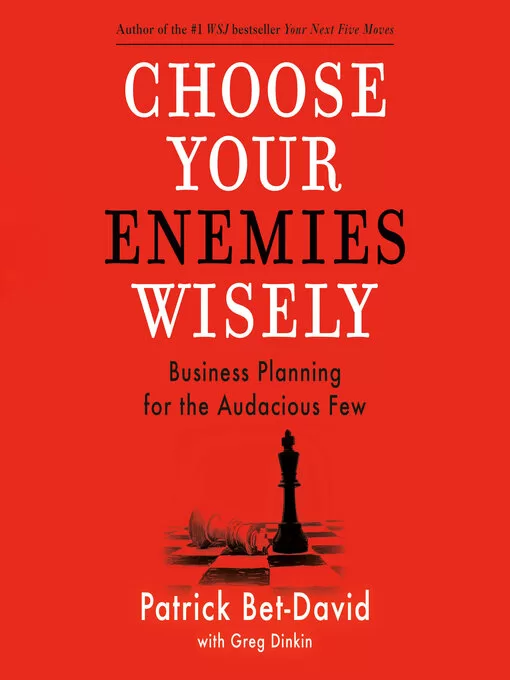
“Choose Your Enemies Wisely” by Patrick Bet-David, with Greg Dinkin, presents a radical and emotionally-driven approach to business planning, challenging conventional wisdom that advocates for separating emotion from logic in professional endeavors. Bet-David argues that wisely chosen “enemies”—whether people, ideologies, or personal shortcomings—serve as a potent fuel for relentless drive and sustained success. The book outlines a 12-Building Block framework that integrates both emotional and logical elements, emphasizing that true audacity and long-term achievement stem from a deeply personal “why” that is then channeled into a methodical “how.”
The core message is that success is not merely about having a plan, but about having a plan fueled by emotion, specifically the desire to overcome perceived adversaries or personal limitations. This method, born from Bet-David’s own rags-to-riches story and extensive experience, aims to transform shame, anger, and disappointment into the impetus for extraordinary results in both business and life.
II. Main Themes and Key Ideas/Facts – Choose Your Enemies Wisely
A. The Power of Enemies as Fuel (Emotional Core)
Enemies as a Catalyst for Transformation: Bet-David asserts that “the most critical element for success in business planning is choosing your enemies wisely.” He views challenges, haters, betrayals, and even personal insecurities as sources of “fuel” that ignite the power to transform.
Quote: “What if I told you that these so-called enemies could become your greatest source of fuel? What if you could turn shame, guilt, anger, disappointment, and heartbreak into the fire that propels you toward your wildest dreams?”
The “Why to Win” vs. “How to Win”: The book shifts the focus from merely finding how to win to identifying a powerful why to win. This “why” often originates from past humiliations, manipulations, or a desire to prove doubters wrong.
Quote: “Sometimes we spend so much time trying to find how to win at life that we miss the entire point. Maybe you need to look for why to win in life. Did somebody humiliate you? Did somebody manipulate you? Is there a teacher or family member who made you feel ashamed? We’re all driven in different ways, but the right enemy can drive you in ways an ally never can.”
Embracing Emotion in Business: Contrary to common advice, Bet-David advocates for integrating emotion into business. He highlights successful figures like Elon Musk, Andy Grove, and Steve Jobs as examples of leaders who embraced and channeled their emotions strategically.
Quote: “When ‘experts’ say that you shouldn’t get emotional in business, I ask what kind of success they’ve had… Most of the time, they don’t have any business success to speak of. Maybe nobody offended them in life or maybe they were taught to keep that emotion bottled up and not bring it into business. No matter the reason, when I see that they don’t have enemies to fuel them, I realize that I am the privileged one.”
Distinguishing Emotion: The book differentiates between negative and productive emotion:
Emotion is not: impulsive, irrational, melodramatic, temperamental, or hot-blooded.
Emotion is: passionate, obsessed, maniacal, relentless, powerful, and purposeful.
Graduating to New Enemies: Success requires continuously identifying and “graduating” to new enemies to avoid complacency. Once an enemy is defeated or their purpose served, a new, more challenging adversary should be identified to maintain drive. Tom Brady’s career is used as a prime example of this continuous enemy selection.
Quote: “The process never ends, which is why you must keep graduating to new enemies. When most people reach a certain level of success, they flatline. Without new enemies to drive them, not only do they get complacent, but they also stop solidifying each building block.”
Choosing Enemies Wisely: The selection of enemies is crucial. Unworthy enemies (e.g., those you’ve surpassed, jealous relatives, toxic individuals) can drain energy and lead to grudges, which are counterproductive. The most powerful enemies are often those whose vision and accomplishments are greater than yours, driving you to elevate your own game.
Quote: “The minute you get successful, people will be gunning for you… These are annoyances that don’t deserve to be dignified with the word ‘enemy.'”
Quote: “The most powerful enemy is people who are beating you because their vision and accomplishments are greater than yours.”
B. The 12 Building Blocks: Integrating Logic and Emotion
The book’s central framework comprises 12 interconnected building blocks, pairing an emotional concept with a logical one. To be part of “the audacious few,” all 12 blocks must be completed.
Enemy (Emotional) & Competition (Logical): – Choose Your Enemies Wisely
Enemy: Identifies the emotional trigger – who or what “pisses you off” or makes you want to “prove them wrong.” Examples include doubters, bullies, or societal injustices.
Competition: A methodical analysis of direct and indirect competitors, including market trends, potential disruptors (like AI), and non-obvious threats (e.g., interest rates, shifts in public perception). The strategy includes deep research and understanding competitor weaknesses to gain an edge.
Fact: Tom Brady’s consistent success is attributed to his ability to continually choose new enemies (e.g., quarterbacks drafted before him, Bill Belichick’s perceived doubt, Max Kellerman’s criticism, Michael Jordan’s GOAT status).
Will (Emotional) & Skill (Logical): – Choose Your Enemies Wisely
Will: The “indomitable spirit” or “determination” to succeed, often triggered by fear of failure or a powerful sense of purpose. It’s about converting “wantpower” to “willpower.”
Quote: “Will is emotional. It’s wanting something in a way that you can’t describe.”
Quote: “When you have will, you don’t need motivation.”
Skill: The practical knowledge, abilities, and training required to execute one’s will. This involves identifying personal and team skill gaps, continuous learning (e.g., reading books, attending workshops), and strategic recruitment/delegation.
Quote: “Without these skills, all the will in the world will be wasted.”
Fact: Neil deGrasse Tyson’s indicators of success include ambition and capacity to recover from failure (will) alongside grades and social skills (skill). The Performance vs. Trust Matrix is introduced, emphasizing investing in high-will/high-trust individuals, even if they initially lack certain skills.
Mission (Emotional) & Plan (Logical): – Choose Your Enemies Wisely
Mission: The overarching, ongoing purpose that inspires and creates endurance. It answers questions like “What cause are you fighting for?” and “What injustice are you correcting?” and has no completion date.
Quote: “Having a mission creates endurance. It allows you to tolerate the pain you’re going to go through.”
Quote: “My mission was, and still is, to use entrepreneurship to solve the world’s problems and teach capitalism because the fate of the world depends on it.”
Plan: A logical, actionable roadmap derived from the mission, including SWOT analysis (Strengths, Weaknesses, Opportunities, Threats), anticipating crises (3-5 moves ahead thinking), and calendaring key activities.
Fact: George Will’s speech on the state of America was a pivotal moment for Bet-David in defining his personal and business mission. The importance of the word “because” is highlighted in making mission statements more powerful.
Dreams (Emotional) & Systems (Logical): – Choose Your Enemies Wisely
Dreams: Audacious, inspiring visions of future achievements, often personal, with deadlines and rewards. These spark emotion and make the “impossible” seem possible.
Quote: “Every great achievement starts with a thought, and every audacious goal begins with a dream.”
Quote: “Goals are the specific outcomes we aim for on our way to achieving our dreams. Dreams direct our energy; goals take that direction and create a laser focus.”
Systems: Duplicatable, efficient processes and structures that turn dreams into reality. This includes automation, data analysis, and strategic delegation to “buy back time.”
Quote: “I think of systems as dream-making machines.”
Quote: “You do not rise to the level of your goals. You fall to the level of your systems.” (James Clear, Atomic Habits)
Fact: Bet-David’s childhood dream of owning the New York Yankees (a crazy dream that became a reality) is used as an example. The Jiffy Lube oil change sticker is presented as a brilliant systematic reminder that impacts consumer behavior.
Culture (Emotional) & Team (Logical): – Choose Your Enemies Wisely
Culture: The shared behaviors, rituals, and traditions that define an organization’s identity and inspire loyalty. It’s “what people do when no one is watching” and is highly contagious.
Quote: “Culture eats strategy for breakfast.” (Peter Drucker)
Quote: “Culture is having people wanting to run through walls for you and your organization.”
Team: The strategic selection and development of individuals, from an inner circle to employees and vendors, emphasizing trust and placing people in roles where they thrive. The “rock-star principle” (paying significantly more for top talent) is discussed.
Fact: Japanese soccer fans cleaning stadiums after a World Cup win exemplifies culture as ingrained behavior. Elon Musk’s “hardcore” culture shift at Twitter is a modern example. The Netflix “rock-star principle” is advocated for hiring.
Vision (Emotional) & Capital (Logical):
Vision: A transcendent, long-term outlook that extends beyond personal dreams, aiming to create a lasting impact on the world and outlast the founder. It’s stubborn on core beliefs but flexible on details.
Quote: “Vision is what makes people never want to stop… It’s transcendent and will outlast even you.”
Quote: “Be stubborn on vision but flexible on details.” (Jeff Bezos)
Capital: The practical means (money, partnerships) to fund the vision. This involves a clear, concise elevator pitch, a crisp pitch deck, and a compelling narrative that articulates the “why” to potential investors, partners, and employees.
Fact: The USS John C. Stennis, a nuclear-powered aircraft carrier that can operate for 26 years without refueling, is a metaphor for a strong, self-sustaining vision. Domino’s and Papa John’s are compared on their vision of speed vs. quality. Elon Musk’s emotional response to Neil Armstrong’s criticism of commercial space flight highlights the deep emotional connection to his vision.
C. The Process and Implementation
Look Back Before Moving Forward: A critical initial step is to thoroughly review the past year, acknowledging failures, identifying “leaks” (weaknesses/distractions), and understanding personal patterns. This prevents repeating mistakes.
Quote: “The most important data for you is found in the year that just passed.”
Quote: “Those who cannot remember the past are condemned to repeat it.” (George Santayana)
Duration, Depth, and Magic: Successful ventures (and marriages) need more than just “duration” (staying in business); they require “depth” (passion, impact, financial growth) and “magic” (a feeling of meaning, excitement, and being part of something greater).
Quote: “Without magic, both a marriage and a business will fail.”
The “Audacious Few”: This approach is for “visionaries, dreamers, and psycho-competitors” willing to be “extreme” and honest about their blind spots, refusing shortcuts.
Rolling Out the Plan: After completing the 12 blocks, the plan must be effectively “rolled out” to all stakeholders (team, family, investors). This involves rehearsal, strategic presentations, setting KPIs, agreeing on incentives, calendaring, and creating visual reminders. The goal is to “enroll” people, not just inform them.
Continuous Improvement: The business plan is a “living document” that requires quarterly review, course-correction, and adaptation. Complacency is the enemy of sustained success, necessitating continuous identification of new enemies and refinement of all building blocks.
Quote: “A static business plan is a losing business plan.”
III. Conclusion
“Choose Your Enemies Wisely” is a manifesto for the ambitious, presenting a counter-intuitive yet deeply personal and pragmatic framework for achieving extraordinary success. It challenges leaders to delve into their deepest emotions and past experiences, transforming them into a powerful, sustainable drive. By meticulously integrating this emotional “why” with logical “how-to” strategies across 12 core building blocks, Bet-David promises a path to not only achieve audacious goals but also to build a business and a life of lasting impact and fulfillment. The book emphasizes that while talent and hard work are necessary, it is the strategic harnessing of emotion, particularly the drive to overcome “enemies,” that ultimately propels individuals and organizations to unprecedented heights.
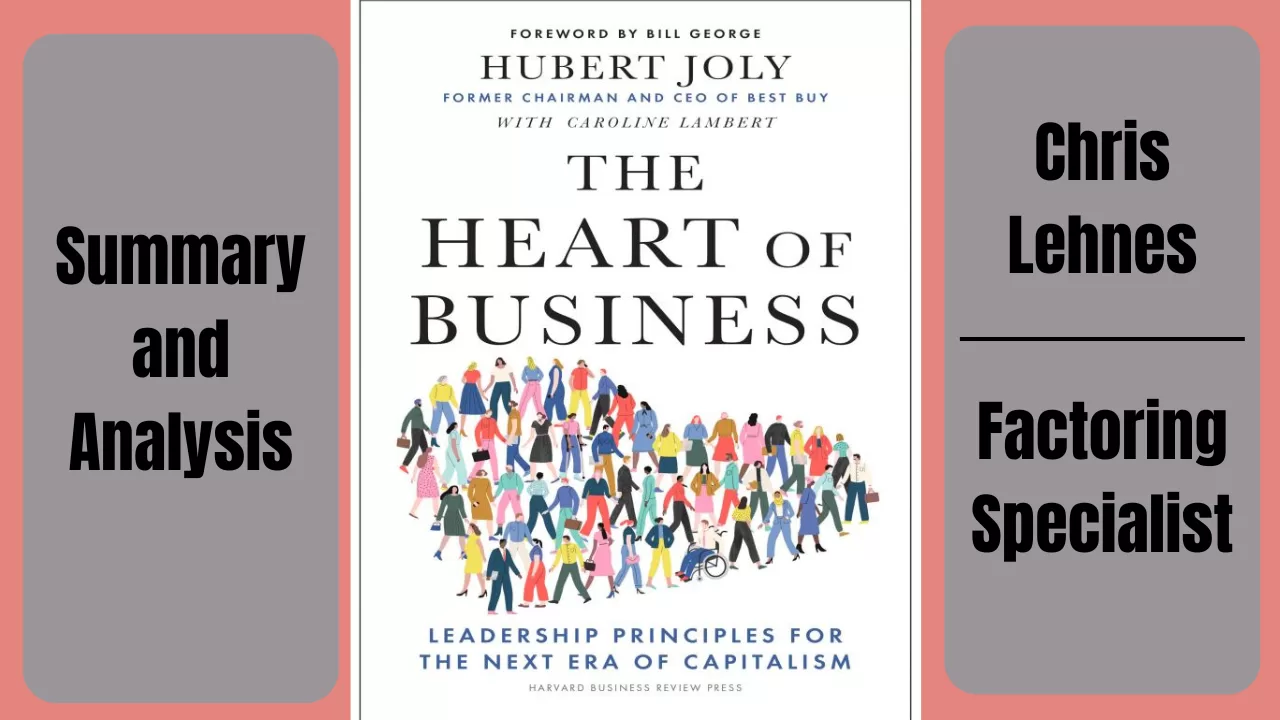
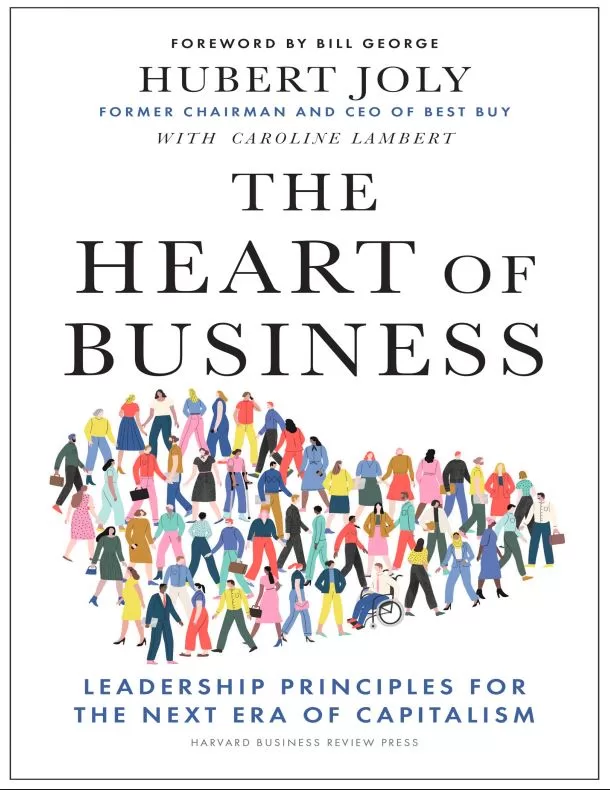
The core themes and most important ideas presented in Hubert Joly’s book, “The Heart of Business.” The book advocates for a fundamental shift in business philosophy, moving away from a sole focus on profit to one centered on purpose and people, with the ultimate goal of transforming capitalism into a force for good.
I. The Crisis of Traditional Capitalism and the Imperative for Change
The sources highlight a critical juncture in the perception and practice of capitalism. Traditional models, heavily influenced by Milton Friedman’s doctrine of shareholder primacy, are seen as outdated, dangerous, and contributing to significant global issues.
Capitalism in Crisis: The current capitalist system is facing a crisis of legitimacy, with growing disenchantment, especially among younger generations. “Capitalism as we have known it for the past few decades is in crisis. More and more people hold the system responsible for social fractures and environmental degradation.” This sentiment is echoed by Salesforce CEO Marc Benioff, who declared, “Capitalism as we have known it is dead.”
The Flawed “Shareholder Primacy” Doctrine: The long-held belief that “the social responsibility of business is to increase its profits” (Milton Friedman) is actively challenged.
Profit as an Outcome, Not a Purpose: Joly argues that while profit is “vital,” it is “an outcome, not a purpose in itself.” It is “a symptom of other underlying conditions, not the condition itself.”
Misleading Metric: Profit alone fails to account for the true societal and environmental impact of a business. “The full cost of waste or carbon footprint on the environment does not appear on a financial statement, even though it is very real and can be very painful.”
Dangerous Focus: A singular focus on profit leads to short-term thinking, underinvestment in crucial assets (like people), stifles innovation, and can lead to corporate wrongdoing and scandals.
Antagonizes Stakeholders: This narrow focus alienates customers, who increasingly seek ethical and responsible companies, and employees, who are not motivated by “shareholder value.”
A Call for Reinvention: There is an urgent need to “rethink how our economic system works” and for “the necessary and urgent refoundation of business now under way.” Business leaders, investors, and institutions are increasingly recognizing this need for change, exemplified by Larry Fink’s 2018 letter to CEOs and the Business Roundtable’s 2019 statement embracing a broader stakeholder view.
II. The Purposeful Human Organization: A New Architectural Model for Business
Joly proposes a new framework for business centered on purpose and people, which he calls the “purposeful human organization.” This model emphasizes interdependence among all stakeholders and views companies as human entities.
Purpose at the Heart: The fundamental purpose of a company is “to contribute to the common good and serve all its stakeholders in a harmonious fashion.” This “noble purpose” (a term borrowed from Lisa Earle McLeod) is the “reason the company exists” and “the positive impact it is seeking to make on people’s lives and, by extension, its contribution to the common good.”
People at the Center: Employees are not merely “inputs” or “human capital,” but “individuals working together in support of an inspiring common purpose.” The “secret of business is to have great people do great work for customers in a way that delivers great results.”
The Causal Link: People ➞ Business ➞ Finance: This crucial sequence posits that excellence in developing and fulfilling employees leads to excellence in serving customers, which then leads to strong financial performance. “This makes profit an outcome of the first two imperatives.”
Declaration of Interdependence: The model views the company as a “community of their stakeholders,” where “all elements are connected in a closely interdependent, mutually reinforcing system.” This includes:
Employees: At the core, treated as individuals, valued for who they are, and provided an environment to thrive.
Customers: Seen as “human beings, not walking wallets,” and whose needs are genuinely understood and met.
Vendors: Partnered with collaboratively for mutual benefit and customer service.
Communities: Engaged with as vital for business flourishing and supported in addressing social issues.
Shareholders: Treated as human beings with diverse objectives, whose long-term interests are served by a purposeful and responsible business.
Benefits of the Approach:Expanded Horizons: A noble purpose creates an “expansive and enduring vision that opens up new markets and opportunities,” allowing companies to “weather change” and continuously strive to be their “best version.”
Inspiration and Engagement: A clear, meaningful purpose inspires employees and fosters deep loyalty from customers. “Cutting stones is tedious work. Building cathedrals is a noble purpose that inspires because it helps answer our human quest for meaning.”
Sustainability: This approach ensures that economic activity is sustainable, recognizing that “there can be no thriving business without healthy, thriving communities, and there can be no thriving business if our planet is on fire.”
Superior Financial Results: Companies that embrace these principles, referred to as “firms of endearment,” consistently outperform market averages. “Purpose indeed pays.”
III. The Meaning of Work: From Burden to Opportunity
A fundamental aspect of the purposeful human organization is a redefinition of work itself – shifting from a perception of work as a curse or a chore to an opportunity for meaning and fulfillment.
The Global Epidemic of Disengagement: “More than 8 out of 10 workers merely show up for work,” leading to “unfulfilled personal potential” and costing “a hefty $7 trillion in lost productivity.” This disengagement stems from a traditional view of work as a “necessary evil.”
Work as a Search for Meaning: Joly, drawing on personal reflection and various philosophical and religious traditions, argues that “work is love made visible” (Khalil Gibran) and “a fundamental element of what makes us human.” It is “an essential element of our humanity, a key to our search for meaning as individuals, and a way to find fulfillment in our life.”
Connecting Dreams to Purpose: Leaders must actively help employees connect their individual search for meaning with the company’s noble purpose. This involves asking “What drives you?” and understanding how personal dreams align with the organization’s mission, fostering “human magic.”
The Problem with Perfection: Striving for “perfection” is counterproductive. “Aiming for outstanding business performance is a good thing; expecting human perfection is not.”
Hinders Growth and Vulnerability: Perfectionism stifles feedback, limits human relationships, impedes innovation by fostering a fear of failure, and promotes a “fixed mindset” over a “growth mindset.”
Embracing Imperfection: Leaders must embrace their own vulnerabilities and imperfections to build genuine connections, trust, and create an environment where problems can be acknowledged and solved collaboratively. “There can be no genuine human connection without vulnerability, and no vulnerability without imperfection.”
IV. Unleashing Human Magic: The Ingredients for Extraordinary Performance
To realize the vision of the purposeful human organization, leaders must cultivate an environment that “unleashes human magic,” leading to “irrational performance.” This involves moving beyond outdated management approaches.
Beyond Carrots and Sticks: Traditional financial incentives are “outdated,” “misguided,” “potentially dangerous and poisonous,” and “hard to get right.” They focus on compliance rather than genuine engagement and tend to “narrow our focus and our minds” for complex tasks.
People as a Source, Not a Resource: The shift is to “view people as a source rather than a resource,” inspiring them by connecting with what genuinely matters to them.
Incentives’ True Role: Financial incentives can still be useful to “share good financial times with employees” and to “signal what is most important,” but not as primary motivators.
The Five Key Ingredients of Human Magic:Connecting Dreams: Aligning individual purpose and aspirations with the company’s noble purpose. This is achieved through articulating a “people-first philosophy,” exploring what drives individuals, capturing meaningful moments, sharing stories, and authentically framing the company’s purpose.
Developing Human Connections: Fostering environments where people feel respected, valued, and cared for. This involves treating everyone as an individual, creating safe and transparent environments, encouraging vulnerability, developing effective team dynamics, and promoting diversity and inclusion. “People do not give their best because they are blown away by superior intellect. How much of themselves they invest in their work is directly related to how much they feel respected, valued, and cared for.”
Fostering Autonomy: Empowering employees to control what they do, when, and with whom. This involves pushing decision-making “as far down as possible,” preferring participative processes, adopting agile work methods, and adjusting the degree of autonomy based on individual “skill and will.”
Achieving Mastery: Creating an environment that encourages continuous learning and becoming excellent at one’s work. This means focusing on “effort over results,” developing individuals rather than the masses, emphasizing coaching over traditional training, reassessing performance assessments to focus on development and strengths, and treating learning as a lifelong journey, while also “making space for failure.”
Putting the Wind at Your Back (Growth): Cultivating a mindset of possibilities and continuous growth, even in challenging environments. This involves thinking in terms of expansive possibilities, turning challenges into advantages, and always keeping purpose “front and center.” “Growth is an imperative. It creates space for promotion opportunities, productivity improvement without job loss, taking risks, and investing.”
V. The Purposeful Leader: A New Model for the 21st Century
The transformation of business requires a new kind of leader—one who embodies purpose, humanity, and authenticity, rejecting outdated myths of leadership.
Debunking Leadership Myths:Leaders as Superheroes: The idea of an “infallible leader prototype” who single-handedly saves the day is “outdated,” “inauthentic,” and “distant.” It also fosters an unhealthy ego. Leaders must aim to be “dispensable.”
Born Leaders: Leadership is not an innate ability but a set of skills and attributes that “can be learned” and developed over time.
Inability to Change: Leaders can and do change their approaches and philosophies over their careers, as evidenced by Joly’s own transformation.
The Five “Be’s” of Purposeful Leadership:Be clear about your purpose, the purpose of people around you, and how it connects with the purpose of the company: Understand personal drivers and how they align with organizational goals.
Be clear about your role as a leader: To “create energy, inspiration, and hope,” especially in challenging times. “You cannot choose circumstances, but you can control your mindset.”
Be clear about whom you serve: Leaders serve the front lines, colleagues, boards, and the people around them, not primarily their own ambition or ego. “The best leaders do not climb to the top… they are carried to the top.”
Be driven by values: Live by and explicitly promote values like honesty, respect, responsibility, fairness, and compassion, making them “part of the fabric of the business.”
Be authentic: Be “your true self, your whole self, the best version of yourself. Be vulnerable. Be authentic.” This fosters genuine social connection, which is at the heart of business.
VI. A Call to Action
The book concludes with a direct call to action for all stakeholders to contribute to this refoundation of business and capitalism.
For Leaders: Start with self-introspection to clarify personal purpose, be the change, and strive to be the best version of oneself.
For Companies: Cultivate a “fertile environment” where employees feel seen, belong, and matter before defining or redefining a noble purpose. Cocreate purpose and translate it into concrete strategic initiatives.
For Industry, Sector, and Community Leaders: Identify systemic changes to influence (e.g., racial inequality, environmental issues) and tackle them through collective action.
For Boards of Directors: Align responsibilities with purposeful leadership principles, ensuring that leadership selection, evaluation, compensation, and development reflect these values, and actively shape company culture.
For Investors, Analysts, Regulators, and Rating Agencies: Align evaluation and investment decisions with purposeful and human leadership principles, incorporating broader measures of performance like sustainability.
For Business Education Institutions: Incorporate purpose and human dimensions into leadership education, helping students become “better, more purposeful, more aligned, more human leaders, and not superheroes.”
In essence, “The Heart of Business” presents a compelling case, supported by practical experience and testimonials, that a focus on purpose and people is not just morally right but also the most powerful driver of long-term performance and value creation in the “next era of capitalism.”
The Heart of Business: A Comprehensive Study Guide
This study guide aims to help you review and deepen your understanding of Hubert Joly’s “The Heart of Business.” It covers the core philosophies, practical applications, and key insights presented in the book, as summarized by various leaders and through Joly’s own experiences.
Quiz: Short-Answer Questions
Answer each question in 2-3 sentences.
According to Hubert Joly, what is the primary purpose of a company, and how does this challenge traditional business thinking?
Explain the concept of “human magic” as described in the book. What are some of its key ingredients?
How does Joly argue against Milton Friedman’s doctrine regarding shareholder value?
Describe Joly’s personal transformation in his leadership approach. What specifically led him to shift from a purely analytical leader to a purpose-led one?
What role does vulnerability play in effective leadership, according to Joly and insights from Brené Brown?
How did Best Buy’s “Renew Blue” turnaround plan exemplify Joly’s principles of putting people first, even in a crisis?
What are the “five ‘Be’s” of purposeful leadership?
Explain why financial incentives are often considered “outdated” and “misguided” in modern business, according to the text.
How did Best Buy redefine its market and approach growth after its turnaround, moving away from traditional competitive strategies?
What is the significance of the “People ➞ Business ➞ Finance” sequence in Joly’s management philosophy?
Answer Key
Joly argues that the primary purpose of a company is not to maximize profit, but rather to contribute to the common good and serve all its stakeholders. This challenges traditional thinking by reprioritizing purpose and people over the singular pursuit of financial gain, treating profit as an outcome, not the goal.
“Human magic” is the extraordinary performance that results when individuals within a company are energized and engaged in support of a great cause. Key ingredients include connecting individual purpose with company purpose, developing authentic human connections, fostering autonomy, growing mastery, and nurturing a growth environment.
Joly argues against Friedman’s doctrine by stating that profit is merely an outcome and not a purpose itself. He asserts that an exclusive focus on profit is dangerous, can be a misleading measure of economic performance, antagonizes customers and employees, and is not good for the “soul” of the company or its people.
Joly’s personal transformation began when he felt disillusioned despite professional success, leading him to seek deeper meaning. Through spiritual exploration and observing effective leaders, he realized work could be a noble calling to serve others, shifting his focus from being the “smartest person at the table” to a passionate, compassionate, purpose-led leader.
Vulnerability is described as “the glue that binds relationships together,” fostering compassion, genuine belonging, and authentic connection. For leaders, showing vulnerability helps build trust, encourages others to be open, and allows for collective problem-solving rather than projecting an unrealistic image of perfection.
The “Renew Blue” plan prioritized growing the top line and cutting non-salary expenses before considering job cuts as a last resort. This approach maintained employee morale, recognized their vital role in the turnaround, and demonstrated a commitment to people as the company’s “lifeblood,” fostering energy and dedication.
The five “Be’s” of purposeful leadership are: Be clear about your purpose and its connection to the company’s; Be clear about your role as a leader; Be clear about whom you serve; Be driven by values; and Be authentic.
Financial incentives are considered outdated because they were designed for repetitive, manual tasks in an industrial age and are ineffective for today’s complex, creative work. They are misguided because they focus on compliance rather than fostering intrinsic motivation and engagement, often narrowing focus instead of encouraging innovation.
Best Buy redefined its market from solely selling consumer electronics hardware to addressing “human needs through technology,” including services and subscriptions. This expanded their market vision from approximately $250 billion to over $1 trillion, shifting from a focus on market share in a shrinking pie to creating new opportunities for growth and innovation.
The “People ➞ Business ➞ Finance” sequence highlights that focusing on the development and fulfillment of employees (People) leads to loyal customers and excellent products/services (Business), which then results in sustainable financial success (Finance). It positions profit as a result of a human-centric approach, rather than the initial driver.
Essay Format Questions (Do Not Answer)
Critically analyze Hubert Joly’s claim that “capitalism as we have known it for the past few decades is in crisis.” What evidence does he provide, and how does his “purposeful human organization” model propose to address these systemic issues?
Discuss the role of “imperfection” and “vulnerability” in Joly’s leadership philosophy. How do these concepts challenge traditional notions of leadership and contribute to both personal and organizational success, drawing on examples from his experience?
Examine the relationship between an individual’s personal purpose and a company’s “noble purpose.” How does Joly suggest leaders can effectively connect these two, and what are the benefits and potential pitfalls of this integration?
Compare and contrast Joly’s approach to managing during a “turnaround” versus a “growth strategy.” What core principles remain consistent, and what adaptations are necessary to effectively navigate each phase, according to his experiences at Best Buy?
Evaluate Joly’s arguments against the sole reliance on financial incentives for motivating employees. What alternative motivators does he propose, and how do these contribute to “human magic” and long-term performance?
Glossary of Key Terms
Human Magic: The extraordinary and often “irrational” performance that results when individuals within a company are deeply engaged, energized, and committed to a shared, inspiring purpose. It is unleashed when the right environment is created for people to flourish.
Noble Purpose: A term, borrowed from Lisa Earle McLeod, referring to the positive impact a company seeks to make on people’s lives and its contribution to the common good. It serves as the fundamental reason for the company’s existence, transcending mere profit.
People ➞ Business ➞ Finance: Hubert Joly’s management philosophy asserting that excellence in employee development and fulfillment (People) leads to loyal customers and superior products/services (Business), which then results in strong financial performance (Finance). Profit is thus an outcome, not the primary goal.
Purposeful Human Organization: A company viewed not as a soulless entity, but as a community of individuals working together towards an inspiring common purpose. This model prioritizes people and human relationships with all stakeholders, treating profit as a vital outcome.
Purposeful Leadership: A leadership style characterized by leaders who are clear about their own purpose, their role, whom they serve, are driven by values, and are authentic. It emphasizes putting purpose and people first to inspire and empower others.
Renew Blue: Best Buy’s turnaround plan, launched in 2012 under Hubert Joly’s leadership, focused on revitalizing the company by prioritizing people, customers, and operational improvements before considering drastic measures like widespread job cuts.
Shareholder Value Maximization: The traditional business doctrine, largely popularized by Milton Friedman, that asserts the sole social responsibility of a business is to increase profits for its shareholders. Joly critiques this as dangerous and misguided.
Stakeholder Capitalism: An evolving economic model where companies are accountable not only to shareholders but also to a broader group of stakeholders, including employees, customers, suppliers, and communities, and are expected to generate value for all.
VUCA World: An acronym (Volatile, Uncertain, Complex, Ambiguous) used to describe the rapidly changing and challenging economic environment of today, where agility, innovation, collaboration, and speed are crucial for success.
Vulnerability: The capacity to be open, authentic, and imperfect, which, according to Joly and Brené Brown’s research, is essential for building genuine human connections, trust, and fostering a supportive work environment.
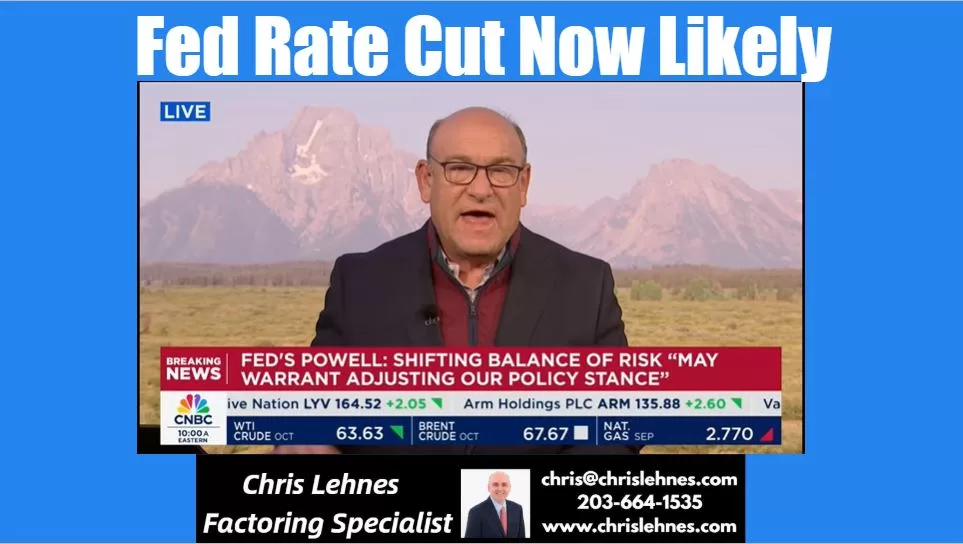
Rate Cut – Over the course of this year, the U.S. economy has shown resilience in a context of sweeping changes in economic policy. In terms of the Fed’s dual-mandate goals, the labor market remains near maximum employment, and inflation, though still somewhat elevated, has come down a great deal from its post-pandemic highs. At the same time, the balance of risks appears to be shifting.
In my remarks today, I will first address the current economic situation and the near-term outlook for monetary policy. I will then turn to the results of our second public review of our monetary policy framework, as captured in the revised Statement on Longer-Run Goals and Monetary Policy Strategy that we released today.
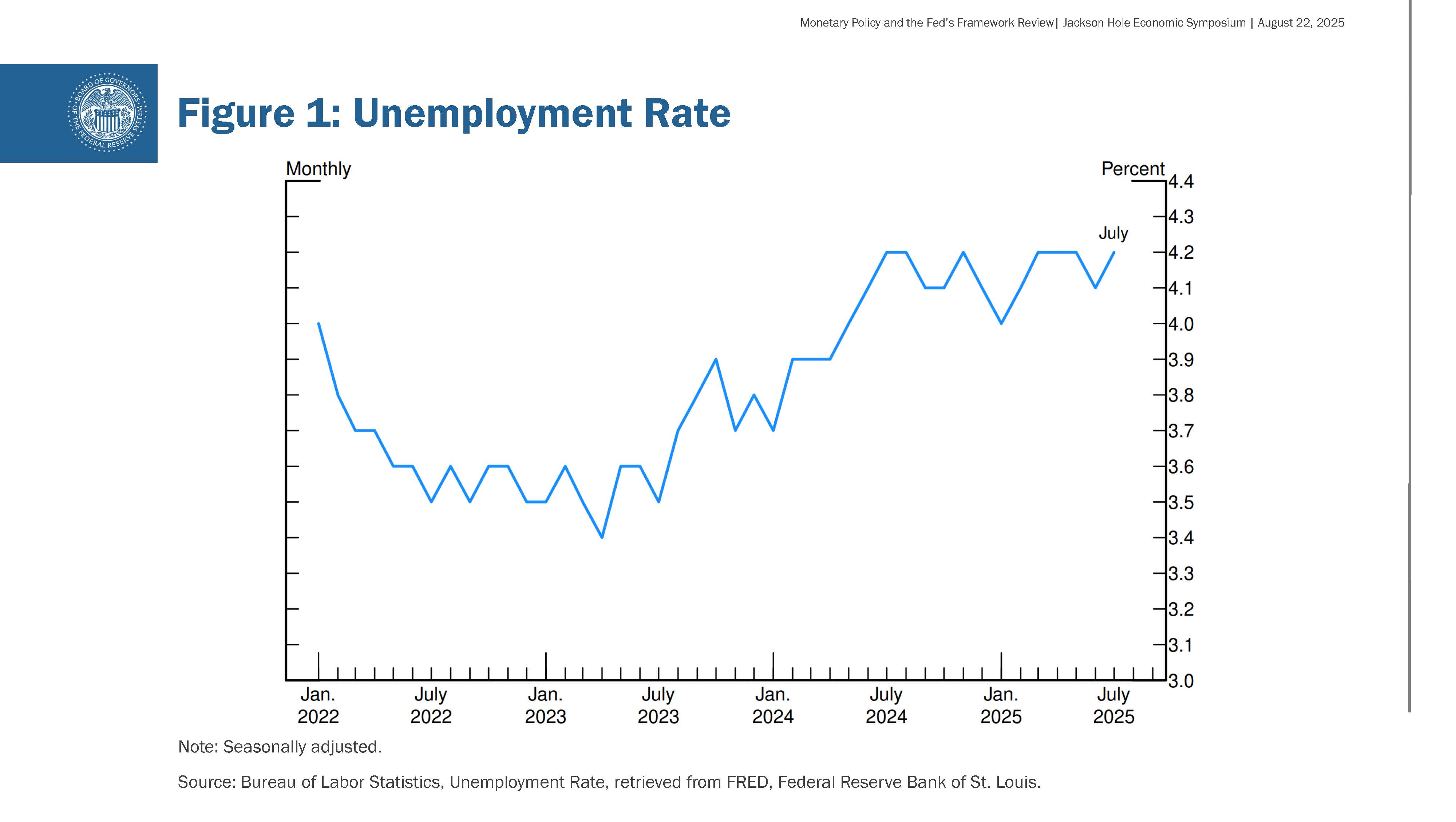
Current Economic Conditions and Near-Term Outlook When I appeared at this podium one year ago, the economy was at an inflection point. Our policy rate had stood at 5-1/4 to 5-1/2 percent for more than a year. That restrictive policy stance was appropriate to help bring down inflation and to foster a sustainable balance between aggregate demand and supply. Inflation had moved much closer to our objective, and the labor market had cooled from its formerly overheated state. Upside risks to inflation had diminished. But the unemployment rate had increased by almost a full percentage point, a development that historically has not occurred outside of recessions.1 Over the subsequent three Federal Open Market Committee (FOMC) meetings, we recalibrated our policy stance, setting the stage for the labor market to remain in balance near maximum employment over the past year (figure 1).
This year, the economy has faced new challenges. Significantly higher tariffs across our trading partners are remaking the global trading system. Tighter immigration policy has led to an abrupt slowdown in labor force growth. Over the longer run, changes in tax, spending, and regulatory policies may also have important implications for economic growth and productivity. There is significant uncertainty about where all of these polices will eventually settle and what their lasting effects on the economy will be.
Changes in trade and immigration policies are affecting both demand and supply. In this environment, distinguishing cyclical developments from trend, or structural, developments is difficult. This distinction is critical because monetary policy can work to stabilize cyclical fluctuations but can do little to alter structural changes.
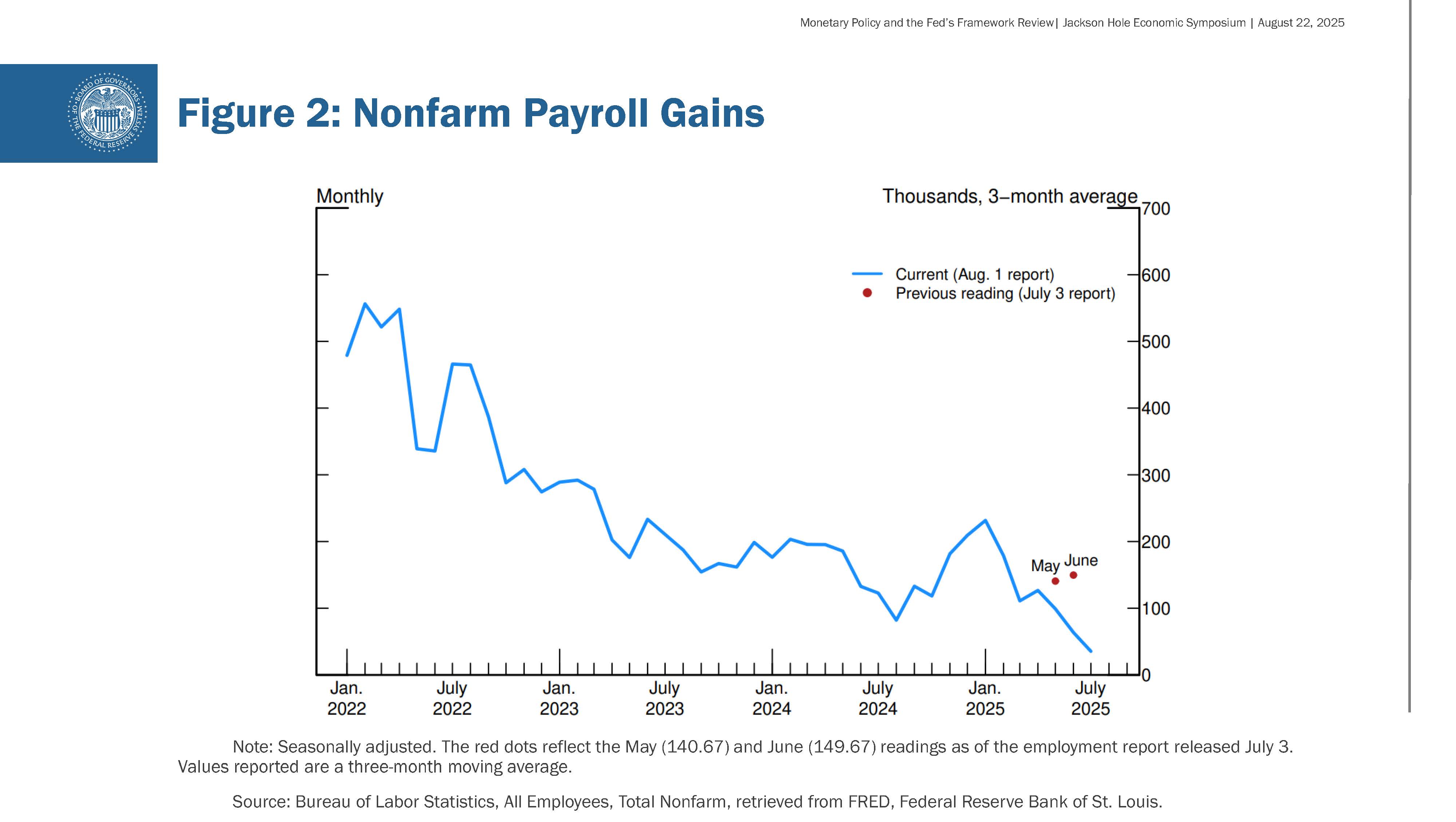
The labor market is a case in point. The July employment report released earlier this month showed that payroll job growth slowed to an average pace of only 35,000 per month over the past three months, down from 168,000 per month during 2024 (figure 2).2 This slowdown is much larger than assessed just a month ago, as the earlier figures for May and June were revised down substantially.3 But it does not appear that the slowdown in job growth has opened up a large margin of slack in the labor market—an outcome we want to avoid. The unemployment rate, while edging up in July, stands at a historically low level of 4.2 percent and has been broadly stable over the past year. Other indicators of labor market conditions are also little changed or have softened only modestly, including quits, layoffs, the ratio of vacancies to unemployment, and nominal wage growth. Labor supply has softened in line with demand, sharply lowering the “breakeven” rate of job creation needed to hold the unemployment rate constant. Indeed, labor force growth has slowed considerably this year with the sharp falloff in immigration, and the labor force participation rate has edged down in recent months.
Overall, while the labor market appears to be in balance, it is a curious kind of balance that results from a marked slowing in both the supply of and demand for workers. This unusual situation suggests that downside risks to employment are rising. And if those risks materialize, they can do so quickly in the form of sharply higher layoffs and rising unemployment.
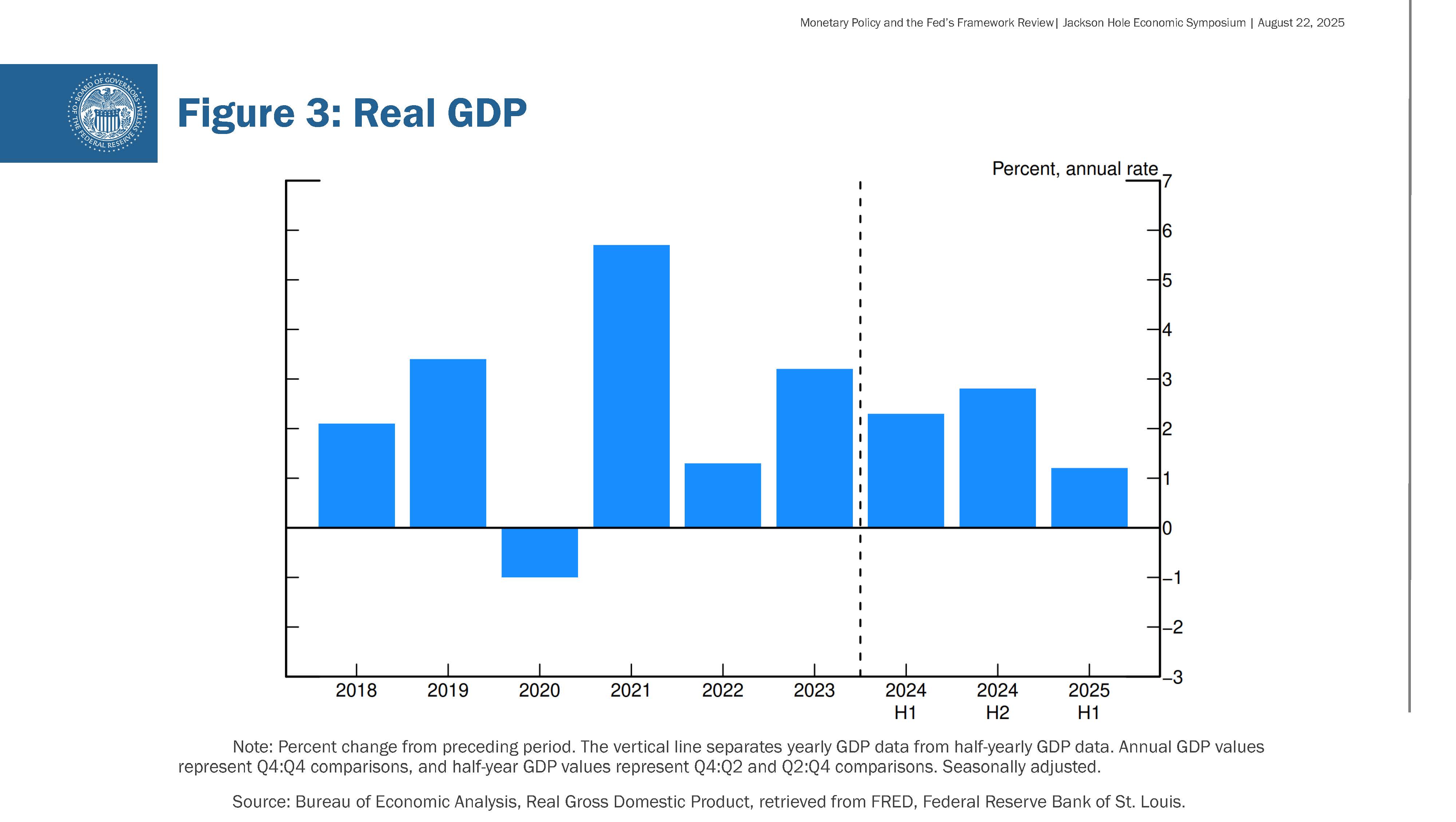
At the same time, GDP growth has slowed notably in the first half of this year to a pace of 1.2 percent, roughly half the 2.5 percent pace in 2024 (figure 3). The decline in growth has largely reflected a slowdown in consumer spending. As with the labor market, some of the slowing in GDP likely reflects slower growth of supply or potential output.
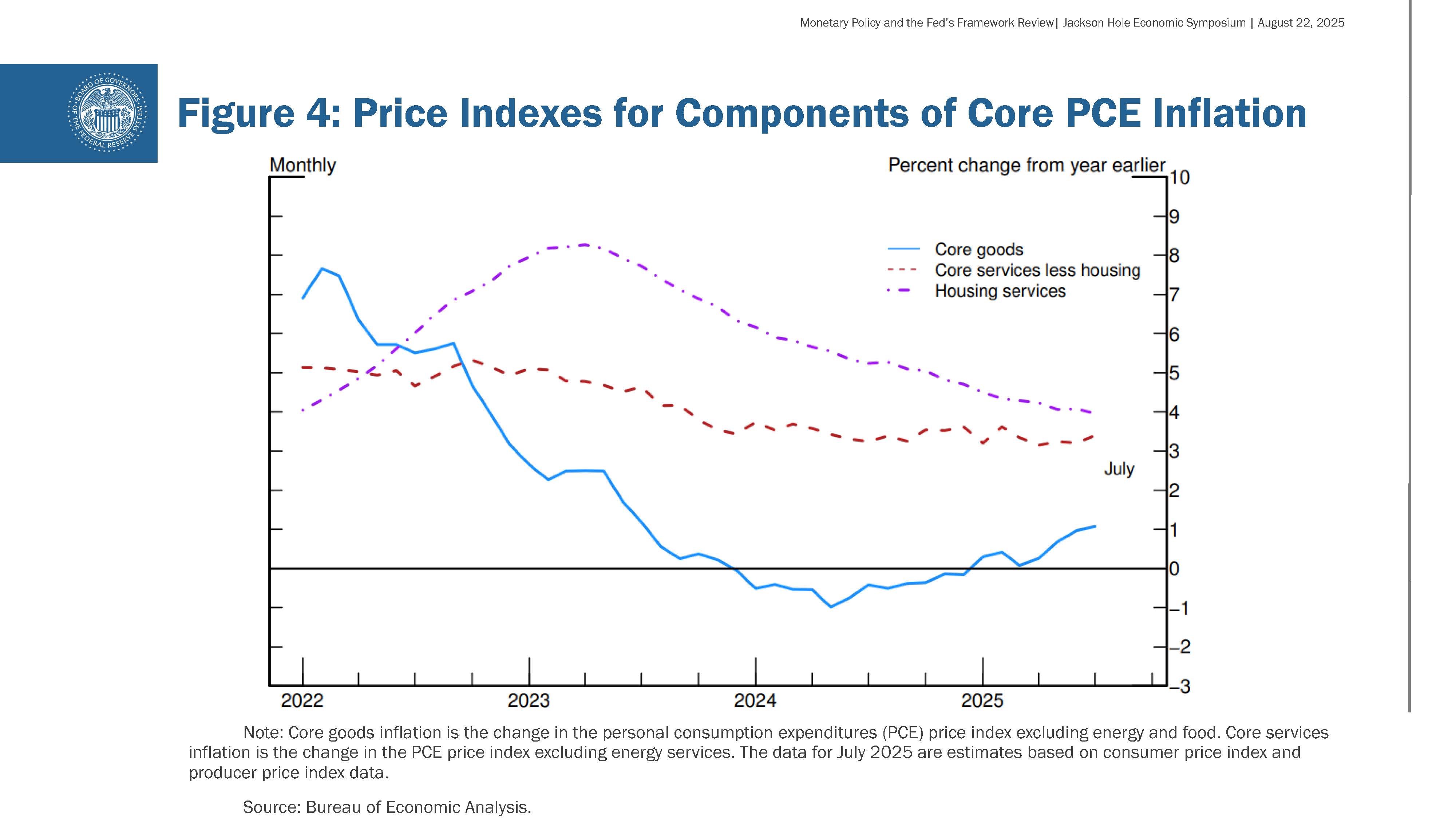
Turning to inflation, higher tariffs have begun to push up prices in some categories of goods. Estimates based on the latest available data indicate that total PCE prices rose 2.6 percent over the 12 months ending in July. Excluding the volatile food and energy categories, core PCE prices rose 2.9 percent, above their level a year ago. Within core, prices of goods increased 1.1 percent over the past 12 months, a notable shift from the modest decline seen over the course of 2024. In contrast, housing services inflation remains on a downward trend, and nonhousing services inflation is still running at a level a bit above what has been historically consistent with 2 percent inflation (figure 4).4
The effects of tariffs on consumer prices are now clearly visible. We expect those effects to accumulate over coming months, with high uncertainty about timing and amounts. The question that matters for monetary policy is whether these price increases are likely to materially raise the risk of an ongoing inflation problem. A reasonable base case is that the effects will be relatively short lived—a one-time shift in the price level. Of course, “one-time” does not mean “all at once.” It will continue to take time for tariff increases to work their way through supply chains and distribution networks. Moreover, tariff rates continue to evolve, potentially prolonging the adjustment process.
It is also possible, however, that the upward pressure on prices from tariffs could spur a more lasting inflation dynamic, and that is a risk to be assessed and managed. One possibility is that workers, who see their real incomes decline because of higher prices, demand and get higher wages from employers, setting off adverse wage–price dynamics. Given that the labor market is not particularly tight and faces increasing downside risks, that outcome does not seem likely.
Another possibility is that inflation expectations could move up, dragging actual inflation with them. Inflation has been above our target for more than four years and remains a prominent concern for households and businesses. Measures of longer-term inflation expectations, however, as reflected in market- and survey-based measures, appear to remain well anchored and consistent with our longer-run inflation objective of 2 percent.
Of course, we cannot take the stability of inflation expectations for granted. Come what may, we will not allow a one-time increase in the price level to become an ongoing inflation problem.
Putting the pieces together, what are the implications for monetary policy? In the near term, risks to inflation are tilted to the upside, and risks to employment to the downside—a challenging situation. When our goals are in tension like this, our framework calls for us to balance both sides of our dual mandate. Our policy rate is now 100 basis points closer to neutral than it was a year ago, and the stability of the unemployment rate and other labor market measures allows us to proceed carefully as we consider changes to our policy stance. Nonetheless, with policy in restrictive territory, the baseline outlook and the shifting balance of risks may warrant adjusting our policy stance.
Monetary policy is not on a preset course. FOMC members will make these decisions, based solely on their assessment of the data and its implications for the economic outlook and the balance of risks. We will never deviate from that approach.
Evolution of Monetary Policy Framework Turning to my second topic, our monetary policy framework is built on the unchanging foundation of our mandate from Congress to foster maximum employment and stable prices for the American people. We remain fully committed to fulfilling our statutory mandate, and the revisions to our framework will support that mission across a broad range of economic conditions. Our revised Statement on Longer-Run Goals and Monetary Policy Strategy, which we refer to as our consensus statement, describes how we pursue our dual-mandate goals. It is designed to give the public a clear sense of how we think about monetary policy, and that understanding is important both for transparency and accountability, and for making monetary policy more effective.
The changes we made in this review are a natural progression, grounded in our ever-evolving understanding of our economy. We continue to build upon the initial consensus statement adopted in 2012 under Chair Ben Bernanke’s leadership. Today’s revised statement is the outcome of the second public review of our framework, which we conduct at five-year intervals. This year’s review included three elements: Fed Listens events at Reserve Banks around the country, a flagship research conference, and policymaker discussions and deliberations, supported by staff analysis, at a series of FOMC meetings.5
In approaching this year’s review, a key objective has been to make sure that our framework is suitable across a broad range of economic conditions. At the same time, the framework needs to evolve with changes in the structure of the economy and our understanding of those changes. The Great Depression presented different challenges from those of the Great Inflation and the Great Moderation, which in turn are different from the ones we face today.6
At the time of the last review, we were living in a new normal, characterized by the proximity of interest rates to the effective lower bound (ELB), along with low growth, low inflation, and a very flat Phillips curve—meaning that inflation was not very responsive to slack in the economy.7 To me, a statistic that captures that era is that our policy rate was stuck at the ELB for seven long years following the onset of the Global Financial Crisis (GFC) in late 2008. Many here will recall the sluggish growth and painfully slow recovery of that era. It appeared highly likely that if the economy experienced even a mild downturn, our policy rate would be back at the ELB very quickly, probably for another extended period. Inflation and inflation expectations could then decline in a weak economy, raising real interest rates as nominal rates were pinned near zero. Higher real rates would further weigh on job growth and reinforce the downward pressure on inflation and inflation expectations, triggering an adverse dynamic.
The economic conditions that brought the policy rate to the ELB and drove the 2020 framework changes were thought to be rooted in slow-moving global factors that would persist for an extended period—and might well have done so, if not for the pandemic.8 The 2020 consensus statement included several features that addressed the ELB-related risks that had become increasingly prominent over the preceding two decades. We emphasized the importance of anchored longer-term inflation expectations to support both our price-stability and maximum-employment goals. Drawing on an extensive literature on strategies to mitigate risks associated with the ELB, we adopted flexible average inflation targeting—a “makeup” strategy to ensure that inflation expectations would remain well anchored even with the ELB constraint.9 In particular, we said that, following periods when inflation had been running persistently below 2 percent, appropriate monetary policy would likely aim to achieve inflation moderately above 2 percent for some time.
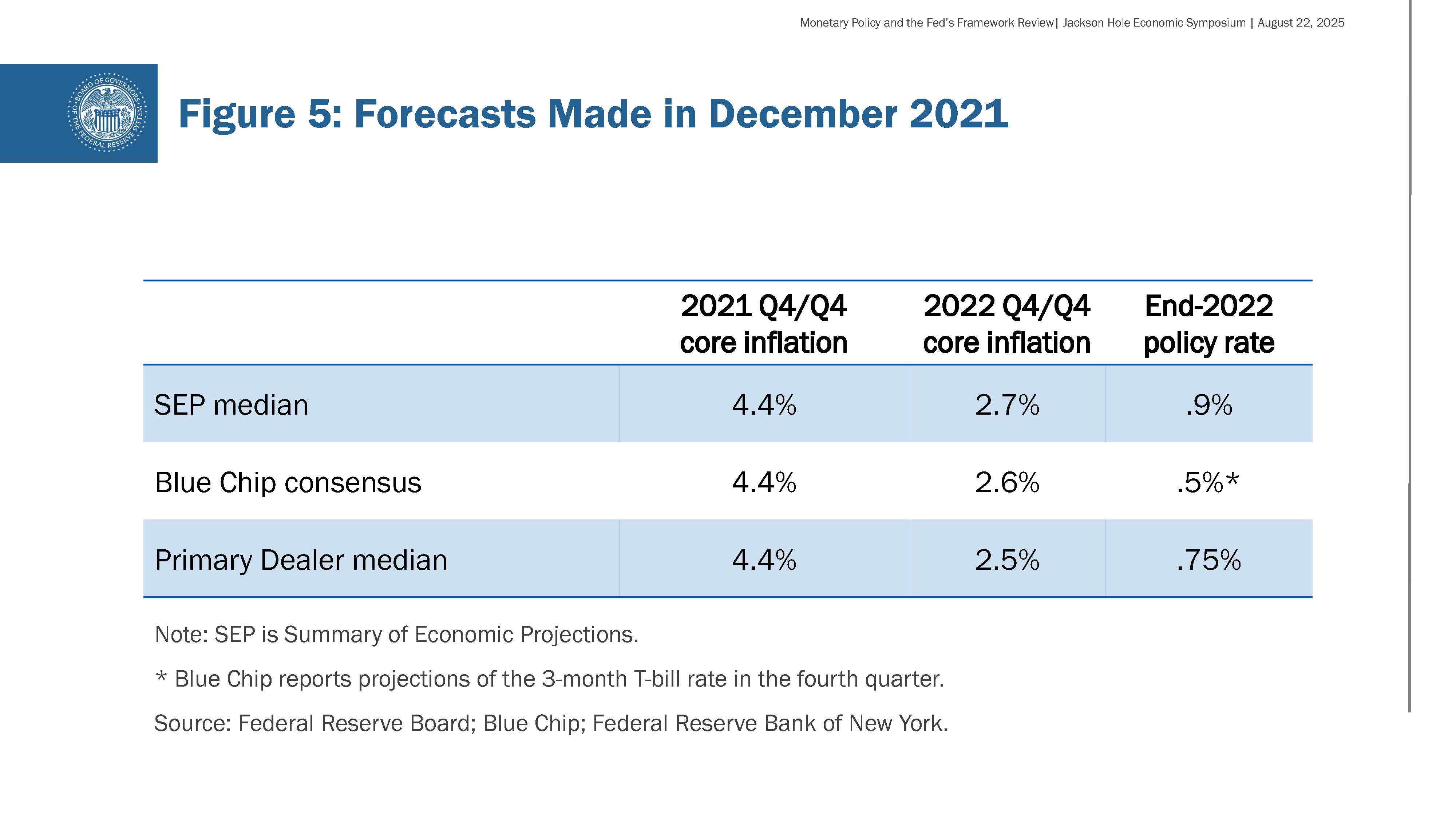
In the event, rather than low inflation and the ELB, the post-pandemic reopening brought the highest inflation in 40 years to economies around the world. Like most other central banks and private-sector analysts, through year-end 2021 we thought that inflation would subside fairly quickly without a sharp tightening in our policy stance (figure 5).10 When it became clear that this was not the case, we responded forcefully, raising our policy rate by 5.25 percentage points over 16 months. That action, combined with the unwinding of pandemic supply disruptions, contributed to inflation moving much closer to our target without the painful rise in unemployment that has accompanied previous efforts to counter high inflation.
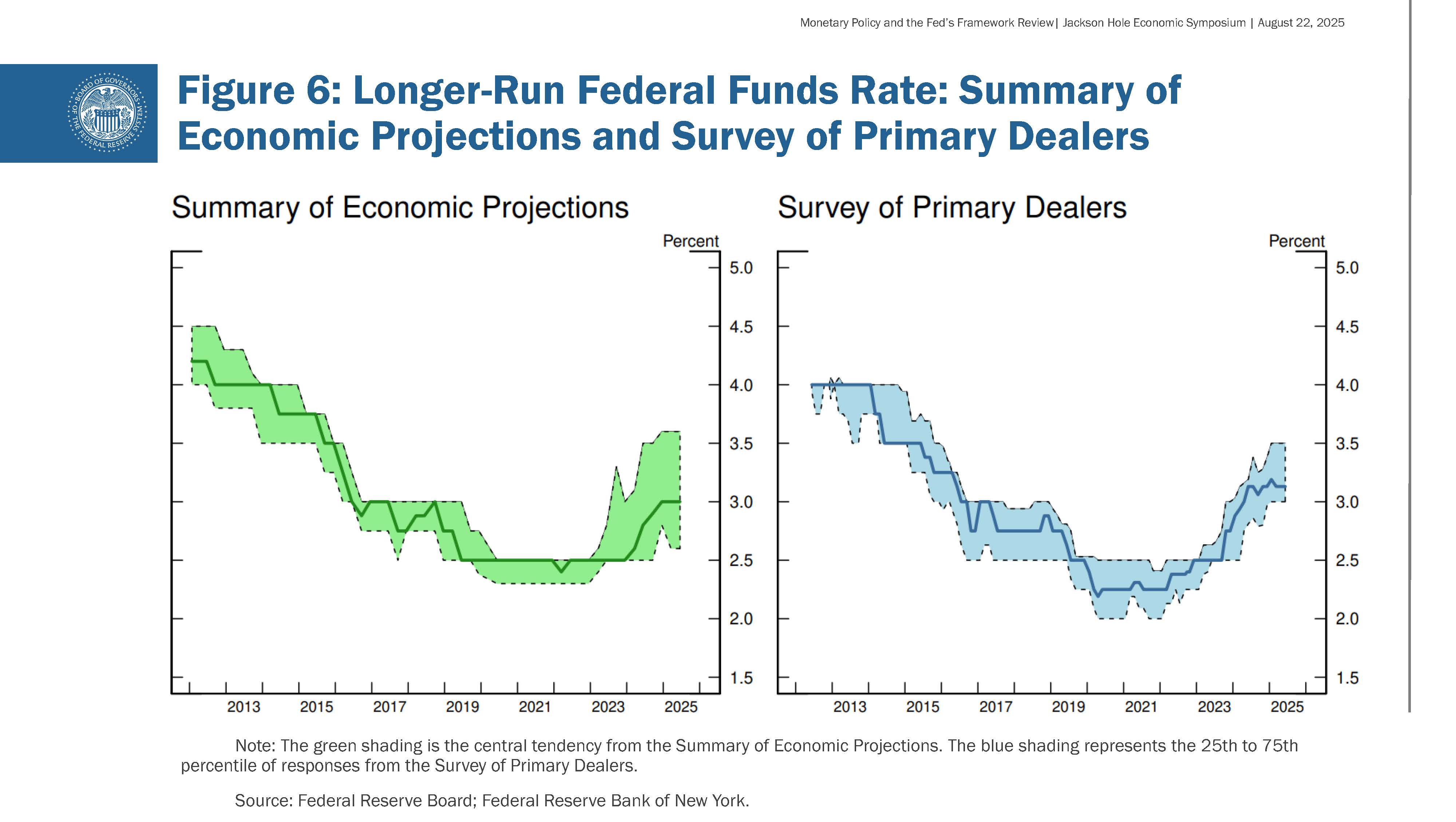
Elements of the Revised Consensus Statement This year’s review considered how economic conditions have evolved over the past five years. During this period, we saw that the inflation situation can change rapidly in the face of large shocks. In addition, interest rates are now substantially higher than was the case during the era between the GFC and the pandemic. With inflation above target, our policy rate is restrictive—modestly so, in my view. We cannot say for certain where rates will settle out over the longer run, but their neutral level may now be higher than during the 2010s, reflecting changes in productivity, demographics, fiscal policy, and other factors that affect the balance between saving and investment (figure 6). During the review, we discussed how the 2020 statement’s focus on the ELB may have complicated communications about our response to high inflation. We concluded that the emphasis on an overly specific set of economic conditions may have led to some confusion, and, as a result, we made several important changes to the consensus statement to reflect that insight.
First, we removed language indicating that the ELB was a defining feature of the economic landscape. Instead, we noted that our “monetary policy strategy is designed to promote maximum employment and stable prices across a broad range of economic conditions.” The difficulty of operating near the ELB remains a potential concern, but it is not our primary focus. The revised statement reiterates that the Committee is prepared to use its full range of tools to achieve its maximum-employment and price-stability goals, particularly if the federal funds rate is constrained by the ELB.
Second, we returned to a framework of flexible inflation targeting and eliminated the “makeup” strategy. As it turned out, the idea of an intentional, moderate inflation overshoot had proved irrelevant. There was nothing intentional or moderate about the inflation that arrived a few months after we announced our 2020 changes to the consensus statement, as I acknowledged publicly in 2021.11
Well-anchored inflation expectations were critical to our success in bringing down inflation without a sharp increase in unemployment. Anchored expectations promote the return of inflation to target when adverse shocks drive inflation higher, and limit the risk of deflation when the economy weakens.12 Further, they allow monetary policy to support maximum employment in economic downturns without compromising price stability. Our revised statement emphasizes our commitment to act forcefully to ensure that longer-term inflation expectations remain well anchored, to the benefit of both sides of our dual mandate. It also notes that “price stability is essential for a sound and stable economy and supports the well-being of all Americans.” This theme came through loud and clear at our Fed Listens events.13 The past five years have been a painful reminder of the hardship that high inflation imposes, especially on those least able to meet the higher costs of necessities.
Third, our 2020 statement said that we would mitigate “shortfalls,” rather than “deviations,” from maximum employment. The use of “shortfalls” reflected the insight that our real-time assessments of the natural rate of unemployment—and hence of “maximum employment”—are highly uncertain.14 The later years of the post-GFC recovery featured employment running for an extended period above mainstream estimates of its sustainable level, along with inflation running persistently below our 2 percent target. In the absence of inflationary pressures, it might not be necessary to tighten policy based solely on uncertain real-time estimates of the natural rate of unemployment.15
We still have that view, but our use of the term “shortfalls” was not always interpreted as intended, raising communications challenges. In particular, the use of “shortfalls” was not intended as a commitment to permanently forswear preemption or to ignore labor market tightness. Accordingly, we removed “shortfalls” from our statement. Instead, the revised document now states more precisely that “the Committee recognizes that employment may at times run above real-time assessments of maximum employment without necessarily creating risks to price stability.” Of course, preemptive action would likely be warranted if tightness in the labor market or other factors pose risks to price stability.
The revised statement also notes that maximum employment is “the highest level of employment that can be achieved on a sustained basis in a context of price stability.” This focus on promoting a strong labor market underscores the principle that “durably achieving maximum employment fosters broad-based economic opportunities and benefits for all Americans.”The feedback we received at Fed Listens events reinforced the value of a strong labor market for American households, employers, and communities.
Fourth, consistent with the removal of “shortfalls,” we made changes to clarify our approach in periods when our employment and inflation objectives are not complementary. In those circumstances, we will follow a balanced approach in promoting them. The revised statement now more closely aligns with the original 2012 language. We take into account the extent of departures from our goals and the potentially different time horizons over which each is projected to return to a level consistent with our dual mandate. These principles guide our policy decisions today, as they did over the 2022–24 period, when the departure from our 2 percent inflation target was the overriding concern.
In addition to these changes, there is a great deal of continuity with past statements. The document continues to explain how we interpret the mandate Congress has given us and describes the policy framework that we believe will best promote maximum employment and price stability. We continue to believe that monetary policy must be forward looking and consider the lags in its effects on the economy. For this reason, our policy actions depend on the economic outlook and the balance of risks to that outlook. We continue to believe that setting a numerical goal for employment is unwise, because the maximum level of employment is not directly measurable and changes over time for reasons unrelated to monetary policy.
We also continue to view a longer-run inflation rate of 2 percent as most consistent with our dual-mandate goals. We believe that our commitment to this target is a key factor helping keep longer-term inflation expectations well anchored. Experience has shown that 2 percent inflation is low enough to ensure that inflation is not a concern in household and business decisionmaking while also providing a central bank with some policy flexibility to provide accommodation during economic downturns.
Finally, the revised consensus statement retained our commitment to conduct a public review roughly every five years. There is nothing magic about a five-year pace. That frequency allows policymakers to reassess structural features of the economy and to engage with the public, practitioners, and academics on the performance of our framework. It is also consistent with several global peers.
Conclusion In closing, I want to thank President Schmid and all his staff who work so diligently to host this outstanding event annually. Counting a couple of virtual appearances during the pandemic, this is the eighth time I have had the honor to speak from this podium. Each year, this symposium offers the opportunity for Federal Reserve leaders to hear ideas from leading economic thinkers and focus on the challenges we face. The Kansas City Fed was wise to lure Chair Volcker to this national park more than 40 years ago, and I am proud to be part of that tradition.
1. For example, after the July 2024 employment report, the 3-month average of the unemployment rate had increased more than 0.5 percentage point above its lowest value over the previous 12 months. For more information, see Claudia Sahm (2019), “Direct Stimulus Payments to Individuals,” in Heather Boushey, Ryan Nunn, and Jay Shambaugh, eds., Recession Ready: Fiscal Policies to Stabilize the American Economy (PDF) (Washington: Hamilton Project and Washington Center for Equitable Growth, May), pp. 67–92. Return to text
2. In early September, the Bureau of Labor Statistics will publish a preliminary estimate of benchmark revisions to the level of nonfarm payrolls as of March 2025, based on data from the Quarterly Census of Employment and Wages. Data available to date suggest that the level of nonfarm payrolls will be revised down materially. The final benchmark revision will be incorporated into the monthly employment data in February 2026. Return to text
3. The total downward revision of 258,000 between May and June was spread across private-sector industries as well as state and local government employment, particularly education, and reflected both additional information from surveyed establishments and the re-estimation of seasonal factors. Return to text
4. Using the consumer price index and other information, an estimate of the contribution of housing services to 12-month core PCE inflation in July was 0.7 percentage point, while core services excluding housing contributed 2.0 percentage points. The contribution from each of these categories remains slightly above its average during the 2002–07 period, during which core PCE inflation averaged about 2 percent. In contrast, the contribution of core goods to 12-month core PCE inflation in July was about 0.25 percentage point, compared with the 2002–07 average of −0.25 percentage point. Return to text
8. A 2020 paper by Caldara and others discusses the structural factors behind the slow evolution of changes in the natural rate of unemployment, trend productivity growth, the natural rate of interest, and the slope of the Phillips curve; see Dario Caldara, Etienne Gagnon, Enrique Martínez-García, and Christopher J. Neely (2020), “Monetary Policy and Economic Performance since the Financial Crisis,” Finance and Economics Discussion Series 2020-065 (Washington: Board of Governors of the Federal Reserve System, August). Return to text
9. See David Reifschneider and John C. Williams (2000), “Three Lessons for Monetary Policy in a Low-Inflation Era,” Journal of Money, Credit and Banking, vol. 32 (November), pp. 936–66; Michael T. Kiley and John M. Roberts (2017), “Monetary Policy in a Low Interest Rate World (PDF),” Brookings Papers on Economic Activity, Spring, pp. 317–72; James Hebden, Edward P. Herbst, Jenny Tang, Giorgio Topa, and Fabian Winkler (2020), “How Robust Are Makeup Strategies to Key Alternative Assumptions?” Finance and Economics Discussion Series 2020-069 (Washington: Board of Governors of the Federal Reserve System, August); and Ben S. Bernanke, Michael T. Kiley, and John M. Roberts (2019), “Monetary Policy Strategies for a Low-Rate Environment,” AEA Papers and Proceedings, vol. 109 (May), pp. 421–26. On average inflation targeting, see Thomas M. Mertens and John C. Williams (2019), “Monetary Policy Frameworks and the Effective Lower Bound on Interest Rates,” AEA Papers and Proceedings, vol. 109 (May), pp. 427–32. Return to text
11. See Ina Hajdini, Adam Shapiro, A. Lee Smith, and Daniel Villar (2025), “Inflation since the Pandemic: Lessons and Challenges,” Finance and Economics Discussion Series 2025-070 (Washington: Board of Governors of the Federal Reserve System, August).
13. For additional information, see the report Fed Listens:Perspectives from the Public, which summarizes the 10 Fed Listens events hosted by the Board and the Federal Reserve Banks during 2025. Return to text
14. See Christopher Foote, Shigeru Fujita, Amanda Michaud, and Joshua Montes (2025), “Assessing Maximum Employment,” Finance and Economics Discussion Series 2025-067 (Washington: Board of Governors of the Federal Reserve System, August). Return to text
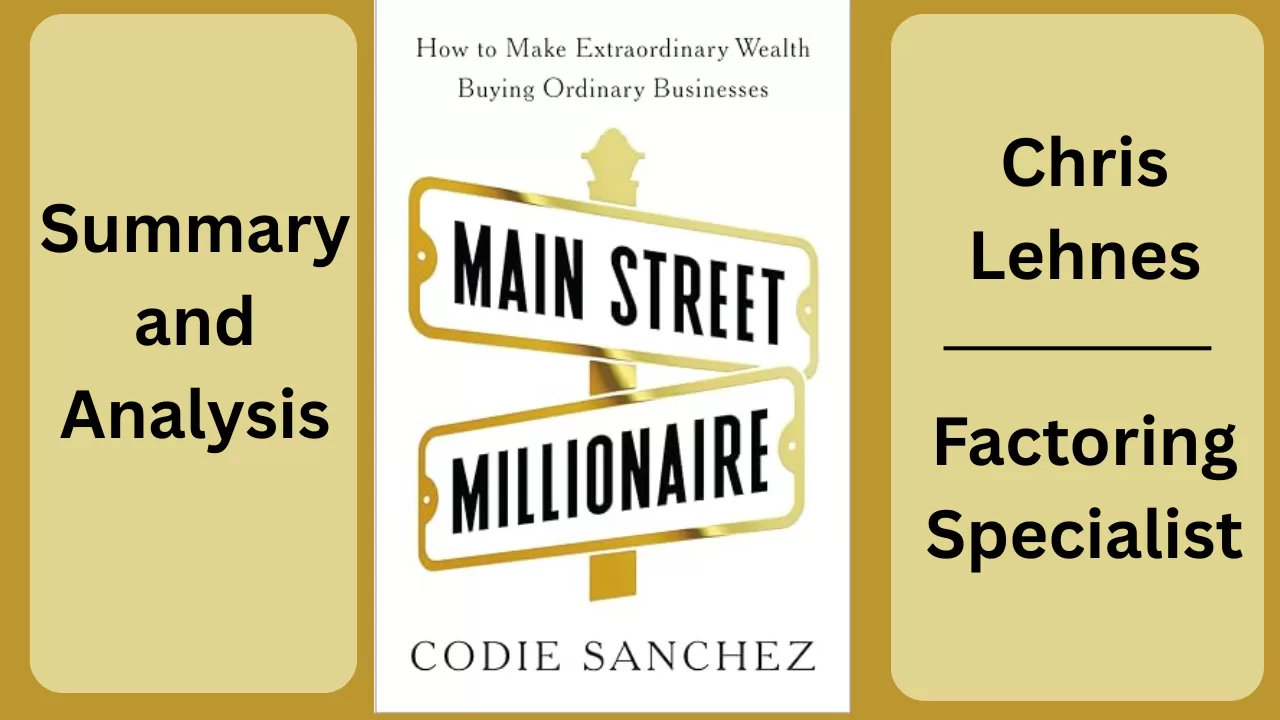
Main Street Millionaire – The Boring Path to Wealth by Codie Sanchez
“Main Street Millionaire” by Codie Sanchez advocates for acquiring established, cash-flowing small businesses as the most overlooked and effective path to extraordinary wealth and financial freedom. Challenging the conventional wisdom of high-stakes startups or corporate careers, Sanchez argues that “boring businesses”—such as laundromats, car washes, and repair shops—offer dependable profits, often for little or no money down, through strategies like seller financing. The book provides a detailed, four-step R.I.C.H. framework (Research, Invest, Command, Harness) for identifying, acquiring, operating, and scaling these businesses. It also serves as a “call to arms” to save America’s small businesses, many of which are owned by aging baby boomers without succession plans, presenting a significant economic opportunity for new owners.
Sanchez critiques the traditional career path, calling it a “9-to-5 Trap” that keeps people poor despite hard work. She asserts that this system programs individuals for non-ownership, trading time for money, which ultimately limits financial freedom.
“Your salary will never set you free. Your financial freedom can only come through ownership. More specifically, through equity done the right way.”
She highlights that financial freedom is achieved through ownership, not merely a high salary or freelancing.
B. The “Secret Gold Mine on Main Street”
The core premise is that ordinary, often overlooked small businesses are a “secret gold mine.” These “Main Street” or “boring” businesses, like laundromats, car washes, and plumbing services, provide essential products or services, possess steady cash flow, and often have a long history of profitability.
“This is a book about seeing opportunities for financial freedom all around you, in the overlooked and unassuming businesses that we all take for granted. As someone who specializes in making good, profitable deals, I can promise you that success doesn’t require flashy start-ups or cutting-edge new products.”
These businesses benefit from the “Lindy effect,” meaning their longevity suggests continued success, making them a more reliable investment than flashy startups.
C. The Crisis of Aging Business Owners and Economic Opportunity
A significant theme is the impending crisis of baby boomer business owners (Main Street Millionaires, or MSMs) who are “getting too old for this sh*t” and lack succession plans. Many will simply shut down profitable businesses rather than sell them.
“Here’s the craziest part: most of these MSMs will end up permanently shutting down their businesses. When they retire, they won’t hand off or even sell their cash-printing machines. Instead, they will simply turn off the lights and put the CLOSED sign up one last time. Game over.” This phenomenon, already observed in Japan, represents a massive opportunity for new owners to acquire established, job-generating businesses, simultaneously gaining financial freedom and “saving America’s small businesses.”
D. The R.I.C.H. Framework for Acquisition
Sanchez presents a four-step framework:
R is for Research: Defining one’s “perfect fit” business by aligning personal skills (“Zone of Genius”), desired owner experience, and “Deal Box” criteria (valuation, revenue, profit, sector, etc.). This involves avoiding “deadly businesses” like restaurants and retail storefronts due to high failure rates and inherent risks.
I is for Invest: Strategies for buying cash-flowing businesses with little or no money down, primarily through “Profit Payback” (seller financing) and other creative financing methods (SBA loans, customer acquisition for referral fees, revenue share acquisition, employee acquisition).
“Your financial freedom can only come through ownership… Here’s your first and most important lesson: Your salary will never set you free. Your financial freedom can only come through ownership. More specifically, through equity done the right way.”
C is for Command: Avoiding the “whoops, I bought myself a job” trap by hiring and managing a competent operator. This section details finding, interviewing, and compensating operators, and provides a 30-60-90 day plan for business transfer and transition.
H is for Harness: Scaling profits and managing multiple businesses on “autopilot” through growth tactics, responsible expansion (platform acquisitions), and preparing for a profitable exit.
E. Practicality, Grit, and “Choosing Your Hard”
The book emphasizes a no-nonsense, realistic approach. Sanchez warns that the path to becoming a Main Street Millionaire is “hard” and “won’t be easy,” requiring significant grit and commitment.
“A lot of business books set the wrong expectations… The path I teach is hard. Becoming an owner is 10 percent the business you buy, 10 percent knowledge, 10 percent talent, and 70 percent don’t F-ing stop. Grit is the secret ingredient that makes it all work.” She contrasts this with the “cool” but often financially risky paths of startups or crypto, advocating for “stealth wealth” through boring businesses that offer “healthy profits and a monthly salary on Day 1.”
F. “Ownership is the Key to Your Freedom” and a Call to Action
Ultimately, the book frames the pursuit of small business ownership as a personal and societal imperative. It positions the “Main Street over Wall Street” movement as a fight against the concentration of wealth by large corporations and institutional investors.
“We are at war, whether we like it or not. It’s a battle that invisibly pits everyday men and women against the behemoths… The way to fight back is by using their strategy against them. In a word: Ownership.” Sanchez calls readers to “take on the mantle of ownership” to secure their own freedom and contribute to a healthier local economy and country.
III. Key Ideas and Facts
Wayne Huizenga as an Archetype: The book opens with the story of Wayne Huizenga, who built massive empires (Waste Management, AutoNation, Blockbuster) not by starting new companies, but by buying and scaling small, existing businesses. This story illustrates the potential for wealth creation through acquisitions.
The “Secret Seller Phenomenon”: Over 60% of business owners would consider selling their companies if the right offer and terms came along, even if they aren’t actively listing their business. This highlights a vast, often hidden, market of motivated sellers.
The “Seven Ds” of Motivated Sellers: Death, Divorce, Disease, Distress, Dullness, Departure, Disagreement are common reasons owners are willing to sell.
“Walking Billboard Strategy”: A painfully obvious yet underutilized method of finding motivated sellers by consistently telling everyone you meet that you buy businesses and asking if they own a business or know owners.
Avoid “Deadly Businesses”: Restaurants, hotels, retail storefronts, consulting firms, personal brands, Amazon FBA/drop-shipping, and dry cleaners are identified as high-risk ventures due to high failure rates, key person risk, platform risk, or environmental liabilities.
The S.O.W.S. Framework for Good Businesses: Sanchez looks for businesses that are Stale (minimal innovation), Old (established, 5+ years), Weak (lazy competition), and Simple (easy to understand/run).
The B.R.R.T. Method for Upside Potential: Businesses should be able to Buy (cash-flow), Resist (recessions), Raise (prices), and integrate Tech.
“Six Figures to Thee & Me” Rule: A business should generate enough profit to pay both the owner and a hired operator six-figure salaries (e.g., $100,000 each, requiring at least $200,000 in annual profits). This ensures a “margin of safety.”
Importance of Creative Financing (Profit Payback/Seller Financing): This is Sanchez’s “not-so-secret secret weapon.” It allows buyers to acquire businesses for little or no money down, using future profits to pay the seller. It offers benefits like increased purchase price, tax deferral, and faster closing for sellers.
Decentralized Management (The Warren Buffett Method): The strategy of hiring capable people, giving them autonomy, and focusing on high-level metrics rather than micromanaging daily operations.
Growth Tactics: Includes raising prices (5-30%), adding three-tiered pricing (sandwich method), implementing recurring revenue models, updating websites (focus on clear calls to action and testimonials), immediate lead response (within 60 seconds for 20x conversion rate), referral programs, and actively engaging in sales (Sale-EO not CEO).
Cash Flow Boomerang Process: Focus on shortening the “Cash Conversion Cycle” by taking more upfront payments, shortening payment terms, offering cash discounts, and using lines of credit.
C.A.D.O. Process for Cost Cutting:Cut, Automate, Delegate, Outsource unnecessary expenses and tasks.
Exit Strategy: Plan for selling the business from day one. Businesses are valued higher based on simple finances, documented SOPs, loyal employees, not being run by the owner, diversified customer base (eggs in many baskets), and a strong sales team. Add-backs (owner benefits and one-time expenses) are crucial for increasing the stated profit and, consequently, the sale price.
“Ownership Autopilot”: Managing businesses effectively requires a “Deal Driveway” (identifying key client journey metrics) and a high-level “Business Scorecard” with 3-5 critical output and input metrics.
“Who Not How” Principle: When facing a problem, ask “Who can fix it for me?” or “What can I buy that would fix this?” rather than “How can I fix it myself?” This encourages acquisitions and leveraging expertise.
IV. Conclusion
“Main Street Millionaire” presents a compelling case for acquiring “boring businesses” as a pragmatic and powerful strategy for building wealth and achieving financial freedom. It demystifies the acquisition process, offering actionable steps and mindset shifts to empower individuals to become owners. Beyond personal gain, the book positions this movement as critical for revitalizing local economies and counteracting the increasing consolidation of wealth by large entities, advocating for a future where more individuals embrace ownership.
Main Street Millionaire: Comprehensive Study Guide
This study guide is designed to help you review and solidify your understanding of the “Main Street Millionaire” source material. It covers key concepts, strategies, and advice for acquiring and growing small, “boring” businesses.
Quiz
Instructions: Answer each of the following questions in 2-3 sentences.
What is the “9-to-5 Trap” and how does the author suggest individuals escape it?
Explain the author’s argument for why “Main Street” or “boring” businesses are an underrated path to wealth.
Describe the R.I.C.H. acronym and what each letter represents in the business acquisition process.
What are the “Seven Deadly Businesses” that the author advises avoiding, and what common characteristics do they share?
What is the “Walking Billboard Strategy,” and why does the author advocate for it in finding motivated sellers?
Explain the SOWS framework used for rapidly evaluating boring businesses.
What is the BRRT Method, and what does each letter stand for in evaluating a business’s upside potential?
Describe the “Profit Payback Method” (seller financing) and its main advantage for buyers.
According to the author, what is the “Six Figures to Thee & Me” rule, and why is it important when hiring an operator?
What is the “Cashout Cake” in the context of selling a business, and what is its primary purpose?
Answer Key
The “9-to-5 Trap” refers to the system where individuals are programmed to believe a good job and salary lead to financial stability, but ultimately keep them poor by trading time for money. The author suggests escaping this trap through ownership, specifically by acquiring established, cash-flowing businesses rather than relying on a salary.
The author argues that “Main Street” or “boring” businesses are an underrated path to wealth because they offer steady cash flow, are often overlooked by larger investors, and are dependable. These businesses have a long history of success (Lindy effect) and are essential, providing opportunities for significant profit and financial freedom.
The R.I.C.H. acronym outlines the step-by-step process for becoming a Main Street business owner: Research (defining the right acquisition, finding sellers, evaluation), Invest (financing, making deals), Command (hiring operators, leadership, transition), and Harness (growth, management, scaling, exit). It represents an efficient path to financial freedom through ownership.
The “Seven Deadly Businesses” to avoid include restaurants, hotels, retail storefronts, consulting firms, personal brands, Amazon FBA/drop-shipping, and dry cleaners. They share common characteristics such as high failure rates, asymmetric risks, high expenses, low transferability, and often significant key person risk or platform dependence.
The “Walking Billboard Strategy” involves consistently telling everyone you meet that you buy businesses and asking small business owners if they own their establishment and would consider selling. This off-market approach helps uncover “secret sellers” who might be open to an offer but aren’t actively advertising their business for sale online.
The SOWS framework helps identify great boring businesses with high upside potential. STALE means minimal innovation, offering room for modernization; OLD signifies established businesses with a history of survival; WEAK indicates lazy competition, making it easy to outperform; and SIMPLE means the business model is easy to understand and run.
The BRRT Method is a second test to ensure a business has upside potential. BUY means acquiring a cash-flowing business; RESIST means it’s recession-resistant; RAISE means it can increase its prices; and TECH means technology can be meaningfully added to improve operations. This method helps quickly assess a business’s growth viability.
The “Profit Payback Method,” or seller financing, involves the buyer paying the seller for their business over time using the future profits generated by the business itself. Its main advantage for buyers is the ability to acquire a profitable business with little to no upfront cash, often avoiding bank loans and offering flexible, negotiable terms.
The “Six Figures to Thee & Me” rule suggests a business should generate enough profit to pay a six-figure salary to both the owner and the operator ($100,000 each). This rule is important because it ensures a sufficient “margin of safety” for the business to cover a quality operator’s salary and still provide a healthy income for the owner, preventing the owner from buying a “job” instead of a business.
The “Cashout Cake” refers to a recipe of seven key ingredients that make a business highly attractive and valuable for sale. Its primary purpose is to systematically prepare a business to maximize its sale price by making it easy for a buyer to understand, operate, and trust its profitability and longevity.
Essay Format Questions
Analyze how the “Main Street Millionaire” philosophy challenges traditional notions of career progression and wealth creation, particularly in contrast to the “9-to-5 Trap.” Discuss the author’s arguments for why ownership is superior to a salary.
Evaluate the importance of “due diligence” in the business acquisition process, referencing the author’s personal anecdote about losing $12 million. What are the critical phases and red flags, and how can a new owner mitigate risks during this stage?
Discuss the role of “creative financing,” specifically the “Profit Payback Method,” in enabling individuals to acquire businesses with little to no money down. Explain the benefits for both the buyer and the seller, and address common fears or misconceptions about debt.
Examine the author’s strategies for growing profits in an acquired business, using the power-washing example as a case study. Detail at least four specific growth tactics and explain how they contribute to a significant increase in annual profits.
How does the concept of “Hiring an Operator” enable business owners to manage multiple businesses and achieve “ownership autopilot”? Discuss the “Six Figures to Thee & Me” rule, strategies for attracting and short-listing talent, and the importance of a clear 30-60-90 plan for an operator’s success.
Glossary of Key Terms
9-to-5 Trap: The societal system that encourages individuals to pursue stable jobs and salaries, often leading to financial stress and limiting true wealth creation by trading time for money.
Add-backs: Benefits and one-time expenses that are added back to a business’s net income to calculate Seller’s Discretionary Earnings (SDE), crucial for determining a business’s true profitability to a potential owner.
Acqui-hire: A strategy where a company acquires another, primarily for its talented employees or team, rather than for its products or services.
Asset Acquisition: Buying only the assets of a business (e.g., equipment, inventory, real estate) rather than the entire company and its liabilities.
BRRT Method: A framework (Buy, Resist, Raise, Tech) used to evaluate a business’s upside potential, ensuring it’s cash-flowing, recession-resistant, capable of price increases, and open to technological improvements.
Cash-Flow Boomerang Process: A concept emphasizing the importance of shortening a business’s cash conversion cycle, ensuring money comes back quickly after a product or service is provided.
Cash-Flow Business: A business model where payment is received before or concurrently with the provision of service, often characterized by monthly recurring revenue and a diverse client base.
Cashout Cake: A metaphor for the seven essential ingredients (simple finances, SOPs, loyal employees, not run by you, matching outfits, eggs in many baskets, sales team) that make a business easy to sell for maximum profit.
Contrarian Thinking: The author’s financial media and investment company, focused on empowering individuals to achieve financial freedom through ownership.
Creative Financing: Non-traditional financing methods, often involving direct negotiation with the seller, to fund a business acquisition with little to no upfront cash, such as seller financing.
Deal Box: A defined set of specific criteria (e.g., valuation, revenue range, profit range, sector, seller type, geographic region) that helps an aspiring buyer narrow down potential business acquisitions.
Deal Driveway: The specific path or sequence of steps a business’s clients take to pay for services or products, used to identify key metrics for tracking success.
Decentralized Management: A management philosophy where decision-making authority is pushed down to lower levels of the organization, allowing the owner to focus on strategic oversight rather than day-to-day details.
Due Diligence: The process of thoroughly evaluating a business’s health, financials, operations, and risks before making an offer or finalizing an acquisition.
EBITDA (Earnings Before Interest, Taxes, Depreciation, and Amortization): A measure of a company’s financial performance, often used for valuing larger businesses.
Execution Triangle: A concept illustrating that what gets measured gets managed, what gets managed gets scheduled, and what gets scheduled gets done, emphasizing the importance of structured execution.
Golden Handcuffs: A term for incentives (like high salary or benefits) that make it difficult for an employee to leave a job, even if they are unhappy.
Goodwill: An intangible asset representing the value of a business beyond its tangible assets, including brand recognition, customer loyalty, and proprietary technology.
Horizontal Acquisition: Acquiring a business that offers complementary products or services, allowing for diversification of income streams within an existing platform.
Key Person Risk: The risk associated with a business being overly reliant on a single individual’s skills, relationships, or expertise, making it vulnerable if that person leaves.
KPIs (Key Performance Indicators): Measurable values that demonstrate how effectively a company is achieving key business objectives.
Labor-Moated Businesses: Professional service businesses that have a competitive barrier due to the need for unique skills, certifications, or licenses, making market entry more difficult for competitors.
Leveraged Buyout (LBO): An acquisition strategy where a buyer borrows a significant portion of the purchase price, often using the acquired company’s assets or cash flow as collateral.
Lindy Effect: A theory stating that the future life expectancy of a non-perishable item or idea is proportional to its current age, implying that something successful for a long time will likely continue to be successful.
LOI (Letter of Intent): A nonbinding or binding document outlining the preliminary terms and conditions of a proposed business acquisition, serving as a framework for negotiations.
Main Street Business: A small, local business, typically run by individuals, providing essential products or services with minimal intellectual property, often overlooked but offering steady cash flow.
Margin of Safety: A principle in investing, popularized by Warren Buffett, which advocates for buying assets at a significant discount to their intrinsic value to protect against potential losses.
Motivated Seller: A business owner who has compelling reasons (e.g., the “Seven Ds”: Death, Divorce, Disease, Distress, Dullness, Departure, Disagreement) to sell their business, making them more open to flexible terms.
North Star (KPI): A single, overarching metric that guides a business’s strategic direction and aligns the entire team’s efforts towards a common goal.
Operating Agreement/Shareholder Agreement: A legally binding document that outlines the structure, management, profit-sharing, and operational details of a business, especially important for partnerships.
Operator: A key player hired to manage the day-to-day operations of an acquired business, allowing the owner to focus on strategic oversight and further acquisitions.
OPM (Other People’s Money): The practice of using borrowed funds or investments from others to finance business acquisitions or growth, a common strategy among the wealthy.
Platform Acquisition: Buying a foundational business that can then be expanded through additional acquisitions (add-ons) or diversification of income streams.
Profit Payback Method: See Creative Financing / Seller Financing.
Purchase Agreement: The main, legally binding document in a business acquisition that details all final terms and conditions of the sale.
R.I.C.H. Method: An acronym (Research, Invest, Command, Harness) outlining the four main steps in the author’s process for buying, running, and growing small businesses.
Recurring Revenue: Income that is stable and predictable, generated from ongoing payments for services (e.g., subscriptions, maintenance contracts), highly valued in business.
Reticular Activating System (RAS): A part of the brain that filters information, which the author suggests can be activated to make individuals more aware of ownership opportunities.
SBA (Small Business Administration) Loan: Government-backed loans provided by banks to small businesses, offering more favorable terms than conventional loans, but with specific qualification requirements.
Secret Seller Phenomenon: The observation that a large percentage of business owners would consider selling their companies if the right offer came along, even if they aren’t actively listing them for sale.
Seller’s Discretionary Earnings (SDE): The total financial benefit an owner receives from a business, calculated as net profit plus owner’s salary, benefits, and one-time expenses (add-backs), used for valuing small businesses.
Seller Financing: A form of creative financing where the seller agrees to receive a portion of the purchase price over time, directly from the business’s future profits, rather than an upfront lump sum.
Six Figures to Thee & Me Rule: The author’s rule stating that a business should generate at least $200,000 in annual profit to comfortably pay a $100,000 salary to both the owner and a hired operator.
Skill Stack: A unique combination of an individual’s skills, where being in the top percentage for several skills can create a competitive advantage.
SOPs (Standard Operating Procedures): Step-by-step instructions that document how to perform specific tasks, ensuring consistency, efficiency, and scalability in business operations.
SOWS Framework: An acronym (Stale, Old, Weak, Simple) used to rapidly evaluate the potential of “boring” businesses, identifying those ripe for modernization and growth.
Stock Purchase: Buying the entire company, including all its assets and liabilities, by acquiring its stock.
Sweat Equity Deal: A partnership or acquisition where one party contributes labor, expertise, or other non-monetary assets in exchange for equity or a share of future profits.
Venmo Challenge: A practical exercise where individuals review their Venmo or bank statements to identify small businesses they frequently pay, then approach those owners about a sweat equity or profit-sharing deal.
Vertical Acquisition: Acquiring a business that operates at a different stage of the supply chain than your existing business (e.g., a laundry delivery service for a laundromat).
Walking Billboard Strategy: A method for finding motivated sellers by consistently informing people you meet that you buy businesses and directly inquiring with small business owners.
Zone of Genius: The intersection of an individual’s passion, experience/skills, and network, which helps define the most suitable type of business acquisition for them.
This podcast episode, hosted by Bob Shultz, publisher and co-founder of TCLM, and featuring Factoring Specialist, Chris Lehnes provides an in-depth exploration of factoring as a financing solution for businesses seeking improved liquidity.
Factoring is explained as the sale of a company’s accounts receivable to a third-party factor, which enables immediate cash flow without incurring debt. Lehnes outlines how the process works, from invoice verification to advancing 75 to 90 percent of its value and later releasing the balance upon customer payment, while also discussing the operational benefits, such as the factor handling collections. The conversation covers critical distinctions between recourse and non-recourse factoring, cost structures, and flexibility in factoring arrangements, including selective factoring by customer or invoice. The fees, typically 1.5 to 3 percent per month, are examined alongside aspects that influence pricing, such as credit risk, invoice volume, and payment timelines.
The discussion also offers practical guidance for businesses considering factoring, highlighting its applicability primarily for B2B and B2G companies with strong customers and urgent funding needs not being met by banks. Lehnnes addresses common concerns about customer perception, explaining that large enterprise clients are accustomed to factoring arrangements, and he emphasizes good receivables management practices to improve eligibility. The episode concludes with insights into Versant Funding’s unique position in the market, emphasizing its true non-recourse model, lack of reliance on traditional borrower qualifications, flexibility in factoring older receivables, and willingness to work with high customer concentration. This positions factoring not only as a cash flow solution but also as a strategic tool for growth, bridging financing gaps, and providing operational stability
Accounts Receivable Factoring $100,000 to $30 Million Quick AR Advances No Long-Term Commitment Non-recourse Funding in about a week
We are a great match for businesses with traits such as: Less than 2 years old Negative Net Worth Losses Customer Concentrations Weak Credit Character Issues
Chris Lehnes | Factoring Specialist | 203-664-1535 | chris@chrislehnes.com
Factoring is a valuable financial tool for businesses facing cash flow issues due to delayed customer payments. The core concept involves selling unpaid invoices (accounts receivable) to a third-party “factor” in exchange for immediate cash. The discussion highlights “non-recourse factoring,” where the factor assumes the risk of customer non-payment, and explores Versant’s unique approach, benefits, real-world applications, cost structure, and ideal use cases.
Definition: Factoring is the process of “essentially selling those unpaid invoices… your accounts receivable… to a third party company called a factor.” This allows businesses to receive “immediate cash” rather than waiting “weeks or even months to actually get paid.”
Core Problem Solved: The primary benefit of factoring is addressing “a very common problem, cash flow,” which can be a “killer if you have bills piling up or you see a new opportunity but don’t have cash on hand to jump on it.”
Simplified Responsibility: The business owner sells the invoice, and the factor “take[s] on the responsibility of collecting from your customers.” This allows the business owner to “focus on running my business.”
2. Non-Recourse Factoring: Risk Transfer
Definition: Non-recourse factoring is a specific type where “the factor takes on the risk… that your customer might not pay.” If the customer defaults, “the factor is out of luck and you’re not on the hook.”
Factor’s Selectivity: Due to this risk, factoring companies “super picky about who they work with” and “carefully evaluate the creditworthiness… of your customers, not just your business’s overall financial history.”
Ideal Customer Profile: This model is most suitable if “your customers are large, stable companies with a good track record of paying their bills.” Conversely, if “most my customers are small startups with… limited financial history,” factoring “might not be the best fit.”
3. Versant’s Approach and Benefits
Speed: Versant’s “biggest selling points is speed,” often getting “cash into their clients hands quickly, sometimes within a week,” significantly faster than “traditional bank loans, which can take months to process.” This speed is possible because “they’re primarily focused on the receivables themselves,” assessing “the creditworthiness of your customers, not necessarily your company’s entire financial history.”
No Personal Guarantees: A significant advantage is that Versant “doesn’t require personal guarantees,” meaning “business owners aren’t putting their personal assets on the line.”
Performance Guarantee: While no personal guarantee, Versant requires a “performance guarantee.” This means the business owner “is vouching for the quality of the goods or services you’ve provided.” If a customer disputes an invoice due to “faulty” product or service, “that’s ultimately your responsibility to sort out.”
Transparency & Control: Versant provides “online tools so you can track the status of your invoices and see exactly where your money is,” offering “a constant pulse on your cash flow.”
Personalized Service: Each client receives a “dedicated account executive who works with them directly,” providing “a much more personalized experience than dealing with a giant impersonal financial institution.”
Target Market: Chris describes Versant as occupying “a unique space in the market,” having “the resources of a larger factor… but maintain the personalized service and flexibility of a smaller one.” Their focus is “especially for businesses that might not qualify for traditional bank loans.”
4. Real-World Applications
Crisis Management: Factoring can be a “lifeline” for businesses in distress. Examples include a consumer electronics manufacturer that “shipped out a batch of defective products” and was “facing potential legal action,” where Versant provided “desperately needed” funding. Versant is even “willing to work with companies in Chapter 11 bankruptcy,” demonstrating a “level of commitment that you just don’t see from most financial institutions.”
Strategic Growth Initiatives: Factoring can facilitate strategic moves, such as a commercial printer using factored receivables to “buy out a difficult seller finance loan,” gaining “full control of their business.”
Recovery from Setbacks: A security software company, reeling from a “failed merger” that led to “a drop in revenue,” used Versant’s working capital “to get back on track.”
Unlocking Potential: Factoring is “not just about accessing capital. It’s about unlocking potential and creating new possibilities for growth and success,” allowing businesses to be proactive and “seize opportunities as they arise.”
5. Cost Structure and Customer Perception
Fee Model: Versant charges a fee that accrues based on how long it takes the customer to pay.”
Customer Perception: A common concern is that factoring makes a business “look financially unstable.” However, Chris argues that factoring is “way more commonplace than people realize, especially when you’re dealing with large companies,” who “are probably used to working with factors all the time.” It’s “just part of doing business” and “not going to raise any red flags.”
6. Ideal Industries for Factoring
Manufacturing, Distribution, Wholesale: These industries “frequently handle large orders… with extended payment terms,” making immediate cash flow “absolutely essential” to keep “production lines humming” and manage inventory.
Staffing Agencies: These businesses often pay employees “weekly or bi-weekly” but “may not receive payment from their clients for several weeks or even months,” and factoring “helps bridge that gap,” ensuring funds for payroll.
Transportation and Logistics: With “significant” fuel and operating expenses, factoring provides “working capital they need to keep those trucks rolling and goods moving.”
7. Factoring and Profitability
Leverage for Growth: Factoring “can actually boost profits, not just help maintain them.” By providing immediate cash, businesses can “seize that opportunity” to take on “a big new project” that they otherwise couldn’t afford. Even with fees, the “significant increase in revenue” from such projects can lead to “higher profits.”
Strategic Tool: Factoring “simply provides the financial flexibility to make the most of opportunities and reach their full earning potential.”
8. Finding the Right Factoring Partner
Relationship Building: Chris advises building relationships with “professionals who work closely with small businesses,” such as “accountants, lawyers, business brokers, even bankers,” as they are “in a position to identify businesses… that might benefit from factoring.”
Application Process: Factoring companies, unlike banks, are “not as obsessed with traditional financial statements.” They primarily require “a recent aging report” of outstanding invoices and “a list of your customers” to assess creditworthiness. Proposals can be turned around “incredibly fast, sometimes within 24 hours,” with funding possible “as quickly as a week.”
Beyond the Rate: It’s crucial to “find a factoring company… that truly aligns with your needs and values,” focusing not “just about getting the lowest rate… it’s about finding a partner… who understands your business, supports your goals and provides the level of service you expect.”
Conclusion
Factoring, particularly non-recourse factoring, offers a powerful and flexible financial solution for businesses, especially those struggling with cash flow, seeking quick capital, or facing challenges that preclude traditional loans. Companies like Versant provide rapid funding, personalized service, and transparency, taking on significant risk in the process. While it’s important to consider the costs and potential loss of collection control, the ability to unlock potential and accelerate growth by transforming receivables into immediate cash makes factoring a compelling option for many businesses across various industries.
Answer the following questions in 2-3 sentences each:
What is factoring, in simple terms?
What is the key difference between recourse and non-recourse factoring?
Why are factoring companies very selective about the clients they choose to work with?
What does the term “performance guarantee” mean in the context of factoring?
Besides the initial percentage fee, what other cost is associated with factoring?
According to the source, how does Versant differ from larger and smaller factoring companies?
Name two industries that commonly use factoring and explain why.
How does factoring help with the profitability of a business?
How does spot factoring differ from regular factoring agreements?
What is an aging report, and why is it important in factoring?
Answer Key
Factoring is when a business sells its unpaid invoices (accounts receivable) to a third-party company (the factor) for immediate cash. The factor then takes on the responsibility of collecting payments from the business’s customers, allowing the business to focus on operations instead of collections.
In recourse factoring, the business is responsible for unpaid invoices if the customer fails to pay, whereas in non-recourse factoring, the factor bears the risk of non-payment (unless there is a product or service issue).
Factoring companies are selective because they take on the risk of customer non-payment in non-recourse factoring; therefore, they carefully assess the creditworthiness of the business’s customers to minimize their potential losses.
A performance guarantee means the business owner is responsible for ensuring the quality of the goods or services provided to their customers. If a customer disputes an invoice due to quality issues, the business owner, not the factor, must resolve the issue.
In addition to an upfront percentage fee on each invoice, factoring companies often charge an additional fee based on how long it takes for the customer to pay the invoice, incentivizing customers to pay promptly.
Versant occupies a unique middle ground; it has the resources of a large factoring company but provides the personalized service and flexibility typically associated with smaller factoring companies and focuses on non-recourse factoring.
Manufacturing/wholesale companies often use factoring because they have large orders and long payment terms. Staffing agencies utilize factoring because they have to pay their employees before their clients pay the agency.
Factoring can lead to increased profitability by enabling businesses to access cash immediately to seize new opportunities or take on new projects, leading to more revenue which will then lead to more profits.
Spot factoring involves a one-time factoring deal for a specific high-value invoice, while regular factoring agreements typically involve an ongoing arrangement.
An aging report shows a business’s outstanding invoices and how long they have been due and it’s important in factoring because it helps the factoring company assess the quality of the receivables and the likelihood of getting paid by the business’s customers.
Essay Questions
Discuss the benefits and potential drawbacks of using non-recourse factoring for a small to medium-sized business. Consider factors such as cost, control, and customer relationships.
Compare and contrast how traditional bank loans and factoring address a business’s need for working capital. What are the advantages and disadvantages of each?
Analyze how the factoring process used by Versant, as described in the source, balances the risk and rewards for both the business and the factoring company.
In what ways can factoring be a strategic tool for businesses experiencing growth, and what steps should they take to ensure they use it effectively?
Evaluate the claim that factoring can be a solution for businesses in challenging situations, such as those facing bankruptcy, and under what conditions this is likely to be most successful.
Glossary
Factoring: A financial transaction where a business sells its accounts receivable (invoices) to a third party (the factor) at a discount to receive immediate cash.
Accounts Receivable: Money owed to a business by its customers for goods or services that have been delivered.
Factor: The third-party company that purchases accounts receivable from a business in a factoring transaction.
Recourse Factoring: A type of factoring where the business remains liable for unpaid invoices if the customer does not pay.
Non-Recourse Factoring: A type of factoring where the factor assumes the risk of customer non-payment (except for issues with product/service quality).
Creditworthiness: The assessment of a customer’s ability and willingness to repay their debts, which factoring companies use to decide whether to take on their invoices.
Performance Guarantee: A commitment from a business owner ensuring that the products or services provided to their customers are of the agreed-upon quality.
Aging Report: A document that lists a business’s outstanding invoices and how long they have been overdue.
Spot Factoring: A one-time factoring arrangement where a business sells a single large invoice for cash.
Upfront Fee: The initial percentage of an invoice that the factoring company takes as its fee for providing immediate cash.
Rebate: The remaining percentage of an invoice after the factor has deducted all fees, and they have collected full payment from the client’s customer.
Personal Guarantee: A promise by a business owner to be personally responsible for their company’s debts. Versant does not require this.
Measure What Matters by John Doerr, a Silicon Valley legend and venture capitalist, serves as an essential handbook for organizations of all sizes, detailing the power and implementation of Objectives and Key Results (OKRs). Drawing on his experience at Intel under Andy Grove and his work with Google, Doerr advocates for OKRs as a “collaborative goal-setting protocol for companies, teams, and individuals” that drives “great execution.” The book highlights four “superpowers” of OKRs: Focus, Alignment, Tracking, and Stretching, complemented by Continuous Performance Management through CFRs (Conversations, Feedback, Recognition).
Larry Page, Google Cofounder and Alphabet CEO, praises OKRs as “a simple process that helps drive varied organizations forward,” attributing Google’s “10x growth, many times over” to their adoption. The core message is that while “ideas are easy,” “execution is everything.”
I. OKRs: The Foundational System Measure What Matters
A. Definition and Core Components
Objective (WHAT): An objective is “simply WHAT is to be achieved, no more and no less.” Doerr emphasizes that objectives should be “significant, concrete, action oriented, and (ideally) inspirational.” They are a “vaccine against fuzzy thinking—and fuzzy execution.” An objective can be long-lived, rolled over for a year or longer.
Key Results (HOW): Key Results (KRs) “benchmark and monitor HOW we get to the objective.” They must be “specific and time-bound, aggressive yet realistic.” Crucially, they are “measurable and verifiable.” As Google’s Marissa Mayer famously stated, “It’s not a key result unless it has a number.” KRs evolve as work progresses, and “Once they are all completed, the objective is necessarily achieved.” (If not, the OKR was poorly designed). Each objective should ideally be tied to “five or fewer key results.”
B. Genesis and Evolution (Andy Grove’s Legacy)
Intel’s Birthplace: John Doerr’s introduction to OKRs came in the 1970s as an engineer at Intel, where Andy Grove, then executive vice president, instilled this system. Grove’s philosophy, rooted in a “real-world affirmation of accomplishment over credentials,” emphasized “what you can do with whatever you know or can acquire and actually accomplish.”
Distinction from MBOs: Grove’s “iMBOs” (Intel Management by Objectives), which he coined, significantly differed from Peter Drucker’s earlier “management by objectives and self-control” (MBOs). The key distinctions, as outlined by Doerr, are:
Scope: MBOs focused on “What”; OKRs combine “What and How.”
Cadence: MBOs were “Annual”; OKRs are “Quarterly or Monthly.”
Transparency: MBOs were “Private and Siloed”; OKRs are “Public and Transparent.”
Direction: MBOs were “Top-down”; OKRs are “Bottom-up or Sideways (~50%).”
Compensation Link: MBOs were “Tied to Compensation”; OKRs are “Mostly Divorced from Compensation.”
Risk Aversion: MBOs were “Risk Averse”; OKRs are “Aggressive and Aspirational.”
Grove’s OKR Hygiene: Doerr distills Grove’s practices into key principles:
Less is more: “A few extremely well-chosen objectives… impart a clear message about what we say ‘yes’ to and what we say ‘no’ to.”
Set goals from the bottom up: Encourage teams and individuals to create “roughly half of their own OKRs.”
No dictating: OKRs are a “cooperative social contract.”
Stay flexible: KRs can be “modified or even discarded mid-cycle” if the climate changes.
Dare to fail: “Output will tend to be greater… when everybody strives for a level of achievement beyond [their] immediate grasp.”
A tool, not a weapon: OKRs are “not a legal document upon which to base a performance review” and should be “best kept separate” from bonuses to encourage risk-taking.
Be patient; be resolute: Full embrace of the system can take “up to four or five quarterly cycles.”
II. The Four OKR Superpowers Measure What Matters
Superpower #1: Focus and Commit to Priorities
Prioritization: Successful organizations “focus on the handful of initiatives that can make a real difference, deferring less urgent ones.” This requires “disciplined thinking at the top” and leaders who “invest the time and energy to choose what counts.”
Commitment by Leadership: Leaders “must personally commit to the process” and “model the behavior they expect of others.” John Chambers, Executive Chairman of Cisco, notes that the book “encourages the kind of big, bold bets that can transform an organization.”
Clarity and Communication: Top-line goals “must be clearly understood throughout the organization.” Leaders need to convey “the why as well as the what,” ensuring people understand how their goals “relate to the mission.” As LinkedIn CEO Jeff Weiner says, “When you are tired of saying it, people are starting to hear it.”
Measurable Key Results: KRs “are the levers you pull, the marks you hit to achieve the goal.” They typically include “hard numbers for one or more gauges.”
Cadence and Flexibility: A “quarterly OKR cadence is best suited to keep pace with today’s fast-changing markets.” While clear timeframes intensify focus, OKRs are “inherently works in progress, not commandments chiseled in stone” and can be modified.
Paired Key Results: To safeguard quality and prevent “one-dimensional OKRs” (like the Ford Pinto example), KRs should be “paired—to measure ‘both effect and counter-effect’.”
“Less is More”: “Innovation means saying no to one thousand things” (Steve Jobs). The ideal number of quarterly OKRs is “between three and five.” “If we try to focus on everything, we focus on nothing” (Andy Grove). Larry Page advocates to “put more wood behind fewer arrows.”
Superpower #2: Align and Connect for Teamwork Measure What Matters
Transparency: OKRs are “open and visible to all parts of an organization, to each level of every department.” This transparency “seeds collaboration,” exposes “redundant efforts,” and allows for “critiques and corrections… out in public view.” Jonathan Levin, Dean of Stanford Graduate School of Business, notes that Doerr “explains how transparently setting objectives and defining key results can align organizations and motivate high performance.”
Vertical Alignment (Cascading): While traditional cascading can lead to “loss of agility,” “lack of flexibility,” and “marginalized contributors,” “in moderation, cascading makes an operation more coherent.” OKRs serve as a “vehicle of choice for vertical alignment,” knitting individual work to larger organizational goals.
Bottom-Up Goals: Healthy organizations “encourage some goals to emerge from the bottom up.” At Google, “over time our goals all converge because the top OKRs are known and everyone else’s OKRs are visible.” This fosters initiative and a “deeper awareness of what it takes to get there.” An “optimal OKR system frees contributors to set at least some of their own objectives and most or all of their key results.”
Cross-functional Coordination: OKRs promote “lateral, cross-functional connectivity, peer-to-peer and team-to-team.” Transparent OKRs mean that “people across the whole organization can see what’s going on,” which “kick[s] off virtuous cycles that reinforce your ability to actually get your work done.”
Superpower #3: Track for Accountability Measure What Matters
Continuous Reassessment: OKRs are “living, breathing organisms” that “can be tracked—and then revised or adapted as circumstances dictate.”
OKR Management Software: Robust, “dedicated, cloud-based OKR management software” is becoming essential for scalability, providing visibility, driving engagement, promoting networking, and saving time.
OKR Shepherd: A designated “OKR shepherd” ensures universal adoption and keeps the process on track.
Regular Check-ins: “Regular check-ins—preferably weekly—are essential to prevent slippage.” Monitoring progress is “more incentivizing than public recognition, monetary inducements, or even achieving the goal itself.”
Adaptability and Course Correction: OKRs are “guardrails, not chains or blinders.” If a goal “has outlived its usefulness, the best solution may be to drop it.” This allows organizations to “fail fast” and learn from setbacks.
Wrap-up (Scoring and Reflection): At the end of a cycle, OKRs are evaluated through objective scoring (e.g., Google’s 0.0-1.0 scale: 0.7-1.0 green, 0.4-0.6 yellow, 0.0-0.3 red), subjective self-assessment, and reflection. The goal is “no judgments, only learnings,” helping teams to “improve their ability to reliably hit 1.0 on committed OKRs.”
Superpower #4: Stretch for Amazing Measure What Matters
Pushing Limits: “OKRs push us far beyond our comfort zones. They lead us to achievements on the border between abilities and dreams.” This is “compulsory” for companies “seeking to live long and prosper.”
Big Hairy Audacious Goals (BHAGs): Jim Collins’ term for “a huge and daunting goal” that “serves as a unifying focal point of effort, galvanizing people and creating team spirit.”
“Gospel of 10x”: Google’s philosophy, championed by Larry Page, of aiming for “exponentially aggressive goals.” A “ten percent improvement means that you’re doing the same thing as everybody else. You probably won’t fail spectacularly, but you are guaranteed not to succeed wildly.” This “requires rethinking problems” and accepting a higher rate of “failures—at an average rate of 40 percent—are part of Google’s territory.”
Committed vs. Aspirational Goals: Google distinguishes between “committed goals” (to be achieved in full, 100%) and “aspirational (or ‘stretch’) goals” (where 60-70% attainment is considered success). This allows for calculated risk-taking.
Leadership and Attainability: Leaders must convey “the importance of the outcome, and the belief that it’s attainable.”
Continuous Pursuit: As Andy Grove stated, “the reward of having met one of these challenging goals is that you get to play again.”
III. The New World of Work: OKRs and CFRs Measure What Matters
A. Continuous Performance Management
Beyond Annual Reviews: Doerr argues that “annual performance reviews are costly, exhausting, and mostly futile.” He advocates for “continuous performance management,” implemented through CFRs:
Conversations: “Authentic, richly textured exchange between manager and contributor, aimed at driving performance.” These should be regular, frequent, and allow the “subordinate’s meeting, with its agenda and tone set by him” (Andy Grove).
Feedback: “Bidirectional or networked communication among peers to evaluate progress and guide future improvement.” Feedback should be specific and can be multi-directional (manager-to-employee, employee-to-manager, peer-to-peer).
Recognition: “Expressions of appreciation to deserving individuals for contributions of all sizes.” It should be frequent, specific, visible, and tied to company goals.
Divorcing Compensation from OKRs: A crucial step to “unleash ambitious goal setting” is to “Divorce compensation (both raises and bonuses) from OKRs.” When goals are tied to bonuses, employees “start playing defense; they stop stretching for amazing.” Google, for example, makes OKRs “a third or less of performance ratings,” emphasizing “context.”
Benefits: Continuous performance management “lifts every individual’s achievement,” “works wonders for morale and personal development,” and allows for improvements “throughout the year.”
B. The Importance of Culture Measure What Matters
Culture as Foundation: “Culture, as the saying goes, eats strategy for breakfast.” It’s “the living expression of its most cherished values and beliefs.” OKRs and CFRs are “natural partners in the quest for operating excellence.”
Grove’s View on Culture: Andy Grove equated culture with “efficiency,” seeing it as “a set of values and beliefs, as well as familiarity with the way things are done and should be done in a company.” A strong culture means “managers don’t have to suffer the inefficiencies engendered by formal rules.”
Google’s Project Aristotle: Identified five key factors for standout team performance, with “Structure and clarity” (OKRs) being the first, and the others (Psychological safety, Meaning of work, Dependability, Impact of work) tying directly to CFRs and a healthy culture.
Accountable Culture: An OKR culture is an “accountable culture.” People are motivated not just by orders but by the transparent importance of their OKR to the company and their colleagues.
Catalysts and Nourishers: High-motivation cultures combine “Catalysts” (like OKRs, supporting work by setting clear goals, autonomy, resources) and “Nourishers” (like CFRs, acts of interpersonal support, respect, recognition).
Pulsing: A modern “online snapshot of your workplace culture” through simple, quick surveys to gauge real-time health and address issues proactively.
“How” We Do Things: Dov Seidman’s philosophy emphasizes that “HOW We Do Anything Means Everything.” Companies that “out-behave” their competition, characterized by “active transparency,” trust, and collaboration, will “outperform them.”
Culture First: In some cases, cultural work (e.g., addressing issues of accountability and trust) may be needed “before OKRs are implemented.” Lumeris’s story illustrates the need to replace “old-school, autocratic approach” and foster trust before OKRs could effectively take root.
Bono’s ONE Campaign: Demonstrates how OKRs can “springboard an enriching cultural reset,” specifically shifting from “working on Africa to working in and with Africa” through a focus on transparency and African leadership.
Conclusion Measure What Matters
John Doerr asserts that OKRs are a “potent, proven force for operating excellence.” They are a “launch pad, a point of liftoff for the next wave of entrepreneurs and intrapreneurs.” Combined with CFRs, they create “durable cultures for success and significance,” driving “exponentially greater productivity and innovation throughout society.” The ultimate stretch OKR, as Doerr puts it, is “to empower people to achieve the seemingly impossible together.”
Measure What Matters: A Comprehensive Study Guide
I. Quiz: Short Answer Questions
Answer each question in 2-3 sentences.
Define Objective and Key Result.
What is the core purpose of OKRs, according to John Doerr?
How did Andy Grove’s “iMBOs” differ from Peter Drucker’s original MBOs, particularly regarding their link to compensation?
Explain the significance of the “as measured by” (a.m.b.) phrase in OKRs, as introduced by Bill Davidow.
Describe one “superpower” of OKRs and how it helps organizations.
Why did Larry Page encourage “10x thinking” at Google, rather than aiming for incremental improvements?
What is the “Big Rocks Theory” and how did YouTube’s leadership apply it to their OKRs?
What is the primary reason John Doerr suggests divorcing compensation from OKR scores?
According to the source, what are CFRs (Conversations, Feedback, Recognition) and how do they enhance OKRs?
Why did Lumeris need to prioritize culture change before effectively implementing OKRs, despite the system’s inherent benefits?
II. Answer Key
Define Objective and Key Result. An Objective is what is to be achieved, serving as a significant, concrete, action-oriented, and ideally inspirational goal. Key Results benchmark and monitor how the objective will be achieved, being specific, time-bound, aggressive yet realistic, and most importantly, measurable and verifiable.
What is the core purpose of OKRs, according to John Doerr? John Doerr states that the core purpose of OKRs is to surface primary goals, channel efforts and coordination, and link diverse operations, lending purpose and unity to the entire organization. He emphasizes that “Ideas are easy. Execution is everything,” and OKRs are a sharp-edged tool for world-class execution.
How did Andy Grove’s “iMBOs” differ from Peter Drucker’s original MBOs, particularly regarding their link to compensation? Grove’s “iMBOs” (which Doerr calls OKRs) were designed to be quarterly or monthly, public and transparent, and mostly divorced from compensation, encouraging aggressive and aspirational goals. Drucker’s MBOs, by contrast, were often annual, private, siloed, and commonly tied to salaries and bonuses, which could discourage risk-taking.
Explain the significance of the “as measured by” (a.m.b.) phrase in OKRs, as introduced by Bill Davidow. The “as measured by” (a.m.b.) phrase, introduced by Bill Davidow, is crucial because it makes the implicit explicit by directly linking objectives to their measurable key results. This ensures that everyone clearly understands how progress will be benchmarked, leaving no room for doubt or argument about whether a key result has been met.
Describe one “superpower” of OKRs and how it helps organizations. One superpower of OKRs is “Focus and Commit to Priorities.” This superpower helps organizations by forcing leaders to make hard choices about what truly matters, dispelling confusion by clearly communicating primary goals. This focused approach ensures that efforts are concentrated on vital initiatives, preventing dilution of resources and attention.
Why did Larry Page encourage “10x thinking” at Google, rather than aiming for incremental improvements? Larry Page encouraged “10x thinking” because he believed that a 10% improvement meant doing the same thing as everyone else, guaranteeing no wild success. A thousand percent improvement, however, required rethinking problems and exploring technical possibilities, pushing Google to reinvent categories rather than just iterate.
What is the “Big Rocks Theory” and how did YouTube’s leadership apply it to their OKRs? The “Big Rocks Theory”, popularized by Stephen Covey, is a metaphor suggesting that the most important things (big rocks) must be prioritized and completed first, as they create space for smaller tasks (pebbles and sand). YouTube’s leadership used this to bring focus to their hundreds of quarterly OKRs, identifying a few top priorities that everyone at the company would align with.
What is the primary reason John Doerr suggests divorcing compensation from OKR scores? John Doerr suggests divorcing compensation from OKR scores to encourage risk-taking and prevent “sandbagging,” where employees set easily achievable goals to guarantee bonuses. Separating them allows for more ambitious “stretch” goals and honest self-assessment, preserving initiative and morale within the organization.
According to the source, what are CFRs (Conversations, Feedback, Recognition) and how do they enhance OKRs? CFRs stand for Conversations, Feedback, and Recognition. They enhance OKRs by providing the human voice and continuous interaction necessary for effective performance management. CFRs capture the richness of Grove’s method by fostering authentic exchanges, bidirectional communication, and expressions of appreciation, making OKRs a complete delivery system for measuring what matters.
Why did Lumeris need to prioritize culture change before effectively implementing OKRs, despite the system’s inherent benefits? Lumeris needed to prioritize culture change because their initial OKR implementation was superficial due to a lack of trust and accountability, and conflicting internal cultures. Andrew Cole noted that “antibodies will be set loose and the body will reject the donor organ of OKRs” if cultural barriers like passive-aggressiveness and a lack of executive buy-in are not first addressed.
III. Essay Format Questions Measure What Matters
Analyze the “four superpowers” of OKRs (Focus, Align, Track, Stretch) in detail, providing specific examples from at least two different organizations mentioned in the text for each superpower. Discuss how these superpowers collectively contribute to “operating excellence.”
Compare and contrast Andy Grove’s philosophy of management and goal setting with Peter Drucker’s Management By Objectives (MBOs). How did Grove build upon and diverge from Drucker’s ideas, and what were the long-term implications of these differences for the adoption and evolution of OKRs?
Discuss the critical role of culture in the successful implementation of OKRs and CFRs. Refer to the experiences of at least two organizations (e.g., Lumeris, Bono’s ONE Campaign, Coursera, Zume Pizza) to illustrate how cultural factors can either facilitate or hinder the adoption and effectiveness of these management systems.
Evaluate the concept of “stretch goals” and “10x thinking” as presented in the text, using examples from Google Chrome and YouTube. What are the potential benefits and drawbacks of setting such ambitious objectives, and what strategies do leaders employ to mitigate the risks associated with them?
Explain the transition from traditional annual performance reviews to “continuous performance management” incorporating CFRs. Why is this shift considered necessary in the “new world of work,” and how do CFRs (Conversations, Feedback, Recognition) specifically address the shortcomings of older review systems and foster employee engagement and development?
IV. Glossary of Key Terms
Objectives and Key Results (OKRs): A collaborative goal-setting protocol that helps companies, teams, and individuals set ambitious goals with measurable outcomes.
Objective: What is to be achieved; a significant, concrete, action-oriented, and ideally inspirational goal.
Key Results (KRs): Benchmarks and monitors for how an objective will be achieved; they are specific, time-bound, aggressive yet realistic, measurable, and verifiable.
“As Measured By” (a.m.b.): A phrase that explicitly links an objective to its measurable key results, ensuring clarity and verifiability.
Superpower #1: Focus and Commit to Priorities: The ability of OKRs to help organizations choose what matters most and dedicate resources to those vital initiatives.
Superpower #2: Align and Connect for Teamwork: The capacity of transparent OKRs to foster collaboration, link individual goals to broader organizational objectives, and break down silos.
Superpower #3: Track for Accountability: The systematic monitoring of progress towards OKRs, allowing for real-time adjustments, honest grading, and continuous reassessment.
Superpower #4: Stretch for Amazing: The motivational aspect of OKRs that pushes individuals and organizations beyond their comfort zones to achieve seemingly impossible or “10x” goals.
10x Thinking: A philosophy, particularly emphasized at Google, of aiming for improvements that are ten times better than existing solutions, rather than incremental gains.
Committed OKRs: Goals that an organization agrees will be achieved, and for which resources and schedules will be adjusted to ensure delivery, typically aiming for 100% attainment.
Aspirational (Stretch) OKRs: High-risk, ambitious goals that represent how an organization would like the world to look, even without a clear path or all necessary resources initially; success is often considered to be 60-70% attainment.
Continuous Performance Management: A modern HR approach that replaces traditional annual reviews with ongoing conversations, real-time feedback, and regular recognition.
Conversations (CFRs): Authentic, ongoing exchanges between managers and contributors aimed at driving performance, discussing goals, and fostering development.
Feedback (CFRs): Bidirectional or networked communication among peers and managers to evaluate progress, provide specific insights, and guide future improvement.
Recognition (CFRs): Expressions of appreciation for deserving individuals’ contributions, both large and small, that are frequent, specific, visible, and tied to company goals.
Management By Objectives (MBOs): A goal-setting principle codified by Peter Drucker in 1954, emphasizing that subordinates should be consulted on company goals for greater commitment. OKRs evolved from and improved upon this concept.
OKR Shepherd: A designated individual or group responsible for guiding and ensuring the universal adoption and effective functioning of the OKR system within an organization.
“Big Rocks Theory”: A time management metaphor suggesting that prioritizing the most important tasks (big rocks) first allows for all other, smaller tasks to fit into a given timeframe.
Transparency: The principle of openly sharing goals, progress, and critiques across all levels and departments of an organization, fostering trust and collaboration.
Accountability: The responsibility taken by individuals and teams for achieving their stated OKRs, supported by objective data and an environment where learning from failure is encouraged.
Culture: The shared values, beliefs, and practices that define how things are done within an organization, serving as a critical medium for the successful implementation of OKRs and CFRs.
Pulsing: An online, real-time method of gathering feedback on workplace culture and employee morale through quick, frequent surveys.
Within the last 24 hours, news developments concerning the US economy and businesses have been largely overshadowed by the ongoing impact of tariffs and a focus on corporate earnings reports.
Key Economic Indicators and General Business Environment
Tariffs and Uncertainty: The looming threat of new tariffs on various imports continues to be a major concern for businesses of all sizes. News reports highlight how this uncertainty is forcing small business owners to make difficult decisions, such as delaying hiring or stockpiling inventory. For larger corporations, tariffs are already impacting profitability, with companies like Apple and Edgewell Personal Care warning investors about the financial hit they are taking. The upcoming August 7th deadline for new tariffs has added to the market’s cautious mood.
Economic Outlook: A leading economist from Moody’s has warned that the US economy is on the “precipice of recession,” citing a flatlining of consumer spending, contracting manufacturing and construction sectors, and a projected fall in employment. This follows a weak jobs report from last week which has fueled concerns about a potential economic downturn.
Financial Services for Small Businesses: A recent survey indicates that small businesses are increasingly turning to financial advice and data-driven tools to navigate the current economic headwinds. Fintech companies and traditional banks are responding by expanding their services to help small and medium-sized businesses (SMBs) optimize cash flow and improve operational efficiency.
Federal Reserve and Interest Rates: The weak jobs report has increased expectations for a potential interest rate cut by the Federal Reserve at its next meeting in September. While a rate cut could stimulate the economy, it also raises concerns about fueling inflation, which remains above the Fed’s 2% target.
Corporate Earnings and Market Activity
Mixed Earnings Reports: The stock market saw modest gains on Wednesday as investors processed a flurry of corporate earnings reports. While some companies, like McDonald’s and Match Group (the parent company of Hinge), posted solid results and saw their shares climb, others, such as Super Micro Computer and Disney, fell short of revenue expectations.
AI’s Impact on Business: The power of AI continues to be a driving force in corporate success. Companies like Palantir and Axon Enterprise saw significant stock gains after reporting strong profits and citing growth in their AI offerings.
Sector-Specific News:
Fast Food: McDonald’s is focused on winning back lower-income diners who are cutting back on spending due to economic pressures.
Dating Apps: Match Group’s stock jumped after reporting better-than-expected revenue, driven by strong performance from its Hinge app, which cited an AI-powered algorithm as a key factor in increasing user engagement.
Airlines: Spirit Airlines was in the news after a pilot was arrested on child stalking charges.
Retail: Claire’s has filed for bankruptcy for the second time in seven years.
The Ripple Effect: Analyzing the Impact of Tariffs on India Imports on US Small Businesses
I. Executive Summary
The imposition of tariffs on imports from India by the United States marks a significant shift in global trade dynamics, with profound and often disproportionate consequences for US small businesses. This report meticulously examines the multifaceted impact of these tariffs, particularly the recently enacted 25% tariff alongside potential additional penalties. It is evident that these measures extend far beyond a simple increase in import costs, manifesting as a systemic shock that reverberates through various operational, financial, and strategic dimensions for small enterprises.
How Tariffs on Indian Imports Impact US Small Businesses
The imposition of a 25% tariff on Indian imports creates a systemic shock for US small businesses, extending far beyond a simple cost increase. This infographic breaks down the critical impacts, from squeezed profits to consumer reactions.
97%
of US Importers are Small Businesses
This highlights the widespread exposure of the small business sector to import tariff policies.
$2,400
Avg. Household Income Loss
Tariffs translate into higher prices, directly impacting consumer purchasing power and demand.
366,000
Jobs Lost in Micro-Businesses
Firms with fewer than 10 employees have seen a 3% employment drop under recent tariff policies.
The Core Problem: A Direct Financial Hit
Tariffs are a tax paid first by US importers. For small businesses, which often operate with minimal financial buffers, this initial cost increase triggers a cascade of negative financial effects.
Profit Margin Vulnerability
A significant portion of small businesses operate on thin profit margins, making them acutely sensitive to any increase in operational costs.
The Cascade of Rising Costs
Beyond the tariff itself, small businesses face a wave of secondary expenses that inflate operational costs and disrupt financial planning.
Supply Chains Under Stress
Small businesses’ reliance on a limited number of suppliers makes them highly vulnerable. Tariffs on a key partner like India create immediate and severe logistical and administrative challenges.
Concentrated Import Reliance
The vast majority of the smallest US companies rely on four or fewer import partner countries, concentrating their risk.
The Logistical Burden Flow
1. 25% Tariff Imposed
↓
2. US Importer Pays Tax Upfront
↓
3. Supply Chain Delays & Fee Hikes
↓
4. Increased Administrative Burden (Customs)
↓
5. Small Business Faces Disruption & Higher Costs
This flow illustrates how tariffs create friction at every step, consuming time, money, and resources for small businesses.
The Consumer Dilemma
Ultimately, tariff costs are passed to consumers. However, shoppers are highly price-sensitive, creating a difficult choice for small businesses: raise prices and risk losing customers, or absorb costs and risk profitability.
Willingness to Pay More for US-Made
👤👤👤👤👤👤👤👤👤
Only 54%
Just over half of consumers are willing to pay up to 10% more. Beyond that, brand loyalty evaporates quickly.
How Consumers React to Price Hikes
When prices for essentials rise, a vast majority of consumers change their behavior, primarily by seeking cheaper alternatives.
Sector Spotlight: Top Imports from India
The 25% tariff impacts a wide range of industries. This chart ranks the top import categories by value, highlighting the sectors where US small businesses face the most significant direct cost increases.
Sectors like Gems & Jewelry, Textiles, and Electronics face billions in tariff-related costs, putting immense pressure on small businesses throughout their supply chains.
A Toolkit for Resilience
Navigating this environment requires proactive and strategic responses. Small businesses must adapt to mitigate risks and build long-term resilience.
🗺️Supply Chain Diversification
Reduce over-reliance on a single country. Explore domestic alternatives and suppliers in non-tariff regions to build a more robust and flexible supply chain.
💲Adaptive Pricing Models
Implement strategic price adjustments. Be transparent with customers about cost pressures while balancing profitability and competitiveness.
⚙️Operational Efficiency
Streamline internal processes and cut non-essential expenses to help absorb tariff costs and improve the bottom line.
🤝Smarter Negotiations
Engage proactively with suppliers to explore cost-sharing solutions, better payment terms, or discounts for bulk orders.
💼Robust Financial Planning
Manage cash flow diligently and leverage lines of credit for emergencies. Review contracts for clauses that can provide relief.
💡Emphasize Quality & Value
Justify necessary price increases by highlighting superior quality, innovation, and the long-term value your products provide.
The analysis reveals that US small businesses, inherently more vulnerable due to their typically thinner profit margins, fewer diversified supplier networks, and limited access to capital, bear a substantial portion of this economic burden. Direct financial strains emerge from increased procurement costs, which often translate into squeezed profit margins and necessitate difficult decisions regarding pricing strategies. Operationally, these tariffs introduce complexities such as supply chain disruptions, heightened administrative burdens, and unpredictable vendor pricing, all of which erode efficiency and profitability. Furthermore, the impact extends to consumer behavior, as higher prices for imported goods lead to reduced demand and a propensity for consumers to seek cheaper alternatives, regardless of origin. Employment within the small business sector also faces headwinds, with evidence suggesting stalled hiring and job losses, particularly among the smallest firms.
In light of these challenges, this report underscores the critical need for both proactive business strategies and supportive policy frameworks. Key recommendations for small businesses include a rigorous and continuous analysis of supply chains, strategic diversification of sourcing to mitigate risks, the adoption of adaptive pricing models that balance profitability with customer retention, and an relentless pursuit of internal operational efficiencies. Concurrently, policymakers are urged to consider the disproportionate impact on small businesses when formulating trade policies, exploring targeted exemptions for critical goods, and enhancing government support programs to ensure their accessibility and effectiveness. The overarching objective is to foster resilience and enable growth for US small businesses within an increasingly unpredictable global trade environment.
II. Introduction: The Evolving Landscape of US-India Trade Relations
The commercial relationship between the United States and India is a dynamic and increasingly significant component of global trade. Understanding the contours of this relationship is essential to grasping the potential ramifications of tariff impositions.
Context of US-India Trade: Volume, Balance, and Key Goods Exchanged
In 2024, the total trade in goods and services between the U.S. and India reached an estimated $212.3 billion, marking an 8.3% increase from the previous year. Goods trade alone, encompassing both exports and imports, amounted to approximately $128.9 billion in the same year. A notable characteristic of this trade relationship is the persistent U.S. goods trade deficit with India, which stood at $45.8 billion in 2024, reflecting a 5.9% increase over 2023. This deficit indicates that the United States consistently imports a greater value of goods from India than it exports, a trend that has seen India’s trade surplus with the U.S. grow substantially from $11 billion in FY13 to an anticipated $43 billion by FY25.
The primary categories of goods imported by the U.S. from India are diverse and critical to various American industries and consumer markets. These include a significant volume of pharmaceutical products, particularly generic drugs and active pharmaceutical ingredients (APIs), and electrical components. Beyond these, the U.S. also imports substantial quantities of stones and jewelry (such as diamonds, gold, and silver), textiles and apparel (including cotton, knit clothing, bed linen, and towels), industrial and electrical machinery parts, iron and steel pipes, auto parts, spices, tea, and rice. Recent estimations suggest that American consumers purchase up to $90 billion worth of imports from India annually. Conversely, the largest U.S. exports to India typically comprise crude oil and various types of machinery, including agricultural and construction equipment. This trade composition highlights India’s role as a key supplier of both finished goods and critical components to the American market.
Historical and Recent Tariff Actions by the US on Indian Imports
The recent imposition of tariffs by the U.S. on Indian imports is not an isolated event but part of a broader strategy to address perceived trade imbalances and geopolitical concerns. In a significant move, former President Donald Trump announced a 25% tariff on all goods imported from India, effective August 1, coupled with an additional penalty related to India’s purchases of oil from Russia. This measure is particularly notable for its sweeping nature, as it applies uniformly across Indian imports and, unlike tariffs applied to other trading partners, denies India product-level exemptions that were previously granted.
Historically, the U.S. administration has characterized India as the “Tariff King,” citing India’s high duties on American goods. However, this perspective is often countered by experts and industry observers who point to the substantial duties levied by the U.S. on various imported items, such as 350% on beverages and tobacco, 200% on dairy products, and 132% on fruits and vegetables, according to World Trade Organization (WTO) data. The current 25% tariff on India is positioned as a “reciprocal” measure within a broader trade policy framework, where other nations face differing tariff rates. The inclusion of sectors previously exempt from tariffs, such as pharmaceuticals and electronics, further amplifies the potential impact of this new policy on the U.S. market. This approach signals a more aggressive stance aimed at recalibrating trade terms and leveraging economic pressure for strategic objectives.
The Strategic Importance of India as a Trading Partner and Sourcing Destination for US Businesses
India’s role in the global economy and its strategic importance to the United States extend beyond mere trade volumes. As the world’s most populous country, exceeding 1.4 billion people, India is increasingly viewed as a crucial geopolitical counterbalance to China. Economically, India has long provided U.S. companies with cost-effective outsourcing and sourcing opportunities, primarily due to lower factory wages and a lower cost of living. This economic advantage has made India an attractive destination for businesses seeking to minimize operational expenses and secure competitive pricing for their goods and components. Historically, the absence of Section 301 duties further enhanced India’s appeal as a cost-effective supplier.
The application of “reciprocal” tariffs, while ostensibly aimed at achieving fairness in trade, introduces a complex dynamic. While the stated goal is to address India’s high tariffs , the implementation of these tariffs on Indian imports, particularly the denial of exemptions granted to other countries , creates a significant disadvantage for U.S. businesses that rely on Indian supply chains. This selective application means that the “reciprocal” nature of the tariffs is not truly symmetrical, leading to a disproportionate cost burden on specific U.S. small businesses that source from India. Such an approach complicates diplomatic efforts to resolve trade disputes, as India perceives this targeting as unjustified. The consequence is an uneven playing field where U.S. businesses importing from India face higher costs compared to those sourcing from nations with lower tariff rates or exemptions, potentially distorting market competition and increasing the overall expense for American enterprises.
Furthermore, the tariffs are explicitly linked to broader geopolitical objectives, specifically India’s continued procurement of Russian oil and military equipment, which is seen as enabling Russia’s war efforts in Ukraine. India, in response, highlights the perceived hypocrisy of the U.S. and European Union, noting their own continued trade relations with Russia, including critical imports like uranium hexafluoride, palladium, fertilizers, and chemicals by the U.S.. This underscores that the tariffs are not solely economic instruments but are deeply intertwined with foreign policy and strategic leverage. This geopolitical dimension introduces a substantial layer of risk and unpredictability for U.S. small businesses. The potential for tariffs to be imposed or adjusted based on evolving international relations, rather than purely economic factors, makes long-term supply chain planning exceptionally challenging. Small businesses, which typically lack the extensive resources and diversified global operations of larger corporations, are particularly susceptible to these unpredictable shifts driven by geopolitical considerations. This dynamic also incentivizes India to accelerate its “Make in India” initiative and diversify its export markets , potentially reducing its long-term reliability as a consistently low-cost sourcing option for U.S. businesses.
III. Direct Financial Impacts on US Small Businesses
The imposition of tariffs on Indian imports directly translates into tangible financial pressures for U.S. small businesses, affecting their cost structures, profit margins, and overall operational viability.
Increased Costs and Squeezed Profit Margins
Tariffs, fundamentally, are a tax levied on imported goods, which are initially paid by U.S. importers and subsequently passed along the entire supply chain. This direct cost increase has led to significant financial strain for many small businesses, with reported cost spikes ranging from 10-20% due to the current tariff environment. These elevated costs directly erode the already thin profit margins characteristic of many small enterprises. Unlike larger corporations that often possess the financial cushion of substantial margins or extensive, diversified supplier networks, small businesses are acutely sensitive to these tariff-induced cost increases. For instance, the gems and jewelry industry, which heavily relies on Indian imports, finds the 25% tariff a “steep percentage” that is difficult to absorb.
The initial tariff payment by American importers creates a discernible multiplier effect on operational costs and overall profitability. This occurs because the initial cost increase, whether 10-20% or the full 25% for Indian goods, cascades through the supply chain. Importers, facing higher procurement expenses, typically pass these costs on to wholesalers and distributors, who in turn transfer them to retailers, and ultimately, to the end consumer. Even small businesses that do not directly import goods but rely on domestic suppliers are affected, as their vendors often pass along their own tariff-related cost increases. This compounding effect means that the initial tariff percentage can lead to even higher final price increases for small businesses. Their inherently “thin profit margins” leave them with limited capacity to absorb these escalating costs. Consequently, these businesses are often compelled to make a difficult choice: either raise their prices, risking a loss of competitiveness in the market, or absorb the increased costs, jeopardizing their financial viability and long-term sustainability. This situation also implies that the revenue generated by tariffs for the U.S. government is effectively borne by American businesses and consumers, rather than directly by foreign governments.
Rising Operational Expenses
Beyond the direct cost of the tariffs themselves, small businesses face a range of rising operational expenses that further compound their financial challenges.
Increased Vendor Rates to Offset Tariffs: Even if a small business does not engage in direct importing, their domestic suppliers are likely to be impacted by tariffs on their own imported materials or components. Many vendors, facing their own increased costs, will inevitably pass these along to their small business clients. This necessitates that small businesses remain vigilant for sudden price hikes or changes in contract terms from their existing suppliers.
Shipping and Customs Fee Hikes: Tariffs can introduce significant friction into global supply chains. This friction often manifests as delays in customs processing, which in turn can lead to higher shipping fees and additional surcharges. These unexpected costs can rapidly erode profit margins and disrupt carefully planned delivery timelines, adding an unpredictable layer of expense to operations.
Currency Shifts Inflating International Spend: The imposition of tariffs can trigger volatility in foreign exchange markets. For small businesses that pay vendors or contractors in foreign currencies, fluctuations in exchange rates can significantly drive up the cost of international transactions. This currency risk complicates budgeting and financial forecasting, making it harder for small businesses to predict and manage their international expenditures.
The cumulative effect of these factors extends beyond direct tariff costs, introducing a range of hidden expenses that profoundly impact small business operations. The research highlights that the “tariff impact on business extends beyond direct costs to include administrative burden, cash flow disruption, and strategic planning complications”. The overall “economy of uncertainty” fostered by unpredictable trade policies makes it exceedingly difficult for small businesses to engage in effective long-term planning. This uncertainty is not confined to the tariff rate itself but encompasses its potential duration, scope, and the likelihood of further adjustments. These hidden costs—including increased administrative overhead, disruptions to cash flow, and complexities in strategic planning —are particularly detrimental for small businesses. These firms typically lack the sophisticated financial modeling capabilities and diversified operational structures that larger companies possess. The constant shifts in trade policy create a “whiplash effect” that consumes valuable time, resources, and attention, diverting focus away from core business activities and hindering investments in growth and innovation.
IV. Supply Chain Disruptions and Operational Challenges
The implementation of tariffs on Indian imports introduces significant disruptions and operational hurdles for U.S. small businesses, exacerbating their inherent vulnerabilities within global supply chains.
Vulnerability of Small Business Supply Chains
Small businesses are particularly susceptible to the adverse effects of tariffs due to several structural characteristics. They often possess less purchasing power and maintain fewer trading partners compared to larger enterprises. For instance, a substantial 95% of companies with 1-19 employees rely on four or fewer import partner countries. This limited diversification means that when a key sourcing country like India is targeted with tariffs, the impact is immediate and concentrated. Small businesses also lack the financial buffer of large corporate margins or the flexibility afforded by extensive, diversified supplier networks. While specific data on U.S. small business reliance on Indian imports by sector is not extensively detailed, it is understood that small and medium-sized enterprises (SMEs) constitute a staggering 97% of all U.S. importers. Furthermore, SMEs account for 40% of known imports from China , a figure that, while specific to China, illustrates a general pattern of concentrated reliance on specific, potentially tariff-targeted, countries. This principle of concentrated reliance applies equally to imports from India, making these businesses highly exposed.
The disproportionate reliance on fewer import partners and a historical tendency to prioritize low-cost sourcing mean that the imposition of tariffs on a significant low-cost source like India immediately exposes a critical lack of supply chain diversification. Unlike larger firms that benefit from “more diversified production locations” and “greater negotiating power” , small businesses find it exceedingly difficult to pivot quickly to alternative sources. This structural vulnerability implies that tariffs on Indian imports create an “outsized burden” for small businesses. The immediate disruption is magnified, compelling these businesses to seek alternatives that may not be readily available or cost-effective. This reliance on previously inexpensive overseas products, now made significantly more expensive by tariffs, forces a fundamental re-evaluation of their entire business model and sourcing strategy.
Logistical and Administrative Burdens
The impact of tariffs extends beyond direct financial costs, creating cascading effects throughout a small business’s operations, particularly in logistics and administration. Tariffs can lead to significant supply chain delays and introduce unpredictable vendor pricing. A critical, yet often overlooked, administrative burden is the necessity of correctly classifying imports under complex tariff codes for accurate cost planning. Any misclassification can result in penalties or further delays, adding to the financial strain.
A particularly impactful change is the suspension of the “de minimis” exception, which previously allowed shipments valued under $800 to enter the U.S. duty-free. This suspension means that even very small, frequent imports will now incur duties and require proper classification and customs processing. This significantly increases the administrative load for small businesses, many of which lack dedicated import/export departments or the specialized expertise to navigate complex customs procedures. This creates a state of “business tariff chaos” and presents “complex logistical puzzles”. For small businesses, this administrative overhead is not a trivial expense; it consumes valuable time and resources that could otherwise be allocated to core business activities, innovation, or growth initiatives. The increased complexity can also lead to errors in classification, potential fines, and further delays, compounding the financial pressure and making international trade a more daunting prospect for smaller players.
V. Impact on US Consumers: Price Sensitivity and Demand Shifts
The economic consequences of tariffs on Indian imports extend directly to U.S. consumers, primarily through increased prices and subsequent shifts in purchasing behavior. These changes, in turn, exert further pressure on small businesses.
Passing on Costs to Consumers
Tariffs are a tax, and the burden of this tax is largely borne by U.S. consumers. Analyses suggest that prices could increase by approximately 1.8% in the short term as a direct result of trade disputes, translating to an estimated loss of $2,400 in income per U.S. household. SBI Research corroborates this, projecting a substantial financial burden for U.S. households, with an average cost of $2,400 in the short term due to increased prices. A study from 2019 indicated that American consumers and companies were absorbing nearly the full cost of these tariffs. When tariffs raise input costs for businesses, domestic manufacturers are compelled to increase their product prices to maintain their profit margins.
The financial impact of tariffs is not uniformly distributed across the consumer base. While the average household faces a $2,400 burden , a closer examination reveals a disproportionate effect on lower-income households. Low-income families, for instance, may experience losses of approximately $1,300, whereas higher earners, despite facing a larger nominal hit of up to $5,000, are generally less affected in terms of their overall financial stability. This observation highlights that tariffs, by increasing the cost of imported goods, function as a regressive tax. They consume a larger percentage of disposable income for lower-income households, which can lead to a reduction in overall consumer spending. This reduction is particularly pronounced for non-essential goods, subsequently impacting small businesses across various sectors, not exclusively those directly involved in importing from India.
Changes in Consumer Behavior
Rising prices directly influence consumer purchasing habits. If essential goods like groceries experience price increases due to tariffs, a significant 88% of Americans indicate they would alter their shopping behavior, with one-third cutting back on purchases and another third switching to more affordable brands. This suggests a strong inclination among consumers to seek cheaper alternatives when prices rise. While over half of Americans (54%) express a willingness to pay up to 10% more for U.S.-made goods, this willingness sharply declines beyond that threshold, with most consumers opting to “walk away” from higher-priced items. For a substantial 30% price increase, as many as 91% of consumers would hesitate or outright refuse to buy the product.
A notable aspect of consumer sentiment is the expectation that businesses should absorb tariff costs rather than pass them on. Only one in three Americans believe these costs should be transferred to consumers. Nearly half of consumers even suggest that companies should relocate manufacturing to the U.S. if tariffs lead to a 30% price increase. Despite a stated preference for supporting U.S.-made goods (68% believe it’s key to supporting the economy), a significant 9 out of 10 Americans do not actively check a product’s origin before purchasing. For one in three shoppers, price remains the sole determining factor. This creates a direct conflict for U.S. small businesses: while tariffs could theoretically stimulate demand for domestic alternatives, the reality is that consumers are highly price-sensitive. Small businesses that pass on tariff costs, even partially, risk losing customers to cheaper alternatives, whether these are imports from other countries or products offered by larger retailers with greater economies of scale. This situation places small businesses in a difficult position: absorb costs and compromise profitability, or raise prices and lose market share, potentially undermining the intended protective effect of the tariffs.
Reduced Product Choices and Market Innovation
Beyond direct financial impacts and behavioral shifts, tariffs can subtly diminish market vitality by reducing consumer choices and stifling innovation. By making certain imports unprofitable, tariffs can narrow the range of products available in stores. Consumers may find fewer options as some imported goods become prohibitively expensive to justify importing.
Furthermore, tariffs can weaken the incentives for businesses to innovate and develop streamlined processes that enhance productivity and maintain competitiveness. When businesses are preoccupied with navigating increased costs and supply chain disruptions, their focus shifts from long-term strategic investments in research and development or process optimization to short-term survival. Tariffs, by increasing costs and limiting supply choices , compel businesses to prioritize cost absorption or price increases. This environment can inadvertently favor less innovative domestic producers who are shielded from foreign competition. This long-term impact on innovation can undermine the overall dynamism and competitiveness of the U.S. economy, extending beyond the immediate price effects. Small businesses, often at the forefront of niche innovation, may find their capacity to experiment with new products or materials severely constrained by higher import costs and reduced access to a diverse array of global components.
VI. Employment Implications for US Small Businesses
The economic pressures exerted by tariffs on Indian imports have tangible consequences for employment within the U.S. small business sector, leading to job losses and a slowdown in hiring.
Job Losses and Stalled Hiring
The 25% tariff on Indian goods is anticipated to negatively affect several key employment-generating sectors. Broader economic analyses indicate that President Trump’s trade policies, including tariffs, are placing significant financial pressure on American households and small business owners, contributing to reduced take-home pay for workers. While not exclusively linked to India-specific tariffs, the manufacturing sector has already experienced job losses, with factories cutting 11,000 jobs in July, following reductions of 15,000 in June and 11,000 in May. This trend indicates a broader negative impact on manufacturing employment under tariff regimes.
More directly, employment among the smallest businesses (those with fewer than ten employees) has seen a notable decline of 3%, translating to a loss of 366,000 jobs since President Trump took office. This is particularly significant given that small businesses collectively constitute 97% of all U.S. importers. The pervasive uncertainty generated by tariff policies compels businesses nationwide to pause hiring, resulting in fewer new job opportunities for those entering or re-entering the labor market. This phenomenon has been characterized as a “low-hire, low-fire” labor market, reflecting a cautious approach by employers in an unpredictable economic climate.
The data explicitly highlights that the smallest businesses, those with fewer than ten employees, are disproportionately affected, experiencing a 3% drop in employment, equating to 366,000 jobs lost since the current administration took office. This is a critical observation, as these micro-businesses represent a vast majority of U.S. importers. This suggests that the employment impact of tariffs is not evenly distributed but rather concentrated among the most vulnerable small businesses. These firms, often operating on extremely thin margins and with limited cash flow, are forced to make “tough decisions” such as reducing staff or implementing layoffs to preserve profitability. This outcome directly contradicts the stated objective of tariffs, which is often to stimulate domestic job creation. The job losses observed in import-dependent small businesses may, in fact, offset or even outweigh any employment gains in protected domestic manufacturing sectors.
Competitive Disadvantage
Tariffs also exacerbate existing competitive disadvantages for small businesses. These enterprises typically possess fewer tools and resources to cope with unforeseen risks and unanticipated costs compared to their larger counterparts. As larger competitors leverage their economies of scale, extensive financial reserves, and diversified operations to navigate the challenges posed by tariffs, small businesses with less market power find themselves at a distinct disadvantage. This situation is particularly acute for small and mid-size retailers, who have fewer options than larger retailers when faced with drastically rising import costs, placing them in a significantly more difficult competitive position.
Tariffs impose a universal cost increase on imported goods. However, large businesses are equipped with “more diversified production locations,” “greater negotiating power with suppliers,” “extensive warehousing options for local storage,” and “complex pricing models” that allow them to minimize the impact on their business. Small businesses, by contrast, generally lack these strategic advantages. This inherent disparity means that the tariffs, rather than creating a level playing field, effectively widen the competitive gap between large and small businesses. Small businesses are forced into a reactive stance, struggling to absorb costs or pass them on to consumers, while larger firms can more effectively mitigate the impacts through their scale and resources. This dynamic could lead to market consolidation, where smaller players are either acquired, driven out of business, or compelled to significantly scale back their operations. Ultimately, this reduces market diversity and can diminish local economic vitality across the nation.
VII. Sector-Specific Deep Dive: Vulnerabilities and Adaptations
The impact of tariffs on Indian imports is not monolithic; it manifests differently across various U.S. sectors, depending on their reliance on Indian goods and their specific market dynamics.
Pharmaceuticals
The U.S. healthcare system relies heavily on pharmaceutical imports from India, particularly generic drugs and active pharmaceutical ingredients (APIs). India is a cornerstone of the global supply chain for affordable, high-quality medicines, supplying nearly 47% of the pharmaceutical needs of the U.S.. Indian pharmaceutical companies are crucial for the affordability and availability of essential medications, including life-saving oncology drugs, antibiotics, and treatments for chronic diseases.
The immediate consequence of a 25% tariff on these imports would be a rise in drug prices and potential shortages across the U.S.. The U.S. market’s substantial reliance on India for APIs and low-cost generics means that finding alternative sources capable of matching India’s scale, quality, and affordability could take a considerable period, estimated at 3-5 years.
The significant reliance on India for nearly half of U.S. pharmaceutical needs indicates that tariffs in this sector are not merely an economic concern but a critical public health and national security issue. The potential for “shortages and escalating prices” for “life-saving oncology drugs, antibiotics, and chronic disease treatments” directly affects the health and well-being of American citizens and the overall stability of the U.S. healthcare system. This highlights a critical dependency. Tariffs, while intended to create economic leverage, could inadvertently destabilize the U.S. healthcare supply chain, potentially leading to a crisis of access and affordability for essential medicines. This suggests that the economic cost of tariffs in the pharmaceutical sector could be overshadowed by the profound societal and public health costs, potentially necessitating a re-evaluation of tariff application in such critical industries.
Textiles and Apparel
Textiles and apparel represent significant import categories for the U.S. from India. The Indian textiles sector is largely composed of Micro, Small, and Medium Enterprises (MSMEs), accounting for nearly 80% of its structure. The imposition of a 25% tariff is projected to make Indian textile products 7-10% more expensive than those from competitors like Vietnam and China, thereby significantly impacting apparel exports to the U.S.. Already, U.S. buyers have begun to put new orders on hold or demand discounts from Indian suppliers. U.S. small businesses that import textiles face considerable challenges, particularly those operating on tight margins.
The tariffs render Indian textiles less competitive against rivals from Vietnam and China. While the tariff difference between India and China has narrowed (25% on Indian goods versus 30% on Chinese goods) , other countries like Bangladesh face a lower 20% duty rate. This places U.S. small businesses importing textiles from India at a disadvantage compared to those sourcing from other Asian nations. This creates a complex competitive landscape for U.S. small businesses. They are compelled to either absorb the higher costs, switch suppliers (which, as discussed, comes with its own set of challenges), or pass these increased costs on to consumers, thereby risking market share. The tariffs do not necessarily lead to a resurgence of manufacturing in the U.S. but rather shift sourcing to other low-cost countries, potentially undermining the stated goal of domestic job creation while still harming U.S. small businesses reliant on diversified global supply chains.
Gems and Jewelry
Stones and jewelry, including diamonds, gold, and silver, constitute major U.S. imports from India. The U.S. market is critically important for India’s gems and jewelry sector, accounting for over $10 billion in exports, which represents nearly 30% of India’s total global trade in this industry. While the industry previously attempted to absorb 10% tariffs, a 25% tariff is considered a “steep percentage for them to digest”. The U.S. market alone accounts for 28% of India’s total exports in this sector.
Gems and jewelry are typically discretionary purchases. When tariffs increase the cost of these items, consumers, who are already contending with higher prices for essential goods , are highly likely to reduce spending on non-essential items. The reported difficulty of the industry to absorb even a 10% tariff suggests either very thin profit margins or a high degree of price sensitivity among consumers for these products. For U.S. small businesses engaged in the sale of gems and jewelry, the tariffs present a dual challenge: higher import costs combined with a probable reduction in consumer demand for more expensive discretionary goods. This could lead to significant revenue declines and, in severe cases, business closures, as consumers prioritize necessities over luxury items in an inflationary economic environment.
Electronics and Machinery Parts
The U.S. imports a substantial volume of telecom and electrical components from India, which are vital for powering phone and internet networks. Industrial and electrical machinery parts are also key imports. The imposition of a 25% tariff introduces new variables for exporters, particularly in the electronics sector where supply chains are globally integrated. Indian electronics exports are expected to face a “short-term challenge that could disrupt supply chains and dent price competitiveness”.
The reliance on Indian electrical components for U.S. phone and internet networks highlights a critical interdependency within the digital economy. Tariffs on these components do not merely affect the final product price; they can disrupt the foundational infrastructure of the digital economy itself. The “globally integrated” nature of electronics supply chains means that a tariff on one component can trigger ripple effects that extend far beyond the initial import. For U.S. small businesses involved in IT services, telecommunications, or manufacturing that utilizes these components, tariffs on Indian electronics translate into higher input costs, potential supply chain delays, and reduced competitiveness. This can impede technological innovation and adoption across a wide array of businesses that depend on these foundational technologies, potentially leading to a broader economic slowdown rather than targeted domestic growth.
Seafood and Agricultural Products
Indian shrimp exporters are significantly affected by the tariffs, with the U.S. accounting for 40% of India’s total shrimp exports. In FY24, India exported 297,571 million tonnes of frozen shrimp valued at $4.8 billion to the U.S.. These tariffs represent a “significant setback for India’s exports” of seafood and agricultural products, causing disruptions in supply chains and exerting downward pressure on farm gate prices in India.
The tariffs directly impact a substantial portion of U.S. shrimp imports from India. This will inevitably lead to higher prices for seafood in the U.S., directly affecting consumers. The original data also notes the ripple effect on “farmers’ incomes and employment, especially in rural areas” in India. For U.S. small businesses in the food service, grocery, or specialty food retail sectors, higher costs for imported shrimp and other agricultural products will necessitate either price increases (to which consumers are sensitive, as noted in ) or the absorption of these costs, further squeezing already tight margins. This demonstrates how tariffs on specific food items contribute directly to inflation for U.S. consumers and can disrupt established supply chains for staple goods, affecting both business profitability and consumer affordability.
Table 1: Key US Import Categories from India and Tariff Impact
To provide a clearer picture of the specific sectors most affected and the magnitude of the trade involved, the following table summarizes key U.S. import categories from India and the anticipated impact of the 25% tariff. This table serves to quantify the direct financial burden on U.S. importers, which subsequently translates into higher costs for small businesses. It also aids in identifying sectors where small businesses will need to implement targeted mitigation strategies. For policymakers, this data highlights areas where the tariffs will have the most significant economic and social consequences, informing potential adjustments or support measures.
Product Category
Total US Imports from India (Value, FY24/25)
Previous Tariff Rate (if available)
New Tariff Rate (25%)
Key Impact on US Small Businesses
Relevant Snippet IDs
Pharmaceuticals (generic drugs, APIs)
$9.8 billion (FY25) , $8 billion (FY24) (47% of US needs)
Varied, some as low as 0%
25%
Increased input costs, rising drug prices, potential shortages, supply chain disruption, difficulty finding alternatives in scale/quality/affordability
Textiles/Apparel (cotton, knit, bed linen, towels)
$10.3 billion (FY25) , $11 billion (FY24)
Varied, often low
25%
Reduced competitiveness against rivals (Vietnam, China), increased input costs, potential loss of orders, squeezed margins
Gems and Jewelry (diamonds, gold, silver)
$12 billion (FY25) , $10 billion (FY24) (28-30% of India’s total exports)
Supply chain disruption, dented price competitiveness, increased cost structures, new variables for exporters
Seafood (shrimp)
$2.24 billion (FY25) , $4.8 billion (FY24) (40% of India’s shrimp exports to US)
Not specified
25%
Uncompetitive Indian shrimp exports, disrupted supply chains, pressure on farm gate prices, increased costs for US food businesses
Leather and Leather Products
$795.55 million (FY25, Apr-Dec)
Not specified
25%
Increased input costs, reduced competitiveness in US market
Auto Parts
Not specified
Not specified
25%
Increased input costs for US auto repair/manufacturing small businesses
Spices, Tea, Rice
Not specified
Not specified
25%
Increased costs for specialty food retailers, restaurants
VIII. Strategic Responses for US Small Businesses: A Comprehensive Toolkit
Navigating the complexities introduced by tariffs on Indian imports requires U.S. small businesses to adopt a multi-pronged strategic approach, encompassing supply chain optimization, adaptive pricing, enhanced operational efficiency, and robust financial management.
Supply Chain Optimization
A fundamental response to tariff impacts involves a thorough re-evaluation and optimization of existing supply chains.
Conducting Comprehensive Supply Chain Analysis: The initial step for any small business is to meticulously examine its current supply chain. This involves identifying precisely which products or raw materials are directly affected by the new tariffs and quantifying the potential cost increases associated with each impacted item. Understanding the specific tariff codes relevant to their imports is crucial for accurate cost planning. This detailed analysis allows businesses to pinpoint vulnerable points and prioritize actions accordingly.
Exploring Domestic Alternatives and Diversifying International Suppliers: Once vulnerabilities are identified, small businesses should actively explore domestic sourcing alternatives or seek suppliers from countries not subject to the new tariffs. This exploration requires a careful assessment of the trade-offs between cost and quality. Diversifying suppliers across different geographic regions is a key strategy to reduce over-reliance on any single source, thereby enhancing overall supply chain resilience.
While the notion of tariffs creating “opportunity in uncertainty” for some U.S. small businesses to boost domestic production or foster more resilient supply chains exists, this is a complex and often paradoxical reality. Tariffs, while painful for many small businesses , can indeed compel a re-evaluation of business models. However, the immediate transition to diversified or domestic sourcing is fraught with challenges. Sourcing from new countries presents hurdles such as fragmented supplier bases, inconsistent quality standards, and significant logistics and transportation issues (e.g., slower freight movement and higher logistics costs in India). Concerns regarding intellectual property protection and difficulties in managing new supplier relationships and communication also arise. Furthermore, “reshoring” production to the U.S. can entail higher costs and challenges in securing skilled labor or suitable facilities. This means that while the long-term goal may be more resilient supply chains, the immediate path requires substantial upfront investment and risk-taking, which many small businesses may not be equipped for without external support. Small businesses must “turn on their entrepreneurial gene” and proactively “work on their business” rather than just “in their business” to survive and potentially thrive in this new environment.
Pricing Strategies
In response to increased import costs, small businesses must carefully consider their pricing strategies to maintain profitability while retaining customer loyalty.
Implementing Strategic Price Adjustments: Businesses have two primary approaches to adjusting prices: adding a temporary surcharge or incorporating the increased cost into a general, permanent price increase. A tariff surcharge offers transparency, clearly communicating to customers that higher costs are due to external factors and allowing for easier reversal if tariffs are removed. Conversely, folding the cost into a general price increase simplifies invoicing and financial management, signaling a long-term cost adjustment. The choice between these methods depends on industry norms, customer sensitivity, and the anticipated duration of the tariffs.
Considerations for Full Pass-Through vs. Partial Absorption: Businesses must decide whether to absorb the cost increases, pass them entirely to consumers, or adopt a phased approach to minimize disruption. A full pass-through of costs may be viable in industries where all competitors face similar tariff impacts or where customers have limited alternatives. This approach helps preserve profit margins. Alternatively, some distributors may choose to absorb a portion of the tariff costs to remain competitive, offsetting these expenses through internal efficiencies or volume-driven supplier negotiations. In certain market conditions, companies might even raise prices beyond the direct cost increase to cover hidden costs or expand margins, particularly when customers anticipate industry-wide price hikes.
Communicating Price Changes Transparently: Regardless of the chosen pricing model, clear, honest, and frequent communication with customers is paramount. Providing advance notice of impending changes and clearly explaining the rationale behind price adjustments, using data and market insights, helps maintain customer trust and loyalty. Emphasizing the quality, uniqueness, or other differentiating features of products can also help justify price increases and reinforce customer value.
Small businesses are compelled to raise prices , yet consumers exhibit high price sensitivity and a readiness to switch to more affordable alternatives. This creates a direct conflict: passing on costs risks losing customers, while absorbing them jeopardizes profitability. This situation means that the pricing strategy is not merely a financial calculation but a critical customer relationship management challenge. Small businesses must navigate this delicate balance by highlighting their products’ quality, uniqueness, or other distinguishing features and transparently explaining the reasons behind price increases. Failure to manage this effectively could lead to significant customer churn, particularly in highly competitive markets, potentially undermining any intended benefit of the tariffs.
Operational Efficiency and Cost Management
Beyond supply chain and pricing adjustments, internal operational improvements are crucial for small businesses to mitigate tariff impacts.
Streamlining Operations and Identifying Cost-Cutting Opportunities: A thorough review of current operations is essential to identify areas where efficiency can be improved and costs can be reduced. Streamlining processes and cutting non-essential expenses can help absorb some of the increased import costs, thereby lessening the overall financial impact of tariffs.
Negotiating Smarter with Suppliers: Proactive engagement with suppliers is vital. Small businesses should seek to renegotiate agreements to explore cost-sharing solutions, secure improved payment terms, or obtain discounts for bulk purchases. Strong, collaborative partnerships with suppliers can lead to creative solutions that benefit both parties and help alleviate the financial burden of tariffs.
Tariffs compel small businesses to address inefficiencies that might have been overlooked or postponed during more stable economic periods. This situation serves as a catalyst for internal optimization efforts. This implies that while tariffs are undeniably disruptive, they can also act as a powerful impetus for overdue operational improvements. However, implementing significant changes under severe financial pressure is inherently challenging. Small businesses must transition from a reactive stance to a proactive one, viewing the current tariff environment as a critical juncture for fundamental adjustments to their business models.
Financial Management and Resilience
Robust financial management is a cornerstone of resilience for small businesses facing tariff-induced pressures.
Leveraging Business Lines of Credit and Managing Cash Flow: A business line of credit can serve as a crucial emergency fund, providing access to liquidity for unexpected cash flow interruptions or increased costs. Effective cash flow management, including strategies for faster payment collection and careful inventory regulation, is paramount to navigating periods of financial uncertainty.
Reviewing Contracts for Force Majeure Clauses: Businesses should meticulously review existing contracts with suppliers, vendors, and customers for the presence of force majeure clauses or similar provisions. These clauses may allow a party to be excused from performance due to unforeseen events, such as significant tariff increases or supply chain disruptions. Understanding these provisions is critical for managing legal responsibilities and exploring renegotiation or alternative solutions.
Considering In-Court Restructuring Tools for Severe Distress: For small businesses facing severe financial distress, a range of in-court restructuring tools can provide critical relief. These include debtor-in-possession (DIP) financing to maintain operations, automatic stays to halt collection activities, the ability to assume or reject executory contracts and leases, critical vendor payments to preserve essential supply relationships, and asset sales to raise capital or pivot business models.
Tariffs act as a stress test, exposing and amplifying the inherent financial fragility of many small businesses. These enterprises often lack the substantial working capital or the ready access to extensive credit lines that larger businesses can tap into. Tariffs exacerbate this vulnerability, as they typically require upfront payment at customs , while revenue from sales may be realized much later. This creates immediate and significant cash flow problems. This highlights that while the availability of flexible financing and robust financial planning were always beneficial, they are now essential for survival. The need for immediate liquidity and the potential for “operational cash flow problems” mean that access to flexible financing and robust financial planning are no longer just good practices but are critical for survival. This also suggests a potential opportunity for regional lenders to step in and provide crucial support to SMEs.
Product Evolution and Market Adaptation
Adapting product offerings can be a strategic response to tariffs, maintaining competitiveness and customer appeal.
Substituting Imported Materials with Domestic Alternatives: Businesses should evaluate their existing product lines for opportunities to adapt or modify them. This includes considering the substitution of imported materials or components with viable domestic alternatives, carefully assessing quality implications, cost differentials, and customer acceptance.
Emphasizing Quality and Innovation to Justify Price Increases: When price increases become unavoidable, companies can justify them by emphasizing the superior quality and innovative features of their products. Positioning themselves as providers of long-term value can help mitigate customer price sensitivity and maintain market share.
Table 2: Challenges and Solutions for Diversifying Supply Chains from India
Diversifying supply chains away from a significant source like India, especially under tariff pressure, presents unique challenges for U.S. small businesses. This table outlines these practical difficulties and offers actionable solutions, drawing from the experiences and recommendations found in the research. It serves as a practical guide for small businesses navigating this complex transition, acknowledging that simply “switching suppliers” is far from straightforward. The table details specific hurdles, such as ensuring quality, managing logistics, and protecting intellectual property, and provides concrete steps to address them.
Challenge
Description of Challenge
Actionable Solution for US Small Businesses
Relevant Snippet IDs
Fragmented Supplier Base & Varying Quality Standards
India has numerous small/medium manufacturers; difficult to ensure consistent quality and reliability with new suppliers.
Engage local sourcing agents/consultants; conduct thorough due diligence on supplier capabilities, certifications, and track records; request and inspect product samples before bulk orders.
Logistics & Transportation Challenges
Inadequate road infrastructure, congested ports, slow freight movement (25-30 km/hr vs. 50-60% faster in USA), high logistics costs (13-14% of GDP vs. 8% in developed countries).
Invest in robust supply chain management; optimize transportation routes; explore alternative modes (e.g., Dedicated Freight Corridors in India); leverage technology for real-time monitoring.
Limited Infrastructure in Certain Regions
Power outages, inadequate connectivity, limited access to utilities can disrupt manufacturing operations (e.g., 40% dirt roads, 40% households lack clean water).
Diversify sourcing across different regions within India or other countries; consider suppliers in established industrial hubs with better infrastructure.
Intellectual Property (IP) Protection Concerns
Risk of IP infringement when working with new international suppliers.
Conduct thorough due diligence on suppliers’ adherence to IP laws; ensure robust security measures are in place; utilize strong legal contracts and non-disclosure agreements.
Managing Supplier Relationships & Communication
Building trust and effective communication channels with new international partners can be challenging.
Build strong relationships through regular communication; utilize technology for real-time collaboration; consider in-person visits (if feasible) or hiring local representatives.
Ensuring Timely Delivery & Meeting Production Deadlines
Supply chain disruptions are common (85% of businesses annually); late deliveries can lead to lost customers (73% of businesses).
Implement quality control and assurance measures; use data-driven demand forecasting; build in buffer stock (just-in-case model); explore forward buying strategies.
Higher Domestic Costs (Reshoring)
Bringing manufacturing back to the U.S. can incur higher labor and operational costs compared to low-cost countries.
Carefully weigh costs vs. benefits of reshoring; focus on high-value products where domestic production offers competitive advantages (e.g., speed, customization, quality control); seek government incentives for domestic manufacturing.
Increased Competition for Small Businesses
Tariffs can create new competitive advantages for domestic producers, but small businesses may struggle against larger domestic firms.
Focus on product differentiation through quality and innovation; leverage agility and customer service; explore niche markets; seek government assistance programs.
Political & Economic Uncertainties (Global)
Unpredictable policy changes, trade wars, and geopolitical tensions create instability.
Stay informed about local policies and global economic conditions; diversify geographically beyond India; build strategic resilience in manufacturing sectors.
IX. Government Support and Resources for Tariff-Affected Small Businesses
Recognizing the significant challenges posed by tariffs, several U.S. government programs and resources are available to assist small businesses. However, their effectiveness and accessibility for businesses specifically impacted by import tariffs warrant careful consideration.
USITC Trade Remedy Assistance Program (TRAO)
The United States International Trade Commission’s (USITC) Trade Remedy Assistance Office (TRAO) serves as a resource for small businesses and other small entities seeking remedies and benefits under U.S. trade laws. The TRAO offers technical and legal assistance, including informal advice and support, to help eligible small entities understand whether pursuing remedies is appropriate, how to prepare necessary petitions and complaints, and how to obtain available benefits.
Eligibility for this assistance extends to any business concern that qualifies as a small business under the U.S. Small Business Administration (SBA) Size Standards, trade associations where at least 80% of members are small businesses, or worker organizations with fewer than 10,000 members. A key rationale for this program is that small entities often lack the internal resources or financial capacity to secure qualified outside assistance to navigate complex trade laws.
While the TRAO provides a valuable service, evaluations of broader Trade Adjustment Assistance (TAA) programs, under which TRAO operates, indicate mixed results regarding their effectiveness. Reviews suggest that the targeting of the program has improved over time, and TAA has had neutral to slightly positive effects on employment, though its impact on wages has been mixed. Some studies have found that TAA recipients experienced lower reemployment rates and greater earnings losses, while others indicated that TAA recipients were more likely to find reemployment or achieve higher employment rates after extended training periods.
The existence of the TRAO, offering “technical and legal assistance” , is a positive. However, reviews of similar programs, such as TAA, showing “mixed effects” on employment and wages suggest that while resources are available, their practical impact on small business outcomes when facing tariffs might be limited or inconsistent. This indicates a potential gap between the policy’s intent and its real-world effectiveness. Small businesses, already overwhelmed by the complexities introduced by tariffs, might find the process of accessing and effectively utilizing these programs burdensome, or the benefits derived might not be sufficient to offset the magnitude of the tariff impacts. This raises questions about whether these programs are truly effective in mitigating the specific challenges posed by tariffs on imports, rather than just addressing general trade-related displacement.
SBA Loan Programs
The U.S. Small Business Administration (SBA) plays a crucial role in facilitating access to funding for small businesses by establishing loan guidelines and mitigating lender risk. Several SBA loan programs are potentially relevant for small businesses grappling with the financial fallout of tariffs.
Relevant Loan Programs:
7(a) loans: This is the SBA’s flagship program, offering long-term financing of up to $5 million for a variety of purposes, including working capital, business expansion, and equipment purchases.
504 loans: These provide long-term, fixed-rate financing, up to $5.5 million, specifically designed to support business growth through the acquisition of fixed assets like real estate or machinery.
Microloans: For smaller financial needs, microloans offer up to $50,000 for purposes such as working capital, inventory, or minor equipment improvements. These loans often feature more flexible qualification requirements, particularly for traditionally underserved businesses.
Export Loans: Recognizing the inherent risks associated with export financing from the perspective of traditional banks, the SBA has developed specialized programs, including Export Express, Export Working Capital, and International Trade loans. Export Express loans, for instance, can provide expedited funding (within 36 hours) up to $500,000.
Accessibility and Effectiveness: SBA-guaranteed loans are generally characterized by competitive rates and flexible terms. Eligibility typically requires a business to be for-profit, operate within the U.S., demonstrate creditworthiness, and have exhausted non-government financing options. Recent policy adjustments have restored lender fees to the 7(a) loan program and aim to reinstate underwriting standards, following concerns about negative cash flow and fraud. These changes could potentially affect the accessibility of these loans for some businesses. While manufacturing loans under the Trump administration experienced a notable surge, with 7(a) loan approvals for small manufacturers increasing by 74% , the overall number of export-specific loans offered nationwide remains relatively low (476 in the last fiscal year). This raises questions about their broad impact and efficiency, particularly in light of the significant administrative costs associated with their management.
While the availability of various SBA loan programs, including those tailored for exporters , is a positive, their effectiveness for businesses specifically impacted by
import tariffs is not explicitly detailed. The relatively low number of export-specific loans suggests a potential gap in their uptake or suitability for the broader range of small businesses affected by import tariffs. Furthermore, recent policy changes to restore underwriting standards might, unintentionally, make access more challenging for businesses already struggling. This implies that while SBA loans are available, their accessibility and appropriateness for small businesses specifically facing import tariff challenges might be limited. The inherent complexity of navigating eligibility requirements, the timeframes for loan approval (even for expedited options), and the underlying risk aversion of lenders (even with SBA guarantees) could mean that these programs do not provide the immediate, flexible relief needed for businesses confronting sudden and unpredictable cost spikes and supply chain disruptions. The emphasis on manufacturing loans might also mean less direct support for retail or service-based small businesses that are heavily reliant on imports.
Other Federal and State Initiatives
Beyond the direct loan programs, other government initiatives aim to support domestic industries and trade. Programs focused on boosting domestic manufacturing and reshoring production, while not always directly addressing import tariff impacts, contribute to a broader economic environment. The “Made in America Manufacturing Initiative,” for example, seeks to reduce regulatory burdens, enhance access to capital, and promote a skilled workforce. Additionally, the State Trade Expansion Program (STEP) provides matching grants to states and territories to assist small businesses in initiating or expanding their export activities.
Many government initiatives, such as the “Made in America” program and STEP , primarily focus on stimulating domestic production and boosting exports. While these programs are undoubtedly beneficial for the economy, the immediate and most acute pain for small businesses stemming from tariffs arises from increased
import costs and a subsequent reduction in consumer demand for those imports. This indicates a potential mismatch between the type of government support currently available and the specific needs of small businesses that are heavily impacted by import tariffs. While long-term strategies for reshoring or export promotion are valuable, they may not alleviate the immediate cash flow and profitability pressures faced by small businesses that rely on Indian imports. Therefore, policy discussions should consider more direct and immediate relief mechanisms specifically tailored for import-dependent small businesses.
Table 3: Key US Government Assistance Programs for Small Businesses Facing Tariffs
For small business owners grappling with the financial and operational distress caused by tariffs, understanding available government support is crucial. This table provides a consolidated overview of key U.S. government assistance programs, outlining their purpose, eligibility, and perceived benefits or limitations. This resource aims to empower small businesses by streamlining their search for potential aid, offering a realistic expectation of what each program can provide, and highlighting the contact points for further inquiry.
Program Name
Administering Agency
Purpose/Type of Assistance
Eligibility Criteria (brief)
Key Benefits/Limitations
Contact Information/Website
Trade Remedy Assistance Program (TRAO)
USITC
Provides general info, technical, and legal assistance for remedies under U.S. trade laws (e.g., preparing petitions, seeking benefits).
Small businesses (SBA size standard), trade associations (80%+ small business members), worker organizations (<10,000 members).
Benefits: Informal advice, legal support for trade disputes. Limitations: Mixed effectiveness reviews for broader TAA programs, may not provide direct financial relief for import costs.
Phone: 202-205-3236 or 1-800-343-9822; Email: trao@usitc.gov
SBA 7(a) Loan Program
SBA
Primary program for long-term financing; working capital, expansion, equipment purchases.
For-profit, operates in U.S., creditworthy, unable to obtain financing elsewhere on reasonable terms.
Benefits: Up to $5M, competitive rates, flexible terms. Limitations: Recent restoration of lender fees and underwriting standards may affect accessibility; not specifically targeted at tariff impacts.
SBA.gov/funding-programs/loans; Lender Match tool
SBA 504 Loan Program
SBA
Long-term, fixed-rate financing for major fixed assets (e.g., land, buildings, machinery).
For-profit, operates in U.S., creditworthy, unable to obtain financing elsewhere on reasonable terms.
Benefits: Up to $5.5M, favorable terms for growth. Limitations: Not for working capital or immediate tariff cost relief.
SBA.gov/funding-programs/loans
SBA Microloan Program
SBA
Loans of $50,000 or less for working capital, inventory, supplies, equipment.
Small businesses and certain non-profit childcare centers; often more flexible for underserved businesses.
Benefits: Smaller amounts for immediate needs, competitive rates. Limitations: Limited loan size, may not cover significant tariff-related costs.
Facilitates loans for exporters; working capital, advance orders, debt refinancing for export sales.
Small businesses engaged in or expanding export sales.
Benefits: Expedited funding (Export Express up to $500K in 36 hrs), up to $5M for working capital. Limitations: Primarily for exporting businesses, not directly for importing tariff relief; low overall uptake.
Local SBA Export Finance Manager; SBA Office of Manufacturing and Trade
State Trade Expansion Program (STEP)
SBA (via State Grants)
Matching grants to states/territories to help small businesses begin or expand exporting.
Small businesses seeking to export.
Benefits: Financial assistance for export promotion activities. Limitations: Focus on exports, not imports; administered at state level, so availability varies.
Contact state economic development agencies or SBA Office of International Trade
“Made in America Manufacturing Initiative”
SBA
Campaign to cut red tape, increase access to capital, promote skilled workforce for manufacturers.
Small manufacturers.
Benefits: Supports domestic manufacturing growth, increased 7(a) loan approvals for manufacturers. Limitations: Broader policy initiative, not direct tariff relief for import-dependent businesses.
SBA.gov (check for updates)
X. The Broader Economic and Geopolitical Context
The impact of tariffs on Indian imports on U.S. small businesses cannot be fully understood without considering the broader economic and geopolitical landscape in which these policies are enacted.
Economist Opinions and Projections
Economic analyses offer a nuanced perspective on the anticipated effects of these tariffs. Economists project that the 25% tariff could lead to a reduction in India’s GDP growth by 20-30 basis points, according to assessments from Goldman Sachs, Nomura, and S&P Global Market Intelligence. However, a significant observation from SBI Research suggests that these tariffs are expected to have more substantial economic implications for the United States than for India. This includes a potential reduction in U.S. GDP, increased inflationary pressures, and a weakening of the U.S. dollar. Inflation, in particular, is projected to remain above the Federal Reserve’s 2% target until at least 2026. The average U.S. import tariff on Indian goods is set to rise sharply to 20.6% in trade-weighted terms, reflecting a substantial increase in the cost of goods.
Multiple economic analyses indicate that the tariffs are likely to harm the U.S. economy through increased inflation and reduced GDP, potentially more so than they impact India. This directly challenges the stated objective of tariffs, which is often to primarily benefit the imposing nation. This perspective suggests that the tariffs, while intended to exert pressure on India and potentially boost domestic industries, may inadvertently become a “self-inflicted wound” for the U.S. economy, particularly affecting consumers and import-dependent small businesses. This raises fundamental questions about the overall efficacy and strategic wisdom of implementing such broad-based tariff policies.
Industry and Association Perspectives
Key industry associations and small business advocacy groups have voiced strong concerns regarding the impact of tariffs.
National Retail Federation (NRF): The NRF has expressed significant apprehension, warning of adverse effects on U.S. retailers and consumers. They assert that “Tariffs are taxes paid by US importers and are eventually passed along to US consumers,” leading to “higher prices, decreased hiring, fewer capital expenditures and slower innovation”. Small retailers, in particular, have communicated their deep concern about their ability to remain in business under these “unsustainable tariff rates”.
Small Business & Entrepreneurship Council (SBE Council): While no specific statement directly addressing tariffs on India was found, the SBE Council generally maintains that tariffs increase the tax burden on American importers and consumers, thereby diminishing the competitiveness of U.S. businesses. The organization consistently advocates for policies that promote free trade and the growth of the digital economy. They have explicitly stated that “tariffs are having a real and devastating impact on thousands of small businesses across the nation”.
National Small Business Association (NSBA): Reports from the NSBA indicate that nearly two-thirds of small businesses identify economic insecurity as their primary challenge, a level not seen since 2009. Furthermore, almost 6 in 10 small businesses believe the economy has deteriorated over the past six months.
National Federation of Independent Businesses (NFIB): The NFIB reports a decline in optimism among small businesses, with only 22% expecting business conditions to improve, a decrease from previous months. The pervasive uncertainty stemming from tariff policies makes it exceedingly difficult for small businesses to plan effectively for the future.
A consistent theme emerges across the statements from various associations, including the NRF, SBE Council, NSBA, and NFIB: tariffs are causing “economic insecurity,” “rising costs,” “uncertainty,” and a “devastating impact” on small businesses. This is not merely isolated anecdotal evidence but a widespread sentiment articulated by major small business advocacy groups. This unified expression of distress from a significant segment of the U.S. economy (small businesses constitute 99.9% of all U.S. firms) underscores the systemic nature of the problem. It suggests that the current tariff policy is not causing minor adjustments but is threatening the fundamental viability of a substantial portion of the U.S. economic base. This collective distress signals a clear need for serious policy reconsideration and targeted relief measures.
India’s Response and Strategic Resilience
India’s reaction to the U.S. tariffs is characterized by a blend of diplomatic engagement and strategic self-reliance. The Indian government has stated it is “studying the implications” of the tariffs and remains “committed to concluding a fair, balanced and mutually beneficial bilateral trade agreement”. India views the tariffs partly as a “negotiation tactic” and is actively developing countermeasures. This includes a proposed Rs 20,000 crore plan aimed at encouraging homegrown brands (“Brand India”) and providing support to Indian exporters.
Prime Minister Narendra Modi has emphasized the “Make in India” initiative and a call for buying local products, underscoring the importance of safeguarding India’s interests, particularly its farmers, small industries, and youth employment. India’s economy is notably more domestically-oriented and less reliant on international trade compared to other regional economies, which provides it with a degree of resilience against external shocks. Exports to the U.S., for instance, account for only about 2% of India’s GDP. Furthermore, India is actively pursuing diversification of its export markets, expanding into regions such as the Middle East, Africa, Southeast Asia, and Latin America, thereby reducing its over-reliance on Western economies.
India’s response is not merely reactive but reflects a strategic long-term shift, focusing on “Atmanirbhar Bharat” (self-reliant India), diversifying its export markets, and strengthening domestic manufacturing capabilities. This suggests a fundamental, long-term reorientation of India’s trade strategy, rather than just short-term concessions in response to tariffs. This implies that even if tariffs are eventually reduced or removed, U.S. small businesses may encounter a more competitive and diversified Indian market in the future. India’s increasing focus on self-reliance and the cultivation of new trade partners means that the historical advantages of low-cost, readily available imports from India might diminish over time. This necessitates a proactive, long-term supply chain strategy for U.S. small businesses, moving beyond short-term tariff mitigation to a fundamental re-evaluation of global sourcing dependencies.
XI. Conclusion: Navigating the Future of US-India Trade for Small Businesses
The imposition of tariffs on imports from India represents a complex and significant challenge for U.S. small businesses, triggering a cascade of economic and operational repercussions. This report has systematically analyzed these impacts, from direct financial burdens and supply chain disruptions to shifts in consumer behavior and employment implications. While the stated intent of tariffs often includes fostering domestic production and addressing trade imbalances, the evidence suggests that for many U.S. small businesses, these measures translate into increased costs, reduced profitability, and heightened uncertainty.
Recap of the Significant Challenges and Opportunities
The core challenges for U.S. small businesses include increased procurement costs, which directly squeeze already thin profit margins. This financial strain is compounded by rising operational expenses, such as higher vendor rates, increased shipping and customs fees, and volatility due to currency shifts. Supply chains, particularly those of small businesses with limited diversification, are highly vulnerable to disruption, leading to delays and unpredictable pricing. Consumers, facing higher prices, are likely to reduce overall spending and switch to cheaper alternatives, impacting sales volumes for small businesses. Furthermore, the small business sector experiences stalled hiring and job losses, particularly among the smallest firms.
Paradoxically, the disruptive nature of tariffs can also present opportunities. The pressure to adapt can spur some U.S. small businesses to explore domestic production or diversify their supply chains, potentially fostering greater resilience in the long term. This forced evolution may lead to a re-evaluation of business models and an increased focus on operational efficiencies that might have been postponed in more stable times.
Long-Term Outlook for US Small Businesses in a Tariff-Affected Trade Environment
Looking ahead, the tariff-affected trade environment is likely to persist as a dynamic force shaping global commerce. For U.S. small businesses, this implies continued inflationary pressures on imported goods and, consequently, on consumer prices. The ongoing shifts in global supply chains, driven by both tariffs and geopolitical considerations, will necessitate a continuous re-evaluation of sourcing strategies. India’s strategic response, focusing on self-reliance and market diversification, suggests that the historical advantages of readily available, low-cost imports from India may diminish over time. This underscores the imperative for U.S. small businesses to cultivate agility and adaptability as core competencies. The long-term outlook points to a more complex and potentially more expensive global sourcing landscape, where strategic resilience will be paramount for survival and growth.
Final Recommendations for Policy Adjustments and Business Strategies to Foster Resilience and Growth
To mitigate the adverse impacts of tariffs and foster resilience and growth for U.S. small businesses, a two-pronged approach involving both policy adjustments and proactive business strategies is recommended.
Policy Recommendations:
Nuanced Trade Policies: Policymakers should implement more nuanced trade policies that carefully consider the disproportionate impact on small businesses and consumers. Blanket tariffs, which deny product-level exemptions, can cause widespread disruption, particularly in critical sectors like pharmaceuticals.
Targeted Exemptions: Explore and establish targeted exemptions for critical goods and essential components, especially where U.S. industries and consumers are heavily reliant on imports from India, to prevent shortages and unsustainable price increases.
Enhanced Government Support Programs: Improve the accessibility and effectiveness of existing government support programs, such as those offered by the USITC and SBA. This includes streamlining application processes, providing more tailored advice for import-dependent businesses, and ensuring that financial assistance is sufficient and timely to address immediate cash flow and profitability pressures.
Predictable Trade Policies: Strive for greater predictability in trade policies to reduce the “whiplash effect” of uncertainty that plagues small businesses and hinders long-term planning and investment. Clear, consistent communication regarding trade policy intentions and implementation timelines is essential.
Business Strategies:
Continuous Supply Chain Analysis: Small businesses must commit to ongoing, rigorous analysis of their supply chains to identify vulnerabilities and potential cost increases proactively. This involves understanding specific tariff codes and their implications.
Strategic Diversification: Implement strategic diversification of sourcing, balancing cost, quality, and risk. This may involve exploring domestic alternatives, nearshoring, or diversifying international suppliers beyond tariff-targeted countries. This process requires thorough due diligence and a willingness to invest in new relationships.
Adaptive Pricing Models: Develop and implement adaptive pricing models that allow for flexibility in response to changing input costs. This includes careful consideration of surcharges versus general price increases, and transparent communication with customers to maintain trust and loyalty.
Relentless Pursuit of Operational Efficiencies: Continuously seek opportunities to streamline operations, reduce waste, and cut non-essential costs. This internal optimization can help absorb some of the tariff-induced cost increases and improve overall resilience.
Proactive Financial Planning: Strengthen financial management practices, including robust cash flow forecasting, inventory management, and strategic use of business lines of credit as emergency funds. Reviewing contracts for force majeure clauses is also critical for managing unforeseen circumstances.
Investment in Technology and Data Analytics: Leverage technology and data analytics to gain deeper insights into supply chain performance, monitor market shifts, and inform strategic decision-making in a complex trade environment.
Collaborative Approach: Finally, fostering greater collaboration between small businesses, industry associations, and government bodies is crucial. This collaborative ecosystem can facilitate the sharing of best practices, enable collective advocacy for policy changes, and support the development of innovative solutions to navigate the ongoing complexities of global trade. By working together, stakeholders can build a more resilient and prosperous future for U.S. small businesses in an evolving international economic landscape.