From its beginnings as a single storefront in Washington, D.C., to its current status as the centerpiece of a multi-billion dollar luxury conglomerate, Saks Fifth Avenue has been the ultimate arbiter of American high fashion. However, as of late December 2024 and 2025, the gilded halls of its flagship stores face a grim reality: the threat of Chapter 11 bankruptcy.1
Following a massive $2.7 billion acquisition of Neiman Marcus Group, the newly formed Saks Global is grappling with a staggering $4.7 billion debt load, severe vendor payment backlogs, and a “last resort” consideration of bankruptcy as a major $100 million debt payment looms.2
Part I: The Gilded Origins (1867–1924)
The story of Saks begins with Andrew Saks, a young merchant who opened his first clothing store in Washington, D.C., in 1867.3 By 1902, he moved his operations to New York City, opening a massive store in Herald Square.4 After Andrew’s death in 1912, his son Horace Saks took the reins, envisioning a retail experience that moved beyond the middle-class bustle of 34th Street.5
The 1924 Flagship Opening
The defining moment in the brand’s history occurred in 1924. Horace Saks partnered with Bernard Gimbel of the Gimbel Brothers department store empire.6 Together, they opened the flagship Saks Fifth Avenue at 611 Fifth Avenue, directly across from what would later become Rockefeller Center. It was a revolutionary move: the first major retail operation to open in what was then a residential district.7
Part II: The Golden Era and National Expansion (1926–1990s)
After Horace Saks’s sudden death in 1926, Adam Gimbel—Bernard’s cousin—became president.8 Adam was a visionary who redecorated the store in the Art Moderne style and pioneered the concept of “specialty shops” within the store.9
First Resort: In 1926, Saks became the first specialty store to go national, opening a branch in Palm Beach, Florida.10
Post-War Growth: During the 1940s and 50s, Saks expanded into Beverly Hills, Detroit, and San Francisco, positioning itself as the primary rival to local luxury powers like I. Magnin.
Corporate Musical Chairs: In 1973, the company was sold to British American Tobacco (BATUS).11 Under this ownership, the chain grew to over 50 stores before being sold again in 1990 to Investcorp for $1.6 billion.
Part III: The Modern Era: Public Ownership and HBC (1996–2021)
In 1996, the holding company went public as Saks Holdings, Inc., and was later acquired by Proffitt’s, Inc.12 for $2.1 billion. The company changed its name to Saks Incorporated, merging the luxury brand with a portfolio of more accessible department stores.
The Hudson’s Bay Acquisition
In 2013, the Canadian Hudson’s Bay Company (HBC) purchased Saks for $2.9 billion.13 Under CEO Richard Baker, the strategy shifted toward a “real estate first” model, leveraging the immense value of Saks’ physical locations.
In 2021, HBC made the controversial decision to split the digital and physical businesses.14Saks.com became a separate e-commerce entity (funded by Insight Partners), while the brick-and-mortar stores remained under the “Saks Fifth Avenue” banner.15 This move was designed to unlock tech-level valuations for the website, but critics argued it hollowed out the brand’s core identity.
Part IV: The Current Crisis: Debt, Synergies, and the Neiman Merger
The current financial turmoil stems from an aggressive bet placed in late 2024.16 HBC orchestrated a $2.7 billion acquisition of Neiman Marcus Group, merging its two biggest rivals—Saks and Neiman Marcus—under a new umbrella called Saks Global.17
The Financial Strain
The merger was intended to create a luxury giant with $7 billion in annual revenue, backed by technological support from Amazon and Salesforce.18 However, the integration has been plagued by several factors:
Vendor Revolt: Since February 2025, CEO Marc Metrick has admitted to an 18-month backlog of overdue payments to vendors.19 Many designers, including major luxury houses, began pausing shipments, leading to “inventory stumbles.”20
Mounting Debt: Total debt for Saks Global is estimated at $4.7 billion.21 The company has been forced into multiple debt restructurings, including a $600 million emergency injection in mid-2025 that S&P Global Ratings classified as “tantamount to a default.”
The $100 Million Deadline: Reports in late December 2025 indicate that Saks faces a critical interest payment of over $100 million due by December 30.22
Luxury Slump: A broader pullback in U.S. consumer spending on luxury items—driven by inflation and economic uncertainty—has seen Saks’ revenue fall by nearly 16% year-over-year.
Financial Metric (2025)
Estimated Status
Total Debt
$4.7 Billion
Q2 Net Loss
$288 Million
Revenue Change
-13% to -16% (Pro forma)
Credit Rating
CCC (S&P Global)
Is Bankruptcy Inevitable?
Management has maintained that “a restructuring is not being contemplated” publicly, but internal sources suggest that Chapter 11 bankruptcy is now being weighed as a “last resort.”23 The company is reportedly negotiating a debtor-in-possession (DIP) loan—a specific type of financing used only when a company is preparing for a bankruptcy filing—to keep the lights on while it restructures.24
Conclusion: The Future of a Landmark
If Saks Global files for bankruptcy, it would represent one of the most significant retail collapses of the decade. While the brand itself is likely to survive in some form, the “store of dreams” is currently a case study in the dangers of high-leverage mergers during a retail downturn.
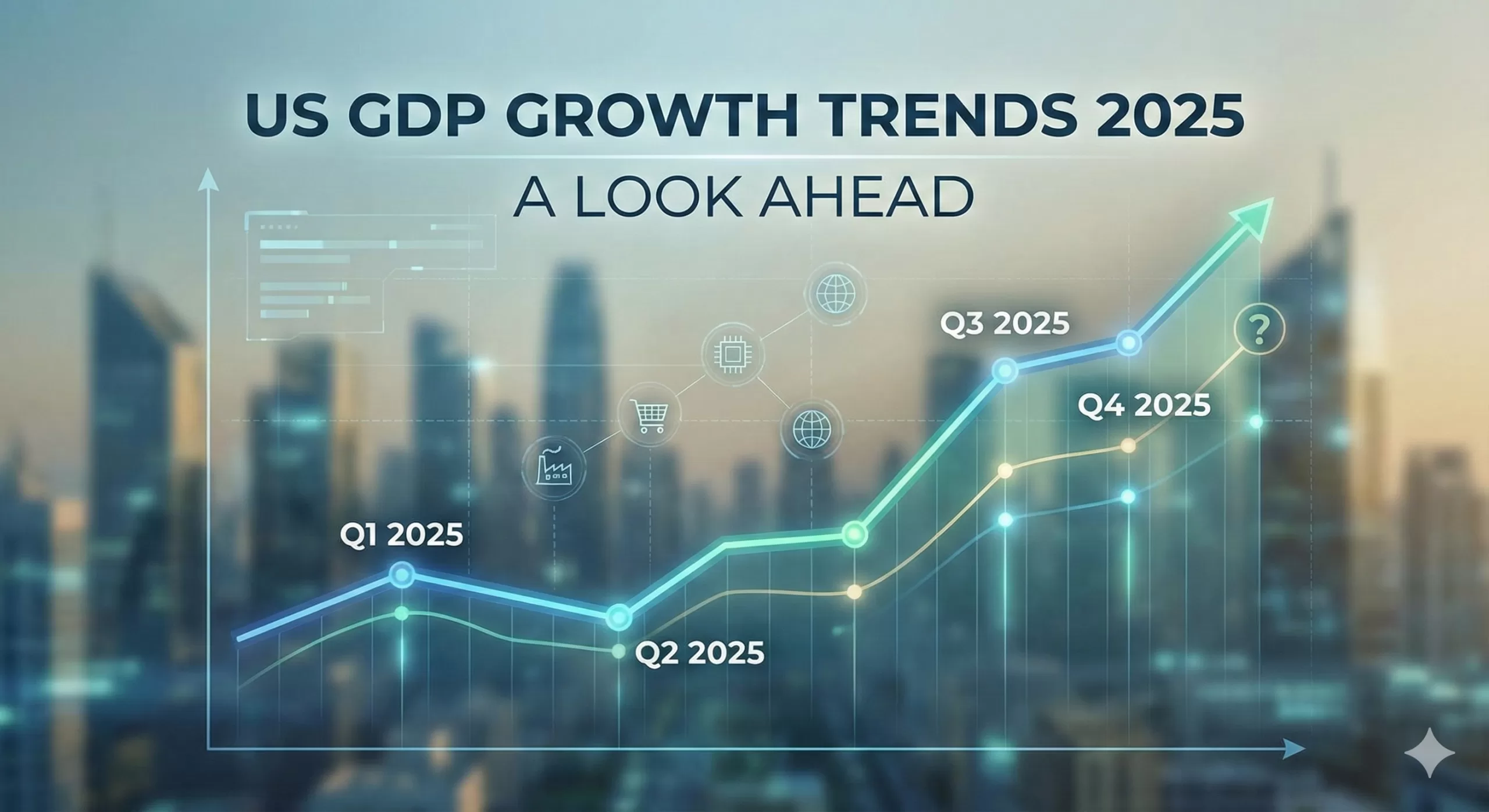
Let’s explore the potential trends in its Gross Domestic Product (GDP) growth rate throughout 2025. While no one has a crystal ball, we can analyze current trajectories, expert projections, and potential influencing factors to paint a picture of what lies ahead.
The Current Economic Pulse (Briefly looking back at late 2024)
To understand 2025, it’s crucial to acknowledge the economic momentum (or lack thereof) leading into it. We’re likely seeing a continued moderation from the robust growth experienced in the immediate post-pandemic recovery. Inflation, while hopefully tamer, will still be a key variable, influencing consumer spending and investment. Interest rates, dictated by the Federal Reserve, will also play a significant role. Let’s imagine a snapshot of the US economy as we enter 2025.
Q1 2025: A Cautious Start?
As 2025 kicks off, many economists anticipate a period of continued cautious growth. Businesses may still be adjusting to lingering supply chain complexities and a potentially tighter labor market. Consumer spending, the bedrock of the US economy, might see moderate gains, influenced by real wage growth (or lack thereof) and household savings levels. Investment in new projects could be selective, driven by a desire for efficiency and technological advancement. We might see the GDP growth rate hover in the lower to mid-2% range during this initial quarter.
Q2 2025: Finding its Rhythm
Moving into the second quarter, we could witness the economy starting to find a more stable rhythm. Factors such as potentially easing inflationary pressures and a clearer outlook on monetary policy could provide more certainty for businesses and consumers. We might see a slight uptick in manufacturing activity and continued strength in the services sector. Technological innovation, particularly in areas like AI and green energy, could begin to show more tangible contributions to productivity.
Q3 2025: Potential for Acceleration
The third quarter often provides a good indicator of annual performance, and 2025 could see some positive momentum building. If global economic conditions stabilize and major geopolitical tensions remain subdued, US exports could see a boost. Domestically, renewed consumer confidence, perhaps fueled by a strong job market and stable prices, could lead to increased discretionary spending. Business investment might also pick up as companies look to capitalize on growth opportunities. This could be a quarter where GDP growth nudges closer to the mid-2% to even 3% range. Imagine the vibrancy of a thriving economy in full swing.
Q4 2025: A Strong Finish or Continued Moderation?
The final quarter of 2025 will be crucial in determining the overall annual growth rate. Much will depend on the preceding quarters’ performance and any new unforeseen global or domestic events. A strong holiday shopping season, robust corporate earnings, and continued investment in key sectors could lead to a solid finish. However, potential headwinds like persistent inflation or unexpected global economic slowdowns could temper growth. The Federal Reserve’s stance on interest rates will also be keenly watched. The year could conclude with growth stabilizing, setting the stage for 2026.
Key Influencing Factors for 2025:
Inflation and Interest Rates: The Fed’s ability to manage inflation without stifling growth will be paramount.
Consumer Spending: The health of the consumer, driven by wages, employment, and savings, is always a critical determinant.
Business Investment: Companies’ willingness to invest in expansion, R&D, and technology will fuel future growth.
Global Economic Health: International trade and geopolitical stability will have a ripple effect on the US economy.
Technological Advancement: Innovations in AI, automation, and green technologies could boost productivity.
In conclusion, 2025 is shaping up to be a year of continued adaptation and potential growth for the US economy. While we can anticipate some fluctuations, a path of cautious yet steady expansion seems to be the prevailing view among many analysts. The resilience and dynamism of the American economy will undoubtedly be tested, but its capacity for innovation and recovery remains a powerful force.
We fund tough deals and focus on the quality of your client’s accounts receivable, ignoring their financial condition. This enables us to move quickly and fund qualified businesses including Manufacturers, Distributors and a wide variety of Service Businesses in as quick as a week. Contact me today to learn if your client is a fit.
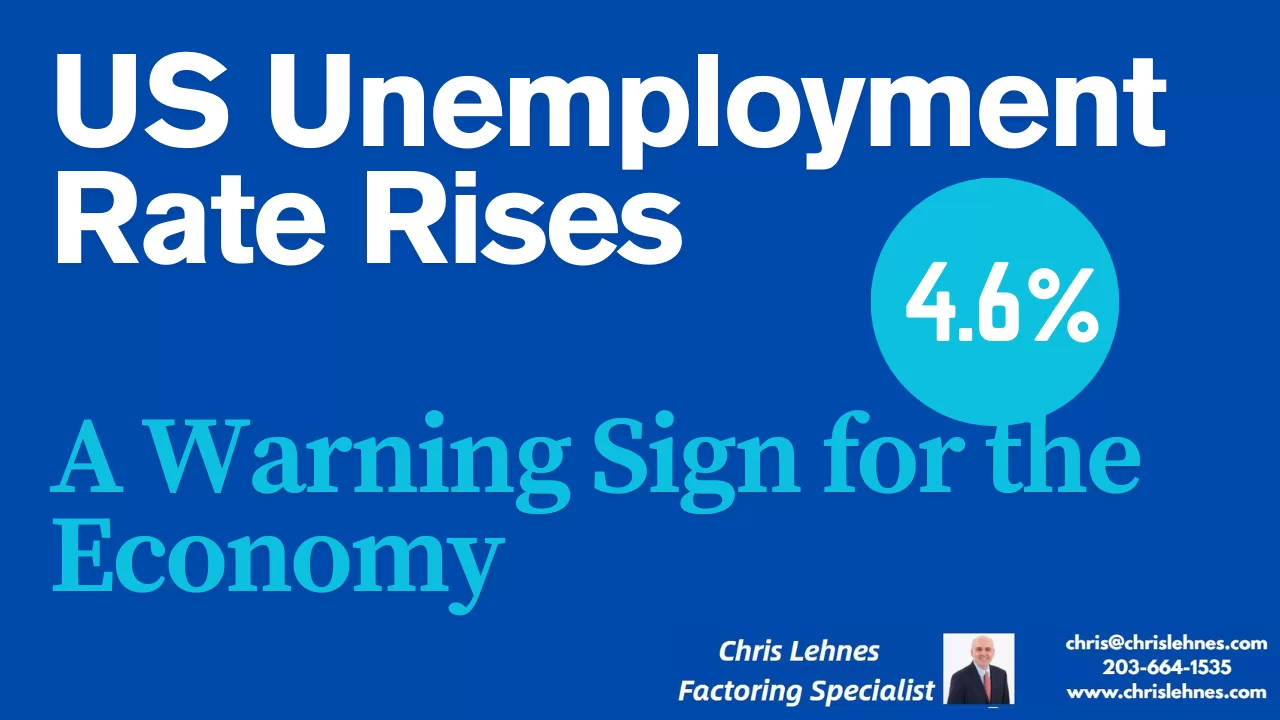
As we sit here in mid-December 2025, the “soft landing” narrative that dominated headlines for the last two years feels significantly bumpier than advertised. The release of the November jobs report—delayed and distorted by the recent government shutdown—dropped a reality check on the US economy: 4.6% unemployment.
This is the highest level we’ve seen since late 2021. With only weeks left in the year, the big question isn’t just where we end 2025, but whether this upward trend is a blip or a break in the dam.
The “Shutdown” Distortion & The Real Trend
We spent October flying blind due to the federal data collection freeze, which makes the November numbers even more jarring.
The jump to 4.6% (up from 4.3% in August) wasn’t just a statistical noise event. The underlying data shows a cooling engine:
Hiring Freeze: Employers added only 64,000 jobs in November.
Revisions: August and September numbers were revised downward, revealing that the labor market was weaker than we thought before the shutdown drama.
Sector Rot: While healthcare and construction are holding up, we are seeing real contraction in transportation, warehousing, and federal employment.
The Policy Headwinds: Tariffs and Immigration
We cannot ignore the elephant in the room: the policy shifts of the second Trump administration. The search results and economic reports highlight two major levers pulling on the labor market right now:
Tariffs: Businesses are clearly pausing hiring to assess the cost impact of new trade barriers. The “wait-and-see” approach is freezing capital expenditure and headcount.
Immigration Crackdowns: Industries reliant on immigrant labor (agriculture, hospitality) are facing supply shocks, but paradoxically, this hasn’t lowered the unemployment rate yet—likely because the broader cooling in demand is outpacing the contraction in labor supply.
The Speculation: Where do we hit the finish line?
So, what will the final number be for 2025?
The December jobs report won’t be released until January 9, 2026, but we can make an educated speculation based on the high-frequency data we have now.
My Prediction: 4.6% – 4.7%
I believe the unemployment rate will likely hold at 4.6% or tick up slightly to 4.7% to close out the year. Here is why:
Seasonal Lulls: December hiring is usually robust in retail, but with consumer confidence shaky and inflation stickier than hoped, seasonal hiring has been muted.
The Lag Effect: The Fed’s recent rate cuts (referenced in the Dec 10 meeting) take months to work through the system. They won’t save the December jobs numbers.
Momentum: The trend line is undeniably upward. When unemployment rises 0.5% from its cycle low (which was down near 3.4%), it rarely stops immediately. We have breached that “Sahm Rule” threshold.
The Bottom Line
2025 is ending on a note of caution. We aren’t in a freefall, but the labor market has lost its ironclad resilience. The “employee’s market” of 2022-2023 is officially dead; 2026 will be about protecting the gains we have left.
More Humanby Rasmus Hougaard & Jacqueline Carter posits that AI represents a critical inflection point for leadership. The central thesis is that AI, if approached with foresight, can catalyze a renaissance in leadership, making leaders paradoxically more human. This is achieved by delegating tactical tasks to AI, thereby freeing up time and cognitive space for leaders to focus on innately human skills. The future of leadership is not a choice between human or machine, but a “both/and” approach of augmentation, where leaders who leverage AI will replace those who do not.
The framework for this new paradigm rests on three core human qualities that leaders must cultivate to effectively partner with AI:
Awareness: The ability to provide uniquely human context to the vast content generated by AI.
Wisdom: The capacity to ask insightful human questions to guide and critically evaluate the answers provided by AI.
Compassion: The skill of combining the human heart with the analytical power of AI algorithms to do hard things in a human way.
Cultivating these qualities begins with understanding and managing one’s own mind, which is the foundation of effective leadership. The document outlines actionable mindsets and practices to develop these core qualities. Research data consistently shows that leaders who embody high levels of awareness, wisdom, and compassion create significantly better work experiences, fostering greater trust, commitment, psychological safety, and job satisfaction while reducing burnout and turnover. The imperative for leaders is a dual commitment: to double down on inner development and to proactively integrate AI into every facet of their work to unleash this new, more human potential.
——————————————————————————–
I. The Dawn of Augmented Leadership
The introduction of generative AI has brought leadership to a crucial crossroads. The choice is between creating an era of impersonal, mechanical efficiency or catalyzing a golden age of human-centered leadership. The research presented argues that by strategically delegating tasks and augmenting skills with AI, leaders can enhance organizational performance while unlocking a more fulfilling human experience at work.
The Three Promises of AI for Leadership
The analysis identifies three primary ways AI can transform leadership:
Save Time for Human Connection: AI can automate and simplify tactical and administrative leadership activities. As Ellyn Shook of Accenture notes, an AI tool that summarizes performance data reduced her prep time from 45 minutes to 5, allowing her to spend the saved time preparing “how to make the performance conversation a positive experience for the team member.” The key is to reinvest this saved time not in more tasks, but in elevating the human experience for employees.
Enable Ultra-Personalized Leadership: AI’s processing power allows leaders to gain unprecedented insight into employees’ unique needs, preferences, and well-being. Francine Katsoudas of Cisco states, “with AI, leaders have the potential to gain better insight into the key elements of an employee’s well-being and better support their individual needs.” This enables a shift from generalized management to a highly tailored approach that respects individual complexity.
Elevate the Best of Our Humanness: AI can act as an “exoskeleton for the mind and heart,” strengthening a leader’s cognitive, emotional, and social capacities. It can enhance decision-making, deepen understanding of team dynamics, and help leaders be more consistent with their values. However, this potential is only unlocked when paired with a commitment to human development; relying on the tool without improving the driver is ineffective.
II. The “Both/And” Paradigm: The Art of the Toggle
The core principle for effective leadership in the AI era is augmentation—adopting a “both/and” mindset that leverages the complementary strengths of humans and machines. This requires mastering the “art of the toggle,” a dynamic process of moving between human and AI capabilities.
Human Strengths
Human Limitations
AI Strengths
AI Limitations
Context, Intuition, Care, Vision
Emotions, Biases, Inconsistency
Data, Analysis, Speed, Scale
Mechanical, Biased, No Ethics
Asking “Why,” Critical Judgment
Limited Processing Capacity
Generating Content, Finding Patterns
Lacks “Common Sense,” Context
Empathy, Connection, Morality
Subjectivity, Fatigue
Personalization, Unemotional Logic
“Black Box” Problem, No Heart
Employee Preference for the “Imperfect Human”
Despite AI’s capabilities, research reveals a strong employee preference for human leaders, especially in emotionally resonant areas.
Trust: 57% of employees do not trust AI to understand human behavior better than a human leader.
Emotional Analysis: 60% are concerned about AI analyzing and leveraging employee emotions for decisions.
Hiring & Promotions: 69% have concerns about AI making decisions about hiring, promotions, and work assignments.
Negative Feedback: Only 25% would be comfortable receiving negative performance feedback from AI, while 55% would be uncomfortable.
This indicates that the most crucial leadership moments require an authentic human touch that AI cannot replicate. The value proposition for human leaders lies in the messy, emotional, and relational aspects of work.
III. The Foundation: Leadership Starts with the Mind
The ability to cultivate awareness, wisdom, and compassion begins with the leader’s own mind. In an age of increasing information overload and distraction, managing one’s inner state is no longer a soft skill but a critical capacity. The “Human Leader Compass” is a model where leadership starts with the mind, which then enables the development of the three core qualities, each supported by five actionable mindsets.
Techniques for Mind Management
To counter the “tsunami of information,” leaders must proactively cultivate a clear and spacious mind. Three primary practices are recommended:
Working with the Mind (Meditation): The practice of familiarizing oneself with the mind to observe thoughts and emotions without being controlled by them. This rewires the brain to operate more from the prefrontal cortex (System 2 thinking), enhancing executive function, emotional regulation, and clarity.
Working with the Breath (Breath Work): Ancient techniques like pranayama that modulate the autonomic nervous system, shifting it from a “fight-or-flight” state to a “rest-and-digest” state, thereby promoting calm and balance.
Working with the Body (Mind-Body Practices): Practices like yoga that integrate the mind and body, enhancing mental clarity, emotional stability, and inner calm.
IV. The Three Core Qualities of the AI-Augmented Leader
A. Awareness: Context + Content
Awareness is the perceptual capacity to observe internal and external experiences to cultivate clarity and presence. The AI-augmented leader uses this quality to provide essential human context to the vast content generated by AI.
How AI Enhances Awareness:
Self-Awareness: Creating an “AI proxy” of oneself to uncover personal biases and blind spots.
Relational Awareness: Using AI to analyze team dynamics, communication patterns, and non-verbal cues in meetings to “see the unseen.”
Situational Awareness: Leveraging AI to analyze big data on employee retention, market trends, and other environmental factors.
Key Mindsets for Awareness:
Equanimity: Maintaining mental balance and composure, avoiding attachment or aversion.
Self-Mastery: Monitoring and regulating emotions and thoughts to align actions with values.
Presence: Being fully attentive to the present moment, task, and people.
Clarity: Eliminating mental clutter to maintain a clear, focused mind.
Adaptability: Adjusting to the diverse needs of people and evolving circumstances.
B. Wisdom: Questions + Answers
Wisdom is the discerning capacity to form sound judgment by understanding reality as it is, free from the limitations of the ego. It involves seeing interdependence and impermanence. The AI-augmented leader’s role is not to have all the answers, but to ask the right questions and apply critical judgment to AI’s outputs.
How AI Enhances Wisdom:
Data-Driven Insights: Utilizing people analytics for more objective talent management decisions.
Enhancing Creativity: Using AI as a brainstorming partner to generate novel ideas and explore “what if” scenarios.
Challenging Thinking: Employing AI as an objective partner to challenge assumptions and simulate outcomes from diverse perspectives, free from organizational politics.
Key Mindsets for Wisdom:
Integrity: Demonstrating strong moral principles and ethical behavior.
Beginner’s Mind: Approaching situations with curiosity and openness, free from preconceptions.
Critical Thinking: Evaluating information objectively, questioning assumptions and biases.
Humility: Recognizing one’s limitations and being open to learning from others.
Selflessness: Prioritizing the needs of the team and organization over personal gain.
C. Compassion: Heart + Algorithm
Compassion is the responsive capacity to provide genuine care with the intention of benefiting others. It is about doing hard things in a human way. The AI-augmented leader combines the authentic human heart with insights from AI algorithms to lead with care and strength.
How AI Enhances Compassion:
Tailoring Leadership: Using AI insights from personality assessments (e.g., Enneagram) to personalize communication and motivation for each team member.
Boosting Communication: Employing sentiment analysis to understand employee concerns and craft more empathetic and effective messages.
Personalized Coaching: Leveraging AI as a “coach in your pocket” to provide real-time feedback and development support.
Key Mindsets for Compassion:
Courage: The inner strength to overcome fear and take necessary, often difficult, action.
Presilience: Proactively preparing to face challenges without getting knocked off balance.
Emotional Intelligence: Recognizing, understanding, and managing one’s own emotions and those of others.
Purpose: Aligning work with core values in the pursuit of a greater good.
Trust: Creating a psychologically safe environment where people feel valued and secure.
V. Key Research Findings
The book’s recommendations are supported by quantitative research from four studies involving over 2,500 leaders and employees. The data reveals a powerful correlation between the core human qualities and both leadership effectiveness and readiness for an AI-augmented future.
Impact of Leaders High in Awareness, Wisdom, and Compassion (vs. Low)
% Improvement
Employee Trust in Leadership
+97%
Employee Commitment to the Organization
+65%
Psychological Safety
+61%
Job Satisfaction
+49%
Likelihood to Quit (Reduction)
-37%
Job Burnout (Reduction)
-31%
Furthermore, leaders rated high in these human qualities are perceived as far more capable of leveraging AI effectively:
Observer Perception of Leaders High in Awareness, Wisdom, & Compassion
% Agreement
Excels at providing context
88%
Adept at identifying relevant content
87%
Asks thought-provoking questions
78%
Demonstrates leading with their heart
82%
Good at interpreting AI-generated answers
49%
Effectively leverages AI algorithms
39%
VI. Conclusion: The Imperative to Become More Human
The age of AI will not make human leadership obsolete; it will make it more essential than ever. Leaders who fail to embrace AI will be left behind, not by AI itself, but by AI-augmented leaders who can operate on a higher level of human engagement. As Dimitra Manis of S&P Global stated, AI will change expectations: “There will be no such thing as ‘I don’t have time to lead my people.’”
The path forward requires a dual commitment:
Double Down on Inner Development: Proactively invest time in understanding and managing the mind to build the foundational capacity for awareness, wisdom, and compassion.
Integrate and Embrace AI: Actively explore and apply AI tools in all leadership activities—not as a replacement, but as a partner to augment and elevate human capabilities.
The future belongs to leaders who can master this synergy, leveraging technology not to become more like machines, but to become profoundly and effectively more human.
Answer the following questions in 2-3 sentences each, based on the provided source context.
What is the central paradox the authors discovered about the potential impact of Artificial Intelligence on leadership?
The text introduces the “age of augmentation.” What does this term mean, and what is the key mindset leaders must adopt to thrive in it?
What are the three core human qualities of AI-augmented leadership, and what fundamental neurological processes do they correspond to?
Explain the concept of “toggling” as it applies to the AI-augmented leader. Provide a brief example of how it works in practice.
According to the authors, why must leadership start with the mind, and why is this focus particularly critical in the age of AI?
Describe the “human leader compass” model. What are its primary components and its purpose?
How can a leader create and use an “AI proxy” to enhance their self-awareness?
In the context of wisdom, what is the critical role of a human leader when interacting with AI systems that can provide vast amounts of answers instantly?
What is the neurological difference between empathy and compassion, and why is this distinction important for effective leadership?
According to the text, will AI replace human leaders? Explain the authors’ conclusion on this matter.
——————————————————————————–
Answer Key
The central paradox is that, contrary to fears of a robotic work reality, AI can actually make leaders more human. By delegating tactical tasks to AI and using it to augment their skills, leaders can save time and redirect their focus toward creating positive human experiences, thereby mining and maximizing the best of human potential.
The “age of augmentation” is an era where tools like AI actively interact with us, changing how we perceive and engage with the world. To thrive, leaders must adopt a “both/and mindset,” which means leveraging both the analytical power of AI and their most authentic human qualities in a synergistic relationship.
The three core human qualities are awareness, wisdom, and compassion. These leadership qualities correspond to the fundamental neurological processes of perception (observing experiences), discernment (forming sound judgment), and response (acting with intention).
“Toggling” is the practice of fluidly moving between human strengths (like intuition and context-setting) and AI’s capabilities (like data analysis and content generation). A leader preparing for a difficult conversation might first use human intuition to set the context, then use AI to analyze the situation and role-play, before finally applying human critical thought to the AI’s suggestions.
Leadership starts with the mind because a leader’s mind creates their thoughts, which in turn create their actions and shape the reality of their employees. This focus is critical in the age of AI because the human mind is not naturally equipped to handle the relentless onslaught of information from technology, which risks making leaders overwhelmed, overworked, and mentally exhausted.
The human leader compass is a model showing that leadership starts with the mind. By understanding and managing the mind, a leader can cultivate the three core qualities of awareness, wisdom, and compassion. The model further shows that each of these qualities is accelerated by adopting five specific, scientifically validated mindsets.
A leader can create an AI proxy by providing a secure AI tool with extensive personal information, such as their personality type, writing samples, and opinions. This enhances self-awareness by acting as an objective mirror, helping the leader uncover personal biases and blind spots by analyzing how they might respond in challenging situations.
While AI excels at providing answers based on enormous amounts of data, it lacks wisdom and cannot discern right from wrong. The critical role of the human leader is to ask good questions, apply critical thinking, and wisely deliberate on the answers provided by AI, ensuring that decisions are not just smart but also ethical and aligned with human values.
Neurologically, empathy originates from the emotional centers of the brain, allowing us to feel what others feel. Compassion, however, is an intention activated in the executive functioning areas of the brain that drives us to take appropriate action for the greater good. The distinction is crucial because leaders must connect with empathy but lead with compassion to do hard things in a human way.
The authors conclude that AI will not replace human leaders. Instead, leaders who fail to leverage AI to augment their leadership will be replaced by those who do. This is because AI lacks authentic emotional engagement, wisdom, and the ability to provide context—uniquely human qualities that employees prefer and which are essential for the most important elements of leadership.
——————————————————————————–
Essay Questions
The following questions are designed for longer, essay-style responses to encourage deeper reflection on the book’s central themes. Answers are not provided.
The authors argue that AI presents a “major inflection point” for leadership. Discuss the two potential paths leaders can take—a “renaissance” of human leadership versus an era of “mechanical, impersonal efficiency.” Analyze the key choices, practices, and mindsets that will determine which path an organization follows.
Analyze the concept of the “AI-Augmented Leader” by explaining the complementary relationship between human qualities (context, questions, heart) and AI capabilities (content, answers, algorithm). Use examples from the text to illustrate how this synergy works in practice for each of the three core qualities: awareness, wisdom, and compassion.
The text outlines numerous risks and benefits of AI for the “mind of the leader,” including the dualities of supercharged intelligence versus cognitive laziness and data-driven insights versus inherent bias. Evaluate these risks and explain how the practices of mind-training and “thinking slowly” can help leaders mitigate them while maximizing the benefits.
The “human leader compass” is presented as a roadmap for leadership, starting with the mind. Explain the relationship between managing the mind and cultivating the three core qualities. Choose one of the core qualities (awareness, wisdom, or compassion) and discuss in detail how its five associated mindsets help a leader operationalize that quality in their daily work.
The book’s central argument is that to succeed in the age of AI, leaders must become “more human.” Discuss this apparent paradox. How does leveraging a machine enhance a leader’s humanity, and why is this enhancement a critical new standard for leadership in the future?
——————————————————————————–
Glossary of Key Terms
Term
Definition
AI-Augmented Leader
A leader who develops the three core human qualities of awareness, wisdom, and compassion and embraces the best of both human and AI capabilities. This leader skillfully provides context to AI-generated content, uses wisdom to ask thoughtful questions about AI-provided answers, and leverages algorithmic power to provide an authentic, heartfelt, human experience.
Age of Augmentation
The current era of work where tools, specifically AI, are actively interacting with humans in ways that change how they perceive and engage with the world. It is a shift from the Information Age, where tools were passive, to an age where they actively listen, analyze, learn, and predict.
Awareness
The perceptual capacity of the mind to observe both internal and external experiences with the intention of cultivating mental clarity, agility, and executive presence. It encompasses self-awareness, relational awareness, and situational awareness.
Beginner’s Mind
The ability to see people and situations with fresh eyes, as if for the first time, without letting preexisting beliefs or past experiences color one’s approach. It combines expertise with openness and a lack of assumptions.
Bodhichitta
A concept from Buddhist tradition that can be understood in secular terms as a profound dedication to benefit others. In leadership, it is an authentic commitment to genuinely improve the world through one’s actions and decisions, where the success of the business is intertwined with the welfare of all it touches.
Both/And Mindset
The key principle of augmentation where a leader must leverage both the power of AI and their most human qualities simultaneously. It rejects an “either-or” approach in favor of a synergistic relationship between human and machine.
Compassion
The responsive capacity of the mind to provide genuine care, with the intention of benefiting others and contributing to the greater good. It is the ability to do hard things in a human way, requiring courage and strength rather than being a “soft” or weak skill.
Critical Thinking
The ability to thoroughly evaluate situations and make informed decisions by considering biases, questioning assumptions, analyzing information objectively, and synthesizing insights. It is an essential skill to counter the risk of cognitive laziness when AI provides instant answers.
Emotional Intelligence
The ability to recognize, understand, and manage one’s own emotions as well as those of others. It enables leaders to surface and address underlying emotions and respond with compassion.
Empathy
A neurological process originating from the emotional centers of the brain that allows one to see and feel what others see and feel. It is distinct from compassion, which is an intention activated in the executive functioning areas of the brain.
Equanimity
The ability to balance thoughts and emotions to avoid being swept away by extreme impulses like craving or aversion. It is a mental calmness, composure, and evenness of temper in the face of both positive and negative events.
Human Leader Compass
A model depicting that leadership starts with the mind. By managing the mind, a leader can cultivate the three core qualities of awareness, wisdom, and compassion, which are in turn accelerated by adopting fifteen specific, validated mindsets (five for each quality).
Humility
The awareness of one’s limitations and a genuine openness to learning new things, without ego or pretense. It is not about self-deprecation but about having a realistic view of one’s role and recognizing the inherent value in others.
Integrity
Consistently demonstrating ethical behavior and strong moral principles. It involves being honest, transparent, authentic, and accountable, laying the foundation for trust and credibility.
Mindsets
Attitudes or ideas based on underlying beliefs that shape how we see and experience the world. They act as neurological lenses that determine how one perceives situations and approaches obstacles.
Presence
The ability to be fully attentive to oneself, the people one is with, the task at hand, and the surrounding environment. It is the ability to “be here now” and avoid autopilot reactions.
Presilience
A blend of foresight and resilience; the ability to proactively prepare oneself to face challenges without getting knocked off balance. It involves anticipating and better responding to stressors when they arise, rather than just reacting to them.
Prompt Engineering
The art of crafting clear, contextual, and objective queries (prompts) that effectively communicate with AI systems to elicit valuable and relevant insights or actions.
Psychological Safety
A sense of safety that leads to greater employee engagement, better performance, and is a key enabler of team effectiveness. Research shows leaders high in awareness, wisdom, and compassion create significantly more psychological safety.
Purpose
The ability to align one’s work with core values in the pursuit of the greater good. It provides a clear sense of direction and meaning that transcends daily tasks.
Self-Awareness
A form of awareness involving introspection and the ability to assess one’s own capabilities, biases, strengths, limitations, and emotional state.
Self-Mastery
The ability to monitor and regulate one’s emotions, thoughts, and experiences, combined with the discipline to make choices in line with one’s values. It is an ongoing journey of continuous learning and personal improvement.
Selflessness
The ability to overcome the limitations of ego and focus on the greater good. It involves prioritizing the needs and well-being of the team and organization over personal gain.
Situational Awareness
A leader’s ability to “read the room,” understand the undercurrents within the organization, and anticipate the implications of external events.
Toggling
The practice of mastering the dance between human and AI qualities, creating a synergy where technology amplifies human potential. It involves fluidly moving between leaning into human strengths (like context-setting) and leveraging AI capabilities (like data analysis).
Trust
An environment where people feel safe, valued, and free to share contrary views without fear of being penalized or judged. It is the currency of high-performing teams.
Wisdom
The discerning capacity of the mind to form sound judgment by understanding reality as it is, free of the limitations of the ego. It involves applying insight, experience, critical thinking, and social and emotional intelligence to ask good questions and make decisions that balance short-term gains with long-term ethical considerations.
For B2B businesses, accounts receivable (AR) factoring is essentially a tool to accelerate cash flow. It allows you to trade the “waiting game” of Net-30 or Net-60 terms for immediate liquidity.
Instead of waiting for a client to pay an invoice, you sell that invoice to a third party (a “factor”) who advances you the majority of the funds immediately. This converts a stagnant asset (an unpaid invoice) into active working capital you can use to fund operations, payroll, or growth.
The following guide details how B2B businesses can utilize this strategy to meet working capital needs.
1. The Core Mechanism: How it Works
Factoring is technically an asset sale, not a loan. You are selling the right to collect on the invoice.
Step 1: Invoicing. You deliver your goods/services and send an invoice to your B2B customer as usual.
Step 2: Sale. You submit a copy of that invoice to the factoring company.
Step 3: The Advance. The factor verifies the invoice and wires you an advance—typically 80% to 90% of the invoice value—within 24 to 48 hours.
Step 4: Collection. The factor waits for your customer to pay them directly according to the invoice terms (e.g., 30 or 60 days).
Step 5: The Rebate. Once the customer pays the full amount, the factor releases the remaining 10–20% to you, minus their fee (usually 1–5%).
2. Strategic Uses for Working Capital
You can use the immediate infusion of cash to solve specific operational friction points common in B2B models:
Bridging the “Gap”: If your expenses (payroll, rent, utilities) are due weekly or bi-weekly, but your customers pay monthly, you have a cash flow gap. Factoring aligns your revenue intake with your expense outflow.
Fulfilling Large Orders: B2B growth often hurts cash flow before helping it. If you land a massive contract, you need cash now to buy raw materials and hire labor to fulfill it. Factoring existing invoices gives you the capital to fund these new orders without taking on debt.
Negotiating Supplier Discounts: With cash on hand, you can pay your own suppliers early. often unlocking “2/10 Net 30” discounts (a 2% discount if paid within 10 days). This discount can sometimes offset the cost of the factoring fee itself.
Smoothing Seasonality: For businesses with peak seasons (e.g., manufacturing for holiday retail), factoring during the busy season ensures you have the liquidity to maximize production when it matters most.
3. Critical Decisions: Configuring Your Factoring
To use this effectively, you must choose the right “type” of factoring for your risk profile.
Recourse vs. Non-Recourse
This determines who is liable if your client never pays (e.g., they go bankrupt).
Recourse Factoring: You are liable. If the client doesn’t pay, you must buy the invoice back from the factor. Benefit: Lower fees.
Non-Recourse Factoring: The factor assumes the credit risk. If the client defaults due to insolvency, the factor absorbs the loss. Benefit: Zero risk for you, but higher fees.
Notification vs. Non-Notification
Notification: Your customer is notified to pay the factor directly. This is standard but can sometimes signal to customers that you are tight on cash.
Non-Notification (White Label): The customer pays into a bank account that looks like yours but is controlled by the factor. The customer is unaware of the factoring arrangement.
4. Who Qualifies?
Unlike a bank loan, approval for factoring is based primarily on your customer’s creditworthiness, not yours.
Ideal Candidate: A B2B business (startups included) with reliable, large corporate or government clients who pay slowly but surely.
Less Ideal: Businesses with B2C customers (individuals) or clients with poor credit histories.
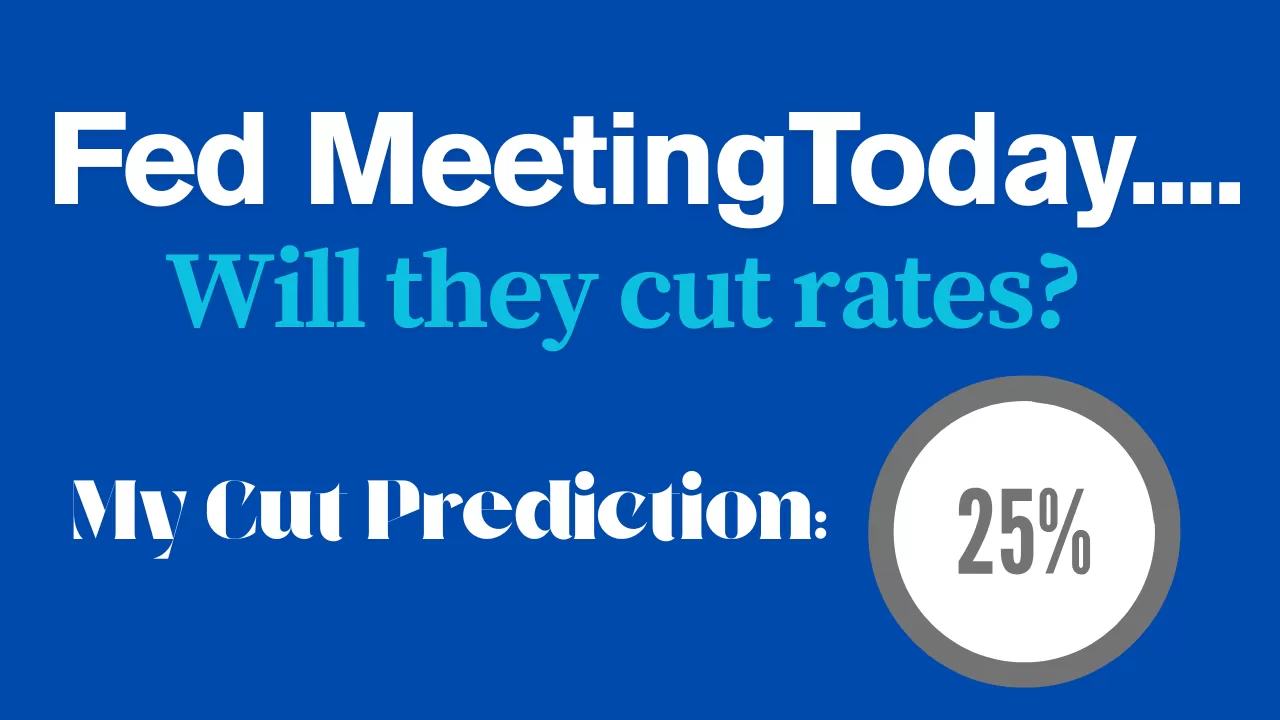
As the Federal Open Market Committee (FOMC) wraps up its final meeting of 2025 today, all eyes are on the 2:00 PM EST announcement. With the U.S. economy cooling and the labor market showing signs of strain, speculation is high that a Fed Cut in rates is imminent.
Here is a breakdown of the current predictions, the economic data driving the decision, and what odds makers are betting on.
The Consensus: A “December Cut” is Highly Likely
Market watchers are overwhelmingly pricing in a 25-basis-point (0.25%) rate cut.
According to the CME FedWatch Tool, which tracks trading in federal funds futures, there is currently an 87% probability that the Fed will lower the target range to 3.50%–3.75%. This would mark the third consecutive rate reduction, following cuts in September and October, signaling a definitive shift from fighting inflation to supporting the labor market.
Key Factors the Fed is Weighing
The Fed’s “dual mandate” requires it to balance stable prices with maximum employment. For the first time in years, the risks have shifted from overheating inflation to a cooling jobs market.
1. The Cooling Labor Market (The Primary Driver) The unemployment rate has ticked up to 4.4%, a figure that has caught the attention of Fed Chair Jerome Powell. While historically low, the steady rise suggests that high interest rates are finally biting into corporate hiring. Job growth has slowed, and layoffs in sensitive sectors have increased. The Fed is keen to avoid a “hard landing” where unemployment spikes uncontrollably.
2. Sticky but Manageable Inflation Inflation hasn’t disappeared, but it is no longer the five-alarm fire it was two years ago. The latest PCE (Personal Consumption Expenditures) data places headline inflation around 2.7%–2.9%, with core inflation hovering near 2.8%. While this is still above the Fed’s 2% target, it is trending in the right direction, giving the central bank “air cover” to cut rates to support jobs without immediately reigniting price hikes.
3. Economic Growth (GDP) GDP growth has moderated to an annualized rate of roughly 1.8%–2.0%. This suggests the economy is slowing down but not crashing—the definition of the elusive “soft landing.” A rate cut now is viewed as insurance to keep this momentum from stalling out completely in early 2026.
The “Wild Card”: A Divided Committee
Despite the high odds of a cut, this meeting is not without tension. Reports suggest the FOMC is sharply divided.
** The Doves (Cut Now):** Worried that waiting too long will cause a recession. They argue that with inflation falling, real interest rates are effectively rising, tightening financial conditions more than intended.
The Hawks (Pause/Hold): Concerned that cutting rates too quickly could cause inflation to flare up again, especially given that the economy is still growing.
Because of this division, the language in today’s statement will be just as important as the rate decision itself. Investors should look for clues about a “pause” in January. Many analysts believe the Fed may cut today but signal a skip in the next meeting to assess the impact of recent cuts.
What to Watch For
2:00 PM EST: The official statement and decision. Look for the “dot plot” (Summary of Economic Projections) to see where officials expect rates to be at the end of 2026.
2:30 PM EST: Chair Jerome Powell’s press conference. His tone regarding the “balance of risks” will move markets. If he sounds more worried about jobs than inflation, it will confirm that the easing cycle has further to go.
Bottom Line
While nothing is guaranteed until the gavel falls, the smart money is on a 0.25% cut today. The Fed likely views the rising unemployment rate as a warning light it cannot ignore, making a rate reduction the prudent move to secure a soft landing for 2026.
Category
Case for a Rate Cut (The “Doves”)
Case for Holding Steady (The “Hawks”)
Labor Market
Rising Risks: Unemployment has climbed to 4.4%. Doves argue that high rates are now doing unnecessary damage to hiring.
Hidden Strength: Some argue the job market is “normalizing” after the post-pandemic surge rather than collapsing.
Inflation
Progress Made: While at 2.8%, inflation is down significantly from its peak. High “real” rates (inflation vs. interest) are overly restrictive.
Sticky Prices: Inflation remains above the 2% target. Rate cuts could embolden businesses to keep prices high or raise them.
Economic Growth
Growth is Slowing: GDP growth has dipped toward 1.8%. A cut acts as “insurance” to prevent a recession in 2026.
Consumer Resilience: High durable goods spending suggests the economy is not yet in need of a stimulus.
Market Impact
Easing the Burden: Lower rates would provide immediate relief for credit card holders and small businesses facing high debt costs.
Asset Bubbles: Cutting too soon could overheat the stock and housing markets, leading to a boom-bust cycle.
The Federal Reserve has decided to cut the benchmark interest rate by 25 basis points (0.25%).
This move lowers the target range for the federal funds rate to 3.50% to 3.75%. This is the third consecutive rate cut this year and was made in light of elevated inflation and a weakening labor market.
Here are the key takeaways from the announcement and Chair Jerome Powell’s press conference:
✂️ Key Interest Rate Decision
The Cut: The Federal Open Market Committee (FOMC) voted to lower the target range for the federal funds rate by 25 basis points to 3.50%–3.75%.
The Vote: The decision was not unanimous, recording a 9:3 ratio of votes.
One member (Stephen I. Miran) preferred a larger, 50-basis-point cut.
Two members (Austan D. Goolsbee and Jeffrey R. Schmid) preferred no change, keeping the rate steady.
🎙️ Key Quotes and Context from Chair Powell
Powell’s remarks focused on the shifting balance of risks and the current policy stance:
Rationale for the Cut:“With today’s decision, we have lowered our policy rate three-quarters of a percentage point over our last three meetings. This further normalization of our policy stance should help stabilize the labor market while allowing inflation to resume its downward trend toward 2% once the effects of tariffs have passed through.”
The Dual Mandate Challenge: Powell acknowledged the difficulty of balancing the Fed’s two goals (maximum employment and price stability):”In the near term, risks to inflation are tilted to the upside and risks to employment to the downside—a challenging situation… We have one tool. It can’t do both of those—you can’t address both of those at once.”
Forward Guidance (What’s Next): The Fed indicated a cautious, data-dependent approach moving forward:”In considering the extent and timing of additional adjustments to the target range for the federal funds rate, the Committee will carefully assess incoming data, the evolving outlook, and the balance of risks.” When asked about a pause, Powell suggested the policy rate is now close to the “neutral” level: He indicated that the Fed’s benchmark rate is now likely somewhere close to the “neutral” level… which certainly indicates that he won’t be in a hurry to extend the string of cuts the Fed has made in recent months.
Economic Outlook and Projections (“Dot Plot”): The latest projections indicated a divided committee on future cuts.
The median Fed official is penciling in one rate cut for next year (2026), which is a more cautious outlook than some market expectations.
The Fed projects inflation (based on its preferred gauge) to ease to 2.4% by the end of 2026.
Based on the immediate market data and analyst reactions following the 2:00 PM announcement, here is how the decision is impacting mortgage rates and the stock market.
🏠 Impact on Mortgage Rates
The Verdict: Rates may hold steady or even tick up slightly, despite the Fed cutting rates.
Counter-Intuitive Movement: It often surprises borrowers, but mortgage rates do not move 1-for-1 with the Fed’s rate. Mortgage rates track the 10-year Treasury yield, which actually rose today (hitting roughly 4.21%).
Why? The market had already “priced in” this cut weeks ago. Investors are now looking ahead to 2026. Because the Fed signaled a slower pace for future cuts (a “hawkish cut”), bond markets reacted by pushing long-term yields higher.
Forecast: Experts expect 30-year fixed mortgage rates to hover in the low-to-mid 6% range for now. A significant drop below 6% is unlikely until investors see clearer signs that inflation is permanently defeated.
📈 Impact on the Stock Market
The Verdict: A “Santa Claus Rally” is likely, but 2026 looks choppier.
Immediate Reaction: The S&P 500 and Dow Jones both rose following the news, pushing close to all-time highs. The market “got what it wanted”—a cut to support the economy without panic.
Sector Watch:
Small Caps (Russell 2000): Often benefit most from rate cuts as they rely more on floating-rate debt.
Tech & Growth: Continued to show strength, though valuations remain high.
2026 Outlook: The Fed’s “dot plot” shows they plan to slow down, potentially cutting rates only once in 2026. This is fewer cuts than Wall Street hoped for, which suggests the “easy money” rally might face headwinds early next year as recession risks are still on the table (J.P. Morgan analysts cite a 35% recession probability for 2026).
Area
Short-Term Forecast (Dec ’25)
Why?
Mortgage Rates
Steady / Slight Rise
The cut was already priced in; long-term bond yields are rising.
Stocks
Bullish (Rally)
The “soft landing” narrative is intact; investors are relieved.
Savings Accounts
Slight Drop
High-yield savings rates will drop almost immediately by ~0.25%.
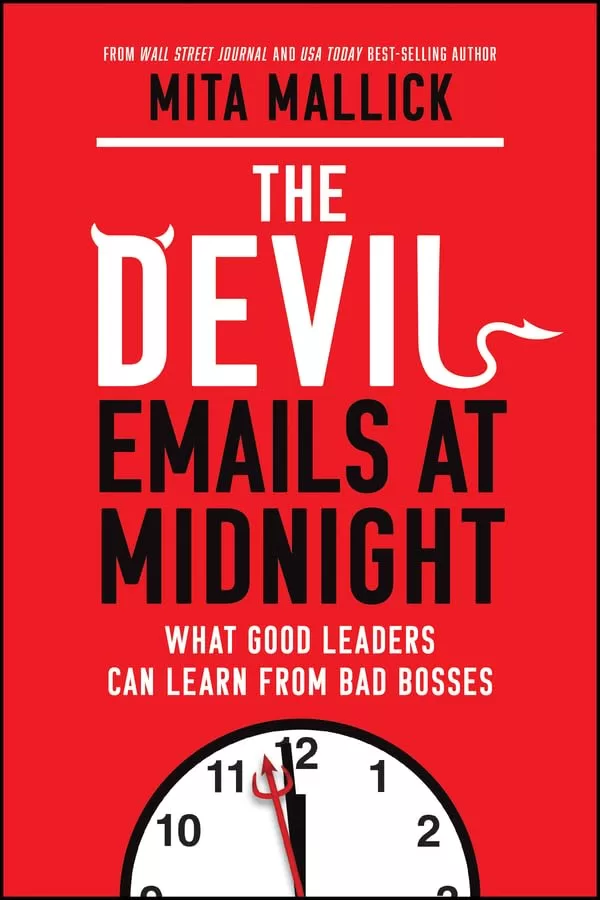
The Devil Emails at Midnight: What Good Leaders Can Learn from Bad Bosses by Mita Mallick details numerous negative experiences with different types of poor management—referred to as “bad bosses”—such as the “Devil” (unavailable boss), the “Sheriff” (bully), the “Napper” (disengaged leader), the “Chopper” (micromanager), and others. Mallick contrasts these toxic behaviors with principles of good leadership, including the importance of time management, addressing microaggressions, fostering inclusion, and avoiding pitfalls like toxic positivity and taking credit for others’ work. The work is framed as a self-reflective journey for leaders to prevent themselves from adopting these harmful habits, emphasizing that accountability and empathy are crucial for building positive and inclusive workplaces.
Briefing Document: Leadership Lessons from “The Devil Emails at Midnight”
The Devil Emails at Midnight Executive Summary
This document synthesizes the core themes and actionable insights from Mita Mallick’s The Devil Emails at Midnight: What Good Leaders Can Learn from Bad Bosses. The central premise is that effective leadership can be learned by analyzing the failures of ineffective managers. The book argues that “bad bosses aren’t born bad; they are made,” often as a product of circumstances such as a lack of training, personal trauma, deep-seated insecurity, or perpetuating a cycle of poor leadership they themselves experienced.
The author identifies and deconstructs 13 distinct “bad boss” archetypes through personal anecdotes from her career in Corporate America. These archetypes exhibit behaviors ranging from disengagement and micromanagement to bullying and bias. The cumulative impact of such behaviors is severe: they systematically break inclusion, erode trust, destroy productivity, kill creativity, and ultimately crush employee morale and well-being. A boss, the text asserts, has the single most significant impact on an employee’s mental health—more than a spouse, partner, or parent.
For each archetype, the book provides a corresponding framework for good leadership. These solutions emphasize self-awareness, clear communication, accountability, and a commitment to fostering an inclusive environment. Key recommendations include intentionally making time for team members, actively stopping microaggressions, coaching through mistakes rather than redoing work, protecting teams from a culture of false urgency, and creating systems of genuine recognition. Ultimately, the text serves as a resource guide for leaders at all levels to recognize their potential for negative behavior and choose instead to build healthy, positive workplaces where employees are valued and can thrive.
Introduction: The Devil Emails at Midnight : The Nature and Impact of Bad Bosses
The foundational argument of the text is that dysfunctional leadership is a product of environment and circumstance rather than innate character. Bad bosses are not a monolithic group of villains but individuals whose detrimental behaviors often stem from specific, identifiable causes.
Lack of Training: Many are promoted for being excellent individual contributors but are never taught how to manage people or lead teams.
Personal Wounds: The principle that “hurt people hurt people” is applied to the workplace, where wounded individuals lash out to gain a sense of power or temporary relief.
Modeling Bad Behavior: Some leaders simply replicate the poor management styles they have been subjected to throughout their careers.
Incompetence: Individuals who have “failed up” may lack the expertise for their role, leading to insecurity and poor direction.
Micromanagement: This often arises from a lack of trust, a need for control stemming from personal insecurity, or not knowing what their own job responsibilities should be.
Temporary Circumstances: Personal struggles, such as being passed over for a promotion, dealing with a difficult boss, or grieving a loss, can temporarily turn a good manager into a bad one.
The boss holds enormous power over an employee’s experience at work. The author posits that a boss has the most significant impact on an individual’s mental health. The core failure common to most bad bosses is that they make employees feel unseen, unheard, and unvalued. This invalidation can break an individual’s spirit and has a tangible, negative impact on the organization by destroying inclusion, trust, productivity, creativity, and morale.
Analysis of Bad Boss Archetypes and Leadership Solutions
The book is structured around 13 archetypes of bad bosses, each illustrating a specific leadership failure. Each failure is paired with a constructive framework for building a better leadership style.
Archetype 1: The Unavailable Boss – “The Devil”
Core Behaviors: Is perpetually “too busy” for their team during work hours. Communicates primarily through late-night or early-morning emails (“the devil emails at midnight”), which are often transactional and demanding. Fails to provide guidance, feedback, or basic human connection.
Impact on Team: Employees feel neglected, ignored, disgruntled, and unimportant. This leads to anxiety, unhappiness, and high turnover as team members seek environments where they feel valued.
Leadership Solution: Leaders must intentionally create and protect time for their teams.
Free Up Time: Proactively declutter calendars by removing non-essential meetings (e.g., those with no agenda, those where work can be done asynchronously).
Focus on How to Connect: Use freed-up time for high-value interactions like one-on-ones, skip-level meetings, team off-sites, and spontaneous check-ins. Be present and minimize distractions during these interactions.
Fend Off and Stay Firm: Protect the time dedicated to the team. Avoid canceling these meetings and reschedule promptly with an explanation if unavoidable.
Archetype 2: The Bullying Boss – “The Sheriff”
Core Behaviors: Engages in bullying, often through microaggressions. In the author’s case, this manifested as the boss refusing to learn her name (Madhumita) and instead renaming her “Mohammed” in public and private. This type of boss uses their power to isolate and demean individuals.
Impact on Team: Microaggressions deplete energy, chip away at confidence, and make employees question their sense of belonging. This leads to burnout, decreased job satisfaction, and high turnover, which costs U.S. businesses nearly $1 trillion annually.
Leadership Solution: Leaders must actively work to recognize and stop microaggressions.
Be Open to Learning: Research terms and behaviors to understand their impact. Listen to and believe employees who share their experiences.
Determine When to Intervene: Intervene in the moment to set a cultural tone or correct personal missteps. Intervene afterward for one-on-one coaching or to address more complex situations.
Hold Individuals Accountable: A culture is defined by the worst behavior a leader tolerates. Repeat harmful behavior cannot be excused.
A key tool for intervention is the 5Ds of Bystander Intervention developed by the nonprofit Right to Be:
Tactic Description Distract A subtle and creative way to interrupt harassment. Delegate Asking a third party for help in intervening. Document Recording or taking notes on an instance of harassment. Delay Checking in on the target after the incident. Direct Responding directly to the person causing harm and naming the behavior.
Archetype 3: The Actively Disengaged Boss – “The Napper”
Core Behaviors: Is physically present but mentally absent. This boss dozes off in meetings, shows up late and leaves early, and displays a profound lack of interest in their work and team.
Impact on Team: Disengagement is contagious. It erodes trust, decreases team engagement, and negatively affects productivity. Research shows that HR policies designed to boost morale (recognition programs, promotions, bonuses) are neutralized when an employee reports to a disengaged leader. Actively disengaged employees cost the world an estimated $8.8 trillion in lost productivity.
Leadership Solution: Leaders must intervene to re-engage team members rather than ignoring the behavior.
Be a Mirror: Objectively describe the observed behaviors to the individual.
Allow Space: Create an opportunity for the person to share what is going on, whether personal or professional.
Ask What Has to Change: Prompt self-reflection by asking what would make them excited about work again.
Spark Their Interest in Learning: Help them find opportunities to learn new skills.
Create a Plan and Stick to It: If they recommit, create a clear plan with measurable behaviors and a timeline. If they are unwilling to change, help them transition out of the organization.
Archetype 4: The Micromanaging Boss – “The Chopper”
Core Behaviors: Hovers over the team like a helicopter. Demands to be copied on all emails, requires approval for minor tasks, constantly requests updates, and frequently redoes the team’s work without explanation.
Impact on Team: Micromanagement kills creativity, initiative, and morale. Team members become demotivated, stop making decisions, and feel untrusted. It is a major reason for employee turnover, with 46% of employees citing it as a reason to quit.
Leadership Solution: Understand the root cause of the behavior (fear, lack of trust, incompetence) and shift from controlling to coaching.
For First-Time Managers: Recognize the common pitfall of failing to transition from “doing” to “directing.”
Focus on the Output: Align on the objective and the desired end result, but allow the team autonomy in how they get there.
Coach Through Mistakes: Instead of fixing errors yourself, guide the team to understand and correct them. This builds capability and trust.
Don’t Be a Helicopter Manager: Give the team space to own their work, try new things, and even fail. Provide air cover and support rather than constant oversight.
Archetype 5: The “Everything is Urgent” Boss – “The White Rabbit”
Core Behaviors: Creates a culture of false urgency where everything is a “fire drill.” This boss cries wolf, manufactures crises, and operates in a constant state of reactive chaos.
Impact on Team: The team lives in a chronic state of being overwhelmed. They cannot distinguish between what is important and what is not, leading to rushed, poor-quality work, missed deadlines, and burnout. Eventually, the team stops responding to real crises.
Leadership Solution: Instill a culture of proactive planning and clear prioritization.
Define What Is Urgent: Establish a clear, shared understanding of what constitutes a true emergency that requires immediate action.
Help Your Team Prioritize: Regularly review individual and team initiatives. Use a long-term view to determine what should be started, paused, or stopped completely.
Protect Your Team from Fake Fire Drills: Act as a filter for external requests. Push back, ask for context, and negotiate deadlines to protect the team’s focus on high-impact work.
Archetype 6: The Fear-Based Boss – “Medusa”
Core Behaviors: Rules through fear, intimidation, screaming, public humiliation, and threats. Creates a toxic environment where employees are afraid to speak up or make mistakes.
Impact on Team: Fear-based leadership destroys psychological safety. It kills communication, decreases productivity, stifles innovation, and is a direct path to employee burnout. It costs the U.S. economy an estimated $36 billion annually in lost productivity.
Leadership Solution: Create a culture of respect and hold fear-based leaders accountable.
Stop Labeling Victims as “Detractors”: When an employee speaks up about toxic behavior, believe them. Labeling them as troublemakers blames the victim and protects the perpetrator.
Spot Signs of Burnout: Be vigilant for signs of burnout, which include energy depletion, mental distance from the job, and reduced efficacy.
Hold Yourself Accountable: A leader is accountable for the culture on their team. Tolerating a fear-based manager makes the leader complicit. Making hard choices about who stays and who goes is essential.
Archetype 7: The Biased Boss – “The Great Pretender”
Core Behaviors: Penalizes employees for being pregnant or mothers, often under the guise of “helping.” This boss sidelines pregnant employees, removes them from key projects, questions their ambition, and passes them over for promotions.
Impact on Team: This behavior perpetuates systemic biases that harm women’s careers and contributes directly to the gender pay gap. It can cause lasting economic and professional damage.
Leadership Solution: Actively identify and interrupt biases against pregnant women and mothers.
Term Description Pregnancy Penalty Bias against pregnant women, who are judged as less committed, dependable, and authoritative. Motherhood Penalty The price mothers pay, being less likely to be hired or promoted and earning lower salaries. This accounts for 80% of the gender pay gap. Fatherhood Premium The bonus fathers receive, as they are perceived as more committed and stable, leading to higher starting salaries.
Interrupt Your Own Bias: Engage in self-reflection to understand and challenge personal and societal biases about mothers in the workplace.
Ask How You Can Support Them: Instead of making assumptions, ask pregnant women and mothers what they need to succeed.
Interrupt Bias to Educate Team Members: Use open-ended questions to challenge biased assumptions when they arise in team discussions (e.g., “Has she indicated she’s not coming back from leave? Why isn’t she being considered for this promotion?”).
Archetype 8: The Kind but Incompetent Boss – “The Grinner”
Core Behaviors: Is genuinely likable, kind, and supportive but lacks the fundamental skills and expertise to do their job. This forces the team to do their work for them.
Impact on Team: While kindness may mask the issue, incompetence drains the team’s energy and resources. It creates frustration and resentment as team members are forced to “prop up” their boss, ultimately affecting morale and productivity. 46% of employees say their boss is incompetent.
Leadership Solution: Look beyond likability and assess true fitness for a leadership role.
Challenge Biases of Who “Looks Like a Leader”: Be aware of the tendency to favor leaders who fit a traditional mold (e.g., attractive, white, male) over those with proven competence.
Set Leaders Up for Success: Ensure all leaders, especially new ones, have a proper onboarding plan, training, and support system.
Assess if They Are Fit for the Job: Stop promoting high-performing individual contributors into management roles without assessing their potential to lead people. Consider creating parallel career tracks for individual contributors.
Archetype 9: The Toxic Positivity Boss – “The Cheerleader”
Core Behaviors: Enforces a relentless, unrealistic optimism. Surrounds themselves with “yes people,” dismisses or invalidates any negative feelings or legitimate concerns, and uses excessive praise as a tool of manipulation.
Impact on Team: Toxic positivity prevents the team from addressing real problems. It creates an environment where people feel they cannot be authentic, leading to emotional exhaustion and burnout. Poor business decisions are made because reality is ignored in favor of “positive vibes.”
Leadership Solution: Balance optimism with realism and validate the team’s full range of experiences.
Challenge “Yes People” Culture: Encourage constructive dissent and create space for people to say “no” or raise concerns without fear.
Avoid Manipulative Praise: Give specific, genuine feedback. Don’t use flattery to pressure employees into taking on impossible tasks.
Allow for Negative Emotions: Acknowledge that it’s okay for people not to be happy all the time, especially during challenging circumstances. Offer support instead of platitudes.
Archetype 10: The Gossiping Boss – “Gossip Girl”
Core Behaviors: Uses gossip and confidential information as a currency to gain power, build alliances, and sabotage others. Creates a culture of rumors and mistrust.
Impact on Team: A gossiping boss destroys trust among team members, increases anxiety, and reduces productivity. It can cause significant, lasting damage to individuals’ careers and well-being.
Leadership Solution: Foster a culture of direct, transparent communication.
Stop and Pause Before Gossiping: Reflect on the intent and potential harm before sharing information about someone who isn’t present.
Don’t Engage in Gossip: If a leader or colleague tries to engage in harmful gossip, refuse to participate and redirect the conversation.
Set a Culture of Transparent Communication: Be as open as possible about challenges and decisions. When people have access to information, there is less room for gossip to thrive.
Archetype 11: The Credit-Stealing Boss – “Spotlight”
Core Behaviors: Takes credit for all of the team’s work and ideas. Is obsessed with being in the limelight and rarely, if ever, allows team members to present their own work or receive public recognition.
Impact on Team: Employees feel invisible, unappreciated, and demotivated. When their contributions are not acknowledged, they lose their sense of purpose and engagement. A Korn Ferry survey found nearly 50% of respondents said their boss has taken credit for their work.
Leadership Solution: Build a culture where recognition is actively and fairly distributed.
Know What Every Team Member Is Working On: Use skip-level meetings and informal check-ins to bypass credit-hoarding managers and understand individual contributions.
Give Team Members Opportunities to Step into the Spotlight: Actively create opportunities for team members to present their work to senior leaders and at team meetings.
Create a Culture of Recognition: Model the behavior of giving credit where it is due. Publicly acknowledge the contributions of specific individuals to show that sharing the spotlight is the team standard.
Archetype 12: The Loyalty-Demanding Boss – “Tony”
Core Behaviors: Believes loyalty is owed to them. Hoards talented employees, preventing them from seeking new opportunities. Feels betrayed when a team member wants to advance their career elsewhere and may actively sabotage their efforts.
Impact on Team: This mindset traps employees and stifles their growth. It creates a “family” dynamic where leaving is seen as a betrayal, leading to a toxic and controlling environment. Eventually, high-performers will leave the company entirely to escape.
Leadership Solution: Understand that loyalty must be earned, not demanded, and that a leader’s job is to support career growth.
Stop Hoarding Talent: See it as a success when a team member is ready for a new challenge. A leader’s primary job is to develop more leaders.
Be Honest About Career Opportunities: Have transparent conversations about timelines, promotions, and development. Don’t make promises that can’t be kept.
When You Care, Let Them Go: When an employee resigns, show support and grace. How a person offboards is critical, especially with the rise of “boomerang employees” who may return later.
Archetype 13: The Grieving Boss
Core Behaviors: Based on the author’s own experience after the sudden death of her father, this boss exhibits a combination of other bad boss traits as a result of trauma. Behaviors included disengagement, micromanagement, emotional outbursts, and late-night emailing.
Impact on Team: The team is left without consistent leadership. They may feel confused, unsupported, or become the target of uncharacteristic behavior, leading to a breakdown in team dynamics and performance.
Leadership Solution: Organizations and leaders must create space for grief.
Give More Time Off: Standard bereavement leave (3-5 days) is insufficient.
Expand the Definition of Family: Policies should be flexible and cover the loss of any loved one, including loss from miscarriage.
Don’t Ask for Proof of Death: Trust employees during their time of need.
Offer Grief Counseling: Provide access to mental health resources like Employee Assistance Programs (EAPs).
Take the Individual’s Lead: Allow the grieving person to determine their pace upon returning to work. Don’t make decisions for them.
Conclusion
The overarching message of The Devil Emails at Midnight is that leadership is a profound responsibility, not an inherent right. The 13 archetypes serve as cautionary tales, reminding leaders that anyone, under the right pressures, can fall into dysfunctional behavior. The path to effective leadership is not about surviving bad bosses but about committing to not becoming one.
The text concludes with a call to action for leaders to look in the mirror and take ownership of their behavior. The goal should be to create a world of work where good leaders vastly outnumber the bad, making toxic environments extinct. This requires moving beyond simply being a “good” leader who avoids these pitfalls and aspiring to be a “great” one who actively builds inclusive, healthy, and thriving workplaces.
Instructions: Please answer the following questions in 2-3 sentences each, based on the provided source context.
Describe the “Devil” archetype of a bad boss and outline the three-part framework the author proposes for leaders to make more time for their teams.
What is a microaggression, as defined in the text, and what are some of its cumulative effects on an individual and an organization?
According to the source, what is the estimated global cost of employee disengagement, and how do disengaged leaders “neutralize” positive HR policies like recognition programs and bonuses?
The text contrasts micromanaging with coaching. Explain the core difference between these two approaches and identify two key pieces of advice for first-time managers to avoid becoming a “helicopter manager.”
What motivates a “White Rabbit” boss to create a culture of constant fire drills, and what are the negative consequences for their team’s productivity and morale?
The source identifies five detrimental impacts of fear-based leadership, as exemplified by the “Medusa” boss. List at least four of these consequences.
Define the “motherhood penalty” and the “fatherhood premium,” and cite one statistic from the text that illustrates the economic impact on mothers.
What is “toxic positivity,” and what are two behaviors a “Cheerleader” boss might exhibit that are characteristic of this trait?
How has the concept of employee loyalty evolved from the “corporate social contract” of the past, and what does a boss like “Tony Soprano” fail to understand about earning loyalty today?
Based on the author’s personal experience with grief, explain how personal trauma can temporarily turn a good leader into a “bad boss,” referencing two specific bad-boss behaviors she exhibited.
——————————————————————————–
Part II: Quiz Answer Key
The “Devil” archetype is a boss who never has time for their team except for sending flurries of emails late at night, making employees feel neglected and undervalued. The proposed framework for making time is: Free Up Time by decluttering calendars of low-value meetings, Focus on How to Connect through meaningful one-on-ones and check-ins, and Fend Off and Stay Firm by protecting the time dedicated to the team.
A microaggression is defined as an “everyday insult, indignity, and demeaning message” sent to individuals, often from historically marginalized communities. These actions deplete energy, chip away at confidence, and can lead to decreased job satisfaction, burnout, and a huge drop in organizational productivity as talent may choose to resign.
Employee disengagement costs the world an estimated $8.8 trillion in lost productivity, equivalent to 9% of global GDP. Disengaged leaders neutralize HR policies because employees working for them show no increase in engagement even after receiving formal recognition, a promotion, or a full bonus.
Micromanaging involves telling teams exactly how to do their work and controlling every detail, whereas coaching involves explaining expectations, teaching skills, and empowering them to own their work. To avoid becoming a helicopter manager, first-time leaders should Focus on the Output by aligning on objectives rather than dictating methods, and Coach Through Mistakes by helping team members learn from errors instead of just fixing the mistakes for them.
A “White Rabbit” boss is often motivated by the belief that being perpetually busy and in “fire drill mode” is a status symbol that demonstrates their value and importance to leadership. This creates a false sense of urgency that overwhelms the team, causes them to miss real deadlines, deliver poorer quality work, and ultimately leads to stress, anxiety, and burnout.
The five detrimental impacts of fear-based leadership are that it kills communication, leads to decreased productivity, isolates team members, kills creativity and innovation, and leads to burnout.
The “motherhood penalty” is the price working women pay for becoming mothers, resulting in being less likely to be hired or promoted and earning lower salaries. The “fatherhood premium” is the belief that fathers are more committed and stable, which leads to them being offered higher starting salaries. The text notes that mothers working full-time earn 71 cents for every dollar paid to fathers, a gap that is even worse for mothers of color.
Toxic positivity is the belief that maintaining a positive mindset will change the outcome of any situation, which leads to denying or invalidating negative experiences. A “Cheerleader” boss might exhibit this by surrounding themselves with “yes people” who never challenge them, or by providing excessive, manipulative praise to get an employee to take on an impossible task.
The old “corporate social contract” involved companies providing job security in exchange for unwavering employee loyalty. Today, job security is not guaranteed, and loyalty must be earned. A “Tony Soprano” boss wrongly believes loyalty is owed to them simply because they issue a paycheck and feels betrayed when an employee seeks career growth elsewhere.
The author’s grief caused her to become a bad boss by making her disengaged, inconsistent, and overly sensitive to feedback, which manifested in specific behaviors. For example, like “The Devil,” she began emailing her team at all hours of the night because she couldn’t sleep, and like “The Chopper,” she would micromanage and redo her team’s work right before a presentation.
——————————————————————————–
Part III: Essay Questions
Instructions: The following questions are designed for longer, more analytical responses. No answers are provided.
The author categorizes “bad bosses” based on distinct behaviors, such as neglect (The Devil, The Napper), over-involvement (The Chopper), and psychological manipulation (The Sheriff, Medusa, Tony Soprano). Compare and contrast the damage caused by a disengaged/neglectful boss with the damage caused by a hyper-involved/controlling boss. Which style do you believe causes more long-term harm to an organization’s culture and why?
Throughout the text, the author links bad boss behaviors to significant financial costs, citing statistics on lost productivity from disengagement, fear-based leadership, and employee turnover. Synthesize these arguments to build a comprehensive business case for investing in leadership training. How do the actions of archetypes like “The Napper,” “Medusa,” and “The White Rabbit” directly impact a company’s bottom line?
Analyze the role of systemic bias in the narratives of “The Sheriff,” “The Great Pretender,” and “The Grinner.” How do biases related to race, gender, pregnancy, and traditional perceptions of leadership enable these bosses to thrive or have their incompetence overlooked?
Mita Mallick includes a deeply personal chapter about her own period of being a “bad boss” while grieving. Discuss the effectiveness of this narrative strategy. How does this confession impact her authority as an author and the overall message of the book?
Imagine you are a newly promoted manager who has just read this book. Synthesize the key frameworks and “tips for leaders” from at least five different chapters to create a personal leadership charter. Your charter should outline your commitments to your team regarding time management, communication, feedback, recognition, and career development.
——————————————————————————–
Part IV: Glossary of Key Terms
Term
Definition
5Ds of Bystander Intervention
A framework from the nonprofit Right to Be for intervening in harassment: Distract (interrupting the situation), Delegate (getting help), Document (recording the incident), Delay (checking in afterward), and Direct (confronting the behavior).
Boomerang Employees
Individuals who leave a company and then return to that same company within a year or two.
Burnout
A syndrome defined by the World Health Organization as resulting from chronic, unmanaged workplace stress. It is characterized by feelings of exhaustion, increased mental distance or cynicism about one’s job, and reduced professional efficacy.
Coaching
A leadership approach focused on explaining expectations, teaching skills, guiding team members through mistakes, and empowering them to make an impact. This is contrasted with micromanagement.
Employee Disengagement
A state where employees are not engaged or are actively disengaged, costing trillions in lost productivity. Disengaged leaders can neutralize the effectiveness of positive HR policies like promotions or bonuses.
False Sense of Urgency
A state created by a bad boss where everything is treated as a critical, time-sensitive “fire drill.” This culture leads to missed deadlines, poor quality work, stress, and burnout.
Fatherhood Premium
The workplace benefit that occurs because of the belief that fathers are more committed, stable, and deserving, often leading to them being offered higher starting salaries than childless men or mothers.
Fear-Based Leadership
A management style that uses fear, intimidation, and threats to drive results. This approach kills communication, creativity, and productivity, and ultimately leads to team burnout.
Inclusion
The state where an employee feels their work is valued, their voice and contributions matter, and they are recognized and seen. The boss has the single biggest impact on whether an employee feels included.
Microaggressions
Everyday insults, indignities, and demeaning messages sent to people, often from marginalized communities, by well-intentioned people who are unaware of the hidden messages being sent.
Micromanagement
A pattern of behavior that includes the excessive need to control aspects of how teams work, the inability to delegate decisions, and an obsession with gathering information and redoing the team’s work.
Motherhood Penalty
The systemic disadvantage and price women in the workplace pay for becoming mothers, making them less likely to be hired or promoted and causing them to earn lower salaries. This penalty accounts for 80% of the gender pay gap.
Net Promoter Score (NPS)
A marketing metric used to measure customer loyalty. The text applies this concept to employees, where “detractors” are those labeled as unhappy or critical, often after speaking up about a toxic boss.
Pregnancy Penalty
The bias, inflexibility, and professional sidelining that women face in the workplace once they become visibly pregnant. It is based on the perception that they are less committed, less dependable, and more emotional.
Toxic Positivity
The belief that no matter how difficult or stressful a situation is, people should maintain a positive mindset. In the workplace, this leads to denying, minimizing, and invalidating the genuine negative experiences of team members.
Factoring can provide your client the cash they need through the holiday season. Contact me to learn how to get your client funded by year-end.
We focus on the quality of your client’s accounts receivable, ignoring their financial condition.
This enables us to move quickly and fund qualified businesses including Manufacturers, Distributors and a variety of Service Businessesin as few as 3-5 days. Contact me today to learn if your client is a factoring fit.
Factoring offers a strategic financial solution for your clients to maintain cash flow stability during the busy holiday period. As businesses experience increased sales and operational expenses, access to immediate funds becomes crucial for seizing opportunities, managing payroll, and covering inventory costs. Unlike traditional loans that may involve lengthy approval processes or stringent credit requirements, factoring provides quick and flexible funding based on accounts receivable.
By leveraging factoring, your clients can unlock working capital without adding debt or risking their creditworthiness. This ensures they remain agile and competitive during a critical time of the year when customer payments may be delayed or unpredictable. Additionally, factoring can help sustain growth initiatives, support seasonal staffing needs, and enhance overall financial resilience.
I invite you to reach out to discuss how this financing option can be tailored to meet your client’s specific needs. With our streamlined process and focus on quality receivables, we can facilitate funding in as few as 3-5 days—empowering your client to maximize their holiday sales and finish the year strong. Contact me today to explore how we can assist in securing the necessary capital before the year concludes.