The Yellow Bird’s Turbulent Flight: Is Spirit Airlines Nearing the End?

If you’ve flown recently, you might have noticed the bright yellow planes of Spirit Airlines are becoming a rarer sight. As of May 2026, the “ultra-low-cost carrier” (ULCC) that changed the way we think about budget travel is locked in a high-stakes battle for its very survival.

After two bankruptcy filings in less than two years and a global energy crisis that sent fuel prices soaring, Spirit is no longer just “restructuring”—it is teetering on the edge of a total shutdown.


A Timeline of Turbulence

To understand how we got here, you have to look at the “Chapter 22” phenomenon (a slang term for when a company files for Chapter 11 twice).

  • November 2024: Spirit filed its first Chapter 11 bankruptcy after a federal judge blocked its $3.8 billion merger with JetBlue. It emerged quickly in March 2025, but the underlying operational issues remained.
  • August 2025: Just months later, the airline filed for a second Chapter 11. The goal was a massive overhaul: slashing debt from $7.4 billion down to $2 billion and shrinking the fleet to a lean 76-80 aircraft.
  • Early 2026: A plan was in place to emerge by summer. Then, geopolitical conflict in the Middle East caused jet fuel prices to double, blowing a hole in the airline’s recovery budget.

The $500 Million Question: Bailout or Bust?

Right now, Spirit is surviving on “days, not weeks” of cash. The current drama is centered in a New York bankruptcy court, where a controversial rescue plan is on the table:

The “Trump Takeover” Proposal: The federal government has discussed a $500 million bailout that would give the U.S. government a90% ownership stakein the airline.

While the administration argues this could save 17,000 jobs and keep fares low, the deal is currently stalled. Major bondholders are balking at being “pushed down” the repayment line by the government, and some officials argue against “putting good money after bad.”


What This Means for Travelers

If you have a flight booked with Spirit, or thousands of Free Spirit® miles saved up, here is the current reality:

  1. Flights are still operating (for now): As of today, Spirit is maintaining its schedule, but the frequency of flights has been cut by over 50% compared to last year.
  2. The “Use it or Lose it” Rule: If Spirit moves from Chapter 11 (reorganization) to Chapter 7 (liquidation), your loyalty points could become worthless overnight. Many experts suggest booking flights with miles now rather than holding onto them.
  3. Fare Hikes: Spirit’s presence has historically kept legacy airlines’ prices in check. It’s estimated that if Spirit exits a route, fares on that route jump by about 23%.

The New “Premium” Spirit

If Spirit does survive, it won’t look like the airline we remember. The restructuring plan involves moving away from the “bare fare” model toward a more upscale experience to compete with Delta and United. This includes adding a third row of Big Front Seats and expanding Premium Economy options across the fleet.

The Bottom Line

Spirit Airlines is currently in the ultimate “emergency landing” scenario. Whether it emerges as a federally-backed “Value” carrier or disappears into the history books alongside names like Pan Am and Air Florida depends entirely on the court hearings happening this week.

If you’re flying Spirit this month, keep a close eye on the news—and maybe have a backup plan ready.

Contact Factoring Specialist, Chris Lehnes
Why Importers Are Aggressively Selling IEEPA Tariff Refund Claims

We continue to assist companies nationwide in converting IEEPA tariff refund claims into immediate cash, even after the launch of U.S. Customs and Border Protection’s(“CBP”) CAPE refund portal and the latest April 28th update from the U.S. Court of International Trade (“CIT”).  

CIT’s April 28th status review confirmed that the lead IEEPA refund litigation has largely moved from the legal entitlement phase into the implementation and payment phase. In simple terms, the question is no longer primarily whether many importers are entitled to refunds, the issue is when those refunds will actually be paid.  

While CBP officially launched CAPE on April 20th to process refunds, there was no new court order requiring immediate payment of all claims. Instead, the CIT is supervising execution, while Customs works through claim submissions, liquidation status, eligibility reviews, and administrative processing.   This distinction matters. CBP has indicated that certain accepted claims may be paid within approximately 45–60 days plus statutory interest.

However, “acceptance” is not the same as submission. Importers must first complete filing requirements, resolve broker authority issues, verify liquidation status, satisfy procedural review, and clear compliance review before the payment clock truly begins.   For many importers, especially those with older entries, previously liquidated claims, multiple brokers, documentation issues, or claims that may fall outside CAPE Phase 1, the actual recovery timeline could extend for many months or significantly longer. As a result, our buyers remain highly active in purchasing IEEPA tariff refund claims, with transactions from $250,000 to $7 million purchased at a Buy Rate of 85%, while claims exceeding $7 million have a Buy Rate of 90%.    

Why Importers are still Selling Tariff Refund Claims after CAPE Opened

Judge Eaton of CIT did not order immediate universal payment of all claims. CBP’s estimated payment window begins only after formal claim acceptance, not submission.

Many claims do not clearly qualify for CAPE Phase 1 and may require later phases. Finally liquidated entries remain one of the largest unresolved issues. Previously liquidated entries may still require protests, reliquidation, or additional litigation. The right to a refund is clearer—but the timing of payment remains uncertain.

CSV upload issues, ACE access problems, and broker mismatches can delay acceptance. Documentation gaps and reconciliation issues remain common. Customs audit and compliance review may delay payment even after filing.

Trump Administration appeal deadlines and future legal developments could delay the timing of refund payments. Processing millions of entries may create substantial administrative backlogs. Port-by-port inconsistencies may slow recovery for certain importers. Working capital needs often cannot wait for government processing timelines/.


Importers Are Choosing To Monetize Now

Immediate working capital for inventory, payroll, and vendor obligations. Reduced lender pressure and improved borrowing base flexibility. Elimination of refund timing risk and litigation uncertainty. Improved balance sheet certainty. Faster access to liquidity without waiting for government disbursement. Stronger buyer pricing now that CAPE implementation is underway as Buy Rates increased from 45% in February to 85% today  

For many businesses, immediate liquidity today is worth more than waiting for a larger payment later. Many importers are no longer asking. “Will I get paid?”, They are asking, “Is waiting worth the delay, uncertainty, and operational risk?”. For many companies, the answer is no.   We work with importers with claims starting at $250,000, with no maximum limit across industries including food, seasonal goods, apparel, and home products.  

Most transactions can be completed in approximately 10 business days, assuming proper documentation and credit quality.  

To learn more about IEEPA Tariff Claim Refunds, Contact Factoring Specialist Chris Lehnes

https://www.cbsnews.com/news/tariff-refund-portal-trump-cbp

Destroy Cash Flow Gaps with Factoring

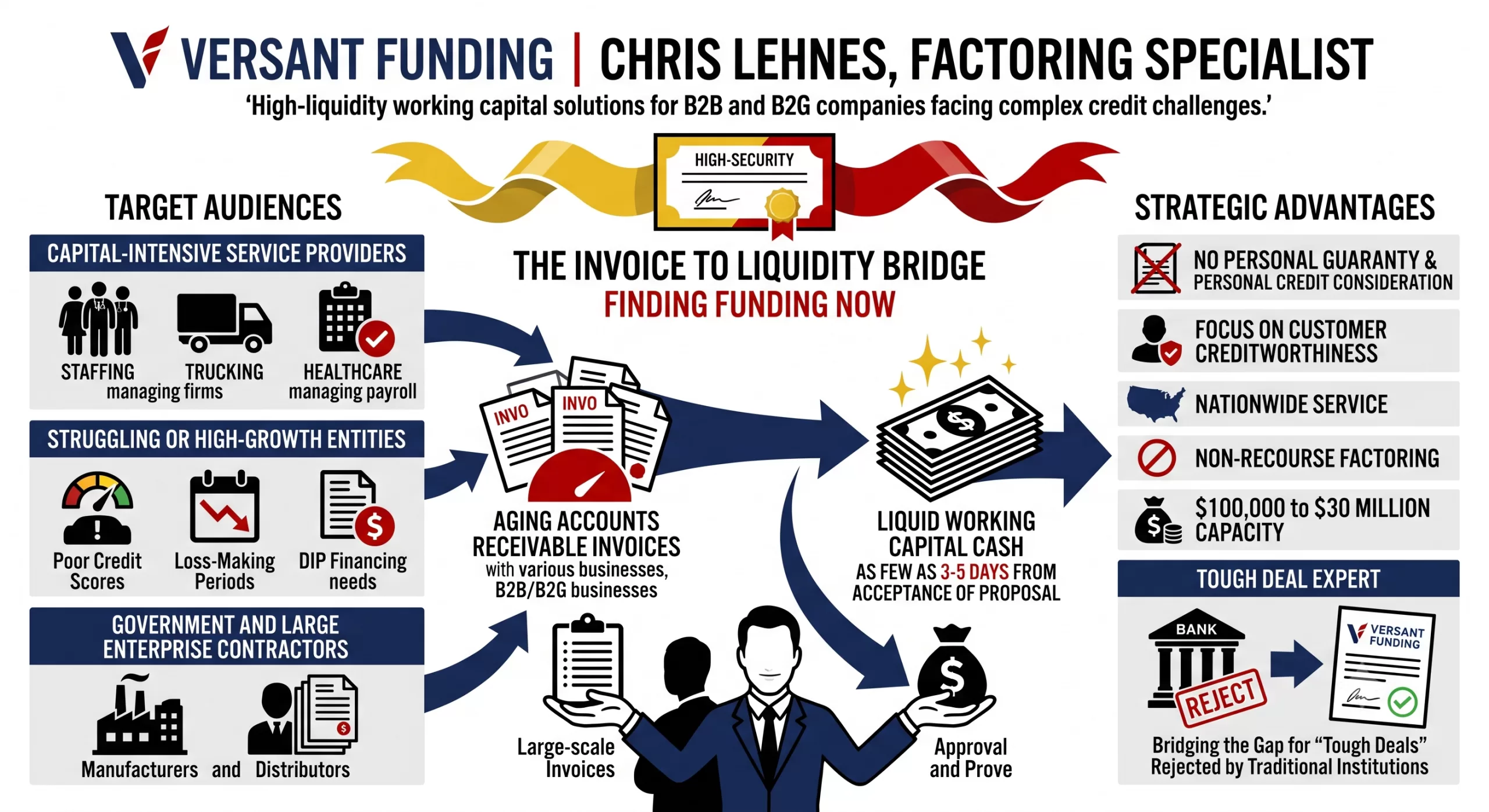
Our accounts receivable factoring program can help businesses meet payroll or other essential obligations in as quick as a week.

Factoring Program Overview

  • $100,000 to $30 Million
  • Competitive Advance Rates
  • Non-Recourse
  • No Audits or Financial Covenants
  • Most businesses with strong customers are eligible

We specialize in difficult deals:

  • Start-ups
  • Weak Balance Sheets
  • Historic Losses
  • Customer Concentrations
  • Poor Personal Credit
  • Character Issues

We focus on the quality of your client’s accounts receivable, ignoring their financial condition.

This enables us to move quickly and fund qualified businesses including Manufacturers, Distributors and a wide variety of Service Businesses in as few as 3-5 days.

Contact me today to learn if your client is a fit.

Chris Lehnes 203-664-1535 Chris@chrislehnes.com

The Changing Channel: QVC Files for Bankruptcy Protection

For decades, the familiar glow of QVC and HSN was a staple of American living rooms. But in an era where “Add to Cart” happens on TikTok rather than over a landline, even the giants of home shopping have to hit the reset button.

On April 16, 2026, QVC Group, Inc. officially filed for Chapter 11 bankruptcy protection. While the word “bankruptcy” often sounds like an ending, for QVC, this appears to be a calculated “financial makeover” rather than a final curtain call.


The Numbers: Shedding a $5 Billion Weight

QVC didn’t enter the courtroom empty-handed. This is what’s known as a “prepackaged” bankruptcy, meaning the company already reached an agreement with most of its lenders before filing.

  • Debt Reduction: The primary goal is to slash the company’s debt from a staggering $6.6 billion down to $1.3 billion.
  • The Timeline: They aren’t planning on sticking around the courthouse for long; the company expects to emerge from the process within 90 days.
  • The Stock: It’s a rough week for investors. Nasdaq has already moved to delist QVC Group’s common and preferred stock, as the restructuring plan is expected to wipe out existing equity.

Why Now? The Death of the “Linear” Living Room

The filing highlights a hard truth: the structural decline of cable TV. QVC’s business model was built on a captive audience of cable subscribers. As cord-cutting accelerated and viewership moved to streaming and social media, the massive cash flows that once serviced QVC’s debt began to dry up.

Despite the struggle, QVC hasn’t been standing still. In 2025, the company saw a surprising spark of life:

  • TikTok Shop: QVC acquired nearly 1 million new customers through TikTok last year.
  • Streaming Growth: Viewership on their streaming apps, QVC+ and HSN+, grew by 19% in 2025.

The bankruptcy is essentially a way to align their “old world” debt with their “new world” digital revenue.


What This Means for You (The Shopper)

If you’re worried about your pending orders or that Vitamix you’ve been eyeing, take a deep breath. For the average customer, it is business as usual.

The Quick Checklist for Shoppers:

  • Orders & Shipping: Continuing as normal.
  • Gift Cards: Still valid and being honored.
  • Returns: Policies remain unchanged.
  • Customer Service: Teams are operating on their regular schedules.
  • Layoffs: The company stated there are no planned layoffs or furloughs as part of this specific restructuring.

The “WIN” Strategy

CEO David Rawlinson is betting on the “WIN” Growth Strategy, which focuses on being “Wherever She Shops.” By shedding $5 billion in debt, QVC hopes to have the flexibility to stop acting like a legacy cable channel and start acting like a “content-to-commerce” platform.

By the summer of 2026, QVC expects to emerge as a leaner, privately held (or newly listed) “Reorganized QVC, Inc.” The iconic “Quality, Value, Convenience” slogan isn’t going anywhere—it’s just getting a much-needed digital upgrade.

Contact Factoring Specialist, Chris Lehnes

The Purchase Price of IEEPA Tariff Refund Claims has Increased to up to 85% of the Claim Amount

Convert IEEPA Tariff Claims to Cash on an Expedited Basis  

I have been actively assisting companies nationwide in converting their IEEPA tariff refund claims into immediate cash.  

U.S. Customs and Border Protection is rolling out a centralized system (CAPE) to process refunds, and some trade experts believe that certain importers could begin receiving refunds within the next six months. However, there remains significant uncertainty around timing, and many industry participants believe that a large portion of claims could still take years to fully resolve.

  Convert IEEPA Tariff Claims to Cash on an Expedited Basis  

This divergence is driven by several factors, including:
The complexity and scale of processing millions of entries
The possibility that certain categories of claims may be prioritized over others, delaying recovery for more complex or lower-volume importers
The need for new administrative procedures, as IEEPA does not clearly define a refund mechanism
The potential for case-by-case eligibility determinations

Ongoing legal and procedural developments, including possible appeals by the Trump Administration and implementation challenges

Liquidation Status – Whether entries have already been liquidated, which in many cases may require formal protests or litigation to reopen and recover duties
The likelihood of inconsistent treatment across ports (port-by-port) or entry types as CBP implements new processes in phases
Documentation gaps and data reconciliation issues, particularly for older entries or those filed across multiple brokers
The absence of clear guidance on how interest on refunds will be calculated and paid, which could lead to further disputes


Capacity constraints within CBP and the potential for processing backlogs as refund volumes scale

Continued legal challenges around the scope of eligibility, including disputes over classifications, valuation, or origin that could delay specific claims


As a result, while some importers may receive refunds within six months, others, particularly those with more complex or previously liquidated entries, could face a multi-year recovery timeline. To address this uncertainty, financial institutions and hedge funds are actively purchasing IEEPA tariff refund claims at a discount.

Current buy rates are as high as 85% of the expected refund value, depending on claim size, credit quality of the importer and documentation quality as these claims are not directly assignable. AES works with importers with claims starting at $250,000, with no maximum limit. Since entering this market five months ago, AES has facilitated the monetization of approximately $20 million in claims across industries including food, seasonal goods, apparel, and home products.  

Market pricing has evolved significantly: Prior to the February 20, 2026, Supreme Court ruling, claims traded at approximately 20–25%
Following the ruling, pricing increased to 40–50%
More recently, improving legal clarity and market participation have driven pricing to current levels of up to 85% of the IEEPA tariff refund amount


While some importers initially adopted a “wait and see” approach in anticipation of near-term refunds, the combination of timing uncertainty and significantly improved pricing has led many to explore monetization as a way to eliminate risk and accelerate liquidity. The Funds AES works with are able to complete transactions in approximately 2–3 weeks, depending on the completeness and quality of documentation.  

For more information on this process, contact Factoring Specialist, Chris Lehnes

Middle East War Will Slow Global Economic Growth

Economist were optimistic…no more.

Middle East War Will Slow Global Economic Growth. The global economy, which had shown surprising resilience through early 2026, is now facing a significant “speed bump.” In its latest World Economic Outlook released today, April 14, 2026, the International Monetary Fund (IMF) warned that the escalating conflict in the Middle East—specifically the war involving Iran—has halted global momentum and forced a downgrade of growth projections.

The Numbers: A Downward Shift

Just months ago, economists were optimistic that a tech-driven productivity boom and easing inflation would lead to a “soft landing.” However, the IMF has now lowered its 2026 global growth forecast to 3.1%, down from the 3.3% projected in January.

Scenario2026 Growth ForecastKey Drivers
Reference (Current)3.1%Short-lived conflict, oil averages $82/bbl
Adverse2.5%Prolonged disruption, oil stays at $100
Severe2.0%Extended war, oil spikes to $110+

The “Strait” Jacket on Energy

The primary engine of this slowdown is the volatility in energy markets. The closure of the Strait of Hormuz in March 2026—a chokepoint for 20% of the world’s oil and significant LNG volumes—sent Brent crude surging past $120 per barrel.

While prices have recently fluctuated around $98, the damage to supply chains is extensive. The IMF notes that:

  • Inflation is Rebounding: Global inflation expectations for 2026 have been revised up to 4.4%.
  • Fertilizer Shortages: With 20-30% of global fertilizer exports passing through the region, agricultural costs are rising, threatening food security in import-reliant nations.
  • Trade Disruptions: Maritime insurance premiums have skyrocketed, and major shipping routes are being rerouted, adding weeks to delivery times for consumer goods.

The Risk of a “Close Call” Recession

IMF Chief Economist Pierre-Olivier Gourinchas described the current situation as a pivot point. While the “Reference Scenario” assumes the war remains contained, a “Severe Scenario” could see growth drop to 2%—a level the IMF considers a global recession. This has only happened four times since 1980.

Central banks, which were expected to begin cutting interest rates this spring, may now be forced to keep rates “higher for longer” to combat the energy-driven inflationary spike.


“War in the Middle East has halted the global momentum we saw at the start of the year. The risks are now firmly tilted to the downside.”

Pierre-Olivier Gourinchas, IMF Chief Economist

Looking Ahead

The path forward depends entirely on the duration of the hostilities. If a ceasefire holds and energy production in the Persian Gulf normalizes by mid-year, the IMF believes the global economy can avoid a total contraction. However, for emerging markets and developing economies, the impact is expected to be twice as severe as that on advanced nations, potentially undoing years of post-pandemic recovery.

How Middle East conflict impacts global trade

This video provides an expert breakdown of how regional instability specifically pressures global trade routes and food supplies.

Contact Factoring Specialist, Chris Lehnes

The Purchase Price of IEEPA Tariff Refund Claims has Increased to Up to 85% of the Claim Amount

Trade experts predict it could take at least 2 to 5 years for importers to receive their IEEPA tariff refunds due to both the long-standing rules that are in effect and the Administration’s adversarial stance to issuing tariff refunds. 


The administration can make appeals, request Stays from the U.S. Court of International Trade, Customs could request a case-by-case eligibility review and there could be delays in the system upgrades that Customs and Border Protection are working on.   Financial institutions are purchasing these tariff claims at a discount. 

The current Buy Rates are now up to 85% of the refund amount. Rates are based on claim size and credit quality as tariff refund claims are not assignable. Importers with IEEPA tariff refund claims starting at $350,000 are eligible and there is no maximum limit. AES has monetized $20 million in refund claims since its involvement in brokering IEEPA tariff refund claims commenced 5 months ago. 

Clients include those in the food, seasonal decoration, apparel and home goods industries.   Prior to the Supreme Court’s ruling on February 20, 2026 IEEPA claims were trading at an average of only 22%. After the ruling against the Administration Buy Rates increased to 40%-50 % and subsequent to some positive rulings on March 4 and 6th by the Court of International Trade (“CIT”) and other encouraging news stories, Buy Rates have now increased to up to 85 %. 

Importers were initially taking a wait and see approach after the recent rulings by CIT as there was initially hope they might see refunds in a manner of months. With the significant increase in Buy Rates and negativity regarding timing in the media, importers are now coming off the sidelines and exploring the potential sale of their IEEPA tariff refund claims. The Funds AES works with can purchase claims within approximately 3 to 5 weeks depending on the quality of documentation assembled by the importer.   For a detailed discussion of how these two options work see below.                    

How the Process of Selling an IEEPA Tariff Claim Works  

Model is: As an example, Company X has paid ($10 Million) in tariffs since April 7, 2025Company X wants to de-risk prior to determination and finalization of the IEEPA tariff Refund Process. Company X sells (50%, 100%, or some other percentage) of its tariff ‘claim’ to Buyer A in the form of a participation. The Trade is nonrecourse to Company X as to the outcome of the Refund Process; but recourse to Company X only if the amount / validity of the claim is proven to be false, or too high.  

Process for Selling IEEPA Tariff Claims: As an example, Company X has paid $10 million in IEEPA Tariffs. Company X agrees to “sell” its tariff claim to Buyer for 85% of the claim amount, i.e. $8.5 million. Buyer sends Seller a Confirm, and then ultimately a Participation Agreement which will govern the transaction.

IMPORTANT – Company X retains its status as the “Plaintiff” / “Claimant” since these tariff claims are not transferable. Buyer might ask Company X to commence litigation for the return of the IEEPA tariffs paid. The rationale for this is that it is possible that only those parties who have commenced actual litigation are entitled to refunds.

Thus, Company X will need to commence litigation in order to receive their refund.Buyer will continue to monitor the situation and inform Company X of developments.If and when the refund is received on the claim, Company X will receive the refund and forward to the Buyer.  

Using an IEEPA Tariff Claim as Collateral for a Loan   In lieu of selling an IEEPA Tariff Claim at a discount, it is possible to use this claim as collateral for a term loan. This term loan would be on a “recourse: basis to the borrower. The potential loan amount could be up to approximately 50% to 60% of the total IEEPA claim amount. However, the claim must exceed $20 million to qualify for a loan. The interest rate would be in the low to mid-teens.  

Important Points Regarding the Sale of a Tariff Claim: Company X (as seller of the Claim) must be a financially healthy enough counterparty for Buyer A to enter into what could be a 2-to-5-year process of obtaining the refund. Legal fees are split going forward based on risk percentage. If Company X sells 100% today, Buyer A will pay 100% of legal costs today. Buyers are currently paying up to 85% to companies seeking to sell their IEEPA tariff claims. 

However, this is an evolving market and these percentages can either increase or decrease depending on the markets’ reaction to the Trump Administration’s expected obstructionism and the unresolved Court of International Trade’s procedural issues.

Prior to the Supreme Court decision, buyers were purchasing tariff claims at an average of 22% due to the high risks involved. We will be monitoring on a daily basis the rates at which Buyers are purchasing IEEPA claims and we will update our website accordingly. Feel free to email us to ascertain what the rate is on any particular day.  There would likely be an administrative process instituted such that companies that have paid these IEEPA tariffs will need to file special claims and wait to get refunded by the government. 

The process of receiving the refund payment from the government could take up to 2 to 5 years according to trade experts.

Contact Factoring Specialist, Chris Lehnes to learn how to help your business gain early access to their Tariff Repayment

March Jobs Report Shatters Expectations

A Surprising Spring: March Jobs Report Shatters Expectations

The U.S. labor market just delivered a spring surprise that few saw coming. According to the latest data released today by the Bureau of Labor Statistics (BLS), the U.S. economy added 178,000 jobs in March, vastly outperforming economist forecasts which had hovered around a modest 60,000 to 70,000.

After a dismal February that saw a revised loss of 133,000 jobs, this rebound signals a resilient—if complex—economic landscape.


The Numbers at a Glance

The March report offers a refreshing change of pace for a labor market that has felt “frozen” for much of the past year.

  • Nonfarm Payrolls: +178,000 (Expected: ~70,000)
  • Unemployment Rate: 4.3% (Down from 4.4% in February)
  • Revisions: January’s figures were revised upward to 160,000, though the two-month net revision slightly dampened the overall trend.

What’s Driving the Growth?

The recovery wasn’t uniform across the board. While the headline number is strong, the “engine” of the U.S. economy remains highly concentrated:

  1. The Healthcare Titan: Once again, the health care and social assistance sector did the heavy lifting, adding 76,000 jobs last month. This sector has essentially been the primary life support for the labor market over the last year.
  2. The “Bounce Back” Factor: Part of the March surge is attributed to the return of approximately 31,000 Kaiser Permanente employees who were on strike in February, along with more favorable weather conditions across the country.
  3. The Gender Shift: Interestingly, recent trends show that women now hold more jobs than men in the nonfarm economy—a structural shift driven by the strength of female-dominated sectors like education and health, while male-concentrated sectors like manufacturing continue to cool.

The Shadows on the Horizon: Geopolitics and Oil

Despite the optimistic numbers, experts are urging caution. The report arrives amidst significant geopolitical tension, specifically the ongoing conflict in Iran.

“We’ve got a much more difficult spring job market than we had hoped given the higher prices at the pump and the supply chain disruptions that are going to come from the war,” says Diane Swonk, chief economist at KPMG.

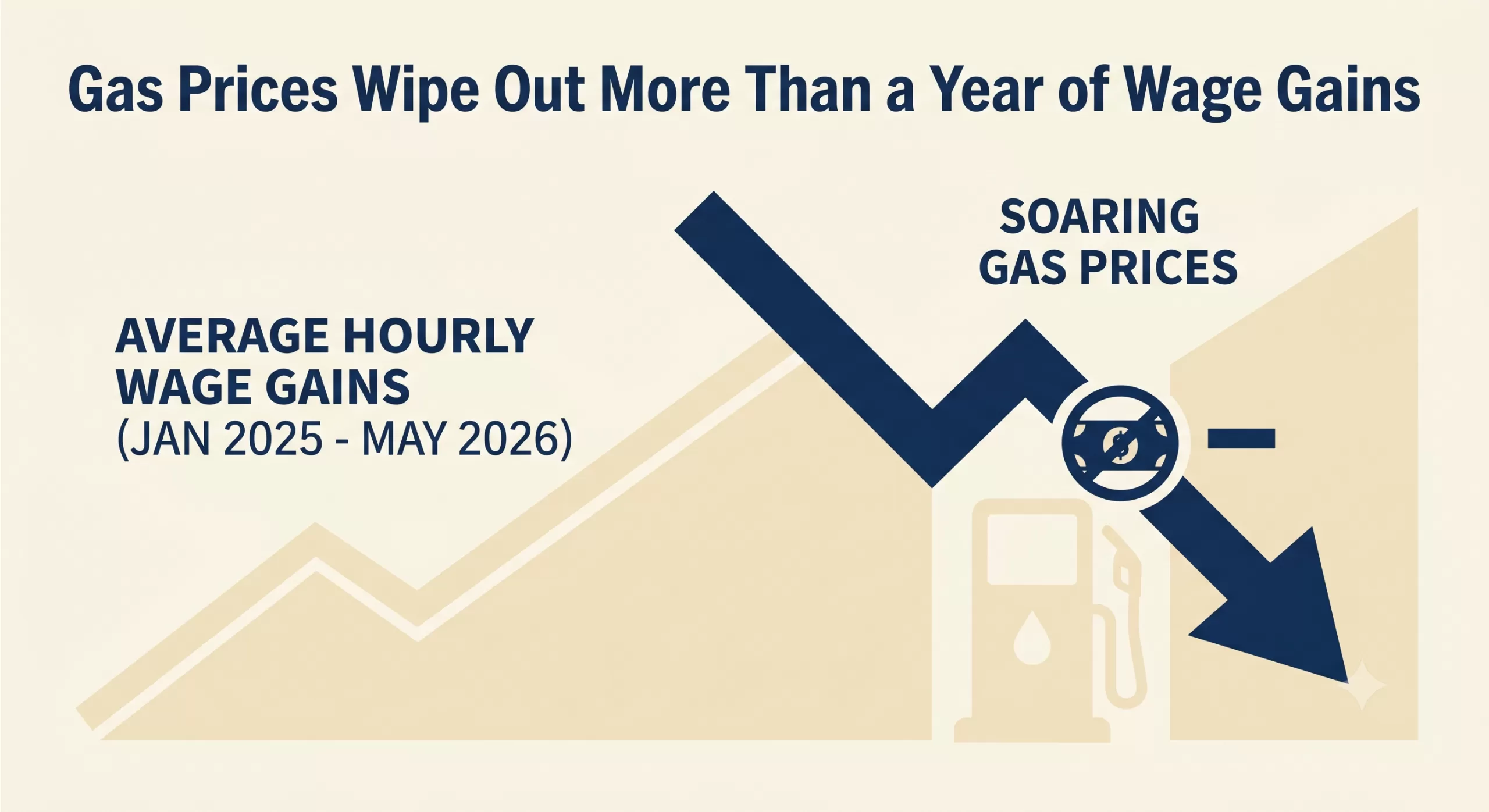
With gas prices spiking above $4 a gallon for the first time since 2022, many fear that the March gains may be a “last hurrah” before the economic impact of the war and energy costs fully settle into corporate hiring plans.


The Bottom Line

The U.S. economy has shown it still has plenty of fight left. A 4.3% unemployment rate remains historically healthy, and the “low-hire, low-fire” stalemate of 2025 appears to be thawing.

However, for job seekers and businesses alike, the road ahead remains fogged by uncertainty. Between the rapid integration of Artificial Intelligence, fluctuating inflation (which dipped to 2.3% before ticking back up), and global instability, “cautious optimism” remains the phrase of the day.

Contact Factoring Specialist, Chris Lehnes

What do you think? Is the March report a sign of a true turnaround, or just a temporary rebound? Let us know in the comments below.

The Economy Is on the Edge: The Tug-of-War Between Collapse and Recovery

Polycrisis:

If the global economy feels like a high-wire act lately, you aren’t alone. We are currently navigating a “polycrisis“—a fancy term for when multiple major headaches (inflation, geopolitical tension, and shifting labor markets) all hit the fan at the same time.

We are standing on a narrow ledge. One side leads to a hard landing; the other leads to a stabilized “new normal.” Here is a look at the forces threatening to push us off, and the safety nets that might just pull us back.


The Push: What Could Tip Us Over?

It doesn’t take a wrecking ball to cause a recession; sometimes, it just takes a few well-placed dominos. Here are the primary risks:

  • The “Higher for Longer” Fatigue: While central banks use interest rates to cool inflation, keeping them elevated for too long puts immense pressure on household debt and corporate margins. If the “lag effect” hits all at once, consumer spending—the engine of the economy—could stall.
  • Geopolitical Aftershocks: Energy prices are notoriously sensitive to global conflict. Any significant escalation in major trade corridors can reignite supply chain chaos, sending the cost of goods back into the stratosphere.
  • The Commercial Real Estate Ghost Town: With remote work now a permanent fixture, many office buildings are sitting half-empty. As these property loans come due for refinancing at higher rates, we could see a localized banking tremor.

The Pull: What Could Help Us Pull Through?

It’s not all doom and gloom. There are several structural “muscles” keeping the economy upright:

  • The Resilient Labor Market: Despite tech layoffs making headlines, overall unemployment remains historically low. As long as people have jobs, they tend to keep spending, which provides a powerful floor for the economy.
  • The Productivity “AI Bump”: We are at the beginning of a massive technological shift. Early adoption of generative AI is already beginning to streamline workflows and reduce operational costs, which could lead to a non-inflationary growth spurt.
  • Household Balance Sheets: Unlike the 2008 crash, many consumers and corporations locked in low interest rates years ago. This “debt buffer” has bought the private sector time to adjust to the new economic reality.

The Bottom Line: Balance, Not Freefall

The economy isn’t necessarily “broken,” but it is transitioning. We are moving away from an era of “free money” and into an era where efficiency and strategic investment matter again.

ScenarioKey DriverLikely Outcome
The Hard LandingPersistent inflation + high ratesBrief but sharp recession; rising unemployment.
The Soft LandingControlled cooling + tech growthFlat growth for a year, followed by a steady recovery.
The No LandingContinued high spendingEconomy stays hot, but rates stay high indefinitely.

The Takeaway: While the ledge is narrow, the path across is still visible. Navigating the next twelve months will require agility from policymakers and patience from investors. We may be on the edge, but we aren’t over it yet..

Contact Factoring Specialist, Chris Lehnes

PRESS RELEASE: Versant Funds $1.4 Million Factoring Facility to Manufacturer

Press Release: (March 26, 2026) Versant Funding LLC is pleased to announce that it has funded a $1.4 Million non-recourse factoring facility to a manufacturer of equipment used by global auto companies.

While our newest client has successfully secured contracts with some of the world’s largest manufacturers, slow-paying accounts receivable are putting pressure on the company’s cash flow and preventing them from taking on new business.

“In evaluating a funding opportunity, Versant focuses exclusively on the quality of our client’s accounts receivable” according to Chris Lehnes, Business Development Officer for Versant Funding, and originator of this transaction. “Since this company’s customers are among the strongest on the planet, our facility will essentially have no cap and will grow automatically as the company’s AR balances increase, providing our client the cash needed to expand.”

About Versant Funding: Versant Funding’s custom Non-Recourse Factoring Facilities have been designed to fill a void in the market by focusing exclusively on the credit quality of a company’s accounts receivable. Versant Funding offers non-recourse factoring solutions to companies with B2B or B2G sales from $100,000 to $30 Million per month. All we care about is the credit quality of the A/R. To learn more contact: Chris Lehnes|203-664-1535 | chris@chrislehnes.com

ABL Advisor: Versant Funds $1.4MM Non-Recourse Factoring Facility to Manufacturer

ABF Journal: Versant Funding Provides $1.4MM Factoring Facility to Manufacturer

LinkedIn Newsletter: Just Funded! $1.4 Million Non-Recourse Factoring to Manufacturer

Secured Finance Network: Versant Funds $1.4 Million Non-Recourse Factoring Facility to Manufacturer

IFA Commercial Factor: Versant Funds $1.4 Million Non-Recourse Factoring Facility to Manufacturer

CT Turnaround Management Association: Member News – Versant Funds $1.4 Million to Manufacturer